Bt150 bn soft loans, tax cut on offer to virus-hit businesses #ศาสตร์เกษตรดินปุ๋ย

#ศาสตร์เกษตรดินปุ๋ย : ขอบคุณแหล่งข้อมูล : หนังสือพิมพ์ The Nation

https://www.nationthailand.com/business/30383799?utm_source=category&utm_medium=internal_referral

Bt150 bn soft loans, tax cut on offer to virus-hit businesses

Mar 10. 2020
 Finance Minister Uttama Savanayna

Finance Minister Uttama Savanayna
By THE NATION

The Cabinet today (March 10) approved a slew of phase 1 relief measures for businesses, households and individuals hit hard by the Covid-19 outbreak, said Finance Minister Uttama Savanayna.

Topping the measures is the offer of Bt150 billion in soft loans with an interest rate of not exceeding 2 per cent for the first two years. Companies can apply for the loans capped at Bt20 million each .

The Bank of Thailand will relax rules governing commercial banks’ lending while witholding tax will be cut to 1.5 per cent from 3 per cent during April to September this year.

These businesses are also eligible for corporate tax deduction on employee salaries at three times the total cost.

Meanwhile, state-owned banks will suspend principle loan payments, cut interest rate and extending debt repayment period for affected clients.

The state agencies will consider lowering rental fees on land or extending the deadlines on payment.

Other measures include the refund of electricity meter deposit to 21.5 million households and Small and Medium sized Enterprises (SMES), totalling Bt30 billion.

The Finance Ministry has also discussed with the Budget Bureau to set up a Bt20 billion fund to mitigate impact of the Covid-19 outbreak, such as mass unemployment or business closures.

Government deputy spokesperson Traisulee Traisoranakul said the Cabinet has yet to consider an extension to the waiver of visa- on- arrival fee for tourists from 19 destinations, which will expire on April 30 this year.

Fears of corporate debt bomb grow as coronavirus outbreak worsens #ศาสตร์เกษตรดินปุ๋ย

#ศาสตร์เกษตรดินปุ๋ย : ขอบคุณแหล่งข้อมูล : หนังสือพิมพ์ The Nation

https://www.nationthailand.com/business/30383796?utm_source=category&utm_medium=internal_referral

Fears of corporate debt bomb grow as coronavirus outbreak worsens

Mar 10. 2020
By The Washington Post · David J. Lynch · BUSINESS, US-GLOBAL-MARKETS 

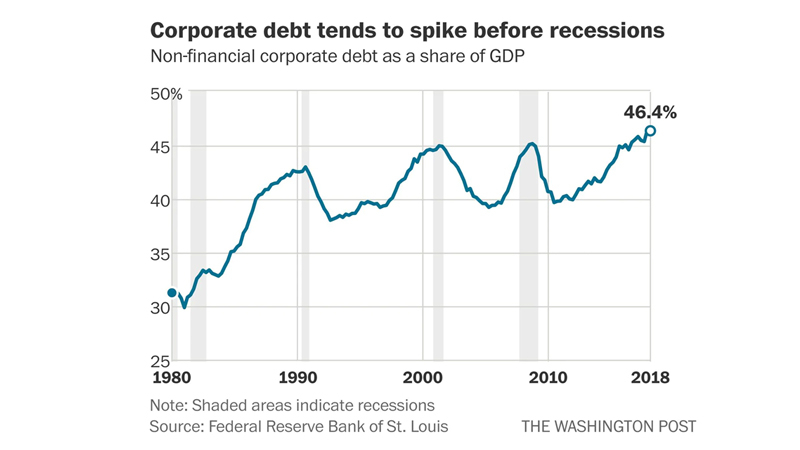
The coronavirus panic could threaten a $10 trillion mountain of corporate debt, unleashing a cycle of layoffs and business spending cuts that would hit the economy just as some analysts are warning of a recession.

Financial markets already are showing major signs of stress. Investors are demanding higher interest payments in return for lending to less creditworthy companies; some businesses are delaying their planned bond sales while they wait for Wall Street to settle down; and ratings agencies are moving toward downgrading some corporate borrowers.

The mammoth debt bulge includes a dramatic increase in borrowing by the lowest quality investment grade firms — those rated just one level above “junk.” More than $1 trillion in “leveraged loans,” a type of risky bank lending to debt-laden companies, is a second potential flash point.

Watchdogs including the Federal Reserve have warned for years that excessive borrowing by corporations, including some with subpar credit ratings, might eventually blow a hole in the U.S. economy. Now, as Wall Street wrestles with a global epidemic, the debt alarms show how investors are reassessing risks they overlooked during the long economic expansion.

“It is a big concern,” said Ruchir Sharma, chief global strategist for Morgan Stanley. “We’re dealing with the unknown. But given the enormous increase in leverage, the system is fragile and vulnerable.”

Energy companies that have borrowed heavily in recent years may be the first to suffer, due to the oil price war between Saudi Arabia and Russia. Falling oil prices, while good news for consumers, may reach levels that will make it impossible for companies in the U.S. shale industry to cover their costs.

On Monday, investors battered some energy companies that have big outstanding obligations. Shares of Halliburton, which has more than doubled its total debt to $11.5 billion since 2012 despite sliding revenues and earnings, lost 38 percent of their value.

The oilfield services company last week raised $1 billion by selling investors 10-year bonds paying interest of 2.9 percent. Halliburton said it plans to use the proceeds to pay off existing debt. Over the next six years, it faces $3.8 billion in debt payments.

Today’s debt woes originated in the months that followed the September 2008 Lehman Brothers collapse.

In response, the Federal Reserve cut its benchmark lending rate to zero and kept it at or near historic lows for a decade. The aim was to heal a wounded economy, but the era of easy money bred excesses that only now are coming into view.

Access to low-cost credit helped many companies grow and hire. But it also enabled some that weren’t profitable to survive by repeatedly refinancing their debt. These “zombie” firms, which do not earn enough to cover their interest payments, account for one in every six publicly-traded U.S. companies, according to Sharma.

Roughly half of the total debt of nonfinancial companies is rated “BBB,” just slightly better than junk or high-yield debt. Companies such as Ebay and Martin Marietta have sold bonds this month to investors with such ratings.

Using a broad measure of business liabilities, the ratio of debt to assets is at its highest in 20 years, according to the Fed. One potential trouble spot lies in the rapid growth of “leveraged loans,” made by top banks such as Goldman Sachs and JPMorgan to scores of cash-short companies.

Until recently, such loans typically were made to companies that were not already deeply in debt. But in the past two years, the biggest borrowers were the nation’s most indebted companies, according to the Federal Reserve. In the first half of last year, roughly 40 percent of leveraged loans went to companies with a debt-to-earnings ratio of six-to-one or greater.

Businesses have been able to bear their extraordinary debt burden only because borrowing costs have been historically low. If that changes for any reason, cash-strapped companies would likely resort to layoffs and slash their spending on new factories and equipment in order to conserve funds for interest payments.

The danger now is that the economy’s sudden stop — with conferences and other public events cancelled; travel discouraged; and consumers staying home — will cut revenue for many companies and make it harder for them to repay their creditors.

Even before the full effects of the coronavirus hit the U.S., analysts were cutting their earnings forecasts. As of Feb. 28, more than twice as many companies in the S&P 500 index had issued negative guidance on their first-quarter earnings as had issued upbeat assessments, according to Factset, a financial data company.

At the same time, nervous investors are becoming pickier about which borrowers they fund, cutting off the flow of cheap money to companies that need it to stay alive.

“It’s a pandemic of fear that’s spreading faster than the virus,” said Ed Yardeni, head of an eponymous research firm.

In recent days, signs of bond market stress have been multiplying. After years of barely distinguishing between good credit risks and bad, investors are growing more discerning.

The “spread” or additional yield that investors demand to hold junk bonds compared to risk-free U.S. treasuries has increased by more than 2 percentage points since mid-February — roughly four times the increase investors required from more creditworthy borrowers, according to Bloomberg Barclays data.

Fearing the higher interest charges — and hoping for additional Fed rate cuts — some corporate borrowers have delayed issuing debt.

New corporate bond issues were falling even before the coronavirus upset Wall Street in the past few weeks. In January, U.S. corporations sold $63.4 billion worth of bonds to investors, down more than 10 percent from the same period one year earlier, according to the Federal Reserve.

“Corporate bond issuance has petered out quite a bit,” said Kathy Bostjancic, U.S. financial market economist at Oxford Economics. “There were a few days last week we didn’t have any…There’s just so much fear.”

Ratings agencies, including S&P Global Ratings, also are scrutinizing corporate borrowers for evidence of weakness. On Monday, S&P Global placed Ryman Hospitality Properties, which owns hotels and resorts including the Gaylord Opryland, on a negative watch, citing “significant coronavirus-related cancellations.”

If the economic outlook darkens quickly, a large number of borrowers might become “fallen angels,” downgraded from the lowest investment grade into the speculative junk market. Along with higher borrowing costs, some of them might struggle to find creditors since many pension plans, insurers and mutual funds are permitted to buy only investment-grade securities.

“We’ve had so many years of cheap and easy money with little differentiation in credit quality,” said Sonja Gibbs, managing director with the Institute of International Finance. “What happens if you start seeing downgrades?”

To be sure, the current bond market turmoil is not yet as severe as that experienced during some previous recessions, Sharma said. Overall financial conditions are about as tight as they were during the 2011 European debt and currency crisis, though not yet as bad as during the global financial crisis, according to Deutsche Bank Securities.

“The likelihood that we’ll have a full blown liquidity crisis is pretty limited,” said Michael Stritch, chief investment officer for BMO Wealth Management. “The banking sector is much less leveraged than in the past, so that’s a positive in terms of credit availability.”

Still, with investors expecting the Fed to return its key lending rate to zero in the next few months, some Fed officials are calling for the central bank to take additional extraordinary actions. Eric Rosengren, president of the Federal Reserve Bank of Boston, said on March 6 the Fed should consider buying assets other than government securities to buttress the economy.

Rosengren didn’t offer any specifics, but acknowledged that Congress would need to authorize any Fed purchase of stocks or corporate bonds.

Corporate debt excesses are not limited to the United States. Corporate zombies also roam the European Union and Japan, where borrowing costs have been low for years and are now negative. In a 2018 study of 14 advanced economies, the Bank of International Settlements said the share of zombie firms had risen from 2 percent in the 1980s to 12 percent in 2016.

The International Monetary Fund and the Fed have warned about reckless corporate borrowing for several years. In a global downturn that was half as severe as the 2009 crisis, corporations in eight major economies, including the U.S., China and Japan, might be unable to repay $19 trillion worth of debt — nearly 40 percent of the global total, according to the IMF’s most recent global financial stability report.

“These debt levels truly are troublesome, any way you measure them within the U.S., China and Europe. But you need some kind of catalyst to get people to worry about it,” said Gibbs. “This kind of position we find ourselves in is the type of catalyst that can create a contagion.”

AOT invites King Power for talks on Don Mueang duty-free counter concession #ศาสตร์เกษตรดินปุ๋ย

#ศาสตร์เกษตรดินปุ๋ย : ขอบคุณแหล่งข้อมูล : หนังสือพิมพ์ The Nation

https://www.nationthailand.com/business/30383753?utm_source=category&utm_medium=internal_referral

AOT invites King Power for talks on Don Mueang duty-free counter concession

Mar 10. 2020
By THE NATION

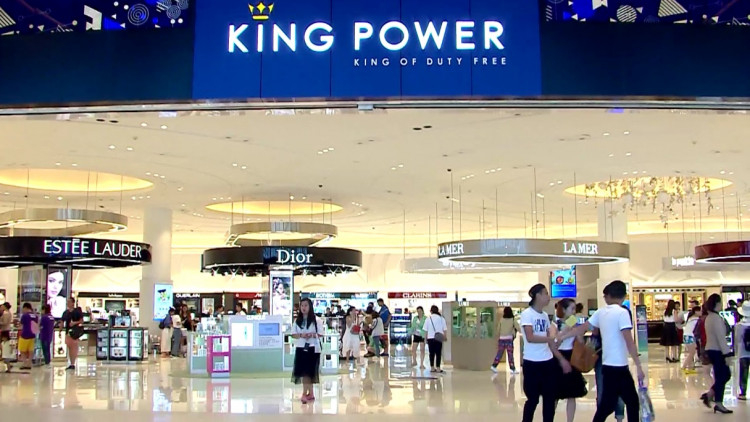
Airports of Thailand (AOT) is preparing to negotiate with King Power after no other contractors made bids for the concession to run a duty-free pick-up counter service at Don Mueang International Airport, AOT president Nitinai Sirismatthakarn said.

AOT had twice opened bids for the project — in November-December 2018 and January 20-31, 2020. On both occasions, only King Power Development Co Ltd submitted bids. “This indicates that no other contractors are interested in the project,” he said. “AOT’s board of directors therefore agreed to cancel the bidding process and use specific identification as the selection method instead. We have invited King Power for negotiations, and if their financial proposals meet AOT’s expectations they will undertake the project, which will run from October 1, 2022 to December 31, 2032.”

According to AOT’s schedule, King Power will have to submit its project proposal by Wednesday (March 11), technical proposal by Thursday (March 12) and financial proposal by Friday (March 13).

Nitinai added that AOT expected the Covid-19 situation to be resolved by April and that it would affect both number of passengers and revenue.

“We estimate that overall passenger arrivals and revenue in 2020 will drop by at least 10 per cent,” he said. “The outbreak also has affected the opening of Midfield Satellite 1 Building, which was scheduled to finish in April and open in November. Due to the current situation, the building might not be finished before April next year as we are still awaiting construction materials to be shipped from China,” he said.

Aon sees $30 billion takeover as answer to age of volatility #ศาสตร์เกษตรดินปุ๋ย

#ศาสตร์เกษตรดินปุ๋ย : ขอบคุณแหล่งข้อมูล : หนังสือพิมพ์ The Nation

https://www.nationthailand.com/business/30383736?utm_source=category&utm_medium=internal_referral

Aon sees $30 billion takeover as answer to age of volatility

Mar 10. 2020
By Syndication Washington Post, Bloomberg · Katherine Chiglinsky · BUSINESS, US-GLOBAL-MARKETS
Aon agreed to buy Willis Towers Watson in an almost $30 billion transaction, creating the world’s biggest insurance brokerage and adding a raft of experts on everything from climate change to cybersecurity.

The all-stock deal, the largest ever for the industry, will combine the second- and third-largest brokers and comes almost exactly a year after previous talks between the two companies broke down.

Insurance brokers have been seeking ways to scale up their businesses advising corporate clients on new and evolving threats. Marsh & McLennan Cos., which will be supplanted as the biggest brokerage when Aon’s deal is completed, said its purchase of Jardine Lloyd Thompson Group Plc for $5.7 billion last year was a bet on the “age of risk.”

“When you think about what’s going on with clients, volatility in the world is increasing,” Aon Chief Executive Officer Greg Case said in a phone interview. “All the traditional risks, just the traditional basket, is actually bigger than ever before and then now you’ve got all the non-traditional stuff kicking in.”

Case and Chief Financial Officer Christa Davies will lead the combined company, according to a statement Monday.

Brokerages, which help connect businesses looking for coverage with insurers, have been aggressively merging to diversify, boost commissions and serve customers who increasingly want to deal with fewer intermediaries. Willis Towers was itself formed in 2016 in an $8.9 billion merger.

Willis Towers investors will receive 1.08 Aon shares for each of their shares, with existing Aon investors owning about 63% of the company once the deal is completed. Willis Towers shareholders will get about $231.99 a share in stock. That’s 16% higher than the company’s closing price on Friday.

“This isn’t about bigger,” Case said in a call Monday with analysts. “This is about better.”

Last year, Aon and Willis Towers pulled the plug on a proposed combination less than 24 hours after preliminary talks leaked. A Bloomberg News report thrust the discussions into the public, making it difficult for Aon to move forward because it was still refining the terms of its offer, people familiar with the matter said at the time.

Irish regulations forced the disclosure of early-stage talks last year. Aon said at the time that it reserved the right within 12 months to set aside its announcement that it wasn’t intending to pursue a deal. While Aon was restricted from reaching out to Willis Towers for at least a year, the target was free to approach its pursuer, according to a person familiar with the matter.

The deal will add to earnings in the first full year of the combination, and provide annual pretax synergies and cost reductions of about $800 million by the third year, according to the statement. Willis Towers CEO John Haley will become executive chairman.

“Although expense synergies make the deal financially attractive, both companies’ management teams described the ability to better address client needs as the primary rationale,” analysts at Keefe, Bruyette & Woods said in a note.

Both companies expect the deal to be completed in the first half of 2021 after securing regulatory approvals. Aon’s Case said he was optimistic about the company’s chances of obtaining all key approvals. Marsh & McLennan and JLT ended up agreeing to sell an aerospace business as part of the European Commission’s review of their deal last year.

“We view the proposed transaction as highly complementary,” said Case of Aon, which plans to keep its operating headquarters in London. “It’s a very, very competitive industry and we’re confident that we’re going to be able to obtain the necessary approvals.”

The risk of a global economic slowdown caused by the coronavirus didn’t phase Case. The deal, he argued, was beneficial for the company in the long run and only proved how both Aon and Willis Towers need to be able to help clients navigate an increasingly tumultuous environment.

“The world’s a difficult and complex place,” Case said on the analysts’ call. “But in times of turmoil, listen, who better than us? This is what our mission’s about, to help clients address challenges.”

Approval of CP-Tesco deal subject to scrutiny for ‘market monopoly’ #ศาสตร์เกษตรดินปุ๋ย

#ศาสตร์เกษตรดินปุ๋ย : ขอบคุณแหล่งข้อมูล : หนังสือพิมพ์ The Nation

https://www.nationthailand.com/business/30383708?utm_source=category&utm_medium=internal_referral

Approval of CP-Tesco deal subject to scrutiny for ‘market monopoly’

Mar 10. 2020
By Wichit Chaitrong
The Nation

The Bt332.6-billion mega deal between UK-based Tesco and Thai conglomerate C P Group will be subject to scrutiny as to whether it would lead to a retail market monopoly before it can be approved by the Trade Competition Commission, Sakon Varanyuwatana, chairperson of the anti-trust commission, told the Nation on Monday (March 9).

“We are waiting for the parties involved to submit details of the deal , under which Chareon Pokphand Group will acquire all of Tesco Asia,” Sakon said.

His comment came after announcements of the deal by Tesco and the CP Group.

He said the commission had closely monitored reports on its progress but refrained from making comment as it could affect ongoing negotiations and the stock prices of both parties.

Now that the deal has been publicly announced, the commission expects both Tesco and CP to provide details of the arrangement and seek approval from the commission, he said.

Given CP All already operates 7-eleven convenient stores nationwide, it might amount to a market monopoly and power over other retail store chains if it also acquired the Tesco Lotus brand, Sakon explained.

Tesco announced on Monday (March 9 ) sale of its business in Thailand and Malaysia to CP Group in a deal worth $10.6 billion (Bt332.6 billion).

Reports from Charoen Pokphand Group indicated that Charoen Pokphand Holding will acquire 40 per cent of Tesco Asia’s business in the two countries, its subsidiary CP All Public Company 40 per cent, with Charoen Pokphan Foods (CPF) Public Company holding the balance of 20 per cent via its wholly-owned subsidiary CP Merchandising Co.

CPAll and CPF informed the Stock Exchange of Thailand of their investment in Tesco Asia on Monday.  Charoen Pokphand Holding is not a listed company.

Coronavirus panic, stunning market declines fan recession fears #ศาสตร์เกษตรดินปุ๋ย

#ศาสตร์เกษตรดินปุ๋ย : ขอบคุณแหล่งข้อมูล : หนังสือพิมพ์ The Nation

https://www.nationthailand.com/business/30383791?utm_source=category&utm_medium=internal_referral

Coronavirus panic, stunning market declines fan recession fears

Mar 10. 2020
Photo by: The Washington Post — The Washington Post

Photo by: The Washington Post — The Washington Post
By The Washington Post · Heather Long, Thomas Heath, Will Englund, Taylor Telford · BUSINESS, PERSONAL-FINANCE, US-GLOBAL-MARKETS

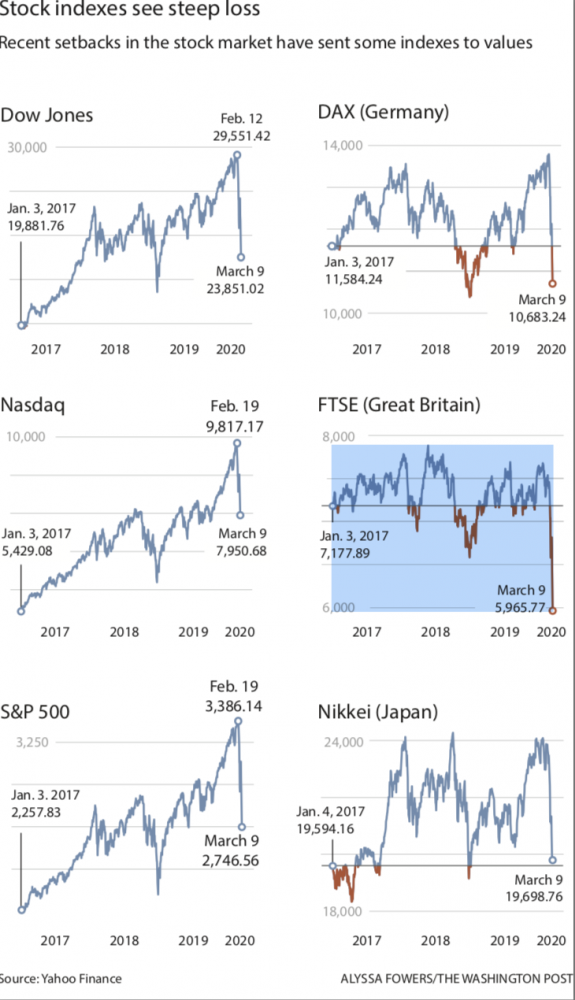
The coronavirus outbreak fanned new fears of a worldwide recession on Monday, as well as an all-out oil price war, sending stock markets spiraling down to new record lows not seen since the 2008 financial crisis.

The Dow Jones industrial average shed 2,014 points, or 7.8%, on Monday, the largest decline since the financial crisis. Stocks fells so sharply, that they tripped a so-called “circuit breaker” that halted trading for 15 minutes. Oil prices tumbled 24%, its worst day since the 1991 Gulf War, as the coronavirus weakens demand for fuel, with Saudi Arabia and Russia refusing to scale back production.

Photo by: The Washington Post — The Washington Post

Photo by: The Washington Post — The Washington Post

The outbreak continues to spread at a rapid clip with more than 113,000 cases worldwide, prompting Italy and Israel to take new extreme quarantine measures Monday. The director of the World Health Organization called the threat of a coronavirus pandemic “very real.”

At an impromptu presidential news conference Monday, President Donald Trump announced new plans to cut payroll taxes, relieve hourly workers, and help the airline, cruise, hotel and travel industries. He said more details about the administration’s economic response would be released Tuesday.

“We are going to take care of and have been taking care of the American public and the American economy,” Trump said.

The U.S. tally of known infections of covid-19, has passed 500 spanning across 30 states. The growing outbreak has wreaked havoc on the travel and tourism and manufacturing supply chains on a range from cars to smartphones. Americans are increasingly staying at home, choking off the spending that normally fuels the U.S. economy, and setting off alarms that a recession could be underway.

Many stores, restaurants, gyms and entertainment venues are seeing reduced traffic, an indication that the financial pain is spreading. That’s on top of ports, railroads and trucking companies seeing anemic business as the flow of goods and supplies from China has slowed sharply.

The economy faced a fresh blow over the weekend as oil prices dropped to about $30 a barrel, a level at which few American oil producers can survive for long.

There’s widespread agreement that the U.S. and global economies will come to a standstill this spring, a debilitating fall that carries major risks. Whether it turns into a full recession – defined as six straight months of contraction – depends largely on whether governments can act quickly enough to contain the virus and ensure that there is not a massive wave companies defaulting, layoffs mounting and Americans running out of cash.

“A global recession is more likely than not,” said Mark Zandi, chief economist at Moody’s Analytics. “The line between an expanding economy and recession is crossed when investors, businesses and – most important – consumers lose faith. Faith that they will have a job, that they will receive a paycheck, and that their retirement nest egg is safe.”

Uncertainty reigns over questions of how long the virus will stick around, how many people will be affected and whether the Trump administration can rise to the twin challenges of a health and economic crisis.

As the stock markets approached a 20% fall in value from its most recent high, stocks came close to so-called bear market territory. If the markets fall into a bear market, it would mark the end of an 11-year bull market run of rising stocks that began on March 9, 2009. At the end of trading Monday, the Dow had shed more than 19% since its record high from Feb. 12.

Minutes into the opening of the New York Stock Exchange, stocks had fallen so much, so quickly that they tripped the “circuit breaker.” That has not happened since 1997, and it immediately forced a 15-minute brake in trading on the hopes that investors would re-assess. When the timeout was temporary ended, stocks barely budged, staying at low levels all day.

Circuit breaker rules were put in place after 1987’s “Black Monday,” when a market plunge wiped out $500 billion in a single day – at the time the biggest single-day drop in history – and the equivalent of about $1.1 trillion today.

On coronavirus Monday, the market shed $1.87 trillion of value, according to analyst Howard Silverblatt of S&P Dow Jones Indices. Investors are waiting for clarity, many say, and they are unlikely to get it soon.

“Markets hate uncertainty and there is a ton of it currently in play,” said Greg McBride, chief financial analyst at Bankrate.com.

The other major force weighing on the markets Monday was the collapse of oil prices, which tumbled to about $30 a barrel range, off from about $45 a barrel last week, after Saudi Arabia and Russia deadlocked over production. The Saudis had been pushing for a cut in output to prop up prices but reversed course when Russia balked and decided, instead, to flood the market with hundreds of thousands of additional barrels per day – a move analysts fear may trigger a price war.

As oil prices sank, investors rushed to dump energy stocks. Continental Resources of Oklahoma lost half its value Monday, and Pioneer Natural Resources Company of Texas shed more than a third.

Trump cheered the lower oil prices because they make it cheaper for Americans to buy gas at the pump. Yet, as the United States has grown into a powerhouse energy player, lower prices can have devastating impacts on U.S. companies and regions of the country that rely heavily on oil and gas jobs. Pennsylvania has more than 36,000 people working in the shale gas industry, and neighboring Ohio has close to 18,000, according to Labor Department data.

“If these prices go on for too long, there will be a lot of bankruptcies,” said Jack Allardyce, an oil and gas research analyst at investment firm Cantor Fitzgerald Europe. “You need at least $40 a barrel to break even for production in the United States, and most won’t be making money at those prices.”

Fears are growing that some companies might default on their corporate debts. Initially the concern was centered on airlines and travel businesses that have been hit particularly hard by coronavirus fears, but the list of companies on the critical watch list has spread to include energy, transportation and possibly restaurants.

Investors are betting on a worst-case scenario for the economy. On Monday, yields on the popular 10-year U.S. government bond fell below 0.4% for the first time, an unthinkable level only a few weeks ago and a signal that economic growth is expected to be almost nonexistent.

Economists are also concerned about low-income Americans, many of whom live paycheck to paycheck. As more Americans stay home across the country, waiters and service workers get fewer hours and tips. Some workers do not get paid sick leave for that time. If unemployment, which is at a half-century low, starts to rise sharply in the coming months, that’s enough to weigh on confidence in the economy and spur consumers to pull back even more on spending.

“People who really don’t have a buffer are going to spend less on everything. We could see this soon. And if we start to see consumer spending slip, then we have a big problem,” said economist Claudia Sahm, one of the leading experts on downturns and the director of macroeconomic policy at the Washington Center for Equitable Growth. “I’m worried about a recession. I really am.”

Despite the rapid decline in markets, financial advisers overwhelmingly recommend that most Americans should not panic and stay invested. U.S. stocks have always rebounded. While many people worry about getting out of the market before it drops, it’s equally important to invest again before the market rises. Almost no one gets both those timing cues right, which is why it’s usually better to stay invested.

“For the individual investors, this shows how crazy it is to try to do market timing,” said James Angel, a finance professor at Georgetown University’s McDonough School of Business “You often see the biggest upturn right after a downturn. The best year for stocks was 1933.”

Gold prices fall by Bt100 #ศาสตร์เกษตรดินปุ๋ย

#ศาสตร์เกษตรดินปุ๋ย : ขอบคุณแหล่งข้อมูล : หนังสือพิมพ์ The Nation

https://www.nationthailand.com/business/30383790?utm_source=category&utm_medium=internal_referral

Gold prices fall by Bt100

Mar 10. 2020
By The Nation 

The price of gold fell by Bt100 per baht weight at close today (March 10), the Gold Traders Association reported. At 4.44pm, the buying price of a gold bar was Bt24,600 per baht weight and selling price Bt24,700, while prices of gold ornaments were Bt24,149.88 and Bt25,200, respectively.

The gold price dropped from morning trade, when the buying rate of a gold bar was Bt24,700 and the selling rate Bt24,800; gold ornaments were priced at Bt24,256 and Bt25,300, respectively.

Meanwhile, Comex futures gold contracts to be delivered in April increased by US$3.30 to $1,675.70 (Bt52,692) per ounce at Monday’s close due to uncertainty amid the dire Covid-19 situation and declining oil prices at the time, which is affecting the global economy.

West Texas Intermediate crude oil contracts today fell almost $30 per barrel after the Organisation of Petroleum Exporting Countries and its partners led by Russia were unable to reach an agreement to cut oil production at a meeting in Vienna last Friday, resulting in Saudi Arabia initiating an oil price war by unilaterally cutting prices.

In addition, oil prices were under pressure amid health worries, affecting oil demand after the World Health Organisation said that the number of Covid-19 patients worldwide had increased to more than 100,000, with 4,027 people having died.

The number of Covid-19 patients in the United States was put at 708, with 27 deaths so far.

SET rises ahead of central banks’ meetings #ศาสตร์เกษตรดินปุ๋ย

#ศาสตร์เกษตรดินปุ๋ย : ขอบคุณแหล่งข้อมูล : หนังสือพิมพ์ The Nation

https://www.nationthailand.com/business/30383789?utm_source=category&utm_medium=internal_referral

SET rises ahead of central banks’ meetings

Mar 10. 2020
By The Nation

The Stock Exchange of Thailand (SET) Index closed at 1,271.25 today (March 10), up 15.31 points(1.22 per cent) from Monday’s close with an index high of 1,285.65 and a low of 1,258.70 on a total trade transactions of Bt74.686 billion.

A stock analyst at Krungsri Securities predicted the index to move between 1,240 and 1,270 with investors expecting central banks worldwide to loosen monetary policy and cut interest rate to mitigate impact from the Covid-19 outbreak.

“The European Central Bank will convene for a meeting on March 12 , the US Federal Reserve during March 17-18, and the Thai Monetary Policy Committee on March 25,” the analyst said.

The top ten stocks with the highest trade values were PTT, PTTEP, BAM, CPALL, PTTGC, AOT, SCC, SCB, CPF, and IVL.

Elsewhere in Asia, Japan’s Nikkei Index closed at 19,867.12, up 168.36 points, or 0.85 per cent.

China’s Shanghai SE Composite Index closed at 2,996.76, up 53.47 points, or 1.82 per cent, while Shenzhen SE Component Index closed at 11,403.47, up 294.92 points, or 2.65 per cent.

Hong Kong’s Hang Seng Index closed at 25,392.51, up 352.05 points, or 1.41 per cent.

South Korea’s KOSPI Index closed at 1,962.93, up 8.16 points, or 0.42 per cent.

Taiwan’s TAIEX Index closed at 11,003.54, up 25.90 points, or 0.24 per cent.

Gold price falls, but worries mount about oil war #ศาสตร์เกษตรดินปุ๋ย

#ศาสตร์เกษตรดินปุ๋ย : ขอบคุณแหล่งข้อมูล : หนังสือพิมพ์ The Nation

https://www.nationthailand.com/business/30383772?utm_source=category&utm_medium=internal_referral

Gold price falls, but worries mount about oil war

Mar 10. 2020
By The Nation

The price of gold fell by Bt100 per baht weight on Tuesday morning (March 10), the Gold Traders Association reported.

Buying price of a gold bar was Bt24,700 per baht weight and selling price Bt24,800. Buying price of gold ornaments was Bt24,256 per baht weight and selling price Bt25,300.

The prices dropped from Monday’s close when buying price of gold bar was Bt24,800 and selling price Bt24,900. Gold ornaments were Bt24,346.96 to buy and Bt25,400 to sell.

Meanwhile, gold contracts in COMEX futures to be delivered in April increased by US$3.30 to $1,675.70 per ounce on Monday’s close due to uncertainty following the Covid-19 outbreak and declining oil prices which affect the global economy.

Crude oil contracts in West Texas Intermediate on Tuesday fell almost $30 per barrel after the Organisation of the Petroleum Exporting Countries and its partners led by Russia were unable to reach an agreement to cut oil production at a meeting in Vienna last Friday, resulting in Saudi Arabia initiating an oil price war by unilaterally cutting oil price.

In addition, oil prices were pressured from uncertainty following the Covid-19 outbreak, affecting oil demand after the World Health Organisation (WHO) revealed that the number of Covid-19 patients worldwide had increased to over 100,000 and 4,027 people has died.

The number of Covid-19 patients in the US is 708 and 27 have died.

SET Index rises on hopes of central banks loosening fiscal policy #ศาสตร์เกษตรดินปุ๋ย

#ศาสตร์เกษตรดินปุ๋ย : ขอบคุณแหล่งข้อมูล : หนังสือพิมพ์ The Nation

https://www.nationthailand.com/business/30383770?utm_source=category&utm_medium=internal_referral

SET Index rises on hopes of central banks loosening fiscal policy

Mar 10. 2020
By The Nation

The Stock Exchange of Thailand (SET) Index rose in morning session on Tuesday (March 10) by 29.14 points, or 2.32 per cent, to 1,285.08 over Monday’s close.

A stock analyst at Krungsri Securities expected that the SET Index would move between 1,240 and 1,270 since investors hope that central banks worldwide would loosen monetary policy and cut interest rate to tackle the economic recession amid Covid-19 outbreak.

“Investors still remain under pressure following the worldwide spread of Covid-19 with the number of patients worldwide rising to over 100,000,” the stock analyst said.

“Meanwhile, Italy’s move to lock down the country to control the outbreak would affect the European economy.”

An analyst said that oil prices tended to maintain a low level after Saudi Arabia announced cuts to oil prices and planned to increase oil production capacity by over 10 million barrels per day in April this year, resulting in negative sentiment for energy and petrochemical stocks.

“However, the stock index will rebound since investors hope that many central banks will loosen monetary policy and cut interest rate to tackle economic recession,” the stock analyst said.

“The European Central Bank will hold a meeting on March 12 this year, the US Federal Reserve will hold a meeting on March 17-18, and the Thai Monetary Policy Committee will meet on March 25.”

The analyst recommended four groups of stocks for investors:

● Stocks that would benefit from the declining oil price, such as TASCO and EPG.

● Hotel and retail stocks, which would benefit from the economic Cabinet’s approval of Bt100 billion economic stimulus measures, such as CENTEL, ERW, HMPRO, and BJC.

● Financial stocks, which responded to reduced financial costs due to interest rate cut trends, such as MTC, SAWAD, and KTC.

● Defensive stocks which pay high dividends, such as ADVANC, INTUCH, and TTW.