Cryptos no refuge in market carnage as bitcoin breaks $8,000 #ศาสตร์เกษตรดินปุ๋ย

#ศาสตร์เกษตรดินปุ๋ย : ขอบคุณแหล่งข้อมูล : หนังสือพิมพ์ The Nation

https://www.nationthailand.com/business/30383709?utm_source=category&utm_medium=internal_referral

Cryptos no refuge in market carnage as bitcoin breaks $8,000

Mar 09. 2020
By Syndication Washington Post, Bloomberg · Eric Lam · BUSINESS, US-GLOBAL-MARKETS

Cryptocurrencies are not immune to the gyrations rocking global markets, plunging along with a broad range of assets on Monday in the wake of the collapse in crude oil prices.

Bitcoin, the largest digital currency, dropped as much as 16% from Friday’s close after extending a sell-off begun over the weekend, and was trading at around $7,820 as of 7:31 a.m. in New York. That’s the biggest one-day slump at least since September, according to consolidated pricing compiled by Bloomberg.

The wider Bloomberg Galaxy Crypto Index fell as much as 18% as major cryptocurrencies Ether, XRP, Dash and Litecoin also retreated.

Asia equities plunged with sovereign bond yields, while currencies swung wildly on Monday after Brent oil prices crashed more than 30%, the second-largest decline on record after the plunge during the Gulf War in 1991.

“Macro dominoes are falling to create a chain of negative sentiment, which is in turn triggering a sell-off of crypto,” said Jehan Chu, managing partner with blockchain investment and advisory firm Kenetic Capital. “Bitcoin has always been subject to short-term sometimes-violent volatility, but today’s drop is nothing we haven’t seen before” and it could move lower still, he said.

There’s also a bullish argument, according to Chu — that the weakness in the global economy, oil’s collapse and the coronavirus outbreak are helping to make the case for investing in digital assets.

Even with the latest sell-off, Bitcoin is still up about 9% this year, with much debate within the industry on the potential impact on pricing of the upcoming “halvening” — a scheduled reduction in the mining rate of the coin designed to combat inflation.

“A similarly rapid turnaround and appreciation is equally anticipated on the way to higher levels leading into the halvening,” he said.

Expanding CPF takes 20% of Tesco Asia Group #ศาสตร์เกษตรดินปุ๋ย

#ศาสตร์เกษตรดินปุ๋ย : ขอบคุณแหล่งข้อมูล : หนังสือพิมพ์ The Nation

https://www.nationthailand.com/business/30383703?utm_source=category&utm_medium=internal_referral

Expanding CPF takes 20% of Tesco Asia Group

Mar 09. 2020
Prasit Boondoungprasert, Chief Executive Officer

Prasit Boondoungprasert, Chief Executive Officer
By The Nation

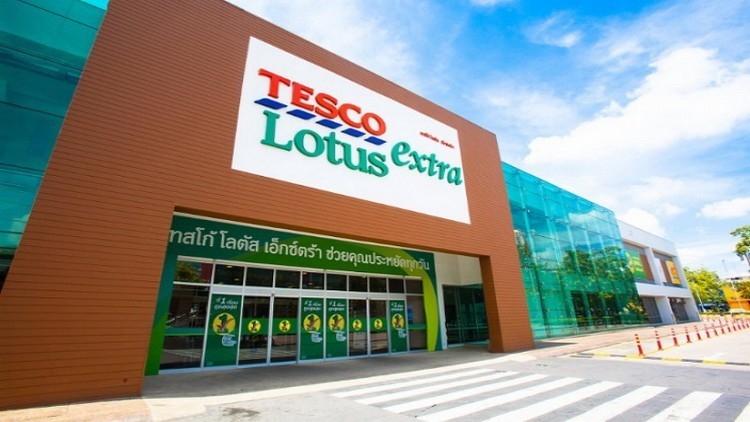
The board of dorectors of Charoen Pokphand Foods Public Company Limited (CPF) has approved an investment by its wholly-owned subsidiary CP Merchandising Co Ltd (CPM) to acquire up to 20 per cent of the total issued shares in Tesco Asia Group – a leading retailer under Tesco Lotus brand in Thailand and Malaysia, with CPM’s investment in the holding company setting up a Tesco Asia Group’s investment transaction worth approximately US$1,500 million or Bt47.99 billion.

Prasit Boondoungprasert, Chief Executive Officer, said that CPF’s investment in Tesco Asia is aimed to further strengthen its value chain in term of distribution channels in Thailand and Malaysia and enhancing the range of consumer options in this space. CPF is planning to modernise its distribution channels of meat products to better suit consumers’ behaviour. CPF is confident that the investment presents exciting opportunities for enhancing Thai and Malaysian consumer experiences in an already highly competitive sector.

This joint investment will boost sales of both Tesco and CPF. Given the fact that Tesco Asia has been enjoying the strong operating results consistently, coupled with its highly experienced management and operating teams capable of adapting to changing business and market environment, CPF firmly believe that this investment with Tesco Asia will further enhance the already impressive operating results.

It should be noted that the investment is subject to the full satisfaction of conditions precedent, including obtaining the resolution of shareholders’ meeting of Tesco UK approving the sale of shares in Tesco Asia Group, the approval of the Office of the Trade Competition Commission (where an application for approval is to be submitted) and the approval of the Ministry of Domestic Trade and Consumers Affairs of Malaysia in respect of the relevant transaction in Malaysia. The transaction is expected to be concluded by the end of 2020.

CP Group set to buy Tesco’s Thai, Malaysian businesses in deal valued at over Bt332 billion #ศาสตร์เกษตรดินปุ๋ย

#ศาสตร์เกษตรดินปุ๋ย : ขอบคุณแหล่งข้อมูล : หนังสือพิมพ์ The Nation

https://www.nationthailand.com/business/30383698?utm_source=category&utm_medium=internal_referral

CP Group set to buy Tesco’s Thai, Malaysian businesses in deal valued at over Bt332 billion

Mar 09. 2020
By The Nation

Tesco announced today (March 9) that it has entered into a conditional agreement with a combination of CP Group entities – CP Retail Development, Charoen Pokphand Holding, CP All and CP

Merchandising – to sell its business in Thailand and Malaysia in a deal valued at $10.6 billion (Bt332.6 billion). The move is aimed at simplifying the Tesco Group, enabling a stronger focus on its retail businesses in the UK and Ireland and in Central Europe.

“The disposal allows Tesco Group to further ‘de-risk’ the business by reducing indebtedness through a significant pension contribution of £2.5 billion [Bt102.3 billion]. The consideration payable to Tesco pursuant to the disposal represents an enterprise value of $10.6 billion on a cash and debt-free basis, representing an EV/EBITDA multiple of 12.5×2,” the company said in a press statement.

Under the terms of the disposal, net cash proceeds are expected to be $10.3 billion before tax and other transaction costs.

“The disposal is conditional on, inter alia, the approval of Tesco shareholders at a general meeting of the company’s shareholders. The disposal is also subject to customary regulatory approvals in Thailand and Malaysia. A circular containing further details of the disposal and a notice convening a general meeting will be sent to Tesco shareholders as soon as practicable. It is also expected that shortly after completion, a separate general meeting will be convened to seek shareholder approval for the return of proceeds and associated share consolidation. A separate circular will be sent to shareholders containing further details on these,” the statement added.

Over the last four years Tesco’s performance has significantly improved, in particular within the UK, its largest and most important market, but also across the wider group. In October 2019, Tesco announced that it had met or exceeded the targets it had set against each of its six key strategic drivers, and that all elements of its turnaround plan had been executed successfully

The group’s balance sheet is now stronger, with total indebtedness reduced by £7 billion since the financial year end 2014/15. This has been driven by strong business performance, the release of £1.7 billion of value from the property portfolio, and selective asset disposals, including of the Korean business in 2015. In addition, the group has completed the merger with Booker, combining the largest wholesale food business in the UK, the statement said.

“It is from this strengthened position that the board decided to respond to the expressions of interest it received for Tesco Thailand and Tesco Malaysia. Tesco’s Asian operations have been an important part of the group for many years and constitute an exceptionally high-quality business, with market leading positions in two key markets of Thailand and Malaysia. Given the high value that could be received for Tesco Thailand and Tesco Malaysia, the board concluded that it would be in shareholders’ best interests to conduct a strategic review to determine the best option for continued value creation. The conclusion of this strategic review led the board subsequently to launch a competitive process to evaluate potential value creation through a disposal,” the company said.

“The group received multiple offers for the Asia business and the board has unanimously concluded that the offer by CP Group to acquire the business for an enterprise value of £8.2 billion on a cash and debt free basis should be recommended to shareholders. The board believes the disposal will realise a significantly higher value than could be generated from Tesco’s continued ownership and investment. It will also enable the group to return significant proceeds to shareholders,” the firm added.

Tesco began operating in Thailand in 1998 through Ek-Chai, which operates under the name “Tesco Lotus”, a network of stores comprising various formats across Tesco Thailand as well as an online shopping platform and third-party applications such as Lazada and Happy Fresh.

Tesco Lotus generated approximately £4.1 billion in revenue in the financial year ended February 23, 2019. It operates a network of almost 2,000 stores in Thailand and serves more than 13 million customers each week, according to company statistics.

JPMorgan sees ‘early signs’ of stress on credit and funding #ศาสตร์เกษตรดินปุ๋ย

#ศาสตร์เกษตรดินปุ๋ย : ขอบคุณแหล่งข้อมูล : หนังสือพิมพ์ The Nation

https://www.nationthailand.com/business/30383666?utm_source=category&utm_medium=internal_referral

JPMorgan sees ‘early signs’ of stress on credit and funding

Mar 09. 2020
File photo/ Syndication Washington Post, Bloomberg

File photo/ Syndication Washington Post, Bloomberg
By Syndication Washington Post, Bloomberg · Joanna Ossinger · BUSINESS, US-GLOBAL-MARKETS 

The fallout from the global spread of coronavirus may be starting to affect credit and funding markets, according to JPMorgan Chase & Co.

Supply-chain disruptions and demand shock from the virus fallout could already be causing cash-flow problems for businesses, JPMorgan strategist Nikolaos Panigirtzoglou wrote in a note Friday. That’s probably even more true for smaller companies and those in sectors like travel and lodging, he said.

“If these shifts in credit and funding markets are sustained over the coming weeks and months, especially in the issuance space, credit channels might start amplifying the economic fallout from the covid-19 crisis,” Panigirtzoglou said. Unless “credit support by central banks and/or governments is broad, fast and direct, we note credit markets are facing an increased risk of the cycle turning with a lot more downgrades or even defaults over the coming months.”

Credit markets suffered their worst day in a decade on Friday amid fears that coronavirus will hurt corporate income and stymie some companies’ ability to repay their debt. Travel- and leisure-related companies were hit, while energy-company bonds and loans fell further into distress. A derivatives index that measures the perceived risk of corporate credit surged by the most since at least 2011 and in Europe the cost of insuring senior financial debt skyrocketed.

Market concerns about ratings downgrades and companies dropping to junk status are justified by a look at credit fundamentals, the JPMorgan report said. The median net-debt-to-Ebitda ratio for companies in JPMorgan’s high-grade and high-yield companies in the U.S. and Europe has risen steeply in the past decade and is now higher than in the previous two cycles in 2007/2008 and 2001/2002, it said.

“Companies are currently much more vulnerable to a decline in incomes and/or a rise in corporate bond spreads and yields than in the previous two recessions,” Panigirtzoglou wrote. “This is especially true for U.S. credit and for Euro high yield given the absence there of the backstop from the European Central Bank’s corporate bond program that solely benefits Euro high grade.”

There are some signs of stress in Yankee issuance as well, the report said, noting it tends to be more sensitive to funding concerns because non-U.S. companies can find it harder to raise dollar funding relative to domestic U.S. companies in periods of stress.

It’s also the case that credit appears most vulnerable to an economic downturn, according to the note, using an analysis which looks at the historical behavior of various asset classes around past U.S. recessions, particularly the move from the pre-recession peak to the trough during the event.

“Rate markets are now implying that something that looks like a U.S. recession is almost a certainty and have become even more disconnected from risky asset classes,” Panigirtzoglou wrote. “U.S. credit seems to be still most vulnerable to U.S. recession risks followed by U.S. equities.”

Head of Azerbaijan’s bank becomes focus of groundbreaking money-laundering case #ศาสตร์เกษตรดินปุ๋ย

#ศาสตร์เกษตรดินปุ๋ย : ขอบคุณแหล่งข้อมูล : หนังสือพิมพ์ The Nation

https://www.nationthailand.com/business/30383640?utm_source=category&utm_medium=internal_referral

Head of Azerbaijan’s bank becomes focus of groundbreaking money-laundering case

Mar 08. 2020
Jahangir Hajiyev. MUST CREDIT: Bloomberg photo by Nelson Ching

Jahangir Hajiyev. MUST CREDIT: Bloomberg photo by Nelson Ching
By Syndication Washington Post, Bloomberg · Edward Robinson, Gavin Finch, Stefania Spezzati · BUSINESS, WORLD, EUROPE

Jahangir Hajiyev was running out of money. That was the urgent subject before the board of a company based in the tax haven of Guernsey in September 2015. For years, Hajiyev, then chairman of the International Bank of Azerbaijan, had used a chain of trusts and shell companies stretching from Cyprus to the Channel Islands to move tens of millions of dollars out of the state-owned lender, according to allegations in U.K. court filings.

The scheme financed a life of luxury for a man who investigators said earned a salary of $70,650 in 2008: four mansions in the English countryside, a $42.5 million Gulfstream jet, a $13 million golf club outside London and a villa in Sardinia. Hajiyev’s wife, Zamira, ensconced in adjoining Knightsbridge townhouses, splurged on $20 million of diamonds, designer handbags and other luxuries at nearby Harrods. Even as the couple burned through cash, they borrowed millions more.
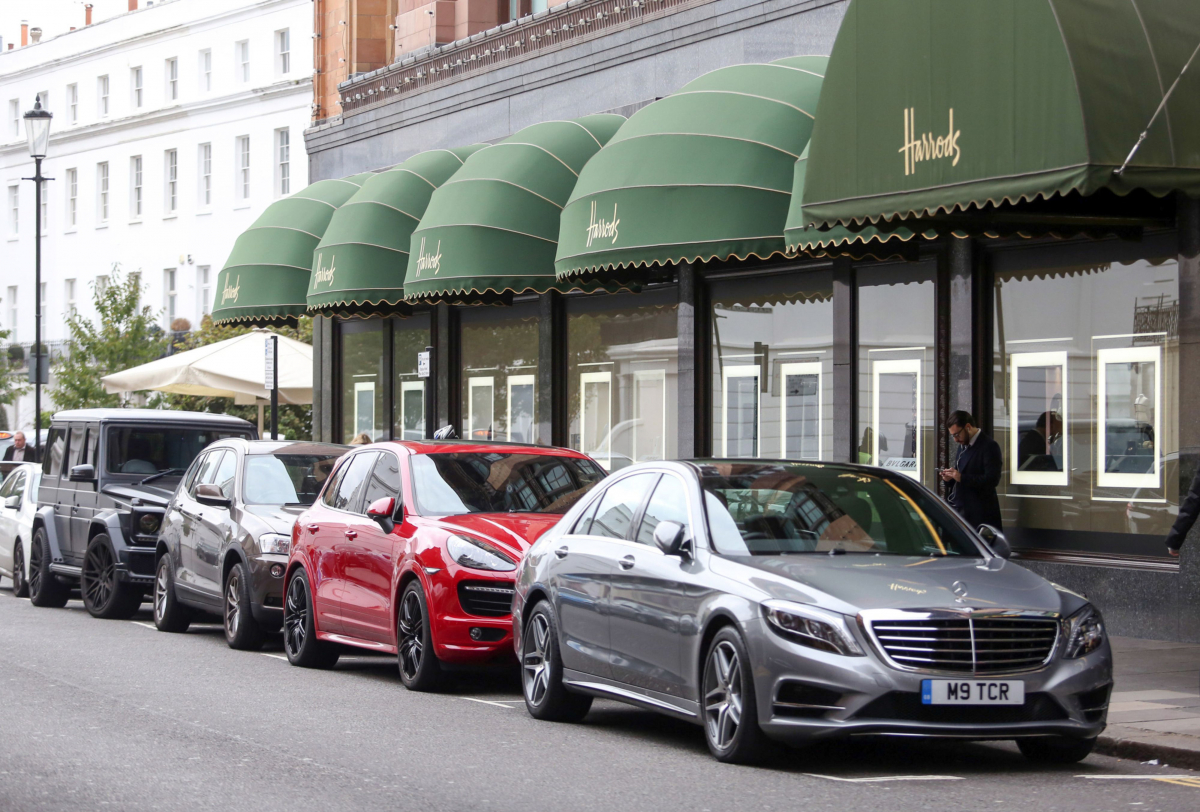
Jahangir Hajiyev wife's, Zamira, spent about $180,000 at Harrods luxury emporium in London. MUST CREDIT: Bloomberg photo by Chris Ratcliffe

Jahangir Hajiyev wife’s, Zamira, spent about $180,000 at Harrods luxury emporium in London. MUST CREDIT: Bloomberg photo by Chris Ratcliffe

When the directors of Lumea 2014 PTC jumped on a conference call that September, they grappled with a new reality. The company was cratering and its creditors, including a Swiss bank, were circling, according to internal minutes of its board meetings seen by Bloomberg News. That wasn’t good because Lumea, which had consolidated control of Hajiyev’s assets, was the cog that kept his wealth machine spinning, the records show.

Dialing in to deal with the crisis was a cast of professionals Hajiyev had hired to run his operation. There were Lumea’s four directors – the head of a multifamily office in London, the managing director of a global trust company in Guernsey and two attorneys affiliated with Dentons, the world’s biggest law firm – as well as an Azerbaijani banker.

Security barriers outside St. George's Hill, one of England's most exclusive developments, where Jahangir Hajiyev owned three homes. MUST CREDIT: Bloomberg photo by Jason Alden

Security barriers outside St. George’s Hill, one of England’s most exclusive developments, where Jahangir Hajiyev owned three homes. MUST CREDIT: Bloomberg photo by Jason Alden

Their discussion ranged from dwindling cash balances to maneuvers involving shell companies in Luxembourg to making grants to Harvard’s John F. Kennedy School of Government, according to the minutes. Striking a reassuring note, Francois Chateau, a senior partner at Dentons, said Hajiyev, who resigned from the bank that March, was “in the middle of reorganizing his personal wealth and finances, which has restricted cash flows.” The process “should be completed within the next 60 days, when liquidity issues should be resolved,” he advised the board.

That turned out to be wishful thinking. Within three months, Hajiyev would be charged in Azerbaijan with plundering the bank he’d led since 2001. He proclaimed his innocence but was sentenced to 15 years in prison. Any hope for a fresh infusion of cash to replenish the coffers was gone.

Hajiyev’s fortune – believed by law enforcement officials to have once exceeded $100 million – has become the focus of a groundbreaking money-laundering case. The U.K.’s National Crime Agency obtained court orders in 2018 freezing some of his assets and requiring Zamira to explain the origins of the family’s wealth. The authorities have said they hope the case will be a blueprint for curbing the estimated 100 billion pounds ($128 billion) in dirty money that worms its way into Britain every year, often from economically deprived countries.One of the keys to doing that is cracking down on so-called professional enablers, who are required under U.K. regulations to carry out know-your-customer checks of clients and report suspicious activity to the authorities. A politically connected chairman of a state-owned bank in a notoriously corrupt country, whose spending far outstripped his earnings, should have raised red flags with those hired to manage his finances. One look at the International Bank of Azerbaijan’s annual reports and prospectuses would have shown that compensation for its five-member management board, plus senior executives, totaled about $1 million a year during Hajiyev’s tenure in the 2010s. In 2018, a British judge said it was “very unlikely” that Hajiyev “would have generated sufficient income” to fund even one of his many properties.

The trove of documents reviewed by Bloomberg provides a rare look at the inner workings of two dozen shell companies that moved Hajiyev’s illicit wealth around the world. The minutes of about 30 meetings from 2011 through 2016 reveal that the banker owned more luxury assets than previously reported, including a vineyard in Sardinia and three mansions in developments in Surrey popular with Russian oligarchs. The records demonstrate how Hajiyev’s advisers handled the day-to-day operation of these financial vehicles and scrambled to keep them afloat after his legal troubles turned off the tap.

A multifamily office called Werner Capital played an instrumental role in steering Hajiyev’s fortune into high-end British properties, Bloomberg reported in July. Led by Tomas Mateos Werner, once a private banker at HSBC Holdings Plc, the firm didn’t register with the U.K.’s Financial Conduct Authority, which regulates firms that manage client assets, even though it catered to wealthy people in the Russian-speaking world. The FCA declined to comment on whether Werner should have. The new information shows that Chateau, a former Dentons global vice chairman, and Philip Enoch, a consultant for the firm’s U.K. arm, also played important roles advising Hajiyev’s offshore operations.

“Business is supposed to provide a first line of defense against money laundering, and yet time and time again we see firms facilitating it instead,” said Duncan Hames, director of policy at Transparency International UK, the British arm of the global anti-corruption organization. “Faced with suspicious activity, senior partners in a global law firm should not be disregarding red flags and continuing to offer services.”

Lucy Fellows, a Dentons spokeswoman, said the firm doesn’t comment about current or former clients. “We are committed to strict compliance with all laws, regulations and professional standards of the jurisdictions in which we operate, which includes compliance with anti-money-laundering policies and standards,” Fellows said in an email. She added that Hajiyev isn’t currently a client and that neither Chateau nor Enoch had anything further to say.

The private banking units of EFG International AG in Zurich and South Africa’s Investec Ltd. also appear in documents in relation to the Hajiyevs providing loans and other financial services. A spokesman for EFG declined to comment, as did Tomas Werner. An Investec spokesman said the bank doesn’t comment on clients but will immediately review and potentially end a relationship with a customer if “adverse information” comes to light. They and their firms have a right to work with all manner of clients, and there’s nothing inherently wrong with setting up or managing offshore trusts.But British lawmakers who support tougher anti-money-laundering measures say the new disclosures raise questions about the work that professionals do for clients with suspicious sources of wealth. “We have to make financial advisers, lawyers, bankers, accountants and other enablers culpable for facilitating money laundering and other financial crimes,” said Margaret Hodge, a Labour Party Member of Parliament and former government minister. “Nothing ever lands on the advisers who create these structures.”

Hajiyev’s ties to his advisers go back 15 years. In 2005, he paid 4.5 million euros ($5 million) for a villa in the billionaires’ playground of Costa Smeralda near the northern tip of Sardinia, according to corporate filings in Italy. The 11-room Villa Carruba is perched on the side of a hill with panoramic views of the Tyrrhenian Sea. A nightclub called Billionaire, where pizzas can cost as much as 50 euros, is just down the road. It’s a short boat ride across the bay to the mansion where former Italian Prime Minister Silvio Berlusconi held his “bunga bunga” parties. After a wave of Russian oligarchs bought villas in the area in the early 2000s, an Orthodox church was established to satisfy their spiritual needs.Hajiyev bought his villa through an Italian shell company, Rufus S.R.L., according to an assessment of his wealth prepared by Werner Capital and corporate filings in Italy. His daughter, Leyla Mahmudova, is listed as an administrator on a registration record filed in 2017. Rufus, in turn, was owned by a Luxembourg-domiciled company named Tiara S.A. No mortgage was recorded on the filings.

The villa filings reveal Hajiyev’s relationship to a key figure in the money flows between Azerbaijan and the West – Khagani Bashirov, who’s listed as Tiara’s administrator. Bashirov also showed up as a director, for 18 days, of the Sardinian winery, Tenuta Masone Mannu, that Hajiyev bought in 2014 for about 5 million euros, according to Rufus filings. Bashirov also served as a director of the U.K. company that owned Hajiyev’s private jet and was a shareholder with Zamira in an enterprise that owned an apartment in London where she lived when she first moved there around 2005, company records show.

A 59-year-old Azeri businessman and former government official, Bashirov also holds a French passport and maintains a residence in Luxembourg and company offices in London. He was arrested in Azerbaijan in 2010 for failing to repay $109 million in loans from International Bank of Azerbaijan, then released after five months, according to a 2011 report by Radio Free Europe’s Azeri service introduced into court records.

Bashirov is also linked to companies that have moved tens of millions of dollars out of Azerbaijan, records show. The Organized Crime and Corruption Reporting Project has traced some of these entities to the Azeri Laundromat, an alleged $2.9 billion money-laundering operation that also involved the International Bank of Azerbaijan when Hajiyev was its chairman. A receptionist at a consulting firm Bashirov founded in Azerbaijan said he was out of the country, and he couldn’t be reached for comment at the London addresses where his U.K. companies are based or at a residence in Luxembourg he has listed on filings there.

Investec raised concerns about Bashirov’s connections with Hajiyev. At the September 2015 Lumea board meeting, Ryan Dekker, managing director of the Guernsey office of Trident Trust, said the bank was “voicing concerns” about Bashirov’s dealings with Hajiyev. Dekker, whose firm provides financial services to the wealthy, said Investec wanted to know more about the relationship. Chateau said Bashirov and Hajiyev had known each other for at least five years, the lawyer said, according to the minutes. He had “structured some vehicles” for Hajiyev and “acted as his nominee from time to time.” Chateau added that Hajiyev was now “unwinding this relationship and structuring the assets in his own name.”

Trident said it doesn’t comment on client matters but has always complied with Guernsey’s anti-money-laundering and compliance requirements.

Chateau, 63, leads Dentons’ global practice for the luxury, fashion and beauty industries from his base in New York. He also advises wealthy families and acts as a trustee for their interests, according to the firm’s website. He joined Dentons in 2013 after it merged with Salans, a Paris-based law firm where he was chairman and Enoch was a partner. It isn’t clear if Chateau started working with Hajiyev before Lumea was set up in May 2014, but Salans had an office in Baku. In 2011, Salans worked on plans to privatize the International Bank of Azerbaijan when Hajiyev was chairman, according to a 2016 report by PwC.

The Lumea minutes show that from 2014 through 2016, even as Hajiyev was being prosecuted for financial crimes, the directors were preoccupied with developing and flipping mansions in two of the world’s most exclusive luxury-housing estates. Hajiyev had bought three properties in St. George’s Hill, a 960-acre (388-hectare) gated enclave in Surrey, where houses cost an average of about $7.7 million (6 million pounds). With its manicured lawns, golf course and round-the-clock security, the development has been popular with Russian billionaires, including Oleg Deripaska, a target of U.S. sanctions, and Boris Berezovsky, a onetime ally-turned-enemy of President Vladimir Putin who committed suicide in 2013.

These were investment properties for the Hajiyevs, and each was placed inside its own shell company, with names like Astra and Lumen, the documents show. After spending more than 10 million pounds buying the houses, Hajiyev’s companies borrowed millions more from EFG to raze them and build even grander residences.One was the Warreners, a five-bedroom, Regency-style mansion with an indoor swimming pool and an elevator that lowered cars from the driveway to an underground garage. In 2011, Werner Capital arranged for EFG to provide one Hajiyev company with a 4.6 million-pound mortgage to refinance and develop the property. The two-year loan cost 140,000 pounds in fees and monthly interest of about 17,250 pounds, according to the minutes. Hajiyev personally guaranteed the debt.

Tomas Werner and his brother Daniel were more than property developers. As early as 2010, Hajiyev authorized Tomas Werner to manage his money, and the following year Werner Capital prepared a net-worth statement detailing his assets for EFG’s private bank. Their firm offered to provide clients, primarily in the Russian-speaking world, with “complex, cross-border corporate governance structures” to protect their assets from “political upheaval, changes in legislation or unwarranted claims,” according to an old version of Werner Capital’s website. It also helped clients settle in the U.K., obtain residency visas and gain access to private schools for their children. Daniel Werner declined to comment.The Werners managed every aspect of the redevelopments, from hiring builders to commissioning interior designers and security consultants, even getting the water mains and electricity connected. They spent 210,000 pounds on “stone and ceramic works” for the Warreners and 54,000 pounds on “furniture from Italy,” the minutes show. The spending continued until Hajiyev left the bank in March 2015. A month earlier, Zamira had used credit cards issued by her husband’s bank to spend more than 140,000 pounds at Harrods on merchandise from Gucci, Fendi and Christian Dior.

By February 2016, the mood among Lumea’s directors had darkened. Bankers at EFG were running out of patience, the minutes show. Unpaid bills and stalled building projects meant that its 13 million pounds in loans were in jeopardy. Three days before that month’s meeting the Swiss bank had directed Lumea to sell one of Hajiyev’s mansions, Robin Hill, to one of its own clients for 4.5 million pounds – 2 million pounds less than the purchase price. But that wasn’t enough. EFG was also demanding that all creditors be paid and 1 million pounds be placed on secured deposit with the bank.

Trident Trust’s Dekker informed the board that if the shell companies failed to pay their debts, EFG was threatening to seize control of all the properties, the documents show. That “would result in the likely fire sale of the developments to meet the bank’s outstanding secured facility,” Dekker said. “This would not be in the interests of the beneficiaries.”

It’s unclear from the documents how much the advisers received in compensation. But with insolvency looming, some restructured their fees. At a meeting on April 15, 2016, Tomas Werner said he was owed about 200,000 pounds that he was willing to forgo in lieu of a monthly retainer of 7,200 pounds for the next 90 days. Trident also started billing on a monthly basis, charging almost 30,000 pounds for its services in March 2016, the minutes show. As for Dentons, it was owed 24,300 pounds that month.

By June of that year, Hajiyev’s finances had deteriorated so much that the directors decided to hold off paying an estate fee of 6,888 pounds to the St. George’s Hill residents’ association. Meanwhile, Zamira had hired her own lawyer to chase Lumea’s directors for her “distributions” from the proceeds of the Robin Hill sale. In the past, they had approved a $2.3 million payment from Lumea to Zamira to settle her credit-card balances, the minutes show.

Now they were rebuffing her demands, arguing that any such disbursement would trigger EFG’s takeover of the trust’s assets. Zamira had stopped responding to their texts and emails and no longer accepted their calls. In an apparent fit of pique, the directors noted: “It was clear to the board that Mrs. Hajiyeva has a very limited understanding of trusts, her role as protector of those trusts, her entitlement as beneficiary and the consequences of unraveling the current arrangements.”

By 2018, Zamira had become the target of a new type of legal action designed to root out dirty money. That February and April, the National Crime Agency obtained two Unexplained Wealth Orders directing her to disclose how she and her husband could afford to buy the adjoining townhouses on Walton Street for 11.5 million pounds and an 18-hole golf course and club outside London. British authorities didn’t accuse the Hajiyevs of any crimes, but Azerbaijani prosecutors charged Zamira with fraud and sought her extradition from the U.K. In September, a judge declined to send her back because there was a risk she wouldn’t receive a fair trial in a case with political implications.

Zamira argued that the NCA didn’t have grounds to target her. She asked an appeals court to throw out the orders. On Feb. 5, a three-judge appellate panel rejected her claim and noted that Werner Capital’s tally of Hajiyev’s fortune “posed more questions as to the source of his wealth than it answered,” highlighting $20 million he claimed to have earned while he was a student. Zamira has appealed the decision to the U.K. Supreme Court. If the nation’s highest court declines to accept the case she will have to show the properties were purchased with legitimate funds or the NCA could move to seize the assets. Her lawyer declined to comment.

While Unexplained Wealth Orders have passed a legal test, lawmakers must take other steps to attack the scourge of illicit finance, said Andrew Mitchell, a Conservative MP and former minister, speaking broadly about the problem. These include beefing up law enforcement agencies and bringing more transparency to the offshore world. Working with his Labour counterpart Hodge, Mitchell has backed new laws to stop the “ultimate beneficial owners” of crooked enterprises from hiding behind anonymously held shell companies. A bill that would require overseas owners of British properties to publicly disclose their holdings is winding its way through Parliament.

As useful as these measures might be, they won’t be enough to make a lasting difference unless professionals on the front lines take more responsibility for their actions, Mitchell said. In October, Transparency International UK reported that hundreds of billions of pounds in corrupt wealth had moved through 86 banks and financial institutions, 81 law firms, 62 accounting firms and thousands of companies in Britain and its overseas territories in the past 30 years.

“Money launderers are always one step ahead of us,” Mitchell said. “If the enablers don’t take their responsibilities seriously, then we should throw the book at them.”


OPEC’s epic fail will hurt all oil producers, even Russia #ศาสตร์เกษตรดินปุ๋ย

#ศาสตร์เกษตรดินปุ๋ย : ขอบคุณแหล่งข้อมูล : หนังสือพิมพ์ The Nation

https://www.nationthailand.com/business/30383667?utm_source=category&utm_medium=internal_referral

OPEC’s epic fail will hurt all oil producers, even Russia

Mar 09. 2020
By Syndication Washington Post, Bloomberg Opinion · Julian Lee · OPINION, BUSINESS, US-GLOBAL-MARKETS 

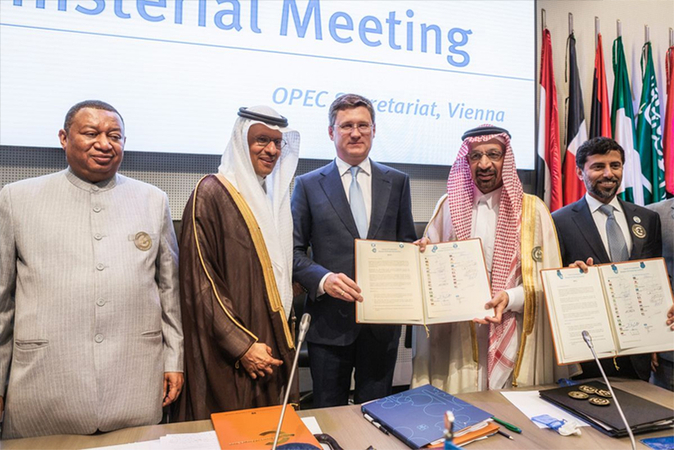
OIL-COMMENT: Friday’s gathering of oil ministers from the Organization of the Petroleum Exporting Countries and their international allies broke up in disarray. The collapse of talks reveals deep divisions over how to deal with the slump in oil demand triggered by the spread of the covid-19 virus.

Saudi Arabia demanded that Russia share in a proposed reduction of a further 1.5 million barrels a day, insisting that OPEC wouldn’t reduce supply without the support of non-members. Russia demurred. Maybe Vladimir Putin just didn’t like being told what to do by a 34-year-old prince who’s run his country for about as many months and his older brother who’s been energy minister for just half a year.

What’s become clear is that by making any OPEC output cut dependent on the participation of non-OPEC allies, the group effectively cemented Russia’s full control over the whole process of supply management, as I warned more than a year ago. This isn’t the first time OPEC+, which controls almost half of the world’s oil production, has been an uneasy partnership, but it is by far the most damaging. The partnership remains on life-support.

But this meeting was not just about making a further output cut. It was also meant to ratify an extension of the current agreement between the 20 nations to remove as much as 2.1 million barrels a day of oil from the market. That deal, reached in December, expires at the end of this month, leaving members free to pump as much as they wish from April 1.

And that’s just what Saudi Arabia is gearing up to do. State-owned oil monopoly Saudi Aramco, delayed setting official selling prices for April after the meeting collapsed. When it published them on Saturday, it slashed its flagship Arab Light crude by the most in 20 years, signaling that it may try to push as many barrels into the market as possible.

Bad as they are, things may not be quite as bad as some fear. Don’t expect the full volume of OPEC+ cuts to return immediately and swamp the market. Most members are already pumping at, or close to, capacity. Aside from Saudi Arabia, which could add more than 1 million barrels very quickly, the only other countries with the ability to boost output by more than 100,000 barrels a day are the United Arab Emirates and Russia.

Russia didn’t reject further output cuts just because its oil companies are reluctant to pump a bit less out of the ground. After all, they haven’t exactly stuck to their commitments so far, and at the last meeting they even secured an exemption for condensates – volumes of light oil extracted from gas fields – which is one of the areas of growth in Russian output. Had they wanted to do so, there was plenty of room for Russia to accept an output cut and implement it only in part, if at all.

One reason for refusing to play ball may be disagreement over how best to deal with a sudden sharp, but temporary, drop in oil demand. By allowing oil prices to fall, the Russians may be hoping to spur demand. It’s difficult to see that having much impact on consumption, though, when factories are closed, airlines are slashing flights and roads are emptying. Cheap oil won’t ease fears of the covid-19 virus.

But it may encourage countries like China and India to build up their strategic stockpiles. Both are creating buffers along similar lines to the U.S. Strategic Petroleum Reserve to protect themselves from any future supply disruptions. China already seems to be pouring vast amounts of crude into storage tanks and underground caverns.

Flows of crude from the Persian Gulf nations are down from their record October level, but they’re still pretty much on trend with shipments since the start of 2017. Volumes from West Africa are holding up, too. And amid the collapse in its oil consumption, China has emerged as the biggest buyer of crude from the Kurdish region of Iraq. It took four out of every 10 barrels shipped last month after buying nothing from the region as recently as October.

But there is also a bigger geopolitical dimension to Russia’s withdrawal from the output-cutting pact, just as there was to its joining. Participation served Putin’s ambitions to rebuild Russia’s influence in the Middle East. Withdrawal is aimed at punishing the U.S. for its repeated attacks on Russia’s energy interests through sanctions, which have stifled Arctic offshore exploration and shale development, prevented the completion a gas pipeline to Europe under the Baltic Sea, and targeted the Venezuelan business of Russia’s state-oil producer Rosneft.

Saudi Arabia led OPEC in a war on shale in 2014, when it introduced the pump-at-will policy. It failed then, capitulating as oil prices collapsed a year later. But U.S. producers from Exxon Mobil Corp. to Continental Resources Inc. are already being hammered and now may be a more auspicious time to launch an attack.

Even if it fails again, Russia intends to make sure that U.S. oil companies share the pain of the collapse in oil demand. Saudi Arabia appears wiling to help it. The next few months will be ugly.

– – –

This column does not necessarily reflect the opinion of Bloomberg LP and its owners.

Lee is an oil strategist for Bloomberg. Previously he worked as a senior analyst at the Centre for Global Energy Studies.

Gold price falls Bt350/baht at close of trade #ศาสตร์เกษตรดินปุ๋ย

#ศาสตร์เกษตรดินปุ๋ย : ขอบคุณแหล่งข้อมูล : หนังสือพิมพ์ The Nation

https://www.nationthailand.com/business/30383701?utm_source=category&utm_medium=internal_referral

Gold price falls Bt350/baht at close of trade

Mar 09. 2020
By The Nation

Gold price fell by Bt350 per baht weight at the close on Monday (March 9), the Gold Traders Association reported.

At 4.15 pm, buying price of a gold bar was Bt24,800 per baht weight and selling price Bt24,900, while buying price of gold ornaments was Bt24,346.96 per baht weight and selling price Bt25,400.

Prices dropped from the level in morning trade when buying rate of a gold bar was Bt25,150 with selling rate at Bt25,250, while gold ornaments cost Bt24,695.64 to buy and Bt25,750 to sell.

Meanwhile, gold contracts in COMEX futures increased by US$22.80, or 1.36 per cent, to $1,695.20 per ounce on Monday at 6.25 am Thailand time since investors turned to buy gold as a safe haven asset after the Dow Jones Index dropped sharply by 900 points due to declining oil prices and the Covid-19 outbreak.

Crude oil contracts in West Texas Intermediate which traded at the New York Mercantile Exchange (NYMEX) market fell by $8.75, or 21.20 per cent, to $32.53 per barrel due to the Organisation of the Petroleum Exporting Countries and its partners led by Russia unable to reach an agreement to cut oil production at a meeting in Vienna last Friday.

As a result, Saudi Arabia officially announced to cut oil price, signalling the beginning of a price war.

SET plummets by over 100 points, driven by falling oil price, Covid-19 anxiety #ศาสตร์เกษตรดินปุ๋ย

#ศาสตร์เกษตรดินปุ๋ย : ขอบคุณแหล่งข้อมูล : หนังสือพิมพ์ The Nation

https://www.nationthailand.com/business/30383700?utm_source=category&utm_medium=internal_referral

SET plummets by over 100 points, driven by falling oil price, Covid-19 anxiety

Mar 09. 2020
By The Nation

The Stock Exchange of Thailand (SET) Index closed at 1,255.94 points today (March 9), a decrease of 108.63 points, or 7.96 per cent, over Friday’s close and the lowest level seen in the past four years after the index came under pressure from falling oil prices and Covid-19 worries.

The daily trade volume was Bt103.623 billion, with an index high of 1,299.77 and a low of 1,249.31.

A stock analyst at Krungsri Securities expected the SET Index to fall to the low level of 1,320 due to a decline in the oil price after Opec and its partners did not reach a conclusion on reducing oil production.

“As a result, Saudi Arabia responded by lowering oil prices and announcing it was ready to increase production to gain market share from Russia, causing a negative sentiment in oil refinery and petroleum stocks,” the analyst said.

“Moreover, the uncertainty amid the Covid-19 situation, in which the number of infected people has increased to more than 100,000, will damage the global economy, resulting in investors turning to safe haven assets, which can be seen from rising gold prices and the declining US bond yield.”

The top ten stocks with the highest trade value today were PTT, PTTEP, CPAll, PTTGC, BAM, CPF, AOT, TOP, Advanc, and SCC.

Elsewhere in Asia, Japan’s Nikkei Index closed at 19,698.76, down 1,050.99 points, or 5.07 per cent.

China’s Shanghai SE Composite Index ended the day at 2,943.29, down 91.22 points, or 3.01 per cent, while the Shenzhen SE Component Index closed at 11,108.55, down 474.27 points, or 4.09 per cent.

Hong Kong’s Hang Seng ended at 25,040.46, sliding 1,106.21 points, or 4.23 per cent.

South Korea’s Kospi closed at 1,954.77, down 85.45 points, or 4.19 per cent.

Taiwan’s TaiEx ended at 10,977.64, falling by 344.17 points, or 3.04 per cent.

SET Index falls almost 7% #ศาสตร์เกษตรดินปุ๋ย

#ศาสตร์เกษตรดินปุ๋ย : ขอบคุณแหล่งข้อมูล : หนังสือพิมพ์ The Nation

https://www.nationthailand.com/business/30383694?utm_source=category&utm_medium=internal_referral

SET Index falls almost 7%

Mar 09. 2020
Pakorn Peetathawatchai, SET president

Pakorn Peetathawatchai, SET president
By The Nation

The Stock Exchange of Thailand (SET) Index dropped sharply as energy and public utility stocks fell due to plunging crude oil prices, president Pakorn Peetathawatchai said today (March 9).

He said the index dropped by more than 6.77 per cent in the morning session because energy and public utility stocks, which accounted for 30 per cent of market capitalisation, declined due to falling oil prices.

“The decline in the SET Index was in line with global stock markets,” he pointed out. “The SET has reported the information to the Bank of Thailand, the Finance Ministry and the Securities and Exchange Commission, which are concerned.

“Meanwhile, the Finance Ministry has established a working group to monitor movement in the capital market.”

He said the SET hasn’t come out with any special measures because the existing ones are sufficient for now.

“At this time, no abnormalities have been found in stock trading orders and forced sales in industry stocks,” he said. “The SET is currently considering helping listed companies, securities firms and asset management companies and a decision will be made soon,” he added.

“This period is a good time for investment, but people should diversify their investments in various industries,” he recommended.

Cabinet not to take up proposal yet to give low income people cash: PM #ศาสตร์เกษตรดินปุ๋ย

#ศาสตร์เกษตรดินปุ๋ย : ขอบคุณแหล่งข้อมูล : หนังสือพิมพ์ The Nation

https://www.nationthailand.com/business/30383689?utm_source=category&utm_medium=internal_referral

Cabinet not to take up proposal yet to give low income people cash: PM

Mar 09. 2020
PM Prayut Chan-o-cha

PM Prayut Chan-o-cha
By THE NATION

The Finance Ministry’s proposal to hand out Bt2,000 to low income people will not be tabled before the Cabinet tomorrow, Prime Minister Prayut Chan-o-cha said today (March 9).

He added that the Cabinet wanted to give top priority to urgent measures that could quickly lift the economy.

The Cabinet will consider two proposals tomorrow – the refund of Bt3,000 of electricity meter deposits per household and soft-loan measures to help the tourism and hotel sectors.

The Council of Economic Ministers had on March 6 endorsed a Finance Ministry proposal to give low-income people Bt2,000 each via the e-payment channel.

Minister Uttama Savanayana said after the meeting that there would be a payment of Bt1,000 per month for two months to low-income earners, farmers and people who do freelance work. The handouts will begin in April.