U.S. factory output fell in January on Boeing production halt #ศาสตร์เกษตรดินปุ๋ย

#ศาสตร์เกษตรดินปุ๋ย : ขอบคุณแหล่งข้อมูล : หนังสือพิมพ์ The Nation

https://www.nationthailand.com/business/30382163?utm_source=category&utm_medium=internal_referral

U.S. factory output fell in January on Boeing production halt

Feb 15. 2020
File Photo by Syndication Washington Post, Bloomberg

File Photo by Syndication Washington Post, Bloomberg
By Syndication Washington Post, Bloomberg · Reade Pickert 

U.S. factory output fell in January on the production halt for Boeing’s 737 Max, showing how the grounding of the troubled plane will weigh on manufacturing and the broader economy in coming months.

Manufacturing output declined 0.1% from the prior month, matching projections, after a downwardly revised 0.1% gain in December, according to Federal Reserve data released Friday. Total industrial production, which also includes mines and utilities, fell 0.3% as unusually warm weather held down energy output.

While the Boeing stoppage will likely continue to hit the economy throughout the first half of the year, factory output excluding aircraft and parts rose 0.3% in January, signaling some stabilization in other manufacturing sectors. But the coronavirus outbreak is also expected to weigh on supply chains and demand in the coming months.

Production of aerospace products and parts fell 9.1% in January, reflecting the 737 Max production halt. Boeing received zero orders for all aircraft in January, suggesting production will stay subdued.

Together with consumption data, the factory output figures indicate the U.S. economy is off to a modest start this year. A separate report Friday showed that while retail sales gained in January, a narrower measure — which some analysts see as a better gauge of underlying demand — was sluggish.

Utility output declined 4% from the prior month while mining production increased 1.2%. Production of motor vehicles and parts increased 2.4% for the second gain in three months; excluding cars, manufacturing fell 0.3% after a 0.5% increase in December.

Capacity utilization, measuring the amount of a plant that is in use, fell to 76.8% — the lowest since September 2017 — from 77.1%.

Sectors with declines in January included machinery and consumer goods, while computer and electronic products along with fabricated metal gear showed gains.

The Fed’s monthly data are volatile and often get revised. Manufacturing makes up three-fourths of total industrial production and about 11% of the U.S. economy.

Commerzbank Plans Further Cost Cuts After Boost to Profit #ศาสตร์เกษตรดินปุ๋ย

#ศาสตร์เกษตรดินปุ๋ย : ขอบคุณแหล่งข้อมูล : หนังสือพิมพ์ The Nation

https://www.nationthailand.com/business/30382108?utm_source=category&utm_medium=internal_referral

Commerzbank Plans Further Cost Cuts After Boost to Profit

Feb 14. 2020
By Syndication Washington Post, Bloomberg · Steven Arons
Commerzbank Chief Executive Officer Martin Zielke plans further cost cuts after boosting revenue and capital buffers as he seeks to accelerate the German lender’s turnaround.

The bank will disclose the details of a new cost plan when it reports second-quarter earnings, Chief Financial Officer Bettina Orlopp said on a conference call on Thursday, without providing details. The shares jumped as much as 5.1%, spiking after Orlopp’s comments.

Commerzbank in September unveiled a new strategy the lender described as “soberingly realistic” because of its low growth targets for revenue and profitability. Several large shareholders privately lambasted the plan as insufficient, people familiar with the matter have said.

Revenue at the German lender beat estimates with a 6.8% increase in the fourth quarter as income from its core lending business grew. That led to an increase in operating profit, Commerzbank said Thursday. The bank’s key CET1 capital ratio also improved more than expected.

“We will take advantage of the extra leeway” provided by the improvements in profit and capital, Zielke said in the statement. “I’m more optimistic about our return expectations than I was last autumn.”

Commerzbank was up 4.9% in Frankfurt trading as of 10:39 a.m. The stock is little changed over the last 12 months.

Not everything was positive. The bank reduced its dividend on 2019 earnings to 15 cents from 20 cents a year earlier, which “sends a negative signal,” Morgan Stanley analyst Magdalena Stoklosa wrote. Citigroup analysts called the bank’s 2020 outlook “worse than expected” and said it implies a 15% cut to the consensus for operating profit.

Zielke’s strategy to aggressively add new clients has helped the bank to drive up net interest income, blunting the effect of negative rates on lending margins. But the initiative partly explains why the bank has needed to raise its cost targets several times. Commerzbank on Thursday said it added 200 million euros of expected IT expenditure to its 2020 cost target.

There are more challenges ahead for Zielke. His decision to take full control of online lender Comdirect Bank cost more than planned and the expected sale of the mBank unit in Poland has been met with muted interest from potential buyers.

CFO Orlopp said Commerzbank is sticking to its plan to dispose of the Polish lender but only “if the conditions are the right ones and, specifically, if we get the right price.”

Zielke has previously abandoned an aggressive client acquisition plan for cost reasons even though that strategy has helped increase income from lending. He’s also intensified efforts to charge interest on large deposits.

As in the preceding years, the bank in 2019 failed to produce a return that covers its cost of capital or delivers returns investors would typically expect from an investment in an asset seen as similarly risky. Zielke has vowed to achieve a return on tangible equity – a common measure of profitability – of 2% to 4% over the next few years. The cost of capital for European banks is typically estimated to be 8% to 10%.

SEC subpoenas financial records from Tesla in new probe #ศาสตร์เกษตรดินปุ๋ย

#ศาสตร์เกษตรดินปุ๋ย : ขอบคุณแหล่งข้อมูล : หนังสือพิมพ์ The Nation

https://www.nationthailand.com/business/30382105?utm_source=category&utm_medium=internal_referral

SEC subpoenas financial records from Tesla in new probe

Feb 14. 2020
File Photo by Syndication Washington Post, Bloomberg

File Photo by Syndication Washington Post, Bloomberg
By The Washington Post · Faiz Siddiqui

SAN FRANCISCO – Tesla again has come under the scrutiny of financial regulators, less than a year after its chief executive, Elon Musk, resolved a dispute with the Securities and Exchange Commission over his tweets.

In an annual financial filing Thursday, Tesla disclosed that the SEC had subpoenaed information about its finances on Dec. 4, though it did not disclose specifics.

The SEC “issued a subpoena seeking information concerning certain financial data and contracts including Tesla’s regular financing arrangements,” the company said. That request came on the same day that the SEC closed an investigation into projections and public statements on the production of Tesla’s mass-market Model 3 electric vehicle.

Musk tweeted a year ago that Tesla was on pace to produce 500,000 vehicles, when Tesla’s actual production estimate for 2019 was about 360,000 to 400,000 vehicles. The SEC alleged that the tweet was misleading and violated the terms of an agreement in a securities fraud investigation that required Musk to have his potentially market-moving communications approved in advance by securities experts.

That agreement stemmed from a settlement reached after Musk tweeted in 2018 that Tesla had “funding secured” to take the company private at $420 a share. That settlement required that Musk relinquish his chairmanship of Tesla and that he and the company each pay a $20 million fine.

The renewed scrutiny coincides with a recent stock rally that has sent Tesla’s stock surging to nearly double its year-end price. Investor confidence has surged on two straight quarters of profits and Musk’s emergence from high-profile legal and regulatory scrutiny, though the recent disclosures complicate that narrative.

Tesla has also faced safety and regulatory investigations by the National Highway Traffic Safety Administration, which is looking into issues including updates to Tesla’s battery management software on its Model S and X vehicles and to its Autopilot driver-assistance software.

Meanwhile, Tesla noted that it was not completely in the clear over Musk’s tweets.

“Separately, the [Department of Justice] had also asked us to voluntarily provide it with information about the above matters related to taking Tesla private and Model 3 production rates.”

Tesla did not immediately respond to a request for comment Thursday. SEC spokesman Ryan White declined to comment. The Justice Department did not immediately respond to a request for comment.

Court orders Pentagon to halt work on Microsoft’s JEDI cloud contract after Amazon protests #ศาสตร์เกษตรดินปุ๋ย

#ศาสตร์เกษตรดินปุ๋ย : ขอบคุณแหล่งข้อมูล : หนังสือพิมพ์ The Nation

https://www.nationthailand.com/business/30382103?utm_source=category&utm_medium=internal_referral

Court orders Pentagon to halt work on Microsoft’s JEDI cloud contract after Amazon protests

Feb 14. 2020
By The Washington Post · Aaron Gregg

WASHINGTON – A lawsuit brought by Amazon has forced the Pentagon to again pump the brakes on an advanced cloud computing system it sought for years, prompting yet another delay the military says will hurt U.S. troops and hinder its national security mission.

A federal judge on Thursday ordered the Pentagon to halt work on the Joint Enterprise Defense Infrastructure cloud computing network, known as JEDI, while the court considers allegations that President Donald Trump improperly interfered in the bidding process.

The order comes a day before the Defense Department had planned to “go live” with what it has long argued is a crucial national defense priority.

A Defense Department spokeswoman said the litigation will hurt U.S. troops.

“We are disappointed in today’s ruling and believe the actions taken in this litigation have unnecessarily delayed implementing DoD’s modernization strategy and put our nation’s warfighters in harm’s way,” said Rachel VanJohnson, a spokeswoman for the Pentagon’s cloud computing program office. “However, we are confident in our award of the JEDI Cloud contract to Microsoft and remain focused on getting this critical capability into the hands of our warfighters as quickly and efficiently as possible.”

The JEDI contract is meant to create a powerful, centralized computer system operated by a commercial technology company.

The JEDI cloud is expected to improve U.S. troops’ access to technology and intelligence in far-flung war zones. It is also expected speed up the adoption of advanced artificial intelligence that can quickly scan terabytes worth of drone surveillance footage, and serve as a stepping-stone for not-yet-imagined defense capabilities.

The sought-after contract, worth up to $10 billion over 10 years, was awarded to Microsoft in late October after a last-minute intervention from the White House prompted Defense Secretary Mark Esper to reexamine the department’s approach.

Amazon’s market-leading cloud computing division is suing the Defense Department in the U.S. Court of Federal Claims, arguing that the president’s involvement skewed the playing field in its rival’s favor. The company says the Defense Department made numerous errors as it weighed bids from Amazon and Microsoft. And it accused Trump of launching “repeated public and behind-the-scenes attacks” against Amazon to act on a grudge against the company’s founder, Jeff Bezos. (Bezos also owns The Washington Post.)

In an extraordinary move, the company has asked to depose Trump, along with Esper, former defense secretary Jim Mattis and other officials. Late last month, Amazon filed a motion seeking to halt further contract performance while the court evaluates Amazon’s claims.

George Washington University law professor Steven Schooner, a leading expert in government contracts law, said it is rare though not unprecedented for a court to order a halt to contract performance over the Justice Department’s objections.

He added, however, that the ruling could help Amazon’s case moving forward.

“What is particularly significant is that, given [the Justice Department’s objection] . . . the Court is signaling that it is more likely than not that [Amazon] has pled a case in which it appears to be entitled to a remedy and may, ultimately, prevail on the merits,” Schooner said in an email.

An Amazon spokesman did not immediately respond to a request for comment on the ruling. Frank Shaw, Microsoft’s vice president of corporate communications, expressed disappointment in the decision and defended the Pentagon’s handling of JEDI.

“While we are disappointed with the additional delay we believe that we will ultimately be able to move forward with the work to make sure those who serve our country can access the new technology they urgently require,” Shaw said in a statement. “We have confidence in the Department of Defense, and we believe the facts will show they ran a detailed, thorough and fair process in determining the needs of the warfighter were best met by Microsoft.”

When Amazon filed its request to halt performance, company spokesman Drew Herdener argued that it is “common practice” to halt contract performance during a bid protest, adding that the company supports the Pentagon’s technology modernization initiatives.

“It’s important that the numerous evaluation errors and blatant political interference that impacted the JEDI award decision be reviewed,” Herdener said in a statement at the time.

Thursday’s news came with a tinge of irony for Amazon, which finds itself now opposed to the Pentagon’s position. For most of last year, attorneys from Amazon and the Defense Department worked together to defend JEDI from a separate legal case brought by another company.

“It is kind of a status quo in government that everything gets protested,” Teresa Carlson, AWS public-sector vice president, said at a recent conference, adding, “which is kind of sad, because it delays innovation.” (Carlson’s comments came before AWS filed its bid protest.)

The Defense Department fought Amazon’s request, hoping to move forward with Microsoft despite the litigation. The JEDI contract has already been delayed more than a year past its original planned start date. An earlier bid protest brought by Oracle forced delays as various allegations against Amazon required investigation. The case is being appealed.

Outside the courtroom, Oracle separately waged a long-running lobbying campaign seeking to get the president involved. Oracle co-CEO Safra Catz raised the issue directly with Trump at a White House dinner weeks after the project was announced in 2018, The Post and Bloomberg reported at the time.

Those efforts seemed to bear fruit last summer. Trump said in a July 18 news conference that he had received “tremendous complaints from companies that compete with Amazon, specifically naming Oracle, IBM and Microsoft. Around that time an Oracle lobbying document labeled “A Conspiracy To Create A Ten Year DoD Cloud Monopoly” reached his desk, The Post and CNN reported.

Then, in late July, Esper launched a review of the Pentagon’s broader approach to JEDI, telling The Post he wanted to “take a hard look” at the contract. He noted that he had “heard a lot from the White House” as well as from members of Congress. Defense officials have insisted that Trump did not “order” Esper to make any specific determination with respect to JEDI. They have argued it followed a separate track from the Defense Department procurement experts who evaluated bids.

Court documents have subsequently revealed that Esper did meet with individuals closely involved in the evaluation process as part of his review. Whether those individuals were influenced by Trump’s repeated statements against Amazon, or by Esper’s line of questioning is an important question in the bid protest case.

Throughout the repeated delays, defense officials have repeatedly said they need fast access to the JEDI cloud in order to achieve the department’s technology modernization goals.

In court filings unsealed Wednesday, the Defense Department estimated that putting another hold on JEDI would cost it between $5 million and $7 million every month it is held up. Although military agencies have at least 20 other contracts they can use to order cloud computing services, their existing ones are seen as too unwieldy. Several of them work through middlemen known as “cloud brokers” and require computing services to be ordered manually, which can cause significant delays.

Top officials have argued against delaying the project any longer. They say the JEDI cloud is an essential element of their strategy to compete with hostile nations for technological dominance.

“The United States cannot expect military success fighting tomorrow’s conflicts with yesterday’s technology,” Air Force Lt. Gen. Bradford Shwedo, who oversees command, control, communications and cyber initiatives at the Defense Department, wrote in a court filing unsealed Wednesday. “Providing DoD with rapid access to an enterprise cloud, one which provides elastic computing power and storage, is vital to U.S. national security.”

“The men and women of the U.S. military must have access to the right technology at the right time to fight and win wars,” Shwedo wrote. “Delaying implementation of a cloud solution will negatively affect DoD’s efforts to be victorious in contested environments and retain global influence over our near-peer competitors.”

U.S. charges China’s Huawei with racketeering and conspiracy to steal U.S. trade secrets in new indictment #ศาสตร์เกษตรดินปุ๋ย

#ศาสตร์เกษตรดินปุ๋ย : ขอบคุณแหล่งข้อมูล : หนังสือพิมพ์ The Nation

https://www.nationthailand.com/business/30382102?utm_source=category&utm_medium=internal_referral

U.S. charges China’s Huawei with racketeering and conspiracy to steal U.S. trade secrets in new indictment

Feb 14. 2020
By The Washington Post · Jeanne Whalen

U.S. federal prosecutors have charged Chinese tech giant Huawei with racketeering and conspiracy to steal trade secrets, in an escalation of a case that began last year.

The new charges accuse Huawei and its subsidiaries of a decades-long effort to steal intellectual property from six U.S. tech companies, including by offering Huawei employees bonuses for obtaining confidential information, the U.S. Attorney for the Eastern District of New York said Thursday.

Huawei and two of its U.S. subsidiaries violated the Racketeer Influenced and Corrupt Organizations Act, or RICO, through their actions, prosecutors said. The alleged theft helped Huawei illegally obtain technology relating to internet routers and antennas, giving the company an unfair competitive advantage, prosecutors said.

An indictment filed in federal court in Brooklyn also includes new allegations about the activities of Huawei and its subsidiaries in Iran and North Korea, countries subject to sanctions by the U.S., the European Union or the United Nations.

A Washington Post report last year detailed Huawei’s secret efforts to help the North Korean government build and maintain a wireless telecommunications network. Huawei is one of the world’s largest manufacturers of telecom equipment and smartphones.

Huawei denied the charges in an emailed statement. “This new indictment is part of the Justice Department’s attempt to irrevocably damage Huawei’s reputation and its business for reasons related to competition rather than law enforcement,” the company said. “These new charges are without merit and are based largely on recycled civil disputes from the last 20 years that have been previously settled, litigated and in some cases, rejected by federal judges and juries.”

The new indictment represents an escalation of a case announced last year, when federal prosecutors charged Huawei and its chief financial officer, Meng Wanzhou, with bank and wire fraud. Huawei was also charged with violating U.S. sanctions on Iran and conspiring to obstruct justice related to the investigation. Huawei and Meng denied those charges.

Meng, the daughter of Huawei’s founder, Ren Zhengfei, has been under house arrest in Canada since last year, fighting extradition to the U.S.

The new charges come as the Trump administration appears to have stumbled in its campaign to persuade foreign governments not to allow Huawei to provide equipment for 5G wireless networks. In addition to attacking Huawei for its business practices, the Trump administration argues that the company is ultimately controlled by China’s Communist Party, and that its equipment installed oversees could be used to facilitate espionage – charges Huawei denies.

The indictment accuses Huawei of lying about its involvement in North Korea to multinational banks that had subsidiaries in the United States. U.S. law prohibits banks with U.S. operations from handling dollar transactions related to sanctioned countries.

As The Post reported, federal prosecutors said Huawei referred to North Korea in internal documents with the code “A9,” reflecting the sensitivity of working with a sanctioned country.

Huawei also attempted to conceal its business dealings with North Korea by instructing one of its business partners not to include a Huawei logo on the company’s shipments to North Korea, according to the indictment.

The original charges unveiled last year alleged that Huawei, and CFO Meng, lied to banking authorities to avoid questions about whether the company evaded U.S. sanctions prohibiting dealings with Iran. Prosecutors alleged Meng lied to a bank executive about the relationship between Huawei and a company in Iran called Skycom, which prosecutors said functioned as a Huawei subsidiary.

The new indictment says Huawei installed equipment that helped Iran’s government perform domestic surveillance, including during anti-government demonstrations in 2009. It also says Skycom, on behalf of Huawei, violated U.S. law by employing at least one U.S. citizen in Iran.

In relation to the alleged IP theft, the indictment says Huawei set up a bonus program in 2013 that rewarded employees for stealing information from competitors, based on the value of the information obtained. Some employees were directed to send sensitive information via encrypted email, the indictment alleges.

The charges allege that beginning in the early 2000s, Huawei and a subsidiary stole the operating source code for Internet routers from a U.S. tech company headquartered in California. The indictment says the U.S. company sued Huawei for intellectual property infringement in a Texas court in 2003.

The U.S. company isn’t named, but the details match a 2003 Cisco lawsuit against Huawei, which the parties later settled. Cisco declined to comment Thursday.

The indictment also alleges Huawei stole technology relating to cellular antennas from another U.S. company. It did so by pretending to seek a business partnership with the company and then stealing details the U.S. company provided under a non-disclosure agreement, prosecutors say.

In a joint statement, the heads of the Senate Select Committee on Intelligence, Chairman Richard Burr, R-N.C., and Vice Chairman Mark Warner, D-Va., applauded the new charges. Criticism of Huawei has been largely bipartisan in Congress, where many lawmakers agree with the White House view that Huawei is a security threat and an unfair business competitor – allegations Huawei denies.

“Intellectual property theft, corporate sabotage, and market manipulation are part of Huawei’s core ethos and reflected in every aspect of how it conducts business,” the senators said. “Huawei’s unlawful business practices are a threat to fair and open markets, as well as to legitimate competition in a tech space that is critical for the global economy.”

Economic fallout from China’s coronavirus mounts across the globe #ศาสตร์เกษตรดินปุ๋ย

#ศาสตร์เกษตรดินปุ๋ย : ขอบคุณแหล่งข้อมูล : หนังสือพิมพ์ The Nation

https://www.nationthailand.com/business/30382112?utm_source=category&utm_medium=internal_referral

Economic fallout from China’s coronavirus mounts across the globe

Feb 14. 2020
File Photo by The Washington Post

File Photo by The Washington Post
By The Washington Post · David J. Lynch 

The economic casualties from China’s coronavirus epidemic are mounting as Asian and European auto plants run short of parts, free-spending Chinese tourists stay home and American companies brace for unpredictable turbulence.

That’s just the start of a financial hangover that is expected to linger for months even if the flulike illness is soon brought under control, economists and supply chain experts say. The Chinese epidemic’s aftereffects will likely cause the global economy to shrink this quarter for the first time since the depths of the 2009 financial crisis, according to Capital Economics in London.

Chinese factories had been scheduled to reopen on Feb. 10 after a Lunar New Year holiday that already had been extended for several days because of the medical scare. But with many workers unable or unwilling to return to employers located in a sprawling quarantine region, the resumption of routine operations in many workplaces has been delayed.

Caterpillar this week said most of its Chinese suppliers had returned to work. But Foxconn, a major electronics producer for Apple, said it will be the end of the month before even half of its facilities are operating.

The country’s links to the outside world, meanwhile, remain frayed. Both United Airlines and American Airlines said this week they would not resume normal service to mainland China until April 24, almost a month later than planned.

The ripple effects of China’s shutdown are spreading, with the auto industry especially hard hit. Nissan temporarily closed one of its factories in Japan after running short of Chinese components, one week after Hyundai in South Korea did the same. Fiat Chrysler warned that it may shutter one of its European plants. Some U.S. manufacturers could face parts shortages in one to two weeks.

“I worry that it’s going to be a bigger deal than most economists are treating it as right now,” said Mohamed El-Erian, chief economic adviser at Allianz, the German financial services company. “It will take time to restart all these economic engines.”


Chinese authorities on Thursday revised their count of coronavirus cases in Hubei province, the center of the epidemic, by nearly 15,000, after including patients diagnosed by doctors as well as by laboratory testing. The revision also increased the number of deaths by 242.

Since the virus first appeared in Wuhan in December, 59,804 cases have been identified, with 1,367 deaths reported. In the United States, the Centers for Disease Control and Prevention reported the 15th coronavirus case, an individual who had been in quarantine in Texas since arriving on a State Department-chartered aircraft from Wuhan on Feb. 7. And Japan reported the second death outside of China and said 44 more people tested positive for the illness aboard the quarantined cruise liner Diamond Princess, bringing to 218 the number of shipborne infections.

The coronavirus struck China as many U.S. corporations already were reconsidering their global footprint. President Donald Trump’s tariffs on roughly 70 percent of all Chinese goods, imposed during a two-year long trade war with China, raised doubts about the future of trans-Pacific supply lines.

“We were already hitting the pause button on globalization,” El-Erian said. “This [virus] disrupts the movement of goods and it disrupts the movement of people, making companies reassess how international they want their supply chains to be.”

After initially dismissing the epidemic as principally a Chinese problem, U.S. policymakers in recent days acknowledged it will damage the global and U.S. growth outlook. Federal Reserve Board Chair Jerome Powell said earlier this week that there will “very likely be some effects on the United States” from the epidemic, which has closed thousands of Chinese factories that supply American companies.

Among the first tangible impacts in the U.S. is a decline in the number of Chinese tourists. Visitors from China represent a lucrative market for American Airlines, hotels, luxury retailers and entertainment venues, with average spending of around $6,500 per person.

As of Feb. 7, the number of passengers flying between North America and China was 75 percent below last year’s level and was shrinking by the day, according to Quandl, a financial data provider.

At Sino American Tours, a Manhattan travel agency that caters to Chinese-Americans, bookings have plunged by 20 to 30 percent, according to Charles Man, vice president for marketing.

“Of course, we’re impacted,” he said. “A lot of people canceled trips back to Beijing, Hong Kong, Guangzhou, Taiwan and Singapore.”

Chinese officials, meanwhile, are growing increasingly concerned that their efforts to contain the virus are strangling the economy. President Xi Jinping this week instructed subordinates to avoid “overreactions” that interfered with China’s development goals. Huang Qifan, an influential economic policymaker, has said the ongoing supply chain disruptions are more costly than the two-year U.S.-China trade war, according to Trivium, an economic research firm in Beijing.

Indeed, the battle to contain the epidemic brought much of the world’s second-largest economy to a standstill. The Chinese provinces most affected by the coronavirus are home to 49,884 branches or subsidiaries of foreign corporations, including nearly 9,500 American operations, according to Dun & Bradstreet.

A Chinese quarantine applying to roughly 60 million people – more than the population of Spain – interrupted routine business operations for almost every member of the Fortune 1000 list of the world’s biggest corporations, Dun & Bradstreet said.

The Chinese government’s enforced halt to commerce was akin to an economic stroke, cutting off the flow of needed parts and materials to companies all over the world. And just as with a stroke, the effects will linger after production across China sputters to life.

“It’s going to happen in phases,” said Hitendra Chaturvedi, a former supply chain specialist for Microsoft. “It’s going to take six to eight weeks before everything comes back on line.”

Each major Chinese supplier to a global corporation itself relies upon a network of smaller companies to provide food, uniforms, sanitation and parts. Nike, for example, depends upon 110 Chinese factories, each with their own supplier webs.

“They’ll be having their own problems,” said Chaturvedi, who teaches at Arizona State University. “It’s not like you hit the button and everything starts to work automatically.”

Along with crimping production of current products, the coronavirus shutdown has interrupted research and development efforts and thus may also delay the introduction of next-generation models, he added. That could impact consumer electronics makers such as Apple, which relies on China for almost half of its 775 global supply facilities.

One of those companies, AT & S of Austria, cut its revenue forecast for the current fiscal year by nearly 7 percent after the virus disrupted production at its Shanghai and Chongqing facilities. The company produces printed circuit boards for Apple and Intel as well as European automakers.

In some parts of China, businesses must pass a local government inspection before resuming work. Since there are only so many inspectors, that creates a bottleneck. Some foreign executives are trying to speed things up by showing officials receipts proving they are major taxpayers, according to James McGregor, chairman of APCO Worldwide’s greater China region.

Many office workers face long lines to have their temperatures checked before they can enter their buildings. Once inside, some have objected to running central heating systems, preferring space heaters to the alleged dangers of recirculated air, McGregor said.

ASE Technology, a Taiwanese semiconductor maker, is struggling with a shortfall of returning workers and uncertainties about which of its suppliers are fully operational.

“This virus is a negative lottery and everyone is doing whatever they cannot to win,” Ken Hsiang, the company’s head of investor relations said on a Feb. 7 conference call. “So, the fear that is gripping the world, the overabundance of caution at a personal, company, and sovereign government levels are completely understandable. The impacts to our business are totally unpredictable.”

China’s $14 trillion economy now is a patchwork affair. In some areas, local officials are prodding employers to return to work. Elsewhere, officials remain preoccupied with the risk of contagion. The share of businesses that are operating normally ranges from about 26 percent in central Sichuan province to nearly 70 percent in Shanghai, according to Trivium.

Many employees remain reluctant to return to jobs in crowded factories, where an isolated cough might idle an assembly line. Those who want to return often face transport headaches as some public services have yet to return to full operations.

“Everything was supposed to be back to normal by now,” said Craig Allen, president of the U.S.-China Business Council. “It’s not going to happen for a while. I think that’s starting to sink in.”

The coronavirus is expected to dent global growth by depressing business and consumer confidence as well as temporarily severing supply chains, economists said. “Where the trade war ended, the coronavirus has picked up,” said Nathan Sheets, chief economist for PGIM Fixed Income. “It suggests a whole additional class of risks they need to worry about as they rely on Chinese suppliers. It’s another powerful shock toward global de-integration.”

Lasting impacts on global trade also may emerge from the ocean freight market. Shipping rates on some routes out of China are down by one-quarter, despite new international regulations that took effect Jan. 1 requiring the use of cleaner but more costly fuel, said Patrik Berglund, chief executive of Xeneta, an online shipping platform based in Oslo.

Major retailers and manufacturers will soon be negotiating long-term shipping contracts amid an unpredictable market. They might benefit in the short run from lower prices. But if artificially depressed rates are locked in for an entire year, one or more shipping lines could tumble into bankruptcy and further unsettle global trade, he said.

“If there’s limited cargo coming out of all of Asia, depending upon how this develops, we might see shipping lines really struggling to pull through,” Berglund said.

Wall Street has taken the crisis in stride with the Dow Jones industrial average still up about 3 percent so far this year. But the financial markets’ calm could be tested as additional data becomes available, said Gregory Daco, chief U.S. economist for Oxford Economics.

Negative readings on consumer or business confidence could send investors flooding into U.S. government bonds, pushing up the value of the dollar and leading to tighter financial conditions.

“We’ve been lucky to see no financial market ramifications,” he said. “That’s where a big part of the risk lies.”

Climate-focused European Central Bank strategy starts to find focus #ศาสตร์เกษตรดินปุ๋ย

#ศาสตร์เกษตรดินปุ๋ย : ขอบคุณแหล่งข้อมูล : หนังสือพิมพ์ The Nation

https://www.nationthailand.com/business/30382111?utm_source=category&utm_medium=internal_referral

Climate-focused European Central Bank strategy starts to find focus

Feb 14. 2020
ECB president Christine Lagarde/ File Photo by Syndication Washington Post, Bloomberg

ECB president Christine Lagarde/ File Photo by Syndication Washington Post, Bloomberg
By Syndication Washington Post, Bloomberg · Jana Randow, Piotr Skolimowski 

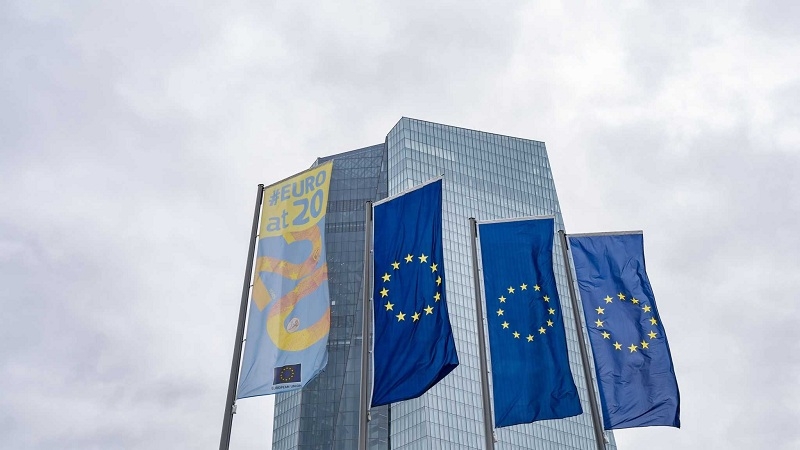
The European Central Bank is looking for ways to favor environmentally friendly bonds in its monetary policy, in a fresh bid to intensify its fight against climate change.

While “green QE” – buying environmentally friendly bonds for political reasons – is a non-starter, officials are focusing instead on less controversial options. A key part of that is recognizing that purchasing carbon-intensive securities comes at a risk to the institution itself.

The ECB is accepting that so-called brown bonds, to finance investments such as coal-fired power plants, could easily lose value as the world shifts toward more sustainable ways to run its economy. That gives President Christine Lagarde a way of pursuing her broad agenda without infringing on the ECB’s narrow mandate to pursue price stability.

Increasing the share of sustainable bonds in its quantitative-easing program would show that the ECB is practicing what it preaches to banks: protect your balance sheet against climate risks.

“While launching a green QE could be controversial, decarbonizing their purchases so far is fully consistent with their mandate,” said Frank van Lerven, an economist at the New Economics Foundation in London. “There is no gray area out there, it is sound monetary-policy management.”

Another option under consideration is incentives to financial institutions to use sustainable debt as collateral when they come to the ECB for funding. Using a measure known as a haircut, that would essentially mean handing more cash to banks in exchange for green bonds than for similar brown ones.

Policy makers, executives and politicians around the world are coming under pressure from a broad coalition of activists, school children and ordinary voters to take up the fight against climate change.

Not all central bankers agree on how far their engagement should go. Bank of England Governor Mark Carney has set the agenda with repeated warnings that “the time to forestall an emergency is now.” Federal Reserve Chairman Jerome Powell evaded questions this week on the Fed’s role, arguing “climate risk is a very important issue that Congress has largely assigned to other agencies.”

At the ECB, fighting global warming ranks highly on the president’s agenda. Lagarde has launched a wide-ranging review into the ECB’s policies — including how to make its operations more environmentally friendly, and has promised to look at ways to be “even more intrusive” in corporate-bond purchases. Currently the region’s central banks try to mirror what debt is being issued, the vast majority of which is not labeled as green.

The ECB is already designing a special climate stress test for the region’s lenders, and has committed to include global warming in its own economic models. It has also switched to a low-carbon index to manage its staff pension fund.

Key to many of the available options will be new European Union standards for environmentally friendly assets. Unlike private banks, the ECB can’t easily make up its own rules, for fear of being dragged to court. Lawmakers agreed last year on a landmark green-finance regulation, which will be phased in from the end of 2021. The European Commission has pledged to make Europe the first climate-neutral continent.

The ECB’s ideas should help soothe the concerns of policy makers who don’t want to stray from their core inflation mandate. Even Bundesbank President Jens Weidmann, long a critic of radical ECB measures, has said it’s “difficult to disagree that climate change is a threat to financial stability.”

They also address popular demands for action. Environmental protesters marched to the ECB on Lagarde’s first day in office, an advocacy group presented her with a list of demands during a December trip to the EU Parliament, and a report from Lerven’s NEF last week urged policy makers around the world to purge coal-related assets from their balance sheets.

Bank of France Governor Francois Villeroy de Galhau is an advocate of that latter idea. He says an overhaul of the ECB’s collateral framework is preferable to a “somewhat emotional debate” on green QE.

Lagarde has already signed on.

Speaking in Paris last week, she said she would be surprised “if in two to three years we weren’t able to associate this collateral of loans with a provision for climate risks.”

IEA sees first global oil demand drop in a decade amid coronavirus spread #ศาสตร์เกษตรดินปุ๋ย

#ศาสตร์เกษตรดินปุ๋ย : ขอบคุณแหล่งข้อมูล : หนังสือพิมพ์ The Nation

https://www.nationthailand.com/business/30382110?utm_source=category&utm_medium=internal_referral

IEA sees first global oil demand drop in a decade amid coronavirus spread

Feb 14. 2020
By Syndication Washington Post, Bloomberg · Grant Smith 

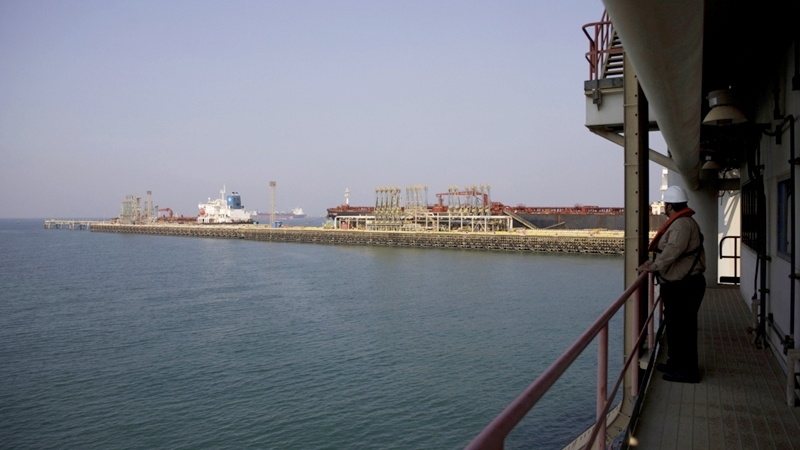
Global oil demand will drop this quarter for the first time in over a decade as the coronavirus batters China’s economy, the International Energy Agency said.

The new estimates show that oil markets face a significant surplus despite the latest production cuts by OPEC and its partners. Crude already sank to a one-year low below $50 a barrel last week, and the impact of the epidemic will be felt throughout the year, the agency said.

“Demand has been hit hard by the novel coronavirus and the widespread shutdown of China’s economy,” the Paris-based IEA said. “The crisis is ongoing and at this stage it is hard to be precise about the impact.”

World fuel consumption – which had previously been expected to grow by 800,000 barrels a day during the three-month period, compared with a year earlier – will instead contract by 435,000 a day, the IEA said in its monthly oil market report.

For 2020 as a whole, the virus will curb annual growth in global consumption by about 30%, to 825,000 barrels a day, the lowest since 2011. The effects will be more significant than those of the 2003 SARS epidemic because of China’s increased importance and integration within the world economy.

The outbreak has shuttered businesses and prompted the quarantine of tens of millions of people in China, which imports the most crude in the world. The country accounted for about 75% of last year’s oil-demand growth, according to the IEA, which advises most major economies.

U.S. crude futures have fallen 17% this year as traders assessed the impact of the epidemic. Consumers are unlikely to benefit from the drop in fuel prices because the disease will inflict damage on the wider economy, the IEA said.

The outbreak has prompted Saudi Arabia, the world’s largest oil exporter, to push its allies in the Organization of Petroleum Exporting Countries and beyond to consider an emergency meeting and further production cuts. However, Russia, the kingdom’s most important partner in managing supplies, has so far resisted the initiative.

Even though the group launched new supply curbs at the start of this year, the slump in demand threatens markets with a surplus of about 1.7 million barrels a day during the first quarter and 560,000 in the second. Last month, OPEC was already pumping the least crude since the financial crisis of 2009, according to the IEA.

The OPEC+ alliance had already faced an oversupply in the first half of 2020 because of the ongoing output surge from U.S. shale-oil drillers, the agency said. That industry is likely to remain resilient against the price slump until later in the year, it predicted.

Given the abundance of supply, disruptions in OPEC members such as Libya and Nigeria are having little impact on prices, the agency said.

Europe’s recovery from manufacturing slump hit by coronavirus #ศาสตร์เกษตรดินปุ๋ย

#ศาสตร์เกษตรดินปุ๋ย : ขอบคุณแหล่งข้อมูล : หนังสือพิมพ์ The Nation

https://www.nationthailand.com/business/30382106?utm_source=category&utm_medium=internal_referral

Europe’s recovery from manufacturing slump hit by coronavirus

Feb 14. 2020
By Syndication Washington Post, Bloomberg · Viktoria Dendrinou 

European economic malaise is set to continue this year, the bloc’s executive said, warning that a deadly viral outbreak could further damp the outlook.

A month after a U.S.-China deal offered hope for global trade and industry, the coronavirus that’s killed more than 1,000 people in China and crippled parts of the country’s manufacturing capacity has pushed the world into a new crisis. The European Commission singled it out as a “key downside risk.”

The warning comes as some of Europe’s biggest companies spell out how the epidemic is hitting their business. Drinks giant Pernod Ricard on Thursday cut its forecast for full-year profit growth by about half. Tiremaker Michelin and Pernod rival Remy Cointreau have also lowered their outlooks, and the International Energy Agency sees global oil demand falling this quarter for the first time in over a decade.

“While some downside risks have faded, new ones have emerged,” the commission said in its first major report on the economy this year. Overall, that leaves the balance “tilted to the downside,” it said.

In the report, the commission left its forecast for 2020 economic growth at a “subdued” 1.2%, the same pace as 2019. At 1.3% for this year and 1.4% for 2021, the inflation outlook is slightly higher compared with November, but still well below the European Central Bank’s goal of just below 2%.

Despite the risks, the commission said the euro-area economy remains on a “steady path.” That’s partly because its baseline assumption is that the virus outbreak peaks in the first quarter, with “relatively limited global spillovers.”

Still, there’s increased uncertainty about China’s short-term prospects and the degree of global disruption at a time when manufacturing is still weak.

That weakness was on full display in the past week in figures showing huge declines in industrial production in Germany and France. There’s even talk of a recession risk in Germany, Europe’s largest economy, and figures due Friday could show a contraction in the fourth quarter.

That would be a further blow to the euro zone and could renew the pressure on German politicians to increase public spending. Calls from both the commission and the ECB on governments with fiscal space to do more to support monetary policy efforts with more spending have so far largely fallen on deaf ears.

The ECB is already on alert over newly emerged threats to the outlook. Spanish policy maker Pablo Hernandez de Cos added to the chorus of officials on Thursday, saying the coronavirus is compounding risks for the fragile euro-are recovery after some earlier signs of stabilization.

Chief Economist Philip Lane said on Wednesday the economy could experience a “pretty serious short-term hit.”

U.S. stocks fade after Fed announces repo cuts #ศาสตร์เกษตรดินปุ๋ย

#ศาสตร์เกษตรดินปุ๋ย : ขอบคุณแหล่งข้อมูล : หนังสือพิมพ์ The Nation

https://www.nationthailand.com/business/30382101?utm_source=category&utm_medium=internal_referral

U.S. stocks fade after Fed announces repo cuts

Feb 14. 2020
By Syndication Washington Post, Bloomberg · Vildana Hajric 

U.S. equities had a turbulent Thursday, fluctuating between gains and losses on mixed news about the coronaviurus outbreak, only to fade after the Federal Reserve Bank of New York said it will further shrink repurchase agreement operations.

The Fed news late in the trading day erased what had been a small gain for the S&P 500 Index, which closed lower for the first time this week. The benchmark had bounced back from session lows after the World Health Organization said a surge in coronavirus diagnoses didn’t necessarily indicate a spike in infections.

China recently deployed a revised methodology to diagnose the virus, sending the number of confirmed cases soaring, but many of those cases could be days or weeks old, according to the WHO. Traders are still trying to gauge the outbreak’s effect on the economy.

“It’s too early to tell the overall impact on U.S. markets. We seem to continue to be strong and U.S. consumers continue to be strong,” Chris Gaffney, president of world markets at TIAA, said by phone. “The question now is, how quickly can the virus get under control and can China limit the extent and get things back to normal as quickly as possible?”

The New York Fed said it would shrink repo operations, starting with Friday’s overnight offering. The Fed has been conducting repo offerings and Treasury-bill purchases in a bid to keep control of short-term interest rates and bolster bank reserves. The efforts had calmed markets since a September spike. Treasuries trimmed their gains for the day.

The euro traded near the lowest since 2017, while the U.K. pound gained and gilts retreated after Sajid Javid quit as Chancellor of the Exchequer. The FTSE 100 Index also declined.

Earlier, stock gauges in Japan, Shanghai, Hong Kong and South Korea all declined, though shares in Australia edged higher. Oil climbed even as the International Energy Agency said the coronavirus means global demand will drop this quarter for the first time in over a decade.

– – –

These are the main movers in markets:

Stocks

– The S&P 500 Index decreased 0.2%, to 3,374.18, as of 4:01 p.m. New York time.

– The Stoxx Europe 600 Index was little changed at 431.08.

– The U.K.’s FTSE 100 Index declined 1.1%, to 7,452.03, the largest drop in almost two weeks.

– The MSCI Emerging Market Index dipped 0.4%, to 1,105.07.

Currencies

– The Bloomberg Dollar Spot Index was little changed at 1,207.10.

– The euro declined 0.3%, to $1.0841, the weakest in almost three years.

– The British pound advanced 0.7%, to $1.3049, the strongest in almost two weeks on the largest rise in almost two weeks.

– The offshore yuan weakened 0.2%, to 6.9885 per dollar.

– The Japanese yen strengthened 0.3%, to 109.79 per dollar, the largest rise in almost two weeks.

Bonds

– The yield on 10-year Treasuries declined two basis points, to 1.61%.

– The yield on two-year Treasuries fell less than one basis point, to 1.44%.

– Germany’s 10-year yield decreased one basis point, to -0.39%.

– Britain’s 10-year yield rose four basis points, to 0.652%, the highest in more than four weeks.

Commodities

– West Texas Intermediate crude increased 0.8%, to $51.59 a barrel, the highest in two weeks.

– Gold strengthened 0.6%, to $1,576.11 an ounce, the highest in more than a week on the largest gain in a week.

– LME copper advanced 0.3%, to $5,764 per metric ton, the highest in almost three weeks.