WeWork names real estate veteran Sandeep Mathrani as CEO #ศาสตร์เกษตรดินปุ๋ย

#ศาสตร์เกษตรดินปุ๋ย : ขอบคุณแหล่งข้อมูล : หนังสือพิมพ์ The Nation

https://www.nationthailand.com/property/30381555?utm_source=category&utm_medium=internal_referral

WeWork names real estate veteran Sandeep Mathrani as CEO

Feb 04. 2020
Sandeep Mathrani in 2010. MUST CREDIT: Bloomberg photo by Jin Lee

Sandeep Mathrani in 2010. MUST CREDIT: Bloomberg photo by Jin Lee
By Syndication Washington Post,  Bloomberg · Hailey Waller, Ellen Huet 

WeWork named Sandeep Mathrani as its new chief executive officer, tapping an experienced real estate operator for a bid to turn around the embattled startup.

Mathrani, who was previously chief executive of Brookfield Property Partners’ retail group, will need to execute a plan for WeWork to refocus on co-working and abandon unrelated ventures started by its co-founder, Adam Neumann. Mathrani will replace Artie Minson and Sebastian Gunningham, WeWork said in a statement. The duo has served as co-CEOs of WeWork parent We Co. since Neumann stepped down in September following a failed attempt to take the company public.

WeWork said the new CEO will report to Executive Chairman Marcelo Claure, an executive at SoftBank Group, which committed billions of dollars to WeWork in a rescue package last fall. Mathrani will join the company on Feb. 18, with Minson and Gunningham staying on through a transition period. “I am honored to be joining WeWork at this pivotal time in its history,” Mathrani said in a statement.

Mathrani has experience with a company in crisis. He helped GGP, a shopping mall operator, emerge from bankruptcy in 2010. The company saw its stock rise, boosted by properties such as Las Vegas’s Grand Canal Shoppes and Virginia’s Tysons Galleria. Brookfield paid about $15 billion for the 64-year-old business in 2018 and kept Mathrani on to oversee the retail operation.

The challenges at WeWork are different. Neumann co-founded the startup in 2010 and rapidly built a global empire of office spaces where companies or freelancers could rent by the desk. Investors fueled the expansion, and SoftBank made by far the biggest bet, pushing the valuation to $47 billion.

The IPO process laid bare WeWork’s many vulnerabilities. The company was spending far more than it was generating in revenue and suffered from an over-dependence on Neumann, who took out loans from WeWork as it paid him rent on buildings he owned. WeWork pulled the IPO in September and agreed to part ways with Neumann in an exit package valued at more than $1 billion. SoftBank and Claure have helped recruit new management and outline a turnaround plan, which included the termination of 2,400 jobs.

U.S. manufacturing posts its first expansion in six months #ศาสตร์เกษตรดินปุ๋ย

#ศาสตร์เกษตรดินปุ๋ย : ขอบคุณแหล่งข้อมูล : หนังสือพิมพ์ The Nation

https://www.nationthailand.com/business/30381531?utm_source=category&utm_medium=internal_referral

U.S. manufacturing posts its first expansion in six months

Feb 04. 2020
An American flag hangs as General Electric diesel locomotives stand on the final assembly line at the GE Manufacturing Solutions facility in Fort Worth, Texas, on Oct. 25, 2016. MUST CREDIT: Bloomberg photo by Luke Sharrett.

An American flag hangs as General Electric diesel locomotives stand on the final assembly line at the GE Manufacturing Solutions facility in Fort Worth, Texas, on Oct. 25, 2016. MUST CREDIT: Bloomberg photo by Luke Sharrett.
By Syndication Washington Post, Bloomberg · Reade Pickert

A gauge of U.S. manufacturing rebounded sharply in January, topping estimates and signaling growth in the beleaguered sector for the first time since July.

The Institute for Supply Management’s purchasing managers’ index, based on a survey of manufacturers, increased to 50.9 in January from an almost four-year low of 47.8, according to Monday’s data. While just above the 50 level that signals expansion, the monthly advance was the largest since mid-2013. ISM last week revised data back to 2012. Stocks, bond yields and the dollar extended gains after the report.

The gain — exceeding the median projection for 48.5 — reflected sizable improvements in the orders and production components, while the employment gauge contracted at a slower pace. The new orders index jumped to an eight-month high of 52 and the production gauge surged 9.5 points, also the largest gain in more than six years.

The figures, along with the strongest reading for the ISM’s export index since September 2018, suggest the worst may be behind for American factories. The gain also brings the group’s measure more in line with IHS Markit’s factory index, which, unlike the ISM figure, showed expansion in manufacturing for all of last year.

“We’re going to have to wait and see” whether the PMI continues to expand in coming months, Timothy Fiore, chair of the ISM’s manufacturing survey committee, said on a call with reporters. “Weakness in the inputs for January questioned demand for expansion in February and whether we’re at the beginning of sustained PMI expansion.” Additionally, the coronavirus is likely to have an impact in February, he said.

Depressed by weak export markets, a trade war, cutbacks in business investment and elevated inventories relative to sales, the sector has struggled to gain traction. As a result, the services sector has fueled the economic expansion. Sustained manufacturing growth would indicate a partial trade deal with China is providing impetus for further expansion.

“The reading likely reflects the positive impact of the phase-one trade deal between the U.S. and China,” Bloomberg analyst Eliza Winger wrote in a note. “However, we are expecting the uptick to be temporary as the Boeing production halt and recent uncertainties in response to the coronavirus outbreak may stress global supply chains.”

The ISM measure shows the sector is barely expanding and remains in a precarious position. A quickly spreading coronavirus threatens to damp activity abroad and adds to uncertainty about global growth prospects, while domestic demand has cooled and Boeing Co.’s production halt of the 737 Max is weighing on producers.

Eight of 18 manufacturing industries reported growth in January, led by furniture, wood products, food and computers. Eight also reported that business shrank, including the print, apparel and electrical equipment sectors.

Another report Monday showed companies are cutting back on capital expenditures. Private construction spending on non-residential structures, including factories, hotels and office buildings, slumped 1.8% in December from a month earlier, the most since April.

The ISM’s factory employment gauge improved in January but remained anemic at 46.6, suggesting hiring weakness in the sector may continue. While factories last year added the fewest jobs since 2016, the Labor Department’s monthly employment report Friday will offer information about hiring at the start of 2020.

An index of prices paid showed input costs increased as the gauge of supplier deliveries held above 50, suggesting shipments are slowing.

In a separate report, IHS Markit’s factory gauge eased in January to a final reading of 51.9 from 52.4 a month earlier.

CVS shrinks board, drops ex-Aetna CEO Bertolini as director #ศาสตร์เกษตรดินปุ๋ย

#ศาสตร์เกษตรดินปุ๋ย : ขอบคุณแหล่งข้อมูล : หนังสือพิมพ์ The Nation

https://www.nationthailand.com/business/30381540?utm_source=category&utm_medium=internal_referral

CVS shrinks board, drops ex-Aetna CEO Bertolini as director

Feb 04. 2020
Signage is displayed outside a CVS Health Corp. store in Oakland, California, U.S.,on Friday, August 2, 2019. Photographer: Michael Short/Bloomberg

Signage is displayed outside a CVS Health Corp. store in Oakland, California, U.S.,on Friday, August 2, 2019. Photographer: Michael Short/Bloomberg
By Syndication Washington Post, Bloomberg · Angelica LaVito, Drew Armstrong 

CVS Health Corp. will drop three directors from its 16-member board, including Mark Bertolini, the former chief executive officer of Aetna, the health insurer it bought in a transformative $68 billion deal in 2018.

The changes, which will shrink the board to 13 members, are being made to “further align with corporate governance best practices,” Woonsocket, Rhode Island-based CVS said in a statement Monday.

The Aetna acquisition, announced in December 2017, was the health, pharmacy and benefits company’s biggest-ever deal, and a bet that the U.S. health-care system is shifting to a more integrated model.

“With the bulk of the integration behind us and the Aetna business performing strongly,” CVS spokesman T.J. Crawford said in an emailed statement, “the board felt it was the right time for Mark to focus on his other endeavors.”

Bertolini said that he wasn’t renominated to the board of directors.

“I offered to continue my service to the board in what I think is the most transformative effort in health care for the company and for the nation, and the board felt otherwise,” Bertolini said in a phone interview.

Bertolini said he serves on six boards, three for-profit companies and three nonprofits, including Verizon Communications Inc. and Fidelco Guide Dog Foundation. He is helping his son’s high-school friends with a microgrid energy company.

CVS shares were up 0.5% to $68.13 at 10:43 a.m. in New York. Over the past 12 months, the stock has gained about 4%.

Also leaving the board are Richard Swift, the former CEO of Foster Wheeler Ltd., the energy-services company, and Richard Bracken, the ex-CEO of for-profit hospital chain HCA Inc.

CVS said the changes will go into effect after the company’s annual meeting of shareholders. The company hasn’t set a date for the 2020 meeting yet; last year’s was held in May.

Wide-ranging management reshuffle as RS gears for growth #ศาสตร์เกษตรดินปุ๋ย

#ศาสตร์เกษตรดินปุ๋ย : ขอบคุณแหล่งข้อมูล : หนังสือพิมพ์ The Nation

https://www.nationthailand.com/business/30381524?utm_source=category&utm_medium=internal_referral

Wide-ranging management reshuffle as RS gears for growth

Feb 03. 2020
Chief executive officer Surachai Chetchotisak

Chief executive officer Surachai Chetchotisak
By THE NATION

RS has undergone a major restructuring in management as part of its strategy to boost business growth, effective February 1, 2020.

It is a shake-up at the company, aimed at strengthening its business as a data-driven organisation and becomes the leader in the industry, said chief executive officer Surachai Chetchotisak.

According to its release on Monday (February 3), executive Pornpan Techarungchaikul has been appointed Chief Commercial Officer, overseeing commerce business in all aspects, including products, services, and other commercial innovations. She was, previously, RS Chief Operating Officer.

Pornpan is experienced in the company’s business and is able to utilise its strength to develop new commerce opportunities.

She is also good at leading her team to expand business, thanks to her deep understanding of the company’s brands and corporate culture, having worked at RS for 16 years.

Wittawat Wetchabutsakorn has been appointed Chief Finance Officer, overseeing the company’s continuous growth.

Wittawat has more than a decade of experience from working for leading companies in banking and retailing, such as Siam Commercial Bank and Minor International.

Kunchanya Karuhadej has been appointed Chief People Officer, in charge of the company’s human resources management and strengthening of the corporate culture, in order to recruit suitable and capable individuals who can become future leaders of RS.

Kunchanya came with five years of experience in human resources management at ecommerce company Lazada Thailand, and her most recent position was Human Resources Director.

To drive the company’s technology, Dr Parin Fuangvut has been appointed Head of Technology to support the company’s goal of becoming a Data-Driven Organisation.

Dr Parin has a wealth of experience in technology development. His most recent position was Head of Technology at BECi Corporation Limited.

For products and product innovations, Dr Chakrit Pichyangkul has been appointed Head of Products and Services. Previously, he was Managing Director of Lifestar Co Ltd.

He holds a doctoral degree in Innovation Management from Chulalongkorn University, and has been behind the success of LifeStar Limited under RS for the past 15 years.

For Telemarketing, which is another important contributor to the success of RS’ ‘entertainmerce model’, Ekasit Kansuwiro, the newly-appointed Director of Telemarketing will head the Telemarketing team, utilising his 10 years of experience in telemarketing at True Corporation.

Another major growth factor of the entertainmerce model is the Digital Commerce Platform, and RS has appointed Chot Chetchotisak as Head of Digital Commerce Platform, leading a team of the younger generation to create new channels for RS Mall.

Nongluk Ngamroj, has been appointed Head of Digital Television Business, responsible for the overview and operation of Channel 8 in news, dramas, variety shows and sports programmes. Earlier, she was Managing Director of RS Television Company Limited

Prinn Muensuksaeng, has been appointed Head of Radio Business. He has a lot of experience in radio business and played an important role in COOLfahrenheit radio station, which has remained the No 1 station today. He will look after the station both online and on air. Previously, he was Managing Director of COOLISM.

Sukit Suksakulwat, is the new Head of Music Business. He has 17 years of experience in the music business with RS, understanding the dynamic of the industry including the structure and the transformation into entertainmerce. Previously, he was RS’ senior vice president.

Dusit signs deal with Vietnam’s General Technology to build upscale hotel in Hanoi #ศาสตร์เกษตรดินปุ๋ย

#ศาสตร์เกษตรดินปุ๋ย : ขอบคุณแหล่งข้อมูล : หนังสือพิมพ์ The Nation

https://www.nationthailand.com/business/30381494?utm_source=category&utm_medium=internal_referral

Dusit signs deal with Vietnam’s General Technology to build upscale hotel in Hanoi

Feb 03. 2020
By THE NATION

Hotel and property development company Dusit International has signed a long-term agreement with Vietnamese real estate developers General Technology Joint Stock Company to build and operate Dusit Tu Hoa Palace in Hanoi’s affluent Tay Ho district, at the northern end of the city’s largest freshwater lake, West Lake.

Comprising 207 rooms, the upscale property will put guests at the heart of a vibrant lakeside community renowned for its international restaurants, trendy cafes, chic nightlife venues, and fascinating lakeside temples, according to a company statement today (February 3).

Noi Bai International Airport is 30 minutes away by car, while Hanoi’s Old Quarter, the city’s business hub and main tourist destination, can be reached in 15 minutes.

The hotel will feature a distinctive blend of Thai and Vietnamese design elements to offer high levels of comfort and convenience for business and leisure travellers alike, the company said.

“We are delighted to partner with General Technology Joint Stock Company to bring our unique brand of Thai inspired, gracious hospitality to Vietnam’s vibrant capital for the first time,” said Dusit International chief operating officer Lim Boon Kwee.

“As a destination, Hanoi keeps going from strength to strength. Last year the city welcomed more than six million foreign visitors in the first 11 months – up 12 per cent year-on-year. The country’s strong GDP growth rate is also driving a rapidly growing segment of high-spending domestic tourists. With this in mind, now is the perfect time to expand our operations in Vietnam’s capital city and strengthen our brand for further growth in Vietnam,” he added.

“Dusit’s ability to translate its Thai heritage and industry expertise into impressive localised experiences is fully evident at its international properties, including its first hotel in Vietnam, Dusit Princess Moonrise Beach Resort Phu Quoc, which opened in 2018,” said Le Minh Thanh, chairman of the Board of Management, General Technology Joint Stock Company. “We look forward to working with Dusit to offer a distinctive hotel experience in Hanoi that delights guests and customers, and which delivers long-term, sustainable value for all stakeholders.”

Dusit International’s property portfolio now comprises 307 properties operating under six brands across 15 countries. The company has also recently diversified into the food business, with strategic investments designed to mitigate risk, expand its customer base, and generate revenue from commerce.

Virus threatens U.S. companies’ supply of Chinese-made parts and materials #ศาสตร์เกษตรดินปุ๋ย

#ศาสตร์เกษตรดินปุ๋ย : ขอบคุณแหล่งข้อมูล : หนังสือพิมพ์ The Nation

https://www.nationthailand.com/business/30381492?utm_source=category&utm_medium=internal_referral

Virus threatens U.S. companies’ supply of Chinese-made parts and materials

Feb 03. 2020
By The Washington Post · David J. Lynch 

The battle to contain the Chinese coronavirus threatens to cut off U.S. companies from parts and materials they need to produce iPhones, automobiles, appliances and for treating medical conditions including Alzheimer’s disease, high blood pressure and malaria.

Some of the United States’ best-known manufacturers such as General Electric, Caterpillar and the Big Three automakers, along with many smaller American businesses, depend on what is made in Chinese factories.

Now, they confront life without those items. Major airlines in the United States and Europe are halting their cargo and passenger flights to China for up to two months. Recent visitors to the country are barred from entering the United States.

After four decades of growing integration with the rest of the world, China almost overnight has become an economic island. Its temporary isolation – no one knows for how long – will hurt companies that depend on Chinese inputs as well as those that sell to Chinese customers.

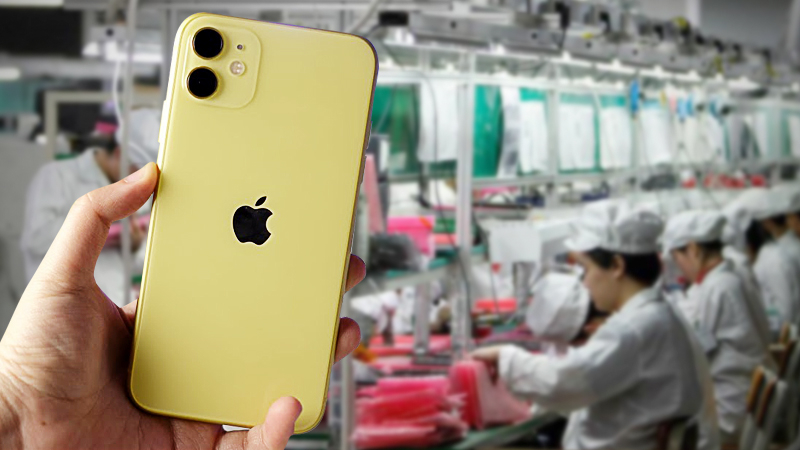
Consumer electronics makers are among the most vulnerable since many game consoles, smartphones and tablets are made in China. On Saturday, Apple announced that it had closed all of its corporate offices and retail stores in China – where it booked $44 billion in sales last year – until Feb. 9 because of the virus.

“The concern is not the zombie apocalypse with people dying in the streets. The concern is that a huge chunk of the global economy gets put out of commission as people wait it out,” said Patrick Chovanec, managing director at Silvercrest Asset Management in New York.

White House advisers so far have played down the disease’s effects, with President Donald Trump’s top economic aide, Larry Kudlow, saying last week that he expects the virus to have “no material impact” on the U.S. economy.

Most Wall Street economists, likewise, say the economic damage will be limited. Economists at JPMorgan Chase Bank on Friday cut their first-quarter global growth estimate by 0.3 percentage points, to 2.3%. But they predicted a swift rebound that would return China and the global economy to their pre-crisis trends by midyear.

The sanguine forecasts are based in part on a disease outbreak from 2003: The Chinese economy recovered quickly after severe acute respiratory syndrome (SARS), another fatal flulike infection, temporarily emptied offices and factories.

But there is no guarantee that the coronavirus will trace a similar path. Already, there are indications that while the new virus is less lethal than SARS, it spreads more easily.

China’s $14 trillion economy also is four times larger than it was 17 years ago, and far more globalized. About 150 million Chinese business executives and tourists took an international flight in 2018, the most recent data available, more than seven times the 2003 figure, according to JPMorgan. Globally, the number of shipping containers moving among the world’s ports has almost tripled, according to the United Nations.

In Youngstown, Ohio, Phantom Fireworks worries that a prolonged hiatus at its Chinese supplier may prevent it from importing sufficient inventory for the Independence Day celebration.

Though its vendor in Liuyang, about 200 miles from Wuhan, is scheduled to reopen on Feb. 10, Phantom executives say the shutdown will probably last at least an additional week and perhaps several more. Chinese officials also closed the southern port of Beihai late last week, severing a key export link. Few alternative producers exist outside China.

“We’re in a very precarious situation, no question about it,” said Alan Zoldan, the company’s executive vice president. “I’m not very confident at all. It’s pretty unprecedented territory.”

Precautions that the Chinese and American governments are taking to stop the spread of the coronavirus, justified on grounds of medical necessity, are raising the potential economic toll. An official quarantine will keep factories across much of China, closed since Jan. 24 for the Lunar New Year holiday, shut for at least one more week, maybe longer.

Three major U.S. airlines – United, American and Delta – suspended flights to China until the end of March. American grounded its planes immediately, one day after its flight attendants union sued the company, arguing that the virus made such trips unsafe. United and Delta will stop flying at the end of the week.

That means trans-Pacific airfreight shipments will be limited for at least two months even if Chinese factories return to normal operations before then. (FedEx says it is continuing its flights.) Some U.S. companies are drafting contingency plans for supply disruptions that linger into April or May, according to Craig Allen, president of the U.S.-China Business Council.

China is the largest export destination for 33 countries and the top source of imported goods for 65, including the United States, according to a 2019 McKinsey Global Institute study.

The accumulating uncertainty is unnerving investors. The Dow Jones industrial average fell more than 600 points, or 2.1%, on Friday.

The U.S. dependence on China was on display two years ago, when American companies first sought to dissuade the Trump administration from imposing tariffs on Chinese goods.

Among those lobbying for relief was GE, which relies on its Chinese factories for parts to produce CT scanners, ultrasound and X-ray machines, oil field pumps, valves and motors and aircraft engine components.

“There are certain inputs that cannot be readily sourced outside China,” Del Renigar, a top official in GE’s Washington office, wrote to the Office of the U.S. Trade Representative.

Finding a replacement for Chinese suppliers would not be easy. Dayco, a maker of engine parts and drive systems in Troy, Michigan, said it would need two years to qualify new U.S. suppliers and to secure the needed approvals from its customers to use them.

Prinston Pharmaceuticals of Cranbury, New Jersey, depends on Chinese ingredients to make medications to treat high blood pressure, Alzheimer’s and depression. Novus Pharmaceuticals said its Chinese plant was the only FDA-approved source for coartem tablets, a treatment for malaria.

Electronic component maker AVX of Fountain Inn, South Carolina, produces ceramic capacitors at its plants in Tianjin and Shenzhen, which its industrial customers in the United States use in automobiles, microwave ovens, washing machines, radios and television sets.

The impact of an interruption in Chinese supplies will depend on the duration of any cutoff, which is unknowable, and the size of current inventories, which companies generally do not disclose.

The number of people with the coronavirus has soared above 14,000, and more than 300 Chinese citizens have died. In response, Trump on Friday declared a public health emergency and barred foreign nationals who had been to China in the past 14 days from entering the United States. American citizens returning from the country will be subject to health screening and up to 14 days in quarantine.

The president’s decision came one day after the State Department warned U.S. citizens against all travel to China and the World Health Organization declared the outbreak a global health emergency.

China, which in recent years accounted for about one-third of global growth, is now radiating economic weakness. The immediate impact of the health crisis will slow its domestic economy. First-quarter growth will dip to an annual rate of 5.2%, down from 6% in the final three months of last year, the most abrupt slowdown in nearly 10 years, according to PNC Bank.

“It’ll bounce back when it’s over,” said Allen, the U.S. China Business Council president. “But we don’t know when it will be over.”

Chinese consumers sheltering in their homes rather than engaging in traditional holiday activities will spend less, while factory closures affecting millions of workers threaten parts shortages for American electronics or auto plants, economists said.

In one sign that the virus will have enduring effects across the world’s second-largest economy, the LPGA late last week canceled the March 5-8 Blue Bay golf tournament on Hainan Island. That’s about 1,000 miles from Wuhan, where the virus originated.

More than 50 million Chinese residents remain under a lockdown. The government already extended the Lunar New Year holiday to Monday. Factories in Hubei province, the epicenter of the outbreak, have been ordered closed through Feb. 13. Other provinces plan to restart production on Feb. 10.

“We believe there will be a disturbance at least until the end of February and possibly into mid-March,” said Sebastien Breteau, chief executive of QIMA, a supply-chain consultancy. “We are not very optimistic.”

More than 450 U.S. importers use suppliers in Hubei province, according to London-based Panjiva. Electronics manufacturers rely on Chinese suppliers for up to 50% of their components, while automakers get 15% from China, according to Chris Rogers, a Panjiva supply-chain specialist.

Some U.S. and global manufacturers will face higher costs even after their Chinese suppliers resume normal operations. Airline cutbacks will mean less space available for the industrial shipments – known as “belly cargo” – that travel in the hold of commercial jetliners.

“The scale of the airline cutbacks really caught my attention,” said Phil Levy, chief economist for freight forwarder Flexport. “This is a big network. You carve China out of it and it’s going to affect goods to Europe and goods to the U.S.”

As health officials fight the virus, the earliest and most severe economic consequences will be felt by China’s Asian neighbors. Countries such as Thailand, Malaysia, Vietnam and the Philippines are tied into production networks centered on Chinese manufacturers and also have benefited from the past decade’s boom in Chinese tourism.

Aftershocks also are certain to be felt by major commodity-producing nations, such as Australia, which supplies China with much of its iron ore. The Baltic Dry Index, a gauge of bulk shipping costs, fell Friday for the 10th consecutive session and is now down 49% this year.

Of the advanced economies, nearby Japan and export-dependent Germany will feel the greatest chill.

Conventional economic forecasting is ill-equipped to calculate the impact of such an unpredictable health emergency, said Torsten Slok, chief economist for Deutsche Bank Securities. His baseline model for the U.S. economy relies on 200 equations.

“I just don’t know which equation I should be putting this in,” he said. “I just don’t have a good framework for assessing the risk.”

Yield-curve inversion is sending a message #ศาสตร์เกษตรดินปุ๋ย

#ศาสตร์เกษตรดินปุ๋ย : ขอบคุณแหล่งข้อมูล : หนังสือพิมพ์ The Nation

https://www.nationthailand.com/business/30381533?utm_source=category&utm_medium=internal_referral

Yield-curve inversion is sending a message

Feb 04. 2020
By Bloomberg Opinion · Barry Ritholtz

The yield curve just inverted — again.

Driven by fears of a potential coronavirus pandemic that could cause widespread economic disruption, investment capital sought shelter in longer-term bonds. This flight to safety caused the curve to invert, at least for now.

The sages will tell you that yield-curve inversion is about as good a prognosticator of a coming recession as there is. But inversion first occurred back in March 2019, then briefly reversed, only to head back into inversion territory for much of the summer.So far, we have avoided a recession and the economy continues to muddle along at an annual growth rate of a little more than 2%.

The most recent yield-curve inversion invites the question: What might trigger the next recession and what might it look like? Let’s look at a few things cited by pundits and commentators:

Geopolitical events: A recession triggered by geopolitical events is so random and highly variable that it’s almost impossible to see it coming — an escalation in the Middle East tensions sends oil prices spiraling; miscalculations in the South China Sea lead to open conflict; North Korea goes off its rocker.

Then there are the unforeseen random events such as the potential pandemic developing in China. We have no handle on how quickly this can spread, or how effective countermeasures will be to contain it. Fears from past outbreaks seem overblown in hindsight.

Although the odds are long that coronavirus leads to recession, similar events in the recent past have led to short-lived contractions that end once the initial shock wears off.

Tech: Gains in tech stocks have been driving equity markets higher for a decade. Concern that the broad market indexes would be dominated by a handful of giants have come to pass. Four U.S. tech companies — Apple, Alphabet (parent of Google), Amazon and Microsoft now have market capitalizations of $1 trillion or more. That was unfathomable even during the 1990s dot-com years.

Since it is requisite to add “and we know how that ended,” let’s look at how the dot-com bubble actually did end: The tech-laden Nasdaq Composite Index fell 78% while the broader S&P 500 index suffered a 49% fall. Despite the market carnage, the economic spillover was modest, with a modest eight-month recession from March to November 2001.

The key difference between then and now is valuations. At that time, some of the hottest tech companies had little revenue and no earnings. At the peak, the S&P 500 had a forward price-to-earnings ratio of 31; Nasdaq was closer to 70. The difference is that tech dominates today because it is so wildly profitable.

Tech stocks would indeed suffer during a recession, but there’s not really much to suggest that valuations are spiraling out of control. In other words, it’s hard to see how a tech bust itself will be the source of the next recession.

Federal Reserve: The unemployment rate is 3.5%, the lowest in more than 50 years. Companies eventually will find that they have trouble hiring workers and turn to pay increases to either lure people away from competitors or entice marginally attached workers back into the labor force.

It is not hard to guess how that progresses. As salaries rise, so too does consumer spending. The increased demand for services and durable goods leads to an increase in prices. The inflationistas, despite being wildly wrong for the past three decades or so, begin once again to sound alarms.

The Fed raises rates, calling it an insurance policy against higher prices. It has no effect, so it raises rates again with the same results. Finally, 18 months and 150 basis points later, the impact on credit availability and cost is noticeable. This cuts into earnings, leading to layoffs and reduced business investment, which already is in the doldrums. The economy suffers a modest contraction.

Back in the fourth quarter of 2018, recession anxiety after the Fed raised rates seven times in 2017 and 2018 sent stocks into a free fall. There was also concern about rising trade tensions between the U.S. and China, increasing market volatility and a host of other issues. Although the yield curve didn’t invert at the time, there was plenty of chin-striking by experts confidently predicting recession, which as we now know has yet to materialize. Of course, it might have helped that the Fed switched from raising rates to cutting them in 2019, lowering them three times.Investing into the teeth of those last recession fears, however, turned out to be great timing: If you bought at the low-point of the market slump in December 2018, you were rewarded with a 31% return during the next four quarters.

One of these days, the U.S. will have a recession. Let’s hope you have your investment playbook ready — and the courage to use it to your advantage — when the next economic downturn comes along.

—

Barry Ritholtz is a Bloomberg Opinion columnist. He is chairman and chief investment officer of Ritholtz Wealth Management, and was previously chief market strategist at Maxim Group. He is the author of “Bailout Nation.”

Oil tumbles below $50 a barrel as virus saps Chinese demand #ศาสตร์เกษตรดินปุ๋ย

#ศาสตร์เกษตรดินปุ๋ย : ขอบคุณแหล่งข้อมูล : หนังสือพิมพ์ The Nation

https://www.nationthailand.com/business/30381551?utm_source=category&utm_medium=internal_referral

Oil tumbles below $50 a barrel as virus saps Chinese demand

Feb 04. 2020
By  Syndication Washington Post, Bloomberg · Jackie Davalos 

Oil fell below $50 a barrel for the first time in more than a year as China’s oil consumption was said to plunge by 20% amid the spread of coronavirus, threatening what could be the largest demand shock since the since the global financial crisis.

Futures sank as much as 3.2% in New York and 4.2% in London on Monday as oil demand in the world’s biggest importer dropped by around 3 million barrels a day, according to people with inside knowledge of the country’s energy industry. The front-month Brent contract sank to a discount below further out futures for the first time since July, another sign of slack demand for crude.

The loss of demand as the world’s’ second-largest economy quarantines cities to limit the outbreak is starting to ripple around the globe, as some Chinese refineries slow down or halt operations. Concerns that a global glut will form may force OPEC and its allies to hold an emergency meeting to discuss cutting crude production further in an effort to stabilize prices.

“The fears are justified when you consider just how massively important China is to oil demand,” said Robbie Fraser, senior commodities analyst at Summit Energy Services. “The sentiment has been bearish for a while and you have the data backing it up.”

Beijing has locked millions of people in quarantine and the New Year holiday has been extended. Flights have been canceled and authorities across the globe are trying to contain the virus’s spread. Traditionally during the New Year holiday, gasoline and jet-fuel demand increase as hundred of millions go back home, while gasoil consumption drops as industrial activity slows.

Citigroup Inc. slashed its price forecasts for across commodities as it said the impact of the coronavirus looks much worse than it initially thought.

Chinese government measures amount to a “major shutdown of the economy” and even with a deeper OPEC+ production cut it will drive weaker oil balances, Ed Morse, the global head of commodities research, said in a note. “There would be critical knock-on indirect effects for all commodities.”

Brent for April delivery fell $2.26 to $54.36 a barrel at 11:50 a.m. on the London-based ICE Futures Europe exchange after sinking to $54.27, the lowest level a year. The April contract traded as much as 12 cents below May futures.

West Texas Intermediate for March delivery lost $1.53 to $50.03 on the New York Mercantile Exchange, after touching $49.92.

Chinese refineries are storing unsold petroleum products such as gasoline and jet fuel, according to the executives. But stockpiles are growing every day, and some refineries may soon reach their storage limits. If that were to happen, they would have to cut the amount of crude they process. One executive said that refinery runs were likely to be cut soon by 15-20%.

Dow rebounds as coronavirus fears send Chinese markets plunging #ศาสตร์เกษตรดินปุ๋ย

#ศาสตร์เกษตรดินปุ๋ย : ขอบคุณแหล่งข้อมูล : หนังสือพิมพ์ The Nation

https://www.nationthailand.com/business/30381546?utm_source=category&utm_medium=internal_referral

Dow rebounds as coronavirus fears send Chinese markets plunging

Feb 04. 2020
By The Washington Post · Rachel Siegel, Will Englund 

The coronavirus battered Chinese markets and sent oil prices tumbling amid growing questions about the nation’s ability to contain the deadly outbreak before it exacts lasting damage on the global economy.

The Dow Jones industrial average rebounded from Friday’s 603-point rout, surging as much as 350 points Monday before scaling back. The coronavirus already is cutting off American companies from their Chinese-made parts and materials, and analysts fear the longer the outbreak persists, the harder it will be for intertwined global economies to shield themselves from the crisis.

“When you think about the airlines that have stopped flying, fuel prices, oil prices . . . we don’t live in an isolated world economically anymore,” said Michael Farr, president of Farr, Miller & Washington. “China is the second-largest economy in the world, and if it starts to lag, the rest of the world starts to lag.”

Chinese stock markets dropped sharply as coronavirus infections on the mainland surged past 17,200, paralleling the sell-off that wracked Wall Street last week. The benchmark Shanghai Composite Index fell more than 8% Monday, the first day of trading since the Lunar New Year break began Jan. 24, for its steepest one-day dive in four years. Many nonessential businesses have gone dark as the outbreak has grown, severely undercutting tourism and consumer spending.

China is the world’s leading oil consumer. And several analysts agreed Monday that the oil market is falling prey to worst-case fears.

“It’s impossible for anyone to put a hard number on this,” said Greg Priddy, of Stratfor, which calls itself a geointelligence platform. “That’s why everyone is so spooked.”

The tumble in oil prices is strictly about a projected decline in Chinese demand, he said, as flights are canceled, 50 million people are under quarantine, and vehicle traffic throughout the country has dwindled. Global effects of the coronavirus would not be expected to hit oil markets for another month or so, he said.

But, in China alone, consumption is expected to be cut by millions of barrels a day. Priddy said Chinese oil refineries have reportedly cut back their “run rates” by 10%, or about 2 million barrels a day.

Crude tankers are said to be facing delays in unloading at Chinese ports, he said.

“We know it’s big,” he said. “Is it huge?”

Analysts expect what Priddy called a “sharp but short” decline in demand. By summer, the market should have rebounded. But that’s not to say it will be robust: Oil reserves are already high, and the global economy has been slowing. Last month, before the outbreak, Saudi Arabia pushed for a million-barrel-a-day cutback in production.

“The lack of visibility vis-a-vis this situation is what is so frustrating,” wrote Pavel Molchanov, an analyst with Raymond James, in an email. “As was the case last year, during the U.S.-China trade war as well as Brexit-related uncertainty, the oil market is fixating entirely on demand concerns, while ignoring the bullish things that are happening on the supply side of the equation.”

On Tuesday, a technical committee for the Organization of the Petroleum Exporting Countries is scheduled to meet in Vienna to analyze the available information. Analysts expect that it will propose further cuts to production, not to boost the price but to stave off its collapse. Russia is likely to go along for a short-duration cut, but push back if the Saudis try to extend it into the summer, Priddy said.

Still, U.S. markets clawed back Monday, with the Dow advancing 143 points, or more than 0.5%, at the markets’ close. The Standard & Poor’s 500 and tech-heavy Nasdaq advanced nearly 0.7 and 1.3%, respectively. European indexes also flashed green.

Those gains stood in stark contrast to Friday, when the Dow plunged 2%, wiping out January’s gains. The S&P 500 lost 1.8% and Nasdaq shed 1.6%. The declines came as the World Health Organization declared a public health emergency, and Delta Air Lines and American Airlines joined other major carriers in suspending all service to China.

“We don’t know how long this will last, but history would suggest that you have short-term concerns and then the markets get over it within a three- to-six month period,” said Wayne Wicker, chief investment officer at Vantagepoint Investment Advisers. “And I think that’s what you’re seeing this morning in the markets.”

U.S. factory activity, after contracting for five months, unexpectedly rebounded in January, Wicker noted. Add in strong first-quarter results from companies that have already reported, and the markets started the week on a high note.

Farr was less optimistic. On Sunday, China’s central bank said it would inject 1.2 trillion yuan, or roughly $173 billion, worth of liquidity into the markets – a move that Farr said helped alleviate short-term anxiety.

But it won’t resolve the most pressing question on when global effects will end.

“As conditions return to normal, as this disease is brought into check, things can turn around – everyone is focused on that,” Farr said. “What they’re missing is how long that could take.”

Also Monday, Allianz chief economic adviser Mohamed El-Erian warned investors against buying dips in the stock market and said the outbreak would deal a heavy blow to China’s economy and global growth.

“For a long time I thought the market sentiment was so strong that we could overcome a mounting list of economic uncertainty,” El-Erian said on CNBC. “But the coronavirus is different. It is big. It’s going to paralyze China. It’s going to cascade throughout the global economy.”

Shares of Carnival, the cruise ship and tour company, were down 1.7% Monday afternoon after the company confirmed that a recent passenger had the virus.

Before the outbreak, which has spread to 23 countries outside China, economists had expected global manufacturing to pick up at the beginning of 2020, in part due to the recent trade deal between Washington and Beijing.

But the outbreak is sending jolts through the supply chains on which American companies are so reliant. From consumer electronics to automobiles to medications, China is a major economic engine where production could grind to a halt until the public health crisis is under control.

So far, the White House has downplayed the threat. Trump’s top economic aide, Larry Kudlow, said last week that he expects the virus to have “no material impact” on the U.S. economy.

Many economic analyses point to the limited repercussions of the 2003 SARS epidemic. At the time, the Chinese economy bounced back relatively quickly when consumer spending returned to normal and businesses reopened. But China’s $14 trillion economy is four times as large as it was then and much more entrenched in global trade.

About 150 million Chinese business executives and tourists took an international flight in 2018, the most recent data available, more than seven times the 2003 figure, according to JPMorgan. Globally, the number of shipping containers moving among the world’s ports has almost tripled, according to the United Nations.

Coronavirus forces world’s largest work-from-home experiment #ศาสตร์เกษตรดินปุ๋ย

#ศาสตร์เกษตรดินปุ๋ย : ขอบคุณแหล่งข้อมูล : หนังสือพิมพ์ The Nation

https://www.nationthailand.com/business/30381544?utm_source=category&utm_medium=internal_referral

Coronavirus forces world’s largest work-from-home experiment

Feb 04. 2020
A woman carrying a laptop crosses an almost empty street in Shanghai on Jan. 29, 2020. MUST CREDIT: Bloomberg photo by Qilai Shen.

A woman carrying a laptop crosses an almost empty street in Shanghai on Jan. 29, 2020. MUST CREDIT: Bloomberg photo by Qilai Shen.
By Syndication Washington Post, Bloomberg · Shelly Banjo, Livia Yap, Colum Murphy, Vinicy Chan

Thanks to the coronavirus outbreak, working from home is no longer a privilege, it’s a necessity.

While factories, shops, hotels and restaurants are warning about plunging foot traffic that is transforming city centers into ghost towns, behind the closed doors of apartments and suburban homes, thousands of businesses are trying to figure out how to stay operational in a virtual world.

“It’s a good opportunity for us to test working from home at scale,” said Alvin Foo, managing director of Reprise Digital, a Shanghai ad agency with 400 people that’s part of Interpublic Group. “Obviously, not easy for a creative ad agency that brainstorms a lot in person.” It’s going to mean a lot of video chats and phone calls, he said.

The cohorts working from home are about to grow into armies. At the moment, most people in China are still on vacation for the Lunar New Year. But as Chinese companies begin to restart operations, it’s likely to usher in the world’s largest work-from-home experiment.

That means a lot more people trying to organize client meetings and group discussions via videochat apps, or discussing plans on productivity software platforms like WeChat Work or Bytedance’s Slack-like Lark.

The vanguards for the new model of scattered employees are the Chinese financial centers of Hong Kong and Shanghai, cities with central business districts that rely on hundreds of thousands of office workers in finance, logistics, insurance, law and other white-collar jobs.

One Hong Kong banker said he’s going to extend an overseas vacation, as he can work from anywhere with a laptop and a phone. Others say they are using the time typically spent wining and dining clients to clear their backlog of travel expenses. One said he’s shifted focus to deals in Southeast Asia.

“No one is taking meetings, my schedule is pretty empty,” said Jeffrey Broer, a venture adviser in Hong Kong. “One person emailed me: ‘Shall we meet somewhere in February?'”

One of the most unsettling factors for employees is the fast-changing impact of the virus, which is prompting daily changes in corporate directives.

Tiko Mamuchashvili, a senior event planner at the Hyatt hotel in Beijing who was supposed to return to work on Friday, was initially told her vacation would be extended until Feb. 3. Then she received a notification to work from home for two additional days. A few days later, the directive was extended until Feb. 10. She has to notify her department each morning about her whereabouts and report whether she is running a temperature.

“Usually going back to work from holidays feels a little weird, but working from home this time with such short notice feels even more unusual,” she said. With hotel event cancellations rolling in on a daily basis, “basically, all I can do is answer emails,” she said.

Some managers worry the office exodus will lower productivity, but there’s evidence the opposite may be true. A 2015 study from Stanford University in California found that productivity among call-center employees at Chinese travel agency Ctrip went up by 13% when they worked from home due to fewer breaks and more comfortable work environments.

While the virus may test that theory on a wider scale, it poses an existential threat to another new business model: co-working spaces, which multiplied around big Chinese cities in recent years as property rents skyrocketed and tech startups boomed.

“It will be a very tough time,” said Dave Tai, deputy director of Beeplus, a Chinese co-working space and bakery with 300 employees.

The virus delayed the opening of its Beijing location and he says it’s pretty much impossible for him and others in his industry to work from home. Without customers willing to work in close quarters at the physical space, the business will die.

“The core of work space is community, people coming together. It’s difficult to replace that interaction and connection online,” he said.

For many companies, instructing office workers to stay home only solves part of the problem. Many rely on factories, logistics companies and retail outlets that face their own disruptions.

For phone-case maker Casetify, 2020 was supposed to be the best year yet. Headcount at the Hong Kong-based company had surpassed 150 by the end of December, and it was aiming to double sales this year.

But the spread of the virus from the city of Wuhan caused the factories in China that make its products to stay shut and prompted Casetify to ask most employees to work from home. A new outlet in Hong Kong’s airport lay empty. Sales in the city tanked.

“The show must go on, somehow,” said Casetify Chief Executive Officer Wes Ng, who has been logging onto a laptop in an apartment he shares with his wife and 9-month-old son.

Casetify has 30 days of extra stock, but Ng says there’s no plan B if the factories don’t reopen soon, a plight shared by thousands of other businesses in China and around the world.

Even for those who can do business by internet and phone, the virus means there may not be much business to do.

Bankers say IPOs and deals are on hold. Transaction value in the first 30 days of 2020 was half what it was the year before, according to data compiled by Bloomberg.

“The worst is yet to come,” said Nomura analyst Ting Lu in a research note. “We reckon the coronavirus could deal a more severe blow to China’s economy in the near term, relative to SARS in 2003.”

While statistics suggest the new coronavirus isn’t as lethal as SARS, it has already infected more people, and the speed at which the disease has spread is fueling fear. A big part of the expected blow to the economy during the current outbreak is likely to come from changes in “human psychology,” according to Warwick McKibbon, professor of economics at the Australian National University in Canberra.

He said SARS cost the global economy $40 billion and predicts the hit from coronavirus will reach three or four times that amount. “Panic is what seems to be the biggest drain on the economy, rather than deaths,” he said.

With factories shuttered and office workers staying home, many in China’s services industry face a difficult time. The sector is much bigger than it was during the SARS outbreak, accounting for 53% of the economy, up from 41% in 2002. But without customers, many businesses are in limbo.

Blockbuster movie premieres, most of which were slated for the new year holiday, have been postponed, Nomura said.

Some businesses have turned to the internet to help keep customers loyal, hoping to weather the epidemic.

Shanghai gym owner Fenix Chen had intended to close his gym Hi Funny for three days for the Spring festival. He delayed reopening until Feb. 10, in line with the city’s recommendation.

“Most people in Shanghai are basically staying at home, avoiding public places,” he said. “The fear from the virus outbreak will have a lasting impact on our business.”

So Chen is encouraging clients to exercise at home and posting instructional videos online. “If they do continue this habit, that’s also important for our business after the virus blows over,” he said.