10 noteworthy anime series to stream, whether youre a longtime fan or first-time viewer #SootinClaimon.Com

#SootinClaimon.Com : ขอบคุณแหล่งข้อมูล : หนังสือพิมพ์ The Nation.

https://www.nationthailand.com/life/40003017

Japanese animation has long been popular, but recent years have seen a proliferation of anime on major streaming platforms. Viewership of the genre doubled on Netflix last year amid increased consumption of non-English titles by U.S. viewers, according to the streamer.
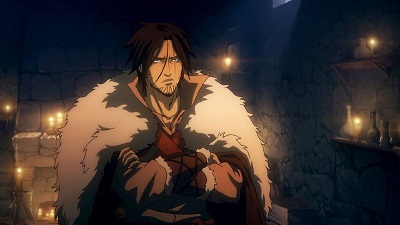
Trevor Belmont is a vampire hunter battling Dracula in Netflix’s “Castlevania.” MUST CREDIT: Netflix

With that in mind, we’ve put together this list of TV series that you can stream right now. Like the genre, which ranges from tales of vampire hunters to detective sagas, we’ve included a little something for everyone.

– “Cowboy Bebop” (1998)

This beloved series – part noir, part space Western – follows a team of intergalactic bounty hunters. “Cowboy Bebop” was the first anime to ever air on Adult Swim back in 2001, and it’s a great series to watch if you’re unfamiliar with the genre. It’s also highly regarded for its sardonic sense of humor and jazz-infused soundtrack (which features one of the best theme songs in television).

Netflix is set to release a live-action version starring John Cho as protagonist Spike Spiegel later this year. (Streams on Hulu)

Also consider: “Trigun,” a 1998 series that doubles down on the space Western theme. (Streams on Hulu)

– “Yasuke” (2021)

Oscar nominee LaKeith Stanfield voices the lead character of this series, which is based on historical accounts of an African man who lived in 16th century Japan. It’s got a lot of other stuff going on, which – as more than a few reviews noted – doesn’t always serve the story well. But it’s visually stunning and features an expansive electronic score by DJ Flying Lotus, who is also an executive producer on the show alongside Stanfield and series creator LeSean Thomas, a Tokyo-based animator (and New York native) whose previous credits include “The Boondocks” and “The Legend of Korra.” (Streams on Netflix)

Also consider: “Afro Samurai,” the 2007 miniseries influenced by hip-hop culture and featuring music by RZA of Wu-Tang Clan fame, along with the unmistakable voice of Samuel L. Jackson. (Streams on Hulu)

– “Claymore” (2007)

Based on a manga by Norihiro Yagi, this dark fantasy series follows warriors who are half human, half demon and charged with killing their fully demon counterparts, the most powerful of which can shape-shift into humans. Got that? Most of the action takes place from the perspective of the show’s wounded protagonist, Clare, who is driven by her painful past. (Streams on Hulu)

Also consider: “Inuyasha,” the 2000 series based on a manga by Rumiko Takahashi, in which a teenage girl is transported to feudal Japan, where she finds herself on a mission with the titular Inuyasha: half man, half dog demon. (Streams on Netflix and HBO Max)

– “Case Closed” (1996)

An astute high school detective crosses paths with a group of criminals and ends up in the body of a young boy in this series, known as “Detective Conan” outside of the United States. The long-running show earned the (faux) ire of Conan O’Brien after the late-night host discovered the child protagonist outranked him on Google in Japan. It’s so popular, O’Brien discovered, that there is actually a town named after the fictional character – and, of course, Team Coco visited it. (Streams on Crunchyroll)

Also consider: “Lupin III,” the franchise that began in 1971, which follows the grandson of the same gentleman burglar who inspired the popular French-language series. (Streams on Crunchyroll)

– “Castlevania” (2017)

Technically anime-inspired since it was produced outside of Japan, “Castlevania’s” English-speaking cast includes Richard Armitage (“The Stranger”) and Lance Reddick (“The Wire”). In this Netflix original, which is based on the popular Nintendo franchise of the same name, a vampire hunter resolves to protect his city from Dracula’s deadly rage. It’s dark, gory and bold in a way that now-adult fans of the “Castlevania” video games will appreciate. It also offers a unique take on the classic Dracula story across four seasons, the last of which debuted in May. (Streams on Netflix)

Also consider: “Hellsing,” the 2001 series that revolves around the storied Van Helsing family and their servant Alucard (that’s for all you anagram lovers). (Streams on Hulu)

– “Dr. Stone” (2019)

A teenage scientific genius awakens to a world in which nearly all human life has been petrified. Senku, aided by friends who eventually join him in an awakened state, sets off to uncover what happened – and how to undo it. “Dr. Stone” is serious about its science as Senku attempts to advance the world from a Stone Age to modern civilization. (Streams on HBO Max and Crunchyroll)

ADVERTISEMENT

Also consider: “Fullmetal Alchemist,” a 2003 classic with more fantastical scientific leanings. (Streams on Netflix)

– “Naruto” (2002)

This kid-friendly franchise begins with the tale of a young, orphaned ninja who longs to be accepted by the village he hopes to lead one day. Subsequent installments further explore Naruto’s destiny, along with those of his closest friends. (Streams on Netflix and Hulu)

Also consider: “One Piece,” an ongoing series that began its run in 1999, which similarly revolves around a young boy with big ambitions. (Streams on Netflix, Hulu and Crunchyroll)

– “Keep Your Hands Off Eizouken!” (2020)

ADVERTISEMENT

This bubbly series follows three driven high school girls who create an anime club – though not without opposition – and embark on creating their own animated universe. It’s a fun, creatively told story that’s particularly illuminating when it comes to the animation process. The New York Times named “Eizouken” one of the best TV shows of 2020. (Streams on HBO Max and Crunchyroll)

Also consider: “My Hero Academia” from 2016, which puts a clever spin on the high school setting. (Streams on Hulu and Crunchyroll)

– “Neon Genesis Evangelion” (1995)

Fans of this classic anime rejoiced when it arrived on Netflix in 2019, after years of being virtually impossible to find in the United States. But the celebration was couched in caution because “Evangelion” is emotionally heavy stuff.

“Yes, it was another show about teenagers in big humanoid robots saving the world,” The Washington Post’s Gene Park wrote. “But it was also an audacious, brutal mosaic of depressed kids and adults with severe abandonment issues and debilitating existential crises. For myself and many young viewers in the ’90s, it awakened awareness of our depression and childhood trauma.” (Streams on Netflix)

Also consider: “Fullmetal Alchemist: Brotherhood,” the 2009 series which similarly pairs its action with exploration of pain and grief. (Streams on Hulu and HBO Max)

– “The Seven Deadly Sins” (2014)

This fantasy series revolves around a band of powerful knights charged with restoring order to an ancient kingdom from which they were once expelled. The show – one part of a franchise that includes films, video games and, of course, manga – is currently on its fifth installment; “The Seven Deadly Sins: Dragon’s Judgment” was released last month. (Streams on Netflix)

Also consider: “Dragon Ball” from 1986, the first anime in a pioneering and wildly popular franchise geared toward a similar demographic. (Streams on Hulu)

Published : July 09, 2021

By : The Washington Post · Bethonie Butler

Monster Hunter Stories 2 is a richer Pokémon experience thats almost as cute #SootinClaimon.Com

#SootinClaimon.Com : ขอบคุณแหล่งข้อมูล : หนังสือพิมพ์ The Nation.

https://www.nationthailand.com/life/40002958

Comparing “Monster Hunter Stories” to Pokémon may seem lazy and obvious, but its also the easiest way to frame the experience for anyone whos curious.

Adjust your expectations if you play Nintendo’s “Pokémon” series purely for the hundreds of cute designs for fictional creatures. The name of Capcom’s series doesn’t lie: It’s all about hunting ferocious monsters, many of whom are ugly as sin. But the “Stories” spin off tales that deepen the game’s lore while maintaining its famously playful charm.

“Monster Hunter Stories 2: Wings of Ruin” is a sequel to Capcom’s first attempt to capture an audience that may want to try something besides Pokémon. The first game sold only 300,000 copies, a far cry from the global success of the root series. “Wings of Ruin” seems to be a second, earnest shot at the same idea, just on modern platforms. Whether this idea is worthwhile really depends on which factors of the “monster-catching and training” genre you love.

If you love the idea of catching and hunting different creatures, “Wings of Ruin” proposes a different solution than wandering the wilds and throwing balls. Instead, each monster “rider” is tasked to find unhatched eggs in various monster lairs strewn across several large maps. Fighting through each monster lair lands you one of 128 possible monsters that could join your team. You’re going to raise and nurture these monsters as if they’re your own. This is a far more streamlined way to find monsters, but it also removes a lot of the surprise that comes with finding that rare “shiny” Pokémon in the wild. It also means a lot of fighting your way through these funneled “dungeons” to find the egg at the end.

Fortunately, the fighting is where “Monster Hunter” has always shined, and “Wings of Ruin” is no exception. Unlike “Pokémon,” you fight alongside one of your monsters, and other characters in the story will fight alongside you with their own predatory pals. Every attack follows a simple rock, papers, scissors system in which speed attacks beat power types, power beats technical types, and so on. Sometimes these attacks can clash, triggering exciting animations that throw button-mashing prompts to keep you paying attention.

While you don’t have direct control over your monsters (lovingly called “Monsties” in this series), each one has a set of specialties you can easily predict. The game also tells you what kind of attack your monsters will unleash next, so you can plan your own attack. Sometimes the two attacks can link up for more damage and prompt special animations that liven up the hunts. Every attack builds up a “kinship” meter, and when it fills you can ride one of your Monsties for more zesty anime-inspired scenes to punctuate your decisions. There’s even another layer on top of that if your other rider party members also attained kinship, meaning all the creatures and riders form up for a singular devastating attack.

There’s also a story, and it’s a solid one. “Wings of Ruin” has winning character design and inspired art direction, especially when it comes to exploring the cultures of the Wyverians, the mysterious race of elflike beings seen in the main Hunter titles. But while there’s far more dialogue and character detailing in “Stories,” don’t expect any elevation of role-playing storytelling. “Wings of Ruin” stays very much in its lane of kid-friendly tales about friendship and believing in yourself. It’s serviceable stuff, but it’s only a small cut above what we get with Pikachu and gang.

It’s here where I have to admit to myself that the much of the Pokémon appeal for me has been exploring its world and the creatures designed for it. The main Monstie of “Wings of Ruin” is a Rathalos, the banner creature for the series in recent years. While fighting a Rathalos in “Monster Hunter Rise” is a genuine and challenging thrill, raising one in “Wings of Ruin” is a much taller ask of me. It doesn’t help that a fire-breathing dragon like Rathalos can’t compete for charm against even a less-popular Pokémon like a Bidoof, the adorable genetic hybrid of a beaver and a doofus.

I started to appreciate “Wings of Ruin” when I started to view it through the lens of Capcom’s long-forgotten role-playing series Breath of Fire. That story also involved dragons and clean, colorful designs for a diverse cast of travelers. When I eventually stopped the inevitable comparisons to Pokémon, “Wings of Ruin” started to sing as a gorgeous and updated evocation of the simpler days of 16-bit tales.

Capcom believes in this concept, and it’s hard to blame them. After all, the game maker has seen the kind of fandom furor Monster Hunter can raise. Why not extend that to children who could grow up to love the root series? When it comes to “Wings of Ruin,” you just really have to ask yourself whether you’re in it for the furry friends or the fantastical fighting. If it’s the former, the scale-clad titans of “Wings of Ruin” may not hit. But it’s going to be a fascinating time if you’ve always wondered what the formula might play like if it evolved just a bit more.

Published : July 08, 2021

By : The Washington Post · Gene Park

Is the new Nintendo Switch OLED model right for you? #SootinClaimon.Com

#SootinClaimon.Com : ขอบคุณแหล่งข้อมูล : หนังสือพิมพ์ The Nation.

https://www.nationthailand.com/life/40002916

Nintendo announced an updated model of its hybrid mobile console Tuesday, the Nintendo Switch OLED, highlighting the devices better mobile screen, as well as a handful of new external features. The company did not detail any updates to the systems hardware; based on the information available now, games wont play any better, nor will they look better on a TV screen. Instead, the form factor updates – a new OLED screen and 0.8 additional inches of real estate – will merely make games look clearer in handheld mode. The bigger screen also means thinner bezels around the image, which gives the system a more modern look.

The form factor and docking station, unique to the hybrid console, are also getting some mild updates. The dock will now include an Ethernet port, while the console and screen itself will sport an improved and far more stable kickstand for tabletop play. And instead of 32 gigabytes of internal memory included, you’ll be getting 64 GB.

Outside of these modest adjustments, the OLED version is basically the same system as the original Nintendo Switch. So who is this for? And is it for you?

– For standard Switch model owners

The Nintedo Switch OLED probably isn’t for you. If you’ve followed gaming conversations across popular sites online, you may have heard rumors and excitement about more powerful Switch hardware, dubbed by fans as either a “Switch Pro” or “Super Nintendo Switch.” Both of these concepts still live in the realm of daydreams and wishful thinking. This new Switch OLED model will likely not offer any meaningful improvements to your play experience.

There are some exceptions. Do you play mostly in handheld mode? Is the screen feeling a bit dim, or do you wish the mobile screen had thinner bezels? The OLED displays should achieve much better black levels than the standard Switch model, which uses an LCD panel.

The OLED model will also come with two features that should have been included with the Switch back in 2017: a stable, wide kickstand and a built-in Ethernet port. Until now, every Switch console could only connect to the internet wirelessly. You’d need to buy an Ethernet adapter to hard wire it in, which typically cost about $30.

The lack of certain features is sure to disappoint some. It’s baffling and silly that the Switch still doesn’t have built-in Bluetooth support. And while it’s nice that the OLED device has an increased internal memory storage of 64 GB compared to the original 32 GB, it’s still relatively small. Smartphones often offer more.

An OLED screen may be new for Nintendo, but it’s old news in the consumer tech world. OLED, or organic light-emitting diode, has been the standard screen for Apple since the iPhone X in 2017. OLED panels have become a standard display option in recent years thanks to decreasing costs, and it’s obvious Nintendo is taking advantage of the reduced prices now. But I can only imagine owners of a regular Switch wanting this if they really value a better screen experience in handheld mode.

– For Switch Lite owners

If you purchased a Switch Lite but regret not being able to play on a TV, this should be an easier decision for you.

You probably only own a Switch Lite because you prefer to play games in a mobile format, or the limitation doesn’t bother you as much because the Lite was cheaper at $199. But now there’s going to be a newer model with an even bigger and bolder screen. Playing with a Switch that can be docked to a TV setup gives you a better playground for local multiplayer.

Certain games also sometimes see slight improvements in graphics when the Switch is docked. This isn’t a pronounced feature, but it happens across a few titles, and eagle-eyed players will spot the differences in detail, like in the recent “Monster Hunter Rise.”

But if you bought a Switch Lite because you love the size and form factor, and aren’t interested in a brighter screen, this should be an easy pass for you.

– For those who don’t own a Switch

You are the target audience for this new machine.

The Nintendo Switch has been the best-selling video game console in the U.S. in the last 30 consecutive months, over the newer, far more powerful PlayStation 5 and Xbox Series machines. With more than 84 million sold worldwide and on its fourth year, it’s already surpassed the lifetime sales of Microsoft’s Xbox 360, which was in production for 11 years. The Switch is on track to become the most successful home console ever released by Nintendo.

Given that reality, Nintendo is relying on its age-old strategy of releasing refreshed units of the same system to saturate the market as much as possible before moving on to its next platform. It followed this strategy to wild success with the Nintendo DS family, which ultimately sold 154 million units and is barely behind the PlayStation 2 as the best-selling system ever. Nintendo hopes that these modest improvements will bring in the holdouts.

If you haven’t bought a Switch by now and you’re a lapsed Nintendo fan, this is the perfect reentry point. If you’re not a Nintendo fan but wondering why the company’s first-party titles are so critically and commercially successful, this one’s for you too. If you haven’t been interested in the Switch and Nintendo games, however, this new console probably won’t change your mind.

– For Nintendo collectors

Everyone knows you’re going to buy this. You’ve already tweeted to your followers that you’re going to get it. You probably already have two or more Switch units. You are Nintendo’s ideal customer. Congratulations, the company just gave you another reason to spend money. You love it.

Published : July 07, 2021

By : The Washington Post · Gene Park

A Taiwanese horror game that angered Chinese players returns. Can it move past its unintended politics? #SootinClaimon.Com

#SootinClaimon.Com : ขอบคุณแหล่งข้อมูล : หนังสือพิมพ์ The Nation.

https://www.nationthailand.com/life/40002870

A Taiwanese horror game that angered Chinese players returns. Can it move past its unintended politics?


When Taiwanese horror game “Devotion” first published in 2019, the conversation revolved around Chinese president Xi Jinping and a meme comparing him to Winnie-the-Pooh. The Disney character had no role in the game, but still a poster invoking the Chinese president and Poohs name led to “Devotions” removal from multiple digital storefronts and generated a online furor that trapped its makers at Red Candle Games in the middle of decades-long political tensions between Taiwan and mainland China.

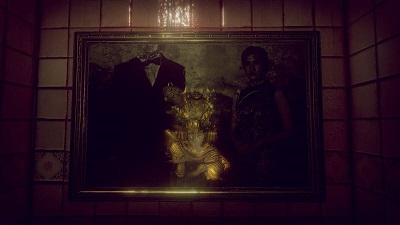
A scene from the Taiwanese horror game “Devotion.” MUST CREDIT: Red Candle Games.

Three days after its release, a player spotted and reported a poster in the game of a cursed talisman that read “Xi Jinping Winnie-the-Pooh moron.” It was a reference to a common meme mocking Xi by suggesting his resemblance to the cartoon. The developers said the art had been added as a placeholder by a team member working on the game who then forgot to replace it before the game’s release. Red Candle’s developers said they took down the image within an hour of the report, but the damage had been done.

When the poster came to the attention of Chinese players, they left thousands of scathing reviews for the game on the PC games store Steam. Red Candle would remove it from Steam in February of 2019, saying it needed to do a thorough quality assurance check to delete all “irrelevant content” from the game. CD Projekt Red’s digital store, GOG, announced in December of 2020 it would carry the game on its platform, only to walk back its statement hours later, citing negative messages from gamers.

The game was nowhere to be found. Until now.

Fast forward to 2021, and “Devotion” has returned. On March 15, Red Candle began distributing the game on the developer’s own website, with the controversial image removed. But can the game move on from the reputation it gained in 2019 for being politically subversive to Chinese gamers?

“The words on the poster do not represent the studio’s stance,” said Doy Chiang, co-founder of Red Candle Games and game producer for “Devotion.” “For players who have actually played ‘Devotion’ and finished the game would understand that the game’s theme is about parental love, Taiwanese family in the ’80s, and perhaps religious cults. Possessing political views about China, by any means, has never been the studio’s intention.”

Chinese internet users have been spreading memes comparing Xi to Winnie-the-Pooh for years. But the reference in “Devotion” still rubbed Chinese gamers the wrong way. They wrote in Steam reviews that the talisman felt antagonizing because it felt like Red Candle Games had hidden political views inside a game seemingly about something else, and had tricked Chinese users into playing it. Several users said if Red Candle Games hated mainland China and supported Taiwanese independence, then it shouldn’t have hidden its views in the game to force others to see. They added that they had received full refunds for the game and uninstalled it. Red Candle tried to communicate with Chinese gamers via its microblogging Weibo account, only to soon have its account removed.

Geopolitical tensions between mainland China and Taiwan have brewed since the Chinese Civil War ended in 1949. The Chinese government says that Taiwan is a province of China, but the Taiwanese government maintains its sovereignty. The United States is purposefully ambiguous in its relationship with Taiwan, engaging in trade and diplomacy without officially recognizing the island as its own country.

“We understand that some players have been looking forward to the re-release of ‘Devotion.’ And we feel sorry that the studio failed to deliver that in the past two years,” said Vincent Yang, co-founder of Red Candle Games.

Why did the game take two years to return? After the game was taken down in early 2019, the studio made the decision to hold off on quickly rereleasing the game. After the decision to distribute the game on GOG fell through in 2020, they ultimately decided on the self-publishing route, which took months to prepare, Yang said.

Rather than addressing the political situation between Taiwan and China, developers say “Devotion” draws inspiration from games like “What Remains of Edith Finch,” “Layers of Fear” and “P.T.” with a mixture of horror elements and mysterious puzzles. “Devotion” is set in the 1980s, and includes many nods to Taiwanese culture, religion and music from that era. Red Candle Games noted that Taiwan rarely gets showcased in games, and especially not in psychological, atmospheric horror games. The team spent “countless hours in redesigning our project,” to live up to the inspiration drawn from those iconic titles, said Yang.

“Devotion” is a haunting first-person horror game that plunges players into the story with no tutorial. One moment, the main character is hearing his wife preparing dinner and asking for their daughter, and the next the player is alone and must figure out what happened to the deceased family.

The family’s belongings are strewn across the apartment, and the game depicts a happy couple moving into the home, raising a daughter who is talented at singing, then facing what happens when she grows sicker and sicker. Through art, music and dialogue, “Devotion” references Taiwanese folk culture, religious elements from Taoism and Buddhism and more. It gets very creative at times, showing gameplay through jumping around inside a children’s book and even a hellscape of what looks like the underworld.

“The 1980s Taiwan was a time of economic boom,” Chiang said. “The media often depicted the successful stories of the hardworking, talented, persevering people. But in reality, we saw people strangled by the stress.”

The loving couple who star in “Devotion” are at first extremely successful, with the dad being a script writer and the mom being a famous actress. But their careers dwindle and soon they pin their hopes on their elementary school age daughter, Mei Shin, a budding singer who has successfully performed on televised singing competitions. At first, Mei Shin is happy to oblige, but that sense of pride morphs into disappointment, illness and later, nerve-wracking pressure when her singing fails her.

“In a traditional Taiwanese household, the bonds between members are usually very strong. Some parents may consider their offspring as the extension of their existence, viewing children as part of the family’s possessions rather than independent individuals,” said Chiang. “As for parents who have unfinished dreams, they might put their own expectations on their descendants. From the present perspective, such behaviors are quite unfair to children.”

As Mei Shin grows sicker, a doctor tells her family that the issue is purely psychological. But in the 1980s, mental health issues were highly stigmatized in Taiwan. Instead of allowing the daughter to see a therapist, the family later turns to religion to solve their problems. Soon they become entangled in a cult.

“In the past, patients of mental illness were often stigmatized and associated with negative stereotypes. The general public was afraid of these patients,” Yang said. “That’s also the reason we wanted to include mental health as a part of our game narration. Though it might be a tiny effort, we hope that with our game, we could somewhat help raise the awareness of mental health in our society.”

The psychological burden doesn’t just stem from Mei Shin’s parents, but also herself and her strong sense of duty. Yang noted that none of the family members are able to fully express their emotions and instead each try to sacrifice themselves to show their love.

While the game slowly builds to a climax, it’s also got a good amount of jump scares along the way. For instance, in one part of the game, life-size dolls are used to represent the family. The wife doll is preparing things in the kitchen, at first, but as the player walks away, and then looks back, the wife doll is suddenly beside the player, looking directly at them.

“When players are finally in sync with the rhythm of the game, we would then implement a sudden change in the atmosphere to catch players off their guard,” said Chiang, who added that the jump scares keep players from getting too comfortable.

After the success of cult favorite horror game “Detention” and the mixed reviews of “Devotion,” Red Candle is working on a new, yet-to-be-named game that has been under development for over a year. The developers say it will be an action-packed two-dimensional platformer.

While Chinese gamers in 2019 criticized “Devotion” for what they interpreted to be a covert message in support of Taiwanese independence from mainland China, that theme is nowhere to be found in the game today. Instead “Devotion” feels like a celebration of Taiwanese culture and an examination of societal shortcomings. It does tackle tough subjects like mental health and abusive parenting, but leaves out any thoughts on Taiwan’s fraught relationship with China.

But in some ways, the damage has been done. Since the game’s rerelease on the developer’s website, sales have been insignificant compared to “Devotion’s” previous launch on Steam, likely due to the limited exposure the indie game studio receives. The game is also not allowed in mainland China, due to having to comply with local regulations, according to Red Candle. Local Chinese gaming regulations frown upon gory or particularly violent games and require that all text within a game must be in simplified Chinese (Devotion features traditional Chinese with an option of English captions).

“For Red Candle Games, our goal is to have our works playable for worldwide players,” Yang said. “We will continue developing our future titles. Hopefully one day we can achieve this goal.”

Published : July 06, 2021

By : The Washington Post · Shannon Liao

The tale of ‘Ploy’ #SootinClaimon.Com

#SootinClaimon.Com : ขอบคุณแหล่งข้อมูล : หนังสือพิมพ์ The Nation.

https://www.nationthailand.com/life/40002803

The tale of ‘Ploy’


Artist Prapat Jiwarangsan’s middle length feature ‘Ploy’ becomes one of the only two Thai films at Berlin International Film Festival 2021.

At Berlin International Film Festival, Forum Expanded is section that focuses on visual arts exhibition or performance. In the ear of the pandemic, Forum Expanded 2021 continues with the selection of 17 shorts, medium-length films and features which were screened online to press and industry people during the first half of Berlin International Film Festival from 1-5 March 2021, and was presented physically to audience in Berlin from 9-20 June 2021. This year, Forum Expanded has chosen Thai medium length feature film ‘Ploy’ to be a part of the program. 

The tale of ‘Ploy’The tale of ‘Ploy’‘Ploy’ is a new work of Prapat Jiwarangsan, Thai visual artist whose installations have been presented in many cities around the world like Gwangju, London or Hong Kong. Previously, Prapat’s shorts and exhibition were presented at International Film Festival Rotterdam, but ‘Ploy’ is the first time that his work is presented at Berlin International Film Festival. 
“2 years ago, Asia Center of the Japan Foundation gave me a grant to do research in Japan and two other countries, so I made visual arts about Southeast Asian migrant workers who go to Singapore, Japan and Myanmar.”, Prapat talks about the beginning of this project which later received financial support from Tan Ean Kiam Foundation-SGIFF Southeast Asian Documentary Grant (SEADOC) and had world premiere at Singapore International Film Festival in December 2020. 

“I was a lecturer in Chiang Mai. In my neighborhood, there were Karen teenagers who didn’t have any ID card. They work as gardener. After the coup d’etat in 2014, there was rumor that undocumented immigrants would be arrested and deported. The Karen gardeners in my neighborhood disappeared. It makes me interest of stateless workers so I made my first film ‘The Asylum’ which I shot in Chiang Mai.” Worked as a lecturer at Chiang Mai University, Prapat’s works are mostly about migrant worker and people living on the fringe of the society. His work like ‘The Asylum’, screened at International Film Festival Rotterdam in 2016 is about a refugee boy from Myanmar and a DJ who worked for a radio station which was shut down after the 2014 coup d’etat in Thailand.   

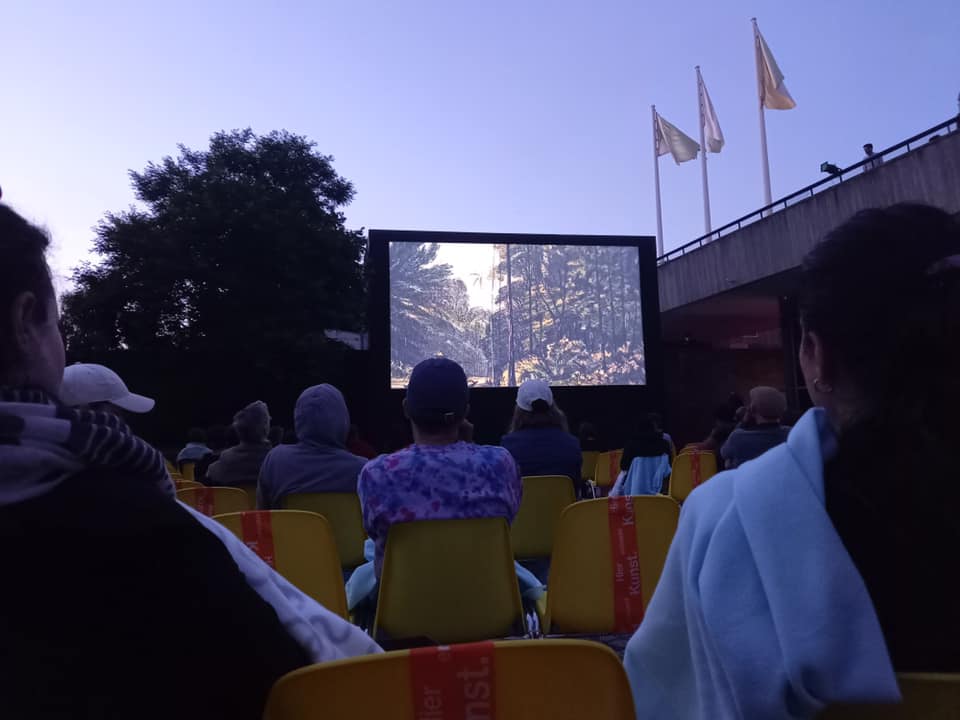
Prapat Jiwarangsan's Ploy was screened physically to audience of Berlin International Film Festival on 15 June. The outdoor screening at the rooftop terrace of Open Air Kino HKW was packed with audience. Copyright - Ulrich Ziemons“The condition from the grant I received from Asia Center is that I had to travel to do research in 3 countries, which are Japan, Singapore and Myanmar. In Singapore, I stayed there for 2 months because there are many immigrant workers in Singapore. Many of them are from the Philippines, Indonesia or Myanmar. Some of them are from Thailand. What I am interested the most is domestic worker. In Singapore, a group of Thai people there published a book ‘Kon Glai Ban (Persons far from home)’, edited by Pattana Kitiarsa. In the book, there are 20 short diaries of people who came to work in Singapore 10 years ago like housemaid or construction worker. ‘Ploy’ is one of the stories.” 
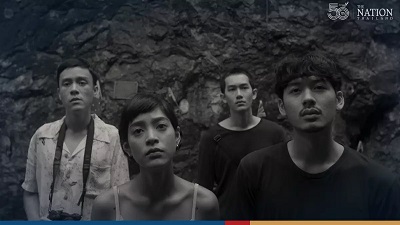
Ploy is a Thai woman from Buriram who went to Singapore to become illegal sex worker. There, she worked in a ‘jungle brothel’ which is a brothel located in Singapore’s parks or forests. Ploy was caught by one of the members of the Gurkha contingent who forced her to have sex with.“I am not sure if Ploy is the person’s real name, but her story is true as there’s an evidence.”, says Prapat. 

“ 3 years ago, I went to Singapore and filmed some footages of the workers having a picnic, but I didn’t know what to do with them.”. During the first trip, Prapat found the book ‘Kon Glai Ban’ which inspired him to turn one of the stories in the book into film. Prapat later went to Singapore again in 2020 and film the additional footage near Malaysia-Singapore border and in Hat Yai. Prapat finally finished the film as middle length feature film of 51 minutes. In ‘Ploy’, Prapat mixed footages which some are interviews of migrant workers in Singapore with photographs, paintings and 35 mm film slides. The life of Ploy was told through narration.  

To be a part of Berlin International Film Festival’s program is a very exciting experience for Prapat  though he couldn’t travel to Berlin to present his film. The physical screening of Ploy on 15 June in the roof terrace of Haus der Kulturen der Welt went successfully and was sold out. “My producer (Graiwoot Chulphongsathorn) read the reviews for me. Some critics were interested in the film that is an experimental film with mixture of documentary elements. However, some people may not understand the situation in the film.”, says Prapat about feedback of the film from the screening at Berlin International Film Festival. 

After the Summer Special screening at Berlin International Film Festival, Ploy will have its limited theatrical release in Thailand later in 2021. 

Published : July 04, 2021

By : Special to Nationthailand by Donsaron Kovitvanitcha

Journey into the heart #SootinClaimon.Com

#SootinClaimon.Com : ขอบคุณแหล่งข้อมูล : หนังสือพิมพ์ The Nation.

https://www.nationthailand.com/life/40002517

Journey into the heart


Premiered at Berlin International Film Festival 2021, Anocha Suwichakornpong’s fourth feature film is the story of a group young people visiting the historical places along Kanchanaburi’s Death Railway.

As a female Thai filmmaker whose works are recognized internationally and locally where she has just recently received Silpatorn Award from The Ministry of Culture’s Office of Contemporary Arts, Anocha Suwichakornpong’s new film is one of two Thai films in this year’s Berlin International Film Festival which the first half of the festival which is the virtual part that only film professionals and press can watch the films in the line-up, which the second part of the festival which happened from 9-20 June is for the audience to enjoy watching films in outdoor screening during summer in the city of Berlin. 

Anocha SuwichakornpongAnocha Suwichakornpong‘Come Here’ or ‘Jai Jumlong’ is the first time for Anocha to have her film premiere at Berlin International Film Festival in Forum section. 
“I want to film something quick.” Anocha tells us about her fourth feature film, which is a smaller piece comparing to her previous films. “After I finish ‘By the Time It Gets Dark’, I felt tired, so I want to make something that is not too complicated in making, with few shooting days and few casts.”, says Anocha. 

Anocha decided to film ‘Come Here’ as a film that she can finish and release quickly to allow for fluidity and improvisation. “The film was shot within 5 days and is not longer than 70 minutes. We don’t have screenplay, so we did workshop with the actors.” Anocha talks about how she wants her fourth feature film to be. 

Between 2018-2019, Anocha was invited by Harvard University to be visiting lecturer on Art, Film, and Visual Studies, which was the time that she started editing all the footages. “I went to Harvard University to teach in 2018, I was very busy with teaching so I couldn’t have time to edit the footage. Then I had another project ‘Krabi, 2562’ that I co-directed with Ben Rivers, so I had to focus on ‘Krabi, 2562’. After I finish the film, I resumed working with the editing of ‘Come Here’. Last year, there was a lockdown so I had time to work on it.”. 

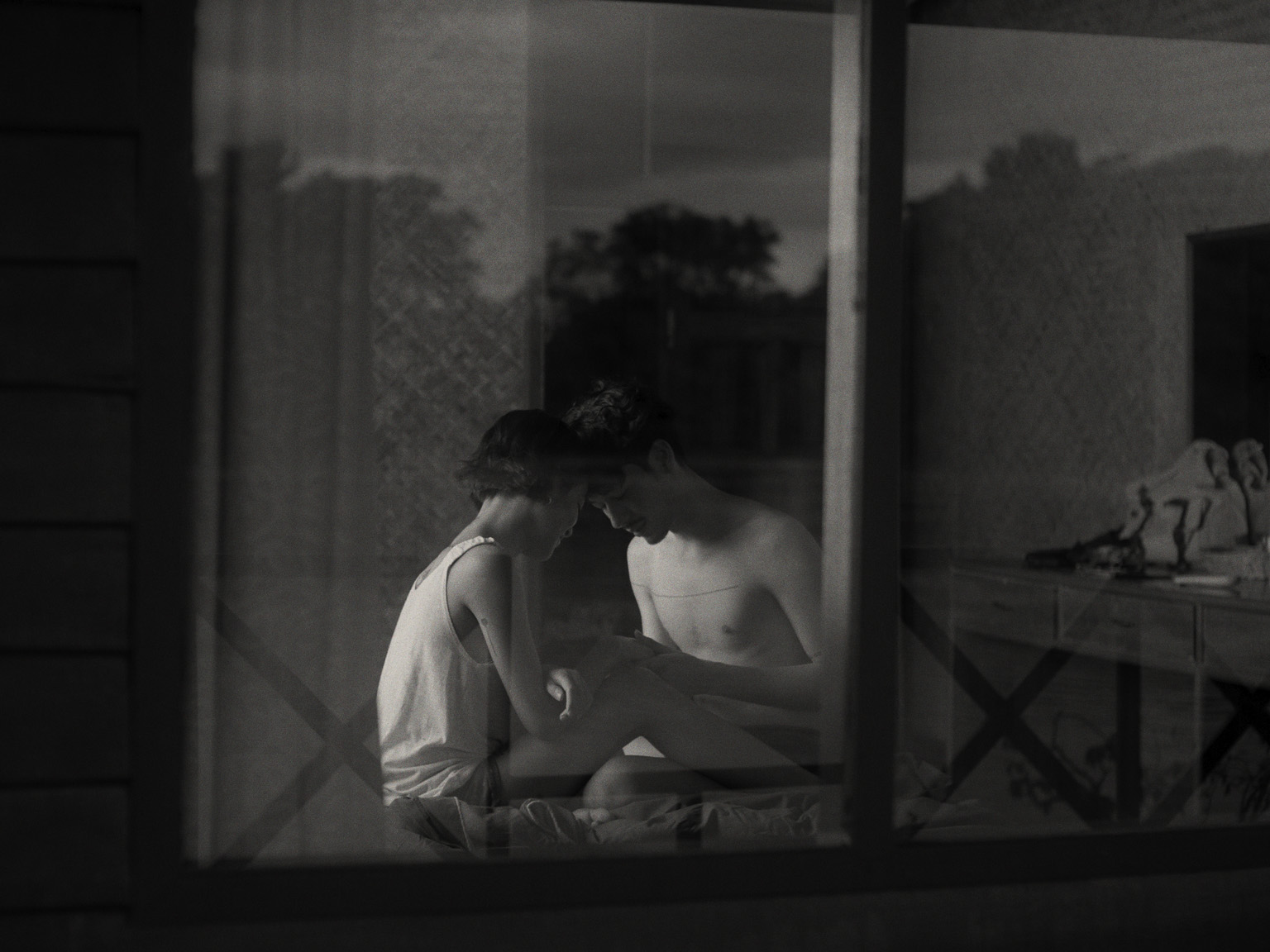
‘Come Here’ tells the story of four friends from same theater company who take a trip to Kanchanaburi province. There, they drink, smoke weed, talking, and fall in love.  

“I went to Kanchanaburi province and I had some memories of it. I went to Hellfire Pass and I felt very sad. I had the feeling that I want to make a film from those experiences, so I came up with the story of a group of actors visiting Kanchanaburi.”, Anocha talks about the background of choosing Kanchanaburi and the famous ‘Death Railway’ as location of the film. 

“I want it to be a clash between location which is historical place and characters which are young people of the present days. The choice of filming this film as black and white makes it feel ambiguous that which era these characters are in. I want to make it to be timeless, to be something that can happen in any era.”, says Anocha about her choice in filming ‘Come Here’ as black and white, so the audience in the future may question when actually the story of this film takes place. 

‘Come Here’ is the second time that actress Apinya Sakuljaroensuk works with Anocha’ after ‘By the Time It Gets Dark’. This time, her co-actors are Sirat Intarachote who is well known from films such as ‘App War’, Bhumibhat Thavornsiri who received universal acclaim from his acting in Netflix series ‘Girl From Nowhere Season 2’ , professional stage actress Waywiree Ittianunkul and artist and architect Sornrapat Patharakorn who has ‘Come Here’ as his acting debut.  “I brought professional actress like Saipan Apinya to work with Sornrapat, who is an artist and never acts before. Too Sirat were in some films. Waywiree is stage actress. We cast people with various acting background, as I am interested to see how it is going to be when they perform together. During the workshop, we asked Sirat, Sornrapat and Bhumibhat to switch their roles as we didn’t have screenplay. We had only treatment and we didn’t decide who was going to play which role, until one point that we know who.”, says Anocha about the process in working with the casts.  

Saipan Apinya Sakuljaroensuk and Sirat Intarachote (App War) play the character of 'Saipan' and 'Too', stage actors who are from the same theatre company.

Anocha has attended the physical screening in Berlin on 20 June “I am in Berlin for DAAD’s residency program, so I could be there at the physical screening of ‘Come Here’.” Anocha is awarded the DAAD Artist-in-Berlin program, which she is invited to live and work in Berlin for 6 months, so she is one of the few filmmakers from outside Europe who attended the screening at Berlin International Film Festival physically this year. 

‘Come Here’ is a film made for viewing in cinemas, which the director hopes that the audience will be able to experience this film on big screen. “I can understand why there needs to be online screenings under this circumstance,  but it may not fit for every film. I made this film to be viewed on big screen. With online screening, you may not experience sound and picture as I hope it to be.” After the physical screening at Berlin International Film Festival, ‘Come Here’ is expected to have its theatrical release in Thailand by the end of this year. 

Published : June 27, 2021

By : Special to Nationthailand by Donsaron Kovitvanitcha

The Fast and Furious franchise ranked, from worst to best #SootinClaimon.Com

#SootinClaimon.Com : ขอบคุณแหล่งข้อมูล : หนังสือพิมพ์ The Nation.

https://www.nationthailand.com/life/40002440

The Fast and Furious franchise ranked, from worst to best


The “Fast and Furious” saga shouldnt exist.

Or maybe it’s the only movie franchise that should exist, since it understands what America’s dumb, lovable heart wants: fast cars, macho hunks driving those fast cars, and hunks driving those fast cars as high-speed weapons in a battle to protect all that is good and holy in this world: family.

“F9” is the latest entry in the saga of Dominic Toretto (Vin Diesel) and his loose “family” of street racers, crooks and ne’er-do-wells. And while the nine “Fast and Furious” movies arguably belong in the pantheon of cinematic spectacle, the first film was originally lucky to get even one sequel.

Diesel opted out of “2 Fast 2 Furious” due to what he felt was a lackluster script. And the third film, “Tokyo Drift,” seemed like a natural stopping point when Paul Walker, who starred in the first two films, temporarily left the series. The franchise was only saved in a bit of Hollywood wrangling when Diesel was asked to cameo at the end of “Tokyo Drift,” in exchange for a producer role in any future installments, and the option to bring back his preferred castmates.

And there lies the turning point for a generation of moviegoers. The fourth film, “Fast & Furious,” was effectively a reimagining of the franchise, introducing the playful spirit that would come to define it: What if James Bond could dead-lift 800 pounds?

In the first three films, it’s all about the cars. There was a built-in audience with the kind of gearheads who love to pore over horsepower, steering and any other little cog that makes a car go vroom. And while that’s fun and all, there’s only so much you can explore within that world.

After the revamp, the series became driven by its characters, especially the characters who looked like brawny Marvel superheroes and could drive as well as they threw a punch.

The “Fast” movies became a lot more fun and, more importantly for a summer blockbuster, didn’t take themselves too seriously.

In the spirit of competition, the following is a ranking of the nine films, from worst to best. (We opted to exclude the spinoff “Hobbs & Shaw,” but honor Dwayne Johnson with a nod for single-handedly pulling down a helicopter with his glistening, bulging forearm.)

9. “2 Fast 2 Furious” (2003)

When these movies are at their best, they’re both spectacles of action and touching odes to the values that bind us together as a community. It’s hard to find much of that in the second film.

After constructing a Los Angeles in the first film that felt lived-in and vibrant, “2 Fast” plucks the one outsider, cop-turned-fugitive Brian O’Conner (Walker), and drops him into a leaden Miami underground for a covert mission to beat his rap sheet – with poor results. There’s a glorious final chase, in which an airborne Camaro crash-lands on a boat in the middle of lake, and we’re introduced to the characters of Roman Pearce (Tyrese Gibson) and Tej Parker (Chris “Ludacris” Bridges), who play into future Goofus-and-Gallant bits in later films.

In an appreciation of the late director John Singleton, who directed this film, Bilge Ebiri offered up this modest defense of the maligned sequel. “For all its sun-drenched, candy-colored aesthetic, the film’s world is steeped in mistrust: Every character has an ax to grind,” Ebiri wrote. “Singleton takes the aggressive, one-note conflicts of the action genre and builds whole networks of resentment out of them. This lends the picture a weird authenticity, despite the general dopiness of the plot.”

Maybe it helps to look at “Fast 2” like this: a gritty, not-quite-origin story about the anger and chaos our heroes are trying to cast off with the stomp of a gas pedal.

8. “The Fate of the Furious” (2017)

There’s a handful of movies contained within the eighth chapter of the “Fast” series – each them a little more disappointing than the last.

There’s the story line involving a checked-out Dwayne Johnson and Jason Statham, who are grabbing their skintight shirts on the way out the door to their characters’ 2019 spinoff. There’s Charlize Theron, misused as the woefully ill-conceived cybervillain Cipher, who wants … something. (Something evil and nefarious, no doubt, but what?) Then there’s the family narrative. Except, wait: Dom has two families. Kind of. One of them involves an old flame he became involved with after his beloved Letty (Michelle Rodriguez) was killed. (Never mind that Letty was ultimately resurrected and found suffering from amnesia.) Dom’s quest to save his only son – fathered with a Brazilian cop (Elsa Pataky from “Fast Five”) – pulls him away from his Los Angeles family in a frustratingly long plot that doesn’t add any fresh twists to the tale. But there are also fast cars evading a Cold War-era Russian submarine on an icebound lake. Much to consider here. Too much.

7. “Fast & Furious” (2009)

There’s nothing bad, per se, about the fourth film.

It’s the last time we see the criminal-vs.-cop tension between Dom and Brian, before they make it official and become family once and for all. And that supporting cast! The always delightful character actor John Ortiz plays the supervillain – one hiding in plain sight – and Gal Godot launches her American film career here, as Dom’s love interest. It wasn’t meant to be.

It’s just that it’s kind of dull in comparison to what comes after it. Where subsequent films thrive on wide, dolly shots of cars wreaking havoc on various international cities, the major action here is primarily set in an underground tunnel on the U.S.-Mexico border, It feels small, but it’s a sign of good times ahead.

6. “Furious 7” (2015)

It was always going to be a tough task trying to assemble a film after the death of Walker, who was killed in an unrelated automobile accident during the making of this installment. And it doesn’t help that the entire chronology of the already sprawling and messy saga had been reordered in an after-credits sequence, offered up in “Fast & Furious 6.” (The events of the third film, “Tokyo Drift,” were shown to have taken place between the sixth and seventh installments. Still with us?)

But thankfully this movie simply speeds through any plot contrivances with pure silliness. There’s Kurt Russell, as the fittingly named covert government operative Mr. Nobody, who whips out a bucket of Coronas to entice Dom to come work for him. There’s Johnson, who cracks his arm out of a plaster cast by flexing his biceps – before yanking a drone from midair. There’s a car that jumps between two Abu Dhabi skyscrapers. And all the talk about the importance of family? It really began to hit home here, with a touching final tribute to Walker.

5. “F9” (2021)

After 20 years of full-throttle heists, races and high jinks, the series finally succumbs to an origin story. We learn that Dom has a brother, Jakob (John Cena), and we hear about the Toretto family’s dalliances with the criminal underworld, through melodramatic flashbacks. And guess what else? All of the gang is reunited. Three of the main cast members of “Tokyo Drift” reappear as goofy rocket scientists, and – stick with me here – the character of Han (Sung Kang), who died in the third film, is back from the grave.

The film is slightly weighed down by its hefty running time of 145 minutes, nearly 10 minutes of which consist of meta-textual jokes about Diesel’s ethnic ambiguity, winking allusions to characters’ seeming invincibility and convoluted explanations of past plot holes. That said, director (and co-writer) Justin Lin, returning for his fifth film, introduces a few novel twists to this latest chapter: land mines; a use for those rocket scientists; and a Toretto family affection for elaborate zip-line contraptions. It’s a charming and outrageous corrective after previous films had started to take themselves a wee bit too seriously.

4. “The Fast and the Furious” (2001)

ADVERTISEMENT

There’s still something charming about the original film, 20 years on. Even if there had never been a “2 Fast 2 Furious,” – let alone eight separate sequels, you could do a lot worse that to land on this movie while channel surfing on a lazy Saturday afternoon.

It’s a little messy, sure, not to mention silly. But it shows how much fun can be had watching people drag-race through the streets of Los Angeles. Director Rob Cohen and writers Gary Scott Thompson and David Ayer thrust you into a tightknit community of beautifully diverse characters, who are guided by their big feelings and strong affection for one another.

Certain jokes and dialogue haven’t aged well. And the habit of the early films of relying on the injection of nitrous oxide fuel to speed up a car – akin to the warp speed of sci-fi – is cheesy at best. But the film is redeemed by an excellent highway chase scene (and other striking, non-CGI car stunts) in which we get a peek at the world to come.

3. “Fast & Furious 6” (2013)

The Fast crew meets their (almost literal) match with the introduction of Owen Shaw (Luke Evans) and his team of mercenaries – highlighted by Joe Taslim’s prodigious martial artist Jah – in the unofficial launch of the series’ defining trait: physics-defying one-upmanship of itself.

Sure, there were also nine films in the “Star Wars” Skywalker saga. And OK, they may have had intergalactic travel. But can they boast a muscle-bound Diesel barreling at full speed down a highway bridge, then leaping across a chasm – to a second bridge – all to save his beloved Letty, in midair, after she has leaped off a tank? That sequence is absurd enough, but then there’s the final airport scene – just how long is that runway? – involving characters getting sucked into jet engines, the heroic death of Godot’s Giselle (although in this universe, reports of her demise may be premature) and Diesel bursting out of the fiery wreckage of a downed plane.

Pure, mind-numbing joy.

2. “The Fast and the Furious: Tokyo Drift” (2006)

This movie shouldn’t work. If part of the problem with “2 Fast” was that it took us away from the Los Angeles setting of the first film, the third movie drops us on the other side of the world, in what could have meant one of two fates for the series: the direct-to-video rack at the CVS checkout line, or the franchise’s quiet finale.

Thankfully, director Lin, who would shepherd much of the series to its gleefully insane heights, was given the reins. Lin constructs a very simple and elegant fish-out-of-water tale, alongside cars that, even in this series, have never looked or felt cooler. The best parts of the “Fast” films have always been the way its city streets establish a visual language of mayhem. Here, Lin captures the vibrancy of Tokyo’s nightlife and bright neon. “Tokyo Drift” is probably the last time the “Fast” sagas tells a simple and effective story between its bruising action scenes.

1. “Fast Five” (2011)

Who doesn’t love a heist film? If you’re making a case for an Oscar for stunt artistry, there are few better arguments than “Fast Five.” It’s the pinnacle of the series – and action films in general, over the past decade.

It’s the beautiful inflection point from the protagonists’ origins as low-stakes thieves to globe-trotting spies. The film kicks off with the stunning heist of a few cars from a train, unraveling into an even more breathtaking sequence in which a bank vault is catapulted through the streets of Rio. It’s Johnson’s first appearance as the no-nonsense government agent Luke Hobbs, sent to foil Toretto and crew before realizing their hearts are in the right place. It’s the perfect vehicle for bravura direction and editing, without ever losing the momentum of each ridiculous and joyous stunt.

Published : June 25, 2021

By : The Washington Post · Hau Chu

Latest Fast & Furious film takes you where youd expect: Beyond the laws of physics and logic #SootinClaimon.Com

#SootinClaimon.Com : ขอบคุณแหล่งข้อมูล : หนังสือพิมพ์ The Nation.

https://www.nationthailand.com/life/40002394

Latest Fast & Furious film takes you where youd expect: Beyond the laws of physics and logic


“As long as we obey the laws of physics, well be fine.”

Latest Fast & Furious film takes you where youd expect: Beyond the laws of physics and logic

So says Tej (Chris “Ludacris” Bridges) in one of several self-referential winks in “F9: The Fast Saga.” Fans of the action franchise, about a ragtag team of hijackers turned good guys with amazing driving and bullet-dodging skills, will recognize the reference: The laws of physics are flouted with metronomic regularity in the “Fast & Furious” movies, which audiences now expect to be progressively more outlandish as they try to one-up each other. In “F9,” that desperation involves sending one of the crew’s famously tricked-out cars literally into space – as well as playing fast and loose with on- and off-screen deaths.

In other words, the rules don’t apply in “F9,” which reunites Vin Diesel’s velvet-voiced alpha male Dom Toretto with his loyal crew. After a mysterious message arrives from their leader Mr. Nobody (Kurt Russell), Tej, Roman (Tyrese Gibson) and Ramsey (Nathalie Emmanuel) convince Dom and his new wife Letty (Michelle Rodriguez) to leave their idyllic country cabin-cum-armamentarium to embark on a mission to … um, go to a place to pick up a dingus that leads them on yet another mission to foil someone else’s mission to get the dingus back. And then get another dingus that will, as one character puts it, “reboot the world order.”

After the year we’ve just had, that might not sound like the worst thing. But in “F9” the all-powerful geodesic thingamajig is being chased by the evil Cipher (Charlize Theron), as well as a snotty plutocrat with an indeterminate accent (Thue Ersted Rasmussen) and Jakob (John Cena), a square-jawed henchman who turns out to be Dom’s no-goodnik of a little brother.

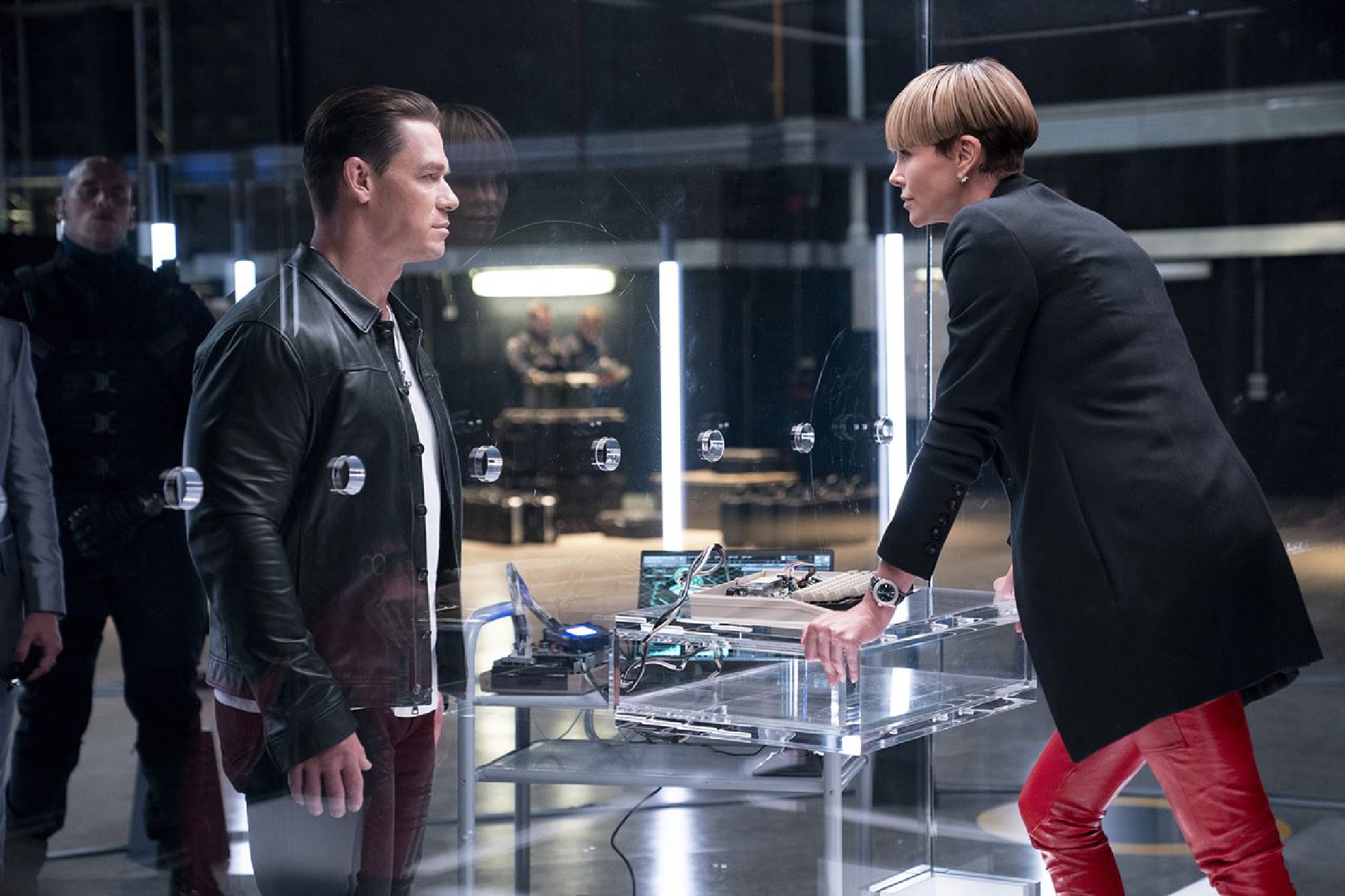
John Cena and Charlize Theron in "F9." MUST CREDIT: Giles Keyte/Universal PicturesJohn Cena and Charlize Theron in “F9.” MUST CREDIT: Giles Keyte/Universal Pictures

With the help of long-winded expository speeches and myriad flashbacks, “F9” explains Dom and Jakob’s sibling rivalry of Shakespearean (or at least Thor-and-Loki) proportions; family, after all, is the series’ cardinal theme, if you don’t count violence, speed, escapism and eye-popping stunts. And there’s plenty of all of it in this overlong installment, which begins with a chase through a literal minefield and ends with another chase, this time involving enormously powerful magnets that reduce cars, trucks and a trainlike armored vehicle to so many Tonka toys.

Jacked, strapped and preternaturally soulful, Diesel is once again the quietly charismatic center of a group that expands to include some surprising returns and a couple of fun cameos; he may not be a great actor, but he can gaze mournfully at a bottle of Corona as if he’s contemplating Yorick’s skull. Admittedly, “F9’s” script, by Daniel Casey, Justin Lin and Alfredo Botello, does him no favors: More often than not, it sounds like it’s been composed of outtakes from “The A-Team” and “Scooby-Doo.” (Come for dialogue like “This is Cipher, the woman who killed the mother of your child.” Stay for witty repartee about biometrics and tracking chips.)

Cena – who along with Diesel looks like he’s sprung fully formed from a Hanna-Barbera storyboard – is particularly wasted here: He has done some endearing comedic work recently, in films like “Blockers” and “Trainwreck.” But what passes for humor in “F9” are self-referential one-liners about invincibility and overcompensation, often delivered by Gibson’s Roman, that fall as flat as a pancaked police car.

Despite these shortcomings, Lin – returning to the director’s chair after a two-episode hiatus – films “F9” with crispness and clarity, making up in straightforward style and impressive visual effects what the movie lacks in logic or remote believability. As the unofficial beginning of summer moviegoing, “F9” pays homage to the sound, fury and spectacle that the season has come to stand for – with dollops of sentimentality that the franchise doles out as extravagantly as its guns, cars and explosions.

ADVERTISEMENT

If “F9’s” repetitive stunts-and-speeches structure begins to pall, this is a movie that knows its lane and stays in it, however recklessly. “Who’s compensatin’ now, Tej?” Roman asks sarcastically at one point. The answer’s right on the tip of my tongue.

Published : June 24, 2021

By : The Washington Post · Ann Hornaday

Britney Spears requests termination of her conservatorship: Its embarrassing and its demoralizing #SootinClaimon.Com

#SootinClaimon.Com : ขอบคุณแหล่งข้อมูล : หนังสือพิมพ์ The Nation.

https://www.nationthailand.com/life/40002390

Britney Spears requests termination of her conservatorship: Its embarrassing and its demoralizing


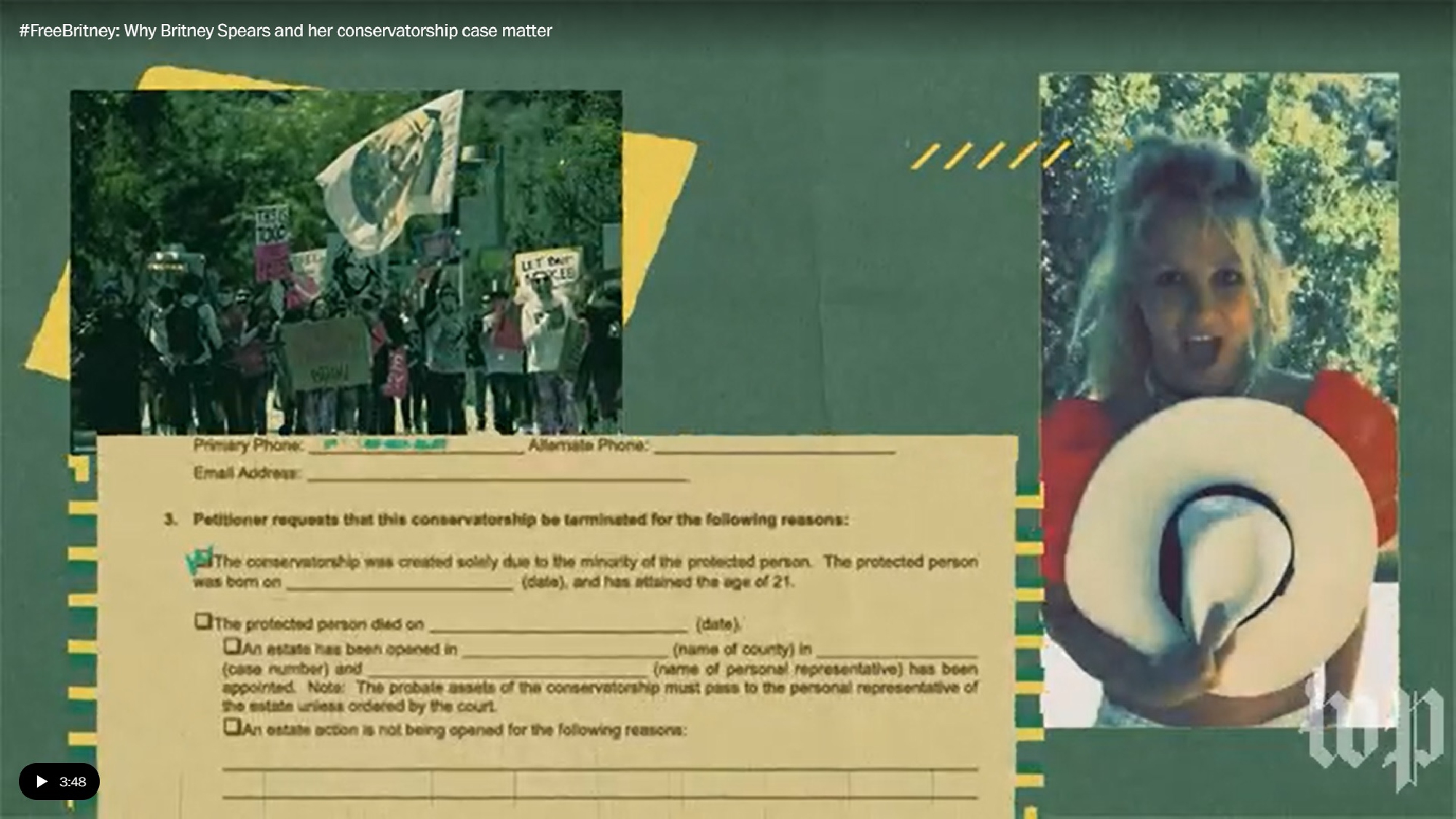
Britney Spears made a rare statement on her own behalf in a Los Angeles court hearing Wednesday, requesting that the conservatorship that has taken her finances and lifestyle out of her own control for more than a decade be terminated.

Britney Spears requests termination of her conservatorship: Its embarrassing and its demoralizing

Spears, speaking quickly and at times breathlessly, told the judge she had been “traumatized” by the 13-year arrangement.

“I’ve told the world I’m happy and OK,” she said, but went on to describe prescription drug therapy that had left her feeling drunk, as well as mandatory twice- and thrice-weekly therapy sessions held in places where the public could see her arriving and leaving, as opposed to in her home, as Spears had requested. Spears said she was told that if she didn’t attend she wouldn’t be allowed to go on vacation in Maui, and according to the singer, paparazzi captured photos of her crying as she left the office after sessions. “It’s embarrassing, and it’s demoralizing,” she said. “I truly believe this conservatorship is abusive.”

“I shouldn’t be in a conservatorship if I can work,” she said.

Britney Spears requests termination of her conservatorship: Its embarrassing and its demoralizing

For now, the 39-year-old pop singer’s bank accounts are still controlled by her father, Jamie Spears, 68, and the bank Bessemer Trust. Her day-to-day activities, meanwhile, are under the control of professional fiduciary Jodi Montgomery, who was appointed her conservator when her dad temporarily stepped down as such in 2019 due to health concerns.

In April, Spears’s lawyer, Samuel Ingham, asked permission for the singer to address the court directly, a request granted by Judge Brenda Penny of the Superior Court of Los Angeles County.

A conservatorship is a legal arrangement that places a vulnerable individual under another person’s authority to prevent them from being taken advantage of. But fans have argued that Spears is an apparently capable adult who has worked successfully as a musician during her conservatorship, an indication that it should end.

Spears has been under this arrangement since early 2008, when – in the wake of a highly publicized stretch of erratic behavior and two involuntary psychiatric holds – her then-estranged father was named co-conservator, alongside a lawyer. The arrangement was understood to be temporary at the outset, but soon became permanent.

While Spears initially made a few comments indicating her dissatisfaction, such as in the 2008 documentary “Britney: For the Record,” she and those close to her went silent not long afterward, and have remained mum about it – mostly – for the past 13 years. The rare comment still escapes now and again: A year ago, Spears’s brother, Bryan, disclosed on a podcast that his sister had “wanted to get out of it for quite some time.”

Fans, however, created the online rallying cry #FreeBritney and the website FreeBritney.net in 2009. In recent years, they’ve protested at hearings, and a Change.org petition created in 2019 to ask the judge to investigate her conservatorship for abuse now has more than 150,000 signatures.

And in February, a New York Times documentary brought Spears back into the spotlight, igniting a reexamination of the harsh early-2000s media climate in which Spears came of age and boosting awareness of Spears’s current predicament.

Details about Spears’s life under conservatorship have since broken through to the public, despite Spears’s and her family’s reticence. In February, Spears’s boyfriend, personal trainer Sam Asghari, had harsh words for Jamie on Instagram and later told “TMZ” that he hoped he and Jamie could be on good terms again once the latter “starts treating his daughter right.”

Some took Asghari’s comment as an indication that Spears wanted her father removed from his role in her conservatorship permanently, and details that emerged this week seem to confirm as much: Newly obtained court records, according to the New York Times, show that Spears wanted to discuss the possibility of her father’s removal as her conservator as far back as 2014, and in 2016, she expressed to a court investigator that the conservatorship itself had become “an oppressive and controlling tool against her” and that the money she was earning as a musician was paying her conservators for supervision she didn’t want.

In March, Spears’s lawyer requested that Montgomery permanently assume the role of her conservator. On Wednesday, however, Spears said that even Montgomery had begun to go too far. As for her conservators, Spears said, “They need to be reminded they actually work for me.”

ADVERTISEMENT

After Spears was finished speaking, a lawyer for Montgomery spoke. “We certainly do have a different perspective on many of the issues and facts raised by Miss Spears,” she said. “But I don’t think today is the appropriate forum to air those out.”

Published : June 24, 2021

By : The Washington Post · Ashley Fetters

Netflix signs multiyear deal for films from Steven Spielberg #SootinClaimon.Com

#SootinClaimon.Com : ขอบคุณแหล่งข้อมูล : หนังสือพิมพ์ The Nation.

https://www.nationthailand.com/life/40002295

Netflix signs multiyear deal for films from Steven Spielberg


Steven Spielberg, the father of the modern movie blockbuster, signed a multiyear deal to provide films for Netflix, promising a stream of new pictures for the online video leader.

Netflix signs multiyear deal for films from Steven Spielberg

The multifilm agreement with Amblin Partners builds on an existing relationship, the parties said Monday in a statement. They’ve already teamed up on last year’s “The Trial of the Chicago 7” and the Leonard Bernstein biopic “Maestro,” which is in preproduction. Terms of the deal weren’t disclosed.

Netflix is the dominant paid streaming service, but it’s seeking more hits that can attract subscribers and help it stand out in a crowded market — especially as media giants such as Walt Disney Co., AT&T Inc.’s WarnerMedia and Comcast Corp.’s NBCUniversal debut more of their biggest films online.

In Amblin, Netflix gets access to a legendary filmmaker and a studio whose recent hits include the Oscar-winning “Green Book” and “1917.” The 74-year-old Spielberg, who directed “E.T.,” the Indiana Jones series, “Jurassic Park” and “Saving Private Ryan,” serves as Amblin’s chairman. The studio will continue to work with Universal and other partners, he said.

“Steven is a creative visionary and leader and, like so many others around the world, my growing up was shaped by his memorable characters and stories that have been enduring, inspiring and awakening,” Netflix Co-Chief Executive Officer Ted Sarandos said in the statement. “We cannot wait to get to work with the Amblin team and we are honored and thrilled to be part of this chapter of Steven’s cinematic history.”

Not long ago, Spielberg looked like a Netflix critic. After the Oscars in 2019, he reportedly argued the streaming service’s films and shows should be relegated to Emmy Awards — which honor the best TV programming — rather than competing for the movie industry’s highest honor. Netflix’s “Roma” was considered the front-runner to win the best picture Oscar that year, but “Green Book” took the prize instead.

“Steven feels strongly about the difference between the streaming and theatrical situation,” an Amblin spokesperson told IndieWire at the time.

Netflix fired back in a tweet, saying it loved cinema but also wanted to give filmmakers “more ways to share art.”

“These things are not mutually exclusive,” Netflix said.

But the clash may have been overblown. A New York Times story later said the director didn’t lobby for Oscar changes. In that piece, Spielberg emphasized his support for the theatrical experience, while expressing frustration with cinema owners that had banned Netflix movies.

“Big screen, small screen — what really matters to me is a great story and everyone should have access to great stories,” he said.

Published : June 22, 2021

By : Syndication Washington Post, Bloomberg · Nick Turner