They laughed, they cried, they killed monsters: How friendships thrived in video games during the pandemic #SootinClaimon.Com

#SootinClaimon.Com : ขอบคุณแหล่งข้อมูล : หนังสือพิมพ์ The Nation.

https://www.nationthailand.com/lifestyle/30403942

They laughed, they cried, they killed monsters: How friendships thrived in video games during the pandemic

EntertainmentMar 21. 2021
By The Washington Post · Heather Kelly

For someone who is hours away from his family, living alone on a college campus without in-person classes, and who infrequently sees a friend in the flesh, Hugh-Jay Yu has an impressively active social life.
Every night between 7 p.m. and 2 a.m., the 19-year old college sophomore in Evanston, Ill., hangs out with a group of friends on the chat and audio app Discord. There are 130 people in the group total, but usually around six to eight are logged in at any given time. Using a combination of audio channels and text chats, they play video games, have movie nights, share inside jokes, vent and laugh. The crew, which grew from people Yu met in college and others he knew in high school, now spans time zones and friend groups. He credits the games they play, from fighting in Super Smash Bros. to showing off geography knowledge in “GeoGuessr,” with helping everyone bond.

“This phenomenon of my friends meeting my other friends and becoming this close wouldn’t have happened, but for the thing ruining the rest of my life,” said Yu.

Building and maintaining friendships can be tricky in the best of non-pandemic times. Months of isolation have limited and changed how people interact with their friends and shifted many relationships online. People have found creative ways to use all types of technology to socialize. They’ve gossiped more in group chats, FaceTimed with family, joined Reddit and Facebook Groups and hosted Zoom happy hours.

New friendships have been born, while others struggled or were put on pause, unable to make the transition from in-person to virtual.

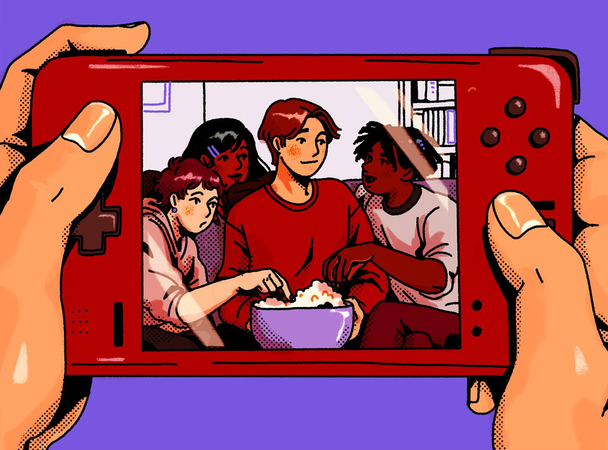
Video games especially have become a necessary tether for people to friends they aren’t able to see as much, or at all, in person. Combined with phone calls, texts and chat tools like Discord, video games from battle royal “Fortnite” to the immersive world of “Roblox” are giving people a way to share fun, escapist experiences with each other when their shared reality is darker. They also act as a conduit for discussing the harder topics, like depression. Whether it’s shooting aliens together in near silence or opening up about feelings of loss, playing games is serving a valuable purpose.

“Our social connections provide a lot of things for us. The most tangible example is social support, just having somebody who can listen to us, or offer advice to us, or just be there when we want to cry,” said Natalie Pennington, a professor of communications at the University of Nevada at Las Vegas.

Friendships also help people feel like they belong, like they are part of something. People aren’t supposed to be isolated, said Pennington, and they need connections. In a recent study of how people used tech to connect during the pandemic, Pennington and a team of other researchers found that not all online interactions with friends are equal. After in-person interactions, phone calls were the best at decreasing anxiety. Zoom calls actually increased stress, perhaps because of the energy it requires to see and be seen on video.

People who played more video games online also reported higher levels of stress, though Pennington said they didn’t specify what games were being played or if they were doing it in combination with other communication tools.

Video games have long been social, even when it was just people playing side-by-side on the same sofa. A 2017 Washington Post-University of Massachusetts Lowell poll found that while 80% of people said they played video games purely for entertainment and fun, more than half said it was a way of enjoying time with their friends. The addition of apps like Discord, which started as a place for gamers to gather and communicate better while playing, makes socializing even easier.

Video games are not a niche hobby. They’re popular across age groups and genders – 52% of regular gamers were men and 48% were women, according to a 2017 Pew survey. Video games can be played on dedicated consoles, PCs or smartphones, and many popular titles allow people to play friends or strangers online. It’s big business, too – the video game industry revenue was an estimated $180 billion in 2020, according to research firm IDC.

None of the players we spoke with are using games as their only connection to other people. They’re knitting them together with other forms of communications, from social media to phone calls, and regularly switching between the tools.

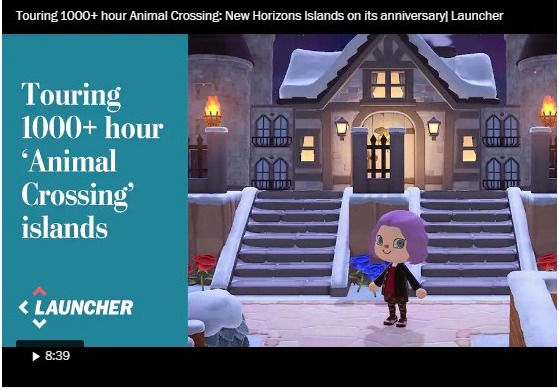
College freshman Maddie James uses video games, a group text, and a private “cozy” Discord server to hang out with her close friends, but says they abandoned Zoom early on. Multiple nights a week, they’ll play “Animal Crossing” and “Legend of Zelda,” craft together, watch movies and run virtual “Dungeons & Dragons” campaigns. But lately they’ve been united on a special “very weird” group project on their Minecraft server: they’re digging a massive pit below a Burger King they built, and are turning it into a trading hall for villagers as well as temporary monster storage.

James still lives in her hometown of Athens, Ohio, but not all of her high school friends made the leap to socializing through games. For some, communicating online didn’t have the same impact and they weren’t interested in putting in the time to keep those connections. But for her core group of friends with a long history of nurturing friendships over the Internet, it was an easy transition.

“We’re all comfortable online, we all have experience interacting that way,” she said. “I have noticed the difference between people who value online friendships as much as in-person ones and people who don’t.”

Maintaining friendships is work, and people only have the capacity for a small number of close friendships at a time. Simply liking someone’s social media posts is not usually enough effort or interaction. A friendship requires a commitment to the other person, and that means you keep showing up, even online, says Jeffrey Hall, a communications professor at the University of Kansas who runs its Relationships and Technology Lab. It’s much easier to keep friendships going if you already have strong real-world relationships with your gaming partners, according to Hall.

“[Gaming] was a growing way people were keeping in touch before the pandemic, and the pandemic was fertile soil for it to keep growing more,” said Hall, who also worked on the study. “For the sake of spending time together and hanging out, there probably is no better way to do it.”

Playing games isn’t just trivial. Play in general and being open to doing fun things together is an essential part of a friendship. And taking part in those types of activities can help friends talk about and process more important issues, from politics to their mental health.

For years, Andrew Alcott and a group of his close friends regularly got together after work to unwind with a beer and sometimes kick around a soccer ball. Only these days the group is down to four core people, the ball is virtual in their ongoing “FIFA 21” Xbox soccer game, and the beers are seen over their FaceTime calls. The friends met while working at the same company in Los Angeles where they would also play video games, but during the pandemic Alcott, 30, temporarily moved to Seattle and another friend moved to London. The year has brought them closer together and they text each other daily, share clips of the previous night’s plays, and work through everything going on in the world outside their doors, from the killing of George Floyd to the presidential election.

“It’s been unbelievably helpful for my mental health. We’ve talked about this at length: we don’t actually know what would have happened if we didn’t have this outlet,” said Alcott. “I’ve had some pretty lonely days myself, it can be tough. I can’t imagine what people are doing without some outlet.”

Mental health issues have been especially worrisome for teens and children, who are less used to being isolated socially than older adults, according to Pennington. For teens this age is a critical time for developing friendships. A Common Sense Media survey from March found that 38% of people between ages 14 and 22 reported moderate or severe symptoms of depression, an increase from 25% two years before. That amount jumps to half of teens and young adults when a family member has been diagnosed with covid.

With the right safeguards, games are being used by young children who are out of school and missing out on their normal social interactions. Some are still too young to own their own phones, or even type, but can “spend time” with friends in a kid-friendly game like “Roblox” or “Minecraft.”

Izaro Lopez Garcia’s fifth-grader, Maya, plays games with her friends for a couple of hours on the weekends. She lives in the United Kingdom and has friends in Japan, but they manage to socialize through “Roblox,” “Minecraft” and “Among Us.” Her father says that with guidance, they’re able to use tech to keep her connected to friends and family while still keeping her screen use in check.

The year has felt especially long for children, and many have struggled to stay engaged with friends they can’t see.

When schools first closed down, Elissa Katz installed Facebook Messenger Kids, the company’s chat app for people under 13, on her children’s iPads. The app includes silly games and was a hit for a while. But as the months have worn on, the kids have stopped communicating on Messenger as much. Her 7-year old daughter has lost interest in chatting with people, and her 9-year old son is mostly on “Minecraft.”

As vaccines become more widely available in some countries, people are letting themselves imagine and even plan their post-pandemic social lives. While online gaming will likely drop off, some habits and friendships will carry on even when real-life hangouts are an option again.

“It’s not going to disappear just because sometime in the next 12 to 24 months we’ll all be vaccinated. Those gamers who used to play will continue to play in a post-pandemic society, maybe they’ll meet up with new people they met online,” says Hannah Marston, a research fellow at the Health & Wellbeing Strategic Research Area at Open University in the U.K., who has studied gaming during the pandemic.

Moshe Isaacian is looking forward to meeting some of the friends he’s made through games in person. The 27-year old had just moved to Portland, Ore., when the pandemic started, and says he was dependent on daily online gaming – and the seven Discord servers he frequents – to feel less alone. He’s managed to make new friends around the world, meeting up online from their various time zones.

“It’s a community of people that I can count on to be there, to just destress with and have a good day,” said Isaacian. “It’s kind of like a live therapy session.”

He’s already talked to a few people he thinks he’ll definitely be able to hang out with this year in real life. Maybe they’ll have an old fashioned LAN party night, he said, where everyone gets together and plays video games on their own computers in the same location.

Not everyone prefers real-world interactions over online socializing. Kathryn Morris absolutely misses seeing her best friend of nine years in person, but they found a rhythm online while isolated. Morris, 20, has a Discord server where they hang out with a group of online friends. She affectionately calls it their “little corner of chaos.” Morris started out playing games like “Pokémon” and “Minecraft,” but now she and the group mostly share jokes, life updates and memes, or play a role-playing game that they make up on the spot. The past year has been hard, but she’s found a comfort level online that wasn’t always easy to come by in real life.

“Being able to communicate from behind a screen allows me to use my online persona – Alexis – as a mask. It makes me feel safer, or even a bit stronger than if it was just me in front of someone I didn’t know,” said Morris. “Being online allows me to be anonymous, whereas being physically present, doesn’t.”

Will ‘The Falcon and the Winter Soldier’ finally bring us a Black Captain America onscreen? #SootinClaimon.Com

#SootinClaimon.Com : ขอบคุณแหล่งข้อมูล : หนังสือพิมพ์ The Nation.

https://www.nationthailand.com/lifestyle/30403938

Will ‘The Falcon and the Winter Soldier’ finally bring us a Black Captain America onscreen?

EntertainmentMar 21. 2021Sam Wilson (Anthony Mackie) looks down at the shield he inherited from Captain America in Sam Wilson (Anthony Mackie) looks down at the shield he inherited from Captain America in “The Falcon and the Winter Soldier.” MUST CREDIT: Marvel Studios/Disney Plus.

By The Washington Post · David Betancourt

During the final moments of the 2019 blockbuster “Avengers: Endgame,” the possibility of a Black Captain America became a likely Hollywood reality.

An elderly, time-traveling Captain America (Chris Evans) hands over the adamantium shield to the loyal partner who was always on his left, the highflying Falcon (Anthony Mackie). It signified that a torch was being passed – and that Marvel Studios’ next decade could be a more inclusive one.

The time to see what will grow from that planted super-seed is now. “The Falcon and the Winter Soldier,” the next Marvel Studios event for Disney Plus, debuted the first of six episodes on Friday. The show will follow two Captain America sidekicks, the Falcon/Sam Wilson (Mackie) and Bucky/the Winter Soldier (Sebastian Stan) as they become reluctant partners tasked with carrying the weight of the star-spangled Avenger’s legacy. America needs someone to wield the shield once more. Does Uncle Sam think another Sam is the right man for the job? Or will there be resistance to a Black Captain America – and what, exactly, will that imply about the country he has sought to protect?

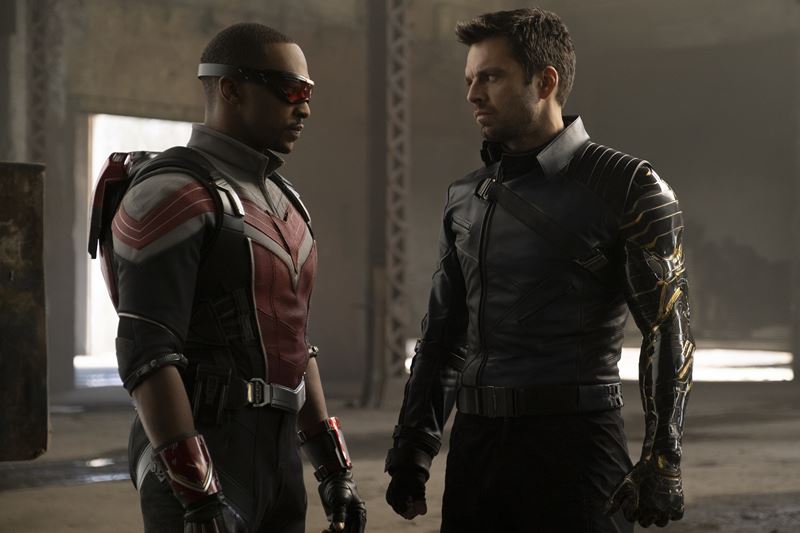
The Falcon (Anthony Mackie), left, and the Winter Soldier (Sebastian Stan) look to fill the void in a world with no Captain America in "The Falcon and the Winter Soldier." MUST CREDIT: Marvel Studios/Disney Plus.

The Falcon (Anthony Mackie), left, and the Winter Soldier (Sebastian Stan) look to fill the void in a world with no Captain America in “The Falcon and the Winter Soldier.” MUST CREDIT: Marvel Studios/Disney Plus.

Series head writer Malcolm Spellman gives credit to the billion-dollar box office success of 2018’s “Black Panther,” which gave him the chance to write the journey of the Falcon, another of Marvel Comics most recognizable Black superheroes. “Black Panther’s” story of a secret, wealthy, powerful and technologically-advanced African nation going up against a fallen son who was left on his own as a Black man in the American diaspora proved Marvel Studios could approach the subject of race and not lose a global audience.

“Black Panther shattered old superhero movies,” Spellman said. “Part of why it did that isn’t just by what you saw, it’s how positively the fans reacted. It proved that you could be relevant and tackle real stuff without alienating people. ‘Black Panther’ paved that runway for us to bring the America-ness and the obvious struggles that’s going to come from a Black man in America going through this [superhero] thing.”

Spellman would not specify if Sam Wilson does indeed become Captain America in this series. This is Marvel Studios, after all. No spoilers. The fun is always in the secrets that are discovered along the way.

But there are volumes of Marvel Comics that could serve as inspiration for such a moment.

In 2015, the company introduced Sam Wilson as the new Captain America in a storyline by Nick Spencer and Daniel Acuña. The plot centered around the United States being divided over the optics of a Black man being the American superhero. In 2003, the Robert Morales and Kyle Baker miniseries “Truth: Red, White and Black” revealed that the Super Soldier Serum that created Captain America during World War II was perfected by experimenting on Black soldiers, and that the first Captain America was actually a Black man named Isaiah Bradley.

Spellman – who was hired based on a recommendation from “Black Panther” executive producer Nate Moore – did say that this series isn’t scared to tackle matters of race and that the writing staff is predominantly Black.

“You cannot, in 2021, show up and be Black and be scared to be Black or wield Blackness in your creativity,” Spellman said. “I did not come here to hide from that issue. We didn’t want to burden the show and show up with an agenda, but we wanted to be real, even within the Marvel universe. What would be real within there? I believe this show honestly approaches that.”

The series debuts on the heels of a huge Marvel Studios/Disney Plus hit, the genre-bending, android-and-witch wackiness of “WandaVision.” But while that show was designed to have a network television feel to assist with its trickery, director Kari Skogland said “The Falcon and the Winter Soldier” is closer to what fans are used to seeing on the big screen.

“From day one, we approached it like it was a movie,” Skogland said. “It really plays like a movie. Yes, it’s carved up, I suppose, in terms of a one hour-ish rhythm, but in actual fact, when they are all rolled out and you saw them back to back, it will play like a Marvel movie.”

Skogland doesn’t mind having the show that comes directly after the hype of “WandaVision.” “It really opened the door for us to walk through,” Skogland said. “It really set the table for us to hopefully hit the ball out of the park alongside them. But we’ll see. Hopefully the fans will embrace us similarly.”

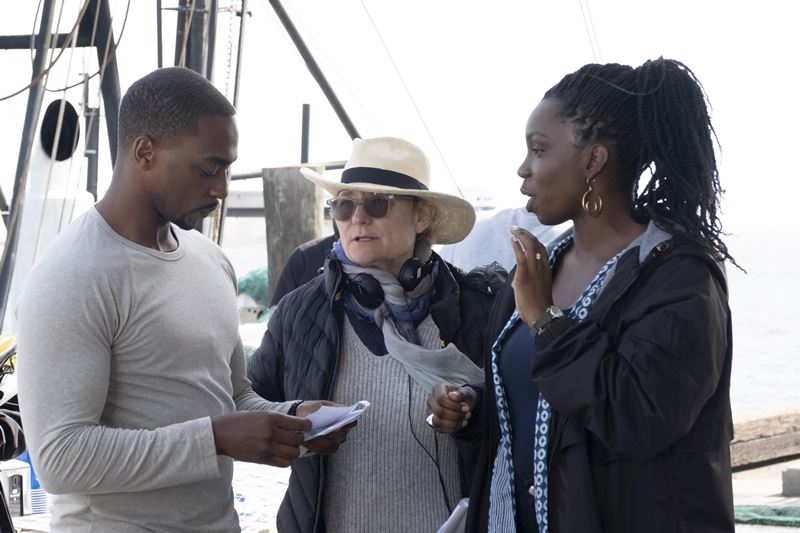
Anthony Mackie, left, director Kari Skogland and Adepero Oduye, who plays Sarah Wilson, Sam's sister, on the set of "The Falcon and the Winter Soldier." MUST CREDIT: Marvel Studios/Disney Plus.

Anthony Mackie, left, director Kari Skogland and Adepero Oduye, who plays Sarah Wilson, Sam’s sister, on the set of “The Falcon and the Winter Soldier.” MUST CREDIT: Marvel Studios/Disney Plus.

Spellman said Marvel Studios president Kevin Feige wanted every episode of “The Falcon and the Winter Soldier” to feel like a movie, and the company’s expertise helped make that easy to execute.

“We worked with the people who make Marvel movies and they do nothing else,” Spellman said. “The magic and power and world-building and spectacle that they know how to do is singular.”

The “Falcon and the Winter Soldier” collaborators realize that, as with “WandaVision,” plot rumors might run wild online. But “WandaVision” debunked almost every rumor in its final episode. So viewers shouldn’t get too hung up on the speculation about who inherits the stars, stripes and shield.

“I think the fans are making a lot of assumptions about how this series starts,” Spellman said. “It’s not an obvious journey on what happens with that shield. That symbol is going to force a lot of stuff to the surface for each of the characters.”

Skogland said to expect a show with a buddy-cop vibe and plenty of Easter eggs for hardcore fans but not to expect the comic book origins to completely drive the narrative. There will be surprises.

“We’re having a conversation that is a little less conspiracy and a little bit more immediate,” Skogland said. “Whatever you think you know, you probably think wrong.”

Justice: Justin Bieber to release new album this Friday #SootinClaimon.Com

#SootinClaimon.Com : ขอบคุณแหล่งข้อมูล : หนังสือพิมพ์ The Nation.

https://www.nationthailand.com/lifestyle/30403847

Justice: Justin Bieber to release new album this Friday

EntertainmentMar 18. 2021

Justin Bieber announces his new album Justice which he hopes will provide comfort for fans so ‘they feel less alone.’

JB6 will be released on March 19

The 26-year-old singer revealed the title and cover image of his upcoming sixth studio album on his social media accounts on Friday.

Taking to Instagram, the global superstar stated that by creating this album, his goal is to “make music that will provide comfort, to make songs that people can relate to and connect to so they feel less alone.”

“In a time when there’s so much wrong with this broken planet we all crave healing and justice for humanity,” he said. “Suffering, injustice and pain can leave people feeling helpless. Music is a great way of reminding each other that we aren’t alone. Music can be a way to relate to one another and connect with one another,” he continued explaining his high hopes for the music’s impact.

“I know that I cannot simply solve injustice by making music but I do know that if we all do our part by using our gifts to serve this planet and each other that we are that much closer to being united. This is me doing a small part. My part. I want to continue the conversation of what justice looks like so we can continue to heal.”

The tracklist for “Justice” album

Bieber announced his upcoming tracklist on Instagram on March 10, revealing he has 16 tracks on the album.

Here’s the tracklist:

  • 2 Much
  • Deserve You
  • As I Am featuring Khalid
  • Off My Face
  • Holy featuring Chance The Rapper
  • Unstable featuring The Kid Laroi
  • MLK Interlude
  • Die For You
  • Hold On
  • Somebody
  • Ghost
  • Peaches featuring Giveon and Daniel Caesar
  • Love You Diff featuring Beam
  • Loved By You featuring Burna Boy
  • Anyone
  • Lonely featuring Benny Blanco

Hold On is the latest release from Justin’s upcoming sixth studio album JUSTICE. The album will also feature his current singles “Anyone,” “Holy” featuring Chance The Rapper and “Lonely” featuring Benny Blanco.

The 16 track album will also include collaborations with Khalid, The Kid Laroi, Giveon, Daniel Caesar, Dominic Fike, BEAM, and Burna Boy.

Justice is available to pre-order and pre-save now, with a number of different merchandise bundles available on Justin’s online store.

How to watch the 2021 Oscar nominees #SootinClaimon.Com

#SootinClaimon.Com : ขอบคุณแหล่งข้อมูล : หนังสือพิมพ์ The Nation.

https://www.nationthailand.com/lifestyle/30403786

How to watch the 2021 Oscar nominees

EntertainmentMar 17. 2021Clockwise from top left: Frances McDormand in Clockwise from top left: Frances McDormand in “Nomadland,” Steven Yeun in “Minari,” Daniel Kaluuya in “Judas and the Black Messiah,” Gary Oldman in “Mank.” MUST CREDIT: Searchlight Pictures; A24; Warner Bros. Pictures; Netflix

By The Washington Post · Sonia Rao

While “Parasite” winning best picture marked one of the final widely celebrated moments before we all went into lockdown, award season chatter has been (rightfully) overshadowed this year. And with inconsistent theatrical releases, the Oscar nominees announced Monday largely consist of titles that managed to emerge as front-runners from the glut of films on streaming services.

Whether you’ve heard of the films isn’t necessarily an indication of their quality – maybe in some cases – but a snapshot of how Hollywood distributors have been forced to grapple with unusual release plans in, yes, these unprecedented times. The Academy of Motion Picture Arts and Sciences made an exception this year, considering films that debuted on streaming services instead of holding to its steadfast requirement that they premiere in theaters to qualify.

That means you can watch a good number of Oscar-nominated films on services you might already subscribe to, while others are available on-demand. Here’s a viewing guide to this year’s slate, including best picture contenders and a few films starring major acting nominees. The Academy Awards will air April 25 on ABC.

– “Mank” (dir. David Fincher)

Nominated for: Best picture, best director, best actor, best supporting actress, best cinematography, best production design, best makeup and hairstyling, best costume design, best original score and best sound

How to watch: Stream on Netflix

What it’s about: Named for Herman Mankiewicz, “Mank” follows the ailing screenwriter (played by Gary Oldman) as he develops the screenplay for “Citizen Kane” in 1930s Hollywood. The film, written years ago by Fincher’s late father, was in part inspired by the critic Pauline Kael’s contested argument that Mankiewicz was the primary author of Orson Welles’s classic film.

– “Nomadland” (dir. Chloé Zhao)

Nominated for: Best picture, best director, best actress, best adapted screenplay, best cinematography and best editing

How to watch: Stream on Hulu

What it’s about: “Nomadland” is an intimate look at a woman named Fern (Frances McDormand), who lives in a van as she travels through the American West looking for work in the aftermath of the Great Recession. Fern lost her husband, and the film features real-life nomads Linda May, Swankie and Bob Wells, mentors and friends who help Fern find meaning in transience.

– “The Trial of the Chicago 7” (dir. Aaron Sorkin)

Nominated for: Best picture, best supporting actor, best original screenplay, best original song, best cinematography and best editing

How to watch: Stream on Netflix

What it’s about: Sorkin’s searing courtroom drama, which he also wrote, focuses on the legal proceedings that followed antiwar demonstrations at the 1968 Democratic National Convention in Chicago. The film is named for the seven defendants who remained after Black Panther Party co-founder Bobby Seale, initially grouped with everyone else, was removed to be tried separately.

– “Minari” (dir. Lee Isaac Chung)

Nominated for: Best picture, best director, best actor, best supporting actress, best original screenplay and best original score

How to watch: Rent on various platforms

What it’s about: The semi-autobiographical “Minari” is about a family that moves from California to rural Arkansas, where patriarch Jacob (Steven Yeun, the first Asian American to ever be nominated for best actor) is determined to make a life for his young family by starting a farm.

– “Judas and the Black Messiah” (dir. Shaka King)

Nominated for: Best picture, best supporting actor (twice), best original screenplay, best original song and best cinematography

How to watch: The film just left HBO Max after the 31-day streaming window ended, but it probably will be available on-demand in the future.

What it’s about: “Judas and the Black Messiah” follows William O’Neal (LaKeith Stanfield), a young man who avoids jail time in late 1960s Chicago by becoming an FBI informant. He provides the bureau with sensitive information that eventually leads to police and federal agents killing Fred Hampton (Daniel Kaluuya), chairman of the Black Panther Party’s Illinois chapter.

– “Promising Young Woman” (dir. Emerald Fennell)

Nominated for: Best picture, best director, best actress, best original screenplay and best editing

How to watch: Buy on various platforms

What it’s about: “Promising Young Woman” is about a medical school dropout named Cassie (Carey Mulligan), who seeks to avenge a crime committed against her best friend. The overtly feminine film, Fennell’s directorial debut, has been praised for “reinventing” the revenge thriller.

– “The Father” (dir. Florian Zeller)

Nominated for: Best picture, best actor, best supporting actress, best adapted screenplay, best production design and best editing

How to watch: Rent on various platforms starting March 26

What it’s about: Landing Anthony Hopkins his sixth Oscar nomination is “The Father,” an adaptation of director Florian Zeller’s play about a man grappling with dementia. The film is the sole best picture nominee that has yet to be released, but it’s earned positive reviews so far.

– “Sound of Metal” (dir. Darius Marder)

Nominated for: Best picture, best actor, best supporting actor, best original screenplay, best sound and best editing

How to watch: Stream on Amazon

What it’s about: “Sound of Metal” follows Ruben (Riz Ahmed), a punk-rock drummer who begins to lose his hearing and, thus, his sense of self. Worried about Ruben’s sobriety, his girlfriend urges him to enroll at a sober house for deaf people run by a Vietnam War veteran (Paul Raci). The film’s sound design is notable for its experimental quality, at times mimicking Ruben’s hearing loss.

– “One Night in Miami” (dir. Regina King)

Nominated for: Best supporting actor, best adapted screenplay and best original song

How to watch: Stream on Amazon

What it’s about: Based on a play by Kemp Powers, who is nominated for adapting the screenplay, “One Night in Miami” is about a fictional encounter between Malcolm X (Kingsley Ben-Adir), Cassius Clay (Eli Goree), Jim Brown (Aldis Hodge) and Sam Cooke (Leslie Odom Jr.) at the Hampton House in February 1964. The film marks King’s first time directing a feature film.

– “Borat Subsequent Moviefilm” (dir. Jason Woliner)

Nominated for: Best supporting actress and best adapted screenplay

How to watch: Stream on Amazon

What it’s about: “Borat Subsequent Moviefilm,” the follow-up to Sacha Baron Cohen’s 2006 Oscar-nominated comedy, brings the fictional Kazakh journalist back for another round of antics – this time with the help of his daughter, Tutar (Maria Bakalova). Set during the Trump era, the film’s most buzzed-about prank was at the expense of Rudy Giuliani, the former president’s attorney.

– “Another Round” (dir. Thomas Vinterberg)

Nominated for: Best director and best international feature film

How to watch: Stream on Hulu

What it’s about: Perhaps the least familiar to Americans of the titles on this list, “Another Round” is Denmark’s entry to the international film category and stars Mads Mikkelsen as a schoolteacher who, with three friends, tries to see if drinking daily will add a spark to his humdrum life.

– – –

If you’re a completist, you might consider streaming “The United States vs. Billie Holiday” on Hulu to witness Andra Day’s Oscar-nominated lead performance (in a film that otherwise earned middling reviews). Vanessa Kirby rounds out the best actress category with her turn as a woman dealing with a traumatic home birth in “Pieces of a Woman” on Netflix, where you can also find Glenn Close’s nominated supporting role as Mamaw in “Hillbilly Elegy.” The streamer swept with “Mank,” but its latest Spike Lee film, “Da 5 Bloods,” was snubbed in major categories – particularly in best director for Lee, and best actor for Delroy Lindo.

Megan Thee Stallion, Taylor Swift win big on Grammy night that felt tastefully small #SootinClaimon.Com

#SootinClaimon.Com : ขอบคุณแหล่งข้อมูล : หนังสือพิมพ์ The Nation.

https://www.nationthailand.com/lifestyle/30403711

Megan Thee Stallion, Taylor Swift win big on Grammy night that felt tastefully small

EntertainmentMar 15. 2021

By Chris Richards
The Washington Post ·

The big show usually opens with a big song, but not this year. Instead, Sunday night’s Grammy Awards began with the evening’s host, comedian Trevor Noah, strolling onto a cozy sound stage, trading hellos with the night’s performers as if introducing guests at a house party. Then, heartthrob-turned-lust-object Harry Styles gave an intimate rendition of a huge hit, “Watermelon Sugar,” wearing a leather jacket and a boa made of Muppet that felt close enough to touch.

Pandemic or not, these 63rd annual Grammy Awards in Los Angeles were destined to feel different: the telecast’s previous producer, Ken Ehrlich, retired last year after 40 long years at the helm, giving the new kids a massive opportunity to reimagine the shape and feel of what used to be called “music’s biggest night.”

Wisely they went small, stitching together a patchwork of performances that sounded warm and close – partially because the songs were not forced to clang across the cavernous Staples Center, partially because the audience was not umpteen-thousand music-biz professionals. Instead, musicians performed for other musicians, sizing one another up and nodding along. It was as if pop’s A-list had convened for a battle of the bands at the local high school.

Largely absent were the legends and legacy acts that have been clogging up Grammy night for decades, allowing viewers to actually hear what’s happening in contemporary music. That meant hearing the rock trio Haim sing in telepathic sibling harmony. It meant dancing alongside Bad Bunny in his futuristic chain mail sweater. It meant being invited to Dua Lipa’s disco slumber party. Even the “in memoriam” section felt fresh, swinging from raucous (Bruno Mars screaming Little Richard songs) to delicate (Brandi Carlile gently strumming a John Prine tune). It made for the most coherent, purposeful, hospitable, gratifying Grammy night of the past 20 years, far and away.

All of those performances happened indoors, though. Late in the show, out on the streets of downtown Los Angeles, a camera followed Georgia rapper Lil Baby as he staged an cinematic rendition of “The Bigger Picture,” the contemplative Black Lives Matter anthem that should have been nominated for record and song of the year. Lil Baby delivered it with ice water in his veins, rapping directly into the camera while a team of extras surrounding him acted out a police shooting of a Black motorist. It felt surreal, then shocking, then sobering. Things like this never happen at the Grammys. How many times has something like this happened on the streets of Los Angeles?

The telecast itself might have been the night’s big winner, but there were trophies, too. Record of the year – the prize that recognizes a recorded song’s performer, writer, producer and more – was reframed as the night’s most desirable award through a series of interstitial mini-documentaries introducing viewers to the artists hoping to win it. No more squinting at your television, asking, “Who are these people?” Now you know.

But if you watched her triumph at last year’s Grammys, you already knew Billie Eilish. The teenage balladeer won her record of the year on Sunday, for “Everything I Wanted,” besting Beyoncé, who still managed to have a record-setting night. Beyoncé became the winningest performer in Grammy history, having collected prizes for best R&B performance, best rap performance, best rap song and best music video, bringing her lifetime hardware count up to 28 golden gramophones.

Taylor Swift made the history books, too, winning album of the year for her made-in-quarantine opus “Folklore.” It was Swift’s third album-of-the-year win, putting her in the company of Frank Sinatra, Paul Simon and Stevie Wonder. Highlighting the world’s strange relationship to what might be her greatest album, Swift thanked her listeners and her collaborators, including Justin Vernon of Bon Iver, whom she said she was looking forward to meeting in real life someday.

As for the night’s two other biggies, song of the year went to “I Can’t Breathe” by the graceful soul singer H.E.R., while best new artist went to the agile Texas rapper Megan Thee Stallion, the first woman rap artist to win it (unless you count singer Lauryn Hill as a rapper, too).

“I don’t want to cry,” Megan said while accepting the honor on an outdoor dais, perhaps flashing back to the pre-telecast ceremony a few hours earlier. Having won best rap performance for “Savage,” a duet with Beyoncé, Megan screamed four times before beginning her speech, which included a thank-you to her late mother and ended in tears. If you’ve wept with family on Zoom anytime over the past year, you recognized the heft of this moment.

More than 70 of the 84 trophies presented at this year’s Grammys were handed out virtually during that premiere ceremony, which streamed online Sunday afternoon. Hosted by singer and album-of-the-year nominee Jhene Aiko, the pre-telecast unfolded on an anonymous stage seemingly designed to resemble the shards of a broken disco ball. The socially distanced program ran quite smoothly, with artists using videoconferencing programs to deliver quick acceptance speeches from the comfort of their homes.

This made for big fun. When Nigerian superstar Burna Boy won best global music album, an arena-level roar erupted from the off-screen crowd assembled in his living room. Ledisi’s husband poured his wife a glass of wine as she accepted the prize for best traditional R&B performance. The Strokes went with beer, spraying one another with foamy cans after winning best rock album (somehow the first Grammy nomination and victory in the band’s 23-year run). After winning best progressive R&B album, Los Angeles bassist Thundercat thanked his mother from his sofa, then turned 90 degrees to smooch her on the cheek.

The day was not without its flubs and oversights. The most egregious blunders of the pre-telecast came during the distribution of prizes for rap music – this century’s dominant pop tradition, yet one that the Academy barely even tries to understand. Album of the year has only been awarded to rap music once (OutKast, in 2003), which means that Kanye West has never won the big one. So, on Sunday, “Jesus is King,” the messiest album of West’s especially messy career, won best contemporary Christian album. Meanwhile, best rap album went to Nas, a veteran now decades past his prime.

Rap illiteracy is just one of the Grammys’ enduring problems. The Academy itself is still coasting on interim leadership after being plagued last year with allegations of vote-rigging and sexual misconduct at its highest levels. Big changes – for more transparency in the nomination process, for more inclusion on the nominee slate – were promised, but this year’s nominees in the four big, genre-blind categories were finalized by a closed-door committee and many of today’s brightest rap stars remain conspicuously absent. Let that stand as a reminder, once again, that the Grammys does not reflect how popular music resonates in our world. It reflects how the music industry wants to see itself.

As for one of the evening’s most flagrant snubs, it came with two consolation prizes. “Fetch the Bolt Cutters,” the highly inventive and deeply evocative 2020 album from Fiona Apple, seemed like a zero-brainer candidate for album of the year. Instead, the Academy chose to recognize it as a container for the best rock performance (the song “Shameika”), as well as the best alternative music album – a category that feels beyond obsolete in 2021. With the endless choices offered in today’s streaming world, isn’t everything an alternative to everything else?

Apple did not materialize on screen for any speechifying, but earlier in the day she posted her own video on social media to explain her virtual absence, criticizing the Academy’s lack of voting transparency – but she’d ultimately logged on to ask fans to sign a petition to allow virtual court watching to continue during the pandemic. “What really, really is undeniably important is the transparency in actual courtrooms,” Apple said.

She was making an important political point in her own space, on her own terms. “Best alternative” for real.

The list of winners from the 63rd Grammy Awards:

Album of the year

“Folklore,” Taylor Swift

Record of the year

“Everything I Wanted,” Billie Eilish

Song of the year

“I Can’t Breathe,” H.E.R.

Best new artist

Megan Thee Stallion

Best rap performance

“Savage,” Megan Thee Stallion featuring Beyoncé

Best rap song

“Savage,” Megan Thee Stallion featuring Beyoncé

Best rap album

“King’s Disease,” Nas

Best melodic rap performance

“Lockdown,” Anderson .Paak

Best R&B album

“Bigger Love,” John Legend

Best R&B song

“Better Than I Imagined,” Robert Glasper Featuring H.E.R. & Meshell Ndegeocello

Best progressive R&B album

“It Is What It Is,” Thundercat

Best R&B performance

“Black Parade,” Beyoncé

Best pop vocal album

“Future Nostalgia,” Dua Lipa

Best pop solo performance

“Watermelon Sugar,” Harry Styles

Best pop duo/group performance

“Rain On Me,” Lady Gaga with Ariana Grande

Best traditional pop vocal album

“American Standard,” James Taylor

Best pop duo/group performance

“Rain On Me,” Lady Gaga with Ariana Grande

Best rock album

“The New Abnormal,” The Strokes

Best rock song

“Stay High,” Brittany Howard

Best rock performance

“Shameika,” Fiona Apple

Best alternative album

“Fetch The Bolt Cutters,” Fiona Apple

Best country album

“Wildcard,” Miranda Lambert

Best country song

“Crowded Table,” The Highwomen

Best country solo performance

“When My Amy Prays,” Vince Gill

Best country duo/group performance

“10,000 Hours,” Dan + Shay & Justin Bieber

Best dance recording

“10%,” Kaytranada featuring Kali Uchis

Best dance/electronic album

“Bubba,” Kaytranada

Best contemporary instrumental album

“Live at the Royal Albert Hall,” Snarky Puppy

Best metal performance

“Bum-Rush,” Body Count

Best traditional R&B performance

“Anything For You,” Ledisi

Best new age album

“More Guitar Stories,” Jim “Kimo” West

Best improvised jazz solo

“All Blues,” Chick Corea

Best jazz vocal album

“Secrets Are The Best Stories,” Kurt Elling featuring Danilo Pérez

Best jazz instrumental album

“Trilogy 2,” Chick Corea, Christian McBride & Brian Blade

Best large jazz ensemble

“Data Lords,” Maria Schneider Orchestra

Best latin jazz album

“Four Questions,” Arturo O’Farrill & The Afro Latin Jazz Orchestra

Best gospel performance/song

“Movin’ On,” Jonathan McReynolds & Mali Music

Best contemporary Christian music performance/song

“There Was Jesus,” Zach Williams and Dolly Parton

Best gospel album

“Gospel According to PJ,” PJ Morton

Best contemporary Christian music album

“Jesus Is King,” Kanye West

Best roots gospel album

“Celebrating Fisk! (The 150th Anniversary Album),” Fish Jubilee Singers

Best Latin pop or urban album

“YHLQMDLG,” Bad Bunny

Best Latin rock or alternative album

“La Conquista Del Espacio,” Fito Paez

Best regional Mexican music album (including Tejano)

“Un Canto Por México, Vol. 1,” Natalia Lafourcade

Best tropical Latin album

“40,” Grupo Niche

Best American roots performance

“I Remember Everything,” John Prine

Best American roots song

“I Remember Everything,” John Prine

Best Americana album

“World On The Ground,” Sarah Jarosz

Best bluegrass album

“Home,” Billy Strings

Best traditional blues album

“Rawer Than Raw,” Bobby Rush

Best contemporary blues album

“Have You Lost Your Mind Yet?”, Fantastic Negrito

Best folk album

“All The Good Times,” Gillian Welch and David Rawlings

Best regional roots music album

“Atmosphere,” New Orleans Nightcrawlers

Best reggae album

“Got To Be Tough,” Toots & The Maytals

Best global music album

“Twice As Tall,” Burna Boy

Best children’s music album

“All The Ladies,” Joanie Leeds

Best spoken word album (includes poetry, audio books & storytelling)

“Blowout: Corrupted Democracy, Rogue State Russia, And The Richest, Most Destructive Industry On Earth,” Rachel Maddow

Best comedy album

“Black Mitzvah,” Tiffany Haddish

Best musical theater album

“Jagged Little Pill,” origianal Broadway cast

Best compilation soundtrack for visual media

“Jojo Rabbit”

Best score soundtrack for visual media

“Joker,” Hildur Guðnadóttir

Best song written for visual media

“No Time To Die,” Billie Eilish

Best instrumental composition

“Sputnik,” Maria Schneider

Best arrangement, instrumental or a cappella

“Donna Lee,” John Beasley

Best arrangement, instruments and vocals

“He Won’t Hold You,” Jacob Collier featuring Radsody

Best recording package

“Vols. 11 & 12,” Desert Sessions

Best boxed or special limited edition package

“Ode To Joy,” Wilco

Best album notes

“Dead Man’s Pop,” The Replacements

Best historical album

“It’s Such A Good Feeling: The Best of Mister Rogers,” Mister Rogers

Best engineered album, non-classical

“Hyperspace,” Beck

Producer of the year, non-classical

Andrew Watt

Best remixed recording

“Roses (Imanbek Remix),” Saint Jhn

Best engineered album, classical

“Shostakovich: Symphony No. 13, ‘Babi Yar’,” Riccardo Muti & Chicago Symphony Orchestra

Producer of the year, classical

David Frost

Best orchestral performance

“Ives: Complete Symphonies,” Gustavo DudamelBest opera recording

“Gershwin: Porgy and Bess,” David Robertson, Eric Owens & Angel Blue

Best choral performance

“Danielpour: The Passion Of Yeshua,” JoAnn Falletta, James K. Bass & Adam Luebke

Best chamber music/small ensemble performance

“Contemporary Voices,” Pacifica Quartet

Best classical instrumental solo

“Theofanidis: Concerto For Viola And Chamber Orchestra,” Richard O’Neill

Best classical solo vocal album

“Smyth: The Prison,” Sarah Brailey & Dashon Burton

Best classical compendium

“Thomas, M.T.: From The Diary Of Anne Frank & Meditations On Rilke,” Michael Tilson Thomas

Best contemporary classical composition

“Rouse: Symphony No. 5,” Giancarlo Guerrero & Nashville Symphony

Best music video

“Brown Skin Girl,” Beyoncé, Blue Ivy & Wizkid

Best music film

“Linda Rondstadt: The Sound of My Voice,” Linda Ronstadt

5 travel shows that ease the pain of still being stuck at home #SootinClaimon.Com

#SootinClaimon.Com : ขอบคุณแหล่งข้อมูล : หนังสือพิมพ์ The Nation.

https://www.nationthailand.com/lifestyle/30403387

5 travel shows that ease the pain of still being stuck at home

EntertainmentMar 07. 2021Stanley Tucci travels across Italy to discover the secrets and delights of the country's regional cuisines. MUST CREDIT: photo courtesy of CNN.Stanley Tucci travels across Italy to discover the secrets and delights of the country’s regional cuisines. MUST CREDIT: photo courtesy of CNN.

By The Washington Post · Natalie B. Compton

With a vaccine rollout underway, it’s finally feeling like the days of being stuck at home could be drawing to a close. People are dreaming of (and booking) summer travel; airlines are adding exciting new routes instead of having to cut them. But before we had hope, we had travel television shows that kept us fantasizing about all the places we couldn’t go.

For some people, travel shows are a way to adventurously explore or culturally immerse ourselves without leaving the house. For others, they’re a planning resource for future trips. The travel TV that debuted during the pandemic enabled us to do all of that and more.

Here are five fan favorites, and what they meant to homebound travelers.

– “Stanley Tucci: Searching for Italy. ” Stanley Tucci. Where do we even begin. Former model, Oscar-nominated and Emmy Award-winning actor, viral cocktailian. America’s favorite supporting actor finally has his time to shine in his CNN series, “Stanley Tucci: Searching for Italy.” In this role, Tucci gets to bon vivant his way around Italy, sampling prosciutto di Parma in Emilia Romagna, eating his favorite pasta on the Amalfi Coast and drinking from the country’s centuries-old wine windows.

From her home in Washington D.C., Savannah Wormley has been watching Tucci’s show since its premiere in February. It fit in with the other travel and food shows she has been drawn to this year, like “Chef’s Table” and “Foodie Love.” So far, Wormley has loved the show’s cinematography, and she didn’t expect Tucci to be such a suave travel TV natural.

“I think it’s such a great escape from everything that’s going on right now,” Wormley says. “I especially love the food shots, and I think it’s great to watch Stanley interact with Italians and learn about the food they eat. You can tell it brings him so much joy.”

– “Men in Kilts.” For a spotlight on Scottish culture and landscapes, there’s “Men in Kilts” on Starz. The show follows “Outlander” actors Sam Heughan and Graham McTavish as they dive into the food, drinks and traditions of their native land. It’s a love letter to Scotland told through banter-filled road trips.

For Angel Lunsford in Salem, Ala., “Men in Kilts” has felt both helpful and hilarious. Since before the pandemic, Lunsford and a friend have been planning a trip to Scotland for 2022. They’ve both been watching “Men in Kilts,” as a way to discover more points of interest to see and cultural experiences to try. They have also found new restaurants and types of food they’ll seek out on their trip.

“It shows you a lot of places you might want to go that weren’t on your list,” Lunsford says. “We wouldn’t have known about them had we not seen the show.”

– “Taste the Nation.” On Hulu, “Taste the Nation” follows award-winning cookbook author and longtime “Top Chef” host Padma Lakshmi as she travels around the United States telling the country’s food stories. The show, which stops in places like El Paso, Milwaukee, Las Vegas and Honolulu, is a celebration of the immigrant communities that shape American culture.

Andrea Alexander started watching the show in May 2020 at a time when travel seemed far, far away. She loved learning about food and the people who make it, as well as the show’s focus on their struggle with marginalization. While staying at home with her family, Alexander says, Lakshmi’s show helped her travel vicariously in a way other television shows couldn’t.

“I couldn’t go to restaurants. I couldn’t, like, see the world on a plane, so it helped in that regard,” says Alexander, who lives in Rochester, N.Y.

– “Down to Earth with Zac Efron.” People familiar with Zac Efron may know him as Troy Bolton from the “High School Musical” trilogy. But with his Netflix show, “Down to Earth with Zac Efron,” the actor has reintroduced himself as a champion for the natural world. Efron travels to places such as Costa Rica, Sardinia and the Amazon rainforest to bring awareness to environmental issues, and he dives into unique experiences – like ayahuasca tourism – along the way.

At home in Santa Barbara, Calif., where she raises her young family and a brood of chickens in the backyard, Katherine Guzman Sanders and her husband got into Efron’s show after watching the trailer by mistake.

“Their traveling was really hardcore,” she says. “But sometimes those are the kinds of shows I like to watch, where they do what I don’t necessarily want to do, but at least I feel like I had that experience.”

– “Bare Feet with Mickela Mallozzi.” PBS debuted a two-part special of “Bare Feet with Mickela Mallozzi” in February highlighting Carnival in a year without Carnival. Host Mickela Mallozzi traveled to the French Caribbean to showcase the holiday in the Guadeloupe islands, exploring the music, dance and Guadeloupean Black identity.

Jason Watson, a self-proclaimed “PBS geek” in New Hyde Park on Long Island, was already a fan of the station’s food and travel shows, such as Eating In with Lidia. When “Bare Feet with Mickela Mallozzi” came on, he loved the show’s travel, music and dance concept, which reminded him of Anthony Bourdain’s work.

“I think it’s important for people to be able to have that when you can’t go anywhere; you can become so within yourself,” he says. “I think it’s good for people to see that gradually things will come back, and people will be able to travel and explore the world and see other people and learn about other people.”

Carnival fans can find the episodes on local PBS stations, Create TV, PBS.org and the PBS app, as well as the show’s older seasons on Amazon Prime Video.

Disney’s ‘Raya and the Last Dragon’ dazzles and delights the senses #SootinClaimon.Com

#SootinClaimon.Com : ขอบคุณแหล่งข้อมูล : หนังสือพิมพ์ The Nation.

https://www.nationthailand.com/lifestyle/30403246

Disney’s ‘Raya and the Last Dragon’ dazzles and delights the senses

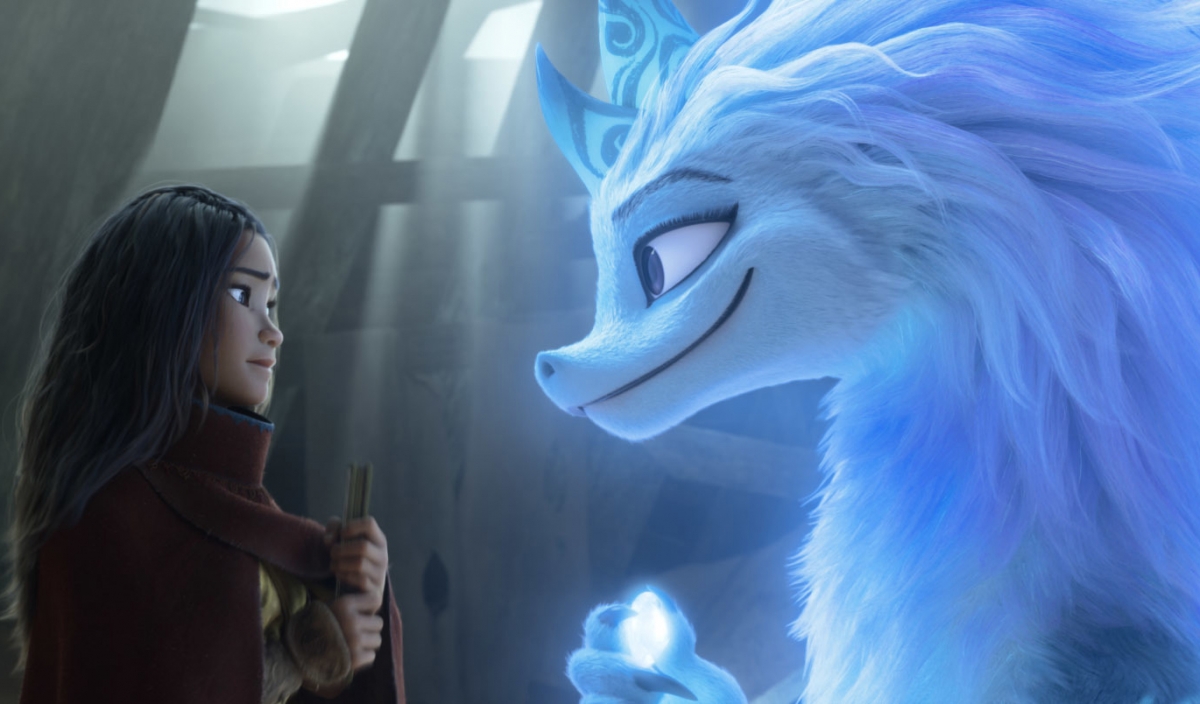
EntertainmentMar 03. 2021Kelly Marie Tran stars as a Southeast Asian princess on a quest, center, in Kelly Marie Tran stars as a Southeast Asian princess on a quest, center, in “Raya and the Last Dragon.” MUST CREDIT: Disney
By The Washington Post · Michael O’Sullivan

Taking its core inspiration from the naga of Asian folklore – semi-divine beings that shapeshift between serpent and human form, a la Nagini of the Harry Potter universe, which most famously borrowed the idea – Disney’s gorgeously animated, entertainingly told fantasia “Raya and the Last Dragon” is a visual feast. If the ingredients of the story itself, which centers on a plucky warrior princess on a quest to unite five widely scattered pieces of a magical, broken gemstone, are a bit familiar, the stirring sweep of this adventure, set in the fictional Southeast Asian land of Kumandra, and told with both cheeky humor and heart, is transporting.

Its titular teen heroine (voice of Kelly Marie Tran) is, along with her father, Benja (Daniel Dae Kim), a guardian of the aforementioned power-stone: the sole remnant of a battle that took place some 500 years before the main action of the film begins. In response to an assault by sinister beings called Druun, we learn from a prologue that several benevolent dragons once sacrificed themselves to save Kumandra, leaving behind only that mystical crystal – and a legend that one of the dragons, a water spirit named Sisu, may have somehow survived.

Kelly Marie Tran as Raya, left, and Awkwafina as the dragon Sisu in "Raya and the Last Dragon." MUST CREDIT: Disney

Kelly Marie Tran as Raya, left, and Awkwafina as the dragon Sisu in “Raya and the Last Dragon.” MUST CREDIT: Disney

In the aftermath, Kumandra has fragmented into five separate kingdoms, each maintaining a kind of cold war with the other four. When peace talks organized by Benja collapse, and an attempt to steal the stone causes it to break apart into chunks – each of which is spirited away to a different kingdom – action must be taken.

That mission falls to Raya when the Druun – described as a plague “born of human discord” – return, transforming Raya’s father and many others into stone statuary. (The textures of this world are vividly rendered. But be advised. The Druun are the scariest: Dementor-like swarms of swirling, dark, destructive evil. They’re an effective, and chillingly relevant, metaphor for human divisiveness.) Armed with a sword and a piece of the stone, which has the ability to repel Druun, and riding a giant pill bug named Tuk Tuk (Alan Tudyk, making, um, giant pill bug sounds), Raya sets out to find Sisu, steal back the other bits of crystal and save the world.

Awkwafina as Sisu in human form, left, and Kelly Marie Tran as Raya in "Raya and the Last Dragon." MUST CREDIT: Disney

Awkwafina as Sisu in human form, left, and Kelly Marie Tran as Raya in “Raya and the Last Dragon.” MUST CREDIT: Disney

As with many a heist film before it, this film’s protagonist accumulates a few accomplices along the way: an orphaned boy-chef (Izaac Wang), a gentle man-mountain (Benedict Wong), a baby con-artist (Thalia Tran) and several adorably acrobatic, monkey-like sidekicks.

Oh, and a dragon.

Raya finds and resuscitates Sisu (Awkwafina) early on – which is great because the character is a gem herself. Morphing between dragon and somewhat goofy adolescent human with a mop of blue hair and oversize clothing that make her look like a cartoon cousin of Billie Eilish, Sisu brings spunk and comedy to the dark tale. Awkwafina’s raspy, endearingly dim-bulb performance adds enormous, quirky charm to the film.

Of course, besides the Druun, there’s also a human nemesis: Namaari (Gemma Chan), a warrior princess from another kingdom who’s a complicated foil to Raya: part Sisu fangirl, part frenemy.

In its broadest contours, “Raya” isn’t all that different from stories we’ve seen before, echoing the Lord of the Rings cycle and the Infinity Stone plot line of the Marvel Cinematic Universe. But it also evokes a world, one of sight and sound – even, at times, of smells and tastes – that we haven’t seen before. Kumandra feels vibrantly real, even in, say, scenes in which we watch, with awe, a dragon prance on raindrops. Its overarching theme of sacrifice is also a powerful one.

In that sense, it’s an aspirational movie with its feet planted firmly in the soil of the real world: one in which the plague of human discord is sorely in need of a little magic right now.

– – –

Three and one-half stars. Rated PG. Also available on Disney Plus Premier Access. Contains some violence, action and mature thematic elements. 90 minutes.

Ratings Guide: Four stars masterpiece, three stars very good, two stars OK, one star poor, no stars waste of time.

PlayStation CEO says PS5 will get its own VR headset, explains console supply chain shortfall #SootinClaimon.Com

#SootinClaimon.Com : ขอบคุณแหล่งข้อมูล : หนังสือพิมพ์ The Nation.

https://www.nationthailand.com/lifestyle/30402988

PlayStation CEO says PS5 will get its own VR headset, explains console supply chain shortfall

EntertainmentFeb 24. 2021

By The Washington Post · Gene Park

The PlayStation 5 will have its own virtual reality headset, however, consumers may face ongoing difficulties obtaining a PS5 console given a supply chain shortfall. Ryan revealed both developments in a Monday interview with The Washington Post.

Ryan said developments kits for the PS5-specific VR headset will be sent out soon, though the company isn’t ready to talk about the device’s horsepower or specs. He did say the next headset will be considerably less cumbersome, as opposed to the current PSVR setup that requires wires running through a PlayStation 4, the TV and a separate black box called the PSVR processor.

“Generational leaps allows you to sweep up the advances in technology that have taken place,” Ryan said. “Given this was our first foray into virtual reality, it gives us a chance to apply lessons learned. One of the very vivid illustrations of that is that we will be moving to a very easy single-cord setup.”

There’s no set launch date for the new VR device, according to Ryan. In an October 2020 interview with The Post, Ryan said while Sony was still very much interested in VR, any more news about the company’s VR investments may not come in 2021.

“I think we’re more than a few minutes from the future of VR,” Ryan said then. “PlayStation believes in VR. Sony believes in VR, and we definitely believe at some point in the future, VR will represent a meaningful component of interactive entertainment. Will it be this year? No. Will it be next year? No. But will it come at some stage? We believe that. And we’re very pleased with all the experience that we’ve gained with PlayStation VR, and we look forwarding to seeing where that takes us in the future.”

The continuation of Sony’s VR platform ensures that the PlayStation 5 is at least proofed for any possible future of popular virtual reality titles. Facebook paid about $2 billion to purchase the Oculus platform in 2014, and has steadily been increasing marketshare thanks to the device’s accessibility, introducing the improved and cheaper Oculus Quest 2 in the Fall of 2020. Last year, Valve released “Half-Life Alyx,” widely considered a milestone in virtual reality storytelling. While not as popular, Sony’s first-party VR title “Astro Bot Rescue Mission” was hailed as one of the most innovative platformers ever created.

The accessibility of the PlayStation 5 to consumers remains an ongoing issue, however. Ryan said Sony is “very sorry” that more people haven’t been able to buy PlayStation 5 consoles, despite having sold 4.5 million machines through the end of December. Console shortages for Sony’s machine, as well as Microsoft’s Xbox line have been scarce during the entire pandemic, which continues to affect the supply chain, Ryan said.

Ryan said Sony is absolutely affected by the current global semiconductor chip shortage, due to the demand of consumer electronics since the pandemic began. The company found itself competing with auto manufacturers and smartphone companies on securing more processors. Despite that, Sony was still able to deliver on Ryan’s expectation that they would sell more of the new machine than PlayStation 4 consoles sold through the end of 2013 (4.2 million).

“Demand was greater than we anticipated,” Ryan said. “That, along with the complexities of the supply chain issues, resulted in a slightly lower supply than we initially anticipated.”

Ryan said production of PS5s is “ramping up steadily.” He hopes that as retail stores open up, people can be rid of the bot-swarmed online retail experience. Would-be PS5 buyers have had ongoing issues securing one when specially crafted software programs are helping to shuttle consoles sold online to purchasers intent on re-selling them for a profit on the secondary market.

Ryan has also been warmed by the amount of new sign-ups to the PlayStation Network. One out of four PS5 owners never owned a PlayStation 4, said Ryan, which means Sony is acquiring or welcoming back new or lapsed customers, and that about half of PlayStation 5 owners are new to PSN.

And because lockdown is still ongoing, PlayStation will continue its “Play At Home” campaign by giving away marquee titles. When the program launched last year, “Uncharted: The Nathan Drake Collection” was downloaded 10 million times. Coming soon, players can expect the 2016 release of “Ratchet and Clank,” to build excitement for the PS5 exclusive “Ratchet and Clank: Rift Apart,” releasing in June.

Narong Prangcharoen first Thai composer to win American Academy of Arts award #SootinClaimon.Com

#SootinClaimon.Com : ขอบคุณแหล่งข้อมูล : หนังสือพิมพ์ The Nation.

https://www.nationthailand.com/lifestyle/30402968

Narong Prangcharoen first Thai composer to win American Academy of Arts award

EntertainmentFeb 23. 2021

By The Nation

Composer Narong Prangcharoen has become the first Thai to be awarded the prestigious Charles Ives Award in Music Composition by the American Academy of Arts and Letters.

The 48-year-old dean of Mahidol University’s College of Music won the fellowship award after his compositions “Luminary” and “Volcanic Breath” caught the ear of the academy judges.

“It is a starting point when a Thai composer can receive international attention,” said Narong. “I hope that the global attention this award garners will help shine a spotlight on the great work being done by the Thai music industry and might serve to boost our local creative economy. Inspiring Thai youth and expanding opportunities for young artists to learn from the path of success in field is incredibly important to me. I am grateful to have been recognised on this global stage.

“I hope this attention will support our current project to encourage the Nakhon Pathom Province to be certified as a Creative City of Music by Unesco,” he added.

Narong is no stranger to international recognition, however.

In 2013, the Uttaradit-born composer was presented with the Guggenheim Award, the Barlow Prize and a three-year residency as composer for California’s Pacific Symphony orchestra. He is also a recipient of Thailand’s Silpathorn Award for Music.

His musical works have been performed continuously by various famous orchestras around the world. Narong was described by the Los Angeles Times as a “composer with a gift for creating orchestral colour”, while the Chicago Sun-Times called his music “absolutely captivating”.

He also founded the Thailand International Composition Festival (TICF), an annual weeklong summer music festival promoting the contemporary classical music scene of Thailand and Southeast Asia.

‘Final Fantasy XIV’ director discusses challenges of building always-online game #SootinClaimon.Com

#SootinClaimon.Com : ขอบคุณแหล่งข้อมูล : หนังสือพิมพ์ The Nation.

‘Final Fantasy XIV’ director discusses challenges of building always-online game

EntertainmentFeb 18. 2021“Final Fantasy XIV” recently announced its upcoming expansion “Endwalker.” MUST CREDIT: Square Enix

By The Washington Post · Gene Park

“Final Fantasy XIV,” once considered a catastrophic failure, got a second shot three years later that turned fortunes around.

“Final Fantasy XIV: A Realm Reborn” is a success story of how an always-online multiplayer game can recalibrate after high-profile failure. Like a “Snyder Cut” for fantasy role-playing games, except with a proven track record of 20 million monthly players, and one of the longest shelf lives of any online video game.

Much of that success is attributed to Naoki Yoshida, or “Yoshi-P” as he’s affectionately known. Yoshida took over the rehabilitation process as producer and director, armed with some knowledge of how to build massive multiplayer online RPGs after his stint as chief planner for “Dragon Quest X.” “A Realm Reborn” released in 2013, and almost eight years later, it remains one of the healthiest online gaming communities in the world. For some, it’s a game more beloved than “World of Warcraft.” The game recently announced its latest upcoming expansion, “Endwalker.”

In a video call interview with The Washington Post, Yoshida said “Final Fantasy XIV” may never end, as long as people keep returning. At its current audience growth rate, Yoshida said Square Enix see at least another five years for the online world.

“Even now, our CEO is encouraging us to strive for more players and for 30 million adventurers, and he still has future plans for us,” Yoshida said through a translator. “Luckily, we don’t see any stopping in our momentum. At one point we thought maybe we might plateau, but fortunately our player base just continues to expand and grow.”

This means expansions beyond 2021 and “Endwalker.” But, at least for the near future, it will mean new platforms. Despite the game’s success, Yoshida says a lot of his team’s time is spent on creating the expansions, and leaves little room for expanding to the Xbox or others, as much as they’d love to see the game beyond the PlayStation and PC ports.

“We provide content on a fairly regular basis, and our cycle is rather condensed,” Yoshida said. “And it is a fairly stable cadence that we continue to follow. . . . We have to think about long-term planning with additional platforms, we need additional testing for that particular platform. So it kind of exponentially grows the amount of resources that needs to be allocated.”

This stable cadence is a big factor of the game’s ongoing success, and why its community has generally been pretty happy, unlike so many other “live service,” always-online multiplayer games. Yoshida says that when planning expansions, about 70% of the work is already expected to be done, and the team leaves 30% of its energy to devote to different or innovative feature sets. This has been the approach to each story expansion, like “Heavensward” from 2015 through “Endwalker” this fall.

“For example, we’ll look at an instance dungeon and it’s within that circle of 60% to 70%,” Yoshida said. “For creating our instance dungeon, we would need our game design to come up with the actual content of the plan and that would probably take about 10 business days, and then we would report that for proper approvals which cost another 30 days, and then we’ll route that to the programmers, which would take them about two weeks to program in the mechanics. It’s very clear as to how much cost and time we’ll take with each component of the package that we have for our planners and the management.”

This standardized approach has helped the team become more efficient in creating dungeons. But because the game is a live service, he’s wary about the team resting too much on their laurels when it comes to creative stories and features. That’s why the approach leaves about 30% of the team’s time to focus on innovation. It’s great that his teams can anticipate the work, but it’s less exciting if the player base is able to predict the upcoming updates.

“There is a major risk of boredom and fatigue,” Yoshida said. “To mitigate that aspect, that’s why we leave 30% to 40% outside of the bundled package so we can take on new challenges, think of new pieces of content we can deliver. And sometimes we’ll make use of that space over multiple patches to bring something larger scale. So by doing so, we still have a sort of stability in our 60% or 70% regular content.”

It’s especially difficult to create these games, he said, when a studio is backed by multiple investors, all expecting a steady revenue source.

“It’s really crucial to understand how monetization is going to interweave with the actual gameplay,” Yoshida said. “Looking at some recent examples, it does seem like the studios kind of throw on monetization elements and scramble to do so when the game is out there. It seems to be quite a challenge for those who come from console games.”

Yoshida was famous for coming into the “Realm Reborn” project, completely unknown to the team that had worked on it, but armed with timetables and project goals to follow. He stressed that realistic goals and strict schedules must be outlined far in advance.

“Ideally we want at least two years worth of plans already made when you’re starting out, what kind of content we want to incorporate and where we want to take the game,” he said. “Structure your system so that it will accommodate for those updates and have your base foundation designed on those plans in mind, and having those updates considered as part of the plan.”

Having a set amount of work enabled his team to create tools to make the work even easier. The ideal situation is that you’re not worrying about any of this stuff around launch period, which leads to chaos.

“Final Fantasy XIV” has also been lauded as one of the better written entries in the series, a notable accolade for being one of only two of the franchise’s massive online games. Yoshida confirms that he and four story writers conceive the premise first, usually locking themselves in a rental meeting room somewhere in the Shinjuku ward of Tokyo. The stories are usually planned out far in advance. For “Endwalker,” the story was written by October 2019.

For the “Stormblood” expansion in 2017, Yoshida said he directed the team to write a story around the character Omega, a recurring superboss. Once they sketch up the rough concept of a plot, the writers would send the ideas to the battle team to start planning game mechanics around the planned fights and dungeons. Yoshida said he wasn’t as satisfied with how combat scenarios and stories didn’t jell until the team got more experience through “Stormblood.”

“It’s the same team that worked on the two other contents, but you could see there’s such an improvement in what they were able to bring to the table,” Yoshida said.”

Even though “Final Fantasy XIV” may not be ending soon, Yoshida has now begun to shift his attention as producer for “Final Fantasy XVI,” the next single-player chapter in the series. It’s a reward for steering the online ship so well, and this will be his first stint in directing a mainline, single-player adventure.

Asked whether he could indicate any kind of hint as to what that game might entail outside of the trailer that debuted in December’s The Game Awards, Yoshida chuckled and said he will not be saying anything. But he did elaborate on why he’s keeping his mouth shut until he and his team have more to show.

“We don’t want to say something that’s half-baked and cause speculation on the title,” Yoshida said. “With any Final Fantasy fan, depending on which Final Fantasy title is your jam, the point that you get excited will tend to differ.”

He’s not wrong. For many, the cyberpunk anime aesthetic of “Final Fantasy VII” for the first PlayStation was their introduction, while older gamers will fondly remember the more magical elements of the older Nintendo titles. Or, maybe they prefer the young adult dramas of the later series. It’s important to note that “Final Fantasy” isn’t an ongoing universe, but a series of disconnected, self-contained stories featuring completely different worlds and characters.

From what can be gleamed of the recent trailer, Yoshida’s “XVI” will at least be a bloodier and more medieval affair than we’ve seen from the series in decades.

“Each person will probably have their own sort of idea or image of what the next Final Fantasy should be,” Yoshida said. “Saying something half baked is definitely very high risk. If something gets spoken about, someone will pick it up on social and it starts to spread around and people will form expectations. So with ‘Final Fantasy XVI,’ whenever we do reveal more information on it, we hope to show what kind of game it’s going to bring, and what kind of excitement we can bring.”