Netflix recently launched the Wannatalkaboutit.com website to offer help on several issues, such as sexual violence, abuse, mental health, self-harm and suicide to name a few. The site is available in 26 languages and help is provided in conjunction with 150 organisations from 45 countries.
Thailand’s version features Pavena Foundation for Children and Women, an organisation committed to helping victims of abuse, including rape, harassment, assault, and human trafficking, as well as Samaritans of Thailand, which runs a suicide help line.
Pavena Hongsakul, founder and president of the Pavena Foundation, said: “Netflix has partnered with the foundation to help solve issues that viewers may be facing including rape, assault, abuse, human trafficking, and forced prostitution, within and outside Thailand. With 22 years of experience and over 140,000 cases, Pavena Foundation will continue fighting for justice, and if you are experiencing any of these issues and want to talk to someone, don’t hesitate to call our 1134 hotline or drop us a message on Facebook.”
Trakarn Chensy, chairman of Samaritans of Thailand, said: “Samaritans of Thailand is honoured to partner with Netflix. Watching films with heavy content – be it violence or tragedy – may affect a viewers’ feelings. If you are upset and need someone to talk to, feel free to reach out to Samaritans of Thailand. Our volunteers are happy to listen and accept everyone unconditionally.”
Bela Bajaria, chief of Netflix global TV division, said: “Entertainment can have a profound impact on people, sparking conversations that are sometimes tough, whether it’s about mental health, sexual orientation or sexual violence. It’s why creators and Netflix often work with independent experts to ensure our stories are authentic, and that we offer members support if they need it. If you’re struggling, or you know someone who is, remember there’s always help out there. As these experts have taught us, it helps to talk about it.”
22 feel-good movies and TV shows you can watch with the whole family
EntertainmentNov 27. 2020Madison Reyes as Julie in Netflix’s “Julie and the Phantoms.” MUST CREDIT: Eike Schroter/Netflix
By The Washington Post · Bethonie Butler · ENTERTAINMENT, FILM, TV
The holidays will feel a bit different this year, but some traditions cannot be thwarted – like our annual viewing of “It’s a Wonderful Life.” Though your gatherings might be smaller than usual, there are a ton of family-friendly viewing options on streaming and a growing number of ways to make them a virtual group experience. We’ve rounded up some of our favorite kid-friendly TV and film picks below.
– “A Christmas Story” (1983)
Consider this a triple dog dare. (Streams on Hulu Plus Live TV/TBS)
– “Jingle Jangle: A Christmas Journey” (2020)
A toymaker who lost everything when his apprentice betrayed him is inspired by his granddaughter to return to the trade in this fantastical musical. It boasts an all-star cast – Forest Whitaker, Keegan-Michael Key, Anika Noni Rose, Hugh Bonneville and Phylicia Rashad – to boot. (Streams on Netflix)
– “Hair Love” (2019)
Matthew A. Cherry’s Oscar-winning short, about a little girl who helps her dad figure out how to do her hair, clocks in at just under seven minutes but will stay with you for much longer than that – especially if you’ve ever struggled to love your own hair. (Streams on YouTube)
– “Ratatouille” (2007)
We wouldn’t let Remy, the rat chef at the center of this Oscar-winning animated film, cook our Thanksgiving dinner, but we’ll gladly take his culinary tips while we wait for the musical conceived by TikTok users to materialize. (Streams on Disney Plus)
– “Coco” (2017)
This tender and vivid Pixar/Disney film is rooted in the Mexican tradition of Día de los Muertos, the annual time when families honor their departed loved ones, so it’s a great preamble to discussing grief with younger kids (or processing it at any age). The story revolves around a young aspiring musician who – in a quest to reverse his family’s long-standing rule against music – finds himself among his ancestors in the Land of the Dead. (Streams on Disney Plus)
– “Star Wars: The Clone Wars” (2008)
Force-sensitive families will enjoy this animated “Star Wars” series, which takes place between Episodes II and III of the Star Wars prequel saga and lets an intriguing heroine shine. (Streams on Disney Plus)
– “The NeverEnding Story” (1984)
This is familiar territory for ’80s kids, but why not let the younger generations see what movie magic looked like in the pre-CGI days? (Streams on HBO Max)
– “Paddington 2” (2017)
The marmalade-loving bear has a run-in with the law in this fun sequel, which features one of Hugh Grant’s finest performances as villain Phoenix Buchanan. The first film isn’t bad either. (Streams on Hulu Plus Live TV/TBS)
– “The Not-Too-Late Show with Elmo” (2020)
The lovable Sesame Street resident interviews celebrities and hosts musical guests in a typical but truncated late-night format: Each episode is just 15 minutes. (Streams on HBO Max)
– “Molly of Denali” (2019)
This animated PBS Kids show revolves around a young Alaska Native girl. The series won a Peabody Award this year for “helping to shift the ways that the next generation will think about Indigenous people and for giving native media-makers a central role in shaping their own representation.” (Streams on PBS Kids)
– “PBS Kids Talk About: Race & Racism” (2020)
This PBS special tackles a tough and timely subject through conversations with real kids and their parents, along with some good example-setting from fan-favorite characters including Arthur and Daniel Tiger. The broadcaster also offers some helpful resources for starting your own conversations at home. (Streams on PBS and YouTube)
– “Izzy’s Koala World” (2020)
Animal lovers of all ages will get into this docuseries following tween “Koala Whisperer” Izzy Bee, who takes care of cuddly marsupials with some help from her mother, a wildlife veterinarian, on Australia’s Magnetic Island. (Streams on Netflix)
– “Spider-Man: Into the Spider-Verse” (2018)
Miles Morales goes from Brooklyn teenager to superhero in this Oscar-winning animated film featuring an ensemble cast of voices (Shameik Moore, Hailee Steinfeld and Mahershala Ali among them) and, for what it’s worth, a song that toddlers seem to love. (Streams on Netflix)
– “Home Alone” (1990)
Is it even the holiday season if you don’t watch Macaulay Culkin (and Catherine O’Hara!) in this blockbuster and its 1992 sequel? (Streams on Disney Plus)
– “A Charlie Brown Thanksgiving” (1973)
The Peanuts gang has an eventful Thanksgiving feast in this holiday classic. (Streams on Apple TV Plus)
– “Julie and the Phantoms” (2020)
A teenager grieving the loss of her mom starts a band with three ghosts in this Netflix dramedy, which is far less morbid than it sounds – and perfect for musically inclined tweens/teens. (Streams on Netflix)
– “The Baby-Sitters Club” (2020)
Ann M. Martin’s treasured teen series gets a decidedly Gen Z update, featuring several charismatic new talents. (Streams on Netflix)
– “Toy Story 4” (2019)
Andy’s toys are back for another beautiful and emotional adventure in this Oscar winner. (Streams on Disney Plus)
– “Hamilton” (2020)
Lin-Manuel Miranda cut some coarse language out of his Tony-winning musical so even the kids could learn about the ill-fated Founding Father and his American Dream. (Streams on Disney Plus)
– “Anne with an E” (2017)
This Canadian series, an adaptation of Lucy Maud Montgomery’s famed children’s novel, finds Anne of Green Gables at her pluckiest – and has a passionate fan base that bristled over the show’s cancellation earlier this year. (Streams on Netflix)
– “Black Panther” (2018)
The late Chadwick Boseman is the heart of this breathtaking and culturally significant Marvel film. (Streams on Disney Plus)
– “It’s a Wonderful Life” (1946)
Every year – but especially this one – we can benefit from the life lessons in Frank Capra’s beloved Christmas classic. (Streams on Hulu Plus Live TV/USA)
PETALING JAYA: Malaysia’s home-grown talent Chong Keat Aun, who was named the best new director in Taiwan’s Golden Horse Awards, has been flooded with congratulatory messages from fans.
Someone called him “Malaysia’s pride” while another social media user praised his achievements: “Congratulations! Looking forward to seeing your film.”
Chong, 42, paid tribute to the late Yasmin Ahmad in his acceptance speech during Saturday’s award presentation, which is often said to be the Chinese-language cinema’s version of the Oscars.
It was reported that he also dedicated the award to his cameraman Mohamad Badri who died of cancer last month.
“Thank you. Your warm smile will always be in our hearts, ” he said of Mohamad Badri.
In a Facebook post later, he said movie-making was not such a great process but “what’s great is all who made it happen”.
Chong, a former radio presenter from Kedah, won the award for his first feature film The Story of Southern Islet which he drew inspiration from his life experiences and local beliefs.
The film depicts the story of a woman’s quest to find a cure for her husband who was thought to have been cursed by black magic.
Chong directed, wrote and acted in the film, which was also nominated for best original screenplay but lost.
Malaysian talents also contributed to two other awards that night – songwriters Keon Chia and Hooi Yuan Teng won the Best Original Film Song award for Your Name Engraved Herein while stylist Raymond Kuek was honoured for his makeup work in the Singaporean film Number 1, which won Best Makeup and Costume Design award.
Q&A with Lewis Black: Hating Facebook, learning to yell from his 102-year-old mother and why he’s tired of being the grown-up
EntertainmentNov 22. 2020Geoff Edgers (top) and Lewis Black on Oct. 30 in Edgers’ weekly Instagram Live show “Stuck with Geoff.” MUST CREDIT: The Washington Post
By The Washington Post · Geoff Edgers · ENTERTAINMENT, COMEDY Like so many, national arts reporter Geoff Edgers has been grounded by the coronavirus. So every Friday, he hosts The Washington Post’s first Instagram Live show from his barn in Massachusetts.
So far, he has interviewed, among others, comedian Hannah Gadsby, cellist Yo-Yo Ma and basketball legend Kareem Abdul-Jabbar, musician Annie Lennox and journalist Katie Couric.
Recently, Edgers chatted with comedian Lewis Black. Here are excerpts from their conversation.
Q: We all know you from your comedy and from being on “The Daily Show.” But we also know your temperament is important. I’d never met you before last night, when we got on the phone to set up this Instagram Live. You were having some technical problems, and … I felt like your ire was directed at Instagram, right?
A: Oh, it was directed at Instagram. And it’s always directed at Facebook because I think Facebook was the beginning of the road to madness.
Q: You don’t like putting pictures from your family events and connecting with old friends on Facebook?
A: I don’t have enough time during the day to do the things before all of this. … And it’s like, you know, Bobo wants to be a friend. Well, sure. But I’ve never met you and I feel badly because I don’t want to reject you. So now I got all these people writing to me and I’m going, “Well, how did this happen?”
Q: Is Donald Trump good or bad for a comedian? Does he help you or does he hurt you?
A: As I said about Sarah Palin and Tina Fey on “Saturday Night Live,” it’s difficult to satirize what’s already satiric. It’s so beyond not being funny, it’s so really wrong at times, in a way morally inept. You have to wonder, wow, how did I end up standing onstage at times having to be the adult in this situation? You’ve turned me, the comic, into the adult. I’m not supposed to be the adult, the comic is the child.
Wow, you’ve got me riled up.
Q: Were you always angry?
A: Well, I always had a bit of anger, mostly sarcastic, but anger would kind of come to play at times. But you’ve got to realize, my family was born and raised Jewish. There was a lot of yelling. And my mother is still around and still yells about stuff at 102, so I always thought that anger was a form of love.
Q: That’s a good T-shirt. I’ll tell you something, … I’m of the Jewish faith as well, and I grew up in a home of loud voices. My wife and I, it’s really hard for us sometimes because we’re in the house and we have the kids, and sometimes people just go haywire. But she feels uncomfortable, like the neighbors are going to hear. And I’m like, “This is how normal life goes.” And there’s something peaceful about getting it all out with a good argument.
A: Well, there is. And realizing that the yelling is not about the other person. That you love the other person so much that you’re yelling at them, that you’re telling them, “You know, I can yell at you because I care about you, and hopefully you understand that I’m not attacking you.”
Q: When did you first tap into this anger as performance and knew it worked for you?
A: Early on, I started doing standup on the side as a kind of a hobby, and a lot of my early stuff was stories that were funny – about my sex life or my gym teacher teaching the health class. They were funny stories about things that had happened to me. And then as I started doing more, I would write a lot of it, and it had to do with being able to get something out there. I don’t consider myself a political comic as much as a social commentator or a satirist, if you will.
Especially when I arrived in New York, the evolution began. I ran this room in the city with some friends, and we’d do a free show on Saturday nights at midnight. The whole week before, I’d rip stuff out of the newspapers that just irritated me, things that I thought were crazy, and I would go onstage and just pick the things up and yell, and then pick another thing up, and yell and yell and yell. … A friend of mine said one night when I was performing, “You know, you’re really angry. You should just go up there and yell the entire act and see what happens.” And it was life-changing because I’m funniest when I’m angry.
Book World: What was Emperor Nero really doing while Rome burned?
EntertainmentNov 21. 2020Rome Is Burning Photo by: Princeton — Handout
By Special To The Washington Post · Diana Preston
BOOKWORLD · Nov 20, 2020 – 11:31 PM
Rome Is Burning: Nero and the Fire That Ended a Dynasty
By Anthony A. Barrett
Princeton. 334 pp. $29.95
– – –
The name Nero immediately conjures an image of a demented, olive-wreathed emperor demonically fiddling in the red glow of a burning Rome – a picture that has endured to modern times, providing irresistible fodder for plays, operas, films, even rock songs. In “Rome Is Burning: Nero and the Fire That Ended a Dynasty,” historian Anthony A. Barrett, professor emeritus at the University of British Columbia, navigates through the complex evidence surrounding the Great Fire of 64 A.D. to show that much popular perception of Nero is illusory.
The written sources’ paucity, obvious bias and distance in time from the event, together with ambiguities in the archaeological evidence – Barrett draws on new research here – present formidable obstacles. As he disarmingly and frankly acknowledges, little is certain beyond that the fire started near the Circus Maximus and, with a brief respite, burned for nine days. The wind-whipped blaze’s precise extent and the number of casualties, as people ran through narrow streets to escape, can only be guessed. By an ironic quirk of fate, later fires, particularly one in 80 A.D., destroyed many records of this earlier conflagration. “Rome Is Burning” is therefore an analysis of the causes and broad course of the Great Fire and its political, economic and architectural consequences, rather than a detailed narrative of events and people.
Perhaps, as Barrett suggests, no comparable historical disaster is so closely associated with one individual. Barrett shows how, on becoming emperor in 54 A.D., aged just 16, Nero was Rome’s “Golden Boy” – a “people’s emperor.” Yet just four years after the fire, his position untenable, he took his own life. Deducing how and to what extent the fire contributed to this is tricky. The three main textual sources are Tacitus, Suetonius and Cassius Dio, none of them Nero’s contemporaries, thus reliant on earlier sources, and all hostile to him. As a scholar who has written widely on imperial Rome, including about Nero’s reign, Barrett – who provides translations of the three accounts – guides the reader expertly through the complexities of interpretation, giving an object lesson in handling sources.
In so doing, he dismisses as “very unlikely” the suggestion that Nero ordered the burning of his capital – an act that would have been both illogical and difficult. In explaining why contemporaries suspected he did, he lays some responsibility on the emperor himself. In the aftermath of the fire – as so often with disasters – grieving, homeless survivors wanted someone to blame, and Nero seemed a credible villain. After all, this was a man who had had his own mother, Agrippina, murdered, and also his wife.
Subsequent generations of writers built on the rumors, some even suggesting that Nero sang about the destruction of Troy while watching his city go up in flames. (The idea that Nero “fiddled while Rome burned” was a still later embellishment – Romans did not have fiddles.) A particularly potent and dubious part of the mythology, repeated in novels like Henryk Sienkiewicz’s late-19th-century “Quo Vadis,” is that, to deflect suspicion from himself, Nero blamed Rome’s Christians for the fire, orchestrating wholesale and gruesome public executions. Barrett shows the sole source of this idea to be a short – fewer than 100 words – and much-disputed passage by Tacitus.
What seems clear is that the Great Fire created a gulf between the emperor and the Roman elite. Many resented being expected to help pay for Nero’s grandiose plans to rebuild Rome, including the construction of his extravagant Domus Aurea (Golden House). The debasing of the currency in the fire’s aftermath – the proportion of pure silver in Roman coinage at one stage fell to 80 percent – also alarmed them. Convinced that Nero had become a self-aggrandizing liability, they decided he must go.
Nero was the last of the Julio-Claudian dynasty, which had ruled Rome since the first emperor, Augustus. Henceforth emperors would compete for the throne. Barrett suggests that the political and economic instability wrought by this regime change – together with radical building innovations initiated by Nero in the wake of the fire, such as using concrete to produce dramatic, distinctive vaulting that revolutionized Roman architecture – makes the event a tipping point in classical history. “Rome Is Burning” is part of Princeton University Press’s “Turning Points in Ancient History” series.
This is an intriguing argument. Nero’s death was certainly followed by political turmoil – the notorious “Year of the Four Emperors.” Yet significant though the fire’s impact was, the Battle of Actium a century earlier, and mentioned by Barrett, perhaps has greater claims as a classical watershed. It ended Antony’s and Cleopatra’s aspirations to reshape the Roman Empire by softer Greek concepts of “harmonia,” and it precipitated the end of the 500-year-old Roman Republic, which had some elements of democracy, and replaced it with an imperial dictatorship that could produce a Nero.
Whatever the case, “Rome Is Burning” is a lucid analysis of Nero and the Great Fire, enhanced by Barrett’s clear, engaging style, his obvious love of his subject, and an extensive selection of maps, schematics and photographs. Historically minded visitors to Rome as well as Roman-history enthusiasts will appreciate the erudition and context with which he illuminates one of the great stories – and personalities – of the ancient world.
– – –
Preston is a historian and author. Her latest book is “Eight Days at Yalta,” about the 1945 Yalta Conference.
Alternative rock legend Moderndog will hold its first acoustic concerts in almost two decades this coming February.
“The Very Normal of Moderndog” will take place at Siam Square’s KBank Siam Pic-Ganesha Centre of Performing Arts on February 5, 6, 19 and 20.
“These shows are very special compared to our previous shows,” said the band’s front man, Thanachai “Pod” Ujjin.
“Instead of performing heavy rock music, we will be performing acoustic versions of our songs. We haven’t performed an acoustic concert in almost 20 years – since our first acoustic show, the ‘Very Common of Moderndog’, in 2002. That concert was praised as one of our best shows.
“In the upcoming shows, we will perform songs from every album with acoustic instruments such as piano, violin, viola and less common musical instruments. Audiences will get to relax and enjoy our music in a more intimate atmosphere.”
Tickets for “Amado Presents the Very Normal of Moderndog” are priced at Bt1,800 and Bt2,800, available through ThaiTicketMajor outlets and www.thaiticketmajor.com from December 1. Amado customers can prebook tickets on November 30 via www.facebook.com/amadoheadoffice.
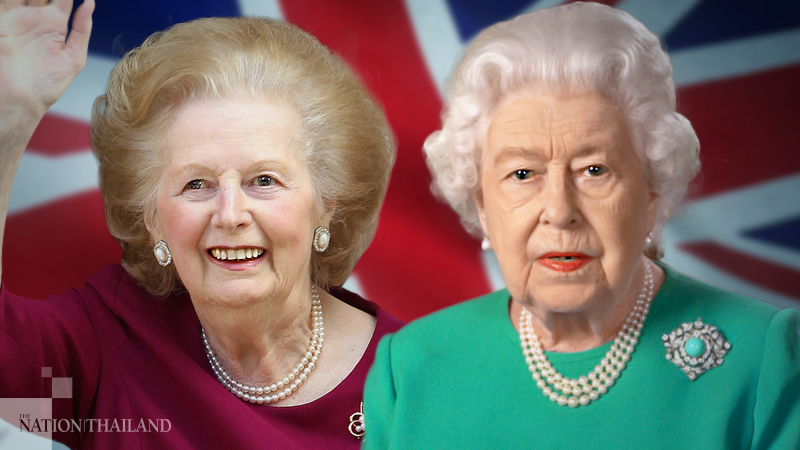
By The Washington Post · Michael S. Rosenwald · ENTERTAINMENT, FILM On the new season of “The Crown,” newly elected Prime Minister Margaret Thatcher and Queen Elizabeth II seem to get on well enough during their first meeting.
Thatcher promptly curtsies, almost to the ground. The Queen correctly predicts Thatcher’s cabinet.
Later that evening, Thatcher gives her husband, Denis, the play-by-play.
“Smart cookie,” Thatcher’s husband says.
“Quite different than I imagined. More interesting and informed, with a commendable appetite for work,” Thatcher replies. “I left thinking we might work very well together.”
Denis isn’t entirely convinced.
“Two menopausal women,” he says. “That’ll be a smooth ride.”
He was right, in a sense. And wrong.
There was, indeed, tension between the two women during the 11 years Thatcher reigned as prime minister while the queen reigned as the sovereign – an extraordinary period when one of the world’s superpowers was led by two supremely powerful women. But hormones weren’t the cause of their icy relationship.
For starters, they both had daddy issues.
“Both women were shaped by intransigent men who disliked compromise,” wrote historian Dean Palmer in “Queen and Mrs. Thatcher: An Inconvenient Relationship.” “Their fathers were born in an era when class and social position were fixed at birth and remained unchangeable until you died. The two men found it impossible to escape their respective birthrights.”
Thatcher’s father, Alfred, was a shopkeeper and alderman. The queen’s father was King George VI – forced onto the throne by the extraordinary abdication of his brother to marry an American divorcée. Alfred seemed to never stop working. The king liked to hunt.
“With Alfred, life was about pulling yourself up by your boot straps and making something of yourself,” Palmer wrote. “By contrast, the queen’s father, George VI, was determined to resist change in whatever shape it might appear; for him, maintaining the status quo was the highest virtue. These paternal philosophies would stick like glue to their respective daughters. To understand both women, you must understand the fathers.”
“The Crown,” a fictional series based on fact, explores these tensions throughout season four.
In the second episode, the queen invites Thatcher, played by Gillian Anderson, and her husband to the family’s Balmoral estate in Scotland. A servant leads the couple to their bedrooms – plural.
“Two bedrooms?” Thatcher asks.
“It’s all very odd,” her husband replies.
“Are we allowed to sleep in one bed?” Thatcher says.
“I shall go check with the protocol sheet,” Denis replies.
A moment later, a servant interrupts the couple.
“I couldn’t help noticing but you didn’t bring any outdoor shoes?” the servant says.
The prime minister is confused. The servant leaves.
“What a strange thing to say,” Thatcher says.
It soon becomes clear why Thatcher’s lack of outdoor shoes is royally problematic. The queen invites her to go stalking in the wilderness. Thatcher arrives in a formal blue suit and heels. On a drive to the stalking point, the women engage in a conversation that sums up their differences.
(It is not known if this exact conversation took place. Artistic license, etc., etc.)
“I am afraid we are all mad stalkers,” the queen says. “It was how I spent some of the happiest times with my father, King George. He taught me everything.”
Thatcher says her father taught her things, too.
“We worked,” she says. “Work was our play. I worked with him in our shop. As an alderman, he took me everywhere. I watched as he wrote his speeches and listened as he rehearsed and delivered them. It was my political baptism.”
The queen smiles.
“How lovely for you both,” she says.
You will not be surprised to learn that the stalking did not go well. And neither, according to the media and historians, did their ongoing relationship.
Palmer quotes William Whitelaw, Thatcher’s deputy party leader, as saying: “Throughout their weekly meetings, over the years, the two women maintained a rigid formality. The ice never broke. Margaret would have expected the queen to make the first move, and that never happened.”
But neither woman ever degraded the other in public, always keeping up appearances for the good of the nation. And Thatcher downplayed any tensions.
“Although the press could not resist the temptation to suggest disputes between the Palace and Downing Street, I always found the Queen’s attitude towards the work of the Government absolutely correct,” Thatcher wrote in her autobiography. “Of course, stories of clashes between ‘two powerful women’ were just too good not to make up.”
After Thatcher died in 2013, the queen’s press secretary released a terse but respectful statement: “The Queen was sad to hear the news of the death of Baroness Thatcher. Her Majesty will be sending a private message of sympathy to the family.”
Monarchs do not typically show up at the funerals of commoners. But in a move that stunned palace observers, the queen broke protocol and attended Thatcher’s.
“The only other time a reigning monarch has attended the final farewell of a Prime Minister was in 1965,” the Daily Mail wrote, “when the Queen joined the congregation for the funeral of Winston Churchill.”
Scattered and silenced by the pandemic, choral groups are trying to find their voice
EntertainmentNov 12. 2020Members of the Cathedral Choral Society filming the “Joy of Christmas” recording in October at Washington National Cathedral. MUST CREDIT: Courtney Ruckman.
By The Washington Post · Michael Andor Brodeur · ENTERTAINMENT, MUSIC
In March, Eugene Rogers was in Ann Arbor, Mich., celebrating his appointment as the new artistic director of the Washington Chorus by completely scrapping and reimagining his inaugural season for a virtual future.
The Cathedral Choral Society shooting a video in October at the National Cathedral in Washington D.C. for Beethoven’s 250th birthday. MUST CREDIT: Courtney Ruckman.
Meanwhile, in Washington, Steven Fox, music director of the Cathedral Chorus Society, was reeling from the forced cancellation of a program two years in the making – a celebration of the ratification of the 19th Amendment featuring the premiere of a CCS commission from composer Lisa Bielawa.
And in New York, Bielawa was trying to figure out what to do with herself after losing access to her primary instrument – other people.
Every corner of the classical music world has been hit hard by the pandemic, but perhaps no subset seems as uniquely centered in the coronavirus’s crosshairs as choral music, which relies upon – and, indeed, exists as – a combination of public safety no-no’s: large groups, proximity and voices raised to the heavens (i.e., major distribution of droplets).
Look closely at the Centers for Disease Control and Prevention report covering one of the first termed “superspreader” events – an outbreak in early March among the 122 members of a choir in Skagit County, Wash., that sickened 53 and killed two – and you’ll see singers recast in an ugly new pandemic-era nomenclature: superemitters.
For choruses and choristers – a great many of whom volunteer for their positions on the risers – the music may be the meeting place, but the act of singing is what generates the sense of community and connection that keeps them returning to rehearsals – as a small percentage of the Choral Arts Society of Frederick recently did.
More studies than any of us have time for here demonstrate the function of music as a social binding agent (and in the case of one study, “a special form of social cognition”) as well as a source of physical well-being (aiding everything from posture to breathing) and chemical pleasure (helloooo, dopamine). This goes for those listening, too.
Put another way, that sense of belonging you get while standing before a chorus of hundreds singing at the holidays isn’t just you feeling festive – it’s your body behaving like a body. If talking to a loved one over Zoom doesn’t feel quite the same as sharing a sofa or a coffee in person, it’s partly because – get ready for some science – you’re not feeling the same vibrations. It may be why I’m genuinely impressed but ultimately unmoved by the Zoom choruses that exploded in popularity this summer. (For the rest of you, the Self-Isolation Choir, one of the largest choral clouds featuring several thousand singers from around the globe, is preparing to perform Mahler’s Resurrection Symphony on Nov. 14.)
And it may be why people from every end of the choral community are trying new ways to raise their voices again. Talk to anyone who sang regularly with others in the before-times, and the loss they describe sounds less like the suspension of a hobby and more like an ailment.
“The isolation was staggering,” Bielawa says by phone from New York. “I actually Googled ‘touch starvation’ because I was trying to find out what was wrong with me. I went to get a covid test, and I walked in there and she touched my arm with a glove on and I started projectile sobbing. Because somebody touched my arm. It was really bad.”
Bielawa’s approach to composing might seem diametrically opposed to the isolation imposed by the pandemic: She loves to gather hundreds of people at a time in public places to sing and perform as part of collaborative compositions she terms “broadcasts.”
But, oddly enough, the mechanics and principles of her process and practice – loosely scored, highly spatialized orchestrations that create a kind of sonic commons by smudging the line between audience and participant – are uncannily compatible with the new artistic strictures of life online during the pandemic.
In April, Bielawa created “Broadcast From Home,” a digitally assembled chorus of crowdsourced voices singing short testimonial texts submitted by people adjusting to isolation. Bielawa then layered and arranged the voices into 15 weekly compositions, or “chapters” – a term that makes more sense as you experience the arc of the music’s narrative. The project drew thousands of listeners. Entire choirs started contacting her to join in. It was working! Sort of.
“It made me feel so just sad,” she says. “There was so much suffering, but there was this unique new problem, which was this incredibly wholesome thing that people did – people of all ages who just love music and want their bodies to be part of making music. Suddenly they were radioactive and they couldn’t do it anymore. And it broke my heart.”
This made Bielawa only hungrier to hear more voices. In late September, she premiered “Voters’ Broadcast” – a participatory choral work “for online and/or socially distanced ensembles” commissioned by the University of Michigan in Ann Arbor in partnership with New York’s Kaufman Music Center, where Bielawa is a 2020 artist in residence. Its text excerpts lines from artist Sheryl Oring’s ongoing project “I Wish to Say,” which is now using Zoom to solicit messages to be sent to the next president – some 4,000 of which it has delivered to 1600 Pennsylvania Ave. since 2004. And its recording assembles about 200 voices – groups from the University of Michigan, Kaufman Music Center and Wayne State University – unbound by tempo but joined in a kind of mass expression of public consciousness.
The composer’s latest project, “Brickyard Broadcast,” digs even deeper into this digital turf. Commissioned by North Carolina State University and premiering Nov. 12, it’s an immersive sound environment staged in a virtual-reality version of the campus commons.
Bielawa has been surprised to find a semblance of the bodily closeness in the unadorned vocal recordings that keep arriving. The granular differences between the thousands of disconnected voices in her Google Drive have become the raw materials of her music. She hasn’t touched her Steinway in weeks.
“I’m not saying I don’t love a beautiful choral blend,” she says, “but I also would love to be with my mother on her 80th birthday. And it’s just not what’s happening right now. What’s really important to me is not a polished product that sounds like it was recorded in a recording studio. The thing that’s important to me is to keep the fire alive.”
– – –
Eugene Rogers experienced a similar paradigm shift of priorities once the pandemic took hold – less than a month after he was hired as artistic director of the Washington Chorus.
“For a minute I couldn’t see my way forward, just to be frank,” he says over Zoom from Ann Arbor, where he was among the singers virtually gathered in Bielawa’s “Voters’ Broadcast.”(He commutes to Washington every few weeks.) Along with executive director Stephen Beaudoin, Rogers rebuilt the season, assembling a task force from its ranks to determine best practices. They migrated the chorus’s 60th birthday bash online, announced virtual “open sings,” launched a YouTube show and hustled to replace a centerpiece commission of its canceled season with a piece that could speak/sing to the moment and be rehearsed, performed and premiered virtually.
The result, premiering Nov. 14, is “Cantata for a More Hopeful Tomorrow,” a work for virtual chorus composed by Damien Geter and set to a 25-minute short film directed by filmmaker Bob Berg. The film tells a covid-era love story centered on an elderly Black couple separated by the virus, and the music is modeled after Bach’s redemptive “Weinen, Klagen, Sorgen, Zagen” cantata (BWV 12). Nearly 40 Washington Chorus members appear through green-screen and software wizardry, and more than 100 lent their voices to the recording.
With “Cantata,” Rogers wanted not only to preserve the launch of his Mahogany Series – his initiative to center voices and composers of color – but also to protect the essential social bonds the chorus had formed merely through singing together.
“That sense of community that they have is so important,” he says. “We’re trying to nurture that community, whatever that means, musically and spiritually.”
Steven Fox, music director of the Cathedral Choral Society, was a week shy of premiering “Voters Litany” – the piece Bielawa would “uncompose and recompose” to make “Voters Broadcast” – as well as two other commissions to celebrate the centenary of the 19th Amendment when the pandemic struck. It was a project Fox had pitched when he first interviewed for the job in 2017.
To salvage the season, and keep the Choral Society’s 130 singers singing, Fox and executive director Christopher Eanes opted for a free, entirely online fall season of concerts filmed in their home court of Washington National Cathedral (with precautions taken) – and filtered through its familiar acoustics.
“We wanted to come back strong but do so in a way that would be safe,” Fox says in a conference call with Eanes.
One concert was released last week, a celebration of Beethoven’s 250th birthday (and a replacement program for an intended performance of his “Missa Solemnis”) that features lesser-known corners of the composer’s music – among them, a selection of lieder including his “6 Sacred Songs” and an account of Elegischer Gesang, Op. 118 for 16 singers and string quartet.
The next, a “Joy of Christmas” program to replace the group’s usual Christmas concerts (which drew more than 5,000 people over three performances last year), will feature lesser known corners of Washington National Cathedral – taking viewers through its smaller chapels and chambers. And a video due in the spring will find the CCS collaborating with Stanley J. Thurston and his Heritage Signature Chorale, with a program centered on compositions from Black composers.
As vital as the community formed by the chorus is, Eanes put practical protections first.
“We went under the notion that this is not essential work,” he says. “So it does not hurt us to take every single precaution we can. In other words, Beethoven is important, but it’s more important that everybody stays healthy.”
And to eliminate any uncertainty about the soundness of the measures they planned to enact to safely record the performances – testing, quarantining, masking, and eight to 12 feet of distance inside the cathedral – they went to the guy in charge. (By which I mean infectious-disease expert Anthony S. Fauci.)
“I heard the man likes to answer emails at all hours of the night, and he called me,” Eanes says. “We had a conversation about it. He made some recommendations. And I thought if this guy isn’t saying you’re nuts, and if he’s looking at our recommendations and saying, ‘Yeah, you can do this,’ then we’re going to do it.”
Part of this resolve to bring choruses back together extends quite naturally from a long, proud, inbuilt American tradition of obsessive show-must-go-on-ism. But why is it that the show must go on? It became cruelly crystal clear only once all the shows were called off, but in singing together, we also learn something about living together, and, at the moment, our country could use some rehearsal.
“People really need music in their lives,” Bielawa says. “They need it right now. I need it now. It’s completely selfish. I need to open up my Google Drive and see 35 singers singing some kooky phrase. I need to hear people shouting.”
By The Washington Post · Jeremy Barr · NATIONAL, POLITICS, MEDIA Across broadcast and cable news networks on Saturday morning, the industry-wide announcement that Joe Biden has clinched the presidency set off a wave of emotional commentary about the enormity of the moment and the controversies of the Trump presidency.
CNN commentator Van Jones, who was an Obama White House staffer, teared up. “Well, it’s easier to be a parent this morning,” he said. “It’s easier to be a dad. It’s easier to tell your kids that character matters. Telling the truth matters. Being a good person matters.” He continued: “And it’s easier for a whole lot of people. If you’re Muslim in this country, you don’t have to worry about if the president doesn’t want you here.”
“Quite frankly, the Democrats could not have picked a more perfect candidate to meet the moment,” said Mika Brzezinski on MSNBC’s “Morning Joe.”
The Fox News Channel was the last of the major cable news networks to make the announcement. Anchor Neil Cavuto repeatedly said that the network was not ready to make the projection, even as other networks had.
But, about 15 minutes after CNN’s call, anchor Bret Baier said: “The Fox News Decision Desk can now project that former vice president Joe Biden will win Nevada and Pennsylvania, putting him over the 270 electoral votes he needs to become the 46th president of the United States.”
On ABC, anchor George Stephanopoulos said the announcement marked “the end of what may be America’s most uncommon presidency.” His colleague, White House correspondent Jon Karl, said that Trump “saw the presidency as the world’s greatest reality TV show. He was the executive producer, the chief promoter, and the star of the Trump show. He captivated the world’s attention unlike any political figure that we have ever seen. . . . He upended Washington. He transformed the Republican Party. He disregarded political norms.”
CBS Evening News anchor Norah O’Donnell made the call on her network. “The kid from Scranton becomes the next leader of the free world,” she said.
“What a moment in history,” CNN anchor Jake Tapper said. He then launched into a critique of Trump. “It is the end, the end, of a tumultuous presidency. . . . It also has been a time of extreme divisions. Many of the divisions caused and exacerbated by President Trump himself. It’s been a time of several significant and utterly avoidable failures. Most tragically, of course, the unwillingness to respect facts and science and do everything that can be done to save lives during the pandemic. … With so many squandered and ruined potential, but also an era of just plain meanness.”
Over the past four days, network anchors and reporters have been aggressively covering the electoral margins in key states like Pennsylvania, Arizona, Georgia, and Nevada, as Biden inched closer to a clear victory. The dam broke on Saturday morning.
‘The Bachelorette’ implodes as the star leaves the show: A guide to a chaotic episode
EntertainmentNov 06. 2020Clare Crawley, on her last night as the Bachelorette. MUST CREDIT: Craig Sjodin/ABC
By The Washington Post · Emily Yahr, Lisa Bonos · ENTERTAINMENT, RELATIONSHIPS, TV When a new episode of “The Bachelorette” aired as scheduled Thursday night, reactions were mixed: For some fans, it was sweet relief from the paralyzing anxiety of waiting for the results of the presidential election. For others, it was more chaos than they could bear.
This wasn’t just any episode. It was the one where everything imploded.
Dale Moss and Claire Crawley, the happy couple. MUST CREDIT: Craig Sjodin/ABC
Even if you aren’t a regular viewer of ABC’s popular and endlessly frustrating reality show, you might have heard something about how the star, 39-year-old Clare Crawley (the oldest Bachelorette ever, as the show likes to remind us) left the show in the middle of production after immediately falling for one of the contestants – something that has never happened in the show’s 18-year history.
Such drama has been rumored for months. Indeed, that was what happened – and it was even more unhinged than expected. The two-hour episode involved Crawley simultaneously breaking up with 16 men, who are not thrilled with this news; a surprise proposal; and the introduction of the second Bachelorette, Tayshia Adams. Here’s everything you need to know.
– How did it all fall apart?
The “Bachelor” universe is all about getting engaged to someone you barely know. Typically, the lead starts with about 30 prospects, and gradually narrows them down until there’s a finalist (and a marriage proposal!) within about six weeks of filming. It all moves incredibly fast, and often those proposals quickly dissolve in the months between filming and airtime.
But even for “The Bachelorette,” Crawley and Dale Moss’s love story was exceptionally speedy. On night one, Crawley gave Moss her first-impression rose, remarking that she sensed a special energy between them and that she felt she had met her husband. On last week’s episode, which was just this season’s third installment, a group date essentially became a one-on-one as Crawley and Moss disappeared for extended make-out sessions. Another group date, a roast, featured the other men ripping into Moss for being an attention hog.
So at the start of this week’s episode, host Chris Harrison sits down with Crawley to have a serious talk. Because, as he puts it, “these are good guys and they’re not dumb. … They know what’s going on. The path we’re on right now – we can’t continue.”
Crawley spills all: Because the season was delayed by the coronavirus pandemic, she had time to check out all the contestants on social media. She learned a lot about Moss and instantly connected to him – like her, he had a parent who died young, and he also has a family member living in a medical-care facility. Then when she met him in person on the first night, their chemistry was immediate. Crawley doesn’t hold back, as she admits she is “head over heels” for Moss.
“I feel like Dale is my match,” she says, in tears. “He meets me on the level emotionally of what I’m looking for, everything I want out of a relationship, everything I want out of life.”
Crawley swears she didn’t make contact with Moss before filming. (Harrison sternly interrogates her on this point.) But it doesn’t matter, because she knows that he is the one, and she hopes he feels the same way. She has no interest in the other men.
“So in your mind, right now, is this over?” Harrison asks.
Crawley pauses. “Yeah,” she says quietly.
“OK. OK,” Harrison says, with the barely contained glee of a reality host who knows madness is about to take place. “Congratulations – you’ve just blown up ‘The Bachelorette.'”
– How did Moss react?
Some men might be taken aback to learn that a woman they just met a few days ago is in love with them. Not Moss. When Crawley requests him for a special one-on-one date (canceling a scheduled rose ceremony and really ticking off the remaining 16 men), and she tells him that she’s in love with him and only him, Moss reveals he feels the same way.
“I’m literally trying to convince myself to be open-minded and try my best to be present in every conversation with everybody. But every time I wake up, I think about you. And when I go to bed at night, I think about you. I can’t even put it into words, like, how you make me feel,” Crawley says. “All I know is that I’m so falling in love with you.”
“When we met, I felt love, and that’s what I came here for. And I’m falling in love with you through this process,” Moss says. “I’m not afraid to say that at all.” Romantic music swells and they furiously make out.
Usually, this process on “The Bachelorette” drags on for weeks: Who will be the first to say they’re “falling” in love? Who will get a Fantasy Suite Date? Crawley and Moss rolled that all into one. After their date, the camera cuts to the morning after, panning over her red dress on the hotel room floor, the two of them cozied up in bed, talking about how they always want it to be this way.
Later, Harrison shows up to get the details and Crawley tells him she’s officially done. She’s met the man of her dreams. Slight problem: She still has 16 other boyfriends. Before she and Moss can get engaged, she has to send the rest of them home.
– How did the other contestants react?
Imagine 16 men who waited for months for the chance to leave their isolated pandemic existences so they can date a woman on national television. They arrive at a resort in Palm Springs, Calif.; quarantine; pass coronavirus tests; and then all of a sudden they get to interact with strangers, including one they might fall in love with. But before they can get close to her, her heart chooses its target on night one. They stick around, hoping for time with her so their own connections can grow. Instead, she addresses them as a group to say the contest is over before it’s barely begun. The men don’t take it well.
After all, this isn’t usually how the game is played. The lead doesn’t just stop, mid-process, and announce she’s found her winner; everyone else can be dismissed. Some of the men profess to believe her and wish her well. Others doubt her chosen man is all that serious about getting engaged. A Canadian wildlife manager named Blake whines that he bought a book about dementia (which Crawley’s mother suffers from) and now he won’t even get to trot out the things he learned specifically to try to get close to her!
Crawley doesn’t care. She doesn’t want to waste the men’s time, she tells the group as she breaks up with them. This is a woman who knows what she wants. From the very beginning, she’s told us who she was. Frankly, why is anyone surprised?
Finally, Harrison tells the remaining men that, if they want to stay, their “journeys” toward love will continue this evening. What does that mean exactly? He doesn’t say that they’ll be getting a new lead, or who it will be, just that the show will go on. Though they don’t know what’s coming next, we’re jealous they spent only one night in a haze of indecision and uncertainty. The viewers at home have been through three.
– What happened to Crawley and Dale?
This is “The Bachelorette,” so no one can leave without a Neil Lane engagement ring. Even if you have known each other for only about two weeks. Harrison FaceTimes the show’s signature jeweler so he can have a ring ready as soon as possible.
Crawley has a moment of panic about getting engaged so quickly and whether she’s putting too much pressure on Moss. (No, this is probably fine!) But in the end, Crawley gets what she was looking for.
“You made me feel like everything I’ve ever been through, all the ups and downs in other relationships, it was all worth it because I’ve got you right now,” she says.
“From the moment I stepped out of the limo, I knew this was special. And I know you and I, we both felt it immediately, and there was absolutely no denying it,” Moss says. “The best is yet to come. I’m not going anywhere, and I want to make you happy each and every day. … Clare, will you marry me?
They pledge their eternal love for each other, and then it’s time to move on, because the show has 16 angry men waiting. But they won’t have to wait long.
– What will happen next?
As Harrison stands outside the resort, a limo pulls up. Out walks Adams, 30, a finalist from Colton Underwood’s 2019 season of “The Bachelor.” She’s absolutely stunning in a dark green sparkly gown. A peaceful transfer of power.
But so many questions remain. How much time did Adams have to prepare for this last-minute role? Did she have to quarantine before arriving in Palm Springs? Does “The Bachelorette” have a chain of command? Will the men who came here for Crawley open their hearts for Adams?
We’ll be here, waiting for every last rose to be counted.

 Madison Reyes as Julie in Netflix’s “Julie and the Phantoms.” MUST CREDIT: Eike Schroter/Netflix
 Geoff Edgers (top) and Lewis Black on Oct. 30 in Edgers’ weekly Instagram Live show “Stuck with Geoff.” MUST CREDIT: The Washington Post
  Rome Is Burning Photo by: Princeton — Handout
 Members of the Cathedral Choral Society filming the “Joy of Christmas” recording in October at Washington National Cathedral. MUST CREDIT: Courtney Ruckman.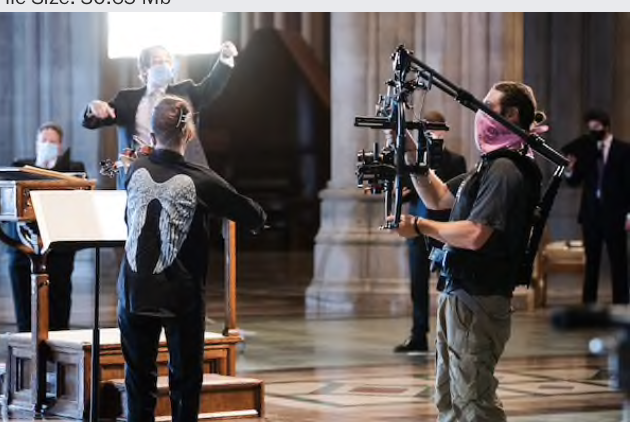

 Clare Crawley, on her last night as the Bachelorette. MUST CREDIT: Craig Sjodin/ABC
 SootinClaimon.Com