By Syndication Washington Post, Bloomberg · Jacqueline Davalos · NATIONAL, HEALTH, HEALTH-NEWS
Workers at a leading commercial laundry firm that cleans sheets for some of New York City’s biggest hospitals say every day on the job places them at greater risk of covid-19 infection.
Industry CEOs from all over the U.S. voiced concern earlier this month about potential outbreaks, too. As a critical component of a health care system buckling under the strain of a nationwide surge, commercial laundry companies have become essential in the fight against the pandemic.
But their employees’ unions contend that while some operators have taken adequate measures to protect workers, others have not.
“Some of my representatives walk in to inspect, and hand sanitizer stations are empty. Workers are typically inches away from each other,” said Richard Minter, assistant manager at Philadelphia Joint Board Workers United. Unions complain that access to masks or gloves can be limited, leaving it to employees who make little more than minimum wage to buy their own.
Unitex Textile Rental Services is among the biggest players in a $3 billion industry that keeps hospitals, nursing homes and other medical facilities running by washing soiled linens, uniforms and gowns. Five Unitex laundry workers interviewed by Bloomberg News contend some workspaces have poor ventilation, or a lack of social distancing and limited access to personal protective equipment.
Brígida Vidal is a production worker at Unitex’s Med-Apparel facility in Perth Amboy, New Jersey, where she said workers are given only one mask a day, that gloves are doled out sparingly and that social distancing is rarely enforced. “We don’t have enough to protect us,” Vidal said. “There’s been times where I take gloves I find in the pockets of used scrubs because it’s all I can get.”
Vidal makes $12.50 an hour. A Mexican immigrant and the sole breadwinner for a family of four, she said going to work is a risk she “feels forced to take.” When the pandemic fell like a hammer on the New York metropolitan area last spring, Vidal said she reported symptoms including coughing, fatigue and a sore throat to her manager and Unitex’s company physician.
Instead of a two-week quarantine, she said she was expected to return to work a week later. At the time, covid-19 tests were hard to come by in the U.S. In September, Vidal said she tested positive for coronavirus antibodies. She recently bought face shields and shared them with a few co-workers. “It’s the company’s job to do this,” she said.
Maritza Garcia, another worker in Unitex’s Perth Amboy “soil room,” said managers brush off her requests for more protective equipment. “I’m told there’s not enough,” Garcia said. “I don’t feel safe. For the work we are doing, we deserve better.”
Unitex Chief Executive Officer Robert Potack denied allegations of unsafe working conditions. “Masks and gloves are provided daily and replenished upon request,” he said in an interview with Bloomberg. The company encourages social distancing and hand-hygiene, he said, and has “conducted thorough training on our covid-19 protocols and policies.”
In Unitex’s Mount Vernon facility, just north of New York City, Reynaldo Hernandez said he knew of four co-workers who fell ill with the virus this year. “In the summer, it was really bad,” he said. Sometimes management would provide him with a replacement mask, but other times he was told there weren’t enough.
Hernandez said that while he managed to stay healthy through the first infection wave, he fears this latest surge. “It’s coming back, and we are all crowded together with bad ventilation,” he said. “We are still kept in the dark about who is sick. I’m terrified.”
The catastrophic swell of coronavirus cases gripping the U.S. right now has overshadowed the initial outbreak that killed more than 50,000 in the Northeast last spring, and a second wave that killed tens of thousands more in the South and West following premature re-openings. Now, with more than 17 million confirmed infections and close to 320,000 dead, hospitals and health care facilities in every corner of the nation are filling up.
When it comes to soiled hospital laundry, Lisa Lockerd Maragakis, senior director of infection prevention at The Johns Hopkins Health System, said “evidence suggests that it’s harder to catch the virus from a soft surface (such as fabric) than it is from frequently touched hard surfaces like elevator buttons or door handles.”
But laundry employees contend that handling sheets and gowns used by Covid-positive patients is just part of a perfect storm of crowded workplaces and insufficient company precautions.
Erik Scott, chief executive officer of Soriant Solutions, a consulting firm specializing in health care support services, said linen companies were already busy before covid-19 appeared, thanks to a growing trend of outsourced laundry services. Unitex recently opened a 188,000-square-foot facility in Lawrence, Massachusetts, and said it expects to open another in 2021.
According to industry lobby group Textile Rental Services Association, commercial laundry firms are getting even more work now thanks to health care providers that are reluctant to let their workers wash their own uniforms.
“The grueling services provided by these essential workers have helped ensure the safety of patients.”
It wasn’t until New Jersey Congressman Frank Pallone Jr. and the Speaker of New Jersey’s General Assembly wrote Unitex CEO Potack on Dec. 1 that the company disclosed how many workers had been infected with covid-19, said Albert Arroyo, co-manager of the Laundry, Distribution and Food Service Joint Board, Workers United/SEIU. The union represents workers in 10 of Unitex’s 12 facilities.
“The grueling services provided by these essential workers have helped ensure the safety of patients, medical professionals, and so many others during the ongoing public health crisis,” Pallone wrote. He urged Unitex to “uphold critical covid-19 safety standards.”
On Dec. 3, Potack informed union leaders that 10% of the workforce at the Perth Amboy facility tested positive for covid-19 over the course of the pandemic, according to Arroyo. The union official also said Potack disclosed that in April, Unitex had been aware of eight positive cases among production workers at the facility.
Potack said in an interview that there have been only two cases of covid-19 at the Perth Amboy facility since April. The CEO said the infection rate at the location “is well below” national and state averages, though he declined to provide specific numbers. “There is no evidence to make any claim that the cases were transmitted at work,” Potack added.
The CEO said the company had made previous disclosures to union leaders, but added that he didn’t recall the dates or details. “We responded to and welcomed a conversation with members of Congress to explain the facts,” he said.
A fourth generation, privately owned family business, Unitex is one of the top health care laundry and linen supply providers in the country, according to Grand View Research Inc. It operates facilities across New York, New Jersey, Connecticut and Massachusetts, with 1,750 workers processing 300 million pounds of linen annually for hospitals including Manhattan’s Memorial Sloane Kettering, Mount Sinai Beth Israel and New-York Presbyterian. As of 2014, the company generated $150 million in revenue.
Unitex has been embroiled in collective bargaining negotiations over its Perth Amboy facility since July. Potack said he believed union complaints about coronavirus risks are part of a broader strategy to extract concessions. “They are hell-bent on trying to maintain a pension for future employees,” he said of the union.
Citing alleged bad faith, the union filed unfair labor practice complaints against Unitex in July and September with the National Labor Relations Board. Lawyers for both sides didn’t respond to requests for comment, but the case remains open, according to the NLRB.
On Dec. 10, workers gathered in front of Lincoln Hospital in the Bronx to demand a wage increase, the continuation of pension benefits and that Unitex commit to basic covid-19 protections, including providing two face masks daily and requiring six feet of social distance between employees. Potack said the company doesn’t “believe any more policies and procedures need to be included in the collective bargaining agreement.”
New York City Council member Ritchie Torres, who was just elected to Congress, also attended to support Unitex workers. An advocate for health protections in industrial laundries, Torres was a lead sponsor of the Clean Act, a local law which set sanitary standards for industrial laundries in 2016.
“I want to send a crystal clear message to hospitals,” Torres said. You “are judged by the company you keep, and you should hold your contractors accountable for respecting their workers.” Unitex hospital clients including Lincoln, Yale New Haven, Mount Sinai Beth Israel, New York Presbyterian, and Memorial Sloane Kettering didn’t respond to requests for comment.
“The grueling services provided by these essential workers have helped ensure the safety of patients.”
Outside of laundry rooms, Unitex’s truck drivers are also complaining about safety issues.
“It’s not easy work. I’m picking up soiled linens that sometimes aren’t sealed properly,” said Kevin Kucker, a driver for Unitex’s Newburgh, New York, facility, which isn’t the subject of contract negotiations. A lack of transparency around workers getting infected has compounded the anxiety, he said.
If the company said, “‘look-someone got sick [so] we’re going to have to get you guys tested to see if everything’s OK,’ that would show they cared,” Kucker said. “They never did that.”
Kathy Hanshew is a manager of the Chicago and Midwest Regional Joint Board, Workers United/SEIU union, which represents industrial laundry workers across 12 states. She said that, nationally, the union has seen cases where employers weren’t providing masks at all. But some laundry companies have indeed been working with unions and their members.
Pennsylvania commercial laundry company Clean Uniform Rental has responded positively to union demands, said Minter, of the Philadelphia Joint Board Workers United. The company gave out a version of hazard pay: $150 a week in addition to what it calls “hero pay,” which provided a week’s worth of wages to workers across all levels.
“Of course there’s a cost to all of this. But this is a crisis,” Clean Uniform Rental CEO Jim Wasserson said. While the company has had sporadic covid-19 infections, contact-tracing has helped avoid outbreaks, he said. “At least once a week we have a meeting to make sure everyone knows what’s going on,” Wasserson said. “Your employees need to feel safe.”
InternationalDec 27. 2020Kevin Euceda, an asylum seeker from Honduras, in detention at Farmville, Va. As the novel coronavirus sickened detainees in the facility, Kevin wrestled with the question of whether he was better off pursuing his asylum claim or asking to be deported. MUST CREDIT: Washington Post photo by Michael S. Williamson
By The Washington Post · Hannah Dreier · NATIONAL, WORLD, POLITICS, COURTSLAW, RACE, THE-AMERICAS
Kevin Euceda believed he was in imminent danger.
Down the hall in the immigration detention center where he was being held, a man whose psychiatric visits had been suspended because of the pandemic was hallucinating and screaming. Others were shivering and sweating, scared they were going to die. Surrounded by so much sickness, Kevin was growing desperate to find a way out.
A migrant who said he came to the United States when he was 17 years old to escape gang threats in Honduras, Kevin had been living for nearly three years in a place that was now being overrun by covid-19.
And so, last summer, after he was taken in shackles for his daily hour of outside time, he asked for a phone to be passed into his cell and called the pro bono legal clinic that had taken on his case in 2017, when it appeared that he was about to be granted asylum and freed. The lawyer who spoke to him that day remembered his voice sounding shaky, his words coming too fast to understand.
“Whatever you can do to get me out of here, please make it happen,” Kevin said.
The lawyer promised to call a deportation officer, the very person who for three years, Kevin, now 20, had been trying to avoid.
Outside the town of Farmville, Va., is a holding center for immigrants detained by federal authorities. The facility was the site of one of the largest outbreaks of the novel coronavirus in the immigration detention system. The picture above is from 2010. MUST CREDIT: Washington Post photo by Michael S. Williamson
In detention centers on the country, more and more people have been asking for the same thing, seeking their own deportation as the novel coronavirus has spread through facilities and sickened more than 8,000 detainees, according to government data.
The virus has collided with the Trump administration’s “zero tolerance” approach toward people looking for refuge and asylum in the United States. Those policies have led to a record number of immigrants being held in detention, including 7,000 people who had cleared the first steps of requesting asylum when the pandemic began and would normally have been released on bond while their cases were processed.
Some immigrants have been withdrawing cases against their lawyers’ advice, saying they’re more afraid of being in detention during a coronavirus outbreak than of what might be waiting in the places they fled. More than 2,500 detainees, most with no serious criminal history, have given up their cases since March, according to records from the Transactional Records Access Clearinghouse, a research group at Syracuse University. Those records also show that detainees put in deportation proceedings in July 2020 were twice as likely to opt for voluntary departure than those from a year before.
During 32 months at the Farmville detention center in Virginia, Kevin had held on through threats from dorm mates, protests about conditions that ended in guards using pepper spray, an outbreak of mumps and long periods of isolation. Again and again, his lawyers had assured him that his claim for asylum was a sound one and that, eventually, he was likely to win release. But now he explained to them that even when he had been targeted for death by gang members back in Honduras, he had at least been able to flee the country. At the detention center, he felt there was nothing he could do to escape the virus. “I’ve never been this scared,” he said.
– – –
Kevin had been living with different forms of danger for most of his life. He had been raised by a grandmother who attacked him when she drank and left him with a V-shaped scar on his forehead. She died when he was 12, and the gang MS-13 took over the house where they had been living, which was little more than a shack. Gang members slept in Kevin’s bed, tortured rivals on the patio, and put him to work selling drugs, he would later say in sworn testimony that was found credible by an immigration judge and also accepted by the government. One night, the leaders forced him to watch as they murdered his cousin for refusing to join the gang. Eventually, in 2017, they told Kevin he had to kill a stranger to prove his loyalty, and he fled to the United States to seek asylum.
After he crossed the Rio Grande on an inflatable raft, Kevin was processed by Border Patrol and sent to a shelter for migrant children. There, as documented earlier this year by The Washington Post, he went through an intake process that included a mandatory mental health therapy session. He told the therapist that he had fled MS-13 and that gang leaders had ordered him killed if he returned. The therapist assured him that their session was confidential, but, because of a new Trump administration policy, her notes were instead shared with Immigration and Customs Enforcement to be used in court proceedings about whether Kevin would be allowed to stay in the United States.
Lawyers for ICE, who argued that Kevin was a threat to the community and should be deported, cited these notes some half a dozen times to keep him from being released as he was moved through shelters and detention centers, ending with his transfer to Farmville, in a rural part of central Virginia.
Twice, a judge ordered Kevin released on bond, and twice ICE appealed. Kevin also was certified as a victim of forced labor and granted asylum. But ICE appealed that ruling, too, and also appealed after a judge granted Kevin protection from deportation under the United Nations Convention against Torture, finding that he would not be safe anywhere in Central America because of widespread MS-13 control and police corruption.
As a result of what the American Psychological Association would later call an “appalling” breach of the right to patient confidentiality, Kevin was still waiting in detention for his case to be settled when the novel coronavirus began to spread through the country.
He was living in a dorm of 100 men, with tables in one corner for meals and toilet cubicles without doors in another. At night, they slept head-to-head on beds bolted flush with each other, close enough to smell each other’s breath, “like husband and wife,” one detainee said.
Kevin’s one connection to the outside world was a shared computer he could use to text with students at Washington and Lee University’s law school, who earned class credits for taking on his case.
“We’re in a very, very strong position,” one of the students, Erick Resek, wrote in March, updating Kevin on their strategy to get him permanent asylum.
“OK, I’ll keep holding on here,” Kevin wrote back, in correspondence the legal team shared with his permission.
“Are you in quarantine?” Resek wrote.
“Quarantine?” Kevin wrote.
“I mean, is Farmville in quarantine yet? Outside, the whole country is in quarantine,” Resek wrote.
“Umm no, we’re not in quarantine at all here,” Kevin wrote.
“Hmm, that’s weird. The whole country is in a total panic,” Resek wrote.
Even as Resek gave Kevin reason for optimism about his case, he was careful to explain that a final ruling was likely to be many months away.
“What if this coronavirus thing lasts for a long time?” Kevin wrote, adding a frowning emoji. “Imagine if the virus got in here. I think we’d all die.”
Three months later, the virus arrived at Farmville when 74 detainees were transferred there from detention centers in Arizona and Florida. It happened in early June, a time in the pandemic when different agencies in charge of prison inmates and immigration detainees were developing different ways of dealing with viral spread. In the federal prison system, for instance, inmate transfers between institutions had been put on hold because of concerns about infection. But ICE was operating with limited restrictions at that point, which allowed a transfer to take place that, as The Post reported, was driven in large part by the Trump administration’s desire to bring federal agents in from other parts of the country to quell anti-racism protests in D.C. ICE agents are not allowed to travel on charter flights unless detainees also are aboard, so, to expedite the agents’ travel to the protests, the transfer was arranged to bring a group of detainees to Farmville, the ICE facility closest to the nation’s capital.
When the detainees arrived on June 2, at least two were feverish. Farmville initially housed the new detainees in separate dorms but then moved several of them into the general population, where they mixed with the 400 other men.
“We were touching their shoes, touching their clothes,” recalled a detainee named Sarafin Saragoza, a 36-year-old from Mexico who earned $1 a day for helping distribute uniforms. “There was no way to keep distance from them.”
Within weeks, 51 of the new arrivals tested positive for the virus, and whole dorm rooms began falling ill.
– – –
Among the first to get sick was Gerson Garcia, a 27-year-old asylum seeker from Honduras. He wrote, “I need to see the doctor” on a sick-call request form and dropped it into a box that was supposed to be checked daily. He was still waiting to see the doctor 10 days later and crying about body aches, when, medical records show, three guards lifted him down from his bed and took him to the center’s clinic.
After that, he was moved to a medical room where there was already another sick detainee. His fever spiked to 103. He lost 30 pounds because of diarrhea. He and the other man remember a night when Garcia felt he couldn’t breathe and pounded on the door until he was too dizzy to stand. “I was begging for help. Finally, the guard came and said there was no doctor at night and he would punish me if I kept banging,” Garcia said. That’s when he decided to ask for deportation.
Another detainee who fell ill was Frank Bauer, who is 39 and moved to the United States from Bolivia as a child. “My lungs hurt,” he wrote in one of a series of near-daily requests for medical attention. “I still haven’t seen a doctor,” he wrote on another. “Please help us – we need medication,” he wrote on another, because Farmville does not provide any medicine, even Tylenol, without a prescription. Then he wrote, “We don’t have any more sick call request forms in this dorm,” on the last form he could find. He, too, decided to ask for deportation.
Some detainees later sued the company that runs Farmville, Immigration Centers of America (ICA), accusing it of failing to protect their health and safety. In a sworn statement submitted in response to that lawsuit, Farmville director Jeffrey Crawford said he tried to slow the outbreak by giving everyone masks, instituting daily temperature checks and distributing hand sanitizer. ICA also posted signs encouraging social distancing, though investigators from the Centers for Disease Control and Prevention later found that the layout of the dorms, with beds inches apart, made viral spread “difficult to mitigate.”
Asked to comment for this story, ICA said in a statement that it was unable to answer questions “due to pending litigation.” The response continued that ICA has “worked hard” to “adhere to the continuously evolving science and medical recommendations from our local, state and federal health authorities.”
By the third week of June, dozens of people in Kevin’s room were sick. Their coughs echoed through the dorm at night, mixed, some remembered, with the quieter sounds of crying.
Kevin had learned as a child to keep to himself to avoid trouble. He was so polite with the guards that some detainees suspected he might be an informant. But it felt like he was running out of ways to stay safe.
“There are 27 cases of coronavirus here now,” he wrote in a text message to a recent law school graduate, Hollie Webb, who had represented him when she was a student.
“Wow, please be careful,” Webb wrote back.
“Yes, of course, I’m trying,” he wrote.
Farmville had nine medical isolation rooms for nearly 500 men, so most sick detainees had to stay in the dorms, where they were required to stand in front of their beds to be counted each morning. Saragoza, who had helped book in the transfers and was now sick himself, watched one day as his dorm mate passed out. “He fell straight on his face and his head bounced like a basketball,” he said.
There were multiple episodes of fainting, according to interviews with detainees. One man collapsed while waiting in line to see a nurse. Another while taking a shower. Another while walking back to his bed with a blanket around his shoulders. In his statement, Crawford acknowledged that in one dorm, six detainees had passed out over a single weekend.
ICA subcontracts medical care to a company called Armor Correctional Health Services, which has had several government contracts canceled because of recurring complaints that staffers ignore sick inmates. In 2018, Armor was criminally charged with falsifying records to give the appearance that staffers had been checking on a man as he died of dehydration in his cell. In other instances, Armor has hired medical staff with disciplinary records, including the sole doctor at Farmville, Teresa Moore, who had been reprimanded twice by the state medical board, and also had her license restricted, for overprescribing narcotics and misusing her prescription pad.
Citing pending litigation, Armor declined to answer specific questions for this story. In a statement, the company said that it has followed CDC and Virginia Department of Health guidelines for combating coronavirus spread. “We will continue to enhance our plan as new facts about the pandemic materialize,” the company said. Armor also addressed the ongoing criminal case about falsifying records, and said in a statement that its employees’ actions did not reflect a company policy and “the charges filed do not involve any allegations of misconduct or negligent supervision against Armor management.”
Farmville does not track sick-call response times, but a nurse named Jackie Rothwell said the center struggled with an unmanageable caseload after the June 2 transfer. “Most of the staff had never dealt with actual acute care, and the stipulations for care greatly overwhelmed the staff,” said Rothwell, adding that she retired this summer because she felt unsafe.
On June 18, Kevin made contact with Webb again.
“There are 38 people infected with the virus now,” he wrote. “It’s getting crazy.”
– – –
Soon, detainees started protesting the conditions at Farmville. They refused to stand for count and stopped eating meals. They told guards they needed Tylenol for their fevers and wanted the bunkmates who were coughing in their faces to be moved.
The guards also were becoming jumpy. More than two dozen had gotten sick, and some were quitting. “We were all terrified,” said a guard who spoke on the condition of anonymity because he still works for ICA. Another worker said supervisors were asking guards to come in if they had tested positive for the virus but were asymptomatic, because the center was so short-staffed. Crawford said in his statement that ICA directed its staff to “stay home with any sign of any illness.” A CDC assessment would later find that people were working through nausea, diarrhea and breathlessness.
As the protests continued and grew, guards began responding with pepper spray, which can make the respiratory tract more susceptible to infection. On July 1, guards used several cans of spray after detainees decided not to stand for count, according to Crawford’s statement. One of the men in the room was a 72-year-old Canadian doctor named James Hill, who was in Farmville awaiting deportation after serving a prison sentence for inappropriately prescribing narcotics. Hill began coughing uncontrollably, according to his family and bunkmate, and was taken to the hospital with shortness of breath. He died a month later on a ventilator.
The detainees in Kevin’s dorm decided to sit on their beds instead of standing for count as required after three people were taken away in wheelchairs. That afternoon, the men refused to eat lunch or dinner, and Kevin texted Webb that he was worried about what might happen next.
“People here are losing it and trying to protest,” he wrote. “They’ve locked us all in, and the guards don’t want to come give us any explanations. I think it’s going to get really ugly.”
In the evening, guards in body armor entered the dorm, according to Crawford’s statement. One fired a weapon that made a loud bang and sent everyone running.
The guards pulled Kevin and several others out and led them to a row of cells deep inside the detention center. Kevin sounded panicked when he called the professor supervising his case to report that he was being punished with 30 days in solitary confinement.
“How did you get in there?” the professor asked.
“I have horrible luck,” Kevin said, and explained that he had been lumped in with the protest leaders for, as he put it, “asking questions” when the riot squad came in.
Farmville ranks among the top 10 ICE detention centers nationwide for its use of solitary confinement, according to the nonprofit Project on Government Oversight. ICA declined to release Kevin’s discipline record, so his lawyers never knew why he was being punished.
With no natural light in his cell, Kevin began to tell time by the arrival of his three daily meals. He was allowed out once a day, shortly before dawn, to stand in an open-air cage for an hour. Men in the other cells passed time by shouting back and forth about their symptoms. Kevin rarely spoke, but he was getting sick, too. He told a nurse that he had a bad headache, chills and a sore throat. The other detainees sometimes noticed that his eyes were red and wondered if he had been crying.
“I’m in the hole and I hate it,” he wrote to Webb. “The conditions have gotten so hard. Everything is worse.”
By July 9, ICA had tested 286 detainees, and 267 were positive for the coronavirus. The center’s nursing director alerted the health department in an email, writing, “Dr. Moore said good news is that’s almost the whole facility, so can’t go over that much.”
Kevin was tested July 2. “They gave me a covid 19 test today and it was horrible, ha-ha,” he wrote to Webb. The next week, a notation went into his medical chart: “Positive covid result.” But it’s unclear whether Kevin was ever told. His lawyers think he was not informed, because he never mentioned getting his results and continued to call them frantic with worry. After years of arguing for his release into the United States, his lawyers began contacting his deportation officer daily, along with any other official they could think of, asking for Kevin to be removed from Farmville.
For Kevin’s part, he wanted out as quickly as possible. “Life has dealt me a lot of blows, a lot of suffering, and it’s sapped my strength and my will to fight,” he wrote to Webb. He told her he hoped to be deported before serving his full 30 days in solitary confinement.
– – –
Kevin wasn’t the only one who decided that returning to a dangerous place would be better than staying at Farmville. More than a dozen detainees said in interviews that they chose to give up their cases during the outbreak.
Bauer, the man who filed daily sick requests, asked for deportation without telling his wife or U.S.-citizen children, for fear they would try to persuade him to stay in a center where ultimately 339 detainees caught the virus. Now trying to recover from lingering symptoms in Bolivia, he wrote to a judge before being deported that he was abandoning his case because “after contracting covid-19 due to ICE and facility negligence, I fear for my life in this facility.”
A 22-year-old named Zack, who asked that his last name be withheld for his safety, had been seeking asylum because he was a gay man in a North African country where homosexuality is illegal. After being sent to solitary for inciting a hunger strike, he said he struggled to get care for covid symptoms. At one point, he tried covering the camera in his cell with wet toilet paper to attract help, he said, “but still no one came. Then, out of nowhere, the guard opened the slot in the door and pepper-sprayed me.” After a month, he gave up his case. He was assaulted within days of being deported, he said, and is now hiding in a third country from relatives who have threatened to kill him for shaming the family.
A man named Jose Rauda, who also was put in solitary confinement for protesting conditions, decided to request deportation soon after being removed from his dorm. He was killed in El Salvador two weeks after arriving back, according to his mother, by MS-13 members who thought he belonged to a rival gang.
The Farmville outbreak ended in August after the virus infected nearly everyone held there and a federal judge barred ICA from accepting new detainees. Recently, fewer Farmville detainees have been giving up their claims, especially as lawyers advise clients that the next administration is likely to roll back much of Trump’s immigration agenda, dramatically improving their odds of winning legal status and being released while they wait for an outcome.
It is advice Kevin never got to hear. At the end of July, his request for deportation was granted and he was flown back to Honduras in shackles. It was nighttime when he walked out of the airport, and Webb remembers him calling in tears to say how overwhelming it felt to see the stars for the first time in three years. Two days later, he crossed the border into Guatemala, where his 21-year-old sister was living. The gang MS-13 operates in Guatemala as well, but Kevin thought he could hide there, at least for a while.
His sister, who asked that her name not be used because she, too, fears being targeted by the gang, set up an extra bed in her rented room and threw Kevin a party with a cake and the fried fish he had been missing in detention. He continued to wake up before dawn as he had at Farmville, and got a job working at a grocery for $5 a day.
After a childhood spent in forced labor for gang leaders and an early adulthood spent in detention, Kevin began trying to live out some of his earlier daydreams. He adopted a stray cat. He bought a used motorcycle. He also started rebuilding a relationship with his mother, who had left him as a small child. He told her he forgave her and pledged to help support her in the coming years. Everyone was struck by how focused and confident the tall 20-year-old seemed. “He was scared that something might happen to him, but he was so happy,” his sister said.
After a few weeks, Kevin took a day off work to visit a river with his sister – he on his motorcycle, and she riding with a friend. When they got there, the water looked like it was moving too fast for swimming, so they leaned on a bridge and watched it pass. On the way back, his sister lost track of Kevin on the curving highway. When she caught up, he was sprawled on the side of the road, unconscious.
It wasn’t clear whether Kevin had had an accident or been attacked. No witnesses came forward. After an ambulance took him to the hospital, police claimed Kevin’s motorcycle as evidence, and the family says that was the last they heard about the case.
“We’ll never know what happened,” his mother, Erika Euceda, said. “There are lots of people who try to rob motorcycles here. Lots of people who make threats. Or watch people who have just been deported. But the police didn’t try to find any answers.”
At the hospital, doctors said Kevin needed to be sent to a bigger city for surgery. His sister was trying to find the money to have him moved when he suffered a massive brain hemorrhage. The doctors said there was nothing to be done, and so it was that three years after he was a 17-year-old asking for protection in the United States, two years after he was first granted asylum, and four weeks after he returned to Central America, Kevin Euceda died and was in danger no more.
Trump trade czar eyes exit hailing tariff power his critics hate
InternationalDec 27. 2020Robert Lighthizer and Liu He, China’s vice premier, wave before a meeting at the Office of the U.S. Trade Representative in Washington, on Oct. 11, 2019. MUST CREDIT: Bloomberg photo by Andrew Harrer.
By Syndication Washington Post, Bloomberg · Shawn Donnan
Robert Lighthizer has built a career on being a wily contrarian.
So it shouldn’t be a surprise that President Donald Trump’s trade czar is going out tilting at a consensus among mainstream economists that Trump’s signature policies — his tariffs on billions in imports from China and steel from around the world — have been a failure by most metrics.
The U.S. is on track to end Trump’s presidency and a pandemic-affected 2020 with a trade deficit in goods and services larger than the one he inherited, Lighthizer’s critics point out. At least 100,000 fewer Americans were employed in manufacturing in November than at the start of Trump’s presidents.Yet the U.S. trade representative, who is preparing to leave office in January believing he has overseen a sea change in American trade policy, particularly toward China, sees a different storyline borne out by the data.
Strip away the impact of this year’s pandemic, Lighthizer argues, and it’s clear the Trump trade doctrine has delivered. Five of the six quarters prior to the pandemic saw decreases in the U.S. goods and services deficit, he points out, though in the eight prior to that the trend went the other way. Before Covid-19 hit the economy in February, he adds, the U.S. had gained more than 500,000 manufacturing jobs on Trump’s watch.
Most importantly, though, those changes had translated into higher wages for American workers with the median household income in 2019 rising 6.8% from the year before.
“That’s the highest in American history,” Lighthizer said in an interview.
It may frustrate his critics but Lighthizer’s pushback is evidence that, as in its other forms, Trumpism’s trade legacy may be an enduring one.
President-elect Joe Biden and his aides have already signaled that in part by vowing a pro-worker focus as they rebuild the U.S. economy and a trade policy that will be a component of what they are dubbing a “foreign policy for the middle class.” Though what that means in substance remains unclear.
More clear is that Trump’s protectionist episode and the support it garnered him again in key industrial states like Ohio this year are likely to continue encouraging the Democratic Party’s own trade skeptics and progressives. Which is why the battle over the economics of Trump’s trade legacy matters and will shadow the work of Lighthizer’s likely successor, Katherine Tai, the senior congressional staffer Biden has chosen for the role.
It is in many ways a theological battle. Adam Posen, the head of the Peterson Institute for International Economics, which has led the analytical charge against Trump’s trade policies since 2016, likens any statistical defense of them to those offered by climate change deniers, or vaccine skeptics. To critics like Posen, Trump and Lighthizer’s preferred tool — the tariff, or import tax — has just gone through a very public discrediting experiment.
To Lighthizer and his supporters, however, the mighty American tariff has finally been absolved of what protectionists have long argued has been the unfair taint hanging over them since the Smoot-Hawley era of the 1930s, which economists have long blamed for at least prolonging the Great Depression around the world.
Lighthizer argues none of the critics’ predictions of economic or financial market collapses and price surges that accompanied the rollout of Trump’s tariffs in 2018 and 2019 have materialized. “It’s an important lesson that these catastrophes that they predicted didn’t happen,” he says.
Nor have the steel tariffs that critics have pointed to as one cause in the industrial output recession that the U.S. suffered in 2019 really hurt manufacturers, he argues.
Manufacturing jobs grew most robustly in 2018 when the tariffs first went in place and steel prices rose, he points out. And conversely that jobs growth slowed as steel prices fell in 2019. To Lighthizer, that is proof that a rescue effort for an essential industry could be done without major economic disruption.
“You have to have a steel industry,” Lighthizer says. “There is literally no evidence to support this notion that introducing the tariffs had a negative impact on manufacturing.”
Critics would argue the slump in steel prices that followed the initial spike and the softening manufacturing jobs market and industrial output in 2019 were evidence of an impact on demand. Prices rose and demand fell in response. Which meant that by the end of 2019 even U.S. Steel Corp. was announcing layoffs.
The tariffs levied on imports from China worth some $370 billion before they went into place have also had no negative economic effect, Lighthizer insists, despite credible studies pointing to the opposite.
Lighthizer contends the tariffs together with a “Phase One” trade deal signed with Beijing in January have helped rebalance trade with China and been part of an effective pressure campaign to shift supply chains out of China.
“The administration’s policy has put tariffs on things that they had taken advantage of us on. It has helped to block their anti-market industrial policy. It has done all of these things. Without question it has changed the nature and it has set up rules which no one else had done before,” Lighthizer said.
The deal he negotiated with China is often derided by critics as a dressed-up collection of unrealistic purchase commitments that Beijing has yet to live up to. It also failed to address fundamental issues like Chinese industrial subsidies.
Yet Lighthizer and his supporters argue the more important components include a mechanism to deal with bilateral economic disputes and new Chinese commitments on intellectual property. It guarantees greater access for U.S. financial services companies to the Chinese market. Its currency rules may prove important in the future. Beyond the commitment to buy more U.S. agricultural exports by Beijing were real changes in the regulatory barriers to those farm products, Lighthizer says.
“And they’ve implemented almost all of it,” he says.
The Trump administration has helped usher in an awakening around the world to the threat posed by China and its economic model, Lighthizer says, though he conceded that China’s own behavior in recent years has contributed to that.The mainstream view before the Trump administration, Lighthizer says, was that “China was a force for good in the trade world. And that’s completely changed not only here but in Europe and Africa and South America.”
Had Trump won the November election and were Lighthizer staying on he would be continuing to press for change in the relationship with China. Lighthizer believes the Biden administration should use the leverage it has from the existing tariffs to build on Trump’s trade deal and avoid a return to the endless and usually ineffective “dialogues” that prior administrations got caught up in.
Lighthizer believes he might have been able to close a deal with the U.K. before a congressional deadline next year. But he is also not convinced about the economic value of such a deal. His U.K. counterparts seem to want a deal for other reasons including a validation of their post-Brexit place in the world.
Were he to continue in office Lighthizer also would be turning his spotlight to a growing trade deficit with the European Union, one driven largely by automobiles. And to the World Trade Organization, to which he still attributes many of the failings in the global trading system.
Lighthizer is now in discussions with his EU counterpart, Valdis Dombrovskis, over a possible solution to a long-running trade fight over subsidies provided to Airbus SE and Boeing Co. that has led to a new round of WTO-authorized trans-Atlantic tariffs.But Lighthizer’s complaint is that the WTO system now often results in few substantial changes in practice.
That fits into the broader context of a discussion over new rules curtailing industrial subsidies — and China’s in particular — that many trade policy makers would like to see the WTO have. For now, Lighthizer says, the WTO is like a laughably ineffective on that front and the Airbus case is an example of it. He remains convinced some European governments will continue to find ways to subsidize Airbus as it competes with Boeing and wants to see countries like France and Germany forced to pay some sort of compensation.
“It literally is like somebody is robbing your house,” Lighthizer says. “You go to court and have them stop robbing your house and they start robbing your garage.”His skepticism is what drove a U.S. war on the institution’s appellate body, which Lighthizer crippled by blocking the appointment of new judges. He’d like to see a system of one-off arbitration instead and argues the appeals process until now has removed any incentive to negotiate new rules.He also has flagged his desire to see the WTO engage in a global renegotiation of its members’ tariff schedules. Too many large developing economies benefit from high tariff walls negotiated when they first joined the institution, he says.
The answer for Lighthizer is a universal tariff level, a 10% flat tax for trade if you will. With a bit of wiggle room allowed for “some small amount of your goods because you have political reasons.”
Which really comes back to Lighthizer’s belief in the power of tariffs, the one that irritates his critics and economists most. The cure is simple, Lighthizer said: “Everyone ought to have the same tariffs.”
By The Washington Post · Derek Hawkins, Michael Kranish, Simone Sebastian
ANTIOCH, Tenn. – Authorities investigating the Christmas morning explosion in downtown Nashville converged on a home in Antioch, Tenn., about 10 miles southeast of the blast site Saturday afternoon, as law enforcement agents continued to gather evidence and run down hundreds of tips.
Investigators think the person living at that address has a connection to the bombing. One theory investigators are pursuing is that the man blew himself up in the RV, according to two people familiar with the matter, who cautioned that officials are still pursuing numerous leads and that no final conclusions have been reached.
Several neighbors said a light-colored recreational vehicle similar to the one that blew up Friday morning had been parked in the backyard of the home for several months before the explosion. So far, investigators have not found evidence pointing to other potential conspirators or threats to public safety, according to multiple people familiar with the case.
A day after the explosion, AT&T communication networks remained disrupted throughout Tennessee, knocking out residential phones, cellphones and service at 20 call centers for 911. Business and government functions were hobbled, and flights were temporarily grounded at Nashville International Airport.
Tony Rodriguez lives in the second home of the duplex that law enforcement searched today. He said investigators removed a computer motherboard from his neighbor’s home, among other affects.
Rodriguez said he never spoke to his neighbor and didn’t know his name. The few times Rodriguez saw the man, he was tinkering with an antennae above the house and power washing the driveway behind their home. Rodriguez said the neighbor kept several “No Trespassing” and warning signs around his property, particularly where he kept the RV.
“He always seemed like an oddball,” Rodriguez said.
In an afternoon news conference in Nashville, FBI special agent Douglas Korneski said that there was “activity going on” in the Antioch area but that he “can’t confirm any individuals or anybody we’ve identified.”
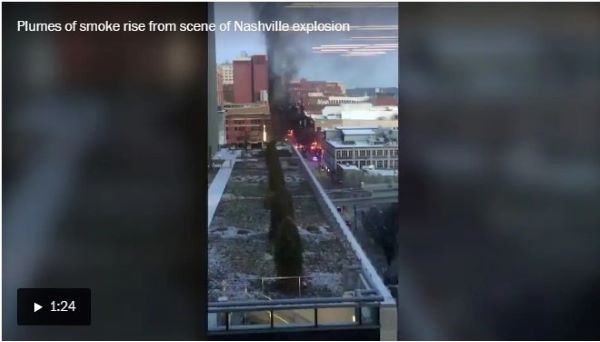
The blast rocked the city around dawn Friday when an RV detonated near an AT&T transmission building on the city’s busy Second Avenue, home to a strip of honky-tonk bars and restaurants.
The incident – which officials described as an “intentional act” and “deliberate bomb” – left dozens of buildings mangled and sent three people to the hospital with what police said were noncritical injuries.
Officials said Saturday that the city was safe and that there were no known threats, but the area remained sealed off and under curfew over the weekend as investigators combed through the wreckage.
“It’s like a giant jigsaw puzzle created by a bomb that throws evidence over multiple city blocks,” U.S. Attorney Donald Cochran said. “They’ve got to gather it, they’ve got to catalogue it, they’ve got to put it back together and find out what the picture of that puzzle looks like.”
Earlier in the day, Tennessee Gov. Bill Lee asked President Donald Trump for federal assistance in response to the explosion, saying the damage to businesses and the disruptions in Internet and cell service caused by the blast were too severe for the state to handle alone.
The Republican governor said he spent part of the morning touring the destruction left by the explosion. “The damage is shocking and it is a miracle that no residents were killed,” Lee wrote in a tweet.
In a letter to Trump, Lee referred to the incident as an “attack” carried out with a “vehicle-born improvised explosive device” and called on the president to issue an emergency disaster declaration, unlocking financial and physical assistance from the federal government.
The governor estimated that the state had spent at least $175 million responding to other disasters since early 2019 and said federal help was essential.
“These extraordinary state and local expenditures have reduced our capacity to recover from this current event,” Lee wrote. “Given these factors, the severity and magnitude of the current situation is such that effective response is beyond the capabilities of the state and affected local governments.”
The White House has not publicly responded to Lee’s request. Trump was briefed on the situation yesterday and is monitoring developments, a spokesperson said Friday.
The shocking sequence of events leading to the explosion began before daybreak Friday morning, when residents were startled awake by the crackle of gunfire and called 911. Some later speculated that the noise was a recording intended to wake them up.
Shortly afterward, a strange warning began to play from a light-colored, older-model RV parked on Second Avenue.
“It was a computerized message of ‘Evacuate now. . . . This vehicle has a bomb and will explode,'” said Betsy Williams, who lives in a building adjacent to the blast site. The warning soon changed to a 15-minute countdown, prompting some residents to flee.
Police arrived at the scene around 6 a.m. local time. They didn’t see any evidence of a shooting, officials said, but saw the RV and called in a bomb squad. A half-dozen officers went door-to-door telling residents to leave the area, even turning away a man walking his dog.
The vehicle detonated at 6:30 a.m., spraying debris and ash through the streets and sending a column of flames and smoke curling above the rooftops.
Near the spot where the RV was parked on Second Avenue, about 15 people were at the five-story Nashville Downtown Hostel – a much smaller number than the capacity of 300, because of the pandemic and Christmas. Unlike some others in the area who evacuated before the blast, the staff and guests at the hostel were unaware of the situation until the blast went off at 6:29 a.m., a time recorded by the building’s closed-circuit television camera.
The video from the camera, provided by the hostel to The Washington Post, shows a double set of glass doors at the entrance, with “NASHVILLE” printed on them in dark lettering. Three police officers can be seen walking at a steady pace on the street. Moments later, the blast blows out the doors; debris rains down. Flashes of light fill the scene as the concussive force ripped across the entryway.
Ron Limb, 54, the hostel’s owner, was home in bed, awakened by a call from someone at the hostel. It is one of two such properties he owns in Nashville, a city that he said he fell in love with when he moved from California, attracted by its vibrant culture and youthful outlook. The building began life in 1880 and once was a candy factory. Limb bought it in 2011, spent a year restoring it, and has since introduced thousands of guests from around the world to his adopted hometown.
Limb said the staff rushed into action.
“They went around, knocked on every door, got every guest out of the building,” Limb said. “Some were asleep, rushed out in pajamas and underwear, without provisions to deal with the 20-degree weather.”
Limb said fire sprinklers had been activated, causing flooding in the building. Police blocked him from the scene for security reasons, and he spent hours trying to get the city to turn off the water, a task he said was accomplished midday Saturday.
The area around the blast site remained closed off as agents worked their way inward from the outermost perimeter of the crime scene. A curfew remained in effect for the area through Sunday.
While there were no confirmed fatalities, Nashville Police Chief John Drake said in a Friday night news conference that officers found tissue that could be human remains near the explosion that they were preparing to examine. He said police had not identified a suspect or motive. The department released a photo of the RV, which they said arrived on the street at 1:22 a.m. Friday.
Mayor John Cooper said at least 41 businesses were damaged and “there will be others as we see the full extent of this.” He said the city would focus on rebuilding but cautioned that it “will be some time before Second Avenue is back to normal.”
In his letter to Trump, Lee noted that many of the buildings rocked by the blast were historic and needed to be assessed by an engineer to make sure they are structurally sound.
As business owners and residents started to take stock of the damage Saturday, a city non-emergency number for people in the affected area remained out of service.
“We are aware property owners/residents are experiencing difficulties, and are working to resolve them as soon as possible,” Cooper tweeted. “Please know the explosion impact area is still a federal investigation zone.”
McConnell, GOP face splits with Trump over defense, relief
InternationalDec 27. 2020Senate Majority Leader Mitch McConnell, R-Ky., wears a protective mask while walking to his office at the U.S. Capitol in Washington, D.C., on Dec. 21, 2020. MUST CREDIT: Bloomberg photo by Oliver Contreras.
By Syndication Washington Post, Bloomberg · Laura Davison, Billy House
Congressional Republicans, led by Senate Majority Leader Mitch McConnell, face high-stakes decisions in coming days over two giant pieces of bipartisan legislation that President Donald Trump savaged this week.
Trump on Wednesday vetoed a $740.5 billion annual defense spending bill, which passed both chambers of Congress with greater than two-thirds majorities earlier this month.
On Saturday, Trump tweeted that he will “not stand by and watch this travesty of a bill happen without reigning in Big Tech,” but the outcome of the legislation now rests with lawmakers. House Speaker Nancy Pelosi plans a vote to override that veto next week, with McConnell’s office pledging guidance on his intentions after the House acts.
Also in play is a mammoth $2.3 trillion covid-19 relief and government funding bill. Since the measure passed this week Trump has attacked it repeatedly for including “wasteful” spending and for having insufficient stimulus checks — after the White House earlier signaled he would sign the legislation.
House Republicans blocked a bid Thursday by Majority Leader Steny Hoyer to increase the payments to $2,000 — up from the $600 previously authorized. Democrats blocked a Republican counterproposal that would repurpose foreign-aid money in the portion of the bill to fund the government.
House GOP leader Kevin McCarthy, in a letter to colleagues on Wednesday night, said Congress should “reexamine how our tax dollars are spent overseas,” though those provisions were part of a bipartisan appropriations process.
Democrats plan to vote Monday on new legislation to codify the $2,000 payments for most American adults and children. They could also vote on another stopgap measure to fund the government past the current spending deadline of midnight that day. While that would avert a government shutdown if the Senate also passes it and the president signs it, it is still unclear what Trump plans to do with the larger pandemic relief and annual spending bill Congress passed on Dec. 21. The bill has been flown to Florida, where Trump is spending the holidays, according to a person familiar with the matter.
“We can only do in the House what we can do,” Hoyer told reporters Thursday. “we are not going to let the government shut down. We are not going to the let the American people down from our perspective.”
David Popp, a spokesman for McConnell, didn’t respond to questions about Trump’s call for increased direct payments and Pelosi’s plan to pursue this in the House.
How Republican leaders respond to Trump’s criticisms could affect the outcome of the Jan. 5 Georgia runoff elections that will determine control of the Senate for the next two years — and whether McConnell will continue to oversee the flow of legislation and political and judicial nominations in Washington.
Trump rejected the defense policy bill on Wednesday, saying the legislation was a “gift” to China and Russia and failed “to include critical national security measures.”
Trump wanted to attach to the defense measure an unrelated provision to eliminate Section 230 of the Communications Decency Act, which protects technology companies from liability for most content published by their users. He had also criticized the legislation because it contained a provision for renaming military installations that honor Confederate generals.
The chairman of the Senate Armed Services Committee, Jim Inhofe, said the defense bill is “vital to our national security and our troops.” Inhofe, an Oklahoma Republican, said Trump’s complaints about technology liability could be addressed in different legislation.
“I hope all of my colleagues in Congress will join me in making sure our troops have the resources and equipment they need to defend this nation,” Inhofe said in a statement shortly after Trump vetoed the bill.
The bill, which includes military pay raises, hazard pay and health benefits for soldiers, has successfully cleared Congress for the past 59 years.
Lawmakers’ plans to override Trump’s defense bill veto next week will be the first time Trump is overruled by Congress. If Trump vetoes the combined pandemic relief and spending bill, that could be the second. Trump has rejected several bills during his tenure, but Congress has yet to successfully override any of his vetoes.
The decision about whether to expand the stimulus payments will also highlight growing political division in Trump’s party, splitting populists eager for more direct aid, like Senator Josh Hawley, against fiscal conservatives, including Senator Pat Toomey, who have been lobbying for months to keep the overall size of the stimulus package under $1 trillion.
Senate Minority Leader Chuck Schumer urged McConnell to take up a vote on the larger payments in a tweet Wednesday.
Trump’s moves also complicate the campaign politics for Georgia Senators David Perdue and Kelly Loeffler, who are seeking to ward off Democratic challengers Jon Ossoff and Raphael Warnock. A double win for Democrats would give them control of the Senate, albeit only through the tie-breaking vote of Kamala Harris as vice president.
Warnock and Ossoff have backed bigger payments, and dared their opponents to do the same. Loeffler stopped short of specifically calling for $2,000 payments, saying at an event Wednesday that she supports “redirecting any wasteful spending to be very targeted at families and businesses who have been impacted by this virus.”
The president has given Democrats an opportunity, by pitting himself against arguments put forward by his own party, said Gordon Gray, the director of fiscal policy at the right-leaning American Action Forum.
“For Pelosi and Schumer, it was never a problem with them to have higher rebates, so they are happy to put McConnell and McCarthy on the spot and cause problems for the Georgia delegation,” Gray said. “Fundamentally, the president has abdicated his responsibility. He was completely disengaged from the process.”
Tech worker turns hobby into a startup nearing unicorn status
InternationalDec 27. 2020Gary Kim, co-founder and co-chief executive officer of Danggeun Market, at the company’s office in Seoul, South Korea, on Nov. 18, 2020. MUST CREDIT: Bloomberg photo by SeongJoon Cho.
By Syndication Washington Post, Bloomberg · Sohee Kim
In his spare time, Gary Kim enjoyed trading used gadgets on an online bulletin board for employees of the South Korean messaging-app operator Kakao Corp.
Then he and a colleague realized it could become a money-making business. In 2015, with cash they got from selling Kakao stock options, they — and a former Naver Corp. engineer — launched a venue for selling second-hand goods online that’s now called Karrot.
It was initially only for people in South Korea’s Silicon Valley, the Pangyo Techno Valley outside Seoul, and has retained that localized approach even as it expanded throughout the country and beyond. Users who verify their location trade mostly face to face with others within a radius that’s usually about 6 kilometers (3.7 miles), in what’s known as a nearby marketplace.
Danggeun Market Inc., the startup behind Karrot, is planning to raise as much as 100 billion won ($90 million) in financing next summer, potentially pushing its valuation to about $1 billion, Kim said. It has — so far — been boosted by the pandemic, he said.
“We are hoping to become a unicorn,” Kim, 42, said in an interview in Seoul.
If it succeeds, Karrot would join a growing list of South Korean technology startups valued at more than $1 billion that serve the country’s deep and tech-savvy market. CB Insights, which provides analysis of private companies, has 11 Korean startups on its latest global unicorn list.
As well as buying and selling second-hand goods ranging from headphones to luxury yachts, Karrot users can share community information — on everything from job openings to lost-and-found items and housing listings — and trade with local businesses that advertise on the app.
“It’s an online gathering place for the local community,” said Kim, who serves as the company’s co-chief executive officer alongside Paul Kim, the other former Kakao employee who’s one of the co-founders. “If neighbors are gathered at a certain place, everyone wants to join.”
Karrot is now South Korea’s largest second-hand marketplace and second-biggest company in the country’s e-commerce industry after Coupang Corp., according to data-analysis company MobileIndex.
Joyce Yi, a 52-year-old English teacher, said she’s traded more than 20 items through the app since March, including a coffee-maker, books and an air-conditioner.”When I moved to Seoul from LA, I didn’t know anything about my new place and how to use the parcel delivery system — then I heard my friend bought a Louis Vuitton bag for $200 through Karrot,” she said. “Karrot is my first choice for shopping. It has cheaper and diverse options and I don’t need to go far to check out items.”
Although the Seoul-based startup is reporting losses, it’s generating tens of millions of dollars in annual revenue mainly from local advertisements, according to Kim. Monthly active users more than doubled to 12 million in October compared to January, while sales quadrupled in October from a year earlier, he said.
Until now, the covid-19 pandemic has helped the business, with users more actively selling through the app while spending more time at home, Kim said. The virus has had less impact in South Korea than in the U.S. or European countries.
“It’s a plus,” Kim said at the company’s headquarters in the Gangnam district of the capital. “Thankfully, our users don’t think there’s a risk of trading in person as everyone wears masks.”
But if the coronavirus has been a boost, it’s also a threat, according to Jay Choi, a senior associate at SoftBank Ventures Asia, which has invested in Karrot. New infections have risen to record levels in the country this month, raising the prospect of tougher social-distancing measures.
“The covid-19 pandemic poses risks and gives opportunity at the same time,” Choi said. “There was a concern that in-person trading may not survive if a city is locked down.”
Karrot is aiming to become as popular as Kakao Talk, the country’s largest messaging app, Kim said. Kakao Talk has about 36 million monthly active users, according to MobileIndex.
The company has no immediate plans to go public, but it will ultimately do so, Kim said. For now, it can stay afloat using funds from long-term investors who believe in its vision, he said.
Karrot has raised a total of 48.1 billion won from investors including SoftBank Ventures Asia, Altos Ventures, Kakao Ventures and Goodwater Capital.
Karrot will increase the number of employees to 300 in 2021 from 100 this year as it seeks to become the first Korean app that’s successful in both the U.S. and western Europe, Kim said. The company’s overseas expansion strategy is to enter cities with dense populations of environmentally conscious people who want to reuse old goods, he said. It prefers places where there isn’t a dominant market player. So far, Karrot is available in 42 areas of the U.K. and two cities in Canada, while the company is currently operating beta services in Manhattan and New Jersey.
“Our ultimate goal is to make a global local community service platform like Facebook,” Kim said.
Meanwhile, as his startup expands overseas, Kim continues his hobby of online trading in Seoul, now using his own firm’s app. Recently, he bought a table for his daughter and an electric piano for half the usual price.
“I go out by myself to trade used stuff,” he said. “Nobody recognizes that I’m the head of the company.”
Chances looked good for the resolution of a years-in-the-making investment agreement between China and the European Commission before the end of the year. This week, that changed.
In the span of days, reports of an emerging consensus gave way to news that negotiators had hit snags, as European officials voiced concern about forced labor in China and a senior aide to President-elect Joe Biden appeared to urge Europe to pump the breaks.
China and Germany are pushing the deal, which would make it easier for European and Chinese companies to invest in each other’s economies. But voices on both sides of the Atlantic are questioning whether this is the right time for Europe to deepen ties with Beijing.
The back and forth says much about how central – and how fraught – the issue of relations with China has become, both within the European Union and between Europe and the United States.
Within the E.U., there is growing unease about Beijing’s human rights record and role in international affairs, but little agreement on what to do about it.
Biden has promised to re-engage with Europe and to rally allies to respond to an increasingly assertive China. The timing and terms of that effort are not yet clear.
Against this backdrop, the fate of the investment pact is seen as an early signal of tensions set to play out in years to come, on issues ranging from trade to tech regulation to climate change.
“This is going to be a jumping-off point for a lot of these questions,” said Andrew Small, senior transatlantic fellow at the German Marshall Fund of the United States.
In some ways, the investment agreement, known as the Comprehensive Agreement on Investment, or CAI, seems straightforward.
For years, Europe has been pressing for greater access to China’s tightly controlled market. Europe contends that Chinese companies have more access to Europe than vice versa – and they want to change that.
Negotiations started in 2014. Progress has been slow, but picked up in the second half of 2020, as Germany began a six-month E.U. presidency and a push to get the deal done.
Biden’s election win, meanwhile, gave China a new sense of urgency. With Trump on the way out, Beijing sees a window to act before Biden, who is set to take office in January, seeks European cooperation to counter China.
It is not clear Beijing’s strategy will work. Early last week, Chinese diplomats touted progress, playing up the idea an agreement could be reached before the new year.
On Monday, Chinese Foreign Minister Wang Yi met with ambassadors from E.U. nations in Beijing. “China and Europe are hopefully reaching consensus on the comprehensive investment agreement,” he told the ambassadors, according to the South China Morning Post.
But the same day, Jake Sullivan, a top aide to Biden, responded to a news story about the potential deal with a tweet suggesting Europe ought to wait. “The Biden-Harris administration would welcome early consultations with our European partners on our common concerns about China’s economic practices,” he wrote.
On Tuesday, Poland expressed concern about the timing. “Europe should seek a fair, mutually beneficial Comprehensive Agreement on Investment with China. We need more consultations and transparency bringing our transatlantic allies on board,” Polish Foreign Minister Zbigniew Rau tweeted. “A good, balanced deal is better than a premature one.”
On Wednesday, France added its voice. Franck Riester, a French trade minister, told Le Monde his country will not sign an agreement unless China addresses the issues of forced labor in Xinjiang.
By Thursday, Christmas Eve, the South China Morning Post was reporting that Li was scrambling to salvage the deal, calling up Spain and the Netherlands to try to secure support.
If the agreement comes together, it will be a major diplomatic victory for China. But the stalled progress is revealing – and could signal trouble ahead for China-E.U. ties.
A central challenge is that much has changed since the E.U. and China entered talks in 2014. Under President Xi Jinping, the most powerful Chinese leader since Mao Zedong, China has become more authoritarian at home and more aggressive abroad.
In the United States, this has led to fundamental reconsideration of the practice of engaging China at all. For a while, Europe seemed to take a softer line. But China’s initial coverup of the coronavirus outbreak, repression in Xinjiang and the crackdown on Hong Kong may well change that.
“This [agreement] feels like it comes from when it was first negotiated,” said Small of the German Marshall Fund. “The overall political consensus is that the moment has passed, it fees like a tail end of the old, legacy agenda.”
Those who support the deal are trying to cast it as a practical, if imperfect step – not an endpoint for a new era in China-E.U. relations. Those who oppose it argue that it would be unwise to reward Beijing right now, especially with U.S. ties on the line.
“After this year, with China’s terrible behavior around the world, it would send a weird signal,” said Janka Oertel, director of the Asia program at the European Council on Foreign Relations.
“This is not about pragmatic, everyday business – it’s not something that we are just getting done,” she said. “At this critical moment, to do something like this with China, is not business as usual.”
RV that exploded in Nashville broadcast a message warning of imminent blast, police say
InternationalDec 26. 2020Police block off Nashville, Tenn.’s Broadway while investigating an explosion Friday, Dec. 25, 2020. Photo for The Washington Post by William DeShazer
By The Washington Post, Derek Hawkins, Paulina Firozi and Michael Kranish
Hours after a recreational vehicle exploded in downtown Nashville, Tenn., on Christmas morning, law enforcement officials – still without a suspect or motive for the blast – surveyed a devastated landscape including more than 40 damaged businesses, three people hospitalized with injuries, and disruptions to Internet and cell service. Authorities grounded planes and the mayor imposed a nighttime curfew on the busy historical district near the blast site.
On a holiday many hoped would bring a sense of calm in a chaotic year, the early-morning explosion dealt a terrifying blow.
“This is not how anybody wanted to spend Christmas morning,” Nashville Mayor John Cooper said at a news conference. “We are very lucky that there were not more injuries.”
“One more event in Nashville’s 2020,” he added.
Police and city officials called the incident an “intentional act” – Cooper, a Democrat, called it a “deliberate bomb” – and vowed to bring a plethora of local, state and federal law enforcement resources to bear to find a suspect. While there were no confirmed fatalities, Nashville’s police chief said investigators found tissue that could be human remains near the explosion that they were preparing to examine.
The chain of events began around 5:30 a.m. local time, when residents on Second Avenue, home to a row of restaurants and honky-tonk night clubs, heard what they thought were rapid-fire gunshots. Some later speculated that the sound of gunfire was an amplified recording designed to awaken them.
Then came a bizarre recorded warning from a loudspeaker on the RV, police and residents said.
“It was a computerized message of ‘Evacuate now. … This vehicle has a bomb and will explode,'” said Betsy Williams, who lives in a building adjacent to the blast site.
Soon after, the message changed to a 15-minute countdown to detonation.
Police and a bomb-sniffing dog investigate an explosion Friday, Dec. 25, 2020. Photo for The Washington Post by William DeShazer
Officers responded to the area about 6 a.m. local time after receiving a report of gunfire on Second Avenue North, said Don Aaron, a spokesman for the Metropolitan Nashville Police Department.
When they arrived, Aaron said, they didn’t see any immediate evidence of gunshots but encountered a “suspicious” RV parked near an AT&T transmission building, heard the broadcast message coming from the vehicle and called in the police bomb squad.
Officers went door to door, telling residents to evacuate, even turning around one man who was out walking his dog, Aaron said. Moments later, at about 6:30 a.m., the RV detonated near Second Avenue North and Commerce Street, smashing windows, signs and garage doors and sending a ball of bright orange flames into the sky.
The explosion destroyed storefronts, scattered ash and debris through the streets and sent at least three people to the hospital with noncritical injuries, police said.
Cooper said the explosion was “intended to create chaos and fear in this season of hope.”
In an evening news conference, he said the city was imposing a curfew on the area around the explosion through Sunday and was working with the governor to declare a civil emergency.
At least 41 businesses were damaged, the mayor said.
“We stand with our downtown residents and business owners for whom this was a terrible day,” he said.
Nashville Police Chief John Drake said police had not identified a suspect or a motive. He said it was not clear whether anyone was inside the vehicle when it detonated.
In a video posted on social media, which The Washington Post has not independently verified, a voice can be heard saying: “This area must be evacuated now. If you can hear this message, evacuate now.” The message was followed by the sounds of an explosion, and the video of the street scene turned to a blur.
Aaron credited the officers on the scene who alerted residents to evacuate. “We think lives were saved by those officers,” he said.
Three people were injured, including one officer who was knocked off his feet, according to police. Bomb-sniffing dogs combed the area as a precaution but no other explosives were found, Aaron said.
Several of the buildings have structural damage, officials said. Police do not know whether anyone was in the RV when it exploded, “so I can’t tell you at this point whether there is a fatality in this scenario,” Aaron said.
Williams, the Second Avenue resident, said she was asleep with her wife, Kim Madlom, when they were jolted awake by the sound of gunfire a little before 5:30 a.m. and called 911. When the sound repeated in the same pattern, she figured it must have been a recording, she said.
“It was like it was being fired right next to your head almost,” Madlom told The Post. “It was unrealistically loud in retrospect, and it was the exact same pattern all three times.”
Peering out her third-story window, the 59-year-old said she could see an RV parked across the street. It was a light-colored vehicle the size of a small bus that looked at least a couple of decades old, she said.
As she surveyed the scene, a voice came booming from the camper: “It was saying, ‘This vehicle has a bomb, you must evacuate the area.'”
Then a countdown message began, telling people they had 15 minutes to leave, Madlom said. She and her three family members decided to flee. “That was the thing that made us go,” she said.
They scrambled into an elevator as the RV blared an 11-minute warning, then piled into their car to keep watch from a secure distance. After about 20 minutes, there was no explosion. Thinking the whole episode was a “sick prank,” Madlom said, they headed back.
The RV detonated just as they were rounding the corner back onto Second Avenue, according to Madlom.
“It was the biggest plume of fire that shot up,” she said. “We could see that from up the street. We were just shocked.”
From a block away, they could see that their building’s back windows were blown out. Somehow, Madlom said, their Christmas tree was still lit. Firefighters soon arrived and told them to clear the area.
Madlom, who works as a vacation property manager and hospital receptionist, says she and her family are staying in a local hotel, processing what happened and counting their blessings. Their building is badly damaged, and they don’t know what, if any, belongings they’ll be able to recover. But they’re grateful they weren’t physically harmed.
“We almost didn’t go,” she said. “We almost didn’t take it seriously. Whoever did this certainly intended for us all to leave.”
Police said the department’s hazardous-devices unit was headed to the area when the explosion happened.
“We do believe the explosion was an intentional act,” Aaron, the police department spokesman, told reporters.
Supervisory Special Agent Joel Siskovic said the FBI is leading the investigation, working with state and local authorities.
“The main thing right now is public safety to make sure that everyone in the surrounding area is accounted for and, at the same time, ensuring that the city itself is safe from any other potential incident,” said Michael Knight, a spokesman for the Bureau of Alcohol, Tobacco, Firearms and Explosives in Nashville, which is also probing the incident.
Investigators are working to create a timeline of events before and after the explosion, Knight said.
The explosion was felt at nearby residential facilities, including a hostel and a condominium building called the Exchange Lofts. However, due to the coronavirus pandemic and Christmas, there were far fewer people at those buildings than usual.
Windows and doors were blown out at the hostel, a low-cost residence for travelers, and the handful of guests were evacuated. At the upscale Exchange Lofts, where condos are typically owned as second homes by business executives, the impact of the explosion was recorded by a Nest security camera in a unit owned by music executive Aaron Trevethan.
In the video, the tranquil scene of couches and chairs arrayed around a flat-screen television is suddenly interrupted by sounds of a blast, which sent bright flashes of light through the windows, caused debris to fall from the ceiling and resulted in a swaying effect captured by the camera.
Trevethan, who was at his California home when he was alerted early Christmas morning about the blast, said it is hard to tell the extent of damage from the video because “everything shook so bad.”
Tennessee Gov. Bill Lee, a Republican, said on Twitter that he would “supply all of the resources needed to determine what happened and who was responsible.” He thanked first responders and called on Tennesseans to join him and his wife “in praying for those who were injured.”
The Justice Department said in a statement that acting attorney general Jeffrey Rosen had been briefed on the incident and had “directed that all DOJ resources be made available to assist in the investigation.”
Hours after the blast took place, President Donald Trump left his Mar-a-Lago resort and headed to Trump International Golf Club in West Palm Beach, Fla. The president spent at least three hours at the club, his second consecutive day there since arriving in Florida for the holidays.
Trump did not comment about the blast, but the White House said he was monitoring the situation.
“President Trump has been briefed on the explosion in Nashville, Tennessee, and will continue to receive regular updates,” White House spokesman Judd Deere said in a statement. “The President is grateful for the incredible first responders and praying for those who were injured.”
The White House has said Trump is spending his time in Florida participating in calls and meetings, though officials have not provided any details on his activities.
President-elect Joe Biden was briefed on the explosion, according to his office.
“The president-elect and Dr. Biden thank all the first responders working today in response to the incident,” Biden’s office said in a statement, “and wish those who were injured a speedy recovery.”
The Tokyo Organizing Committee of the Olympic and Paralympic Games announced Thursday that it had reached a deal with all 68 domestic sponsors to extend their contracts for a year, through 2021.
The corporate sponsors have plans to make additional contributions of about 22 billion yen, which is set to be incorporated into the organizing committee’s revenue.
Since the decision to postpone the Tokyo Games to summer 2021 was made in March, executive members of the organizing committee, including President Yoshiro Mori, visited each of these companies to request an extension of their sponsorship contracts.
“We’ve received word [from the companies] that they’d like to support us as much as possible to ensure that the Games can be held,” Mori said at a news conference Thursday. “We can’t thank them enough for their support.”
Despite the possibility that the novel coronavirus could cause a deterioration in business performance, Mori said, “I believe that they will continue to cooperate with us as they recognize the significance in the Games being held.”
WASHINGTON – Relations between Washington and Moscow have gotten so bad that the United States cannot get visas for American technicians to repair malfunctioning elevators and fire alarms at diplomatic missions.
The U.S. Embassy in Moscow is understaffed and overstretched as every diplomatic visa requires drawn-out negotiations that get snagged over minuscule matters. Senior diplomats are being tasked with basic duties including shoveling snow and mixing disinfectants to supplement depleted cleaning crews battling the coronavirus pandemic.
Even as President Donald Trump has refrained from directly criticizing Russian President Vladimir Putin, the State Department has been outspoken in condemning Russian transgressions and pressuring the government to change its behavior and rhetoric.
That has contributed to a “visa impasse,” as U.S. officials delicately phrase it, that has been growing since 2014, when the United States imposed sanctions on Russia over its invasion of Crimea. Since then, the diplomatic standoff has ballooned into a tit-for-tat visa war, with both sides expelling diplomats and closing each other’s consulates during rows over Russia’s interference in the 2016 U.S. election and Moscow’s poisoning of a former Russian spy in Britain.
After years without a solution, U.S. officials grew alarmed about the potential for a catastrophic fire or accident at the missions and their ability to keep the embassy in Moscow functioning. So in early December, the State Department notified Congress that it would permanently close the consulate in Vladivostok near the Pacific and suspend operations at the consulate in Yekaterinburg in Russia’s industrial heartland.
“We had to decide structurally how we can address this,” said a senior U.S. official, speaking on the condition of anonymity to talk about the delicate, tangled relationship. “We’re running out of Band-Aids to sustain our presence in those locations.”
The two consulates already had been effectively shuttered since March because of the pandemic. News that they would stay out of operation coincided with revelations that Russian hackers had penetrated the computers of U.S. government agencies, including the Departments of State and Homeland Security.
U.S. officials insist that the timing was coincidental and that the consulate decision was based solely on how best to keep the embassy in Moscow functioning with sufficient staff numbers.
“We took the decision we took because it’s part of . . . broader problems in a bilateral diplomatic relationship between the United States and Russia, which have extended to a so-called visa impasse,” John Sullivan, the U.S. ambassador to Moscow, said in an interview this week with Radio Free Europe/Radio Liberty. “We can’t get visas for U.S. personnel to come to work at our consulates in Yekaterinburg [and] Vladivostok, or the embassy in Moscow.”
“And without those personnel who are able to perform essential functions for health and safety risks, the risk is increasing that there could be a fire or other safety issues,” he added.
The other U.S. official said the consulate closures are not meant to send Moscow a message on any foreign policy issue other than the visas. “It’s not about Russian behavior, whether in cyberspace or elections or aggression abroad,” the official said.
But the decision effectively is a recognition that the U.S. relationship with Russia is unlikely to improve anytime soon, even after Joe Biden assumes the presidency.
“We are going from bad to worse,” Deputy Foreign Minister Sergei Ryabkov said in an interview Wednesday with the Interfax news agency. “This was very typical for the past four years, and so far there is no feeling that this trend has exhausted itself.”
Ryabkov said he doubted tensions would ease in a Biden administration, which he said would be stocked with foreign policy experts who harbor antipathy to Russia.
“It would be strange to expect good things from people, many of whom made their careers on Russophobia and throwing mud at my country,” he said.
The visa deadlock leaves the embassy in Moscow as the only U.S. diplomatic outpost in Russia, a vast country that encompasses 11 time zones. That complicates matters for Russians seeking visas to visit the United States, though they have dwindled with the pandemic. Before the coronavirus stopped most international travel, the wait for a U.S. visa in Moscow was almost a year, compared with a few months in Vladivostok and Yekaterinburg.
The pandemic also blocks most remaining opportunities for U.S. diplomats to connect with ordinary Russians and local government officials. Those contacts already were curtailed by the Russians, who had ordered the closure of American “corners” established in Russian libraries, banished U.S. exchange programs as undesirable and prohibited U.S. diplomats from speaking at universities.
The Russians have rejected U.S. requests to move to new buildings over the past year.
Under caps established under the retaliatory punishments, Russia and the United States are allowed to staff their embassies and consulates with 455 people, including local hires. The Russians have almost 430 people in their U.S. missions, while the United States is down to about 320.
Visas are occasionally granted when diplomats are rotated out, though the Russians have imposed limitations, such as insisting a woman can be replaced only by another woman, and a man with a man.
Some former U.S. envoys to Moscow consider the closures counterproductive.
“I cannot understand how this is anything but against the interests of the United States,” said James Collins, who as U.S. ambassador to Moscow oversaw the opening of the consulate in Vladivostok in 1992.
“It was in the American interest to get to know and establish relations with the Russian government beyond the Kremlin. It’s just as important today as it ever was,” he said.
Mike McFaul, a U.S. ambassador to Russia during the Obama administration, said his conversations with students and business leaders in Vladivostok and Yekaterinburg gave him valuable insights into popular sentiment.
“This is a self-inflicted wound,” he said of the consulate closures. “Russia is not kicking us out. We are unilaterally deciding we don’t want be there. It’s a giant mistake. I hope Biden reverses it.”
State Department officials say they have reached out to former ambassadors, explaining that conditions in recent years have made interactions with Russian citizens virtually impossible. About eight diplomats already have been transferred from Vladivostok to Moscow, but several remain in Yekaterinburg.
They have told the Russians that the United States will not order the closure of Russian consulates in Houston and New York, at least for now. They would like their action to spur negotiations that reverse the impasse.
“I hope this is the start of a path forward and the Russians will think about it, and we’ll be able to get to a more stable footing for the bilateral situation,” the U.S. official said. “But that’s going to require visas for us to get our mission-essential personnel on the ground.”

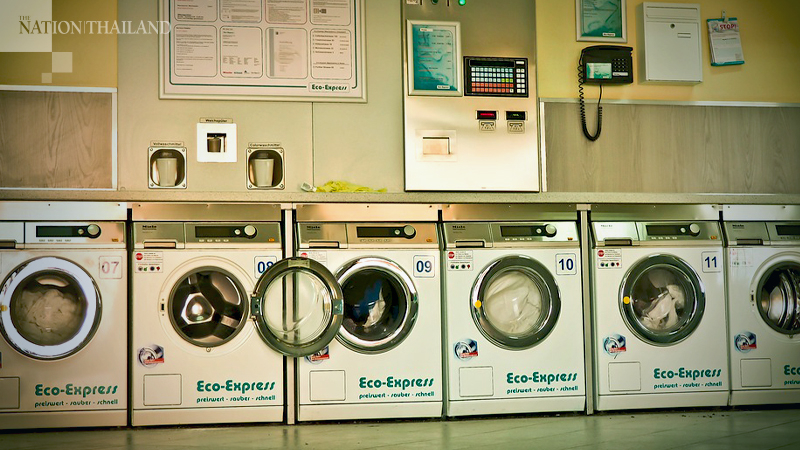
 Kevin Euceda, an asylum seeker from Honduras, in detention at Farmville, Va. As the novel coronavirus sickened detainees in the facility, Kevin wrestled with the question of whether he was better off pursuing his asylum claim or asking to be deported. MUST CREDIT: Washington Post photo by Michael S. Williamson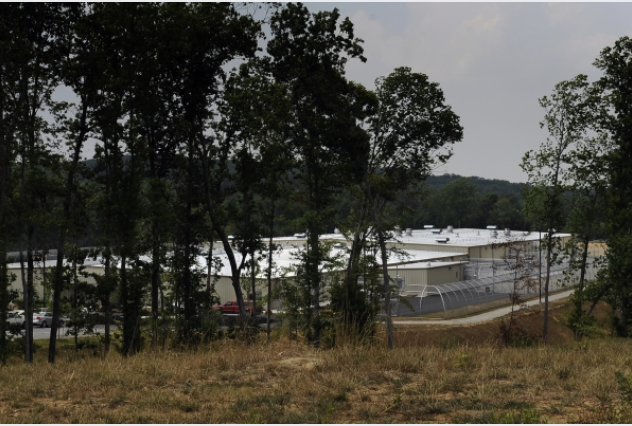
 Robert Lighthizer and Liu He, China’s vice premier, wave before a meeting at the Office of the U.S. Trade Representative in Washington, on Oct. 11, 2019. MUST CREDIT: Bloomberg photo by Andrew Harrer.
 Senate Majority Leader Mitch McConnell, R-Ky., wears a protective mask while walking to his office at the U.S. Capitol in Washington, D.C., on Dec. 21, 2020. MUST CREDIT: Bloomberg photo by Oliver Contreras.
 Gary Kim, co-founder and co-chief executive officer of Danggeun Market, at the company’s office in Seoul, South Korea, on Nov. 18, 2020. MUST CREDIT: Bloomberg photo by SeongJoon Cho.
 Police block off Nashville, Tenn.’s Broadway while investigating an explosion Friday, Dec. 25, 2020. Photo for The Washington Post by William DeShazer