By Syndication Washington Post, Bloomberg · Ian Wishart, Alberto Nardelli, Alex Morales
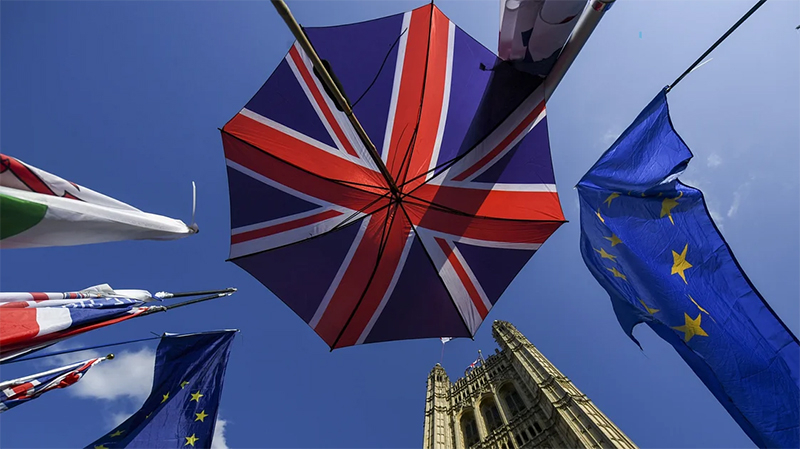
U.K. and European Union negotiators are locked in talks in Brussels over the final details of a historic post-Brexit trade accord, with both sides engaged in last-minute haggling over fishing rights.
While the outline terms of the deal, including broad fishing quotas, were agreed on Wednesday, negotiators have hit a last-minute disagreement over the precise number of each species EU boats will be able to catch in U.K. waters, officials said. It isn’t clear how long it will now take for the discussions to reach a conclusion.
The accord, which will formally complete Britain’s separation from the bloc four-and-a-half years after the 2016 referendum, will allow for tariff and quota-free trade in goods and cooperation in areas from security to aviation.
The U.K. cabinet held a conference call on the state of the negotiations late on Wednesday while European governments were briefed by officials from Brussels. The final document, running to about 2,000 pages, would still need to be approved by Johnson and EU governments, as well as parliaments on both sides.
Johnson and European Commission President Ursula von der Leyen intervened personally in recent days, holding several phone conversations, in a last-ditch bid to reach an agreement before the U.K. leaves the single market at the end of the month.
One EU diplomat said the U.K. had made concessions on fisheries in recent hours that had unlocked the deal. According to two people familiar with the matter, Johnson has accepted that the bloc’s share of the catch in U.K. waters should fall by 25% over a period of five-and-a-half years. Britain had initially sought an 80% reduction over just three years, but in recent days had offered a cut of 30%.
The bloc had refused to accept a reduction of more than 25% in the value of fish caught, saying even that was hard for countries like France and Denmark to accept, according to officials with knowledge of the discussions.
This would be phased in over five and a half years. The U.K. previously offered three years while the EU were pushing for 10.
The pound rose 0.5% to $1.3560, though was still short of the two-and-a-half year high of $1.3624 reached last week.
If the two sides can finalize the deal off, it would draw a line under almost five years of often tempestuous negotiations since the U.K. voted to withdraw from the EU in 2016 and lay the foundations for Britain to trade and collaborate with the bloc going forward.
As the Brexit endgame was drawing to a close, the emergence of a new strain of the coronavirus forced large parts of England into lockdown. Hundreds of trucks backed up around the southern English port of Dover in a sobering reminder of the potential consequences of ending Britain’s transition period on Dec. 31 without a deal.
Both sides have made an agreement on fishing a precondition for any wider deal over their future relationship, even if the 650 million euros ($790 million) of fish European boats catch in U.K. waters each year is a fraction of the 512 billion euros of goods traded annually between Britain and the EU.
The EU also wants to be able to impose tariffs on the U.K. if, after the fisheries transition period, the government restricts access to its waters. In its latest compromise offer, the U.K. said it would accept tariffs on fisheries but not in other areas, such as on energy, as demanded by the bloc.
Could President Donald Trump declare martial law, or seize voting machines, or try to otherwise steal the election by force in his last month in office? Any of those would be an extreme escalation of Trump’s already unprecedented strong-arm tactics in his effort to overturn the election results.
The answer is no, he can’t do this stuff, say various national security and election law experts.
But even if these maneuvers aren’t in the president’s tool kit, it’s dangerous for him to talk about them in a way that risks normalizing them – let alone in Oval Office meetings, said nearly every expert The Fix spoke with.
“This is really dangerous stuff to start playing with,” said Rachel Kleinfeld, a national security expert at the Carnegie Endowment for International Peace. “You cannot normalize extrajudicial action outside the rule of law and believe democracy will hold. Democracies are fragile, even ours.”
But even if Trump could do any of the things he might be entertaining, they wouldn’t actually change the election results: Here’s what he’s mulling, according to Washington Post reporting, and why experts say these efforts won’t get him what he wants.
1. Declare martial law
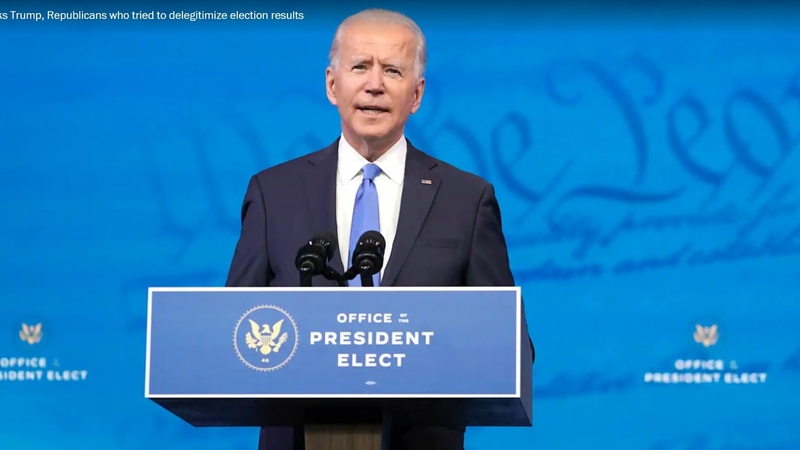
What this would do: Trump would put the military in charge. It would implement and enforce curfews, keep people in their homes. Former Trump national security adviser Michael T. Flynn has suggested the military could force states to rerun elections. It could even stop members of Congress from coming to work on Jan. 6 to certify President-elect Joe Biden’s win.
Could it happen? No, experts say. There’s absolutely no legal or political precedent for it. “Can the president invade the Congress of the United States? No, he cannot,” said Adav Noti, an election law expert with the Campaign Legal Center.
Some experts were skeptical the president could actually declare martial law in the first place. Governors have that power in their states, but the president doesn’t, Kleinfeld said. (The Washington Post’s Gillian Brockell reports the Supreme Court has never ruled on whether a president can declare martial law without congressional approval.)
“If you have martial law,” Kleinfeld said, “you have total suspension of the Constitution. So that’s a coup, and a coup in this country is not going to happen.”
Trump would also need military buy-in, and military leaders have said they’re not interested in entertaining any of these ideas. Experts were heartened that military leaders expressed regret for participating in a clearing of peaceful protesters outside the White House this summer so the president could pose for a photo he used for political purposes.
Also, declaring martial law wouldn’t do anything to change votes. What is a curfew in December going to do to change an election in November? States aren’t going to redo elections. And even if Congress were unable to certify results, on Jan. 20, the political and legal and military establishment would almost certainly recognize Biden as president. The military could just escort Trump out of the White House on that day if he refused to leave.
After reporting over the weekend that he was briefed on this idea by fringe advisers, Trump tweeted this, throwing cold water on the idea.
Trump has called plenty of accurate reporting “fake news” before, so it’s not the same as an outright denial.
2. Use the Insurrection Act to somehow get control
What this would do: This is slightly different from martial law in that it’s an actual legal tool the president has that allows him to use the military in extreme ways. The Insurrection Act allows the president to call in troops for domestic law enforcement, not unlike what he did this summer in Portland, Ore., during Black Lives Matter protests. It’s supposed to be used only in times of emergency.
But what emergency is there right now that would warrant the military taking to the streets? There is none. Trump could try to gin one up by encouraging protests across the nation on Jan. 6 as Congress certifies results, said Meredith McGehee, an expert in ethics in politics and the director of Issue One.
To that end, Trump allies are planning a rally in Washington that day. Trump is encouraging them: “Big protest in D.C. on January 6th. Be there, will be wild!” he tweeted last week.
That’s scary language, said McGehee, who wondered whether Trump might try to do this in several cities to create the pretense of insurrection and chaos. “Now we have a president who is playing with the notion that we are going to solve conflict with violence,” she said. “That puts us up there truly with the banana republics.”
But this tactic would almost certainly face legal challenges and political blowback. “Talk about an idiotic idea,” Republican strategist Karl Rove recently said on Fox News. “There’s no ability for any president to invoke the Insurrection Act of 1803, claiming that the issue has got to do with the hubbub around the election.”
And just like declaring martial law, it wouldn’t actually change Trump’s results. The Insurrection Act “says nothing about: ‘Therefore the president can stay in power after he’s been voted out in a legitimate election,'” Kleinfeld said.
3. Seize voting machines from states
What this would do: It’s unclear, honestly. It’s an idea that’s been floated to the president on the basis he could somehow try to prove baseless claims that voting machines counted votes incorrectly, or that they were somehow hacked by communist countries.
But those claims been disproved. In Georgia, the Republican secretary of state has presided over three recounts, including one by hand, that confirmed the machines counted votes correctly. An Arizona judge allowed Republicans to view 100 ballots to search for fraud or miscounting, and they found nothing.
“We’re at a point where the votes have been counted,” Noti said. “The machines are done. There was no fraud.”
Also, this is illegal without states’ permission. The Constitution gives states the authority to run their own elections as they see fit. Taking the voting machines would fall to the Department of Homeland Security, and its head, Chad Wolf, has told the White House he’s doesn’t have the authority, according to Post reporting.
4. Set up a special counsel to investigate voter fraud
Trump has toyed with putting one of the most conspiracy-theory-minded lawyers in his orbit, Sidney Powell, into an official position to “investigate” whether there was fraud that led to his loss.
What this would do: Not much.
For one, it doesn’t seem like she’ll find anything. In six states he lost, officials have found just a handful of incidents worth investigating – nowhere near the tens of thousand of votes Trump would need to overturn his loss. The courts have nearly universally rejected his claims as well.
Two, she wouldn’t have much time. A special counsel can’t be removed by the next president, but a Biden Justice Department could just silo her and give her zero resources.
Three, the Justice Department would need to implement this, and it’s not clear Trump has that support. Attorney General William P. Barr said on his way out the door this week that he saw no need. His replacement, Jeffrey A. Rosen, hasn’t commented on this.
But unlike with declaring martial law, the president leaned into this idea in a tweet Wednesday.
Of all the ideas floated out there, this one is the flimsiest, experts said. (But they stressed that they are all infeasible.) “Like all the post-election litigation by the president’s team, it’s all half-baked ideas that don’t have a basis in law and don’t have a basis in fact and don’t have any chance of success,” Noti said, “however success is defined other than whipping some portion of the American public into a frenzy.”
5. Have Congress protest the election
What this would do: Again, nothing to change the election results. But this is one of the only ideas Trump has considered that he could legally do.
Well, not himself.
When Congress meets Jan. 6 to confirm Biden’s win, Trump has lined up several House Republican lawmakers to challenge as many as half a dozen states he lost. But they won’t actually succeed in changing the outcome. They don’t have support yet from a Republican senator, and without that, their objections die immediately.
If a Republican senator does join in – potentials include incoming senator Tommy Tuberville of Alabama or Sen. Rand Paul of Kentucky – Congress has to debate and vote on their challenges. Lawmakers will almost certainly vote them down, even the Republican-controlled Senate. Sen. John Thune, R-S.D., the No. 2 Senate Republican, has said these challenges are “going down like a shot dog.” There’s no legal basis not to accept state’s electors that, taken together, make Biden president.
So all of this talk about possible actions is just that: talk. And Trump will probably continue to talk, and tweet, about the election up to noon on Jan. 20, at which point he will be the former president.
By Syndication The Washington Post, Bloomberg · Ian Wishart
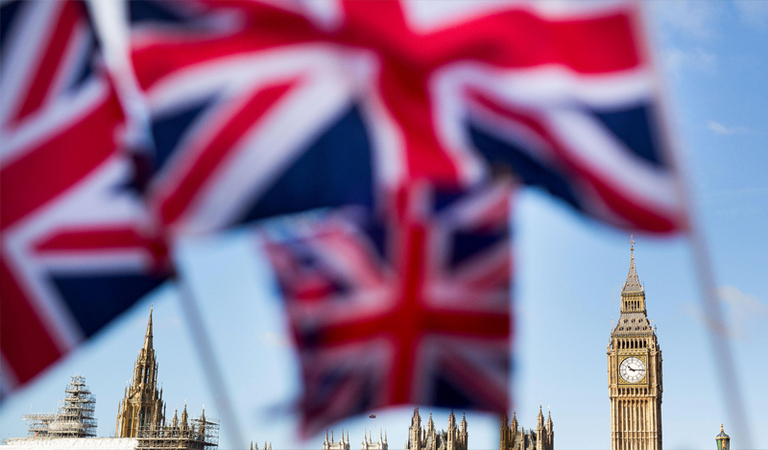
The U.K. clinched a historic trade deal with the European Union, averting the threat of an acrimonious breakup and laying the foundations for a new relationship with its biggest and nearest commercial partner.
Negotiators finalized the accord, which will complete Britain’s separation from the bloc, on Christmas Eve, days before the country is due to leave the bloc’s single market and customs union.
“It was a long and winding road — but we have got a deal to show for it,” European Commission President Ursula von der Leyen said. “It is fair, it is a balanced deal, and it is the right and responsible thing to do for both sides.”
The agreement will allow for tariff and quota-free trade in goods after Dec. 31, but that won’t apply to the services industry — about 80% of the U.K. economy — or the financial services sector.
Firms exporting goods will also face a race to prepare for the return of customs and border checks at the year-end amid warnings of disruption at Britain’s ports. The deal comes after three days of chaos at the main crossing between Britain and France offered a reminder of how quickly blockages at the border can choke international trade.
More than five turbulent years after a general election set off a chain reaction that would transform British politics and the country’s connections to the rest of Europe, the deal establishes a new framework for businesses on both sides of the Channel and frees the British Parliament from many of the constraints imposed by EU membership.
For Boris Johnson, the architect of Brexit and the third prime minister since the 2016 vote to leave the EU, it marks another landmark just over 12 months after he claimed a decisive mandate from voters with the promise to “get Brexit done.”
With the electorate divided, public finances battered by the covid-19 pandemic, and Scots pushing for a split from the rest of the U.K., the prime minister’s next challenge is to prove that the U.K. can flourish outside the EU’s single market and customs union, a status that puts it behind other nonmembers such as Norway and Switzerland when it comes to EU access.
Businesses will still face border checks for which surveys have shown that they are unprepared, and consumers in Northern Ireland face the prospect of shortages of some goods as firms adjust to the new paperwork.
In a worst-case scenario, Johnson’s government itself has warned of a 7,000-long line of trucks, enough to stretch from the Port of Dover to the Palace of Westminster.
The U.K. got a taste of the potential chaos this week after France closed its border in response to an outbreak of a new strain of the coronavirus in Britain, leaving hundreds of lorries bound for the port of Dover backed up on local roads. To mitigate the risk, the government has built lorry parks and drivers entering Kent will require a permit or risk a fine.
Outside the EU’s single market, U.K. financial services firms will be deprived of the passport that allows them to offer their services across the bloc and face a wait to see if the EU will grant them access — something that is still far from certain and, even if granted, could be withdrawn at any time.
That has allowed Dublin, Frankfurt, Amsterdam and Paris to start chipping away at London’s dominance as Europe’s financial center. Firms from JPMorgan Chase & Co. to Goldman Sachs Group Inc. are among the companies that have already shifted about 7,500 employees and $1.6 trillion of assets out of the U.K. because of Brexit.
The deal mitigates some of the immediate economic costs of leaving the EU, even if Britain’s long-term growth is set to be stunted. A no-deal Brexit would have cut 1.5% off U.K. gross domestic product in 2021, according to Bloomberg Economics. But growth is still forecast to be 0.5 percentage points lower every year for the next decade than what it would have been had Britain stayed in the bloc.
Against the dollar, the pound is still trading below its level before the Brexit vote. The U.K.’s benchmark FTSE 100 index is one of the worst-performing Western European benchmarks this year.
For the EU, reaching a deal avoids poisoning relations with a key diplomatic and commercial neighbor for years, and provides a basis for further cooperation in future.
Unlike other similar trade deals, the agreement will establish frameworks for common standards in aviation, business subsidies, labor rights and the environment, as well as law enforcement.
The agreement’s wide scope made negotiating it all the more complicated: Britain resisted EU calls to align its rules on business subsidies with those of the bloc, while France pushed for continued access to British fishing waters.
With the two sides at loggerheads on those two issues — and any wider agreement impossible until they were resolved — the negotiations quickly became bogged down.
After the coronavirus stopped the negotiators from meeting in person, Johnson refused to extend the post-Brexit transition period beyond the year-end. That put the squeeze on the teams, with officials working around the clock as multiple deadlines were missed. At one stage in October, the prime minister threatened to walk out without a deal.
Now that he has one, Johnson faces the challenge of governing without the Brussels bogeyman to blame for setbacks, knowing that he and his Conservative party will be judged on how the country fares as an independent nation.
By Syndication Washington Post, Bloomberg · Jessica Summers, Sheela Tobben
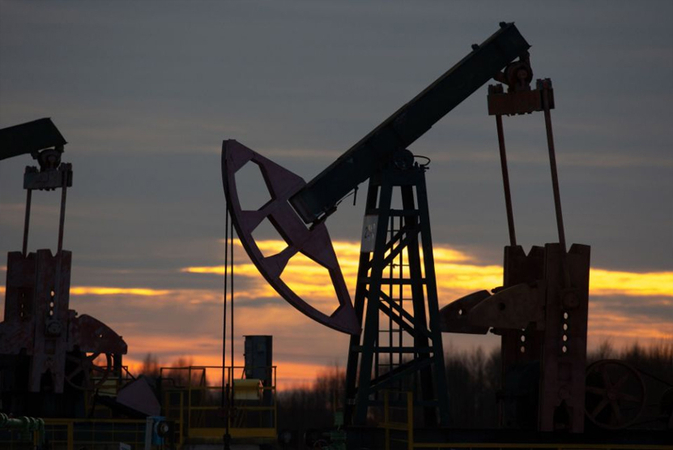
Oil rallied along with equity markets as a decline in U.S. crude inventories injected optimism into a market that’s reeling from the resurgence of the pandemic.
Futures in New York climbed as much as 3.2% on Wednesday. Stocks rose as investors shrugged off the latest tension over a U.S. pandemic relief package, while the U.K. and European Union reached the outline of a post-Brexit trade agreement. The dollar also weakened, boosting the appeal of commodities priced in the currency.
Meanwhile, a government report showed American crude stockpiles fell to the lowest level since late November and exports rose for a second straight week.
“The sentiment in the crude market has switched from a sell all strength to buy the dip,” said Rebecca Babin, a senior equity trader at CIBC Private Wealth Management. “The dollar and shift towards bidding for risky assets such as in the equity markets continue to be the main driver of trading action.”
Crude’s rally follows a rough start to the week. Futures declined Monday and Tuesday on concerns that the new coronavirus mutation — which is possibly already in the U.S., Germany, France and Switzerland — will cause widespread movement restrictions that would weigh on energy demand. South Korea and the Philippines already moved to temporarily suspend U.K. flights, while Japan is strengthening entry regulations for people traveling from Britain.
Brexit negotiators are now working to finalize the wording of their deal with the EU after almost ten months of often fraught deliberations.
West Texas Intermediate for February delivery rose $1.14 to $48.16 a barrel at 12:24 p.m. on the New York Mercantile Exchange. Brent for February settlement added $1.17 to $51.25 on the ICE Futures Europe exchange.
The Energy Information Administration report showed that the U.S. crude inventory decline was largely due to a decrease in West Coast supplies, limiting the impact on prices. The region is sometimes ignored by traders because its distribution system is isolated from the rest of the country.
“The draw in crude was small, but traders and producers have been more opportunistic. That would explain the increase in exports,” said Quinn Kiley, a portfolio manager at Tortoise, a firm that manages roughly $8 billion in energy-related assets.
Investors are also focused on the likelihood President Donald Trump will sign a coronavirus relief package into law by Dec. 28. Speaker Nancy Pelosi said the House plans to proceed Thursday with a bill to replace the $600 stimulus checks in this week’s proposal with the $2,000 payments Trump asked for.
Cash piles, vaccines force economists to rethink Canada outlook
InternationalDec 24. 2020Healthcare workers wait in line outside a Toronto vaccination clinic on Dec. 15, 2020. MUST CREDIT: Bloomberg photo by Cole Burston.
By Syndication Washington Post, Bloomberg · Erik Hertzberg, Shelly Hagan
Even as Canadian policymakers ramp up covid-19 restrictions, economists are becoming more optimistic about the country’s outlook.
Strong fiscal support, the start of vaccinations and a growing pile of savings in consumers’ accounts have caused forecasters to revise their views of Canada’s recovery. Economists surveyed by Bloomberg this month see output expanding by an average 5.4% annualized in the final three quarters of 2021, much higher than the 3.8% forecast in November.
Eric Lascelles, chief economist at RBC Global Asset Management, said in a report to investors last week he’s among those raising growth forecasts, citing “our belief that vaccines will prove a game-changer, and expectations that government stimulus will remain substantially in place.”
Canada has proved itself a fiscal champion during the pandemic, with the most generous emergency response in the Group of Seven, according to International Monetary Fund data. The longer-term implications of such massive deficit spending are unclear, but it has left the country well-positioned for a strong 2021 rebound, mostly on the potential upside from consumption when vaccines roll out and restrictions lift.
“In the case of a permanent reopening starting toward the end of the second half of 2021, the elevated household savings rate could unleash major pent-up demand, especially on the services side of the economy,” Dominique Lapointe, an economist at Laurentian Bank Securities, said by email.
Generous government support and limited spending options have been a boon to Canadians’ personal checking accounts, which have swelled over the past year by C$103 billion ($80 billion), or 34%, the most in more than three decades, according to Bloomberg calculations based on Bank of Canada data.
“People in many cases were getting more support than they needed in the early going and so they saved that,” Lascelles said by phone. “As the fiscal support starts to fade or as they lose eligibility for certain programs, we will start to see them tapping that.”
Still, the virus is hampering the near-term outlook, with new cases of coronavirus in Canada surpassing 6,600 a day on average — more than triple what was seen during the first wave in April and May. Ontario, the most-populous province, said Monday it will enter a new lockdown the day after Christmas, the latest in a series of tighter measures across the country.
But Prime Minister Justin Trudeau’s government is pushing to inoculate as many Canadians as possible before the end of the year, securing more than 400,000 early doses of two Covid-19 vaccines. That’s boosted consumer confidence, which has climbed back to where it was in mid-March when restrictions were first imposed.
Economists in the latest Bloomberg survey lifted their 2021 and 2022 full-year growth forecast to an average of 4%, from 3.9% in November.
Canada’s output gap will close around the middle of 2022, with inflation returning to the 2% target in the third or fourth quarter of that year, “even without incorporating much of a vaccine lift,” according to projections by Bank of Nova Scotia economist Derek Holt.
While he acknowledges wide ranges are still possible, Holt expects such a scenario would prompt the Bank of Canada to shut down its quantitative easing program by late 2021 or early 2022 and begin tapering before that.
“That makes the assumption they’ll prepare markets over time and still speak to bidirectional flexibility as they taper, but that they won’t just go cold turkey,” he said by email.
‘Trickle-down’ tax cuts make the rich richer but are of no value to overall economy, study finds
InternationalDec 24. 2020President Trump holds a news conference after signing the Tax Cuts and Jobs Act into law on Dec, 22, 2017. MUST CREDIT: Washington Post photo by Jabin Botsford.
By The Washington Post · Christopher Ingraham
President Donald Trump sold his 2017 tax cuts as “rocket fuel” for the economy, arguing that freeing up money for the wealthy would allow them to hire more workers, pay better wages and invest more. The tax savings, in other words, would trickle down from the rich to everyone else.
But, just as many economists predicted, slashing individual, corporate and estate tax rates was mostly a windfall for big corporations and wealthy Americans. The Tax Cuts and Jobs Act didn’t pay for itself, failed to stimulate long-term growth and didn’t lead to sustained business investments.
According to one of the most comprehensive studies to date on tax cuts for the rich, this should come as no surprise. David Hope and Julian Limberg of the London School of Economics examined five decades of tax cuts in 18 wealthy nations and found they consistently benefited the wealthy but had no meaningful effect on either unemployment or economic growth.
The researchers started by constructing a composite measure of “tax cuts on the rich” encompassing a variety of taxes, including the top tax rate on personal income, the estate tax and the tax on capital gains. Because these taxes are levied predominantly on the wealthiest members of society, the wealthy stand to gain the most when they’re cut.
While previous studies on the effects of taxing the rich have tended to focus on just one type of tax, “our measure combines all of these important taxes on the rich into one indicator,” Hope and Limberg wrote in an email. “This provides a more complete picture of taxes on the rich, but it also allows for comparisons across countries and over time.”
Using this measure, they set out to identify “major” tax cuts on the rich in 18 wealthy nations from 1965 to 2015. In the United States, that included the Reagan tax cuts of 1981 and 1986, which dramatically reduced the top income tax rate from 70 percent down to 28 percent after fully taking effect.
They then traced what happened to those nations’ economies in the five years after the cuts were implemented. They focused particularly on income inequality, economic growth as measured by gross domestic product, and the unemployment rate. They aggregated those trends across countries to capture the broadest possible picture of the tax cuts’ effects.
First, the tax cuts succeeded at putting more money in the pockets of the rich: the share of national income flowing to the top 1% increased by about 0.8 percentage points (for comparison, in the U.S. the bottom 10% of earners capture only 1.8% of the country’s income).
But they had no effect on either economic growth or employment; though those quantities fluctuated slightly following the major tax cuts studied, the effect was statistically indistinguishable from zero. The “rocket fuel” so often promised by supporters of these tax cuts? It fizzles out time and time again.
“In the last decade, especially with the pioneering work of Thomas Piketty and his co-authors, there has been a growing consensus that tax cuts for the rich lead to higher income inequality,” Hope and Limberg wrote via email. Piketty, a French economist, wrote “Capital in the Twenty-First Century,” an influential book on the growth of inequality in rich nations.
Given the evidence, why are such targeted tax cuts perennially popular among policymakers, especially Republicans? The authors point to one major reason: the power of wealthy individuals and corporations to set policy agendas through lobbying and campaign contributions.
“There is a large political science literature on the power of rich voters and organised business interests to shape public policies in their favour,” the authors write.
Hope and Limberg say their findings offer one clear pathway for policymakers looking to dig their way out of the financial hole created by the coronavirus crisis: Make the rich pay for it.
Though the pandemic cost tens of millions of Americans their jobs and sent the U.S. economy into a tailspin, many at the top of the income distribution have seen their wealth skyrocket. The nation’s 651 billionaires saw their net worth spike by more than $1 trillion during the first nine months of the pandemic according to Americans for Tax Fairness, a progressive group advocating for higher taxes on the wealthy.
“We would argue that governments should not be unduly concerned that taxing the rich will harm their economies when deciding how to pay for the costs of COVID-19,” they wrote via email.
Given the historically low tax burdens currently enjoyed by America’s wealthy, their ability to pay for higher taxes has probably never been better.
By Syndication Washington Post, Bloomberg · Alaric Nightingale, Jeffrey Bair, Christian Wienberg
A great global restock is at hand, filling ships, trucks and trains, and also firing oil demand.
During the depths of China’s coronavirus crisis at the start of the year, shipping behemoth A.P. Moeller-Maersk reported an unprecedented number of canceled sailings as the Asian country all but shut itself off from the world. Since then, the company’s shares have surged to the brink of a record in Copenhagen. In the U.S., BNSF Railway Co., the freight giant owned by Warren Buffett, is riding a boom that’s pushed the number of carloads and containers it hauls up year-on-year in recent weeks.
A shift in consumer behavior, particularly in western countries, has driven oil prices above $50 a barrel in the past few weeks. People have been diverting expenditure previously earmarked for now-unattainable things — like holidays and meals in restaurants — toward purchasing physical goods. And that’s only the start of it: stores, warehouses and industries have undertaken a huge inventory restocking phase. As more boxloads of stuff get moved across the planet, so demand for fuel to power ships, trucks and freight trains has soared.
“This is the perfect storm for global container flows,” said Lars Mikael Jensen, head of network at Maersk, which marshals a fleet of almost 700 ships. “The current restocking in the U.S. and Europe raises demand, whilst global measures to contain the pandemic cause severe strain across the supply chain from lack of vessels, containers and trucking capacity.”
While beneficial to oil prices and freight haulers, the boom is straining important transportation infrastructure. Bottlenecks are worsening at ports around the world, contorting supply chains for everything from car parts to cosmetics. The recent closing of freight deliveries from France into the U.K. serves as a reminder that things could become even more snarled — but also that the full economic and trade impacts of the coronavirus remain far from certain.
Los Angeles is emblematic of the turnaround in activity. Together with Long Beach, L.A. is a corridor for the import of goods from Asia into the U.S. Earlier this year, thousands of empty containers were sitting at the dock in Los Angeles, a symptom of both trade tensions with China, and Covid. Today, imported goods are now flooding in.
“Right now, what we are grappling with is a change in buying habits,” said Gene Seroka, executive director of the Port of Los Angeles. “Where we were once buying mainly services, now you and I have turned back to buying products and those warehouses need to be restocked. Folks have been ordering so much for delivery, we can’t process it fast enough.”
Exports from China are surging, pushing the country’s trade surplus to a record. The nation’s companies shipped $268 billion of goods in November, a 21% increase year-on-year.
In India, the lifting of lockdown restrictions and a full resumption of intra-state vehicle movement led to a boost in road transport fuel consumption in October, with diesel demand growing more than 7% year-on-year, according to Senthil Kumaran, head of South Asia oil at industry consultant FGE.
Shipping rates are going crazy. Moving a 40-foot steel box by sea from Shanghai to the European trade hub of Rotterdam costs about $6,500 per container, the most for the time of year since at least 2011, according to data from Drewry.
The trends matter for the oil market because trucking accounts for about 16% of global oil consumption and almost half of all diesel demand, according to 2019 data from the International Energy Agency.
The rebound in activity, combined with the onset of Northern Hemisphere winter, has been lifting a previously disastrous market for the fuel for about two months.
Back in September, the so-called crack spread — diesel’s premium to crude — plunged as low as $2 a barrel in Europe.
As well as stuttering demand, a key cause of the diesel-market weakness was a collapse in global aviation. Oil refineries responded to that slump by diverting output of jet fuel into making diesel instead, boosting output when consumption was weak. In addition, because people were often staying off public transport to avoid catching the virus, refineries needed to keep high output levels to service gasoline demand — further swelling diesel supply at a time when it wasn’t needed.
Those dynamics have turned. Last week, the crack spread rallied to $6.28 a barrel. That’s at a time when the underlying price of crude oil has also rallied strongly.
In the U.S., freight by truck is the primary influencer of diesel and viewed as a sign of the health of the wider economy. Interstate miles covered by trucks are up above 9% over last year, while traffic for all vehicles is down more than 10%, federal Department of Transportation statistics show.
A proxy for demand in U.S. is how much of a petroleum product oil refineries supply. And in the week to Dec. 11, they supplied 4 million barrels a day of distillate fuel oil, the category that includes diesel. Back in May, that figure slumped to 2.7 million a day, the lowest in decades, Energy Information Administration data show. Stockpiles remain high but are far less bloated than they were earlier this year.
The pull on diesel can be seen in excess demand for deliveries this year. Data from consultant Freight Waves show that 26% of requests for freight hauling are being turned down this quarter, double the rejection rate from a year ago.
While trucking may be the mainstay of diesel demand, one of the largest U.S. buyers of the fuel — after the Navy — is Buffett’s BNSF Railway. It too reports surging activity.
“We have seen a strong recovery in intermodal volumes as an increase in e-commerce sales drives demand for parcel and truckload intermodal shipments on our network,” said Tom G. Williams, BNSF group vice president consumer products. “As cities and states began reopening, intermodal demand was further supported by recovering brick-and-mortar retailers.”
Current volumes at some of BNSF’s intermodal facilities are as much as 20% higher than they were at this time last year, and the company is continuing to work with its customers to meet a “consistent surge” in demand while replenishing inventories that have been low since the onset of the pandemic, he said.
Over in Europe, the continent’s biggest owner of trucks reports the same dynamics, filling the company’s fleet and boosting usage of diesel.
“There is definitely a new consumer pattern,” said Kristian Kaas Mortensen, an executive at Girteka Logistics, a Vilnius, Lithuania-based owner of more than 7,500 trucks. “Because we can’t give it face-to-face we are shipping it.”
Girteka is so busy that it’s giving overflow business to other trucking companies. It anticipates the busiest year-end in its history.
In Germany, miles driven by large trucks have been steadily rising since September and are currently their highest in a month, according to the nation’s statistics office. Polish heavy traffic in the week to Dec. 20 is about 20% higher than the equivalent year ago. It was a similar picture in the U.K. prior to the country’s most recent set of lockdown rules.
But it’s a surge that’s global and may well be without precedent, according to Gebr. Weiss, a 500-year-old firm that lays claim to being the world’s oldest logistics company.
“Looking back at our history, you could say we’ve weathered a few challenges: a war, a revolution or two but still, in all my years in logistics I’ve never had a year like this,” said Gebr. Weiss board member Lothar Thoma. “Covid choked up, disrupted transport arteries on a global scale, messed the cycles of goods-in, goods-out, be it air, sea, rail or road.”
U.S. new-home sales unexpectedly tumble to lowest since June
InternationalDec 24. 2020A worker stands inside the garage of a new home under construction by Pardee Construction in the Pacific Highlands Ranch master planned community in San Diego on Aug. 31, 2020. MUST CREDIT: Bloomberg photo by Bing Guan.
By Syndication Washington Post, Bloomberg · Olivia Rockeman
New-home sales in the U.S. tumbled to a five-month low, suggesting red-hot demand is cooling amid resurgent covid-19 cases and other signs of a slowing economy.
Purchases of new single-family houses decreased 11% to a 841,000 annualized pace in November from a downwardly revised 945,000 rate in the prior month, government data showed Wednesday. The median projection in a Bloomberg survey of economists called for 995,000. The median selling price rose 2.2% from a year earlier to $335,300.
The data dim housing’s status a bit as a bright spot in an otherwise shaky economy, and the drop in sales may reflect a lack of available inventory as builders struggle to meet demand fueled by ultra-low mortgage rates. Affordability could also be playing a role, though a new $900 billion stimulus package, approved by Congress on Monday, may boost family finances and keep demand robust.
Shares of U.S. homebuilding companies fell after the report.
A report Tuesday showed that sales of previously owned homes also fell in November, as surging prices and a record-low supply constrain demand.
Wednesday’s report showed the number of properties sold for which construction hadn’t yet started decreased to a four-month low of 288,000 in November, while the number of homes for sale edged up to 286,000.
At the current sales pace, it would take 4.1 months to exhaust the supply, the highest since June.
The drop in sales was concentrated in the West and Midwest regions. The 59,000 pace in the Midwest was the smallest since early 2016, while the South and West each recorded their lowest totals since June.
The new-home sales report, released jointly by the Census Bureau and Department of Housing and Urban Development, tends to be volatile from month to month, often with significant revisions.
Vaccines arm hotels, airlines with new power to jack up prices
InternationalDec 24. 2020A traveler wearing a protective mask walks with luggage to the United Airlines check-in counter at San Francisco International Airport in San Francisco, on Dec. 21, 2020. MUST CREDIT: Bloomberg photo by David Paul Morris.
By Syndication Washington Post, Bloomberg · Justin Bachman, Mary Schlangenstein, Patrick Clark
The arrival of a coronavirus vaccine has the U.S. travel industry preparing for a rebound in demand following a historically terrible year. After months of deep discounts — with hotels offering lavish perks and airlines dangling fares such as $21 from New York to Florida — prices are set to make up at least part of the ground they lost.
Trip providers have slashed capacity, so any gains in bookings will tend to boost rates. And as vaccines take hold, they’re poised to unleash a torrent of pent-up vacation demand as people emerge from months of being cooped up at home. That’s leading to optimism within the industry for an upswing in the spring and summer, even as rates remain depressed and a recovery in business travel is a long way off.
“No one’s getting ready to pop open a bottle of champagne yet,” travel consultant Henry Harteveldt said of airlines and hotel groups he has polled. “But there is hope right now that summer 2021 will come in and be certainly not only much stronger than this year, but at or above 50% of where we were in 2019.”
Already, some affluent travelers have begun making reservations for blow-out vacations, said Jack Ezon, a managing partner of Embark Beyond, a travel agency catering to the super-rich. Clients have flooded the company with requests for big parties in Europe and the Caribbean, with some budgets topping $1 million.
“Anything on the Mediterranean is bumping,” he said. “Space is already tight and it would be wise to have something in your pocket by the end of January so you don’t get shut out.”
While it may soon be too late to score a luxurious suite on, say, Italy’s Amalfi Coast, prices for other types of travel have yet to reflect a potential surge in demand.
The pandemic has caused would-be vacationers to wait much closer to their travel dates before booking plane tickets or hotels, giving those businesses less visibility into their ability to boost rates. Any recovery in demand will need to be sustained before airlines consider raising prices, said Lacey Alicie, director of data analytics at Ailevon Pacific Aviation Consulting and a former revenue executive at American Airlines.
There are other reasons a recovery may not be swift. The depth of this year’s collapse has been unprecedented and risks abound, from vaccine distribution bottlenecks to virus mutations. And any rebound will only come after a brutal winter as covid-19 continues to tear through the country. Early 2021 will bring “really rough months,” Southwest Airlines Chief Executive Officer Gary Kelly said recently.
“We expect next summer to be a lot better than this year but not normal,” Andrew Nocella, chief commercial officer for United Airlines, said in an interview. “We think 2022 is probably the bigger year.”
The $900 billion relief bill Congress passed on Dec. 21 is slated to provide new funding to loan programs that have helped hotel owners stay afloat, but the industry remains in a precarious situation. STR, a lodging data firm, predicts that room rates will remain below 2019 levels until some time in 2023, with urban markets from New York to San Francisco taking longer to rebound.
“Our property owners, these people are struggling, a lot of folks are focused on needing cash,” said Michael Deitemeyer, CEO of Aimbridge Hospitality, the world’s largest third-party manager of hotels.
Still, vaccines are offering hope that Americans will rediscover their wanderlust and cast off the limitations of video chats and telephone calls. On the day that Pfizer Inc.’s shot was approved for use in the U.S., hotel bookings jumped to the largest daily number since the pandemic began in March, according to RateGain, which powers bookings for major hotel and online travel information providers.
United predicted Dec. 11 that third-quarter bookings would be only 40% below 2019 levels compared with 70% now. Delta Air Lines sees “a level of optimism” from the vaccines, said Joe Esposito, vice president for network planning.
“Six months, even three months ago, we didn’t know where the end was,” Esposito said. “Now we can at least see that in spring and summer there’s going to be pent-up demand for people to travel and get out because everybody has lost a year.”
While it likely will be well into 2021 before shots are available to every adolescent and adult in the U.S., travel may rebound sooner once more vulnerable older people are vaccinated. With aging parents or grandparents inoculated, younger relatives may decide it’s safe to visit even if they haven’t been vaccinated themselves, said Savanthi Syth, an airline analyst at Raymond James Financial.
The recovery will be driven by leisure travelers, who generally pay lower rates than corporate road warriors or conference goers. But airlines, in particular, have become leaner companies, with the six largest U.S. carriers shedding nearly 84,000 jobs since January. The cuts mean fewer flights — and fares that are likely to be higher than in 2020 as vacationers gradually trickle back into airports.
It’s a similar story for cruise lines, most of which plan to resume operations in March, but with occupancies down as much as 50% on some itineraries. Cruise Lines International Association said the pandemic had cost the industry nearly 164,000 “direct and indirect” U.S. jobs and $8.6 billion in lost wages.
Cruise companies are planning a staggered return to the seas. Carnival Corp., the world’s largest cruise company, is removing 18 ships from its fleet, permanently cutting capacity by 12%.
“We’re going to have limited capacity with pent-up demand,” Carnival CEO Arnold Donald said on the company’s most recent earnings conference call. “And I don’t think demand is going to be a big issue in the short term.”
When a travel executive feels more optimistic, it’s probably time to consider buying before the deals wane.
Jobless claims, spending show U.S. economy limping into year-end
InternationalDec 24. 2020Construction workers install frames for windows and doors in a home being built in Bloomfield Hills, Mich., on May 7, 2020. MUST CREDIT: Bloomberg photo by Emily Elconin.
By Syndication Washington Post, Bloomberg · Katia Dmitrieva
U.S. consumer spending and incomes fell more than forecast in November and filings for unemployment benefits remained at elevated levels last week, the latest signs that the autumn’s surge in coronavirus cases is sapping the economic recovery.
Initial jobless claims in regular state programs dropped by 89,000 to 803,000 in the week ended Dec. 19, according to the Labor Department Wednesday, compared with the median projection of economists for 880,000. On an unadjusted basis, claims fell by about 73,000.
A separate Commerce Department report showed consumer spending, which accounts for a majority of the economy, dropped 0.4% last month — the first decline since April. Personal income decreased 1.1%, reflecting the winding down of several pandemic aid programs.
The data show a U.S. economy limping into year end and suggest many Americans will struggle in coming months as coronavirus cases surge across the nation. More businesses also face closure or layoffs amid colder weather and less foot traffic.
Vaccine distribution offers hope on the horizon, and the fiscal stimulus package approved by Congress this week should offer some relief, though President Donald Trump’s remarks late Tuesday put the fate of the deal in question.
“The economy is still pretty soft,” said Scott Brown, chief economist at Raymond James Financial Inc. “The level of jobless claims suggests there’s still labor-market weakness,” while on spending, “you see the pandemic’s impact on the season: There’s less seasonal shopping than usual, there’s less seasonal travel.”
U.S. stocks edged higher as investors appeared ready to look past the president’s comments to the promise of pandemic relief that will come sooner or later. Yields on 10-year Treasuries rose, while the dollar fell.
The Labor Department figures showed continuing claims, which roughly approximate the pool of total state benefit recipients, decreased by 170,000 to 5.34 million in the week ended Dec. 12. This figure doesn’t include the millions on federal pandemic aid programs, which are set to be extended under the new fiscal stimulus package.
Even with the drop in initial jobless claims, the level remains almost quadruple what it was before the pandemic, and the four-week average edged up to a two-month high. California and New York made up most of the drop on an unadjusted basis.
More than half of states reported a decline in initial claims, while Illinois, Virginia and Pennsylvania experienced an increase in claims last week.
The decline in spending, which exceeded estimates in Bloomberg’s survey of economists, followed a downwardly revised 0.3% increase in October. Spending on goods fell 1%, driven by clothing, footwear and new motor vehicles. Services outlays slipped on decreases for food services and accommodations.
“We are losing momentum at a critical time,” Diane Swonk, chief economist at Grant Thornton in Chicago, said on Bloomberg Television. “Consumer spending is pulling back or slowing down at a time when we should be ramping up, and that’s because of the surge in Covid cases.”
Also Wednesday, data showed orders for U.S. durable goods rose in November by more than forecast. But a proxy measure for business investment — non-defense capital goods orders excluding aircraft — increased by 0.4%, less than the 0.6% estimate, following an upwardly revised 1.6% advance in October.
The weekly jobless claims report is usually released on Thursday, but was moved up because the federal government will be closed Dec. 24.

 Healthcare workers wait in line outside a Toronto vaccination clinic on Dec. 15, 2020. MUST CREDIT: Bloomberg photo by Cole Burston.
  President Trump holds a news conference after signing the Tax Cuts and Jobs Act into law on Dec, 22, 2017. MUST CREDIT: Washington Post photo by Jabin Botsford.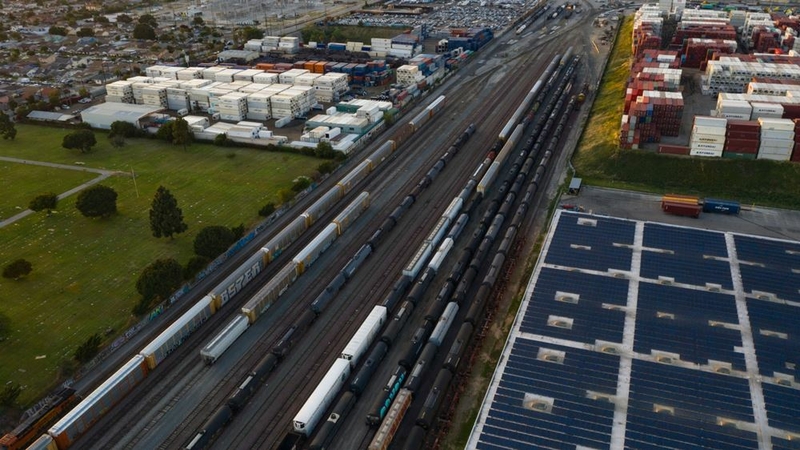
 A worker stands inside the garage of a new home under construction by Pardee Construction in the Pacific Highlands Ranch master planned community in San Diego on Aug. 31, 2020. MUST CREDIT: Bloomberg photo by Bing Guan.
  A traveler wearing a protective mask walks with luggage to the United Airlines check-in counter at San Francisco International Airport in San Francisco, on Dec. 21, 2020. MUST CREDIT: Bloomberg photo by David Paul Morris.
  Construction workers install frames for windows and doors in a home being built in Bloomfield Hills, Mich., on May 7, 2020. MUST CREDIT: Bloomberg photo by Emily Elconin.
