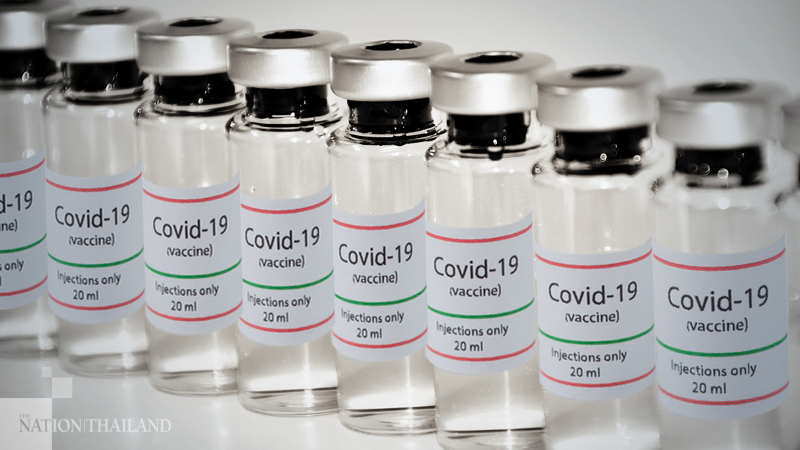
The ‘deep state’ scientists vilified by Trump helped him deliver an unprecedented achievement #SootinClaimon.Com

#SootinClaimon.Com : ขอบคุณแหล่งข้อมูล : หนังสือพิมพ์ The Nation.

The ‘deep state’ scientists vilified by Trump helped him deliver an unprecedented achievement (nationthailand.com)

The ‘deep state’ scientists vilified by Trump helped him deliver an unprecedented achievement

InternationalDec 15. 2020President Trump delivers remarks in the White House press briefing room on Nov. 20. MUST CREDIT: Washington Post photo by Jabin Botsford.President Trump delivers remarks in the White House press briefing room on Nov. 20. MUST CREDIT: Washington Post photo by Jabin Botsford. 

By The Washington Post · Yasmeen Abutaleb, Laurie McGinley, Carolyn Y. Johnson

The timing of the hastily arranged White House “vaccine summit” last Tuesday bewildered many invitees.

It was days before the authorization of the first coronavirus vaccine developed by Pfizer and German firm BioNTech – and nearly a week before millions of vaccine doses would be loaded onto trucks bound for every state in the nation. Wouldn’t those milestones and the mass vaccination effort that followed be what the White House would want to spotlight?

That was not what the president was interested in. As it became clear that vaccines would be a shining success in an otherwise calamitous pandemic response, he wanted to make sure his administration – and specifically Operation Warp Speed, its initiative to speed vaccines – got credit for an unprecedented scientific achievement.

The Dec. 8 event began with a video that featured scientists and pundits warning that the administration’s goal of delivering a vaccine in less than a year was unrealistic. As music swelled to a crescendo, a narrator boasted about how it had in fact delivered that record achievement.

Trump then took the stage to tout his administration’s success. “You saw that very few people thought that this was possible,” he told a small assembled audience. “Of course, they’ll be saying now, ‘We always told you it was so.'”

“People that aren’t necessarily big fans of Donald Trump are saying, ‘Whether you like him or not, this is one of the greatest miracles in the history of modern-day medicine’ or any other medicine – any other age of medicine,” Trump added.

In fact, the lightning-fast development of two leading coronavirus vaccines happened both because of and despite Trump – perhaps the most anti-science president in modern history, who has previously flirted with anti-vaccine views and savaged those who cited scientific evidence to press for basic public health measures in response to the pandemic.

The lifelong businessman who refused to wear a mask himself was able to understand vaccines as something else entirely: a deliverable that he could make happen with money. And unlike a mask, a vaccine represented a display of American technological prowess, an appealing solution that didn’t require painful steps like closing small businesses. For the president, it exerted an increasingly strong pull as the election approached.

“I do think the urgency for Operation Warp Speed was heightened by the fact that we were in the middle of an election year,” said Daniel Carpenter, a political scientist at Harvard University. “On the whole, it was a good thing – it led a potentially anti-science, anti-vaccine administration to push harder for a vaccine. What we will end up seeing in the long run is this is an unparalleled private and public sector mobilization that happened.”

That mobilization, which is pushing out the first 2.9 million doses of the Pfizer-BioNTech vaccine this week, is a testament to the power of science, and also of a global collaboration involving drug companies and government coordinated by political appointees and civil servants across the government – players and a process that Trump has at times disparaged.

To many attendees of the White House summit – and even more who stayed away – that event underscored the awkward, often uneasy relationship between Trump and pharmaceutical companies, government regulators and scientists, even as they jointly pursued the goal of ending a pandemic that has killed more than 298,000 Americans and infected another 16 million.

None of the companies that developed the most promising vaccines were present. Officials said they worried about participating in an event that might reinforce perceptions of political interference and suspicions of a rushed vaccine just as their shots were on the cusp of emergency clearance.

White House spokesman Brian Morgenstern said Trump hosted the summit to build confidence in the vaccine and to “congratulate those involved in this miraculous achievement.” He added that drug company executives had stayed away to avoid contact with FDA regulators.

The president’s bravado seemed to anticipate the FDA’s announcement three days later that it had cleared the nation’s first vaccine from Pfizer-BioNTech – the administration’s biggest triumph to date in a pandemic response otherwise marred by dysfunction and lack of leadership: A second vaccine from Moderna is expected to be authorized later this week. Others could follow if clinical trials are successful.

These accomplishments are remarkable, but they are not “miracles,” in the sense that they sprang fully formed from work that began last spring. They relied on basic research done over decades in government, academic and company research labs. Even the financial model used to insulate vaccine makers from financial risk traced back to an agency that Congress created in late 2006 to incentivize companies to develop urgently needed medicines.

And the true test of Operation Warp Speed is about to occur as the administration tries to meet ambitious timelines that it has revised repeatedly. A key plank involves distributing the vaccine to millions of Americans in a matter of months, which began on Sunday. But potential supply problems already threaten the government’s ambitious vaccination schedule.

Pfizer urged the government to purchase 200 million doses of its vaccine in the summer and this fall, an offer the government declined as recently as October over disagreements about delivery dates. The company has since told the government it may not be able to supply substantial additional doses until late June or July, raising questions about the vaccination timeline. Officials insist they will have enough doses.

This account of how government scientists, regulators, politicians and private industry managed to deliver a coronavirus vaccine in under a year, and the political turbulence that accompanied it, is based on interviews with more than 20 current and former senior administration officials and outside advisers and experts, many of whom spoke on the condition of anonymity to reveal private discussions and speak candidly.

– – –

The extraordinary vaccine initiative was propelled by a $14 billion investment from the federal government – which Trump supported and signed off on – that would become Operation Warp Speed, a public-private partnership to hasten vaccines and treatments, in part by footing the bill to manufacture millions of doses before anyone knew if they worked.

Pfizer made a point of not accepting government research funding, a decision its chief executive Albert Bourla said last month on ABC’s “Good Morning America” was “to liberate our scientists from any bureaucracy that could come by accepting money.” But the company did benefit from the government’s zeal for a vaccine in other ways: It agreed to sell nearly $2 billion worth of vaccines to Warp Speed and was bolstered separately by a strong working relationship with federal regulators.

By contrast, Moderna’s vaccine would have taken much longer without the government investment and its partnership with the National Institutes of Health. The federal government has invested $4.1 billion in Moderna’s vaccine, between research and development funding and the purchase of 200 million doses.

Warp Speed was designed to be largely free of political interference and had leaders with deep experience in vaccine development and logistics, said several officials who were involved in the effort. In many ways, it was an example of how much more successful the government’s pandemic response might have been with clear leadership and officials empowered to follow the science, they said.

“In twenty years, you’ll look back and it’s not going to be . . . a story about bleach or a whistleblower, or who wore a mask and who didn’t,” one senior administration official said. “It’s going to be about Warp Speed and the vaccine – a thing that comes along scientifically in less than one year that ends a global pandemic.”

But the race to develop a vaccine also became intensely politicized by the president, with trust in a prospective vaccine plummeting apparently as a result. Trump recognized early that the pandemic would only truly come to an end when a vaccine became widely available – and then became fixated on delivering one before the Nov. 3 presidential election to convince voters he had the virus under control.

That calculation led the president and top aides – especially Chief of Staff Mark Meadows – to apply unrelenting pressure on the FDA to clear a vaccine before the election. Even after Trump lost his bid, that campaign continued, culminating in an extraordinary threat on Friday, when Meadows ordered FDA Commissioner Stephen Hahn to submit his resignation if the agency did not clear Pfizer’s vaccine by day’s end. The agency pushed its timetable from Saturday morning to late Friday – a change that had no effect on the distribution plans that were set to begin Sunday.

Earlier that same day, Trump had tweeted that the FDA was “a big, old, slow turtle” and badgered Hahn. “Get the dam vaccines out NOW, Dr. Hahn @SteveFDA. Stop playing games and start saving lives!!!”

– – –

The public-private partnership created through Operation Warp Speed is not an idea the administration invented. For years, global public health leaders had talked about using government investment to reduce the financial risks that dissuade companies from developing needed products. That was also the model behind the creation of the Biomedical Advanced Research and Development Authority (BARDA) during the George W. Bush administration, with an eye toward working with private industry on bioterrorism countermeasures.

Warp Speed harnessed those ideas on a massive scale for a different kind of public emergency and then partnered with a half-dozen companies and other government agencies to pull it off.

“It’s a 15-year, overnight success story,” said Richard Hatchett, chief executive of the Coalition for Epidemic Preparedness Innovations, a four-year-old nonprofit that works to finance the development of vaccines against emerging infectious diseases.

The idea took hold in February and March after government scientists realized that covid-19, the disease caused by the coronavirus, was a “catastrophe in the making,” as one senior administration official recalled. But they quickly realized that some vaccine manufacturers did not share that sense of urgency.

Unsure of how long the outbreak would last, some executives were reluctant to spend the hundreds of millions of dollars or more to develop a vaccine without knowing whether they would have a market when they finished. Some companies talked about beginning clinical trials in the fall, with the aim of having a vaccine ready by summer 2021.

“The vaccine manufacturers were in a funk,” the senior administration official recalled. “We woke up to that and realized that is not going to fly.”

In early April, Peter Marks, an oncologist who has worked in both academia and the drug industry and who heads the FDA division that regulates vaccines, began laying the groundwork for what would become Operation Warp Speed.

He teamed up with Robert Kadlec, assistant secretary for preparedness and response at the Department of Health and Human Services, to write a proposal for HHS Secretary Alex Azar detailing a process that went from screening potential vaccine candidates to distributing the final product to an estimated 330 million Americans.

The thought was that if the government could eliminate most of the financial risk of vaccine development, more companies would be inclined to take on the herculean challenge. The government would also help speed development by footing the bill to manufacture millions of doses of vaccines without knowing whether they worked, so that normally sequential steps could be completed all at once.

Marks said the most important step in the vaccine effort was “getting started early with a clear direction in mind and having good partners” in various companies that were motivated “to get to the same place.”

Meanwhile, the virus was leaping from one continent to another, leaving a trail of carnage and spurring a torrent of research. Hundreds of academic teams, companies and government researchers were eager to apply different ideas to fight the virus, but there was also a clear need for a national strategy that could prioritize efforts.

“Uncharitably, people might have called it a bit of a scattershot scenario – that was true for therapeutics and vaccines,” said Francis Collins, director of the National Institutes of Health.

Collins called drug company executives, starting with Mikael Dolsten at Pfizer, with whom he had worked closely for years, to talk about creating a scientific public-private partnership to tackle the pandemic. Collins had crafted a similar partnership to speed up the development of new medicines, but that had taken months. This new one crystallized over two weeks in early April – and included a vaccine working group that began to hammer out some of the principles for how to rapidly test vaccines.

The group calculated that trials with 30,000 people would have the statistical power to answer the most important questions about safety and effectiveness, and to get those answers quickly. They debated, and ultimately settled, on a single unified data and safety board for all the trials. That approach had been taken with some HIV trials, and would mean the same group of independent experts would be reviewing the totality of the raw data from all the trials – and might be able to detect any concerning safety trends or important patterns.

Operation Warp Speed would ultimately bet on six efforts – Pfizer-BioNTech, Moderna, AstraZeneca-University of Oxford, Johnson & Johnson, Novavax, and Sanofi and GlaxoSmithKline. Those that accepted research funding – all but Pfizer – could take advantage of a large network of clinical trials developed over decades by the NIH.

Pfizer and Moderna gambled on a promising but unproved technology that relied on messenger RNA, spurring criticism for taking that approach at a time when a vaccine was desperately needed.

In one meeting in late April, Deborah Birx, the White House coronavirus task force coordinator, expressed frustration that the leading vaccine candidates were not relying on tried-and-true technologies, according to four current and former senior administration officials.

But Anthony S. Fauci, director of the National Institute of Allergy and Infectious Diseases, along with some other experts, was enthusiastic about including those vaccines in the government’s portfolio, since they were backed by years of research and might be developed much more quickly than conventional vaccines

Pfizer and Moderna’s strategy paid off in November, with both companies reporting trial results that showed their vaccines were more than 90 percent effective at preventing disease. By contrast, the vaccine being developed by Sanofi and GlaxoSmithKline, using a proven technology, hit a setback last week when results showed the shot didn’t trigger strong responses in older people. The companies now project their vaccine won’t be available until the end of 2021.

– – –

In April, after Marks and Kadlec gave Azar their proposal, the secretary presented it to the White House coronavirus task force. Some were skeptical about whether it would work and wary of the enormous price tag.

Trump, however, was enthusiastic. Unlike other aspects of the response, he agreed to spend billions on the effort – even as he was publicly predicting the virus would soon be gone.

The project was announced through a reporter at Bloomberg News, when officials were still casting about for a name.

Initially, they called it MP2, shorthand for Manhattan Project 2.0. The name seemed fitting, one senior official recalled, because “it was the historic implication that this was to do something never done before . . . with the same commitment at the national level as the Manhattan Project.”

But they soon realized that referring back to a nuclear bomb wouldn’t work for a vaccine. Marks, a Star Trek fan, and a small group of government officials had been privately calling the project Operation Warp Speed, based on the term “warp speed” popularized by the Star Trek series. In one internal email, Marks used the Star Trek logo with a needle in the middle of it.

Scrambling just before the interview, the officials seized on the name and it stuck.

Azar scouted for a drug industry veteran to run Warp Speed, calling Jim Greenwood to ask for recommendations. At the time, Greenwood, a former congressman, was president of the Biotechnology Innovation Organization, a trade group that represents biotech companies.

Jared Kushner, the president’s son-in-law and one of his most trusted advisers, joined Azar and other health officials to interview four or five candidates. They landed on Moncef Slaoui, who had spent much of his career as a GlaxoSmithKline vaccine researcher and executive.

Slaoui had led an effort to create a dedicated biopreparedness facility in 2016, a research organization that would systematically tick through every virus that had the potential to cause a pandemic and create vaccines for each one.

The proposal flopped, but Slaoui remained convinced that a model that joined government and industry to counter such risks was essential.

“I could have also sat on the sidelines and said why it would never work,” Slaoui said of his decision to join Warp Speed. ” . . . in the month of May when the operation was announced, I do not remember hearing a single expert say, ‘Yes, this is possible.’ I heard everybody explaining to us why it will never work.”

On May 1, Azar met at the Pentagon with then-Defense Secretary Mark T. Esper and a handful of aides to discuss how their agencies could work together, aware that HHS alone could not handle a logistics operation as complex as a nationwide vaccination effort.

They agreed on Gen. Gustave Perna as the logistics chief, a man whose expertise would become critical in managing and coordinating one of the largest ever vaccine distribution efforts in American history.

At one point, when 60 electricians were needed at one facility, Operation Warp Speed used the Defense Production Act to get them.

Slaoui and Perna were mostly walled off from the White House, as well as from Capitol Hill and the media, so they could avoid distractions. Still, Birx and Kushner sat on the board of Operation Warp Speed and attended meetings – a decision officials made intentionally to give the White House a seat at the table but not an outsize role.

“It was recognized that having larger participation from other offices in the White House could be disruptive,” one senior administration official said.

“Perna and Slaoui really wanted to be independent of the politics. They wanted to be able to chase the science and make bets,” a second official said. “In normal times, people will say you wasted a lot of money taking six or seven shots on goals with different types of vaccines. . . . but if we only get one of them, we got one at least.”

– – –

After helping to launch Warp Speed, Marks quickly retreated to the FDA. He and Slaoui had clashed, according to individuals familiar with the situation who spoke on the condition of anonymity because they were not authorized to discuss the issue. Marks also realized that he was most valuable to the vaccine effort as a regulator, not as a developer, he has said. And the FDA drew a bright line between its activities and those of Warp Speed to avoid conflicts of interest.

As Marks and his veteran vaccine experts began working with the pharmaceutical companies on the regulatory requirements, they remained in constant contact in hopes of avoiding unnecessary speed bumps.

“What helped at the outset was having clear guidance on what the expectations were,” Marks said.

In June, the FDA issued guidelines that said any coronavirus vaccine would have to be at least 50 percent more effective than a placebo, or a saltwater shot, in preventing covid-19. The agency proposed updating that guidance in the fall, spelling out additional safety requirements to bolster public confidence in an emergency authorization.

The idea enraged Trump and Meadows, who realized the criteria made it all but impossible for a vaccine to be authorized before the election. FDA ignored their objections and issued the guidelines, whose substance had already been conveyed to the manufacturers.

The FDA had already endured a bruising year, under the leadership of a new and untested commissioner, Stephen Hahn, who came under constant pressure from Trump and the White House to authorize or examine treatments that had no proven effectiveness against covid-19.

In a series of of high-profile missteps, the agency cleared the antimalarial drug hydroxychloroquine – then revoked that authorization – and initially took a hands-off approach to coronavirus antibody tests. On the eve of the Republican National Convention, Hahn overstated the benefits of convalescent plasma during a hastily arranged briefing with Trump, then apologized the next day.

Trump continued to accuse the FDA of moving too slowly, even as the agency staff worked almost around-the-clock. Marks’s pandemic schedule, for example, involves getting up at 3 a.m., taking his dog Eddie for a walk, and beginning work at 4:30 on a torrent of emails and meetings before knocking off at 9 p.m. Dozens of others working on coronavirus vaccines have been maintaining similar schedules.

As Trump pushed to get a vaccine before the election, public trust in the vaccine plummeted from more than 70 percent in May to just over 50 percent in September.

– – –

By November, Americans had become inured to one grim milestone after another, as the nation set countless records for daily infections, deaths and hospitalizations and endured a bitterly divisive presidential campaign.

Six days after a polarizing election called for Joe Biden, Pfizer reported astonishing news: Its coronavirus vaccine, the one that relied on a new genetic technology, was more than 90 percent effective. Those results also augured well for Moderna’s vaccine, which used the same technology and reported equally striking results only seven days later.

Exhausted company and government scientists and regulators were elated. For the first time all year, they could envision an end to the pandemic. The idea that the country could have one effective vaccine by year’s end had seemed like a long shot. Now, it looked like it could have two.

“I would say it’s a historical moment,” Kathrin Jansen, Pfizer’s head of vaccine research and development, said in an interview. “Hearing that at the interim analysis we are over 90 percent effective – it was almost stunning to hear.”

Trump, however, was furious. The additional safety steps the FDA had taken to shore up public trust in the vaccine strengthened his conviction that the agency had conspired against him. Now he said the “medical deep state” had deliberately sought to sabotage his electoral prospects, and he demanded that Azar “get to the bottom” of what happened.

His anger would grow to a fever pitch when Britain cleared Pfizer’s vaccine on Dec. 2. Meadows summoned Hahn to the Oval Office and asked why the United States had not been first. The pressure campaign culminated in the Friday threat to Hahn to clear the vaccine by day’s end or submit his resignation.

The irony is that the quest for a vaccine needed no meddling.

Back in May, when the vaccine trials were still in the planning stages and success was far from certain, Fauci had said he was tuning out politics.

“I worry about a lot of things,” he said in an interview. “But I’m going to do the best possible science, to develop what I consider convincing evidence that it works and is safe, or does not work and is not safe.”

Which is precisely what he and hundreds of other scientists did.

Inside the ‘nasty’ feud between Trump and the Republican governor he blames for losing Georgia #SootinClaimon.Com

#SootinClaimon.Com : ขอบคุณแหล่งข้อมูล : หนังสือพิมพ์ The Nation.

Inside the ‘nasty’ feud between Trump and the Republican governor he blames for losing Georgia (nationthailand.com)

Inside the ‘nasty’ feud between Trump and the Republican governor he blames for losing Georgia

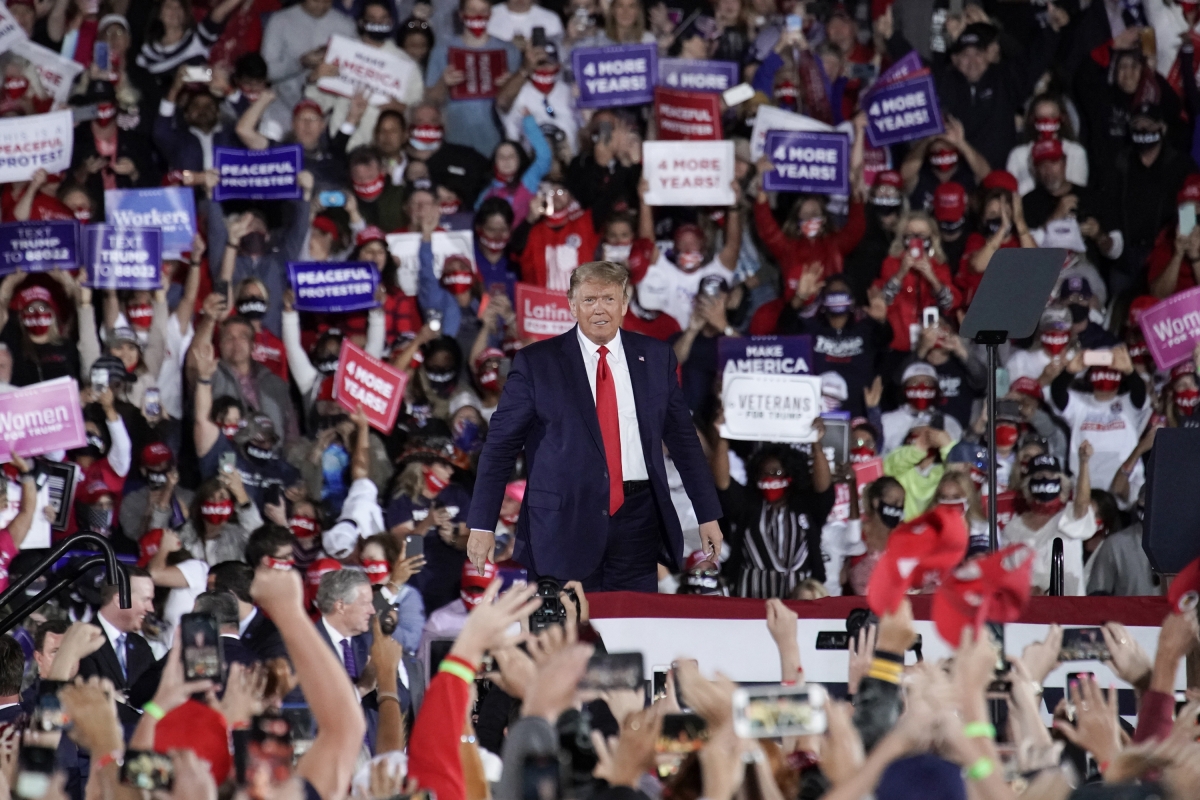
InternationalDec 14. 2020Georgia Gov. Brian Kemp speaks during a rally in support of President Trump on Oct. 16, 2020 in Macon, Ga. MUST CREDIT: Photo by Nicole Craine for The Washington PostGeorgia Gov. Brian Kemp speaks during a rally in support of President Trump on Oct. 16, 2020 in Macon, Ga. MUST CREDIT: Photo by Nicole Craine for The Washington Post 
By The Washington Post · Ashley Parker, Amy Gardner, Josh Dawsey

The first major fissure in the relationship between President Donald Trump and Georgia Gov. Brian Kemp came a year ago, when Kemp paid Trump a clandestine visit in the White House residence.

On the Sunday before Thanksgiving, Kemp flew up to Washington to introduce Trump to Kelly Loeffler, an Atlanta business executive he wanted to appoint to fill his state’s open U.S. Senate seat.

But when Kemp and Loeffler finally got their audience with the president, Kemp presented Loeffler as a fait accompli – telling Trump that he wanted the president to meet the woman he was planning to name to the Senate.

Well, if you’ve already made your decision, Trump grumbled, then I’m not sure why you’re here, according to people familiar with the conversation.

Trump later complained to aides that Kemp was rude and impolite – never forgiving the Georgia governor for what he viewed as a major slight.

The strain between the two Republicans has now boiled over into a full-blown feud in the aftermath of Trump’s 2020 electoral defeat, as the president has fixated on his loss in Georgia as a humiliation that he blames in large part on Kemp. Trump lost the solidly Republican state by approximately 12,000 votes and is furious with Kemp for not heeding his calls to question the integrity of the state’s election results.

In phone calls and conversations with allies and advisers, Trump has griped that Kemp was not pushing Georgia Secretary of State Brad Raffensperger to do more to reverse President-elect Joe Biden’s victory; that Kemp was not defending the president on television; and, perhaps most indefensible in Trump’s mind, that Kemp moved forward with certifying the results of the election.

“Republicans fell into a trap by expecting Brad Raffensperger and Brian Kemp to cheat for them,” said Jordan Fuchs, a longtime Republican strategist in Georgia who is a deputy secretary of state under Raffensperger, and who says the ongoing civil war in her party will have long-term consequences at the polls, including in the state’s two Senate runoff races on Jan. 5.

“The Democrats only have one, singular turnout model, and that’s the argument of voter suppression,” Fuchs added. “They say it in their litigation – it’s the number one poll-tested message they have. This has fed into the hands of Democrats.”

This portrait of Trump’s combustible relationship with Kemp – which portends a potential intraparty civil war in the coming months and years – is the result of interviews with 15 allies and advisers to both men, as well as Republican political operatives, many of whom spoke on the condition of anonymity to share candid details.

Since the election, Trump has personally berated Kemp in private phone calls, people familiar with the conversations said. In one call, the president told Kemp he was losing all of his popularity by not strongly supporting him, and in another, the president pointedly reminded the governor that he had endorsed him in 2018.

Trump has also called Loeffler and Sen. David Perdue (R-Ga.) – both of whom face runoffs on Jan. 5 – to complain about Kemp, though he has not given them any specific edicts beyond generally pressuring Kemp to support the president’s efforts to overturn the election results, one person familiar with the calls said. Loeffler and Perdue did not immediately respond to requests for comment.

“Maybe I should recruit someone to run against him,” the president said in one of these calls, this person added. “Your governor is horrible. He would be nothing without me.”

‘Worse than a Democrat’

Trump emissaries have warned Kemp that the president plans to continue to relentlessly attack him and will publicly criticize him when he returns to the state on behalf of the Republican Senate candidates, possibly on Saturday. The president has attacked Kemp on Twitter, lambasted him at a rally in Valdosta, Ga., earlier this month and went after him again during an interview that aired Sunday on Fox News.

“We won Georgia by a lot,” Trump falsely claimed to “Fox & Friends” host Brian Kilmeade. “We have a governor, a Republican governor, that’s worse than a Democrat. He’s terrible. And he’s hurting Kelly and David very badly, the senators, that are terrific people.”

The White House declined to comment on Trump and Kemp’s relationship.

Kemp, meanwhile, has told allies that he can’t spend his time worrying about Trump’s vindictive tweets and rhetorical broadsides, and that while he wishes the president would stop attacking him, he believes it would be illegal to do most of what Trump is asking. Instead, he said, he is focused on keeping Georgia open as coronavirus cases continue to rise.

“That’s exactly their strategy – to not engage and let it blow over,” said Erick Erickson, a conservative radio host based in Georgia. “If the president comes to Georgia, you would see the governor willing to meet him at the airport and shake his hand, even if he doesn’t go to the event.”

Erickson added that the few times Kemp has appeared on his show, “his people have told me in advance that I’m not going to get anything if I ask about the president.”

Although Kemp’s refusal to buttress Trump’s baseless election claims plunged the duo into open warfare, the relationship between the two men who should have been natural allies has long been tense.

At the core of the president’s displeasure is his belief that Kemp has not kowtowed to him enough.

“Kemp stood out as a Republican governor who didn’t seem to think he needed Trump,” said a senior White House official. “He’s never shown a particular need to play ball with the president, which I think really irked Trump, so that’s kind of the origin of it.”

The roots of tension between the two extend to Trump’s 2018 endorsement of Kemp in his Republican primary against Casey Cagle, then the sitting lieutenant governor. Trump believed Kemp had not been sufficiently appreciative of his support, and Kemp had not realized how hard his allies had lobbied the president for his endorsement, according to people familiar with the episode.

But it was Kemp’s handling of his selection of Loeffler to fill Georgia’s empty Senate seat in late 2019 that particularly angered the president, culminating in the frosty White House meeting that November. Kemp never consulted Trump about the Senate seat when it first opened. And after Kemp created an online application process for the post, Trump complained privately that the Georgia governor was treating the process as if he was “hiring a truck driver,” according to an outside Republican in frequent contact with the White House.

President Donald Trump appears at a rally Oct. 16, 2020 at Middle Georgia Regional Airport in Macon, Ga. MUST CREDIT: Photo by Nicole Craine for The Washington Post

President Donald Trump appears at a rally Oct. 16, 2020 at Middle Georgia Regional Airport in Macon, Ga. MUST CREDIT: Photo by Nicole Craine for The Washington Post

The two men clashed again during the early days of the coronavirus crisis.

Trump initially was supportive of an April 20 executive order from Kemp aimed at opening up businesses in the state, which jibed with Trump’s own push at the time to reopen many businesses against the advice of his public health advisers. Kemp spoke to both the president and the vice president the next day, and both told him they thought it was a good approach, according to a Kemp aide with knowledge of the calls.

Trump had a sudden change of heart, however, in the wake of fierce public criticism of the breadth of Kemp’s order. Trump called Kemp back and was particularly “agitated” about the decision to reopen salons and spas, according to White House officials and people involved in the governor’s race. At a White House briefing, Trump said, “I told the governor of Georgia, Brian Kemp, that I disagree strongly with his decision to open certain facilities.”

In addition, much to the irritation of Kemp’s aides, White House press secretary Kayleigh McEnany called Kemp directly to urge him to revoke the order.

“Just how absolutely ridiculous that is,” said one GOP official. “Who . . . does she think she is, telling the governor – essentially dressing him down on the phone.”

McEnany did not respond to requests for comment.

But Kemp’s biggest alleged sin, in Trump’s view, came in the aftermath of Trump’s disappointing Election Day showing. Several local Republican strategists speculate that the root of Trump’s recent anger with Kemp is simply the fact that he lost Georgia – a conservative state where those below him on the ticket fared better than he did, and where Stacey Abrams, the state’s top Democrat, is credited with building the organization that led to the president’s defeat.

The irony is that Kemp is among the Republican officials in the state who worked relentlessly on Trump’s behalf, said one Republican official in Georgia, noting that the governor held multiple rallies, other appearances and phone recordings with Trump family members.

“No one worked harder to reelect Donald Trump in Georgia than Governor Kemp,” Kemp spokesman Cody Hall said in a statement. “Since Election Day, the governor has called for a signature audit three times, demanded all allegations of fraud to be fully investigated, and supported the President pursuing legal options afforded him under Georgia state law.”

Still, Hall added, “There is no basis in state law for the governor to overturn the results, interfere in election administration or overrule the constitutional authority of our elected secretary of state.”

– – –

On Saturday, Dec. 5 – the morning of Trump’s trip to Valdosta, Ga. – Trump spoke by phone to Kemp. The call vividly revealed just how single-minded the president has become not just in pressuring fellow Republicans to help him overturn the election, but also in attacking those who refuse.

At the start of the contentious phone call, Trump asked Kemp how he was doing, according to someone briefed on the exchange. Kemp was in the midst of a family tragedy after Harrison Deal, a family friend and Loeffler aide, had died in a car crash the previous day. He replied, “It’s been a rough 24 hours.”

The president then incorrectly surmised that Kemp’s low mood must be because of recent poll numbers showing the governor’s approval rating slipping.

No, we lost a close family friend yesterday, Kemp replied, this person said. Trump then offered his condolences.

In the call, Trump demanded that the governor call a special session of the legislature and pressure lawmakers to change state law to allow them to assign Republican electors and reverse the outcome. He also demanded an audit of ballot signatures, which he has claimed without evidence, were not properly matched against signatures on file.

Kemp explained that, for numerous legal reasons, he could not do either of those things.

Kemp’s office declined to comment on the exchange, other than to confirm that the president offered his condolences. Trump campaign spokesman Tim Murtaugh declined to comment on the conversation.

But numerous people with knowledge of the call said the conversation was openly hostile, with Trump effectively threatening the governor and arguing that Kemp would lose reelection if he didn’t cede to the president’s demands.

“It was nasty enough for Kemp to say no to all of the asks,” said one Republican strategist. “I don’t know if you’ve ever talked to Kemp, but he’s politically kind of squishy. He never says yes or no to something. He’ll say something cute and funny, and he pushes it off, but it’s never like a flat ‘No.’ And he said, ‘No.’ He told the president, ‘No’ – twice.”

Later that day, at the rally in Valdosta for Loeffler and Perdue, Trump praised Rep. Douglas A. Collins (R-Ga.), for leading the effort to argue that there was fraud in the state. In private, one Republican said, Trump has floated the prospect of Collins challenging Kemp for the governorship in a 2022 GOP primary.

“Where’s Doug?” Trump said during the Valdosta rally. “Thank you, Doug. What a job he does. You want to run for governor in two years? Yeah. Good-looking governor.”

– – –

The tensions have surprised Republicans in Georgia, many of whom assumed for much of the year that at least some of the apparent chill between Trump and Kemp was staged, because the governor did not want to appear to be too close to Trump ahead of a potential rematch with Abrams.

Kemp clearly has had his eye on his reelection bid all year. Kemp’s narrow win over Abrams in 2018 was dominated by the debate over voting rights and voter suppression. Abrams characterized Kemp as an architect of the disenfranchisement of hundreds of thousands of Georgians, mostly people of color, through an extensive purge of the state’s voter registrations.

Raffensperger said in an email statement that Trump’s loss was simply the result of “changing demographics,” which have made the state more politically diverse and competitive. He also stressed that the Republicans’ full focus now should be on holding the two Senate seats.

“This is what it looks like when your party is losing: scapegoating, finger-pointing,” Raffensperger said. “All we see is a group of individuals who got too cocky and thought Georgia would be a layup shot. It’s time for the Georgia Republican Party to step up and deliver a win, which they failed to do in the general election for President Trump.”

As the feud has exploded into the public view, Kemp has defied the counsel of some in his circle, who have urged him to stay in regular contact with the president. One person familiar with their conversations estimates that they have only spoken several times in as many weeks.

But Nick Ayers, former chief of staff to Vice President Mike Pence and a Georgia native who is close to both Trump and Kemp, said he believes the differences between the two men are hardly insurmountable.

“A lot of this, probably all of it, can be resolved if every principle decision-maker – both national and local – gets in the same room, eye to eye, to discuss the facts and map out a path to achieve what everyone wants to achieve,” Ayers said. “But that hasn’t happened yet and not much will change until it does. It is unfortunate because the goals are so tightly aligned and the stakes are so high.”

Boris Johnson dials up warnings of a no-deal Brexit as Britain and E.U. agree to continue talks #SootinClaimon.Com

#SootinClaimon.Com : ขอบคุณแหล่งข้อมูล : หนังสือพิมพ์ The Nation.

Boris Johnson dials up warnings of a no-deal Brexit as Britain and E.U. agree to continue talks (nationthailand.com)

Boris Johnson dials up warnings of a no-deal Brexit as Britain and E.U. agree to continue talks

InternationalDec 14. 2020Boris JohnsonBoris Johnson 

By The Washington Post · William Booth, Quentin Ariès

LONDON – At the 11th hour, Britain and the European Union said on Sunday afternoon they have made enough progress in their seemingly endless trade and security talks to continue negotiations into the coming days.

Many had feared Sunday was the final hour to reach a Brexit deal. But the talks will roll on. Businesses on both sides of the English Channel, fearing chaos at the ports and steep, immediate tariffs, sighed a collective, “whew, that was close!”

Prime Minister Boris Johnson, in a TV address, did not sound optimstic, however. “I’m afraid we’re still very far apart on some key things,” he said. “But where there is life there’s hope, we’re going to keep talking to see what we can do, the U.K. certainly won’t be walking away from the talks.”

Johnson warned “the most likely” outcome would see Britain leave the European Union with no deal, forcing it to trade on what the prime minister insists on calling “Australian terms,” which really means going forward with no free trade deal at all, but instead defaulting to do business by the rules set by the World Trade Organization.

Britain’s largest trading partner is Europe and so reverting to WTO rules means taxes, or tariffs, on exports sold to the continent. While overall, the average WTO tariff is less than 3 percent, for automobiles it is 10 percent and for fresh meat – such as Welsh lamb – it is 38 percent or higher.

In his remarks, the British prime minister might have been jostling for position. Or he might have been warning the nation.

“The best thing to do now, for everybody, is to follow up all the work that has been done over the last four and half years, colossal amount of preparation at our ports, everywhere across the U.K., get ready to trade on WTO terms,” said Johnson. “There is a clarity and a simplicity in that approach that has it’s own advantages. It is not where we wanted to get to but if we have to end up with that solution, the U.K. is more than prepared.”

Whether Britain is truly prepared to have its import and exports subjected to border controls, inspections and tarrifs is unknown. Many predict chaos at the ports.

European Commission President Ursula von der Leyen was slightly less gloomy. She said it is worth trying to struggle on to a finish line.”We had a useful phone call this morning. We discussed the major unresolved topics,” the commisson president said.

Then she patted both sides on the back, noting, “our negotiating teams have been working day and night over recent days. And despite the exhaustion after almost a year of negotiations, despite the fact that deadlines have been missed over and over, we think it is responsible at this point to go the extra mile.”

And so, “we have accordingly mandated our negotiators to continue the talks and to see whether an agreement can even at this late stage be reached.”

The negotiations will continue, at least for now, in Brussels. Britain exits the European Union at midnight on Dec. 31.

The Irish Foreign Minister Simon Coveney, who has been a close observer of the talks, told the national broadcaster RTE on Sunday that “a deal can be done, but it really needs to be done within the next few days.”

Jitters of a no-deal “hard Brexit” have been dialed up, regardless.

The Guardian newspaper reported the British government “warned supermarkets to stockpile food and other essential supplies amid increasing fears of a no-deal Brexit in less than three weeks’ time.”

On the Sunday morning TV talk shows, Foreign Secretary Dominic Raab sought to assure Britons that there would be enough medicines and vaccines in the country no matter what, because the government has already begun to stockpile supplies.

Meanwhile, Johnson’s government announced that four Royal Navy patrol ships would be ready to take to British waters to protect the country’s fishing grounds in the event of a no-deal Brexit. The vessels would be given the power to board and impound European fishing boats inside Britain’s 200-mile exclusive economic zone.

European Council President Charles Michel, on the French radio on Sunday, said the sides should keep calm and carry on. “The U.K. and Europe are friends, partners, allies and it will be the case after Brexit. I encourage everyone to remain calm. I would not say, like Donald Trump, that our boats are bigger than theirs, because I’m trying to be serious, but, on the European side at least we remain calm …We are reasonable. We want to have close links with the U.K.”

The impasse and issues have not changed over these many months. Britain wants to be able to “take back control” of its sovereignty – for many Brexiteers, that was the whole point of leaving the bloc. Johnson and his allies say it makes no sense to leave the customs union and single market, only to have to continue to align in lock-step with E.U. regulations over state subsidies, labor laws and enviromental regulations.

But Europe has appeared in little mood for compromise – especially over these “level playing field” challenges.

The disagreements have touched on areas that have been sore points for years – in some cases, centuries, like fisheries, specifically European access to British waters.

In addition to wrangling over cod and scallops, which represents far less than 1 percent of GDP to either Britain or Europe, the E.U. also doesn’t want Britain undercutting it on issues such as state aid or environmental regulations to gain a competitive advantage. It wants to make sure British rules stay closely aligned with E.U. ones as a prerequisite for Britain to get relatively unfettered access to the European market.

Members of White House staff to get early access to coronavirus vaccine #SootinClaimon.Com

#SootinClaimon.Com : ขอบคุณแหล่งข้อมูล : หนังสือพิมพ์ The Nation.

Members of White House staff to get early access to coronavirus vaccine (nationthailand.com)

Members of White House staff to get early access to coronavirus vaccine

InternationalDec 14. 2020

By The Washington Post · Felicia Sonmez, Josh Dawsey

WASHINGTON – Some White House staff members will be among the first wave of people in the United States to receive coronavirus vaccinations, a Trump administration official said Sunday night.

The news comes as boxes of the first shipments of the Pfizer-BioNTech vaccine departed a facility in Michigan, with front-line health-care workers, the elderly and other vulnerable people expected to receive top priority.

“Senior officials across all three branches of government will receive vaccinations pursuant to continuity of government protocols established in executive policy,” National Security Council spokesman John Ullyot said in a statement.

President Donald Trump and several of his top aides have played down the severity of the virus that has killed nearly 300,000 Americans, with at least 16 million cases reported since late February. The virus has been surging throughout the United States.

The Trump administration plans come as the White House has forged ahead with a packed season of at least 25 indoor holiday parties, ignoring warnings from the its own public health professionals to limit travel and avoid congregating in large group settings. At a number of the parties, some guests were maskless.

News of the White House vaccinations was first reported by The New York Times.

According to an administration official who was not authorized to speak publicly about the move, the White House considers a coronavirus vaccine “a necessary resource for those continuity personnel across the executive branch to meet their continuity-focused roles and responsibilities.”

Citing a 2016 policy directive called the National Continuity Policy, the official said vaccinations are warranted for “the appropriate leadership and staff across all branches,” without providing further specifics.

The White House declined to say whether Trump, who contracted covid-19, the disease caused by the novel coronavirus, earlier this year, would receive the vaccine. Vice President Mike Pence is expected to receive it soon.

If Trump and others take the vaccine publicly, that could encourage many of his supporters to take it. Former presidents Bill Clinton, George W. Bush and Barack Obama have volunteered to receive it in public. The White House has a steep uphill campaign to build trust in it after repeatedly politicizing the virus, as recently as Friday. The Office of Management and Budget has asked officials in at least four agencies to determine who needs the vaccine.

Moncef Slaoui, chief science adviser to the White House’s effort to develop a vaccine, said in an interview on “Fox News Sunday” that officials hope to get about 70% to 80% of the U.S. population vaccinated between May and June.

In the meantime, he said, those receiving priority will be “the long-term-care-facility people, the elderly people with comorbidities, the first-line workers, the health-care workers.”

According to the Centers for Disease Control and Prevention, indoor gatherings pose more risks than those outdoors, and “gatherings with more people pose more risk than gatherings with fewer people.”

Even so, members of the president’s inner circle – including Trump himself – have at times declined to wear masks, and the White House has held parties this month that include more than 50 guests. Those events could risk the health of White House staff members and others who work at the parties.

News of the vaccinations probably will further the perception that those in proximity to Trump have received access to treatment that is unavailable to ordinary Americans amid the pandemic.

Rudy Giuliani, the president’s personal lawyer, was recently released from the hospital after being treated for covid-19. In a radio interview after his discharge, Giuliani said he received remdesivir, dexamethasone and “exactly the same” treatment that Trump received when he was hospitalized in October.

He also said he was unaware that most Americans are not able to receive those medications because of scarcity issues.

“I didn’t know that. . . . I’m not sure about that,” Giuliani said.

Historic Black churches in D.C. targeted during pro-Trump rallies #SootinClaimon.Com

#SootinClaimon.Com : ขอบคุณแหล่งข้อมูล : หนังสือพิมพ์ The Nation.

Historic Black churches in D.C. targeted during pro-Trump rallies (nationthailand.com)

Historic Black churches in D.C. targeted during pro-Trump rallies

InternationalDec 14. 2020Proud Boys march in Washington, D.C., Saturday night. MUST CREDIT: Photo for The Washington Post by Evelyn Hockstein/For The Washington Post)Proud Boys march in Washington, D.C., Saturday night. MUST CREDIT: Photo for The Washington Post by Evelyn Hockstein/For The Washington Post) 

By The Washington Post · Allison Klein

WASHINGTON – A Black Lives Matter banner and sign were torn from historic Black churches downtown and destroyed during pro-Trump protests Saturday night.

In one of the incidents, a series of videos posted on Twitter shows a group of people identified as Proud Boys marching with a Black Lives Matter banner held above their heads, then cheering as it is set on fire while chanting “f— antifa.”

The banner was taken from Asbury United Methodist Church, one of the oldest Black churches in the city. Ashbury United has stood at the corner of 11th and K streets NW since 1863.

“Last night demonstrators who were part of the MAGA gatherings tore down our Black Lives Matter sign and literally burned it in the street,” senior pastor Rev. Ianther Mills said in a statement. “It pained me especially to see our name, Asbury, in flames. For me it was reminiscent of cross burnings.”

Another video, posted by @BGOnTheScene, shows a Black Lives Matter sign being torn down from in front of Metropolitan African Methodist Episcopal Church.

The demonstrators are heard chanting “Whose streets? Our streets!” as they destroy the sign in front of the church where worshipers have included historic leaders, such as Frederick Douglass, and presidents, including Obama, Clinton and Taft.

District of Columbia police on Sunday declined to say whether any arrests were made in the cases, but said they were investigating the incidents as possible hate crimes.

“We take these offenses seriously and we are currently investigating them as a possible hate crimes,” police spokeswoman Alaina Gertz said.

Nearly three dozen people were arrested during the protests and overnight, including 10 who police said were charged with misdemeanor assault, six with assaulting police officers and four with rioting.

The protesters were in the District of Columbia on Saturday to demonstrate their refusal to accept the results of the presidential election, before the electoral college meets Monday to make President Donald Trump’s loss official.

Mills’s statement, which was sent Sunday morning, emphasized the history of her church.

“We are a resilient people who have trusted in God through slavery and the Underground Railroad, Jim Crow and the civil rights movement, and now as we face an apparent rise in white supremacy,” it said.

The videos of the banner burning shows someone squirting what appears to be an accelerant on the sign as flames consume it. One video was tweeted by a Daily Caller reporter, and it is stamped with the logo of the right-wing media website.

The tweet says the people burning the banner are Proud Boys. “The Proud Boys and Trump supporters burn the BLM banner while chanting and cheering in downtown DC.”

D.C. Council member-elect Janeese Lewis George, D-Ward 4, tweeted the video, saying it showed “there are two justice systems in this country.”

“Tonight, violent white supremacists stole and burned a Black Lives Matter banner from Asbury United Methodist, the oldest Black Methodist church in DC,” she tweeted. “But yet no militarized police force used against them. There are two justice systems in this country, separate and unequal.”

D.C. Mayor Muriel Bowser, a Democrat, responded to the incidents by saying the Mayor’s Office of Religious Affairs and D.C. police had been in contact with the churches Sunday.

“D.C.’s faith-based organizations are at the very heart of our community, giving us hope in the face of darkness,” Bowser tweeted. “They embody our DC values of love and inclusivity. An attack on them is an attack on all of us.”

The Lawyers’ Committee for Civil Rights Under Law, a nonpartisan nonprofit organization, said the church incidents warrant a federal probe.

“We call on the U.S. Department of Justice to immediately open a federal civil rights investigation under the Church Arson Prevention Act to hold accountable those responsible for these racist and violent acts,” Kristen Clarke, the group’s president and executive director, said in a statement.

Mills’s statement pointed out that the Proud Boys, a male-chauvinist organization with ties to white nationalism, have not been denounced by the White House. The group received recognition from Trump at the first presidential debate this September, when he refused to specifically condemn white supremacists and told the Proud Boys to “stand back and stand by.”

“Sadly, we must point out that if this was a marauding group of men of color going through the city, and destroying property, they would have been followed and arrested,” Mills said in her statement. “We are especially alarmed that this violence is not being denounced at the highest levels of our nation.”

But Mills also struck an optimistic tone to fight hate.

“We are a people of faith. As horrible and disturbing as this is for us now – it doesn’t compare with the challenges and fears the men and women who started Asbury, 184 years ago, faced. So, we will move forward, undaunted in our assurance that Black Lives Matter and we are obligated to continue to shout that truth without ceasing. We are assured that our church is surrounded by God’s grace and mercy.”

Trump’s election goal posts keep shifting #SootinClaimon.Com

#SootinClaimon.Com : ขอบคุณแหล่งข้อมูล : หนังสือพิมพ์ The Nation.

Trump’s election goal posts keep shifting (nationthailand.com)

Trump’s election goal posts keep shifting

InternationalDec 14. 2020File Photo: President TrumpFile Photo: President Trump 

By The Washington Post · David Weigel

Until early Friday evening, a lawsuit brought by Texas against four swing states was the last, best hope of President Donald Trump and his supporters. “This is the big one,” the president tweeted Wednesday. Sen. Ted Cruz, R-Texas, who had previously promised to argue another suit if it got to the Supreme Court, promised to argue his home state’s. One hundred and twenty-six House Republicans, few of whom had backed other lawsuits, signed an amicus brief asking the court to “restore the confidence of all Americans” and toss out enough state election results to defeat President-elect Joe Biden.

The Supreme Court dismissed that case, and Trump barely changed his tune. The president flew Marine One over Saturday’s “MAGA March,” hours before some demonstrations turned violent. He told Fox News that there were “numerous local cases” that could still overturn the election, arguing that he “won big” in states that he actually lost. And he suggested that his defeats were not about merit, but about legal standing, a talking point adopted by House Minority Whip Steve Scalise, R-La., in a separate Fox News interview Sunday.

“The Supreme Court said they weren’t going to take the case,” Scalise told “Fox News Sunday” host Chris Wallace. “They said Texas didn’t have standing. They didn’t say they were going to address the merits. Look, the Supreme Court, I think a lot of people know, didn’t want to be anywhere near this.”

With the president’s permission, the goal posts had shifted again. As Biden prepares to take office, he has already rejected some demands from the left, approaching the presidency as a consensus-building job rather than a windfall for his base. The outgoing president has raced in the other direction, continuing to indulge his most devoted supporters, even though he cannot deliver what they are demanding – four more years in power.

Politically, there’s not much evidence that this approach is hurting Trump. Polling has found that about 80% of the president’s voters are willing to believe that the election was rigged against him. Donations to the president’s campaign and political action committee, as well as the GOP’s recount efforts and the Senate runoffs in Georgia, have been pouring in amid the effort to overturn the election, even though the race is functionally over. (The Trump campaign is waiting for Wisconsin’s Supreme Court to rule on an appeal that would retroactively disqualify most absentee ballots cast in the state’s two biggest Democratic counties.)

Twin defeats at the Supreme Court – the Texas case and a case brought by a Pennsylvania congressman who argued that the GOP legislature violated the state’s constitution by allowing more absentee voting – have moved a few Republican officials off the bench. Of the 18 Republican state attorneys general who supported the Texas case, three had said by Sunday afternoon that Biden won the election. Republicans still facing voters have not dared.

“The Supreme Court won’t hear it, so that’s terrible,” said Sen. David Perdue, R-Ga., at a rally after the court’s decision. “All I know is, the evidence they demonstrated in that case was that in Fulton County, not one absentee ballot was turned down because of an invalid signature. Not one. Now, y’all, that’s physically impossible.”

That was not true, either, but there has been no penalty for denying the election results, apart from condemnation by news outlets that Republicans do not take seriously anymore. At a Saturday hearing in the outstanding Wisconsin case, Trump campaign attorney Jim Troupis argued that even his ballot, cast using the looser pandemic rules approved by election officials, should be tossed as part of a mass disqualification of votes. At the same time, at Saturday’s overlapping marches in downtown Washington, Trump supporters repeatedly said a second term had been ordained by God. MyPillow founder Mike Lindell, who is expected to run for Minnesota governor in 2022, told his audience that they were living in the biblical “end times.”

The response of Biden and most Democrats has been to shrug and wait, in Barack Obama’s old phrase, for “the fever to break.” On CBS News’s “Face the Nation,” incoming Biden adviser Cedric Richmond handled a question about a majority of House Republicans rejecting Biden’s win by suggesting that they did not believe it.

“They recognize Joe Biden’s victory. All of America recognizes Joe Biden’s victory,” said Richmond, who is leaving a House seat in Louisiana to join the administration. “This is just a small portion of the Republican conference that are appeasing and patronizing the president on his way out because they are scared of his Twitter power and other things.”

Richmond’s dismissal underscored how little Biden and Democrats are doing to goad or punish Republicans who will not go along with the results. The biggest threat levied against the GOP came this week from Rep. Bill Pascrell, D-N.J., a 12-year incumbent with some gadfly tendencies, who urged House Speaker Nancy Pelosi, D-Calif., not to seat any Republican who signed the amicus brief. Pelosi ignored him, as did the Biden campaign.

The rest of the party has generally adopted Biden’s tone, which has not changed since his campaign began, and presumes that fighting for everything his base demands is a rotten way to run the country. That came into sharper view this week when The Intercept obtained a recording of Biden talking to Black civil rights leaders, defending his decision to return Tom Vilsack to the Agriculture Department and laying out why he would not jump when his party’s left demanded him to use executive power.

“Where I have executive authority, I will use it to undo every single damn thing this guy has done by executive authority, but I’m not going to exercise executive authority where it’s a question,” Biden said. As an example, he floated the idea of an executive order to ban assault weapons. “There’s no executive authority to do away with that. And no one has fought harder to get rid of assault weapons than me, but you can’t do it by executive order. We do that, next guy comes along and says, ‘Well, guess what? By executive order, I guess everybody can have machine guns again.’ “

Throughout his career, Biden has bristled at his party’s left-wing activists, bucking them in ways that he would sometimes come to regret. On the Intercept tape, Biden emphasized a trait that flashed frequently in the election: When challenged on his fealty to civil rights, or his political instincts, he pushes back hard, sometimes leaving bruised egos on the other side of the table.

That’s not how Trump has operated, and the results have been both disastrous – he is the first incumbent president to lose reelection this century – and effective at enforcing party loyalty. In an open letter this week, conservative Trump allies ranging from the former president of the Heritage Foundation to the president of the Council for National Policy signed a letter declaring Trump the “lawful winner of the presidential election” and urging six state legislatures to void Biden’s wins. The idea that the election was so fatally flawed that rules in each state must be rewritten, with new restrictions, is already catching on in those states. The Democrats’ hope is that this becomes either too embarrassing to continue or that it fades – just as soon as the goal posts stop moving.

Biden’s Obama-era Cabinet picks frustrate liberals, civil rights leaders #SootinClaimon.Com

#SootinClaimon.Com : ขอบคุณแหล่งข้อมูล : หนังสือพิมพ์ The Nation.

Biden’s Obama-era Cabinet picks frustrate liberals, civil rights leaders (nationthailand.com)

Biden’s Obama-era Cabinet picks frustrate liberals, civil rights leaders

InternationalDec 14. 2020President-elect Joe Biden introduces Cabinet nominees at the Queen in Wilmington, Del. MUST CREDIT: Washington Post photo by Demetrius FreemanPresident-elect Joe Biden introduces Cabinet nominees at the Queen in Wilmington, Del. MUST CREDIT: Washington Post photo by Demetrius Freeman 

By The Washington Post · Seung Min Kim, Annie Linskey

WILMINGTON, Del. – President-elect Joe Biden’s decision to fill his White House and Cabinet with longtime colleagues has led to frustration from liberals, civil rights leaders and younger activists, who worry he’s relegating racial minorities to lower-status jobs while leaning on Obama-era appointees for key positions.

Biden’s Cabinet process has also discomforted some allies on the Hill, who say senators from his own party have not been sufficiently consulted about picks, even though Biden will need influential Senate Democrats to help steer nominees through the confirmation gauntlet. Senior Democratic senators have gotten little or no advance warning about the president-elect’s selections, according to a half-dozen senior congressional officials and others familiar with the process.

Taken together, these concerns bring into focus the challenges Biden confronts as he tries to unite the party around his ambitious agenda and immediately staff his administration. Dissatisfaction from the party’s grass roots, and lawmakers not read into the president-elect’s decisions, could hobble Biden’s ability to quickly move his nominees into position so he can execute on pressing priorities like the coronavirus pandemic response.

On the campaign trail, Biden promised to appoint a Cabinet that elevated up-and-coming leaders in the party and reflected the diversity of America.

Of the 14 Cabinet-level picks announced so far, seven are women and nine are people of color. But Biden has also mostly selected people he’s known for years, or even decades. The average age of Biden’s department heads so far is 63 years old, according to a Washington Post analysis. About 80 percent of the White House and agency officials he’s announced have the word “Obama” on their resume from previous White House or Obama campaign jobs, the analysis found.

Some of them will be in similar roles as they held in the last administration.

Tom Vilsack – secretary of Agriculture for all eight years of President Barack Obama’s term – will take up that role again under Biden, if confirmed. Vivek Murthy, who was Obama’s surgeon general, will have the same job for Biden. The incoming White House chief of staff, Ron Klain, worked for Biden in the same capacity when he was vice president.

“We cannot move forward in a new direction with just the same people, including some of the people who are responsible for the mess we are in,” said Evan Weber, the political director of the Sunrise Movement, a liberal group focused on climate issues. “We would like to see more young progressives in roles in the Biden administration.”

Weber and other liberals say they do not believe that Obama, who came into office with his party in control of both chambers of Congress, took bold enough steps on issues from climate to banking rules.

And while Biden’s team is racially diverse, some observers note that Biden is leaning on older Black and Hispanic leaders, who may not understand the needs and priorities of a younger generation.

“There’s more appointments of color, but there is a lot of same old, same old,” said Sayu Bhojwani, a pro-immigration activist and president of New American Leaders, a group that pushes for more diversity among elected leaders. “Having voices of color who have kind of grown up in a system that wasn’t built for people of color means that we’re not going to get innovation and we’re going to get people who are risk averse because they know the system.”

Biden’s bias toward government veterans stems from his view that the Trump administration steered the country significantly off track, that deep expertise will be necessary to restore it and a sense that there’s not time for a learning curve, according to transition aides who spoke on the condition of anonymity to discuss internal deliberation.

And the focus on Obama-era appointees could have advantages some argue, creating in Biden’s team an automatic cohesiveness. “This is the mother-of-all-alumni group,” said Reed Hundt, who worked on the Obama transition and is author of the book “A Crisis Wasted” about decisions made during that time to respond to the Great Recession.

In contrast, he noted, many members of Obama’s economic team didn’t know each other or the then-president particularly well when they started. That left key players learning to work with each other and determining how to best work with the president as they were also trying to solve a huge economic crisis.

Biden’s engagement with the Hill has also worried some allies, who say the lack of consultation has often caught top senators off guard and, with one prominent pick, left them scrambling to get on the same page with an administration nominee. The lack of notice, in particular, to the ranking Democrats on committees was notable because that senator is poised to be the nominee’s chief defender during the confirmation fight against attacks from Republicans.

For instance, the transition never reached out to Sen. Bernie Sanders, I-Vt., about Biden’s decision to tap Neera Tanden as director of the Office of Management and Budget, according to a person familiar with the lack of communication, despite Sanders’s role as the top Democrat on one of the committees that will hold Tanden’s confirmation hearings. Sanders’s office declined to comment.

And while Sen. Jack Reed. D-R.I., who in 2017 was adamant that he would never again support waiving a law meant to uphold civilian leadership at the Pentagon, was told about Biden’s decision to tap recently retired Gen. Lloyd Austin as defense secretary, one person said the discussion was rather perfunctory – a surprise, considering Reed’s definitive remarks nearly four years ago.

Biden’s decision left Reed, the Democrats’ point person on defense issues, in an uncomfortable position as he tried to reconcile his past statements on the waiver and the fact that the president-elect’s pick as defense secretary would need one, turning a policy meant to be a once-in-a-generation exception into a pattern of installing recently retired military leaders at the Pentagon.

A transition official said Biden’s team, on top of consultation with lawmakers, tries to notify Congress ahead of Cabinet announcements and brief their offices within a few hours of the news being public.

Senior congressional aides also said while they believed Biden could do a better job of reaching out to Democratic senators, they recognized transition officials were in somewhat of a bind because the Senate majority remains up in the air.

Many GOP senators won’t even acknowledge Biden is the president-elect.

Aides also said the transition’s consultations and notifications were limited because Biden’s team appeared concerned about leaks, with one congressional official saying that, “certainly, they keep things appropriately close to the vest” when it came to Biden’s decisions on nominations.

Incoming White House press secretary Jen Psaki defended the process on Friday, saying that there have been “hundreds of engagements” between transition officials and congressional staff as part of the confirmation process.

Before he chose Janet Yellen to be his treasury secretary, for example, Biden’s team sought input from Sen. Elizabeth Warren’s top allies, a delicate process given that the Massachusetts Democrat and one of Biden’s opponents in the presidential primaries was hoping that she’d be the one selected for the role.

Sen. Mark Warner of Virginia, the top Democrat on the Intelligence Committee, weighed in with transition officials on his views about who should be tapped as director of national intelligence, according to a spokeswoman – a slot that ultimately went to Avril Haines.

A spokesman for Sen. Debbie Stabenow of Michigan, the top Democrat on the Agriculture Committee, said she was notified in advance of the announcement that Biden planned to ask Vilsack to reprise his role.

“President-elect Biden’s team has been incredibly responsive and stayed in close contact about the process and my priorities,” said Sen. Ron Wyden of Oregon, the top Democrat on the influential Finance Committee that manages confirmations for top Cabinet positions overseeing health care, fiscal policy and trade. “Biden is picking his team. I didn’t expect to be asked for explicit sign off.”

Tensions flare in Washington as thousands gather for pro-Trump demonstrations #SootinClaimon.Com

#SootinClaimon.Com : ขอบคุณแหล่งข้อมูล : หนังสือพิมพ์ The Nation.

Tensions flare in Washington as thousands gather for pro-Trump demonstrations (nationthailand.com)

Tensions flare in Washington as thousands gather for pro-Trump demonstrations

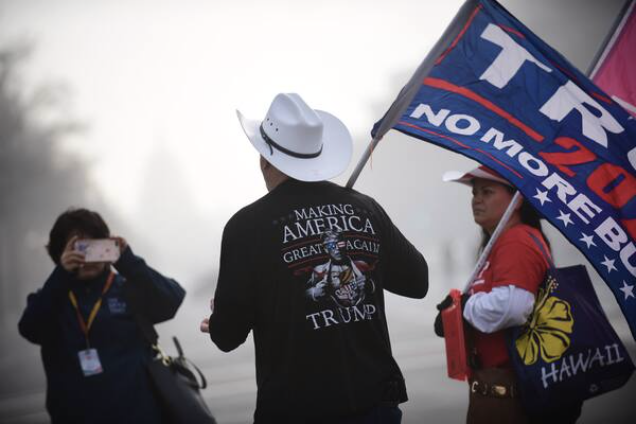
InternationalDec 13. 2020A Trump supporter dressed as Uncle Sam stands on a ladder in front of the Supreme Court in Washington D.C., where hundreds of other Trump supporters gathered on Saturday. MUST CREDIT: photo for The Washington Post by Astrid Riecken.A Trump supporter dressed as Uncle Sam stands on a ladder in front of the Supreme Court in Washington D.C., where hundreds of other Trump supporters gathered on Saturday. MUST CREDIT: photo for The Washington Post by Astrid Riecken. 
By The Washington Post · Emily Davies, Rachel Weiner, Clarence Williams, Meagan Flynn, Jessica Contrera ·NATIONAL, POLITICS, COURTSLAW 

WASHINGTON – Thousands of maskless rallygoers who refuse to accept the results of the election turned downtown Washington into a falsehood-filled spectacle Saturday, two days before the electoral college will make the president’s loss official. 

Supporters of President Trump gather along Pennsylvania Avenue on Saturday to march to the Capitol and Supreme Court. MUST CREDIT: photo for The Washington Post by Astrid Riecken.

Supporters of President Trump gather along Pennsylvania Avenue on Saturday to march to the Capitol and Supreme Court. MUST CREDIT: photo for The Washington Post by Astrid Riecken.

In smaller numbers than their gathering last month, they roamed from the Capitol to the National Mall and back again, seeking inspiration from speakers who railed against the Supreme Court, Fox News and President-elect Joe Biden. The crowds cheered for recently pardoned former national security adviser Michael Flynn, marched with conspiracy theorist Alex Jones and around midday, they stood in awe of a flyover from what appeared to be Marine One. 

“There he is! There is our guy!” a woman exclaimed, reaching toward the sky. 

After railing on Twitter about the failure of his most-recent attempt to overturn the election results, President Donald Trump praised the crowd that gathered in his honor, tweeting “Wow! Thousands of people forming in Washington (D.C.) for Stop the Steal. Didn’t know about this, but I’ll be seeing them! #MAGA,” he wrote. 

Later in the day, attention was focused not on the president but on a group he once told to “stand back and stand by”: the Proud Boys, a male-chauvinist organization with ties to white nationalism. In helmets and bulletproof vests, hundreds of men in their ranks marched through downtown in militarylike rows, shouting “move out” and “1776!” 

They seemed intent on intimidating onlookers, and adopted a chant popular with counterprotesters: “Whose streets? Our streets.”

As the sun went down, their antics escalated. A group of Proud Boys and pro-Trump demonstrators repeatedly faced off with counterprotesters near Black Lives Matter Plaza. Each time, officers appeared in riot gear to divide the two sides as fireworks were thrown, causing small explosions.

When the groups splintered and roamed, police also moved, barricading streets with bikes and their bodies, determined not to give the two sides access to each other.

The Proud Boys became increasingly angry as they wove through streets and alleys, only to find police continuously blocking their course.

“Both sides of the aisle hate you now. Congratulations,” a Proud Boy shouted at the officers. 

Counterprotesters also agitated police, with some throwing water bottles at the line of officers. More than once, officers used their bikes and fired pepper spray to push the anti-Trumpers back, leaving at least three demonstrators flushing out their eyes with the help of medics.

District of Columbia Police Chief Peter Newsham made an appearance just before 6:30 p.m., telling protesters: “We’re doing the best we can.” He added: “What I would really like is that no one gets hurt tonight.”

In an interview, Newsham said police units were deployed across downtown to keep the groups apart. He said smaller segments of people who splintered from larger gatherings seemed “intent on conflict.”

Those groups eventually found each other, starting brawls near the Hyatt Place hotel, the Capital Hilton and Harry’s Bar, a hangout popular with Trump supporters.

At least six people were arrested during Saturday’s demonstrations, in addition to five arrests resulting from a brawl Friday night. A police officer was hit in the eyes with pepper spray midday Saturday, and another person was injured during an altercation on Third Street NW near Constitution Avenue. 

The scuffles seemed poised to continue late into the night in areas surrounding Black Lives Matter Plaza, which was partially blocked off by police.

The tension came as most of the day’s earlier rallygoers were on their way home or to hotels, after spending hours cheering for election fraud claims that have been disputed or debunked. The majority-White crowd ranged from gray-haired men and women in red hats to children in wagons, one of whom chanted “100 more years!”

As the nation watches Biden’s transition, rising coronavirus cases and vaccine development, many have tuned out Trump’s attempts to maintain power. But to his most dedicated supporters, the president’s megaphone is as loud as ever. He has continued to falsely claim the election was stolen from him, prompting his faithful to return to the nation’s capital.

Flynn appeared on the steps of the Supreme Court to encourage them to keep hope, despite the justices’ dismissal Friday night of Trump’s long-shot bid to overturn election results.

“Don’t get bent out of shape,” Flynn said. “There are still avenues. . . . We’re fighting with faith, and we’re fighting with courage.”

After Flynn finished speaking, he was chased by shouting admirers who cheered: “We love you, general!” Bodyguards tried to keep the fans at bay as Flynn kept smiling. 

The speakers painted a picture of a country in a battle between good and evil, in which God himself would ultimately ensure Trump remained in power. Sebastian Gorka, a former foreign policy adviser to Trump, said that when he heard the Supreme Court had dismissed an election case from Texas on Friday night, he told himself to “stop, take a deep breath, count to 10, read the Bible and pray.”

“We, thanks to our lord and savior, have already won,” Gorka claimed. 

A priest featured on a Jumbotron prayed to “place thyself at the head of this army of thy children.”

Ruth Hillary, a 58-year-old pastor from California, listened while holding up her “Stop the Steal” sign. She said she will continue to protest as long as the president and vice president believe she should.

“If President Trump accepts it and Vice President Pence accepts it, then we will accept it,” she said. “But right now, this is a Godly protest.”

Jones, the Infowars host and conspiracy theorist known for his denial of the Sandy Hook massacre, alternated between speaking about God and the future president: “Joe Biden is a globalist and Joe Biden will be removed one way or another,” he said from a stage on the National Mall.

Trump backer and MyPillow founder Mike Lindell argued that “Fox [News] was in on it,” while podcaster David Harris Jr. riled the crowd by suggesting that if there was a civil war, “we’re the ones with all the guns,” he said. 

All day, the masses nodded along to falsehoods, prayed for the country and cheered beside each other without masks.

District police did not enforce mask rules or issue fines to those who ignored social distancing guidelines, even as the region faces an unprecedented spike in coronavirus cases. Dozens of District police officers have tested positive in the weeks since the last pro-Trump rally in November. As of Friday, 94 remained in quarantine. Police have declined to draw a direct link between demonstrations and the spike in infections among officers.

On Saturday, local activists were frustrated with the police tactics aimed at maintaining peace. For part of the evening, officers formed intermittent blockades at the perimeter of Black Lives Matter Plaza, essentially penning in counterprotesters while Trump supporters were free to roam. 

“They can move around however they please,” said Constance Young, 37. “We’re not the ones not wearing masks and spreading covid.”

District residents have expressed concern that the influx of maskless protesters puts the entire city at risk, especially workers in restaurants and hotels. Activists flooded the inboxes of city officials, asking them to shut down businesses that allow people to congregate without masks. They called hotels to ask that they refuse to host those planning to attend Saturday’s rallies, with little success. 

Protesters still came in from around the country, with family, friends and flags in tow.

David Dumiter, 33, and his niece Monica Stanciu drove eight hours from Dearborn, Mich., to be at the Washington Monument on Saturday. 

Dumiter, an airplane mechanic who said he has been unemployed since the pandemic decimated air travel, said he knew the Supreme Court had blocked any legal path to reverse the results of the election. That didn’t change his mind about showing up Saturday. The president was still pushing, so he would, too. 

“We’re not going to cave in,” Dumiter said. He walked down the Mall in his Trump hat, Trump sunglasses and Trump jumpsuit, still gripping his flag. 

Nuclear developers dust off plans for more reactors in U.K. #SootinClaimon.Com

#SootinClaimon.Com : ขอบคุณแหล่งข้อมูล : หนังสือพิมพ์ The Nation.

Nuclear developers dust off plans for more reactors in U.K. (nationthailand.com)

Nuclear developers dust off plans for more reactors in U.K.

InternationalDec 12. 2020Contractors work inside Reactor Unit Two on the construction project for Hinkley Point C nuclear power station near Bridgwater, England, on July 28, 2020. MUST CREDIT: Bloomberg photo by Luke MacGregor.
Photo by: Luke MacGregor — Bloomberg
Location: Bridgwater, United KingdomContractors work inside Reactor Unit Two on the construction project for Hinkley Point C nuclear power station near Bridgwater, England, on July 28, 2020. MUST CREDIT: Bloomberg photo by Luke MacGregor. Photo by: Luke MacGregor — Bloomberg Location: Bridgwater, United Kingdom 

By Syndication The Washington Post, Bloomberg · Rachel Morison 

Nuclear power developers are refreshing plans for new reactors in the U.K. after speculation that the government could be willing to support building more plants than the industry had been expecting.

A little-noticed paper issued by the Treasury on Nov. 25 said it is important that the U.K. can “maintain options by pursuing additional large-scale nuclear projects,” assuming they can be done in a cost-effective way. That wording, with a notable plural on the word “projects,” went beyond a recommendation made two years ago that Britain should build only one more major atomic facility.

After years of waiting for a signal, the document was read by nuclear industry executives as evidence that energy policy could be shifting their way. They anticipate the government may soon look more favorably on nuclear after more than a decade of tilting toward renewables. Electricite de France, Hitachi and China General Nuclear Power Corp. are looking at ways to revive designs that were shelved in the past few years.

“Large-scale projects have a bright future in Britain if the government backs a financing model to cut the cost of capital,” said Tom Greatrex, chief executive officer of the Nuclear Industry Association. “There are a number of viable sites. We need low-carbon power that we can count on to fill the gaps when the wind is down.”

For its part, government insists its policy on nuclear hasn’t changed — even with all the debate about exiting the European Union. It’s allowing EDF to seek planning permission for the Sizewell plant in east England, but ministers have been quiet about what, if any, further plants might win favor.

“The government believes that nuclear has a key role in our future energy system,” a spokesperson at the department for Business Energy and Industrial Strategy said. “The energy white paper will set out further information on the government’s future plans for energy.”

Britain is likely to need nuclear to meet net-zero emissions goals even in the event of a no deal Brexit. By 2035, all of the U.K.’s eight existing nuclear plants are due to retire from service. They supply almost a fifth of the nation’s electricity.

The mood in industry has shifted quickly. As recently as Nov. 18, nuclear developers were disappointed that Prime Minister Boris Johnson’s 10-point plan for a green industrial revolution didn’t include thinking on large-scale reactors. Then, ministers pledged to release fresh thinking in the form of a white paper which may include details on a possible funding mechanism for nuclear projects, each of which require $20 billion or more. That paper is due within the next few weeks.

Before the Treasury’s paper on Nov. 25, it was widely believed the government would accept the advice of the National Infrastructure Commission, which in 2018 suggested one more major plant should be built beyond one EDF is constructing at Hinkley Point. Instead, the Treasury noted a need to create low-carbon sources of electricity to meet growing demand.

To the industry, that’s a shifting of the blockage they’ve felt from government. While ministers opened new paths to finance and permit offshore wind farms, they allowed a number of nuclear developments to slip off the agenda. A perception took hold that renewables were favored because they’re increasingly cheaper and quicker to build than nuclear plants.

Now, the government is promising more detail for the industry on how it plans to finance nuclear, giving executives hopes that work at more sites might be viable.

One of the biggest question marks is whether China will be able to move ahead with a long-planned reactor in the U.K. despite a political chill toward investment from that nation. Under pressure from the U.S., the government has clamped down on the spread of 5G mobile technology from Huawei Technologies.

China General Nuclear’s Chief Executive Officer Rob Davies said the company is willing to self-finance the Bradwell B project in southeast England. His remark suggests the company would take a market power price for electricity sold from the plant, a break from EDF’s move at Hinkley Point to secure a long-term contract before moving ahead.

The project would be a Chinese-designed reactor, called HPR1000. It would showcase the nation’s technical skill in Europe. Davies said CGN is committed to nuclear development in the U.K. regardless of the political winds.

“We plan to maintain our support for Hinkley Point C, to help Sizewell C to reach a Final Investment Decision, to complete the general design assessment for the HPR1000 and to continue with Bradwell. That’s our plan and that’s our offer to the U.K. And we’ll self finance,” he said at an industry event this month.

The CEO of Hitachi’s Horizon Nuclear Power subsidiary said he’s lining up a project for the Wylfa site in Wales. His remark is an indication that the project may still be revived even after Hitachi exited it in September after failing to agree on financing.

Horizon is open to nuclear developments both large and small on the Wylfa site and Duncan Hawthorne said he’s “confident that one of those solutions will emerge” after the publication of the white paper.

“We have a very viable offering we can put on the Wylfa site that would allow the site to move pretty seamlessly from the Advanced Boiling Water Reactor solution to another technology solution and broadly offer the same timetable and the same commercial offering to government,” he said, without saying what the project will be.

In June, EDF revamped plans for the Moorside site in Cumbria that Toshiba Corp. pulled out of in 2018. The proposed Clean Energy Hub includes a large nuclear plant, the same design as Hinkley Point and Sizewell, small modular reactors and advanced modular reactors.

“Ultimately it’s for government policy as to how many reactors they want and whether or not they want one technology or they want two technologies,” said Julia Pyke, director of financing for Sizewell at EDF. “We would love to build another U.K. European Pressurized Reactor at Moorside, and it would, of course, get cheaper because each time you do something you learn how to do it better.”

Not all of these projects will be built. In the U.K., EDF is building the Hinkley Point C nuclear plant in Somerset and next in line is the Sizewell site in Essex northeast of London. The government is keen on small modular reactors that are quicker to build and cheaper. If it gets enough of those, there may not be a need for any more large scale stations. That’s what policy makers will hope to avoid tying themselves into.

Just four years ago, nuclear reactors were at the heart of the government’s clean-energy program. Both Labour and Conservative governments backed measures to replace the eight existing plants that supply up to a fifth of the U.K.’s electricity.

“While large nuclear installations are an important part of the national strategy, there are a limited number of suitable sites in the U.K.,” said Vince Zabielski, a lawyer at Pillsbury Winthrop Shaw Pittman. “A sensible mix of both nuclear and renewables is the middle path that is most likely to lead to a carbon-free future.”

‘No ban by ministry on use of Thai traditional dance in animation game’ #SootinClaimon.Com

#SootinClaimon.Com : ขอบคุณแหล่งข้อมูล : หนังสือพิมพ์ The Nation.

‘No ban by ministry on use of Thai traditional dance in animation game’ (nationthailand.com)

‘No ban by ministry on use of Thai traditional dance in animation game’

InternationalDec 12. 2020

By The Nation

The Culture Ministry has not banned the developers of “Home Sweet Home” game from using Thai traditional dance, Saroot Tubloy, Yggdrazil Group’s chief operating officer and game director, tweeted on Saturday.

Home Sweet Home is a first-person horror adventure game based on Thai myths and beliefs, which was launched in 2017 followed by the second episode in 2019.

Earlier, Puvaphat Chanasakol, an adviser to a subcommittee on e-sports, tweeted on Thursday that he had found out the ministry had banned the game developers from using Thai traditional dance, as it may result in a negative view of this dance. He later said he had misunderstood.

Saroot said the ministry had only disapproved their request to use illustrations of instruments and practices related to Thai traditional dance in the game because it could make people scared if associated with an animated Thai ghost dancer that looked very scary.

“Therefore, we redesigned the ghost dancer to ensure that people would not be afraid and would instead be impressed with its beauty,” he said.