The energy project Trump can’t stop seeks ways to finish the job
InternationalNov 30. 2020Russian pipe-laying vessel Akademik Tscherski at the Baltic port of Mukran on the island of Ruegen in Sassnitz, Germany, on Nov. 4. Chancellor Angela Merkel’s district on the Baltic coast was the site of the last major Soviet military project in communist East Germany and is now at the center of a deepening rift between Cold War allies. MUST CREDIT: Bloomberg photo by Alex Kraus
By Syndication Washington Post, Bloomberg · Vanessa Dezem, Dina Khrennikova · BUSINESS, EUROPE
Russia can probably get around the latest U.S. sanctions against Nord Stream 2 and complete the controversial pipeline, according to industry executives and analysts.
Pipelaying on the project, which is owned by Gazprom PJSC and will bring natural gas from Russia to Germany, will restart on Dec. 5, the pipeline company said on Sunday. And analysts say Gazprom also has options to overcome a new round of sanctions the U.S. Congress is set to approve in the next three weeks.
The 9.5 billion-euro ($11.2 billion) link under the Baltic Sea has become a major source of friction in the trans-Atlantic relationship, with President Donald Trump urging Europe part back its dependence on Russian energy supplies. German companies and Chancellor Angela Merkel are bridling against America’s interference, and the western companies set to reap rewards once gas starts flowing have vowed to move ahead.
“The pipeline company will restart pipe laying activities, and this pipeline will be finished,” said Rainer Seele, chief executive officer of OMV AG, the Austrian oil company that’s among the western backers of the link. “We are convinced this project is needed.”
Both Democrats and Republicans are pushing for legislation by the end of the year that would tighten sanctions against Nord Stream 2. President-elect Joe Biden has joined Trump in opposing Nord Stream 2, leaving little hope that his inauguration in January will defuse the issue.
Gazprom has three challenges to resolve to move forward: finding a ship to do the work, obtaining insurance for the project, and getting certification that the work being done is safe and complies with European Union standards. Gazprom and Russia are working on all three fronts.
“All in all, it is still possible for Nord Stream 2 to be built by summer 2021 and get all the necessary certification to flow gas the following winter,” said Katja Yafimava, senior research fellow at the Oxford Institute for Energy Studies and one of Europe’s foremost authorities on pipeline politics.
Further sanctions probably will lengthen that timeline, but she expects Gazprom eventually will find solutions to each of the hurdles thrown up. The U.S., she says, “must realize it cannot stop it.”
There are signs Merkel’s government will help. Ministers in Berlin are coordinating a response with EU nations to the U.S. sanctions, and lawmakers joined industry groups in complaining that American officials are overstepping their authority. Germany’s BDI industry lobby has lashed out at U.S. intervention, saying it “will not only cause considerable economic damage, but will also undermine the sovereignty of Germany and the European Union.”
Just a few weeks away from completion, work stopped on the 1,230-kilometer (764-mile) pipeline last December when the U.S. targeted measures against companies working on the link. The Swiss company Allseas Group SA pulled a vessel it had laying the pipeline off the project with all except 160 kilometers already in place on the floor of the Baltic Sea.
The biggest question mark has been whether Gazprom has found a ship to finish the work. There was no word on Sunday from Nord Stream 2 about which vessel would be used.
Earlier this year, the company brought a ship called the Akademik Cherskiy into the region. It is currently traveling through the Baltic Sea after spending time in Mukran, a key logistics port on the Germany coast, Bloomberg ship-tracking data shows.
The next round of sanctions are aimed at preventing companies that access the U.S. financial system from writing insurance for Nord Stream 2. That would hit the primary insurer Zurich Insurance Group AG, according to people with knowledge of the pipeline’s arrangements on that matter. Zurich Insurance said it never comments on specific customers and that it would comply with any regulations that apply.
Because of the size of the project, it will probably require a reinsurer to help underwrite the costs. The sanctions may force Nord Stream 2 to source all those services in Russia, perhaps from state-backed entities. One possible solution is the Russian National Reinsurance Co., or RNRC, which was created by Moscow to deal with sanctions risks. There’s no restriction on the nationality of the company writing insurance for the project.
“Russia several years ago took care of creating additional domestic capacities for insurance and reinsurance of sanctioned risks, the risks that cannot be ceded to the international markets,” said Anastasia Litvinova, director for EMEA insurance at Fitch Ratings. She declined to comment on specific proposals against Nord Stream 2.
Certification is another issue that will take time to solve. Det Norske Veritas Holding AS, the Norwegian company verifying the pipeline’s safety and integrity, said it’s scaling back work for Nord Stream 2 ahead of the decision on sanctions. Denmark’s energy agency says Nord Stream 2 can hire any third party to fulfill legislation, which could allow a Russian company to step in.
Yafimava says Gazprom probably needs to find a state-owned entity to do certification if the U.S. sanctions extend to that part of the business, “which is not impossible, but it takes time.”
So far, none of Nord Stream 2’s financial backers have pulled out despite escalating anger from the U.S. OMV along with Royal Dutch Shell Plc, Uniper SE, Engie SA and Wintershall AG helped finance the project. Engie’s Chief Financial Officer Judith Hartmann said he’s “still hopeful” that Nord Stream 2 will be completed.
By The Washington Post · Moriah Balingit · NATIONAL, HEALTH, EDUCATION, HEALTH-NEWS
New York Mayor Bill de Blasio announced Sunday that he would begin to allow the city’s youngest students and those with special needs to return to classrooms beginning next week, abandoning a previous plan that forced the entire school system to close 10 days ago and marking another disruption in an already challenging school year.
The move, which will be accompanied by ramped-up coronavirus testing, affects a small fraction of the more than 1 million public school students in New York City, home to by far the largest school system in the nation. About two-thirds of families there have opted for full-time virtual learning. Of those who have chosen the city’s hybrid option, only pre-kindergarten through fifth-grade students, and special-education (District 75) students will be permitted to return. The mayor said he is pushing schools that have sufficient space to reopen five days a week.
“The need levels for District 75 and for younger kids – the need is even more intense to be there in school,” said de Blasio, a Democrat. “We know that the health realities for the youngest kids are the most favorable.”
Schools across the country are facing several competing pressures as they weigh whether to reopen schools or keep them closed. Besides New York City, the entire state of Kentucky has ordered school closures amid rising coronavirus infection numbers. But there is also a growing body of evidence that young people can safely return to classrooms without increasing community spread if they wear masks, maintain social distance and have good ventilation, among other things. Concerns abound, too, about the danger to the health, welfare and academic progress school closures pose for vulnerable students.
De Blasio’s announcement comes 10 days after he closed city schools in response to seven-day average positivity rates rising to 3%, the threshold he had set to shutter the school system. The move angered some parents, who were frustrated that bars, restaurants and gyms remained open.
The mayor said the first couple of months of in-person school had been instructive, and that even with weekly positivity rates at 3%, he was confident that he could keep schools open for younger students – who appear less likely to contract and spread the virus. The city’s randomized testing program, which tested a sample of students and staffers in each school building, found a small number of cases – less than one-half of 1% of in-person students and staffers in the city.
“We proved that schools could be extraordinarily safe because we put tremendous health and safety measures in place,” de Blasio said. “It’s a new approach because we have so much proof now of how safe schools can be and this has come from real life experience in the biggest school system in America.”
Under the new plan, preschoolers and students up to fifth grade will return to classrooms Dec. 7. Special-education students will return Dec. 10. Middle and high school students will remain remote.
Gov. Andrew Cuomo, a Democrat who has sparred with the mayor over school closures, said in a teleconference Sunday that he supported de Blasio’s move. Given the low rates of coronavirus found in schools, he said, “it’s literally safer for a child and a teacher to be in the school than in the community.”
The city once was the epicenter of the pandemic, the disease covid-19 spreading quickly through densely populated working-class neighborhoods. It has killed more than 24,000 New Yorkers and left many more traumatized. At the start of the school year, about half of families chose the city’s hybrid-learning option, in which children would learn in classrooms some days and would take online classes the rest of the time. The other half opted for the fully remote option, with disproportionate numbers of students from Black and Latino neighborhoods – where the virus hit hardest – steering clear of in-person schools.
The city allowed families to opt out of in-person learning at any time, and many families have since taken advantage of that option. Miranda Barbot, a spokeswoman for the mayor, said the number of students in remote learning remains in flux, and estimated that about 300,000 students had chosen the hybrid model before school closed in mid-November. About 35,000 have opted into hybrid learning for December.
The mayor also announced Sunday that the city would adjust its approach to keeping the virus at bay in city schools. He said he plans to deploy weekly, instead of monthly, randomized testing, and he said children who did not have consent forms to be tested would not be permitted to return to class. While he would no longer shut down the city’s school system when positivity rates reached 3%, he planned to continue to abide by the state’s testing requirements, which require increased monitoring for schools that reopen in areas of the city where positivity rates are especially high.
The city’s teachers’ union supported that approach.
“We are supportive of a phased reopening of schools in other neighborhoods as long as stringent testing is in place. This strategy – properly implemented – will allow us to offer safe in-person instruction to the maximum number of students until we beat the pandemic,” said Michael Mulgrew, president of the United Federation of Teachers
By The Washington Post · Hannah Knowles · NATIONAL
Stumbled upon by bighorn sheep-counters, the tall metal object in the Utah desert baffled officials – and delighted the public, which began speculating on a scene straight out of a science fiction movie.
There were theories – the work of an artist? Aliens? – but no one seemed to know who put it there or why.
Now the object has vanished, leaving the curious with even more questions. The Bureau of Land Management said this weekend that it has heard of “a person or group” having removed the object Friday night.
“We have received credible reports that the illegally installed structure, referred to as the ‘monolith’ has been removed from Bureau of Land Management (BLM) public lands by an unknown party,” the bureau said in a statement, adding that it does not investigate “crimes involving private property” such as the monolith.
Utah Highway Patrol Cpl. Andy Battenfield confirmed to The Washington Post on Sunday that the structure is gone but said he could not speak to who took it or when.
So people are left to wonder.
“The space aliens returned to remove it,” one person commented on Facebook beneath the Bureau of Land Management’s update. “The structure had gathered the needed data. That’s what they told me, anyway.”
“I liked it!” another person wrote. “Maybe it will appear in another place.”
The Utah Department of Public Safety was surveying sheep by helicopter on Nov. 18 when workers discovered the monolith “installed in the ground in a remote area of red rock,” authorities said.
Pilot Bret Hutchings recounted the excitement of the find to KSL-TV.
“There’s this thing! There’s this thing back there! We got to go look at it!” Hutchings recalled a crew member saying.
“We were kind of joking around that if one of us just suddenly disappears, I guess the rest of us make a run for it,” he said.
The hunk of metal quickly generated online buzz. The New York Times investigated whether the deceased sculptor John McCracken, a science fiction aficionado, might be responsible for it. (“His dealer says yes. His son says maybe. His artist buddies . . . say, no way,” the Times summarized).
The Department of Public Safety refused to disclose the object’s exact location, warning that people who try to visit it might end up stranded. But some went searching anyway. The Salt Lake Tribune, which confirmed the object’s disappearance Saturday, spoke with disappointed visitors who drove hours to catch a glimpse.
All that remained Saturday, according to The Tribune: a metal triangle and a hole where the monolith used to stand, surrounded by the tracks of those who came to check it out.
Colorado resident Riccardo Marino told the newspaper that he saw a truck driving away from the area with a big rectangular object.
Then he realized the object was gone.
It was a “very eerie feeling, arriving in the moonlight to nothing there,” Marino told The Tribune.
Health experts urge Americans to take restrictive measures even if their states will not
InternationalNov 30. 2020Anthony Fauci, director of the National Institute of Allergy and Infectious Diseases, participates in a coronavirus briefing at the White House on Nov. 19, 2020. MUST CREDIT: Washington Post photo by Jabin Botsford
By The Washington Post · Jacqueline Alemany · NATIONAL, HEALTH, HEALTH-NEWS
WASHINGTON – The United States’ top infectious-disease expert sounded the alarm Sunday, warning of a “surge superimposed upon” a surge of coronavirus cases over the coming weeks due to Thanksgiving travel and celebrations.
Anthony Fauci and other experts urged Americans to take aggressive action as the December holidays loom to mitigate the surge overwhelming hospitals across the country. As the number of coronavirus-related deaths per day rose to its highest point since April, Fauci and others highlighted the importance of complying with mask mandates and physical distancing.
“It’s going to get worse over the next several weeks, but the actions that we take in the next several days will determine how bad it is or whether or not we continue to flatten our curve,” U.S. Surgeon General Jerome Adams said on Fox News on Sunday.
Deborah Birx, coordinator of the White House coronavirus task force, warned that the number of coronavirus cases is “three, four, and 10 times” as high as it was during the second surge after Memorial Day weekend.
“It looked like things were starting to improve in our northern plain states, and now with Thanksgiving, we’re worried that all of that will be reversed,” Birx said on CBS News’s “Face the Nation,” adding that people should “take it upon yourself to be restrictive” even in states that do not have regulations in place to curb the spread of the virus.
The number of coronavirus-related deaths are nearing record levels in the United States not seen since the spring. About 95,000 people are hospitalized with the coronavirus-caused disease covid-19, according to Adm. Brett Giroir, assistant secretary of health and human services. About 20% of all hospitalized people have covid-19, he added.
Giroir said he could not project how much travel during Thanksgiving weekend may have exacerbated spread of the virus. “We really have to see what this weekend looks like. I can’t really project that,” Giroir said on CNN’s State of the Union. But he called this moment “a really dangerous time.”
“But, remember, we’re not passive bystanders,” he added. “If we do the right thing – universal mask-wearing, avoiding indoor spaces, crowded bars, restaurants, indoors, all those [sorts] of things – we can still flatten this.”
The first wave of vaccinations is expected to commence for prioritized groups in a matter of weeks, which Fauci on “Meet the Press” called a “light at the end of the tunnel” to the pandemic that’s killed more than 266,000 Americans this year.
The Centers for Disease Control and Prevention advisory committee on immunization practices will meet Tuesday to vote on coronavirus vaccine priority rankings. Health-care workers probably will be the first to receive the vaccine once it has been approved, though Fauci said states will receive vaccines and ultimately make final distribution decisions “with strong recommendations from the CDC.”
Staffers and residents in nursing homes probably will come next, followed by other high-risk and vulnerable populations. Giroir predicted that the United States should have enough vaccine to immunize 20 million Americans by the end of the year.
“We have to immunize for impact,” he said. “The rest of America will get it in the second quarter, third quarter of 2021, but we can maximize our impact right now.”
In the meantime, Fauci implored Americans to restrict their holiday activities to “blunt” the surge’s effect and alleviate “significant stresses” on hospital and health-care systems. Adams echoed those sentiments, begging people to “hang on just a little bit longer.”
“The science out there has never been stronger to support the wearing of masks,” said Adams, who later lamented the politicization of the virus and called wearing a mask “an instrument of freedom.”
“You shouldn’t have to have a mandate to do the right thing to protect your neighbor, to keep schools open. Make sure you’re watching your distance and make sure, again, if you’ve been in a gathering of more than 10 people without your mask on over the last several days, please get tested in the next three to five days,” he said.
Jurisdictions are unevenly navigating the current surge, with some clamping down while others are resisting measures that could prevent further spread of the virus. Los Angeles County, for example, on Friday reinstated a temporary stay-home order that prohibits all public and private gatherings with people who are not in their household.
“We know we are asking a lot from so many who have been sacrificing for months on end and we hope that L.A. County residents continue following Public Health safety measures that we know can slow the spread,” Barbara Ferrer, director of the Los Angeles County Department of Public Health, said in a statement.
California and Texas broke the U.S. record for most new coronavirus infections reported in a single day last week;h Texas Gov. Greg Abbott, a Republican, ruled out any further shutdowns in the state earlier this month.
New York Mayor Bill de Blasio, a Democrat, announced on Sunday a reopening of the nation’s largest public school system, starting with elementary schools, a reversal of his decision to shutter New York City public schools less than two weeks ago. The Supreme Court’s conservative majority struck down temporary pandemic-related restrictions on religious organizations last week imposed by New York Gov. Andrew Cuomo, a Democrat, in hot spots where the virus is raging.
In first post-election TV interview, Trump renews baseless claims of voter fraud
InternationalNov 30. 2020President Donald Trump arrives to speak in the press briefing room at the White House on Nov. 24. MUST CREDIT: Washington Post photo by Jabin Botsford
By The Washington Post · Felicia Sonmez · NATIONAL, POLITICS, WHITEHOUSE, MEDIA
In his first television interview since the Nov. 3 election, President Donald Trump suggested Sunday that he will never accept his loss to Democrat Joe Biden and continued to fling baseless accusations of election fraud.
“My mind will not change in six months,” Trump told host Maria Bartiromo by telephone on Fox News Channel’s “Sunday Morning Futures.” “There was tremendous cheating here.”
Biden won the presidential race with 306 electoral votes – the same number as Trump had four years ago in what he and his aides described as a landslide at the time.
Biden’s victory was further solidified Sunday as the Wisconsin recount confirmed that he had bested Trump in the key swing state by more than 20,000 votes. The president and his legal team also have failed in court challenge after court challenge as they have sought to overturn the results in various states.
In the Sunday interview, Trump said he is “going to use 125 percent of my energy” to continue to contest the results through the courts and signaled that he would be open to having a special counsel investigate the election. Any such appointment would be made by Attorney General William Barr.
Trump also voiced disbelief that Biden won more than 80 million votes, by far the most received by a presidential nominee. Barack Obama won in 2008 with nearly 70 million votes, a record that he didn’t beat in 2012, when he garnered just under 66 million votes. Four years later, Trump and Democrat Hillary Clinton also didn’t surpass Obama’s 2008 total, winning 63 million and 66 million votes, respectively.
“Joe Biden did not get 80 million votes,” Trump declared Sunday, providing no evidence for his assertion. He claimed that some foreign leaders have been calling and telling him that this was the most “messed-up” election they have ever seen, although he did not name any of the leaders. The White House has not released the details of any such calls, and most U.S. allies have congratulated Biden on his win. Bartiromo did not dispute any of Trump’s false claims.
Ahead of the Jan. 5 Senate runoff elections in Georgia – which will determine which party controls the chamber – Trump also renewed his criticism of Republican officials in the state, including Gov. Brian Kemp and Secretary of State Brad Raffensperger, for not supporting his baseless fraud claims.
“The governor’s done nothing. He has done absolutely nothing. I’m ashamed that I endorsed him,” Trump said of Kemp. Republicans are aiming to turn out GOP voters to lift Sens. Kelly Loeffler, R-Ga., and David Perdue, R-Ga., to victory in a state that Biden won this month, but those efforts could be made harder by the president’s persistent claims that voters should not trust that their votes will be counted.
Some cities are curtailing K-9 use after these brutal police dog attacks were captured on video
InternationalNov 30. 2020Robert Fitts screams as a K-9 attacks him after he was pulled over by police for a traffic violation in Selma, Ala., on Aug. 3, 2018. MUST CREDIT: Selma Police Department
By The Washington Post · Kimberly Kindy, Julie Tate · NATIONAL, COURTSLAW, ANIMALS
A half-mile from the Edmund Pettus Bridge in Selma, Ala., where police once beat civil rights protesters, Selma police pulled over an unarmed 36-year-old Black man in 2018 for a series of traffic violations that began with him rolling his white Jaguar through a stop sign.
Robert Fitts got out of the car, arms raised, eyewitnesses said, but was quickly knocked to the ground and swarmed by three White officers as a fourth White officer led a lurching police dog to his body and ordered an attack. A Black officer arrived at that moment, yelling obscenities as he demanded that the dog be pulled away. Instead, he watched Fitts scream and writhe on the ground as the dog sunk his teeth deep into his leg.
“Get the dog back! Get the godd— dog back!” Selma Police Officer Robert Tyus shouted, as the other officers ignored his pleas and the German shepherd continued to bite and shake Fitts’s left leg for nearly 30 seconds.
The incident is one of at least 37 video-recorded K-9 attacks that have surfaced over the past three years across the country, many showing people under attack even though they are unarmed, have surrendered to police, are already handcuffed or are innocent bystanders, a Washington Post analysis shows.
Similar to the way that footage of chokeholds and fatal shootings has led to a reassessment of police tactics, video of attacking police dogs and the resulting physical injuries are beginning to alter the image of the controllable, lifesaving K-9, sometimes known as the Lassie or Rin Tin Tin effect. For decades this image has blunted the scrutiny of the roughly 15,000 police dogs now working in the United States, civil rights groups, policing experts and attorneys say.
In some cases, the officers themselves have been alarmed by how K-9s were used by fellow officers. But as Officer Tyus found in Selma, that can put them at odds with their department. Selma police said use of the dog was justified, but Tyus stood by his position in August at a bail hearing for Fitts. “I stated this is some bulls— because I felt like he could have been taken in custody without being bitten,” Tyus testified. Video of the attack on Fitts was obtained by The Post and has not been previously made public.
The image of police dogs started to shift several months ago in Salt Lake City. Video showed Jeffery Ryans, a 36-year-old Black man who was about to leave for his job as a train engineer, putting his hands in the air and kneeling on the ground in his backyard as he told officers he was surrendering. A German shepherd was unleashed on him anyway, chomping down on his left leg, causing injuries that required multiple surgeries in an attempt to repair nerve, muscle and tendon damage.
“I believe when people view videos like this they will feel disgusted, distressed, shocked and angered,” Salt Lake City Mayor Erin Mendenhall, a Democrat, said in an interview. “It will look antiquated, brutal and inappropriate in this day and age. These videos are a catalyst for change. I believe we are at a tipping point.”
The Salt Lake City officer – known as a K-9 handler – has been charged with felony aggravated assault. More than 100 videos from an additional 18 police dog attacks have been referred by the police department to the local district attorney for possible prosecution.
Key videos from those encounters, reviewed by The Post, show officers repeatedly siccing dogs on individuals after they had surrendered or were under the physical control of officers. Crucial details about those incidents, such as the race of those attacked, have not been made public – aside from the Ryans case – and were not always discernible from the videos.
Outside of the Salt Lake City incidents, The Post reviewed 18 other cases captured on video and documented in police reports and legal records across the country. In a majority of the cases, officers were cleared of any wrongdoing and the departments have announced no changes to their K-9 programs. In a few cases, the people who were bitten have received financial settlements through civil lawsuits. Only two of the people who were bitten were armed.
In at least half of the 18 cases, the victim was Black. Virtually all of the K-9 handlers – at least 16 of the 18 – were White.
In four cases, the people were in handcuffs when the K-9 attacked them. Another four were accidental bites of innocent bystanders who were walking their dog, sleeping in a tent or strolling down the sidewalk.
One of the innocent bystanders was 39-year-old Raymond Roberts, who is White, and was sleeping outside in a tent in Albuquerque when a police dog in pursuit of a suspect in an attempted homicide bit him instead. The attack took place in 2016 and the video became public in 2018. Roberts suffered multiple bites and tears to his left shoulder and arm that required several surgeries that did not fully restore the use, mobility or strength in his arm, medical records show. The city settled with Roberts last year for $390,000.
Charges are rare in K-9 cases, but a sheriff’s deputy in North Carolina pleaded guilty last year to a misdemeanor for siccing a dog on an unarmed Black man who was on the ground, surrounded by five other officers and experiencing a mental health crisis. The department put its K-9 officers and their 11 dogs through new training, and the number of bites has dropped from an annual average of eight to zero the past two years.
In Graton, Calif., Jason Anglero-Wyrick, 36, was mauled in April by a K-9 as he lay face down, his hands wrapped behind his back in an act of surrender, video shows. The officer was unable to get the dog to release its grip on command, and as the dog was being pulled off Anglero-Wyrick, it ripped a hunk of flesh from his right leg the size of a baseball, leading to a three-week hospital stay and multiple surgeries, records show.
The mauling left him disfigured, and months of physical therapy has not helped him regain the full use of his leg. He was suspected of assaulting a neighbor and threatening them with a gun, but the charges were later dropped.
The Sonoma County Sheriff’s Department, which has eight dogs and K-9 handlers, said the use of the police dog was justified. In a statement, the department said it attempted to “safely detain” Anglero-Wyrick but that he refused to obey their commands, so the dog, named Vader, was used to force Anglero-Wyrick to comply.
Anglero-Wyrick said in an interview that he thought he was going to die.
“I could tell if I moved while the dog was on me, they were going to shoot me. So I allowed the dog to keep eating me the whole time,” he said. “They sadistically watched the dog eat my leg and kept saying ‘Good dog. Good dog.’ They ruined my life.”
Juanita Fitts, mother of Robert Fitts, in Selma, Ala. Her son had been knocked to the ground and was surrounded by police when a K-9 attack was ordered by the dog’s handler. MUST CREDIT: Photo for The Washington Post by Cameron Carnes
Richard Polsky, who holds a doctorate in animal behavior and has served as an expert witness in K-9 court cases, said the dogs are referred to as “officers” but do not have the ability to make judgment calls like their human counterparts. They often bite without releasing, even after repeated orders to do so, and sometimes bite the wrong person.
Their handlers, he said, often cannot manage them.
“These dogs are already genetically programmed for aggression, and then they put them through attack training,” Polsky said. “They can’t be controlled.”
Charlie Mesloh, a former K-9 handler and professor at Northern Michigan University, said this lack of control is evident in the types of tools now sold to K-9 officers, including a “breaker bar” that Mesloh said officers use on “the low-down.”
The metal bar is slipped between the dog’s teeth by the K-9 handler, one supply company says on its website, because “many dogs will refuse to ‘out’ off the suspect,” meaning they will not release.
“In this day and age when everything is videotaped and uploaded to social media, the noncompliance of the dog to release on command can cause problems in the courtroom and with administration,” the advertising pitch continues.
Mesloh said if this tool is needed, it means the police dog is poorly trained and “should have never become a K-9 in the first place.”
The force of a K-9 bite can be as much as 1,500 pounds per square inch – three times as powerful as the jaws of an untrained dog of similar size, experts say. German shepherds and Belgian Malinois are the most common K-9 breeds, weighing 70 to 90 pounds. They are trained to bite with a full mouth, using all of their teeth.
An estimated 40,000 people were treated for K-9 attacks in hospital emergency rooms from 2009 to 2018, according to the U.S. Centers for Disease Control and Prevention.
Although deaths are rare, the nonprofit Marshall Project journalism group found at least three people had died of injuries from police dog bites since 2011.
K-9 trainers and handlers dispute the characterization of the out-of-control police dog or of officers misusing them. They say the dogs can save the lives of both suspects and officers. Suspects sometimes hide, hoping to evade or ambush officers, and dogs are able to sniff them out. Also, K-9 handlers say dogs can subdue fleeing suspects who might otherwise be shot.
Don Slavik, executive director of the United States Police Canine Association, said the public typically sees video footage of K-9 attacks from a single camera angle – sometimes a video taken by a bystander or a police-worn body camera – that focuses on the moment of the dog bite. This can warp the reality of what took place, he said. Other videos from different angles can paint a clearer picture but are not always available.
“There are some things that really look bad on the body-worn cameras, but you don’t always know what all the evidence is when a video is released,” said Slavik.
Some psychologists say the premise behind the use of police dogs – to subdue and get a suspect to become motionless – is faulty at its core.
Humans are hard-wired to actively fight an attack that might lead to serious injuries or death. Many Black suspects also have frightening personal histories of ancestors being hunted by canines. Enslaved people who fled plantations were tracked down and mauled by dogs, sometimes to death, their bodies brought back as a warning to other enslaved people. K-9s were also routinely used in the 1960s on civil rights protesters.
Psychologists say such attacks typically affect our sympathetic nervous system, triggering a fight-or-flight response. This makes it difficult for someone who is being attacked by a dog to remain motionless as officers command them to do just that. It also makes it hard for them to hear police commands, because hearing can also be diminished while in this state.
“Our brains are responding and reacting instinctually. Our heart starts beating faster. Our blood pressure goes up,” said Roxanne Donovan, a psychology professor at Kennesaw State University in Georgia. “We get tunnel vision, honing in on the threat or perceived threat that we need to eliminate.”
Juanita Fitts points to body-cam footage of the 2018 K-9 attack on her son that is now at the center of a civil lawsuit against the department. MUST CREDIT: Photo for The Washington Post by Cameron Carnes
Salt Lake City Police Chief Mike Brown said he first learned about the K-9 attack on Jeffery Ryans the morning of Aug. 11 – four months after the April incident. He found out from a local newspaper, the Salt Lake Tribune.
“It was disheartening,” Brown said, adding that he keeps questioning how the K-9 program “got so far off base.” Brown immediately ordered a department audit of all video footage associated with K-9 bites, dating back to 2016.
There were 34 incidents with video footage. More than half were troublesome, including one involving a teenage boy who broke into a fast-food restaurant and was pulled off a countertop by an officer and slammed to the floor.
The officer pinned the teenager’s neck, chin and right shoulder to the floor as he repeatedly ordered the dog to attack. The boy screamed “I’m a 14-year-old … please, please, please!” as the dog bit and shook his leg for 15 seconds before the video abruptly ends. It unclear how long the attack went on.
This is one of the videos Brown referred to Salt Lake County District Attorney Sim Gill to determine if additional criminal charges were warranted outside the Ryans case. Gill assigned two full-time prosecutors to review the videos and police reports associated with the incidents. Gill said he expects additional charges.
“Are there scenes where people have otherwise given up? Yes, we are seeing that,” Gill said in an interview. “Are there scenes that our team has observed that are of concern? Absolutely. And have they violated peoples’ rights in a violent and gratuitous way? Yes.”
The Salt Lake City K-9 program has been suspended and no decision has been made about whether it will resume. All five K-9 officers, the sergeant and the captain are on administrative leave. The Utah State Fraternal Order of Police is holding a fundraiser to help Salt Lake City K-9 officers with their legal bills.
Of special concern to the union is Gill’s most recent move to secure and review K-9 videos from other police departments within Salt Lake County. The union’s website features pictures of the Salt Lake City department’s K-9s with their handlers, with the faces of officers blurred. The site says the K-9 unit is “Sim Gill’s first target, but it won’t be his last.”
Brent Jax, president of the union, said using K-9s for apprehension is facing increased scrutiny nationwide.
“It’s a trend,” said Jax. “It is part of this anarchist movement to take tools away from the police. Next they will come after our tasers and batons until the only thing we have left is our hands and a gun.”
Jax said he believes the officer charged in the attack on Ryans, Nickolas Pearce, will win in court, referencing an oft-cited 1988 federal appeals court ruling -Robinette v. Barnes – that has prevented many prosecutors from filing charges in K-9 cases.
The case established that a K-9 attack used to “to seize a felony suspect does not constitute deadly force,” making it difficult to successfully prosecute officers on felony assault charges for the dog bites.
Those who have been attacked can face other legal obstacles. Six civil rights and trial attorneys interviewed by The Post said that police routinely offer K-9 bite victims plea deals. In exchange for a guilty plea for resisting arrest, police departments often drop other charges or reduce them from felonies to misdemeanors.
By admitting guilt in resisting officers or the K-9, it becomes nearly impossible for a civil lawsuit to be successful. It also makes it difficult for criminal charges to stick.
“In order to be found guilty of resisting arrest, one factual element that must be proved is that the officer was acting lawfully at the time of the event. Thus pleading guilty legally establishes that the officer was acting lawfully,” said attorney Izaak Schwaiger, who is representing the man attacked in the case in Graton.
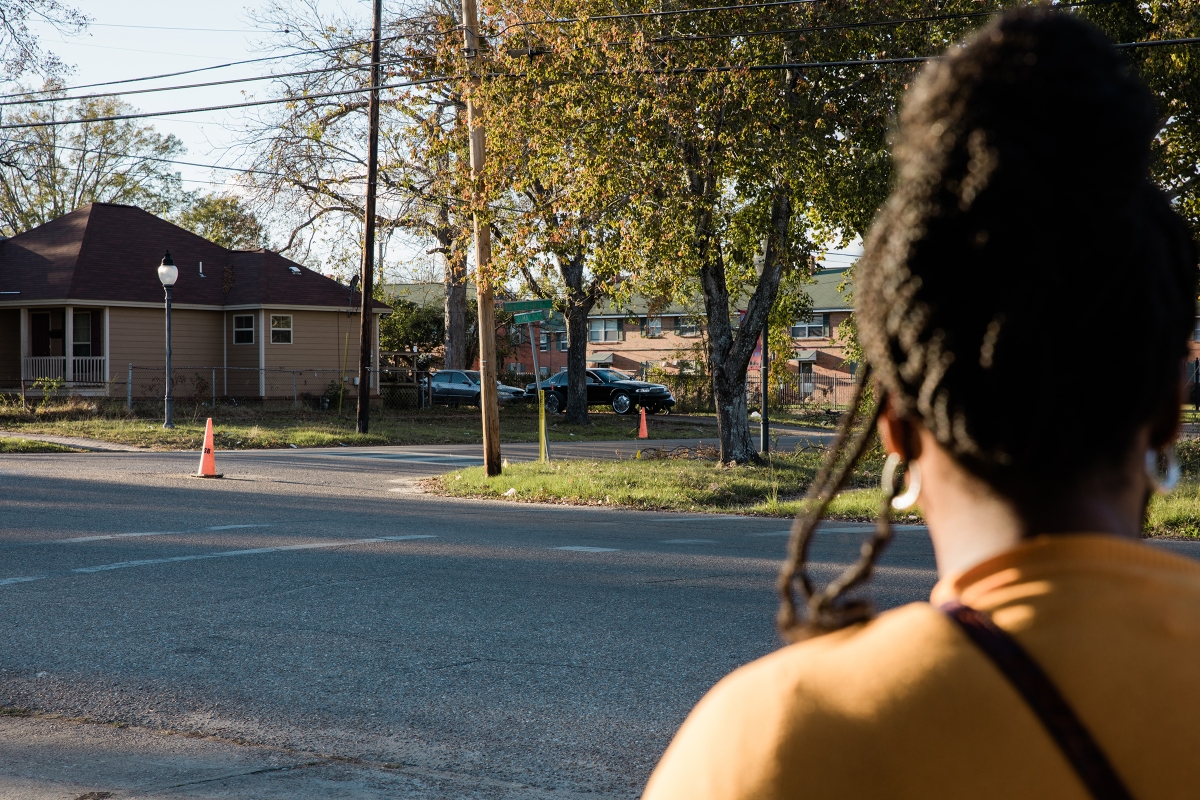
Chiquita Sanders, an eyewitness to the arrest of Robert Fitts in Selma, Ala., looks toward the scene of the 2018 incident on Nov. 20. “I was hysterical,” she said. “When I saw the dog I started screaming, ‘Get the dog! Get the dog!’ ” MUST CREDIT: Photo for The Washington Post by Cameron Carnes
Chiquita Sanders, one of two eyewitnesses in the Selma case, was gazing out a window when she saw what she first thought was a funeral procession. It was Fitts, driving slowly in his Jaguar, as patrol cars trailed behind him. Then a compliant Fitts emerged from his car with his hands “completely in the air,” Sanders said.
The Selma Police Department – which has 64 officers, with five in the K-9 unit -describes a very different encounter with Fitts.
They say it began when Fitts failed to stop at an intersection in the public housing where he grew up and where his mother still lives. (His uncle, Reginald Fitts, who is a lieutenant with the department, declined interview requests.)
He was pulled over, and as a patrol officer approached him with his gun drawn, Fitts drove away at a “high rate of speed through residential housing,” running two red traffic signals. Rather than raising his hands in surrender, police say, Fitts attempted to flee on foot.
Sanders and police agree on what came next. A K-9 was led to Fitts and ordered to bite him.
From the window of the power company where she worked, Sanders said she panicked as she watched the scene unfold. “I was hysterical,” she said. “When I saw the dog I started screaming, ‘Get the dog! Get the dog!’ “
The video shows an officer had grasped Fitts’s right wrist and appeared to be applying handcuffs. However, as the dog was ordered to move in and bite Fitts, that officer withdrew, the video shows.
The dog, named Shorty, was only used because Fitts was resisting arrest, police said. They acknowledged that Tyus, the Black officer who arrived as the K-9 was ordered to bite Fitts, “attempted to get his fellow officers to pull the dog away,” court records show.
They also acknowledge that the officers disregarded Tyus’s pleas and said that the dog was removed once Fitts was “fully arrested.” Hospital records show Fitts had multiple bite and puncture marks on both legs, and sutures were needed to close a “deep wound on the right thigh.”
Fitts faces a felony charge of threatening a police officer and four misdemeanor charges, including resisting arrest, in a criminal case stemming from the incident. His trial is scheduled for Feb. 1.
The video from a body-worn police camera – leaked to Fitts’s family – is now the cornerstone of a civil lawsuit against the department, which notes the long history of police violence in the small Southern town.
In a text message exchange with The Post from jail in Alabama, Fitts said he “blanked out” during the attack even though, after viewing the video, he sees that he appears to be fully conscious as he thrashes about.
“I saw the video of me screaming,” he wrote, but said he was in so much pain “mentally I had checked out in my mind I couldn’t feel the attack.” He said he thought he was “gonna die.”
By Syndication Washington Post, Bloomberg · Christopher Condon, Yueqi Yang · NATIONAL, HEALTH, HEALTH-NEWS
Members of President Donald Trump’s coronavirus task force fanned out across Sunday talk shows to promise a rapid rollout of coronavirus vaccines to millions of Americans by year-end.
U.S. Surgeon General Jerome Adams said the federal government hopes to quickly review and approve requests from two drugmakers for emergency approval of their covid-19 vaccines.
While Adams said Pfizer Inc. “will be submitting” an Emergency Use Authorization request on Dec. 10 for the vaccine it developed with Germany’s BioNTech, Pfizer filed its EUA on Nov. 20, the first to seek such clearance. A U.S. Food and Drug Administration advisory committee of outside experts will meet on Dec. 10 to review the Pfizer/BioNTech clinical trial data in public, which could precede rapid approval.
“We, from a federal perspective, have promised and set everything up so we can quickly review those EUAs and hopefully start sending out vaccines within 24 to 48 hours,” Adams said on “Fox News Sunday.”
Adams said he expects 40 million vaccine doses to be produced by the end of the year and for most Americans to have access to a vaccine by early in the second quarter of 2021.
On NBC’s “Meet the Press,” top U.S. infectious-diseases specialist Anthony Fauci said the government “almost certainly” will be vaccinating portions in the first priority of the population by the end of December.
“If we can hang together as a country and do these kinds of things to blunt these surges until we get a substantial proportion of the population vaccinated, we can get through this,” he said. “There really is light at the end of the tunnel.”
United Airlines Holdings Inc. began operating charter flights on Friday to position doses of Pfizer’s vaccine for quick distribution once approved, Dow Jones reported. A week ago, the chief executive officer of CVS Health Corp. said the pharmacy chain is ready to quickly vaccinate residents at thousands of long-term care facilities.
“It’s pretty much decided” that residents and staff of such care facilities, and health care workers in general, will be the first groups to get access to vaccines, former FDA administrator Scott Gottlieb said on CBS’s “Face the Nation.”
“There’s about 20 million health care workers who might be eligible, and about three million residents of long-term care facilities and staff of those facilities. Those will be the first group of patients who get access to it,” he said.
In a separate interview on ABC’s “This Week,” Fauci said Covid jabs won’t be “centrally mandated” in U.S., but that some local officials or employers might apply pressure to get people vaccinated.
“Any individual group can mandate vaccines in certain ways,” he said. “Individual units, be they hospitals or other organizations, can do that. It’s within their right to say, if you want to work with us, you’re going to have to get a vaccine.”
Fauci said he has some concern about the overall anti-vaccination movement, but said the Covid jab research process has been “scientifically sound.”
“The process of determining whether it works, whether it’s safe and effective has been independent, by independent bodies, and transparent,” he said.
In his NBC interview, Fauci said he fears the virus’ spread will surge in the coming weeks into December. “We might see a surge superimposed upon the surge we’re already in,” he said. “I don’t want to frighten people, except to say it is not too late to do something about this.”
Adams also implored Americans to help stop the virus’ spread in the months remaining before a vaccine is widely available by wearing masks and avoiding gatherings.
“It’s going to get worse over the next several weeks,” Adams said, referring to the rates of infection, hospitalization and deaths resulting from the pandemic. “The actions we take over the next several days will determine how bad it’s going to get.”
Brett Giroir, assistant secretary at the U.S. Department of Health and Human Services, declined to recommend that all Americans who traveled or will travel during holidays quarantine afterward.
In an interview on CNN, Giroir said those who traveled should decrease unnecessary activities and quarantine only if they had close contact with someone known to have had covid-19.
By The Washington Post · Rosalind S. Helderman · NATIONAL, POLITICS
The recount of presidential ballots in Wisconsin’s two largest counties finished Sunday, reconfirming that President-elect Joe Biden defeated President Donald Trump in the key swing state by more than 20,000 votes.
After Milwaukee County completed its tally Friday and Dane County concluded its count Sunday, there was little change in the final breakdown of the more than 800,000 ballots that had been cast in the two jurisdictions. As a result of the recount, Biden’s lead over Trump in Wisconsin grew by 87 votes.
Under Wisconsin law, Trump was required to foot the bill for the partial recount – meaning his campaign paid $3 million only to see Biden’s lead expand.
The results of the Wisconsin recount cemented Trump’s failure to alter the results of the November election in a series of states where he has falsely alleged there was widespread fraud and irregularities.
His efforts to stop Michigan officials from certifying the vote there earlier this month ran aground. A hand recount of ballots in Georgia confirmed Biden’s win in that state. Two new court decisions in Pennsylvania late last week rejected the Trump campaign’s attempts to halt the vote count there, the latest in a series of forceful judicial opinions that have tossed out claims by the president and his allies around the country.
On Monday, Arizona – the fifth of the six states where Trump has tried to upend the vote certification process – is set to finalize its results.
The Wisconsin Election Commission is scheduled to meet on Tuesday, at which time state law says the election results will be certified by the chairwoman of the six-member panel, who is a Democrat.
The president and his legal advisers have said they still plan to fight in court in an attempt to prevent Wisconsin from moving forward. The three Republicans on the state’s six-member election commission could seek to delay certification while the process unfolds.
“The Wisconsin recount is not about finding mistakes in the count, it is about finding people who have voted illegally, and that case will be brought after the recount is over, on Monday or Tuesday,” Trump wrote in a tweet Saturday. “We have found many illegal votes. Stay tuned!”
But even if the campaign were to pull out a surprise courtroom win – which legal experts said is unlikely – it would do little to change the outcome of the White House race, which Biden won with 306 electoral votes. The electoral college will meet on Dec. 14 to formalize his victory.
In Wisconsin, the president’s campaign sought to use the recount process to invalidate tens of thousands of otherwise legal ballots. Among other things, Trump’s lawyers argued that a form signed by voters who cast a ballot during in-person voting before Election Day was insufficient under state law. They said all those ballots – totaling about 180,000 votes in the two counties – should be tossed out.
They also complained about a practice in place since 2016 that allows election officials to fix tiny errors on the certification envelopes of some mail-in ballots, as well as rules in place since 2011 that allow some people to declare themselves “indefinitely confined” due to age or disability and vote without showing a photo ID.
Local officials in each county rejected the Trump campaign arguments and included the ballots in the recount.
Two conservative groups filed lawsuits last week asking the Wisconsin Supreme Court to consider challenges to the recount process. The seven-member elected court has not yet said whether it will agree to hear the cases; Republicans have a 4-to-3 majority on the court. The Trump campaign is not so far a party to either suit.
Legal experts have said the arguments advanced by the Trump campaign during the recount were thin. They also said that even if judges were to conclude that some practices by Wisconsin clerks were technically flawed, they would be extremely unlikely to throw out tens of thousands of ballots cast by voters who did nothing wrong other than follow rules, as directed by election officials.
Further undermining the Trump campaign’s argument, experts said, is the fact that it raised only objections in two predominantly Democratic counties.
The practices that Trump lawyers criticized are in place statewide and have been in place for years, including before the 2016 election – which Trump won and did not contest.
Their arguments would not invalidate only Biden votes. Documents prepared as part of the Dane County recount showed that the Trump campaign’s own lead attorney in Wisconsin, James Troupis, had voted early and in person. He essentially argued that his own vote was illegal and should not be counted. Troupis did not respond to requests for comment.
“This whole strategy is so shortsighted. It’s so self-destructive in the long term,” said James Wigderson, a conservative activist and editor of the website RightWisconsin, who did not vote for Trump.
He argued the GOP gambit sent a strong message to voters of color that the Republican Party believes their votes are less valid than those cast in White suburbs and rural areas. “Republicans should be outraged by this,” he said.
In announcing Dane County’s results Sunday, clerk Scott McDonell noted that the recount had found no instances of fraud. He said the process should “reassure” the public about the accuracy of the count, but said he found it “disturbing” that the Trump campaign had targeted only two Democratic counties for practices in place across Wisconsin.
Under Wisconsin law, Trump was allowed to request the recount because Biden’s margin of victory – about 0.6 percent – was less than 1 percent. However, Trump’s campaign was required to pay for the recount because Biden’s margin was more than 0.25 percent. Trump could have requested a full statewide recount, at a cost of nearly $8 million. Instead, his campaign opted to pay less for a narrower recount in the state’s two most Democratic-leaning counties.
“This recount demonstrated what we already know: that elections in Milwaukee County are fair, transparent, accurate and secure,” County Clerk George Christenson said as the county election commission voted to certify its results Friday. “We have once again demonstrated good government in Wisconsin.”
The recounts required dozens of election employees to work for more than 12 hours a day since Nov. 20, taking off only Thanksgiving Day. Officials in both counties took over local convention centers to allow workers to spread out, erected Plexiglas shields, and instructed workers and observers alike to wear masks.
Still, election officials worried employees could have been exposed to the coronavirus while conducting a process they had asserted from the start was exceptionally unlikely to change the state’s results, given Biden’s margin of victory.
“I’m very concerned,” Christenson said in an interview.
He noted that there among the 300 people who gathered at a convention center each day for the recount was a poll worker who was pregnant. A member of the local elections commission, who had to be on site full time to adjudicate challenges raised by the Trump campaign, is 73 years old and has a heart condition, he said.
SANYA – China’s new deep-sea manned submersible Fendouzhe (Striver) returned to south China’s Hainan province on Saturday morning onboard the scientific research ship Tansuo-1, after completing its ocean expedition.
The ship Tansuo-1 berthed and anchored in Sanya at 8:30 am Saturday.
Fendouzhe set a national record by diving to a depth of 10,909 meters in the Mariana Trench at 8:12 am on Nov 10
Fendouzhe set a national record by diving to a depth of 10,909 meters in the Mariana Trench at 8:12 am on Nov 10.
Chinese President Xi Jinping on Saturday sent a letter to congratulate on the successful completion of the 10,000-meter sea trial of Fendouzhe and its return to port.
Xi, also general secretary of the Communist Party of China Central Committee and chairman of the Central Military Commission, extended warm congratulations and sincere greetings to scientific researchers who are committed to the deep-sea equipment development and scientific studies.
Xi said the development of manned submersible Fendouzhe and its sea trial represented China’s comprehensive strength in the field of marine high technology.
During the expedition which started on Oct 10, Fendouzhe successfully completed 13 dives, eight of which exceeded a depth of 10,000 meters.
The expedition team overcame difficulties such as typhoons, rain and high temperatures, conducted multiple tests and obtained a batch of sediment, rock and seabed biological samples, according to the Ministry of Science and Technology.
A joint operation of Fendouzhe and the deep-sea video lander “Canghai” was also carried out during the expedition.
The successful sea trial verified the various functions and performances of the submersible as well as China’s breakthroughs in deep-sea equipment and technologies
The successful sea trial verified the various functions and performances of the submersible as well as China’s breakthroughs in deep-sea equipment and technologies. It marked China’s entry into the first echelon of deep-sea scientific research and provided strong technical support for the country’s subsequent deep-sea research.
The development of home-made Fendouzhe, which began in 2016, has involved nearly 1,000 scientists and researchers from about 100 research institutions, colleges and enterprises. Fendouzhe adopts a safe and powerful energy system, an advanced control system, and a positioning system. Its cabin and buoyancy materials are more pressure-resistant compared with its predecessors.
In July 2010, China’s first self-developed deep-sea manned submersible, Jiaolong, reached 3,759 meters beneath the waves. It made China the fifth country, following the United States, France, Russia, and Japan, to have the technology for a submersible dive to more than 3,500 meters below sea level.
Designed to dive to a depth of 7,000 meters, Jiaolong set a diving record of 7,062 meters in the Mariana Trench in June 2012.
By The game was designed to bust myths and spread awareness related to COVID-19 while offering an immersive experience to the users.
At a time when the COVID-19 pandemic has impacted the lives and livelihood of people at all strata of society, the United Nations Development Programme (UNDP) today launched an innovation database to collate some 1,500 solutions developed by grass root communities, individuals, startups, students and other innovators across the country that can be implemented at the community level.
These innovative solutions, ranging from simple to complex in design, form part of Grassroot Innovation Database (GRID) that was launched by UNDP Accelerator Lab India to foster inclusive development.
The unique database caters to various sectors which include livelihood, natural resource management, agriculture, agrobiodiversity, pest management, water management, farm machinery, biodiversity conservation, augmentation, inclusive growth, waste management and circular economy.
GRID has been co-created for public use by GIAN (Grassroots Innovation Augmentation Network), Honey Bee Network Institution and UNDP- Accelerator Lab-India.
It can be accessed at grid.undp.org.in The UNDP Accelerator Lab India was launched a year back to leverage technology to evaluate localised problems and address the solutions in partnership with local stakeholders, thus augmenting the success of SDG (Sustainable Development Goals) in the country.
The network taps into local innovations to create actionable insights and reimagine sustainable development for the 21st century.
The Accelerator labs globally try to address development challenges, especially Environment, Social and Governance (ESG) issues by scouting for local solutions and integrating the learnings through international network. In India, the UNDP Accelerator Lab has been engaged in ground-breaking work on developmental innovations.
From using Geospatial technology, Artificial Intelligence and Mobile technology to target hotspots of air pollution from space to leveraging Blockchain for agricultural value chains and IoT for water conservation in agriculture, there are many.
The Lab also conducted an innovation challenge in December 2019 to seek the best technological innovations towards air pollution mitigation in India.
Similarly, as part of its COVID-19 response strategy, the India Accelerator Lab designed and delivered an innovative game ~ Corona Champion ~ under pro-bono partnership with IPE Global.
The game was designed to bust myths and spread awareness related to COVID-19 while offering an immersive experience to the users.
“We believe that if an individual with little or no resources can solve an issue through strategic innovation, why cannot we, as an organisation with the necessary prowess, address it in a manner that helps to scale it up and take it to wider groups of communities,” the UNDP Accelerator Lab team said, speaking on the Grassroot Innovation Database launch.
“GrassRoot Innovation Database will encourage inclusive development, which has become all the more critical in the COVID era.”
The team stressed that during the time of COVID-19 there is need for innovation at all levels, from hi-tech to low level, involving various stakeholders.
“There is exponential growth of innovations during COVID and a lot of innovative platforms,” said Swetha Kolluri, Head of Experimentation, UNDP Accelerator Lab, India, at a webinar for media persons.
“People are trying new ways of conducting business.” At the macro level, said Rozita Singh, Head of Solutions Mapping, UNDP Accelerator Lab, India, GRID demonstrates to the policy makers that there is potential to learn from creative communities and individuals at the micro level, as this encompasses solutions that can be implemented on ground in real time, complemented by the fact that being tried and tested the cost of failure is minimal.
“GRID can also be leveraged for setting up distributed enterprises and for catering to the local or niche markets,” she added. On the Blockchain project for Indian spices, Krishnan Srinivasaraghavan, Head of Exploration, UNDP Accelerator Lab, India, said it was introduced after a lot of consultation, especially in the COVID scenario.
“We thought of increasing farmers’ income while boosting livelihood,” he added. Earlier, addressing a multi-stakeholder round table discussion on “Investments for Innovation”, Prof K Vijay Raghavan, Principal Scientific Advisor, Union government, said, “The vulnerable section of the society needs to be provided with quality education, food, health facilities and an environment which has equal opportunities for all. Expertise from grass-root innovators can foster inclusivity in this form of development.”
Prof Anil Gupta, founder of GIAN, said, “Our objective is to give voice, visibility and velocity to the creative and innovative communities and improve their livelihood, conservation of biodiversity and associated knowledge system for inclusive development. Lot of practices in GRID are in DIY mode which can be used by people freely: the grid reaches the poorest with possibility of using knowledge about innovations for augmenting their well-being.”

 Russian pipe-laying vessel Akademik Tscherski at the Baltic port of Mukran on the island of Ruegen in Sassnitz, Germany, on Nov. 4. Chancellor Angela Merkel’s district on the Baltic coast was the site of the last major Soviet military project in communist East Germany and is now at the center of a deepening rift between Cold War allies. MUST CREDIT: Bloomberg photo by Alex Kraus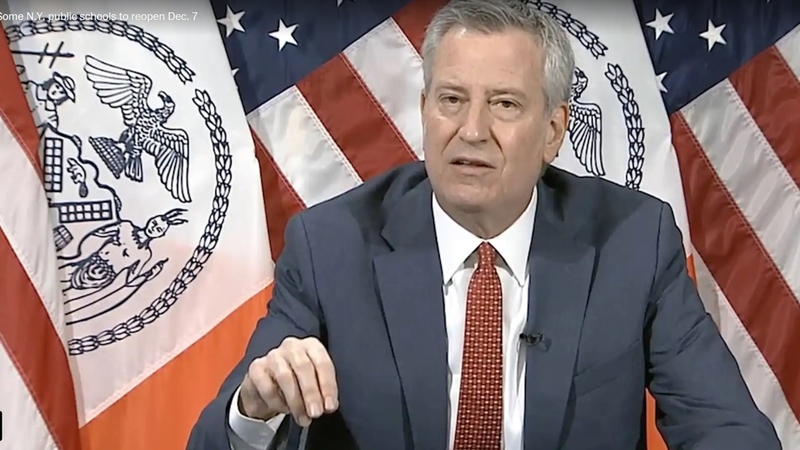

 Anthony Fauci, director of the National Institute of Allergy and Infectious Diseases, participates in a coronavirus briefing at the White House on Nov. 19, 2020. MUST CREDIT: Washington Post photo by Jabin Botsford
  President Donald Trump arrives to speak in the press briefing room at the White House on Nov. 24. MUST CREDIT: Washington Post photo by Jabin Botsford
 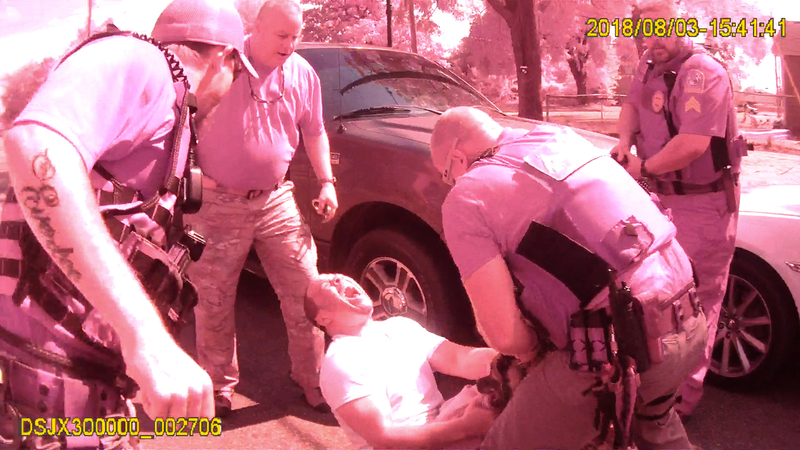 Robert Fitts screams as a K-9 attacks him after he was pulled over by police for a traffic violation in Selma, Ala., on Aug. 3, 2018. MUST CREDIT: Selma Police Department
 .jpg)
.jpg)