By The Washington Post · Antonia Noori Farzan · NATIONAL, BUSINESS, FEATURES, TRANSPORTATION, TRAVEL
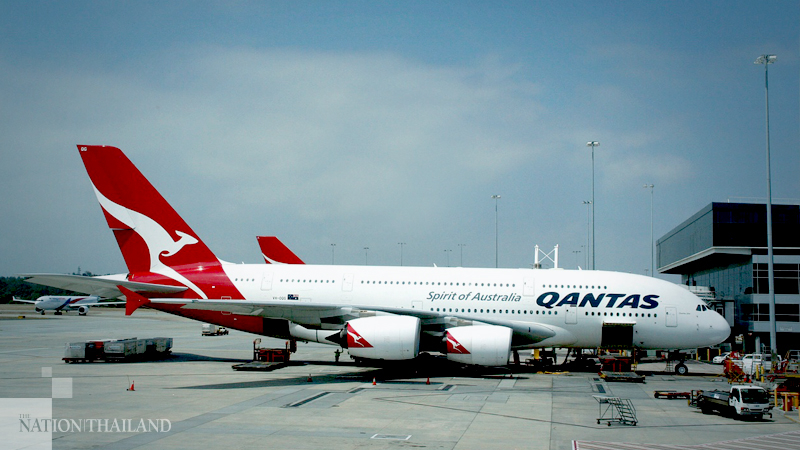
Australian air carrier Qantas anticipates asking all international travelers to prove they’ve been immunized against the coronavirus once a vaccine is widely available – a requirement that is likely to be adopted throughout the industry, CEO Alan Joyce said Monday.
“I think it will be a common theme, talking to my colleagues in other airlines across the world,” Joyce told Australia’s Nine News.
Travelers entering or leaving Australia could be required to show an electronic “vaccination passport” that shows which vaccine they received, Joyce said. He acknowledged that the government would probably need to provide input, though Australian officials have said that they are primarily focused on orchestrating the rollout of a vaccine once one is available, and have yet to decide if border restrictions will be changing. Australia requires two weeks of supervised quarantine for all new arrivals, except for New Zealanders who are exempt under the terms of the two countries’ “travel bubble.”
The International Air Transport Association has been working to build an app that can serve as a “digital passport” like the one that Joyce described, with the goal of making it safe for countries to reopen their borders so that travel can safely resume. On Monday, the organization announced that its app was in the final stage of development and a pilot program would begin later this year.
Rich Americans increasingly are looking for second passports
InternationalNov 25. 2020Billionaire Eric Schmidt, Alphabet’s former CEO, who reportedly applied to become a citizen of Cyprus, joins a growing club of individuals participating in government programs enabling foreigners to acquire passports. MUST CREDIT: Bloomberg photo by David Paul Morris
By Syndication Washington Post, Bloomberg · Ben Stupples, Devon Pendleton · BUSINESS
Eric Schmidt acquired all the typical trappings of a mega-rich U.S. citizen: a superyacht, a Gulfstream jet, a Manhattan penthouse.
One of his newest assets is far less conventional: a second passport.
Alphabet Inc.’s former chief executive officer applied to become a citizen of Cyprus, according to an announcement last month in a Cypriot newspaper that was first reported by the website Recode. Schmidt, 65, joins a growing club of individuals participating in government programs enabling foreigners to acquire passports.
In previous years, U.S. citizens rarely sought to buy so-called golden passports. The business mainly thrived targeting people from countries with fewer travel freedoms than the U.S., like China, Nigeria or Pakistan.
But that’s changing. People close to the industry say they’ve been inundated with inquiries from citizens of the world’s richest country.
“We haven’t seen the likes of this before,” said Paddy Blewer, a London-based director at citizenship and residency-advisory firm Henley & Partners, referring to queries from U.S. individuals. “The dam actually burst — and we didn’t realize it — at the end of last year, and it’s just continued getting stronger.”
A spokeswoman for Cyprus’ government declined to comment. Representatives for Schmidt — who is worth $19 billion according to the Bloomberg Billionaires Index — didn’t respond to requests for comment.
The benefits of owning a second passport, which range from potentially lower taxes, to more investing freedoms and less hassle traveling, can be had for as little as $100,000. The so-called citizenship-by-investment programs historically haven’t been as popular with Americans since one of their main draws — the favorable tax regimes of adopted countries — has been of little benefit to citizens of the U.S., one of the few nations to tax its people regardless of where they live.
The current heightened interest among U.S. citizens predates the coronavirus pandemic, but the crisis has helped turbocharge demand as they plan for how to maintain some freedom of movement with lockdown measures increasing amid a swelling second wave of covid-19 cases.
“Americans are thinking: ‘I want to have that ability to move as quickly as possible and not be stuck,'” said Nestor Alfred, chief executive officer of St. Lucia’s citizenship-by-investment unit.
The U.S. elections have also stoked interest. While Joe Biden has rejected the wealth tax pushed by some of his Democratic primary rivals, his proposals could disrupt the ways that many Americans minimize — or altogether avoid — taxes on their investment gains. Some have also looked to get an additional passport due to fears of social unrest, according to citizenship advisory firm Apex Capital Partners, which said inquiries from clients — typically about five a year — have increased 650% since this month’s vote.
“We’re seeing this interest from Americans who are all saying the same things that Chinese, or Middle Eastern or Russian clients are saying,” Apex founder Nuri Katz said in an interview. “They’re saying, ‘We’re not leaving the U.S. right now, but we’re concerned and we want to have something else, just in case.'”
St. Kitts and Nevis was the first country to introduce a citizenship-by-investment program in the early 1980s, and more than half-a-dozen nations have since done the same. In many cases, they’ve proved lucrative. Malta raised almost $1 billion through June 2019 after launching its program last decade, while the Caribbean territory of Dominica has raised more than $350 million in the past five years.
The industry has generated plenty of consternation for effectively turning citizenship — usually obtained from birthplace or heritage — into something that can be purchased.
It has also attracted scandal. Fugitive Malaysian financier Jho Low was among 26 individuals to lose their Cyprus citizenship last year. The speaker of the Cypriot House of Parliament, Demetris Syllouris, resigned last month after offering to help a Chinese businessman with a criminal record get citizenship.
“European values are not for sale,” European Union Justice Commissioner Didier Reynders tweeted last month.
Following the scandal, Cyprus said it would end its current passport-for-investment program on Nov. 1. The European Union, meanwhile, issued legal ultimatums to Malta and Cyprus about their citizenship-by-investment programs, claiming they may have violated the E.U. law. Representatives for Malta’s government, which announced plans to revise its program before the EU’s action, didn’t respond to requests for comment.
It’s unclear whether interest among Americans in reducing exposure to their home country will endure when the pandemic and post-election uncertainty have abated.
After an election, “we always have an uptick in emotion,” said Sherwin Simmons, principal at tax advisory firm Asgard Worldwide, adding he’s recently fielded increased inquiries from wealthy clients about renouncing U.S. citizenship, a complex process that involves a steep exit tax.
He reminds clients that politicians “have talking points. Once they’re elected, let’s wait and see before we make an immediate or emotional reaction.”
Airlines stir doubts among health experts with claims of safe flying
InternationalNov 25. 2020Passengers wear protective masks on an American Airlines flight departing from Los Angeles International Airport on June 13, 2020. MUST CREDIT: Bloomberg photo by Patrick T. Fallon
By Syndication Washington Post, Bloomberg · Alan Levin · NATIONAL, BUSINESS, HEALTH, HEALTH-NEWS
Airlines have loudly insisted that it’s safe to fly during the coronavirus pandemic, and U.S. travel is surging before the Thanksgiving holiday despite a nationwide spike in virus cases.
Yet top U.S. infectious-disease experts say the findings underpinning the carriers’ safety claims aren’t that conclusive.
Concerned about the “misinterpretation” of their findings, researchers on a Defense Department study that has been widely cited by the industry added a cautionary revision. A senior expert in travel-health issues declined to participate in an airline trade group’s news conference, citing what he called their “bad math.”
“The airline industry got a little ahead of itself trying to say the risk is zero,” said David Freedman, a University of Alabama at Birmingham professor emeritus who balked at appearing with an International Air Transport Association event that cited his work.
U.S. airlines, hit with an unprecedented drop in demand since the virus began spreading widely in March, are enjoying their strongest week since then. Even as health officials warn against travel during the Thanksgiving holiday because of a surge in covid-19 cases, more than 4 million people traversed airports between Friday and Monday.
The risk of being infected with the novel coronavirus on planes, which have highly effective filters that remove virus from the air and where mask usage is required, is probably fairly low, scientists say.
But the research is far from clear and some recent cases have documented transmission on flights even when passengers wore masks and sat far apart, according to a review of recent cases and interviews with academics and disease specialists.
“I definitely can say it’s premature to say that air travel is very safe,” said Qingyan Chen, an engineering professor at Purdue University in Indiana who’s written extensively on disease transmission on planes.
Airline officials, responding to the historic drop in passengers, repeatedly have defended the protections against infection on flights.
“Flying is safe,” Nicholas Calio, president of Airlines for America, a trade group for large carriers, said at a Nov. 12 briefing. “I will state that categorically.”
A4A declined to add additional comments. It has highlighted the efforts to force passengers to wear masks and to remain apart during boarding and exiting, and to disinfect aircraft. Montreal-based IATA defended its use of Freedman’s data on confirmed in-flight transmissions, saying it never characterized the results as definitive.
A4A frequently has cited a study by the Harvard T.H. Chan School of Public Health, which was funded by the trade group and other aviation industry sources, that concluded the risk of transmission on an airliner was “very low.” But authors cautioned that their projections depended on adherence to mask usage and they also urged airlines to improve ventilation while planes are parked at the gate.
Another study airlines point to was conducted by the Defense Department with the assistance of United Airlines Holdings Inc. and Boeing Co. It attempted to measure how aerosol virus particles were exhaled by a simulated masked passenger.
United said in promotional materials released Oct. 15 the study “determined the risk is almost nonexistent.”
However, after news coverage of the study, the authors added a revision, saying they were “concerned about the potential misinterpretation of the findings.” They also acknowledged they based their results on a person exhaling relatively few virus particles, an amount well below levels documented in some cases.
The airplane filters and mask usage “significantly reduces” exposure to infectious aerosols, they wrote. “However, the current established scientific understanding of SARS-CoV-2 transmission dynamics is not sufficient to calculate definitive SARS-CoV-2 transmission risk from these measurements of aerosol transport.”
United spokeswoman Leslie Scott responded in an email that “Throughout the pandemic, our top priority has been the health and safety of our customers and crew.”
“It’s why we supported military officials, medical experts and aviation engineers in their work demonstrating that aircraft cabins are among the safest of public indoor environments thanks to advanced air filtration systems, required mask-wearing and diligent cleaning protocols,” she added.
Overall, there are few confirmed reports of infections linked to flights. However, because of limited contact tracing in the U.S. and the difficulty of finding transmission cases, it’s hard to say for sure what that means, researchers said.
“I haven’t seen any studies come out and say it’s highly risky,” said Byron Jones, an engineering professor at Kansas State University who has studied airliner cabin-air safety. “But I haven’t seen the study that says it’s definitively safe either.”
The U.S. Centers for Disease Control summarizes the risks from air travel this way on its website: “Most viruses and other germs do not spread easily on flights because of how air circulates and is filtered on airplanes. However, keeping your distance is difficult on crowded flights, and sitting within six feet of others, sometimes for hours, may increase your risk of getting covid-19.”
While some studies have shown cases in which no one on a flight became infected despite the presence of contagious passengers, other data have documented in-flight transmissions.
Purdue’s Chen said he’s been following news reports in China of possible infection between passengers on a Nov. 9 Air China flight from Los Angeles to Tianjin.
Ten people who weren’t connected to one another and resided in different parts of the U.S. tested positive for the coronavirus after arrival. All the passengers had tested negative for the disease before the flight, suggesting at least some of the transmission occurred on the plane, he said.
Such incidents are confounding because they seem to contradict Chen’s own earlier research showing mask usage can dramatically lower risks of infection, he said.
“That’s why I’m having doubts about what’s going on in airplanes,” he said.
Government researchers in Ireland documented as many as 13 cases linked to a single flight last summer, according to a paper published in October. The infections in five of the cases were genetically linked, “strongly suggesting a single point source of infection,” the authors said.
The widebody jet was largely empty, people were spaced out on the plane and almost everyone whose activity could be documented said they wore masks. Nevertheless, the authors estimated that 10-18% of passengers became infected.
“It is interesting that four of the flight cases were not seated next to any other positive case, had no contact in the transit lounge, wore face masks in-flight and would not be deemed close contacts under current guidance from the European Centre for Disease Prevention and Control,” the authors said.
By Syndication Washington Post, Bloomberg · Eric Martin · BUSINESS
The International Monetary Fund recently rejected a proposed new tool that would have offered countries pandemic loans with looser conditions than usual, choosing instead to work within the flexibility of existing programs, according to people familiar with the talks.
The discussion of the Pandemic Support Facility took place in the weeks leading up to the IMF’s annual meetings in mid-October as the Fund was preparing announcements of new initiatives, said the people, who asked not to be named because the talks were private.
The consensus among the IMF board, which represents the finance ministries of member nations, was that current tools can perform necessary lending, and that it shouldn’t create new ones without an obvious demand or need, the people said. Such a move would require the approval of board members representing 85% of the IMF’s voting power.
IMF spokesman Gerry Rice declined to comment directly on the proposal.
“We continue to apply flexibility available in existing IMF lending tools — as approved by our executive board — to support our member countries, calibrated to their pandemic-related needs,” he said in an emailed statement. “This has enabled the IMF to respond to this crisis as never before in our history and help our member countries on an unprecedented scale and at unprecedented speed.”
The IMF has made more than $100 billion in new financing available to 80-plus countries since the start of the pandemic — mostly with limited or no conditions — and in April doubled the annual access limit that countries have to emergency financing.
Creating the new tool was a further option prepared by staff in the Strategy, Policy and Review Department. They said that given the virus’s unprecedented impact, the fund could allow cash-strapped countries longer repayment periods and also let them make policy changes toward the end of the loan once the pandemic’s path is clearer, rather than immediately, the people said.
IMF loans are typically disbursed over a period of one to three years.
The IMF has generally been facing requests for help from two kinds of countries: One group was on sounder footing before the pandemic and is encountering a liquidity crisis as a result of the virus. Others face tougher solvency challenges from the virus but were seen as needing policy changes even before the pandemic.
So-called conditionality has made the IMF a lightning rod for criticism over the years. But the fund has traditionally operated on the idea that requiring countries to commit to fundamental reforms — such as narrowing budget deficits via spending reductions, controlling inflation and tackling corruption — is necessary for creating the self-sustaining growth that weans them off reliance on multilateral lenders like the IMF and World Bank.
The IMF also has considered another move that would effectively increase the capital available to countries without conditions: a new allocation of its reserves, known as special drawing rights. A proposal to issue $500 billion of the assets has been blocked by Donald Trump’s administration, which criticized the idea for failing to target poor countries, but it could gain new life under President-elect Joe Biden.
Some IMF board members who opposed the new pandemic facility didn’t want it to finance nations that need reforms to deal with underlying and preexisting weakness, the people said. Another concern was that lending to countries without conditions could result in failure to repay the fund and therefore put IMF resources at risk.
A similar mechanism was proposed in July by two former IMF officials: Adnan Mazarei, a nonresident senior fellow at the Peterson Institute for International Economics in Washington, and Matthew Fisher.
Mazarei and Fisher argued that absent a new facility, the IMF might need to loosen the conditionality in some of its traditional lending tools. Should that happen, it would be difficult to restore the standards when the pandemic ends, they said.
“We proposed there be a sunset clause on this facility, that it only be used until the pandemic is over,” Mazarei said in an interview. “Then, you bring back the old workhorse facilities. If you loosen standards now on those facilities, you won’t be able to raise them back to where they were.”
France’s finance minister, Bruno Le Maire, also urged the consideration of the Pandemic Support Facility last month during the IMF’s annual meetings.
The IMF’s decision to forgo the new instrument follows its creation in April of the Short-term Liquidity Line, a tool to help countries ease moderate liquidity problems before they intensify. The fund predicted when launching the instrument that demand might be as much as $50 billion, but it’s had no takers so far.
By Syndication Washington Post, Bloomberg · Jarrell Dillard · BUSINESS
U.S. consumer confidence fell in November to a three-month low as the coronavirus resurgence prompted a slide in Americans’ expectations for the economy and job market.
The Conference Board’s index decreased to 96.1 from an upwardly revised 101.4 reading in October, according to a report Tuesday. The median forecast in a Bloomberg survey of economists called for the measure to slip to 98.
The gauge of expectations dropped 8.7 points, the most since July, to 89.5 this month, while a measure of sentiment about current conditions eased 0.3 point to 105.9.
The figures coincide with the start of the holiday-shopping season that will help shape estimates of consumer spending for the quarter. Less optimism, against a backdrop of surging infections that are sparking more government restrictions, suggests retail sales and hiring will slow.
The smallest shares of respondents since March said they expected better business conditions and more jobs in the next six months, the report showed.
“Heading into 2021, consumers do not foresee the economy, nor the labor market, gaining strength,” Lynn Franco, senior director of economic indicators at the Conference Board, said in a statement. “In addition, the resurgence of Covid-19 is further increasing uncertainty and exacerbating concerns about the outlook.”
At the same time, more consumers surveyed indicated they were likely to make big purchases in the months ahead. Greater shares in November said they plan to buy automobiles, homes or appliances. Buying plans for previously owned homes were the strongest since March 2019.
Also, the share of survey respondents who said they expected their incomes to increase crept up to 17.6%, the highest since March.
Consumers that said business conditions are currently favorable decreased to 17.6% from 18.6%. The percentage of consumers who said jobs are hard to come by was little changed.
By The Washington Post · Lesley Wroughton · WORLD, AFRICA
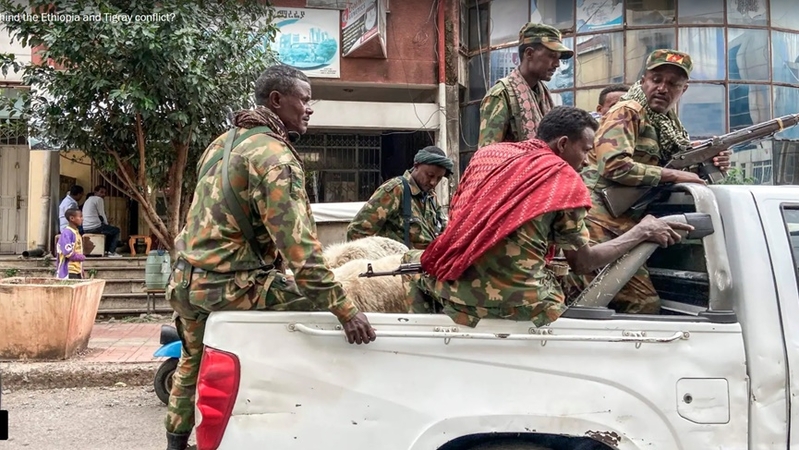
Hundreds of people in a town in Ethiopia’s northern Tigray region were stabbed, strangled and hacked to death in an apparent ethnically based attack that may amount to crimes against humanity and war crimes, Ethiopia’s human rights watchdog said Tuesday.
The commission said at least 600 people were killed in the town of Mai Kadra in western Tigray on Nov. 9 when local youths known as Samri, aided by the then-local administration, went door to door killing those they identified as from the minority Amhara and Wolkait ethnic groups.
The killings took place throughout the night of Nov. 9 as security forces of the region’s ruling Tigray People’s Liberation Front, or TPLF, were retreating from the advance of federal government troops, the commission said.
The victims were beaten to death with sticks, stabbed with knives, machetes and hatchets, and strangled with ropes, according to the report. Many others were severely injured and property looted or destroyed, the commission said.
“The killings, bodily and mental injury, as well as the destruction that went on throughout the night . . . indicate the commission of grave human rights violations which may amount to crimes against humanity and war crimes,” the commission said.
The Ethiopian Human Rights Commission’s findings could not be independently verified, but they echo similar accounts reported earlier by Amnesty International, which cited witness statements, photos and videos as evidence.
The commission’s findings, the result of a week-long investigation in the town, are the first evidence of possible war crimes being committed in Tigray, where government troops and TPLF forces have been fighting since Nov. 4 in a conflict many fear could destabilize the Horn of Africa.
Ethiopian Prime Minister Abiy Ahmed in a statement called the commission’s findings “heart-wrenching” and urged the international community “to condemn these atrocious acts of crimes against humanity.”
There was no immediate response to the commission’s report from the TPLF. The regional government and refugees fleeing the fighting have accused government forces of targeting ethnic Tigrayans.
The commission warned that the death toll from the massacre could be much higher, as many people were still missing and bodies were hidden in fields outside the town.
Survivors told investigators that some residents in the town hid people in their homes, in churches and in farm fields as the Samri gangs raided the town.
“The unimaginably atrocious crime committed against civilians for no reason other than their ethnicity is heartbreaking,” the commission’s chief, Daniel Bekele, said in a statement, calling for the perpetrators of the attacks to be brought to justice.
Abiy, who comes from the Oromo, the largest ethnic group in Ethiopia, on Sunday issued a 72-hour ultimatum to Tigray’s leaders and combatants to surrender before government forces attack the capital Mekele, with a population of about half a million. The deadline is Wednesday.
The conflict erupted when Abiy sent troops to Tigray after the TPLF army and local militia attacked government military bases in the region and tried to steal artillery and other military equipment. The conflict spread across the border to Eritrea when Tigrayan forces fired several rockets at its capital and sent at least 40,000 refugees fleeing into Sudan.
By The Washington Post · Loveday Morris, Emily Rauhala, Shibani Mahtani, Robyn Dixon · WORLD, HEALTH
BERLIN – In the new frontier of vaccine diplomacy, there are two paths: stockpile or share.
The first way is unfolding in the United States – with two promising coronavirus vaccines by Pfizer and Moderna on the cusp of approval – as the Trump administration focuses on domestic distribution from private labs.
The European Union and other wealthy democracies have bought up much of what’s left of the initial doses, but also will lend support to a World Health Organization-linked effort to eventually expand supplies to countries in need.
The other approach comes from China and Russia, which have rushed to share their own state-backed vaccines with nations scrambling for supply, positioning themselves to possibly expand their political and economic interests in the process.
The contrast goes well beyond the crisis of the pandemic, reflecting how the post-World War II world order is challenged by the rise of authoritarian powers and the retreat of the United States during the outgoing Trump administration.
“Global health and pharmaceutical interventions are getting sucked into balance-of-power politics,” said David Fidler, senior fellow for global health at the Council on Foreign Relations. “For the U.S. this creates geopolitical nightmares, because we are not in the game.”
The pandemic, he said, becomes a “force multiplier,” accelerating waning U.S. influence.
The ultimate outcome depends, of course, on how the vaccine race plays out.
On Monday, another group in the vaccine hunt, a collaboration between the University of Oxford and the British-Swedish pharmaceutical giant AstraZeneca, said its vaccine was up to 90% effective when subjects received a half-dose, followed by a full dose one month later.
Beijing and Moscow are marshaling the vast powers of their states to develop vaccines for domestic and international use, accompanied by grand claims of scientific and manufacturing prowess.
There are critical questions about safety and efficacy – or even how much each country can produce. But, for the moment, those questions are overshadowed in a seller’s market.
So far, the United States has essentially ceded the field. It has declined to join more than 170 other countries in Covax, the WHO-backed program to deliver billions of vaccine doses to less-developed nations, and has not outlined a plan for sharing doses with anyone else.
Kendall Hoyt, an assistant professor at Dartmouth’s Geisel School of Medicine, predicted that President-elect Joe Biden would find some way to engage – either by joining multilateral efforts on vaccines, forging bilateral deals, or both.
“It’s the most powerful bargaining chip there is right now,” Hoyt said.
But China is signing agreements for early vaccine access in regions where it has historically battled the United States for influence. Western pharmaceutical companies say that just meeting their existing orders from Europe and elsewhere will be a huge logistical challenge.
A recent analysis from researchers at Duke University found that high- and middle-income countries have already purchased 3.8 billion doses of promising vaccines, with options for 5 billion more. The team predicted that billions of people in developing countries could be waiting until 2024.
The WHO-linked Covax effort is seen as an important backstop for poorer countries that would otherwise struggle to source vaccines. But efforts have been slow to get off the ground, with German Chancellor Angela Merkel warning at the virtual Group of 20 summit this past weekend that “the Chinese are knocking at the door” of developing nations.
“And [the Chinese] are saying that they have a vaccine they’ll make available to me now in the short term,” Fidler said. “Not later, when Covax might have something available.”
China has five vaccine candidates in the final stages of trials, which have taken place in regions of strategic importance to Beijing. Testing is underway in more than a dozen countries, including Indonesia, Pakistan, Turkey, Egypt, Saudi Arabia and Brazil.
In the United Arab Emirates, where Dubai’s ruler Sheikh Mohammed bin Rashid is among those to receive a vaccine, China’s Sinopharm received emergency-use approval months ago.
Beijing has offered $1 billion in loans to countries that would otherwise struggle to pay to buy its vaccine, according to the Mexican Foreign Ministry.
But perhaps the biggest advantages for Beijing could be won in Southeast Asia, where China and the United States compete for strategic and cultural influence.
China has signed agreements with Malaysia and Indonesia for priority access to the Sinovac Biotech vaccine, moving in swiftly with trials earlier this year as cases mounted in the two nations and economies faltered.
– – –
Wearing a mask stamped with the Indonesian flag, Ridwan Kamil, the governor of West Java, held his arm out for the cameras after receiving his coronavirus jab in September.
One of 1,620 volunteers to receive the Sinovac vaccine, he has raved about his experience. It’s seen as gesture of solidarity with China aimed at helping Indonesia get back on its feet as the country of 268 million people – now the worst-hit by the coronavirus in Southeast Asia – stares down a recession.
Indonesia’s food and drug agency said Thursday that Pfizer, AstraZeneca and the developers of Russia’s Sputnik V vaccine have all reached out about the possibility of vaccine trials and partnerships with Indonesia’s pharmaceutical companies.
Sinovac, one of China’s coronavirus vaccine front-runners, published mixed findings from its two first clinical trials last week. The company reported that the vaccine generated lower levels of protective antibodies in the bloodstream compared with those arising in recovered coronavirus patients.
Beijing has said it won’t use the vaccine for diplomatic leverage. But in public remarks, Chinese officials have linked the vaccine to greater cooperation and outreach – echoing China’s foreign policy strategy, the Belt and Road Initiative, which seeks to build transport and commercial links across Asia and beyond.
As the Trump administration has stepped back from global health leadership, most notably by threatening to withdraw from the WHO, Beijing has pointedly stepped in.
Chinese President Xi Jinping in a video statement Saturday told the G-20 that China was “willing to strengthen cooperation” with other countries to accelerate vaccine development and distribution.
“We will fulfill our commitments, offer help and support to other developing countries, and work hard to make vaccines a public good that citizens of all countries can use and can afford,” he said.
There are questions about what depending on China for doses could mean for countries in Southeast Asia, particularly as they push back against Beijing’s claims in the South China Sea, for instance.
Sebastian Strangio, author of a recent book on Beijing’s relationship with Southeast Asia, said China’s vaccine strategy is part of a broader campaign to cast itself as a “helpful, understanding regional partner – and an inevitable one.”
Strangio predicted that Beijing’s use of leverage will generally be “subtle” rather than a straightforward quid pro quo, such as China’s request to the Malaysian government to release dozens of Chinese fishermen held for illegally entering Malaysia’s waters last month. The appeal came during the same meetings as negotiations on a vaccine. The men remain jailed, and a news portal, Malaysiakini, published letters from Malaysians about the case, including one saying Malaysia will not be “held to ransom” by the Chinese vaccine.
China is “going to be smart about it,” Strangio said. “It is going to be a lot of small concessions that add up over the long term.”
Russia’s vaccine diplomacy is part of a broader push by President Vladmir Putin to reassert the country as a global power. Even the name it chose for its first covid-19 vaccine – Sputnik V – evokes the 1950s Cold War space race.
Russian officials claim to have provisional orders from some 50 countries for 1.2 billion doses of Sputnik V in the next year and say they have negotiated deals with firms in South Korea, India, China, Kazakhstan and E.U.-member Hungary, led by nationalist President Viktor Orban.
Trials are underway or planned in India, the U.A.E., Brazil, Venezuela and longtime Russian ally Belarus.
– – –
The rush to roll out the vaccine before Phase 3 trials has raised questions about the safety and efficacy of the vaccine.
Sputnik V’s developers, the Gamaleya National Center of Epidemiology and Microbiology and the Russian Direct Investment Fund (RDIF), say the vaccine is 92 percent effective. A second Russian vaccine has been registered and a third is in development.
Kirill Dmitriev, head of the RDIF, declined an interview request but has portrayed criticism of Sputnik V as a Western effort to undermine the project.
The Kremlin, too, is hailing Sputnik V in its diplomatic outreach. “Nowadays, the issue appears on the agenda of Putin’s discussions with all of his foreign colleagues,” Kremlin spokesman Dmitry Peskov said in a recent interview with journalists.
Russia has always tried to project soft power by emphasizing its technological achievements, said Grigory Golosov, political analyst at the European University at St. Petersburg. “This only adds one more topic to this more or less continuous flow of propaganda,” he said.
But the international push is also aimed at building support for the Russian vaccine at home, he added. An August poll in Russia by the Levada Center found that 54% of those surveyed would not take the vaccine even if it was free because of distrust and fear.
And then there is the question of capacity.
Speaking at an investment forum last month, Putin conceded that Russia faces problems in swiftly ramping up production because it lacks the equipment. Russia has been forced to slash its overly optimistic plans to make 30 million doses this year; it now estimates it will produce roughly 2 million.
“Russian vaccines exist. They work, and they are safe and efficient,” Putin said last Tuesday at a summit of BRICS nations – Brazil, Russia, India, China and South Africa. “The question is how to arrange the mass production.”
He told the G-20 virtual summit Saturday that vaccines must be made universally available to all countries, rich or poor, and said Russia was ready to distribute its vaccines to those who need them.
“Products for immunization need to be common public assets,” Putin told the summit. “Russia, of course, is ready to provide needy countries with vaccines developed by our scientists.”
The White House opted out of multilateral efforts, in part because of its ongoing feud with the WHO over the agency’s initial coronavirus response and Trump’s claims that the U.N. agency was “China-centric.”
Biden has pledged to rescind the WHO withdrawal letter but has not publicly committed to Covax or any other plan.
But the race has already started, and analysts say China and Russia are likely to take every advantage they can before a Biden administration gets into gear or private Western companies look to markets further afield.
“There’s a strategic game going on, but the U.S. is not playing,” said Yanzhong Huang, a senior fellow for global health at the Council on Foreign Relations.
By The Washington Post · James McAuley, Karla Adam, Michael Birnbaum · WORLD, HEALTH, EUROPE, HEALTH-NEWS
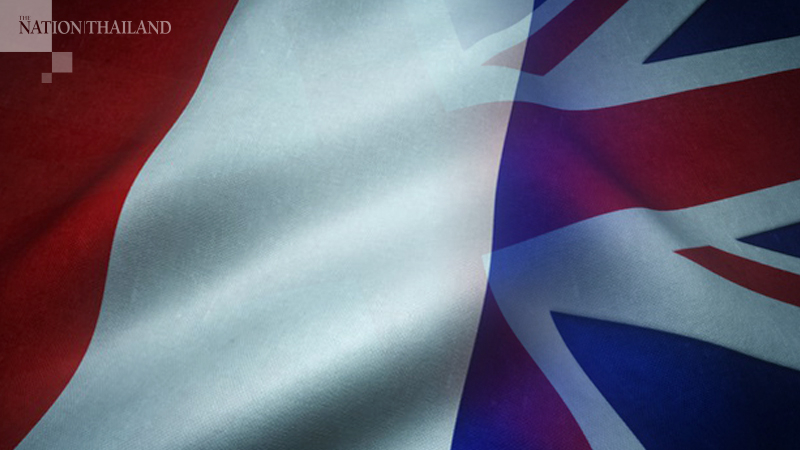
PARIS – Leaders in France and Britain on Tuesday announced a tentative easing of lockdown restrictions heading into the Christmas holiday season, even while admitting that the coronavirus was far from under control.
The decision to reopen shops, resume indoor entertainment and permit limited holiday gatherings appeared to rub up against a scientific consensus that has underscored the risks of indoor socializing and urged against lifting restrictions too rapidly. But many European leaders seem reluctant to keep their economies shuttered or stand in the way of family members seeing each other after a year marked by long periods of strict confinement measures and social isolation.
French President Emmanuel Macron began a national address on Tuesday by stating what would remain the same in the coming weeks: “We will have to continue to stay at home, to telecommute when possible, to give up private meetings, family gatherings and all nonessential travel.”
But he outlined a three-step deconfinement plan could see nonessential shops reopen starting Saturday and cinemas and theaters welcome back audiences in mid-December. Restaurants would need to remain closed into January, he said, and an evening curfew would remain in place. But exceptions would be granted for Christmas Eve and New Year’s Eve so that people could “share these moments together among family,” Macron said.
Vaccination, he added, would begin in late December or early January, and would not be mandatory.
In Britain, Prime Minister Boris Johnson has announced plans for the national lockdown to end on Dec. 2, to be replaced by a region-by-region tiered system of restrictions.
Most of the country would be in the highest two tiers, requiring the closure of restaurants and pubs except for takeaway. But in many places, shops, gym and salons would be allowed to reopen, and indoor and outdoor spectator sports could resume.
On Tuesday, the four nations of the United Kingdom – England, Scotland, Wales and Northern Ireland – also agreed to an easing of restrictions that would allow loved ones to meet during the Christmas period. From Dec. 23 to Dec. 27, up to three households can form a “Christmas bubble” and mix indoors. During the five day period, Brits will be able to travel across the country and move between tiers.
Cabinet Minister Michael Gove told Sky News on Tuesday that families will have “something closer to a normal Christmas.”
In Spain, the government is reportedly considering limiting family and other social gatherings over the holidays to just six people, in addition to imposing a 1 a.m. curfew on both Dec. 24 and Jan. 31.
According to El Pais, the government’s draft document, entitled “Proposals for Covid-19 public health measures for the celebration of Christmas fiestas,” recommends socializing only with other members of the same household but limiting all outside contacts to six people.
Germany could soon follow suit.
Chancellor Angela Merkel is set to meet with leaders of the country’s 16 federal states on Wednesday to determine whether to extend a month long November lockdown, which shuttered bars and eat-in dining but kept schools and stores open.
Draft proposals extend measures but include the possibility of a week-long ease in contact restrictions over the Christmas week, allowing gatherings of up to 10 people and an unlimited number of children under 14.
But behind the easing of restrictions are continued concerns over case numbers, hospitalizations and death tolls, which suggest Europe is barely past the peak of the second wave.
“We have slowed down the circulation of the virus, but it remains very present in France as in the entire northern hemisphere,” Macron said in his speech. “We must continue our efforts.”
In France, at least, the numbers have showed some sign of improvement after nearly a month of lockdown. On Tuesday, the Health Ministry recorded 9,155 new cases of covid-19 in the previous 24 hours, but still a relatively high death toll of 458 in the same period, in keeping with totals recorded in previous weeks.
In comparison with the spring, France’s current ICU occupancy is similar to the level when it announced a loosening of restrictions after the first wave. As of Monday, there were 4,438 covid-19 cases in its ICUs. On April 28, the day Macron announced plans to loosen measures, there were 4,307 in ICU beds.
But its hospitals are more saturated now than they were the first time around: numbers have been declining for only a week, compared to two weeks of declines before the springtime loosening, and there are 31,449 hospitalizations now, 14 percent higher than in the spring.
In Britain, Tuesday’s announcement permitting loosened restrictions for the Christmas holidays came shortly after the government said the latest daily death toll was 608, the highest total recorded since May.
And unlike in May, when Johnson announced the first easing of restrictions after four weeks of emptying hospitals, numbers are still rising. There were 13,767 covid patients in English hospitals on Monday, the most since April 22 and double what they were a month ago. ICU occupancy is also still rising. The only small comfort is that the speed at which hospitals are filling may have started slowing over the last week.
The British government urged people to continue to exercise caution, especially with those who are vulnerable. ‘Tis the season to be jolly, but it’s also the season to be jolly careful, especially with elderly relatives,” Johnson said in a press briefing on Monday.
Macron warned citizens that if the government’s public health guidelines were not followed, the virus could very well return. He cautioned against overconfidence despite the brief respite of the holiday season.
“There are always a lot of uncertainties, and we have to keep a lot of humility in this matter, this virus has taught us that,” he said.
Biden picks diverse, tested national security team
InternationalNov 24. 2020President-elect Joe Biden speaks with mayors at the Queen in Wilmington, Del., on Monday, Nov. 23, 2020. MUST CREDIT: Washington Post photo by Demetrius Freeman
By The Washington Post · Annie Linskey · NATIONAL, POLITICS
WILMINGTON, Del. – President-elect Joe Biden announced a diverse set of nominees for top diplomatic and foreign policy posts Monday – including the first Latino and first immigrant as homeland security secretary and the first woman as director of national intelligence – as he sought to convey momentum and inevitability in building his administration.
Biden’s choices, including John Kerry in a new climate ambassador post, reflected his comfort with international affairs and an intent to signal the international community that a transfer of power is moving forward, even as President Donald Trump refuses to accept his loss at the ballot box.
Antony Blinken, whom Biden has selected as secretary of state; Alejandro Mayorkas, the Cuban-born homeland security secretary-designate; and Avril Haines, tapped as director of national intelligence, all have lengthy experience at the agencies they will now lead.
Biden is expected soon to name former Federal Reserve chair Janet Yellen to be his treasury secretary, according to three people in close contact with aides to Biden. If confirmed, she would be the first woman to hold that position, which was established by George Washington. Biden last week said that he would choose a treasury secretary “acceptable to all elements” of the Democratic Party.
The names on the team that was announced Monday suggest that Biden has decided for now to avoid choices that would trigger heated political fights. Republican senators had signaled that they would strongly oppose former national security adviser Susan Rice as secretary of state, for example, and Sen. Elizabeth Warren, D-Mass., a favorite of liberals for treasury secretary, would have faced forceful resistance.
In contrast, the individuals Biden named Monday have longtime relationships with many Republicans. They inject a new diversity into the foreign policy leadership and signal that Biden intends to show the world a different face after the Trump years.
The selections seek to tell allies that the United States is back as an international partner, even as Trump takes actions such as adding sanctions on Iran during his final stretch in office, and they also seek to provide reassurance to the country’s demoralized diplomatic corps.
“They are experienced and crisis-tested,” Biden said in a statement introducing the choices. “They will keep us safe and secure. And they are leaders who look like America and reflect my core belief that America is back and that we lead not just by the example of our power, but by the power of our example.”
The president-elect plans to formally introduce the officials Tuesday at an event at the Queen, a Wilmington theater that was the venue for a number of Biden’s campaign events and has become a provisional headquarters as he prepares to take power in January.
Unlike Trump, who favored outsiders, or President Barack Obama, who often turned to up-and-coming political stars, Biden’s nominations so far are heavy on technocrats known more for competence than sparkle. Many had been rumored for weeks to be taking on big roles in the new administration.
“It’s kind of a bread-and-butter approach to governing,” said Leon Panetta, the former defense secretary and CIA director. “You’re not going for the headline, you’re going for people who you know can do the job and people you can work with.”
Other high-profile choices announced Monday were Jake Sullivan, a Biden adviser who will become national security adviser, and Linda Thomas-Greenfield, a longtime diplomat tapped to represent the United States at the United Nations.
In contrast to such figures, Trump’s first secretary of state was Rex Tillerson, a corporate executive with no government experience, and his first national security adviser was Michael Flynn, a fiery retired general who led “Lock her up” chants against Hillary Clinton at the Republican National Convention.
“It’s the difference between a president who basically rolled the dice on appointees because he had no experience in government, had few friends, and kind of operated by gut instinct and a president who knows the people he’s appointing and has had experience with them,” Panetta said.
The highest-level pick is Blinken, who has deep ties to Biden, serving as staff director at the Senate Foreign Relations Committee when Biden chaired the committee before becoming vice president. Blinken was national security adviser in Biden’s vice-presidential office and also worked as deputy secretary of state, helping craft the Obama administration’s Syria policy.
Despite their closeness, Blinken famously broke with Biden to support military action in Libya, and he also advocated for American action in Syria. But in his emphasis on international cooperation and help for refugees he is aligned with Biden in shifting sharply away from the Trump worldview.
Kerry, who will take on a climate portfolio, is another longtime Biden ally. He acted as a surrogate for Biden during the primary, crisscrossing snowy Iowa to stump for the candidate even when he was low in the polls.
Kerry’s climate position will include a seat on the National Security Council, putting him in the room with key decision-makers amid foreign policy deliberations. It’s a signal that Biden intends to elevate climate change as an issue after an administration that played it down and even ridiculed it.
Washington Gov. Jay Inslee, a Democrat who is outspoken on the need to fight climate change, called Kerry an “excellent choice” on Twitter. “President-Elect @JoeBiden has again demonstrated his deep commitment to follow science to save our planet and create millions of jobs,” Inslee wrote.
Biden has faced considerable pressure to appoint people with diverse backgrounds to positions of power, and he promised to do so throughout his campaign. Among his more resonant moves Monday was selecting Mayorkas to lead the Department of Homeland Security – making him, if confirmed, the first immigrant and first Latino to head an agency that oversees border control and immigration laws.
The agency became a flash point during a Trump administration inhospitable to people seeking refuge in the United States, including a policy that separated thousands of families. Years later, 545 children remain in U.S. care because the federal government has been unable to locate their parents, according to a recent report.
Mayorkas noted the historic significance of his nomination Monday.
“When I was very young, the United States provided my family and me a place of refuge,” he wrote on Twitter. “I have been nominated to be the DHS Secretary and oversee the protection of all Americans and those who flee persecution in search of a better life for themselves and their loved ones.”
Mayorkas was an architect of Obama’s program to protect undocumented immigrants brought to the United States as children, a signature initiative that Trump has sought to dismantle.
The elevation of Haines to director of national intelligence will make her the first woman in that post, coordinating the country’s sprawling intelligence agencies – including the CIA, which also is headed by a woman for the first time in its history, Gina Haspel.
Trump has been at war with his own intelligence officials for much of his presidency, challenging their conclusions and becoming frustrated when they have not supported his conspiracy theories. Biden said Monday that under Haines the intelligence community “will be supported, trusted, and empowered to protect our national security, without being undermined or politicized.”
In choosing Thomas-Greenfield as ambassador to the U.N., Biden tapped an African American woman to represent the country before the international body. And he elevated the role to Cabinet level, a move that increases its status and suggests that he expects Thomas-Greenfield to have a role in internal deliberations.
Sullivan worked for Hillary Clinton when she was secretary of state before a stint on the foreign policy team in the Obama White House. He was a senior policy adviser to Clinton during her 2016 presidential campaign, and was widely expected to be her national security adviser had she won.
When Trump prevailed, Sullivan moved to New Hampshire and has been teaching, including as a senior fellow at the University of New Hampshire’s Carsey School of Public Policy. But during the general election, Sullivan was frequently spotted traveling with Biden and made a mark in domestic policy by playing a key role shaping Biden’s “Build Back Better” economic plan.
“I will do everything in my power to keep our country safe,” Sullivan said after his selection was announced.
Biden’s announcements came as Trump’s efforts to hang on to the presidency looked ever more precarious Monday.
Michigan’s Board of Canvassers voted to certify the state’s election results. A General Services Administration official issued a finding that the transition can begin. And four more Republican senators, Rob Portman of Ohio, Shelley Moore Capito of West Virginia, Lamar Alexander of Tennessee and Bill Cassidy of Louisiana said they’d seen nothing to cast doubt on Biden’s win.
The choices Biden announced Monday, beyond including several longtime allies, worked together in the Obama administration.
“The most striking thing about this group of national security advisers is how well they know each other,” said retired Adm. James Stavridis, the former supreme allied commander at NATO. “They are smart, collegial, seek no drama, and are deeply loyal to each other and their boss. It is a stark contrast with the previous administration, to say the least.”
Biden’s nominees have pushed policies that Trump used to fuel his rise
InternationalNov 24. 2020President-elect Joe Biden speaks with mayors at the Queen in Wilmington, Del., on Monday, Nov. 23, 2020. MUST CREDIT: Washington Post photo by Demetrius Freeman
By The Washington Post · Matt Viser, John Hudson, Karen DeYoung, Carol Morello · NATIONAL, POLITICS
WASHINGTON – President-elect Joe Biden’s initial slate of nominees demonstrates that he aims to reverse much of President Donald Trump’s agenda with figures who have promoted the policies that Trump rebuffed, denigrated and used to help fuel his rise to power.
Biden’s top picks, announced Monday, in the past helped push for trade deals, aimed to sign international treaties and advocated for foreign wars, positions that after Trump’s victory in 2016 triggered widespread soul-searching among Democrats over how they had misread the sentiments of voters on whose support they had long counted.
What they learned from that defeat and how they try to govern this time will be a major test of whether Biden feels a need to respond to the anxieties among supporters of Trump – who in November received the second-most votes in American history, behind only Biden; whether he views his election as a sweeping mandate to shift in an entirely different direction; or whether he settles somewhere in the middle.
At least initially, some of the nominees and their allies suggest that they will not slip easily into the same positions they took when last in power. Some of Biden’s picks believe that Trump benefited from highlighting problems that the Obama administration underplayed or failed to address, particularly the economic populism that was more widespread than they believed, both domestically and internationally.
Amid the coronavirus pandemic and the simultaneous economic collapse, that populist streak has not lessened. Trade deals will be harder to pursue than they were years ago, and the nation seems to have little appetite for foreign intervention.
But Biden’s campaign also was defined by calling the Trump era, if it were held to a single term, “an aberrant moment in time.” So his victory is being read by Biden and his allies as something akin to the revenge of the Washington establishment.
Biden’s early commitments are in many ways meant to undo Trump’s actions, using the same people who created those policies in the first place, in a symmetric reversal of Trump’s own outsider effort to undo the Obama administration’s legacy.
If not household names, Biden’s picks are steeped in the ways of Washington. Former deputy secretary of state Antony Blinken, a longtime Biden adviser, will become secretary of state, a position once held by John Kerry, who now will be climate envoy. Jake Sullivan, who was national security adviser to Vice President Biden, will now become national security adviser to President Biden.
Biden is expected to name as his treasury secretary Janet Yellen, who would be the first woman to hold the prominent post. Trump, breaking with precedent, declined to reappoint Yellen as chairwoman of the Federal Reserve in 2018.
Biden tapped Alejandro Mayorkas, who held several posts in the Obama administration, as the nation’s first Latino homeland security secretary; Linda Thomas-Greenfield, a former career Foreign Service officer, as ambassador to the United Nations; and Avril Haines, a former deputy director of the CIA, as the first female director of national intelligence.
Biden’s picks are all known quantities whose nominations signal a return to a more predictable era of American policy. By design, they seem meant to project a dutiful competence as Biden creates a government overseen by those who have run it before.
Many of his picks have spent most of their adult lives in Washington, forging deep relationships with those who have done the same and finding familiarity in the think tank speaking circuit, in the cocktail party crowds, and in writing for wonky but influential publications. They all have long-standing relationships with Republican lawmakers, which could smooth their confirmation hearings and open the possibility of some bipartisanship, and they are well known among NATO and Middle Eastern allies.
They helped negotiate the Paris climate accords and the Iran nuclear deal. They advocated for the Trans-Pacific Partnership (TPP), a trade deal that was part of a strategic pivot toward Asia. All were shredded by Trump.
In a recent pre-election interview with The Washington Post, Blinken said that a Biden victory “sends a powerfully positive jolt through the international system that America is back. But then you have to act on that.”
He acknowledged that Trump had strained global alliances and often isolated the United States on the world stage, in a way that will test the Biden administration’s ability to recalibrate its diplomatic approach.
“The central dilemma,” he said, is that the world now requires “more rather than less collective action, and yet rising nationalism, eroding faith in government, faltering institutions . . . make the international cooperation we need harder than ever to achieve.”
While Biden’s team has advertised the reversal of Trump’s actions as its main objective, some of the president-elect’s aides have acknowledged that Trump’s victory in 2016 forced them to question previously held beliefs.
Sullivan, who supported the Obama administration’s TPP trade pact, has since acknowledged that Democrats overlooked the potentially negative consequences of such trade deals on American workers. Trump blamed both his 2016 opponent, Hillary Clinton, and Biden for destroying manufacturing jobs with the NAFTA trade deal.
In a September report, Sullivan underscored how trade deals can drive employers to pull out of U.S. communities and disrupt people’s livelihoods with few available alternatives. Democrats have often responded to this problem with federally funded economic-assistance programs, which Sullivan said were often “too little, too late.”
It remains unclear whether Sullivan and other members of Biden’s team have a view of trade that is more than just cosmetically different from previous Democratic administrations, a prospect his defenders reject.
“I think it would be a mistake to say that just because these are names we know that it’s going to be a repeat of policies we’ve seen,” said Jenna Ben-Yehuda, president of the Truman Center, a foreign policy organization on whose board Sullivan sits. “These are smart people who’ve seen the world shift under Trump.”
U.S.-China relations, which plunged to historic lows during Trump’s tenure, also cannot be easily reset, said several allies of Biden.
“On China, 2021 is not 2016. We are in a very different place,” said Wendy Sherman, the former No. 3 official at the State Department under Obama who worked closely with Biden and his team.
She said the Biden administration probably will continue to confront China as Trump did in areas such as security and emerging 5G technology, but would also seek cooperation in critical matters such as nuclear nonproliferation and climate change. “The Biden-Harris administration likely will have a sophisticated, complex but very clear-eyed relationship with China,” she said.
Blinken said in the Post interview that the administration will take its time in figuring out China.
“We need to step back,” he said. Biden “is very focused on basically putting ourselves in a position of strength from which to engage China so that the relationship moves forward more on our terms rather than theirs.
“By every key metric, China’s position is stronger, and ours is weaker, as a result of President Trump’s leadership. His actions have helped advance most of China’s strategic goals – weakening American alliances, withdrawing America from the world and leaving a vacuum for China to fill; a green light to trample on human rights and democracy; debasing our own democracy by attacking it.”
Still, Blinken and others have suggested that the era of American interventionism is probably fading. And while he has robustly rejected Trump’s “America First” philosophy, many in the foreign policy establishment are still grappling with what comes next.
“The fact is, whatever tolerance most Americans had for the global role the United States embraced after World War II began to fade with the collapse of the Soviet Union and was shattered by the wars in Iraq and Afghanistan and the 2008 financial crisis,” Blinken co-wrote last year in a Post opinion piece with Robert Kagan, a senior fellow at the Brookings Institution. “Whoever wins office in 2020 will have a hard time bucking a trend that preceded Trump and will likely survive him.”
Like Biden, Blinken believes that the first priority is getting America’s own house back in order. One of the primary things Blinken has learned during the Trump era, said a person closely familiar with his thinking, who spoke on the condition of anonymity to be candid, is the ability of outside groups to have a much greater influence on foreign policy.
Over the past four years, a rethinking has occurred among the foreign policy establishment – and among Biden’s Cabinet picks – over some of the fundamental shifts that have occurred as a result of Trump.
Even as Biden has received a parade of congratulatory phone calls from world leaders, there are still major questions about the potency of global populism, which saw the rise of not just Trump but also leaders such as British Prime Minister Boris Johnson, Brazilian President Jair Bolsonaro and Polish President Andrzej Duda.
Thomas Shannon, a former State Department official who spent 35 years as a diplomat, characterizes the new team as setting a different course, not a restoration.
“If we look back, we’ll turn into a pillar of salt,” he said, citing the biblical tale of what happened to Lot’s wife when she disregarded orders and looked back as they fled Sodom and Gomorrah.
Shannon said the world has changed dramatically – not just since Trump won the 2016 election but since 2008, when Obama won.
“What this election was about in many ways is allowing the U.S. to set a course for itself into the future. What I think Biden’s team represents are people who know how to get things done,” he said.
“I think these people are painfully aware of what’s happened over the last four years, and they’re very intent on returning the U.S. to meaningful engagement with the world,” Shannon added. “But they recognize we have to earn our way back. It’s not just a question of opening the door, stepping out and saying, ‘Here we are, we’re ready to assume leadership now.’ It has to be won again.”

 Billionaire Eric Schmidt, Alphabet’s former CEO, who reportedly applied to become a citizen of Cyprus, joins a growing club of individuals participating in government programs enabling foreigners to acquire passports. MUST CREDIT: Bloomberg photo by David Paul Morris
  Passengers wear protective masks on an American Airlines flight departing from Los Angeles International Airport on June 13, 2020. MUST CREDIT: Bloomberg photo by Patrick T. Fallon

 President-elect Joe Biden speaks with mayors at the Queen in Wilmington, Del., on Monday, Nov. 23, 2020. MUST CREDIT: Washington Post photo by Demetrius Freeman
  President-elect Joe Biden speaks with mayors at the Queen in Wilmington, Del., on Monday, Nov. 23, 2020. MUST CREDIT: Washington Post photo by Demetrius Freeman
