US committed to support a strong, prosperous, and independent Vietnam: Pompeo
InternationalOct 31. 2020Việt Nam Deputy Prime Minister and Minister of Foreign Affairs Phạm Bình Minh and US Secretary of State Mike Pompeo, both wear masks, share an ‘elbow greeting’ as they met in Hà Nội on Friday. — VNA/VNS Photo Bùi Lâm Khánh
By Viet Nam News/ANN
HÀ NỘI — US Secretary of State Mike Pompeo on Friday reaffirmed the US support for a strong, prosperous, and independent Việt Nam with an increasingly expanded role in the region.
He was speaking during the talks with Vietnamese Deputy Prime Minister and Minister of Foreign Minister Phạm Bình Minh in Hà Nội, as part of his five-day Asia tour, as the two countries marked 25 years of diplomatic relations in 2020.
The US diplomat pledged to maintain stable cooperation with Việt Nam to elevate bilateral ties in practicality, confidence, effectiveness, and sustainability, making positive contributions to regional and global security, peace, cooperation, and development.
During the talks, Vietnamese foreign minister Minh praised the flexibility with which the two countries have conducted activities – including exchanges between the high-level leaders – to commemorate the 25th anniversary of diplomacy amid challenges caused by the COVID-19 pandemic.
Foreign minister Minh thanked the US Government for delivering timely and practical support for Việt Nam in the fight against COVID-19 and the recent floods in central Việt Nam, including the two million dollars in aid from the US Agency for International Development (USAID).
Minh affirmed that Việt Nam attached great importance to its comprehensive partnership with the US, expressed his pleasure at the positive and comprehensive development of the bilateral relationship in areas from politics and diplomacy, economy and trade, security and defence, to people-to-people exchanges.
The US Secretary of State highly valued the deepening of comprehensive partnerships on the basis of respect towards each other’s independence, sovereignty, territorial integrity, and political system.
Vietnamese and US foreign ministers hold talks in Hà Nội on Friday. — VNA/VNS Photo Bùi Lâm Khánh
The two sides also exchanged views on measures to further advance relations between the two countries in the future, with priority given to expediting the resumption of regular delegation exchanges, especially at high levels, strengthening humanitarian cooperation and addressing the consequences of the war, contributing to the building up of trust between the two countries and continuing to facilitate the bolstering of bilateral trade and investment relations in the spirit of mutual benefits.
Vietnamese foreign minister Minh welcomed the two sides’ effective work towards a “sustainable and harmonious” trade balance, stressing the potentials of the energy sector in the bilateral ties.
He reaffirmed the Vietnamese Government’s commitment to creating a conducive investment and business environment for US enterprises to operate “successfully and for long” in Việt Nam.
Pompeo expressed his pleasure at the measures that Việt Nam had carried out towards trade balance, the multiple important economic deals between the two countries, and pledged support for the two countries’ efforts at dialogues and consultation to build a sustainably growing commerce relationship.
Regarding regional issues of mutual concern, Deputy PM Minh requested support from the US for ASEAN centrality and solidarity, elevate the strategic partnership between the US and ASEAN.
Pompeo said Việt Nam had performed admirably as the chair of ASEAN this year as well as its non-permanent seat on the United Nations Security Council for the 2020-21 term and expressed the wish for the two sides to continue to boost coordination in handling common challenges, to contribute to the maintenance of the peace, stability, security and development on regional and global level.
Việt Nam is one of the US’ fastest growing markets and the US is one of Việt Nam’s largest economic partners, with bilateral trade reaching $81 billion. — VNS
S. Korea bans poultry imports from Netherlands after bird flu outbreak
InternationalOct 31. 2020Disinfection measurements in poultry farms located in Yongin, Gyeonggi Province on Thursday.(Yonhap)
By The Korea Herald/ANN
South Korea on Friday banned imports of poultry from the Netherlands after a highly pathogenic strain of bird flu was found in the country.
The Dutch government announced on Thursday that chickens on a farm in the central province of Gelderland were infected with a highly contagious variant of avian influenza (AI).
South Korea’s agriculture ministry said it imposed an import ban on all poultry and poultry products from the country.
The ministry added it would enhance monitoring of fowl at borders as AI outbreaks have been reported from China, Taiwan and some European countries.
South Korea also confirmed two infections of highly pathogenic H5N8 avian flu among wild birds in provincial towns this week. (Yonhap)
Sino-US decoupling called unrealistic, harmful for all
InternationalOct 31. 2020The Communist Party of China Central Committee holds a news conference to answer reporters’ questions about the Fifth Plenary Session of the 19th CPC Central Committee on Friday. [Photo by Wang Zhuangfei/China Daily]
By Cao Desheng China Daily/ANN
‘Only a small minority of people’ want disengagement, economic official says
Complete decoupling between China and the United States is unrealistic, and also does no good to two nations or the rest of the world, a senior Communist Party of China official said on Friday.
Han Wenxiu, deputy head of the Office of the Central Commission for Financial and Economic Affairs, made the remark when talking about the guiding principles of the Fifth Plenary Session of the 19th CPC Central Committee at a news conference on Friday.
Economic links between China and the US, the world’s two largest economies, are determined by the highly complementary nature of their economic structures and the openness of the global economy, Han said.
He cited the trade volume between the two countries in the third quarter, which was up by 16 percent year-on-year amid the fallout of the COVID-19 pandemic, adding that “only a small minority of people want decoupling, while those who pursue cooperation represent the overwhelming majority.”
China will continue to uphold peace, development and win-win cooperation, unswervingly safeguarding multilateralism and standing firm on the right side of history, Han said.
He reaffirmed China’s commitment to higher-level opening-up while stepping up the building of the nation’s new development pattern of “dual circulation”, which allows the domestic and international markets to complement each other with the domestic market as the mainstay.
Fostering the new development pattern will by no means affect the country’s opening-up, Han said, adding that the scale of China’s foreign trade, foreign capital usage and outbound investment will continue to expand.
The tone-setting Party meeting, which concluded on Thursday, adopted the CPC Central Committee’s proposals for the formulation of the 14th Five-Year Plan (2021-25) for National Economic and Social Development and the Long-Range Objectives Through the Year 2035.
The session decided that in the next five years, starting in 2021, China will nurture a strong domestic market and speed up the formation of the new development pattern, according to a communique released after the Party meeting.
In the meanwhile, the country will pursue higher-level opening-up, promote international cooperation and explore new prospects for win-win results, the document said. It will also advance high-quality Belt and Road cooperation and actively participate in the reform of the global economic governance system.
China will widen market access for foreign enterprises and turn itself into a “gravitational field” that attracts the world’s high-quality production factors and resources and a fertile ground for foreign investment by building a market-oriented, rule-based and international business environment, Han said.
“No matter how the international situation changes, we will never waver in our basic national policy of opening-up,” he said. “China’s opening-up will provide countries around the world with larger markets and more opportunities.”
As a long-range objective, China will shape a new opening-up structure with substantial growth of the country’s strengths in international economic cooperation and competition by 2035, according to Thursday’s communique.
The communique mentioned the words of “reform” and “opening-up” more than 20 times, which sends a clear message to the world that China will stick to deepening reforms and expanding opening-up to enhance mutual benefits and win-win cooperation with other countries, Foreign Ministry spokesman Wang Wenbin said at a regular news conference on Friday.
John Ross, a former director of economic and business policy for the mayor of London and currently a senior fellow at the Chongyang Institute for Financial Studies at Renmin University of China, said China’s new five-year plan has landmark significance for both itself and the rest of the world.
Ross said he believes China will remain committed to economic globalization, which is the best road for global development. He spoke in a recent online dialogue organized by the institute.
Speaking at the same dialogue, William Jones, Washington bureau chief of Executive Intelligence Review magazine, said spurring domestic consumption could help China boost its economic growth, but expanding opening-up also would serve the same purpose.
Growing foreign direct investment in China amid the pandemic and increasing international participation expected in the upcoming China International Import Expo in Shanghai demonstrate that China’s new development pattern of “dual circulation” is the right move for development, Jones said.
Singapore’s mufti condemns recent attacks in French cities of Paris and Nice
InternationalOct 31. 2020Dr Nazirudin Mohd Nasir (above) said the attacks in Paris and Nice were also an assault on Islam. PHOTO: MUIS
By Dominic Low The Straits Times/ANN
SINGAPORE – The highest authority on Islam in Singapore, mufti Nazirudin Mohd Nasir, has condemned the recent murders in the French cities of Paris and Nice.
“Once again, radical elements and extremists have committed heinous crimes on innocent individuals and in the most sacred of places,” he said in a letter to leaders of Singapore’s Christian community on Friday (Oct 30).
“Such attacks are not only an affront to the sacredness of the human soul, but also an assault on Islam, as they took place in the month where Muslims commemorate the birth of Prophet Muhammad by honouring him with good deeds and behaviour.
“These terrorists may have sought to exploit our love for the Prophet to gain sympathy but their actions are a clear desecration of his teachings and have no place whatsoever in Islam or in any religion,” said the mufti.
On Oct 16, 47-year-old history teacher Samuel Paty was beheaded by 18-year-old Abdullakh Anzorov near Paris. The attacker, who was later shot dead by the police, had said he wanted to punish Mr Paty for showing students cartoons of Prophet Muhammad in a civics lesson.
On Thursday, a knife-wielding Tunisian man, believed to be a Muslim, beheaded a woman and killed two others in a church in Nice before being shot and taken away by police.
Dr Nazirudin said it is important that Singapore society remains committed to shared values, and ensure that peace and harmony prevail.
He also said the Muslim community here will continue to work tirelessly with the Christian community to affirm their commitment to “the bonds of faith and friendship”.
“We are confident that by strengthening the trust and confidence in each other, we will be able to prevent such incidents from ever taking place here,” he said. “We offer our sincerest prayers and solidarity to those whose lives were taken unjustly, to those who were injured and to their loved ones.”
Minister of State for Home Affairs and National Development Muhammad Faishal Ibrahim also condemned the attacks in a Facebook post on Friday, saying they “have no place in Islam”.
He added that all Singaporeans must “stand united and firmly” against any form of extremist violence and hate speech. “This is how we can continue to maintain a strong and cohesive society.”
By ZAW MIN NAING, MIN THU WIN HTUT Eleven Media/ANN
Advance voting are being carried out for 2020 General Election and on the first day of advance voting, voters faced torn envelopes, instead of stamping party logo in the ballot papers, voters are asked to write down correction mark with bullpen and in some places, some parties logos are found according to MPs in some areas and voters.
For the convenience of senior citizens in casting votes, advance votes are beginning to be cast in Stay at Home townships from October 29 to November 5.
In accordance with the guidelines for controlling COVID-19 issued by the Ministry of Health and Sports, voters must follow social distancing rules, wear face shields and masks. Body temperature will be checked at the polling stations and hand gels, liquid soaps will be placed at the ward and village election commission offices according to the Union Election Commission (UEC).
Those who will cast their votes at their homes will be done so by the commission according to timetables.
On the first day of advance voting on October 29, envelopes that contained ballot papers were torn and some were unsealed according to voters who gave advance votes on that day.
In Kan Hla Kyaung Su, Zee Kyun villages in Magway Region, advance voting were done not by stampin the party logo but by writing right marks with ball pens. It was mentioned in the Magway Region Chief Minister Dr. Aung Moe Nyo’s social media page.
He wrote that advance votes for senior citizens are asked to write down by ball pens instead of stamping logo. Did it mean to ineligible votes and posted messages written to him. Concerning that case, secretary of Magway Region election commission was contacted and he confirmed that it was being investigated.
Some townships in Ayeyawaddy Region and Sagaing Region experienced unsealed enveloped with ballot papers and torn envelopers. In Ayeyawaddy Region, ballot papers were put without gluing the envelopes. Chair of Ayeyawaddy Region sub-election commission Aung Myint said that ballot papers must be put in sealed envelopes. Butm ballot papers put in unsealed envelopes will also be eligible votes and counted in the election.
When casting votes, wearing party shirts, hats and clothes were prohibited but wearing Karen national costumes are not prohibited.
In Sagaing Region, contact was made to Sagaing Region election commission on matter concerning unsealed envelopes with ballot papers inside. Freelance journalist Kyi Aung who cast advance vote said the unsealed envelopes with ballot papers inside will not be rejected.
“When I stamped party logo on the ballot paper and then to glue the envelope, there is no glue and they said no need to seal the envelope. Election commission officer helped me put my ballot papers in the big envelope and I put it into the box. The big envelope was not sealed, too. I asked the ward election commission to make sure whether it was true that we don’t need to seal the envelope. I didn’t want my vote be a waste. He confirmed that no seal is needed. I telephoned the township commission concerning the matter and the official also confirmed not to seal the envelope, said Kyi Aung.
In 2020 General Election, there are 38 million eligible voters and the actual number may less than the previous amount as some townships in Paletwa are excluded for voting.
U.S. consumer sentiment edged up in late October, remained low
InternationalOct 31. 2020A “Retail Space Available” sign is displayed outside a building on Madison Avenue in New York on Sept. 26, 2020. MUST CREDIT: Bloomberg photo by Nina Westervelt.
By Syndication Washington Post, Bloomberg · Henry Ren · BUSINESS, US-GLOBAL-MARKETS
The University of Michigan’s final sentiment index for October was 81.8, compared with a preliminary reading of 81.2 early in the month and September’s final reading of 80.4, according to data released Friday. The median estimate from economists surveyed by Bloomberg called for 81.2.
While the gauge is at a seven-month high, the level compares with 101 in February, which was close to the highest since 2004.
The gauge of current conditions dropped 1.9 points from the prior month to 85.9, compared with the preliminary reading of 84.9. A measure of expectations increased 3.6 points from September to 79.2 and compared with a preliminary 78.8.
While partisan divisions are still deep, optimism among Democrats surged over the past three months, boosting their expectations to the highest in more than a year. That coincides with polls showing Democratic challenger Joe Biden ahead of President Donald Trump, and the survey also shows consumers expect a Biden win.
At the same time, concerns about the pandemic continue to weigh heavily on consumers’ outlooks, as Americans judged it a “toss-up” whether the economy would experience another downturn over the next five years, according to Richard Curtin, director of the survey.
“Unlike the 2016 election, renewed optimism now requires progress against the coronavirus and mitigating its uneven impact on families, firms and local governments,” Curtin said in a statement.
Other measures of consumer sentiment have also been downbeat. The Conference Board’s gauge dropped slightly in October, while the weekly Bloomberg Consumer Comfort Index is at the lowest since August. Both are well below pre-crisis levels.
In a positive sign, a separate government report earlier Friday showed that Americans’ incomes increased in September by more than expected, boosted by employment gains and helping to propel consumer spending at the end of the third quarter.
The Michigan report also showed inflation expectations remained subdued. Consumers anticipated prices rising 2.6% in the year ahead, while longer-term inflation expectations fell to 2.4%.
The survey was conducted Sept. 30 to Oct. 26. The cutoff for the preliminary results was Oct. 14.
Fed cuts Main Street loan minimum by 60%, widening borrower pool
InternationalOct 31. 2020Jerome Powell, chairman of the Federal Reserve, speaks to the House Select Subcommittee on the Coronavirus Crisis in Washington on Sept. 23, 2020. MUST CREDIT: Bloomberg photo by Stefani Reynolds.
By Syndication Washington Post, Bloomberg · Catarina Saraiva · BUSINESS, US-GLOBAL-MARKETS
The Federal Reserve sharply reduced the minimum loan size in its Main Street Lending Program, potentially opening the emergency facilities to more U.S. businesses at a time when Congress remains deadlocked on additional aid.
By lowering the minimum loan size to $100,000 from $250,000, the Fed on Friday was responding to widespread calls to make Main Street easier to access for small businesses battling to survive the coronavirus pandemic.
It also changed the fee structure so that banks will get paid more for facilitating loans under $250,000. Businesses that received under $2 million in Paycheck Protection Program loans will now be eligible for the Fed’s program. All five members of the Board of Governors voted to approve these changes.
The Fed’s announcement comes at the end of a tumultuous week in markets and the global economy as virus cases surge in parts of the U.S. and Europe, darkening the outlook for the pace of the recovery. Congress and the White House have been unable to pass further stimulus measures ahead of next week’s U.S. presidential election, leaving businesses and unemployed Americans without added support as the country fights another wave of infections.
The adjustments to the Main Street program come after months of talks between Congress and the White House that ultimately failed to deliver more fiscal stimulus. Lawmakers, business owners and industry groups have called for changes such as reducing the minimum loan size and further incentive for banks to provide support for small businesses.
The Fed said it has bought almost 400 Main Street loans, or $3.7 billion, which represents just 0.6% of the potential $600 billion it could lend under the program. Chair Jerome Powell has argued that businesses may need grants, not loans, to get through the lengthy pandemic. But the PPP program, whose loans turned into grants if companies use a certain amount of the funds for payroll retention, expired in August. The Fed is legally only allowed to loan money.
In order to encourage banks to make loans under $250,000, the Fed got rid of the 100 basis-point transaction fee — which lenders will still pay to the central bank on larger loans — raised the loan-origination fee that lenders charge borrowers and increased the servicing expense that the Fed pays to the banks. Other program provisions, including banks’ retention of 5% of each loan that they sell to the Fed, remain unchanged.
Businesses can exclude PPP debt under $2 million, as long as it’s expected to be forgiven under the Small Business Administration’s payroll provisions, from calculations of their eligibility to apply for a Main Street loan.
The Main Street program, which has been changed several times and was only fully operational in July, is set to expire on Dec. 31. It’s backed by $75 billion of taxpayer money authorized by Congress in the CARES Act.
U.S. personal income, spending increase by more than forecast
InternationalOct 31. 2020An employee wearing a protective mask and gloves hands a purchase to a customer in a vehicle at a curbside pickup location outside a Gucci store on Rodeo Drive in Beverly Hills, Calif., on May 19, 2020. MUST CREDIT: Bloomberg photo by Patrick T. Fallon.
By Syndication Washington Post, Bloomberg · Reade Pickert · BUSINESS, PERSONAL-FINANCE, US-GLOBAL-MARKETS
Americans’ incomes increased in September by more than expected, boosted by employment gains and helping to propel consumer spending at the end of the third quarter.
Personal incomes rose 0.9% from the prior month following a 2.5% decline in August, a Commerce Department report showed Friday. That compared with estimates for a 0.4% gain. Household outlays advanced 1.4%, also exceeding forecasts.
The figures add color to Thursday’s report on gross domestic product, which showed personal spending rose by an annualized 40.7% in the quarter, by far the most on record. The economic recovery’s strength has consistently surprised over the past several months, thanks in part to a resilient consumer.
Hundreds of thousands more Americans headed back to work in September as the labor market continued to slowly recover, putting more cash in wallets. Though the extended stalemate between lawmakers on additional stimulus relief could restrain growth in incomes, further job gains and a still-elevated savings rate should support consumer finances into the fourth quarter.
The supplemental jobless payments President Donald Trump authorized in early August also lent an extra boost to incomes, the report showed. “Other” transfer receipts totaled an annualized $963.9 billion during the month, up from about $716 billion.
GDP rose by a record in the third quarter, and the better-than-expected September spending figures suggest the economy headed into the final three months of the year with solid positive momentum. At the same time, the pace of growth in outlays is seen moderating.
The personal saving rate fell for a fifth month but remained elevated at 14.3%. In February, when the unemployment rate was at a 50-year low, the savings rate was 8.3%.
The income and spending report showed wages and salaries rose 0.8% in September. Unemployment insurance payments made up 1.8% of annualized income in September, compared to 7% three months earlier.
“The strong midyear wave of Cares Act stimulus receded further in September income data, while wage income and emergency payments from President Trump’s executive orders picked up the slack. Accumulated household savings are nonetheless historically high, which can help to smooth the slowdown in aggregate consumer spending we see evolving into the fourth quarter, ” Bloomberg economists Andrew Husby, Yelena Shulyatyeva and Eliza Winger wrote in a report.
While the chances of a stimulus package by Election Day on Tuesday have evaporated, House Speaker Nancy Pelosi said Thursday it’s still possible to get a deal on fiscal stimulus with the Trump administration before the start of the new congressional and White House terms in January.
Adjusted for inflation, consumer spending increased 1.2% in September after rising 0.7% in August. Real outlays for durable goods, such as motor vehicles, rose 2.9% in September from a month earlier, while services spending climbed 0.8%.
While spending on services remains depressed, there has been steady improvement. Starbucks Chief Executive Officer Kevin Johnson said on the company’s earnings call Thursday that the coffee giant’s September business had largely rebounded from the depths of the crisis five months earlier. “I could not be more pleased with our U.S. sales recovery, which progressed faster than we anticipated in our final quarter of fiscal 2020,” he said.
The broader personal consumption expenditures price gauge, which the Federal Reserve officially targets, rose 0.2% from the prior month and was up 1.4% from a year earlier. The core PCE price index, which excludes food and energy, increased 1.5% in September from a year earlier, less than projected. Policy makers view the core gauge as a better indicator of underlying price trends.
The central bank doesn’t anticipate inflation will pose a threat to the economy any time soon, and policy makers have signaled they plan to hold rates near zero through 2023.
InternationalOct 31. 2020In Watersford Township, Mich., President Trump speaks during a rally Friday. MUST CREDIT: Washington Post photo by Salwan Georges
By The Washington Post · Anne Gearan, Annie Linskey, Matt Viser · NATIONAL, HEALTH, POLITICS
GREEN BAY, Wis. – The presidential race on Friday barreled into the upper Midwest, the candidates arriving at the epicenter of the nation’s latest coronavirus outbreak and showcasing dramatically different campaign approaches on one of the busiest days of the general election.
Former vice president and presidential nominee Joe Biden delivers remarks during a drive-in event at the Iowa State Fairgrounds in Des Moines on Friday. MUST CREDIT: Washington Post photo by Demetrius Freeman
Beginning a last frenzy just four days before Election Day, both candidates put forward their closing arguments in an area of the nation expected to be as critical to the winner as it was in 2016. But they argued their cases against a dour backdrop, with each of the states they visited seeing rapid rises in new coronavirus cases. For President Donald Trump, the day tested his ability to glide past his mishandling of the global pandemic even as Democrat Joe Biden emphatically denounced it.
“We’ve now hit 9 million cases nationwide, a tragic milestone,” Biden said at the start of a drive-in rally in Des Moines, Iowa. “And millions of people are out of work, on the edge, and they can’t see the light. It just looks dark right now for them.”
Friday marked a newly brisk pace for Biden, who traveled to three states, a record for him in a general-election campaign in which he has been far more conscious than Trump of following health protocols related to the coronavirus. It was also Biden’s first trip back to Iowa since his dismal fourth-place finish in the state’s caucuses last winter – only this time he returned as a nominee trying to expand the electoral map in a state Trump easily carried four years ago.
“Donald Trump has waved the white flag, he’s surrendered to this virus. But the American people don’t give up,” Biden said at the Iowa State Fairgrounds, as car horns honked throughout and, at one point, two eagles flew overhead. “We don’t panic. He panicked!”
Biden displayed a mask and urged people to put one on, saying: “This isn’t a political statement. It’s a patriotic duty, for God’s sake.”
At the same time, 600 miles away in Waterford Township, Mich., Trump looked out to a large, packed crowd, many in the audience not wearing masks, as is typical for his events. When the president spotted Fox News host Laura Ingraham, he was incredulous that she had a face covering.
“No way!” he said from the stage. “She’s wearing a mask? She’s being very politically incorrect!”
Trump mocked Biden for focusing so much on the coronavirus response, and he ridiculed the Democratic governors in the states he was visiting for past restrictions meant to prevent more cases, including attempting to limit the number of attendees at Trump’s rallies.
He repeated his baseless accusation that doctors are inflating the number of patients they diagnose with covid-19 to make more money, even as he campaigned in states where officials and local media blared with fears about overrun hospitals.
“You turn on the news: covid, covid, covid, covid, covid,” Trump said, then repeated a false claim that testing was responsible for the number of cases. “And you know, cases are up – why are cases up? Because we test more than anybody in history.”
He pointed to himself as an example of how Americans can recover – “Superman! Superman!” the crowd chanted in Green Bay, Wis. – and he tried to ridicule Biden for saying that as president he would consider new closures if scientists demand them in virus-ridden locations.
“You’ll have no school,” Trump said. “No graduations. No weddings, no Thanksgiving. No Christmas. No Fourth of July. There will be no nothing. No future.”
Biden countered such claims during his events, as the candidates engaged in a long-distance back and forth.
“I’m not going to shut down the economy,” Biden said in Des Moines. “I’m going to shut down the virus.”
On his next stop, in St. Paul, Minn., Biden expressed outrage at Trump’s suggestion that doctors are exaggerating the number of covid-19 deaths.
“Did you hear what he said today?” Biden shouted over honking horns from nearby Trump supporters. “The president of the United States is accusing the medical profession of making up covid-19 deaths! Doctors and nurses go to work every day to save lives. They do their jobs. Donald Trump should stop attacking them and do his job!”
All three upper Midwest states Trump visited Friday have Democratic governors who have imposed varying degrees of coronavirus restrictions, although none are closed down to the degree the president suggests. Cases are rising in every swing state, with Michigan’s up more than 90% in the past two weeks, Minnesota’s up nearly 55%and Wisconsin’s up about 40%.
The rising coronavirus caseloads have been especially alarming in Minnesota and Wisconsin, as well as in Michigan’s Upper Peninsula, all places that had managed to avoid the worst of the deadly surges this summer.
Polls have indicated that Biden has a wider pathway toward the nomination, but there is deep apprehension among Democrats in the final days of the race, as they worry they are captive to the same false optimism they felt four years ago.
While early-voting numbers have indicated Democratic enthusiasm, there are lingering questions about whether Biden can persuade those who did not vote for Hillary Clinton in 2016 to return to the polls. Trump’s campaign has expressed public optimism in recent days, but it is still banking on a large in-person turnout on Election Day.
Stoking some Democratic concerns, Biden on Friday campaigned in Minnesota, a state that no Republican presidential candidate has won since 1972. His appearance elevated fears that his campaign is worried about the state, where polls have given him a steady lead.
Although Clinton carried Minnesota by only about 1.5 percentage points four years ago and Trump has eyed it as a pickup, Democrats have largely felt that it was safe enough that Biden could turn to traditionally Republican states like Georgia, Arizona and Texas.
“No, I’m not concerned,” Biden told reporters at the start of the day. “We’re going to be in Iowa, we’re going to be in Wisconsin, so I thought I’d stop in Minnesota. I don’t take anything for granted. We’re going to work for every single vote up til the last minute.”
Biden leads Trump by 10 percentage points nationally, 53 percent to 43 percent, according to a Washington Post average of national polls since Oct. 12. Biden’s margin in Wisconsin and Michigan is nine points. It is seven points in Pennsylvania, five in Arizona and one in Florida.
Recent polls have shown that White voters without college degrees, the mainstay of Trump’s political support, have pulled away from him in Michigan. The state represented a surprise if exceedingly narrow victory for Trump in 2016 and is a key element of his reelection strategy.
Trump’s pitch throughout the day rarely mentioned the health impacts of the coronavirus, instead focusing on the foreign business ties of Biden’s son Hunter, the anti-police-brutality protests in cities that have at times turned violent and the economic risks of keeping businesses closed because of the pandemic.
In Waterford Township, an enthusiastic crowd huddled outside an airport hangar as Trump delivered an upbeat prediction of victory on Tuesday and attacked both Biden and Gov. Gretchen Whitmer, a Democrat.
“Biden will eradicate the economy. I will eradicate the virus and make the economy better than it ever was,” Trump said.
Recent polling has found that concerns about the coronavirus have weighed heavily on Trump’s candidacy.
When it comes to handling the pandemic, Biden is trusted more than Trump by double digits in both Wisconsin and Michigan, and large majorities support their state’s rules on masks and restrictions on businesses and public gatherings, according to polls.
On another front, Trump promised to return automotive jobs to Michigan and said Biden, as vice president, had overseen the exit of auto plants and jobs. When Trump complained about lockdowns and other restrictions imposed by some Democratic governors, including Whitmer, the crowd erupted in a chant of “Lock her up!”
Trump smiled but did not join in.
“I don’t think she likes me very much, and you know what? I’ve done a good job for her” in marshaling federal resources for Michigan, he added.
In Green Bay, Trump reveled in the chant “We love you!” and joked that it shouldn’t run on too long or he might start crying. And he drew laughs and cheers when he departed from his script to jokingly tell the crowd that he is the second-most-famous person in the world, after Jesus.
Trump also said that Biden is feebleminded and could be easily manipulated as president. “Let’s face it, he’s shot,” Trump, 74, said of Biden, 77.
Biden alluded to remarks Trump made last year claiming that American forces took over airports during the Revolutionary War, more than a century before airplanes were invented.
“And he talks about mental acuity?” Biden said. “The stable genius says wind power causes cancer.”
“It’s the same guy who said – by the way, you think I’m making this up – when he was advised about the increasing hurricanes coming across the Atlantic because of the warm water, he said maybe we should drop a nuclear weapon on them,” Biden added. “Holy mackerel.”
Biden on Saturday is slated to campaign in Michigan with former president Barack Obama, before focusing tightly on Pennsylvania, a state that is seen as a must-win for Trump.
Biden plans to deliver a speech in Philadelphia on Sunday before traveling across the state with his running mate, Sen. Kamala D. Harris (D-Calif.), and their spouses, Jill Biden and Doug Emhoff.
Pennsylvania is among three Rust Belt states – along with Wisconsin and Michigan – that Trump carried by less than one percentage point in 2016 in assembling his electoral college victory over Clinton. Trump is also heavily focused on the state.
Biden is likely to spend election night near his home in Wilmington, Del., while Trump said Friday that he is considering moving an election-night party planned at his Washington hotel to the White House, citing local restrictions on the size of gatherings because of the pandemic.
“We haven’t made a determination,” the president told reporters as he left the White House to campaign, falsely depicting D.C.’s rules. “You know Washington, D.C., is shut down. . . . I don’t know if you’re allowed to use it or not.”
Republicans shift from challenging rules to preparing to challenge individual ballots
InternationalOct 31. 2020Boxes of envelopes for ballots are pictured earlier this month at the election office in Erie, Pa. MUST CREDIT: Washington Post photo by Bonnie Jo Mount
By The Washington Post · Rosalind S. Helderman, Emma Brown, Beth Reinhard · NATIONAL, POLITICS, COURTSLAW, WHITEHOUSE
In Nevada, the Trump campaign filed a lawsuit this week seeking images of the signature of every registered voter in Democratic-leaning Clark County – a potential first step toward challenging individual votes on grounds that the signed ballots don’t match the signatures on file.
In Texas, Republican officeholders and candidates sued this week to have more than 100,000 votes invalidated in the Houston area because they were cast at drive-through voting centers the GOP has asked a judge to declare illegal.
And in Minnesota and Pennsylvania, election officials will set aside any mail-in ballots that arrive after Election Day – even if they were mailed before the polls closed – to facilitate potential court challenges.
For months, Republicans have pushed largely unsuccessfully to limit new avenues for voting in the midst of the pandemic. But with next week’s election rapidly approaching, they have shifted their legal strategy in recent days to focus on tactics aimed at challenging ballots one by one, in some cases seeking to discard votes already cast during a swell of early voting.
“It’s not just the rules anymore,” said Myrna Pérez, director of the Voting Rights and Elections Program at the nonpartisan Brennan Center for Justice. “It’s individual voters.”
Republicans said they are just trying to make sure the process runs smoothly and the rules are applied fairly, arguing that Democrats have loosened election rules in ways that could confuse voters and invite fraud.
“We have volunteers, attorneys and staff in place to ensure that election officials are following the law and counting every lawful ballot,” Justin Riemer, chief counsel for the Republican National Committee, said Friday. “If election officials aren’t providing transparency that the law demands or we are unable to resolve disputes over certain ballots or procedures, then we will litigate as necessary.”
But Democrats said there is no evidence that expanded mail balloting and other pandemic-related changes lead to fraud. They accused Republicans of targeting valid votes in Democratic strongholds in a blatant bid to gain an electoral advantage.
“The other side has given every indication that they will challenge every ballot they can, at every step of the process,” said Chad Dunn, general counsel for the Texas Democratic Party and co-founder of the UCLA Voting Rights Project.
“The mask is off. This isn’t about rooting out any mythical voter fraud. It never was,” Dunn said. “This is about raw power and obtaining power by any means necessary.”
The shift in strategy comes after Republicans largely failed to limit expanded access to absentee balloting aimed at ensuring people could vote safely during the pandemic. In late September, a Washington Post review of 90 state and federal voting lawsuits found that judges had been broadly skeptical of GOP claims that the possibility of voter fraud required limits on mail-balloting.
More than 85 million people have already voted, many using mail-in ballots. But President Donald Trump has spent months trying to undermine confidence in mail ballots, and polls have consistently shown that more Republicans plan to vote in person on Election Day while many Democrats have chosen to vote absentee.
That means Republicans stand to gain a significant advantage if they can successfully challenge absentee votes already cast. Trump has telegraphed for months that if the election is close and he is running ahead of former vice president Joe Biden on election night, he will urge states to stop counting absentee ballots, even if they have been correctly cast.
“It would be very, very proper and very nice if a winner were declared on Nov. 3, instead of counting ballots for two weeks, which is totally inappropriate and I don’t believe that that’s by our laws,” Trump told reporters at the White House earlier this week.
Trump also has bluntly stated that he believes the more people vote, the less likely Republicans will prevail – a perspective that appears to have emboldened the GOP to embrace invalidating votes as a political strategy.
Criticizing a proposal by congressional Democrats to encourage absentee voting, Trump said in March, “They had things, levels of voting that if you’d ever agreed to it, you’d never have a Republican elected in this country again.”
Speaking to donors at a closed-door fundraiser in Nashville last week, Trump said his campaign would have his own “team” and law enforcement watching polling places, and that the campaign would probably have to challenge individual ballots. “My biggest risk of losing is probably fraud,” he said, according to one person in the room, who spoke on the condition of anonymity to describe the private event.
A senior Trump campaign official said they are most closely watching Nevada’s Clark County, Philadelphia and Milwaukee – all Democratic strongholds in swing states – as well as the entire state of North Carolina. The campaign has 8,500 lawyers prepared to help, as well as local lawyers lined up around the country, he said, adding: “We are prepared to sue if we need to.”
RNC spokesman Mike Reed denied Democratic claims that the party is trying to discourage voters, noting that the GOP has run an expansive get-out-the-vote program. Though last-minute rules changes championed by Democrats invite “fraud and post-election confusion,” he said, “we want every vote that is legally eligible to be cast and counted safely and securely.”
In Texas, two Republican candidates and a member of the Texas House asked the state Supreme Court this week to invalidate more than 100,000 ballots that have already been cast at drive-through centers in Harris County, contending that the creation of the drive-through sites was illegal and thus ballots cast at them should be thrown out.
The court threw out a previous challenge to the drive-through centers. Polls show an unusually close race in the Republican-leaning state, where voters have flocked to vote early in record numbers.
In Pennsylvania and Minnesota, the Trump campaign this week cheered decisions that will result in election officials segregating absentee ballots received after Election Day, a process that would make them easier to challenge should the race prove to be close.
The directive in Pennsylvania came by order of the secretary of state, even though the Supreme Court this week affirmed that ballots can be counted if they arrive within three days after polls close.
In Minnesota, where Democrats and Republicans had agreed to a seven-day grace period for late ballots, a three-judge federal appeals court panel on Thursday ordered all ballots arriving after Election Day to be kept separate, suggesting that a challenge to their validity would be successful.
In a statement, Trump senior counsel Justin Clark called the situation in Pennsylvania a “big victory.” Trump spokeswoman Thea McDonald called the Minnesota opinion a “major victory for voting rights and the rule of law.”
One of the tactics that most concerns Democrats is an apparent campaign to have votes rejected on technical grounds, such as when voter signatures on ballots do not match signatures on file with elections officials.
More than 30 states and the District of Columbia require signature matching for absentee ballots, though voting rights advocates have long argued that it is an inexact science that leads to the rejection of valid ballots.
In some states, such as Pennsylvania and Michigan, election laws explicitly allow third parties to challenge individual mail-in ballots. Even where the law is less clear, there are signs that Republicans may ask courts to intervene to permit them to contest ballots.
In Florida, where concerns about the signature-matching process in 2018 led state lawmakers to require “formal signature training” for election officials, an attorney acting for the Trump campaign last month sought permission to observe the signature-matching process in Broward County, the state’s Democratic stronghold.
Broward County Democratic Party chairwoman Cynthia Busch said the request appeared to be aimed at laying the groundwork for potential litigation. “This is a way to try to scare people, make people mistrust the outcome and take potential legal action to get ballots thrown out,” she said.
The appointed Republican election supervisor denied the request, saying the review could slow the count. But earlier this month, both campaigns were given a one-time chance to watch the process play out for a handful of ballots.
Neither the lawyer nor a spokeswoman for the Trump campaign responded to requests for comment.
In Nevada, a lawsuit filed this week in Clark County, which includes Las Vegas, also appears aimed at laying the groundwork for challenging signatures. That suit asks a judge to force the county to release a massive trove of detailed information, including the names, party affiliations and work schedules of election workers responsible for counting ballots; a copy of every signature that appeared on mail ballots returned to elections officials; and a copy of every signature on file used to authenticate ballots. A hearing will be held Monday.
The suit was the second in a week by the Trump campaign targeting the county. The other case, filed Oct. 23, argues that the county has prevented poll watchers from adequately observing ballot-processing operations. Trump campaign lawyers argued in court that the limitations could allow fraud to go undetected – including by elections workers tempted to assist their favored candidate.
That lawsuit also seeks to prohibit Clark County from using a machine to automatically scan and authenticate ballot signatures, arguing that the law requires the work to be done by humans. A ruling is expected soon.
Nevada is one of several states with Democratic legislatures that dramatically expanded mail-in voting. The Trump campaign sued unsuccessfully to block the state’s decision to distribute ballots to every registered voter. Nearly 1.8 million were mailed out and, as of Thursday, more than 500,000 had been returned. A Washington Post average of polls shows Biden leading Trump by four percentage points in the state.
On Friday, an RNC official said on a call with reporters that the GOP has requested similar information in other places, but declined to say where. He noted that Democrats have made such requests in Arizona. (Democrats sued officials in Maricopa County for information about rejected ballots, hoping to find the voters and help get their ballots accepted. A judge denied the request.)
The official said Clark County was a particular concern for Republicans because the county has “lowered the standard for matching signatures,” making it easier for ballots to be accepted there than in more Republican parts of the state.
But Gregory Zunino, a lawyer with the Nevada attorney general’s office who represents the secretary of state, defended the county’s balloting process. He said at a hearing this week that he believes the lawsuit is an effort by the Trump campaign to reduce the number of votes counted in a blue part of the state.
“They quite frankly would like to exclude as many ballots or signatures as they can,” Zunino said. “They want a high rejection rate in Clark County. It’s all about crunching numbers.”

 Việt Nam Deputy Prime Minister and Minister of Foreign Affairs Phạm Bình Minh and US Secretary of State Mike Pompeo, both wear masks, share an ‘elbow greeting’ as they met in Hà Nội on Friday. — VNA/VNS Photo Bùi Lâm Khánh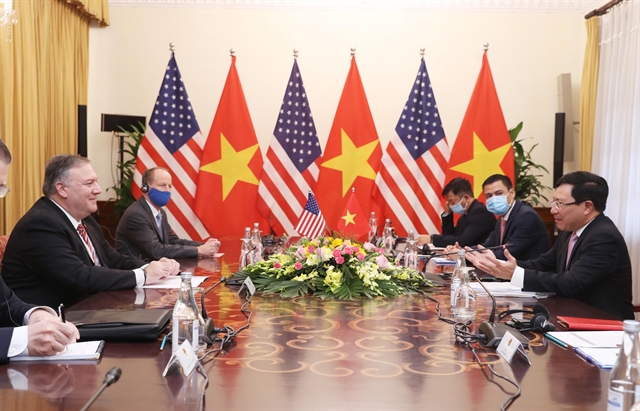
 Disinfection measurements in poultry farms located in Yongin, Gyeonggi Province on Thursday.(Yonhap)
 ![The Communist Party of China Central Committee holds a news conference to answer reporters' questions about the Fifth Plenary Session of the 19th CPC Central Committee on Friday. [Photo by Wang Zhuangfei/China Daily]](https://media.nationthailand.com//images/news/2020/10/31/30397091/800_f302f0cba87d46c.jpeg?v=1604111633) The Communist Party of China Central Committee holds a news conference to answer reporters’ questions about the Fifth Plenary Session of the 19th CPC Central Committee on Friday. [Photo by Wang Zhuangfei/China Daily]
The Communist Party of China Central Committee holds a news conference to answer reporters’ questions about the Fifth Plenary Session of the 19th CPC Central Committee on Friday. [Photo by Wang Zhuangfei/China Daily]  Dr Nazirudin Mohd Nasir (above) said the attacks in Paris and Nice were also an assault on Islam. PHOTO: MUIS
 A “Retail Space Available” sign is displayed outside a building on Madison Avenue in New York on Sept. 26, 2020. MUST CREDIT: Bloomberg photo by Nina Westervelt.
  Jerome Powell, chairman of the Federal Reserve, speaks to the House Select Subcommittee on the Coronavirus Crisis in Washington on Sept. 23, 2020. MUST CREDIT: Bloomberg photo by Stefani Reynolds.
  An employee wearing a protective mask and gloves hands a purchase to a customer in a vehicle at a curbside pickup location outside a Gucci store on Rodeo Drive in Beverly Hills, Calif., on May 19, 2020. MUST CREDIT: Bloomberg photo by Patrick T. Fallon.
  In Watersford Township, Mich., President Trump speaks during a rally Friday. MUST CREDIT: Washington Post photo by Salwan Georges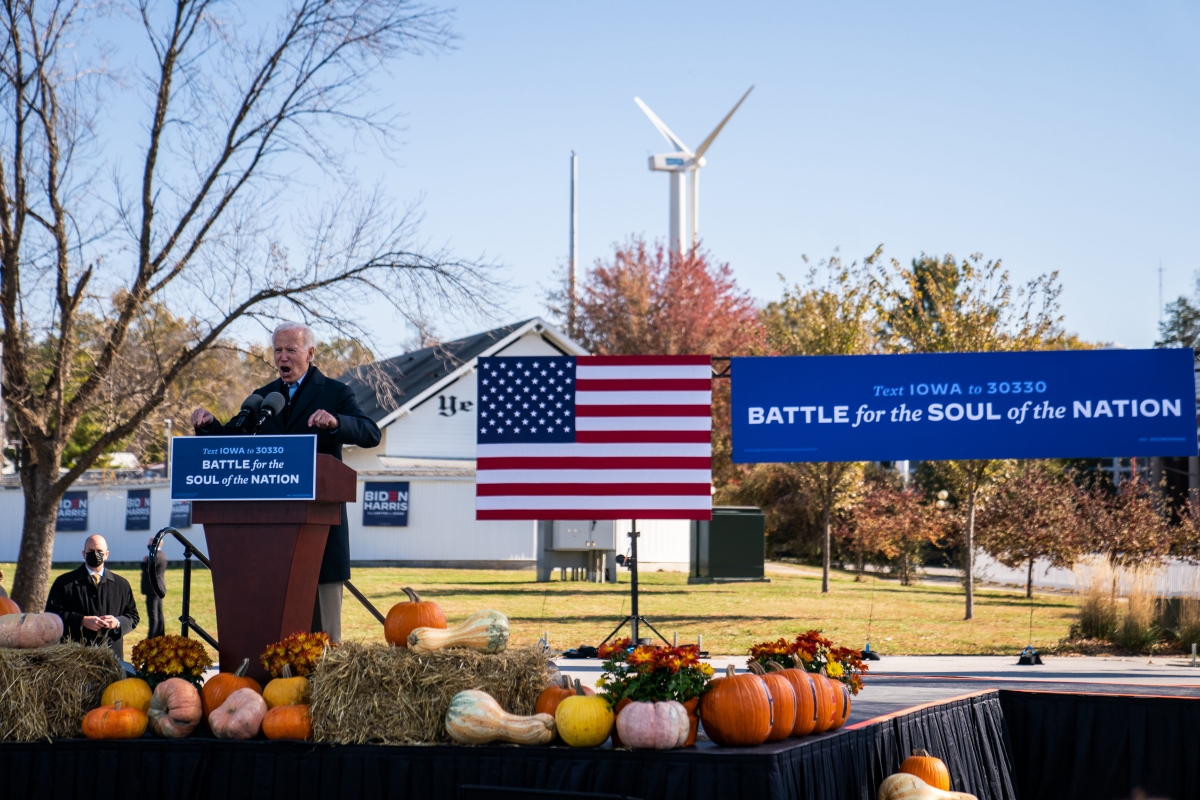
 Boxes of envelopes for ballots are pictured earlier this month at the election office in Erie, Pa. MUST CREDIT: Washington Post photo by Bonnie Jo Mount
