A train in Ninh Phước District, Ninh Thuận Province. —VNA/VNS Photo
By Viet Nam News/ANN
HÀ NỘI — Prime Minister Nguyễn Xuân Phúc asked the Ministry of Transport to propose a feasible plan for the North-South high-speed railway, considering this the backbone of the national strategy on railway development by 2050.
The high-speed line, inter-provincial, inter-regional and urban railway networks must also be added to the strategy, he said.
He was speaking at a Government meeting on Wednesday on the development strategy for Việt Nam’s railway towards 2050.
PM Phúc highlighted the need to upgrade and expand railway networks in Việt Nam while ordering careful preparations for investment and collecting feedbacks of scientists and people on the projects.
“It is necessary to develop Việt Nam’s railway system because the networks have been outdated and need upgrading or build new ones to develop the country,” he told the meeting.
He cited the Lào Cai-Hà Nội-Hải Phòng Railway as one that needs upgrading, adding that urban railway systems must continue to be constructed as planned including those in Hà Nội, HCM City, railway lines connecting the Central Highlands and central region and HCM City and the southwest region.
There is still a lot of space to expand the railway system. A country with a coastline stretching more than 3,000km must develop the railway system, he said, highlighting the importance of building the North-South high-speed railway.
According to the Ministry of Transport, the railway is one of the socio-economic infrastructure sectors that need to be prioritised for rapid development. By 2030, the ministry will continue to upgrade existing railway lines, giving priority to the North-South route, and accelerate construction progress of metro projects in Hà Nội and HCM City.
The ministry will conduct research and develop new routes connecting seaports, industrial parks and study a high-speed railway line connecting the northern and southern parts of the country, aiming to complete the high-speed train by 2050.
PM Phúc urged ministries and sectors to have new thinking in selecting technology to develop railway in Việt Nam, propose investment plans to make a comparison before making decisions and seek different investment sources to develop important infrastructure projects.
Railway projects can be invested by State budget or under the public-private partnership model, he said, asking sectors to make careful preparations for land.
He requested the Ministry of Transport take the lead in building the railway network strategy.
The ministry should propose solutions to develop Việt Nam’s railway networks, especially new technologies and capital mobilisation plans, he said. — VNS
SEJONG — South Korea and Mongolia will lower tariffs on some products starting next year, as Ulaanbaatar joined a regional trade pact known as the Asia-Pacific Trade Agreement (APTA), Seoul’s finance ministry said Friday.
Under the deal, South Korea will reduce tariffs by an average 33.4 percent on 2,797 items, while Mongolia will cut tariffs by an average 24.2 percent on 366 items, the ministry said in a statement.
Mongolia’s accession to the APTA is expected to help the two nations expand trade ties, the ministry said.
Currently, Mongolia only has a bilateral free trade deal with Japan.
South Korea is part of the APTA, which also includes China, Laos, Bangladesh, Sri Lanka and India.
The APTA was established in 1975 and China joined the agreement in 2011. (Yonhap)
China’s GDP expected to exceed 100 trillion yuan in 2020
InternationalOct 30. 2020Photo taken on May 22, 2020 shows flags on the Tian’anmen Square and atop the Great Hall of the People in Beijing, capital of China. The third session of the 13th National People’s Congress (NPC) will hold its opening meeting at the Great Hall of the People on Friday morning. (XING GUANGLI / XINHUA)
By China Daily/ANN
BEIJING – China’s gross domestic product (GDP) is expected to cross the 100-trillion-yuan mark in 2020, according to the communique of the fifth plenary session of the 19th Central Committee of the Communist Party of China, which was released on Thursday.
Over the past 12 months, China has seen its economic growth beat expectations, people’s living standards ensured, and the overall situation of society remained stable, it added.
The communique was passed at the session held in Beijing from Oct 26 to 29.
Xi Jinping, general secretary of the CPC Central Committee, made an important speech at the session, according to the communique.
The plenary session heard and discussed a work report that Xi delivered on behalf of the Political Bureau of the CPC Central Committee, it added.
The session also adopted the CPC Central Committee’s proposals for the formulation of the 14th Five-Year Plan (2021-2025) for National Economic and Social Development and the Long-Range Objectives Through the Year 2035. Xi explained the draft document to the plenary session.
The session was attended by 198 members of the CPC Central Committee and 166 alternate members of the CPC Central Committee.
Also present were members of the Standing Committee of the CPC Central Commission for Discipline Inspection and senior officials of relevant sectors, as well as a number of delegates to the 19th CPC National Congress who work at the grass-roots level, experts and scholars.
Sustained economic growth
According to the communique, China will strive to make new strides in economic development during the 2021-2025 period. The country aims to realize sustained and healthy economic development on the basis of a marked improvement in quality and efficiency, with growth potentials to be fully tapped.
The domestic market will become stronger, the economic structure will be further improved, and the innovation capacity will be significantly strengthened. The industrial base will be upgraded, and the industrial chain will be further modernized.
China will see more solid foundation for agriculture, and more balanced development between urban and rural areas and between different regions. The country will also make great progress in developing a modernized economy, according to the communique.
With new steps to be taken in reform and opening up, China will further improve its socialist market economy and basically complete the building of a high-standard market system. Market entities will show more vitality, and significant progress will be made in the reforms of the property right system and the market-based allocation of factors of production, it added.
With the fair competition system to be further improved, China will basically form the new institutions of a higher-level open economy. China’s social etiquette and civility shall be further enhanced, while the core socialist values shall be embraced by the people.
National defense modernization
According to the communique,China will accelerate the modernization of national defense and the military. It called for integrated efforts to build a prosperous country and a strong military while the country’s national defense capabilities and economic strength should be strengthened at the same time.
A significant improvement is expected to be made in people’s intellectual and moral integrity, cultural and scientific qualities, as well as physical and mental health. The systems of public cultural service and cultural industries will be further advanced, with rich cultural and intellectual activities organized for the public, according to the communique.
The influence of the Chinese culture will be increased, and the Chinese nation’s cohesiveness will be further strengthened, it added.
Ecological civlization
China aims to make new progress in building an ecological civilization, optimize the development and protection of territorial space, and achieve notable results in green transformation of production and lifestyle.
The country will allocate energy and resources more appropriately and raise utilization efficiency. It will continue reducing emissions of major pollutants and improving ecological environment, make ecological security shields more solid, and greatly improve urban and rural living environment, according to the communique.
The well-being of the people will reach a new level. China will achieve fuller and higher-quality employment, with personal income growth basically in step with economic growth, and marked improvements in distribution structure, it added.
The country will also see much more equitable access to basic public services. The education level of the entire population will be continuously improved, while the multi-tiered social security system and health system will be further enhanced.
According to the communique, efforts will also be made to consolidate achievements scored in the fight against poverty and fully promote the strategy of rural vitalization.
Enhancing governance
China will further enhance governance capacity, improve socialist democracy and the rule of law, and demonstrate social fairness and justice. The national administrative system will be perfected, the role of the government will be better played, and the administrative efficiency and credibility will be significantly strengthened, it added.
The country will step up the level of social governance, especially at the community level, continuously improve the systems and mechanisms to forestall and defuse major risks, greatly enhance the capability to respond to public emergencies and prevent natural disasters, and strengthen security guarantee for development.
Achieving socialist modernization by 2035
The CPC also raised a set of long-range objectives for China to basically achieve socialist modernization by 2035. According to the communique:
– China’s economic and technological strength, and composite national strength will increase significantly. A new stride will be made in the growth of the economy and the per capita income of urban and rural residents. Making major breakthroughs in core technologies in key areas, China will become a global leader in innovation;
– New industrialization, IT application, urbanization, and agricultural modernization will be basically achieved. China will finish building a modernized economy;
– The modernization of China’s system and capacity for governance will be basically achieved. The people’s rights to participate and to develop as equals will be adequately protected. The rule of law for the country, the government, and society will be basically in place;
– China will become a strong country in culture, education, talent, sports and health. The well-rounded development of all people and social etiquette and civility will be significantly enhanced. China’s cultural soft power will grow much stronger;
– Eco-friendly ways of work and life will be advanced to cover all areas of society. Carbon emission will steadily decline after reaching a peak, and there will be a fundamental improvement in the environment with the goal of building a Beautiful China basically reached;
– The opening-up will reach a new stage with substantial growth of the country’s strengths for participating in international economic cooperation and competition;
– The per capita GDP will reach the level of moderately developed countries. The size of the middle-income group will be significantly expanded. Equitable access to basic public services will be ensured. Disparities in urban-rural development, in development between regions, and in living standards will be significantly reduced;
– The implementation of the Peaceful China initiative will be promoted to a higher level. The modernization of national defense and the military will be basically achieved;
– People will lead a better life, and more notable and substantial progress will be achieved in promoting well-rounded human development and achieving common prosperity for everyone.
Singapore to allow travellers from China, Australia’s Victoria from Nov 6; no quarantine if Covid-19 test negative
InternationalOct 30. 2020Applicants must have remained in China or Australia in the last 14 consecutive days before entry into Singapore. ST PHOTO: KEVIN LIM
By Toh Ting Wei The Straits Times/ANN
SINGAPORE – All travellers from China and the state of Victoria in Australia will be able to enter Singapore and not be quarantined from next Friday (Nov 6), if they pass a Covid-19 test on arrival.
Singapore’s move to unilaterally open its borders to these two places means tourists and travellers flying in can go about their business without serving a stay-home notice if their PCR (polymerase chain reaction) test is negative.
The same applies to Singapore citizens, permanent residents and long-term pass holders returning from these two areas.
Singapore had earlier announced similar unilateral measures for all forms of travel from Brunei, New Zealand, Vietnam and all other parts of Australia except Victoria, which until recently had been battling more cases than the rest of the country.
The Civil Aviation Authority of Singapore (CAAS) said on Thursday (Oct 29) that mainland China and Victoria had been added to the list as they have comprehensive public health surveillance systems and had successfully controlled the spread of the Covid-19 virus.
China has a virus local incidence rate of 0.00009 cases per 100,000 people, while Victoria has a rate of 0.099 cases per 100,000 people, it noted in a statement.
“The risk of importation from these places is low,” said CAAS.
Travellers from the two places will be able to apply for an air travel pass to enter Singapore from noon on Friday for entry from Nov 6.
Applicants must have remained in China or Australia in the last 14 consecutive days before entry into Singapore. Outbound travel is still restricted in both countries.
Aviation analyst Mr Shukor Yusof of Endau Analytics, said: “After the accord with Hong Kong, it makes sense to extend a similar one with China, especially seeing how the Chinese have been able to curb the disease.”
As at noon on Thursday, CAAS had approved 1,375 applications to travel into Singapore from Brunei, New Zealand, Vietnam and Australia, excluding Victoria.
None of the travellers who have come to Singapore has tested positive for Covid-19 upon arrival, CAAS said.
It added that it will update the local travel advisory to allow travel to China and all of Australia, although this is expected to have limited impact, with inbound travel restrictions still in place in both countries.
China has been one of Changi Airport’s major markets, with 7.3 million passenger movements last year attributed to it. This makes up 10.7 per cent of Changi’s total traffic last year.
Indonesia was Changi’s top market, with 8.3 million passenger movements attributed to the country.
There are currently only 10 flights weekly to seven cities in China. This is in contrast to December last year, when there were 373 weekly flights to 36 cities in China.
By The Washington Post · James McAuley · WORLD, EUROPE
PARIS – Three people were killed in a knife attack at a church in the southern French city of Nice on Thursday, an act President Emmanuel Macron referred to as “an Islamist terror attack” and which prompted the country to raise its security alert to the highest level.
The attack came amid tensions over cartoons denigrating the prophet Muhammad, and it echoes the beheading less than two weeks ago of a suburban Paris teacher who had shown the cartoons in a class about free expression.
The French government has defended the cartoons as representing the right of blasphemy against any religion. The bigger concern, the government says, is the need to “reform” the practice of Islam in France as a means of combating “Islamist separatism” and violence.
Many Muslims, in France and abroad, interpret the cartoons as a deeply offensive provocation. There have been calls for a boycott of French products across the Muslim world.
Speaking at the scene in Nice on Thursday afternoon, Macron condemned the attack and doubled down on his defense of freedom of expression, although he did not expressly mention the Muhammed cartoons.
“We will cede nothing,” Macron said, announcing the deployment of between 3,000 to 7,000 members of France’s anti-terror security force throughout the country, especially at churches, schools and other religious sites, through the All Saints holiday on Sunday.
Radical Islamist groups had threatened more attacks, and France had warned its citizens in certain Muslim countries to exert extra caution. Also on Thursday – the birthday of the prophet – a security guard outside the French consulate in Jiddah, Saudi Arabia, was stabbed. He did not suffer life-threatening injuries, the French consulate said in a statement.
The attack in Nice occurred at the Basilica of Notre-Dame de L’Assomption, shortly before 9 a.m. Three people were confirmed dead, according to anti-terror prosecutor Jean-François Ricard: a 60-year-old woman, whose throat was slashed in the church; a man of 55, stabbed to death inside the church; and a woman of 44, who died in a restaurant across the street after fleeing the basilica.
Ricard identified the suspect as a 21-year-old Tunisian national who arrived Europe via the Italian island of Lampedusa last month. When police arrived at the church, man approached them, shouting “Allahu Akbhar,” or “God is greatest” in Arabic, Ricard said. He was shot by French police and taken to a hospital, where he underwent an operation and remained in critical condition, the prosecutor said.
A copy of the Koran was found in the suspects’s possession, as well as a 30-centimeter knife apparently used in the attack, Ricard said, adding that two other knives were found in the church.
The French press additionally reported Thursday that police shot dead a man in Avignon who had been threatening a passerby with a knife. Authorities apprehended another man, a 26-year-old Afghan, brandishing a 30 centimeter knife in central Lyon, near the Perrache train station, according to a statement from Lyon prefect’s office to France’s Le Monde newspaper. It was not clear if those attacks were in any way connected to the Nice stabbings.
According to SITE Intelligence Group, after the attacks on Thursday, Islamist militants following al-Qaida and the Islamic State filled social media platforms and forums with jubilant cheers, many sharing a quote by Osama bin Laden: “If your freedom of expression respects no boundaries, be prepared to face our freedom of action.”
The Islamic State itself called on followers to target French companies operating in Muslim countries, according to SITE.
The attacks, however, momentarily eased official anger toward France.
Turkish President Recep Tayyip Erdogan had clashed with Macron this week, saying his defense of the caricatures and treatment of Muslims in France suggested he “needs treatment on a mental level.” Turkey – which also has strategic disputes with France over the civil war in Libya and Turkey’s claims to energy deposits in the eastern Mediterranean – had led the calls for a boycott of French products.
On Thursday, though, Turkey condemned the bloodshed in Nice and offered condolences to relatives of the victims.
“No reason can excuse the killing of a person and legitimize violence,” said a statement, released by Turkey’s Ministry of Foreign Affairs. “It is clear that those who organized a brutal attack like this one in a holy place of worship do not have their share of religious, human, and moral values.”
President Donald Trump voiced his support for France on Thursday, while using the attack as an opportunity to bash his Democratic opponent, Joe Biden. “Under the Biden plan, the horrifying attacks in France will come to our cities and our towns,” Trump said.
The French caricatures, published by the satirical newspaper Charlie Hebdo, have now been tied to multiple incidents of violence.
Charlie Hebdo itself was victim of a major terrorist attack in January 2015, when two brothers killed 12 journalists and claimed they had “avenged the prophet” as they fled the scene.
Last month, after Charlie Hebdo republished the cartoons, two people were stabbed outside the newspaper’s former offices.
And then two weeks ago, Paty, the middle school teacher, was beheaded, a gruesome incident that shocked the nation.
In the eyes of the French government, defending the caricatures, as offensive as they may be to some French citizens, is now a fundamental part of national identity.
“In France, there is only one community – the national community,” Macron said in Nice. “We will cede nothing to the spirit of division.”
The cartoons – and the right of blasphemy the government says they represent – are deeply rooted in French history. But France is also a country that abides by hate speech laws and seeks to protect minority rights.
“Civil liberties, including freedom of speech and freedom of the press, have historically been gained as an emancipation from religion,” said Cécile Alduy, a French political analyst and Stanford University professor.
“In France, it was against the Church that the freedom of expression was won,” she said. “It still informs very deeply the French notion of secularism and liberties. The caricatures are seen, even when one does not endorse them, as a symbol that blasphemy is no longer a crime and that religions cannot dictate what can be said or created.”
Patrick Weil, an expert on the history of France’s secularism, or laïcité, said the Mohammad caricatures are permissible because they attack a religion, not a particular group of individuals.
“You can attack a religious authority because it’s not a human person, it’s a God. But if you attack Muslims as Muslims, you are condemned by the courts,” he said. “Of course, the distinction is sometimes complicated.”
In fact, the French government has not always defended the publication of Muhammad cartoons.
“Anything that can hurt the convictions of someone else, in particular religious convictions, should be avoided,” said President Jacques Chirac in 2006, speaking after Charlie Hebdo had published its first set of Muhammad caricatures.
But the 2015 Charlie Hebdo attack forced a hardening of convictions, said Gérard Araud, France’s former ambassador to the United States. It backed the government into a corner.
“We are trapped with these caricatures. We can’t simply drop them, or say publicly that they’re vulgar, because people have died for them, and are still dying for them,” Araud said. “We are obliged to fight for them, whatever we think of them.”
The string of attacks in France has additionally given impetus to Macron’s plans to “reform” the practice of Islam in France, mostly by targeting the foreign funding that Muslim communities receive in the hopes of combating links to foreign radicals. The government also announced a crackdown on more than 50 Muslim organizations it has accused of fomenting terrorist violence.
Macron prompted anger from Muslims in France and abroad with a declaration that “Islam is a religion that is in crisis all over the world. “
His controversial quest to intercede into the practice of the religion is both about promoting integration but also about preventing the sort of terrorist attacks that have scarred France in recent years.
Nice was also the site of a devastating attack on Bastille Day in 2016, when a Tunisian man living in France intentionally drove into the coastal city’s busy Promenade des Anglais, killing 86 people.
Falwell Jr. sues Liberty University, says school damaged his reputation
InternationalOct 30. 2020Liberty University President Jerry Falwell Jr. addresses students in 2015 during a convocation on the campus in Lynchburg, Va. MUST CREDIT: Washington Post photo by Matt McClain.
By The Washington Post · Susan Svrluga, Sarah Pulliam Bailey · NATIONAL, COURTSLAW, EDUCATION, RELIGION Jerry Falwell Jr. has sued Liberty University, the evangelical school co-founded by his father that he led for more than a decade before resigning in August after a series of personal scandals.
Falwell claims Liberty damaged his reputation, alleging the university accepted without verifying what he called false statements made by a man who had an affair with Falwell’s wife and attempted to extort the couple, according to the complaint.
The complaint alleges that the man, Giancarlo Granda, worked with political operatives opposed to President Donald Trump, including the Lincoln Project, on his “defamatory media campaign” against Falwell.
“Other than God and my family, there is nothing in the world I love more than Liberty University,” Falwell said in a news release Thursday from a law firm representing him. “I am saddened that University officials, with whom I have shared so much success and enjoyed such positive relationships, jumped to conclusions about the claims made against my character, failed to properly investigate them, and then damaged my reputation following my forced resignation.”
Falwell’s departure in August generated shock waves because of his stature in parts of the evangelical world. Liberty has long been a power center for conservative Christians, and Falwell’s endorsement of Donald Trump’s presidential campaign in 2016 was seen as a pivotal moment for the candidate, one of the earliest signs of support from a prominent evangelical leader.
Scott Lamb, a spokesman for the university, said Liberty “leadership teams have important responsibilities this week, serving the Board of Trustees who are in Lynchburg … This lawsuit will be read and reviewed in a timely manner, and I would imagine a public response will be given at that time.”
Falwell and his attorney did not immediately respond to requests for comment Thursday. But in the news release, attorney Robert Raskopf said they had tried unsuccessfully to meet with the executive committee of the school’s board of trustees before filing the suit.
Falwell, a lawyer and developer, had been admired by many at Liberty for transforming a college mired in debt into a booming 85,000-student university with political clout, a Division I football team and a beautiful campus.
But he generated controversies as well over the years, for comments and actions criticized as racist or anti-Muslim, and some students and alumni worried that the school had weakened its commitment to Christian values.
In August, Falwell was suspended with pay after posting on social media, and then deleting, a photo of himself with his wife’s young assistant that showed their zippers partially down and their stomachs exposed.
Pressure to resign grew intense after a young businessman publicly claimed that he had had an extramarital affair involving both Falwell and his wife, Becki.
Granda, a former pool attendant, alleged he was involved in a nearly seven-year-long affair with the couple in which he had sex with Becki Falwell while Falwell Jr. watched and sometimes recorded. Becki Falwell acknowledged the affair to The Washington Post, but both she and her husband denied that Falwell Jr. was involved.
The couple told The Post that the affair had lasted one or two years and that Granda had tried to blackmail them.
Falwell told The Post in August that he was resigning in part because he did not want to bring embarrassment to the school because of his wife’s behavior.
Falwell’s complaint was filed Wednesday in a Virginia circuit court. A copy of it includes some redactions in sections that cited Falwell’s employment agreement with Liberty.
In the document, Falwell claims no one from Liberty’s board of trustees asked him about Granda’s allegations and that the university accepted what he called false statements without investigating their veracity, forcing his resignation.
It also claims the university began a campaign to destroy Falwell’s reputation, citing a speech made during a school convocation in August in which the school’s senior vice president for spiritual leadership spoke of Falwell and “sin,” as well as a news release from Liberty that said he lacked spiritual stewardship.
The lawsuit claimed Falwell was targeted by a “malicious smear campaign incited by anti-evangelical forces.”
On Thursday, Granda said his story was not connected to the Lincoln Project and that he received no financial compensation for coming forward. “Jerry is attempting to portray himself as a victim,” he said in response to the lawsuit. “No one should be fooled.”
The Lincoln Project, an anti-Trump political action committee, also denied involvement, saying in part, “The Lincoln Project has had nothing to do with the public finally learning about the true character of the Falwell family.”
Falwell’s 2016 endorsement of Trump came not long after Michael Cohen, who was then Trump’s personal attorney, said he helped the Falwells cover up compromising photos.
Falwell’s ties to Trump had added to the aura of invincibility that came from his family name. His father, the late Rev. Jerry Falwell Sr., was a prominent leader of the religious right, a televangelist who helped found Liberty University with a mission of “training champions for Christ.” His brother, the Rev. Jonathan Falwell, is senior pastor of Thomas Road Baptist Church in Lynchburg, Va., where their father was founding pastor.
After their father’s death in 2007, Jerry Falwell Jr. became president of Liberty, and the public face of the university.
When he resigned in August, Falwell said his contract entitled him to a $10.5 million severance package in part because he left the school without admitting to or being formally accused of wrongdoing.
Liberty named Jerry Prevo, a pastor from Alaska who had been serving as chairman of the school’s board of trustees, as acting president. The board launched an independent investigation to examine university operations during Falwell’s tenure.
Immigrants who are first-time voters know how much is at stake next week
InternationalOct 30. 2020Ahmed “A.J.” Mikhlif and his wife, Hend, when they became U.S. citizens in December 2019, the culmination of a five-year journey that began with their resettlement in Charlottesville, Va., in 2014 as Special Immigrant Visa holders because Mikhlif’s service as an interpreter to the U.S. government in Iraq meant they were no longer safe there. MUST CREDIT: Kari Miller/International Neighbors
By The Washington Post · Petula Dvorak · NATIONAL, POLITICS Ahmed “A.J.” Mikhlif is 42 and he’s voting for the first time in his life next week.
Because back in Iraq, where civil unrest and corrupt regimes roil the government, voting was always “voting.”
“Here, you vote for two people or maybe three people,” Mikhlif said. “In Iraq, there was one person. It wasn’t voting. You like or you dislike that person. And that was all.”
Mikhlif and his wife became U.S. citizens in December, and they are joining the swelling population of naturalized citizens who are eligible voters.
Their numbers have nearly doubled in the last 20 years, according to the Pew Research Center – and they range from translators to busboys, physical education teachers to doctors.
They also include Dame Helen Mirren, who recently became a U.S. citizen and cast her ballot in the dusty town of Minden, Nev., and comic Jimmy O. Yang, whose shtick on his immigrant parents has endeared him to generations of kids both mortified and proud of their parents’ accents and quirks.
And they include Maha al-Obaidi. It took 66 years for her to feel like she was part of her own government. In Iraq, she said ballots were changing, and no one knew if anything was fair. Then two of her sons and husband were kidnapped and the family had to pay exorbitant ransoms. They had to flee.
Today, she is in Astoria, Queens, voting as an American.
“Now, I feel this is my country, this is it. I have my roots here now,” she said.
She is hoping her vote can help change the U.S. policy – President Donald Trump’s travel ban – that is keeping her two sons trapped in Jordan.
Saba Barkneh’s first vote as an American couldn’t have been more, well, American.
“It was a drive-through,” she said. “It was easy. Done in 10 minutes. And I got a sticker.”
Nothing like what her relatives back in Ethiopia endure at the polls – including an effort just to travel to them.
“I’m learning from my family members that voting is a struggle there,” said Barkneh, 45, a marathoner and a nutritionist at Goodwin House in Prince William County, a senior-living facility that has a program helping new immigrants become naturalized citizens. “Being able to reach the voting sites, people thinking, ‘My vote is not counting.’ … People don’t feel like their vote is making a difference.”
These first-time voters bring with them an appreciation for American democracy, the ideals they’ve been worshiping from afar for years. And they have the fire and urgency to keep this shining city upon a hill bright, especially as they see the darkness of this year’s election.
Mikhlif, who worked as a translator for the United States military in Iraq for eight years, was stunned to see the anti-immigrant and anti-Muslim sentiment when he, his wife and their children arrived in Charlottesville, Va.
He works with other immigrants through the International Neighbors program there and is hoping to cast a ballot on Tuesday that will make some difference in not only policies toward immigrants, but also attitudes.
“America was built on the shoulders of immigrants,” he said.
The division and strife in America today has been shocking for the family of Diana Mateo, who immigrated from Guatemala when she was 9.
“That ideal they had in mind is tarnished,” said the 25-year-old paralegal in D.C.
Andrew Martin never voted when he lived in his native South Africa, which he left when he was 25.
“I am now 39. One thing that inspired me to vote here is the idea that my vote may actually count,” said Martin, who left his native country as it was still reckoning with perilous inequities despite the end of apartheid. “In South Africa, I never felt that way.”
He arrived in America in 2007 as “a wide-eyed young immigrant who was hopeful that he stepped right into the ‘American Dream.’ “
“What I’ve seen since 2016 is not only embarrassing, it’s sad, often scary, and frankly extremely depressing,” he said, of the rise of anti-Semitism, white supremacy and shades of authoritarianism.
“I know I am fortunate. I’m a White man who speaks English,” he said. “But I am completely turned off when people mention the ‘American Dream.’ This America is no dream – this is what people come to America to escape.”
Grace Okono is urgent in her mission to get other Americans to understand the danger the nation is facing.
“Americans should be on guard,” said Okono, 45, who lived in Cameroon, Ghana and Nigeria before coming to the United States to study in D.C. more than 20 years ago. “When you have something very good, as good as Americans have it, they have to learn to fight to keep it and protect it, just like anything that is bequeathed to you.”
The arguments about voter suppression, the court hearings about mail-in ballots and the confusion in this election worry her. They’re too familiar.
“They are reminiscent of a corrupt regime,” she said.
So it was with a deliberate urgency that Okono completed her citizenship process and took her daughter with her to vote in their new hometown of Frisco, Texas.
“Some of us who are immigrants, we’ve come from a place where things are much worse,” she said. “And we know how important this next week is.”
InternationalOct 30. 2020A demonstrator in Philadelphia on Tuesday protesting the fatal police shooting of Walter Wallace Jr. wears a hoodie with a photo of Trayvon Martin. Wallace’s family said he was having a psychiatric crisis when they called authorities to get help for him. MUST CREDIT: Washington Post photo by Joshua Lott
By The Washington Post · Maura Ewing, Robert Klemko, Mark Berman · NATIONAL, POLITICS, COURTSLAW, RACE
PHILADELPHIA – A lawyer for Walter Wallace Jr.’s family said Thursday that Wallace was clearly suffering mental distress when Philadelphia police officers fatally shot him this week. But he said Wallace’s relatives are not demanding murder charges in the case, saying the police officers lacked the training to handle the encounter.
Shaka Johnson, the family’s attorney, said that earlier Thursday he had watched body-camera footage from the shooting. Police arrived at the scene Monday after Wallace’s family members called for help multiple times amid what Johnson described as chaos and medical concerns in the Philadelphia home.
“There was a person in obvious mental health crisis,” Johnson said, adding that Wallace’s family had “asked for the whole buffet of services from 911,” including police officers, but said those who showed up were not prepared for what they found.
Police officers arriving on the scene shot and killed Wallace, a 27-year-old Black man, setting off successive nights of protests, looting and property damage. His death is the latest chapter in the often-painful history between this city’s police department and many of its residents.
Police say the officers who encountered Wallace were responding to a call about a man with a knife. The Philadelphia police union’s president said Wallace was “aggressively” approaching the officers. Wallace’s family has said he was in the midst of a mental crisis and wondered why responding officers did not use a Taser to subdue him; the police department later said neither officer was equipped with the less-lethal device.
“I understand he had a knife . . . that does not give you carte blanche to execute a man,” Johnson said.
Wallace is one of at least 806 people whom police have fatally shot in 2020, according to a Washington Post database. Mental health issues are a consistent factor in many of the shootings, with about 1 in 5 of those fatally shot by police known to have been dealing with such concerns or experiencing crises at the time of the encounters.
Speaking briefly Thursday, Wallace’s parents both called for “justice” in the case. Johnson said the family did not think the officers should be charged with murder, because “they were improperly trained and did not have the proper equipment.”
He declined to say whether either officer should face any criminal charges, leaving that decision to the office of District Attorney Larry Krasner, who has pledged to consider the case carefully. Police did not respond to requests for comment about Johnson’s remarks.
After the protests gave way to looting and unrest Monday and Tuesday nights, the city imposed a curfew Wednesday, which was considerably calmer. The city said Thursday that there had been more than 200 arrests and more than 50 officers injured since the unrest began this week. Officials encouraged people to stay home Thursday night but did not impose another curfew.
Wallace’s shooting echoed a circumstance seen this year in other cities – including Minneapolis, Louisville, Atlanta and Kenosha, Wis. – where long-standing tensions between police departments and their communities burst to the fore after a violent encounter.
“There is a lot of animosity – and I think rightly so – when it comes to local law enforcement,” said the Rev. Mark Tyler of Mother Bethel AME Church. “No matter what, regardless what the policy is, the interaction between African American men and law enforcement tends to be hostile.”
For some residents, the shooting was a reminder that despite promises of reform from the city and police, the work has still not been enough to prevent incidents like Monday’s shooting.
“A lot changed, but we still can’t call them for help,” said Johnathan Riddick, 41, who lives on the block where Wallace was shot. “This is what happens.”
When Danielle Outlaw was tapped to lead the police department late last year, Mayor Jim Kenney, a Democrat, repeatedly brought up the need for reforming the department in touting the selection. This week, Outlaw has emphasized that she heard the community’s anger and sadness, saying that “everyone involved, including the officers, will forever be impacted by this tragedy.”
City officials have provided scant details about the shooting. John McNesby, the president of the Philadelphia police union, called on the city to “release what you have” about the shooting and to “support your officers.”
Outlaw took over a department with a troubled past, said David Rudovsky, a senior fellow at the University of Pennsylvania law school and a longtime civil rights lawyer in Philadelphia.
“There’s a long, long history of antagonism between the police department and the community, at least the minority community,” Rudovsky said. Outlaw and Kenney have shown promise on reforms, he said, “but they’re living with a legacy of bad policing.”
What unfolded in Philadelphia this week stems from both the local history and the nationwide climate surrounding policing, said Chuck Wexler, the executive director of the Police Executive Research Forum, whose group was hired by Philadelphia to help with the search that picked Outlaw.
“We’re in the middle of a major sea change in American policing,” Wexler said. “And in a city like Philadelphia, it can be like a powder keg.”
The city and the department have faced lawsuits, including over stop-and-frisk policies. They also have taken some proactive steps to address issues facing police forces across the country, including when Charles H. Ramsey, as police commissioner, called in the Justice Department to review how Philadelphia’s police use deadly force.
Residents have more recently criticized Philadelphia police for using tear gas and rubber bullets on demonstrators in the protests that followed George Floyd’s death in police custody in Minneapolis. On Thursday, the Philadelphia City Council barred police from using “less lethal” tactics on demonstrators.
More policing issues will come before Philadelphia residents on Election Day, with ballot questions asking whether voters want to create a citizens’ police oversight group and to “end the practice of unconstitutional stop and frisk.”
Standing on the sidewalk not far from where Wallace was killed, Riddick and Marc “Spark” Willfly, also a resident, said that since Kenney took office, they had fewer interactions with police in their community. That meant fewer bad encounters but also that officers rarely stopped to meet residents.
“They ride up and down here all day, but they don’t mess with people,” said Willfly, 45.
Ramsey, the former police chief, said the unrest in Philadelphia and other cities this year showed how “fragile” the relationships between police and their communities can be.
“It takes time to build relationships,” said Ramsey, who retired in 2016. “But it doesn’t take that long for those relationships to dissolve.”
In campaign’s waning days, both candidates seek to shore up support from Latino voters
InternationalOct 30. 2020Supporters of Joe Biden and Kamala Harris ride on horseback during a rally at the Walnut Community Center’s early-voting location in Las Vegas. Labor unions and liberal organizers have created a model of Latino engagement in Nevada that scarcely exists elsewhere. Recent polling shows Biden with a single-digit lead in the state. MUST CREDIT: Washington Post photo by Melina Mara
By The Washington Post · Jose A. Del Real, Amy Gardner, Jenna Johnson · NATIONAL, POLITICS
In the closing days of the 2020 election, the Trump campaign is seeking to seize on a perceived opening with conservative-leaning Latinos, hoping to chip away at margins that Democratic presidential nominee Joe Biden needs to win in tight battleground races like Pennsylvania and Texas.
On Thursday, the Trump campaign unveiled a television ad targeting Latinos in South and Central Florida, Arizona and Nevada that drew a connection between the hopes of immigrant communities and the president’s pandemic response.
“Why did we come here? Why did we sacrifice everything to start over? Because here, we all have the opportunity to live our dreams and to give our families a better future. Today we decide if we will save the American Dream or if we will allow the pandemic to threaten our destiny,” the ad’s narrator says in Spanish. “And like President Trump, we will win this war against coronavirus and continue fighting for our people.”
Biden announced Thursday that he would sign an executive order on the first day of his presidency establishing a task force to find the parents of what advocates say are 545 minors who are still separated from their families as a result of Trump’s immigration crackdown at the U.S.-Mexico border. Biden’s plan is featured in a new digital ad highlighting what the campaign says were “inhumane” conditions at the border.
The efforts come as some Democratic consultants worry that early turnout among Latinos in some key states is lagging expectations so far.
Polls show that Latinos could be a decisive constituency in battleground states across the country – not only where they are recognized as a burgeoning political force, like in Nevada and Arizona, but also in places like Michigan and North Carolina, where they are a growing part of the electorate. Nationally, an estimated 32 million Latinos are eligible to vote in the 2020 election, according to Pew Research Center, a trend driven by the huge number of young American-born Latinos who have recently reached voting age.
But experts who study Latino communities say that many of these eligible voters remain alienated from the political process or have received little information from the campaigns about how to vote, which could matter especially in low-income households besieged by the pandemic. And they remain misunderstood by political strategists. While Biden overwhelmingly leads among Latino voters, about 3 in 10 say they will vote for President Donald Trump, according to national polls that also reflect surveys done in battleground states.
“So often, political strategists have been like, ‘We don’t get the Latino community. It’s a mystery,’ ” said Edgar Flores, a Democratic assemblyman in Nevada, who hosted a recent cabalgata, or Mexican horseback parade, in Clark County to raise awareness about early voting. The state’s political apparatus is widely viewed as a model for Latino political organizing.
“Give Latinos resources. Put the camera on them,” Flores said, noting the event came together through local feedback and participation. “We need to meet people where they are and we need to energize people by amplifying their voices.”
Such Latino-focused outreach is at once a paradigm of what is possible and a marker of what is missing in many other states which, unlike Nevada, do not have robust networks of Latino activists or organized labor to engage voters on both sides of the aisle.
For many political observers, the question is not merely whether they will vote Democratic or Republican, but whether they will vote at all, which could be decisive, too.
While Democratic officials have celebrated early-voting numbers that show Democrats outnumber Republicans in key states that track such data – North Carolina and Florida among them – the Hispanic vote is one asterisk to their bullish view.
In North Carolina, Hispanics are voting early at lower rates than White or Black voters, but comparable to previous cycles, said Morgan Jackson, a Democratic strategist in the state. Jackson said that, like many Black voters, many Hispanic voters prefer voting in person, and he is optimistic that higher numbers will continue to turn out for early in-person voting as well as on Election Day on Tuesday.
In Florida, a Democratic strategist who spoke on the condition of anonymity to speak candidly shared data showing that the ballot return rate for voters who requested mail ballots is slightly higher among Republican Hispanics than Democrats – 38% to 35% as of Sunday evening. The raw number of Democratic Hispanics who have voted, however, is higher. And unaffiliated Hispanics have turned out robustly as well.
In Nevada, where 1 in 5 voters is Latino, limited polling and the unusual circumstances caused by the pandemic have made it difficult to assess how competitive the race is, and the state does not break down early vote totals by demographics. Recent polling shows Biden with a single-digit lead in the state, which Hillary Clinton won by 2 percentage points in 2016.
In a call with reporters Thursday, the Biden campaign said its internal polling shows they are “100 percent on track to match or exceed the Obama vote numbers” among Latinos.
Since September, the campaign said it has invested tens of millions of dollars on Latino turnout efforts across battleground states, which it called an “unprecedented” amount. One week out from Election Day, 5 million Latinos had already voted, compared with 2.5 million in 2016, according to the campaign, which expects the bulk of Latinos to show up on Election Day.
Biden campaigned Thursday in Broward County, Fla., where he made explicit appeals to Venezuelan Americans and Cuban Americans, who make up a significant part of the electorate in South Florida.
Biden has had to contend with a torrent of GOP attacks in South Florida seeking to cast him as sympathetic to socialists and communists, despite his long-standing rejection of these political philosophies. The attacks tap into existing worries about leftist regimes in Latin America in countries where many Florida voters fled or have roots. Democrats have said the attacks have taken a toll.
At a rally Thursday in Tampa, Trump said Biden has “betrayed” Latino Americans over his long political career. He did not say how.
“Biden’s agenda will devastate the Hispanic American community,” Trump said.
In Nevada, victory for Democrats runs through the robust turnout effort organized by the Culinary Workers Union. Every election cycle, hundreds of its members take paid political leave from their jobs as housekeepers and restaurant servers to fan out across Las Vegas and Reno to canvass on behalf of political candidates endorsed by the union. Notably, 54% of the union’s 60,000 hospitality workers are Latino; an additional 15% of members are Asian and another 10% are Black. Fifty-five percent of union members are women.
Even so, doubts linger about how those efforts will play out this year. During the peak of the economic turmoil caused by the pandemic, as many as 98% of the union’s members were furloughed and put on unemployment. Today, just about 50% are back at work. And while Nevada Gov. Steve Sisolak, a Democrat, signed a bill in August expanding vote-by-mail in the state, the Trump campaign has repeatedly attacked the expanded voting options with tweets and lawsuits.
The pandemic has not slowed down the union’s political canvassing efforts, said Bethany Khan, a spokeswoman for the Culinary Union. Today, they have more than 400 canvassers working full time, about 100 more than in the 2016 election, when they knocked on more than 350,000 doors and talked to 75,000 voters, Khan said. This year, they also began their canvassing program on Aug. 1, more than a month earlier than previous years.
Elizabeth Renteria, 32, a Latina housekeeper at Caesars Palace, is one of those people going door-to-door to encourage people to vote. Although she does not consider herself a very political person, she raised her hand to participate in the union’s canvassing program, she said, because it felt like an effective way to contribute to the community. She is unable to vote herself in this election because her citizenship exam was delayed by the coronavirus pandemic.
“It’s about my family. It’s personal. My husband, he’s a ‘dreamer,’ and when Trump said that he was going to stop DACA, we went through a lot of stress. The first thought in my head was that my family was going to be broken,” she said, referring to the Deferred Action for Childhood Arrivals immigration policy. “Donald Trump is very racist. He doesn’t like Latinos. He doesn’t like anyone. So I think it’s time for us to stand up and make a change.”
But the kind of Latino-oriented political turnout infrastructure that has brought Renteria into the process scarcely exists elsewhere in the country.
North Carolina and Pennsylvania, which having growing populations of Latino voters, are examples of political battleground states where the Democratic Party continues to overlook Latino voters who would be receptive to their message, said Sonja Diaz, the director of the Latino Policy & Politics Initiative at the University of California at Los Angeles. States like Arizona that have significant turnout programs have them because community organizations, which do not have deep financial resources, often have built them from scratch without much help from the national Democratic Party.
Political campaigns by their nature often focus on reaching “likely voters,” said Diaz, because it is more cost-effective than investing heavily in outreach to first-time voters that do not show up on existing voter files used by campaigns. That feeds a feedback loop of political alienation among newly eligible Latino voters, especially from low-income households: Campaigns do not make their case to these would-be first-time voters, and so they do not vote, and so future campaigns do not reach out to them. White voters, on the other hand, often benefit from a political information ecosystem in which vast amounts of resources are spent on persuading them and educating them about whom to vote for and how to vote, Diaz said.
“We’ve seen again and again that voters of color are second-tier in the minds of political strategists who favor persuading likely voters. There is not sound data on these voters, making them more costly in the eyes of political operatives,” she said. “It’s a failure of American electoral politics. And both parties are to blame.”
Turning out Latino voters does take a certain amount of cultural political sophistication. Despite the phrase, “Latino voters” are not a single electorate. Though these voters are bound by a shared ethnic label, their political beliefs often diverge based on factors like where they live, their race, ancestry, gender, income and faith, among other variables.
That is not always well understood by Anglo political observers and strategists.
“For the last four years we’ve been saying that we have to figure out how to get the Obama-Trump White working-class voters, or that we have to get suburban White women back to the table,” said Kristian Ramos, a Democratic political strategist with experience on Hispanic voter outreach. “You know, there are working-class people of color. There are people of color who were Obama-Trump voters. There are Latinas in the suburbs. A lot of them. This is so absurd.”
In the election’s final stretch, questions about the role that “machismo” plays in growing Trump support among male Latino voters have become common in political circles. Broken down by gender, about 35% of Latino men and 23% of Latinas support Trump, according to a recent national survey by Pew Research Center. But the emphasis on “machismo” implies it is a foreign import, said several Latino-focused pollsters. The gap between the political preferences of Latino men and Latinas, in fact, reflects gender differences among American voters overall.
Fernando Romero, a longtime Chicano organizer in Las Vegas, said that religion plays a big role in the political calculations of Latinos who support Trump – and, in particular, the politics of abortion.
And the Trump campaign has made a concerted effort to reach these religious Latinos with digital advertisements and by sending high-level surrogates at their churches.
Republicans’ efforts have paid off in some places. For instance, a recent New York Times-Siena College survey showed that 57% of Latino voters in Texas support Biden compared with 34% who support Trump, which is higher support for the president than expected by some political strategists.
With Texas appearing more competitive than in previous elections, the Biden campaign and the Biden Victory Fund allocated $4.5 million to advertising spread over the final five weeks of the election, including Spanish-language radio and TV ads. This year, the state Democratic Party launched efforts geared toward helping young Latinos register and organize their relatives. For the past several months, the state party has focused heavily on the Rio Grande Valley in South Texas near the border with Mexico, a heavily Democratic and Hispanic region where early voting numbers are not as high as expected.
Some wonder whether these new efforts are coming too late. In the past, the difficult work of reaching out to first-time voters in Texas has fallen to nonprofit groups and liberal organizing groups like the Texas Organizing Project and Jolt.
On the other hand, Biden is drawing more support from White voters than Clinton did in 2016, which could mitigate anemic turnout among Hispanics.
“The Biden coalition is definitely whiter this year,” said Juan Peñalosa, executive director of the Florida Democratic Party.
In Las Vegas, Flores said engaging Latino communities is not a mystery waiting to be solved, it just takes resources and relationship-building. He said that he would like to see national Democrats invest in sustained outreach in Latino communities like his across the country between election years, to build community centers where people feel comfortable being themselves while learning how to be involved in politics. He stressed, as a Democrat, that he is hopeful Biden will do that in the years to come.
In a recent conversation with community members, Flores recalled, “one of the things they said was, ‘I don’t know how to be political.’ And I said, ‘What you don’t realize is that your mere existence, your mere presence is political. By being present is sending a statement.’ “
“And they looked at me baffled, because I don’t think anyone had ever told them that them just being them is powerful,” he said.
Afghan man arrested in 2008 kidnapping of American journalist David Rohde
InternationalOct 29. 2020Journalist David Rohde was abducted in Afghanistan in 2008 and held for month in neighboring Pakistan. (Gary Cameron/ Reuters)
By The Washington Post · Shayna Jacobs · NATIONAL, WORLD, COURTSLAW, MEDIA, MIDDLE-EAST NEW YORK – An Afghan man has been arrested and charged with the 2008 abduction of American journalist David Rohde, who was held hostage for seven months along with two others in a terrifying episode that garnered international attention.
Federal authorities in New York announced Wednesday that Haji Najibullah, 42, was taken into custody in Ukraine and transferred to the United States on Tuesday.
An alleged co-conspirator, Akhund Zada, who remains at large, is accused of taking Rohde at gunpoint while the journalist, then with the New York Times, was reporting in war-torn Afghanistan for a book about the conflict. Rohde and the others, both Afghan nationals who were working with him, were later moved across the border to a Taliban complex in Pakistan where Najibullah forced Rohde to call his wife and helped to monitor the hostages, authorities said.
Najibullah faces kidnapping, conspiracy and weapons charges, authorities said. If convicted, he could face life in prison.
Najibullah appeared virtually for his first court appearance Wednesday, and U.S. Magistrate Judge Ona Wang granted the government’s request to detain him without bail. The circumstances surrounding Najibullah’s apprehension in Ukraine were not disclosed.
As part of his application for a public defender in the case, Najibullah reported that he works as an importer and has homes in Afghanistan and Dubai. He also said he is married with seven children.
At one point, Najibullah spoke out of turn asking the judge through a Pashto interpreter if he could be released “by bond,” prompting the judge to call a recess so he could present the question to Mark Gombiner, his Federal Defenders attorney.
Gombiner declined to make a bid for bail but said he may consider doing so later.
Rohde, now an editor with the New Yorker magazine, made a daring escape from the compound along with another of the hostages, Afghan journalist Tahir Ludin. The third captive, Asadullah Mangal, stayed behind. Rohde wrote a detailed account of their time in captivity months after he returned home.
The two other suspects, Zada and Timor Shah, are named in the indictment, but the U.S. attorney’s office in Manhattan did not say whether their whereabouts are known.
Authorities say the suspects forced Rohde and the other captives to make videos in which they begged for help. In one video, Rohde pleaded for his life while Najibullah aimed a machine gun at his face, officials said.
The abductors asked Rohde’s family for money in exchange for their release, and pushed the U.S. government to release Taliban prisoners, according to the indictment.
Rohde, who in the 1990s was briefly held captive while on a reporting assignment in the Balkans, did not respond to a request for comment. In a 2010 interview, he said the videos were intended to make his family feel responsible for his abduction.
“I was never beaten or physically abused,” he said. “. . . But my captors terrorized my family. . . . I told my captors about my reporting in Bosnia, which helped expose the mass executions of thousands of Muslims. I hoped they would see me as an independent journalist and release me. Instead, they thought, ‘You must be worth a lot of money.’ “
Assistant Attorney General for National Security John Demers said in a statement that the Justice Department was committed to seeking justice for Rohde and other journalists facing the dangers of covering conflict internationally.
“Journalists risk their lives bringing us news from conflict zones, and no matter how much time may pass, our resolve to find and hold accountable those who target and harm them and other Americans will never wane,” Demers said.
The case was handled by the Joint Terrorism Task Force, which is composed of FBI agents and members of the New York Police Department, as well as the Terrorism and International Narcotics Unit of the U.S. attorney’s office for the Southern District of New York.


 (Yonhap)
  Photo taken on May 22, 2020 shows flags on the Tian’anmen Square and atop the Great Hall of the People in Beijing, capital of China. The third session of the 13th National People’s Congress (NPC) will hold its opening meeting at the Great Hall of the People on Friday morning. (XING GUANGLI / XINHUA)
  Applicants must have remained in China or Australia in the last 14 consecutive days before entry into Singapore. ST PHOTO: KEVIN LIM
 Liberty University President Jerry Falwell Jr. addresses students in 2015 during a convocation on the campus in Lynchburg, Va. MUST CREDIT: Washington Post photo by Matt McClain.
  Ahmed “A.J.” Mikhlif and his wife, Hend, when they became U.S. citizens in December 2019, the culmination of a five-year journey that began with their resettlement in Charlottesville, Va., in 2014 as Special Immigrant Visa holders because Mikhlif’s service as an interpreter to the U.S. government in Iraq meant they were no longer safe there. MUST CREDIT: Kari Miller/International Neighbors
  A demonstrator in Philadelphia on Tuesday protesting the fatal police shooting of Walter Wallace Jr. wears a hoodie with a photo of Trayvon Martin. Wallace’s family said he was having a psychiatric crisis when they called authorities to get help for him. MUST CREDIT: Washington Post photo by Joshua Lott
  Supporters of Joe Biden and Kamala Harris ride on horseback during a rally at the Walnut Community Center’s early-voting location in Las Vegas. Labor unions and liberal organizers have created a model of Latino engagement in Nevada that scarcely exists elsewhere. Recent polling shows Biden with a single-digit lead in the state. MUST CREDIT: Washington Post photo by Melina Mara
 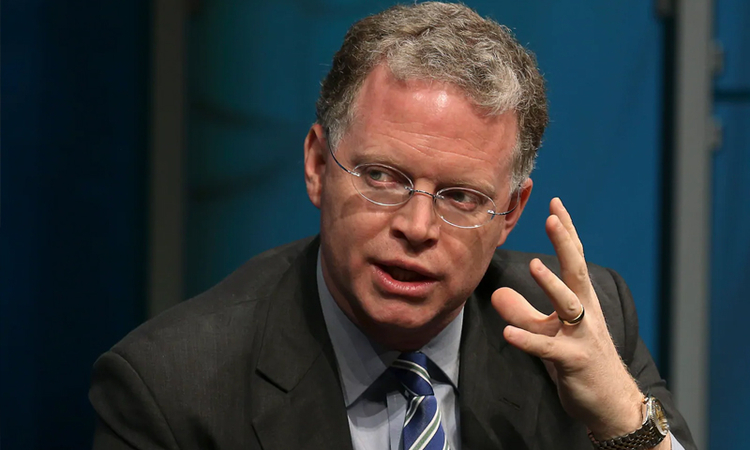 Journalist David Rohde was abducted in Afghanistan in 2008 and held for month in neighboring Pakistan. (Gary Cameron/ Reuters)
