‘Pastillas scheme’ bribe takers got P40 billion from Chinese – Hontiveros #SootinClaimon.Com

#SootinClaimon.Com : ขอบคุณแหล่งข้อมูล : หนังสือพิมพ์ The Nation.

‘Pastillas scheme’ bribe takers got P40 billion from Chinese – Hontiveros

InternationalOct 21. 2020Risa HontiverosRisa Hontiveros 

By Inquirer

MANILA, Philippines — Corrupt immigration officers have pocketed some P40 billion in bribe money since 2017 by facilitating the entry of Chinese nationals or assisting the departure of trafficked people at the airport, Sen. Risa Hontiveros said in a Senate hearing on Tuesday.

Hontiveros said the so-called pastillas scheme generated some P30 billion in kickbacks from 3.8 million Chinese arrivals shared among officers at the Bureau of Immigration (BI) and P2 billion in bribes from Chinese tourists under the visa-upon-arrival (VUA) racket.

The rest was reportedly earned through payola for the hassle-free departure of trafficked people, she said.

“We will get to the bottom of this. This house of cards will fall. It is not a matter of if but when,” Hontiveros said at the seventh hearing of the Senate committee on women, children, family relations and gender equality on the money-making scams in the bureau.

The pastillas scheme—so-called because the bribe money is rolled in white wrapper like the milk candy—involved BI officers who allowed the smooth entry of Chinese nationals to the country in exchange for a P10,000 “service fee.” Many of the Chinese tourists intended to work for Philippine offshore gaming operators (Pogos).

“Our estimate is that the masterminds have pocketed P30 billion. That’s based on the arrival data of Chinese nationals who are non-VUA. As for VUA, another revenue stream, the kickbacks go straight into the pockets of some officials,” Hontiveros said.

Based on BI figures, some 4 million Chinese nationals have entered the country since 2017.

“The numbers are staggering,’’ Hontiveros said, pointing out that the figure was even higher than the entire population of Quezon City, the most populous city in Metro Manila with 3 million residents. (See related story on Page A5.)

Of the 4 million Chinese, some 3.8 million were non-VUA applicants, while around 150,000 were VUA applicants, according to the senator. About 3 million of the non-VUA applicants were believed to have paid the extra P10,000 “service fee’’ in the pastillas scam, based on the testimonies of whistleblowers Allison Chiong and Jeffrey Dale Ignacio.

“The cash enters the airport and is distributed among the IOs (immigration officers),” Hontiveros said.

As for questionable VUA transactions, the bribe allegedly goes “straight to the main office,” where the visas are approved, the senator said.

Chiong earlier identified Red Mariñas, who was chief of the bureau’s Ports Operations Division before he retired, and his subordinate, Erwin Ortañez, chief of the Travel Control and Enforcement Unit (TCEU), as the leaders of the racket.

He named those working under Ortañez as Glen Comia, Bien Guevarra and Danieve Binsol, who handled Terminals 1 to 3 of Ninoy Aquino International Airport and their deputies Billy Cadang, Anthony Lopez and Arlan Mendoza.

None of these officials were among the 19 recommended for prosecution by the National Bureau of Investigation to the Ombudsman, Chiong said. “They are the bosses. The bosses hold positions in TCEU because TCEU is the one in control. That is the backbone of the syndicate,” he told a Senate hearing on Sept. 22.

Mariñases

Red Mariñas, along with his father, Maynardo, who headed the Special Operations Communications Unit before his retirement, appeared at Tuesday’s hearing to deny his involvement in the scam.

He also denied having a contact in the Office of the Ombudsman as Chiong allegedly claimed in a meeting with Ignacio.

But in the same hearing, Chiong said Red Mariñas achieved notoriety at the airport because he allegedly used the proceeds of the pastillas racket to fund his 2019 campaign for mayor of Muntinlupa City. Mariñas ran under the National Unity Party and lost to reelectionist Jaime Fresnedi of the Liberal Party.

“The Mariñas family has profited greatly from this, but the question remains: Who are their protectors?” Hontiveros said.

Based on a copy of Red Mariñas’ statement of contributions and expenditures for his poll campaign obtained by the senator’s office, the former immigration official declared P1 million in expenses.

“One million pesos to run for mayor? That’s not even enough to run for barangay captain,’’ Hontiveros said.

The senator noted that the Mariñases were appointed heads of their respective divisions in July 2016 by then Justice Secretary Vitaliano Aguirre II. 

In 2017, Aguirre issued Department Order No. 41, which allowed Chinese citizens to enter the Philippines without a visa issued by the Department of Foreign Affairs. Previous Senate hearings showed that VUAs were processed by travel agencies, many of which only required a mere screenshot of the applicant’s passport sent via the WeChat app.

“The person involved could have been trafficked by a syndicate, but as long as she or he had no derogatory record on paper, then that person would have been able to enter the country with a VUA,” Hontiveros said.

‘Meant for Chinese’

At the hearing, Aguirre, who quit his post in April 2018, confirmed that his order was “meant for Chinese nationals,” but he said he had no role in the implementation of the VUA policy.

“The best person to answer that is the commissioner of the Bureau of Immigration,” he said.

Hontiveros said the BI rackets practically rolled out the red carpet for the “online gambling industry and the cross-border trafficking of women.”

Such huge amounts of cash were enough for public officers who had just lost their overtime pay to “live the high life, drinking expensive alcohol in high-class nightclubs and vacationing abroad almost monthly,” Hontiveros said, noting that there was even money to finance a run for election.


Indonesia, Japan agree to boost security ties #SootinClaimon.Com

#SootinClaimon.Com : ขอบคุณแหล่งข้อมูล : หนังสือพิมพ์ The Nation.

Indonesia, Japan agree to boost security ties

InternationalOct 21. 2020

By Straits Times

TOKYO – Japan and Indonesia have agreed to strengthen their security ties, through such measures as expediting talks on the export of Japanese defence technology and by having their defence and foreign ministers meet soon.

This reflects concerns over growing Chinese regional assertiveness, and comes as Japanese Prime Minister Yoshihide Suga met Indonesian President Joko Widodo at the presidential palace in Bogor, south of Jakarta, on Tuesday (Oct 20).

Mr Suga, who is the first foreign leader to visit Indonesia since the Covid-19 pandemic, was greeted with a 19-gun salute.

He arrived from Vietnam, and Japanese diplomats said that the four-day two-nation trip was meant to symbolise Japan’s continued commitment and support to Asean.

While seen as a greenhorn on foreign affairs, Mr Suga follows in the footsteps of his predecessor Shinzo Abe, who also visited Vietnam and Indonesia first after he became prime minister in December 2012.

A key priority for Mr Suga is to cement Asean’s backing for Japan’s Free and Open Indo-Pacific vision, which he stressed on Tuesday was aligned with the Asean Outlook on the Indo-Pacific pioneered by Indonesia.

The Asean initiative is built on such principles as transparency and respect for international law, with the regional bloc “being an honest broker within the strategic environment of competing interests”.

Mr Suga told a news conference, with Mr Joko beside him, that their defence and foreign ministers will meet “in the near future” under the so-called two-plus-two framework.

This will be the first meeting between the ministers since 2015, and Indonesia is the only Asean nation with which Japan has a “two-plus-two” arrangement.

Mr Joko said that closer cooperation between Japan and Indonesia was critical amid the “increasingly sharp rivalries between the world’s great powers”, alluding to the intensifying clash between the United States and China.

But he added he hoped that the South China Sea will “continue to be peaceful and stable”.

MORE ON THIS TOPIC

On Yoshihide Suga’s overseas debut, Japan, Vietnam agree broadly on defence transfer

With eye on China, Japan’s Suga seeks tighter ties with Vietnam, Indonesia

On Monday, in Hanoi, Mr Suga agreed in principle to a military equipment and technology export pact with his Vietnamese counterpart Nguyen Xuan Phuc.

Vietnam is one of the claimants in territorial disputes over the South China Sea. While Indonesia is not a claimant state in the dispute, its exclusive economic zone overlaps with China’s “nine-dash line” blanket claim over large swathes of the waterway.

Japan is also encouraging its companies to diversify their supply chains so as to reduce their reliance on China, with the risk of concentrating factories in a single market having been made evident by the Covid-19 outbreak.

Mr Joko said he appreciated the investments made by Japan, which is regarded in Indonesian circles as a strategic partner in the economic sector.

MORE ON THIS TOPIC

Japan to sign agreement allowing arms exports to Vietnam: Media

Japan’s Free and Open Indo-Pacific Strategy is open to all, including China, Tokyo policy forum told

Mr Suga vowed to promote cooperation in infrastructure projects such as the mass-rapid transit, the Jakarta-Surabaya semi-fast train, the construction of the Patimban port, the construction of the outer islands, as well as cooperation to increase economic resilience.

He also committed 50 billion yen (S$642.44 million) in long-term, low interest loans to Indonesia to help it cope with the economic fallout from the Covid-19 pandemic.

Indonesia has been the worst hit in South-east Asia, with more than 360,000 confirmed cases and more than 12,000 deaths.

The sum set aside for the loans comes on top of another 50 billion yen that was pledged in August through the Japan International Cooperation Agency.

The Japanese and Indonesian leaders also agreed to begin talks on a “travel corridor” for business travellers, as well as to resume travel for nurses and care worker trainees.

Mr Suga returns to Tokyo on Wednesday.

Goldman poised to pay more than US$2b in DOJ’s 1MDB probe #SootinClaimon.Com

#SootinClaimon.Com : ขอบคุณแหล่งข้อมูล : หนังสือพิมพ์ The Nation.

Goldman poised to pay more than US$2b in DOJ’s 1MDB probe

InternationalOct 21. 2020

By The Star

GOLDMAN Sachs Group Inc. has reached a long-awaited pact with the U.S. Department of Justice to pay more than $2 billion for the bank’s role in Malaysia’s 1MDB scandal, and the deal may be announced within days, according to people familiar with the matter.

The accord, part of an international action, will let the parent company avoid a U.S. criminal conviction, according to the people, who asked not to be named discussing the confidential talks. The payment to the Justice Department is broadly in line with the bank’s prior reserves and analysts’ estimates.

The deal, expected to come just weeks before the U.S. presidential election, would remove uncertainty for the bank following years of investigations and negotiations with the Justice Department over the firm’s fundraising for the 1MDB investment fund.

It follows an agreement in July to settle a related probe with Malaysia, in which the bank promised to pay $2.5 billion. Malaysia dropped criminal charges against the New York-based company in early September.

A representative for Goldman Sachs declined to comment, and representatives for the Justice Department didn’t respond to messages seeking comment.

In all, Goldman Sachs may pay roughly $5 billion once accords with Malaysia, the Justice Department and other agencies are tallied together.

In Singapore, authorities plan to levy a financial penalty and issue a warning with conditions, and if the company breaches them, Goldman Singapore could be prosecuted, people familiar the matter said. The Monetary Authority of Singapore, Attorney-General’s Chambers and police didn’t immediately reply to an email seeking comment.

Probes of the Wall Street firm focused on its work raising $6.5 billion in 2012 and 2013 for the fund formally known as 1Malaysia Development Bhd., much of which was later allegedly siphoned off by people connected to the country’s former prime minister, Najib Razak. Goldman’s investment-banking group, led at the time by now-Chief Executive Officer David Solomon, collected $600 million from the bond sales.

Authorities in Asia, the U.S. and Europe have spent years tracing out the conspiracy and tracking down cash and assets around the globe, including condos, jewelry and art.

Goldman has long blamed rogue employees, asserting it had no idea the money it helped raise would be diverted from development projects. One former Goldman Sachs partner, Tim Leissner, pleaded guilty in the U.S. to conspiring to launder money and violating foreign bribery laws. Another executive was charged with foreign bribery offenses. – Bloomberg

Nearly one million office workers must work from home from Oct 22, says Ismail Sabri #SootinClaimon.Com

#SootinClaimon.Com : ขอบคุณแหล่งข้อมูล : หนังสือพิมพ์ The Nation.

Nearly one million office workers must work from home from Oct 22, says Ismail Sabri

InternationalOct 21. 2020Senior Minister Datuk Seri Ismail Sabri YaakobSenior Minister Datuk Seri Ismail Sabri Yaakob 

By The Star

PUTRAJAYA: Nearly one million private and public sector workers who are in the management and supervision categories in Selangor, Sabah, Kuala Lumpur and Putrajaya – which are under a conditional movement control order (MCO) – have been directed to work from home effective Oct 22.

Senior Minister Datuk Seri Ismail Sabri Yaakob said this decision by the National Security Council is aimed to limit the movement of people and prevent new Covid-19 infections.

“This is a directive, not a proposal or a suggestion by the government. Workers in several categories will work from home.

“The full list of those affected as well as standard operating procedures will be issued by the International Trade and Industry soon, ” he said on Tuesday (Oct 20).

The public service director-general will issue a list for civil servants to refer to, he added.

The decision will affect around a million workers – 800,000 from the private sector as well as 200,000 civil servants.

Ismail Sabri said among employees who will have to continue to work from the office are those in the financial sector, enforcement as well as welfare officers.

“This directive to work from home depends on how long the area is under conditional MCO. Selangor, Kuala Lumpur and Putrajaya will be under the order until Oct 27.

“If the order is not extended then workers will only have to work from home for five days.

“If it is extended further, then this directive will have to be followed until the order is lifted, ” he said.

Those who have to come to the office will be required to undergo swab tests and Socso contributors will not have to pay for the test, he added.

Indonesia calls for inclusive talks, shared responsibility in global Rohingya response #SootinClaimon.Com

#SootinClaimon.Com : ขอบคุณแหล่งข้อมูล : หนังสือพิมพ์ The Nation.

Indonesia calls for inclusive talks, shared responsibility in global Rohingya response

InternationalOct 21. 2020

By The Jakarta Post

Jakarta is treading carefully between urging inclusive talks and shared responsibility in the Rohingya response, with Western powers looking to raise funds for the refugee crisis this week just as another boatload of asylum seekers enters Indonesian waters.

The United States, the United Kingdom, the European Union and the United Nations High Commissioner for Refugees will cohost a donor conference on Thursday to promote support for Rohingya refugees and host countries amid significant funding gaps made worse by the COVID-19 pandemic.

Hundreds of thousands ethnic Rohingya – mostly Muslims – have fled Myanmar for neighboring Bangladesh to avoid persecution following a massive military crackdown in 2017, which UN investigators described as bearing “genocidal intent”. Similar pledging conferences have been held annually since then.

As critics point to the slow response to the crisis, Indonesia continues to seek an alternative to the ineffective isolating of fellow ASEAN member Myanmar, which denies the allegations.

“What Indonesia tries to avoid the most is that a conference is put together that isn’t inclusive, meaning that if we want to talk about the Rohingya, we [have to] talk about their country of origin [first], and then the people [in other places or] in transit,” Febrian Ruddyard, the Foreign Ministry’s director general for multilateral cooperation, said recently.

“Whenever I think about the aid – whatever it may be – it becomes something of concern for us when it is not inclusive.”

Read also: Indonesia appeals for end to Rohingya crisis

Indonesian diplomats have continuously sought to find a balance between engaging Myanmar critically and employing constructive solutions, to the behest of many international critics.

It has chosen a patient approach to understanding the complex ethnic makeup and history of Myanmar, a stance not shared by many in the West, but the pressure is on to shore up clear results.

Febrian insisted that the Rohingya issue was first and foremost an effort to repatriate people who left their country and provide them with a security guarantee to return.

“How can we exercise that which must involve various parties, especially when the country that will play a very major role – Myanmar itself – is not involved?

“We can measure the seriousness of a meeting through the extent of its inclusiveness; is it going to be just another ‘name and shame’ event or do we really want to solve the problem?” he said. 

The latest figures show that some 860,000 Rohingyas stay in camps in Cox’s Bazar, making it the world’s largest refugee settlement. Other countries in the region together host up to an additional 150,000 refugees, while an estimated 600,000 still live in Myanmar’s Rakhine state.

“The Rohingya people have faced horrific brutality and were forced to flee their homes in the worst circumstances imaginable. We have taken action against the architects of this systemic violence, including through sanctions, and we will continue to hold those responsible to account,” UK Foreign Secretary Dominic Raab said in a statement.

Read also: UNHCR, NGO call for nations to step up in tackling refugee crisis

Meanwhile on Monday, Amnesty International Indonesia’s executive director Usman Hamid urged Indonesian authorities to rescue approximately 250 ethnic Rohingya people who were reportedly sighted near Aceh.

“We received reports that the authorities are planning to deny them. This cannot be justified. Refusing entry and sending them back to the high seas is against Indonesia’s international obligations. Their boat must be allowed to enter and land on a nearby shore and the refugees must be saved and provided basic needs,” he said in a statement.

Unlike most countries, including the US, the UK and Australia, Indonesia is not a party to the 1951 Refugee Convention nor the 1967 Protocol relating to the Status of Refugees, which means it is not legally required to take in and take care of refugees.

However, in the last few months Indonesia has rescued and taken in 395 Rohingya people who were adrift at sea on cramped boats. The first group was rescued by fishermen in Aceh on June 24, while the second arrived on Sept. 7.

Indonesia has repeatedly said it has gone above and beyond the call of duty when it comes to taking in refugees, particularly the Rohingya. However, authorities have so far failed to act on illicit trafficking operations in Southeast Asia, which the refugees often return to when they want to leave the transit country.

“From Indonesia’s perspective, I think we will raise our concerns in terms of the refugee management in our country, not only for the Rohingya refugees who just arrived recently but in the overall handling of refugees in transit countries like ours, who really need the existing mandate to be carried out firmly and seriously by state parties to the 1951 convention, as well as the active role of the UNHCR as a refugee agency,” said the Foreign Ministry’s director for human rights, Achsanul Habib.

Trump and Biden gird for final debate of a bitter campaign #SootinClaimon.Com

#SootinClaimon.Com : ขอบคุณแหล่งข้อมูล : หนังสือพิมพ์ The Nation.

Trump and Biden gird for final debate of a bitter campaign

InternationalOct 21. 2020President Trump and Democratic nominee Joe Biden at the first presidential debate, Sept. 29 in Cleveland. After that chaotic and widely criticized faceoff, organizers this time will mute each candidate's microphone for portions of the debate. MUST CREDIT: Washington Post photo by Melina MaraPresident Trump and Democratic nominee Joe Biden at the first presidential debate, Sept. 29 in Cleveland. After that chaotic and widely criticized faceoff, organizers this time will mute each candidate’s microphone for portions of the debate. MUST CREDIT: Washington Post photo by Melina Mara 

By The Washington Post · Amy B Wang, Sean Sullivan, Josh Dawsey · NATIONAL, POLITICS

WASHINGTON – Two days before their final televised faceoff, President Donald Trump on Tuesday attacked the upcoming debate as yet another campaign event that would be “a stacked deck” against him, while Joe Biden’s camp hunkered down and strategized over Trump’s expected attacks on his family.

The maneuvering came as both sides prepared for the last scheduled event that could change the trajectory of the campaign and wrestled with what it would mean that the debate will feature a mute button for the first time. Biden held no public appearances for a second straight day, while Trump tried out lines of attack and in essence held his debate prep in public. 

In a phone interview broadcast on “Fox & Friends,” Trump lashed out at the moderator of Thursday’s event, NBC’s Kristen Welker, as “totally partisan” and sought to portray the debate topics and rules as unfair.

“There are people out there that can be neutral. Kristen Welker cannot be neutral,” Trump said, adding that she comes from a Democratic family. An official from the Commission on Presidential Debates defended Welker, noting that a Trump official had praised her just last week, and said both campaigns had agreed to the rules. The president has complained about previous moderators as well.

The debate, set to take place in Nashville just 12 days before Election Day, is the clearest opportunity for Trump to shift the dynamic of a presidential race whose contours have remained stable despite numerous surprises. Biden leads Trump by 11 percentage points nationally, 54% to 43%, according to an average of national polls since Oct. 4.

It could also take on added significance because the previous matchups were so chaotic. The first debate was dominated by Trump’s interruptions and determination to talk over Biden, and the second faceoff was canceled after Trump contracted the coronavirus, resulting in separate, dueling town halls. 

At the first debate, Trump’s entourage ignored rules that they had to wear masks, but organizers have signaled that they will not permit such behavior this time. 

The Commission on Presidential Debates decided unanimously this week to mute each candidate’s microphone during the opening two minutes of his opponent’s remarks on each of the six featured topics. The debate sponsors said the change was a way to enforce rules that the campaigns had already accepted.

Commission Co-Chairman Frank Fahrenkopf Jr. said in a recent interview that the debates had to be changed “for the American people to have a better experience” after the unruly first face-off. He said Trump’s team had agreed to the rules before that first debate, and he noted that the candidates could go back and forth for the remaining 11 minutes of each segment. 

Fahrenkopf also said the Trump campaign’s assertion that this debate was initially supposed to be about foreign policy was “entirely false.” 

Some Trump advisers were annoyed with the change but kept their protests to a minimum because they believed that the president’s interruptions in the first debate hurt him, three advisers said. 

With two weeks before the election, Biden is keeping an unusually light public schedule. In the past four days, he has traveled outside his home state of Delaware just once, to North Carolina on Sunday. On Monday, he taped an interview with “60 Minutes,” which will air over the weekend, but held no public events. 

Biden’s surrogates have kept a robust travel schedule in his place: Sen. Kamala D. Harris, D-Calif., his running mate, campaigned in Florida on Monday, and former president Barack Obama is scheduled to hold his first public event for Biden in Philadelphia on Wednesday.

In any other presidential race, such a low-key approach would be extremely unusual at this juncture. In the midst of the coronavirus pandemic, however, it has become emblematic of Biden’s campaign. The former vice president has blasted Trump for holding large in-person rallies, calling them “superspreader” events, and has hewed to smaller, socially distanced gatherings or drive-in car rallies while on the trail. 

Trump, meanwhile, has taunted Biden for his sparser public schedule and has continued crisscrossing the country in the past week, holding rallies from Arizona to Pennsylvania as he seeks to make up ground during the final stretch. 

Trump has not undertaken the same kind of formal preparation as before the first debate, when he was peppered with questions by former New Jersey governor Chris Christie, former New York mayor Rudolph W. Giuliani and others. Instead, he has taken some informal questions from advisers such as Jared Kushner and Hope Hicks. 

Trump allies including Christie and former presidential counselor Kellyanne Conway have encouraged the president to change his strategy and let his rival speak more. “My main advice is to let Biden speak. After 60 or 70 minutes, he’ll be worn out,” Conway said.

Trump hinted Tuesday that he may oblige. “Actually, the interesting thing, they said if you let him talk, he’ll lose his train of thought,” Trump said of Biden on Fox. “There were a lot of people that say let him talk because he loses his train.”

Trump’s advisers have made it clear they are unhappy with the selected topics for the debate, arguing that foreign policy should play a more central role and that Biden should be forced to address alleged emails from his son Hunter that were recently published in the New York Post. 

The Trump team argued that foreign policy is traditionally the focus of the final presidential debate, but Fahrenkopf said that has not been true for years. National security is one of the listed debate topics, along with fighting the coronavirus, American families, race in America, climate change and leadership. 

Trump wants and plans to bring up Hunter Biden during the debate, though some of his advisers would prefer that he focus on the economy and Joe Biden’s record, aides said, painting the former vice president as a liberal who would raise taxes. Trump charged Tuesday that Biden would turn the United States into a “socialist hellhole.”

Biden’s advisers, for their part, see little to be gained by engaging publicly in the details of Hunter Biden’s alleged emails and texts beyond what they have already said, according to people with knowledge of their thinking. These people, who spoke on the condition of anonymity to more candidly describe strategy, said there is no reason to give credibility to a report that is sourced in part to close allies of Trump and has prompted considerable public skepticism. The Washington Post has not independently verified the contents of the report.

But ignoring the matter altogether is not an option either, they said, leaving some uncertainty about how Biden will address it Thursday night.

“I know how I would react, which would be very angry,” said Sen. Robert Casey Jr., D-Pa., a Biden ally, stressing that he was not speaking for the campaign. “The whole thing is just another pack of lies in a desperate, last-minute smear campaign.”

Biden did show a flash of anger when he was asked about the subject last week. “I have no response. It’s another smear campaign, right up your alley,” he told a CBS News correspondent who asked about the New York Post’s reporting.

The tensions surrounding the issue were evident Tuesday. Biden spokesman Andrew Bates sent a preemptive warning shot at Trump, who has appeared eager to bring up Biden’s son. “He invests in these tainted smears,” Bates said, “because he knows his presidency is a weak, pathetic failure.”

Substance aside, Biden should show that he can stand up to Trump in the debate, said former Pennsylvania governor Ed Rendell, a longtime Biden ally who has been raising money for his campaign. 

“He should push back a little bit – not a lot, a little bit – so he doesn’t look weak,” Rendell said. “They’ve been peddling this thing that he’s too weak to be president. . . . He’s got to smack back.”

Questions also remain about how the debates commission will enforce public health guidelines inside the hall this time. 

Trump – as well as several people involved in preparing him for the first debate – contracted the coronavirus after that event, and the unmasked prep sessions were among the suspected sources of the virus’s spread. 

Trump has refused to disclose the date of his last negative test before he contracted the virus. After Trump was hospitalized with covid-19, the Commission on Presidential Debates decided that the second debate would be virtual, prompting the president to angrily withdraw.

Biden has repeatedly said he would follow whatever guidelines the commission issues.

“Look, I’m going to abide by what the CPD rules call for,” Biden said during his town hall when asked whether he would demand that Trump test negative.

Biden also said he was “confident” that the Cleveland Clinic, which is overseeing the public health practices of the debates, would ensure adherence to its guidelines. 

– – –

The Washington Post’s Toluse Olorunnipa, Michael Scherer and Annie Linskey contributed to this report.

Trump criticizes ‘Fauci and these idiots,’ says public is tired of restrictions as infection rates rise #SootinClaimon.Com

#SootinClaimon.Com : ขอบคุณแหล่งข้อมูล : หนังสือพิมพ์ The Nation.

Trump criticizes ‘Fauci and these idiots,’ says public is tired of restrictions as infection rates rise

InternationalOct 20. 2020President Donald Trump is shown at a campaign event at the Muskegon County Airport in Michigan on Saturday, Oct. 17, 2020. MUST CREDIT: Washington Post photo by Salwan GeorgesPresident Donald Trump is shown at a campaign event at the Muskegon County Airport in Michigan on Saturday, Oct. 17, 2020. MUST CREDIT: Washington Post photo by Salwan Georges 
By The Washington Post · Michael Scherer, Josh Dawsey · NATIONAL, POLITICS

WASHINGTON – President Donald Trump dismissed precautions to prevent the spread of the coronavirus and attacked the nation’s top infectious-disease expert as a “disaster” Monday, saying people are getting tired of the focus on a pandemic that has killed more than 219,000 Americans and continues to infect thousands of people across the country.

The president claimed that voters do not want to hear more from the country’s scientific leaders about the pandemic, responding angrily to Anthony Fauci’s critical interview with CBS’s “60 Minutes.”

“People are tired of listening to Fauci and these idiots,” Trump said in a call with his campaign staff Monday that was intended to instill confidence in his reelection bid two weeks before Election Day. He baselessly suggested that Fauci’s advice on how best to respond to the outbreak was so bad it would have led to the deaths of hundreds of thousands more people.

“And yet we keep him,” Trump continued, calling in from his Las Vegas hotel. “Every day he goes on television there’s always a bomb, but there’s a bigger bomb if you fire him. But Fauci is a disaster.”

Later in the day, the president again criticized Fauci, mocking the director of the National Institute of Allergy and Infectious Diseases for his opening pitch at Nationals Park earlier this year and misrepresenting some of the doctor’s positions on the coronavirus in a series of tweets.

Trump’s comments and his aggressive travel schedule, which continued Monday with two stops in Arizona as Democratic presidential nominee Joe Biden holed up in his Delaware home, is part of a broader and more aggressive bet that the American public will reward his projection of strength and general defiance toward the virus, which hospitalized the president and infected many of his top aides this month.

He said Monday that Americans were no longer interested in taking precautions to prevent the spread of the coronavirus.

“They’re getting tired of the pandemic, aren’t they? You turn on CNN. That’s all they cover. Covid, covid, pandemic. Covid, covid, covid. They’re trying to talk people out of voting . . . People aren’t buying it, CNN, you dumb bastards,” Trump said at a rally in Arizona. The crowd was packed shoulder-to-shoulder outside, with few masks in sight.

Trump is expected to do three or four rallies a day starting this weekend, according to people familiar with the plans.

The president’s comments come as infection rates have risen in recent weeks amid cooling temperatures in more than half of states, with national daily infection rates returning to midsummer levels. Voters continue to give Trump poor marks on his handling of the pandemic; nearly two out of three voters in a Washington Post-ABC News poll this month said they were “very” or “somewhat” worried that they or a family member might catch the virus. Eight percent said an immediate family member has been infected.

Trump aides said they had hoped the last-minute call with staffers would not become a story about the coronavirus. Senior advisers to the president say they still want the closing message to be about the economy and the negative impacts of a Biden victory, with a campaign focus on Florida, Michigan, North Carolina and Pennsylvania. They see the coronavirus – and the president’s handling of the pandemic – as their biggest political weakness, and Biden’s top advisers agree. But Trump continues to call attention to the outbreak.

For months, Trump has treated Fauci delicately even as divisions have grown, occasionally praising him and assuring Americans that he is intimately involved in the White House response. Trump’s campaign aides have even put excerpts from a Fauci interview into their advertising, hoping to convince voters that the infectious-disease expert has approved of Trump’s response to the coronavirus. Fauci has reacted angrily to the ads, which he says quote him out of context.

“I do not and nor will I ever publicly endorse any political candidate,” Fauci said in his Sunday interview on “60 minutes.” “They’re sticking me right in the middle of a campaign ad, which I thought was outrageous.”

Trump tried to tie Biden to Fauci on Monday in a seeming attack that his Democratic rival said he welcomed.

“He wants to listen to Dr. Fauci,” Trump said of Biden at the rally.

Biden said he considered the claim that he would listen to scientists “a badge of honor.”

“Mr. President, you’re right about one thing: the American people are tired. They’re tired of your lies about this virus,” a Biden statement read. “They’re tired of watching more Americans die and more people lose their jobs because you refuse to take this pandemic seriously.”

The president was angry at Fauci after he was critical of Trump and the White House in the “60 Minutes” interview, saying that the president’s conduct made it unsurprising that he caught the coronavirus and that the administration had tried to muzzle him. Fauci has a higher approval rating than the president, which has long rankled Trump, according to advisers who, like others, spoke on the condition of anonymity to describe internal discussions. Trump has also repeatedly told top senior aides that Fauci is on TV far too often.

The president later posted a video online of him throwing a first pitch and another video of Fauci’s first pitch.

Trump has been barnstorming the West Coast in recent days, while Biden has mostly stayed out of public view, preparing for Thursday’s debate and avoiding the large crowds amid a global pandemic.

Trump is taking a less rigorous preparation plan for the debate, advisers said, and is unlikely to do extensive formal preparations. The president is instead maintaining an extensive in-person campaign schedule and is expected to visit Florida after the debate for a series of events, aides said.

On Monday afternoon, campaign manager Bill Stepien wrote a letter to the debate commission, seeking to move the conversation in the final debate away from domestic issues such as coronavirus to foreign policy issues. The president’s aides have made clear that the president wants to debate the foreign business dealings of Biden’s youngest son, Hunter. Trump and his allies have also repeatedly claimed that the debate commission, which is bipartisan, is being unfair to him even though its rules apply equally to both candidates and the terms of the face-to-face events were negotiated in advance with both campaigns.

The Monday call, which some reporters were invited to listen in on, appeared to have been motivated by recent news stories about internal concerns about the president’s reelection chances and division within the president’s team. He spoke about The New York Times and The Washington Post with particular derision and threatened to take legal action because of a poll’s results.

The call had been scheduled as a staff-wide morale booster, with top aides and the president presenting a rosy case for his reelection and trying to boost what several aides said were flagging spirits.

Trump repeatedly told his campaign staff on the call that he had never felt more confident as a politician that he would win election – even though he said he was concerned two or three weeks ago during his hospital stay after contracting the coronavirus. He repeatedly attacked the news media but also said he hoped the media was listening to the call.

He praised his senior team, naming aides one by one – Stepien, White House Chief of Staff Mark Meadows, campaign strategist Jason Miller – and criticized news stories that mentioned them in specific detail.

“I love my team. I am happy with my team,” Trump said after denying friction among his top lieutenants.

Trump ticked through individual states and bragged about the crowds he gets and the unspecified poll results he has seen, which he claimed were different from the voter “suppression polls” reported publicly.

“I go to a rally I have 25,000 people,” Trump said, greatly exaggerating the size of his crowds while making a comparison with Biden. “He goes to a rally, he has four people.” Most of Trump’s rallies are held outside at airports because of the pandemic.

Trump also made a range of startling accusations and comments, including that Biden should be “in jail.”

“He’s a criminal,” Trump said, without offering evidence to what crime he allegedly had committed.

Trump also made repeated references to alleged communications between Biden’s son Hunter and foreign officials that have been reported in the New York Post in recent days. The newspaper said the information it reported was provided by Rudy Giuliani, the president’s personal attorney, who has not shared with other news organizations a hard drive from a computer allegedly owned by Hunter Biden that the former New York mayor claims to possess. The Washington Post has not been able to independently verify the information in the New York Post reports.

“I think Joe Biden has a scandal coming up that will make him almost an impotent candidate,” he said. “This scandal is so big. And the only thing he has going is he has a corrupt press who will not write about it.”

Trump made a number of dubious or false statements, including saying he was back at campaign rallies one day after he was released from the hospital. It was one week later. He again said he could lose the election only if it were “rigged” and made false claims about voter fraud. He exaggerated his record in terms he usually uses on the campaign trail.

The president said The New York Times has not reached out to him in two years, but the outlet interviewed him in August and like almost all news organizations regularly requests comment from the White House.

In closing, he offered some advice for his campaign’s employees, saying they need to “work their asses off.”

“You have two weeks,” he said. “Don’t listen to anybody. Don’t even read the papers.”

China delivers diatribe against U.S. climate policies #SootinClaimon.Com

#SootinClaimon.Com : ขอบคุณแหล่งข้อมูล : หนังสือพิมพ์ The Nation.

China delivers diatribe against U.S. climate policies

InternationalOct 20. 2020

By The Washington Post · Steven Mufson · NATIONAL, WORLD, SCIENCE-ENVIRONMENT, ASIA-PACIFIC

China delivered a diatribe against U.S. climate policies on Monday, saying that under President Donald Trump, the United States “is widely viewed as a consensus-breaker and a troublemaker.”

Beijing’s Foreign Affairs Ministry blamed Trump’s “negative stance” and “retrogression on climate change” for undermining progress on an international climate accord. Trump, who plans to formally pull out of the Paris climate agreement the day after Election Day, had “seriously undermined the fairness, efficiency and effectiveness of global environmental governance,” the ministry said in a fact sheet.

The barrage from Beijing resembled the tit-for-tat criticism that China and the United States have traded on subjects such as human rights, trade and the expulsion of reporters and diplomats, but climate policies have been largely the exception. Not anymore.

China, the world’s biggest emitter of greenhouse gases, took aim at the United States, the second-biggest emitter, after the State Department on Sept. 25 issued a “China’s Environmental Abuses Fact Sheet,” which said that Beijing “threatens the global economy and global health by unsustainably exploiting natural resources and exporting its willful disregard for the environment through its One Belt One Road initiative.”

In the U.S. fact sheet, Secretary of State Mike Pompeo said “too much of the Chinese Communist Party’s economy is built on willful disregard for air, land, and water quality. The Chinese people – and the world – deserve better.”

“This seems like a reminder that people who live in glass houses shouldn’t throw stones,” Jason Bordoff, director of Columbia University’s global energy center, said of the Chinese report. “We put out a statement attacking their environmental record and they put out an even stronger one, and the Trump administration has given them a lot to work with.”

He said the dueling attacks were “a reminder of how strained the U.S.-China relationship is, and there’s going to need to be a lot of work to be done to allow for a constructive relationship on climate moving forward.”

The relationship between China and the United States has been deteriorating for years. China has seized islands in the South China Sea, deploying military forces to the disputed territories. It has detained in prison camps large numbers of Uighurs seen as possible threats. And it has pursued trade policies that have made it difficult for American companies to do business there.

During his administration, President Barack Obama managed to make climate change key to the relationship and succeeded in wooing Beijing to support broad policies to slow the growth in greenhouse gases and shift the Chinese economy toward renewable sources of energy.

The planet has already warmed by 1 degree Celsius since the late 1800s, and many parts of the world have already reached the 2 degree Celsius mark scientists say should be the limit to prevent dire climate change.

On Monday, however, China’s report reiterated many of the weak but well-known points in the U.S. climate policy. The United States has fallen behind China in emissions, but its emissions per capita are twice as high as China’s, whose population is five times as big. China also criticized Trump for rolling back nearly 70 domestic policies – signaling the pullout from the Paris climate accord – and failing to honor the U.S. agreement to pay its share of Green Climate Fund contributions. It said the United States accounts for 95.7% of total international arrears to the fund.

The ministry also said that “due to the negative stance of the U.S.,” summit meetings of the world’s 20 largest economies had “failed to reach consensus on climate change for three consecutive years starting from 2017, and each time the ’19+1′ approach was adopted as a compromise.”

“China’s fact sheet on U.S. damage to the environment is a slap in the face for a country that normally prides itself on its environmental leadership,” said Joanna Lewis, director of Georgetown University’s science, technology and international affairs program. “It demonstrates how the U.S. has lost almost all of its moral high ground when it comes to engaging with China and other emerging economies on the environment and climate change in particular.”

She said, “While China’s environmental record is highly problematic, the country has made impressive gains in many areas while the current U.S. administration continues to roll back many hard-won environmental protection laws.”

Beijing won praise internationally in September when it announced that its greenhouse gas emissions would peak in the year 2030 and that it would reach net-zero emissions for the entire economy by 2060.

In its fact sheet, however, the State Department criticized China’s dams on the Mekong River, marine debris, plastic product waste, illegal logging, mercury emissions and air quality.

China “has been the world’s largest annual greenhouse gas (GHG) emitter since 2006,” the State Department report said. “China’s total emissions are twice that of the United States and nearly one third of all emissions globally.”

China replied in its fact sheet that between 1751 and 2010, emissions from U.S. energy and industrial sectors accounted for 27.9% of the global total and three times as much as China.

Sarah Ladislaw, director of the energy security and climate change program at the Center for Strategic and International Studies, said that the Chinese statement “will irk the Trump administration but not provoke them too much because climate change is not a high-priority issue for this administration.”

“The U.S. and China share the same challenge – some things they do are great for climate and other things are damaging,” she said. She said the United States was “the engine of global innovation, but at the federal level, it fails to stay true to its commitment when political leadership changes. China has set ambitious targets for itself and is a clean energy manufacturing leader, but it is also a big source of global emissions both at home and through its investments overseas and is not always transparent about its behavior.”

Pete Ogden, a vice president at the United Nations Foundation and former climate expert during the Obama administration, said, “When it comes to the critical and urgent climate and environmental threats that the world is facing, this diplomatic energy of the U.S. and China should be focused on solutions, not recriminations.”

Opening day of early voting in Florida draws thousands of voters #SootinClaimon.Com

#SootinClaimon.Com : ขอบคุณแหล่งข้อมูล : หนังสือพิมพ์ The Nation.

Opening day of early voting in Florida draws thousands of voters

InternationalOct 20. 2020

By The Washington Post · Amy Gardner, Michael Majchrowicz, Lori Rosza · NATIONAL, POLITICS

Thousands of voters flocked to the polls throughout Florida on the state’s first day of in-person voting Monday despite heavy rains across the state, adding to evidence that Americans are unusually eager to cast ballots in this year’s presidential election.

In Miami, Fort Lauderdale, Fort Myers, Sarasota, St. Petersburg and many other Florida communities, voters lined up before polls opened to cast their ballots in person at the first available moment.

Kyle Woodard, a 44-year-old schoolteacher from Pompano Beach, said “it’s just a really important year to vote,” after casting his ballot at the African-American Research Museum in Fort Lauderdale.

“I’m really inspired based on what’s going on in the country,” Woodard said. “So the first chance I got, I was going to take it.”

Woodard said President Donald Trump’s constant attacks on mail voting, including unsubstantiated claims that it would result in widespread fraud, are a blatant attempt at voter suppression. “Being Black, I’ve seen a lot of suppression my whole life,” he said. “This is nothing new.”

With early voting underway across the United States, and Americans casting ballots by mail at historic numbers, nearly 30 million have already voted with two weeks to go before Election Day, according to a tally by political scientist Michael McDonald of the University of Florida. That represents more than a fifth of total turnout in 2016.

Even as Americans are turning out in record numbers, many of the rules governing which ballots will be counted and when are still the subject of political and legal wrangling.

In North Carolina, a weeks-long dispute over mail ballots returned without a witness signature came to an end on Monday, allowing county election administrators to resume the process to fix, or “cure,” thousands of deficient ballots left in limbo as the state continues its early voting period.

An agreement announced by state attorney general Josh Stein stated that ballots without a witness signature will not be “curable” with a simple certification or affidavit, reversing previous guidance that drew multiple lawsuits from Republicans. Voters who return ballots without a witness signature will receive a new ballot in the mail, the State Board of Elections stated in guidance issued Monday afternoon. The first ballot will be spoiled, and they will be able to cast a new vote, unless they already voted in person.

A voter certification will serve to correct other ballot problems, such as a missing voter signature or witness address.

Stein said in a tweet that his office, the State Board of Elections and the Republican National Committee agreed with the new policy.

In Pennsylvania, Republicans in the state legislature announced Monday that they have no plans to pass a new law allowing county election officials to begin processing mail ballots before Nov. 3, which is prohibited under current law.

The decision makes it all but certain, barring a landslide, that a result won’t be known in Pennsylvania on Election Day. It took more than two weeks for election officials to complete the count after Pennsylvania’s spring primary.

In Florida, meanwhile, statewide data from Friday showed a distinct advantage for Democrats among mail voters, with more than 1 million Democrats casting ballots by mail compared to about 620,000 Republicans, according to the Florida Democratic Party.

It was too early to say whether the first day of in-person voting would favor Democrats or Republicans. In other states where such data is available, enthusiasm is far higher among registered Democrats among both mail and in-person voting.

In downtown Sarasota, a major Republican stronghold in Florida since the 1970s, people began lining up to cast their ballots 90 minutes before Supervisor of Elections Ron Turner opened his doors at 8:30 a.m. The line stretched out of the county office building, constructed as a hotel in 1925 by circus magnate John Ringling’s brother, Charles, and into a tree-shaded courtyard where a steady breeze cooled the crowd. A partisan breakdown of turnout so far was not immediately available.

In Pinellas County, home of Clearwater and St. Petersburg, Democrats had outvoted Republicans 3,331 to 3,023 by about 6 p.m. In mail ballots, the Democratic advantage in Pinellas, which narrowly supported Trump in 2016, was even starker: 78,980 to 53, 306.

In Lee County, home of Fort Myers, Republicans were outvoting Democrats both by mail and in person by the end of the day. Lee voted overwhelmingly for Trump in 2016.

“Trump all the way,” said Melinda McGehee, 53, as she stood next to her friend and fellow Republican voter, Alexandra Connor, 51, in Fort Lauderdale. “Because being in health care, I think it’s super important everyone gets what Trump’s trying to do with health care. I’m super scared if Biden wins what’s going to happen to my career, my parents, my family and my friends with health care.”

The coronavirus is doing more in Florida than increasing mail balloting; it also shuttered an elections office in Okaloosa County, in the state’s Panhandle, after Elections Supervisor Paul Lux and several other employees tested positive for the virus, according to the Destin Log.

In-person voting also kicked off in Colorado Monday, but voting centers were largely quiet in a state where the majority of voters have cast ballots by mail or drop box for many years.

Yet mail ballot returns show historic enthusiasm in Colorado, too, with Secretary of State Jena Griswold reporting that 24 times more voters have returned their ballots than by this time in 2016. She also said a historic number of people applied to be election judges.

“I was really motivated to get here and get my ballot in,” said Robbie Martinez, 46, a journeyman electrician, after dropping his ballot into a drop box in downtown Denver. “I have never liked Trump. I couldn’t even believe he became president. It’s been a circus.”

U.S. charges Russian intelligence officers in high-profile cyberattacks #SootinClaimon.Com

#SootinClaimon.Com : ขอบคุณแหล่งข้อมูล : หนังสือพิมพ์ The Nation.

U.S. charges Russian intelligence officers in high-profile cyberattacks

InternationalOct 20. 2020

By The Washington Post · Ellen Nakashima, Devlin Barrett · NATIONAL, WORLD, COURTSLAW, EUROPE

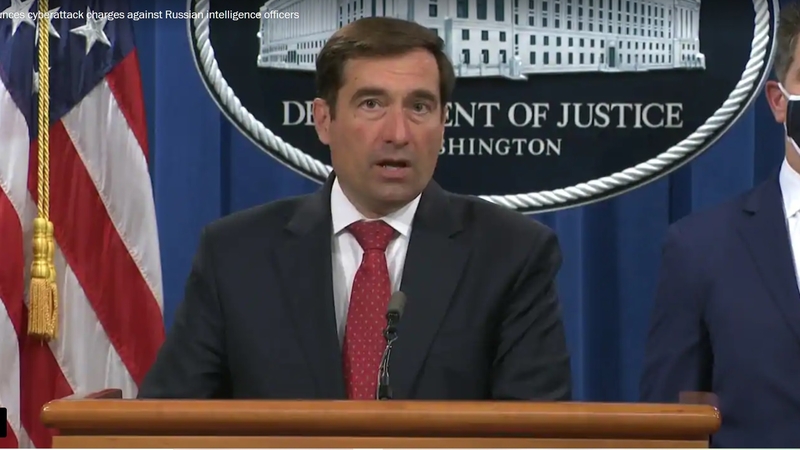
WASHINGTON – The United States on Monday unsealed criminal charges against six Russian intelligence officers in connection with some of the world’s most damaging cyberattacks, including disruption of Ukraine’s power grid and releasing a mock ransomware virus that infected computers globally causing billions of dollars in damage.

ภาพนี้ไม่ได้ระบุแอตทริบิวต์ alt, ชื่อไฟล์ของไฟล์นี้คือ 800_835040c1703ff2b.jpg

That group, authorities alleged, also hacked computers supporting the 2018 Winter Olympics in South Korea, hacked and leaked emails of individuals involved in French presidential candidate Emmanuel Macron’s 2017 campaign, and targeted the organizations investigating the poisoning of a former Russian operative, Sergei Skripal, two years ago in Britain.

The alleged hackers are members of the same military intelligence agency – the GRU – previously charged in connection with efforts to interfere in the 2016 U.S. presidential campaign, and one of those charged Monday, 29-year-old Anatoliy Kovalev, was also indicted as part of then-special counsel Robert Mueller’s investigation of the alleged conspiracy to hack American election systems that year.

But the new indictment does not charge any Russians with attempting to interfere in this year’s contest, and officials said the announcement was not timed to the current political schedule.

Rather, they stand accused of what Justice Department officials say is the single most disruptive and destructive series of cyberattacks ever attributed to one group. The indictment, like others before it, is an effort, officials say, to pull the veil back on how Moscow has sought to punish or retaliate against detractors of the Russian federation – whether they are former Soviet states, European nations or the United States.

“No country has weaponized its cyber capabilities as maliciously and irresponsibly as Russia, wantonly causing unprecedented collateral damage to pursue small tactical advantages and to satisfy fits of spite,” Assistant Attorney General John Demers said in announcing the indictment.

On the heels of the U.S. announcement, the British government levied its own accusation, saying the same GRU unit sought to hack individuals and organizations involved in the 2020 Summer Olympics and Paralympic Games that were due to take place in Tokyo. Foreign Secretary Dominic Raab condemned the effort as “cynical and reckless,” and said Britain will continue to work with its allies “to call out and counter” malicious attacks.

Russian officials dismissed Monday’s developments.

“The new allegations of cyber attacks aimed at interfering are another step to discredit Moscow,” Leonid Slutsky, chairman of the State Duma Committee on International Affairs, told the Interfax news agency. “Such statements have never been accompanied by strong evidence – it’s all in the category of ‘highly likely.’ “

The charges read like a Top 10 list of cyberattacks and attempts, which authorities say were conducted by a team known as Unit 74455 and which cybersecurity researchers have dubbed the Sandworm Team.

In 2016, Unit 74455 worked in tandem with another GRU team, Unit 26165, to carry out the hack and leak of Democratic computers ahead of that year’s election in 2016. Unit 26165 conducted the intrusion, officials determined, while their colleagues at Unit 74455 set up a website, DC Leaks, to display hacked emails. The GRU also leaked the emails to WikiLeaks, whose disclosure drew far more attention than DC Leaks’.

Although officials said Monday’s indictment was not a specific warning to Moscow to avoid interfering in this year’s election, they said it serves as a “general” warning that such activities are not deniable.

“Americans should be confident that a vote cast for their candidate will be counted for that candidate,” Demers said.

FBI Deputy Director David Bowdich said charges show that “time and again, Russia has made it clear they will not abide by accepted norms and instead they intend to continue their destructive and destabilizing cyber behavior.”

The timeline of Unit 74455’s activities dates back at least to 2015. According to the indictment, the alleged hackers unleashed wave after wave of computer attacks on Ukraine – a former Soviet state engaged in ongoing conflict with Russia and a perennial target for Moscow.

In late 2015 and 2016, the alleged hackers launched computer attacks against Ukraine’s electric grid, officials said.

In the 2015 attack, the GRU tunneled into three electric distribution systems and disrupted circuit breakers remotely – the first cyberattack to cause a power outage, said Robert Lee, chief executive of Dragos, a firm specializing in critical infrastructure. A year later, the Russians targeted a transmission company, employing more sophisticated malware designed specifically to interfere with electricity grids, Lee said.

“These attacks turned out the lights and turned off the heat in the middle of the Eastern European winter, as the lives of hundreds of thousands of Ukrainian men, women and children went dark and cold,” Demers said.

Hackers also deployed malware against Ukraine’s Ministry of Finance and State Treasury Service in late 2016, disconnecting the treasury’s automated payment system and temporarily disabling the finance ministry’s telecommunications infrastructure, the indictment said.

In 2017, U.S. officials said, the Russian military launched a more costly attack against Ukraine, one that quickly spread to computer systems around the world. That malware, dubbed “NotPetya,” is considered by many security experts to be the most destructive cyberattack ever. Disguised as ransomware ostensibly demanding money, NotPetya acted more like a forest fire, torching computer networks as it spread and inflicting billions of dollars in damage.

It infected computers at dozens of hospitals, doctors’ offices and medical facilities in western Pennsylvania as well as a large drugmaker and a FedEx subsidiary, which collectively suffered nearly $1 billion in losses, officials said.

One U.S. pharmaceutical firm spent more than half a billion dollars to fix the problems caused by NotPetya, officials said.

The hack of a company supporting the 2018 Winter Olympics came in apparent retaliation for the International Olympic Committee’s ban on participation by the Russian team after the IOC found evidence of widespread doping by Russian athletes, officials said. Although individual athletes were allowed to compete in the winter games, they could not do so under the Russian banner or display the flag on their uniforms.

Demers said the Russians showed “the maturity of a petulant child” in choosing to attack the 2018 games. That malware, dubbed “Olympic Destroyer,” deleted data from thousands of computers supporting the Games, rendering them inoperable, U.S. officials said. The authors of that software tried to make it look like the work of North Korea, but U.S. investigators and computer experts have said it was Russia.

The GRU attempted to replicate its 2016 success in hacking and leaking emails to disrupt the U.S. election by attempting a similar feat in France in 2017, but their effort fizzled when media organizations that received the emails refrained from reporting on them because of a mandatory news blackout on the eve of the election.

The indictment shows that the GRU was trying for a while to get the hacked material placed, evidently without success. According to the charges, from April 12 through April 26, 2017, a GRU-controlled social media account contacted various French individuals offering them access to internal Macron campaign documents. Macron reported on May 6 – the day before the election – that the material had been disseminated.

The targeting of the organizations investigating the attempted assassination of Skripal did not result in apparent compromises, but took place as Britain announced that it had identified the poison used as a military-grade nerve agent, Novichok, a class of chemical weapons developed in the former Soviet Union and Russia.

Although none of the defendants is in custody, Justice Department officials say the indictment educates the American public and the international community to Moscow’s aims, sends a message to others that “there’s no safe haven abroad,” and offers support to those who have been hurt.

“We want to stand behind the victims that have been targeted by this group,” said a department official, who was not authorized to speak on the record. “Victims should not have to face foreign governments and their intelligence services alone.”

The other defendants charged Monday are Yuriy Andrienko, 32, Sergey Detistov, 35, Pavel Frolov, 28, Artem Ochichenko, 27, and Petr Pliskin, 32.