
The quest to replicate Tesla’s success keeps EV mania alive #SootinClaimon.Com

#SootinClaimon.Com : ขอบคุณแหล่งข้อมูล : หนังสือพิมพ์ The Nation.

The quest to replicate Tesla’s success keeps EV mania alive (nationthailand.com)

The quest to replicate Tesla’s success keeps EV mania alive

Dec 21. 2020
By Syndication Washington Post, Bloomberg · Craig Trudell

Tesla has thrilled some investors and jarred others by soaring to a valuation of as much as $649 billion, more than what the world’s seven largest carmakers were collectively worth at the beginning of this year. The company is now comfortably in a category by itself, defying even Chief Executive Officer Elon Musk’s warnings.

“I actually said the stock is too high a long time ago,” Musk said at the start of December. “But they didn’t listen to me.”

For startups aiming to mimic Musk’s success and for traditional carmakers struggling to disrupt themselves, most lingering doubts about future demand for electric vehicles have dissipated. Thanks in large part to the Tesla phenomenon, a consensus has emerged that they are undeniably the future.

“What you’ve had is a greater realization of the inevitability” of EVs, said Michael Pye, an investment manager at Baillie Gifford, which oversees about $370 billion and is one of the biggest shareholders of both Tesla and China-based EV maker Nio. Ten years from now, “it’s likely we’ll look back on this as the electric decade.”
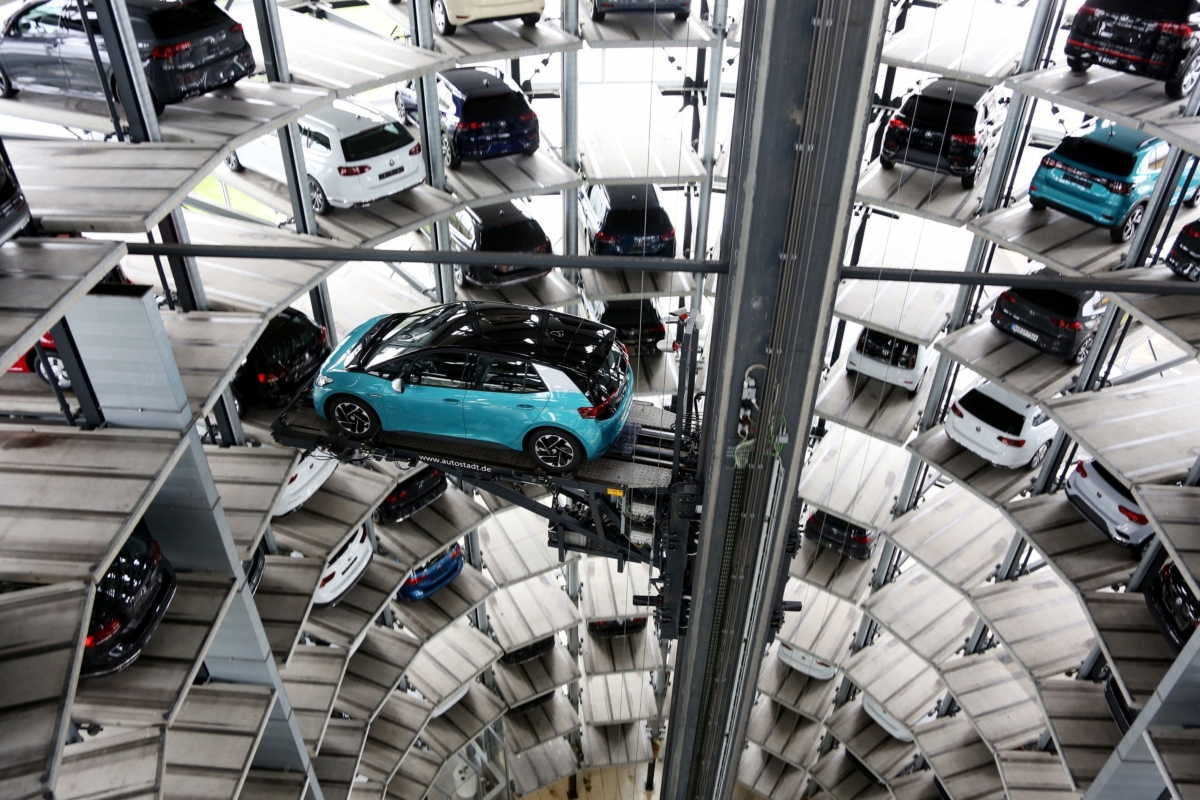
A new Volkswagen AG (VW) ID.3 electric automobile inside one of the automaker's Autostadt delivery towers at the VW headquarters in Wolfsburg, Germany, on Oct. 26, 2020. MUST CREDIT: Bloomberg photo by Liesa Johannssen-Koppitz.

A new Volkswagen AG (VW) ID.3 electric automobile inside one of the automaker’s Autostadt delivery towers at the VW headquarters in Wolfsburg, Germany, on Oct. 26, 2020. MUST CREDIT: Bloomberg photo by Liesa Johannssen-Koppitz.

Tesla alone has not brought the world to this point. A mix of stricter regulations against internal-combustion cars, increased support for plug-in vehicle purchases, improvements in technology and benefits of scale have led more consumers to embrace electrics. Still, two big questions remain: Can any other startup meaningfully replicate Tesla’s success? And will the EV market grow quickly enough to support both incumbents and startups?

The dramatic rise and fall of Nikola over just a few months was this year’s cautionary tale. The company founded by entrepreneur Trevor Milton set out to transform the trucking industry by replacing the diesels in big rigs with batteries and fuel cells. It also said it would build a hydrogen-station network and charge customers upfront for refueling.

In June, Nikola went public by merging with a special purpose acquisition company, or SPAC, led by a former vice chairman of General Motors. Optimism that the infusion of cash would help the startup begin to produce trucks briefly sent its valuation soaring past Ford’s. The stock collapsed by September after a short seller claimed Nikola had deceived investors about its technology; the company has denied this. Regulators opened investigations, and Milton left the company.

Nikola’s breakdown hasn’t deterred other SPACs. The so-called blank-check firms have raised $70 billion in 2020 – a fivefold increase from 2019 – and at least 15 EV companies have been taken public or have listings pending. Those that already made their debut include Lordstown Motors, which has said it will begin producing its Endurance electric pickup in September 2021, and Fisker, whose Ocean SUV is planned for 2022.

“I have had very credible people, with very large sums of money, DM me on Twitter to see if we’d be interested in working with their SPAC,” said Gene Berdichevsky, CEO of Sila Nanotechnologies, a California-based battery company, and ex-Tesla engineer. The blank-check company board member who messaged him reached out in early October, after Nikola’s implosion.

Tesla shares started their meteoric rise in late 2019, when Musk proved he could not only dominate the nascent EV market but also make a small amount of money in the process. The company got on a roll by accelerating production of Model 3 sedans in China and Model Y crossovers in California and has now recorded five consecutive quarterly profits.

Companies getting in on the coinciding EV stock-buying bonanza include XPeng, the Guangzhou-based company co-founded by He Xiaopeng, the billionaire behind one of China’s most popular mobile browsers. Within three months after its U.S. listing in August, the stock almost quintupled.

“We have been talking about our goals of penetration and growth for the past five years,” said Brian Gu, the vice chairman and president of XPeng. “Yet we hadn’t seen the real explosion until this year. There’s an increased confidence in the industry’s long-term growth.”

Even so, XPeng won’t appear high up on global sales charts anytime soon. Bloomberg Intelligence analysts estimate the company will deliver about 25,000 P7 sedans and G3 SUVs this year. Its market cap still managed to reach $53 billion last month, a valuation Ford hasn’t seen in several years. Entering December, investors were awarding the company about $1.7 million of market cap per vehicle it’s expected to sell this year. If the same multiple were applied to Volkswagen, the German giant would be worth about $15.5 trillion. Instead, it’s being valued at about $10,000 per vehicle.

VW wasn’t alone in watching its valuation take a hit from the biggest disruption to auto-industry output since World War II. Vehicle sales in some markets were almost completely wiped out for the month of April. By June, the industry had taken on $72 billion of new debt to cope.

But amid all the carnage, EVs outperformed. It hasn’t mattered that the price of oil crashed and remains depressed. China stepped in with a series of measures that supported plug-in car purchases, while Germany and France started offering subsidies to help boost automakers out of their slump.

“If historically low oil prices, a major economic downturn, a plunge in auto sales and all these other factors didn’t derail the growth, it gets harder to see what does,” said Colin McKerracher, head of advanced transport for BloombergNEF. “The trajectory is getting clearer and clearer, and all these factors that might have derailed things are sort of bouncing off and not landing a blow.”
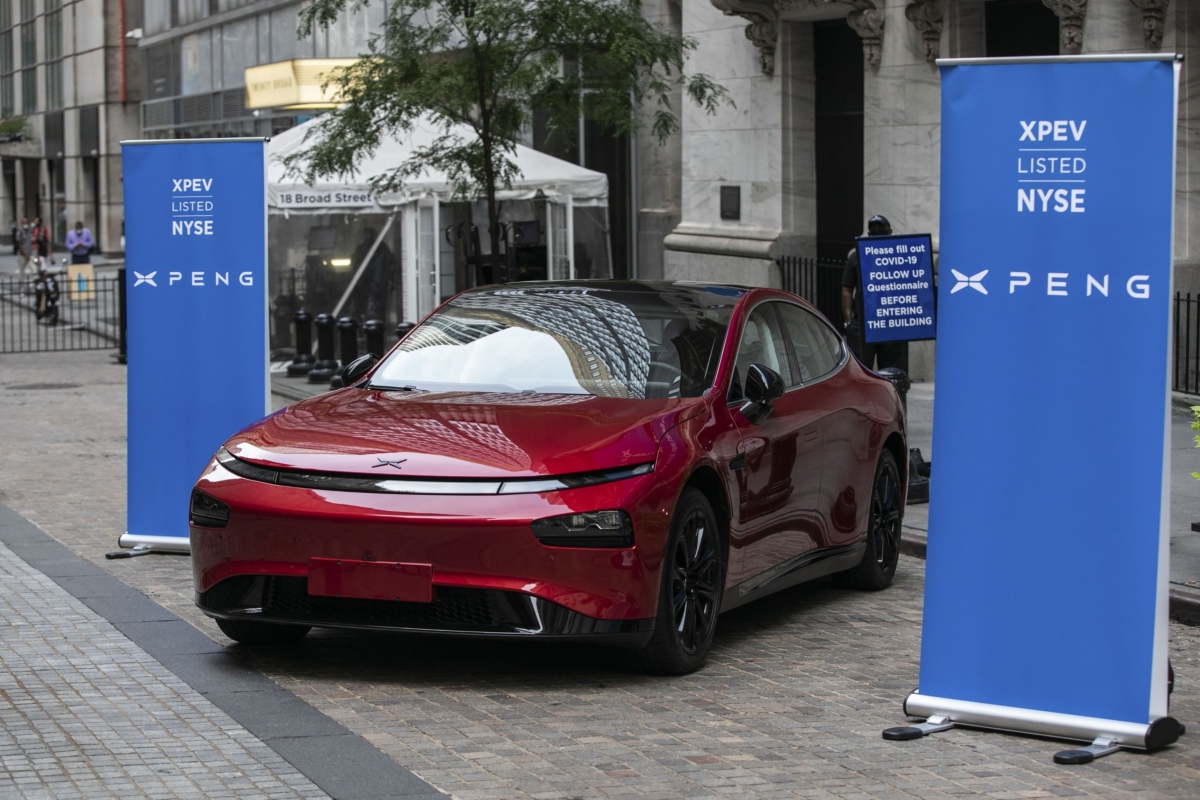
The Xpeng P7 electric vehicle is displayed outside the New York Stock Exchange in New York on Aug. 27, 2020. MUST CREDIT: Bloomberg photo by Jeenah Moon.

The Xpeng P7 electric vehicle is displayed outside the New York Stock Exchange in New York on Aug. 27, 2020. MUST CREDIT: Bloomberg photo by Jeenah Moon.

The current quarter may well be the first ever in which automakers sell 1 million fully electric and plug-in hybrid vehicles worldwide. It took the industry until 2015 to get its first million on the road. The global fleet is now about to cross the 10 million mark. “Each order of magnitude, a different number of people become aware that this shift is happening,” McKerracher said. “EVs have become part of the general consciousness instead of the consciousness of a small number of people who care about them.”

Conventional carmakers are benefiting somewhat from the bump in EV demand, too, but only a handful have seen their shares rise meaningfully this year. Companies including GM and Daimler are getting credit for undergoing metamorphoses, though they have spent more than a century basing manufacturing, labor and retailing practices on the internal-combustion engine.

GM’s stock got a boost when it told investors in November that it would spend $27 billion introducing 30 battery-powered models by 2025, increasing its budget by more than a third. But it’s going through an awkward process of buying out some Cadillac dealers that aren’t on board with the shift.

Daimler, which envisions more than half of its global sales being electrified by the end of the decade, will have to overcome labor-union opposition to shrinking its variations of combustion engines by 70%. Workers protested last month after the leader of a powertrain plant Daimler is retooling for EVs left the company for Tesla.

Musk may have ambitions to dominate Daimler’s home market of Germany and the rest of Europe, but the growth that has the region rivaling China for the first time this year has been driven by incumbents. In the U.S., GM and Ford have electric pickups in the works and have successfully defended that segment – far and away their most lucrative – from Toyota and others.

“I would not underestimate traditional OEMs in this area,” said Christina Woon, a Singapore-based investment manager at Aberdeen Standard Investments, which manages about $563 billion in global assets, including Toyota shares. “Having an existing business that’s profitable and that has cash flows that you can use to invest in a new or emerging business – that does help to balance out that risk.”

No automotive CEO has been as supportive and openly admiring of Musk and Tesla as VW’s Herbert Diess. He joined the company just before its 2015 diesel-emissions scandal and has remained consistent in his message about and moves toward electrification. During a two-hour briefing last month on the massive spending VW has planned for the next half-decade, Tesla’s name came up 31 times.

“We think it’s a very important competitor” because Musk is “really pulling the industry,” Diess said in an interview last month. “Coming from a software background, he has capabilities which we still have to build up. He’s a reference for us.”

But VW unintentionally echoed a troubling time for Tesla when launching a crucial new electric model this year. When software issues plagued the launch of the German carmaker’s ID.3, it hired a contractor to fix thousands of the electric hatchbacks in a tent, then rushed them to sale before some features were ready. The episode was reminiscent of when Tesla erected a structure in its parking lot two years ago during its struggle to get Model 3 sedans out the factory door.

As rough as the ID.3 launch was, Diess is starting to see some payoff. The car outsold all other EVs across Europe in November. Analysts at Evercore ISI predict that VW and Tesla will form a global EV duopoly for the foreseeable future. Baillie Gifford’s Pye credits VW for grasping where the industry is headed. In his view, too many of its peers still don’t.

“If you’re about to be run over by a 40-ton semi, don’t lie down in the middle of the road and smile,” Pye said. Even for those who “have got the gist of that,” like VW, “whether they’re able to act on it or not within the required time frame is more challenging.”

5G auction soars past $23 billion with Verizon leading way #SootinClaimon.Com

#SootinClaimon.Com : ขอบคุณแหล่งข้อมูล : หนังสือพิมพ์ The Nation.

5G auction soars past $23 billion with Verizon leading way (nationthailand.com)

5G auction soars past $23 billion with Verizon leading way

Dec 19. 2020

By Syndication Washington Post, Bloomberg · Scott Moritz, Todd Shields

Offers for 5G airwaves have already surpassed $23 billion in a massive U.S. auction that could feature heavy bidding by Verizon Communications, which needs more spectrum to compete in the dawning era of ultrafast mobile connections.

Analysts expect Verizon to put up $20 billion in a field of 57 bidders that includes fellow mobile heavyweights AT&T and T-Mobile US, and cable companies Comcast Corp. and Charter Communications Inc. Collectively they could push bidding to a record $47 billion, according to 11 analysts surveyed by Bloomberg. Bidding started Dec. 8 and is expected to continue into the new year.

Wireless carriers see the auction as crucial to seizing global leadership in new 5G technology. As more countries are opening up use of midband frequencies, companies are buying airwaves that they hope will drive a yearslong surge of profits when deployed for next-generation mobile devices, autonomous vehicles, health-care devices and manufacturing facilities.

Here are the bidders and their motivations.

– Verizon: Verizon has the most wireless subscribers but trails its biggest peers in airwaves capacity. To help address this, the company has built a $21 billion war chest and has even more that it can tap for the auction. Analysts predict Verizon will outspend AT&T, the next highest bidder, by more than 2-1.

But to avoid showing their hand, executives have tried to downplay how eager they are to get ahold of the frequencies being sold.

“We’re happy with the assets we have, but we certainly look at C-band as something that has a significant opportunity around it as well,” Verizon Chief Financial Officer Matt Ellis said on an investor webcast in August.

Companies participating in Federal Communications Commission auctions typically don’t discuss tactics or goals for fear of violating rules aimed at preventing collusion among bidders.

The auction is a critical juncture for a company that built its brand on reliable wireless service and network quality.

Stakes are becoming higher as 5G comes online, providing connections for devices in homes, vehicles, schools and factories.

“Verizon desperately needs midband spectrum in order to be competitive in 5G longer-term,” said Kevin Roe, an analyst with Roe Equity Research.

– AT&T: AT&T can neither afford to fall behind in the 5G race, nor to spend as much as Verizon to lead the aerial land grab.

AT&T has $10 billion in cash on hand and possibly a further $16 billion coming with the potential sale of its DirecTV satellite-TV business and the agreed sale of Crunchyroll, its animated-video service.

But on the cost side, the company has a $184 billion debt pile to pay down, a $15 billion annual dividend, a $20 billion capital-spending budget and a WarnerMedia production schedule to keep up.

Chief Executive Officer John Stankey has made 5G expansion one of his top three priorities since taking over the job in July. AT&T has been the most aggressive of the group with free 5G iPhone promotions and boasts of having the fastest 5G network.

AT&T will spend about $9 billion in the auction, according to analyst estimates.

– T-Mobile: Of all the bidders, T-Mobile has the least need for midband spectrum. With its Sprint takeover earlier this year, T-Mobile acquired the largest swath of 2.5-gigahertz spectrum in the U.S.

Adding to that position would seem unnecessary, but T-Mobile could be interested in bolstering its coverage in major cities in an effort to defend its airwaves advantage.

T-Mobile will also be running interference. Without strong counterbids, Verizon could walk away with a majority of the airwaves for a relatively low price.

Analysts predict T-Mobile will bid $6 billion in the auction.

– Dish: Dish Network Corp. Chairman Charlie Ergen rarely sits on the sidelines of any airwaves deal, whether it’s an auction or a when a satellite operator lands in bankruptcy court.

Now that Dish is building its own 5G network, with a projected initial cost of $10 billion, there might be less cash available for the midband auction. But earlier this week, Dish announced plans to raise about $2 billion through a sale of convertible notes.

Dish will spend about $3 billion in the auction, according to the Bloomberg survey.

– Cable; Comcast and Charter have formed a joint venture called C&C Wireless Holding Co. to bid in the C-band auction. Both companies offer cable subscribers a mobile-phone service that runs on Verizon’s network.

The JV may be interested in acquiring airwaves outside its cable footprint “as deployment of its own cellular infrastructure makes sense from an economic perspective,” Cowen analyst Colby Synesael wrote in a note earlier this month.

The cable duo is expected to bid $5 billion.

The airwaves being auctioned are in the 3.7-gigahertz frequency range, known as the C-band, and are now used by satellite providers such as Intelsat SA and SES SA. The satellite companies will give up frequencies and operate in a smaller swath. In return, they will receive a portion of the auction proceeds. The remainder goes to the U.S. Treasury.

The C-band sale is the largest midband offering in the FCC’s history. The richest FCC auction to date raised $41 billion in 2015.

“By freeing up this wide swath of critical midband spectrum, the FCC is paving the way for Americans to receive fast 5G wireless services,” FCC Chairman Ajit Pai said as the auction began.

One potential problem with a portion of the C-band is interference concerns from aviation groups.

Radar altimeters — electronic devices that calculate an aircraft’s height above the ground — may suffer interference from the new 5G uses that begin after the auctioned airwaves are deployed, aviation groups say.

The FCC and industry have said interference isn’t likely because there is plenty of buffer between the envisioned 5G uses and the airwaves assigned to the altimeters.

Nokia to sacrifice network margins to improve 5G technology #SootinClaimon.Com

#SootinClaimon.Com : ขอบคุณแหล่งข้อมูล : หนังสือพิมพ์ The Nation.

Nokia to sacrifice network margins to improve 5G technology (nationthailand.com)

Nokia to sacrifice network margins to improve 5G technology

Dec 17. 2020Pekka Lundmark during a news conference at the Nokia Executive Experience Center in Espoo, Finland, on March 2, 2020. MUST CREDIT: Bloomberg photo by Roni Rekomaa.Pekka Lundmark during a news conference at the Nokia Executive Experience Center in Espoo, Finland, on March 2, 2020. MUST CREDIT: Bloomberg photo by Roni Rekomaa. 

By Syndication Washington Post, Bloomberg · Kati Pohjanpalo

Nokia said it expects the margin for its networking business to be zero next year as it develops more competitive products for fifth generation wireless technology.

“We are now putting so much money in R&D that we are sacrificing a little bit of the short-term profitability to get to where we want to be in the long term,” Chief Executive Officer Pekka Lundmark said in an interview on Wednesday after Nokia unveiled more details about its strategic overhaul. Still, “we are only taking contracts that make commercial sense,” he said.

The Finnish company has increased its research and development budget for 5G by 40% since January 2019, Lundmark said.

Lundmark, who took over as CEO in August, is driving a reorganization at the telecommunications gear maker as the roll out of 5G networks gathers speed. The company said its overall outlook for next year is unchanged and it expects a margin, excluding some items such as restructuring costs, for the entire business of 7% to 10% in 2021.

The break-even margin implies that the “Mobile Networks’ present status seems worse than feared,” analyst Daniel Djurberg at Svenska Handelsbanken wrote, even as Nokia seeks “a significant improvement over the longer term” for the unit. Djurberg said he had expected a low single-digit margin.

The company has been losing out on contracts for carriers’ 5G build outs, including missing a deal to provide the technology to Verizon Communications Inc. earlier this year after the U.S. carrier chose Samsung Electronics Co.

After spending years digesting the $18 billion deal for Alcatel Lucent, Nokia was late to produce its own 5G chipsets, forcing it to buy more expensive alternatives and eating into the resources left over to invest in development. It will probably take until 2022 to fully replace the more expensive generation of chipsets with Nokia’s own system-on-a-chip, Lundmark said.

A growing ban on Huawei Technologies Ltd. may provide Nokia’s new CEO an opening to take market share. A trade war between the U.S. and China has contributed to many American allies prohibiting the Shenzhen-based network gear maker from providing technology for their phone networks.

In addition to the traditional network gear, the company will develop its products for so-called Open RAN, a type of architecture that allows operators to use equipment from multiple vendors, and virtual RAN, which can be run as software on generic hardware.

“Customers are using a best-of-breed approach to build these networks, selecting network elements from multiple individual vendors who are able to offer the best performance per total cost of ownership,” Lundmark said in the statement. “Nokia is aiming to be the technology leader in the areas it chooses to play in.”

Butler on wheels, robot cutting salad: How covid sped automation #SootinClaimon.Com

#SootinClaimon.Com : ขอบคุณแหล่งข้อมูล : หนังสือพิมพ์ The Nation.

Butler on wheels, robot cutting salad: How covid sped automation (nationthailand.com)

Butler on wheels, robot cutting salad: How covid sped automation

Dec 15. 2020A healthcare worker receives groceries delivered with a Starship Technologies robot in Mountain View, California, on May 18. MUST CREDIT: Bloomberg photo by Nina Riggio.A healthcare worker receives groceries delivered with a Starship Technologies robot in Mountain View, California, on May 18. MUST CREDIT: Bloomberg photo by Nina Riggio. 
By Syndication Washington Post, Bloomberg · Olivia Rockeman, James Attwood, Joe Deaux

For decades, the attitude of unions and their advocates to increased automation could be summed up in one word: no. They feared that every time a machine was slipped into the workflow, a laborer lost a job.

The covid-19 pandemic has forced a small but significant shift in that calculation. Because human contact spreads the disease, some machines are now viewed not exclusively as the workers’ enemy but also as their protector. That has accelerated the use of robots this year in a way no one expects to stop, even after the virus is conquered.

“If you keep me six feet away from the other worker and you have a robot in between, it’s now safe,” said Richard Freeman, a professor of economics at Harvard University, who studies labor. “And the robot companies are selling that as a solution and the unions aren’t going to say, ‘No, you should have the workers standing next to each other so they get sick.'”

The result is the spread of windshield-mounted toll detectors, automated floor cleaners at factories, salad-chopping machines in grocery stores, mechanical butlers at hotels and electronic receipts for road pavers. What remains less clear is where the men and women who used to do some of those jobs will work.

The impact of technology on employment has been a topic of anxiety and study for generations with mixed results. Cars didn’t kill trains, television didn’t end radio. When banks installed ATMs, they hired more people, not fewer, because the variety of their services grew. But machines have eliminated many jobs, and the current wave will prove to be no exception, especially with public health a top concern.

“When we come out of this crisis and labor is cheap again, firms will not necessarily roll back these inventions,” David Autor, an economist at the Massachusetts Institute of Technology, said at a September webinar of the Federal Reserve Bank of Philadelphia. “These are kind of one-way transitions.”

That’s what worries union leaders.

“In the auto industry, we see Covid accelerating transformation toward digitization,” said Georg Leutert, who heads the automotive and aerospace industries at Geneva-based IndustriALL Global Union. While the transition is unavoidable, workers are nervous and need help with up-skilling and re-skilling, he said.

Mark Lauritsen of the United Food and Commercial Workers International Union in North America said that in order to avoid the kind of disruption in the meat industry caused by the virus, automation will clearly continue but warned, “If automation is unbridled it’s going to be a threat.”

With office workers at home communicating via remote tools, a knock-on effect is also being felt: bus drivers, sandwich stall owners and janitors are in trouble as their jobs, which support in-office work, diminish. Jobs in administrative support, which includes roles in office buildings, are down about 700,000 since last year, according to November data from the Bureau of Labor Statistics. In addition, the stock market, already biased toward technology companies, has driven investors away from labor-intensive industries in the pandemic.

New automation also seems to be affecting retail jobs. There are 500,000 fewer of them than last November, according to the BLS. Transportation and warehousing are about 100,000 jobs below year-ago levels. Meanwhile, retail sales are at their highest level on record, mostly driven by e-commerce, which often employs more automation than than brick-and-mortar stores do.

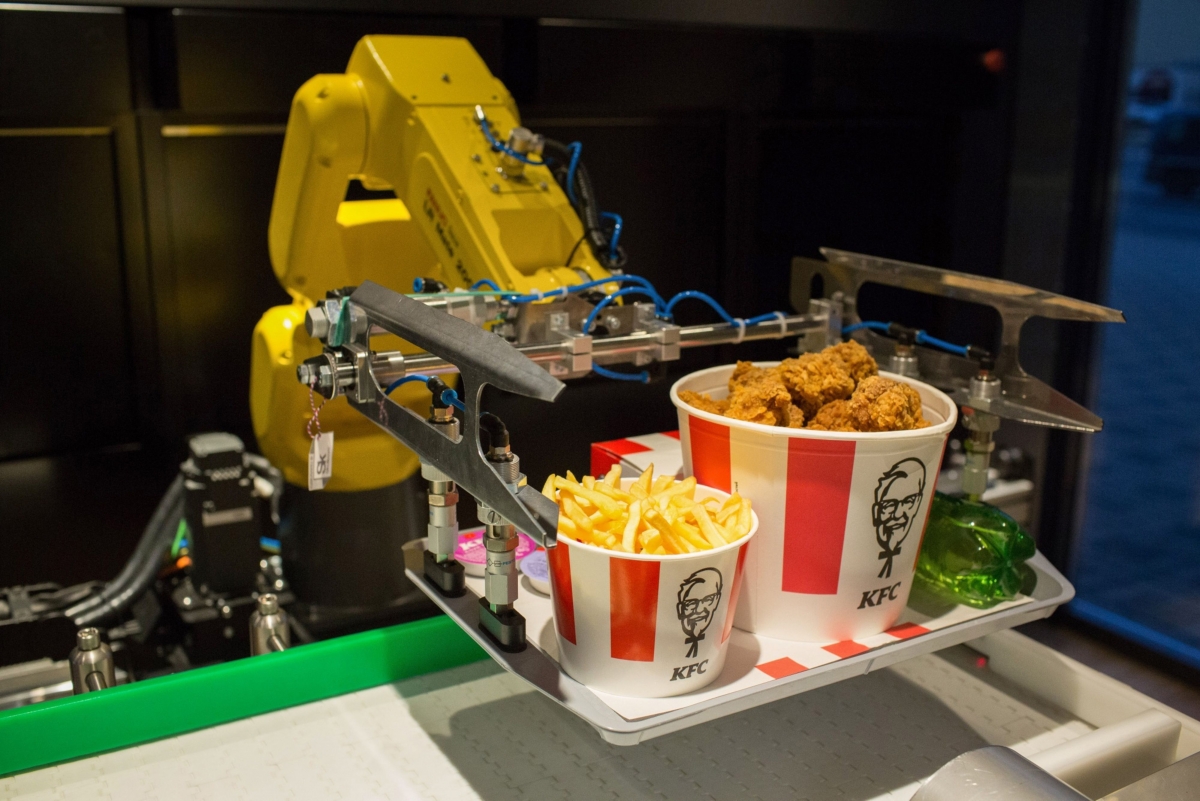
A robotic arm lifts an order of food from a conveyor belt inside a new contactless Kentucky Fried Chicken restaurant in Moscow, Russia, on June 12. MUST CREDIT: Bloomberg photo by Andrey Rudakov

A robotic arm lifts an order of food from a conveyor belt inside a new contactless Kentucky Fried Chicken restaurant in Moscow, Russia, on June 12. MUST CREDIT: Bloomberg photo by Andrey Rudakov

The World Economic Forum reported in October that 43% of businesses surveyed are set to reduce their workforce due to technology integration while 34% plan to expand their workforce for the same reason. By 2025, the time spent on current tasks at work by humans and machines will be equal.

Some argue that turning over repetitive jobs to robots will free up workers to take on new roles in what is now a booming industry — elderly care. There is an urgent need for more workers to look after the “oldest old,” Manoj Pradhan, founder of Talking Heads Macroeconomics, and Charles Goodhart, London School of Economics professor, argue in their book “The Great Demographic Reversal.”

But Marcus Casey, an economist at the University of Illinois at Chicago, says that while some high-skilled workers will be retrained, many low-skilled ones — like toll collectors — won’t, exacerbating inequality.

One case in point: The Pennsylvania Turnpike Commission cut 500 jobs after installing an electronic tolling system in March.

Some companies are preparing for more pandemics, meaning more automation and fewer employees. Lucid Motors, an electric-vehicle startup backed by Saudi Arabia’s Public Investment Fund, has built a 999,000-square-foot electric vehicle factory in Casa Grande, Arizona, where it hopes to start production on a $160,000 EV next year.

“After this pandemic, the next pandemic will show up,” said Peter Hochholdinger, Lucid’s vice president of manufacturing. “We have to put more effort in automation in general assembly.”

In mining, Swedish suppliers Hexagon and Epiroc say interest in automation has suddenly jumped.

Caterpillar Chief Executive Jim Umpleby said recently that older equipment will probably be replaced by more digital trucks and autonomous technologies will reduce close proximity among workers.

Juan Cariamo, chairman of CNP, a public-private group that helps test mining technologies in Chile, said the virus is accelerating long-term changes by forcing companies to relocate employees off-site.

“The pandemic has imposed a sense of urgency,” Cariamo said in an interview. “Projects that were already in the pipeline are being sped up.”

In Chile, requests have grown for permits to pilot a wide range of technologies from tire pressure sensors to mining waste reprocessing and autonomous vehicles. Chile’s mining regulator signed an agreement with CNP in October to streamline the permit process.

BHP Group, the world’s biggest miner, has an $800 million program to add 500 autonomous trucks in iron ore and coal mines in Australia and is considering adopting driverless trucks at copper mines in Chile.

Chile’s mining industry employed 201,000 people in September, down 15% from last year and the lowest in at least a decade, according to the country’s Mining Council. Meanwhile, production has risen slightly and the council has lowered by 12% its projection for the number of mining jobs needed over the next decade.

Recession is a common time for investment in automation because borrowing is cheaper and companies that cut jobs — even if due to automation — can attribute the reductions to the economy and avoid negative publicity, said Ethan Pollack, policy director at The Aspen Institute Future of Work Initiative. The pandemic only adds to the motives, he said.

Currently, Chile, the U.S. and Mexico spend the least on active labor market policies — which are intended to improve job readiness and expand employment — among all countries that belong to the Organization for Economic Cooperation and Development. That isn’t likely to change quickly because health concerns are coming first.

“Politicians are still not paying attention,” Pollack said. “We’re going to be paying the cost for decades if we don’t act now.”

Tax laws also favor automation. U.S. tax on capital — which includes robots and machinery — is about 5%, whereas the tax on labor is about 25%, according to a study from MIT economists.

President-elect Joe Biden acknowledges the threat of job loss but hasn’t mentioned additional funding or changes to the tax code. He has said his administration will ensure that employers give all affected employees advance notice of technology changes and automation in the workplace, put their employees at the front of the line for new jobs and offer paid skills training.

Casey, the University of Illinois economist, says the more people without work, the greater the risk of social unrest.

“Many of these people are prime-age males who have virtually nothing to do and our social policy directs money away from that cohort by and large,” Casey said. Policy makers are “underestimating the political problem and the social problem that’s going to emerge when we go into a world in which there’s just not enough work to go around.”

Amazon’s Zoox unveils robotaxi for future ride-hailing service #SootinClaimon.Com

#SootinClaimon.Com : ขอบคุณแหล่งข้อมูล : หนังสือพิมพ์ The Nation.

Amazon’s Zoox unveils robotaxi for future ride-hailing service (nationthailand.com)

Amazon’s Zoox unveils robotaxi for future ride-hailing service

Dec 15. 2020A Zoox Inc. logo. MUST CREDIT: Bloomberg photo by Michael ShortA Zoox Inc. logo. MUST CREDIT: Bloomberg photo by Michael Short 

By Syndication Washington Post, Bloomberg · Ed Ludlow

Zoox Inc., the self-driving start-up owned by Amazon.com Inc., unveiled a fully autonomous electric vehicle with no steering wheel that can drive day and night on a single charge.

The vehicle, which Zoox describes as a driverless carriage or robotaxi, can carry as many as four passengers. With a motor at each end, it travels in either direction and maxes out at 75 miles per hour. Two battery packs, one under each row of seats, generate enough juice for 16 hours of run time before recharging, the company said. To commercialize the technology, Zoox plans to launch an app-based ride-hailing service in cities like San Francisco and Las Vegas.

“This is really about reimagining transportation,” Zoox Chief Executive Officer Aicha Evans said in an interview with Bloomberg Television. “Not only do we have the capital required, we have the long-term vision.”

The company also plans to launch ride-hailing services in other countries, Evans said. Executives didn’t say how much rides would cost but that they would be “affordable” and competitive with services operated by Uber Technologies Inc. and Lyft Inc. Nor did they say when the service would launch but confirmed it wouldn’t happen in 2021. In a video released Monday, Evans used Zoox’s app to hail the vehicle outside San Francisco’s Fairmont hotel and took a spin around the block.

Acquired by Amazon in June for an undisclosed sum, Zoox is one of several companies racing to put fully autonomous vehicles on the road, an effort that’s taking longer than anticipated. Most are testing retrofitted conventional cars on public roads, and few are commercially deployed. In October, Alphabet Inc.’s self-driving unit Waymo started a fully driverless taxi service in suburban Phoenix. General Motors Co.-backed Cruise LLC is also testing autonomous cars — recently without safety drivers — in San Francisco, using a fleet of electric vehicles based on the Chevy Bolt.

Despite being years from deployment, several of Zoox’s quirky-looking mint-green vehicles are already being built at a facility in Fremont, California. The factory has the capacity to eventually produce 10,000 to 15,000 units annually, executives said. Suppliers send the major components — the drive unit, body, battery pack and so on — pre-assembled, and Zoox then does final assembly in stages, a process it likens to building a Lego set. Executives declined to reveal the battery supplier.

The unveiling of a production car marks a significant step for a company that has been working on an autonomous passenger vehicle since its founding in 2014. At times Zoox was “ridiculed” for what it was trying to do, Chief Technology Officer Jesse Levinson told Bloomberg TV.

“Unlike many of the concept cars other companies have shown in the last several years this vehicle has passed all the FMVSS crash tests,” Levinson said, referring to tests required by U.S. regulators.

Zoox isn’t the first to unveil a fully autonomous passenger vehicle. GM’s Cruise showed off a battery-powered shuttle in January. Called the Origin, it also does away with many of the controls present in conventional cars: pedals, rearview mirrors, steering wheel. Cruise plans to commercialize the Origin through a ride-sharing service and says it’s cheaper to run than a conventional car.

Zoox’s vehicle is similar but smaller. On each corner a “sensor pod” houses a spinning laser sensor and other lidars and as well as cameras to help it navigate. A pair of front-facing cameras sit atop of the vehicle, with other less-visible sensors mounted on the sides. Each corner pod has a 270-degree field of vision, enabling the car to see more than 360 degrees of terrain at once.

The vehicle’s safety features include air bags that form a cocoon around each passenger in the event of a crash, which Zoox says is unlikely given its confidence in the technology. The company can manually operate the vehicles remotely and communicate with passengers in real time. For those worried about privacy, Zoox says passengers will have the option to blur images captured by the onboard camera.

When Amazon acquired Zoox, industry watchers speculated that the e-commerce giant eventually planned to deploy fleets of driverless delivery vehicles. In the interview, Evans said there are currently no plans to do so but acknowledged that “at some point we could move packages.”

Fiction still a dominant force in the movement to strengthen childhood reading #SootinClaimon.Com

#SootinClaimon.Com : ขอบคุณแหล่งข้อมูล : หนังสือพิมพ์ The Nation.

Fiction still a dominant force in the movement to strengthen childhood reading (nationthailand.com)

Fiction still a dominant force in the movement to strengthen childhood reading

Dec 12. 2020Children's books stacked in a home in Washington D.C. MUST CREDIT: photo for The Washington Post by Amanda Andrade-Rhoades.
Photo by: Amanda Andrade-Rhoades — For The Washington Post
Location: Washington, USChildren’s books stacked in a home in Washington D.C. MUST CREDIT: photo for The Washington Post by Amanda Andrade-Rhoades. Photo by: Amanda Andrade-Rhoades — For The Washington Post Location: Washington, US 
By The Washington Post · Jay Mathews


I like fiction. I even know some talented people who make money composing it. But as a nonfiction writer, when I go into schools I am sad that the books students choose to read are almost always fiction.

A child thinks: Nonfiction? You mean textbooks. Ugh.

That’s supposed to be changing. The Common Core State Standards, which have had a marked effect on teaching lately, say nonfiction is essential. Children need a steady diet of it to accumulate the background knowledge that will allow them to recognize more words as they learn to read.

One of the nation’s most successful literacy efforts, the Accelerated Reader program, has embraced the move toward nonfiction in the third of U.S. schools it serves. Students read books and other material, then take short tests to gauge comprehension. The program began 34 years ago when Judi Paul, with her husband Terry, started Renaissance Learning. It is based on a system she invented on their kitchen table in Port Edwards, Wis., to motivate their children to read.

I grabbed the company’s annual “What Kids Are Reading” report to identify the most popular books and thus win respect as a grandpa gift-giver. Would our three grandsons like nonfiction? I wasn’t sure. They told me they had never read anything like that.

Instead they love books based on the Minecraft video games and Rick Riordan’s tales of teenage demigod Percy Jackson. The second-grader is not yet clear on the distinction between those stories and real history or science. “Some of Percy Jackson is fiction, but most of it is nonfiction,” he insisted.

Gene Kerns, the chief academic officer at Renaissance, showed me data indicating that nonfiction had risen from 11% in 2003 to 25% this year of all the materials their students read. But nonfiction is still almost entirely missing from their lists of the top 20 books in each grade.

There is no nonfiction in the top 20 lists from kindergarten through third grade. (Books are often read to students that age.) The only nonfiction books on the fourth-, fifth- and sixth-grade top 20 lists are cartoonist Raina Telgemeier’s accounts of her adolescence in “Smile,” “Sisters” and “Guts.” Elie Wiesel’s classic memoir “Night,” about being a teenage prisoner at Auschwitz and Buchenwald, was the only nonfiction book on the eighth-, ninth-, 10th- and 12th-grade lists. It was joined on the 11th-grade list by Frederick Douglass’s 1845 narrative of his life in slavery.

The lists identify many nonfiction books that did well but didn’t make the top 20. Publishers sometimes seemed desperate to attract young readers with titles such as “Why Rabbits Eat Poop and Other Gross Facts About Pets” (third grade), “Take Your Pick of Disgusting Foods” (sixth grade) and “The Most Disgusting Animals on the Planet” (ninth grade). More common were titles such as “The Right to Learn: Malala Yousafzai’s Story” (fourth grade), “Rosa Parks and the Montgomery Bus Boycott” (fifth grade) and “Muhammad Ali: American Champion” (10th grade).

Mary Brown, a reading specialist in Duncan Falls, Ohio, said in the annual report that nonfiction is “key for children with limited experiences or exposure to the external world.”

But getting them to read it takes work. In its early years, Accelerated Reader suggested letting children choose what to read from lists pegged to their level. These days, the company tries harder to encourage nonfiction and make it available.

Kerns said, “In schools where there is no central library and only classroom libraries, those tend to be heavy on fiction.” To fill that gap, Renaissance Learning has a digital reading platform, myON, that is 70 percent nonfiction.

Always high on the annual lists are big-name fiction authors whose books I see scattered about my grandsons’ house: Dr. Seuss, Mo Willems, E.B. White, Jeff Kinney, JK Rowling, Judy Blume and my personal favorite, Dav Pilkey. He wrote several novels about superhero Captain Underpants and co-wrote the resulting film, which I seriously consider a cinematic masterpiece.

I have ordered some nonfiction to put under the boys’ Christmas tree. I have hopes they will read the books, based on my observations of their eating habits. I used to require they consume at least two carrots before they could have dessert at our house. As a result, the second-grader now regularly demands carrots, thinking that will pre-qualify him for any sweets.

I’m not sure I approve of promoting nonfiction as the equivalent of eating your root vegetables. But there is nothing wrong with inspiring good habits. We nonfiction writers need all the help we can get.

Amazon’s new health band is the most invasive tech we’ve ever tested #SootinClaimon.Com

#SootinClaimon.Com : ขอบคุณแหล่งข้อมูล : หนังสือพิมพ์ The Nation.

Amazon’s new health band is the most invasive tech we’ve ever tested (nationthailand.com)

Amazon’s new health band is the most invasive tech we’ve ever tested

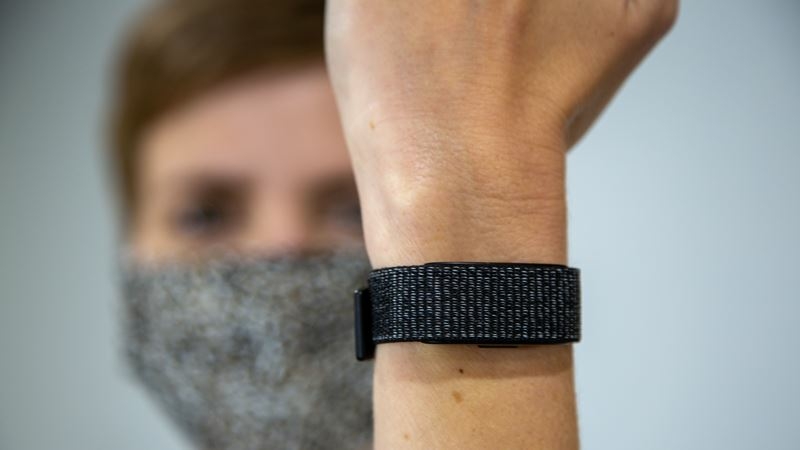
Dec 11. 2020Amazon calls the Halo Band design Amazon calls the Halo Band design “distraction free,” but we found the lack of a screen made it less useful for motivation. MUST CREDIT: Washington Post photo by Geoffrey A. Fowler. 
By The Washington Post · Geoffrey A. Fowler, Heather Kelly

Amazon has a new health-tracking bracelet with a microphone and an app that tells you everything that’s wrong with you.

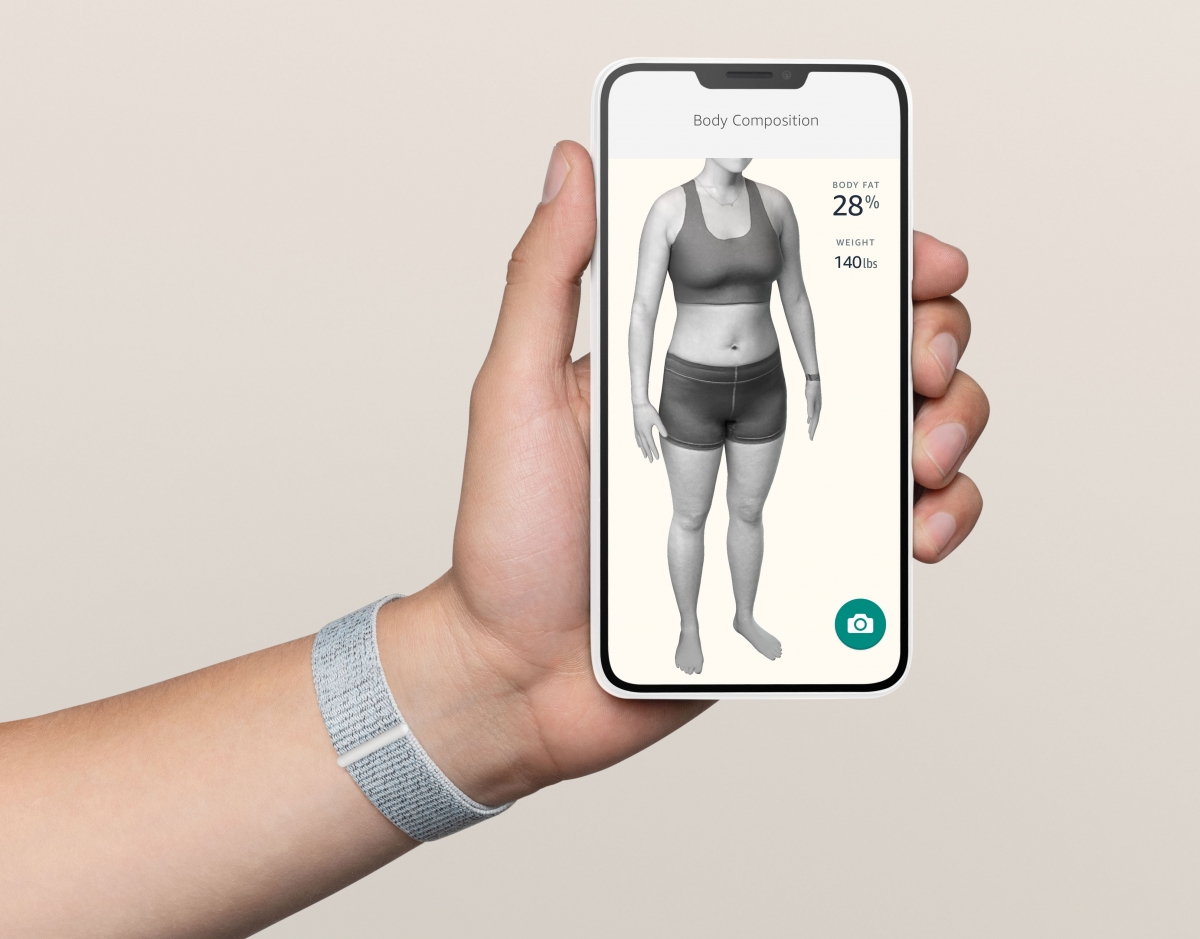
You haven’t exercised or slept enough, reports Amazon’s $65 Halo Band. Your body has too much fat, the Halo’s app shows in a 3-D rendering of your near-naked body.

And even: Your tone of voice is “overbearing” or “irritated,” the Halo determines, after listening through its tiny microphone on your wrist.

Hope our tone is clear here: We don’t need this kind of criticism from a computer. The Halo collects the most intimate information we’ve seen from a consumer health gadget – and makes the absolute least use of it. This wearable is much better at helping Amazon gather data than at helping you get healthy and happy.

The optional body feature in the Halo app asks you to take four photos of your body in underwear or skintight clothes, and the generates an estimate of your body fat composition and a 3-D model of your body. MUST CREDIT: Amazon.

The optional body feature in the Halo app asks you to take four photos of your body in underwear or skintight clothes, and the generates an estimate of your body fat composition and a 3-D model of your body. MUST CREDIT: Amazon.

Since August, the Halo has been listed by Amazon as an “early access” product that requires an “invitation” to buy. (It will cost $100 plus a $4 monthly fee once it’s sold widely.) We’re reviewing the Halo now because Amazon’s first digital wellness product offers a glimpse of how one of tech’s most influential companies thinks about the future of health. And what better to do when we’re lonely during a pandemic than have an always-listening device point out our flaws? Amazon CEO Jeff Bezos owns The Washington Post, but we review all technology with the same critical eye.

Late to the fitness tracker market dominated by the Apple Watch and Fitbit, the fabric-covered Halo has no screen, no sounds or vibrations and no design innovation. Like its competitors, it contains sensors that monitor physical activity, heart rate, sleep and skin temperature. A companion phone app is the only place to see what it has learned.

But the Halo pushes into uncharted territory by also collecting new, unabashedly invasive kinds of personal information – including body photos and voice recordings – and then feeding it into Amazon’s software for analysis. They’re going for AI doctor, or at least life coach.

One reason we tested two Halo bands, one on each of our bodies, is to see how well the AI could account for gender and other important human differences – particularly on factors as complicated as fat composition and tone of voice. Spoiler alert: It described Geoffrey’s tone with words like “opinionated” while it was more likely to flag the tone of Heather, a mom of two, as “dismissive” and even “condescending.”

“We can bring some unique expertise in AI and machine learning,” Amazon medical officer Maulik Majumudar, told us in an interview. “There are many examples of this in the product you see, but the specific ones that could come to mind are body [fat analysis] and tone – that’s a more comprehensive and holistic view of health than just physical health alone.”

We’re also believers, in the long run, that personal data might be able to help people get healthier or even detect diseases like covid-19, the subject of a flurry of recent research. Over the last decade, wearable tech hasn’t made much of a dent in America’s growing obesity rate. Our Fitbits and Apple Watches don’t really know how to turn mountains of body data into actionable insights and behavior changes.

Amazon’s problem is, the Halo does it even worse.

On the fitness tracker basics of measuring activity and sleep, the Halo is more erratic than its competitors. In a seated, side-by-side test, the Halo’s heart rate readings are similar to an Apple Watch 6 and Fitbit Sense. But during a bike ride, the Halo reported a peak heart rate of 129 bpm, while the Apple Watch reported 171 bpm. Part of the problem is there are no buttons to tell the Halo you’re about to exercise – it just tries to figure out for itself what you’re up to using its algorithms.

You also have to trust Amazon’s AI to accurately estimate other body measures, starting with a near-nude total body scan. The health baseline used by most doctors is body mass index, or BMI, a score based on height and weight. Amazon says a better measure is body fat percentage, which it calculates by asking you to stand in front of your phone’s camera in your skivvies for a 360-degree photo shoot and then sending the shots to Amazon’s cloud for analysis.

Evaluating the accuracy of Amazon’s fat measurement is difficult without a doctor or dietitian. One home device that calculates fat by sending a light current through your feet, the Withings Body+ scale, reported Geoffrey’s body fat was five percentage points lower than Halo. Heather’s fat estimate was nearly identical on the Withings scale and Halo. (We’re not going to tell you exactly how out of shape it thinks we are.) Amazon claims its AI is more accurate than the technology in smart scales, though it has not been cleared by the Food and Drug Administration.

The Halo’s voice tone analysis is questionable on a whole other level. You train the device to recognize your voice by reading sample phrases, and then it listens out constantly for moments in conversation that go beyond your neutral tone. (There is a button you can press to temporarily turn off the microphone.) The Halo plots these moments as positive vs. negative and high vs. low energy, and then applies more nuanced descriptors to them – for example, a voice that registers as negative and low energy might be classified as “discouraged.” You can review a dozen, or more, of these per day in the Halo app.

The Halo uses Amazon AI to analyze the tone of your voice, which it categorizes here with terms such as "disgusted," "irritated," and "angry." MUST CREDIT: Washington Post photo by Geoffrey A. Fowler.
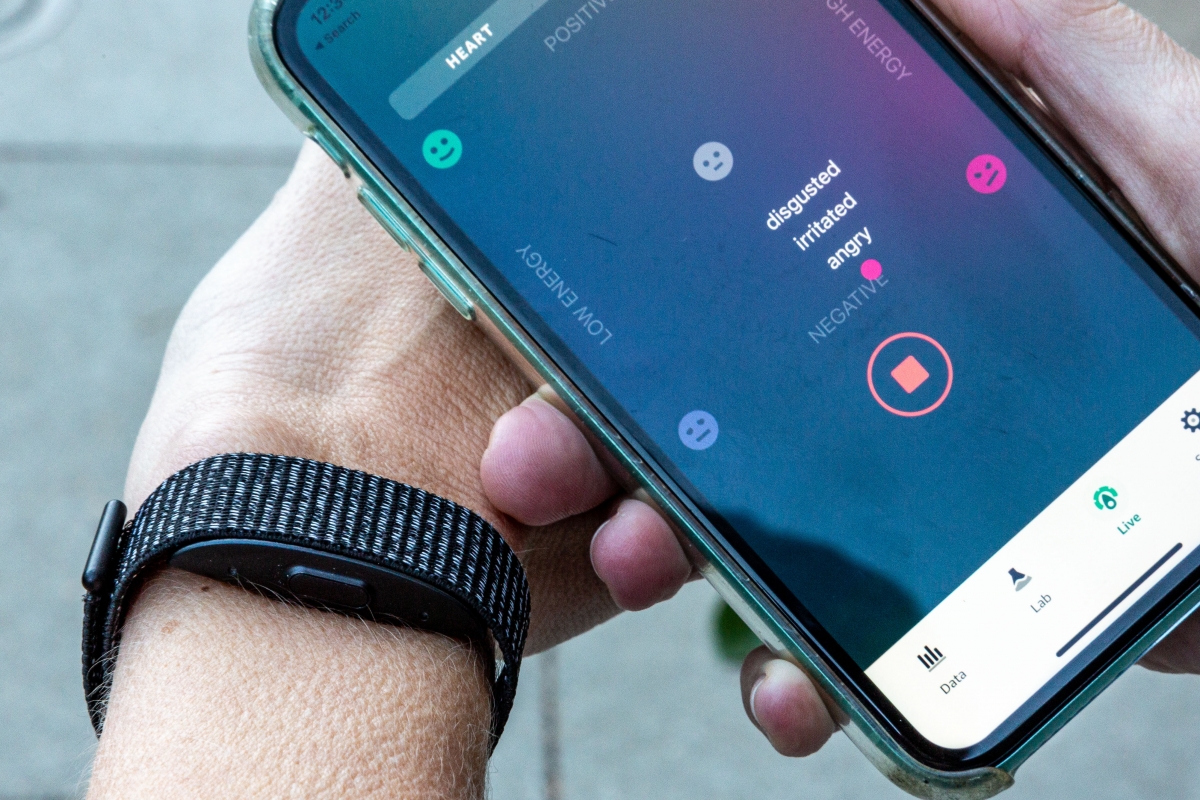
The Halo uses Amazon AI to analyze the tone of your voice, which it categorizes here with terms such as “disgusted,” “irritated,” and “angry.” MUST CREDIT: Washington Post photo by Geoffrey A. Fowler.

How could a computer possibly know you sound like a Debbie Downer? Amazon said it spent years training its tone AI by having people categorize voice recordings. The company held internal trials and says it tried to address any biases that might arise from varying ethnicity, gender, or age.

In our experience, the Halo could detect ups and downs in our voice, but seemed to misinterpret situations regularly. And some of the feedback feels, ironically, a bit tone deaf – especially when judging a woman’s voice.

Our sample size of two isn’t sufficient to conclude if Amazon’s AI has gender bias. But when we both analyzed our weeks of tone data, some patterns emerged. The three most-used terms to describe each of us were the same: “focused,” “interested,” and “knowledgeable.” The terms diverged when we filtered just for ones with negative connotations. In declining order of frequency, the Halo described Geoffrey’s tone as “sad,” “opinionated,” “stern,” and “hesitant.” Heather, on the other hand, got “dismissive,” “stubborn,” “stern” and “condescending.”

She doesn’t dispute she might have sounded like that, especially while talking to her children. But some of the terms, including “overbearing” and “opinionated,” hit Heather differently than they might a male user. The very existence of a tone-policing AI that makes judgment calls in those terms feels sexist. Amazon has created an automated system that essentially says, ‘Hey sweetie, why don’t you smile more?’

Each new generation of wearable gadget has invented new motivational scores to help you get more healthy. The Fitbit nudged you to take 10,000 daily steps – and the Apple Watch urges you to close three colorful daily rings for activity, exercise and standing. Amazon’s Halo gives you an activity score with a goal of 150 points per week. Say what?

Amazon says it’s not arbitrary: the score is based on guidelines from the American Heart Association that people should aim for 150 minutes of moderate exercise per week, though the points don’t translate exactly to time. The Halo gives more points for more-strenuous activity, and you lose points for stretches of inactivity.

It is smart to measure activity that actually exercises your heart (which taking steps might not). But putting it on a weekly scale of 150 – and burying your score in the Halo app – means it’s mostly meaningless as motivation in the moment when you have to decide to go for a jog or kick back on the couch.

It’s possible some people might be more receptive to criticism coming from an app than coming from a person. The Halo app also turns your body scans into a 3-D rendering, complete with a slider to see what you’d look like with more, or less, fat.

But we were disappointed that even with all that highly personal (somewhat nude) data, the Halo doesn’t offer any kind of a personalized plan or path forward. The app has what it called Labs, a hysterically techy term for what are mostly just videos or audio recordings from outside companies like Orangetheory and Openfit, with little reminders to watch them. The selections are the same for everyone, not tailored to your data or goals.

Even more perplexing is that Amazon thinks there might be anything motivating about its harshly worded reports about your conversational tone. “For the most part, people are relatively unaware of how they sound to others and the impact that may have on their personal and professional relationships,” said Majumudar. But he also told us Amazon is purposefully not providing any kind of diagnosis or interpretation of a person’s emotional state.

It’s hard to even match up the Halo’s daily AI tone judgments to what you actually said – you get a time stamp, but not a transcription. Was that panicked, overwhelmed moment tied to a breaking glass or just idle chit chat about coffee?

The Halo app’s Labs offers lectures from a communications expert about “conscious listening.” But there are no personalized suggestions based on your tone, like how to sound less “sad” in the middle of an isolated holiday season during a pandemic.

The Halo has invented a new personal behavior to feel self-conscious about, which we suppose is a kind of innovation.

While reviewing the Halo, we couldn’t shake the suspicion it was just another effort by Amazon to collect more data about customers’ lives.

Amazon approached some aspects of Halo data more carefully than it has other recent products. The Halo does not send Amazon recordings of your voice, like its Echo smart speakers. Instead, it sends recordings to your phone for analysis, and then deletes the recordings from both. Your body fat photos are sent to Amazon’s cloud for processing, then deleted from its systems. (You can choose to keep a copy on your phone, too.)

The Halo privacy policy says Amazon won’t sell your data, share it without your explicit permission or use it to target you with sales pitches.

But that still leaves open plenty of other ways for Amazon to profit from your information. In an anonymized way, it can data mine the heart rate, activity, sleep and tone patterns of Halo owners, using it to tailor its health algorithms and learn about human bodies. Make no mistake: disrupting medicine is the next goal for big tech.

Those ambitions are just hard to square with the half-baked product the Halo is today. But half-baked products are not totally out of character for Amazon, which has a history of tossing out weird, creepy ideas and letting customers do the testing. The first Echo smart speaker was not very useful, until devoted customers fed Amazon lots of data train its talking Alexa assistant. Amazon has also killed off other wacky products, including a camera called the Echo Look that used AI to judge fashion.

AI-powered devices like the Halo may well be the future of health. But they are not the present.

YouTube removes 8,000 channels promoting false election claims #SootinClaimon.Com

#SootinClaimon.Com : ขอบคุณแหล่งข้อมูล : หนังสือพิมพ์ The Nation.

YouTube removes 8,000 channels promoting false election claims (nationthailand.com)

YouTube removes 8,000 channels promoting false election claims

Dec 10. 2020

By The Washington Post · Taylor Telford

YouTube will now remove videos that make false claims that widespread fraud or error cost President Donald Trump the election, the company announced Wednesday in a blog post, and has purged 8,000 channels since September for spreading “harmful and misleading claims.”

The Google-owned video giant has taken heat in recent weeks for not removing or individually fact-checking content that boosted conspiracy theories about voter fraud, as other social media companies have. But now that the “safe harbor deadline” – the point by which state-level election challenges must be completed – has passed, YouTube said it will bar content uploaded Wednesday or after that suggests widespread fraud or errors cost Trump the election.

“For example, we will remove videos claiming that a presidential candidate won the election due to widespread software glitches or counting errors,” the company said in the blog post. “We will begin enforcing this policy today, and will ramp up in the weeks to come.”

This policy will apply to Trump himself, who insists daily without evidence that the election was rigged and that he actually won in a landslide. Democrat Joe Biden won the Nov. 3 vote, and the White House transition is underway.

“We enforce our policies consistently, regardless of speaker,” Ivy Choi, a YouTube spokeswoman, said in an email to The Post.

Videos on YouTube and other sites have become major sources of disinformation, often spreading election conspiracy theories and political point-scoring attempts faster than social media companies and fact-checkers can respond. Since the election, millions have watched and shared YouTube videos featuring debunked or unproven allegations involving mysterious wagons, ripped-up ballots and vote-deleting felt-tip pens.

In the blog post, “Supporting the 2020 U.S. Election,” YouTube said it wants to ensure “the line between what is removed and what is allowed is drawn in the right place.” In some cases, the company acknowledged, “that has meant allowing controversial views on the outcome or process of counting votes of a current election as election officials have worked to finalize counts.”

According to Transparency.tube, an independent research project, content promoting unfounded claims of widespread election fraud garnered about 137 million views between Nov. 3 and 10. This is significant given that a quarter of U.S. adults get their news from YouTube, a September study from the Pew Research Center found, and 73% of those viewers believe news gleaned from YouTube to be “largely accurate.”

The move is sure to incense Trump and many of his supporters, who continue to claim, without evidence, that the election was rigged and that their voices are being silenced by Silicon Valley giants. Last month, YouTube suspended One America News – which has repeatedly advanced claims that the election was stolen from Trump – for a week for violating its guidelines.

“I received hundreds of thousands of legal votes more, in all of the Swing States, than did my opponent,” Trump said in one of several tweets sent Wednesday that Twitter marked with a “disputed” label. “ALL Data taken after the vote says that it was impossible for me to lose, unless FIXED!”

YouTube’s Community Guidelines prohibit “spam, scams, or other manipulated media, coordinated influence operations, and any content that seeks to incite violence.” The platform has taken down more than 8,000 channels and thousands of videos since September that violated its disinformation policies, according to the blog post. More than 77% were removed before reaching 100 views.

The company said 88%, on average, of the election videos in top 10 search results were from “authoritative sources,” and that the most viewed channels and videos were produced by news outlets like NBC and CBS.

As part of a push to connect users with authoritative sources, YouTube has updated its election fact-check panels – which it says have been viewed more than 4.5 billion times – with links to the Office of the Federal Register noting that states have certified results as of December 8. It will keep the link to the Cybersecurity & Infrastructure Security Agency’s “Rumor Control” page for debunking election misinformation.

Just as YouTube announced its new measures, its parent, Google, told advertisers it would lift its political ad ban on Thursday, Axios reported. The company had instituted a blackout on political ads in recent weeks over misinformation concerns.

Covid exposing weakness, inequality of Thai education: World Bank #SootinClaimon.Com

#SootinClaimon.Com : ขอบคุณแหล่งข้อมูล : หนังสือพิมพ์ The Nation.

Covid exposing weakness, inequality of Thai education: World Bank (nationthailand.com)

Covid exposing weakness, inequality of Thai education: World Bank

Dec 10. 2020From 2009 to 2017, the Basic Education Commission’s inflation-adjusted total budget rose by 27 per cent, while the number of students declined by 11 per cent, says the report.From 2009 to 2017, the Basic Education Commission’s inflation-adjusted total budget rose by 27 per cent, while the number of students declined by 11 per cent, says the report. 
By Wichit Chaitrong
The Nation

A new World Bank report links declining student performances in reading and stagnation in maths and science scores to inequality and inefficiency of investment across Thai schools.

School closures due to the Covid-19 pandemic may accelerate these trends, warns the report released on Wednesday (December 9). The report also comes amid a Thai student rebellion demanding urgent education reform.

The 2018 Programme for International Student Assessment (PISA) evaluates skills and knowledge of 15-year-olds in reading, maths and science, and collects information on students’ attitudes, home background, learning experience, and school contexts. 

Thailand has participated in the PISA assessment since 2000. 

Of the 79 participating countries, Thailand ranks 68th in reading, 59th in mathematics and 55th in science, ahead of only Indonesia and the Philippines in the East Asia and Pacific region. 

Around 60 per cent of Thai students failed to meet the minimum proficiency level in reading, while 53 per cent were below minimum proficiency in maths, and 44 per cent in science.

Students in Thailand also reported higher levels of school absenteeism and a weaker sense of belonging at school compared to regional averages.

The report “Creating inclusive learning environments in schools to help improve Thailand’s education performance”, further finds that investments in key financial, human, and digital learning resources were especially low in rural and disadvantaged schools.

It pinpoints several distinct drivers of the Thailand PISA results. 

First, total spending per student in Thailand from Grades 1-9 is US$27,271 – less than one-third of average spending per student across OECD countries.

Second, compared to other countries with the same level of spending per student, Thailand’s performance is lower than expected. Further, disparities between schools with higher and lower socioeconomic status students in Thailand are more pronounced than in other countries in the region. 

“The Covid-19 crisis has exposed inequities in education systems across the world including Thailand,” said Birgit Hansl, World Bank country manager for Thailand. 

While close to 90 per cent of relatively wealthy students in Thailand have a home computer, and nearly all have internet access, only 20 per cent of students with low socio-economic status reported having computers for schoolwork and 61 per cent reported having internet at home.

The report highlights three critical areas which policymakers and educators can address to improve students’ learning outcomes:

• Ensure that all classrooms are adequately staffed with qualified and well-trained teachers and material resources to improve learning outcomes of students, especially those in high-need schools.

• Enhance teaching methods and classroom management to make effective use of learning time.

• Provide a safe and welcoming learning environment to keep students in schools.

Dilaka Lathapipat, human development economist at the World Bank, suggested that Thailand needs to merge small schools in order to solve two pressing issues – a teacher shortage and the declining number of students.

From 2009 to 2017, the Basic Education Commission’s inflation-adjusted total budget rose by 27 per cent, while the number of students declined by 11 per cent, according to the report.

The country may still need to keep many of the estimated 1,200 small schools in remote areas, Dilaka said. Meanwhile 28,000 small schools should be merged to create hub schools covering a radius of six kilometres. This way, more teachers could be allocated to large schools, he said.

Thailand plans to pilot the merging project in Phuket and Samut Songkram.

Students in Thailand also reported a weaker sense of belonging at school than did students in the OECD. While socio-economically advantaged students reported a greater sense of belonging than their disadvantages peers.

Students in Thailand are exposed to more bullying than the average student in OECD countries. “Teachers must learn to detect bullying at schools in order to support victims,” said Dilaka.

The World Bank report comes amid a student rebellion in Thailand. The ironically self-named Bad Student group is calling for education reforms to tackle inequality, draconian school rules and student safety concerns.

Pumsaran Tongliemnak, an education economist at the Equitable Fund (EEF), said that while Thai youths have a weak sense of belonging at schools, they show high levels of interest in global issues such as human rights and climate change. This suggests that schools are not providing adequate teaching of global issues, which students are learning about from other sources, including social media. He suggested teachers to present global issues in class by integrating them with reading, maths, or science.

The U.S. Air Force is entering a robotic future #SootinClaimon.Com

#SootinClaimon.Com : ขอบคุณแหล่งข้อมูล : หนังสือพิมพ์ The Nation.

The U.S. Air Force is entering a robotic future (nationthailand.com)

The U.S. Air Force is entering a robotic future

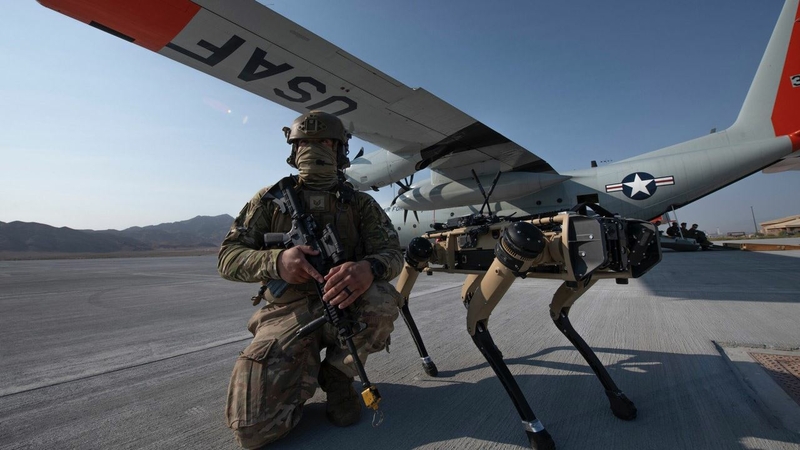
Dec 08. 2020In January, Department of Defense contractor Ghost Robotics will be unleashing four of its semi-autonomous robots at Tyndall Air Force Base in Florida. MUST CREDIT: Ghost RoboticsIn January, Department of Defense contractor Ghost Robotics will be unleashing four of its semi-autonomous robots at Tyndall Air Force Base in Florida. MUST CREDIT: Ghost Robotics 

By The Washington Post · Dalvin Brown

Over the past five years, robotic dogs have gone viral in captivating online videos showing them opening doors, performing aerobics, hauling trucks and pulling other stunts. In the pandemic era, they’ve been used to promote social distancing and reduce risks to medical staff hospitals.

In January, Department of Defense contractor Ghost Robotics will be unleashing four of its semi-autonomous robots at Tyndall Air Force Base in Florida. MUST CREDIT: Ghost Robotics

Massachusetts-based Boston Dynamics was behind most of these examples. However, there is another company revolutionizing what robotic versions of man’s best friend can do, and it says its latest creation might be ready for war.

In January, Department of Defense contractor Ghost Robotics will be unleashing four of its semi-autonomous robots at Tyndall Air Force Base in Florida in what could be a step toward introducing robot dogs to conflict zones.

The hi-tech canines, known as Vision 60, are being touted as a security enhancement and are part of a plan to replace stationary surveillance cameras at the air force base, according to the military. However, Ghost Robotics envisions a scenario in the not-too-distant future where the machines go beyond just patrolling.

“We can see them in war zones, working with bombs, scouting, targeting, probably in 2022,” said Jiren Parikh, CEO of Ghost Robotics. “These can really become a war fighter’s best friend.” The military says the robots have the potential to be used in a “contingency, disaster or deployed environment.” On the Air Force base, the robots will enable human beings to focus on other tasks.

Founded in 2015, Philadelphia-based Ghost Robotics designed the four-legged drone alternative to “feel the world” and remain balanced when prowling through water, tall grass and other terrain. The computerized canines can operate in sub-zero temperatures and were made to move like real animals, the company says. Also referred to as “unmanned ground vehicles” or UGVs, they can climb steps, run and turn themselves upright if knocked over.

The secret sauce is motors that control the legs and adjust based on changes in ground pressure. Relying primarily on motors for navigation sets Ghost Robotics’ machines apart from Boston Dynamics’ devices, which depend on a host of sensors.

“A core design principle for our legged robots is reduced mechanical complexity when compared to other legged robots, and even traditional wheeled-tracked UGVs,” Ghost Robotics says on its website.

Semi-autonomous robots tested by the Australian army are being picked up by the U.S. Air Force. MUST CREDIT: Ghost Robotics

Semi-autonomous robots tested by the Australian army are being picked up by the U.S. Air Force. MUST CREDIT: Ghost Robotics

Boston Dynamics, a robotic dog pioneer, is a much larger company, employing up to 4,000 people across nine regional offices. Ghost Robotics has fewer than 25 employees.

Ghost Robotics’ dog-sized machines have onboard cameras and sensors to monitor for intruders along the base’s perimeter. The robots can trot along for up to seven and a half hours before needing a recharge. The machines, which are not meant to replace real military dogs, can be assembled in 15 minutes, while damaged limbs can be replaced even faster, Parikh said. The machines are equipped with Wi-Fi and 4g LTE to send live information to its operator.

Ghost Robotics has shipped over 100 of its robot dogs in 2020 and plans to send more than 250 in 2021.

The robots are part of the military’s ambition for an Advanced Battle Management System that uses a network of innovations such as artificial intelligence and robotics to detect and defend against threats.

Last month, the canines showcased their abilities during a test run at Tyndall, where they were operated using a remote control. Once they are programmed with a patrol path to follow, they will roam semi-autonomously with their handlers able to control them via virtual reality headsets when necessary, the Air Force says. The military-grade canines allow defenders that would otherwise be patrolling to focus on training, security and overall situational awareness across the base.

In September, Vision 60 robots were also used during a security exercise at Nellis Air Force Base in Nevada.

Ghost Robotics isn’t aware of immediate plans to weaponize the robots, though there are bomb-disabling applications. There’s also a concerted Human Rights Watch effort to keep lethal autonomous robots from being deployed; the U.S., to date, has declined to sign on.

Tyndall is the first military base in the United States to integrate the robots full time; however, the move follows a collaboration between Ghost Robotics and the Australian Army. In 2019, Australia experimented to find out how the country could leverage the robots in the “future of land warfare.”

Prices for one robot start around $100,000.