Bangkok still No 1 for foreign condo buyers, Phuket overtakes Chiang Mai
SUNDAY, NOVEMBER 27, 2022
Bangkok remains the top choice for foreigners buying condominiums in Thailand, according to property firm Knight Frank Thailand.
Managing director Nattha Kahapana said the Covid-19 pandemic had not affected Bangkok’s status as No 1 among foreign buyers – but Chiang Mai has fallen in the rankings.
The top 10 provinces for foreigners buying condominiums before the pandemic were:
1. Bangkok
2. Chonburi
3. Chiang Mai
4. Phuket
5. Samut Prakan
6. Prachuap Khiri Khan
7. Nonthaburi
8. Rayong
9. Pathum Thani
10. Chiang Rai
However, Phuket and Samut Prakan have now leapfrogged Chiang Mai to become the third and fourth favourite places for foreign condo buyers, Nattha said.
The top 10 provinces for foreign condo buyers now are:
1. Bangkok
2. Chonburi
3. Phuket
4. Samut Prakan
5. Chiang Mai
6. Prachuap Khiri Khan
7. Pathum Thani
8. Phetchaburi
9. Rayong
10. Nonthaburi
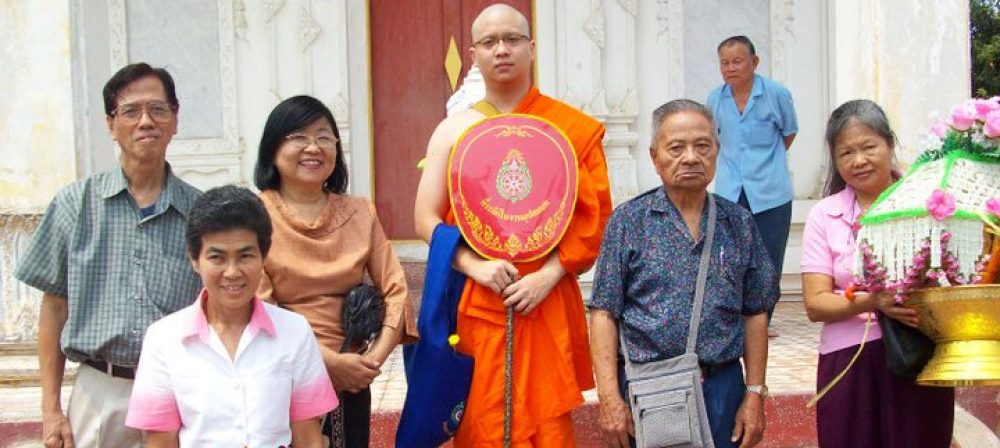
The top buyers since 2018 are Chinese nationals, followed by Russians, Americans, Britons and Germans, Nattha revealed.
He said the four most popular locations in Bangkok for foreign condo buyers are Sukhumvit, Phrom Phong, Thong Lor and Ekkamai. Most buyers here were from Japan, the European Union, Britain or the US.
Nana and Asok remain popular with Middle East buyers while Ratchadapisek, Huay Kwang and Phraram 9 are preferred by Chinese and South Korean condo buyers, Nattha said.
Silom is preferred by EU citizens, Australians and Singaporeans.
A total of 48,743 condominium units were sold to foreign buyers from 2018 to September 2022, Knight Frank said.
Land prices continue to surge in Greater Bangkok suburbs
WEDNESDAY, NOVEMBER 09, 2022
Land prices in the suburbs of Greater Bangkok are increasing due to the rising demand for housing development, the Real Estate Information Centre (REIC) said on Wednesday.
“Land prices in the suburbs of Greater Bangkok are not very high compared to the extremely high rates in the centre of Bangkok,” the centre said.
The top five areas where land prices increased in the third quarter of this year were:
Bang Phli, Bang Bo and Bang Sao Thong districts of Samut Prakan province – up 55.7% year on year
Muang and Pak Kret districts of Nonthaburi province – up 42.8% year on year
Muang, Lat Lum Kaeo and Sam Khok districts of Pathum Thani province – up 28.1% year on year
Rat Burana, Bang Khun Thian, Thung Khru, Bang Bon and Chomthong districts of Bangkok – up 26.4% year on year
Phra Khanong, Bangna, Suan Luang and Prawet districts of Bangkok – up 11.6% year on year
The REIC said the price of land near electric train routes also increased in the third quarter of this year on progress in construction and property developers announcing new housing projects.
The top five electric train routes where the land price has increased were:
MRT Purple Line: up 9.0% year on year, especially in Nonthaburi’s Muang and Bang Bua Thong districts
MRT Pink Line: up 5.8% year on year, especially in Bangkok’s Lak Si and Khan Na Yao districts
BTS Sukhumvit Line: up 5.2% year on year, especially in Bangkok’s Chatuchak, Bangna, Phya Thai and Phra Khanong districts
MRT Yellow Line: up 4.7% year on year, especially in Bangkok’s Prawet district and Samut Prakan’s Bang Phli and Muang districts
MRT Brown Line: up 4.4% year on year, especially in Nonthaburi’s Muang district and Bangkok’s Lak Si district.
MQDC Tasks’ DGTO Prosperous’ with Global Investments
MONDAY, NOVEMBER 07, 2022
Enterprises seeking future business opportunities must not limit their scope to only one business or the domestic market. Instead, they should explore all investment options, both locally and overseas to create new revenue sources and diversify risks.
Modern businesses must also focus on the aspects of society, community, environment, technology and innovation, as these are crucial factors that help strengthen the business foundation.
The principle aligns with the missions and goals of DTGO Prosperous (DTP), an investment arm of Magnolia Quality Development Corporation Limited (MQDC), one of Thailand’s top property development firms.
MQDC is a property arm of DTGO Corporation Ltd., focusing on residential and mixed-use properties and theme projects development, with the well-known flagship project “The Forestias” located on Bang Na-Trat (Debaratna) Road in Samut Prakan province.
DTP serves the group as its global investment company that invests in high-potential properties worldwide to generate regular income for the group. DTP also looks for investment in various innovation businesses to strengthen its parent portfolio under MQDC’s philosophy of “Well-Being For All”, which emphasises securing sustainability via innovation.
DTP recently unveiled its latest investment plan targeting four branches of business: global investment, asset management, fund management, and VC & innovative investment to further strengthen the DTGO ecosystem.
Hansa Susayan, Chairman of the Board of DTGO Prosperous Ltd, said that DTP aims to be a global investment company that focuses on social and environmental care while conducting business in a sustainable way. The mission is guided by MQDC’s philosophy and DTGO’s concept of “Adding Value in Everything We Do”, for the sake of the public.
Hansa said all of the company’s investments are implemented under the principle of ESG (environmental, social, and corporate governance). “We emphasise that our business operations must have low emissions, create positive outcomes for society, promote community participation, and be fully transparent under the corporate governance principle,” he said. “Most importantly, all operations must comply with the company’s sustainability goals.”
Thiti Thongbenjamas, DTP’s president, added that the company’s investments would focus on brownfield projects and high-potential assets to secure future opportunities in the four main business groups:
1. Global investment – DTP is eyeing investment in Thailand and overseas markets, including the United States, Europe, Japan, UAE, China, India, Vietnam, Singapore, Australia and South Africa. Just two months before the Covid-19 outbreak, the company had invested in several hotels in the UK under the Hilton, IHG and Marriott groups with a combined capacity of some thousands of rooms.
“The global hotel industry was at its peak when we bought these hotels. Over the years, their values have increased to more than the price we had bought,” said Thiti. “Furthermore, we also plan to expand our investments to related businesses such as office buildings, dormitories, apartments, and healthcare technology.”
2. Asset management – After acquiring the assets, DTP has improved the management and assets facilities to accelerate the hotels’ value. Thiti said the company had retained over 1,200 employees in the UK with no salary cuts during the lockdown, which made the hotels ready to operate as soon as the restrictions were lifted instead of facing labour shortages like other establishments.
Thiti added that DTP also applied heat-to-power conversion technology to minimise environmental impact and locked in energy rates to cut electricity bills. The company also plans to install solar panels on hotels’ rooftops to help with electricity generation.
“The company will continue to adjust the investment portfolio of hotels assets in the UK according to the changing lifestyle of the British people, who are now preferring to stay at hotels in big cities,” he said.
In the social responsibility aspect, DTP also plans to provide support to communities surrounding its hotels in Manchester as a pilot project before expanding to nearby cities. In Thailand during the pandemic, The Forestias project and its partners provided aid to nearby communities by establishing the “Sanam Saeng Haeng Jai” field hospital in Samut Prakan to help treat infected patients. DTP also channelled 2 per cent of its highest earnings for the initiation and operation of various charity projects, including the Buddharaksa Foundation, which supports the education of underprivileged children in remote areas.
3. Fund Management – DTP recently established DTPHREIT, a real estate investment trust (REIT) valued at 4.1 billion baht in September. DTPHREIT invested in MQDC’s hotels and service apartments in high-potential areas, such as the Waldorf Astoria Bangkok hotel, Magnolias Ratchadamri Boulevard service apartment, and U Khao Yai hotel. DTPHREIT is a buy-back type REIT in which the original owners commit to buying back their properties when the investment period is over.
4. VC & innovative investment – To ensure growth opportunities in the changing world that is not limited to only the property field, DTP channels its investment to venture capital and innovation with scalable business models. Examples of these investments are REDDS Technology Fund and chatbot technology.
Thiti said DTP’s investment strategy emphasises three aspects: Business synergy – the projects that add value and expand under the DTGO group; Monetisation – Can generate income to support continued re-investment; and Risk diversification in all types of risks – industrial, location, and financial.
“By avoiding investing in similar fields to generate the highest turnover possible, this strategy helps minimise investment-related risks, especially when an economic crisis emerges,” he said. “DTP aims to be an asset-light company that buys an asset, expands, develops and then sells it while still managing the asset via REIT or private property developers. This strategy enables us to raise funds and secure new partners for new projects, ensuring continued investments in various businesses.”
“These partners help DGTO Prosperous become a global investment company that focuses on social and environmental care in the communities we invest in to ensure sustainable growth of all parties,” said Thiti.
Chinese people top list of foreign property buyers in Thailand, data shows
SATURDAY, NOVEMBER 05, 2022
Chinese nationals are still the biggest buyers of property in Thailand, with more than 2,000 units transferred in the second quarter of 2022 alone.
Wichai Wirattaphan, acting director of the Real Estate Information Centre, said recently that 2,326 units were transferred to Chinese buyers in the second quarter of this year, up by 27.6% year on year.
The value of the units was 12.11 billion baht, up by 26.9% compared to the same period last year, while the total area was 109,486 square metres, up by 27.6%.
He added that since the number of new properties available in downtown or business districts is reducing, second-hand units are being snapped up by foreigners, especially those from Europe, the US, Australia, Russia and India.
According to data available, the biggest buyers of condominium units in Thailand are from China, Russia, the US, UK and Germany in that order.
Those who spend the highest on property in Thailand are from China, the US, France, Russia and Cambodia.
Wichai said the average price of condominium units bought by foreigners is about 5 million baht per unit, though the Taiwanese in general spend the most at about 7.1 million baht per unit and Russian and German buyers average at about 3.2 million baht per unit.
He added that on average, units of 60 square metres and less are popular among foreigners, accounting for more than 80% of units transferred in each quarter.
The five provinces most popular among foreign property buyers in the first six months of 2022 were:
Bangkok
Chonburi
Samut Prakan
Phuket
Chiang Mai
Of the units transferred in the first half of this year, 43.8% were in Bangkok and 31% in Chonburi.
The government recently decided to allow wealthy foreigners who invest at least 40 million baht in Thailand for three years to buy houses and up to 1 rai of land in specific areas.
Fenton Whelan announce VIP roadshow to Thailand to showcase their £500m Park Modern Hyde Park development to Southeast Asian clients
THURSDAY, OCTOBER 06, 2022
THE NATION
UK real estate developer Fenton Whelan is pleased to announce a special South East Asian roadshow to Thailand, Bangkok, (10th to 12th October 2022) showcasing to VIP clients their £500 million (GDV) Park Modern 18,000 sqm luxury development facing south over Hyde Park and Kensington Palace Gardens in Prime Central London.
The South East Asian roadshow is being led by Mr Lars Christiaanse, Sales & Marketing Director at Fenton Whelan. Appointments will be available from the 10th to the 12th October.
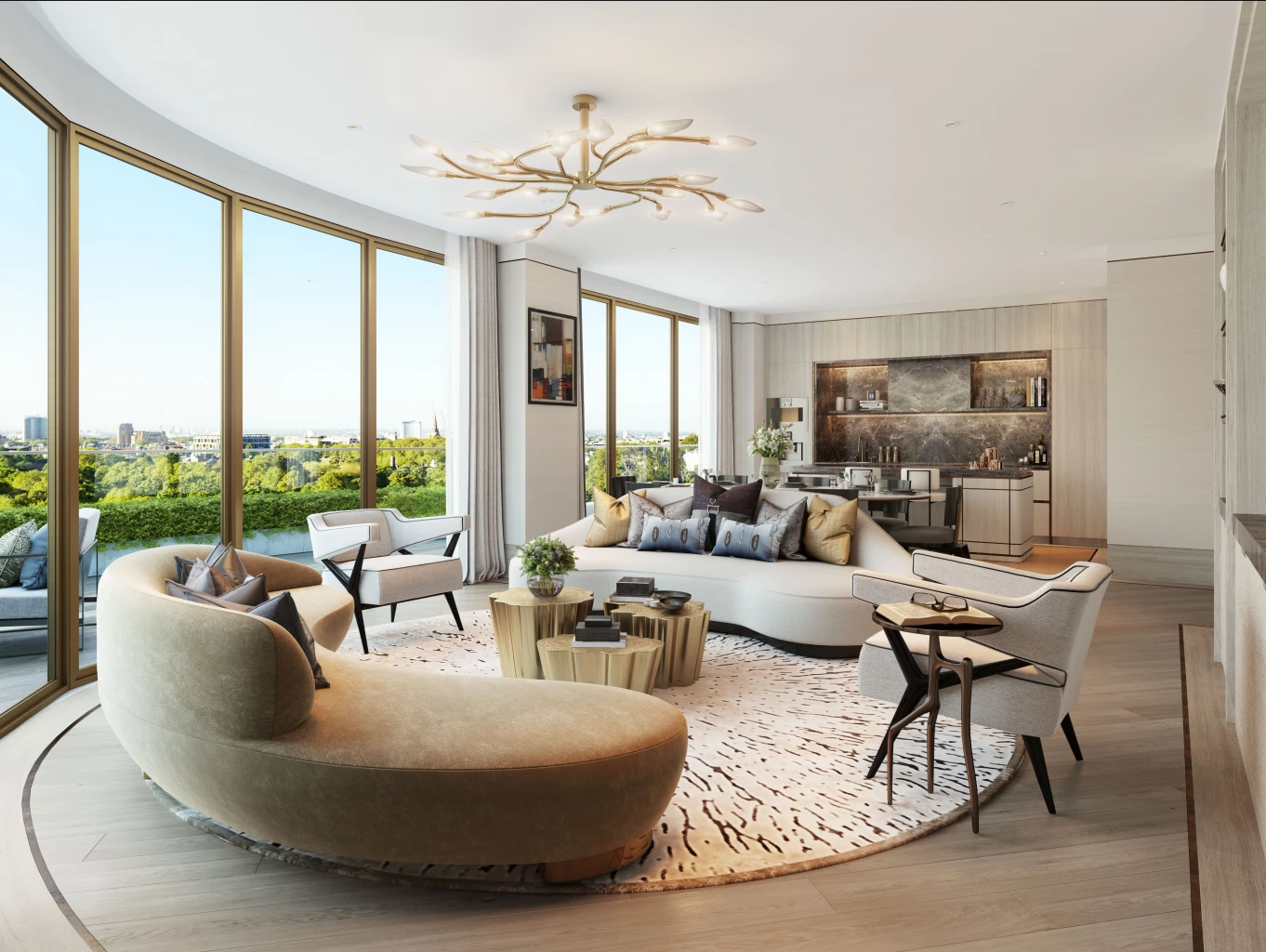
Park Modern will deliver 57 one to six bedroom residences, including spectacular lateral apartments, three trophy penthouses, mews houses and 2,800 sqm of 5-star hotel style amenities including a concierge, resident’s lounge, signature restaurant and cafe, porte cochère with valet parking, and a wellbeing floor with a 25 metre pool, gym, spa, cinema, and treatment salon.
Park Modern provides front row views over Hyde Park and Kensington Palace Gardens. The contemporary design by architect Lee Polisano of PLP Architecture represents Hyde Park’s finest park-side architecture to date.
Following its launch in the UK more than half of the apartments at Park Modern have already been forward sold off-plan. The phenomenal sales success, a reflection of the quality of the development and its prime location, has made Park Modern Prime Central London’s fastest selling and most successful luxury development in several decades.
Park Modern provides spectacular accommodation on nine floors, offering generous ceiling heights and floor-to-ceiling glazing opening onto private terraces, giving residents a front row view of the park and city skyline.
A resident’s lounge and library compliments the 600 sqm signature restaurant and café. Below ground the wellbeing floor has a 16 sofa seat cinema, a state-of-the-art gym and an adjoining spa and leisure suite with a 25m swimming pool and jacuzzi, bordered by leisure decks with loungers, steam room, sauna, treatment room and salon.
Thannicha Chowiwatthana, Manger, International Sales and Marketing at Savills, Thailand says: “Front row on the park, Park Modern is perfect for those looking to enjoy an exceptional quality of life and wellbeing in the heart of Prime Central London. With a spectacular south facing aspect, Park Modern beautifully harmonises with the surrounding architecture and Hyde Park. The dedicated wellbeing floor gives residents space to retreat, relax and revive. Representing Hyde Park’s finest park-side architecture to date, Park Modern provides the most outstanding luxury apartments in London.”
Lars Christiaanse, Co-Founding Director of Fenton Whelan says: “This transformative, parkside development is a fusion of contemporary design and exceptional specification, Park Modern is a fresh, contemporary approach to the London market. Offering a truly elevated living experience overlooking Hyde Park, Park Modern offers a diverse range of residences with sizes, layouts and features to match every lifestyle- we are excited to be able to showcase this fantastic development to Southeast Asiain clients.”
Prices at Park Modern start from £2,200,000 approx. (THB 91 million). For further information on Park Modern contact Savills Tel: +66 (0) 2636 0300 or visit http://sav.li/parkml
New land appraisal price set to rise by an average 8%
THURSDAY, SEPTEMBER 29, 2022
THE NATION
The Treasury Department plans to announce a new land appraisal price list for 2023-2026 on January 1 next year.
Department director-general Prapas Kong-ied said the move comes as the economy is recovering from the Covid-19 crisis.
He said the land appraisal price will rise by an average of 8 per cent, adding that the appraisal price in Bangkok is still the highest.
“The new land appraisal price list which will come into effect next year was made two years ago as the announcement had been postponed due to the Covid-19 crisis,” Prapas said.
The department normally announces the new price list every four years.
Prapas said the department’s Property Valuation Division can revise the appraisal price based on changes in landscape, such as new bridges, roads, expressways or train systems.
He said people would have to pay more land tax as the latest appraisal price will be used in new tax calculations.
“It is up to related agencies whether there will be measures to mitigate the public’s expense burden,” he said.
The appraisal price for land nationwide has risen by around 8.9 per cent, with the appraisal price in Bangkok increasing by about 3 per cent and in other provinces by an average of 8 per cent.
The highest appraisal price is 1 million baht per square wah for land on Silom, Ploenchit, Wireless and Rama I roads, followed by 750,000 baht on Sukhumvit Road, 450,000 baht on Ratchadapisek Road, 300,000 baht on Phetchaburi Road and 250,000 baht on Phahonyothin Road.
In other provinces, the highest appraisal prices are in Chonburi, Rayong and Chachoengsao, where the Eastern Economic Corridor is located, especially for land close to high-speed train systems.
Thailand’s cities must be prepared for an uncertain future, says eco-design expert
TUESDAY, SEPTEMBER 27, 2022
THE NATION
All future city developments should take into account the uncertain future faced by the planet, Singh Intrachooto, chief of Kasetsart University’s Creative Centre for Eco-design, said on Monday.
He was speaking at the “Sustainability Expo 2022”, which opened at Bangkok’s Queen Sirikit Convention Centre on Monday and will run until Sunday.
Singh said the world’s population is being pressured by many problems like rising fuel prices, flooding, forest fires, poverty and social inequality.
In addition to all that, he said, rising sea levels due to global warming will force more than 200 million people to relocate, while over 400 million humans will face food and water shortages due to drought.
“So what should we do to cope with this extraordinary future?” he asked before unveiling the “Resilience Framework for Future Cities” created by the Magnolia Quality Development Corporation.
Singh is chief adviser to the corporation’s Research and Innovation for Sustainability Centre.
He said the framework provides city development guidelines that tackle three uncertainties – nature and environment, living and infrastructure, and society and economy.
“It is not difficult for Thailand to build future cities, but it should be prepared to use existing resources efficiently,” he added.
The high demand for seaside condominium units in Hua Hin town has driven the land price of plots along the beach to as high as 150 million baht per rai (0.6 hectare), an international property consultant said.
Phattarachai Taweewong, research and communications director of Colliers Thailand, said land prices on the Hua Hin seaside in Prachuap Khiri Khan province had reached 150 million baht per rai.
The high land prices had prompted more property developers to develop condominiums in the middle of the town, away from the seaside and the hillsides, Phattarachai said.
He said hillside land prices were about 60,000 baht per square metre and condo buyers were more interested in condos developed there because the unit prices were not too high.
During the past 10 years, 71 condominium projects had been built in Hua Hin, Cha-am in Phetchaburi and Pran Buri in Prachuap Khiri Khan with 29,152 units and total value of 123.7 million baht.
Phattarachai said condominium sales in Hua Hin and Cha-am were booming in 2011 and 2012 with some 7,000 to 8,000 units sold each year.
Of the 71 projects, 31 were developed by listed firms, providing 16,188 units, and the other 40 projects with 12,964 units were developed by private builders.
He said Colliers Thailand had surveyed and found that 84.6 per cent of condo units along the seaside had been sold while 83.8 per cent of the units on the hillside had been sold so far.
He said buyers included Russian and Chinese people as well as Thai investors. He said Colliers Thailand expected real estate developers to continue developing new projects in Hua Hin this year as the demand is still high.
Real estate giant Sansiri is staking 31.2 billion baht on an expectation the Thai property market will grow strongly in the second half of 2022.
The money will be spent on developing nine detached house projects, two mixed projects, five townhome projects, and 15 condominiums, the firm announced on Tuesday.
Sansiri’s chief operating officer Uthai Uthaisangsuk said prospects were bright as Thailand’s twin economic engines of exports and tourism powered up and the government introduced policies to stimulate the real estate market.
He expects upper and middle levels of the property market to grow, saying that people were buying real estate to escape inflation woes.
The condominium market would also be buoyed by the return of foreigners to Thailand, he added.
This year, Sansiri plans to launch 46 projects worth a total 50 billion baht.
Of these, 78 per cent will be housing projects and the other 22 per cent condominiums.
The firm has already launched 15 projects worth a total of 18.8 billion baht in the first half.
Uthai said Sansiri earned 18.3 billion baht from presales in the first six months, 52 per cent of the targeted 35 billion baht in 2022. Housing projects earned 12.7 billion baht in the first half, with six projects fully booked.
Meanwhile, the company earned 14 billion baht from transfers in the first half, 40 per cent of the 35-billion target.
Uthai expressed confidence the target would be reached, explaining Sansiri also had 10.5 billion baht of backlog to be transferred and 10.5 billion baht of to-go sales and transfers in the second half of 2022.
He added that it also had a presale backlog of 20.3 billion baht from the second half of 2022 to 2024.
Meanwhile the company had liquidity of 15 billion baht to tackle any situation.
Second-half plans feature housing projects to meet demand in several areas and price ranges under the concept “Home for Everyone”. The company also plans to construct condominiums near electric trains, riversides, workplaces, and communities, including in provinces outside Bangkok.
Uthai said that Sansiri three-year target through 2024 was to launch 150 billion baht worth of projects with a presale target of 120 billion baht.
The price of land in the Siam Square area of Bangkok is still the highest in Thailand at 3.5 million baht per square wah (4 square metres), influencing land prices in three areas, namely Phloen Chit, Chidlom and Nana, to rise to 3.3 million baht per square wah.
The rise in land price despite the impact of Covid-19 on the economy was attributed to the move by Property Management of Chulalongkorn University (PMCU) to develop the Siam Square area constantly, said Dr Sopon Pornchokchai, president of the Thai property research centre, Agency for Real Estate Affairs.
He said the PMCU recently renovated Siam Square’s 63 rai (100,800 square metres) of land into a modern commercial area, as well as the opening of mixed-use area SiamScape to become a new landmark in the centre of Bangkok.
“In addition, Scala Cinema on 7 rai of land was demolished to build a small shopping centre run by Central Pattana,” he said, adding that these factors had caused the land price at Pathumwan intersection to rise further, as it is an area where leading shopping centres are located.
He expected land prices in Phloen Chit and Chidlom to rise to 3.5 million per square wah, similar to Siam Square, this year.
He also pointed out that land price in the Siam Square area has risen sharply from 400,000 baht per square wah in 1994.
Sopon added that land price in the Ekamai area was 1.79 million baht per square wah, higher than the Kluai Nam Thai area’s 800,000 baht per square wah, thanks to the BTS Skytrain system in the area.
He said land price at the Asoke intersection was 2.9 million baht per square wah, as Terminal 21 shopping centre, many large luxury hotels, the BTS and MRT trains systems are located there. He added that the land price in the middle of Sukhumvit Soi 21 was 2.53 million baht per square wah.
Land price in the area near BTS Phromphong station was 2.6 million baht per square wah, due to The Mall Group’s move to develop Emsphere, a mixed-use area consisting of Emporium and Emquartier department stores.
“The land price in the centre of Bangkok is likely to increase further in line with developments as we believe that every square centimetre of land will be used,” he said.
He also questioned the government’s move to evaluate land price in the Siam Square area at only 1 million baht per square wah and wondered whether the government didn’t want millionaires to pay high land tax.

 The top buyers since 2018 are Chinese nationals, followed by Russians, Americans, Britons and Germans, Nattha revealed.






 Phattarachai said condominium sales in Hua Hin and Cha-am were booming in 2011 and 2012 with some 7,000 to 8,000 units sold each year.
 He said buyers included Russian and Chinese people as well as Thai investors. He said Colliers Thailand expected real estate developers to continue developing new projects in Hua Hin this year as the demand is still high.


 SootinClaimon.Com