As it seeks answers about the cosmos and what they mean for Earths origins, NASA on Friday announced a slew of discoveries about Jupiter. And scientists brought home an interstellar tune from the road.
The Juno spacecraft is gathering data about the origin of the solar system’s biggest planet – in which more than 1,300 Earths could fit. Among its recent findings are photos from inside the planet’s ring, a map of its magnetic field, details of its atmosphere and a trippy soundtrack from a spacecraft’s travels around one of its moons.
But it’s not exactly a song, or even perceptible to the human ear.
The radio emissions Juno recorded are not what a person would hear if they went to Jupiter – space is a vacuum and does not carry soundwaves like air does on Earth. But the probe zooming through space captured the electric and magnetic emissions that scientists later converted into perceptible sound. Turns out, orbiting Ganymede, which is one of Jupiter’s moons and the largest satellite in the solar system, kind of sounds like R2-D2.
Juno, which NASA launched in 2011 and began orbiting Jupiter in July 2016, is the eighth spacecraft to visit Jupiter, and the first to probe below the giant planet’s thick gas cover. It fought Jupiter’s extreme temperatures and hazardous radiation to survey its north and south poles, chugging along despite a lack of sunshine on its solar panels.
Uncovering the secrets behind Jupiter’s workings could shed light on the evolution of other planets and the formation of the solar system itself, said Scott Bolton, the Juno mission’s principal investigator.
“We’re trying to understand where we came from, how we got here,” Bolton told The Washington Post. “And Jupiter is a big part of that story.”
To accomplish that objective, the spacecraft has flown across the giant planet, mapping its magnetic field. The mission, which recently completed its 38th orbit, was extended this year to add flybys of Jupiter’s moons – such as the one in June that led to the Ganymede audio track. The sound, Bolton said, represents an immersive experience into the mission’s travels past the moon for the first time in more than two decades.
Juno also discovered that the planet is being pelted by tiny but powerful particles from Mars. Jupiter’s gravity acts like a gate pushing the micrometeorites out of its orbit – similar to how it may have bullied other ancient planets out of the solar system.
Scientists are now setting up to detail Jupiter’s ring. Much like Saturn and Uranus, the gas giant has a faint ring of dust created by two of its moons. The spacecraft already took a look at it from inside the ring – an observation that allowed the researchers to see the Perseus constellation from a different perspective.
“What always impresses me is we wind up discovering all kinds of stuff that we never anticipated,” said Jack Connerney, Juno’s deputy principal investigator.
Jupiter is unlike the eight other planets in our solar system. With the exception of a rocky core, the planet is made of gaseous and liquid elements. Surrounded by electrons, protons and ions that rapidly bounce around, Jupiter’s cloud cover has a layer of liquid metallic hydrogen. Its core remains a mystery, but scientists believe a motley of diffused elements that are heavier than helium are at the very center. This configuration paves the way for a dynamo – or the source of a magnetic field – Connerney, an astrophysicist at the NASA Goddard Space Flight Center in Greenbelt, Md., said.
The result, he said, are “spectacular aurorae, or tremendous depositions of energy.” Much like our own Northern Lights, but thousands of times brighter.
With the data generated by Juno, Connerney and his team were able to map Jupiter’s magnetic field. Their study also revealed that the dynamo action stems from metallic hydrogen beneath a layer of helium raindrops.
The interior of the planet is dynamic as well. It spins every 10 hours and holds raging wind jets that give Jupiter its Van Gogh-like swirls. Within its southern latitudes, the Great Red Spot is essentially a hurricane that has been observed since the age of Galileo. But scientists have found another formidable patch: the Great Blue Spot.
The Great Blue Spot “is really a magnetic anomaly,” said Connerney. Its name stems not from its color but from how magnetic field lines are drawn – sporting blue when they go into the planet. It also offers clues about the planet’s workings.
“We actually detected a big change from the beginning of our Juno mission in 2016 to now,” he said. “We detected a change in the magnetic field that is equivalent to the eastward drift of the great blue spot in time, very slow about four centimeters per second but fast enough to circle the planet in about 350 years.”
The Great Blue Spot is being pulled away by Jupiter’s jet streams – a pattern that shows that the planet’s winds extend down much deeper than they originally believed. The discovery of the anomaly getting turned around, Bolton, Juno’s principal investigator, could shed light into one of the biggest questions scientists are hoping to answer: How does Jupiter’s atmosphere work?
“This is really the first time that we’ve seen a magnetic field getting affected by the atmosphere,” he said. “It really demonstrates that its deep atmosphere is very dynamic, much more than people had thought.”
Uncovering Jupiter’s secrets, said Bolton, is a humbling experience – one that can make us feel like tiny specks but also reminds us of how much there is left to explore.
“Throughout history we often thought of ourselves as the center of everything because, in a sense, you’re looking out right from your own eyes and your own brain,” Bolton said. “But there are many things out there.”
By Ron Beck, Senior Director Industry Marketing and Lawrence Ng, Vice President of Sales, Asia Pacific, and Japan, Aspen Technology Inc.
At the World Economic Forum’s Davos Agenda in January 2021, Bill Gates talked about the need to create a trusted global carbon market, which will spur the need to shift very large capital investments into low-carbon areas. He talked specifically about the hydrogen economy, carbon capture and energy storage, as well as “green premiums” and the need to drive the economics of new technologies through scaling and investment.
The energy transition continues to impact the economy across the energy value chain. However, renewable energy, such as wind and solar generation, are of unequal potential geographically (see figure 1). For example, many parts of Asia are challenged by limited access to locations that can generate enough solar or wind power to meet their energy requirements. Hydrogen can fill a significant fraction of the world’s need for energy and can be generated carbon-free. Despite challenges, the hydrogen economy is seeing strong momentum and possibly, as a significant zero-carbon alternative in several regions.
Many parts of Asia are challenged by limited access to locations that can generate substantial solar or wind power. (Source: Peter Zeihan https://zeihan.com/disunited-nations-maps/)
Hydrogen in the spotlight
AspenTech surveyed about 340 global companies in June 2021 – 65% of respondents said they were planning to invest in hydrogen in the next five years, as a solution to greenhouse gas emissions. Two-thirds of companies intend to move into hydrogen, however there is a startling divergence of approaches in this move.
Leading carbon mitigation expert Robert Socolow, Princeton University, calls this phenomenal the “colour wars” in the move towards this new hydrogen economy.
For example, 56% of companies are planning a move into Green Hydrogen, while 49% are into Blue Hydrogen, and 25% are in the established approach of Gray Hydrogen. (Note: some companies are planning multiple initiatives, which is why the percentages across Green, Blue, and Gray Hydrogen participants do not tally to a 100%).
The sustainable investment community is pushing for the Green approach, which is largely hydrogen synthesis with electrolysis fuelled exclusively by renewable energy.
However, how fast, and far can the Green approach scale? Speaking at ADIPEC in November 2021, energy guru Daniel Yergin cautioned that Green Hydrogen may be “limited by availability of green molecules”. In other words, the availability of renewable power. China has announced the country’s intention to vigorously invest in Green Hydrogen. Many energy pragmatists, including regulators in Europe, are pushing a Blue approach, which is hydrogen from known reforming processes, with retrofitted carbon capture of flue gases, which is being pursued in locations, such as Australia and Korea today. Organizations, such as PETRONAS and Reliance in Asia, are pursuing Green and Blue Hydrogen initiatives.
Overall, hydrogen should be viewed as a scalable economic innovation game with time-to-market, as a driving component. From a low-cost and non-friction scaling point of view, the most astute players see a market that is available to win.
Maximise hydrogen investments with digital technology
Software is a strategic asset.
With capital and funding to fuel the hydrogen economy, smart players are seeing the combined impact of innovation brainpower, project execution capability and industrial AI-fuelled digital technology can lead to growth and market share. Yet, there are challenges to overcome, and a silver bullet resides in digital technologies, which are mission-critical in nature.
First, it is necessary to de-risk the hydrogen economy as a system. To do so, an end-to-end systems view is crucial, which includes producing Green or Blue Hydrogen powering hydrogen production through renewables; carbon capture; hydrogen storage and transport; as well as hydrogen end use. Each component needs to be scaled, in order to succeed as a system. Beyond strong alliances and joint ventures – a quantitative approach to solving the weak points in the system is required. In fact, bulk of the available intellectual and financial capital should be applied to building a system-wide, end-to-end risk modelling. (AspenTech is working on such an end-to-end hydrogen template model approach).
Second, digital technologies can improve the economics of renewable power to hydrogen electrolysis system. While electrolysis technology works, and projects have been initiated, the associated economics do not yet provide parity with conventional energy sources. Rigorous and AI-assisted models combined with economic models – can accelerate and multiply the efforts of technology innovators to reach new levels in economic and technical breakthrough. This requires viewing renewables, power storage and hydrogen synthesis as one system that can be optimized, subject to the stochastic variabilities of wind and solar. Speaking at ADIPEC in November 2021, Thyssen Krupp’s CEO, Sami Pelkonen predicts that Green Hydrogen will reach economic parity with Blue hydrogen by 2030. Is that reasonable, and can that be accelerated?
Third, the efficiency and economics of reforming processes needs to be improved, combined with carbon capture. Technology needs to capture and remove a higher percentage of carbon dioxide produced, with better energy efficiency. Predictive rigorous models and optimization technology are key digital elements to accelerate progress and Blue Hydrogen outcomes, which involves further integration of known hydrogen synthesis processes with the less mature carbon capture processes.
Fourth, it is necessary to advance the safe handling and transport of hydrogen. Simpler and safer approaches to cryogenic hydrogen and streamlining the use of ammonia as a carrier is required. It is also mission-critical to accelerate and scale in the deployment of hybrid models combining AI with engineering domain expertise. Digital technology is helping the drive towards understanding and eliminating safety risks and controlling operations to stay within safe operating parameters.
Fifth, digital technology can help improve economics around fuel cells. Bringing advanced data analytics and hybrid models online allows manufacturers to learn from generations of fuel cell design and accelerate economic progress.
Hydrogen economy and energy transition
To achieve energy transition leadership in with industrial scale hydrogen production and carbon capture technologies, industry players will require unmatched levels of innovation, creativity, agility, and execution.
Digital technology can value-add in areas, such as time-to-market, cost of production, risk mitigation, as well as customer satisfaction. In time-to-market, it is necessary to accelerate innovation; optioneering; concept selection; and capital investment decision-making by up to 50% (or 6 – 12 months). Companies can also improve the cost of production by reducing capital cost through visual estimating; reducing operating costs by saving energy and water through optimized designs; as well as incorporate new technology to effectively integrate new and existing facilities.
Employing AI and analytics to reduce risk, while improving uptime; safety and reliability is necessary. Finally, customer satisfaction in maximizing agility and resilience in the supply chain is critical to operational excellence. Due to the complexity in energy transition, it is necessary to balance myriad objectives across a company’s assets, while taking a data-based and quantitative approach. Digitalization and Industrial AI will be critical to this balancing act.
Apple is hiring engineers for a new office in Southern California to develop wireless chips that could eventually replace components supplied by Broadcom and Skyworks Solutions.
The company is seeking a few dozen people to develop wireless chips in Irvine, where Broadcom, Skyworks and other companies have offices. Recent job listings show that Apple wants employees with experience in modem chips and other wireless semiconductors.
It’s part of a broader strategy of expanding satellite offices, letting the tech giant target engineering hotbeds and attract employees who might not want to work at its home base in Silicon Valley. The approach also has helped Apple further its goal of making more of its own components.
Shares of wireless-chip makers slid Thursday after Bloomberg reported on the effort. Skyworks fell as much as 11%, marking its biggest intraday plunge since March 2020. Broadcom and Qualcomm Inc. declined more than 4% each.
Apple’s interest in hiring talent related to a particular technology is usually bad news for the existing providers. The company has increasingly touted the importance of its in-house chip designs in making its products stand out. Intel Corp., the industry’s biggest company, has joined growing a list of chipmakers that have lost their grip on Apple products.
In 2018, Apple started recruiting engineers in San Diego, home of Qualcomm. Two years later, Apple chip chief Johny Srouji told employees that the company is developing its own cellular modem to eventually replace Qualcomm’s offerings.
An Apple spokesman declined to comment on the Irvine push. Representatives for Broadcom and Skyworks didn’t respond to requests for comment.
The Irvine expansion is in its early stages, and Apple plans to increase its presence gradually. The company also is still working out its companywide return-to-office plans. Just Wednesday, Apple scrapped its Feb. 1 deadline for corporate employees to go back to in-person work.
But staffing up in Irvine is the latest sign Apple is bringing more technology in-house. Engineers will work on wireless radios, radio-frequency integrated circuits and a wireless system-on-a-chip, or SoC. They’ll also develop semiconductors for connecting to Bluetooth and Wi-Fi. Those are all components currently provided to Apple by Broadcom, Skyworks and Qualcomm.
The effort builds on Apple’s earlier work in wireless chips. The AirPods and Apple Watch already include custom parts that let them pair with devices, and Apple’s latest iPhones include U1 ultra-wideband chips for more accurately pinpointing their location and connecting with the AirTag accessory and other products.
“Apple’s growing wireless silicon development team is developing the next generation of wireless silicon!” one job listing says. Another says employees will “be at the center of a wireless SoC design group with a critical impact on getting Apple’s state-of-the-art wireless connectivity solutions into hundreds of millions of products.”
Apple, and particularly the iPhone, is a key source of revenue for chipmakers. In early 2020, Apple and Broadcom reached a $15 billion supply agreement for wireless components that ends in 2023. Apple accounts for about 20% of Broadcom’s sales, according to data compiled by Bloomberg. Skyworks is even more dependent on Apple, which makes up nearly 60% of its revenue, the data shows.
Irvine — located in Orange County, south of Los Angeles — is also home to wireless chip design offices for NXP Semiconductors NV, another company Apple could hire engineers from. Apple currently relies on NXP’s near-field-communication chips for mobile payments.
The office also is near the University of California at Irvine, which is known for its engineering programs.
Apple will emerge from the pandemic in a less centralized form. While Cupertino remains the heart of the company, it has turned San Diego into a bigger hub. Apple has added headcount and expanded hiring there beyond chips to smart home technology, displays and software.
It’s also expanding in Los Angeles, hiring employees to work on Apple TV+ and other digital services. And it has an office in Newport Beach, near Irvine, for development of augmented reality content from its NextVR acquisition.
Apple has a history of setting up offices near existing suppliers — in some cases, as the first step toward eventually replacing them.
That includes its chip offices in Portland, Oregon, near Intel buildings, as well as its operations in Austin, Texas, and Orlando, Florida, where Advanced Micro Devices Inc. has campuses. And it’s expanded in Haifa and Herzliya, Israel, where Intel has engineers, and in Munich, Germany, home to Infineon Technologies’s headquarters.
Srouji has also pushed Apple to open new offices in Massachusetts, where Skyworks has offices, and Japan, where chipmakers like Toshiba Corp. have design centers. In 2018, Apple invested in Dialog Semiconductor, which specializes in power management chips, and acquired hundreds of employees and offices in the U.K. and Italy.
Last year, the company started transitioning away from Intel chips for its Macs, while also designing its own in-house camera and display technologies. Apple bought Intel’s modem unit for $1 billion as well, setting the stage to replace the component from Qualcomm.
Apple’s chip development strategy has allowed the company to build devices with unique features, helping its market value soar to nearly $3 trillion, and its chip unit is now considered one of its most prized assets. But the strategy hasn’t been without its snags.
Apple had a public dispute with U.K. graphics chip designer Imagination Technologies Group in 2017 after transitioning to its own custom graphics processors. Apple’s move left Imagination nearly bankrupt. In 2020, the two companies reached a licensing agreement.
Facebook is notifying nearly 50,000 users in more than 100 countries that they may have been targets of hacking attempts by surveillance companies working for government agencies or private clients, the company said Thursday.
The notification is the result of a months-long investigation by Meta, Facebook’s parent company, into what Meta officials called “cyber-mercenaries” who engage in “surveillance-for-hire.” As a result, Facebook said it was taking enforcement actions against seven surveillance companies based in four countries, removing about 1,500 fake accounts, blocking malicious Web addresses and sending cease-and-desist letters to the companies.
Meta’s investigators concluded that these companies used Meta’s Facebook and Instagram subsidiaries for surveillance activities, mainly to research and groom targets for later infections by spyware. Each step was part of a broader targeting process the researchers called the “surveillance chain.”
The investigation’s final report, titled “Threat Report on the Surveillance-for-Hire Industry,” took aim at long-standing industry claims that the spying software is used only against terrorists and serious criminals such as drug kingpins and pedophiles. Meta’s investigation found that surveillance companies “regularly” target politicians, human rights workers, journalists, dissidents and family members of opposition figures, with few legal controls or other forms of accountability.
These findings echo those of the Pegasus Project, a global investigation of Israel-based surveillance company NSO Group by The Washington Post and 16 other news organizations, led by Paris-based journalism nonprofit Forbidden Stories. But Meta officials said that while they previously have taken enforcement actions against NSO and sued the company in 2019 for allegedly delivering spyware to users through WhatsApp, the problems posed by private surveillance companies are broader.
“The surveillance industry is much bigger than just one company, and it’s much bigger than just malware-for-hire,” said Nathaniel Gleicher, head of security policy for Meta and a co-author of Thursday’s report. “The targeting we see is indiscriminate. They’re targeting journalists. They’re targeting politicians. They’re targeting human rights defenders. They’re also targeting ordinary citizens.”
Among the companies that Meta sanctioned was a little-known surveillance firm, Cytrox, based in North Macedonia. The Meta report, which said it had removed 300 Facebook and Instagram accounts the company used to engage and deceive targets, lists 10 governments that hire Cytrox, including Egypt, Armenia, Greece, Saudi Arabia, Oman, Colombia, Ivory Coast, Vietnam, the Philippines and Germany.
Overall, Meta’s report listed more than two dozen countries across six continents that used the surveillance services provided by the seven companies in the report; the victims were in more than 100 countries. The report included an example of the nearly 50,000 notifications, which are to start arriving Thursday, reading, “We believe that a sophisticated attacker may be targeting your Facebook account. Be cautious when accepting friend requests and interacting with people you don’t know.”
Pegasus and other forms of spyware allow operators to remotely turn smartphones and other computers into surveillance devices capable of listening to calls and tracking user locations, as well as stealing photos, videos, contact lists and other files. Advanced spyware can be delivered without the users knowing or taking any action, often by text message or a chat app, and then can activate the cameras and microphones built into smartphones.
The claim about Cytrox being used by Egyptian authorities is backed by a separate report, also released Thursday, by Citizen Lab, a research group at the University of Toronto that specializes in investigating spyware. It found that the iPhone 12 of Egyptian opposition figure Ayman Nour was infected by both NSO’s Pegasus spyware and a similar one by Cytrox, called Predator, on a single day in June.
An initial sign of infection was that the smartphone began “running hot” as it managed the computational demands of two types of spyware at once, the report said. These infections happened even though Nour’s iPhone had the latest version of iOS, the mobile operating system made by Apple.
Nour, speaking by video call from exile in Istanbul, said this intrusion was just the latest after years of efforts by the Egyptian government to undermine him and suppress democratic activity in the country going back to 2005, when he ran unsuccessfully for president against then-strongman Hosni Mubarak.
More recently Nour has had personal photos of himself and private phone conversations made public in what he said were government efforts to embarrass him and undermine his role as a leader in Egypt’s political opposition. Currently the head of the Ghad EL-Tahwra Party, Nour called private surveillance companies “digital monsters” that should face international sanctions.
“This is something that is really dangerous, and it has real impact on politicians,” Nour said through an interpreter. “They are making use of every single word we say on our mobile phones.”
Citizen Lab said the Cytrox hack probably came from the Egyptian government, and the Pegasus one probably from the Saudis or the United Arab Emirates, both of which have been repeatedly identified by researchers as aggressive users of private surveillance services.
Cytrox did not reply to a request for comment on Thursday, nor did the Egyptian Embassy in Washington.
NSO Group issued a statement saying it did not have enough information to comment fully. “The details we do have from reporters are ambiguous both from contractual and technological perspectives and indicate with high probability there is no connection to Pegasus,” the statement said.
Meta’s actions are the latest developments in months of growing scrutiny of the global surveillance industry since the Pegasus Project in July. The NSO Group has repeatedly denied its findings and said it works only with vetted countries and terminates contracts with any that violate company policies limiting the use of its spyware to only terrorists and serious criminals.
Even so, the U.S. government blacklisted NSO in November following an investigation that backed the key claims of the Pegasus Project. Apple sued NSO soon after and issued warnings to users across the world – including 11 employees working for the U.S. government in Uganda – that they had been targeted by Pegasus.
These repercussions have done little to slow the global surveillance industry, said Bill Marczak, a senior research fellow at Citizen Lab who discovered the attacks on Nour’s phone and on a phone belonging to another Egyptian. This person, who hosts a popular news program in Egypt, has opted to remain anonymous and is not named in the report.
Marczak called the nearly simultaneous hacking of Nour’s iPhone by two types of spyware remarkable evidence of how widespread such techniques have become. Never before had Citizen Lab researchers seen a single target “doubly hacked.”
“It really drives home that the story of spyware is not just the story of NSO,” said Marczak. “This is an industry that is really growing.”
The Meta report cites six other companies. One, BellTrox, is based in India, and one is based in China, but Meta researchers were unable to determine its name, they said. The remaining four are based in Israel: Cognyte, Cobwebs Technologies, Bluehawk CI and Black Cube, the last of which was hired by disgraced Hollywood producer Harvey Weinstein to collect information on women accusing him of sexual misconduct and journalists covering that story.
Meta said it removed 300 fake Facebook and Instagram accounts linked to Black Cube, which it said specialized in serving people involved in legal battles – a leading purpose for hiring private surveillance, Meta investigators found. That company’s clients included private individuals, businesses and law firms worldwide, Meta’s report said.
In response to the report, Black Cube issued a statement denying Meta’s allegations and saying it complies with the laws wherever it operates. “Black Cube does not undertake any phishing or hacking and does not operate in the cyber world,” the statement said.
Cobwebs Technologies denied that it had violated any laws. “We have not been contacted by Facebook (Meta) and are unaware of any claims it has allegedly made about our services,” the statement said. Cobwebs Technologies “operates only according to the law and adheres to strict standards in respect of privacy protection.”
The list of clients for Cobwebs Technologies included an unnamed customer in the United States, as well as Bangladesh, Hong Kong, New Zealand, Mexico, Saudi Arabia and Poland.
The other companies named in the report did not respond to requests for comment.
Experts in the surveillance industry say it includes more than 100 companies that span the globe, with many having numerous international hubs of operation – a fact making a crackdown by any one country, or even a group of countries, unlikely to stop abuses.
The Meta report says surveillance companies operate by steps, starting with reconnaissance to identify information about prospective targets, and followed by a period of engagement, sometimes over social media or other communications services. This often involves the use of fake accounts – sometimes supposedly belonging to TV producers, journalists or academic researchers – that gain the trust of targeted individuals.
Finally, during the exploitation phases, the spyware is delivered to a user’s device, infecting it and allowing data collection to begin.
“The scrutiny and the pressure on NSO Group is welcome,” said David Agranovich, director of threat disruption for Meta and a co-author of the threat report. “But it can’t just be one and done. Part of the reason why we’re including all of these cases in our threat report, and while we are leaning so heavily into making people understand that this is an industry that is bigger than just one company . . . is in hopes that it inspires more pressure, more action and broader impact across the entirety of the surveillance-for-hire industry.”
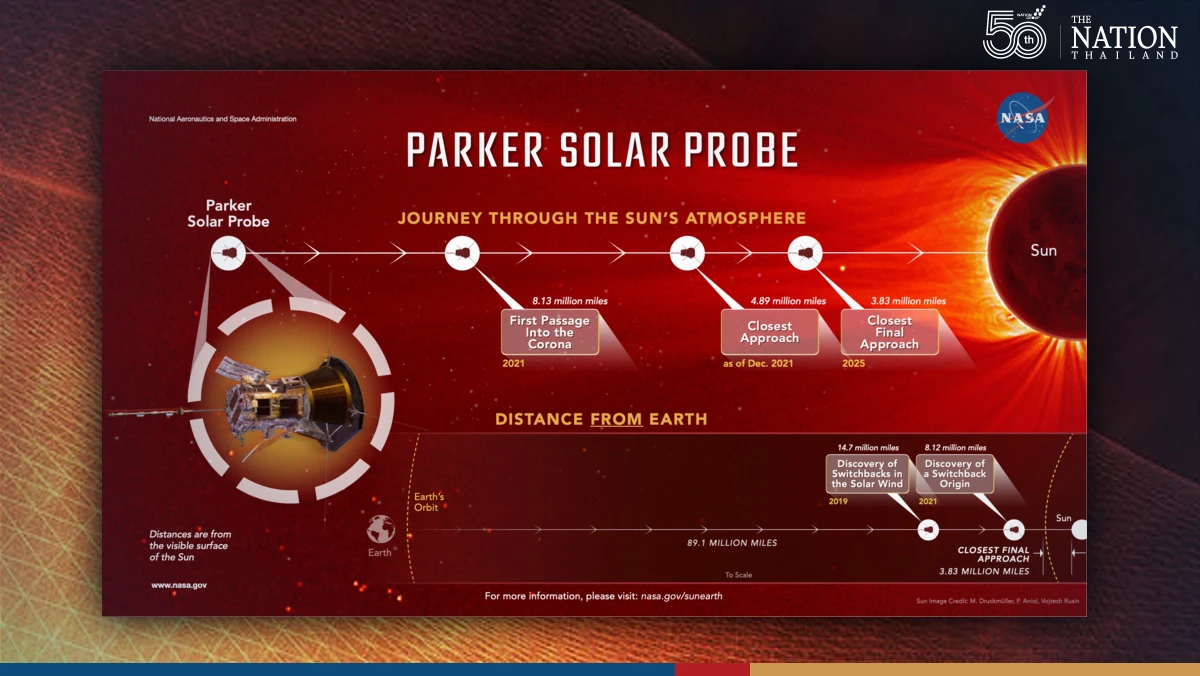
National Aeronautics and Space Administration (NASA) said on Wednesday (December 15) that its spacecraft, Parker Solar Probe, has touched the Sun for the first time in history.
NASA’s Parker Solar Probe has now flown through the Sun’s upper atmosphere – the corona – and sampled particles and magnetic fields there.
The new milestone marks one major step for Parker Solar Probe and one giant leap for solar science. Just as landing on the Moon allowed scientists to understand how it was formed, touching the very stuff the Sun is made of will help scientists uncover critical information about our closest star and its influence on the solar system.
“Parker Solar Probe “touching the Sun” is a monumental moment for solar science and a truly remarkable feat,” said Thomas Zurbuchen, the associate administrator for the Science Mission Directorate at NASA Headquarters in Washington. “Not only does this milestone provide us with deeper insights into our Sun’s evolution and it’s impacts on our solar system, but everything we learn about our own star also teaches us more about stars in the rest of the universe.”
As it circles closer to the solar surface, Parker is making new discoveries that other spacecraft were too far away to see, including from within the solar wind – the flow of particles from the Sun that can influence us at Earth. In 2019, Parker discovered that magnetic zig-zag structures in the solar wind, called switchbacks, are plentiful close to the Sun. But how and where they form remained a mystery. Halving the distance to the Sun since then, Parker Solar Probe has now passed close enough to identify one place where they originate: the solar surface.
The first passage through the corona – and the promise of more flybys to come – will continue to provide data on phenomena that are impossible to study from afar.
“Flying so close to the Sun, Parker Solar Probe now senses conditions in the magnetically dominated layer of the solar atmosphere – the corona – that we never could before,” said Nour Raouafi, the Parker project scientist at the Johns Hopkins Applied Physics Laboratory in Laurel, Maryland. “We see evidence of being in the corona in magnetic field data, solar wind data, and visually in images. We can actually see the spacecraft flying through coronal structures that can be observed during a total solar eclipse.”
Closer than ever before
Parker Solar Probe was launched in 2018 to explore the mysteries of the Sun by travelling closer to it than any spacecraft before. Three years after launch and decades after the first conception, Parker has finally arrived.
Unlike Earth, the Sun doesn’t have a solid surface. But it does have a superheated atmosphere, made of solar material bound to the Sun by gravity and magnetic forces. As rising heat and pressure push that material away from the Sun, it reaches a point where gravity and magnetic fields are too weak to contain it.
That point, known as the Alfvén critical surface, marks the end of the solar atmosphere and beginning of the solar wind. Solar material with the energy to make it across that boundary becomes the solar wind, which drags the magnetic field of the Sun with it as it races across the solar system, to Earth and beyond. Importantly, beyond the Alfvén critical surface, the solar wind moves so fast that waves within the wind cannot ever travel fast enough to make it back to the Sun – severing their connection.
Until now, researchers were unsure exactly where the Alfvén critical surface lay. Based on remote images of the corona, estimates had put it somewhere between 10 to 20 solar radii from the surface of the Sun – 4.3 to 8.6 million miles. Parker’s spiral trajectory brings it slowly closer to the Sun and during the last few passes, the spacecraft was consistently below 20 solar radii (91 per cent of Earth’s distance from the Sun), putting it in the position to cross the boundary – if the estimates were correct.
On April 28, 2021, during its eighth flyby of the Sun, Parker Solar Probe encountered the specific magnetic and particle conditions at 18.8 solar radii (around 8.1 million miles) above the solar surface that told scientists it had crossed the Alfvén critical surface for the first time and finally entered the solar atmosphere.
“We were fully expecting that, sooner or later, we would encounter the corona for at least a short duration of time,” said Justin Kasper, lead author on a new paper about the milestone published in Physical Review Letters, and deputy chief technology officer at BWX Technologies, Inc. and University of Michigan professor. “But it is very exciting that we’ve already reached it.”
Into the eye of the storm
During the flyby, Parker Solar Probe passed into and out of the corona several times. This is proved what some had predicted – that the Alfvén critical surface isn’t shaped like a smooth ball. Rather, it has spikes and valleys that wrinkle the surface. Discovering where these protrusions line up with solar activity coming from the surface can help scientists learn how events on the Sun affect the atmosphere and solar wind.
At one point, as Parker Solar Probe dipped to just beneath 15 solar radii (around 6.5 million miles) from the Sun’s surface, it transited a feature in the corona called a pseudostreamer. Pseudostreamers are massive structures that rise above the Sun’s surface and can be seen from Earth during solar eclipses.
Passing through the pseudostreamer was like flying into the eye of a storm. Inside the pseudostreamer, the conditions quieted, particles slowed, and number of switchbacks dropped – a dramatic change from the busy barrage of particles the spacecraft usually encounters in the solar wind.
For the first time, the spacecraft found itself in a region where the magnetic fields were strong enough to dominate the movement of particles there. These conditions were the definitive proof the spacecraft had passed the Alfvén critical surface and entered the solar atmosphere where magnetic fields shape the movement of everything in the region.
The first passage through the corona, which lasted only a few hours, is one of many planned for the mission. Parker will continue to spiral closer to the Sun, eventually reaching as close as 8.86 solar radii (3.83 million miles) from the surface. Upcoming flybys, the next of which is happening in January 2022, will likely bring Parker Solar Probe through the corona again.
“I’m excited to see what Parker finds as it repeatedly passes through the corona in the years to come,” said Nicola Fox, division director for the Heliophysics Division at NASA Headquarters. “The opportunity for new discoveries is boundless.”
The size of the corona is also driven by solar activity. As the Sun’s 11-year activity cycle – the solar cycle – ramps up, the outer edge of the corona will expand, giving Parker Solar Probe a greater chance of being inside the corona for longer time.
“It is a really important region to get into because we think all sorts of physics potentially turn on,” Kasper said. “And now we’re getting into that region and hopefully going to start seeing some of these physics and behaviours.”
Narrowing down switchback origins
Even before the first trips through the corona, some surprising physics was already surfacing. On recent solar encounters, Parker Solar Probe collected data pinpointing the origin of zig-zag-shaped structures in the solar wind, called switchbacks. The data showed one spot that switchbacks originate is at the visible surface of the Sun – the photosphere.
By the time it reaches Earth, 93 million miles away, the solar wind is an unrelenting headwind of particles and magnetic fields. But as it escapes the Sun, the solar wind is structured and patchy. In the mid-1990s, the NASA-European Space Agency mission Ulysses flew over the Sun’s poles and discovered a handful of bizarre S-shaped kinks in the solar wind’s magnetic field lines, which detoured charged particles on a zig-zag path as they escaped the Sun. For decades, scientists thought these occasional switchbacks were oddities confined to the Sun’s polar regions.
In 2019, at 34 solar radii from the Sun, Parker discovered that switchbacks were not rare, but common in the solar wind. This renewed interest in the features and raised new questions: Where were they coming from? Were they forged at the surface of the Sun, or shaped by some process kinking magnetic fields in the solar atmosphere?
The new findings, in press at the Astrophysical Journal, finally confirm one origin point is near the solar surface.
The clues came as Parker orbited closer to the Sun on its sixth flyby, less than 25 solar radii out. Data showed switchbacks occur in patches and have a higher percentage of helium – known to come from the photosphere – than other elements. The switchbacks’ origins were further narrowed when the scientists found the patches aligned with magnetic funnels that emerge from the photosphere between convection cell structures called supergranules.
In addition to being the birthplace of switchbacks, the scientists think the magnetic funnels might be where one component of the solar wind originates. The solar wind comes in two different varieties – fast and slow – and the funnels could be where some particles in the fast solar wind come from.
“The structure of the regions with switchbacks matches up with a small magnetic funnel structure at the base of the corona,” said Stuart Bale, professor at the University of California, Berkeley, and lead author on the new switchbacks paper. “This is what we expect from some theories, and this pinpoints a source for the solar wind itself.”
Understanding where and how the components of the fast solar wind emerge, and if they’re linked to switchbacks, could help scientists answer a longstanding solar mystery: how the corona is heated to millions of degrees, far hotter than the solar surface below.
While the new findings locate where switchbacks are made, the scientists can’t yet confirm how they’re formed. One theory suggests they might be created by waves of plasma that roll through the region like ocean surf. Another contends they’re made by an explosive process known as magnetic reconnection, which is thought to occur at the boundaries where the magnetic funnels come together.
“My instinct is, as we go deeper into the mission and lower and closer to the Sun, we’re going to learn more about how magnetic funnels are connected to the switchbacks,” Bale said. “And hopefully resolve the question of what process makes them.”
Now that researchers know what to look for, Parker’s closer passes may reveal even more clues about switchbacks and other solar phenomena. The data to come will allow scientists a glimpse into a region that’s critical for superheating the corona and pushing the solar wind to supersonic speeds. Such measurements from the corona will be critical for understanding and forecasting extreme space weather events that can disrupt telecommunications and damage satellites around Earth.
“It’s really exciting to see our advanced technologies succeed in taking Parker Solar Probe closer to the Sun than we’ve ever been, and to be able to return such amazing science,” said Joseph Smith, Parker program executive at NASA Headquarters. “We look forward to seeing what else the mission discovers as it ventures even closer in the coming years.”
Parker Solar Probe is part of NASA’s Living with a Star program to explore aspects of the Sun-Earth system that directly affect life and society. The Living with a Star program is managed by the agency’s Goddard Space Flight Center in Greenbelt, Maryland, for NASA’s Science Mission Directorate in Washington. The Johns Hopkins University Applied Physics Laboratory in Laurel, Maryland, manages the Parker Solar Probe mission for NASA and designed, built, and operates the spacecraft.
In their version of the metaverse, creators of the startup Sensorium Corp. envision a fun-filled environment where your likeness can take a virtual tour of an abandoned undersea world, watch a livestreamed concert with French DJ Jean-Michel Jarre or chat with bots, such as leather-jacket-clad Kate, who enjoys white wine with her friends.
But at a demo of this virtual world at a tech conference in Lisbon earlier this year, things got weird. While attendees chatted with these virtual personas, some were introduced to a bald-headed bot named David who, when simply asked what he thought of vaccines, began spewing health misinformation. Vaccines, he claimed in one demo, are sometimes more dangerous than the diseases they try to prevent.
After their creation’s embarrassing display, David’s developers at Sensorium said they plan to add filters to limit what he can say about sensitive topics. But the moment illustrated how easy it might be for people to encounter offensive or misleading content in the metaverse – and how difficult it will be to control it.
Companies including Apple Inc., Microsoft Corp. and Facebook parent Meta Platforms Inc. are racing to build out the metaverse, an immersive digital world that evangelists say will eventually replace some in-person interactions. The technology is in its infancy, but industry watchers are raising alarms about whether the nightmarish content moderation challenges already plaguing social media could be even worse in these new virtual- and augmented reality-powered worlds.
Tech companies’ mostly dismal track record on policing offensive content has come under renewed scrutiny in recent months following the release of a cache of thousands of Meta’s internal documents to U.S. regulators by former Facebook product manager Frances Haugen. The documents, which were provided to Congress and obtained by news organizations in redacted form, surfaced new details about how Meta’s algorithms spread harmful information such as conspiracy theories, hateful language and violence, and led to dozens of critical stories by the Wall Street Journal and a consortium of news organizations. The reports naturally prompted questions about how Meta and others intend to patrol the burgeoning virtual world for offensive behavior and misleading material.
“Despite the name change, Meta still allows purveyors of dangerous misinformation to thrive on its existing apps,” said Alex Cadier, managing director of NewsGuard in the U.K. “If the company hasn’t been able to effectively tackle misinformation on more simple platforms like Facebook and Instagram, it seems unlikely they’ll be able to do so in the much more complex metaverse.”
Meta executives haven’t been ignorant of the criticism. As they build up hype about the metaverse, they’ve pledged to take into account the privacy and well-being of their users as they develop the platform. The company also argues that these next-generation virtual worlds won’t be owned exclusively by Meta, but will come from a collection of engineers, creators and tech companies whose environments and products work together.
Those innovators, and regulators around the world, can start now to debate policies that would maintain the safety of the metaverse even before the underlying technology has been fully developed, executives say.
“In the past, the speed at which new technologies arrived sometimes left policy makers and regulators playing catch-up,” said Nick Clegg, vice president of global affairs, in October at Meta’s annual Connect conference. “It doesn’t have to be the case this time around because we have years before the metaverse we envision is fully realized.”
Meta also says it plans to work with human rights groups and government experts to responsibly develop the virtual world, and it’s investing $50 million to that end.
To its evangelists, virtual and augmented reality will unlock the ability to experience the world in ways that previously existed only in the dreams of sci-fi novelists. Companies will be able to hold meetings in digital boardrooms, where employees in disparate locations can feel as if they are really together in one place. Friends will choose their own avatars and teleport together into concerts, exercise classes and 3D video games. Artists will be able to host creative experiences tailored to geographic locations in augmented reality, for any device holder to enjoy. Entrepreneurs will create virtual stores where digital and physical goods could be purchased.
But digital watchdogs say the same qualities that make the metaverse a tantalizing innovation may also open the door even wider to harmful content. The realistic feeling of virtual reality-powered experiences could be a dangerous weapon in the hands of bad actors seeking to stoke hate, violence and terrorism.
“The Facebook Papers showed that the platform can function almost like a turn-key system for extremist recruiters and the metaverse would make it even easier to perpetrate that violence,” said Karen Kornbluh, director of the German Marshall Fund’s Digital Innovation and Democracy Initiative and former U.S. ambassador to the Organization for Economic Cooperation and Development.
Though the far-reaching, interconnected metaverse is still theoretical, existing virtual reality and gaming platforms offer a window into what kinds of problematic content could flourish there.
The Facebook Papers revealed that the company already has evidence that offensive content is likely to make the jump from social to virtual. In one example, a Facebook employee describes experiencing a brush of racism while playing the virtual reality game Rec Room on an Oculus Quest headset.
After entering one of the most popular virtual worlds in the game, the staffer was greeted with “continuous chants of: ‘N***** N***** N*****.'” According to the documents, the employee wrote in an internal discussion forum that he or she tried to figure out who was yelling and how to report them, but couldn’t. Rec Room said it provides several controls to identify speakers even when that person isn’t visible, and in this case it banned the offending user’s account.
“I eventually gave up and left the world feeling defeated,” wrote the employee, whose name was redacted in the documents.
The abuse has also already reached other VR products. People on VRChat, a platform where users can explore worlds dressed as different avatars, describe an almost transformative experience where they’ve built a virtual community unparalleled in the real world. On a Reddit thread about VRChat, they also describe nearly unbearable amounts of racism, homophobia, transphobia – and “don’t forget the dumb Nazis,” as one VRChat user wrote. It’s not uncommon for players to walk around repeating the N-word, while some virtual worlds get raided by Hitler and KKK avatars.
VRChat wrote in 2018 that it was working to address the “percentage of users that choose to engage in disrespectful or harmful behavior” with a moderation team that “monitors VRChat constantly.” But, years later, players are still reporting harmful users, and say that “nothing is seemingly ever done.” Others try muting or blocking problematic users’ voices or avatars, but the frequency of abuse can be overwhelming.
People also describe racism on popular video games like Second Life and Fortnite; some women have described being sexually harassed or assaulted on virtual reality platforms; and parents have raised concerns that their children were being groomed on the seemingly innocuous Roblox gaming platform for kids.
Social media companies like Meta, Twitter Inc. and Google’s YouTube have detailed policies that prohibit users from spreading offensive or dangerous content. To moderate their networks, most lean heavily on artificial intelligence systems to scan for images, text and videos that look like they could violate rules against hate speech or inciting violence. Sometimes those systems automatically remove the offensive posts. Other times the platforms apply special labels to the content or limit its visibility.
The degree to which the metaverse remains a safe space will depend partially on how companies train their AI systems to moderate the platforms, said Andrea-Emilio Rizzoli, the director of Switzerland’s Dalle Molle Institute for Artificial Intelligence. AI can be trained to detect and take down hate speech and misinformation, and systems can also inadvertently amplify it.
The level of problematic content in the metaverse will also depend on whether tech companies design digital environments to function like small invitation-only private groups or wide-open public squares. Whistle-blower Haugen has been openly critical of Facebook’s metaverse plans, but recently told European lawmakers that hate speech and misinformation in virtual worlds might not travel as far or as quickly as it does on social media, because most people would be interacting in small numbers.
But it’s also just as likely that Meta would integrate its current networks, including Facebook, Instagram and WhatsApp, into the metaverse, said Brent Mittelstadt, a data ethics research fellow at the Oxford Internet Institute.
“If they keep the same tools that have contributed to the spread of misinformation on their current platforms, it’s hard to say the metaverse is going to help,” said Mittelstadt, who is also a member of the Data Ethics Group at the Alan Turing Institute.
Considering a great deal of the misinformation and hate speech could also arise during private interactions in the metaverse, Rizzoli added, platforms will face the same debates over free speech and censorship when deciding whether to take down harmful content. Do platforms want to have virtual beings approach people and tell them their conversation is not fact-based, or prevent them from having the conversation at all? “This is a debatable issue,” Rizzoli said, “the type of control that you will be subjected to in this new metaverse.”
Defining and determining authenticity in the metaverse could also become more complicated. Tech companies could face tricky questions about the freedom people should enjoy to portray themselves as a member of a different race or gender, said Erick Ramirez, an associate professor at Santa Clara University. Deep fakes – videos or audio that use artificial intelligence to make someone appear to do or say something they didn’t – could evolve to become even more realistic and interactive in a metaverse world.
“There’s more room for deception,” said Ramirez, who recently participated in a roundtable discussion with Clegg about the policy implications of the metaverse. That kind of deceit “takes advantage of a lot of in-built psychology about how we interact with people and how we identify people.”
The metaverse could also compromise user privacy, advocates and researchers said. For instance, people who wear the augmented reality-powered glasses that are currently being developed by Snap Inc. and Meta could end up recording information about other people around them without their knowledge or consent. Users exploring purely virtual worlds could also face digital harassment or stalking from bad actors.
“In the physical world, often you have to do some extra work in order to track somebody, for example, but the online world makes it much easier,” said Neil Chilson, a senior research fellow for technology and innovation at the right-leaning Charles Koch Institute, who also participated in Meta’s roundtable.
Bill Stillwell, Meta product manager for VR privacy and integrity, said in a statement that developers have tools to moderate the experiences they create on Oculus, but the tools can always improve. “We want everyone to feel like they’re in control of their VR experience and to feel safe on our platform.”
Even metaverse supporters such as Chilson and Jarre, the French DJ who will soon hold virtual reality concerts, say regulators around the world will have to draft new rules around privacy, content moderation and other issues to make these digital spaces safe. That might be a tall order for governments that have been struggling for years to pass regulations to govern social media.
“Every technology has a dark side,” said Jarre. “So we need urgently to create regulations.”
Jonathan Victor, a product manager at the open-source developer Protocol Labs, also sees a potential bright side. In his vision of the metaverse, anyone will be able to own a digital 3D version of themselves, exchange cryptocurrency or make a career selling virtual goods they created.
“There’s incredible upside,” Victor said. “The question is, what’s the right way to build it?”
The Motor Expo 2021, which wrapped up on Sunday (December 12), proved to be a success despite strict Covid-19 control measures.
As many as 31,583 cars and 3,253 motorbikes were reserved at the expo, which attracted more than 1.15 million visitors, including 139,110 who visited via the online platform.
Revenue from this year’s Motor Expo has been estimated at 44 billion baht.
Cars sold at the fair cost an average of 1.3 million baht per piece and motorbikes came in at 398,831 baht on average.
Kwanchai Paphatphon, chair of the 38th Motor Expo, said this year’s event was successful because everybody complied with Covid-prevention measures.
The fair was held at Challenger Hall in Impact Muang Thong Thani from December 1 to 12.
Meta Platforms Inc.s photo-sharing app Instagram is encouraging users to take a break as the company battles accusations that too much time spent on its social networks hurts the mental well-being of teenagers.
Instagram will let people opt to see pop-up messages when they have spent a lot of time looking at a particular topic, suggesting they explore other subjects. Users also can decide to be nudged to take a break after they have spent 10, 20 or 30 consecutive minutes on the app, Instagram said Tuesday in a blog post. The platform will then remind users about alternative activities to social media such as going for a walk or taking a series of deep breaths, Instagram head of well-being and safety Vaishnavi J said in an interview.
“When you’ve been spending a long period of time — 20 minutes for example being a fairly long period of time — it is very valuable for you to then get a little notification reminding you to take a break,” she said. “You may not feel like you’ve been spending that much time on the app because you’ve been doing five or six different things in those 20 minutes.”
Instagram head Adam Mosseri is scheduled to appear Wednesday before a U.S. Senate subcommittee probing childrens’ safety on social media. Instagram has been under mounting scrutiny over its effects on young users after a Wall Street Journal series earlier this year and other stories from a consortium of media organizations based on internal documents disclosed by Facebook whistle-blower Frances Haugen. Some of the documents surfaced new revelations about Instagram’s impact on teenagers’ body image, sleep and anxiety.
Last month, a group of U.S. state attorneys general announced an investigation into Instagram’s efforts to engage children and young adults.
Instagram announced in November that it had begun testing the take-a-break feature. The company didn’t release any statistics about what percentage of people actually get off the app once they have received a reminder, but said once teenagers turn on the feature, more than 90% keep it on.
In March, the company also plans to launch a suite of tools aimed at giving parents more visibility into their teenagers’ use of the app. Teens will be able to give their parents or guardians permission to view how much time they spend on Instagram and to set time limits, according to the company. Teens also will be able to notify their parents if they report someone for violating the app’s rules.
Instagram said it is testing a new setting that would limit people from tagging or mentioning teens who don’t follow them or to include their content in video reels. Additionally, the app is exploring more ways to reduce the amount of potentially harmful or sensitive content that teens can discover on its network.
“Meta is attempting to shift attention from their mistakes by rolling out parental guides, use timers, and content control features that consumers should have had all along, said Sen. Marsha Blackburn, R-Tenn. “This is a hollow ‘product announcement’ in the dead of night that will do little to substantively make their products safer for kids and teens.”
While Instagram and Facebook don’t technically permit users under age 13, Meta had planned to create an Instagram app specifically for preteens that would require parental permission to join, would be free of advertising and would use age-appropriate policies and features.
Meta announced in September it would pause plans to create the kids’ Instagram app, saying it would take more time to discuss its plans with experts, parents and policymakers. Instagram’s J said that employees working on the kids app have pivoted to work on other projects such as teen-guardian relationships and age verification.
Android is one of the most widely used operating systems in the world, and its full of settings and options to help keep your personal data safe. But trying to use all of those tools effectively can sometimes feel a little confusing – and thats where the Help Desk comes in.
We started our Privacy Reset project with guides to help you understand how to protect your data on Facebook, Amazon, Google and Venmo, and now we’re expanding it to cover the settings you should change on your Android devices.
There’s one more thing you should know: This guide mainly deals with privacy controls specific to your Android phone or tablet. Because Google’s services are tied so deeply to the way Android works, you’ll also want to work through our guide to Google privacy settings. Don’t worry: Just like with this one, it shouldn’t take you more than 15 minutes to make the most important changes.
– – –
If you only do one thing:
– Audit your apps
What makes an Android smartphone or tablet truly yours is the apps you use on it, but it’s common for people to install apps without thinking about what we have access to.
When you first launch an app after you’ve installed it, it will ask for permission to access certain parts of your phone (like its camera or microphone) or personal data like your contacts or text messages. It’s a good idea to periodically make sure the apps on your phone or tablet have access only to the things they’re supposed to.
Go to Settings > Privacy > Permissions Manager; you’ll see a list of options ranging from body sensors to location to your contacts. Tap each option and make sure the “allowed” apps make sense – Uber should probably have access to your location, for instance, but something like a calculator app shouldn’t.
If you find any apps that you don’t use frequently, just uninstall them. Go to Settings > Apps > See all apps, then find the app you want to get rid of. Then, tap its name, followed by the “Uninstall” button.
– – –
If you’re still concerned about privacy:
– Rethink your unlocks
Android offers a handful of ways to unlock your phone, but some can be much more secure than others. If you don’t mind a brief wait before unlocking your phone, setting a password or using a fingerprint sensor is one of the easiest ways to make sure people can’t easily get into your phone.
If you’re a stickler for security, you many want to avoid unlock patterns and face recognition – some versions can be surprisingly easy to fool. Here’s how to change your unlock method:
Go to Settings > Security > Screen Lock and select a new screen lock type.
– Hide your sensitive notifications
Notifications from apps and incoming messages are meant to appear on your phone or tablet’s screen before you’ve even unlocked it. If you’re not careful, though, that could mean people around you are able to see snippets of text and emails you don’t want them to. Here’s how to make sure none of that potentially sensitive information shows up on your lock screen when you don’t want it to:
Go to Settings > Apps and Notifications > Notifications and make sure the “Sensitive notifications” is unticked. (If done correctly, the toggle will appear gray.)
– – –
If you want to be extra cautious:
– Make sure your phone is encrypted
Most modern Android phones already come encrypted, which means the personal data stored on it can’t be easily accessed unless someone manages to unlock your device. But if you’re using an older Android phone or tablet, this feature might not be on yet. Here’s how to check:
Go to Settings > Security > Advanced > Encryption and Credentials. If everything is secure, you’ll see “Encrypted” under the “Encrypt phone” option and you won’t need to do anything else. If you don’t, you’ll be able to tap “Encrypt phone” and begin the process – don’t be surprised if it takes upward of an hour.
– Use Chrome wisely, or not at all
You’d be hard-pressed to find an Android phone sold in the United States that didn’t have the Chrome browser pre-installed and that wouldn’t be such a bad thing if Google didn’t keep tabs on what you do online in order to serve you personalized ads. If it’s at all possible, you might want to consider leaving Chrome behind in favor of more privacy-oriented browsers like Brave, Firefox and DuckDuckGo.
If you have to keep using Chrome though, there are a few ways to use it more safely. Launch the Chrome app and tap the three-dot menu button next to the address bar – then tap Settings, followed by Privacy and security. Once that’s done, make sure the options “Do Not Track” and “Always use secure connections” are turned on.
SEOUL, South Korea – At an October conference hosted by the city of Seoul, the mayor was dressed in a patterned green suit jacket and a dark tie, his hair neatly combed.
But Oh Se-hoon was not really there. Instead he attended as his avatar, and the conference was held in the “metaverse,” a communal, virtual space, seen by many as the next frontier of the Internet, where users interact using avatars.
Seoul’s city officials are among them, as the city seeks to become one of the first municipal governments with a full-service virtual world. In “Metaverse Seoul,” according to plans, residents would be able to make reservations for city-run facilities, ride city tour buses, visit re-creations of destroyed historical sites, file administrative complaints with city bureaucrats and more. Residents would also be able to visit cultural heritage sites throughout the city by accessing the metaverse on their cellphones.
Metaverse Seoul begins this New Year’s Eve, when the traditional Bosingak bell-ringing ceremony will also be held on the platform for any residents who want to participate virtually.
Seoul’s metaverse plan aims to be completed by 2026 and could roll out in phases starting next year. It would first be available on smartphones. Eventually, augmented reality tools, such as goggles and controllers, may be used, officials said.
From Silicon Valley to India’s tech hubs, a future metaverse is envisioned as an online realm where personal avatars interact and participate in the same activities as people do in the physical world, including going to class, going shopping, going to work, watching TV or hanging out with friends.
Some versions of such a world already exist, most evidently through video games. But a truly integrated metaverse – where people can play, earn and spend money, and do other activities – is probably many years, if not decades, away.
Still, the hype around the metaverse is hard to ignore, punctuated by Facebook’s move to change its corporate name to Meta. In November, Iceland parodied Facebook’s announcement and the ever-growing metaverse curiosity. A fake tourism video that showed off Iceland – rebranded as “Icelandverse” – went viral.
In the most ambitious concept for the metaverse, for example, users who visit Metaverse Seoul could buy a souvenir with money they earned in the metaverse, and then bring the item along to other places they go to in the metaverse without switching devices.
That means most metaverse plans until at least 2025 are considered “emergent,” including Seoul’s platform, said Adrian Lee, senior research director at Connecticut-based Gartner, a technology research firm that analyzes metaverse trends.
But it has gained attention as a unique test case of how the emerging technology could apply to government functions. The project is a part of the newly elected Seoul mayor’s glitzy 10-yearpush to solidify the city as a global hub for emerging technology. The metaverse project is estimated to cost nearly $34 million over five years.
Photos of Virtual Seoul, a new platform launched by the city government at a tourism event, show the augmented reality spaces that Seoul plans to create in its Metaverse Seoul platform. Photo Credit: Seoul city government)
City officials are hoping to draw on digital fluency in South Korea, which has a well-established video gaming culture and industry. The mayor is trying to sell a more vibrant future for his city, which is facing a declining population, social cleavages over gender and income inequality, and a deepening real estate crisis as prices soar.
During the pandemic, younger South Koreans have popularized the term “untact” – a spin on the word “contactless” – to describe many virtual events and services, including classes, festivals, concerts and customer service help.
“The fourth industrial revolution, and the explosion of the ‘untact’ culture during corona, demand a change in the way we deliver public service by building a Metaverse Seoul platform,” Oh said during a September announcement.
Already, some city programs and events are being held in a metaverse-like format, including the October conference Oh attended and a Seoul Museum of History event featuring the avatar of Kim Gu, the late hero of the national independence movement, who was celebrated in a posthumous virtual ceremony.
Beginning in 2023, Seoul’s major cultural festivals will also be held in the metaverse and open to virtual tourists from abroad, officials said.
The announcement has drawn mixed reactions from the South Korean public. While some have expressed intrigue, other Seoul residents have raised concerns about its cost and accessibility to older residents.
The metaverse is so new and undefined that it could also pose unforeseen privacy challenges, experts say.
That means city officials may only be able to address security concerns when there is a “high-profile breach of privacy and/or security, usually when there are tangible implications and impact” to those who have already used the platform, said Lee of Gartner.
Seoul government officials say they plan on providing security verification methods and will “minimize the collection and use of personal information,” including allowing the use of pseudonyms so people are not required to give their legal names.
Kim Sang-kyun, a professor of industrial engineering at Kangwon National University who studies the metaverse, said that while there are not many details yet available about the project, city planners should consider accessibility concerns for older residents, potential security breaches and potentially increasing costs.
“As a new communication tool, citizens will be able to easily connect with public information, new opportunities for civic engagement, and use various infrastructures provided by the city,” he said. “However, a new channel of communications can be a high barrier for those who are not as digitally savvy, so the city should consider that aspect in advance.”




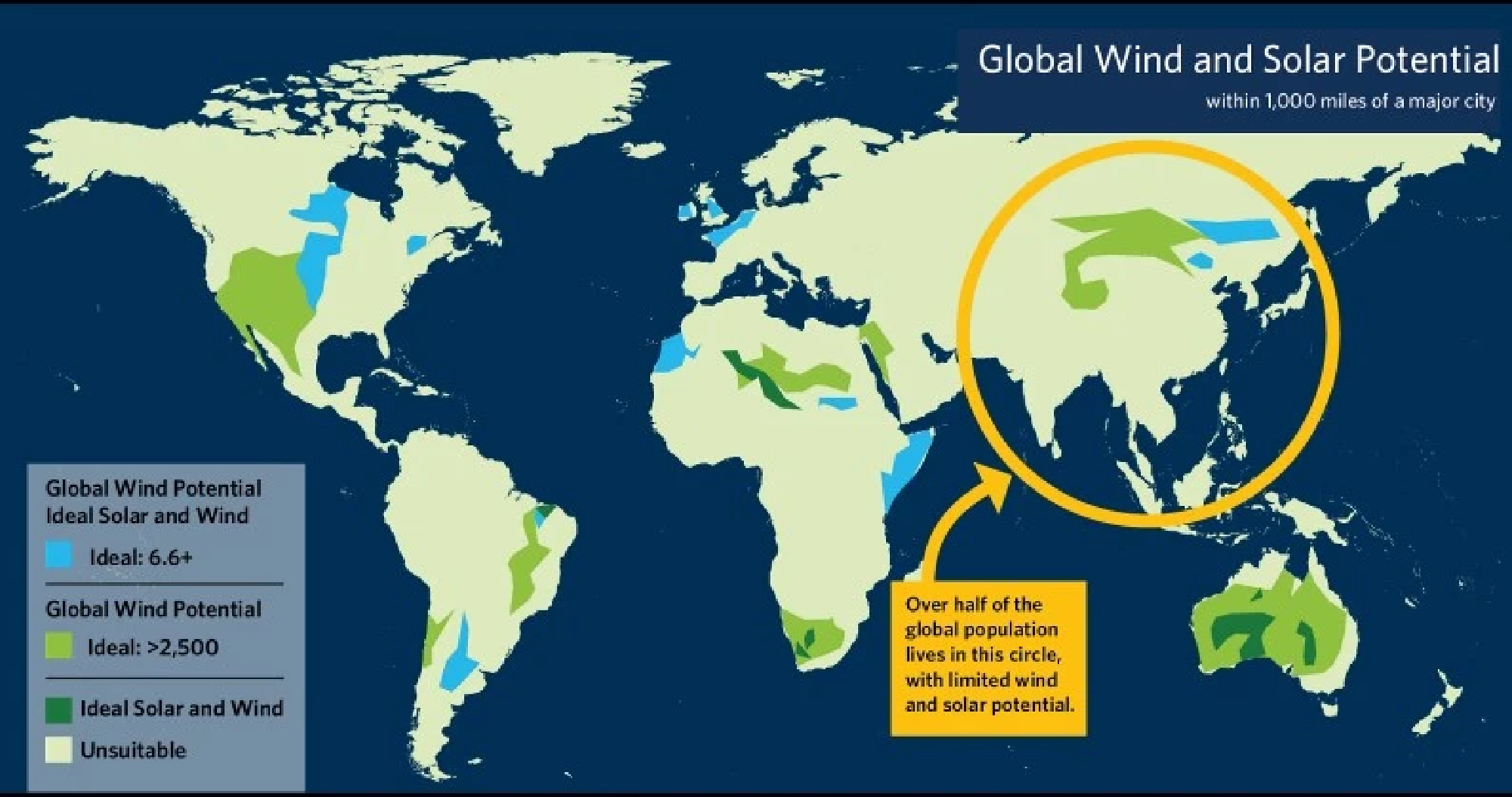
 Many parts of Asia are challenged by limited access to locations that can generate substantial solar or wind power. (Source: Peter Zeihan





 Photos of Virtual Seoul, a new platform launched by the city government at a tourism event, show the augmented reality spaces that Seoul plans to create in its Metaverse Seoul platform. Photo Credit: Seoul city government)
 SootinClaimon.Com