By Robert Wyrzykowski Senior Analyst at Opensignal
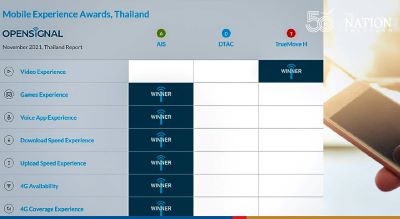
Opensignal unveils the ninth report of Thailand Mobile Network Experience Report Nov 2021 found that AIS dominates the awards table with six outright wins — the most it has ever gained in the history of our Thai reports. After impressive boosts in speeds, AIS snatched our two speed awards — Download Speed Experience and Upload Speed — away from the previous winner, TrueMove H. The operator also defended its crowns in the Games Experience, Voice App Experience, 4G Availability and 4G Coverage Experience categories. Video Experience is the only award AIS is missing for the clean sweep in Thailand, as TrueMove H keeps a firm grip of it.
In this report, we’ve analyzed the mobile network experience for all three of Thailand’s national operators — AIS, DTAC and TrueMove H — over a period of 90 days beginning July 1 and ending September 28, 2021, to see how they fared. Alongside the national analysis, we’ve also measured our users’ experience in seven regions of the country to see how they match up. 5G measurements contributed to the overall scores.
AIS wins its first Download Speed Experience award after a stunning speed boost AIS has never won an Opensignal speed award before, but this has changed now as our AIS users saw both the fastest average download and upload speeds in Thailand. AIS takes home the Download Speed Experience award after a breathtaking increase in users’ speeds of 10.4 Mbps, which helped it to move from third to first place. AIS’ score is 18.1 Mbps which is over twice as fast as its score in our previous report and 2.6 Mbps (16.4%) ahead of previous winner TrueMove H.
AIS also secures the Upload Speed Experience award for the first time Similarly to the Download Speed Experience award, AIS claims the Upload Speed Experience award for the first time, after an impressive increase compared to our previous report. Our users on AIS’s network saw an increase of around 70% in their average upload speeds. With a score of 8 Mbps, AIS landed in first place, beating the previous title holder TrueMove H whose users experienced 0.2 Mbps slower average upload speed than our AIS users.
TrueMove H keeps hold of the Video Experience award Ever since we introduced our Video Experience award in our May 2019 report, TrueMove H has won it either jointly, or outright, in every report so far. The operator wins again this time, with a score of 62.5 points on a 100-point scale — 2.7 points ahead of second-placed DTAC and 6.1 points ahead of AIS. All Thai operators placed in the Good category (55-65)for the quality of video streaming experience across mobile networks.
AIS remains unmatched for the Games Experience and Voice App Experience awards Opensignal first included the Voice App Experience award in our November 2019 and the Games Experience award — in April 2020. AIS dominated both of these categories since the very beginning — and this time is no different, as AIS outright wins Voice App Experience and Games Experience for the fifth and fourth time in a row, respectively. AIS is also the only operator in Thailand to place in the Fair (65-75) category for Games Experience.
Our 4G extent awards stay in AIS’s hands As with the case for the two experiential awards — Games Experience and Voice App Experience — we are yet to see a different winner of the 4G Coverage Experience award in Thailand, other than AIS. The operator wins this award outright for the fourth consecutive time, with a score of 9.2 points, and remains the sole holder since we introduced it in April 2020. AIS also claims the 4G Availability award for the seventh time in a row, remaining unbeatable since our November 2018 report, when it pried the award out of TrueMove H’s hands.
Regional Analysis: AIS dominating the awards table at a regional level — with 28 outright and six joint wins out of 42 awards available — including wins in all seven regions for Download Speed Experience. TrueMove H takes home only eight outright awards this time, including all seven of the regions for Video Experience, and two additional joint wins. DTAC shares four regional awards with AIS, one more than in our previous report.
Wander around any big-box electronics store long enough and you may eventually stumble over a handful of domestic robots designed to tidy up after you. Theyre probably somewhere near the refrigerators and the washers and dryers, waiting for you to introduce them to a mess.
That’s not exactly the future that decades of speculative fiction foretold. We were promised homes full of intelligent (and sometimes sassy) robotic assistants, not just the cavalcade of glorified, rolling appliances we wound up with. But over the next few years, a new wave of domestic robots could start to do more than just clean up after us.
Amazon introduced Astro earlier this fall, a $1,000-plus robot meant to ferry around small items and keep its eyes – well, cameras – peeled for intruders while roaming our homes. (Amazon founder Jeff Bezos owns The Washington Post.) Samsung, which at one point or another has built almost every kind of home gadget imaginable, has spent the last few years openly wondering about what a new generation of domestic robots should be able to do. And researchers and start-ups have continued to work on robots meant to help people in still more personal and social ways.
So, does this mean we’re on the verge of a home-robot renaissance? Maybe, but it’s not going to materialize overnight. Turning a more sophisticated breed of robots into actual products isn’t easy, which means the resulting machines won’t come cheap – at first, anyway. And long-standing concerns over privacy could dampen people’s enthusiasm for machines designed to recognize and react to members of their family.
That’s enough to convince Gartner analyst Annette Jump that these kinds of personal robots are “still six to eight years away from early mainstream adoption.” Until then, here’s what you need to know about how these machines are changing.
– – –
Cleaning your floors. Mowing your lawns. Scrubbing your grills. Most domestic robots you can go buy right now are single-purpose machines, and with good reason: Relatively speaking, robot vacuums like the Roombas are much easier to build than, say, Rosey from “The Jetsons.”
“That has really been the technique that has worked for a lot of different robots,” said Henny Admoni, the A. Nico Habermann Assistant Professor at Carnegie Mellon University’s Robotics Institute. “The Roomba does one thing and it does it well, and it’s the longest-lasting home robot we’ve seen.”
Slowly but surely, though, some of the biggest names in tech have designed robots that are meant to play multiple roles in our homes.
Consider Amazon’s Astro: The telescoping camera in its neck makes it a home security sentinel, while the camera embedded into the tablet that acts as its face means it can pull double duty as a video-calling station. Astro can use those cameras to recognize individual people’s faces, too, which will allow it to deliver small items to your kids or your partner sitting in another room. (That is, as long as there aren’t any stairs involved.)
And since this is Amazon we’re talking about, Astro is also an Alexa speaker on wheels, delivering reminders and playing music wherever it goes.
During its launch event, Amazon has said it tested Astro for “hundreds of thousands of hours” with employees and plans to release it to would-be beta testers as part of its Day 1 program later this year. (Long story short, that means you can pay a discounted price to get early access to Astro and provide feedback to the team behind it.)
While its plans to launch an Astro competitor are a little more secretive, Samsung has also been crafting robots of its own in forms and shapes that sometimes invite disbelief. At this year’s CES trade show, the company highlighted a concept robot called Bot Handy, a roving tower with “eyes” built into its cylindrical body, right next to a single, segmented arm.
Imagine sitting down for dinner after a long day at work – with a little help from artificial intelligence. Bot Handy uses its arm to gingerly pour you a glass of wine. And when you’re done with your meal, the robot could help load your dishwasher while making sure to use only the amount of strength needed to handle your fine china.
The weirdness doesn’t end there, either. At that same trade show a year earlier, Samsung showed off another off-the-wall concept: a grapefruit-sized orb called Ballie designed to roll itself around people’s homes, controlling smart home appliances, recognizing voice commands and curling up next to pets.
Samsung declined to comment on the progress of its home robots, but we do know two things. First, neither Bot Handy nor Ballie have ever been sold to real people. And second, Samsung is trying to shorten the gap between the moment it develops a home robot concept and the moment it actually goes on sale. Brian Harms, research engineer at Samsung Research America, has said his team now aims to make those projects marketable in one to three years, instead of the three to five years it used to target.
When it comes to robotics, Samsung is best known for its smart vacuum cleaners, some of which sell for more than $1,000. Going off the robotics projects Samsung keeps showing off at trade shows, though, the company clearly expects sophisticated, multitasking machines to eventually find a place in our homes.
And for better or worse, big companies like Samsung and Amazon seem to have the best chance of making those kinds of robots a reality – even though it’s too early to tell how well any of them actually work.
“They can use some of their cash to make the robot at a consumer price point,” Admoni said. “And that will let them at least get into the market and maybe survive long enough to adapt and to develop better systems.”
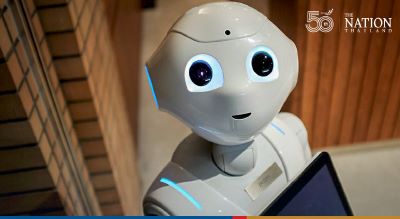
That doesn’t mean big companies haven’t struggled to make their personal robots worth using. Japanese conglomerate SoftBank reportedly stopped producing its charming Pepper robots earlier this year. But that hasn’t stopped some smaller outfits from trying to make their mark anyway.
– – –
In some ways, Buddy – a robot developed by a French company called Blue Frog Robotics – has a lot in common with Amazon’s Astro. It can remind you of events saved on your calendar. It can place video calls. It can even roam around your house in search of intruders. But for Blue Frog founder Rodolphe Hasselvander, Buddy is different in one crucial way: It’s meant to be an “emotional companion” as much as it is a gadget.
“The key point for acceptability and mass adoption is based on the creation of an emotional link with people,” he said.
Hasselvander has been working on Buddy since 2015, and – despite a few ups and downs – this cutesy robot is nearly ready to get to work. Blue Frog says it recently inked a deal with France’s Ministry of National Education that would see 1,750 of its machines used to help homebound or hospitalized children remotely interact with their peers in classrooms, and the company is gearing up to release Buddy in the United States in the next few months.
Unlike machines that perform a single mechanical task like cleaning, Buddy is an example of what researchers call a “social” robot.
“Social robots are designed to engage with people more as a collaborative partner,” said Cynthia Breazeal, director of the Personal Robots Group at the MIT Media Lab. “As opposed to a tool that you use, you interact more in an interpersonal way to achieve tasks or goals or experiences.”
Amazon’s Astro has some characteristics that Breazeal believes could make it a social robot of sorts, but the company’s product page plays up the machine’s home monitoring and security feature before almost anything else.
In addition to the practical tasks Buddy can perform, Blue Frog has also tested it as a companion to the elderly – who responded well to the robot’s reaction to petting and its expressive tablet-face – and as an educational tool for children with autism. But in those early tests, it also became clear that its users wanted Buddy to be able to do more, a shortcoming the Blue Frog team is trying to address by opening the robot up to developers who want to create their own apps and experiences for it.
“People want to have longer, more meaningful, more interesting conversations with these technologies. They get frustrated when it’s too transactional,” Breazeal said. “I think there’s a hunger and a desire for people to be able to interact with these technologies in this way.”
She would know. In addition to being a pioneer in social robot research, Breazeal also created Jibo, a gyrating bobblehead of a home companion that holds the Guinness World Record for being the most crowdfunded social robot. It developed a cult following for the sheer amount of personality it could be coaxed into expressing, but people’s Jibos collectively died an untimely death in 2019 when the servers that powered it were shut down. Jibo’s $899 price tag was hard for many to swallow and Amazon had announced its virtual assistant Alexa while Jibo was in development – that made it all but impossible for the robot to sustain a business.
(Don’t worry though: Jibo survives as a research tool and as a part of SoftBank’s robot division.)
Still, Jibo’s social legacy seems to live on in domestic machines like Buddy, even though some are wary of the baggage people might be carrying when interacting with it. The way robots behave in popular culture staples like “Star Trek” have given people a set of high expectations about what social robots should be able to do, and “the risk of putting a face or other anthropomorphic features on robots is queuing those expectations and potentially setting the bar too high,” Breazeal said.
And therein lies the rub for social robots: Because they’re meant to build fruitful, collaborative relationships with people, it can be difficult to nail down exactly how such a machine should look and act. Privacy remains a crucial concern for all home robots, but that’s especially true for social robots. As we allow those kinds of machines to act as our partners and companions, the potential fallout from hacks and improper data handling and analysis grows ever higher.
For those reasons, Admoni expects it will take much longer for social robots to catch on compared to their more immediately practical counterparts.
“I don’t think it’ll happen in the next couple years,” she said. “We haven’t yet had the breakthrough that will make the social robot we all imagined we could have in our homes. But I would be happy to be proved wrong.”
Instagram is testing a feature that will encourage its users to, well, stop using it.
“Take a Break” will allow the social media app’s users to get a notification after they spend a certain amount of time on the Meta Platforms service. The feature is similar to Apple’s Screen Time tool that tracks and can set limits on how long users spend on apps and websites.
“Take a moment to reset by closing Instagram,” a sample of the service says, encouraging users to do other things like “take a few deep breaths” or “write down what you’re thinking.”
The feature is “part of a broader effort to try and give people more control over their experience of Instagram,” the app’s head, Adam Mosseri, said in a video posted Wednesday. “Ultimately, you know what’s best for you when it comes to how you use the app and we want to make sure we provide tools for you to shape Instagram into what works for you.”
The trial on Instagram comes as Meta and its platforms have faced a wave of criticism over how users interact with the products. In September the Wall Street Journal published internal research that showed Instagram made some mental health issues worse for teenagers who use the product.
Facebook has promised to crack down on climate change naysayers after 195 pages popped up on the platform and attracted 1.36 million views.
The independent Real Facebook Oversight Board and NGO Stop Funding Heat checked out 45,000 posts claiming that climate change warnings were a hoax.
World leaders discussed the subject of global warming and how it can be tackled at the 26th UN Climate Change Conference of the Parties (COP26) last week.
It was at this time that Facebook pages claiming climate change was a scam began popping up. This year the instances of fake news grew by 76.7 per cent compared to last year and environmentalists are worried that it will become tough to campaign about climate change as people will start viewing it as a lie.
Meanwhile, Facebook said it will recommend more accurate information, adding that it has posted information from the Climate Science Centre in more than 100 countries.
However, it said, the Climate Science Centre attracts about 100,000 visits daily, but fake news pages are viewed more than a million times.
NASA Administrator Bill Nelson said Tuesday for the first time that the Trump-era goal of returning astronauts to the moon by 2024, a timeline initially embraced by the Biden administration, is no longer feasible and that a human landing would be pushed “likely to no earlier than 2025.”
He blamed a series of events for forcing the revision of the Artemis schedule, which many in the space industry had said was overly ambitious, given the difficulties of getting humans into deep space. Dealing with the coronavirus pandemic was a major driver of the delay, Nelson said in a call with reporters, as were unrealistic budgets under the Trump administration. The legal challenges filed by Jeff Bezos’ Blue Origin, which prevented NASA from working with SpaceX on the contract it had won to build the spacecraft that would ferry astronauts to and from the lunar surface, delayed work by seven months, he said.
But now that Blue Origin’s latest challenge was struck down by a federal court, NASA is moving ahead with SpaceX to resume work as quickly as possible. (Bezos owns The Washington Post.)
The first flight of NASA’s massive Space Launch System rocket with the Orion spacecraft on top of it is on track for the first part of next year, Nelson said, possibly as early as February. That mission, known as Artemis I, would put Orion, without any astronauts on board, in orbit around the moon.
The next mission, Artemis II, is now scheduled for May 2024, more than a year later than originally scheduled, he said. That flight would be similar to Artemis I but would have astronauts on board in what would be the first crewed mission to the moon since the Apollo program.
The landing with humans would come sometime in 2025, but NASA officials said the timing would depend on the success of the previous test flights as well as SpaceX’s development of the Starship spacecraft that would meet up with Orion in lunar orbit and ferry the astronauts to the surface of the moon.
Given the immense technical challenges, the new vehicles NASA and the space industry are developing, and congressional reluctance, it is possible 2025 also is not feasible.
To meet that timeline, Nelson said that the estimated cost of developing the Orion program, beginning in 2012 and running through the first crewed mission, would grow from $6.7 billion to $9.3 billion. NASA officials said the increase was driven by changing requirements as well as delays caused by the pandemic.
As soon as Blue Origin’s lawsuit was thrown out, Nelson said he was on the phone with Gwynne Shotwell, SpaceX’s president and chief operating officer, to discuss the lunar lander for the first time in months. “We both underscored the importance of returning to the moon as quickly and safely as possible,” he said.
To meet the timeline, however, Nelson said the agency would require significant spending increases, and it is unclear how amenable Congress would be to appropriate the additional $5.7 billion over six years that Nelson said the agency would need.
“All these ambitious plans are contingent on funding,” he said. “And I’m going to continue to fight for sustained funding.”
He maintained that the United States needed to get to the moon and fast, casting the program as a Cold War-like space race, only this time against China instead of the Soviet Union. Having landed a rover on Mars and a robotic spacecraft on the far side of the moon, China has big ambitions in space, he said. It is also building a space station in low Earth orbit and is working toward a human landing on the moon as well.
“We have every reason to believe that we have a competitor, a very aggressive competitor, in the Chinese,” Nelson said. “It’s the position of NASA and, I believe, the United States government that we want to be first back on the moon. . . . And we are getting geared up to go.”
Imagine you exchanged romantic text messages with someone you were seeing. Now imagine you are on trial for fraud and a former Walgreens executive reads a private message you received out loud in a court of law, in a dispassionate monotone: “love you, too.”
That’s the situation Elizebeth Holmes, founder of Theranos and current defendant, found herself in last month. Hundreds of text messages between Holmes and former Theranos president and chief operating officer Sunny Balwani have been entered into evidence by prosecutors, detailing years of their professional and romantic relationship. Many of the messages will be used by prosecutors to try to prove that Holmes is guilty of wire fraud, but it’s the personal back-and-forth that may cause alarm (and secondhand embarrassment) for regular people.
If her “on route to dentist my king” or “handling quick email then home to my tiger” could end up logged in a spreadsheet and is viewable by anyone, what about our most personal moments?
Secure messaging is essential for people like political dissidents, whistleblowers and journalists talking to sources. But a conversation doesn’t need to fall into the hands of a government to be damaging, and you don’t need to be sharing anything high-profile to be at risk. In addition to being subpoenaed by law enforcement, private chats can be shared without consent in social groups, on social media, with reporters or end up in civil trials.
At the heart of the viral New York Times “Who Is The Bad Art Friend?” story is gossipy group chats and emails that were obtained in legal discovery. In India, Bollywood stars were caught up in a drug scandal in which law enforcement officials used WhatsApp messages as evidence. Sen. Ted Cruz’s plans to flee his home state of Texas during a power outage and travel to Cancún, Mexico, were infamously made public when a member of his wife’s group chat leaked parts of a conversation. And then of course there are expensive hacking tools that can be used by governments or private entities to access data on your phone.
Everyone can have a text message they’re not proud of, a conversation that’s too personal for the general public, or be targeted for attending a protest. While these precautions can help, they won’t make you 100% safe.
“Nothing makes you a ghost,” says Alexis Hancock, director of engineering at the nonprofit digital rights group the Electronic Frontier Foundation.
– Understand where the leaks happen
The Balwani and Holmes messages were primarily sent using Apple’s iMessage, the default end-to-end encrypted chat tool for Apple devices. End-to-end encryption is considered the standard for secure messaging but there are a few ways these chats could have ended up in court that everyone should be aware of for themselves.
If someone has access to the smartphone itself and a way to unlock it, they can see all the messages on your various chat apps. Sometimes law enforcement can force a person to unlock their phone. Since chats need at least two people, the other person might simply hand over the conversation. And if there are backups of the chats stored someplace where a third-party has access, either directly or with an encryption key, it could end up in the hands of law enforcement or hackers.
– Turn off cloud backups
While iMessage chats are end-to-end encrypted, things are a little different if you have iCloud backups turned on. The system automatically saves all your messages to the cloud so you can carry them over if you set up a new device. They are still encrypted here, but Apple has a key and law enforcement can make a request to obtain access directly through the company.
If you’re concerned, turn off iCloud backups for messages and delete any past backups. Same goes for any cloud-based backups where you can’t own the encryption key. If you keep them on, you can still try to prevent sensitive messages from ending up saved to your account. Immediately delete anything after it’s been seen, and since iCloud only backs up about once a day, it should not end up saved (the other person still has it, however). You can set your own message history to delete automatically after 30 days or one year. Go to Settings / Messages / Message History.
– Use a tool like Signal to auto-delete messages
Signal is a popular secure messaging tool that uses end-to-end encryption and is designed to keep the minimum amount of metadata about your communications. But one of the most helpful features is its Disappearing Messages setting. You can set messages to seconds, hours or days after sending them. There’s always going to be a window of time when they could be seen long enough for a screenshot or quick copy-paste, but this decreases any trail if accessed further down the line. (Other apps offer ephemeral messaging or social media options, but that doesn’t always mean it’s deleted forever. For example, Instagram Stories can be saved even after they’re no longer public.)
– Don’t put it in a DM
The phrase “sliding into your DMs” is actually terrible advice. Sexual and romantic conversations are popular in the direct messaging tools built into popular social media apps like Instagram and Twitter, but they’re uniquely vulnerable. If anyone hacks into your account they can see your DMs. That happened in 2020 when a Florida teenager hacked a number of high-profile Twitter accounts in 2020 including those of Elon Musk and Bill Gates. These chat tools are also rarely end-to-end encrypted and companies like Twitter lack an easy option for deleting all past chats. If you’re going to have an intimate or saucy chat, do so with an on-device tool like Apple iMessages, Signal or WhatsApp.
“Whatever you say on Twitter in DMs between people, imagine you were tweeting,” Hancock said.
– Keep it secure to keep it private
A key part of keeping your banter private is making sure your accounts and devices are secure. On any social media site or other online tool, use multi-factor authentication. That ensures that anyone trying to access your accounts will need more than just your password, such as a code sent directly to your smartphone. On your devices themselves, make sure to have them all locked down with passcodes or passwords. Most modern smartphones also offer face identification (a camera confirms your face and unlocks the device) and fingerprint detection as options for unlocking, but don’t use these if you have any concerns about police accessing your device, say at a protest. Finally, update all of your software as soon as they are available. Often these can contain patches for exploits that could be used by third parties.
– Beware the group chat (and people in general)
The weakest link is often not a piece of technology or passcode, but a regular human being. That’s right, we are kind of the worst. No matter what settings you have turned on, if the other person screenshots your messages they can live on forever. Hancock says that if they are coerced to share, say by law enforcement, there’s no need to break end-to-end encryption. This risk of a leak is amplified in group chats, as Cruz found out, because there are simply more people and a higher probability that at least one of them does not like you. The bigger the chat, the higher the risk.
– Other places to definitely not say things you shouldn’t say
Slack is a workplace chat tool that soared in popularity during the pandemic. Your account is owned and run by your employer, who can access your direct messages or venting group chats at any point in time. If the company is involved in a lawsuit, they could end up as evidence even if your tasteless joke was only tangentially related to something.
– Maybe just say it in person. Or not at all.
At this point you have probably figured out that no chat is perfectly safe. Even if you are just saying a few unkind things about your neighbor’s hedges in WhatsApp, it’s best to operate under the assumption that someone could pass it along, even as old fashioned in-person gossip.
The metaverse is a virtual universe that blends aspects of digital technologies including video-conferencing, games like Minecraft or Roblox, cryptocurrencies, email, virtual reality, social media and live-streaming.
Quite how these pieces will fit together is a work in progress, but some tech giants already see it as the future of human communication and interaction. It’s “the next frontier,” Mark Zuckerberg said when he changed his company’s name from Facebook to Meta Platforms Inc.
1. What will it look like?
It may be easier to grasp the concept by first saying what it isn’t: It’s not a single product, it’s not a game, and it’s not being created by one company. Rather, it’s akin to a 3D world wide web, where businesses, information and communication tools are immersive and interoperable. In a way it’s a digital facsimile of how we live in the physical world. Just as you might create a document in Microsoft Word and send it via Gmail to a colleague to read on an iPad, items in the metaverse should be able to move across an ecosystem of competing products, holding their value and function. An original piece of digital art bought as a non-fungible token, or NFT, from Company A, say, should be displayable on the virtual wall of a house in a game made by Company B.
2. What would you do there?
Work and play. For example, “Jane” creates a 3D avatar — a digital representation of herself — within Facebook or Microsoft Teams and uses it in virtual office meetings. After work, she has tickets to a virtual concert with friends and all their avatars appear among the hundreds of heads in the audience. The music finishes and the band says, “Don’t forget to buy a T-shirt!” Jane browses the designs at a stall just as she would on Amazon, Asos or Taobao today, pays for one with cryptocurrency and wears it at the virtual office the next day. A colleague asks to borrow it for his daughter to use that evening in a Roblox game, and she lends it to him. This simple scenario involves corporate communication tools, live-event streaming, e-commerce and sharing something of value. But it only works if each provider builds its system in a way that makes assets such as avatars and shirts compatible and transferable.
3. Who’s in the game?
Zuckerberg, for one. His company in 2021 planned to invest $10 billion in Reality Labs, the Meta division that makes hardware such as virtual-reality headsets. A version of Microsoft Teams planned for 2022 will allow avatars to share PowerPoint or Excel files. Computer-graphics chipmaker Nvidia Corp. wants its Omniverse platform to power some of the underlying framework for the metaverse, as does software-maker Unity Software. Video-game developers such as Roblox Corp. and producers including Epic Games Inc. and Microsoft Corp. all want a piece of the pie. Roblox is also in China through a joint venture with Tencent Holdings Ltd., which launched a parallel platform that follows rules set by the Chinese government’s censors. Tencent also has registered a slew of metaverse-related trademarks for its own multi-purpose app QQ. TikTok-owner ByteDance Ltd. has plowed money into VR headset maker Pico and mobile game maker Reworld. Some mobile carriers are already creating their own metaverse platforms. There are even specialist consultancies such as U.K.-based Dubit to help companies move into the metaverse. And don’t forget payment providers and cryptocurrencies — someone’s going to need to facilitate those cross-virtual-border transactions.
4. Can today’s internet handle it?
The metaverse won’t reach its full potential — millions of people accessing and living in the virtual world anywhere, at any time — without ultrafast internet. Case in point is the online world Second Life, which came out in 2003, before smartphones caught on, and lost its appeal in part because it couldn’t provide real-time, on-the-go interactions. Today’s fourth-generation (4G) connections can just about support multiplayer games like Fortnite, but can’t handle hundreds of concurrent streams of time-sensitive data. That’s why mobile carriers around the world are spending billions of dollars to build 5G networks. To go further they may even need 6G, which while still years away could be up to 100 times faster. At home and in the office, the need for speed favors fiber optic connections wired directly into the premises.
5. What’s at stake?
The emerging platform could be a technological leap forward similar to the web’s transformation in the 1990s from static text and images on a page to a place to buy a book or watch a movie, and then into a way to attend college lectures and collaboratively design products. While so far the metaverse has been relegated to games and other niche areas, over the next decades it could more broadly change how people congregate, interact and spend money, creating a distinct virtual life experience. It’s the kind of future imagined in science-fiction novels such as Neal Stephenson’s “Snow Crash” and movies like “The Matrix” and “Ready Player One.” Each of those, it should be noted, depicted a form of dystopia.
November 1, 2021, Bangkok – depa and Tellscore announce the success of the “deINFLUENCER” project after receiving a satisfaction feedback with more than 460 participants ex-ceeding the target, pushing influencers to become another dream career for the new generations.
This project had drove the digital economy into many new dimensions and influencing the ideas with con-sumers in deciding to buy or use products from various services.
Dr. Nuttapon Nimmanphatcharin, President/CEO of depa, said, “The deINFLUENCER project aims to encourage people to use technology in their daily lives and applied to communication skills in the online world to create a new alternative in the digital career that play an important role in driving a multidimensional economy.
From the study of the Thai consumer market, it was found that Influencer Economy market value, employment value reached 1.8 billion baht in 2018, and this is not including 2-3 times the value of direct influencers from brands, which come from influencers, both at the Macro level Influencer, Micro Influencer and Nano Influencer. All of these employment values are come from tens of thousands of influencers only demonstrate opportunities for career growth as an influencer in Thailand and that still also reflect on the needs of the manpower in the digital economy era.”
Suvita Charanwong, CEO & Co-Founder of Tellscore
Suvita Charanwong, CEO & Co-Founder of Tellscore said, “Since the day we opened for influencers to join the program in August’21. There are many people interested in participating in the project. From the original limit of 100 participants, the project team has selected over 460 additional participants according to the selection criteria who will be given the opportunity to study and practice communication skills covering strategies for using online media every channel and every platform fundamentals of media productions, graphic productions, and online productions including the market that has to be in the right place, the right way and the target audience to prepare to you become a professional influencer with 4 famous influencers with the like of Yardpirun, Jakkrit Yompayom, Aki Yamaguchi and Bam Pitipat.
Benjaporn Leeraweekiet, One of the project participants revealed, “The four lessons have greatly helped in creating an identity for yourself and being able to create content that is right for your target audience. Express on what we have knowledge and really interested in that field such as Entertainment, Education, Inspiration or Information are planned regularly. Expand reach to various channels and being a voice for society, especially in the course “I choose Trends, Trends don’t choose me” from Kru Tom Jakkrit because I like to learn new things all the time and alway follow the trends. Consumers nowadays spend most of their time in online platform, new trends come in everyday and what make consumers interest and keep following our content are choosing what we want to convey hand in hand with the current social trends”
For the lessons, the lecture session consists of 4 lessons as follows: 1. Make a difference to be outstanding by Yardpirun 2. Interaction with audiences and followers by Yardpirun 3. “Self”, Discover my “Content” by Mr. Aki Yamaguchi 4. I choose Trends, Trends don’t choose me: Applying trends around you to create our own unique content for Creative Short Clip (TikTok) by Kru Tom Jakkrit
In addition, all 460 participants who participated in the e-Learning platform and completed the test in all 4 lessons as well as participate in an Online Workshop with Bam Pitipat to practice their skills will receive a deINFLUENCER course certificate from depa. Being an influencer through content experimentation and practical application the training content focuses on “Personal Branding” or building a good image for yourself. Whether creating content verbal expressions, gestures, and professionalism in all forms of communication. The workshop participants must create 1 piece of work for each of the 5 judges and the work that has been selected will be given the opportunity to be one of the influencers in the Tellscore Influencer Platform, ready to accept jobs and start building a career in the digital world with confidence.
For more information, please follow on the “deINFLUENCER” Facebook page and depaThailand Facebook Page or visit website www.deinfluencer.com
BANGKOK, 28 October 2021 – PwC Thailand reveals that ransomware attacks are on the rise, and this will become the most serious cyber threat for Thai organisations.
It’s becoming crucial to have strong third-party risk management and good cyber hygiene, both to build immunity against these threats and to build customer, employee and stakeholder trust, it said.
Vilaiporn Taweelappontong, Lead Consulting Partner and Financial Services Leader for PwC Thailand, said that the most common cyber threat in 2022 will be ransomware attack. During a ransomware attack, data is ransomed or stolen with encryption or a user’s access to files is locked, and payment is demanded for their return.
“We’re seeing a lot of ransomware attacks these days, and it’s likely that we’ll see more and more of them in the future, especially in financial institutions and hospitals.
“In the past, the most common cyber threats were malware, viruses, Trojans and other programmes used to attack and access sensitive information,” Vilaiporn said.
Although third-party cyber risks are among executives’ most current concerns, most still lack a thorough understanding of their business relationships and vendor or supplier networks. This makes it difficult to control and prevent data leakage, she said.
“Third-party cyber risks are now a top agenda item, and it’s been discussed how organisations should deal with them.
“This is a complex issue as it involves third-parties, business partners, outsources, contractors, service providers, as well as others who work and share information within the same ecosystems. An organisation may have good security system management, but from the many cases we’ve seen, it’s hard for them to fully control their third parties,” Vilaiporn said.
This trend is in line with the findings of the PwC 2022 Global Digital Trust Insights Survey. It surveyed 3,600 CEOs and other C-suite executives globally and found that 60% of them didn’t have a thorough enough understanding of their data breach risks while 20% had little to no understanding.
“Although such disasters have happened many times before, prompt detection and prevention aren’t always possible because the business ecosystem has become more connected. There are more login and authentication methods, such as through Facebook, Google and other platforms, and this makes root cause analysis and data security system management more difficult.
“However, this recent case has created more awareness for both service providers and account holders,” Vilaiporn explained.
Apart from third-party cyber risks, Vilaiporn pointed out that organisations must deal with emerging threats by putting systematic cybersecurity management in place.
This includes managing any shortage of cybersecurity talent, driving the businesses to keep up with the digital world with a focus on security, and moving fast to adopt new technologies to keep up with competitors. These will be the top three challenges for Thai organisations to build trust in their digital security, she said.
Cyber threats to rise over 2022
Some 60% of the C-suite respondents anticipate an increase in cybercrime in 2022, the PwC report showed.
While 56% of respondents say their organisations expect a rise in breaches via their software supply chains, only 34% have formally assessed their enterprises’ exposure to this risk.
Similarly, 58% expect a jump in attacks on their cloud services, but only 37% profess to have an understanding of the cloud risks.
The report introduced “four Ps” to help executives realise their organisations’ full cyber potential:
1. Principle. Articulate an explicit, unambiguous foundational principle, coming from the CEO, to establish security and privacy as a business imperative.
2. People. Hire the right leaders and let CISO and security teams connect with business teams.
3. Prioritisation. Use data and intelligence to continually measure your risks because the risks will change as your digital ambitions rise.
4. Perception. Uncover blind spots in your relationships and supply chains because you can’t secure what you can’t see.
Making the right investment
“Organisations are becoming increasingly aware of data security and privacy issues, but they’re still hesitant about where and how much to invest in technology.
“Many executives struggle with analysing and identifying the right investment amount that fits their business size and environment. This can range from Cloud adoption, API connection, third-party cyber risk management and upskilling their cyber talents,” Vilaiporn said.
Thai organisations need to study more to understand their business, its threat landscape, quantitative analysis and security hygiene.
This understanding provides the foundation for cybersecurity, but many organisations still leave this neglected, she concluded.
Singapore, 27 October 2021 – Amid the acceleration of digital transformation, 69% of global leaders surveyed noted a significant increase in cyberattacks at their companies this year.
However, despite the elevated risk environment, leaders plan to continue to invest heavily in digital transformation—with 94% of chief financial officer (CFO) respondents looking to move their financial systems or Enterprise Resource Planning (ERP) to the cloud. That’s according to a new Deloitte Global survey released today, which reveals that while there is no simple solution, there are a number of measures, which, when taken together, can enable organisations to embed cyber in every aspect of their business.
Deloitte Global’s 2021 Future of Cyber Survey analyses responses from nearly 600 global C-level executives who have visibility into the cybersecurity functions of their organisations, with the hope of increasing communication around embedding cyber into the core of every business, while providing insights on how organisations can increase visibility into complex technological ecosystems and implement best practices to better prepare for an unpredictable cyber future.
“Over the last year, businesses have been working overtime to remain competitive amid rapid technological change as accelerated digital transformation has drastically increased organisations’ vulnerability to cyberattacks,” says Emily Mossburg, Deloitte Global Cyber Leader. “As the complexities of integrated environments continue to grow, leaders must prioritise incorporating cyber into every part of their business or risk the consequences of inadequate cyber protections.”
Digital transformation has heightened the need for cyber strategies
With more than half of businesses experiencing an increase in threats to their organisations throughout 2020, the risks have never been higher as the shift to remote and hybrid working becomes more common for businesses worldwide. Organisations are continuing to face challenges balancing investments in digital transformations to remain competitive while protecting their systems from potential breaches. A clear plurality of the chief information officers (CIOs) and chief information security officers (CISOs) surveyed (41%) acknowledge that transformation and gaining visibility across increasingly complex hybrid ecosystems is the greatest challenge they face.
The wave of Zero Trust
In building a technology-forward, protected enterprise, Deloitte Global’s survey suggests the areas causing CIOs and CISOs the most significant challenge in managing cyber risk are transformation/hybrid IT (41%) and cyber hygiene (26%). As a result, companies are leveraging Zero Trust—a set of architectural guidelines that are based on the fundamental principle of “never trust, always verify”—to bridge the gap between business, IT and cyber domains reducing operational complexity and simplifying ecosystem integration. Businesses that leverage Zero Trust are leading the way in organisational change to better enable digital transformation by building security infrastructures to handle the speed of these transformations.
Investing in cyber means investing in the CISO
With hackers becoming savvier, organisations are more inclined to increase their cyber defence budgets. Among the survey respondents, almost 75% of leaders with more than US$30 billion in revenue reported they will spend more than US$100 million on cybersecurity protections this year. While these investments are being relatively evenly spread to broadly mitigate risk, we learned that greater attention is being given to threat intelligence, detection and monitoring; cyber transformation; and data security.
The convergence of technological prowess and increased cyber risk are changing the roles of today’s CISOs. As technology integrates further into daily business initiatives, so should the CISO’s responsibilities. According to our survey, there has been an increase of CISOs reporting to CEOs, going from 32% in 2019 to 42% in 2021 in the United States, and reaching 33% globally. This alignment allows for greater transparency on business initiatives and enhanced engagement at most levels – most importantly with C-suite executives like CFOs and chief marketing officers (CMOs) whose relationships with the CISO are critical in mitigating risk and creating authentic, safe customer experiences.
Over the next three years, CIOs and CISOs will continue to prioritise cyber. Respondents ranked security capabilities (64%), enhancing privacy capabilities (59%), demonstrating compliance capabilities (50%), and improving business efficiency and intelligence (45%) as the drivers for their adoption of emerging technologies. Among respondents from organisations headquartered in Asia Pacific, enhancing privacy capabilities is the top driver of the adoption of emerging technologies (63%), followed by security capabilities (49%) and demonstrating compliance capabilities (49%).
“With digital transformation impacting every aspect of business, it is becoming apparent that the journey can either enhance business performance or amplify and spread risk. Cyber security is a crucial enabler and integrating a clear and robust cyber strategy into the core of any business will not only help achieve business outcomes, but will also reduce vulnerability from cyberattacks. It is critical to break down institutional silos and get lines of business to collaborate on cybersecurity,” says Dave Kennedy, Deloitte Asia Pacific Risk Advisory Leader.
“Data is the core of digital transformation. In recognising the functionality of data and its ability to drive business outcomes and customer experiences, it is equally important to appreciate how it creates value over the long run. The foundation of sustaining and preserving shareholder value in an increasingly connected world lies in the ability to manage cyber and data,” adds Thio Tse Gan, Deloitte Southeast Asia Cyber Leader.
For more information and to view the full results of Deloitte Global’s 2021 Future of Cyber Survey, visit: www.deloitte.com/futureofcyber.
Methodology
The Deloitte 2021 Future of Cyber Survey, conducted by both Deloitte Global and Wakefield Research, polled nearly 600 C-level executives about cybersecurity at companies with at least US$500 million in annual revenue including nearly 200 CISOs, 100 CIOs, 100 CEOs, 100 CFOs, and 100 CMOs between 6 June – 24 August 2021, using an online survey.





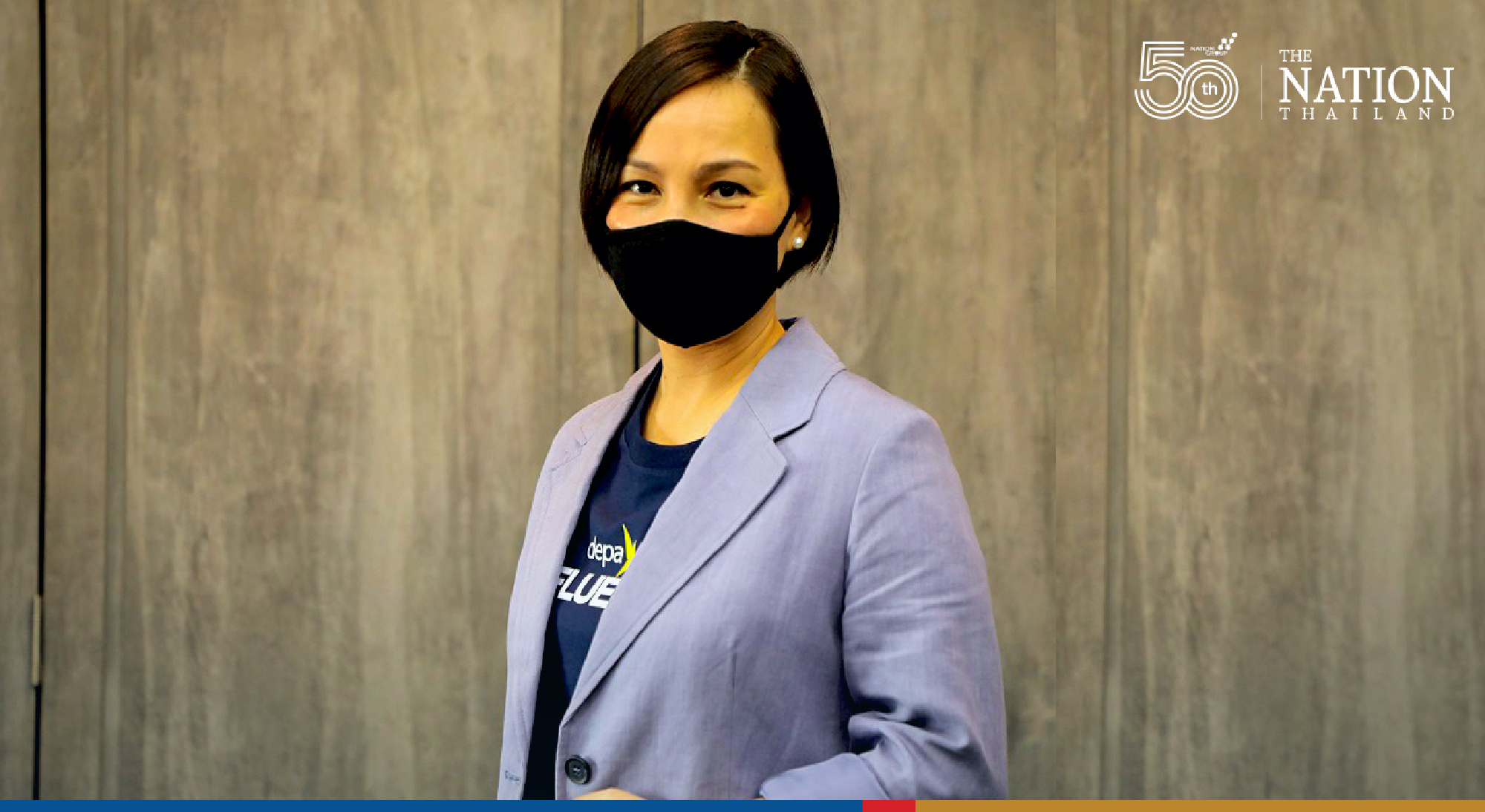 Suvita Charanwong, CEO & Co-Founder of Tellscore

 SootinClaimon.Com