The Finance Ministry is launching new measures to support Thailand’s bid to become a regional electric vehicle (EV) manufacturing hub.
The National Electric Vehicle Policy Committee aims to boost Thailand’s EV production to 30 per cent by 2025 and 100 per cent by 2035.
The aim is to manufacture 1.05 million electric vehicles or 30 per cent of total cars produced locally by 2025 and push that up to 50 per cent in five years.
The Finance Ministry said measures to support the EV industry will be launched on January 1, and should significantly bring down the price of electric cars so more people are tempted to switch. The measures will also attract investment in infrastructure, especially charging stations.
The measures are expected to include both tax and non-tax benefits such as a reduction in annual car tax, drop in toll fees and parking fees for EVs.
The current vehicle tax structure is based on engine power and carbon dioxide emission rate and is divided into two types – hybrid engine vehicles (HEVs) and battery electric vehicles (BEVs).
An HEV passenger car with an engine below 3,000cc is subject to 4 per cent until 2025, after which it will rise to 8 per cent. HEV cars with engines higher than 3,000cc are subject to 16-26 per cent tax, which has been halved until 2025.
Meanwhile, no tax is being paid for BEVs from 2018 to 2022, after which it will rise to 2 per cent from 2023 to 2025.
Imported EVs are subject to 80 per cent tax from the appraisal price except for cars imported under the Asean-China free-trade agreement. Thailand has been importing EVs under the MG and Great Wall Motors marque from China, though no deals have been made with Japanese automakers so far.
This year 2,133 EVs have been imported, slightly less than 2,177 units imported last year. Of the imports, 54 per cent came from China, far less than the 91 per cent imported in 2020.
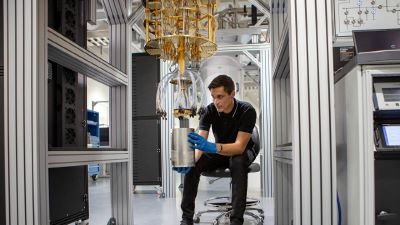
Amazon is officially entering the race to develop a quantum computer, joining U.S. and Chinese rivals in the quest to harness the properties of natures tiniest particles into computing power far surpassing existing machines.
Amazon will base its quantum team at a new center on the campus of Caltech in Pasadena, Calif., which officially opens this week. Caltech described it as the first “corporate-partnership building” on the university’s campus, showing “Caltech’s interests in bringing fundamental science to the marketplace.”
The investment reflects growing corporate interest in quantum computers, which are still at an early stage of development but could someday crack problems that existing computers can’t, such as identifying new materials to capture and remove carbon dioxide from the atmosphere, or new chemical compounds to treat intractable diseases.
In the defense sphere, some scientists believe quantum computers might someday be able to break existing forms of encryption, making them a hot development priority for the United States, China and other nations.
Today’s computers store, process and transmit data by breaking it down into long streams of bits, which are typically electrical or optical pulses representing a zero or one.
Quantum computers use quantum bits, or qubits, which exhibit the special powers of the universe’s smallest particles: they can exist as zeros and ones at the same time, or in any position between, a flexibility that gives them the potential to perform many calculations simultaneously.
A qubit can be an actual quantum particle, such as an atom, photon or electron. Or it can be a tiny electrical circuit on a chip that mimics the properties of these particles.
Google, IBM, Honeywell, Microsoft and start-ups such as IonQ are leading the U.S. race to build the machines, alongside a number of universities handling more basic research. In China, university research groups in Shanghai and Hefei are spearheading the work, backed by heavy government investment.
Google and the University of Science and Technology of China have published papers over the past two years claiming to have achieved “quantum supremacy,” meaning that their experimental quantum computers were able to solve a particular calculation that would have stumped existing computers. Google, for example, said its quantum computer took less than three and a half minutes to perform a calculation that would take the most powerful classical computer on the planet 10,000 years to complete.
While those announcements grabbed headlines, the field has a long way to go before quantum computers are ready for large-scale problem-solving, scientists say.
One big problem: Qubits are finicky and have the propensity to stop functioning at the slightest disturbance, such as a minor change in temperature.
“By the end of this decade you might start to see machines capable of being able to tackle interesting problems … that you couldn’t tackle with existing technologies,” said Oskar Painter, who took a leave of absence from his job as a Caltech physics professor two years ago to join Amazon and help establish the new center.
Amazon Web Services, the company’s cloud-computing division, already offers customers access to early-stage quantum computers developed by other companies, including IonQ. Now it’s trying to develop its own.
Amazon rented land from Caltech to build the research center, which the company owns and operates. Painter and another Caltech professor, Fernando Brandao, who also took a leave of absence to join Amazon, are running the research there.
The company will benefit hugely from having access to the Caltech community, the physicists said. “This is really one of the of the best places on Earth for quantum computing,” Brandao said.
He said Caltech would also benefit because academics need the deep pockets of industry to scale up quantum machines. “It’s not cheap to do that, it’s not easy to do that,” he said. “It’s not something that people can do just at universities. So we need industry there.”
Both parties declined to say how much Amazon is paying in rent. Amazon is providing financial support for quantum and nanoscience research at Caltech through “student and postdoctoral fellowships, sponsored research agreements, and infrastructure funds for Caltech’s nanoscience facility,” the university said. Amazon and Caltech declined to quantify that funding.
(Amazon founder Jeff Bezos owns The Washington Post.)
Amazon will own any intellectual property generated by work within its building, while IP that Caltech generates through Amazon-sponsored research projects will belong to the university, both parties said. In some cases they will share the IP.
Many of the scientists Amazon has hired for the center – the company declines to say how big the staff is – came from other universities and companies, which will give Caltech faculty and students access to new brainpower, said John Preskill, a professor of theoretical physics at Caltech who became an Amazon scholar in 2020, committing to work one day a week on Amazon’s quantum efforts.
“They are hiring world class scientists,” Preskill said. The interaction “has been good for broadening me scientifically and for our group.”
Quantum technology is sparking business activity on a number of U.S. campuses. Earlier this year, the University of Chicago and several partners launched the nation’s first program to support quantum-tech start-ups, called Duality. Amazon this month committed to provide more than $1 million in funding and in-kind support to program, the university said.
The University of Maryland, meanwhile, houses the offices of IonQ, the start-up co-founded by one of the university’s physicists. The university also recently launched the Quantum Startup Foundry to support new ventures in the field.
TikTok, Snapchat and YouTube, all social media sites popular with teens and young adults, faced a barrage of questions and accusations Tuesday from lawmakers who want the companies to do more to protect children online.
Executives from all three companies committed to sharing internal research on how their products affect kids – an issue that has come to the forefront in the past several weeks as tens of thousands of pages of Facebook’s internal documents have been revealed by a whistleblower.
It was the first time testifying before the legislative body for both TikTok and Snap, the parent company of Snapchat, despite their popularity and Congress’s increasing focus on tech industry practices. By contrast, Facebook representatives have testified 30 times in the past four years, and Twitter executives including CEO Jack Dorsey have testified on Capitol Hill 18 times total.
Tuesday’s hearing, convened by Sen. Richard Blumenthal, D-Conn., in front of the Senate Commerce Committee’s consumer protection panel, drilled into how kids’ data is protected online, how features such as autoplay and “likes” affect teenagers’ experiences, and what the companies are doing to rid their sites of harmful behavior including bullying and drug sales.
It is unclear exactly what data the companies agreed to disclose and whether they’ll disclose new research they conduct.
After the Wall Street Journal reported on internal research Facebook had conducted into how Instagram affects teens, the company released heavily redacted and annotated slide decks on the findings. Lawmakers have called on the company to release its full trove of research on the matter, and some have suggested subpoenaing the company to get the full data.
Blumenthal warned the testifying companies that simply being different from Facebook is not a defense.
“That bar is in the gutter,” he said. “What we want is not a race to the bottom but really a race to the top.”
Facebook has been under fire for the past several weeks for the way its sites, particularly Instagram, negatively affect teenagers’ mental health after a whistleblower revealed a trove of internal Facebook documents. Some documents showed that some teen girls reported Instagram made their body image issues worse.
The Journal first reported on those documents.
Last month, Facebook executive Antigone Davis testified in front of Congress, facing accusations from senators that the company buried internal research about how its products may harm children. Facebook has defended its track record, and Davis said at the hearing that the company’s research in fact showed that teen girls struggling with mental health issues largely reported that they found Instagram to be more helpful than not.
When Facebook whistleblower Frances Haugen testified before the subcommittee this month, lawmakers said her disclosures could mark a turning point in efforts to regulate the tech giants. “I think the time has come for action, and I think you are the catalyst for that action,” Sen. Amy Klobuchar, D-Minn., told Haugen during the session.
“There has been a deafening . . . drumbeat of continuing disclosures about Facebook. They have deepened America’s concern and outrage and have led to increasing calls for accountability, and there will be accountability,” Blumenthal said in his opening remarks. “This time is different.”
Snap and TikTok have faced far less scrutiny from the government, including for how they affect kids, despite having huge numbers of users. TikTok says it has more than 1 billion monthly users, though it does not break down their ages. Snapchat has 500 million monthly active users and says more than 80% of its U.S. users are over 18.
Even YouTube, where billions of videos are watched every day, has been overlooked at times by government tech investigations. Experts say this hearing is a good start at examining companies other than the biggest few.
“Facebook is just not the only game in town,” said Harvard Law School lecturer Evelyn Douek, who studies the regulation of online speech. “If we’re going to talk about teen users, we should talk about the platforms that teens actually use, which is TikTok, Snapchat and YouTube.”
The company executives defended their approach to protecting kids online Tuesday, arguing that they continually build features to better protect young users.
While the tech executives all broadly expressed support for legislation to boost protections for kids online, including on privacy, senators expressed frustration that companies wouldn’t commit to supporting specific proposals they have proposed.
Sen. Ed Markey, D-Mass., a top advocate for children’s online safety who has introduced a bill to expand safeguards under federal kids’ privacy laws, hammered some of the companies for not taking a firm stance on the measure.
After Snap executive Jennifer Stout declined to affirmatively support his measure, Markey said: “This is just what drives us crazy. ‘We want to talk, we want to talk, we want to talk.’ This bill’s been out there for years, and you still don’t have a view on it. Do you support it or not?”
Stout replied, “I think there are things we would like to work with you on, senator.”
TikTok executive Michael Beckerman said the company would be “happy to support” the bill if lawmakers made an “improvement” to how it deals with verifying children’s age online.
Blumenthal echoed Markey’s frustration when the executives declined to come out and support his bill to make it easier to sue companies over child exploitative material on their sites.
“This is the talk that we’ve seen again and again and again and again: ‘We support the goals.’ But that’s meaningless if you don’t support the legislation,” he said.
The three companies have faced some public backlash for the way they treat kids online – YouTube parent Google agreed to pay $170 million to settle allegations that it illegally collected data about children younger than 13 who watched toy videos and television shows on YouTube in 2019.
Snapchat and TikTok have both faced pressure to stop illegal drug sales and connections on their sites, particularly as overdose deaths have soared. Parent groups have called on the sites to do more to stop drug trafficking as kids die of fentanyl poisoning.
Klobuchar questioned Stout on the company’s actions to rid the app of drug dealers – something Stout said was a priority for the company that it was committed to.
Still, Klobuchar suggested changing the law to hold companies liable could speed up the process.
“So maybe that will make you work even faster, so we don’t lose another kid,” she said.
Several senators also brought up teen’s mental health online, especially as it relates to eating disorders. The companies all said that any material encouraging eating disorders violates their content, and that they work to keep it off their sites and instead point users to expert sources on the issues.
“We, again, prohibit the type of content that glorifies or promotes these issues, such as eating disorders,” YouTube executive Leslie Miller said.
Lawmakers also spent significant time grilling TikTok on its ownership – its parent company is Chinese firm ByteDance – after Sens. Marsha Blackburn, R-Tenn., Ted Cruz, R-Texas, and Sen. John Thune, R-S.D., brought up concerns about data privacy.
Beckerman said TikTok’s information about U.S. users is stored within the country, echoing what the company has said in the past.
“We know that trust must be earned through action, and we continue to build age-appropriate experiences for teens throughout their development and empower families with parental controls,” Beckerman said in a statement before the hearing.
TikTok disables direct messages for accounts whose owners are under 16 and sets direct messages off by default for 16- and 17-year-olds.
Snap has emphasized its safety features, including showing users’ locations on a map feature only to friends they have added.
Stout also sought to differentiate the platform from some of its competitors. In her opening remarks. She said social media “evolved to feature an endless feed of unvetted content, exposing individuals to a flood of viral, misleading and viral information. Snapchat is different. Snapchat was built as an antidote to social media.”
#SootinClaimon.Com : ขอบคุณแหล่งข้อมูล : หนังสือพิมพ์ The Nation.
Smartphones might be the most personal tech you use in your life, but sometimes, it can be hard to make sense of what makes one right for you.
And that feels especially true this year, when some of the biggest players in the industry are trying to reshape your expectations of what a smartphone should look like and should be able to do.
If that all sounds a little daunting, well, don’t worry – the Help Desk has your back.
As someone who has spent a lot of time reviewing phones, I know what it’s like to feel overwhelmed by all the things these devices can do – or claim to do. And since we’ve arrived at that time of year when flashy new phones seem to come out every few weeks, we wanted to help you cut through some of the noise.
To do that, I’ve been living with five of the most notable smartphones that were unveiled recently: Samsung’s Galaxy Z Flip3, Apple’s iPhone 13 and Pro, and Google’s new Pixel 6 and Pro. Each of these phones embody slightly different ideas about the role a phone should play in your life – here’s what you should know about them.
Remember years ago, when Apple used to release “S” versions of its iPhones? Apple stopped that practice after 2018′s iPhone XS, but that one-letter addendum basically meant those phones were more about polish than progress.
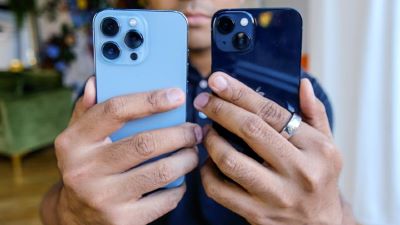
After living with the iPhone 13 ($799+) for a while, it’s easy to understand why some people think it should have been called the iPhone 12S instead: Apple focuses more on smaller, quality-of-life changes in its latest versions than bold new features and design updates.
For one, the entry-level iPhone 13 comes with 128 gigabyte of storage, or double what last year’s basic iPhones came with. The notch cut into its screen is a little smaller, which is nice, but I’m waiting for Apple to do away with it the way other smartphone makers have. Speaking of screens, the iPhone 13’s 6.1-inch display is the same size as last year’s model, but it’s a little brighter – that’s made it noticeably easier to read when I took the phone on some long walks.
Meanwhile, the iPhone 13 basically inherited the iPhone 12 Pro Max’s main 12-megapixel camera, which makes it an excellent all-around performer – daytime photos contained lots of vivid color and ample detail, and Apple added a set of “photographic profiles” that give you more control over the way your photos look without fiddling with lots of settings.
And of course, Apple’s new A15 Bionic chip makes the iPhone 13 a little faster than the iPhone 12, although I really doubt most people will notice the difference daily – I usually didn’t.
And what about the iPhone 13 Pro ($999+)? It shares many of the changes you’ll find in the regular 13, plus some extra flourishes to justify the extra money. Its screen is brighter still, so outdoor use isn’t a problem, and on-screen motion looks smoother because the display updates much faster. (It’s one of those things that sounds a little frivolous, but it’s nice to have for compatible games.) The iPhone 13 Pro’s chassis is also made of stainless steel, which is certainly nice to look at, but – to me, at least – makes it feel much more slippery than the standard 13.
If you’re a stickler for image quality and more cinematic video, the Pro might be worth the upgrade. That’s because Apple used a larger sensor for its main camera, which produces slightly better-looking photos and videos, especially in low light. And if you want the ability to get closer to your subject without actually moving, only the Pro iPhones have longer-range telephoto cameras – those with longer range for Zoom shots. This year, Apple went with a 3x optical zoom.
If there’s one reason you should consider upgrading to a 13 or 13 Pro, it’s battery life. Since “good” battery life can be pretty subjective, here’s what it means to me: If you forget to plug in your phone before you go to bed, it should still have enough juice to help you get stuff done the following morning. The iPhone 12 struggled with that, but the 13 and 13 Pro pulled it off no problem. That’s because both of these phones have higher-capacity batteries, which might explain why these phones are a little heavier than last year’s models.
Bottom line: If your phone is on its last legs, the battery and camera improvements make these latest iPhones worthy upgrades, and the standard iPhone 13 is probably the better option for most people. But if you think your phone can hold out for a little longer, no one would blame you for waiting to see what Apple does next year.
iPhones, Pixels, Flips: What to know about the top smartphones of 2021
AI everywhere
Most smartphones in the world right now use Android – north of 80 percent, according to research firm IDC – but in the grand scheme of things, Google’s Pixel phones barely account for a drop in that bucket. Now, Google wants to change that.
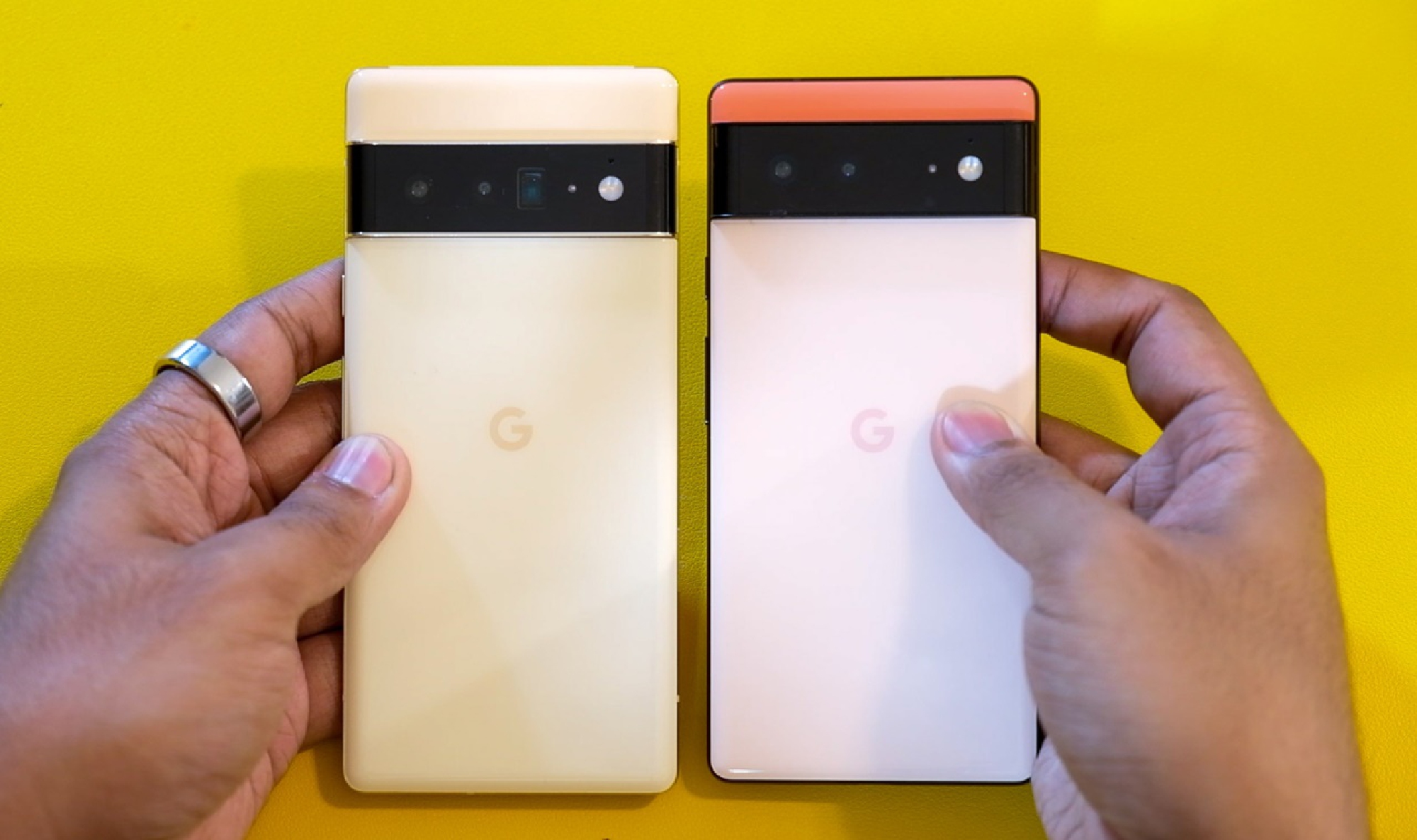
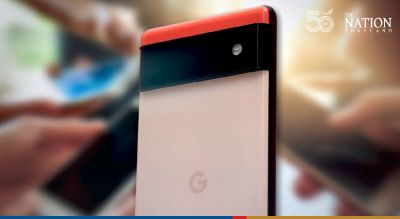
The new Pixel 6 ($599+) and Pixel 6 Pro ($899+) have quickly become my favorite Android phones of the year – and that includes phones that fold in half like it’s 2005. That’s partly because both Pixel models are relatively cheap by fancy smartphone standards (who doesn’t like saving a little money?) but also because Google has finally started treating its phones as more than just a side project.
As with the iPhones, the Pixel 6 and 6 Pro have a lot in common. They both have colorful new designs with big, black camera bars on their backs. They both share the same 50-megapixel main camera sensor, which, thanks to Google’s obsession with using AI to understand and tweak images, produces some of the nicest photos I’ve ever taken with a smartphone.
After poring over my photos from the past few days, I’ve come to prefer the Pixel’s pics a bit more, although I think the iPhone 13 Pro still has the edge in video recording. (That said, if you really care about having the right camera for the right situation, you’ll once again have to pay for the 6 Pro and its additional 4x optical zoom camera.)
Both the 6 and Pro also have batteries that lasted well into the next day if I didn’t charge them the night before. But most important, both Pixel phones use Google’s new Tensor processor, which lets Google flex its artificial intelligence muscle in ways you might not expect.
Over the last two weeks, I’ve used those AI features to erase people from the backgrounds of photos that I don’t want there – which works better in some cases than others – and to dictate my text messages faster and more accurately than I’ve ever seen on an iPhone. (That’s partly because the Pixels now handle voice recognition locally, rather than ferrying your voice into the cloud for processing as Google used to.) I’ve even used Google’s Assistant to help me more quickly whip through those annoying customer service menus when I called my bank.
You might not use features like these every day, and they don’t always work perfectly. If nothing else, though, they offer a clear sense of what Google is trying to accomplish here. The iPhone 13 and Pro are great, but much of Apple’s work this year seems designed to make them more effective at things you already use them for. Meanwhile, the Pixels attempt to help you in ways you might never even thought about.
With all that said, the Pixels aren’t exactly perfect. Both have fingerprint scanners under their screen, and they don’t always work correctly on the first try – for what it’s worth, I’ve noticed this more from the standard Pixel 6. (That said, it’s still not bad enough to make me use a PIN code instead.) Beyond that, the size of the phones might be a dealbreaker for some people. The 6 Pro has a 6.7-inch screen and feels absolutely enormous in my hands; the 6’s 6.4-inch screen makes it more manageable, but it’s still a bit of a handful. If you have small hands, do yourself a favor: Go to a store and pick these things up before you buy one.
Bottom line: Google’s Pixel phones are powerful, reasonably priced and surprisingly helpful. If you’re an Android person, or you’re thinking of becoming one, these should be among the first phones you look at.
– – –
Flipping and faltering
If you’re looking for a new form factor or design, the $999+ Galaxy Z Flip3 is one of the first foldable phones you might actually consider buying, and it’s a remarkably charming little gadget. (Especially to those of us who grew up during the flip-phone era.)
The best thing about it is, obviously, the way that 6.7-inch screen folds in half for easy storage. It’ll slip into a purse or a pocket with very little fuss, though it’s not exactly ideal for folks who love their skinny jeans. And because that screen is narrower than some other, similarly priced Android phones, the Z Flip3 is very comfortable to hold for long periods. Considering how much time we spend glued to our phones, comfort is one of those things we should really be paying more attention to.
When the Z Flip3 is open, it works just like a regular smartphone, but Samsung cooked up a few interesting features to take advantage of that folding screen. You can, for instance, open the phone half way and set it down on a table during video calls – that way, the camera above the screen stays pointed at you after you back away. And if you keep the phone in that half-open position, you can use its small external screen next to its main cameras to frame up pictures of you and your friends.
With foldable phones, though, my biggest concern has always been how the bending screen can hold up in the real world. The Z Flip3 still works as well as it did on Day One, even after dropping it a few times.
So, is it worth embracing the future and buying a Z Flip3 right now? There’s no denying this phone is neat, but its cameras don’t quite stack up to the ones found in the iPhones and Pixels, and its battery life is a bit of a bummer. The iPhones and the Pixels both cleared the “forgot to charge it before going to bed” test just fine, but I sometimes struggled to get even a full day’s use out of the Z Flip3.
Bottom line: The Z Flip3 is the best folding phone you can buy, but for now, living the foldable life means dealing with some real compromises.
Theyre not just building rockets and spacecraft anymore.
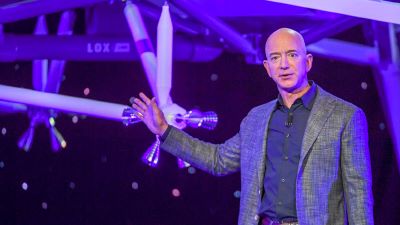
The growing commercial space industry, which for years has worked to reliably launch cargo and more recently humans to space, is now looking to build space stations that would populate low Earth orbit and eventually replace the aging International Space Station.
A number of companies are competing as part of a NASA-funded program to develop habitats that could house astronauts and scientists and help countries with emerging space programs get a foothold in orbit. Last week, Nanoracks, an aerospace venture that helps companies fly science experiments and other payloads to the ISS, announced it was partnering with its majority owner Voyager Space as well as Lockheed Martin to build a space station called Starlab.
And on Monday, Blue Origin, the space company owned by Jeff Bezos, followed that news by announcing it has formed a team with Sierra Space, Boeing and Redwire Space to build a space station called Orbital Reef that it said “will provide anyone with the opportunity to establish their own address on orbit.” (Bezos owns The Washington Post.)
At a news conference, Brent Sherwood, a senior vice president at Blue Origin, said the station would be ready by the second half of the decade and that it would provide “a vibrant, growing business ecosystem and low Earth orbit will generate new discoveries, new products, new forms of entertainment, and global awareness of Earth’s fragility and interconnectedness.”
The announcements come as NASA is looking to spend between $300 million to $400 million to fund the early development of as many as four private space stations in public-private partnerships that mimic how the space agency helped SpaceX and others build rockets and spacecraft that it now uses to fly cargo and astronauts to the ISS.
There is growing concern, however, that NASA isn’t moving aggressively enough to fund a replacement for the ISS, which has been in operation for more than 20 years in the harsh vacuum of space and has been showing its age. While Congress is expected to extend funding for the ISS to 2030, it’s not clear it will be able to last that long.
Some in the space industry are worried that the commercial space stations will be late, leaving NASA without anywhere to fly its astronauts.
“We are not ready for what comes after the International Space Station,” former NASA administrator Jim Bridenstine said during a Senate hearing last week. “Building a space station takes a long time, especially when you’re doing it in a way that’s never been done before.”
NASA this year requested $101 million for the program that would develop private space stations, but Bridenstine and other have said that is not nearly enough. In his written testimony, he said that Congress needed to appropriate $2 billion annually to the effort.
For nearly a decade, NASA did not have the ability to fly its astronauts to space and had to rely on the Russians for rides to the ISS, until SpaceX flew its first mission with NASA astronauts last year. Many in the space industry are worried that there will be a similar gap if the commercial sector can’t get its stations online soon.
That would leave China, which has been putting up segments of its own station this year, as the only country to own and operate a station in Earth orbit.
Industry officials said, however, that the capabilities of the commercial space industry have grown tremendously over the past several years and that they would be ready.
Nanoracks said Starlab would be ready by 2027 in part because the model of NASA helping industry flourish has proven itself.
“This is the very beginning of the destinations of private space stations,” Jeffrey Manber, CEO of Nanoracks, said. “We’re going to enter the next decade, where you have multiple private space stations in a robust public private partnership with NASA.”
But companies would not just harness NASA’s investment but be lifted by investors who are starting to see space as a viable bet, foreign governments with emerging space programs and institutions looking to do science experiments in space.
“We see NASA as being a very small minority percentage of the of the revenue coming in,” Manber said. “Now is when the private capital can come in. Private capital sees you have transportation. Private capital sees you have the government as one customer of many. It ticks all the boxes.”
If they come to fruition, the commercial stations would be far different from their government-run predecessor. Both Orbital Reef and Starlab would have a segment that would inflate like a balloon after it reaches space. That allows it to be packed more tightly into a single rocket, preventing multiple launches and tricky assembly on orbit.
Artist renderings of the stations showed luxurious interiors, like the lobby of an upscale hotel, with large windows with views of the Earth below.
Starlab would create the George Washington Carver “science park,” a laboratory named for the famed scientist.
The Orbital Reef station to be built by Blue Origin and Sierra Nevada would serve a similar purpose, and the companies would market it to countries around the world as well. “This isn’t an American station, this will be a global station that will carry on the proud international legacy of the ISS,” said Mike Gold, a Redwire, executive vice president.
While Blue Origin and Sierra Space said they have already invested heavily in the system and have been working on it for some time, but it’s not clear how much they’ve put in so far – or even how much money would be available through federal contracts.
“It is true that NASA doesn’t know yet how much funding they will be able to apply to this program,” Sherwood said. “But we do know that toward the end of the decade or at the end of the decade the station will be retired, that is NASA’s own plan, and it becomes critically important to avoid a gap.”
Google launched the latest Pixel smartphones Tuesday, betting on its first custom-designed system processor and a new version of the Android operating system to lure buyers away from Apple Inc.s iPhone.
The Pixel 6 and 6 Pro differ only slightly in size, memory and camera specs, with both built around Google’s Tensor system-on-chip, a custom semiconductor that took four years of development. Tensor is optimized for Google’s strengths in image processing and artificial intelligence, helping deliver faster and more accurate speech recognition and better battery life.
While Google’s Android is the top smartphone operating system globally, the Alphabet Inc. unit has a minuscule market share in mobile handsets. The company is now trying to stand apart from competition with its own processor, joining Apple in making such a move.
Outside of the iPhone, most smartphones rely on Qualcomm Inc. and, to a lesser degree, MediaTek Inc. for their processors, leading to a relative lack of differentiation. In addition to the Tensor, Google’s new devices include the company’s Titan M2 security chip, tasked with handling jobs like passcode protection, encryption and secure transactions in apps.
Android 12, the latest version of the software, marks what Google calls the biggest design change in its history. It features personalization through color palettes and redesigned widgets, and privacy indicators signal when an app is accessing the device’s microphone or camera. Its safety features will ensure Google’s audio and language processing happens exclusively on the device.
The 6.4-inch Pixel 6 costs $599 while the 6.7-inch Pixel 6 Pro comes in at $899, both shipping on Oct. 28. The pricier device ups the memory to 12GB from 8GB, includes an extra 4x zoom camera and has a larger battery. The 6 Pro also has an adaptive display refresh rate, much like the iPhone 13 — scaling from 120Hz for fast-moving on-screen action or animations down to 10Hz to preserve battery life.
Another commonality with Apple, which this year introduced a cinematic mode for video recording on its newest iPhones, comes in Google’s push of creative imaging extras. It’s adding a long-exposure feature, which blurs moving objects such as vehicles passing through an intersection, as well as an action mode that does the reverse, blurring the surroundings of a subject in motion.
Google and Apple are competing in a much-changed smartphone market this year, as Chinese Android vendors from Oppo to Vivo to Xiaomi Corp. have improved significantly in the chase to fill the gap left by sanction-stricken Huawei Technologies Co. Vivo, for instance, has collaborated with Carl Zeiss on its lenses and the recently launched X70 Pro+ flagship has four gimbal-stabilized cameras on its rear.
Google still has to prove that the Pixel can be more than a niche for an audience loyal to its products and reliant on its services. The bespoke silicon, the more personal Android software and the comparatively affordable price points may help advance the company’s case to a broader market.
The demise of MagSafe charging. An inelegant Touch Bar. Limited selection of ports. The laundry list of complaints about Apples laptops has steadily grown over the past five years. Now, Apple is finally walking back those changes.
On Monday, the Cupertino, Calif., company unveiled a pair of new MacBook Pro laptops, powered by its latest homegrown processors and free of the many limitations that plagued earlier models. It also showed off a set of updated AirPods and colorful HomePod mini smart speakers. Riding high from record Mac sales last year, Apple made sure to make its new MacBooks the star of its virtual event Monday.
Still, computers that run Apple’s MacOS software account for only a fraction of the overall PC landscape – just over 7 percent as of the end of the second quarter, according to market research firm IDC. Its market share has slipped from 8 percent in the first quarter and 7.6 percent a year earlier, IDC data showed. The changes on display Monday seem to be geared more toward appeasing existing users than claiming new ones.
So what do the changes Apple has embraced actually mean for you? Here are the Help Desk’s biggest takeaways from Apple’s announcement.
– Apple’s chips make these MacBooks more powerful than usual
Apple highlighted two new chipsets – the M1 Pro and M1 Max – designed to offer the kind of horsepower you can’t squeeze out of current models.
If you spend your days toiling in Photoshop, Lightroom or other creative apps, Apple has you in its sights. Apple said the new MacBooks using the M1 Pro are up to 70 percent faster than last year’s M1 models and can be equipped with up to 32GB of RAM. Meanwhile, the M1 Max offers the same level of CPU power as the Pro but can support up to 64GB of RAM and dials up its graphical performance for more-complicated tasks.
RAM (random-access memory), by the way, is crucial to the way your computer works. Think of it as your computer’s working memory: The more your computer has, the more things it can keep track of and work with in different apps. By comparison, Apple’s 2020 MacBooks Pros could handle only 16GB of RAM, which is perfectly fine in most cases but not always enough for demanding work.
If this all sounds too technical, we get it – computer chips usually are. But here’s what it boils down to: If you spend most of your time on your laptop in a Web browser, the existing M1 MacBook Pro is more than enough. But if your work requires some serious oomph – such as graphics work or video editing, the M1 Pro and M1 Max machines may be a better fit for you.
Apple said the starting price for its 14-inch model is $1,999, while the 16-inch model starts at $2,499.
– Undoing the changes people hated
One of the best things about Apple’s new MacBooks is how un-MacBook they feel, at least compared with the models released in the past few years.
Take the confusing, not-all-that-helpful Touch Bar, for instance. Apple has insisted on squeezing it onto its laptops since 2016, but now you can find it where it was always meant to be: nowhere. (Instead, the new MacBook Pros have physical buttons to control volume, screen brightness and other things.)
The company’s Monday announcement also included the return of MagSafe chargers, which connect to these new computers with magnets and easily detach when yanked. (For anyone who has ever tripped over a cable and saw their computer clatter to the floor, this might be some welcome news.) The new machines have ports aplenty: There’s HDMI for external displays and an SD card reader in addition to three USB-C “Thunderbolt 4” ports for external accessories. (Some versions of last year’s MacBook Pro came with two USB-C ports and nothing else.) You’ll probably still need to carry a dongle with you everywhere, but some people – such as photographers – may be able to go without, just like the old days.
– Better (and in some cases, bigger) screens
Apple’s biggest new MacBook Pro comes with a 16.2-inch screen, same as we’ve seen for the past two years. But the smaller MacBook Pro had its screen bumped up to 14.2 inches, which should let you see at least a little more of the action on screen than before. Size wasn’t the only change Apple made here, though. These displays also “refresh” or update faster, Apple claims, so things that happen on screen – scrolling websites, characters running around in games – should look noticeably smoother, too.
But there is one catch here: Both of these screens have notches cut into them to let a 1080p webcam peer at you. That might not be a big deal for everyone, especially if it makes Zoom calls look better, but still – if smartphones can ditch notches, why didn’t Apple do it here?
– HomePod minis and an AirPod update
If you’re looking for a HomePod mini smart speaker to match your interior decor, you’re in luck, as long as your decor is blue, orange or yellow. The speakers, along with the traditional black and white options, will go on sale this November for $99.
Apple also unveiled its third-generation AirPods. The tips are still hard plastic, but the stems are shorter and Apple claims the batteries last longer – six hours on each charge and five full charges if you’ve got the case with you. Runners and other sweaty people may be glad to hear that AirPods are now water resistant.
– A bewildering new Apple Music subscription
This brings us to perhaps the strangest part of Apple’s announcement. The company unveiled a new $4.99-a-month “Apple Music Voice” plan to complement its existing Apple Music subscriptions. The pitch: Control your music selections using voice only.
The details are hazy, but anyone familiar with Siri’s constant mistakes and misfires may be shuddering. If I wanted to pay money to be consistently misunderstood, I’d buy a plane ticket to my mother’s house.
For now, we’ll stick to good old thumbs-on-screen music selection – at least until we understand exactly what value (if any) the voice plan offers.
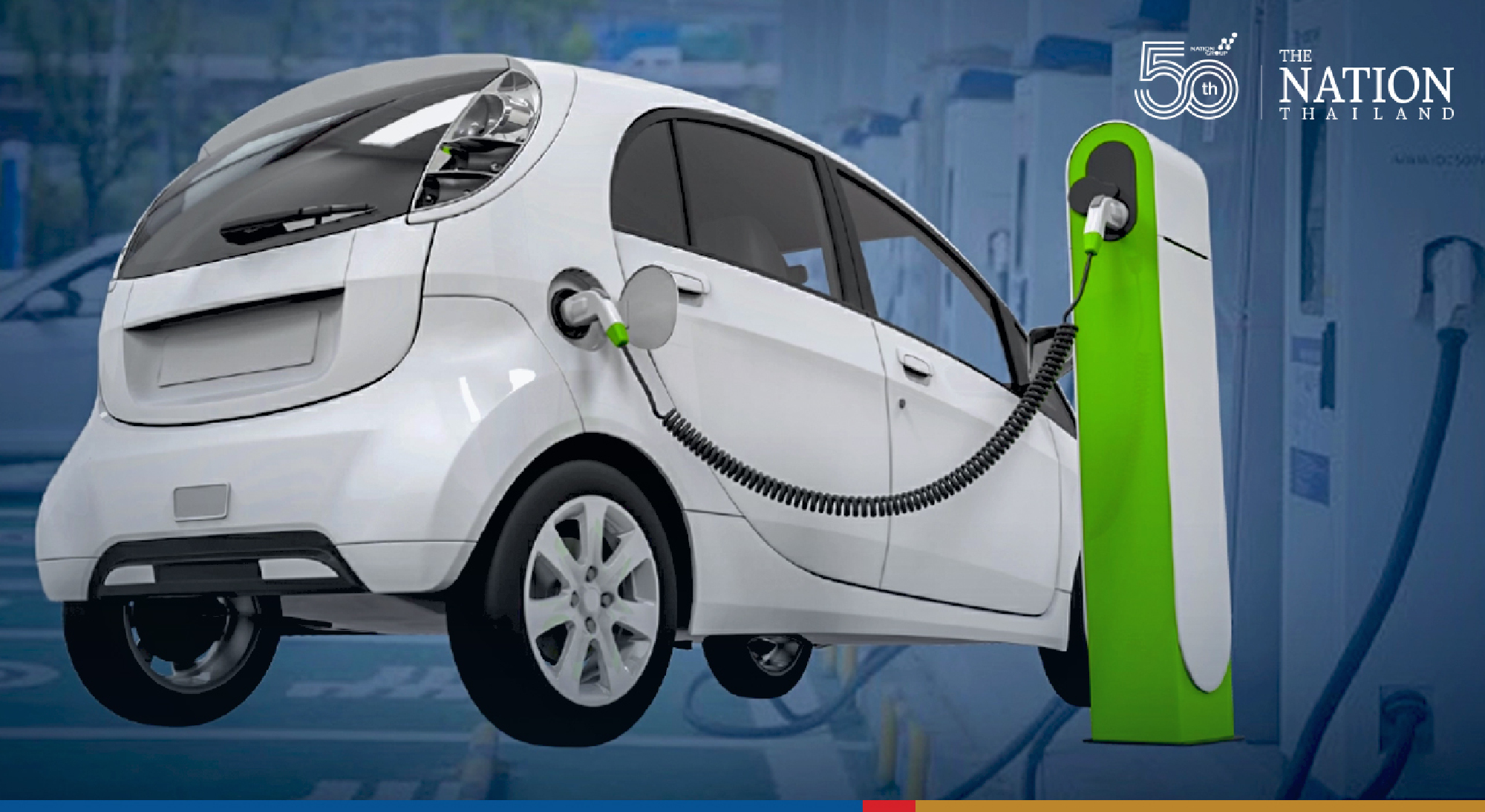
To help Thailand become a “low carbon society”, the Electricity Generating Authority of Thailand (Egat) will set up 120 new EV charging stations next year.
The government has been promoting the use of electric vehicles (EV), while Egat and related agencies have been working on building an EV ecosystem since early this year.
Thailand managed to reduce its carbon dioxide emissions by nearly 10 tonnes this year alone thanks to the use of electric vehicles.
Meanwhile, Egat plans to build another 23 charging stations this year, and up the number by 120 next year.
Egat has also launched the “EleXA” app which helps users check the status of charging stations in real-time. The app is available for both iOS and Android devices.
Meanwhile, the Metropolitan Electricity Authority (MEA) has also developed the “MEA EV” app, which helps users search for charging stations and reserve a spot at either MEA, EA Anywhere or Electric Vehicle Association charging stations in real-time.
More EV charging stations planned to help attain Thailand’s ‘low-carbon’ dreams
The Biden administration concluded a two-day meeting Thursday on ransomware with more than 30 countries recognizing it for the first time as a global security threat and agreeing to work together to combat it.
The White House-convened sessions were the largest multinational gathering to date to tackle ransomware, a form of cyber crime in which hackers have paralyzed the computer systems of schools, hospitals, energy pipelines, food companies and governments around the world. The hackers then demand payment to unlock the systems.
With the cyber attacks earlier this year on Colonial Pipeline and JBS, the world’s largest meat supplier, the U.S. government has elevated what was once seen as a criminal nuisance to a matter of national – and international – security.
Notably absent from the virtual conference was Russia, the country primarily seen as harboring ransomware criminals. Also not invited were the three other countries often accused by the West of malign cyber activity: China, Iran and North Korea.
“No one country, no one group can solve this problem,” White House National Security Adviser Jake Sullivan told the gathering Wednesday. “We view international cooperation as foundational to our collective ability to deal with the ransomware ecosystem, to hold criminals and the states that harbor them accountable, and to reduce the threat to our citizens in each of our countries.”
The meeting is intended to be the first of many, he said.
The gathering broadens the usual coalition of “like-minded” nations on the cyber issue beyond the G-7 and Western Europe to include countries like India, Brazil, Ukraine, Nigeria and the United Arab Emirates.
The meeting did not result in any formal treaty or pledge, but rather yielded a statement laying out cooperation across a wide range of areas: countering illicit finance; disruption of networks through law enforcement; diplomacy to encourage states to hold criminals accountable; and strengthening cybersecurity.
The gathering brought together officials and experts from law enforcement, information security and financial regulation. They acknowledged that taking action to disrupt ransomware criminals requires concerted efforts to stop illicit payments through difficult-to-trace cryptocurrency payment systems and money laundering networks.
Ransomware payments reached over $400 million globally last year, according to the White House.
Though Russia was not named in the statement, the group addressed the issue of safe harbors. “We will leverage diplomacy through coordination of action in response to states whenever they do not address the activities of cyber criminals,” they said.
Cyber policy experts praised the effort, even if the resulting statement was light on details. “It’s a very strong statement of political will, first and foremost,” said Christopher Painter, a top State Department cyber official in the Obama administration. “It sends a signal that this is a priority and will continue to be a priority.”
Though Russia was not involved in the meeting, White House officials note that they have a separate channel to engage directly with Moscow on the issue. There have been several meetings to date through that channel, in which experts had “frank and professional exchanges” to convey Washington’s expectation that Russia would crack down on ransomware criminals, a senior administration official said this week.
“We’ve also shared information with Russia regarding criminal ransomware activity being conducted from its territory,” the official said, speaking on condition of anonymity under ground rules set by the White House. “We’ve seen some steps by the Russian government and are looking to see follow up actions.”
Deborah Housen-Couriel, chief legal officer for Konfidas, a cybersecurity company based in Tel Aviv, said it wasn’t surprising to see China and Russia excluded from the gathering. “But without their eventual participation in countering this global problem – even partially – the results will be necessarily limited.”
Painter, for his part, said that including Russia in the larger group “limits the ability to have frank discussions including how you might collectively get Russia to take action.”
At this stage, he said, you’re trying to marshal the broadest group to pressure states that are recalcitrant. “The larger the set of countries, the more powerful and politically legitimate the message: Countries should not provide a safe haven for cyber criminals.”
There’s more than a slight chance those words passed through William Shatner’s mind Wednesday, as the original Captain Kirk headed into space aboard a New Shepard spacecraft owned by Jeff Bezos’s commercial spaceflight venture Blue Origin.
He spent just over 10 minutes rocketing upwards more than 66 miles – four miles beyond the edge of space – and returning to earth. It was an undoubtedly savvy public relations move for the embattled company, which has recently come under fire for harboring what current and former employees allege, in an essay, is a toxic culture “that ignores the plight of our planet, turns a blind eye to sexism, is not sufficiently attuned to safety concerns, and silences those who seek to correct wrongs.”
In fact, as a PR stunt, it’s rivaled only by Blue Origin’s first foray to the cosmos. That found Wally Funk, an 82-year-old aviation pioneer who was supposed to be one of the first women in space back in 1961, accompanying Bezos and his brother, Mark, into space. In addition to the “Star Trek” tie-in, the 90-year-old Shatner became the oldest person ever to exit the Earth’s atmosphere, a fact that’s basically catnip for headline-seeking journalists.
Undergirding the PR move, though, might be a personal interest. Bezos has a genuine interest in the “Star Trek” series, which he discusses ad nauseam in interviews and which inspired the name of his dog, Kamala (you know, the Kriosian empathic metamorph).
But when did this love affair begin? What else has the show inspired in his life?
We dove into these questions. But first, repeat after us: Jeff Bezos owns The Washington Post.
– How did Bezos become interested in space?
Bezos fell in love with the universe before he fell in love with “Star Trek.” As a boy, he spent summers in Texas with his grandfather, a former Atomic Energy Commission engineer. The two watched space launches together and shared a love of science fiction.
” ‘Star Trek’ is the easiest thing to glom onto, but it was much more than that,” biographer Brad Stone said in an interview.
When he graduated from high school, Bezos ended his valedictorian speech with the words “Space: the final frontier. Meet me there.”
As a student at Princeton, Bezos juggled the pop culture of “Star Trek” with the more serious work of professor and physicist Gerard O’Neill, who foresaw space stations orbiting Earth to house humans. After college, Bezos held “Star Trek: The Next Generation” viewing parties for his friends, Stone said.
Space, real or imagined, was always a big part of his life.
– When did he fall in love with “Star Trek”?
The show premiered – with Shatner as Captain Kirk – in 1966, two years after Bezos was born. It would take the Amazon founder until the fourth grade to discover the Starship Enterprise. When he did, he became infatuated with the show in the way only a child can.
“When I was in fourth grade, me and my friends Dean and Kyle, who lived next door a couple of houses down, in Houston, Texas, would play ‘Star Trek’ almost every day,” Bezos told Washington Post Executive Editor Martin Baron at a 2016 event hosted by The Post. “And we’d fight over who’d get to be Captain Kirk, or Spock, and somebody used to play the computer, too. And it was actually very fun – we’d have little cardboard phasers and cardboard tricorders, you know. Good days.”
Echoes of the show can be found throughout his life. In addition to naming his dog Kamala, he named one of his holding companies Zefram LLC after Zefram Cochrane, the character who invented the warp drive.
He’s discussed how the show, and his general love of science fiction, helped inspire him to found a commercial spaceflight venture. But the show was also instrumental in creating the Amazon Echo.
“Our vision, in the long term, is it would become the ‘Star Trek’ computer. You could ask it anything, ask it to do things for you, ask it to find things for you, and it would be easy to converse with in a very natural way,” he told Baron. “The original inspiration was the ‘Star Trek’ computer.”
– Who was his favorite character?
If you ask an Amazon’s Alexa who’s the best “Star Trek” captain, she will respond, “Of all the captains in all the galaxies, Captain Picard is my favorite.”
It’s no coincidence that Bezos feels the same way. He once gleefully shared that with a clearly tickled Patrick Stewart, the actor who portrayed Picard.
Though Kirk may be the one headed to space, Bezos has never shied away from reminding the world that he prefers Picard – usually on Twitter. “Kirk or Picard? Picard!” Bezos tweeted in March 2018, shortly after walking the red carpet with Stewart at the Academy Awards.
He almost named Amazon “Makeitso.com,” after Picard’s catchphrase, Inc. reported.
In fact, “as time has passed, Bezos and Picard have physically converged. Like the interstellar explorer, portrayed by Patrick Stewart, Bezos shaved the remnant strands on his high-gloss pate and acquired a cast-iron physique,” Franklin Foer wrote in the Atlantic in 2019.
Bezos has not publicly explained why he admires Picard, but let’s venture a modest guess: Picard is a brilliant officer, historian and diplomat who plays a major role in the events of the 24th century. Even Spock was impressed: “He’s remarkably analytical and dispassionate, for a human. … There’s almost a Vulcan quality to the man.”
– Is it true that he appeared in a “Star Trek” movie?
Affirmative! Bezos played an alien Starfleet officer in the 2016 “Star Trek Beyond,” something he called “a bucket list” dream on Twitter.
“For years, I have been begging Paramount, which is owned by Viacom, to let me be in a ‘Star Trek’ movie,” he said that year. “I am very persistent, and you can imagine the poor director who got the call: ‘You have to let Jeff Bezos be in your “Star Trek” movie.’ “
Bezos said he was willing to be unrecognizable but wanted a speaking part – and one that was central to the plot so it didn’t end up on the cutting room floor.
Bezos appears in the first five minutes of the film as an alien Starfleet officer stationed at Yorktown starbase in 2263 who scans Kalara as she pleads for help from Commodore Paris and Captain Kirk. “Speak normally,” Bezos tells her. The cameo role required such extensive makeup that he could only drink through a straw.
“He was awesome,” director Justin Lin told AP. “It was like a president was visiting, you know? He had a big entourage! But it didn’t matter because he was so into it. He had to wait around all day because it was one day we were shooting like three different scenes and, it was also credit to Jeff because … he just nailed it every time.”
– What other science fiction does he enjoy?
Although “Star Trek” is his most public sci-fi obsession, it’s far from his only one. As a child, Bezos would hoover up all the Isaac Asimov and Robert Heinlein books he could get his hands on. Nowadays, he makes sure to read newer genre writers such as Alastair Reynolds, Ernest Cline and Andy Weir.
Amazon Studios, the film and TV arm of his online empire, has focused on producing sci-fi. Most notably, the service saved “The Expanse,” a beloved show based on the novels of James S.A. Corey after it was canceled by its original network, Syfy.
“Something that (Bezos) wants to do is not just to have success in space – to make rockets that are reusable – but to reinvigorate interest in space,” The Washington Post’s Christian Davenport said on the Geek’s Guide to the Galaxy podcast.
According to Davenport’s reporting, Bezos decided to found Blue Origin after watching “October Sky,” a movie about NASA engineer Homer Hickam, with science fiction writer Neal Stephenson. But, by that point, he had long been interested in space.
As his high school girlfriend Ursula Werner once said: “Jeff started Amazon just to get enough money to do Blue Origin. He was intrigued by the idea of rocketing into outer space.”
“I can neither confirm nor deny that,” Bezos later said, when asked about her theory.
In any event, we know one thing for sure: Live long and profit.



 iPhones, Pixels, Flips: What to know about the top smartphones of 2021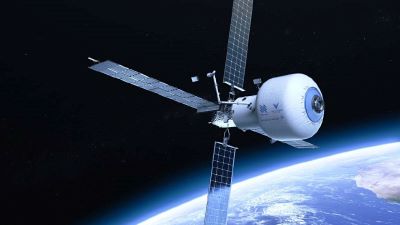

 More EV charging stations planned to help attain Thailand’s ‘low-carbon’ dreams
 SootinClaimon.Com