Facebook says post that cast doubt on coronavirus vaccine among the most popular on the platform this year #SootinClaimon.Com

#SootinClaimon.Com : ขอบคุณแหล่งข้อมูล : หนังสือพิมพ์ The Nation.

https://www.nationthailand.com/tech/40005081

Facebook says post that cast doubt on coronavirus vaccine among the most popular on the platform this year


Facebook said Saturday evening that an article raising concerns that the coronavirus vaccine could lead to death was the top performing U.S. link on its platform from January through March of this year, acknowledging the widespread reach of such material for the first time.
It also said another site that pushed covid-19 misinformation was also among the top 20 most visited pages on the platform.

Facebook earlier this year faced a torrent of criticism from President Joe Biden and others who have alleged that the company has allowed misinformation about coronavirus vaccines to flourish. White House officials have alleged that many Americans are reticent to take the coronavirus vaccine, in part, because of false or misleading information they have read on social media services, including Facebook.

In releasing a report that the company had previously shelved, Facebook attempted to push back against critics, arguing that the definition of health misinformation is often less black and white than what some would make it seem.

For example, the article that surged earlier this year on Facebook’s platform, which is used by more than 2.8 billion people each month, was a factual article from The South Florida Sun Sentinel (distributed by the Chicago Tribune) about the Centers for Disease Control and Prevention investigating the death of a doctor who passed away two weeks after taking the coronavirus vaccine, according to the report (Months later, the medical examiner’s office found that there wasn’t enough evidence to say whether the vaccine played a role in the doctor’s death).

ADVERTISEMENTx

Facebook has said it will take down outright false information about covid-19, but has argued that conversations about factual articles should not be suppressed.

In a report published this past week, Facebook had identified the most popular information shared on its platform from April to June, a disclosure that raised questions about why the company was not disclosing popular posts from the earlier part of this year.

The new release of the January through March data by Facebook came one day after the New York Times first reported that it had been withheld by senior executives. The disclosure reflects the challenge of being open with the public at a time when the social network is being attacked by the White House as well as experts for fomenting the spread of health misinformation. Previously, the company had only shared how much covid-related misinformation it has removed, and has been careful not to acknowledge up to this point what role they’ve played in disseminating material that mislead the public about the virus and the vaccine.

For months, executives have debated releasing both this report and other information, according to a person familiar with the company’s thinking. In those debates, the conversations revolved around whether releasing certain data points were likely to help or hurt the company’s already-battered public image. In numerous instances, the company held back on investigating information that appeared negative, the person said.

In July, President Biden accused platforms like Facebook of “killing people” for spreading misinformation about covid-19, while the Surgeon General called such misinformation an “urgent threat.” (Biden subsequently walked back the comment).

ADVERTISEMENT

After Biden’s comment, there was fear inside Facebook that the narrative was getting out of control, the person said. Facebook had been in discussions for months with the White House and the U.S. Surgeon General. Biden administration officials had repeatedly asked for data about the extent of misinformation on the company’s platform, according to three additional people familiar with the discussions who spoke on the condition of anonymity to discuss private matters.

At first, Facebook only wanted to share data that cast the company in a positive light, including promoting its research that the company has taken down 20 million pieces of content containing misinformation about covid-19.

But as the White House pushed further, Facebook planned to release a transparency report that would show the 100 pieces of most popular content on the platform.

The problem was that they feared what they might find. They were also cautious because they felt that the narrative about what misinformation is was often misconstrued.

As product managers, engineers, policy officials, and other executives began to dig into the data, they found that in the first quarter of this year, one of the most popular pages on the network was a page run by the Epoch Times, a right-wing anti-China publication that has promoted the violent QAnon conspiracy theories and misleading claims of voter fraud related to the 2020 election.

ADVERTISEMENT

Another one of the most popular articles was the Sun Sentinel piece. The article was promoted on Facebook by several anti-vaccine groups.

In a statement, Facebook spokesman Andy Stone said it had “considered making the report public earlier but since we knew the attention it would garner, exactly as we saw this week, there were fixes to the system we wanted to make.” He declined to elaborate on the fixes, except to say that one item involved fixing a technical bug.

In a series of tweets on Saturday evening, Stone said that “given the interest in the first version we did not release, we’ve decided just to make it public. It’s not gleaming, but we’re trying to make progress.”

He said that the case of the Sun Sentinel article “does illustrate just how difficult it is to define misinformation.”

Facebook’s leadership has long felt that skepticism about any subject, including vaccines, should not be censored in a society that allows robust public debate. The company has also viewed research which shows that people are most likely to have their minds changed by people who they trust, including friends, family, and people in their social network. The company, along with other experts, argue that is a strong reason to allow material that may raise questions to be posted and discussed on the platform.

The challenge is that certain factual stories that might cast doubt on vaccines are often promoted and skewed by people and groups that are opposed to them. The result is that factual information can become part of an ideological campaign. Facebook has been slow to remove or block some of the leading anti-vaccine figures that spread such ideas.

In releasing the report, its authors noted that the most popular content still represented just 0.05% of all content views by U.S. users in the first quarter.

Other top links came from UNICEF, ABC News, and the Washington Post.

Published : August 22, 2021

By : The Washington Post · Elizabeth Dwoskin
Facebook pushes VR for remote work but practicality, cost and nausea may stand in its way #SootinClaimon.Com

#SootinClaimon.Com : ขอบคุณแหล่งข้อมูล : หนังสือพิมพ์ The Nation.

https://www.nationthailand.com/tech/40004967

Facebook pushes VR for remote work but practicality, cost and nausea may stand in its way


Facebook believes it has developed a tool for the future of work: a virtual reality app that allows remote workers the chance to collaborate in the same virtual space.

But it might take a long time for the social media company to convince massive numbers of workers to switch to VR for meetings, analysts say.

On Tuesday, the company unveiled what it calls “Horizon Workrooms” on the Oculus Quest 2 VR headset. The app, which is still being tweaked, allows workers to create an avatar, collaborate with others on a whiteboard, stream what’s on their laptop, take notes and interact with co-workers who video conference into the virtual room – all while sitting at their real-life workspace.

“We shouldn’t really have to physically be together to feel present, collaborate or brainstorm,” said Facebook CEO Mark Zuckerberg. “Video conferencing has taken us pretty far, but as we start planning to go back into the office, I’m not super excited about having most meetings be over video.”

The app also allows Quest users to use their hands instead of remote controllers, and spatial audio capabilities give users the sensation that people are in different areas of the room along with them just like in a physical conference room. Users can also choose from multiple room setups so that they face their counterparts or a whiteboard to listen to a presentation, for example.

“We just had this really big vision that people should be able to have that sense of presence far apart from each other,” said Andrew Bosworth, head of Facebook Reality Labs. “And not just around games and entertainment, but also potentially for more serious things.”

ADVERTISEMENTx

Facebook’s release comes as many workers continue to work remotely – some permanently – as the coronavirus pandemic forced many employees into work-from-home setups. Despite Facebook’s push further into VR, the technology is still nascent and the industry faces a slew of challenges that need to be overcome for it to become mainstream. Headsets for an entire workforce could be considered a major expense – the Oculus Quest 2 alone costs $299 – and the latest headsets are still somewhat heavy and bulky. The technology isn’t always as practical as a phone call or video conference, and some users could experience headaches and nausea while using the device.

“VR is coming, but it’s not coming as quickly as people would hope or portray,” said Tuong Nguyen, senior principal analyst on Gartner’s emerging technology and trends team.

Still, over the years, Facebook has been increasing its investments in augmented and virtual reality as market forecasts swell. The company has been developing Horizon Workrooms for the past two-and-a-half years, and it is working on augmented reality glasses. It is also researching how to make people’s eyes appear in virtual environments and trying to create a wristband that would allow people to control their digital devices with a simple gesture.

Global spending on AR and VR is expected to jump more than sixfold to $72.8 billion in 2024 from about $12 billion in 2020 as more companies adopt the technology following the pandemic, according to market research firm IDC.

“By large, it’s unsaturated,” Nguyen said of the AR/VR market, adding that most of the current growth is coming from gamers. “Most people don’t use VR, and I don’t think that’s a surprise to anyone.”

ADVERTISEMENT

Eric Yuan, CEO of the videoconferencing app Zoom, said he believes augmented and virtual reality will play a big role in the future of work, especially remote work. But he said big technology breakthroughs are still needed to make wearing the headsets as comfortable as regular eyeglasses and the experience much more seamless and intimate.

“We’re not there yet,” he said during a virtual conference about the future of work. “The headset is too heavy. There’s no eye contact.”

Beyond cost and convenience, Nguyen said the physical toll virtual reality takes on some employees is a “huge hurdle” for mass adoption. Some users experience an effect called vergence-accommodation conflict, a biological issue that occurs when the brain is confused by the distance of objects due to a 3-D environment. Possible result? Headaches, fatigue, nausea or some combination of the three.

Facebook is fully aware of the challenges facing VR, Bosworth said, noting that he personally has to take breaks after about an hour because he gets too hot inside the headset. But improving the technology also means balancing the cost and physics of the headset with the comfort of the device. For now, he said Facebook hopes the experience will be worth some of the discomfort.

“Different people have different comfort levels,” he said. “That’s obviously an area we’re continuing to try to drive toward advancement.”

ADVERTISEMENT

The industry seems to agree on one thing: Virtual reality will be at least one tool that some workers will likely use. But how pervasive it will be is still up for debate.

“Within enterprise, I feel that it’s a huge nonstarter,” Nguyen said. “You’re saying, ‘I’m giving you this tool to do your job, but you might get a headache or throw up after.’ “

Published : August 20, 2021

By : The Washington Post · Danielle Abril

Tesla Autopilot faces U.S. safety regulators scrutiny after crashes with emergency vehicles #SootinClaimon.Com

#SootinClaimon.Com : ขอบคุณแหล่งข้อมูล : หนังสือพิมพ์ The Nation.

https://www.nationthailand.com/tech/40004751

Tesla Autopilot faces U.S. safety regulators scrutiny after crashes with emergency vehicles


The nations top auto safety watchdog has launched a formal investigation of Teslas driver-assistance system after nearly a dozen crashes involving parked emergency vehicles occurred while Autopilot was engaged.

The National Highway Traffic Safety Administration inquiry, which was opened Friday and detailed in a document made public Monday, covers 765,000 Teslas – models Y, X, S and 3 – produced from 2014 to 2021. In 11 crashes recorded since 2018, one person was killed and 17 people injured.

The Palo Alto, Calif.-based automaker, which has disbanded its public relations department, did not respond to an emailed request for comment.

The investigation comes as the auto industry races toward a driverless future. Tesla’s driver-assistance suite – starting with Autopilot and then its “Full Self-Driving” package – is among the most ambitious in its efforts to complete many driving tasks automatically. Waymo, owned by Google parent company Alphabet, is also working on a self-driving car, along with an array of competitors sporting names such as Aurora, Cruise and Zoox.

Although regulators and industry experts caution that driver-assistance features do not make a vehicle autonomous, Tesla has sought to capitalize on the perception that such technology will one day enable their vehicles to drive themselves.

ADVERTISEMENTx

The investigation creates a potential wrinkle in those plans. Tesla has put “Full Self-Driving” in hundreds of vehicles with the caveat that drivers still must be alert while their cars are in motion. Regulators, so far, have taken a relatively hands-off approach; experts say they are wary of any perception they might be stifling innovation.

The inquiry may also signal a new regulatory environment. In June, authorities started requiring manufacturers, including Tesla, to report crashes involving such technology within a day of learning of the incident. On Monday, an NHTSA spokeswoman told The Post that the preliminary investigation will focus on Tesla’s autopilot system and “technologies and methods used to monitor, assist, and enforce the driver’s engagement with driving while Autopilot is in use.”

Sens. Richard Blumenthal, D-Conn., and Edward Markey, D-Mass., who serve on the Senate Commerce, Science and Transportation Committee, said NHTSA is “rightly investigating” Tesla’s autopilot after a series of crashes.

“This probe must be swift, thorough, and transparent to ensure driver and public safety,” they said in a joint statement. “It should inform the agency’s recommendations on fixes the company must implement to improve the safety of its automated driving and driver assistance technology and prevent future crashes.”

Tesla shares tumbled following word of the federal probe, falling 4.3% to close Monday at $686.17.

ADVERTISEMENT

The agency is examining two systems: Tesla Autopilot and the Traffic Aware Cruise Control. Both are “partial” self-driving car systems designed to recognize and avoid oncoming traffic while a human driver retains control of the vehicle. Neither qualifies as fully autonomous, and drivers are expected to be at the ready even when the systems are turned on.

The investigation carries several touchpoints that suggest a more sophisticated, focused approach to ensuring self-driving and semiautonomous cars are safe. The difference, experts say, is that authorities now appear to be taking a hard look at how human drivers interact with these new automated systems.

According to the announcement, investigators will look into the so-called “operational design domain,” a term which refers to the range of places and situations in which the autopilot can be turned on. Under current Tesla design, the driver can turn on autopilot essentially anywhere. Investigators will also look into aspects of the vehicle’s “operational event detection and response” technology, which refers to how the vehicle understands its surroundings.

Probing both concepts will bring NHTSA ― a relatively obscure unit of the Department of Transportation whose work typically involves more mundane matters like parts recalls ― into deeply technical debates about how drivers interact with automated technology.

The crashes that are the basis for the federal investigation bear some common threads, even beyond the presence of first-responder vehicles. Most, for example, occurred late at night.

ADVERTISEMENT

In one incident from late February, a Tesla rear-ended a police cruiser that was conducting a traffic stop after 1 a.m., according to the local ABC affiliate. Local news reports describe a dramatic chain reaction crash that totaled two police cars; five officers and a police dog sustained minor injuries. One officer who had been underneath the vehicle at the time of the collision grabbed onto the car and was pulled along. A person who had been standing on the shoulder of the road when the crash happened was taken to the hospital in critical condition, ABC reported at the time.

The earliest crash cited by NHTSA occurred in January 2018 in Culver City, Calif. Robin Geoola, a carwash owner, had been driving his Tesla Model S to work with the autopilot on when it slammed into a firetruck.

“All I remember seeing is just my car stopped and my windshield was shattered, and I didn’t know what happened,” Geoola recalled in a recent interview. “After I became a little bit more aware, I opened the door. I came out I saw my car was under a firetruck.”

Authorities concluded that both driver and vehicle were at fault. The National Transportation Safety Board investigated the crash and concluded that Geoola’s “inattention and overreliance” on autopilot, as well as Tesla’s design of the system, caused the crash. Geoola said he wasn’t ticketed, saying “I didn’t break any law.”

Geoola had to replace his vehicle after the crash and chose another Tesla, crediting his Model S with saving his life.

“Same color, same year,” he said. But there was one key difference: The new one wasn’t capable of using Autopilot.

In a May 2018 crash in Laguna Beach, Calif., David Scott Key recalled in a recent interview that he was driving through an area where he likes to go mountain biking and was looking out at the trails. His 2015 Tesla Model S was on autopilot.

“All of a sudden I slammed into a police car,” Key said.

The Laguna Beach Police Department concluded that Key caused the crash by driving too quickly, according to the report of its investigation, but a department spokesman said he wasn’t issued a ticket.

Key, an engineer, said he remains confident in the vehicle’s autopilot system despite the crash.

“It’s much, much safer to be on autopilot than it is to be a human driving, however that does not mean there won’t be accidents,” he said.

Ed Niedermeyer, communications director for the nonprofit Partners for Automated Vehicle Education, said it’s critical for drivers to understand that these systems cannot drive on their own.

He said his organization “welcomes regulators’ engagement with these serious issues and affirms the importance of clear communication about the human role in any driving automation system.”

Published : August 17, 2021

By : The Washington Post · Aaron Gregg, Ian Duncan, Faiz Siddiqui

Jeff Bezos Blue Origin files suit in federal court as it pursues a campaign to win a slice of NASA moon contract #SootinClaimon.Com

#SootinClaimon.Com : ขอบคุณแหล่งข้อมูล : หนังสือพิมพ์ The Nation.

https://www.nationthailand.com/tech/40004750

Jeff Bezos Blue Origin files suit in federal court as it pursues a campaign to win a slice of NASA moon contract


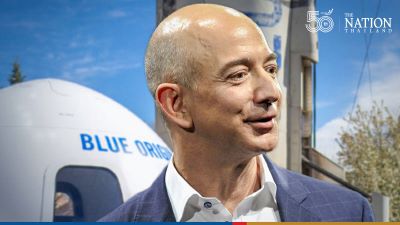
Jeff Bezos Blue Origin space company on Monday pressed its campaign to win a slice of NASAs lucrative lunar lander contract, filing a suit in federal court in an attempt to force NASA to fund a second spacecraft to ferry astronauts to and from the lunar surface.

The suit, filed in the Court of Federal Claims, comes about two weeks after the Government Accountability Office rebuffed Blue Origin’s protest of the NASA decision to award the $2.9 billion contract to develop the so-called Human Landing System solely to Elon Musk’s SpaceX. (Bezos owns The Washington Post.)

The suit filed Monday was under seal. But in a statement, Blue Origin said it was “an attempt to remedy the flaws in the acquisition process found in NASA’s Human Landing System. We firmly believe that the issues identified in this procurement and its outcomes must be addressed to restore fairness, create competition, and ensure a safe return to the Moon for America.”

The contract is one of the most significant NASA programs in some time and has been a target for Blue Origin for years. In 2017, before there was even a formal request for proposals, the company pitched NASA on a lunar lander for cargo. At the time, Bezos told The Post that he would invest a significant amount of his personal fortune to fund the spacecraft.

ADVERTISEMENTx

Blue Origin subsequently teamed up with Lockheed Martin, Northrop Grumman and Draper, bulwarks of the American defense system, to bid for the program. And last year NASA awarded the Blue Origin-led team the biggest award in the initial phase of contracts. Blue Origin won $579 million, Dynetics, an Alabama-based defense contractor, was awarded $253 million and SpaceX received $135 million.

But in April, NASA selected a single winner, SpaceX, to develop the spacecraft for what would be the first human landing on the moon since the last Apollo mission, in 1972. Given the funding for the initial round, the award was considered a major upset.

It was also a surprise, since NASA had said it wanted to fund two companies’ spacecraft. But it said it did not have enough money to pay for two lunar lander programs, and GAO ruled it was justified in offering the single contract. NASA has maintained that it would open competition for future moon landings.

SpaceX has proved itself to be one of NASA’s most trusted partners, flying three crews of astronauts to the International Space Station, for example, when the other participant in that program, Boeing, has stumbled badly. And its bid for the lunar landing contract was half Blue Origin’s $6 billion offering.

Since then, Blue Origin has tried every lever at its disposal – lobbying Congress, filing the suits and waging a public relations war – to overturn the SpaceX award. Blue Origin has claimed that SpaceX’s Starship spacecraft that would become the lunar lander is an “immensely complex and high risk” path for NASA to take since it would involve as many as 16 flights to fully fuel the spacecraft for a lunar landing.

ADVERTISEMENT

Many in the space community have bristled at that bare-knuckles approach, especially since it was aimed at SpaceX, which has won legions of fans for its success in creating a reliable transportation network to space. For years SpaceX has ferried cargo and supplies to the space station, and more recently astronauts. It has moved quickly on Starship’s development, even landing the vehicle on a recent test flight that went some six miles high.

Blue Origin, by contrast, has never flown to orbit, and the engines it is developing for that rocket, known as New Glenn, are behind schedule.

Musk has pushed back against Blue Origin’s claims about Starship’s complexity, writing on Twitter that “16 flights is extremely unlikely.” The maximum he said would be eight flights – and it could be as few as four – to fill the 1,200-ton tanks of the Starship version designed for the moon.

“However, even if it were 16 flights with docking, this is not a problem,” he wrote. “SpaceX did more than 16 orbital flights in first half of 2021 & and has docked with Station (much harder than docking with our won ship) over 20 times.”

He also tweeted an unflattering photo of a mock-up of Blue Origin’s lander being set up at a conference, writing, “Somehow, this wasn’t convincing.”

ADVERTISEMENT

There is already some concern among members of Congress that NASA is funding companies run by billionaires, and Bezos’ attempt to force more funding for his company is not a good look, said Lori Garver, who served as deputy NASA administrator during the Obama administration.

“In the realm of battling billionaires in space, nobody gets the higher ground by fighting,” she said. “It causes a negative backlash that we need to move beyond.”

Earlier this year, Sen. Maria Cantwell, a Democrat from Washington state, where Blue Origin is headquartered, introduced legislation that calls for NASA to fund another lunar lander. But so far Congress has not appropriated any additional funds.

Last month, Bezos wrote an open letter to NASA administrator Bill Nelson that said Blue Origin would make up for the funding shortfall that prevented NASA from awarding two contracts. Bezos offered two waive up to $2 billion in development costs over the next two years “to get the program back on track right now.”

NASA has not responded publicly to the offer, however, and has moved ahead with working with SpaceX on its Starship program, paying it a first installment of $300 million soon after the GAO rendered its decision, which lifted an automatic stay imposed by the protest.

But there is no automatic stay in the Court of Federal Claims, said Alan Chvotkin, a contracts attorney with the firm Nichols Lui. Blue Origin has asked for an injunction to block further NASA spending on the contract, a spokesperson for NASA said. The Justice Department is expected to object on NASA’s behalf.

Published : August 17, 2021

By : The Washington Post · Christian Davenport

Samsungs new foldable phones come with a price cut, but theyll still cost you at least $1,000 #SootinClaimon.Com
#SootinClaimon.Com : ขอบคุณแหล่งข้อมูล : หนังสือพิมพ์ The Nation.

https://www.nationthailand.com/tech/40004544

Samsungs new foldable phones come with a price cut, but theyll still cost you at least $1,000

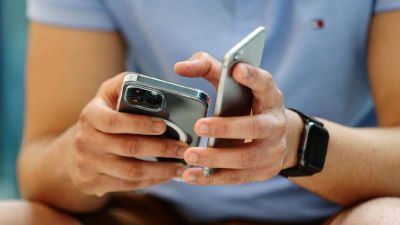
For years, weve been conditioned to think that our smartphones should look a certain way: slab-like rectangles that seem to get bigger and bigger every year.

But as those screens have expanded, some of us have struggled to fit them into hands and pockets, and others wondered if they could help us become even more productive. To solve both of those issues, companies including Samsung, Huawei and Motorola embraced flexible, bendable screens for smartphones, and after years of tinkering, they might finally be ready for a wider audience.

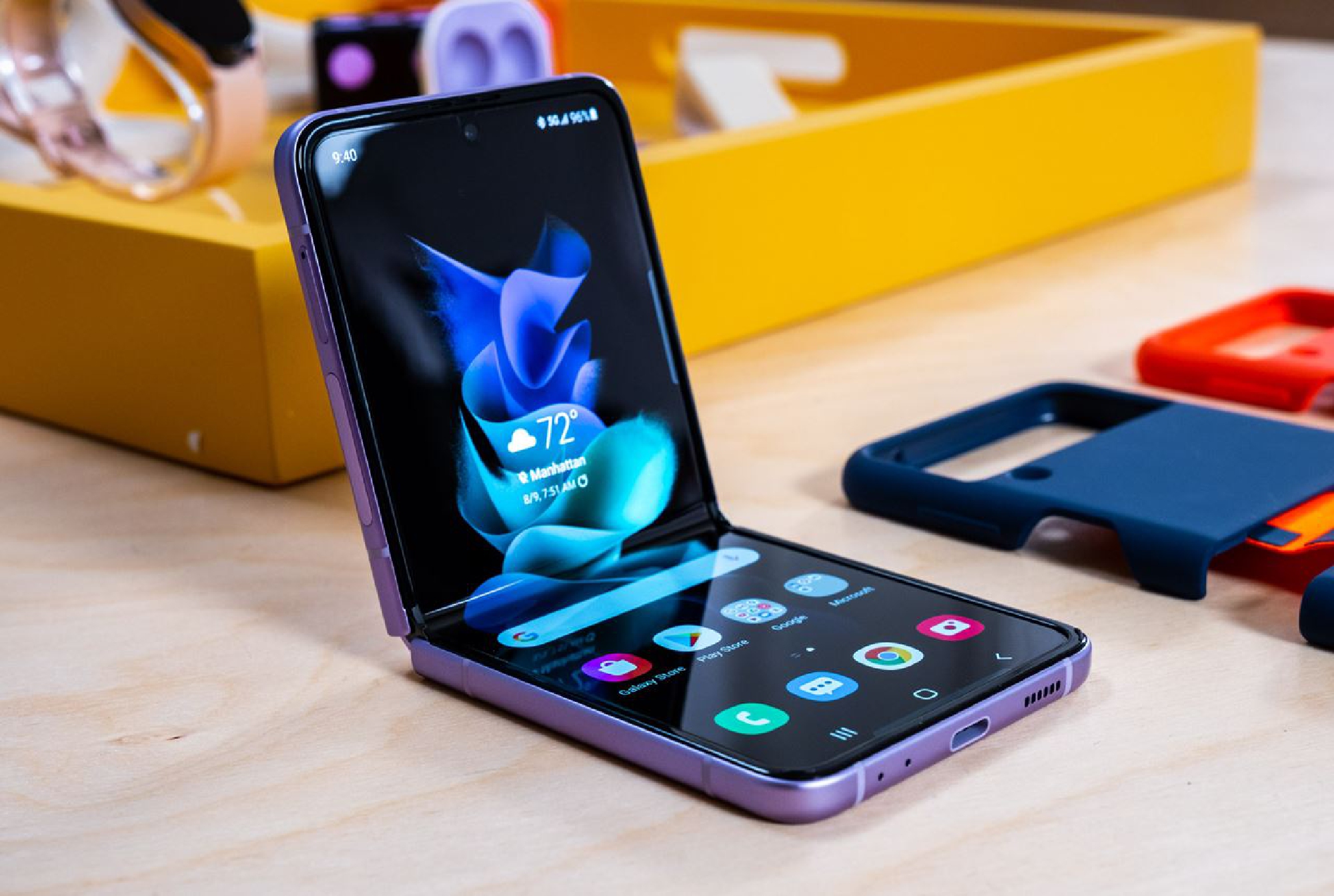
This week, Samsung unveiled a pair of new foldable devices called the Galaxy Z Flip 3 and Galaxy Z Fold 3. Thanks to advances in screen technology, you won’t have to pay an arm and leg – well, maybe just an arm. Samsung cut the price of its entry-level foldable device to $1,000, which means a folding phone could finally compete with Apple and its iPhone 12 Pros.

The first commercially available folding phones emerged in 2019, and in addition to being ludicrously expensive – think $2,000 – they also felt so experimental that few of us bought into the idea. Those who did had to live with lingering concerns over durability and software that wasn’t quite where it needed to be.

Since then, some of the software kinks have been ironed out, and companies have found ways to make these naturally fragile devices more resilient, but they’ve remained too pricey to appeal to a broad market. Samsung, though, hopes its unusual price cuts could help to jump-start a foldable craze around the world.

“We feel like we’re now in the realm of what people expect to pay for more traditional, high-end smartphones,” said Stephen Hawke, Samsung’s senior manager of mobile computing product strategy.

ADVERTISEMENTx

Pretty soon, you’ll have a big choice to make: Should you stick to a traditional smartphone, like an iPhone? Or should you take the plunge on a flippy, foldable device that just might fit into your life a little better? I spent a little time with both of Samsung’s very different folding phones. Here are my initial takeaways.

– Big phones can get smaller

In nearly all of my conversations with other smartphone owners, one complaint almost always came up: Phones are getting too big.

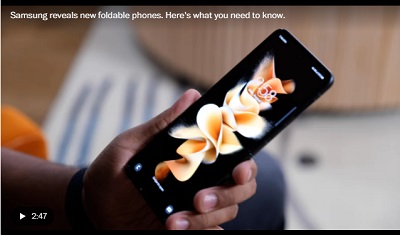
When it’s open, the Z Flip 3 is definitely a big phone: It has a tall 6.7-inch screen that looks and acts the same as a regular smartphone screen. (The only sign that the Z Flip 3 is unusual is the crease that runs midway down the display.) But here’s the fun part: You can channel your mid-2000s, flip-phone-owning self and snap that big screen shut, at which point the Z Flip 3 becomes a small square that slips into pockets and crammed purses without much fuss.

The Z Flip 3 has other qualities going for it, too, like a pair of high-quality 12-megapixel rear cameras and a Qualcomm Snapdragon 888 processor that helps the phone run as fast as some of the most expensive Android devices out there. There’s a 1.9-inch outward-facing screen, too, so you can read incoming messages and control your music without having to open the phone. And it comes with 5G support for the nation’s wireless carriers, though you may still be hard-pressed to see the difference most of the time.

Samsung also reinforced the phone’s flexible screen and the metal housing around it to better withstand wear and tear. It is water-resistant to the point where it should be able to shrug off an accidental dip in your bathtub. (Just be sure to fish it out as soon as you can.)

Fast performance is always helpful, and so is the fact that you probably won’t need to baby this phone as much as earlier models because of Samsung’s design changes. The draw here is that you get basically everything a regular, too-big smartphone has to offer in a package that collapses down to half its usual size.

Samsungs new foldable phones come with a price cut, but theyll still cost you at least $1,000Samsungs new foldable phones come with a price cut, but theyll still cost you at least $1,000
– Big phones can get even bigger

Samsung’s other new folding phone, the Galaxy Z Fold 3, couldn’t be any more different. If the company’s $1,000 foldable is all about portability, the Z Fold 3 is all about flexibility.

This phone costs $1,800 to start. That’s about $200 less than what last year’s model cost at launch, but it’s still a bitter pill for most people to swallow. Still, it helps that the Z Fold 3 is actually two gadgets in one – a phone and a small tablet.

When it is closed, this phone is absolutely enormous – for readers of a certain age, “chonky” might be the best way to describe it. Still, it has a narrow touch screen that stretches from edge to edge, so you can take phone calls, text your family or waste time on Instagram as you normally would. It’s not always pleasant, but the full smartphone experience is there when you need it.

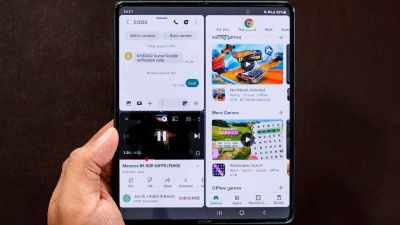
But when you open the Z Fold 3, it becomes a tiny tablet with a 7.6-inch screen that’s much better for watching videos or reading e-books. Let’s say you need to edit a document – you can prop the Z Fold 3 open like a laptop and type on a large keyboard that takes up half the screen. Samsung’s software doesn’t always make it clear or easy, but you can also run multiple apps side by side on that big screen.

This year’s Z Fold 3 has the same 5G support, high-powered processor and durable design changes as its cheaper sibling, but it does come with two more tricks that add to the phone’s appeal. For one, instead of using an ugly notch or a tiny hole for a camera to peer through, Samsung actually put a camera under that big, folding screen. Your selfies and video calls won’t look any better for it, but it’s a hint at where the future of smartphone design could lead us.

More important, this foldable phone also plays nice with certain versions of Samsung’s S Pen stylus. You’ll have to pay at least $50 extra for a compatible pen, but the additional cost might be worth it if you prefer to jot down notes – it only seems fitting, since the Z Fold 3 already opens up like a notebook.

As polished as these new phones sometimes feel, they still come with caveats. Some apps still aren’t built to work correctly on phone-tablet hybrids like the Z Fold 3, though Samsung is trying to fix this issue with its own software. Meanwhile, relatively few apps offer anything new or different on models like the Z Flip 3, but that also could change if flip-phone foldables become more popular.

For all the work Samsung has done, it can’t resolve these issues by itself. As ever, we’re locked in a waiting game until software developers – and regular smartphone shoppers – decide that folding phones are worth the investment.

Published : August 12, 2021

By : The Washington Post · Chris Velazco

Google limits ad targeting for teens, increases YouTube privacy #SootinClaimon.Com

#SootinClaimon.Com : ขอบคุณแหล่งข้อมูล : หนังสือพิมพ์ The Nation.

https://www.nationthailand.com/tech/40004493

Google limits ad targeting for teens, increases YouTube privacy


Google is limiting the targeted advertising of users younger than 18, among a series of changes by the search giant aimed at improving privacy protections for teens.

The Mountain View, California-based company said it will begin blocking advertising that targets teenagers based on data compiled about their age, gender and interests. Facebook Inc.’s Instagram recently announced a similar policy against targeting users under 18.

Google said in a blog post Tuesday that it’s also planning privacy changes across video site YouTube, standard Search, Google Assistant, location history, the Google Play Store and Google Workspace for Education.

On YouTube, the company by default will make private the videos uploaded by users ages 13 to 17. The automated privacy setting means videos of those users can only be watched by them or approved viewers. These teenagers, however, will be able to unlock their videos to be viewed publicly. YouTube will also, by default, include reminders for younger users to take a break and to go to sleep at bedtime as well as disable the autoplay of consecutive videos.

ADVERTISEMENTx

In search, Google said it is expanding its SafeSearch feature to filter out explicit results for users who are 13 to 18. This feature will also apply to Google Assistant on smart screens. The tool also lets users under 18 flag images of themselves that appear in Google Search for removal. The company also said it would no longer collect location history for the age group.

Google recently said it would add new data collection policy pages to the Google Play Store, mirroring a feature Apple launched last year. Protections for children in online services have gained a lot of attention in Silicon Valley lately. Apple last week announced new protections against explicit images in its Messages app and safeguards against the uploading of explicit or abusive images of children to iCloud Photo libraries.

Published : August 11, 2021

By : Syndication Washington Post, Bloomberg · Mark Gurman

Apple readies new iPhones with pro-focused camera, video updates #SootinClaimon.Com

#SootinClaimon.Com : ขอบคุณแหล่งข้อมูล : หนังสือพิมพ์ The Nation.

https://www.nationthailand.com/tech/40004492

Apple readies new iPhones with pro-focused camera, video updates


Apples next iPhone lineup will get at least three major new camera and video-recording features, which the company is betting will be key enticements to upgrade from earlier models.

The new handsets will include a video version of the phone’s Portrait mode feature, the ability to record video in a higher-quality format called ProRes, and a new filters-like system that improves the look and colors of photos, according to people familiar with the matter. The camera features are seen as some of the biggest selling points for the iPhone 12’s successor, which is expected to go on sale in the next several weeks.

Beyond the camera enhancements, the new iPhones will get relatively modest upgrades. Last year, Apple revamped the iPhone design, added 5G wireless networking and updated the camera hardware. For this year, the company will retain the same 5.4-inch and 6.1-inch regular sizes and 6.1-inch and 6.7-inch Pro screen dimensions, as well as their designs.

ADVERTISEMENTx

The new phones will include a faster A15 chip and a smaller notch, also known as the display cutout, in addition to new screen technology that could enable a faster refresh rate for smoother scrolling.

The Cupertino, California-based company typically unveils its new iPhones in September, but last year’s launch was delayed until October due to production complications stemming from Covid-19. With Apple now pushing back its office return by several weeks, the company’s next iPhone launch is likely to be virtual. An Apple spokeswoman declined to comment.

Apple first added Portrait mode to the iPhone 7 Plus in 2016, and it quickly become a fan favorite. The feature can put a person in sharp focus while blurring the background in what is known as a bokeh effect. For the new iPhones, Apple plans to add this same technique to video with a feature internally dubbed Cinematic Video. Like with still photos, the iPhone’s depth sensor will create the effect and allow users to change the amount of blur after recording.

A new ProRes video-recording feature will let iPhone users capture clips in a higher-quality format that gives editors more control during post-production.

The format is used by professional video editors in the film industry and isn’t normally intended for the mass market in part because of its large file sizes. ProRes will record in either HD and 4K resolutions on the next iPhones.

The ProRes feature would follow last year’s addition of ProRAW, a higher-quality still photo file format that gives professional editors more control. Like with ProRAW, the ProRes video recording may be exclusive to the pricier Pro models.

Another feature will let users better control the look of colors and highlights in their pictures. Users will be able to choose from several styles to apply to their photos, including one for showing colors at either a warmer or cooler temperature while keeping whites neutral. Another option will add a more dramatic look with deeper shadows and more contrast, and the company is planning a more balanced style for showing shadows and true-to-life colors with a brighter appearance.

The feature will differ from standard filters, available in the iPhone’s Camera app since 2013, by precisely applying changes to objects and people across the photos using artificial intelligence, rather than applying a single filter across the entire picture.

Apple’s new iPhones, codenamed D16, D17, D63 and D64, are just a few of the new devices poised to launch in the coming months. The company is also working on revamped MacBook Pros with in-house chips likely to be dubbed M1X, a redesigned iPad mini and an entry-level iPad geared at students. It’s also preparing new Apple Watches and entry-level AirPods.

Published : August 11, 2021

By : Syndication Washington Post, Bloomberg · Mark Gurman

Good vibes: The secrets behind the PS5 controller #SootinClaimon.Com

#SootinClaimon.Com : ขอบคุณแหล่งข้อมูล : หนังสือพิมพ์ The Nation.

https://www.nationthailand.com/tech/40004270

Good vibes: The secrets behind the PS5 controller


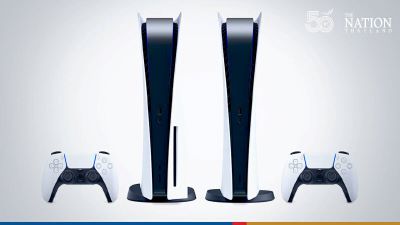
“Astros Playroom,” which comes free with the PlayStation 5, is a showcase for the PlayStation brand and the new consoles features – particularly the new DualSense controller. Since the games release, its inventive use of the controllers vibrations and feedback has become a running joke among some third-party developers as the impossible standard to reach.

The PlayStation 5 controller is undoubtedly one of the highlights of the new Sony console generation. Unlike its predecessor from eight years ago, the new DualSense controller emits specific vibrations tailored to different situations, upping the immersion level. As a character trudges through different video game terrain, moving from sand to grass, the sounds and vibrations evolve accordingly, mimicking stepping off a beach. It behaves similarly for virtual abilities, like shooting an arrow or firing a bullet. In those instances, the controller’s triggers can increase in tension, similar to drawing back a bow string, or produce recoil as if from a gunshot.

Toshimasa Aoki, a director on the PS5 product team, spoke to The Washington Post about the technology that went into making the new controller feel different in players’ hands. For starters, the team realized the new controller needed to be more immersive than the 2013 model.

“We started back in 2016, that was when the PS4 Pro and the PSVR were launching, so we were starting to plan what is the next thing we can do with the controller,” Aoki said. “Our goal was to create a next level of immersion, similar to how visuals and audio go up to the next level.”

The team decided to focus its efforts on haptic feedback and adaptive triggers, or in other words, the vibrations players feel coming out of the controllers, and the left and right triggers for shooting in-game guns and bows, using telekinetic powers and more. The very first test was to show a demo to developers of a virtual ball rolling in a box on a screen display. It showed how the ball’s texture could change from wood to plastic or metal, and that texture change could be reproduced in tactile fashion through vibrations. Tokyo-based developer Asobi, the studio behind “Astro’s Playroom,” was involved from this step onward, as the studio was conveniently located near the PS5 product team.

“We were able to hand them the prototypes early on and ask them to create a gameplay demo based on that,” Aoki said. “And early ones were the basic Astro bot walking on grass, walking on mud. And we were like, ‘Wow, it works.'”

From there, the team sent the gameplay demo to other studios, such as Naughty Dog, the makers of “The Last of Us,” and Santa Monica Studio, which made “God of War,” asking them what kinds of inputs and outputs they wanted the controller to have. After receiving their feedback, Sony continued iterating on the controller over several years.

When lead character Jin Sakai leaps and lands on his feet in the game “Ghost of Tsushima,” for instance, the PlayStation 4 controller lets out a generic rumble. The PlayStation 5 controller, by contrast, produces specific “pitter patter” vibrations.

“Just from a technology perspective, it was a big mass just rotating. So that’s why you couldn’t really direct where you feel it,” Aoki said of the PS4 controller tech. “But this time [with the PS5 controller], we have one each of voice coil actuators, which is like a small speaker. So it’s like an audio waveform, an analog waveform that independently vibrates on the left and right.”

ADVERTISEMENTx

The coils can move from side to side, and in specific directions, to make the action feel more real in games like “Astro’s Playroom” or Housemarque’s “Returnal.”

The L2 and R2 triggers are two of the most used buttons on the PlayStation 4 controller, so the team specifically wanted to innovate on them with adaptive triggers, Aoki said. To start, his team created a demonstration of the tech in virtual reality.

The new PlayStation 5 controller contains internal motors that push back against the triggers, creating a sense of resistance. Developers can choose to turn up that resistance by varying degrees, to differentiate the feeling of shooting a bow versus shooting a gun, for example.

To make the controller feel like players are truly drawing back a bow and arrow, Ember Lab chief operating officer Josh Grier said his studio added a “creaky nature” and a more gradual buildup to the adaptive triggers for the upcoming action-adventure game “Kena: Bridge of Spirits.”

“The tools are really fun to work with because you can just sit down and twist some knobs on the sound design side, and you can instantly feel the feedback on the controller,” Grier said.

Grier said his studio was given about a year to incorporate the PS5′s new controller features into the game. Some of the game’s later content, such as when Kena is wrapped up by some trees, as shown in a preview trailer, won’t have special haptics built in. The game is set to release August 24.

“We had already built the game, and we didn’t really have a lot of opportunities to do a lot of environmental stuff,” Grier said. “Most of our work with the haptics has been around [Kena’s] abilities. We’ll definitely look at, even thinking about game two, we’ve developed so many of these awesome tools and learned the ropes, taking that knowledge base into whatever we do next is going to be really valuable.”

Published : August 06, 2021

By : The Washington Post · Shannon Liao

New dispensing machine will boost number of jabs delivered daily by 20% #SootinClaimon.Com

#SootinClaimon.Com : ขอบคุณแหล่งข้อมูล : หนังสือพิมพ์ The Nation.

https://www.nationthailand.com/tech/40004239

New dispensing machine will boost number of jabs delivered daily by 20%


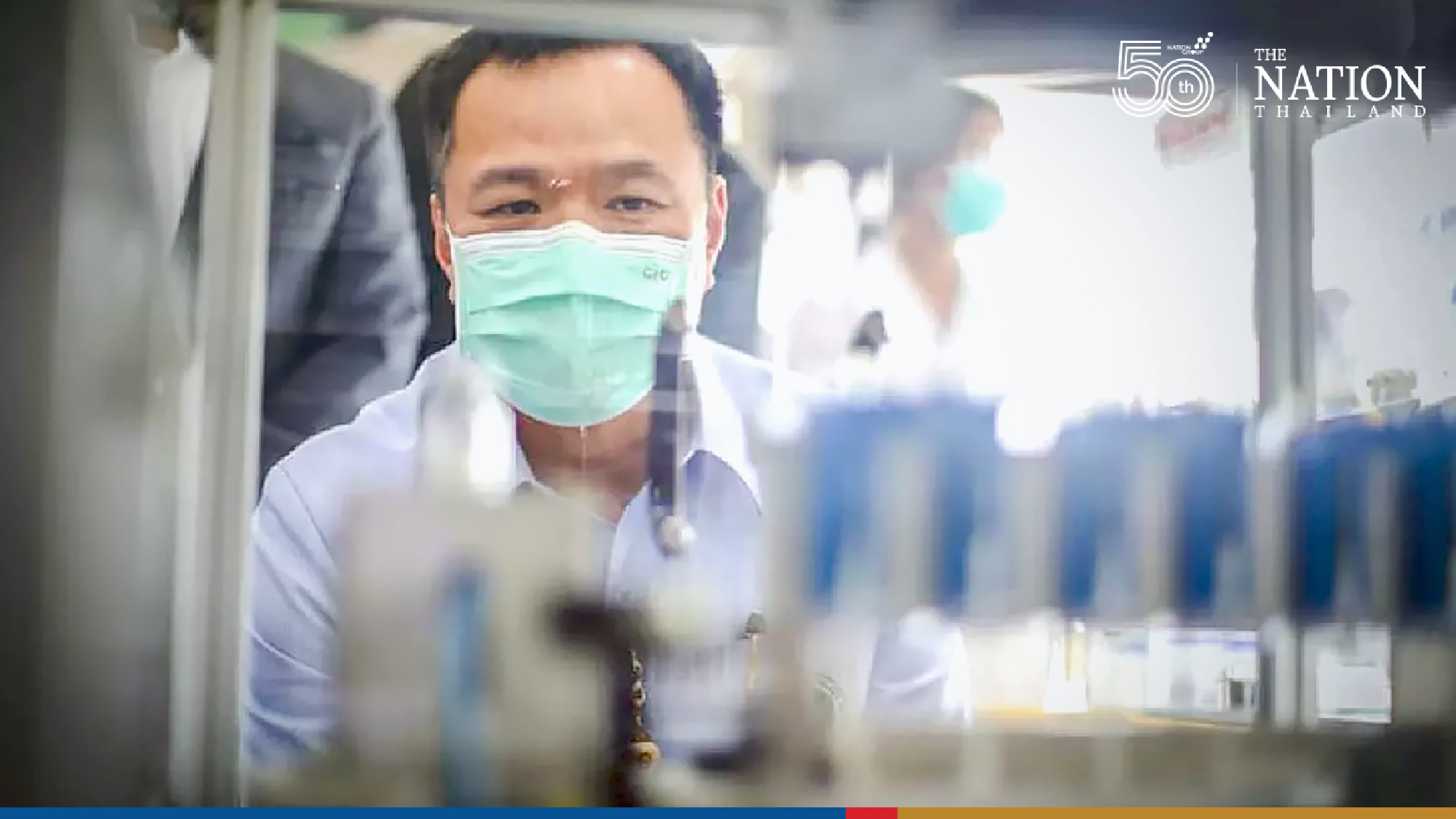
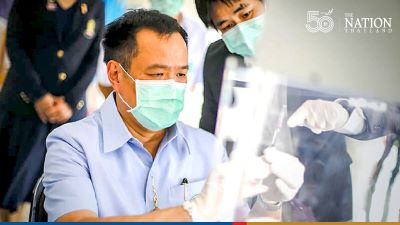
Chulalongkorn University’s Faculty of Science, in collaboration with private agencies, has developed an automatic vaccine dispenser in a bid to relieve the burden on medics.

Public Health Minister Anutin Charnvirakul said one 6.5 millilitre vial of the AstraZeneca vaccine is split into 12 doses of 0.5ml each.

“Since the demand for Covid-19 vaccines is high, the automatic dispenser was developed to use each vial effectively,” he said.

ADVERTISEMENTx

New dispensing machine will boost number of jabs delivered daily by 20%New dispensing machine will boost number of jabs delivered daily by 20%

He explained that the dispenser will fill 12 syringes equally within four minutes, which will increase the number of doses administered by 20 per cent.

“We will discuss the use of this machine in detail later,” he added.

Published : August 05, 2021

By : The Nation

While they were asleep, their Teslas burned in the garage. It is a risk many automakers are taking seriously. #SootinClaimon.Com

#SootinClaimon.Com : ขอบคุณแหล่งข้อมูล : หนังสือพิมพ์ The Nation.

https://www.nationthailand.com/tech/40004207

While they were asleep, their Teslas burned in the garage. It is a risk many automakers are taking seriously.


SAN FRANCISCO – Yogi and Carolyn Vindum were still asleep late last year when their Tesla Model S beamed an alert that charging was interrupted.

Twelve minutes after that, they awoke to a blaring car alarm and a fire consuming their house in San Ramon, Calif. The blaze had started in one of the two electric vehicles in their garage and spread to the other.

“If we had lived upstairs in this house, we’d be dead,” said Yogi Vindum, a retired mechanical engineer.

The fire, which has not previously been reported on in the news media, is one in a string of recent examples showing what can happen when electric cars are left parked in garages to charge overnight. The issue is causing mounting concern as a number of electric-vehicle makers have warned owners not to leave the cars charging unattended in certain circumstances, or sitting fully charged in garages.

Automakers including General Motors, Audi and Hyundai have recalled electric vehicles over fire risks in recent years and have warned of the associated dangers.

Chevrolet last year advised owners not to charge their vehicles overnight or keep their fully charged vehicles in garages. It recalled more than 60,000 of its Bolt electric vehicles over concerns about the cars spontaneously combusting while parked with full batteries or charging, after reports of five fires without prior impact damage. The company issued another recall last month covering the same vehicles after two reports of battery fires in repaired vehicles.

“We don’t think every vehicle has this rare manufacturing defect,” General Motors spokesman Dan Flores said. “But we can’t take a chance, so we’re recalling all the vehicles.”

ADVERTISEMENTx

รูปภาพนี้มี Alt แอตทริบิวต์เป็นค่าว่าง ชื่อไฟล์คือ tpuhxyrvvy8ig0gu6kxs.jpg

Tesla, which does not typically answer media inquiries, did not respond to a request for comment. A spokesman for Hyundai, which recently recalled Kona and Ioniq EVs and advised owners to park the vehicles outside, did not respond to a request for comment. Audi did not immediately have comment.

Automakers face numerous challenges as they race to get electric vehicles to consumers ahead of regulatory and company deadlines for shifting production away from gas-powered vehicles. They face skepticism about the availability of charging stations, concerns about vehicle range and apprehensions over cost. Fires have drawn attention because of the high-profile recalls and blazes that followed product rollouts, analysts say, further complicating the automakers’ calculations.

Tesla in the past has argued that its cars are 10 times less likely to catch fire than gas-powered vehicles, drawing on data from the National Fire Protection Association and U.S. Federal Highway Administration.

Still, safety experts note that the fires can burn more intensely and last much longer.

“Battery fires can take up to 24 hours to extinguish,” Tesla’s website says in an emergency response guide for the Model S. “Consider allowing the battery to burn while protecting exposures.”

Tesla owners have reported numerous fires involving older-model vehicles, though not all under the same circumstances. The Washington Post has documented at least five fires involving the Model S, including the blaze on Dec. 30, 2020, that destroyed much of the Vindums’ home in San Ramon. In that case, Yogi Vindum recalled, at least six firetrucks came to the home.

Also late last year, flames started shooting out of a five-year-old Tesla Model S in Frisco, Texas, and firefighters struggled to gain access to the cabin after the motorized doors failed to open. Tesla said in 2019 that it had sent investigators to the site of an explosion involving a Model S in a Shanghai car park. Surveillance video showed smoke billowing from the parked car before a fiery blast. In 2018, a Tesla Model S caught fire “out of the blue” on a Los Angeles street, said actress Mary McCormack, whose husband owned the vehicle. Tesla acknowledged that the flames came from the battery.

In late June, a new, top-of-the-line Tesla Model S “Plaid” was destroyed when it erupted in flames shortly after the owner took delivery of the vehicle.

Meanwhile, the National Highway Traffic Safety Administration has been investigating Tesla’s battery management system since 2019. The agency said Tuesday it does not comment on open investigations.

Tesla had come under scrutiny over concerns it allegedly manipulated battery software in older vehicles to lessen the risk of fire. The company has proposed a settlement over the issue, and Elon Musk tweeted late last month: “If we are wrong, we are wrong. In this case, we were.”

NHTSA opened an investigation into Chevrolet Bolt fires in October 2020, before the initial recall of that vehicle.

Battery-powered vehicles have not been shown to catch fire at rates higher than gasoline cars, but when fires do erupt, they burn longer and hotter, propelled by lithium-ion batteries that supercharge the blazes, experts say. Including gas-powered cars, the National Fire Protection Association says there were 189,500 overall highway vehicle fires in the United States in 2019, encompassing passenger and other types of road vehicles.

The case involving the Vindums’ cars is unique because it involved two electric vehicles parked next to each other in a garage, demonstrating the explosive force they can unleash when burning.

A fire inspection report obtained by the Vindums in July cited the Tesla Model S’s thermal management system as one of two possible causes of the fire, the other being a fault in the car’s electrical system as it was charging.

Tesla did not respond to a request for comment on the specifics of the Vindums’ case, including a short narrative of the events and the Vindums’ view of Tesla’s response to the fire.

Yogi Vindum, who described himself as a fan of Tesla’s, missed the initial alert to his iPhone at 5:25 a.m. In the garage, where the 2013 Tesla Model S 85 had been charging overnight, flames broke out and began spreading rapidly. The other Tesla Model S was parked next to it. The garage erupted in flames, with violent explosions powerful enough to blow off the metal garage doors, they said.

A blaring car alarm woke them up. The house was filling with smoke and alarms were going off as they escaped, he said.

From across the street, the Vindums watched as their home went up in flames. Footage from a nearby doorbell camera includes audible explosions.

The Vindums have not been able to live in their home since the Dec. 30 fire, which led to more than $1 million worth of damage, according to a report from the San Ramon Valley Fire Protection District, which was viewed by The Post.

“The firemen said it was so hot that they couldn’t walk up the driveway,” Vindum said.

Vindum eventually replaced the Teslas with a gasoline-powered Audi from the insurance payout, which covered the Blue Book values of the cars. He was disappointed, he said, in what he described as Tesla’s lack of interest after the fire. The charred shells of the cars sat in the couple’s driveway for weeks “waiting for Tesla to assess what went wrong.”

“They never showed as far as I know,” Vindum said.

The fire at his home changed his perspective on whether vehicle fires present a unique risk for owners of electric cars.

“Gasoline driven cars don’t catch fire in the garage when they’re sitting there. And that’s the difference,” he said. “I don’t worry about [my] Audi catching fire downstairs when it’s not running.”

Published : August 05, 2021

By : The Washington Post · Faiz Siddiqui