Chula research team comes up with innovative, fast, accurate, affordable Covid-19 test kit
With Covid-19 cases soaring in Thailand, a research team from Chulalongkorn University has come up with “Covid-19 Scan” – an innovative test kit that is more than 98 per cent accurate.
The team, led by Assoc Prof Dr Sanchai Payungporn from the Faculty of Medicine’s Department of Biochemistry, aimed to develop a kit that is convenient, fast, inexpensive and efficient.
“Those worried that they are at risk of Covid-19 infection but do not qualify for a test at the hospital can opt for the Covid-19 Scan kit, which is comprehensive and fast. The Chulalongkorn research team aims to create these kits as a service for the public to have the easiest access to screening,” Sanchai said.
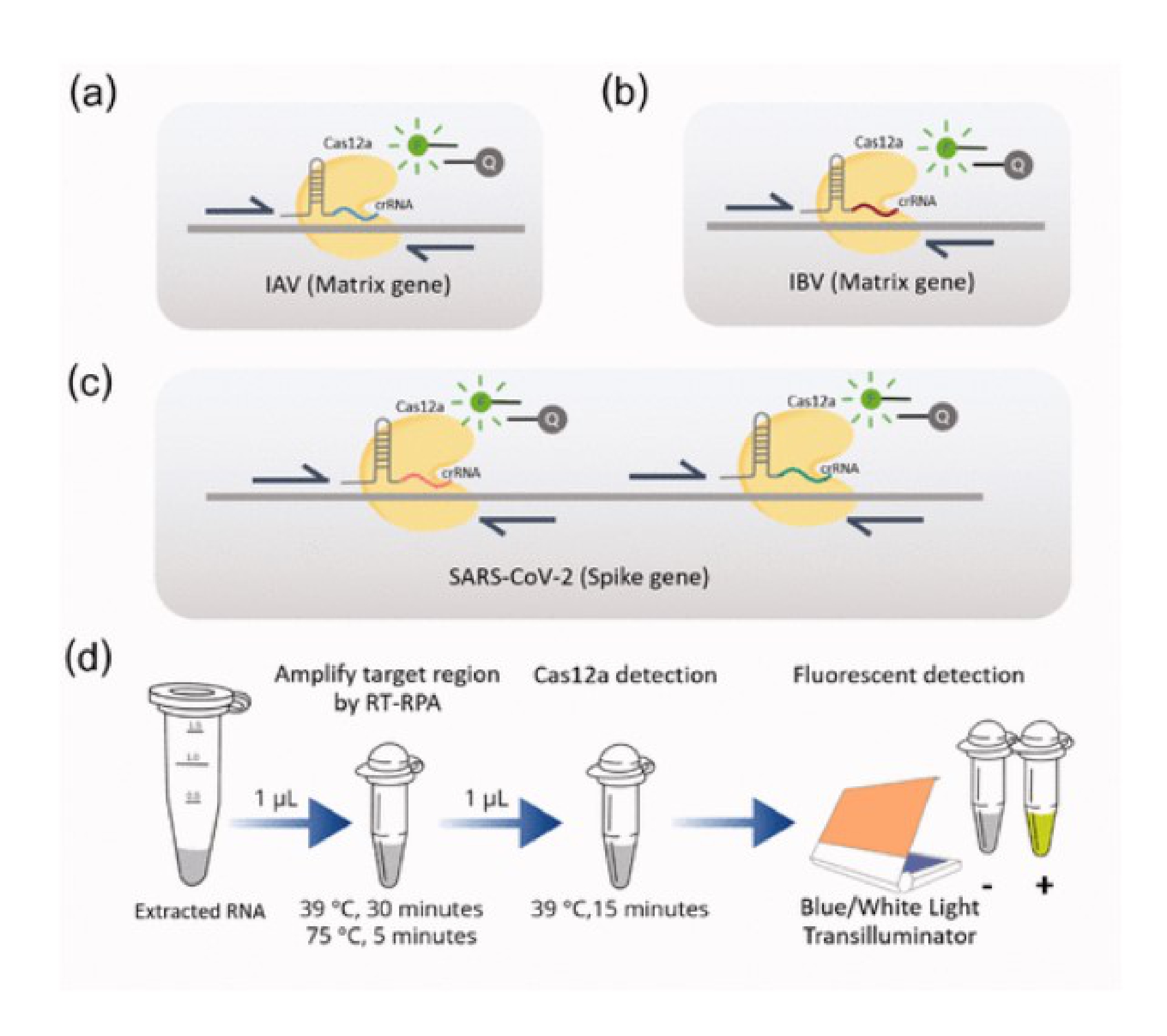
The Covid-19 Scan kit employs molecular testing, like the Real-time PCR method, using saliva swab samples. The advantage of using saliva samples is that they are easy to collect and have a high infection detection rate within the first 11 days of symptoms. Collection of saliva is also easier and less difficult than nasal swabs and can be done as often as necessary. The processing time can take up to two hours depending on the sample volume.
The Covid-19 Scan kits use genomic DNA extraction and propagation process under a single temperature. Then the specific genetic material is detected by the CRISPR-Cas12a system, and if it is positive, it will glow under a blue light transilluminator.
Chula research team comes up with innovative, fast, accurate, affordable Covid-19 test kit
The efficacy of the Covid-19 Scan in clinical diagnosis is 100 per cent specificity, 96.23 per cent sensitivity, and 98.78 per cent accuracy. It also uses simple tools and less storage space. It is suitable for provincial hospitals and general clinics that do not have expensive Real-time PCR machines, as well as proactive, off-site testing, such as in industrial estates.
However, the kits are not yet available for self-use as they still need to be administered by expert medical personnel. The Covid-19 Scan is also 50 per cent cheaper than a Real-time PCR test.
Covid-19 Scan kits are suitable for virus screening missions, including medical agencies that must regularly screen for infected persons, such as the Division of Nephrology or Department of Internal Medicine, that need to screen medical personnel and kidney disease patients before undergoing dialysis. The Thai Red Cross Aids Research Centre uses these kits to test HIV-infected volunteers at the HIV-NAT unit after receiving the Covid-19 vaccination to assess the effectiveness of the vaccine in patients. The kits have also been used regularly to screen medical personnel and patients before treatments at such places as San Pa Tong Hospital Dental Work Unit in Chiang Mai.
Hospitals, medical agencies or companies interested to learn more about the “Covid-19 Scan” kits can visit http://www.covidscan.tech/ or email Micro Injection Company at covid19scan@bkf.co.th, or call Somruedee at (092) 247 0019 or Maneerat at (082) 299 6333.
How do you teach robots to navigate new places? Study toddlers.
Facebook developed what it calls a foundational “breakthrough” in the race to create more humanlike robots: software that enables machines to learn to walk like toddlers.
Humans are very efficient at maneuvering. As kids, we figure out how to adjust our stride and cadence to trek through mud, water, and up and down hills with ease. Through trial and error, we adapt, figuring out the best ways to move our feet according to real-time situations. And we can do this while toting a variety of objects, either in our hands or on our backs.
It’s tough to program robots to make instantaneous adjustments to their legs and feet to accommodate such a variety of tasks, mainly because it’s hard to train them to deal with corner cases, or objects and environments they’ve never seen before.
This is one of the main things AI struggles with today, said David Cox, IMB director of the MIT-IBM Watson AI Lab, a collaborative effort between IBM and the Massachusetts Institute of Technology. “How do you build systems that can adapt to all the corner cases they may see?”
Advanced robot navigation could revolutionize services in a wide range of fields such as emergency response, agriculture, autonomous driving and manufacturing. It could hold the key to more complex chore robots. But it also requires teaching machines to act in the same way humans do subconsciously, based on lived experience – something that, at best, would be tedious and potentially impossible.
Humans learn to navigate new environments by stumbling and trying again. But that’s an expensive and lengthy undertaking when applied to robots, which need to be fixed or have their code tweaked when damaged. Researchers try to avoid this by simulating new environments and adjusting robot brains accordingly.
It’s a challenge Facebook says it has solved in collaboration with the University of California, Berkeley and Carnegie Mellon University.
First, researchers used simulations to train AI to respond to various environmental conditions, such as slippery ground or a sudden incline. Then, they taught a generic dog-like robot to learn from its mistakes and keep walking as far as possible despite sudden changes to its environment. They layered the two strategies, and together they “enable the robot to perform robust and adaptive locomotion without any fine tuning,” Facebook says.
What this means is that AI allows them to adapt to factors in their environment without having seen them first. Rather than trying to avoid disruptions, they learn from surprises and move with them. Through the observation AI, each new leg movement is informed by previous ones. Obstacles that push against the robot’s feet or legs can reveal information about the ground around it. The AI learns from that.
The so-called Rapid Motor Adaptation software might allow companies to create cheaper automated machines that figure out how to operate at peak performance with more affordable, not-as-accurate hardware.
Cheaper robots are a critical step toward more advanced robots in more fields. Facebook showed off its AI development in a video.
An eerie four-legged robot is shown pacing through the woods with relative ease. But when brought inside and tested in other situations, such as slippery surfaces, it had balance issues and difficulty walking. In one example, when weighted bags were placed on its back, the robot fell over. With Facebook’s AI software enabled, it wobbled but managed to stay upright and keep walking when the bags were tossed onto it. There are no cameras on the device. All of the robot’s movements were guided by sensors in its feet and various joints, which allow it to experience the world through “touch.”
Researchers compare it to what happens when humans try to walk on the sand at the beach for the first time. “The first few steps are awkward, but after a few steps, you’re walking on a beach as normally as you would on a hard road surface,” said Jitendra Malik, a computer vision researcher at Facebook AI and UC Berkeley. The team studied scientific literature on how children learn to walk to inform their project.
Facebook isn’t the only big tech firm trying to create software that makes robots act more like real people.
IBM, for instance, is researching AI methods that simulate raising a baby to understand what “common sense” knowledge a child gains, which can be applied to robotics. Last year, Google published a framework for wheeled robots to move through “unforeseen environments.” Boston Dynamics, a pioneer in agile, mobile robots, has a system on its Spot robots so they can “feel” the ground beneath them to try to avoid falling in low visibility.
Facebook’s system was built on a $2,700 Unitree robot. Boston Dynamics’ Spot robot costs $74,500.
Flying taxi startup Whisper Aero aims to keep noise levels down
Endless encounters with swarms of bees.
This is the cacophonous scenario that we might be rushing towards as investors pour heroic amounts of money into companies developing ever better drones and their bigger cousins, vertical take-off and landing passenger vehicles. Because, while the underlying technology behind these machines has improved at impressive speed, the simple fact remains that, big or small, these aircraft produce a lot of noise and not much has been done to curb it. If a drone has ruined your peaceful day at the beach, imagine your nerves with 10,000 flying taxis overhead.
A startup called Whisper Aero, which is disclosing its plans for the first time, thinks it may be well on its way to solving this noise problem. The company was founded in mid-2020 by Mark Moore, a former National Aeronautics and Space Administration engineer turned executive within Uber Technologies’s once bustling flying vehicle division. While declining to reveal what he has come up with in full detail out of intellectual property protection concerns, Moore is convinced that Whisper has hit on a new “thruster” design that will result in consumer drones right on up to large passenger vehicles blending into the background noise of a city as they fly.
“Half the people think drones are cool, and half of them are so annoyed,” Moore says. “They’re annoyed because there is this really aggravating noise source that should not be there. It sounds like a flying Cuisinart and makes people really uncomfortable. If you want the public to buy into the idea of more and more of these things appearing, you can’t annoy them, and you can’t scare them.”
Few, if any, individuals would be better suited to try and crack such a long-standing issue in this field. Moore spent thirty years within NASA’s research groups, working on cutting-edge designs around drones and electric aircraft. In 2010, he published a paper that focused on the possibilities of all-electric aircrafts that could take off and land vertically, and his research helped kickstart interest in the so-called eVTOL machines now pursued by dozens of start-ups. In 2017, Moore joined Uber Elevate to try and help Uber create a giant fleet of flying vehicles that could soar over traffic.
As the pandemic set in, however, Uber abandoned its sci-fi plans last year and sold off its Elevate technology to Joby Aviation, a startup backed by Toyota and recently valued at $6.6 billion that some people regard as the most promising eVTOL contender. Rather than stay on at Joby, Moore opted to pursue ideas he’d been tinkering with for five years around ways to make quieter vehicles. He used some of his Uber money to buy a distressed resort in Crossville, Tennessee, and set it up as Whisper’s secluded headquarters and research and development compound. “The bank was foreclosing on it, and I got a steal of deal,” Moore says. “It’s 16 acres and has a lake with a beautiful beach and is right next door to a great little airport.”
According to Moore’s count, there are about 400 companies trying to make eVTOL aircraft. Many of these vehicles are being built by hobbyists and small teams, while a couple dozen companies have received substantial funding to really go after the market. Most of the early versions of these vehicles look similar. They’re basically small planes that have electric motors running somewhere between four and twelve propellers. The big race at the moment is to make prototypes that work and have the vehicles certified as safe to fly by regulators.
Moore is convinced that the noise produced by this first wave of eVTOL vehicles will limit their success. While they’re quieter than helicopters, the aircraft still produce that swarm of bee-like buzz. Part of the problem, as Moore sees it, is that companies declined to deal with the noise in their rush to get aircraft to market. “Everyone is taking the path of least resistance,” he says.
While reticent to describe Whisper’s technology, Moore said that the company is creating a new type of thruster design. This includes a novel take on propellers, motors, control systems and how all of these components fit into a vehicle’s airframe. Whisper has been running experiments with its technology on drones as part of a contract with the Air Force. Engineers take their prototypes to the resort’s tennis and basketball courts and surround them with microphones to measure the noise signature. So far, the technology has been working with the devices’ hum blending into the surroundings. “Right now, the industry is in the propeller age,” Moore says. “We will take it into the electric jet age.”
Whisper will reveal more about its technology in the coming months, Moore says, as its patents work their way through the approval process. The company plans to start selling its first products by 2023 and expects them to be purchased by drone makers. From there, it wants to sell the thrusters to eVTOL makers, which will be no easy feat. The companies will likely need to redesign their aircraft and possibly re-certify them with regulators because of the addition of the new technology. Whisper says the technology eventually can carry over to other industries.
Seongkyu Lee, an associate professor of mechanical and aerospace engineering at University of California, Davis, is skeptical that there will be an instant breakthrough on the noise reduction front. Drones and eVTOL aircraft produce a type of higher frequency noise – known as broadband noise – that is particularly annoying to humans. “The next steps in noise reduction will be gradual,” Lee says. “I don’t think we can get a 10 or 20 decibel reduction in one shot. But, if we want to move these things into neighborhoods, we will have to figure out how to make them quieter.”
So far, Whisper, which has 11 employees, has raised $7.5 million from investors, including Robert Downey Jr.’s FootPrint Coalition Ventures. “Creating unchecked noise pollution for the sake of electric aviation’s vital future is a problem,” Downey said in a statement. “The future needs to be as considerate as it is compelling.” Because, of course, Iron Man wants his air taxis to be quiet air taxis.
Other investors include Menlo Ventures, Lux Capital and Kindred Ventures. Shawn Carolan, a partner at Menlo Ventures, concedes that Whisper faces plenty of “hard engineering problems” ahead but believes that just about every drone and eVTOL company will flock to the company’s products if they work as billed. “Every once in a while, you see one of these things that I call technological inevitabilities,” he says. “This has the potential to change the world dramatically.”
Published : July 13, 2021
By : Syndication Washington Post, Bloomberg · Ashlee Vance
● With more than 3 million registered users, the mySugr, a digital diabetes management, that aims to simplify life with diabetes. ● The mySugr app is an integral part of Roche’s open ecosystem and its primary patient interface, supporting people with diabetes in their daily therapy management.
Roche today announced that the mySugr app is now available in Thailand in English language. Users of mySugr can track relevant diabetes data wirelessly on their Apple or Android smartphones, supporting their daily diabetes management. In combination with the open ecosystem from Roche, the app enables data sharing capabilities and connects people with diabetes with their caregivers.
With a prevalence of 8.3% for the number of adults (20-79 years) with impaired glucose tolerance, Thailand is among the top ten countries in the world with the highest prevalence of diabetes in the world. The mySugr app makes it quick and easy to collect relevant therapy data in one place through a growing number of connected devices, such as the Accu-Chek Guide or the Accu-Chek Instant blood glucose meters, and integrations with other solutions, such as Apple Health providing data-driven decision support for users. Some of its key features include a personalised logging screen, an estimated HbA1c, an overview of the past 7, 14, 30 and 90 days and a blood glucose graph representing logged blood sugar values.
Roche launches the mySugr® App in Thailand
Speaking on the significance of the launch in Thailand, Mihai Irimescu, Head of Roche Diabetes Care in the country said: “We’re very happy and proud to bring the mySugr app, which supports diabetes treatment through data management, to people living with the condition in Thailand. Data plays a key role in diabetes management. It helps people living with diabetes manage their daily diabetes routine, and healthcare professionals to adjust therapy. However, collecting and managing diabetes data is usually cumbersome and time-consuming. The mySugr app simplifies life with diabetes, making it quick and easy to collect relevant therapy data in one place through a growing number of connected devices, integrations and manual entry. We look forward to hearing the success stories as a result of introducing this digital solution in Thailand.”
The mySugr app simplifies life with diabetes
Through manual log entries, users can additionally include information about the insulin therapy, current and target blood glucose levels, stress levels, medication, carbohydrate intake or details of activities. Furthermore, the mySugr app provides motivational triggers, feedback on the current therapy status and attractive feature; mySugr monster for staying motivated to stick to the therapy, and therefore increasing therapy compliance. Besides the Basic app version, users connecting an Accu-Chek meter to the mySugr app are automatically changed to mySugr PRO. The PRO version offers access to valuable features such as comprehensive PDF and Excel reports that can be shared for example via email with healthcare professionals, a photo function to remember meals taken, a search tool to detect patterns in the daily diabetes management.
Integration with the RocheDiabetes Care Platform
mySugr users will also be able to integrate data into the RocheDiabetes Care Platform, a state of the art clinician software providing meaningful, actionable insights and a user friendly format, which has been available in Thailand since mid 2020. This is a holistic, patient-centred therapeutic approach with the goal of personalising diabetes management to streamline care and facilitate communication between patients and their healthcare team.
The integration of mySugr user data into the RocheDiabetes Care Platform will allow people with diabetes to share data remotely from their mySugr Logbook with their healthcare professional, enabling them to more easily discuss therapy-relevant data with healthcare professionals, and receive more personalised therapy adjustments.
Southeast Asia’s Millennials (aged 25-40) and Boomers (57-75) are wary of future technology, according to new research by internet security firm Kaspersky.
The research, “Making Sense of Our Place in the Digital Reputation Economy”, was conducted last November and asked 831 social media users in the region about their level of fear regarding current technological trends. More than half (62%) are afraid of deepfakes, with highest fear level among Baby Boomers (74%) and lowest among Gen X (58%).
Deepfakes use artificial intelligence to create images, audio, or voice recordings in someone else’s likeness. Deepfake videos have been used for political purposes, as well as for personal revenge. Increasingly, they are also being used in major attempts at blackmail and fraud.
For instance, the CEO of a British energy firm was tricked out of $243,000 (7.9 million baht) by a deepfake of the head of his parent company requesting an emergency transfer of funds.
SEA respondents are less worried but still wary about biometrics or the use fingerprint/eye/facial scanners (32%), smart devices (27%), and robots like robotic cleaners (15%).
Respondents were also asked about their negative experiences online.
The most common, experienced by more than 3-in-10 respondents, was account takeover. More than a quarter (29%) also reported exposure of their secret information.
Over 2-in-10 said someone had forcibly gained access to their devices (28%), their private information was either stolen or used without consent (24%) or was seen publicly (23%).
Aftermaths of these incidents include receiving spam and adverts (43%), stress (29%), embarrassment or offence (17%), reputational damage (15%), and monetary loss (14%).
“Our survey proves that unfortunate incidents can happen online and have real-life repercussions,” said Kaspersky’s managing director for Asia Pacific, Chris Connell.
“Technologies are meant to evolve for the greater good, but there are always learning curves where some amount of fear with action will be vital.”
Meanwhile, the same research revealed almost 2-in-10 users in the region still believe that internet security software is not required to protect their online lives. This perception is highest with Gen Z (17%), followed by millennials (16%) and Gen X and boomers (15%).
“This is a cause of concern as we humans are prone to making errors from time to time and such solutions are meant to be our safety nets,” said Connell. “While there is no silver bullet when it comes to cybersecurity, it is still important to have basic defences in place. Business owners should particularly look into this as their IT infrastructure continues to flow from their safer enterprise networks to more vulnerable individual households.”
Picture a desert battlefield, scarred by years of warfare. A retreating army scrambles to escape as its enemy advances. Dozens of small drones, indistinguishable from the quadcopters used by hobbyists and filmmakers, come buzzing down from the sky, using cameras to scan the terrain and onboard computers to decide on their own what looks like a target. Suddenly they begin divebombing trucks and individual soldiers, exploding on contact and causing even more panic and confusion.
This isn’t a science fiction imagining of what future wars might be like. It’s a real scene that played out last spring as soldiers loyal to the Libyan strongman Khalifa Hifter retreated from the Turkish-backed forces of the United Nations-recognized Libyan government. According to a U.N. group of weapons and legal experts appointed to document the conflict, drones that can operate without human control “hunted down” Hifter’s soldiers as they fled.
Drones have been a key part of warfare for years, but they’ve generally been remotely controlled by humans. Now, by cobbling together readily available image-recognition and autopilot software, autonomous drones can be mass-produced on the cheap.
Today, efforts to enact a total ban on lethal autonomous weapons, long demanded by human rights activists, are now being supported by 30 countries. But the world’s leading military powers insist that isn’t necessary. The U.S. military says concerns are overblown, and humans can effectively control autonomous weapons, while Russia’s government says true AI weapons can’t be banned because they don’t exist yet.
But the facts on the ground show that technological advancements, coupled with complex conflicts like the Syrian and Libyan civil wars, have created a reality where weapons that make their own decisions are already killing people.
“The debate is very much still oriented towards the future,” said Ingvild Bode, an autonomous weapons researcher at the University of Southern Denmark. “We should take a much closer look at what is already going on.”
Libya wasn’t the only place drones that can kill autonomously were used last year. Turkey has used the same quadcopters to patrol its border with Syria. When Azerbaijan invaded Armenian-occupied territory in September, it sent in both Turkish- and Israeli-made “loitering munitions” – drones that can autonomously patrol an area and automatically divebomb enemy radar signals. These weapons look like smaller versions of the remote-controlled drones that have been used extensively by the U.S. military in Iraq, Afghanistan and other conflicts. Instead of launching missiles through remote control, though, loitering munitions have a built-in explosive and destroy themselves on impact with their target.
Since they have both remote-control and autonomous capability, it’s impossible to know from the outside whether humans made the final call to bomb individual targets. Either way, the drones devastated Armenia’s army, and the war ended two months later with Azerbaijan gaining huge swaths of territory.
These kinds of weapons are moving firmly into the mainstream. Today, there are dozens of projects by multiple governments to develop loitering munitions. Even as countries like the United States, China and Russia participate in discussions about a treaty limiting autonomous weapons, they’re racing ahead to develop them.
“The advanced militaries are pushing the envelope of these technologies,” said Peter Asaro, a professor at the New School in New York and a co-founder of the International Committee for Robot Arms Control, which advocates for stricter rules around lethal autonomous weapons. “They will proliferate rapidly.”
ADVERTISEMENT
Over the past decade, cheaper access to computers that can crunch massive data sets in a short time has allowed researchers to make huge breakthroughs in designing computer programs that pull insights from large amounts of information. AI advances have led to machines that can write poetry, accurately translate languages and potentially help scientists develop new medicines.
But debates about the dangers of relying more on computers to make decisions are raging. AI algorithms are only as good as the data sets they were trained on, and studies have shown facial recognition AI programs are better at identifying White faces than Black and Brown ones. European lawmakers recently proposed strict new rules regulating the use of AI.
Companies including Google, Amazon, Apple and Tesla have poured billions of dollars into developing the technology, and critics say AI programs are sometimes being deployed without full knowledge of how they work and what the consequences of widespread use could be.
Some countries, such as Austria, have joined the call for a global ban on autonomous weapons, but U.S. tech and political leaders are pushing back.
In March, a panel of tech luminaries including former Google chief executive Eric Schmidt, then-chief of web services, now chief executive of Amazon Andy Jassy and Microsoft chief scientist Eric Horvitz released a study on the impact of AI on national security. The 756-page final report, commissioned by Congress, argued that Washington should oppose a ban on autonomous weapons because it would be difficult to enforce, and could stop the United States from using weapons it already has in its arsenal.
ADVERTISEMENT
“It may be impossible to define the category of systems to be restricted in such a way that provides adequate clarity while not overly constraining existing U.S. military capabilities,” the report said.
In some places, AI tech like facial recognition has already been deployed in weapons that can operate without human control. As early as 2010, the arms division of South Korean tech giant Samsung built autonomous sentry guns that use image recognition to spot humans and fire at them. Similar sentry guns have been deployed by Israel on its border with the Gaza Strip. Both governments say the weapons are controlled by humans, though the systems are capable of operating on their own.
But even before the development of facial recognition and super-fast computers, militaries have turned to automation to gain an edge. During the Cold War, both sides developed missile defense systems that could detect an enemy attack and fire automatically.
The use of these weapons has already had deadly effects.
In March 2003, just days after the invasion of Iraq by the United States and its allies began, British air force pilot Derek Watson was screaming over the desert in his Tornado fighter jet. Watson, a squadron commander, was returning to Kuwait in the dead of night after bombing targets in Baghdad. Another jet, crewed by Kevin Main and Dave Williams, followed behind.
Twenty thousand feet below, a U.S. Army Patriot missile battery’s computer picked up one of the two jets, and decided it was an enemy missile flying straight down toward it. The system flashed alerts in front of its human crew, telling them they were in danger. They fired.
Watson saw a flash and immediately wrenched his plane to the right, firing off flares meant to distract heat-seeking missiles. But the missile wasn’t targeting him. It shot up and slammed into Main and Williams’s plane, killing them before they had time to eject, a Department of Defense investigation later concluded.
“It’s not something I’ll ever forget,” Watson, who left the Royal Air Force in the mid-2000s and is now a leadership coach, recounted in an interview recently. “As a squadron commander, they were my guys.”
Patriot missile crews were warned about operating on autonomous mode, but it took another friendly-fire incident almost two weeks later, when the system shot down and killed U.S. Navy F-18 pilot Nathan Dennis White, for strict rules to be put in place that effectively stopped the missile batteries from operating for the remainder of the war.
Weapons like the Patriot usually involve a computer matching radar signatures against a database of planes and missiles, then deciding whether the object is a friend or foe. Human operators generally make a final call on whether to fire, but experts say the stresses of combat and the tendency to trust machines often blurs the line between human and computer control.
“We often trust computer systems; if a computer says I advise you to do this, we often trust that advice,” said Daan Kayser, an autonomous weapons expert at Dutch peace-building organization PAX. “How much is the human still involved in that decision-making?”
The question is key for the U.S. military, which is charging ahead on autonomous weapons research but maintains that it won’t ever outsource the decision to kill to a machine.
In 2012, the Defense Department issued guidelines for autonomous weapons, requiring them “to allow commanders and operators to exercise appropriate levels of human judgment.”
Though a global, binding treaty restricting autonomous weapons looks unlikely, the fact that governments and weapons companies are stressing that humans will remain in control shows that awareness around the risks is growing, said Mary Wareham, a Human Rights Watch director who for years led the Campaign to Stop Killer Robots, an international effort to limit autonomous weapons.
And just like land mines, chemical weapons and nuclear bombs, not every country needs to sign a treaty for the world to recognize using such weapons goes too far, Wareham said. Though the United States has refused to sign on to a 2010 ban against cluster munitions, controversy around the weapons led U.S. companies to voluntarily stop making them.
Still, the pandemic has slowed those efforts. A meeting in Geneva scheduled for the end of June to get discussions going again was recently postponed.
The U.S. and British militaries both have programs to build “swarms” of small drones that operate as a group using advanced AI. The swarms could be launched from ships and planes and used to overwhelm a country’s defenses before regular troops invade. In 2017, the Pentagon asked for proposals for how it could launch multiple quadcopters in a missile, deposit them over a target and have the tiny drones autonomously find and destroy targets.
“How can you control 90 small drones if they’re making decisions themselves?” Kayser said. Now imagine a swarm of millions of drones.
The U.S. military has also experimented with putting deep-learning AI into flight simulators, and the algorithms have shown they can match the skills of veteran human pilots in grueling dogfights. The United States says AI pilots will only be used as “wingmen” to real humans when they’re ready to be deployed.
Similar to other areas where artificial intelligence technology is advancing, it can be hard to pinpoint exactly where the line between human and machine control lies.
“Just like in cars, there is this spectrum of functionality where you can have more autonomous features that can be added incrementally that can start to, in some cases, really blur the lines,” said Paul Scharre, a former Special Operations soldier and vice president and director of studies at the Center for a New American Security. He also helped draft the Pentagon’s guidelines on autonomous weapons.
Autonomy slowly builds as weapons systems get upgraded over time, Scharre said. A missile that used to home in on a single enemy might get a software upgrade allowing it to track multiple targets at once and choose the one it’s most likely to hit.
Technology is making weapons smarter, but it’s also making it easier for humans to control them remotely, Scharre said. That gives humans the ability to stop missiles even after they’re launched if they realize after the fact they might hit a civilian target.
Still, the demand for speed in war will inevitably push militaries to offload more decisions to machines, especially in combat situations, Kayser said. It’s not hard to imagine opposing algorithms responding to each other faster than humans can monitor what’s happening.
“You saw it in the flash crashes in the stock market,” Kayser said. “If we end up with this warfare going at speeds that we as humans can’t control anymore, for me that’s a really scary idea. It’s something that’s maybe not even that unrealistic if these developments go forward and aren’t stopped.”
WASHINGTON – With a massive ransomware attack last week intensifying pressure on the Biden administration to demonstrate it can curb the threat, top national security officials briefed the president Wednesday on the governments efforts to counter and blunt the impact of the costly, increasingly brazen assaults by Russia-based hackers.
While intelligence officials have not publicly attributed the latest attack, a group known as REvil, which U.S. officials say privately operates largely from Russia, has taken responsibility for striking up to 1,500 companies in the United States, Europe and Asia. It was, experts say, the single largest such cyberattack to date.
White House officials next week are to resume talks with Russian officials about the threat, a dialogue that began after President Joe Biden warned Russian President Vladimir Putin that the United States would hold Moscow responsible for cyberattacks originating from Russia even if they cannot be directly linked to the Kremlin.
“If the Russian government cannot or will not take action against criminal actors residing in Russia, we will take action or reserve the right to take action on our own,” White House press secretary Jen Psaki said Tuesday.
Although last week’s attack on the Miami-based IT software firm Kaseya appears to have caused what Biden called “minimal damage” to U.S. businesses, it was concerning enough that personnel at key federal agencies worked through the July 4 holiday weekend to assess the damage – work that is ongoing, the president added.
Such disruptive cyberattacks that have been locking up the networks relied on by hospitals, schools and industry – with hackers demanding large sums of money to unlock them – are seen as a more pressing threat today than traditional, limited espionage carried out by governments against other governments, political parties and other targets.
Wednesday’s briefing included top officials from the departments of State, Justice, Homeland Security and the intelligence community. Psaki noted that ransomware attacks are not new. “What is new is this level of engagement at the highest level – ongoing high-level engagement from our national security officials with the Russian government, and expert-level talks about cyber and ransomware attacks,” she said after the briefing.
The White House hopes to build a multifaceted strategy focused on hardening cyberdefenses, diplomatic outreach to American allies and potentially targeted offensive responses, including the disruption of computer infrastructure used by hackers, officials said.
“No one thing is going to work alone,” said one senior administration official, who spoke on the condition of anonymity because of the issue’s sensitivity. “We’re pushing everybody on all of these angles, whether it involves building resilience, using diplomacy or disrupting networks, because we believe only together will we significantly impact the threat.”
While Biden was in Europe last month, he and other Group of Seven leaders committed their nations to jointly holding accountable countries like Russia that shelter ransomware criminals. The G-7 also called on states to enforce anti-money laundering standards to discourage ransomware attacks.
The Biden administration is considering whether to require victims of ransomware attacks to report to the government when they’ve paid a ransom. Without such information, the government is hard-pressed to understand the scope of the problem.
The White House called for options after a ransomware attack in May that led Colonial Pipeline – the largest refined fuel pipeline in the United States – to temporarily shut down its operations, leading to gasoline shortages in much of the Southeast.
Administration officials have sought to calibrate expectations, with Biden himself suggesting that results from bilateral discussions with Russia, several of which have already taken place, might not be immediate.
“We’ll find out within the next six months to a year whether or not we actually have a strategic dialogue that matters,” Biden said in Geneva last month.
Some policy experts are urging the White House to put more pressure on the Kremlin now.
“Before such devastating ransomware attacks become a routine occurrence, President Biden must deliver a quiet but forceful demand: Russian President Vladimir Putin must put an immediate stop to this activity or Washington will tighten the squeeze of sanctions on the Russian economy,” said Dmitri Alperovitch, chairman of the Silverado Policy Accelerator, and Matthew Rojansky, director of the Wilson Center’s Kennan Institute, writing in an op-ed published by The Washington Post on Tuesday.
The U.S. government last month recovered more than $2 million of cryptocurrency that Colonial Pipeline paid in ransom to the Russia-based hacker ring DarkSide after authorities were able to locate the private key that unlocked a digital “wallet” holding the ransom payment, the FBI said. Finding the key was not the result of a sophisticated operation or an informant – nor is it easily repeatable, said people familiar with the matter, who spoke on the condition of anonymity because the methods are not public. “It’s not like a trick that works every time,” one person said.
Some lawmakers are urging the Biden administration to use military cyber-capabilities more aggressively against criminal hackers overseas. Rep. Michael Waltz, R-Fla., is among them.
“At the end of the day, I don’t think the American people really make these legalistic distinctions” between criminal and state-sponsored attacks, said Waltz, a member of the House Armed Services Committee. “An attack on our oil infrastructure or food supply is an attack, period, whether it’s from a saboteur planting a bomb, a plane dropping a bomb or a cyberattack.”
The federal government’s counter-ransomware efforts predate the Colonial Pipeline incident.
In January, for instance, the Department of Homeland Security’s Cybersecurity and Infrastructure Security Agency launched a campaign to prod private-sector organizations to adopt measures to reduce their risk of being victimized by ransomware attacks. And in 2019, the Department of Homeland Security’s cybersecurity division launched a similar initiative to encourage state and local officials to secure election infrastructure against ransomware attacks.
The Justice Department in April created a ransomware and digital extortion task force with a mission to investigate, disrupt and prosecute ransomware and digital extortion activity.
A group of state attorneys general filed an antitrust lawsuit targeting Googles app store Wednesday, adding to the tech giants mounting regulatory woes, as government officials at both the federal and state level bring challenges to its business practices.
Thirty-six states, including Utah, New York, North Carolina and Tennessee, and the District of Columbia brought the suit.
The suit argues that Google maintains a monopoly in the market for distributing apps for the Android operating system, which it owns and develops and is used by most of the world’s smartphones. The suit claims that Google favors its Play store over other app stores available on Android devices and argues that developers have “no reasonable choice” but to distribute their apps through the store.
“Google has taken steps to close the ecosystem from competition and insert itself as the middleman between app developers and consumers,” the state attorneys general allege.
The group of states says that this conduct has harmed both consumers and app developers, especially when it comes to in-app purchases where the company takes a commission.
App developers have publicly criticized Google’s rules for participating in its Play Store, which figures in a lawsuit brought against the company by Fortnite maker Epic Games. For years, the Internet giant charged a 30% commission for the sale of apps and in-app purchases on the Play Store. Facing mounting pressure, it dropped that to 15% at the beginning of July, but only on the first $1 million generated by an app developer.
The app stores controlled by Apple and Google have been a major target of antitrust authorities around the world. Competitors and critics say the stores allow the two giants to play gatekeeper to the world’s mobile phones, giving them immense power over the Internet and the digital economy.
Unlike Apple, Google does allow other companies to sell apps on the Android operating system. But in most countries, the official Play store is the main place to get apps, and Google has required device makers to preload the store on phones, which competitors say gives it an unfair advantage.
Google did not immediately respond to a request for comment, but the company has argued that its Play Store helps developers and consumers. Wilson White, Google’s senior director of government affairs and public policy, testified before a Senate Judiciary antitrust subcommittee in April that developers have alternatives beyond the Play Store and that the fees it charges are in line with others in the industry.
Google is already the target of a historic federal antitrust complaint, which was brought in October and focuses on the special agreements and other business practices the company used to secure its dominance in online search. In December, more than 40 state attorneys general sued the company, arguing that it gives its own products and services preferential treatment in search results. That same month, 10 Republican state attorneys general filed an antitrust lawsuit targeting the company’s online ad business.
Published : July 08, 2021
By : The Washington Post · Cat Zakrzewski, Gerrit De Vynck
The solar industry has spent decades slashing the cost of generating electricity direct from the sun. Now its focusing on making panels even more powerful.
With savings in equipment manufacturing hitting a plateau, and more recently pressured by rising prices of raw materials, producers are stepping up work on advances in technology – building better components and employing increasingly sophisticated designs to generate more electricity from the same-sized solar farms.
“The first 20 years in the 21st century saw huge reductions in module prices, but the speed of the reduction started to level off noticeably in the past two years,” said Xiaojing Sun, global solar research leader at Wood Mackenzie. “Fortunately, new technologies will create further cost-of-electricity reductions.”
A push for more powerful solar equipment underscores how further cost reductions remain essential to advance the shift away from fossil fuels. While grid-sized solar farms are now typically cheaper than even the most advanced coal or gas-fired plants, additional savings will be required to pair clean energy sources with the expensive storage technology that’s needed for around-the-clock carbon-free power.
Bigger factories, the use of automation and more efficient production methods have delivered economies of scale, lower labor costs and less material waste for the solar sector. The average cost of a solar panel dropped by 90% from 2010 to 2020.
Boosting power generation per panel means developers can deliver the same amount of electricity from a smaller-sized operation. That’s potentially crucial as costs of land, construction, engineering and other equipment haven’t fallen in the same way as panel prices.
It can even make sense to pay a premium for more advanced technology. “We’re seeing people willing to pay a higher price for a higher wattage module that lets them produce more power and make more money off their land,” said Jenny Chase, lead solar researcher at BloombergNEF.
Higher-powered systems are already arriving. Through much of the past decade, most solar panels produced a maximum of about 400 watts of electricity. In early 2020, companies began selling 500-watt panels, and in June, China-based Risen Energy introduced a 700-watt model.
“More powerful and highly-efficient modules will reduce costs throughout the solar project value chain, supporting our outlook for significant sector growth over the next decade,” Fitch Solutions analysts said in a research note last month.
Here are some of the ways that solar companies are super-charging panels:
–Perovskite
While many current developments involve tweaks to existing technologies, perovskite promises a genuine breakthrough. Thinner and more transparent than polysilicon, the material that’s traditionally used, perovskite could eventually be layered on top of existing solar panels to boost efficiency, or be integrated with glass to make building windows that also generate power.
“We will be able to take solar power to the next level,” said Kim Dohyung, principal researcher on a perovskite project team at Korea Electric Power , one of several companies experimenting with the material. “Ultimately, this new technology will enable us to make a huge contribution in lowering greenhouse gas emissions.”
Adoption of perovskite has previously been challenged by costs and technical issues that prevented commercial-scale production. There are now signs that’s changing: Wuxi UtmoLight Technology in May announced plans to start a pilot line by October with mass production beginning in 2023.
–Bi-facial Panels
Solar panels typically get their power from the side that faces the sun, but can also make use of the small amount of light that reflects back off the ground. Bi-facial panels started to gain in popularity in 2019, with producers seeking to capture the extra increments of electricity by replacing opaque backing material with specialist glass. They were also temporarily boosted by a since-closed loophole in U.S. law that exempted them from tariffs on Chinese products.
The trend caught solar glass suppliers off-guard and briefly caused prices for the material to soar. Late last year, China loosened regulations around glass manufacturing capacity, and that should prepare the ground for more widespread adoption of the two-sided solar technology.
–Doped Polysilicon
Another change that can deliver an increase in power is shifting from positively charged silicon material for solar panels to negatively charged, or n-type, products.
N-type material is made by doping polysilicon with a small amount of an element with an extra electron like phosphorous. It’s more expensive, but can be as much as 3.5% more powerful than the material that currently dominates. The products are expected to begin taking market share in 2024 and be the dominant material by 2028, according to PV-Tech.
In the solar supply chain, ultra-refined polysilicon is shaped into rectangular ingots, which are in turn sliced into ultra-thin squares known as wafers. Those wafers are wired into cells and pieced together to form solar panels.
–Bigger Wafers, Better Cells
For most of the 2010s, the standard solar wafer was a 6.14-inch (156-millimeter) square of polysilicon, about the size of the front of a CD case. Now, companies are making the squares bigger to boost efficiency and reduce manufacturing costs. Producers are pushing 7.2- and 8.3-inch (182- and 210-millimeter) wafers, and the larger sizes will grow from about 19% of the market share this year to more than half by 2023, according to Wood Mackenzie’s Sun.
The factories that wire wafers into cells – which convert electrons excited by photons of light into electricity – are adding new capacity for designs like heterojunction or tunnel-oxide passivated contact cells. While more expensive to make, those structures allow the electrons to keep bouncing around for longer, increasing the amount of power they generate.
Published : July 07, 2021
By : Syndication Washington Post, Bloomberg · Dan Murtaugh
The software company at the center of a major ransomware attack said Tuesday the hack affected between 800 and 1,500 small businesses, potentially making it the largest ransomware attack ever.
Kaseya, which sells software to help other companies manage their computer networks, confirmed hackers broke into its system through a software vulnerability in its code. In a video posted to YouTube on Tuesday, chief executive Fred Voccola said the company shut down the compromised program within an hour of noticing the attack, potentially stopping the hackers from hitting more businesses.
Four days after the attack was discovered, it’s still unclear exactly how damaging it was, especially since many businesses have been shut for the long weekend. Kaseya sells software to thousands of IT providers, which in turn often serve thousands of clients, meaning the company touches 800,000 to a million small businesses around the world.
While some experts initially thought that meant the number of affected business could stretch into the tens of thousands, even 800 to 1,500 affected companies would still be one of the more significant ransomware attacks ever. It’s still unclear what the overall impact may be.
For each organization hit, the hack could be crippling, shutting down computers and potentially wiping out all of their files. A Swedish grocery store chain and a handful of schools in New Zealand were among identified victims. But as of Tuesday, the attack appeared to have less of an immediate impact in the U.S. than the one on Colonial Pipeline in May, which led to panic-buying of fuel up and down the east coast.
Voccola, who has said he wants to take Kaseya public in the coming year, apologized to victims but said the company had done everything it could to respond quickly and effectively to the attack.
“The impact of this incredibly sophisticated attack has been very minimal,” he said. “Unfortunately this happened. It happens. Doesn’t make it OK. It just means it’s the way the world we live in is today.”
Ransomware attacks work by burrowing into a business’s computer network and locking its owner out from the inside. Going through Kaseya theoretically gave hackers a way to hit many targets at once. The group behind the attack, a ransomware gang known as REvil, had initially told each small business hit by the attack they would need to pay around $50,000 to unlock their computers.
On Sunday, REvil said it would accept $70 million in cryptocurrency to unlock all the businesses at once. Jack Cable, a security architect at cybersecurity consulting firm Krebs Stamos Group, reached out to the hackers to research the offer. REvil immediately offered him a $20 million discount, without Cable even asking for it.
“That does seem a bit odd,” he said. The group may be eager to negotiate because they aren’t making as much as they’d hoped from individual ransoms, Cable said. Negotiating ransom payments with hundreds of businesses would be a time-consuming feat, even for a sophisticated group such as REvil.
The online tool for individual companies to pay ransoms was disabled for many victims this weekend, Cable said, perhaps in an effort to get the $70 million payout. But it was working again Tuesday.
REvil is thought by experts to be based in Russia, and the attack came just weeks after President Joe Biden met with Russian President Vladimir Putin and discussed starting consultations on addressing cyberattacks. Biden said Saturday that the initial thinking was that the Russian government was not involved but that the White House was still looking into it.
Published : July 07, 2021
By : The Washington Post · Gerrit De Vynck, Aaron Gregg, Rachel Lerman


 Chula research team comes up with innovative, fast, accurate, affordable Covid-19 test kit


 Roche launches the mySugr® App in Thailand




 SootinClaimon.Com