Thai education authorities refuse to budge as students bow under burden of exams
Mar 16. 2021File Photo
By The Nation
Students have been pleading with the authorities to reschedule the state university entrance exams as they have been overburdened with homework and online classes due to the Covid-19 outbreak.
The Thai University Central Admission System (TCAS), however, has refused to budge, saying students should be prepared because the date was announced seven months ago. It also advised students to focus more on books and less on protests.
Meanwhile, hashtags like #dek64กำลังถูทิ้ง (2021StudentsToBeLeftBehind) are going viral on social media.
Athapol Anunthavorasakul, a lecturer at Chulalongkorn University’s Education Faculty, agreed with the students, saying they are already too busy with their school-leaving examinations to prepare for entrance exams.
Thai students getting ready to enter university have the following exams to sit over this month and next:
March 15-19: Final school exams on eight basic subjects, plus any additional subjects the student may have taken.
March 20-23: General Aptitude Test (GAT) along with exams on Thai and English as well as a Professional and Academic Aptitude Test (PAT) for admission, in addition to two or three additional tests based on the faculty of choice.
March 27-29: Ordinary National Educational Test (O-Net) on five subjects. Scores on these subjects will influence university admission.
April 3-4: National board exams in at least four or five general subjects. Scores in these subjects are combined with GAT/PAT scores for university admission.
April 10: Additional exams for students applying to the medical or health sciences faculties.
Students applying directly to private universities will be tested between April 6-10.
Generally, school-leaving exams run from mid-February to April. However, due to the outbreak, many schools have delayed the tests to curb infections.
With the date for university entrance exams remaining unchanged, students will be under tremendous pressure, the lecturer said.
He added that getting students to take 25 to 35 exams in less than a month was far too much, especially for students who are already burdened with tonnes of homework due to online classes.
“Adults should listen to their voices which have been rising over the last few months,” he said.
The lecturer also voiced concern about a new wave of infections as 200,000 to 400,000 students have to travel between provinces to sit for exams.
The Education Ministry resolved last year to change the TCAS entrance examination system in 2022 and reduce the number of tests. Under the new system, universities will be told to establish new criteria for admission.
FameLab 2021 contest seeking Thailand’s next science communication star
Mar 15. 2021
By The Nation
The search is on for a science-communication star to represent Thailand on the international stage. FameLab Thailand 2021 is seeking an inspirational academic or researcher who can share their passion for science with charisma in just three minutes
The FameLab winner will receive a Bt100,000 scholarship and training to sharpen their science communication skills and represent Thailand in the international competition.
FameLab 2021 provides “platforms for researchers and STEM enthusiasts to demonstrate the positive impact of science on society and convey how science can be fun in just three minutes”, said Helga Stellmacher, director of the British Council, which is organising the contest alongside the Ministry of Higher Education, Science, Research and Innovation.
“Through FameLab, we enable researchers to connect, share knowledge and most importantly bridge the gap between science and society, enhancing equality and diversity in science,” Stellmacher added.
TrueVisions has been involved in FameLab for the past six years and will live-broadcast this year’s competition on its True VROOM platform.
FameLab Thailand 2021 is open for applications until May 3 at www.britishcouncil.or.th/famelab or the British Council Thailand Facebook page. The final competition will take place in August.
Building a reliable IT ecosystem for the Thai public health sector
Mar 15. 2021
By Thawipong Anotaisinthawee
The primary goal of any hospital or healthcare provider is their patients’ health and wellbeing. When it comes to embracing new technologies, it’s more about improving patient care, services and experiences to help them recover than deploying cutting-edge solutions or cost reductions – but an effective IT ecosystem should do both.
The Nutanix Enterprise Cloud Index 2021 survey shows 76 per cent of Thai respondents agreed strongly that hybrid cloud was an ideal solution, and 82 per cent said Covid-19 has caused IT to be viewed more strategically within their organisations. Respondents around the globe agreed Covid-19 has accelerated digital transformation that is likely to shape the future of healthcare.
External pressures
The Thai public health sector faces dual problems: the Covid-19 outbreak and the rising number of elderly people in Thailand. The Public Health Ministry reports that in 2021, the number of 60-year-olds in Thailand will rise by 20 per cent. The National Statistical Office estimates Thailand will become a full-fledged ageing society in 2022. The government has already placed the ageing society on the national agenda, and healthcare providers are preparing accordingly.
The emergence of the Covid-19 has required significant internal and external changes in the working practices of public health organisations, such as managing remote working by staff. The pressure brought by Covid-19 has also been a catalyst for change in Thai public health organisations. IT decision-makers must now carefully weigh the impacts and benefits of implementing new technologies.
The path to transition
Cheryl Rodenfels, chief technology officer of Americas Healthcare at Nutanix, identifies four areas that will help healthcare IT leaders transition to hybrid cloud: culture, security, IT modernisation challenges and cost.
Culture: Nothing gets done inside large organisations without ideological buy-in from the top. Breaking cultural barriers is often necessary to create an IT services organisation that is adaptable and proactive. Healthcare leaders need to be courageous if the technology is going to be embedded effectively.
Security: In assessing risk, IT teams need to have a clear approach to data security and a plan for mitigating cyberattacks, because patient data is highly sensitive. We all know that electronic healthcare records (EHR) are worth a great deal of money on the black market, so IT managers must protect patient data and be prepared to move it to safe places, such as to an on-premises data centre. Hybrid cloud is the most efficient path across multiple cloud platforms and securely bridges both clouds into a single fabric.
IT modernisation challenges: Aside from the cybersecurity and data security concerns, modernising legacy applications and systems can pose enormous challenges. A lot of healthcare applications are not designed for the cloud, so healthcare providers need to develop their apps in the cloud or re-platform them. Healthcare providers realise their technology systems must be resilient, scalable, quickly adaptable to support remote working, and rely on cloud computing. We have seen an increasing number of IT deployments in the Thai public health services systems such as managing medical records and application developments like the Centre for Covid-19 Situation Administration (CCSA)’s central application or ThaiChana app.
Eye on cost: This is the final consideration on the path to the cloud for healthcare organisations and hospitals. With the pandemic driving accelerated digital transformations and challenging traditional business models, operating in the cloud is an attractive option, but HIT leaders need to keep an eye on their operating costs, as unmanaged or poorly managed cloud can creep in.
Everybody is driving down their operating costs. No one wants to drive them up, which is what has happened with a lot of the cloud technology. That is why a hybrid cloud system’s ability to manage costs across private and public clouds is so appealing.
Case Study
Thailand already has success stories that demonstrate how technology is helping the healthcare providers win the battles and transform the sector.
Songklanagarind Hospital, a medical, educational and research hub supporting 14 provinces in the South, has deployed cutting-edge technology to improve service performance. With Nutanix’ hyperconverged infrastructure platform, the hospital has been able to implement new systems rapidly, flexibly and smoothly. During the Covid-19 outbreak, some medical personnel have had to work remotely, and others might have been quarantined. Nevertheless, personnel have been able to access the hospital internal systems through Nutanix’ VDI by using their own devices to take care of patients with familiarity, convenience and security.
Amid the second wave of the outbreak, Thailand, like other countries, has pinned its hope on Covid vaccines. When programme rolls out, Songklanagarind Hospital will be able to support national vaccine distribution.
At present, Songklanagarind Hospital has mainly deployed Nutanix’ private cloud which is ideal for multiple services with huge data and transactions that require speed, flexibility, and security. In the meantime, a public cloud is appropriate for health data exchanging such as HIE (Hospital Information Exchange) systems etc. While the hospital continues to deploy the private cloud for its key functions, it is looking at trialling a hybrid cloud system in the next 3-5 years.
Technology should always be about making things better for people, and there are few areas where it can have more meaningful impact than healthcare. While invisible, the hybrid cloud will serve as the basis of better service, and ultimately better health.
Thawipong Anotaisinthawee is country manager at Nutanix (Thailand).
Space Force is using virtual-reality headsets to train its Guardians to work on satellites
Mar 15. 2021SAIC’s simulation platform lets the U.S. Space Force run through national security scenarios with satellites and missiles. MUST CREDIT: SAIC
By The Washington Post · Dalvin Brown
The U.S. Space Force is using virtual reality headsets to launch satellite mission operators into places they’ve never been before.
The military branch, started under former president Donald Trump, is working with government contractor SAIC on a gamified training platform that allows employees to interact with full-scale digital replicas of national security satellites. The platform lets the armed forces practice responding to missile warning scenarios and collaborate in cyberspace.
They’re not exactly rehearsing how to destroy alien spaceships. But if satellite solar panels need to be fixed, they can practice doing that – without having to travel to space to do it. If a spacecraft needs to be repositioned, they can execute that too. If troops need more information about a mission, it’s as simple as pressing a button. No space suits or textbooks necessary.
The branch’s main purpose is to improve national-security capabilities in space, according to the Pentagon. More directly, Space Force’s job is to maintain, protect and expand the U.S. fleet of advanced military satellites.
The contract with SAIC was established to create a virtual replica of space stations, mission control rooms and satellites, which can be difficult or costly to get to. That way, the space agency can streamline operations and train teams on what to expect before being launched on a mission.
“Sometimes you go to these demos, and it’s just some nondescript room, but it doesn’t really look like your (real world) environment,” said John Lynch, program director for SAIC, who manages the firm’s contract with the Space and Missile Systems Center. “We wanted the experience (to feel) like you were actually there.”
Typically, experiential training requires custom simulators that could cost millions of dollars to build. The contractor worked to bring costs down by developing a cloud-based platform that can be updated over-the-air and deployed on a mass scale.
The outcome is a video game-like experience accessible on Facebook’s Oculus Quest headsets.
Essentially, they’re in cyberspace with colleagues where they role playas if they were at international space stations and mission control centers.
The simulation experience is pretty straightforward. Space Force troops, which have officially been dubbed “Guardians,” can choose from predesigned avatars before being launched into a virtual lobby where they wait for up to seven others to join in.
Instructors or field experts can digitally lead them into the satellite simulation to teleport around the satellite, chat with other troops, pull levers and press buttons as if they were on an actual worksite. They can open the satellite’s front to examine its internal mechanics and press information icons for greater context.
Up close, the digitized satellite is detailed, with 3-D solar panels, antennas and visible nuts and bolts. It’s modeled after a missile warning spacecraft that’s part of the agency’s Space Based Infrared System constellation.
Toggles on gaming controllers allow users to pick items up, draw images in midair and use laser pointers to spotlight specific areas on the satellite or elsewhere in the room.
Oculus Quest headsets retail for $299 and are cheaper to buy and send out than immersive alternatives. VR competitors such as the HTC Vive retail for $499 and require high-powered gaming laptops to run. The Oculus Quest is a stand-alone unit, with no cords attached, making it more appealing for exploration scenarios, according to Scott Hungerford, game development specialty manager at SAIC.
The company says it didn’t have a deal with Facebook when it bought the headsets last spring.
The satellite training platform is one of the latest projects from SAIC, a $7.1 billion technology support company based in Reston, Va. The Army awarded the firm an $830 million contract in February to provide engineering, software and simulation for the Department of Defense.
The Space Force is the sixth branch of the U.S. military and the first new military service since the Air Force’s creation in 1947. The force relies on SAIC to modernize satellite ground systems at Kirtland Air Force Base in New Mexico and Schriever Air Force Base in Colorado.
Moving forward, SAIC plans to bolster the platform with tools such as magnifying glasses so that officers can take a closer look at satellite parts. The contractor is also looking toward augmented reality experiences, where users can train using real-world screens wrapped in virtual environments.
Smart speakers can detect abnormal heart rhythms, researchers find
Mar 10. 2021Researchers say Amazon’s Alexa could be used to detect abnormal heart rhythms. MUST CREDIT: Washington Post photo by Jonathan Baran
By The Washington Post · Dalvin Brown
“Alexa, how’s my health?” Researchers at the University of Washington say they have developed a contactless way to screen for irregular heartbeats using ordinary smart speakers.
The analysts came up with an AI-powered system that relies on sonar technology to pick up vibrations caused by nearby chest wall movements. If ever deployed, the heart-tracking technology could enhance how doctors conduct telemedicine appointments by providing data that would otherwise require wearables, health hardware or an in-person checkup.
The goal was to find a way to use devices that people already have to edge cardiology and health monitoring into the future, according to Arun Sridhar, assistant professor of cardiology at the UW School of Medicine. The team published their findings Tuesday.
“We have Google and Alexa in our homes all around us. We predominantly use them to wake us up in the morning or play music,” said Shyam Gollakota, a UW computer science professor and co-author of the report. “The question we’ve been asking is, can we use the smart speaker for something more useful.” Smart speaker makers could integrate the technology into existing products via software updates, researchers say.
The system works by emitting audio signals into the room at a volume humans can’t hear. As the pulses bounce back to the speaker, an algorithm works to identify beating patterns generated from a human’s chest wall. A second algorithm is then applied to determine the amount of time between two heartbeats.
That information, known as inter-beat intervals, could help doctors gauge how well your heart is functioning. Researchers trained the speakers to pick up regular and irregular heart rhythms.
The concept of remotely tracking patients’ health isn’t new. Wearable devices such as smartwatches have increasingly added wellness tools for years. But contactless health monitoring is somewhat of a frontier that could prove valuable when you aren’t wearing a device or if you aren’t experiencing any triggering symptoms of a medical emergency.
The smart speaker research project started in 2019 but was held up because of the pandemic. The analysts picked things back up late last year, testing out the software with 26 healthy participants and 24 hospitalized patients with varying cardiac conditions, including atrial fibrillation and heart failure.
Healthy patients were tested in office rooms, while cardiac patients were tested in their hospital rooms at the UW Medical Center in Seattle.
The specialists then compared the smart speaker findings to results from medical-grade ECG monitors. The smart speakers’ readings turned out to be relatively accurate, only deviating from the ECG readings by an amount that “wasn’t medically relevant,” the researchers say.
The system is set up for spot checks. If you wanted a reading, you’d have to sit within two feet of the speaker for it to work.
The researchers used a developer version of Alexa with a low-quality speaker to run their tests. And they say speakers in mainstream devices could be more powerful, enabling readings from farther away.
The scientists behind the technology imagine a future in which people could opt in to heart rhythm tracking on their smart speakers. And if you sleep near your device or have it near you during telemedicine appointments, there might be benefits. For instance, you could share your heart rate with your physician during a remote checkup. Or the device could alert medical professionals if you experience a cardiac emergency.
The next step is to figure out whether the AI can be used to detect sleep apnea signs.
One-fourth of U.S. households already have smart speakers. But getting the software approved for the devices could take a few years, Gollakota said.
The researchers previously created an AI system for smart speakers to detect cardiac arrest. They’ve also developed smart speaker technology to monitor babies’ breathing. Those algorithms are undergoing FDA approval.
Thai scientists find new way to keep milk fresh, lowering costs
Mar 09. 2021
By The NationChula researchers have tapped ultraviolet light to solve a problem that has long plagued Thailand’s dairy farmers – high transportation costs.
In a tropical country like Thailand, microorganisms grow quickly and milk spoils easily, so, farmers must work against the clock and shoulder refrigeration costs in transport as well.
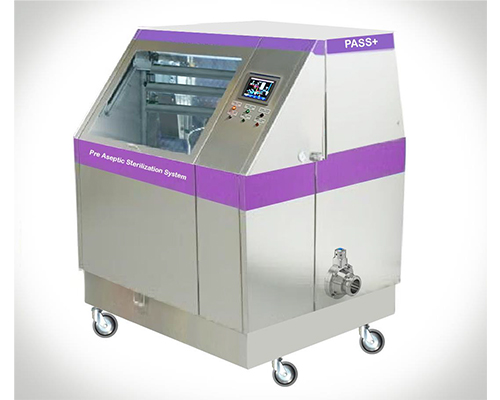
“Cow’s milk spoils so easily. It has to be refrigerated right after being milked, and on the way to raw milk collection centres, otherwise it goes to waste along the way, and the raw milk centres will not buy it because it is too risky. The only common solution now is refrigeration. Chillers and refrigerators are very pricey, and they add costs for dairy farmers. As a result, consumers have to pay a higher milk price. This is the major question in our research,” explained David Makarapong, a researcher in the Technopreneurship and Innovation Management Programme (CUTIP), Chulalongkorn University Graduate School, about the origins of the inventive project PASS+.
“This innovation helps slow down the growth of microorganisms in cow’s milk by ultraviolet irradiation. We found that PASS+ reduced the number of microorganisms by up to 90 per cent, keeping milk from going bad even when not refrigerated while retaining the full benefits of milk.”
David added that once the cow’s milk is processed with the PASS+ machine, farmers have an additional 30 minutes to 2 hours for delivery, which is enough to preserve the milk quality during transport.
“Once we can prolong milk freshness without refrigeration, we drastically reduce the transportation costs. Farmers no longer have to buy chillers, and consumers will also receive fresh, great quality cow’s milk at a lower price.”
PASS+ has already been patented as an innovation of Thailand. Many small dairy farmers affiliated with the Dairy Farming Promotion Organisation of Thailand who tried PASS+ are satisfied with it.
“PASS+ innovation will significantly transform the dairy farming industry, by not only yielding small farmers higher profit but also providing an alternative to the development of milk quality from farms, while reducing milk price for consumers,” said David.
PSU launches platform to protect Thais from dubious healthcare products
Mar 08. 2021
By The Nation
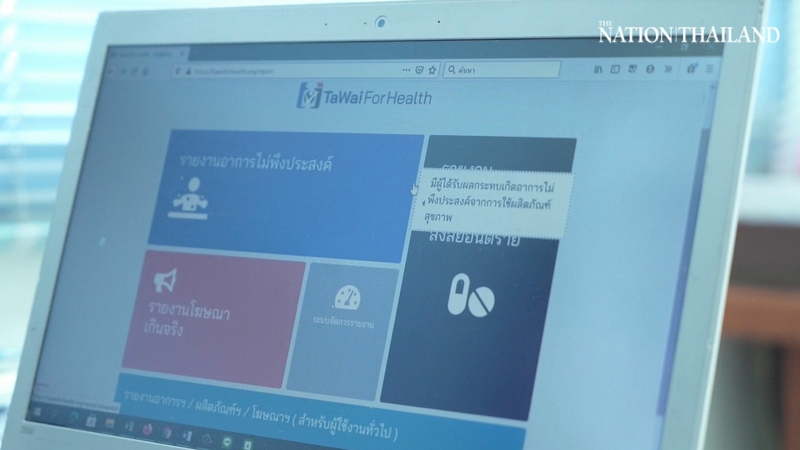
The Prince of Songkla University (PSU) has launched a healthcare product database called “TaWai for Health” in a bid to prevent people from consuming harmful health supplements.
Asst Prof Dr Panupong Puttarak said complaints reported via the platform will be sent to related officials, including Food and Drug Administration, in a bid to deal with problems related to dubious healthcare products as soon as possible.
“People are at risk of being deceived by advertisements that exaggerate the benefits of sub-standard supplements,” he said.
He added that the TaWai for Health platform has already received more than 5,000 complaints from pharmacists, village health volunteers, foundation staff and students.
Pharm Chawalin Inthong, TaWai for Health project researcher, said PSU will continue developing the platform in collaboration with related agencies in a bid to gain global prominence.
Those interested in the platform can visit www.tawaiforhealth.org or @tawaiforhealth Facebook page for more information.
British Council launches more than 40 scholarships to support Thai students to study in the UK
Mar 08. 2021
By The Nation
The British Council is launching more than 40 scholarships for the academic year 2021/2022 to support Thai students who wish to undertake postgraduate-level study at one of the selected UK institutions.
GREAT Scholarships offer 28 scholarships (worth a total of 11.5 million baht) for students who wish to pursue their master’s degree at participating UK higher education institutions, including Cranfield University, Goldsmiths University, University of Bath, and University College London. The scholarships cover a variety of subjects from law, business, art and design to biological science, IT and many more. Launched for the first time in Thailand and South East Asia countries, Women in STEM Scholarships offers 15 full scholarships for underrepresented women from Southeast Asian countries who are passionate about science, technology, engineering or mathematics (STEM) to further their master’s degree in the UK. The economic support provided by the programme will include tuition fees, stipend, accommodation, special support for mothers as well as English language support.
Helga Stellmacher, Director, the British Council in Thailand said “As the United Kingdom’s international organisation for cultural relations and educational opportunities, our work in Education aims to internationalise higher education and promote UK education. For the academic year 2021–2022, GREAT Scholarships offers 28 scholarships from UK universities to students from Thailand across a variety of subjects. Each scholarship is worth a minimum of £10,000–26,000 towards tuition fees for a one-year postgraduate course.”
This year’s UK participating institutions include Bangor University, University of Birmingham, Bishop Grosseteste University, Bournemouth University, Cranfield University, Goldsmiths University, Royal College London, Kiel University, Nottingham Trent University, Royal Agricultural University, Sheffield Hallam University, Teesside University, University of Bath, University College London, University of Derby, Dundee University, Exeter University, Hull University, University of Kent, Manchester University, and Stirling University.
Stellmacher added, “In addition to GREAT Scholarships, for the first time in Thailand, the British Council is launching their own British Council Women in STEM scholarships. This programme provides opportunities for the talented yet underrepresented women in STEM subjects to further their studies in the UK. These scholarships are designed to support women who would normally not have had the opportunity to study abroad to advance their career path in STEM, an area which is in high demand in today’s job market and the global economy where technology is increasingly playing a vital role in every field. The successful applicants will also get an opportunity to be part of and shape an influential network of like-minded alumni to inspire the next generation of women in STEM.”
According to data from the UN Scientific Education and Cultural Organization (UNESCO), fewer than 30 percent of researchers worldwide are women and only 30 percent of female students select STEM-related fields in higher education.
The British Council in partnership with leading UK universities – The University of Glasgow, Liverpool John Moores University and Stirling University, provide scholarships 15 scholarships for women in South East Asia counties including Thailand, Cambodia, Indonesia, Laos, Malaysia, Myanmar, the Philippines, and Vietnam. The scholarships cover tuition fees, stipend, accommodation, special support for mothers and English language support.
Internet shutdowns plunge millions into ‘digital darkness’
Mar 04. 2021A man uses a smartphone while standing on a sidewalk in Mumbai on Feb. 15, 2020. MUST CREDIT: Bloomberg photo by Dhiraj Singh.
By Syndication Washington Post, Bloomberg · Marc Daniel Davies
India led the world last year in internet shutdowns that affected hundreds of millions of people, as governments cracked down on political rivals and tried to suppress protests.
At least 155 internet shutdowns in 2020 disrupted access for people in 29 countries, according to a report on Wednesday from digital rights group Access Now. That included 28 full internet blackouts that plunged people and in some cases entire cities, into “digital darkness,” the report said. Most recorded incidents took place in Africa, the Middle East and South Asia.
“The pandemic has forced offline activities online. So when governments intentionally disrupt internet access it denies people the opportunities to continue their education, businesses, and access life-saving information about the pandemic,” said Access Now campaigner Felicia Anthonio.The digital rights campaign says governments in 2020 increasingly used shutdowns in response to ongoing violence, especially in conflict zones. Other trends in recent years include efforts to hide political instability, thwart protests and suppress dissent, it said.
India consistently restricts access more than any other country, accounting for the lion’s share in 2020 with at least 109 disruptions, according to the report. The next highest was Yemen with six shutdowns.
Indian authorities cut off access and throttled bandwidth to quell demonstrations in recent years, including protests over a controversial citizenship law after it revoked the special autonomous status of Kashmir. Most recently, tens of thousands of protesting farmers blocked highways in defiance of the government’s decision to restrict phone and Internet access.
India’s Supreme Court in January ruled that indefinite internet shutdowns in Kashmir were illegal following a legal challenge from civil society groups. The government has argued shutdowns were necessary to prevent disorder, curb fake news and hate speech.
Authorities in Ethiopia imposed at least four full outages, including a nationwide shutdown that lasted more than two weeks and affected more than 100 million people, the report said.A mobile network disruption in Myanmar’s Rakhine and Chin states lasted 19 months. Following a coup in February 2021, Myanmar’s junta restored access in the region, but has since ordered new blackouts as it seeks to quell protests.
Disruptions overall fell last year to 155 from 213 in 2019, reversing recent trends, the Access Now report said.
But major disruptions in 2020 lasted 49% longer compared with the year before, according to digital privacy and security research group Top10VPN. They cost the world economy $4 billion, nearly three quarters of which was incurred by India alone, it said.
“Internet shutdowns violate human rights and they are being used against marginalized groups around the world,” said Anthonio. “Switching off the internet means a total disruption of daily activities, their rights and their lives.”
Facebook launches community manager programme in Thai
Mar 03. 2021
By THE NATION
From this month, Thais will be able to participate in the Facebook Certified Community Manager programme in their own language.
Launched only in the English language in October last year, the programme now includes online courses on community management through Facebook Blueprint. The programme is also available in Arabic, French, German, Indonesian, Portuguese and Spanish.
“Giving people the power to build community is an important part of Facebook’s mission, and we hope the expansion of the programme will see more people have an opportunity to use the content and eventually earn a certificate,” said Grace Clapham, head of Facebook’s community partnerships.
The learning programme is designed to help community managers from agencies, brands, education sector and NGOs, to build grow and support their communities. The online courses cover topics such as:
Defining and establishing a community
Developing community strategies and processes
Making strategic content decisions for a community

 File Photo

 SAIC’s simulation platform lets the U.S. Space Force run through national security scenarios with satellites and missiles. MUST CREDIT: SAIC
 Researchers say Amazon’s Alexa could be used to detect abnormal heart rhythms. MUST CREDIT: Washington Post photo by Jonathan Baran

.jpg)


.jpg)
 A man uses a smartphone while standing on a sidewalk in Mumbai on Feb. 15, 2020. MUST CREDIT: Bloomberg photo by Dhiraj Singh.
 SootinClaimon.Com