Samsung surges to new high on strong memory market outlook
Jan 08. 2021Customers wearing protective masks try out a Samsung Electronics smartphones in Seoul, South Korea, on Oct. 6, 2020. MUST CREDIT: Bloomberg photo by SeongJoon Cho. Photo by: SeongJoon Cho — Bloomberg Location: Seoul, South Korea
By Syndication The Washington Post, Bloomberg · Sohee Kim
Samsung Electronics Co. shares rose 7.1% to a record high in Seoul Friday amid signs of a rebound in the memory-chip market and off the back of a surge in earnings.
South Korea’s biggest company posted a 26% increase in operating income to 9 trillion won ($8.3 billion) for the three months ended December in preliminary results. That compares with a 9.52 trillion won average of analyst forecasts. Sales for the quarter were 61 trillion won. The company didn’t provide net income or break out divisional performance, which it will report later this month when it releases final results.
Hours earlier, fellow memory chipmaker Micron Technology issued a bullish forecast, predicting that the need for dynamic random access memory will likely exceed supply this quarter. The tightness of supply in DRAM is already driving up prices, according to Chief Executive Officer Sanjay Mehrotra. His company and Samsung are two of the largest players in a resurgent market that’s set to expand through increased usage in the automotive sector and more advanced, resource-intensive applications like artificial intelligence.
“We believe memory pricing recovery will take place not only for DRAM but also for NAND” this year, Citi analysts wrote in response to Samsung’s results, citing limited supply growth, low inventories and tight capacity.
Galaxy smartphone sales were weaker over the past quarter as Apple released its first 5G-compatible iPhones and Chinese rivals launched aggressive campaigns to secure the market share vacated by Huawei Technologies Co.’s sanction-stricken consumer business. Samsung shipped 41 million 5G devices in the past year, according to Strategy Analytics estimates, lagging behind Apple’s 52 million and Huawei’s 80 million sold largely at home in China.
The Suwon-based company plans to unveil its next flagship series, the Galaxy S21, earlier than its usual annual schedule with a Jan. 14 online event. Competitors like Xiaomi Corp., Oppo and Vivo are aggressively positioning themselves to fill the void expected to be left by Huawei in international markets.
Memory chip prices fell in the fourth quarter owing to a slowdown in server demand, while a stronger Korean won during the period also eroded Samsung’s earnings.
“Samsung’s OP was affected by the currency issue and costs for a new fab,” said M.S. Hwang, analyst at Samsung Securities. “The strong earnings and outlook of Micron indicates Samsung’s earnings might have not been too bad. The chip market is on track to recover.”
Twitter locks Trump’s account for 12 hours, says he could get kicked off
Jan 07. 2021A supporter of President Donald Trump walks near the White House on Wednesday. MUST CREDIT: Washington Post photo by Matt McClain
By The Washington Post · Tony Romm, Elizabeth Dwoskin, Drew Harwell · NATIONAL, POLITICS, COURTSLAW, CONGRESS
WASHINGTON – Twitter locked President Donald Trump out of his account for the first time late Wednesday, the most punitive step the social media giant has taken against him, on a day of social unrest and violence in Washington.
The timeout, which will last 12 hours, also included the removal of three tweets and a warning that Trump could be subject to a ban if he continues tweeting baseless conspiracies about the election and inciting violence.
Trump, who has long stoked fury over baseless allegations of a stolen election, called for calm on Twitter earlier Wednesday as the riots in the Capitol halted a process to certify Joe Biden as the next president of the United States. But his plea came in a now-removed video that was laced with disinformation, and he shared the message after most of the mob had been pushed outside the building, leaving a trail of online and offline discord in his wake.
As the angry mob of Trump supporters stormed the House and Senate, their compatriots online celebrated the chaos, cheering the violence across a wide array of social-media sites and calling for bloodshed in the days ahead.
The real-world violence forced lawmakers into a lockdown and raised new questions about whether social-media sites, including Facebook and Twitter, have acted swiftly and aggressively enough to rein in the dangerous rhetoric from Trump and his allies at a critical juncture for the future of U.S. democracy.
Amid the onslaught of criticism, Facebook took the rare step of removing Trump’s video after hours of internal debate about the president’s actions. YouTube also removed the video, while Twitter similarly penalized Trump throughout the day, flagging tweets that sent mixed messages about the events that had unfolded.
“These are the things and events that happen when a sacred landslide election victory is so unceremoniously & viciously stripped away from great patriots who have been badly & unfairly treated for so long,” Trump said in a tweet that has been removed. “Go home with love & in peace. Remember this day forever!”
The saga began in the morning, when Trump urged his followers to march to the Capitol at a rally where his personal attorney Rudy Giuliani called for a “trial by combat.” Trump later took to social media to attack his own vice president, Mike Pence, for not overturning the results of the election on his behalf.
Trump’s online and offline rhetoric ultimately emboldened a supportive mob later to breach the building, halting the House and Senate’s work and forcing Pence’s exit. The president soon returned to Twitter to encourage his supporters to stay “peaceful” – but he did not ask them to leave until a video uploaded to the site later in the afternoon.
“Please support our Capitol Police and Law Enforcement,” he tweeted. “They are truly on the side of our Country. Stay peaceful!”
The president’s words also reverberated far beyond Twitter, where he boasts more than 88 million followers, and other more traditional social media platforms. Trump supporters on lesser-known sites have spent months egging on what they’ve called a “second civil war” against Democrats and the so-called “deep state.” Many have boosted QAnon and other conspiracy theories, suggesting that an uprising of covert military forces or civilian militant groups could help secure Trump’s presidency.
The storming of the Capitol on Wednesday led many of those accounts to celebrate and call for further violence. As the jarring images of the riots appeared on television, the pro-Trump forum TheDonald.win hosted an online “watch party,” with thousands of commenters providing commentary and sharing live-stream video links of the blitz.
“THIS IS WHY TRUMP CALLED US TO DC TODAY! STORM THE [expletive] CAPITOL!!!” said the top-voted comment from user RedWhiteBlue15. “You fight now or get thrown into a camp later. . . . They are going to take EVERYTHING FROM YOU INCLUDING YOUR HUMANITY!”
On Parler, a social media site popular with Trump supporters, some posters encouraged more violence.
“Disappointing. Pelosi, Schiff, Nadler, Schumer, Romney all got away,” wrote one poster. “DC is a target rich environment. Hope to see some of the DemonRat residences getting torched. Antifa knows how to do it. Learn from them.”
The episode marked Trump’s latest attempt to weaponize Twitter in the days after his defeat. Since Election Day, Trump has attacked Biden, rejected his victory, floated widely disproved allegations about voter fraud and stirred his supporters to act. The antagonism – much of it meted out with few repercussions from social media companies – culminated in the dramatic confrontation at the U.S. Capitol on Wednesday, which led the District of Columbia to mandate a curfew and summon the National Guard.
It’s not the first time Trump’s social media has threatened to incite real-world violence. This summer, the president responded to racial justice demonstrations in Minneapolis by calling those in attendance “thugs” and predicting that looting might lead to “shooting.” That tweet prompted Twitter to discipline the president by blocking the tweet from view, believing he essentially glorified conflict. In the run-up to the election and its aftermath, the company covered up hundreds of tweets from high-profile accounts, including dozens from Trump.
Critics including Democratic lawmakers called on the company at the time to suspend the president’s account, repeating their long-held belief that Silicon Valley should stop Trump from spreading harmful misinformation at viral scale. But Twitter said its policies allow world leaders to sharing unfettered vies, a stance the company has maintained even as Trump has intensified his rhetoric.
Jonathan Greenblatt, the president of the Anti-Defamation League, criticized Trump on Wednesday for having “promoted sedition and incited violence.” He called on Twitter and other social media companies to “suspend his accounts ASAP as they would do for anyone else advocating disinformation and promoting violence.”
On Wednesday, Twitter labeled eight of Trump’s tweets as in “dispute.” In the face of growing pressure, it escalated its response by blocking retweeting and liking of the labeled tweets, as well as the ability to reply to them. Twitter then outright blocked two of Trump’s tweets.
But some of Twitter’s longtime allies said the actions were not enough.
“As someone who has served on your Trust and Safety Board since its inception and counseled you since 2009, time is now to suspend President Trump’s account,” tweeted Danielle Citron, a law professor specializing in free speech at Boston University’s law school. “He has deliberately incited violence, causing mayhem with his lies and threats.”
At Facebook, employees earlier in the day began pressuring company leaders to take action. They tagged Facebook executives in posts on the company’s internal chat system, asking for a statement from leadership and for the video to be taken down. “Do we really want Facebook to be a platform that enabled the second civil war,” an employee asked, according to documents obtained by The Washington Post.
Several pro-Trump accounts on Twitter sought to blame the chaos on “antifa,” sharing baseless theories that followers of the far-left protest movement were “dressed as Trump supporters and causing havoc everywhere.” One message retweeted more than 3,000 times said, “Now who ACTUALLY wears all black and attacks law enforcement?? ANTIFA ACTORS!!! These are NOT Trump supporters attacking Capitol Police!!”
Other Twitter accounts that promote Trump and QAnon voiced glee over the Capitol breach. “Wow, this movie is getting better and better. My popcorn is running out already! I need more!” said one QAnon-backing account.
Joan Donovan, the research director at the Harvard Kennedy School’s Shorenstein Center on Media, Politics and Public Policy, said the breach at the Capitol followed weeks of online agitating from Trump’s supporters who peddled the idea that they needed to “Stop the Steal” – and disrupt vote-tallying efforts nationwide.
“This is the consequence of calling for a very wild protest,” as Trump had tweeted last month, and “it’s going to lead to some serious harm,” she said.
Much of the online fury Wednesday centered on Pence, who some Trump supporters had hoped would deliver an implausible saving grace by refusing to certify Biden’s victory.
After Pence said he would not intervene, Lin Wood, a Trump-allied lawyer who has pushed to overturn the election, tweeted a baseless allegation that Pence “is a TRAITOR, a Communist Sympathizer & a Child Molester. Lock him up.” The tweet, which had not been flagged by Twitter on Wednesday night, had been retweeted 15,000 times.
QAnon believers also shared images and video clips of Trump supporters smashing glass and storming the police surrounding the Capitol building. One well-known QAnon figure, a shirtless man known as the Q Shaman, could be seen in photos of the crowd inside the building after it had been breached.
On Parler, a site that prides itself for its lack of content moderation, the extremist group known as the Proud Boys celebrated the mayhem in Washington.
“Doesn’t look like they’re destroying the capital,” one user affiliated with the group wrote. “Looks like they’re liberating it. God bless America and all her patriots.”
Users on 4chan, another online message board popular among Trump supporters, similarly cheered the mobs that overtook the Capitol. Users there described the mayhem as the “American Revolution 2.0” and threatened what they described as “tyrannical” Democrats and “traitors.”
“[I hope] they are all dragged outside and executed one by one in front of the camera, after being forced to admit their [sic] wrong doing for the world to see. Hanging is too good for demons,” according to SITE Intelligence Group, which tracks right-wing extremism.
Amazon using photos to make T-shirts, turning data into custom products
Jan 06. 2021Amazon’s latest tool to take photos of your body is its Made for You service, which turns selfies into custom $25 T-shirts. MUST CREDIT: Photo by RC Rivera
By The Washington Post · Heather Kelly
SAN FRANCISCO – For the second time in a month, Amazon has launched a product that needs photos of your body. It says it’s using them to help you become more attractive, not to amass compromising photos of you in various states of undress.
The first was the Halo fitness app, which requires you to strip down to your underwear for a 360-degree body scan to determine your body fat percentage. The idea was to help you work toward a better body, though the app did not do a good job of explaining how.
The latest is somewhat less invasive. Made for You is a new Amazon service that snaps a front and side photo in form-fitting (but body-covering) clothes to produce a custom-fitted T-shirt. The reason, according to Amazon, is to remove the cumbersome step of selecting a size.
Like the Halo, Made for You uses your smartphone’s camera to take the pictures, uploading them to Amazon’s servers and using software to extract the relevant data about your unique shape, from head to somewhere below your hips. Amazon says the photos are never viewed by people and are deleted after use.
(Amazon founder and chief executive Jeff Bezos owns The Washington Post.)
The photos taken with smartphones or special cameras are a growing source of information for fitness programs, fashion companies and more. Fitness apps such as Naked use their own expensive cameras to create 3-D body scans for measuring and tracking weight loss or muscle gain. Fashion brands and apps are adding virtual try-on options for clothing, including the Zeekit app, which takes a photo of your body in a tank top and shorts to overlay virtual shirts and pants.
Because Amazon has already seen me in far less for the Halo body-fat scan, I decided to let it have a go at making a custom shirt. The process walks you through a number of options on the main Amazon app, from color and length to neck shape and fabric. It’s not only using a couple of photos – you also have to enter your weight and height.
Then it creates what Amazon calls your “virtual body double,” a slightly dowdy computer-generated doppelganger (sorry, fake me) who wears a version of the shirt so you can see what it looks like. That final pattern is used to sew your garment somewhere in the United States, and any photographs of your body are deleted from Amazon’s servers after the virtual model is made, according to the company.
So what does a custom-made $25 T-shirt look and feel like? I’m not a professional T-shirt reviewer, yet, but the final result was a cleanly made, appropriately dull top. The fit seemed on par with a normal small shirt. The only sign it was custom made was the overly literal flare around the hips and my name on the tag. (You can choose any custom message up to nine characters long.)
An Amazon Made For You custom T-shirt has a custom message on the tag. MUST CREDIT: Photo by RC Rivera
The real tell for a T-shirt is how it holds up over time. After three wears, a wash and a trip through the dryer, the Amazon T-shirt’s quality seems solid so far. The stitching is clean, and the shirt kept its shape and size. There are probably benefits to having the custom option for anyone who struggles with traditional sizes, but it seems like an unnecessary step (and expense) for anyone fine with off-the-rack sizes.
The company has dabbled in, and then closed down, a fashion product that photographed people before. The $199 Echo Look was a much-covered, seemingly little-purchased oddity that Amazon launched in 2017. An oblong camera that captured and saved photos and short videos of you in various outfits, it used a combination of artificial intelligence and “advice from fashion specialists” to judge how you looked and give advice. Amazon announced in May that it was discontinuing the Look hardware. But don’t worry, you can still take photos of your outfit in the main Amazon Shopping app for feedback like, “Add a pair of black heeled booties.”
Pricey extra equipment is becoming less necessary for this type of technology. Smartphone cameras are getting better, and advances in image-processing technology make it possible to tease out more accurate 3-D measurements from 2-D images. Apple’s newest Pro iPhone has added lidar – complex sensors that use laser lights to map a scene – which could make similar images even more accurate.
Years of offering biometrics to regular consumers may make what sounds like a risky proposition less alarming. Most smartphone owners have become accustomed to trusting their devices with sensitive personal information about their bodies, using their faces or fingerprints to unlock devices quickly.
But more than faces, the detailed shape of our bodies can feel revealing and personal. Especially when it’s not being used as some kind of authentication with the extra layers of security and encryption that biometrics promise. The companies asking for body photographs and videos think the payoff is worth the exposure.
The MTailor app has been using smartphone cameras to customize clothes, primarily men’s clothing, for six years. The service uses a technique similar to Amazon’s Made for You. Instead of drafting a family member to take your picture, you rest the camera on the ground and turn around for a video. The software will correct for the low, somewhat unflattering, angle. MTailor’s clothes are sewn in Asia, then shipped to the buyer.
Miles Penn, MTailor’s chief executive, says he can see why Amazon would start with T-shirts. The item is easier to fit than, say, pants or a suit, and more forgiving of any measurement errors.
If successful, the shirts could be the first in a line of clothing items from the company. Amazon has struggled to break into fashion the same way it has with other products. Unlike something utilitarian like a battery, fashion is harder to replicate with generic Amazon brands.
Virtual tailoring also offers some obvious benefits during a pandemic. It’s a way to get properly fitted clothing without a trip to the tailor, where social distancing is impossible, or having to try on clothes in crowded retail stores. Unfortunately, the same predicament that makes virtual clothes shopping appealing also renders new clothes pretty useless unless they’re sweatpants.
“Not that many people, frankly, are buying suits if they can’t go to weddings or anywhere outside, so that’s been tough,” said Penn.
Govt prescribes MorChana app as weapon against virus second wave
Jan 05. 2021
By The Nation
The government urged all people to download the MorChana (Doctor Win) application on Tuesday, saying it would protect the country and users from the fresh outbreak of Covid-19.
Dr Taweesin Visanuyothin, spokesperson of the Centre for Covid-19 Situation Administration (CCSA), said the MorChana app records the user’s travel information and helps the Department of Disease Control and medics to trace new infections.
The app was first launched in April as a way of safely reopening businesses and services.
It gives users information on their risk from the virus, which is graded into four levels:
• Green for low-risk individuals – no symptoms, no recent travel abroad, no contacts with at-risk people in the past 14 days.
• Yellow for people with less risk – flu symptoms, but no travel abroad, or contact with at-risk people.
• Orange for people at risk – recent travel abroad or contact with at-risk individual(s) in past 14 days but showing no symptoms. People in this group must stay at home for 14 days to monitor symptoms. If symptoms develop, they should go to hospital immediately.
• Red for very high-risk individuals – flu symptoms plus travel abroad or contact with at-risk individual(s) in past 14 days. These people must go to hospital immediately.
The app traces the user’s location to notify them if they enter an area at risk from Covid-19. The location information is not available to other users. MorChana can be downloaded from the App Store or Google Play.
2021 could be a huge year for space. Here’s what’s to come from NASA, Elon Musk, Richard Branson and Jeff Bezos.
Dec 31. 2020SpaceX founder Elon Musk celebrates after the historic first launch of astronauts aboard a SpaceX craft in May. MUST CREDIT: Washington Post photo by Jonathan Newton
By The Washington Post · Christian Davenport
We all know that 2020 was a no-good, horrible, fearful, tumultuous year that will be remembered for the coronavirus pandemic and the polarizing election. But for space enthusiasts, it was actually quite a good year, providing bits of promising news amid the bleak headlines of disease, economic hardship and protests.
SpaceX launched astronauts to the International Space Station twice. NASA launched a rover to Mars and snagged a sample from an asteroid 200 million miles away.
2021 has potential for even more good news. Here’s just some of what could happen in the new year.
Astronauts Doug Hurley, left, and Bob Behnken on their way to their May flight to the International Space Station. SpaceX is expected to launch NASA astronauts to space twice in 2021. MUST CREDIT: Washington Post photo by Jonathan Newton
– SpaceX
After two successful flights carrying astronauts to the International Space Station, SpaceX is set to do it again this year. Crew-2, its second fully operational mission, is scheduled to launch a quartet of astronauts from the Kennedy Space Center in Florida in the spring. Then, in the fall, the company is set to launch Crew-3.
Not since the space shuttle has NASA had routine flights to the space station from U.S. soil. If all goes well, SpaceX will become the shuttle’s successor, filling a major gap in America’s spaceflight program in a coming-of-age moment for what was once a spunky start-up.
Late in the year, SpaceX also is planning to fly a mission for Axiom Space, a Houston-based company that has purchased a trip to the International Space Station for a crew of four. Michael López-Alegría, a former NASA astronaut who now works for Axiom, would accompany three private citizens for the mission, among them Eytan Stibbe, an Israeli former fighter pilot. Axiom is expected to announce the other two tourists sometime in the future.
Flying humans on its Falcon 9 rocket and Dragon spacecraft is only part of what’s on tap for SpaceX. The company continues to test its Starship spacecraft, a next-generation vehicle that looks like a flying grain silo but, Musk hopes, will one day fly people to Mars.
NASA hopes it will be successful. The space agency is investing $135 million in Starship as part of its attempt to return astronauts to the moon. Musk, whose timelines are usually wildly ambitious, has said he hopes the spacecraft will be able to achieve orbit in 2021.
The company is also pressing ahead with another outrageously difficult project – a plan to flood Earth orbit with thousands of satellites that would beam Internet signals to ground stations, connecting rural areas to broadband.
In 2020, SpaceX took some major strides toward that goal and has already launched more than 16 batches of the satellites, allowing it to begin a pilot program. More are scheduled to be hoisted in 2021, marking SpaceX’s transformation from a purely rocket company to an Internet service provider after being awarded $886 million from the Federal Communications Commission for the endeavor.
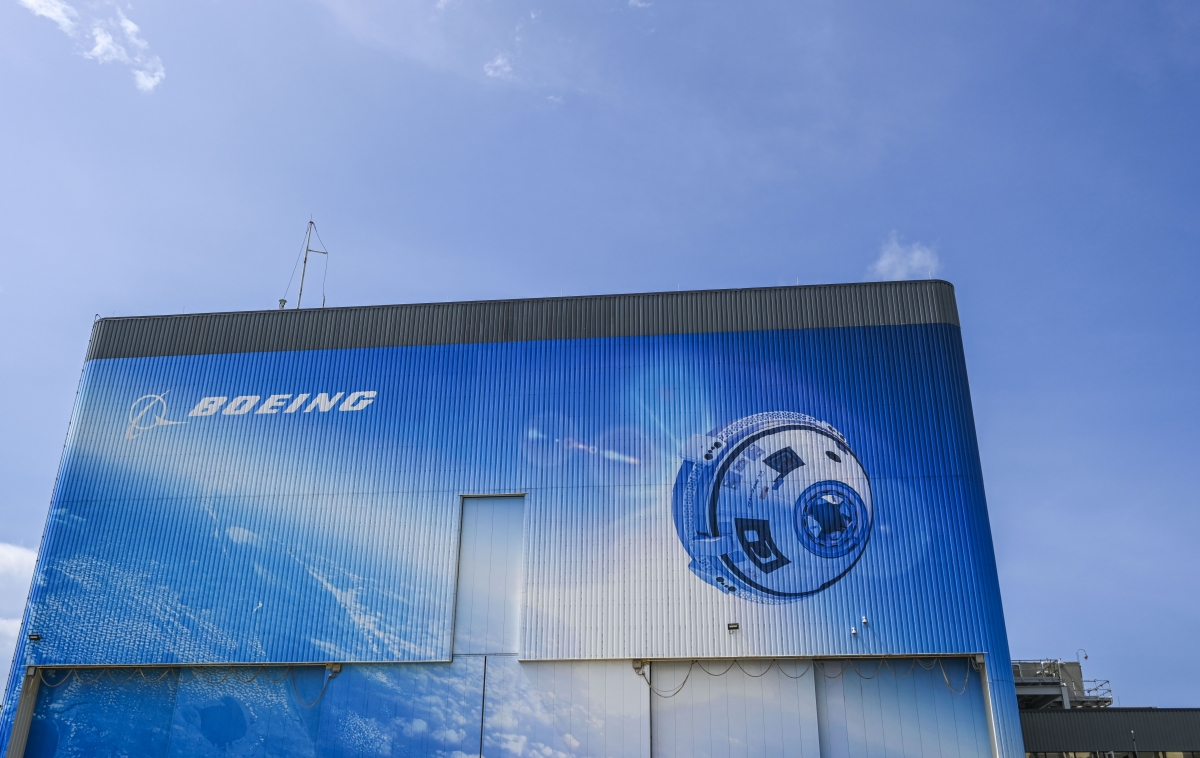
The Boeing factory at Kennedy Space Center. MUST CREDIT: Washington Post photo by Jonathan Newton
– Boeing
Boeing spent much of 2020 working to fix the software on its Starliner spacecraft, which ran into trouble as soon as it reached space during an uncrewed test flight at the end of 2019.
It’s now working to redo the test mission – no astronauts on board – at the end of March.
Given its past problems, Boeing’s upcoming test flight has to be successful. The company holds a contract from NASA to fly its astronauts to the space station. But before the space agency will allow its astronauts on Boeing’s spacecraft, the company has to prove it can fly safely on its own. Another failure will do more damage to a company reeling from a string of failures, including the two fatal crashes of its 737 Max airplane that killed 346 people.
Boeing is well aware of this, which is why it’s been proceeding so deliberately. The mission patch for the flight, known as Orbital Flight Test-2 (OFT-2) has a special touch – the image of a fingerprint.
“It represents those who are in the factory each day building the spacecraft as well as those who have had a hand in designing, testing, coding and training so we can get OFT-2 right,” the company said in a statement. “At a macro level, the thumbprint represents how deeply personal this mission is to Boeing, as human spaceflight has been and always will be a part of our company’s DNA.”
If all goes well, the company would move to the next step – flying a test mission with three NASA astronauts that could come by the end of the year.
– Artemis
The hallmark of the Trump administration’s space policy has been a return to the moon for the first time since the astronauts of Apollo 17 landed there in 1972. The White House directed NASA to speed up the timeline for a lunar landing to 2024, from 2028, and NASA Administrator Jim Bridenstine, a former member of Congress, lobbied his former colleagues hard for funding for the program, which has been dubbed Artemis.
Though Congress has approved $850 million for next year for the spacecraft that would land astronauts on the lunar surface, it’s well short of the $3.3 billion NASA said it needed to meet the 2024 deadline.
It’s not clear what the incoming Biden administration will do with the program. Most Democrats in the space community say new officials will keep the program but put it on a more realistic timeline.
The schedule will be driven by engineering and technology as much as politics, though. As of now, NASA’s Space Launch System rocket is supposed to launch the Orion spacecraft without astronauts on board by the end of 2021, in what would be the first flight of the Artemis program. If all goes well, Orion would orbit the moon, testing its systems before coming home.
It’s not clear, though, that the rocket will be ready. For years, it has suffered delay after delay, with billions of dollars in cost overruns. Government watchdogs have criticized Boeing, the prime contractor, for poor performance and NASA for lax oversight.
When it does fly, the SLS is certain to be a sight. The rocket would be the most powerful ever, with four RS-25 engines used by the space shuttle and two side solid rocket motor boosters taller than the Statue of Liberty. NASA and Boeing say they are getting close to flying, but the rocket still needs to pass the final parts of the testing campaign known as the “green run,” which would culminate with the firing of its engines while clamped down to the launchpad.
But given the problems, past and present, it’s far from certain that 2021 will be the year it finally takes off.
– Richard Branson
He’s crossed the Atlantic and the Pacific in hot-air balloons, once almost dying off the coast of Ireland, another time crashing in the Canadian Arctic instead of Southern California, the intended destination. He broke the record for the fastest time crossing the Atlantic in a boat and once got stranded in Algeria during an attempt to circle the globe in a balloon.
In 2021, at age 70, Richard Branson may face his most daunting adventure yet: a trip to the edge of space in his suborbital spaceplane. It’s been his quest since he founded Virgin Galactic in 2004, and after delays and setbacks the company is tantalizingly close to flying paying passengers.
Its sporty spaceplane has made it to space twice, once with a pair of pilots, then again with an additional crew member. In December, the company aborted a test flight after its onboard computer that monitors the rocket engines lost connection.
Virgin Galactic now says it will repeat that test flight, then fly another, and then it will finally be Branson’s turn. If all goes well, Virgin Galactic would then turn its attention to flying the hundreds of people who have paid as much as $250,000 for a trip to space.
Branson has another venture that may reach a significant milestone in 2021. In January, Virgin Orbit, its rocket company, is planning another test flight of its LauncherOne rocket after a failed test a few months ago when the main engine shut down prematurely.
Like Virgin Galactic’s spaceship, the rocket is tethered to a mother ship, in this case a 747, that takes it to an altitude of some 40,000 feet. There, the rocket is released, fires its engine and zooms through the atmosphere.
VirginOrbit is one of a host of small rocket companies that could reach orbit in 2021. Relativity Space, which 3-D prints its rockets, is planning a launch, as is Astra, which nearly missed orbit from its launch site in Alaska. Rocket Lab, which launches out of New Zealand, is planning a flight from its pad on Wallops Island, on Virginia’s Eastern Shore, as well.
– Jeff Bezos
Bezos was 5 years old when he watched Neil Armstrong and Buzz Aldrin walk on the moon in what he has said was a “seminal moment” for him, touching off a lifelong passion for space. He has said Blue Origin, his space company, is “the most important work I’m doing.” 2021 could be a breakout year for the company, which was founded 20 years ago.
Blue Origin is planning its first flight with humans on board its New Shepard spacecraft in the coming year. Like Virgin Galactic’s SpaceShipTwo, it’s designed to travel to the edge of space and back – not to orbit. But unlike Virgin, it has not yet opened up sales or announced ticket prices.
It also hopes to fly for the first time in 2021 its New Glenn rocket, a massive vehicle powered by seven BE-4 engines. Earlier this year, NASA announced that the rocket would be eligible to bid for launch contracts, a vote of confidence for the company.
The BE-4 would also power the new rocket being designed by the United Launch Alliance, a joint venture of Boeing and Lockheed Martin. Vulcan Centaur, as it is called, is scheduled to fly toward the end of the year, Tory Bruno, ULA’s chief executive, told reporters recently.
That mission would be a historic one, carrying a robotic spacecraft manufactured by Astrobotic, a Pittsburgh company, to land on the moon as part of a NASA program. If successful, it would be the first spacecraft launched from U.S. soil to land on the moon since the Apollo era.
– Mars and beyond
On Feb. 18, NASA once again will try to pull off the daring feat of landing a spacecraft on Mars, when the Perseverance rover is set to touch down.
The rover would explore the Jezero crater near the Mars equator where a lake once existed. That is the ideal place to search for signs of ancient microbial life, scientists say. The rover will collect rocks and soil samples that would one day be returned to Earth.
NASA has also included a drone helicopter called Ingenuity on the mission, in a test of whether it can fly in the thin Martian atmosphere, 99 percent less dense than Earth’s.
“The Wright Brothers showed that powered flight in Earth’s atmosphere was possible, using an experimental aircraft,” said Håvard Grip, Ingenuity’s chief pilot at NASA’s Jet Propulsion Laboratory in Southern California. “With Ingenuity, we’re trying to do the same for Mars.”
Finally, NASA’s James Webb telescope is scheduled to launch in October after years of struggles and cost overruns that pushed the program’s price tag to nearly $10 billion.
Once in space, the telescope would be able to look back in time to see the oldest light in the universe, the formation of galaxies and planets beyond our solar system.
“Webb is the world’s most complex space observatory and our top science priority, and we’ve worked hard to keep progress moving during the pandemic,” Thomas Zurbuchen, associate administrator for NASA’s Science Mission Directorate, said this year.
In 2020, we reached peak Internet. Here’s what worked – and what flopped.
Dec 29. 2020
By The Washington Post · Geoffrey A. Fowler
Covid-19 has tested our health care, our economy and our faith. Who’d have thought it would also require a crash course in personal technology?
When the coronavirus first started upending our lives in March, I wrote about the apps, websites and services that made it possible to never leave my home. Grocery deliveries, streaming movies and video calls were “hermit tech,” I joked.
Ten months into the pandemic, hundreds of millions of Americans now rely on this tech to work from home, attend virtual school, see the doctor, go to the movies and just get our hands on some toilet paper. Not long ago, most of those were tech pipe dreams – businesses with limited reach beyond bubbles like San Francisco.
The pandemic put Silicon Valley’s boldest ideas for an app-operated life to the test, quickly and at scale. Now it’s time for an accounting of what worked, what flopped – and what’s the new normal.
“2020 reinforced the fact we nerds have known: network is just omnipresent,” says Om Malik, a venture capitalist at True Ventures. “We aren’t going online. We live online.”
The coronavirus marks an inflection point for nerds and non-nerds alike. By April, more than half of American adults felt the Internet was “essential” to life, according to Pew. Out of necessity, even my septuagenarian mother was ordering groceries on Instacart – and she likes personally thumping melons at the store.
The Zoom video chat app became a noun, verb and adjective. “I have been to a Zoom funeral, a Zoom bar mitzvah and Zoom family reunions,” says Gina Bianchini, the founder of software company Mighty Networks. “Thirty days is what you need to build a habit. We’ve been doing this for months.”
But the future won’t be decided by what’s convenient alone. New online experiences like grocery shopping and streaming first-run movies have yet to find sustainable businesses. We learned Amazon Prime, DoorDash, Instacart and Shipt subject the most vulnerable workers to low pay and punishing rules. (Amazon chief executive Jeff Bezos owns The Washington Post.) Despite some groundbreaking industry efforts, our phones and wearable health trackers have yet to play a major role in fighting the coronavirus itself.
And the coronavirus laid bare perhaps the biggest tech failure: Tens of millions of Americans couldn’t show up to school or work because they couldn’t afford broadband or just couldn’t get the flaky WiFi to work.
After a year of living extremely online, here’s what I learned we can’t live without – and what we’d rather leave behind with the rest of 2020.
– Working from home
For about 63 million American workers during the pandemic, the Internet made the once-unthinkable possible: wearing comfy sweatpants all day. But white-collar jobs built around Zoom calls, Slack messages and Dropbox files have also changed how work gets done – not entirely for the better.
It has meant longer days. A study of the early weeks of lockdown published by the National Bureau of Economic Research found the average workday increased by 48.5 minutes and the number of meetings increased by 12.9 percent. Management scientists call it a virtual form of “presenteeism”: feeling like you have to show your face for a Zoom just to make people think you’re not slacking off.
Meanwhile, overall productivity has decreased by 2 to 3 percent for most organizations, reports Bain & Company, because of poor collaboration and inefficient work practices.
Nonetheless, some remote work is probably here to stay. When Pew surveyed Americans able to work from home in October, 54 percent said they would still want to work remotely after the pandemic ends.
In a recent Washington Post Live interview, Slack’s chief executive, Stewart Butterfield, told me companies have been able to use remote work as an opportunity to reexamine all forms of office orthodoxy. “What other assumptions, what other kind of practices or processes are we kind of blindly keeping in the rotation when perhaps there are more effective ways to do?” he said.
Workplace tech needs to evolve, too. Some 57 percent of remote workers felt less connected to co-workers, according to Pew. There can also be too much connection: Every time I get a Slack message, I hear it reverberate around my house – on my computer, my phone and my iPad. Keeping a distinction between work and personal time shouldn’t be a constant battle.
– Virtual school
Almost any parent can attest things went off the rails when we had to switch to emergency remote learning.
The problem is most educational technology was designed to help support teachers in the classroom, not for completely remote learning like the pandemic. “It isn’t what anyone hoped or wished online learning would be,” says Betsy Corcoran, co-founder of education technology publication EdSurge, part of the International Society for Technology in Education. “It was like putting on swimming fins and asking people to run a sprint.”
How many hours can you expect young children to sit in front of a screen? The tech took away the fun parts of school, like recess and seeing friends, and just left the academic parts.
So are the kids all right? A study by McKinsey & Co. published in December estimates that going to remote school in the spring set White students back by one to three months in math, while students of color lost three to five months.
Even more worrisome is that even after schools had the summer to adjust and make sure students had computers and WiFi, online learning has continued to leave many behind. Software company PowerSchool, used by schools serving about three quarters of all U.S. students, reports that even into the fall, more than 30 percent of students were not “active users.” Districts report a surge in failing grades; sometimes students are just not turning in assignments.
When the pandemic is behind us, almost nobody wants young children to continue to go to school primarily through screens. But we have learned what online tools are capable of. Online summer school programs like Cadence Learning have shown potential for using student data and personalization to provide tutoring. A generation of kids that’s adapted to Zoom school is going to be a lot more open to incorporating video and apps into learning in the years to come.
Most of all, teachers and parents say virtual education reminded us of everything school actually provides, including meals, day care and social development. Adapting to how students feel is a technology problem, too. As a fifth grader named Luke Pages told my colleagues Hannah Natanson and Laura Meckler, the virtual school day is “like a roller coaster of emotions.”
– Online grocery shopping
Who would have thought scrambling for toilet paper would define 2020? We spent hours in the spring downloading new grocery apps and trying to secure delivery slots. Some 43 percent of shoppers surveyed by industry consultant Mercatus reported they had tried shopping for groceries online in 2020, almost twice the rate from two years ago.
But there’s not much evidence we’ve made a permanent shift. Overall, e-commerce accounted for just 7 percent of grocery shopping in 2020, up from 5 percent in 2019, estimates Forrester Research. Over the summer, some people became comfortable returning to grocery stores.
And many of us had terrible experiences trying to buy groceries online. Stores needed time to adjust to the surge, but it left customers in the lurch. There were frequent stock outages and personal shopping services such as Instacart could be hit or miss. (Asks my mom: How could they pick the out-of-date milk?)
“It’s just really hard logistically,” says Forrester analyst Sucharita Kodali. By her estimates, online grocery fulfillment and delivery tacks about $20 onto a normal purchase. When you’re not going to the store yourself, that means more labor for someone else to pick the products, put them into bags, drive them to your house and keep the fresh stuff cold before it goes into your fridge.
Shopping apps hide the human cost of employees – frequently gig workers – who do that work for low pay and under harsh conditions. I started calling it “Amazon guilt”: that feeling when you watch someone else drop packages at your door while you’re safely inside. During the pandemic, all we could do was leave little thank you notes or amp up tips when that was an option. After the pandemic, do we want this kind of gig working to become a permanent fixture of the economy?
– Connecting America
When the pandemic began, tens of millions of Americans didn’t have broadband Internet. Ten months later, it’s clear an Internet connection is essential to American life – a utility on the same level as water or electricity.
One frustration is we still don’t know the exact scale of the “digital divide.” The Federal Communications Commission reported 21.3 million Americans lacked access to broadband (wired or wireless) at the end of 2017. But those numbers probably undercount the real problem; in February, research firm BroadbandNow estimated 42 million Americans don’t have the ability to purchase Internet access.
Physical infrastructure like fiber-optic lines is just one part of the problem. Millions of Americans simply can’t afford the access available in their communities, including nearly a million New York City residents. While Consumer Reports estimates the average American spends $65 per month on access, in some areas companies with a near monopoly can keep prices higher.
There have been some efforts to fill the gap. In July, New York announced a plan to extend access to 600,000 residents over an 18-month period. Comcast voluntarily extended a program called Internet Essentials (originally a requirement from a merger agreement) to offer some access for just $10 per month.
And to the surprise of many advocates, more help could be on the way. The stimulus bill passed by Congress in late December included $7 billion for broadband access in 2021. That includes up to $50 each month for eligible low-income households to cover broadband bills – or up to $75 for people who live in tribal areas.
Even if that bill doesn’t become law, it signals a shift in thinking. “With the new administration, there’s going to be a real focus on the question – which is a much bigger investment than even $7 billion,” says Jonathan Schwantes, a senior policy counsel for Consumer Reports.
– Telemedicine
Doctors have been talking for decades about replacing some in-person patient visits with virtual house calls. When the pandemic shut non-emergency clinics, it finally happened. As of May, McKinsey estimates 46 percent of American consumers were using telehealth to replace canceled health care visits. Between mid-March and the summer, over 9 million Medicare beneficiaries used telemedicine, a more than 5,000 percent increase from the prior three months.
“The telemedicine genie is out of the bottle,” says Seema Verma, the administrator for Medicare and Medicaid.
Patients liked the convenience and the access to care, particularly in rural areas. Many doctors, too, report there’s a lot they can do just by seeing and talking to patients on a screen. It can be useful to see what people’s homes look like, and even talk directly to caregivers who might not be around during in-person visits.
“Satisfaction was higher for some telemedicine visits than in person visits,” said Bob Kocher, a venture capitalist at Venrock who serves on the boards of several insurance and digital medicine companies. “I can check on you every day for a couple of minutes, which is unbelievably helpful because you can tell if somebody’s looking better or worse if I see you every day.”
Still, making telemedicine stick faces hurdles. Lawmakers moved quickly in the spring to temporarily loosen rules and allow Medicare to reimburse for virtual care, but those would have to be made permanent. There’s also going to be resistance from traditional health providers that rely on in-person – and high-margin – tests like X-rays to turn a profit. They’re not entirely wrong: Good medical care requires long-term continuity you can’t get just by opening an app whenever you feel ill.
– Streaming first-run movies
The pandemic gave us all a lot more time to watch movies at home. What’s surprising is that Hollywood was finally willing to let us stream some of the good ones.
It started with “Trolls: World Tour” and then “Mulan,” when theaters closed under stay-at-home orders. 2020 marked the first time studios began experimenting selling marquee movies online at the same time they hit theaters – or instead of the big screen. For years, even as streaming has gone mainstream, big budget films have been the exclusive domain of theaters, where they tapped audiences for $9 tickets before making their way to Blu-ray and then, eventually, streaming apps.
Then in December, Warner Bros. sent shock waves through Hollywood by announcing all of its 2021 films – yes, all of them – would debut simultaneously in theaters and on its premium streaming service HBO Max, including the much-hyped “Dune” and “The Matrix 4.”
But don’t write a eulogy for movie theaters just yet.
Most studios are still holding their biggest movies for post-vaccine theater runs in 2021. The dramatic announcement by Warner Bros. was as much about a new distribution model as it was the priorities of the studio’s owner AT&T, which wants to prop up its flagging streaming service HBO Max.
It’s unquestionably more convenient to watch movies at home, even if you have to make your own popcorn. Netflix has primed us to get what we want, right away.
I was one of the people who paid $30 for an at-home digital ticket to Mulan – but there’s little evidence many other people did. It’s unlikely Disney even came close to making back its $200 million production costs by selling premium tickets. (The studio never released numbers, but it’s revealing they haven’t tried a repeat.) For most Americans, I suspect a family night out at the theater – even if it costs more – seems like a better value than a streaming ticket.
The reality, as my colleague Steven Zeitchik has written, is there’s just not enough money in streaming to support the way blockbusters are made. If we still skip the theater after the pandemic is over, prepare for a future filled with more of the low-budget wonders Netflix has come to define, like Adam Sandler’s “The Wrong Missy.”
AWS Cloud technology offering massive benefits to auto industry, says expert
Dec 28. 2020
By The Nation
The Amazon Web Services (AWS) Cloud technology is benefiting the automotive industry in five areas: agility, elasticity, global reach, cost and innovation, said Jon Allen, director of AWS Cloud’s professional services for the automotive industry.
“When you look at what’s happening in the auto industry today, what they really need is the ability to scale. What we’re seeing today, with complex data analytics and complex models around, an autonomous vehicle and driver assistance that really requires the ability to provision and scale quickly,” he added.
The original equipment manufacturers (OEMs) have not had the opportunity for that kind of computing power before. It would take weeks to be able to run a complex model and now they can do it in days, he said.
“As for elasticity, we only see the largest automakers able to invest in the future of high-processing computing and data analytics. Now, we are seeing so many new and smaller companies coming in. They use the elasticity, the agility of AWS, to build and be able to scale quicker than before.
“The second part I’d talk about is global reach. When you see companies like Volkswagen and their effort for the digital production platform to connect the factories at scale. To be able to connect 160 factories around the world, they really need that global reach to be able to do that. AWS has 24 regions and 77 availability zones. We really scale-out that reach closer to what VW is trying to do with their factories worldwide.
“In fact, nine of those 22 regions are right there in Asia. That allows customers to be closer to data centres to improve licensees and to be able to affect quicker run time with what they are trying to do,” Allen said.
As for innovation, he said automakers today want to differentiate their businesses. They want to build and give their customers new experiences, not just about their back-room data centres.
“What we are able to do is help our customers innovate not only through the Cloud but also through 125 services that we have. It’s exciting that we are able to do that,” Allen added.
Talking about the automotive industry in the near and long-term future, Allen quoted AWS customer Mary Barra, CEO of General Motors as saying that the next five years will see more disruptions than in the past five years.
“We have seen a lot of disruption in the last couple of years. What we are seeing right now in the near-term is that the automotive industry is getting much more connected,” Allen said.
He added that carmakers are becoming far more focused on customers and what they want from their vehicle. The long-term vision they have is that they want to be more than just a hardware provider for the industry. They want to be part of creating new applications and new experiences for the customers.
“So in the long-term, they are going to continue to disrupt. Companies or OEMs that have adopted the Cloud strategy are really able to introduce new capabilities. Think about quantum computing, high-process computing that is using the power of the Cloud to give a better customer experience.”
He said that we are going to see advanced driver assistance, which will lead to much more autonomous vehicles.
“In order to do that, you need a large computing capacity, a lot of storage, to make that happen. Our automotive customers are using these capabilities at AWS to make that happen,” he said.
Allen added that AWS is extending its presence in the region and it’s fascinating to see the adoption of technology in Thailand in the past couple of years.
“We want the automotive industry to build on AWS. We want our current auto customers to have the best experience using our services to build and transform the automotive industry. In the end, we want automotive customers to have the best experiences with the automotive maker through AWS.”
A couple of years ago, AWS launched the Connected Vehicle reference architecture, which is its first solution on how to connect vehicles to the Cloud.
“And then we launched the Connected Mobility solution. That has improved from the Connected Vehicle reference architecture. It allows new capabilities such as vehicle health, location of the vehicle, and battery monitoring.
“Another is WaveLength, which connects the 5G network to AWS Cloud. What WaveLength does is generally there are five hubs between the tower that connects 5G to the Cloud. WaveLength reduces it to three. We are able to work with our partners such as Verizon and telecom providers around the world to be able to implement 5G to WaveLength. So those are some new services that we currently have.”
Schneider Electric launches new interface for edge network management
Dec 23. 2020
By The Nation
Schneider Electric has released a public API (application programming interface) for its cloud-based software EcoStruxure IT Expert.
The first public API for EcoStruxure IT Expert allows IT solution providers and end users to integrate a critical infrastructure monitoring platform into any preferred management system.
With the introduction of EcoStruxure IT Expert API, Schneider Electric is simplifying the management process for a distributed IT infrastructure.
“We are working with our partners and customers in new and different ways so they can gain the right visibility and insights on their IT infrastructure, while we create a more open ecosystem,” said Kevin Brown, senior vice president of Schneider Electric’s EcoStruxure.
With the addition of public API, IT solution providers can easily integrate the EcoStruxure platform into their preferred systems. By adding remote monitoring of power and critical infrastructure into their portfolio, solution providers can help drive differentiation and bring more value to customers grappling with the complexities of edge network management.
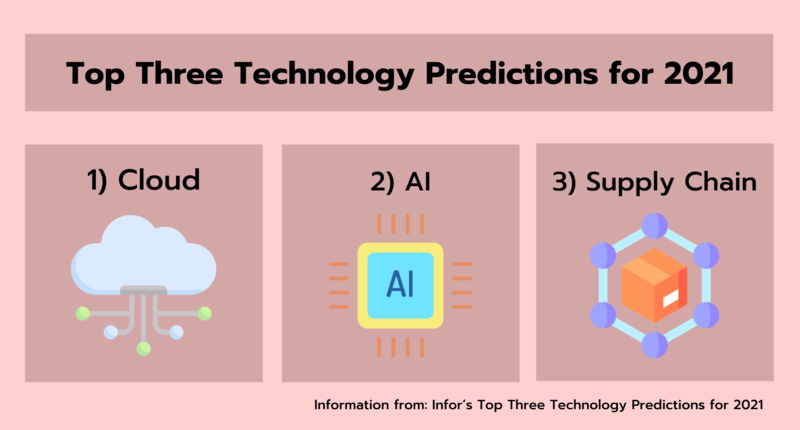
Multi-tenant cloud architecture will be the new gold standard, while artificial intelligence (AI) will transform the hiring process and become mission critical in healthcare, said Fabio Tiviti, Asean vice president for global software company Infor.
The digital supply chain will be rapidly developed, he added.
Cloud
Cloud technology, he said, will reinvent event experiences.
“After the US Open tennis tournament successfully pivoted to cloud and AI this year to enhance the virtual experience for fans who could not attend the physical event, we will see an uptick in physical events leveraging cloud technology to give viewers tailored experiences.”
With global attention in 2021 set to focus on the Summer Olympics in Tokyo and the Wimbledon Championship, cloud technology is poised to completely reinvent what we know about fan experiences today, said Tiviti.
“The potential for using cloud technology to transform events is enormous – think real-time crowd excitement analysis to optimize highlights and advertisements, extremely low-latency live feeds, and moderated crowd interaction – all hosted on robust cloud platforms.”
Meanwhile, multi-tenant cloud architectures will be the new gold standard, keeping companies automatically up to date with the most cutting-edge technology, without having to worry about manual updates or replacing hardware.
“As we move into a new year that likely will bring more uncertainty, multi-tenant cloud solutions will become critical technology differentiators, helping businesses remain agile and innovative, while also reducing their e-waste footprints and helping them move closer to their sustainability targets.”
Fabio Tiviti, Asean vice president,Infor.
Artificial intelligence
Turning to artificial intelligence, Tiviti promised it would transform the hiring process.
“In the unpredictable job market of 2021, it will be critical for organisations to leverage AI to ensure they find the right candidate for the job. AI will enable HR departments to become more proactive in their hiring and help them determine a candidate’s cultural fit by using data to measure the quality of a hire.”
This would be done via innovations such as intelligent screening software that automates resume screening, recruiter chatbots that engage candidates in real-time, and digitised interviews that help assess a candidate’s fit.
“AI also holds great promise for creating more diverse and inclusive workplaces, given its ability to reduce biases and add objectivity into employment decision-making through AI-powered algorithms that will identify the unique qualities of candidates.”
He added that AI in healthcare will become “mission critical”.
“Over the next year, we will see the accelerated adoption of AI across many areas of healthcare. By applying machine learning to real-time global data sets, healthcare professionals can more accurately track contact between staff and infected patients, enable accurate diagnoses, utilise predictive analytics to track personal protective equipment [PPE], optimise workforce allocations, and develop more effective and lasting vaccinations.”
Supply chain
Supply Chains will rapidly become digital, said Tiviti.
“As a direct result of Covid-19, we are going to see the acceleration of digital supply chains in 2021. While supply chain leaders have traditionally viewed digital transformation in the context of efficiency and cost, the focus will now be on agility and resiliency. That’s where digital technology comes in. A multi-enterprise, digital supply chain enables better end-to-end visibility, better predictive analytics, and better and smarter automation.
“Leaders will be able to customise and flex their supply chains based on market demand and make better use of ecosystem partners. These digital tools are as far ranging as artificial intelligence, augmented reality, and robotic process automation and are expected to shift early promises to impactful value propositions.”
Artificial intelligence will be critical for real-time supply and demand matching, he added.
“As the incredible supply chain disruptions of 2020 unfolded, it became clear that managing real-time supply and demand matching and forecasting were no longer tasks humans can take on alone. It’s no longer reasonable to expect a supply chain leader to predict when one country’s market will suddenly close and another’s will open, or account for ever-shifting materials and costs ¬– especially as government restrictions on transportation and travel change rapidly.
“In 2021, we will see supply chain managers accelerating their adoption of AI to augment workers’ instincts and experiences and provide them with intelligent insights into changing market conditions, letting them accurately forecast supply and demand in real-time.”
KBank rolls out ‘contactless living’, starting with cinemas
Dec 22. 2020From left, Ruangroj Poonpol, KBTG chairman; Supreecha Limpikanjanakowit, KBank first senior vice president; and Narute Jiensnong, Major Cineplex’s chief marketing officer, hold a press conference to launch contactless tech for sale of movie tickets.
By The Nation
KBank has launched contactless tech for purchasers of Major Cineplex movie tickets, with similar schemes for other businesses planned next year to combat Covid-19.
The collaboration marks the first contactless sale of movie tickets via automated kiosks in Thailand.
Customers will use a QR code in lieu of a paper ticket, which Major Cineplex says will become a thing of the past. The code sent to their phones will be easier and faster than normal tickets and also help conserve environmental resources, said the cinema operator’s chief marketing officer, Narute Jiensnong.
The contactless technology will debut at Paragon Cineplex and Major Cineplex Ratchayothin from December 26.
The move is expected to cut ticket issuance and printing costs by up to 50 per cent.
Narute added that the operator has closed two cinemas in Samut Sakhon province following last weekend’s virus outbreak.
Said KBTG chairman Ruangroj Poonpol: “Similar projects with other types of business partners are in the pipeline.” Interested businesses could visit http://www.kbtg.tech/contact, then select Business/Partner Proposals, he added.
Meanwhile, Supreecha Limpikanjanakowit, KBank first senior vice president, said ReKeep technology would power the digital movie ticket service, in line with KBank’s strategy for a cashless society.
Supreecha revealed KBank is also working with PTT to develop contactless payment at filling stations nationwide.

 Customers wearing protective masks try out a Samsung Electronics smartphones in Seoul, South Korea, on Oct. 6, 2020. MUST CREDIT: Bloomberg photo by SeongJoon Cho. Photo by: SeongJoon Cho — Bloomberg Location: Seoul, South Korea
 A supporter of President Donald Trump walks near the White House on Wednesday. MUST CREDIT: Washington Post photo by Matt McClain
 Amazon’s latest tool to take photos of your body is its Made for You service, which turns selfies into custom $25 T-shirts. MUST CREDIT: Photo by RC Rivera

.jpg)
 SpaceX founder Elon Musk celebrates after the historic first launch of astronauts aboard a SpaceX craft in May. MUST CREDIT: Washington Post photo by Jonathan Newton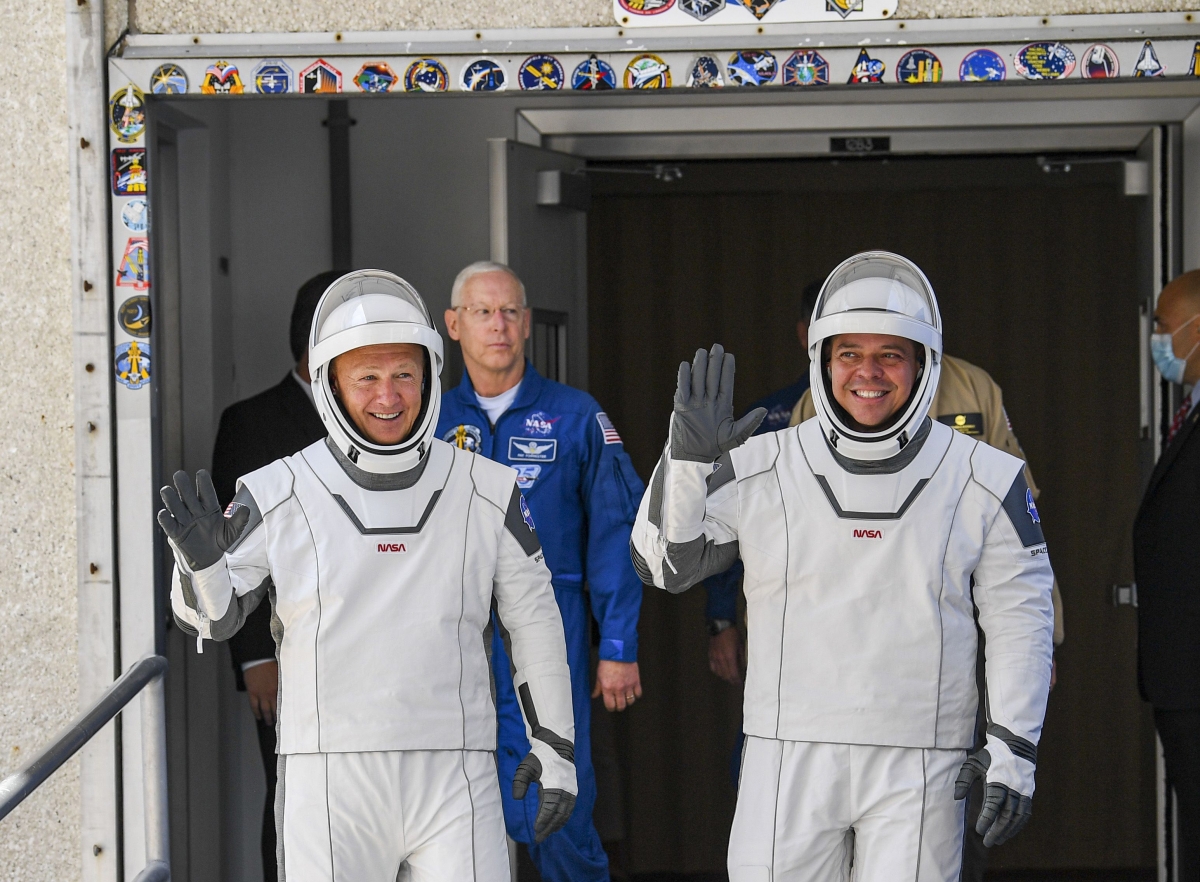

 From left, Ruangroj Poonpol, KBTG chairman; Supreecha Limpikanjanakowit, KBank first senior vice president; and Narute Jiensnong, Major Cineplex’s chief marketing officer, hold a press conference to launch contactless tech for sale of movie tickets.
  SootinClaimon.Com