Amazon’s new security drone, car camera and swiveling speaker push the boundaries of surveillance, again #ศาสตร์เกษตรดินปุ๋ย

#ศาสตร์เกษตรดินปุ๋ย : ขอบคุณแหล่งข้อมูล : หนังสือพิมพ์ The Nation.

Amazon’s new security drone, car camera and swiveling speaker push the boundaries of surveillance, again

Sep 25. 2020Amazon's $250 Echo Show 10 has a screen and camera that swivels around to face you, no matter where you move. MUST CREDIT: Photo courtesy of AmazonAmazon’s $250 Echo Show 10 has a screen and camera that swivels around to face you, no matter where you move. MUST CREDIT: Photo courtesy of Amazon 

By The Washington Post · Geoffrey A. Fowler · TECHNOLOGY
Amazon appears undeterred by its emerging reputation in consumer technology: creep.

At a virtual launch event on Thursday, Amazon’s new product lineup again pushed the boundaries of where and how we bring surveillance into our lives. Its new gadgets include: a Ring security camera attached to an indoor flying drone, a new Echo Show speaker that swivels to follow you around, and a security camera for cars that can record encounters with police.
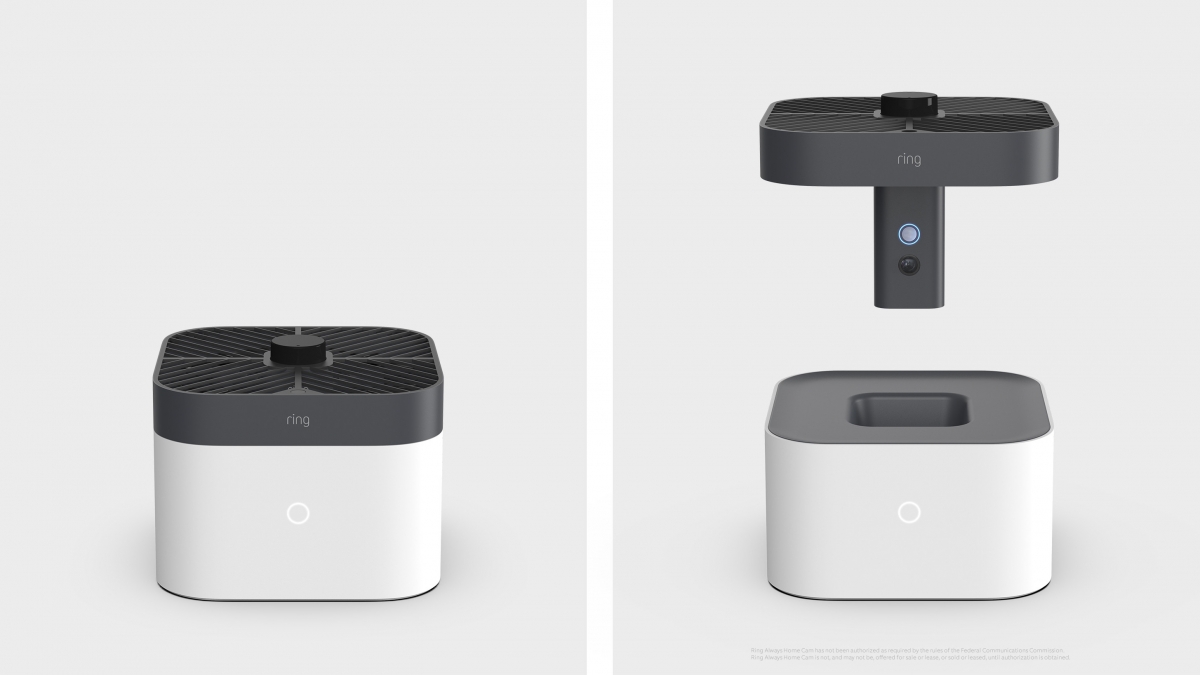
The $250 Ring Always Home Cam from Amazon is a drone that flies around your house to let you see what's going on. CREDIT: Photo courtesy of Amazon

The $250 Ring Always Home Cam from Amazon is a drone that flies around your house to let you see what’s going on. CREDIT: Photo courtesy of Amazon

Amazon also announced a few overdue improvements to the privacy protections its connected products offer consumers, which I applaud. But the direction the company wants to take connected life is unmistakable: more recordings feeding into Amazon artificial intelligence to automate our homes and our lives.

Earlier this month, Amazon also unveiled a new wearable health device and service called Halo that can take three-dimensional scans of your body and listen to your conversations to let you know how you might sound to others.

Amazon CEO Jeff Bezos owns The Washington Post, but I review all tech with the same critical eye.

The new $100 Amazon Echo is shaped like an orb. CREDIT: Photo courtesy of Amazon

The new $100 Amazon Echo is shaped like an orb. CREDIT: Photo courtesy of Amazon

The company introduced more than a dozen new products Thursday, including a new streaming game service called Luna and a new shape for its very popular Echo talking speakers. Goodbye talking coffee cans and pucks — hello glowing orbs. These speakers, now priced $50 to $100, have in recent years been among the world’s best-selling home audio devices, and the centerpiece of Amazon’s strategy to bring microphones and its Alexa AI into people’s homes.

The new Amazon devices most likely to raise eyebrows use cameras, not just microphones. That starts with the $250 Always Home Cam, part of its Ring brand of connected doorbells and security systems. This camera is an autonomous drone that flies inside your house so you can check in from afar. “We wanted to create one camera that could give users the flexibility of every viewpoint they want around the home,” Ring founder Jamie Siminoff said in a blog post.

Before you ask: No the drone doesn’t contain lasers for entertaining the cats – they’re likely to be terrified, anyway. Amazon says the Always Home Cam does have obstacle-avoidance technology so it doesn’t run into anything unexpected.

Siminoff said the idea was you could use your phone to remotely see if you left a window open, or the stove on, which is convenient. But the scary part is we know those aren’t the only ways it could be used. Amazon said the drone always hums at a “certain volume” so people are aware it is running, and can’t be manually controlled – it only flies along a preset path.

But as we’ve learned from Ring’s other products, what’s to stop it from spying on family members or neighbors, becoming a tool for police – or being used to watch you? Once again, Ring’s products raise more social questions than the company seems to want to address.

Also from the Ring brand, a new $200 dashboard car security camera promises to alert users to attempted break-ins, as well as alert authorities if there’s an accident. One particular capability caught my attention, given Ring’s cozy relationship with police. Say, “Alexa, I’m getting pulled over,” and the Ring Car Cam will record your interaction, save it to the cloud, and alert your family.

Connected cameras in cars also open up a whole new world of questions for car crashes, as I learned earlier this year when the many cameras on my car, a Tesla Model 3, recorded a hit-and-run while it was parked. Amazon’s Car Cam will bring similar capabilities to a lot more cars. What are the implications for insurance – and courts? Can your car be its own witness? Can it testify against you?

One more new Amazon device that captured my attention is the Echo Show 10, an update to its smart speaker with a 10-inch HD screen and camera attached. This update puts the screen part on a swivel motor, which allows the screen to swing around and face you while you’re interacting with it. Given that many of these devices live in kitchens and family rooms, that’s helpful to make sure you can see the recipe, TV show or video call that’s on the screen while you walk around.

But you might be wondering: How does the Echo Show know how to follow you around? That, of course, requires the camera to be on all the time. Amazon says the Echo Show looks for the general shape of a person, and tracks to that, without sending any video of you to Amazon. But it can also be remotely activated as a security camera, to swivel around and see the whole room.

It wasn’t only uncomfortable news on the privacy front. Amazon announced its Ring security cameras would soon allow users to turn on what’s known as end-to-end encryption. That’s an important step for keeping unwanted eyes out of your video feed, be it hackers or governments. End-to-end encryption is also used on services like Apple’s FaceTime and Facebook’s WhatsApp. It wasn’t immediately clear what impact that might have on some of the functionality of these devices.

And Amazon finally said it would permit people to use Alexa devices without Amazon keeping a recording of their conversations. As I discovered last year, Echo speakers sometimes activate at random times and eavesdrop on parts of your life. What makes that even creepier is that Amazon used to keep a recording of all of it on its computers, unless you kept going in after the fact to delete it. Now at long last, there will be a setting you can turn on that will cause Amazon to forget everything it hears right after you say it.

I just wish Amazon would take it step further: Make that the new privacy default for everyone.
New service robot launched at Intermach 2020 expo #ศาสตร์เกษตรดินปุ๋ย

#ศาสตร์เกษตรดินปุ๋ย : ขอบคุณแหล่งข้อมูล : หนังสือพิมพ์ The Nation.

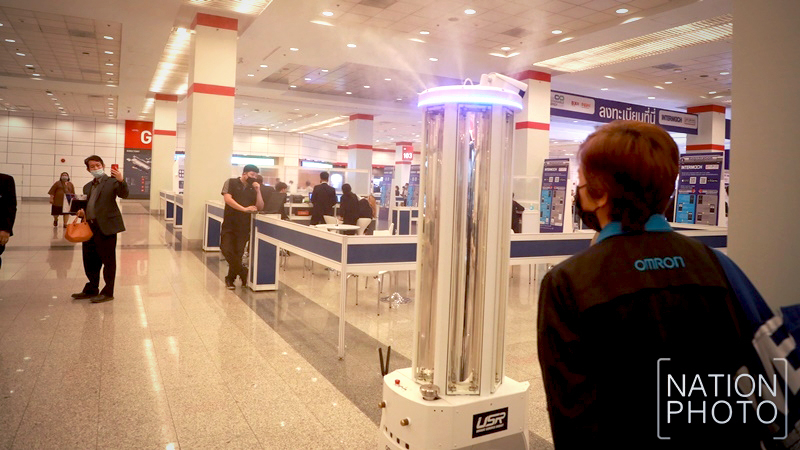
New service robot launched at Intermach 2020 expo

Sep 24. 2020

By The Nation
Photo Credit: Nation Photo by Supakit Khumkun

Uni Arc, a leading Thai provider of robotic and welding solutions, launched a new service robot at the Intermach 2020 event held at Bangkok International Trade & Exhibition Centre (BITEC) on Thursday (September 24).

This robot disinfects areas with an inbuilt disinfectant dispenser and checks people’s temperature with its sensor.

The four-day Intermach 2020 exhibition, showcasing the latest in technology for manufacturing and related industries, wraps up on Saturday.

TikTok asks court for injunction to stall impending ban #ศาสตร์เกษตรดินปุ๋ย

#ศาสตร์เกษตรดินปุ๋ย : ขอบคุณแหล่งข้อมูล : หนังสือพิมพ์ The Nation.

TikTok asks court for injunction to stall impending ban

Sep 24. 2020

By The Washington Post · Rachel Lerman · NATIONAL, BUSINESS, WORLD, TECHNOLOGY, ASIA-PACIFIC
SAN FRANCISCO – TikTok filed for an injunction in federal court Wednesday to halt a ban of the video app as it scrambles to complete a deal with the Trump administration, suggesting the agreement may not get wrapped up this week.

Currently, TikTok is set to be banned from app stores Sunday. TikTok was given a week-long extension by the Trump administration last week, after President Donald Trump seemed to give tacit approval over the weekend to a deal that would create a new TikTok Global company headquartered in the United States. The new company would include investments from Oracle and Walmart.

TikTok’s request for a preliminary injunction Wednesday comes just days after Chinese messaging app WeChat was granted an injunction to temporarily halt the administration’s ban of its app.

It could mean TikTok isn’t certain it will get the deal tied up in time to avoid a ban. The deal was thrown into limbo this week when TikTok’s Chinese parent company, ByteDance, and Oracle presented different versions of an ownership structure for the new company. ByteDance said it would still own 80% of the new TikTok company, but Oracle said ByteDance wouldn’t own any piece of it.

Trump told Fox News on Monday that “we just won’t make the deal” if ByteDance had anything to do with the company.

TikTok and ByteDance originally sued Trump, Commerce Secretary Wilbur Ross and the Commerce Department in August after the president signed an executive order to ban the video app from doing business in the United States, citing national security concerns. Trump has expressed concerns that TikTok could be sharing information with the Chinese government, a claim the company has denied.

Since then, TikTok has been working to make a deal with an American company that would allow it to keep operating in the United States. It talked with suitors, including Microsoft, about a full sale but eventually proposed a scaled-down deal to the Trump administration.

Its proposed deal would involve Oracle having oversight of its technical operations in the United States, a move that TikTok hopes will quell Trump’s and regulators’ national security concerns.

Trump also said part of the deal included a $5 billion fund for education in the United States, but neither Oracle nor Walmart have directly confirmed the fund. Trump said last month that any TikTok deal should include “a very substantial portion” of the purchase price to be paid to the U.S. Treasury. He later backed off that claim.

On Saturday, Trump told reporters that he had given the deal “his blessing” but hinted it might still fall apart.

“If they get it done, that’s great. If they don’t, that’s OK, too,” he said.

Facebook deletes several fake Chinese accounts targeting Trump and Biden, in first takedown of its kind #ศาสตร์เกษตรดินปุ๋ย

#ศาสตร์เกษตรดินปุ๋ย : ขอบคุณแหล่งข้อมูล : หนังสือพิมพ์ The Nation.

Facebook deletes several fake Chinese accounts targeting Trump and Biden, in first takedown of its kind

Sep 23. 2020

By  The Washington Post · Craig Timberg · NATIONAL, BUSINESS, TECHNOLOGY, POLITICS, COURTSLAW 

Facebook removed several fake accounts and pages operated from China that promoted and criticized both President Donald Trump and Democrat Joe Biden, in the company’s first takedown of Chinese accounts aimed at U.S. politics, Facebook announced Tuesday.

The number of accounts was small and their reach minimal, the company said, but the action underscored how online actors in China have taken an interest in election-year politics in the United States, as U.S. intelligence officials previously have reported. They also have said Russia and Iran are seeking to influence the American election.

The pages and accounts removed by Facebook were operated by individuals in China, but the company did not determine whether they had any affiliation with the government or ruling party there.

“It’s a fairly nascent thing,” said Nathaniel Gleicher, head of cybersecurity policy at Facebook. He said the initiative started in the spring and never reached many users. “We’ve seen content fairly quickly get attention. We didn’t see that here.”

One fake post cited by Facebook was from Friday. It said: “A former Trump supporter tells me that the tipping point for them leaving the campaign this week was when they figured out @realDonaldTrump was lying about having a vaccine ready to distribute to the public this year. They now plan on voting for Biden.”

Gleicher said in a call with reporters that the roughly 10 Chinese accounts and five pages aimed at U.S. politics were part of a broader takedown as Facebook enforces its policy against “coordinated inauthentic behavior” and interference by foreign governments.

Overall, Facebook removed 155 accounts, 11 pages and nine groups from China from its main platform and six accounts from Instagram, a Facebook subsidiary. A previous Facebook takedown, in August 2019, targeted accounts the company said were affiliated with the Chinese government, but those accounts were focused on unrest in Hong Kong, not U.S. politics.

A report by Graphika, a network analysis firm that works with Facebook to study disinformation, echoed the company’s conclusion that the amount of effort aimed at U.S. politics was relatively small. The influence operation focused on issues related to the South China Sea, including the U.S. military presence there, with the intended audiences probably in the Philippines and Taiwan. The operation frequently promoted political themes aligned with Chinese government interests and those of Filipino President Rodrigo Duterte.

For U.S. politics, there were Facebook groups supporting Trump, Biden and former Democratic presidential candidate Pete Buttigieg. Together the groups had fewer than 2,000 members, Graphika found. One group supporting Biden and his running mate, Sen. Kamala Harris, D-Calif., had about 1,400 members. A group supporting Trump had three members.

“The U.S.-focused content was the least and last part of the operation,” said Ben Nimmo, head of investigations for Graphika. “Some of their fake accounts did not engage with political content at all and liked content from the U.S. military instead. Most of the U.S.-focused assets were taken down when they were a few months old, so they didn’t have time to build a substantial audience.”

Also Tuesday, Facebook removed 57 accounts and 31 pages from the Philippines that targeted domestic audiences there, including attacks on the independent news organization Rappler and its chief executive, Maria Ressa. Also removed as part of the operation were 20 Instagram accounts. The main focus of the online influence operation was domestic audiences in the Philippines.

Some of the accounts had close ties to the Filipino military and its “Chief of the Army Social Media Center,” according to a report by the Atlantic Council’s Digital Forensic Research Lab, which examined data provided by Facebook.

“The Duterte government has a track record of running coordinated harassment and disinformation campaigns targeting political opponents and journalists,” said Zarine Kharazian, author of the report and associate editor of the DFR Lab. “This disclosure demonstrates the involvement of the military and the police in that effort, something that activists in the country have long stressed.”

Tesla’s latest big unveil isn’t a car or truck: It’s the battery tech that could power its future #ศาสตร์เกษตรดินปุ๋ย

#ศาสตร์เกษตรดินปุ๋ย : ขอบคุณแหล่งข้อมูล : หนังสือพิมพ์ The Nation.

Tesla’s latest big unveil isn’t a car or truck: It’s the battery tech that could power its future

Sep 23. 2020

By The Washington Post · Faiz Siddiqui · BUSINESS, TECHNOLOGY, US-GLOBAL-MARKETS 
SAN FRANCISCO – Tesla has focused on squeezing as much energy as possible out of its batteries, with industry-leading range figures that have bested its competitors by dozens of miles per charge. Now it has its sights set on a different goal: building batteries that cannot only beat rivals’ range — or how far their cars can travel on a single charge — but far outlast the life span of a vehicle.

It’s the latest innovation push by the Silicon Valley car builder that has aimed to rewrite the rules on electric vehicles, making them performance-oriented and aspirational in a way that has eluded competitors. But electric vehicles constitute a small slice of the overall car market, and to expand, Tesla will need to reign supreme over not only the manufacturing of vehicles but also their lifeblood: batteries. Elon Musk announced Tesla’s plans for tackling that issue at a widely anticipated “Battery Day” event Tuesday.

“Today, [electric vehicles] account for about 3% of cars sold globally,” Gene Munster, an investor and managing partner of Loup Ventures, wrote in an analyst note ahead of the event. “Tesla has an opportunity to parlay its current 80% [electric vehicle] market share in the US, along with about 20% in Europe and Asia, into a massive business in the years to come. To be successful, the company needs to ramp its production of batteries.”

Musk has said any development unveiled Tuesday “will not reach serious high-volume production until 2022.” But he also hinted that it involves a serious ramp-up of battery production to power vehicles the company has announced, such as its Semi, Cybertruck and Roadster. Tesla would need to seriously advance its battery technology to make some of those offerings possible, given that it has announced a range of more than 500 miles for one variant of its Cybertruck pickup. A range of that distance would be roughly enough to drive from Washington, D.C., to New York City and back again.

By contrast, Tesla says its current highest-range offering – the Model S – can travel as far as 402 miles on a single charge. Competitors such as start-up Lucid Motors have announced energy-dense electric vehicles with ranges topping 500 miles.

Batteries are one of the most complex ingredients to electric vehicles, thanks in large part to the resource-intensive process of manufacturing them. A battery with a longer life span presents one route to reducing the environmental footprint of electric vehicles, making them a more viable proposition at the scale needed to start seriously phasing out internal-combustion cars.

Still, the mining of rare metals, including those needed to build electric vehicles, can expose local communities to significant environmental impacts, including toxic elements that can lead to respiratory issues and birth defects.

The battery event was set to take place following an annual shareholder meeting at Tesla’s Fremont, Calif. manufacturing facility. It was an unusual setting tailor-made for the covid-era.

Rows of Tesla cars filled with shareholders lined up in a parking lot near the presentation stage. The drivers gave a rousing honk of approval when Musk took the stage and proceeded to beep their horns whenever Musk made a proclamation they liked.

“We’ve got the Tesla drive-in movie theater, basically,” Musk said.

Seminar lays out key factors to build a successful startup #ศาสตร์เกษตรดินปุ๋ย

#ศาสตร์เกษตรดินปุ๋ย : ขอบคุณแหล่งข้อมูล : หนังสือพิมพ์ The Nation.

Seminar lays out key factors to build a successful startup

Sep 22. 2020

By The Nation

A startup seminar, “Ready, Get Set, Go!”, offering “secret recipes” to participants was organised at the Gaysorn Urban Resort last week.

The event was organised by Entrepreneur Advisors, a collaboration comprising Kingsford Securities, a Thai securities company, To Exit (2Ext), a full-service startup consulting firm, and Kudun and Partners (KAP), a fast-growing law firm.

Several startup companies from various industries ranging from food tech, health tech, insurance tech to retail tech attended the event.

The participants had a chance to hear from some of the most accomplished movers and shakers in Thailand’s startup ecosystem, including Ezra Don Harinsut, the CEO and co-founder of Omise, Woranun Thaworanun, managing director and chief of investment banking from Kingsford Securities, Nicky  Nattanuch, managing director of 2Ext, and Kongkoch Yongsavasdikul, partner at Kudun and Partners. 

The seminar focused on “secret recipes” and key factors in creating a successful startup, as well as the common obstacles faced by startups, such as seeking funds and often-overlooked legal issues ranging from relations between the shareholders, protecting intellectual property rights, forms of contracts, employment-related compliance to maintaining corporate documents.

Following the success of the seminar,  Entrepreneur Advisors said they would be launching an “Entrepreneur Advisory Centre”, a one-stop service centre offering free initial consultations to help startups that may be facing challenges in their startup journey or to provide guidance on how to move their business forward. In contrast to the other consultancy providers, startups can share their concerns first, allowing the team to diagnose and provide tailor-made advice to them before they meet for an exclusive one-on-one session.

The unique collaboration will provide a holistic one-stop advisory service to startups in Thailand covering not only legal issues but also advice on funding opportunities, business matching assistance, and the overall planning for an effective startup lifecycle to help them succeed, the advisers said.

For more information on the seminar, visit the Facebook page of Kudun and Partners, or contact Worakanya Chaisorn, assistant marketing manager of KAP (worakanya.c@kap.co.th).

Justice Department expected to brief state attorneys general this week on Google antitrust lawsuit #ศาสตร์เกษตรดินปุ๋ย

#ศาสตร์เกษตรดินปุ๋ย : ขอบคุณแหล่งข้อมูล : หนังสือพิมพ์ The Nation.

Justice Department expected to brief state attorneys general this week on Google antitrust lawsuit

Sep 22. 2020

By The Washington Post · Tony Romm · NATIONAL, BUSINESS, COURTSLAW 
WASHINGTON – The Justice Department is expected to brief state attorneys general this week about its imminent plans to file an antitrust lawsuit against Google, setting in motion a landmark legal clash between the U.S. government and the search-and-advertising behemoth.

The timeline puts federal competition watchdogs on track to file a case against Google potentially next week, capping off a wide-ranging inquiry into the tech giant and the extent to which its sprawling corporate footprint harms rivals and consumers. Two people familiar with the matter, who spoke on the condition of anonymity because they were not authorized to discuss a law enforcement proceeding, confirmed the Justice Department’s early plans, but they cautioned that it could change and that a lawsuit may come later than anticipated.

The Justice Department and Google each declined to comment.

The Justice Department opened its investigation of Google last year, a probe that initially appeared focused on the company’s advertising business but since has come to encompass its dominant footprint in online search. It marks the first major entanglement between the U.S. government and the tech giant since 2013, when federal officials last scrutinized Google on antitrust grounds but opted against filing a lawsuit challenging the company. In the meantime, European regulators have fined Google billions of dollars for violating antitrust laws.

The department had been eyeing a September lawsuit against Google. Attorney General William Barr this summer sought to speed up the agency’s work, overruling dozens of federal agents who said they needed additional time before they could file a case against Google, The Washington Post previously reported.

State attorneys general, meanwhile, embarked on their own bipartisan probe last summer, an inquiry led by Texas Attorney General Ken Paxton, a Republican. That effort has broadened considerably since Democratic and Republican state leaders announced their intentions from the steps of the Supreme Court in Washington. It remains unclear which states may join the Justice Department in any lawsuit it files in the coming days, or whether they could file their own additional complaints. Some Democratic attorneys general also have signaled that they may want to wait until after the 2020 presidential election before deciding their next steps.

Adding to Google’s headaches, the White House is expected to host Republican attorneys general on Wednesday to discuss a decades-old federal law that spares social media platforms from being held liable for content posted by their users, according to the two people, who added that it is not clear whether Democrats have been invited to that gathering.

The two people said President Donald Trump is expected to join the meeting, which comes weeks after the Justice Department publicly called on Congress to change the law, known as Section 230. Barr and the Justice Department endorsed the revisions partly because of claims that social media sites, including Google-owned YouTube, moderate content online in a way that censors conservative users and viewpoints.

Trump has echoed those claims, generally without providing evidence, and many Silicon Valley tech companies vehemently deny the charges. The president this year signed an executive order that opened the door for the U.S. government to assume oversight of political speech on the Internet; many tech giants, through nonprofits they support, have challenged its constitutionality in court.

“Online censorship goes far beyond the issue of free speech, it’s also one of protecting consumers and ensuring they are informed of their rights and resources to fight back under the law,” White House spokesman Judd Deere said in a statement. “State attorneys general are on the front lines of this issue and President Trump wants to hear their perspectives.”

TikTok, Oracle deal still shrouded in uncertainty as companies tussle over ownership #ศาสตร์เกษตรดินปุ๋ย

#ศาสตร์เกษตรดินปุ๋ย : ขอบคุณแหล่งข้อมูล : หนังสือพิมพ์ The Nation.

TikTok, Oracle deal still shrouded in uncertainty as companies tussle over ownership

Sep 22. 2020

By The Washington Post · Rachel Lerman, Jeanne Whalen · BUSINESS, US-GLOBAL-MARKETS 
The TikTok deal President Donald Trump blessed this weekend is still facing uncertainty over the ownership structure of the new company, putting the agreement in jeopardy as a deadline for a U.S. ban of the video app approaches again.

Trump, software company Oracle and TikTok’s Chinese parent company, ByteDance, are publicly presenting different versions of a deal that the president over the weekend described as nearing the finish line. The deal would create a new TikTok Global company headquartered in the United States, with Walmart and Oracle as investors, and make Oracle a technology partner that secures TikTok’s U.S. data, according to the partners.

Trump on Saturday said he was giving his blessing to the proposed deal. On Monday, however, Trump said Oracle would need to have “total control” and ByteDance will need to step back.

“They will have nothing to do with it, and if they do, we just won’t make the deal,” he said in an interview on Fox News.

ByteDance said in a blog post earlier Monday that it would keep control of TikTok Global. After Walmart and Oracle invested and the company entered the U.S. public markets, ByteDance would still own 80%, it said.

Oracle seemed to directly contradict that statement with its own Monday, saying ByteDance would not be an owner.

“Upon creation of TikTok Global, Oracle/Walmart will make their investment and the TikTok Global shares will be distributed to their owners, Americans will be the majority and ByteDance will have no ownership in TikTok Global,” Oracle’s chief Washington lobbyist, Ken Glueck, said in a statement.

Oracle declined to comment further. ByteDance did not respond to requests for further comment. The White House did not immediately have comment.

After months of threatening to ban TikTok in the United States, Trump signed two orders in August – one that banned the video app and one that required ByteDance to sell its U.S. TikTok operations. TikTok has been scrambling to work with investors and suitors to find a solution ever since and presented a deal to the Trump administration last week.

TikTok said the deal satisfied regulator’s national security concerns over its data practices. Trump and other officials have said that TikTok presents a national security risk because the Chinese government could potentially access American user information. TikTok has disputed this, saying it does not share U.S. user information with China.

The deal would put Oracle in charge of securing and managing user information in the country.

A person familiar with Oracle’s deal talks who spoke on the condition of anonymity to speak candidly said the new company would include 36% Chinese ownership including ByteDance’s founder and other shareholders. U.S. investors, including Walmart, Oracle and American venture capital firms that are currently invested in ByteDance would together own 53% of the new company. Other non-Chinese international investors would own 11 percent, the person said.

Walmart said this weekend it planned to take a 7.5% stake in the company, and Oracle said it would own 12.5%.

TikTok has about 100 million users in the U.S. and is especially popular with teens and young adults.

Even amid the uncertainty over new ownership of the global entity, one thing seemed certain: The deal so far falls short of what Trump originally ordered.

Trump in his August 14 executive order required a full sale of TikTok’s U.S. operations, on national security grounds. The Trump administration announced plans to ban TikTok from app stores on Sept. 20, though TikTok got a one-week extension on that ban this weekend after Trump said he blessed the Oracle deal “in concept.”

The interagency Committee on Foreign Investment in the United States (CFIUS) has been reviewing the TikTok-Oracle negotiations to check for national-security risks, the reason it originally demanded ByteDance divest from TikTok here.

Despite Trump’s blessing, the agencies that sit on CFIUS still had concerns as of Friday that Oracle had not yet addressed, regarding data, source code and some disclosure of TikTok’s algorithm, according to one former U.S. official, who spoke on the condition of anonymity because of the matter’s sensitivity.

The Treasury Department, which chairs CFIUS, said Saturday that approval of the transaction would be “subject to a closing with Oracle and Walmart and necessary documentation and conditions to be approved by CFIUS.” It didn’t immediately respond to a request for comment Monday.

Trump also initially called for the U.S. to collect a big portion of the deal price.

“A very substantial portion of that price is going to have to come into the treasury of the United States,” Trump said in August. “The United States should be reimbursed or paid because without the United States they don’t have anything.”

On Saturday, Trump said that the companies would establish a $5 billion education fund in the country. Neither Oracle nor Walmart confirmed that, though they said they “will pay more than $5 billion in new tax dollars to the U.S. Treasury.”

In a joint statement this weekend, the companies said they will “create an educational initiative to develop and deliver an AI-driven online video curriculum to teach children from inner cities to the suburbs,” though they didn’t put a price tag on the initiative.

But some experts said Trump may achieve his goal – at least partially – of alleviating national security concerns.

“Basically, on the national security side he got what he wanted in that there’s a disconnect now between ByteDance and TikTok because Oracle will be operating backroom operations and gets access to source code,” said James Lewis of the Center for Strategic and International Studies, a think tank in Washington, D.C.

The deal also could make Trump look tough on China to many people, said Robert Chesney, an associate dean at the University of Texas School of Law.

“All lots and lots of people really know is that there was some thing with China and the president took care of it,” he said.

It was unclear whether the deal will win over skeptics on Capitol Hill, who last week blasted the Oracle-TikTok proposal.

On September 16, Sen. Marco Rubio, R-Fla.; Sen. Thom Tillis, R-N.C., and four other Republicans said they wanted to see TikTok’s U.S. operations completely severed from ByteDance’s control, and opposed any deal in which Oracle would take “only a stake” in the U.S. business.

“A partial sale, or trusted partnership deal, is insufficient in achieving the goals of protecting Americans and U.S. interests from the severe risks detailed in the Executive order,” the senators wrote in a letter to President Trump. “Any deal between an American company and ByteDance must ensure that TikTok’s U.S. operations, data, and algorithms are entirely outside the control of ByteDance or any Chinese-state directed actors, including any entity that can be compelled by Chinese law to turn over or access U.S. consumer data.”

Sen. Josh Hawley, R-Mo., voiced similar concerns in his own letter, to Treasury Secretary Steven Mnuchin. “Any corporate shell game that leaves TikTok in the hands of ByteDance will simply perpetuate the original problem, leaving U.S. national interests and everyday users at serious risk,” he wrote. ByteDance should pursue “a full sale of TikTok, its code, and its algorithm to a U.S. company,” Hawley said.

The senators’ offices didn’t immediately respond to requests for comment Monday.

UN representative queries Education Ministry’s response to students’ complaints #ศาสตร์เกษตรดินปุ๋ย

#ศาสตร์เกษตรดินปุ๋ย : ขอบคุณแหล่งข้อมูล : หนังสือพิมพ์ The Nation.

UN representative queries Education Ministry’s response to students’ complaints

Sep 22. 2020United Nations resident coordinator in Thailand, Gita Sabharwal, left, and  Education Minister Nataphol Teepsuwan .United Nations resident coordinator in Thailand, Gita Sabharwal, left, and Education Minister Nataphol Teepsuwan . 
By The Nation

United Nations resident coordinator in Thailand, Gita Sabharwal, visited Education Minister Nataphol Teepsuwan on Monday (September 21) to enquire how the ministry plans to respond to recent student protests. 

Students across the nation recently protested against many obsolete school regulations such as forced short haircuts, and these protests slowly escalated into rallies against the establishment. 

After the meeting, the minister said Sabharwal sympathised with the ministry and also suggested that the students’ move was “very bold” and “rarely seen in any other country”. 

She also asked how the ministry plans to respond to the flurry of opinions submitted to the ministry by students, Nataphol said. He added that he told the UN coordinator that the information collected via several platforms, including nataphol.com, will be used to improve his ministry’s moves to reform the education system and also ensure the students’ information is fully protected. 

Nataphol said teaching staff nationwide have petitioned for an improvement to the evaluation process for promotions, while the ministry is also seriously looking into revising the curriculum and elevating the standard of teaching. 

“I assured Gita that the information we are gathering is very beneficial to our reform process, and all the complaints revolve around the original reform plan that the Education Ministry had completed earlier this year,” the minister said. 

When asked if he is concerned about the ongoing protests, Nataphol said the Education Ministry has already acted upon several school policies in response to the students’ demands. However, he said, some demands are controversial and will take more time to evaluate. 

As for removing Grade 1 entrance exams, Nataphol said policies are already in place to remove these exams, but every school will have to adhere to this new rule to ensure that reform is in place. 

In relation to classroom sizes, he said new rules stipulate that classrooms have no more than 40 students at any given time, to ensure teaching standards are met and students have equal access to quality education. 

“I don’t want any classroom to have more than 40 students. This may be tough for some large schools that have 4,000 to 5,000 students as they may not have enough available classrooms. However, large classrooms do not offer an ideal learning environment for all students, which causes education inequality. We must work harder in finding alternatives and improved measures to ensure the students we produce in rural areas are as competitive as those produced in urban settings,” the minister added.

TikTok says Oracle can review its source code, but deal won’t allow tech transfers #ศาสตร์เกษตรดินปุ๋ย

#ศาสตร์เกษตรดินปุ๋ย : ขอบคุณแหล่งข้อมูล : หนังสือพิมพ์ The Nation.

TikTok says Oracle can review its source code, but deal won’t allow tech transfers

Sep 21. 2020

By The Washington Post · Eva Dou 

SEOUL – China’s TikTok sought to tamp down domestic controversy over its deal with Oracle and Walmart, saying in a blog post Monday that there would be no technology transfer to Oracle, though the U.S. company would be able to check its software for safety.

The statement by TikTok’s parent company ByteDance reflected the awkward situation confronting TikTok as it navigates the same political pressures that American companies have long faced in the China market. For years, U.S. firms have been the ones issuing the assurances that their Chinese partner couldn’t access their data except for safety checks.

“The current plan does not involve the transfer of any algorithms or technology,” ByteDance said in the post on its official WeChat account. “Oracle has the authority to check the source code of TikTok USA.”

The TikTok deal has been a vivid example of the Trump administration’s policy of reciprocity toward Chinese businesses. Supporters of the approach say it’s only fair to treat Chinese companies by the same standards to which U.S. companies are held in China. Critics say the United States should not stoop to the strong-arm negotiating tactics that it criticizes other governments for using.

U.S. officials have followed Beijing’s playbook in demanding the viral video app give the government a cut of the deal, and in applying eleventh-hour pressure in threatening to remove TikTok from U.S. app stores.

President Donald Trump said on Saturday he gave his “blessing” to the deal, while signaling it could still fall apart. It came a day after the Trump administration moved to effectively ban TikTok and WeChat starting Sunday, moves that have been temporarily suspended pending the TikTok negotiations and a lawsuit by WeChat users.

China’s government has oppposed the Trump administration’s push to force a sale of TikTok’s U.S. operations, tightening its technology export restrictions in late August. These export restrictions included “personalized information recommendation service technology based on data analysis,” which industry experts saw as a nod to TikTok.

China’s Commerce Ministry hinted at potential retaliation on Saturday, saying companies put on its “unreliable entities list” would be banned from trade with China.

Oracle said on Saturday it had been chosen as TikTok’s “secure cloud technology provider.” Oracle CEO Safra Catz said in the statement that the deal would “ensure data privacy to TikTok’s American users.”

ByteDance’s Chinese-language statement on Monday, which it called a debunking of “rumors,” also confirmed the Chinese company is still trying to negotiate some terms of the deal.

ByteDance quibbled with the announcement by Oracle and Walmart that it would pay more than $5 billion in new taxes to the U.S. Treasury, saying the number was not finalized.

“The so-called tax payment of $5 billion to the U.S. Treasury Department is a forecast of the corporate income tax and other operating taxes that TikTok will need to pay for its business development in the next few years,” ByteDance said. “The actual tax amount still needs to be determined according to the actual development of the business and the U.S. tax structure.”

ByteDance also said earlier in a statement on Chinese microblogging platform Weibo that it had learned from the media about President Trump’s statement that ByteDance would contribute $5 billion to an education fund.

ByteDance said that it will own an 80 percent stake in U.S.-based TikTok Global after the new investors come on board. Walmart’s CEO will have a board seat in TikTok Global, along with ByteDance’s founder and its current board members, it said.

U.S. companies have long faced similar pressures in China. In fact, ByteDance cited how in 2016, Microsoft set up a “technology transparency center” in Beijing to allow Chinese experts to examine its source code for security.

In the American Chamber of Commerce in China’s annual survey of members published in March, 54 percent of U.S. technology-industry respondents said they did not believe they were treated fairly by China’s government compared with Chinese companies, higher than respondents in any other sector.