Chip industry wants $50 billion to keep manufacturing in U.S. #ศาสตร์เกษตรดินปุ๋ย

#ศาสตร์เกษตรดินปุ๋ย : ขอบคุณแหล่งข้อมูล : หนังสือพิมพ์ The Nation.

Chip industry wants $50 billion to keep manufacturing in U.S.

Sep 17. 2020Nakul Duggal, senior vice president of automotive product management at Qualcomm Technologies Inc., is silhouetted while speaking during the company's news conference at the 2019 Consumer Electronics Show (CES) in Las Vegas on Jan. 7, 2019. MUST CREDIT: Bloomberg photo by David Paul Morris.Nakul Duggal, senior vice president of automotive product management at Qualcomm Technologies Inc., is silhouetted while speaking during the company’s news conference at the 2019 Consumer Electronics Show (CES) in Las Vegas on Jan. 7, 2019. MUST CREDIT: Bloomberg photo by David Paul Morris. 

By Syndication. Washington Post, Bloomberg · Ian King · BUSINESS, TECHNOLOGY, US-GLOBAL-MARKETS 
The U.S. chip industry said as much as $50 billion in federal incentives will be needed to halt a decades-long trend of manufacturing moving overseas as China spends heavily to become a leading semiconductor producer.

The federal government needs to deploy $20 billion to $50 billion to make the U.S. as attractive a location for plants as Taiwan, China, South Korea, Singapore, Israel and parts of Europe, the Semiconductor Industry Association said in a study released Wednesday. Failure to do that threatens U.S. leadership of the sector as a whole, it added.

The lobbying group, which represents companies such as Intel Corp. and Qualcomm Inc., is making the pitch at a time when it believes Washington is more open to listening. The China-U.S. trade war and supply-chain disruptions caused by the pandemic have revealed the risks of having such vital components made abroad.

“Six months ago, I don’t think we could have had this discussion, the world’s gone in our direction,” said John Neuffer, chief executive officer of the SIA. “It’s not a bit of a change in Washington, it’s a significant shift.”

The $400 billion semiconductor industry is led by U.S. companies, but many chipmakers, such as Nvidia Corp. and Qualcomm, outsource production to factories mostly in Asia. Taiwan Semiconductor Manufacturing Co. dominates that part of the market and also makes chips designed by Apple Inc. and other U.S. tech giants.

Production techniques, including chemical processes, and complex manufacturing equipment play a vital role in determining chip performance. The U.S. needs to keep a chunk of this work domestic so it can maintain its knowledge base and ownership of the skills, the SIA said.

While U.S. production ebbs, China’s government is pouring money into its domestic semiconductor industry, conferring the same kind of priority on the effort it accorded to building its atomic capability. That has made chip manufacturing a matter of national security.

The SIA said new U.S. plants built with federal support “would bring state-of-the-art manufacturing technology and sufficient capacity to cover semiconductor demand from the U.S. defense and aerospace industries.”

Only 6% of the new global capacity in development will be located in the U.S. In contrast, China will add about 40% of the new capacity over the next decade and become the largest semiconductor manufacturing location in the world, the SIA noted in its report.

Senator John Cornyn is sponsoring a bipartisan CHIPS for America Act to increase government support for the industry, and he weighed in on the issue on Wednesday.”Domestic semiconductor manufacturing has been steadily declining, and the COVID-19 pandemic has made clear how vulnerable our existing supply chains are,” the Republican senator from Texas said. “This report underscores the need to boost American production of semiconductors.”

Locating a plant in the U.S. costs about 30% more over a decade than comparable sites in Taiwan, South Korea and Singapore. China may be as much as 50% cheaper, according to the report.

It takes as much as $20 billion to build a big chip plant, considerably more than a new aircraft carrier or nuclear power plant, the report estimated. Over a decade, semiconductor factories cost as much as $40 billion. Government incentives around the world reduce that bill by up to $13 billion, according to the report.

Most incentives in the U.S. are provided by state governments that can’t compete against countries with bigger budgets, the SIA said. Some countries offer grants to make the required land free. Others slash corporate and property taxes or help with the cost of equipment purchases. The U.S. ranks way down the list in most of those categories, many controlled by Washington, the group added.
What Apple didn’t announce: An iPhone 12 #ศาสตร์เกษตรดินปุ๋ย

#ศาสตร์เกษตรดินปุ๋ย : ขอบคุณแหล่งข้อมูล : หนังสือพิมพ์ The Nation.

What Apple didn’t announce: An iPhone 12

Sep 16. 2020

By The Washington Post · Heather Kelly · BUSINESS, TECHNOLOGY
All the usual ingredients of an Apple fall announcement were there. Dramatic drone shots of the spaceship-like campus, a brief nod to the current woes of the world, executives rattling off superlatives about lightly upgraded gadgets.

But Tuesday’s Apple “event” – a prerecorded video people agreed to watch on the Internet at the same time – was missing something big: new iPhones. Where were you, iPhone 12, if that’s even your real name?

The omission isn’t a surprise, but it’s still unusual. For a company that built its brand on innovation, Apple has become pretty predictable. Every fall it announces its latest iPhones. The company has announced new iPhones every September since 2012. The year prior, in 2011, the iPhone 4s was announced in October.

However, Apple has delayed the release of its phones before, most recently the iPhone X, which wasn’t in stores until November.

– – –

When is the iPhone 12 coming?

Analysts expect the new phones to be announced in October at the earliest. Apple confirmed that the iPhone would be late on an earnings call back in July, when Luca Maestri, the company’s chief financial officer, said iPhone supply was going to be available a few weeks later than usual.

A month might not seem like a big deal, but Apple wants all its new products released and in stock ahead of the holiday rush. That should be especially true if that rush could be dampened by fewer people shopping in stores and families not having holiday gatherings because of the novel coronavirus.

– – –

A month seems long. What am I even waiting for?

Apple is expected to release four new iPhone models, ranging in size from 5.4 to 6.7 inches. If they follow Apple’s most recent naming conventions – and the overused trend of slapping “Max” and “Pro” on the end of every product name – we could get an iPhone 12, iPhone 12 Max, iPhone 12 Pro, and iPhone 12 Pro Max. Minor upgrades could include tweaks to the exterior design and better cameras, including a depth-sensing back camera. As for design, the new iPad Air that Apple announced Tuesday has flat edges, which could be a sign of what’s to come on any new iPhones.

The main addition will likely be support for 5G, the cellular network that promises lightning-fast download and upload speeds … eventually.

Every new iPhone needs one big enticing feature to persuade people to give up the still-functioning iPhone they bought two or so years ago. The iPhone 11, for example, added an impressive lowlight mode and tried to make “slofies” happen. IPhone sales have been slowing for years, thanks to an end to carrier subsidies and Apple offering inexpensive battery replacements. But with so many people stuck at home and connecting happily over their WiFi, its unclear whether 5G will be the jolt to sales Apple wants.

– – –

Why is it delayed?

This is 2020. Up is down, the country is simultaneously on fire and fending off hurricanes. Apple CEO Tim Cook is presenting new products to an invisible audience, and we’re still in the throes of a pandemic that has hit Apple sales, stores and production.

Apple warned investors that the virus was disrupting production back in February. In addition to issues with its supply chain, much of Apple’s U.S. staff has been working from home, and its stores worldwide have had to shut down, although many have reopened with new restrictions.

– – –

Fine, no iPhone 12 today. What can I buy soon?

Apple announced two new Apple Watches, including a lower-cost Apple Watch SE and the Apple Watch Series 6, which can measure blood oxygen levels. Both will be available September 18. A new 8th generation iPad will start at $329 and also be out at the end of week. The $599 and up iPad Air, however, isn’t coming until some time in October. 

Additionally, sometime before the end of 2020, Apple says you’ll be able to sign up for the new Fitness+ service which will cost $10 a month. Its all-in-one Apple One bundle of various services is coming this fall starting at $15 a month. 

And the company already released a new phone earlier this year, the lower-cost iPhone SE. An update to its last beloved iPhone SE, cherished for being small enough to fit into the smallest pocket and sturdy enough to open a beer, the new SE is only the same in name and price range.

For a quick hit of newness, the latest operating systems will be available tomorrow, including the new iOS.

Do you absolutely have to get something that can connect to 5G right this second? Well, Veruca Salt, Samsung and OnePlus are here for you and already sell their own 5G phones. The 5G networks, however, still have some catching up to do.

China says TikTok sale shows U.S. ‘economic bullying’ #ศาสตร์เกษตรดินปุ๋ย

#ศาสตร์เกษตรดินปุ๋ย : ขอบคุณแหล่งข้อมูล : หนังสือพิมพ์ The Nation.

China says TikTok sale shows U.S. ‘economic bullying’

Sep 16. 2020

By Bloomberg · Maria Tadeo, Nikos Chrysoloras, Natalia Drozdiak · BUSINESS, WORLD, TECHNOLOGY, US-GLOBAL-MARKETS, ASIA-PACIFIC 

A senior Chinese official accused the U.S., which forced the sale of TikTok on national security grounds, of “economic bullying,” while lambasting European Union restrictions on Huawei Technologies Co., Ltd., in comments highlighting Beijing’s increasing assertiveness against what it sees as unfair treatment from Western governments.

“What has happened with TikTok in the United States is a typical act of coercive possession,” the head of the Chinese Mission to the EU, Zhang Ming, said. “Some American politicians are trying to build a so-called clean network under the cover of fairness and reciprocity and blah, blah, blah,” Ambassador Zhang said in an interview with Bloomberg TV. “This is nothing but economic bullying.”

The Bytedance Ltd.-owned company has come under pressure in the U.S., where President Donald Trump’s ban has forced a sale of TikTok’s American operations. TikTok submitted a proposal to the Treasury Department over the weekend in which Oracle Corp. will serve as the “trusted technology provider,” the software company said.

Zhang’s comments represent an oft-repeated refrain from Beijing, which has accused Washington of targeting Huawei without evidence and called the forced sale of TikTok U.S. “state-sanctioned theft.”

Oracle’s closely watched bid will have to pass a U.S. national security review as well as win the blessing of President Trump. Instead of buying the business outright, Oracle will make an investment in a newly restructured TikTok, and at least two shareholders in TikTok’s Chinese parent company, General Atlantic and Sequoia Capital, would take stakes in the new business, Bloomberg reported Monday, citing people familiar with the proposal. The terms of the deal, which would also require sign-off from China, are still evolving.

Zhang said that the exclusion of Chinese companies from European and American markets on national security grounds isn’t based on any concrete evidence. The envoy said an EU “toolbox” that allows the bloc’s governments to exclude Chinese companies, such as Huawei, from critical components of 5th generation telecom networks is unjustified.

“Well, I’m so sorry, this box is a dark box,” Zhang said. “Nobody knows the criteria for high-risk suppliers,” the ambassador said, adding that the EU rules run against the principles of “free trade, multilateralism and non-discrimination.”

In a set of commonly agreed guidelines on how to mitigate risks stemming from the roll-out of next-generation telecom networks earlier this year, the EU said companies based in non-democratic countries could be excluded from the procurement of certain core components, following assessments by security agencies.

Hazardous smoke from wildfires continues to smother West Coast #ศาสตร์เกษตรดินปุ๋ย

#ศาสตร์เกษตรดินปุ๋ย : ขอบคุณแหล่งข้อมูล : หนังสือพิมพ์ The Nation.

Hazardous smoke from wildfires continues to smother West Coast

Sep 16. 2020Damage is seen throughout Talent, Ore., on Tuesday. MUST CREDIT: Photo by Mason Trinca for The Washington Post
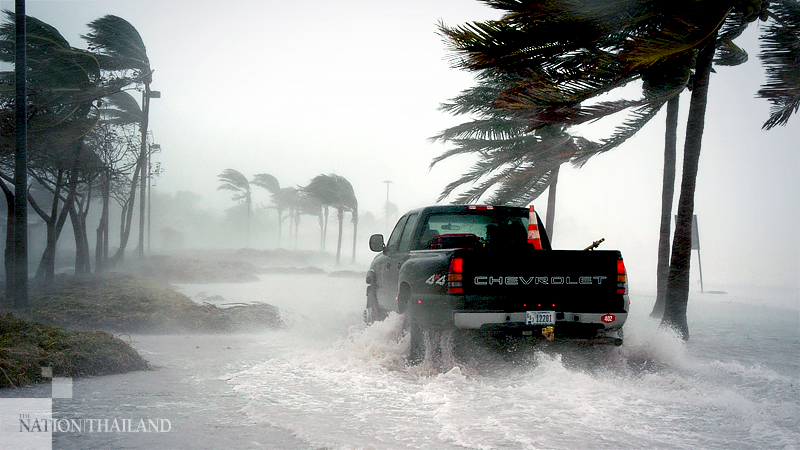
Damage is seen throughout Talent, Ore., on Tuesday. MUST CREDIT: Photo by Mason Trinca for The Washington Post 
By  The Washington Post · Samantha Schmidt, Ian Livingston · NATIONAL, SCIENCE-ENVIRONMENT 
PORTLAND, Ore. – Thick, hazardous smoke could continue to smother the West Coast for days, hindering firefighters battling dozens of deadly blazes that continue to scorch the region.

While a brief, long-awaited rain arrived along the Oregon coast on Tuesday, clearing up the skies in some parts of the state, officials warned that dangerous smoke will remain in the air through at least Thursday. 

The Oregon Department of Environmental Quality has extended an air-quality advisory through noon Thursday, as several cities in the state reached their highest-ever-recorded air-quality index ratings during the past week. The state already has seen a significant increase in emergency room visits for smoke-related respiratory conditions. 

Sarah Present, a deputy tri-county health officer for the Portland metro region, warned residents in a video message on Tuesday that they should stay indoors.

“This air can worsen asthma or COPD,” she said. “It can lead to heart attacks, irregular heart rhythms and even death.”

“It is so bad that you can likely smell it inside your house, and in some areas, the air quality is so hazardous it is off the charts of the EPA’s rating scale,” she said. “What this means is you should not go outside.”

The smoke that the wildfires in the American West has sent skyward has traveled across the country, causing a milky-orange haze and a dimmed sun as far east as Washington. The smoke, carried along by the jet stream, will linger on the East Coast through at least Thursday, promising surreal skies. Effects on the ground are expected to be minimal.

Here in Oregon, the unusual wildfires have displaced tens of thousands of residents and have left at least eight people dead and at about 16 people missing. There have been approximately 25 deaths in California.

Lower temperatures and higher humidity have allowed the more than 8,600 firefighters to make progress on the 30 large wildfires spreading across nearly 1.7 million acres in Oregon and Washington state, fire officials said Tuesday. Some of those fires continued to grow, while at least one, the Almeda Fire that ravaged communities in southern Oregon, reached 100 percent containment, a rare victory in what has been an alarmingly busy fire season at its outset. 

“We now find ourselves one week into this, and without question our state has been pushed to its limits,” Gov. Kate Brown, a Democrat, said during a news conference Monday. “As we look toward the next few days, my firefighting teams tell me they are optimistic that cooler weather coming toward the end of this week will be a tremendous help.”

In California, more than 16,600 firefighters continued to face off against 25 major wildfires across the state. The blazes in California have burned more than 3.2 million acres and destroyed more than 4,200 structures, according to state fire authorities. 

A cooling trend in California has helped fire crews in the state, but gusty winds have allowed fires to pick up in the north and along the Sierra, said Daniel Berlant, assistant deputy director of Cal Fire. Those wind gusts are expected to continue through at least Thursday. 

More than 1,145 homes have been destroyed in Oregon, and 3,185 residents remained in shelters provided by the Red Cross as of Tuesday. Many more are displaced from their homes and waiting for evacuation orders to lift. 

While officials on Monday had said 10 people were reported dead in Oregon, the state medical examiner later determined that two of those fatalities were unrelated to the fires, bringing the death toll down to eight. The two subtractions were identified as animal remains. 

On Tuesday, the state began consolidating its efforts to identify and report fatalities in a single mobile morgue, the state’s Office of Emergency Management said. 

About one-tenth of an inch of rain fell along the Oregon coast on Tuesday, bringing substantial improvements in visibility there, said Daniel Hartsock, a meteorologist with the National Weather Service in Portland. Still, satellite imagery showed smoke lingering over the Willamette Valley and Columbia River Gorge, with smoke moving north from the fires in California. Forecasts predict the first “big rain” will arrive in the valley by Thursday afternoon, Hartsock said. 

But Doug Grafe, chief of fire protection at the Oregon Department of Forestry, said the rain could come with some lightning and thunderstorms in the east, which could ignite additional fires. 

Hurricane Sally sits in the Gulf, but along the coast deadly floodwaters are rising #ศาสตร์เกษตรดินปุ๋ย

#ศาสตร์เกษตรดินปุ๋ย : ขอบคุณแหล่งข้อมูล : หนังสือพิมพ์ The Nation.

Hurricane Sally sits in the Gulf, but along the coast deadly floodwaters are rising

Sep 16. 2020

By The Washington Post · Darryl Fears, Maria Sacchetti, Ashley Cusick, T.S. Strickland · NATIONAL, SCIENCE-ENVIRONMENT 

MOBILE, Ala. – As Hurricane Sally churned off the northern Gulf Coast with 80 mph winds, powerful waves pounded beaches, rivers and creeks swelled, the National Hurricane Center warned of “extremely dangerous and life-threatening storm surge” and residents from Louisiana to Florida were urged to seek higher ground.

Forecasters tagged slow-moving Sally as an unusual type, a “walking storm,” because it lumbered at just 2 mph, about as fast as a lazy stroll. The lack of speed bought time for residents in low-lying St. Charles Parish, La.; Mobile County, Ala.; Harrison County, Miss.; and Escambia, Fla., to leave their homes.

But it meant as much as 30 inches of rain could fall along the coasts of those states and up to 5 feet of storm surge could inundate coastal communities. Forecasters said there could be record flooding along rivers in Northwest Florida, parts of Alabama and perhaps Georgia.

“The slow forward speed is likely to result in a historical rainfall event for the north-central Gulf Coast,” the National Hurricane Center posted in an online discussion about the storm Tuesday.

Sally’s wobbly movement also makes it hard to predict where it will strike land. On Monday, meteorologists predicted it would hit Biloxi, Miss., but that changed Tuesday and Mayor Andrew “FoFo” Gilich was relieved.

“We’re real thankful that we were spared the storm surge,” Gilich said. “Four to six feet they’re predicting. That’s a lot better than seven or 11.” 

But in Mobile, Ala., County Commissioner Merceria Ludgood watched with dread as predictions pointed their way. 

“We’re telling people that there’s going to be a lot of water,” Ludgood said from an emergency management facility where she and other officials planned to ride out the storm. “The ground can only hold so much of it. Don’t wait to leave.” 

Mobile is a city with thousands of oak trees that could tumble when their root systems are soaked. It is also adorned with rivers, canals and the enormous Big Creek Lake that is prone to flooding, said Mike Evans, deputy director of the Mobile County Emergency Management Agency.

Evans said the county has been divided into evacuation zones. Residents south of Interstate 10 as well as those east of Interstate 65 in Mobile Bay and the network of rivers that feed it should get out, he said.

The county sheriff commissioned a 15-ton military grade vehicle to respond if residents who decide to hunker down are trapped. But Evans hopes it doesn’t come to that. When the hurricane hits, public officials, emergency personnel included, planned to shelter in place.

Emergency officials gently asked Mobile County residents to impose on friends and family inland to put them up for a while. Theodore High School, where the county established a shelter, can usually hold up to a thousand evacuees. But social distancing as a result of the coronavirus pandemic has limited occupation to only 300.

Downtown Mobile was mostly empty Tuesday, with businesses in the flood-prone area closed in advance of Hurricane Sally. Signs of a hurricane’s approach were a common sight: boarded windows, sandbagged doors and streets barricaded in places where water was expected to surge.

Hayley’s Bar was one of a few exceptions. Doors were open and three customers enjoyed afternoon drinks. None seemed concerned about the coming storm.

“The city floods on like a normal rainy day,” said Grace Foster, 23. “Here, we have rain, tropical storms, hurricanes. We’re kind of due for a good hurricane.” 

Foster and the other patrons live within walking distance of Hayley’s. They said they were ready for whatever Sally might bring. 

“We are all stocked up for covid already, so we had a lot of the stuff we need,” said Tres Wiggins, 28.

“I just moved all my plants inside,” Foster said, “and we stocked up on alcohol.” 

Heading south toward Dauphin Island, Ala., Sally’s effects were more visible Tuesday, as floodwaters from Mobile Bay began spilling across roads.

Sonya Gunderson, 60, was having a ball at a retreat on the island, where she traveled from Iowa to meet seven friends who fished the ocean and frolicked on the beach.

But Sally chased them off the vulnerable strip of land into a condo in Mobile.

On Tuesday, she walked in a steady downpour downtown, wearing a blue raincoat and carrying a pan, a lighter and some candles – supplies borrowed from the property manager in advance of the storm’s impact.

“All of our events are canceled,” Gunderson said. “We had deep sea fishing, dinner on the ocean. Now we’re just playing games.” 

At a popular fishing spot near Buccaneer Yacht Club, Robert Boykin, 62, sat with his wife in one of a dozen parked cars, looking out over the bay’s unusually choppy waters.

“I just hope it doesn’t get too bad, because I only stay a mile or two from here,” Boykin said.

For Boykin and others, Sally’s snail-paced approach made it hard to know just when to hunker down.

“We’re here looking now,” he said. “But as soon as we get home, we’re going to be there.” 

In Biloxi, the city’s eight casinos were still temporarily shut after the storm turned east. One casino flashed a sign saying “Sorry.” 

Since 2005, residents compare major storms to Hurricane Katrina, which pummeled the city with 28 feet of storm surges that are still marked in blue paint on telephone poles.

“We got wiped off the face of the earth,” said Karen Parrott, 63, as she took an afternoon stroll to the shore with her husband, Bill, also 63.

The couple said they were not worried about Hurricane Sally.

“Not after Katrina,” she said.

Across the Route 110 bridge that links Biloxi to the city of D’Iberville, Miss., a pair of friends chatted as the high tide covered picnic tables and seeped into the road. They said they were not expecting much from Sally.

“It’s doubtful this late in the season,” said Joshua Jackson, 27, a construction worker from the community of Vancleave, Miss., who stopped to hang out under the bridge on his way home from work in Gulfport, Miss.

But the Biloxi mayor – a lifelong resident – said he was not prepared to declare storm season over.

“Who knows?” Gilich said about storm season, noting that in his State of the City address in January he had predicted a great year ahead. “Don’t you just feel really good about 2020?” he recalled saying in his speech.

“Boy was I wrong,” he said with an eye roll. “I’m not going to say that again.” 

In Northwest Florida, Escambia and Santa Rosa county officials imposed voluntary evacuation orders for coastal and low-lying areas, urging vulnerable residents to seek higher ground.

“Flooding is one of the most serious concerns we have with this storm,” Escambia County Emergency Manager Eric Gilmore said during a Tuesday afternoon news conference. “The amount of rain and storm surge will make this a historic event.” 

The brand-new Pensacola Bay Bridge, one of only two evacuation routes off Santa Rosa Island and Pensacola Beach, was shut down Tuesday when a barge operated by a state contractor collided with the structure.

Local officials suspended tolls for the nearby Garcon Point Bridge, to make it easier for residents to evacuate.

On the other side of Escambia Bay, in downtown Pensacola, about 100 residents had hunkered down at a local civic center turned storm shelter by midafternoon.

Michael Kimberl, director of the Alfred Washburn Center, which serves the homeless, spent much of the last 24 hours ferrying the homeless to the civic center.

“I’ve been driving shuttle most of the afternoon and last night trying to get people to shelters,” said Kimberl, who dropped off about 30 people there by 3 p.m. Tuesday.

Kimberl worried he wouldn’t be able to reach all of the area’s homeless before the storm made landfall and felt local authorities were partially to blame for waiting too long to announce local shelter openings.

“We had about 100 people at the center yesterday afternoon,” he said. “Had I known about the shelter before we closed, I could have sent them there.” 

Google faces Congress again, this time with Republicans in charge #ศาสตร์เกษตรดินปุ๋ย

#ศาสตร์เกษตรดินปุ๋ย : ขอบคุณแหล่งข้อมูล : หนังสือพิมพ์ The Nation.

Google faces Congress again, this time with Republicans in charge

Sep 16. 2020

By The Washington Post · Rachel Lerman, Cat Zakrzewski · BUSINESS, TECHNOLOGY, US-GLOBAL-MARKETS 
 WASHINGTON – Senators grilled a Google executive Tuesday over its dominance in the digital ad market, shedding light on Congress’ ongoing investigation of the company as it faces mounting antitrust scrutiny from multiple branches of the government.

The hearing, hosted by the Senate Judiciary subcommittee on antitrust, came more than a month after the House held its own exhaustive hearing on potential monopoly power with the chief executives of Google, Facebook, Amazon and Apple. The Senate hearing focused mainly on Google’s effect on competitors in the digital ad market, where the company makes the bulk of its money. But it also took detours into long-running Republican allegations of censorship of conservative views at the search giant.

Sen. Mike Lee, R-Utah, the subcommittee’s chairman, opened the hearing Tuesday by saying he would continue to pursue issues of perceived bias against conservatives but that the hearing was not fundamentally about those concerns. But in his first question to Google, he asked about its alleged censorship of a conservative news outlet.

“I want to be clear here that a private company engaging in censorship on its own platform is not a violation of antitrust laws,” Lee said. “Nevertheless, as I pointed out in my letter to your company on this subject, isn’t this behavior evidence of market power? In other words, why would any company want to treat its customers like that? Unless it was confident that its customers had no viable alternative.”

The Senate panel’s line of questioning sheds some light on Republicans’ antitrust priorities at a critical juncture for Google. The Justice Department is expected to file an antitrust lawsuit as early as this month. A group of state attorneys general, led by Republican Ken Paxton of Texas, is also conducting a parallel investigation.

Google is the first target in what could be a watershed moment for antitrust regulation in the country. Critics have charged for years that U.S. laws have failed to rein in Big Tech, allowing companies to amass ever more power.

Three more companies were questioned at the congressional hearing in July: Facebook for its acquisition of smaller companies, including Instagram; Apple for its hold on the App Store; and Amazon for the way it collects data from third-party sellers on its site. (Amazon chief executive Jeff Bezos owns The Washington Post.)

But Google received a significant amount of attention during the hearing as CEO Sundar Pichai defended the company against concerns about the dominance of its search and ad technologies. Competitors have accused Google for years of unfairly controlling too much of the market by prioritizing its own services over others on search results pages and by managing many aspects of the digital ad buying and displaying process.

Senators waded deep into the weeds of Google’s advertising infrastructure on Tuesday, probing the company executive for specific answers on how Google could claim neutrality when it controls so much of the technology.

Sen. Josh Hawley, R-Mo., grilled Google mergers and acquisitions chief Donald Harrison on how the company uses information it collects from Gmail, Search and other services to boost its advertising business.

“You then use those advantages in the ad stack at every single layer, every layer of which you exercise dominance in,” Hawley said. “That gives you enormous advantage.”

Harrison spent much of the hearing on defense, insisting that Google has strong competitors in the ad technology space and that the company’s services are good for consumers.

“Any discussion of online advertising would be incomplete without mentioning the importance of advertising in supporting a free and open Internet,” Harrison said in his prepared remarks.

Harrison had plenty of time to make his case, but senators also interrupted him and often answered their own questions while pressing on issues of market dominance. 

“Google has an immense conflict of interest,” Sen. Richard Blumenthal (D-Conn) said while pointing out that Google represents both publishers and advertisers and collects information on both.

Giving the best experience to consumers has been a key defense for Google in antitrust investigations for years. But rivals say Google controls too much of the advertising process by managing both the infrastructure for sellers and many of the websites where ads are placed.

Sen. Amy Klobuchar, D-Minn., zeroed in on Google’s acquisition of advertising tech company DoubleClick in 2007, as well as its pending merger with Fitbit, a fitness tracker company. That deal is still being reviewed by regulators.

Harrison pledged that the company would not mix users’ health-care information with advertising data to show people personalized ads.

“This deal is about devices,” he said. “It is about health care and not about ads.”

Klobuchar also asked Harrison why Google’s ad exchange business shouldn’t be regulated in a similar way to electronic trading in the stock market.

“I think you look for regulation in a market where you see market failure,” he replied. “And I don’t see it here.”

Republicans at the hearing also spent big chunks of time focusing on claims that the company is censoring conservatives.

Lee has repeatedly criticized the tech industry for being biased against conservatives, a charge that has little evidence and that the tech giants have repeatedly denied. He has suggested that this perceived bias is grounds for greater antitrust scrutiny.

“I view your heavy-handed censorship as a sign of exactly the sort of degraded quality one expects from a monopolist,” he wrote in a letter to tech companies, including Google’s parent company, Alphabet, this summer. “In any other business, you would never dream of treating your customers the way you treat those with views you don’t like. That is, unless you know your customers have no other serious options.”

Google has repeatedly denied allegations that it is suppressing conservative viewpoints, and Harrison reiterated that the company’s advertising policies do not take political affiliation into account. In a response to Lee’s letter, Google said it applies “our policies to all content creators across the board and will not allow any form of political bias.”

Executives from business trade association NetChoice, tech company Chalice Custom Algorithms and Omidyar Network, a firm funded by eBay founder Pierre Omidyar, also testified at the hearing.

States, cities sue oil companies over climate change #ศาสตร์เกษตรดินปุ๋ย

#ศาสตร์เกษตรดินปุ๋ย : ขอบคุณแหล่งข้อมูล : หนังสือพิมพ์ The Nation.

States, cities sue oil companies over climate change

Sep 15. 2020

By The Washington Post · Dino Grandoni · NATIONAL, BUSINESS, COURTSLAW, SCIENCE-ENVIRONMENT
More than a dozen states, counties and cities from fire-ravaged California to flood-prone South Carolina are suing oil companies to hold them responsible for the damage they say their products have caused through climate change.

In a wave of recent lawsuits, local governments are demanding some of the nation’s biggest energy firms pay for the cost of dealing with increasing temperatures and rising seas.

The litigation, bolstered by science and likened to cancer suits in the 1990s against Big Tobacco, has the potential to be a financial reckoning for an already struggling industry in the United States.

But prosecutors face significant legal hurdles to prove in court that the oil industry deceived the public on climate change and needs to be held liable for their products’ emissions.

The latest to file suit is Connecticut, which on Monday said ExxonMobil, the nation’s largest oil and gas company, misled the public on climate change for decades. William Tong, the state’s attorney general, said ExxonMobil’s actions left the state, which has more than 600 miles of coastline, ill-prepared for sea-level rise and more intense storms.

“It’s well past midnight to adopt a much better approach and strategy with respect to energy,” said Tong, a Democrat.

“By ExxonMobil’s reckoning, climate change is not as much of a threat as anybody thinks it is, and in some cases isn’t real,” he added. “Because they’re able to convince large swaths of people in Connecticut and across the country, we didn’t adopt those renewable sources of energy, and we didn’t move to a carbon-free economy, as quickly as we should have.”

But the oil industry contends that using the courts to force specific firms to shoulder the cost of a worldwide problem such as global warming, for which virtually everyone bears some responsibility, is unrealistic.

“Lawsuits are precisely the wrong mechanisms to determine the appropriate way to address climate change,” said Scott Segal, an attorney with Bracewell LLP, which often represents energy companies in Washington. “It is impossible to determine what emissions source results in what harm, meaning that causation is impossible to determine.”

Connecticut is among several states that have brought suits against oil companies, most of which are still winding their way through the courts. Pursuing various legal strategies, each is attempting to use decades-old laws to chart new legal territory to hold oil companies accountable.

In a separate filing last week, Delaware, one of the nation’s lowest-lying states, says 31 fossil fuel firms failed to warn of the dangers their products posed and created a public nuisance – a charge more typically brought against noisy neighbors – for their climate-changing pollution.

“We were very conscious about fashioning this lawsuit as a traditional damages action,” said Kathy Jennings, Delaware’s Democratic attorney general. “The only differences here are that the damages are catastrophic.”

Massachusetts, Minnesota and Rhode Island – the latter is the fastest-warming state in the Lower 48 – separately have their own suits, as do major cities such as Baltimore, Oakland, Calif.; and San Francisco, and smaller municipalities such as Boulder, Colo.; Hoboken, N.J.; and Imperial Beach, Calif.

The coastal South Carolina city of Charleston, where inundated streets have become common after storms, last week became the first in the South to file a climate lawsuit against Big Oil companies, arguing that 24 fossil fuel firms should bear some of the burden of repairing flood damage.

“I handled their products, and I can tell you from firsthand experience that these companies were not in any way, shape or form sharing information with us about the dangerous flooding and extreme weather their products would cause,” said Charleston Mayor John Tecklenburg, a Democrat who founded an industrial lubricants business in the 1970s.

Driving the legal actions from the mostly Democratic-controlled states and cities is inertia in Congress, which has yet to pass major legislation addressing the causes or effects of climate change. In turn, activists are increasingly hoping to make progress by demanding that Democrats bring oil companies to court.

In New Jersey, advocacy groups took out a full-page ad in the Star-Ledger last week calling on Gov. Phil Murphy, a Democrat, to make companies “pay their fair share.” During the Democratic Party’s presidential primaries, Sen. Bernie Sanders, I-Vt., and Sen. Elizabeth Warren, D-Mass., amplified those pleas by promising federal prosecution against fossil fuel executives.

The spate of suits also come after investigations by InsideClimate News and the Los Angeles Times found internal documents showing that ExxonMobil understood the risks climate change posed decades ago and continued to publicly deny that science.

The cases are moving through the courts, with the central question being where they should be heard. The oil companies want a federal venue, where Supreme Court precedent would make it hard for the cases to gain traction, while attorneys general have sought to keep cases in state courts.

“Corporations want to nationalize and want to make it a bigger issue, and move these things in the federal court,” said David Bookbinder, chief legal counsel of the Niskanen Center, part of the legal team representing Boulder and two Colorado counties suing ExxonMobil and the Canadian oil firm Suncor Energy.

Three appellate courts have kept the cases out of the federal system. The Supreme Court will settle the jurisdiction question after the oil companies petitioned it last month to block the cases from proceeding.

Even if they remain in the states, climate lawsuits have a history of eventually losing steam.

In January, a federal appeals court threw out a 2015 lawsuit from nearly two dozen young people looking to force the U.S. government to take more aggressive action to curb emissions.

A month earlier, ExxonMobil prevailed over New York after the state said the company misled investors about how it calculated the financial risks of future climate regulations.

“Legal proceedings like this waste millions of dollars of taxpayer money and do nothing to advance meaningful actions that reduce the risks of climate change,” ExxonMobil spokesman Casey Norton said. “The claims are baseless and without merit. We look forward to defending the company in court.”

The office of New York Attorney General Letitia James, a Democrat, fell short even with a powerful anti-fraud law called the Martin Act, which does not require prosecutors to prove intent. The loss has discouraged other states from using their own investor-protection laws to prosecute oil firms.

“We certainly did look into it,” said Jennings, the top prosecutor in Delaware, adding that her office “chose to really directly focus on the harm to our residents” rather than to shareholders.

Tong, the top law enforcer in Connecticut, thinks his case, which says ExxonMobil duped drivers of gasoline-powered cars of the environmental dangers of petroleum products, is strong because the state’s consumer protection law has no statute of limitations, allowing his office to plumb for decades of records.

“We are open to any strategy that is going to work,” Tong said.

Samsung Electro-Mechanics develops world’s smallest power inductor #ศาสตร์เกษตรดินปุ๋ย

#ศาสตร์เกษตรดินปุ๋ย : ขอบคุณแหล่งข้อมูล : หนังสือพิมพ์ The Nation.

Samsung Electro-Mechanics develops world’s smallest power inductor

Sep 14. 2020

The world’s smallest power inductors, developed by Samsung Electro-Mechanics, are shown on a fingertip. (Samsung Electro-Mechanics)

The world’s smallest power inductors, developed by Samsung Electro-Mechanics, are shown on a fingertip. (Samsung Electro-Mechanics) 

By im Byung-wook
The Korea Herald

Samsung Electro-Mechanics said Sunday it has developed the world’s smallest power inductor.

According to the Korean electronic components maker, the new power inductor is approximately 50 percent smaller than the industry’s previously smallest product, with a width of 0.8 millimeter and a length of 0.4 mm, a significant development from a width of 12 mm and length of 10 mm. The thickness of the latest product measures 0.65 mm.

A power inductor is a key electronic component inside smartphones, wearable devices and electric vehicles that helps the battery supply a stable flow of electricity to the semiconductor.

“As the performance for electronic products increases and functionalities diversify, the size of the internal components must decrease along with an improvement in performance and volume,” head of the Central Research Institute at Samsung Electro-Mechanics Kang Heon-hur said.

Miniature power inductors are essential for the latest tech devices because their internal storage spaces have shrunk as they have become lighter and smaller to fit more components and accommodate 5G functions and multicameras, the company said. Also, as higher-spec components use up more electricity, the latest devices require power inductors that can withstand high currents.

For the size reduction, the company applied its material technology and semiconductor substrate manufacturing methods used for multilayer ceramic capacitors. Also, the company manufactured the power inductors in substrate units instead of processing them in individual units to boost productivity.

“A power inductor’s performance is determined by what kind of magnetic raw material it uses and how many more coils can be wrapped within a limited space. For the raw material, Samsung Electro-Mechanics used nano-grade, ultramicroscopic powders. Also, the company placed coils next to each other with almost no leftover space by using dimming technology, a method of marking circuits with light when manufacturing semiconductors,“ a company official said.

Amazon cloud offers silver lining for Thai start-ups #ศาสตร์เกษตรดินปุ๋ย

#ศาสตร์เกษตรดินปุ๋ย : ขอบคุณแหล่งข้อมูล : หนังสือพิมพ์ The Nation.

Amazon cloud offers silver lining for Thai start-ups

Sep 11. 2020Gaurav Arora, AWS head of Startup Ecosystem for Asia Pacific-Japan
Gaurav Arora, AWS head of Startup Ecosystem for Asia Pacific-Japan 

By The Nation

Amazon Web Services (AWS) is committed to supporting start-ups from birth through to maturity, said Gaurav Arora, AWS head of Startup Ecosystem for Asia Pacific-Japan.

“The AWS Activate programme enables early-stage start-ups to build quickly and supports them through their entire lifecycle,” he added.

Early-stage Thai start-ups are among tens of thousands across the world taking advantage of the programme’s benefits, including technical support and training, said Arora.

“For our more mature customers, we work hard to forge connections between start-ups and potential customers and investors. We regularly connect executives from large organisations with start-ups to hear about new solutions, and we also facilitate introductions to global accelerators, angel investors, seed funds, and venture capital firms in our network, to play a role in helping start-ups raise the capital they need to grow their business,” he said.

He added that start-ups across many vertical sectors are using technology to transform their industries, and solve the problems that matter to their communities.

“We’re seeing particularly strong digital adoption and transformation happening in the fintech, health-tech, and ecommerce verticals right now.

“Firstly, let’s talk about the booming financial service and insurance sector, which is a home-grown phenomenon here in Thailand and Southeast Asia. The majority of start-ups in this sector have chosen to start on AWS, including payments provider, 2C2P and InsurTech start-up, Sunday Insurance. Likewise, we’re seeing e-commerce providers like e-commerce enabler, eCommerce and online fashion retailer, Pomelo Fashion grow quickly to ensure their customers have quick and convenient access to the products they want and need, even while spending more time at home,”.

“Of course, most recently we’ve also witnessed the rise of tele-health providers, like Thailand’s Doctor Raksa, and Halodoc in Indonesia, both built on AWS,”.

Ultimately, Arora believes the cloud is the best place to build a start-up and bring their ideas to life.

He added that cloud services are cost-effective and can give start-ups fast access to computing resources as they need them on a pay-as-you go basis.

Moreover, the cloud model allows start-ups to easily run tests and experiment without significant upfront investment.

Should a start-up find success, it can easily increase its use of AWS cloud services as needed, and then reduce spending should demand decrease, he added. This cuts risks in the growth process and ensures start-ups do not need to invest heavily in anticipation of future demand.

Arora added that the cost-effective nature of the cloud means start-ups can experiment at a greater pace, fail fast with low financial impact, and recover easily.

The AWS cloud is global, meaning that a solution built in one part of Asia can be deployed in another, or anywhere else in the world, in just minutes. This scalability is essential to hypergrowth start-ups as they grow and expand into new regions around the world, he said.

Arora said it was impossible to understate Covid-19’s impact on businesses across Asia.

For start-ups, in particular, it has been a difficult time, especially for those still building a significant customer base and cash flow, he added.

“It’s likely that the year they’ve experienced so far has turned out to be very different to the year they were planning. We’re hearing from the start-ups we work with that they are reassessing their plans and projections to accommodate for the ‘new normal’, which can present opportunities for start-ups.

“In the reality, there is a lot that start-ups can do to reduce their operating costs. The cloud is already well regarded as a cost-effective place from which to launch a business, but our experience is that many start-ups grow at such a fast pace, they don’t always pause to consider if they are using it in the most efficient way. AWS team members are actually tasked to help reduce customers cloud bills, and we offer several ways for start-ups to save money on their cloud expenses.”

One way is its offer of AWS Cost Explorer service, which allows customers to better manage their spend, and set alarms when specific thresholds are reached.

AWS Trusted Advisor provides an online tool that helps start-ups reduce costs, increase performance, and improve security by checking their use of infrastructure and services, and makes suggestions to help optimise performance.

New online platform makes investing in govt bonds easier #ศาสตร์เกษตรดินปุ๋ย

#ศาสตร์เกษตรดินปุ๋ย : ขอบคุณแหล่งข้อมูล : หนังสือพิมพ์ The Nation.

New online platform makes investing in govt bonds easier

Sep 11. 2020

By The Nation

The central bank has launched a new platform using blockchain technology that aims to make the purchase of government savings bonds easier, more efficient and reduces overall cost.

So far, Bt50 billion worth of bonds have been sold in a week via this platform. 

The platform, called DLT Scripless Bond project, was developed in a collaboration by the Bank of Thailand, the Public Debt Management Office, Thailand Securities Depository, Thai Bond Market Association and selling agents, including Bangkok Bank, Krungthai Bank, Kasikorn Bank and Siam Commercial Bank.

The new infrastructure went live with the launch of the “1 Baht Bond” and “Moving Forward” bonds, which were completely allocated to investors sooner than expected.

This platform helps investors benefit from receiving bonds faster and purchasing bonds up to individual quota from a single bank. The project also helps service providers simplify the operation and lower the overall cost of bond issuance. 

In the next phase, the infrastructure will expand to support different government bonds, both retail and wholesale, to fully serve the demand of all stakeholders.