One last party, one last dance, then goodbye: College students decamp in the age of covid-19 #ศาสตร์เกษตรดินปุ๋ย

#ศาสตร์เกษตรดินปุ๋ย : ขอบคุณแหล่งข้อมูล : หนังสือพิมพ์ The Nation

https://www.nationthailand.com/edandtech/30384149?utm_source=category&utm_medium=internal_referral

One last party, one last dance, then goodbye: College students decamp in the age of covid-19

Mar 15. 2020
By The Washington Post · Karen Weintraub, Susan Svrluga · NATIONAL, HEALTH, EDUCATION 
WELLESLEY, Mass. – Hundreds of college seniors wearing graduation gowns stood in a line Saturday morning, then bent over and stuck one arm inside a large hoop – some wooden hoops, some plastic hoops conscripted for the purpose. “Ready. Set. Go!” a junior shouted, and each senior began twirling an arm to set their hoop rolling.

Graduating seniors at Wellesley College have performed this hoop-rolling ritual for most of the school’s 145 years – but not on chilly March mornings at the end of midterms.

Like so many other colleges throughout the country, Wellesley is making drastic changes to protect students and their communities from the covid-19 pandemic. Instead of months to wind down their college years and say goodbye to friends, students have just days to finish, pack up their dorm rooms and move out to finish the semester online.

Rather than going quietly – and following officials’ directives to practice social distancing – many are trying to cram two months of partying, beloved school traditions, bad decisions and bittersweet farewells into their last few days together.

Remain six feet away from others? Avoid large gatherings?

Maybe next week.

Many students, of course, are concerned about the pandemic and are taking precautions. But the reaction of others illustrates how difficult it can be to wrench apart close communities and how rituals of campus life often conflict with public health practices.

At the Massachusetts Institute of Technology, as word leaked out Tuesday that the school’s president would soon urge undergraduates to move out, hundreds of students poured into a courtyard in the shadow of the school’s distinctive dome.

Some brought folding tables for pong and other drinking games, some brought champagne, some brought speakers and formed a dance circle. At one point, students “acquired” a hand-sanitizing station from a hallway and proceeded to dance around it, posing for photos, according to Connor Sweeney, a junior from Delaware.

At Johns Hopkins University, when students in the Peabody Symphony Orchestra learned that a long-planned concert was being canceled along with other large gatherings, they decided to perform one last time – at the cafeteria that night, surprising students and others with some late-night Tchaikovsky.

At Smith College in Northampton, Massachusetts, a social media invitation encouraged people to turn up, share their angst about world events, drink heavily and “kiss your crush.” It was later amended: “Maybe encouraging people to kiss their crush isn’t the best idea under these circumstances.”

And Smith senior Rebecca Grossman noted: “There was someone walking around and dispensing hand sanitizer during this rave-like event.”

With some schools canceling commencement, – including the University of Michigan – many seniors created their own impromptu ceremonies, just in case.

At Smith, a group of seniors started planning a small graduation ceremony for their friends. In the end, nearly the entire senior class turned up, Grossman said.

They paraded in wearing caps and gowns and listened as students who had been chosen to speak at the formal graduation delivered shortened versions of their talks.

One student pretended to be House Speaker Nancy Pelosi, D-Calif., who was scheduled to give their graduation speech May 17.

In a nod to Pelosi’s actions after listening to President Donald Trump’s State of the Union address, the student ended her speech by saying, “I hear you all just got an email that you have to leave.” Then, the student ripped up the paper, Grossman said. “It was all very silly,” she said.

At Wellesley, the mood, while exuberant, was tinged with sorrow. “This is great. It’s awesome,” senior Phoebe Amory said after the hoop-rolling. “It was so lovely to see everyone come together.”

Was it enough to compensate for missing the final two months of her college career, which she will complete online from her home in Albany, New York? “Not even close,” Amory said.

At the University of Dayton, a rowdy crowd gathered on a street near student housing one night last week to celebrate the unexpected last day of classes. Within minutes of the official email, the campus newspaper the Flyer News reported, “Coronafest” was being organized online.

Police used pepper balls to try to disperse the crowd of more than 1,000 people, some of whom were jumping on cars and hurling objects, school officials said.

Students also began to ponder life at home, taking virtual classes.

Students at Harvard’s Lowell House, one of the school’s 12 residential communities, orchestrated a party Thursday evening that wrapped all their spring traditions into one crazy event.

In a nod to the annual Bacchanalia party, a faculty member dressed in a toga and greeted a similarly clad senior who launched the revelry. Others wore tuxedos or gowns to pay homage to the annual Housing Day, when sophomores, juniors and seniors storm the freshman dorms to notify the freshmen which house they’ll be living in for the rest of their college career.

Then, the piñatas came out.

“It was a beautiful mixture of chaotic energy,” said junior Andrew Castillo, 20, of Los Angeles, who planned the last-minute event with junior Ross Simmons, 20, of Higginsville, Missouri, a distant suburb of Kansas City, that he said largely lacks the high-speed internet the math major will need to continue his classes.

The two were concerned that they weren’t able to squeeze in trivia night or poker night – two more springtime traditions – but the Lowell House Opera did get to perform selections from what would have been its upcoming performance.

Some of the pastries prepared for the weekly tea – another house tradition that had to be canceled because of fears of passing on the virus – were individually wrapped and offered on a table. And the entire stockpile of liquor, in reserve for the next two months of events, was offered up, including champagne, pumpkin beer and ale.

“It was a very weird atmosphere. A lot of joy. A lot of sadness. … A lot all at once,” said Castillo, a regenerative biology major who literally had to put his senior research project on ice until at least the summer, before flying home Friday.

“It felt,” Simmons said, “like the party at the end of the world.”

Israel’s Netanyahu turns to anti-terrorism tools in battle against coronavirus #ศาสตร์เกษตรดินปุ๋ย

#ศาสตร์เกษตรดินปุ๋ย : ขอบคุณแหล่งข้อมูล : หนังสือพิมพ์ The Nation

https://www.nationthailand.com/edandtech/30384147?utm_source=category&utm_medium=internal_referral

Israel’s Netanyahu turns to anti-terrorism tools in battle against coronavirus

Mar 15. 2020
By The Washington Post · Steve Hendrix · WORLD, MIDDLE-EAST 

JERUSALEM – Israel plans to deploy electronic counterterrorism measures to track the movements of people who might be infected with the coronavirus, officials said, a confluence of crime fighting and public health that could become more common even as it sparked civil liberty concerns.

Officials did not specify the techniques to be used but hinted they would include monitoring individuals’ cellphone locations, presumably without their consent, as well as the more sophisticated electronic intelligence and data analysis that Israel is known to have in its terror-fighting arsenal.

Prime Minister Benjamin Netanyahu, who announced the initiative in a televised address Saturday night, acknowledged that applying Israel’s vaunted digital surveillance tools could infringe on privacy.

He said it was an acceptable price for slowing the spread of the virus.

“We are one of the few countries with this capability, and we will use it,” he said. “We must do everything, as a government and as citizens, to not become infected and not to infect others.”

Israel, which has reported 200 cases of the virus and no deaths, has already proved willing to take sweeping measures to stave off a wider outbreak.

Netanyahu announced that restaurants, bars and museums across the country would shut down indefinitely. Gatherings of more than 10 people are banned (10 is the minimum number for a minyan, a quorum of adult men required by orthodox Judaism for certain religious obligations).

The country previously closed schools until at least the middle of April and won’t let anyone, citizen or visitor, enter the country without a two-week quarantine.

Israel’s digital surveillance technology systems could prove to be an effective health tool, analysts said, because the question in monitoring coronavirus patients and terrorists is largely the same: Who are their contacts?

“In both cases, you’re trying to track back in history to determine who has been where and who has met whom,” said Zak Doffman, owner of a London-based surveillance firm and a cybersecurity columnist for Forbes magazine. “I can’t imagine there won’t be dozens of countries thinking about doing the same thing.”

Doffman said there’s evidence such techniques have already been employed.

China seems to have utilized its mass surveillance tools, including facial recognition, as it restricted movement in hard-hit areas, he said. Taiwan reportedly used geolocation systems to ping the cellphones of people detected outside of their quarantine locations.

In Iran, Doffman said, the Health Ministry had to disavow an official coronavirus information app after it was found to include tracking software.

Netanyahu said his government is asking Israel’s judicial system to preapprove the repurposing of digital surveillance in the health fight. Attorney General Avichai Mendelblit indicated the move would be legal, given Israel’s state of emergency, and promised proper oversight. He called for the measures to be reviewed by the cabinet and the appropriate parliamentary committees.

But civil liberties advocates condemned the use of digital surveillance against the civilian population.

“We must maintain that we also have a democratic state to live in,” Merav Michaeli, a Labor Party member of the Knesset, said in a tweet.

The Association for Civil Rights in Israel said the move is unnecessary and harmful.

“According to what is known as of now, infected persons are cooperating with the authorities in reporting all of the locations they have visited,” said Avner Pinchuk, a lawyer for the association. “Even if we assume that here and there a person might ‘forget’ of a particular meeting or location, the marginal benefit obtained by technologically tracking locations does not justify the severe infringement of the right to privacy.”

Simon Perry, a former police intelligence operative, said the cyber-techniques bring both benefits and dangers to Israel’s coronavirus fight.

“This a very effective tool to track movement and interactions between people,” said Perry, now a professor at Hebrew University’s Federmann Cyber Security Research Center. “But it also gives tremendous power to the government. We have to be sure we are in a situation where this is necessary.”

As in many countries, Israel is largely relying on an honor system to maintain tens of thousands of people under home quarantine – a population that includes Israelis who have recently returned to the country and those who may have been in proximity to an infected person.

But the government has been willing to enforce the isolation when needed. A video circulating on social media over the weekend showed a man being arrested by a police officer in protective gear, reportedly for leaving quarantine.

Officials Sunday were said to be considering new fines for isolation scofflaws and police announced stepped-up efforts to corral them as the country sought to balance order and patience during the crisis.

Among the cancellations and closures announced over the weekend was the postponement of Netanyahu’s own trial on charges of bribery, fraud and breach of trust. The proceeding was to begin Tuesday in Jerusalem District Court, just as he is jockeying to form a government following a third inconclusive election earlier this month.

It’s now set to begin May 24.

American students rush out of Europe amid covid-19 pandemic #ศาสตร์เกษตรดินปุ๋ย

#ศาสตร์เกษตรดินปุ๋ย : ขอบคุณแหล่งข้อมูล : หนังสือพิมพ์ The Nation

https://www.nationthailand.com/edandtech/30384089?utm_source=category&utm_medium=internal_referral

American students rush out of Europe amid covid-19 pandemic

Mar 14. 2020
File photo by Syndication Washington Post, Bloomberg

File photo by Syndication Washington Post, Bloomberg
By The Washington Post · Susan Svrluga · NATIONAL, WORLD, EDUCATION, EUROPE 

Orly Levy was fast asleep in the middle of the night in her Prague apartment when the building, full of American study-abroad students, erupted. She could hear people screaming and crying, yanking drawers open to throw their belongings into bags. A friend rushed into her room to tell her they couldn’t get back into the United States.

Half the people in the building had already bolted for the airport.

President Donald Trump had just given a speech from the Oval Office announcing that he would ban travel from continental Europe to the United States beginning Friday at midnight. Many students, nervous about the novel coronavirus, had stayed awake into the middle of the night to hear his address – and didn’t hear the clarifications that followed, including that American citizens were not part of the exclusion.

Even the timing was unclear to the students: Did midnight mean the first moments of Friday, or the end of that day? And in what time zone? “It was so vague and there was so much panic,” Levy said. “People were like, ‘I need to leave right now.’ ”

It was a week when the virus hit home for many in the United States. This week, colleges sent students home, cities canceled events, and libraries and museums closed as case counts and death tolls mounted.

For Ofer Levy, who has been racing to combat the virus as director of the Precision Vaccines Program at Boston Children’s Hospital, it was the moment when the pandemic hit him personally, as a father.

It was also the week when covid-19 hammered study-abroad programs. Hundreds of thousands of Americans study abroad every year, and though many students have returned to the United States from their programs, especially in hard-hit areas such as China and Italy, many were still in Europe at the time of the president’s speech. The State Department and the Centers for Disease Control and Prevention issued sharply escalated warnings this week.

That set off a wild scramble among students in Europe – and among universities and other study-abroad programs.

The situation is unprecedented in recent memory, experts said. People from 400 institutions took part in a virtual meeting about the issue Thursday, said Brad Farnsworth, vice president of global engagement with the American Council on Education.

Johns Hopkins University suspended all of its spring undergraduate study-abroad programs worldwide Thursday and advised students to use the university’s travel service for help with limited flight availability. University System of Maryland Chancellor Jay Perman said in a statement Thursday, “In light of President Trump’s new travel restrictions, I’m advising USM universities to recall all students studying abroad, including those not currently in Europe.”

New York University urged its 800 students studying in continental Europe to return and dispatched staff to each location to help with travel plans and other logistics.

Canceling a program launches a host of problems, Farnsworth said, including how to get students home, the question of whether flying exposes them to more risk than staying where they are, where to quarantine them if needed, and how to continue the studies for which they have already paid.

“We understand it’s a complicated situation,” said Ofer Levy, a professor of pediatrics at Harvard Medical School and Orly Levy’s father. “Restricting travel is one way to the reduce the spread. I am an infectious-disease doctor, after all. We’re also parents, and we were worried about our daughter.”

Sharon Levy, who also is a pediatrician and has a master’s degree in public health, said she wasn’t terribly worried that her daughter would become sick. But the president’s speech concerned her. “The idea that your kid is trapped in another country – that feels entirely different,” said Levy, director of the Adolescent Substance Use and Addiction Program at Boston Children’s Hospital.

Orly Levy has always loved traveling, and knew, even when she was a little girl, that she wanted to study abroad in college. “This is something that I had looked forward to, really, almost my entire life,” she said.

As soon as she got to Prague in January, the University of California at Santa Cruz junior began taking classes on the politics and economics of the European Union and the rise of populism, and traveled to Rome and London and Budapest on weekends. She planned to spend the summer in Israel.

As covid-19 spread, her parents kept monitoring risk and weighing that against the richness of the experience their daughter was having.

They knew young people were less likely to become seriously ill with covid-19. Ofer Levy’s lab is working to develop a vaccine targeting older populations, those at greatest risk – and a population with a different immune system from younger adults’. Harvard and the hospital announced the novel effort this week.

After cases surfaced in Milan, when a friend asked whether they could still go to Amalfi for spring break, Orly Levy’s response was, “Of course!”

But as more cases popped up, she began to limit her travel. Still, she was determined not to leave Prague. “This is my one chance to be abroad,” she said she was thinking. “I’m going to do whatever I can to not come home.”

This week, Czech officials took sudden measures to combat the virus. Then Trump spoke.

As Ofer Levy woke at 3 a.m. Thursday for another long day in the lab chasing a vaccine, he saw flashes of light in the bathroom: His phone was lighting up with messages from his daughter.

She told her parents: “‘It’s time for me to come home.'”

Ofer Levy said they set up a command center of sorts at their home in Cambridge and tried to find flights out of Prague.

A travel agent found a flight that could get their daughter to Boston this weekend – but she would have had to leave her dorm within 10 minutes to get to the gate, and she hadn’t begun to pack. The race against the clock was too much, Ofer Levy said, and they chose a flight to London, and then from there to the United States.

“Things can change so fast,” Orly Levy said. “I can’t even process how fast everything has come.” Suddenly, adventure and travel and independence didn’t sound so idyllic. “In times like this when things get so scary and you feel like the world is turning upside down,” she said, “you just want to be home.”

During her flight Friday from Prague to London, she got an email from the airline announcing a new travel restriction and advising her to book a different flight to the United States.

Her parents – who along with working intensely were also trying to figure out what to do with her younger brother, whose school had abruptly shut down – quickly found her another flight.

Orly Levy ran through the airport, lugging her bags, packed for months away, dropping things and then, of course, having to frantically repack because the bags were overweight.

She made it.

“My line to check in to my flight to Boston was literally all American study-abroad students,” she said, “trying to get home.”

The White House says Google is building a coronavirus testing website, but details are fuzzy #ศาสตร์เกษตรดินปุ๋ย

#ศาสตร์เกษตรดินปุ๋ย : ขอบคุณแหล่งข้อมูล : หนังสือพิมพ์ The Nation

https://www.nationthailand.com/edandtech/30384071?utm_source=category&utm_medium=internal_referral

The White House says Google is building a coronavirus testing website, but details are fuzzy

Mar 14. 2020
File photo by Syndication Washington Post, Bloomberg

File photo by Syndication Washington Post, Bloomberg
By The Washington Post · Heather Kelly · NATIONAL, BUSINESS, TECHNOLOGY, HEALTH

SAN FRANCISCO – The White House is turning to Google to build a new screening website for anyone wanting information on how to get tested for the coronavirus, President Donald Trump said on Friday. However, there are some discrepancies between the White House and Google versions of what the site will be able to do, where it will do it, and when.

The site will actually be built by Verily, the life sciences division of Google parent company Alphabet that focuses on research and development around health issues, the company confirmed.

The president said 1,700 engineers were working on the triage website and that it would be done “very quickly.” Dr. Deborah Birx, the White House’s coronavirus response coordinator, said they wanted to bring it “across the continent.” Vice President Mike Pence said they would have more information about when the website would be available starting Sunday evening.

“I want to thank Google, Google is helping to develop a website, it’s going to be very quickly done, unlike websites of the past, to determine whether a test is warranted and to facilitate testing at a nearby convenient location,” said Trump during a news conference to declare the coronavirus a national emergency.

But in a short statement shared on Twitter an hour and a half after the announcement, Verily said the website was only in “the early stages of development.” The tool will start in the San Francisco Bay area first with “the hope of expanding it more broadly over time.”

According to Dr. Birx, who held up a flow chart to illustrate how the site would work, it will start with a survey that asks people about their symptoms and risk factors. If it determines they should get a test, it will direct them to the nearest drive-through testing center.

Verily spokesperson Emily Friedman said that the site would work with several test locations in the Bay Area while it is being tested, and that Verily is working with testing companies Quest Diagnostics and LabCorp on the project. Andrew Conrad, Verily’s CEO, used to be the chief science officer at LabCorp.

As first reported by the Verge, the tool will be built on Verily’s Project Baseline, which collects health data from volunteers. The Verily site wasn’t supposed to be for the general public at first, but the company has changed that plan since the announcement.

“We were intending to start with the highest at-risk populations, which includes health care workers, but were not planning only for them,” said Friedman. “Our aspiration is for the triage tool to be used much more broadly.”

Verily started inside Google X, Google’s wing for experimental projects. It became its own division called Verily in 2015. One of its most high-profile projects was an effort to develop glucose-level sensing contact lenses that the company said it hoped “could someday lead to a new way for people with diabetes to manage their disease.” The project was shuttered in 2018, after researchers couldn’t find a strong correlation between glucose levels in teardrops and those in blood.

Verily did not provide any details on how it would handle any sensitive health data it collects. Google’s handling of health information has raised privacy concerns in the past. In November, 2019, it said it was partnering with health-care provider Ascension to collect and store personal data for millions of patients, including full names, dates of birth and clinical histories, in order to make smarter recommendations to physicians.

It would not be the first time President Trump has misrepresented the work of a tech company. In November, 2019, he took credit for Apple opening a manufacturing plant in Texas. The company had been building computers in a plant belonging to one of its contractors there since 2013, and while it does have plans for a new Austin campus in 2022, it will not build hardware.

Here’s a Thai app for tracking the virus #ศาสตร์เกษตรดินปุ๋ย

#ศาสตร์เกษตรดินปุ๋ย : ขอบคุณแหล่งข้อมูล : หนังสือพิมพ์ The Nation

https://www.nationthailand.com/edandtech/30384021?utm_source=category&utm_medium=internal_referral

Here’s a Thai app for tracking the virus

Mar 13. 2020
By The Nation

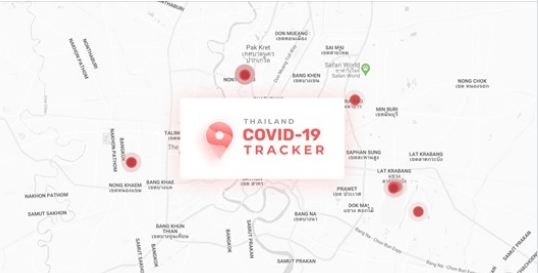
A Thai team known as 5Lab that develops websites, software and applications has introduced a site devoted to tracking the spread of the Covid-19 virus in Thailand.

The site formally launched on Friday (March 13) – https://covidtracker.5lab.co – provides information with real-time updates on people in Thailand confirmed as infected, including location, health status and date and time of confirmation.

All the data have source references to assure reliability, primarily at the Public Health Ministry, said chief executive Nithi Prasanpanich, but he believes the 5Lab site will be more useful than current information sources.

Covidtracker website's interface

Covidtracker website’s interface

“The government’s information should be more accessible rather than just being given out in general statements,” he said.

“It should provide information online, since few people get to see its press releases. And every update should be open-source, use the same format and be stored in a systematic way. Then programmers will be able to upload the data into a program.”

Updates are manually added to CovidTracker after being factually verified.

The team was on Friday in the process of adding another server to meet rising interest in the site, having already experienced crashes.

Maryland legislature advancing $700 million package of taxes to pay for schools #ศาสตร์เกษตรดินปุ๋ย

#ศาสตร์เกษตรดินปุ๋ย : ขอบคุณแหล่งข้อมูล : หนังสือพิมพ์ The Nation

https://www.nationthailand.com/edandtech/30383817?utm_source=category&utm_medium=internal_referral

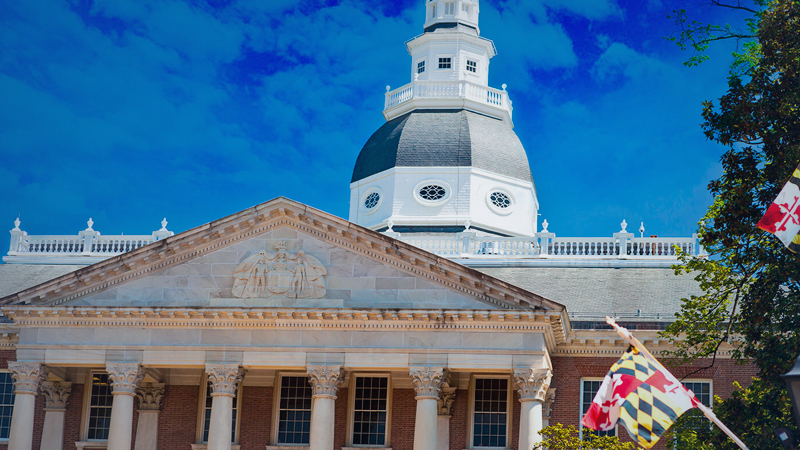
Maryland legislature advancing $700 million package of taxes to pay for schools

Mar 11. 2020
By The Washington Post · Erin Cox · NATIONAL, BUSINESS, POLITICS, EDUCATION 

Democrats who control the Maryland General Assembly are advancing a roughly $700 million tax package, a multipart plan that includes an array of new taxes on dog grooming, certain corporations, vaping products and streaming services such as Netflix.

The package is on track for approval in the House of Delegates by the end of the week, and leading Democrats have pitched it as a way to pay for a sweeping public education overhaul that is also expected to be passed in the coming days.

These tax proposals have drawn far less public notice – or outrage – than a now-scuttled, $2.9 billion plan to expand the state’s sales tax to include services. Gov. Larry Hogan, a Republican, rallied opposition to the plan to tax services, but the governor has not similarly lobbied against this package.

Proponents say the measures target primarily wealthy residents and multistate corporations.

“It will not hit the pocketbooks of the vast majority of Marylanders, and the kids will get better schools,” House Majority Leader Eric Luedtke, D-Montgomery, said.

Portions of the package are aimed at modernizing the state’s tax code to reflect the digital economy, thereby correcting certain disparities. For instance, a book purchased from a bookstore is subject to state sales tax but a downloaded e-book is not.

The most far-reaching proposal would change that, and apply Maryland’s sales tax to digital goods, including streaming services such as Hulu, mobile phone apps, movie purchases, software downloads and digital video games. It would raise approximately $150 million a year, according to legislative analysts, and the Maryland would join 28 other states in taxing digital downloads.

A new tax on “luxury services” would make things such as pool cleanings, fur coat storage, pet grooming and country club memberships subject to the state’s 6 percent sales tax. That would generate an estimated $35 million a year.

House Minority Whip Kathy Szeliga, R-Baltimore County, called the overall package “pretty terrible” and particularly criticized the idea that the taxes targeted only Maryland’s upper crust.

“You can’t say watching TV is a luxury,” she said. “The ‘luxury’ of having someone groom your dog? I mean, really.”

Services as diverse as fortune telling and hair removal are included in the proposal. “Girls, your waxing is going to be taxed,” Szeliga said.

She said that Republicans, vastly outnumbered by Democrats who hold veto-proof majorities in both chambers, will try to curtail the tax proposals when they’re fully debated on the House floor this week.

The Maryland Senate is similarly working on a package of bills that also would include a novel tax on the targeted digital ads that chase consumers around the Internet. Those proposals are still in the committee process, but leaders in both chambers said they expect the bills to be passed in some form by the end of the month.

Last week, the House approved a top-to-bottom overhaul of public schools, believed to be the largest restructuring of public education since Massachusetts revamped its schools three decades ago.

The changes would provide free public preschool statewide, tougher teacher standards and higher pay for educators, more resources for districts with high concentrations of poverty, and a host of other policy prescriptions that proponents say could make Maryland’s schools the envy of the world. The changes are also expected to cost $4 billion a year when fully implemented a decade from now, a price tag that has prompted Hogan to criticize the plan as “pie-in-the-sky” and too costly. The governor has derided lawmakers’ advancing of the policy changes without a clear means to pay for them.

Hogan’s spokesman, Michael Ricci, did not immediately respond to a request for comment Tuesday on the latest revenue package. But in the past, Ricci has criticized the proposals as “years late and still billions short” of paying for the education overhaul.

The other, less controversial elements of the new tax plan include doubling the excise tax on cigarettes to $4 per pack and applying the excise tax to vaping products and e-cigarettes, which are now excluded from the excise tax.

Another hefty proposal closes what proponents call corporate tax loopholes that let multistate corporations shift their tax burden outside of Maryland. The annual Maryland tax liability of those multistate corporations would rise by roughly $150 million.

One element of the tax package would institute “combined reporting,” which forces corporations to pay state taxes on economic activity within Maryland’s borders and not just shift their entire tax burden to states where they are headquartered. More than half the states in the country use combined reporting for multistate corporations.

Another element would levy sales tax for goods sold by Maryland companies in states that do not have sales taxes. Such a “throwback” provision is used in some form by 28 states and the District of Columbia, according to legislative analysts.

Harvard moves classes online, advises students to stay home after spring break in response to covid-19 #ศาสตร์เกษตรดินปุ๋ย

#ศาสตร์เกษตรดินปุ๋ย : ขอบคุณแหล่งข้อมูล : หนังสือพิมพ์ The Nation

https://www.nationthailand.com/edandtech/30383802?utm_source=category&utm_medium=internal_referral

Harvard moves classes online, advises students to stay home after spring break in response to covid-19

Mar 10. 2020
By The Washington Post · Susan Svrluga · NATIONAL, EDUCATION

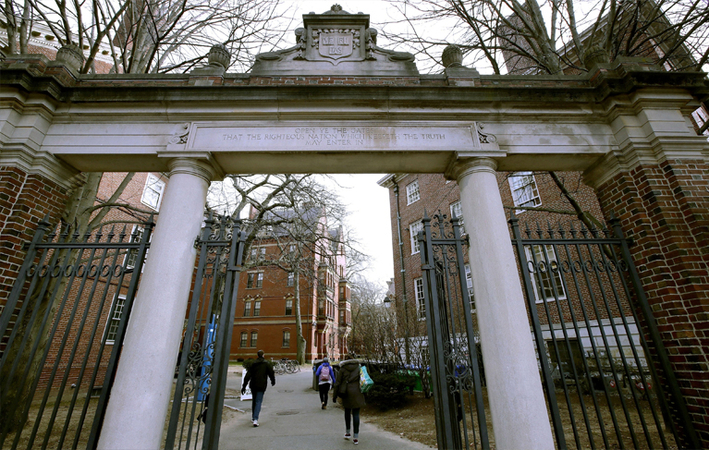
Harvard University advised its students not to return to campus after spring break and to expect to complete classwork remotely “until further notice,” in an effort to avoid the further spread of covid-19.

The change marked another sign of the impact of the coronavirus outbreak on even the most iconic institutions, as a growing number of universities known for their intense classroom debates, crowded events and hands-on research are now moving to empty their campuses as much as possible.

Amherst College, Princeton University, Stanford University, New York University, the University of Washington and others have announced dramatic changes in recent days in an effort to prevent infections by limiting the communal gatherings that have been central to campus life and learning at many schools.

Harvard is beginning to transition to virtual classes and hopes that transformation will be complete by March 23, the first day of classes after spring break, the school’s president announced to campus Tuesday.

Graduate students will transition to online work wherever possible, and students who must remain on campus will be taught remotely “and must prepare for severely limited on-campus activities and interactions,” the university’s president, Lawrence Bacow, wrote.

Non-essential gatherings of more than 25 people on campus are strongly discouraged, he wrote.

In his letter, Bacow spoke to the fundamental change about to occur: He acknowledged to students, especially graduating seniors, that this was not how they expected their time at Harvard to end.

“We are doing this not just to protect you but also to protect other members of or community who may be more vulnerable to this disease than you are,” Bacow wrote.

He acknowledged to faculty that they were asking them midway through the semester to completely rethink the way they are teaching.

“I am proud to be a member of a community where people put the greater good above their own self-interest,” Bacow wrote. “Thank you for your patience and your resilience as we all learn to temper increased distance with deeper care for one another.”

Silicon Valley’s two-tiered system for white collar workers is under pressure as coronavirus spreads #ศาสตร์เกษตรดินปุ๋ย

#ศาสตร์เกษตรดินปุ๋ย : ขอบคุณแหล่งข้อมูล : หนังสือพิมพ์ The Nation

https://www.nationthailand.com/edandtech/30383724?utm_source=category&utm_medium=internal_referral

Silicon Valley’s two-tiered system for white collar workers is under pressure as coronavirus spreads

Mar 10. 2020
Amardeep Purewal, a tech contractor who works in security IT at Google. MUST CREDIT: Photo by John Brecher for The Washington Post.

Amardeep Purewal, a tech contractor who works in security IT at Google. MUST CREDIT: Photo by John Brecher for The Washington Post.
By The Washington Post · Nitasha Tiku, Elizabeth Dwoskin · TECHNOLOGY 

SAN FRANCISCO – Google’s office complex in Sunnyvale, California, is one of the company’s largest campuses, but on Friday the buildings were practically empty and there were no lines in a normally-crowded cafeteria.

The night before, in a companywide email outlining its contingency plans to deal with the novel coronavirus, Google had notified Bay Area employees that they could work from home.

Security engineer Amardeep Singh Purewal would have preferred to work from home, too. But Purewal works for Google on contract and can’t access his Google email account remotely.

So Purewal did not see Google’s safety plans until he arrived at the office. And even after, he wasn’t sure if the flexibility would apply to workers with red contractor badges like him.

Since late February, the spread of the new coronavirus has evolved rapidly in the U.S., and so has Silicon Valley’s response to the threat. Tech companies were quick to accommodate full-time workers as confirmed cases cropped up near tech office clusters in Northern California and Washington. Nudged along by internal pressure from employees and peer pressure from competitors, and intensified by inquiries from regulators, labor activists, and the press, tech companies extended contingency plans to include contractors, who are employed through agencies and third-party companies.

Now fears about covid-19 are drawing wider attention to both this shadow workforce – and the less visible class divide among white collar workers.

Many companies rely on subcontractors to clean and secure their campuses, prepare food, and drive shuttle buses. But tech giants have been reticent to acknowledge the white collar contractors who perform similar office work as full-time employees, but for lower pay, no equity and fewer privileges. These contractors write code, moderate content on Facebook and YouTube, manage projects, recruit employees, and train digital assistants.

As a number of tech giants in the epicenter of covid-19 outbreaks in Seattle and the Bay Area closed offices to limit the spread of germs, many of these same workers were unclear on how they would fare if forced to work from home – or skip work completely because they don’t have the tools to do so.

Google and Facebook at the end of the week clarified that their policies also apply to contract workers.

“We decided very early in this crisis that the hourly service vendor workers in our extended workforce who may be affected by reduced office schedules would be compensated for the time they would have worked,” said Google spokesperson Katherine Williams. “We know it’s an uncertain time, but the response to this policy has been positive from members of the workforce and staffing partners.”

On Friday, Facebook said it would pay contingent workers if there was less need for them, if an office was closed, or if they are sick. Facebook spokesperson Drew Pusateri said the company’s policy applies to all contractors.

But the next layer, the agencies that employ these workers, could also determine the outcome.

In the contingency email, Google assured “temps and vendors” that the search giant would “work with your employer to make sure we [are] covering compensation” if the office is closed. The pledge sounded promising, especially for Purewal who can only accrue three sick days per year.

But even on Friday, Purewal says the agency that employs him, Beacon Hill Staffing Group, was not sure if Google’s policy meant he could work from home or be paid if that was not an option, and the agency would know more Monday after talking to Google. For Purewal, who lives with his wife, three children, and parents, the uncertainty poses a health risk.

Beacon Hill didn’t immediately respond to requests for comment.

To Purewal, the confusion seemed intentional. For work-related problems, his Google supervisors usually talk to him in person or via Google Hangouts. But they did not call a meeting or let contractors know that they were working on a plan.

“You don’t know go to where to look for answers,” Purewal said. “Maybe they do it purposefully.”

The contracting labor practice allows tech companies to save money, appear leaner than dominant industries from decades past, and avoid scrutiny around hiring or layoffs. In 2019, Facebook and Google raised standards for the contracting companies they work with, under pressure from the growing labor movement in tech.

But the practice is still ubiquitous. Contractors at Google, from cooks to coders, outnumber employees. As of March 2019, there were roughly 121,000 temps, vendors, and contractors, compared with 102,000 full-time employees, according to a report in the New York Times.

In interviews, a dozen contractors who work for major tech companies said that their biggest concerns around coronavirus were limited health benefits coupled with low pay, which made following instructions from health officials or the tech companies where they work a financial burden. Some hoped the spotlight on coronavirus would prompt more equitable treatment overall.

“Taking care of our own health seems to be secondary to taking care of theirs,” says a contractor at Facebook’s headquarters in Menlo Park, California, who spoke on the condition of anonymity because she was concerned about retaliation from her employer or Facebook.

Unlike Purewal, the Facebook contractor has about 16 paid days off per year. On Thursday night, she learned that Facebook was urging Bay Area employees to work from home. But on Friday she was also at the office and not sure if she could work from home or would have to use her vacation days. While she was on the Menlo Park campus, she heard contingent workers were also urged to work from home. She suspects her employer may have been the source of confusion.

Some white collar contractors can theoretically work from home, but because of an enforced code of differential treatment, legal limitations, or security concerns, companies often keep contractors on a tighter leash. In many cases, they cannot take their computers home, do not have access to shared databases, and cannot log in remotely.

Many American workers are in a more precarious position. The United States is the only wealthy nation without paid sick leave, which is accessible to one in four workers. Gig workers like Uber drivers or DoorDash food couriers, who may be at greater risk because of the nature of their work, do not have benefits or minimum wage protections.

In late February, the first cases of coronavirus contracted through community transmission were diagnosed in Northern California, near the headquarters of many tech giants, with more cases identified on the West Coast, including Washington state, where Amazon and Microsoft are headquartered. (The Washington Post is owned by Amazon CEO Jeff Bezos.)

Tech companies kept employees and the public updated as they implemented additional safety measures, first ordering more frequent office cleanings, then canceling conferences, limiting travel, and finally urging employees to work from home. But how contractors would be affected by contingency plans was unclear.

Inside Google, employees were pressuring the company for answers around paid sick leave for contractors. On Monday, an employee filed a ticket with Google’s head of extended workforce and copied an internal discussion group for contractors and temps, according to emails viewed by The Washington Post.

Employees called out the company after contractors were given boilerplate instructions to work from home if they were sick. On the email thread, employees also ferreted out the line about “covering compensation” when it was added to the bottom of Google’s coronavirus FAQ on Tuesday. “That’s a very confusing sentence, but buried within there it sounds like they’re saying to not worry about being paid?” one Google worker asked.

In the discussion, employees acknowledged the inherent caste system. “If workers are being forced to come to the office sick and neither vendor companies nor Google will listen to them and do something else to resolve it, then who is responsible for the health and safety of over 50%* of our workforce?” one Google employee wrote, adding, “*100% by extension of the fact coronavirus presumably won’t discriminate by badge color the way we do.”

During a companywide meeting at Facebook Wednesday, employees asked questions about whether contractors would be able to work from home, as well as whether there would be paid leave for kitchen and cleaning staff who do not have the option to work remotely, according to a worker in attendance.

The same day, at an Accenture office in Austin, Texas, where content moderators work for Facebook, a manager asked the workers if they had WiFi at home and wrote down the ID number of people’s laptops, which made one contractor believe that they were triaging a process to allow some moderators to work from home. Content moderation is a particularly thorny issue. Typically contractors can’t work from home because of the sensitivity of the content that they deal with and privacy of people’s accounts. However, IT staff is working on making exceptions in case there is an outbreak, according to another employee.

Accenture didn’t immediately respond to a request for comment.

Then on Thursday, Microsoft president Brad Smith published a blog post announcing that it would pay hourly workers who could not do their job remotely if the office was closed for safety reasons. “We’re committed as a company to making public health our first priority and doing what we can to address the economic and societal impact of covid-19,” Smith wrote, challenging other large companies. “[W]e believe that large employers who can afford to take this type of step should consider doing so.”

Shortly after, Google, Facebook, and Amazon publicized their own plans to pay hourly workers.

Microsoft spokesperson Frank Shaw said he is trying to verify whether the policy includes white collar contractors, but he did say it is focused on Northern California and 4,500 hourly workers in the Puget Sound region. Amazon did not directly address the question, but spokesperson Jaci Anderson said the pledge applies to hourly employees at its campuses in Seattle and Bellevue, which encompasses 10,000 people, including food service workers, security guards, and janitorial staff.

In a blog post, Alphabet and Google CEO Sundar Pichai wrote, “As covid-19 makes its way across the globe, we’re approaching this unprecedented moment with a deep sense of responsibility.”

After taking two days off without pay around Christmas, Fran Baisden, a contractor who works on data analytics and content creation for Google’s shopping system, only has six hours and 58 minutes of paid time-off. Even those hours are elusive. Baisden’s employer, HCL Technologies, could revoke the hours because of a policy that unpaid leave has to be taken in week-long increments, according to Baisden. Contractors in the Pittsburgh office, who recently unionized, are contesting that policy.

HCL did not immediately respond to request for comment.

For now, they are also not allowed to take their laptops out of the office. So if Google closes its Pittsburgh outpost, Baisden might not be able to work from home. Another contractor in the same office pointed out that the full-time employees who work on her project are largely white males, whereas the contractors are largely female. “It’s something that digs in when I think about the issue.”

For Purewal, the tech industry’s philanthropic efforts are particularly at odds with its contractor system, he says, pointing to Google’s charitable donations around the globe. “You’re going outside the walls to help out, but within your neighborhood, what’s wrong with offering contractors a little bit more?” he asks. “Why is that discrimination right here in your own house?”

Princeton requires lectures and seminars to go online-only, a temporary move amid COVID-19 outbreak #ศาสตร์เกษตรดินปุ๋ย

#ศาสตร์เกษตรดินปุ๋ย : ขอบคุณแหล่งข้อมูล : หนังสือพิมพ์ The Nation

https://www.nationthailand.com/edandtech/30383715?utm_source=category&utm_medium=internal_referral

Princeton requires lectures and seminars to go online-only, a temporary move amid COVID-19 outbreak

Mar 09. 2020
By The Washington Post · Susan Svrluga · NATIONAL, HEALTH, EDUCATION 

Classes at Princeton University will be held online and students are being encouraged to consider staying home after spring break, the school’s president announced Monday, a preemptive move intended to slow the spread of coronavirus on the New Jersey campus.

Princeton became the latest university to take dramatic measures to protect the health of students, faculty and others as the COVID-19 outbreak spreads, with some colleges closing temporarily to disinfect buildings and some moving rapidly to virtual instruction. Columbia University canceled classes Monday and Tuesday in preparation for a shift to online classes. Stanford University and the University of Washington announced a switch to virtual classes for the remainder of the winter quarter, and Rice University plans online-only classes this week.

At Princeton, no one has tested positive for COVID-19 so far.

The new policies intended to increase social distancing will be in place through April 5, according to university officials, and will be reassessed as that date approaches.

“While much remains unknown about COVID-19’s epidemiology and impact, our medical advisers tell us that we should proceed on the assumption that the virus will spread more broadly and eventually reach our campus,” the university’s president, Christopher L. Eisgruber, wrote in a letter to campus Monday. “They also tell us that the best time to put in place policies to slow the spread of the virus is now, before we begin to see cases on our campus, rather than later.” Acting now will also allow students to meet their academic requirements remotely, he wrote.

“We encourage students to consider staying home after Spring Break,” Eisgruber wrote. Princeton will also limit the number and size of campus gatherings, and restrict university-sponsored travel, as multiple other universities have done in recent days.

Any lectures, seminars and precepts that can be taught virtually will be, he wrote, beginning March 23, when the school’s spring break has ended.

“Though we recognize that a personal, ‘high touch’ educational environment is one of Princeton’s great strengths,” Eisgruber wrote, “we also recognize that these are extraordinary times that require exceptional measures to deal with a health risk that affects us all.”

Eisgruber spoke to the difficult choices university leaders must make in the face of the rapidly evolving outbreak, acknowledging “that these measures impose significant restrictions and costs on projects that matter tremendously to each of us.” People have different views about how to respond to the risks and uncertainties but, he wrote, “I ask all of you to join in supporting these policies, which address a threat affecting us all.”

Krungsri and MUFG enter into strategic alliance with Grab, invest$ 706 million(Bt 22 billion) #ศาสตร์เกษตรดินปุ๋ย

#ศาสตร์เกษตรดินปุ๋ย : ขอบคุณแหล่งข้อมูล : หนังสือพิมพ์ The Nation

https://www.nationthailand.com/edandtech/30383671?utm_source=category&utm_medium=internal_referral

Krungsri and MUFG enter into strategic alliance with Grab, invest$ 706 million(Bt 22 billion)

Mar 09. 2020
Krungsri president and chief executive officer Seiichiro Akita,left, and  Worachat Luxkanalode, country head of Grab Financial Group (Thailand).

Krungsri president and chief executive officer Seiichiro Akita,left, and Worachat Luxkanalode, country head of Grab Financial Group (Thailand).
By The Nation

Krungsri Finnovate, the venture capital arm of Krungsri, has completed its investment in Grab Holdings Inc (“Grab”), a leading app in Southeast Asia.

Mitsubishi UFJ Financial Group, Inc announced previously that it will invest up to US$706 million(Bt 22 billion) in Grab through MUFG Bank, MUFG Innovation Partners and Krungsri Finnovate, to co-develop innovative financial products and services based on combined customer insights to better cater to the financial needs of Grab’s users, driver-partners and merchant-partners.

In Thailand, the partnership between Krungsri and Grab will help Krungsri tap into a new customer base and also promote ‘sustainable banking’ through financial inclusion for populations among the new clients, the company said.

Specifically, the partnership will build on Grab Financial Group’s pilot lending services in Thailand and Krungsri’s extensive consumer lending expertise. Grab Financial Group and Krungsri will also co-develop new lending solutions for participants in Grab’s ecosystem, including driver-partners and GrabFood merchant-partners. Grab and Krungsri will leverage alternative data and AI technology to build credit scoring models, and provide innovative lending products to serve the underbanked population in Thailand, the company added.

Grab, a leading app in Thailand and Southeast Asia, offers convenient and digital everyday services such as ride-hailing, food and package delivery, and digital payments, to millions of users each day.

Krungsri president and chief executive officer Seiichiro Akita said, “Grab is very well-known and has become an integral part of Thai people’s lifestyle. Being a strategic part of Grab’s ecosystem, this partnership will enable us to render our innovative products and services to Grab’s users, merchants and drivers, some of whom may be underbanked.”

“Linked to our ESG mandate, the partnership aims not only business outcomes, but also economic and social returns, including employment creation and income distribution, which ultimately will lead to a socio-economic development of the country,” Akita added.

Reuben Lai, senior managing director, Grab Financial Group said, “We believe in the need for ecosystem partnerships to efficiently serve the underbanked in Thailand and across Southeast Asia. Together with Krungsri, we look forward to leveraging our deep customer insights with Krungsri’s expertise in banking to give micro-entrepreneurs and gig economy workers in Thailand access to micro loans and other financial services.”

Thakorn Piyapan, chairman of Krungsri Consumer and Krungsri Head of Digital Banking and Innovation Division, said, “Krungsri Finnovate joining MUFG Bank and MUFG Innovation Partners to enter into a capital and business alliance with Grab will certainly strengthen partnership synergy in Thailand. Through the co-development of alternative underwriting and credit scoring methods, such as behavioral data from both partners’ platforms, Krungsri and Grab will jointly underwrite loans to the entire Grab ecosystem, encompassing Grab Users, Grab Drivers, and GrabFood merchants.”

Worachat Luxkanalode, country head of Grab Financial Group (Thailand), said, “Access to basic financial services, such as lending is still out of reach for many micro-entrepreneurs and small businesses in Thailand. Grab Financial Group has started to pilot lending services for our driver-partners and GrabFood merchants, and our partnership with Krungsri on data innovation will accelerate our vision to support the daily financial needs of all Thais.”