Apple’s outlook cut revives questions about China over-reliance #ศาสตร์เกษตรดินปุ๋ย

#ศาสตร์เกษตรดินปุ๋ย : ขอบคุณแหล่งข้อมูล : หนังสือพิมพ์ The Nation

https://www.nationthailand.com/edandtech/30382367?utm_source=category&utm_medium=internal_referral

Apple’s outlook cut revives questions about China over-reliance

Feb 18. 2020
An Apple inc. logo is displayed at their store at Yorkdale mall in Toronto on Aug. 22, 2019. MUST CREDIT: Bloomberg photo by Brent Lewin.

An Apple inc. logo is displayed at their store at Yorkdale mall in Toronto on Aug. 22, 2019. MUST CREDIT: Bloomberg photo by Brent Lewin.
By Syndication Washington Post, Bloomberg · Mark Gurman, Debby Wu, Gao Yuan · BUSINESS, WORLD, TECHNOLOGY, US-GLOBAL-MARKETS, ASIA-PACIFIC

For the second time in as many years, Apple has had to temper its sales outlook because of unexpected shifts in China, the country that’s served as the engine of its growth and success.

First a trade war with the U.S. and now the outbreak of a novel coronavirus have called into question China’s role as a reliable market and supply chain partner for the world’s most valuable maker of consumer electronics.

The coronavirus that’s stifled China’s meticulously orchestrated production and logistics has hit both Apple’s supply and demand — factories are resuming work slower than expected, the company announced, and most of its 42 stores in the country lie dormant — illustrating how heavily exposed its business is to disruptions in the world’s most populous country. A fall in sales within China is likely to be the most immediate impact this quarter, while widespread production bottlenecks there risk hurting global iPhone revenue in subsequent months.

Amid its coronavirus troubles, Apple has been preparing to launch a new low-cost iPhone at around $400, Bloomberg News has reported. The model is still on track to launch in March, though the plans are still fluid, according to people familiar with the matter. Apple has also been preparing updated iPad Pro models with a new camera system for the first half of 2020 and the virus may yet impose delays or constraints on those plans.

Upon joining the company in the late 1990s, Chief Executive Officer Tim Cook transformed Apple’s supply chain into the efficient juggernaut that’s been the longtime envy of the industry. Products are manufactured in China with the help of low-cost, but skilled, labor and shipped around the world in a matter of days. Relying on Taiwan’s Foxconn Technology Group to run on-the-ground operations and China’s abundant investment in transport to ensure logistics, Apple has become a trillion-dollar company largely by selling made-in-China iPhones, iPads, Macs and accessories.

Responsible for millions of jobs in the country, Cook’s Apple has also garnered enough goodwill with the Chinese government to gain access to its market that is unmatched among U.S. tech heavyweights. Facebook Inc. and Alphabet Inc.’s Google are looking in from the outside, whereas Apple can sell all of its gadgets there. The Cupertino, California firm brings in more than $40 billion per year from Greater China, shy only of its takings from the U.S. and Europe. This strength is also the source of Apple’s vulnerability.

On Monday, Apple cut its earnings guidance for the quarter ending Mar. 31, which was already wider than usual because of the unpredictability of the coronavirus fallout. U.S. stock index futures and shares in Apple suppliers from Japan to Hong Kong fell after the outlook warning kindled concerns about the damage the epidemic is causing global corporations and the Apple ecosystem. Last year, the company adjusted earnings because of a shortfall in iPhone demand in China, which it blamed in part on the ongoing trade war between Washington and Beijing.

Production snarls at Apple’s main iPhone-making base of Zhengzhou may extend well into the June quarter and possibly beyond. Foxconn’s Hon Hai Precision Industry Co. only started seasonal recruitment on Monday, weeks behind schedule, and it’s been severely hindered by new policies intended to curb the spread of Covid-19 on campus. One recruiter, speaking on condition of anonymity, told Bloomberg News that the company was only hiring new workers from the local Zhengzhou area, tightening restrictions and eliminating the vast majority of available labor pool.

Implementing a rolling quarantine of up to 14 days for returning workers from more distant provinces, Foxconn faces additional challenges in managing the movement of untold numbers of staff. In Shenzhen, as many as 10 workers are packed in each dorm room as they endure their assigned sequester period. The available beds are running short as a growing number of workers travel back, according to one person who helped arrange the program.

Virus contagion has shuttered plants across China for weeks longer than anticipated after the Lunar New Year break, and the nightmare scenario feared by Foxconn and its ilk is the infection spreading across factory floors, which could potentially freeze parts of the supply chain and trigger cascading shortages. Apple’s facilities have all reopened, said the U.S. firm, but evidence on the ground suggests they’re still far from fully operational.

Existing iPhone inventories at retailers will soften the immediate blow of slower manufacturing, but analysts anticipate worldwide shortages will follow, extending the impact of the present disruption.

“I expect we’re going to start seeing iPhone shortages outside of China, which plays into the guidance,” said Apple analyst Shannon Cross from Cross Research. “In theory, it shouldn’t be demand destructive. It should just mean there should be a larger backlog of demand when these issues are resolved.”

The immediate reaction to Apple’s forecast cut has been a drag on Asian tech shares, especially those of suppliers to the company. But some impact on Apple was already widely anticipated.

“We’ve been getting nothing but headlines about the virus for weeks. Starbucks is closing its stores, Caterpillar is shutting its facilities. Company after company has been saying this,” Jim Paulsen, chief investment strategist at Leuthold Group, said by phone, expressing investor optimism for a fast turnaround. “We have been expecting bad sales headlines, this isn’t good, but it’s not surprising.”

Moving entirely out of China would be practically impossible for Apple in the short term, given the scale of its established network and the country’s incomparable ability to mobilize a workforce of millions. Similarly strong disruption threats to its supply chain arose in 2018 and 2019, largely spurred by trade war conflagrations, but Cook’s team has held steadfast in its commitment to the region and hasn’t shown any significant momentum toward a major move out.

“Apple’s supply chain in China is so tight and large, it would be difficult to replicate outside the region,” Cross said. “I think you’ll continue to see small expansions into India, but the vast majority of production will remain in China.”

Apple has indicated that its overall business is still strong, saying that it remained on track revenue-wise in regions outside of China for both products and services. The company is engaged in a long-term diversification shift that’s seen it pour billions of dollars into creating its own streaming content for Apple TV+ and building out subscription services like Apple Music and Apple Arcade. Its strongest step to reduce its China dependence to date has been this move to be less reliant on pure hardware sales for the bulk of its revenue.

Addressing the wider smartphone industry in China, Strategy Analytics this month projected a significant hit to shipments in the first half of 2020, to be followed by a recovery and a slight increase in shipments in the closing months of the year. If Apple follows a similar trajectory, it could see iPhone demand shift into later quarters rather than vanishing entirely.

“I think Apple remains in a very good position long-term,” Cross said. “I would assume there would be some pressure on the stock, but assuming this is a short term bump in the road, investors will look through it.”


Ring and Nest helped normalize American surveillance and turned us into a nation of voyeurs #ศาสตร์เกษตรดินปุ๋ย

#ศาสตร์เกษตรดินปุ๋ย : ขอบคุณแหล่งข้อมูล : หนังสือพิมพ์ The Nation

https://www.nationthailand.com/edandtech/30382360?utm_source=category&utm_medium=internal_referral

Ring and Nest helped normalize American surveillance and turned us into a nation of voyeurs

Feb 18. 2020
By The Washington Post · Drew Harwell · BUSINESS, TECHNOLOGY 

CAMERAS-PRIVACY : Margaret Cudia thought her Ring doorbell camera was “the best thing since sliced bread.” She loved watching the world pass by through her suburban New Jersey neighborhood, guarding vigilantly for suspicious strangers and porch pirates from the comfort of her phone.

She hadn’t expected the camera also might capture awkward moments closer to home, like the time it caught her daughter grabbing a beer and talking about how controlling her mother was. “I never told her about that one,” she said with a laugh.

Amazon’s Ring, Google’s Nest and other Internet-connected cameras – some selling for as little as $59 – have given Americans the tools they need to become a personal security force, and millions of people now seeing what’s happening around their home every second – what Ring calls the “new neighborhood watch.” (Amazon founder Jeff Bezos owns The Washington Post.)

But the allure of monitoring people silently from afar has also proved more tempting than many expected. Customers who bought the cameras in hopes of not becoming victims joke that instead they’ve become voyeurs.

The Washington Post surveyed more than 50 owners of in-home and outdoor camera systems across the United States about how the recording devices had reshaped their daily lives. Most of those who responded to online solicitations about their camera use said they had bought the cameras to check on package deliveries and their pets, and many talked glowingly about what they got in return: security, entertainment, peace of mind. Some said they worried about hackers, snoops or spies.

But in the unscientific survey, most people also replied that they were fine with intimate new levels of surveillance – as long as they were the ones who got to watch.

They analyzed their neighbors. They monitored their kids and house guests. And they judged the performance of housekeepers, babysitters and other domestic workers, often without letting them know they were being recorded. “I know maybe I should” tell them, one woman explained, “but they won’t be as candid.”

Ring and Nest representatives said they had recently implemented new privacy and security measures to help protect customers’ accounts and that they encourage new users to make it clear that the cameras can record at any time. Ring’s installation guide suggests customers use stickers or signs to “let visitors know that your home is under audio/video surveillance by a Ring device.”

But the cameras’ offering of secretive observation, some customers told The Post, often felt too enticing to ignore. Mari Gianati, whose Nest cameras watch over her waterfront home in Puerto Rico, said she uses the cameras to examine the housekeepers, the pool guy, the fumigator, the people who feed her birds and any strangers who pass by her private road, most of whom she said don’t know the cameras are there.

“I have to admit: Sometimes I just watch,” she said. Once she looked on for hours as her sister argued with workers over a delivery of damaged furniture. “Thank goodness I had WiFi!” she said.

All that added vigilance has come at a cost. Hackers have peered into children’s bedrooms. Police officers have asked homeowners for video of their neighbors. And families have had to reckon with the delicate new bounds of home privacy – including one woman who didn’t realize that her lovemaking with her husband had been caught on camera until it was too late.

But most people said those concerns weren’t enough to persuade them to turn off their cameras. Device sales have surged in recent years amid falling prices and rising public acceptance: The companies won’t give full sales figures, but they say millions of cameras now are online nationwide. Ring said in November that its doorbell cameras were dinged more than 15 million times on Halloween, nearly double the previous year.

Matthew Guariglia, an analyst for the online-rights group Electronic Frontier Foundation, said the rush of new home cameras threatened to make the problems of widespread surveillance – the chilling of free speech, the erosion of privacy – that much more intimate and inescapable.

“Who hasn’t looked out and watched other people through their peephole? There’s a kind of morbid fascination to it,” he said. “The problem is when it’s not just you behind a peephole but a camera that’s on at all times, saving to a cloud you don’t control.”

No gadget since the smartphone has so quickly normalized personal surveillance. The motion-detecting cameras can be bought for as little as $59 and come in a range of styles, from outdoor units with sirens and floodlights to battery-powered “stick-up cams” that can be placed virtually anywhere. Owners can watch the cameras live or save the videos for a few dollars a month.

Some cities offer rebate and voucher programs for the cameras in hopes that more surveillance footage will make crimes easier to solve. The cameras have also become popular Christmas gifts, and Google and Amazon have advertised them around the holidays with hashtags like #CaughtOnNestCam and #AlwaysHome. (In December, Ring also sold festive holiday camera faceplates.)

The extra eyes have been a huge gift to American law enforcement. Ring lets police officers use a special tool to ask customers for videos captured in and around their houses, and the number of police agencies with access has more than doubled since September, to nearly 900 agencies across 44 states, a Post analysis found. “Ring believes when communities and local police work together, safer neighborhoods can become a reality,” Ring spokeswoman Yassi Shahmiri said in a statement.

Privacy advocates have called the Ring-police partnerships an unnerving escalation of criminal surveillance powers. But nearly every Ring owner contacted by The Post said they would have no problem providing video to law enforcement if it could help solve a crime. Police and prosecutors last month pushed to use Ring doorbell footage in a Texas murder investigation and a New Hampshire assault trial.

Some homeowners said they had already tried be police informants, logging in several times a day to Ring’s companion app, Neighbors, in which people can share video of break-ins, lost dogs and seemingly unsavory characters.

By tallying up neighborhood reports of suspicion and uncertainty, the social network can also turn harmless moments – the kind most people would have been blissfully ignorant of – into signs of danger or sources of dread.

That heightened level of suburban surveillance has also triggered some false alarms. One man labeled a “Suspicious Male” on Neighbors because he stepped onto a Boston porch later defended himself by saying he had been reminiscing about his old house. “I used to play with my dog in the backyard,” he said, according to a Boston Magazine story. (Perhaps to lighten the mood, Ring this month unveiled a new category for Neighbors app users wanting to share recorded acts of kindness: “Neighborly Moments.”)

Some customers said the cameras had sparked conversations within their families about trust and privacy in a new surveillance age, often with answers they would rather have gone unsaid. After Rik Eberhardt set up a Nest camera inside his home in the Boston suburbs, he found it increasingly awkward being reminded of every late-night trip he or his wife took to the kitchen. “I started feeling like: What am I even using this for?” he said. (He has since aimed the camera at his cats’ food bowls.)

Others said they were growing exhausted from the hyper-vigilance the cameras seemed to demand. The motion-activated devices can send alerts whenever someone walks by and also can be triggered by the movement of cars, dogs, squirrels and windblown trees, leading some customers to feel startled or under siege.

Several customers offered tales of strange noises, bizarre whispers and ghostly apparitions: One mother said she worried her toddler’s nightmares might have been caused by the unblinking camera in his room. The mortal realm has not always appreciated being recorded, either. One apartment dweller who said he used his Ring camera to record people littering at the community mailbox was told by his landlords to knock it off.

Molly Snyder, an education blogger and mother of three in the suburbs outside Columbus, Ohio, said videos from Ring doorbells and other home cameras had become the biggest source of conversation and outrage in her neighborhood Facebook group.

“There’s never video of porch pirates or criminals. It’s all what we’re doing to each other, or what the mailman is doing to frustrate our day,” she said. The postal worker’s biggest transgression, she said, is not pulling all the way to the side of the road when delivering packages: “People capture that on video, and there’s always a lot of rage commenting, with everybody dumping on the mailman,” she said.

Her neighbors, she said, regularly post videos of children walking down the street alongside comments like, “Whose kids are these?” They don’t look like they’re doing anything wrong – a typical breach involves taking a shortcut through someone’s lawn – but her children told her they knew of kids who had gotten in trouble after video was posted of them hitting a tree with a stick.

“We’re not a neighborhood that’s unsafe. We’re also not a neighborhood where people spend a lot of time outside, interacting with each other,” she said. “So we turn our Rings on and start dissecting all the children. Shouldn’t we be encouraging each other to go outside, say hello and not just get alerts that you’re walking past?”

This ability to see into homes has already been weaponized: Hackers have used the camera systems to shout racist slurs at an 8-year-old girl in Mississippi and a 15-year-old boy in Florida; spew sexual expletives and kidnapping threats at a 4-month-old baby in Texas; and broadcast pornography into the bedroom of a 2-year-old girl in California.

Tania Amador, a teacher’s aide in Texas who used her Ring camera to coo at her cancer-stricken bulldog, shared video with The Post showing a hacker laughing as he blasted a deafening siren through her living room while she and her boyfriend hid just out of view. She is suing the company, arguing its lax security controls left her open to abuse.

Shahmiri, the Ring spokeswoman, declined to comment on the ongoing case but said Ring’s network had not been compromised. In some cases, Ring has argued that hackers used log-in details stolen from other sites; Amador said she had used a unique, 14-character password and had no idea how her cameras had been breached.

“It felt like a nightmare,” she said. “Even now, it’s tough to deal with the fact that we may have been watched for a while without knowing. What if the hacker (was) smart enough just to be quiet and watch?”

Beyond outright hacks, the systems’ technical errors have reminded users of how creepy the glitches can be. The owner of a Google Nest video screen saw footage recorded inside other people’s homes, including a close-up of a baby sleeping in a crib. Google said the issue was the fault of the camera maker, the Chinese tech firm Xiaomi, and temporarily disabled some links to the devices.

The potential for mayhem has led some camera lovers to rethink their everyday use. Keith Keber said he liked using the cameras around his home in suburban Washington state to watch the hummingbirds and talk to his cats. But after his cameras’ maker, Wyze Labs, announced in December that it had suffered a data breach, he has been unplugging his cameras and leaving them in a drawer. “All these Internet-of-things devices, they’re portals,” he said, “not just to look out but to look in.”

Some customers also voiced anxiety over who might have access to their in-home feeds. An Amazon executive told senators last month that Ring had fired employees following four complaints that they had abused access to customers’ video data; the company has declined to provide further detail. Criticism of the systems has also come from inside the companies: Amazon software engineer Max Eliaser wrote last month that the mass deployment of Internet-connected cameras was “simply not compatible with a free society.”

“Ring should be shut down immediately and not brought back,” he wrote. “The privacy issues are not fixable with regulation, and there is no balance that can be struck.”

Despite privacy concerns, some customers said the cameras are a unique way to keep track of their families. One woman said she had installed cameras from Nest and the Chinese tech company Yi Technology to monitor her three children, ages 3 and younger, when they are alone in their rooms.

But other camera owners said they would never dream of installing the systems inside. Catherine, a 58-year-old Florida snowbird who uses Blink cameras to watch her home in Minnesota and who requested to use only her first name, said the cameras have become so easy to turn on that many people don’t really think about what’s at stake. Parents who installed cameras in kids’ rooms, she said, might end up depriving them of the privacy they need to grow into independent adults.

“We’re all getting too paranoid. Everybody thinks they’re going to be the next victim. And it’s set into us this mentality that we have to watch everything and everybody,” she said. “They think, ‘If I put all these cameras up, I’ll be safe.’ Safe from what? . . . It’s only making them more afraid.”

Utilities say they’re against EPA rollback on mercury emissions #ศาสตร์เกษตรดินปุ๋ย

#ศาสตร์เกษตรดินปุ๋ย : ขอบคุณแหล่งข้อมูล : หนังสือพิมพ์ The Nation

https://www.nationthailand.com/edandtech/30382309?utm_source=category&utm_medium=internal_referral

Utilities say they’re against EPA rollback on mercury emissions

Feb 18. 2020
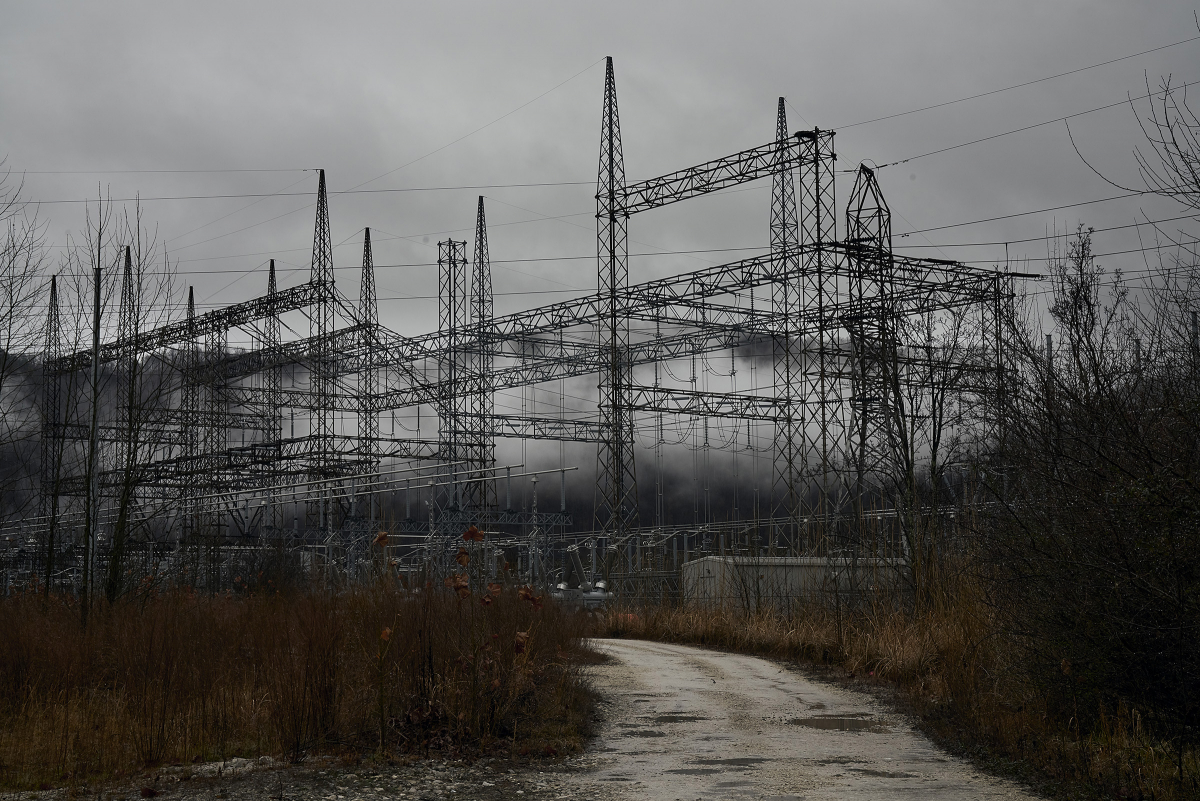
The John E. Amos coal-fired power plant in Winfield, W. Va., was retrofitted to comply with a rule on mercury enacted under President Barack Obama. MUST CREDIT: Photo for The Washington Post by Stacy Kranitz

The John E. Amos coal-fired power plant in Winfield, W. Va., was retrofitted to comply with a rule on mercury enacted under President Barack Obama. MUST CREDIT: Photo for The Washington Post by Stacy Kranitz
By The Washington Post · Juliet Eilperin, Brady Dennis · NATIONAL, BUSINESS, SCIENCE-ENVIRONMENT 

For more than three years, the Trump administration has prided itself on working with industry to unshackle companies from burdensome environmental regulations. But as the Environmental Protection Agency prepares to finalize the latest in a long line of rollbacks, the nation’s power sector has sent a different message:

Thanks, but no thanks.

Exelon, one of the nation’s largest utilities, told the EPA that its effort to change a rule that has cut emissions of mercury and other toxins is “an action that is entirely unnecessary, unreasonable, and universally opposed by the power generation sector.”

Kathy Robertson, a senior manager for environmental policy at the company, said the industry long ago complied with the rule.

Scrubbers were installed at the John E. Amos plant as part of an effort to comply with environmental regulations. MUST CREDIT: Photo for The Washington Post by Stacy Kranitz

Scrubbers were installed at the John E. Amos plant as part of an effort to comply with environmental regulations. MUST CREDIT: Photo for The Washington Post by Stacy Kranitz

“And it works,” she said. “The sector has gotten so much cleaner as a result of this rule.”

Despite a chorus of opposition from unions, business groups and electric utilities, the EPA is on the verge of completing its proposal as part of a broader effort to overhaul how the government calculates the health benefits of cleaner air. Coal executives have lobbied for it, arguing it represented one of the worst excesses of what President Donald Trump calls “the war on coal.”

The agency plans to declare that it is not “appropriate and necessary” for the government to limit harmful pollutants from power plants, even though every utility in America has complied with standards put in place in 2011 under President Barack Obama. While it will technically keep existing restrictions on mercury in place, it means the government would not be able to count collateral benefits – such as reducing soot and smog – when it sets limits on toxic air pollutants.

American Electric Power shut down the Kanawha River coal-fired power plant in Hansford, W. Va., as it was working on complying to Obama administration regulations. MUST CREDIT: Photo for The Washington Post by Stacy Kranitz

American Electric Power shut down the Kanawha River coal-fired power plant in Hansford, W. Va., as it was working on complying to Obama administration regulations. MUST CREDIT: Photo for The Washington Post by Stacy Kranitz

It’s a rollback that industry officials argue could open the door to new legal fights, prompt some plants to turn off their pollution controls and ultimately sicken more Americans – all so that the administration can rewire how the government weighs the costs of regulation.

“They’ve unsheathed an incredibly sharp sword,” said University of Chicago professor Michael Greenstone, an energy and environmental economist. “And there’s no reason that sword can’t be used to roll back other regulations that have produced extraordinarily large benefits for American society.”

The changes could give a boost to struggling coal companies, while hamstringing future efforts to limit mercury emissions from the nation’s power plants.

Kanawha River plant was one of 11 that American Electric Power shut down. MUST CREDIT: Photo for The Washington Post by Stacy Kranitz

Kanawha River plant was one of 11 that American Electric Power shut down. MUST CREDIT: Photo for The Washington Post by Stacy Kranitz

The rule in question, known as the Mercury and Air Toxics Standards (MATS), targets a powerful neurotoxin that can affect the IQ and motor skills of children, even in utero. Between 2006, when states began to curb mercury from coal plants, and 2016, when the Obama-era rule took full effect, emissions have declined 85 percent.

The Obama administration initially projected that the industry would spend between $7.4 billion and $9.6 billion each year to comply with the regulation, while society as a whole would save between $37 billion to $90 billion from the prevention of thousands of premature deaths and lost work days. Those estimates included not just lower mercury emissions but collateral benefits from reductions in soot and other smog-forming pollutants that contribute to asthma and other respiratory problems.

Synthetic Gypsum waste at the John E. Amos plant, which continues to operate after it was retrofitted to comply with the EPA's rule. MUST CREDIT: Photo for The Washington Post by Stacy Kranitz

Synthetic Gypsum waste at the John E. Amos plant, which continues to operate after it was retrofitted to comply with the EPA’s rule. MUST CREDIT: Photo for The Washington Post by Stacy Kranitz

The power industry ultimately paid far less to comply. It spent about $18 billion between 2012 and 2018, or $3 billion annually.

The Trump administration has argued that it is inappropriate to count such “co-benefits” when considering the economic impact of regulation, saying Obama used creative math to justify burdensome new requirements.

“When you do a cost-benefit analysis, you should address the pollutant that’s the subject of the regulation,” EPA Administrator Andrew Wheeler said in a recent interview, adding that “98, 99 percent of the benefits were not for mercury.”

The 2011 requirements did more to hasten the closure of coal-fired power plants than any other regulation adopted under Obama. Facing the first-ever limits on these pollutants, companies across the country chose to switch to natural gas or renewable energy rather than invest in costly new pollution controls.

Less than a decade ago, utilities were fighting the rule in court, along with coal producers and Republican attorneys general. The Supreme Court ruled in 2015 that the EPA had failed to adequately justify the economic impact of the standards. The next year, the Obama administration published an analysis saying the combined benefits of curbing mercury and other pollutants, like soot, outweighed the costs even when taking industry expenditures into account.

The revamped rule – which was supposed to come out late last year – is stuck at the White House, according to two senior administration officials, where staffers continue to deliberate which cost estimates to use. The agency is scrambling to make final some of its most significant rollbacks before Trump’s first term ends, including its effort to relax federal mileage standards.

Administration officials insist their mercury rollback is merely a response to the Supreme Court ruling – not an effort to once again allow emissions of a harmful set of toxins.

“Under the proposal, no more mercury will be emitted into the air than before this rule,” EPA spokeswoman Corry Schiermeyer said in an email.

But the electric industry is skeptical.

American Electric Power, for instance, has spent more than $1 billion to comply with the standards since 2011, along with other rules limiting sulfur dioxide and nitrogen oxides. It shut down nearly 7,300 megawatts of coal-fired generation at 11 different plant sites in2015 and 2016 alone.

The company and its competitors, represented by the Edison Electric Institute, have urged the administration to preserve a rule they once opposed. Utility executives warn that if the EPA says the rule was unjustified, the decision could allow outside groups to sue over passing on the cost of pollution upgrades to customers.

What’s more, many experts expect a coal company or conservative group to quickly petition a federal judge to scrap the rule on the grounds that it was never warranted in the first place.

“We’ve already made these investments,” Scott Weaver, American Electric Power’s director of air quality, said in an interview. “We’re happy to comply with this rule. Let sleeping dogs lie, so to speak.”

Exelon argued in comments to the EPA that the rollback could lead existing coal plants in some states to turn off their pollution controls to save money, leading to the spewing of more mercury and other toxic substances into the air.

Greenstone, who under Obama served as chief economist on the White House Council of Economic Advisers, said the move also would upend how costs and benefits of major rules have been analyzed since the Reagan administration.

“That has produced a series of regulations that have greatly improved, on net, the lives of the American people. What we have here is what looks to me like the end of that era,” he said. “This is a decision by the U.S. government to close its eyes to important determinants of the American people’s health, pretending they aren’t there.”

Some experts argue the administration is relying on an outdated analysis and that recent research suggests mercury emissions from power plants harm Americans more than previously estimated.

“EPA’s analysis suggests that the costs outweigh the benefits. That’s simply not true,” said Kathy Fallon Lambert, a senior adviser at the Harvard T.H. Chan School of Public Health. Lambert added that new research suggests that the neurological harm from mercury exposure amounted to $4.8 billion in 2017, more than the cost of compliance. “We know the benefits far exceed what they estimated, by several orders of magnitude.”

Coal officials, meanwhile, have asked EPA to reverse the rule altogether. Bob Murray, a coal mining executive and major Trump donor, identified the rollback in a memo he wrote to Vice President Mike Pence in March 2017.

“EPA must also take this opportunity to reform internal practices that have represented bureaucratic ‘thumb on the scale,’ enabling EPA to justify any regulation that suited that administration’s policy agenda,” Murray, who declined a request for comment, wrote separately to the agency last spring.

Some communities, meanwhile, are awaiting the EPA’s decision with dread.

Rachel Heaton, a mother of three and a member of the Muckleshoot Tribe of Auburn, Washington, said her tribe’s reservation lies between two rivers, the White River and the Green River. Members also fish the waters of Puget Sound, and salmon is a food staple and a livelihood for many in the area.

Mercury in the atmosphere can dissolve into water, and Heaton worries that means more of it eventually winding up in her community.

“I don’t trust the EPA. … I don’t see this one in our favor,” she said, citing dozens of regulatory rollbacks in the Trump era. “It’s very personal. Ultimately, it affects my people, our community, our children.”

SpaceX rocket booster misses its landing #ศาสตร์เกษตรดินปุ๋ย

#ศาสตร์เกษตรดินปุ๋ย : ขอบคุณแหล่งข้อมูล : หนังสือพิมพ์ The Nation

https://www.nationthailand.com/edandtech/30382300?utm_source=category&utm_medium=internal_referral

SpaceX rocket booster misses its landing

Feb 17. 2020
By The Washington Post · Christian Davenport · NATIONAL, SCIENCE-ENVIRONMENT

A rocket booster that SpaceX hoped would make its 50th successful landing after launch on Monday missed the autonomous ship in the Atlantic Ocean where it was supposed to come down, the company said during an internet broadcast.

For decades, rocket boosters had been ditched into the ocean after propelling their payloads to orbit. But SpaceX has sought to change that dynamic by developing a rocket that could not only blast off to space, but then autonomously reorient itself and fly back to Earth, touching down with pinpoint precision.

Monday’s launch went off smoothly, the company said, and its booster fell back through the atmosphere, slowing itself down by refiring its engine. But a camera on board the floating platform, known as an autonomous spaceport droneship, showed that the booster did not touch down.

“We clearly did not make the landing this time,” Lauren Lyons, a SpaceX engineer, said during the live broadcast. SpaceX had successfully landed its booster 49 times previously.

The launch from Cape Canaveral delivered 60 satellites that the company hopes will become part of a constellation of thousands in low Earth orbit that are intended to beam the Internet to remote corners of the world not served by broadband. The satellites deployed as expected, the company said.

With Monday’s launch, SpaceX has now launched 300 small satellites that are part of what it calls its Starlink constellation, as the company hopes to transform itself into an Internet service provider. Companies such as OneWeb and Amazon also plan to launch constellations of their own, raising fears about possible collisions in space as Earth orbit becomes crowded with many new spacecraft. (Amazon CEO Jeff Bezos own The Washington Post.)

Monday’s launch at 10:05 a.m. was the fourth flight of the booster in the past year. It was not immediately clear why the landing did not go as planned.

China’s startups on the ropes after virus freezes funding #ศาสตร์เกษตรดินปุ๋ย

#ศาสตร์เกษตรดินปุ๋ย : ขอบคุณแหล่งข้อมูล : หนังสือพิมพ์ The Nation

https://www.nationthailand.com/edandtech/30382211?utm_source=category&utm_medium=internal_referral

China’s startups on the ropes after virus freezes funding

Feb 15. 2020
By Syndication Washington Post, Bloomberg · Lulu Yilun Chen

China’s highest-flying technology startups are struggling to stay afloat after the coronavirus outbreak threatened to paralyze critical venture capital funding.

Investment in an industry that runs on face-to-face contact and gut instinct has fallen off a cliff since the epidemic erupted in January. Venture capital funds slashed startup investment by 60% in January from a year ago, London-based consultancy Preqin estimates. That’s because angel investors and venture capitalists accustomed to road-testing new technology or grilling entrepreneurs in person now shun interaction and work from home.

China’s tech industry — which prides itself on honing online communications from social media to mobile payments — is thus ironically stumbling thanks to the lack of the most basic forms of human contact. If the situation persists — and there are few signs that stringent nationwide quarantine measures will unwind soon — that jeopardizes a swath of the millions of startups that collectively represent an important growth driver for the world’s second largest economy. It’s a double-whammy for an industry that in 2019 grappled with volatile capital, a slowing economy and U.S.-Chinese tensions.

“As an entrepreneur who went through SARS in 2003, I fully understand the challenges entrepreneurs face,” Neil Shen, the founding partner of Sequoia Capital China, said in a statement. “We will fully stand by to provide help and support to the companies we backed in any way possible,” said Shen, regarded by many as one of the country’s most prominent tech investors.

A backlash against China’s tech champions in 2019 had begun damping a decade or more of go-go optimism and investment that fueled one of the fastest and largest creations of wealth the world has seen. Trade curbs imposed by Washington soured investor interest, suppressing deal flow. On a global stage, WeWork’s implosion fanned caution around potentially overblown tech valuations. The euphoria that created more than 100 unicorns, or billion-dollar firms, in China dissipated toward the end of last year.

The outbreak was the last thing China’s tech sector needed.

“This hasn’t been the start to the year of the rat that China was hoping for,” said Ee Fai Kam, head of Preqin Asian operations, adding that the setback is “coming on the back of a bruising 2019 when trade and tech tensions with the U.S. caused investors to exercise an abundance of caution.”

Following the Lunar New Year break, some of the country’s most prolific investors – including those at Matrix Capital and Genesis Capital — confined themselves to home, calling off meetings and mothballing visits to companies. “A lot of our projects require on-site due diligence and we are wary to push forward deals without it,” explained Snow Hua, a managing partner at Cherubic Ventures.

Others are trying to engage and mitigate the damage to their existing portfolio companies through virtual conference calls. Sequoia China is planning to organize two investment sessions for early-stage startups via the conferencing service Zoom. As of Wednesday, investors from more than 50 venture capital houses had signed up.

At the same time, red-hot sectors from artificial intelligence to ride-hailing and online property are reeling. On Thursday, China’s largest company by market value, Alibaba Group Holding, warned of a significant hit to revenue growth in the March quarter from an epidemic that’s wreaking havoc across broad swathes of the Chinese economy. Didi’s daily active users fell 54.1% on Jan. 27 compared with Jan. 16, before the Lunar New Year break, according to data compiled by Aurora Mobile.

Even those benefiting from a short-term spike in orders — such as online grocery delivery firms — are wary of longer-term fallout. 58 Home, the maid and home-maintenance service owned by a Chinese Craigslist equivalent, is said to have delayed its planned U.S. initial public offering after the coronavirus outbreak crippled customer demand. Others such as Uber-backed Didi Chuxing or rental startup Danke may begin to suffer as the capital winter drags on.

“It’s going to be a tremendous challenge for a lot of startups,” said Wang Jun, chief financial officer for fresh produce delivery firm Missfresh. “It’s winter time for capital flow, and companies need to produce blood on their own to become cash-positive.”

Pentagon drops opposition to new rules that would further restrict tech sales to Huawei #ศาสตร์เกษตรดินปุ๋ย

#ศาสตร์เกษตรดินปุ๋ย : ขอบคุณแหล่งข้อมูล : หนังสือพิมพ์ The Nation

https://www.nationthailand.com/edandtech/30382179?utm_source=category&utm_medium=internal_referral

Pentagon drops opposition to new rules that would further restrict tech sales to Huawei

Feb 15. 2020
By The Washington Post · Ellen Nakashima, Jeanne Whalen, David J. Lynch

WASHINGTON – The Pentagon has dropped its objections to a Commerce Department proposal to further restrict U.S. technology sales to Chinese telecom giant Huawei, raising the odds that the proposals will advance, according to people familiar with the matter.

The Department of Defense had previously opposed Commerce’s recommendation, saying it would ultimately hurt U.S. semiconductor companies, which the Pentagon relies on to help produce cutting-edge military tech.

Huawei 5G tie-up will not disrupt intelligence-sharing, U.S. officials say

But after pressure from Commerce officials and members of Congress, the Pentagon has reversed course, according to the people familiar with the government discussions, who requested anonymity to discuss confidential matters.

The proposal is expected to be discussed again at a Feb. 28 cabinet-level meeting.

“DoD supports a collaborative interagency process that allows the facts and concerns of all parties to be heard before adopting potential major regulatory changes,” said Sue Gough, a Pentagon spokesperson. “We will have nothing to provide until that process has concluded and a decision on this issue has been made.”

One person familiar with the discussions said the Treasury Department still has some objections to Commerce’s proposals. Treasury officials didn’t immediately respond to a request for comment.

The Trump administration has spent months attempting to block Huawei’s growth as a large seller of telecom network equipment and cell phones. The White House calls Huawei a security risk, saying China’s ruling Communist Party could tap Huawei equipment installed overseas to spy on the West – allegations Huawei denies.

Frustrated that U.S. actions don’t seem to have derailed Huawei’s business, the Commerce Department recently proposed tightening the crackdown on the Chinese company.

Last year, the U.S. added Huawei to a trade blacklist, which banned exports from the U.S. to the Chinese company. Some companies skirted that rule by exporting chips and other components to Huawei from their overseas facilities.

The Commerce Department now wants to close that loophole by tightening regulations on the overseas shipments. Currently, foreign-made components may be sold to Huawei if they contain up to 25 percent American content that is governed by export controls. Commerce wants to lower that limit to 10 percent.

The Pentagon and semiconductor industry last month objected to Commerce’s idea, saying it would further deprive U.S. tech companies of sales and undermine their research and development.

Huawei has been a large buyer of U.S. components for years, saying it spent $11 billion on U.S. technology in 2018, before the export ban. Since the ban, Huawei says it has shifted some of its component buying to companies in other countries and has scrambled to produce more of its own chips and other parts.

Some in the tech industry fear the ban will cause a wide swathe of Chinese buyers to shift purchases away from U.S. chip makers, which have traditionally dominated the industry, claiming about half the global market.

The Trump administration “may not like the fact that China is more than a third of American chip revenue, but there’s no alternative to it and without it we simply will not be competitive,” said one semiconductor-industry executive who opposes the Commerce proposal.

“We continue to urge the administration to not pursue counterproductive policies that ultimately do nothing but harm U.S. semiconductor leadership, which is critical to national security and the broader economy,” John Neuffer, chief executive of the Semiconductor Industry Association, said Friday.

After the Pentagon objected, the Commerce Department’s director of policy, Earl Comstock, urged Pentagon officials including Under Secretary for Policy John Rood to change their minds, one person familiar with the deliberations said.

Three Republican senators and China hawks also wrote to Secretary of Defense Mark Esper asking for an explanation on the Pentagon’s reported objections.

“Huawei is an arm of the Chinese Communist Party and should be treated as such,” Sens. Ben Sasse of Nebraska, Tom Cotton of Arkansas and Marco Rubio of Florida wrote in their Jan. 24 letter.

On Friday, Senator Rick Scott, R-Fla., proposed legislation that mirrors the Commerce proposal, cutting to 10 percent the amount of American content a foreign-made product may contain if it is to be sold to a blacklisted company.

“Companies in the United States should not be allowed to sell to Huawei, and my legislation will further restrict their ability,” the senator said in a statement.

Criminal prosecutors to drop trade secret charges against former Fitbit employees #ศาสตร์เกษตรดินปุ๋ย

#ศาสตร์เกษตรดินปุ๋ย : ขอบคุณแหล่งข้อมูล : หนังสือพิมพ์ The Nation

https://www.nationthailand.com/edandtech/30382178?utm_source=category&utm_medium=internal_referral

Criminal prosecutors to drop trade secret charges against former Fitbit employees

Feb 15. 2020
By The Washington Post · Reed Albergotti 

SAN FRANCISCO – Prosecutors in Northern California plan to drop charges against several former FitBit employees accused of receiving stolen trade secrets from their former employer, according to a person familiar with the matter, raising new questions about how fiercely law enforcement will continue to prosecute tech industry employees for alleged theft of trade secrets.

Prosecutors charged six former Jawbone employees nearly two years ago for allegedly absconding with confidential documents when they left the company for rival Fitbit. Jawbone, which had sued Fitbit over the allegations, has since filed for bankruptcy and ceased operations. Fitbit agreed to be acquired by search engine giant Google in November for $2.1 billion.

Jawbone launched its first fitness bracelet in 2011, while rival Fitbit came out with its first version in 2013. The two companies’ products competed head-to-head, but Fitbit was able to win a larger share of the market, parlaying the success into a successful initial public offering in 2015. Jawbone accused Fitbit that same year of stealing its intellectual property and violating its patents, charges Fitbit vehemently denied. Jawbone filed for bankruptcy in 2017 and the case settled.

Federal prosecutors brought criminal charges against the former Jawbone employees the following year. The evidence against the employees centered around Jawbone company documents that had been housed on their personal computers.

Last week, a federal jury acquitted Katherine Mogal, one of the six former Jawbone employees charged in the trade secrets cases, handing prosecutors a rare and resounding defeat. Prosecutors also quietly dropped charges against one other employee charged in the prosecutions.

The case has some similarities to the prosecution of Anthony Levandowski, the former Google employee who left the company to start an autonomous trucking company called Otto. When Otto was acquired by Uber, Levandowski’s former employer sued the ride hailing company for alleged theft of trade secrets. That lawsuit settled out of court in February 2018. But prosecutors in the Northern district brought criminal charges against Levandowski in August of last year, accusing him of taking confidential information from Google. If the case goes to trial, he could face ten years in prison.

Cases brought against employees like Aleynikov and Levandowski have been controversial, in part because the nature of the modern workplace often necessitates the transfer of company information to personal computing devices like iPads and home computers during the normal course of work. When an employee leaves, it’s difficult to determine whether that employee purposely stole information or simply possessed it.

Google allowed Levandowski, for instance, to work on a personal start-up while also working on Google’s top-secret self-driving car division.

Silicon Valley has a rich tradition of employees leaving large companies to start smaller ones, often in competition with their former employers. That tradition goes back at least as far as the 1950s, when the “traitorous eight” left Shockley Semiconductor to form Fairchild Semiconductor, fueling an explosion of innovation and new companies, such as Intel and Advanced Micro Devices.

California law prohibits the enforcement of “non compete” clauses in employment contracts. In other states, those clauses prevent employees from leaving and creating start-ups. While the inability to enforce non competes is at times an annoyance to large employers in California, the law has helped spur growth in the innovation economy.

The former Fitbit employees and Levandowski were charged under the Economic Espionage Act, passed by Congress in 1996 in part to combat state-sponsored industrial espionage. While the law has been used to help curb countries like China from stealing secrets from U.S. companies, it has also been used to punish employees who leave one U.S. company for another, allegedly taking proprietary information with them.

One of the most famous cases was the prosecution of Sergey Aleynikov, a Goldman Sachs employee sentenced in 2011 to eight years in federal prison for taking computer code to a high frequency trading start-up. Aleynikov’s conviction was overturned on appeal.

Huawei 5G tie-up will not disrupt intelligence-sharing, U.S. officials say #ศาสตร์เกษตรดินปุ๋ย

#ศาสตร์เกษตรดินปุ๋ย : ขอบคุณแหล่งข้อมูล : หนังสือพิมพ์ The Nation

https://www.nationthailand.com/edandtech/30382174?utm_source=category&utm_medium=internal_referral

Huawei 5G tie-up will not disrupt intelligence-sharing, U.S. officials say

Feb 15. 2020
File Photo/Syndication Washington Post, Bloomberg

File Photo/Syndication Washington Post, Bloomberg
By The Washington Post · Loveday Morris, Michael Birnbaum, Ellen Nakashima 

MUNICH – Britain’s decision to allow Huawei into its 5G network will not disrupt overall intelligence-sharing with the United States, U.S. officials said Friday, in comments that may allay European concerns over reprisals.

The United States has been lobbying European nations to exclude Huawei from helping to build their next generation of wireless networks, but it has faced an uphill battle, with the United Kingdom announcing last month that it will allow the firm to play a role. Washington would still have to take a “hard look” at the impact said Robert Blair, a senior adviser to President Donald Trump, but the flow of intelligence would not be affected.

“There will be no erosion in our overall intelligence-sharing,” he said.

The comments appeared at odds from those from other officials in the administration, coming a day after Richard Grenell, Trump’s ambassador to Germany, reasserted that a German decision to allow 5G into their network would mean Washington would not be able to share intelligence at the same level.

The United States see Huawei’s 5G participation as a fundamental security threat, but its efforts to bring Europe into line with its thinking come amid particularly thorny transatlantic relations. European countries that might once have been willing to extend some goodwill toward following U.S. requests are becoming increasingly obstreperous, frustrated by what leaders see as Trump’s go-it-alone approach.

Some European politicians discount the U.S. warnings about Huawei, saying that they are simply part of Trump’s broader trade war with Russia. Or they say that everyone spies, and that the United States is little different from China.

On Friday, it was clear that German leaders were deeply mistrustful of Trump’s approach to global affairs, as one after another stepped to the podium at an influential security-focused conference in Munich to say that world affairs were slipping back to a might-makes-right era.

“We are witnessing an increasingly destructive dynamic in international politics,” Germany’s ceremonial president Frank-Walter Steinmeier said. “Year by year we are moving further way from the goal: international cooperation in order to create a more peaceful world.”

The topic of 5G factored high in discussions on Friday. Europe, by increments, has adopted a more skeptical stance toward using Huawei equipment for its 5G networks. The European Commission last month announced a sophisticated set of guidelines that its 27-member nations can use to decide whether to invest in Chinese equipment.

Although the E.U. “tool kit” is nonbinding, the guidelines, if followed, would have the likely effect of pushing China out of the 5G market. It could give countries the political cover to push back against Beijing – and it could create pressure for countries that do choose Huawei to explain their reasoning.

Germany is yet to announce its official position, but Chancellor Angela Merkel’s Christian Democratic Union published a position that stopped short of a total ban but was still more cautious toward the Chinese manufacturer than British policymakers. It was a shift toward skepticism of Beijing following a sharp, months-long debate among lawmakers in the party.

To add weight to its case the United States is also trying to present other countries with alternatives to Huawei by ramping up cooperation with other companies in the private sector including Samsung, Ericsson and Nokia, Blair said. He described such moves as part of a new initiative “try to put together innovators, disrupters, big data, big tech, to chart out the next generation of 5G.”

He said the exact shape of the cooperation with the private sector was still being discussed but would take place in a matter of “months” rather than “years.”

“At this point it’s political, what can everybody bring to the table?,” he said. “It’s past notional, it’s not down to the nitty-gritty.”

There have been conflicting signals from the Trump administration over its strategy to foster competition with Huawei. Last week, Attorney General William Barr suggested the United States invest in Nokia and Ericsson to buoy their market prospects. The following day, however, Vice President Mike Pence dismissed the suggestion.

The four major U.S. wireless carriers – AT&T, Verizon, Sprint and T-Mobile – have all pledged not to use Huawei in their 5G networks, and the Chinese firm is basically shut out of the American market, except for some small regional carriers. The major carriers have been using Nokia, Ericsson and the South Korean firm Samsung for their mobile networks.

Eric Sayers, a vice president at Beacon Global Strategies consulting firm, said Congress has been exploring options to develop private-sector alternatives for the past year. For instance, a recent bipartisan bill would encourage support for U.S. innovation in 5G with $1 billion to fund western alternatives to Huawei. “This is messaging legislation and a strong signal of the bipartisan support for investing federal dollars in the 5G race,” he said, adding, however, that action on the bill this year is unlikely.

“[The U.S. government working with companies] continues to be an idea, but I have no evidence to say that we’ve come any closer to an actual plan,” Sayers said.

Speaking at the Munich Security Conference on Friday, House Speaker Nancy Pelosi (D-Calif.) also weighed in on the issue of 5G. Choosing Huawei would be choosing “autocracy over democracy” she said, adding that there was bipartisan agreement on the threat it poses.

The remarks come in the wake of Justice Department announcement Thursday that it had indicted Huawei, four subsidiaries and its chief financial officer, Meng Wanzhou, on charges of racketeering and conspiracy to steal trade secrets. The U.S. attorney for the Eastern District of New York accused the company of a decades-long effort to steal intellectual property from six American companies, including by offering bonuses to employees for obtaining confidential information.

The charges come in addition to those brought last year against the defendants for bank fraud, wire fraud and violations of Iran sanctions. Huawei has denied all the charges.

Google’s Waze deal is a likely target in new FTC antitrust sweep #ศาสตร์เกษตรดินปุ๋ย

#ศาสตร์เกษตรดินปุ๋ย : ขอบคุณแหล่งข้อมูล : หนังสือพิมพ์ The Nation

https://www.nationthailand.com/edandtech/30382168?utm_source=category&utm_medium=internal_referral

Google’s Waze deal is a likely target in new FTC antitrust sweep

Feb 15. 2020
The Google logo at the World Economic Forum (WEF) in Davos, Switzerland, on Jan. 19, 2020. MUST CREDIT: Bloomberg photo by Simon Dawson.

The Google logo at the World Economic Forum (WEF) in Davos, Switzerland, on Jan. 19, 2020. MUST CREDIT: Bloomberg photo by Simon Dawson.
By Syndication Washington Post,  Bloomberg · Mark Bergen, Ben Brody 

The Federal Trade Commission just ordered major technology companies to fork over details on waves of small acquisitions made during the last decade. A more sizable deal is also seen as a target for the regulator: Google’s $1.1 billion purchase of mapping app Waze.

The FTC quickly approved the 2013 transaction, but antitrust experts say the regulator will take a second look because it combined two popular digital mapping services under the same corporate roof, eliminated a fast-growing Google rival and solidified the internet giant’s grip on valuable data.

Bilal Sayyed, the FTC’s director for the Office of Policy Planning, told reporters on Tuesday that the agency is planning to examine many deals that were reviewed in the past, while declining to share specific examples.

“Certainly, Waze is one of them,” said Robert Litan, a partner at Korein Tillery and former Justice Department antitrust official. Google declined to comment.

Google has acquired dozens of startups over the years to add technical talent, fill product holes, gather new users and accumulate more data. Few of these transactions rang traditional antitrust alarm bells, but in aggregate they helped the company build the western world’s largest online search, digital mapping and advertising businesses. Global watchdogs are now investigating whether this dominance is harming business customers and consumers. Reassessing past acquisitions is part of this effort, and the Waze deal is a clear candidate.

“It was literally Google acquiring its number one competitor in maps,” said Sally Hubbard, director of enforcement strategy at the Open Markets Institute, which is pushing for a crackdown on big internet platforms. “It was a bad deal that should have been blocked.”

Back in 2013, the acquisition was a strategic coup. Google faced two existential threats at the time: social media and smartphones. Social networks, like Facebook, were stealing eyeballs and advertising, while mobile apps risked displacing key Google services, including its digital maps, that were mainly used on desktop computers. Waze was riding both trends. The startup’s mobile app drew in dedicated fans who posted frequent updates on traffic and interacted with one another, generating social and location-related data in new ways that Google couldn’t match.

When Google announced the deal, Mark Mahaney, an analyst at RBC Capital Markets, said the “move eliminates Waze as a potential acquisition target for competitors who could use the app’s collection of data and 50 million users to bolster their own location-based products.”

Antitrust regulators in the U.K. launched a more in-depth investigation of the deal, asking Google to keep Waze separate from the rest of its businesses while conducting the probe. The final report from the Office of Fair Trading, published in December 2013, cited concerns from other companies that Google was knocking out a threat to its mapping service. One complainant said “the acquisition removed Google’s closest competitor.”

Trustbusters didn’t have to rely on rivals. Waze Chief Executive Officer Noam Bardin offered the same assessment two months before joining Google. “We’re the only reasonable competition to [Google] in this market of creating maps that are really geared for mobile, for real-time, for consumers — for the new world that we’re moving into,” he said at an industry conference.

In late 2012, Apple Chief Executive Officer Tim Cook suggested his customers should use map apps, including Waze, sparking a surge of downloads.

By 2013, the Israeli startup was close to a deal to pre-install its app on devices made by an unnamed smartphone company, according to the U.K. investigation. There was also the potential to work with Facebook to enable people to chat and meet up with friends driving to the same location, which could have given Waze more users, the report said. Google’s acquisition abruptly halted those initiatives.

The regulator concluded that the deal would not damage competition in the U.K., citing Apple’s Maps app as a rival. But last year, it asked economists to evaluate some of its past decisions, including the Waze ruling. That study found that the U.K. agency didn’t consider how Google and Waze would make money from their maps — even though this was already relevant when the deal happened.

“The merger with Waze might have made Google an even more relevant provider of location data, reinforcing its competitive position for the provision of online advertising across all its services,” according the study from consulting firm Lear.

European regulators have since targeted the data that big internet companies collect as a competition issue. If the FTC takes a similar approach, the agency could probe how much of Waze’s driving data feeds back into Google’s ads business. “These free map apps are just data-suction tools,” Hubbard said. “Regulators are starting to figure it out.”

Google has kept Waze a separate service, but the internet giant has used data from the app to improve its ads, according to RBC’s Mahaney. “New ad formats in Google Maps have clear similarities to existing formats in Waze (coincidence?),” the analysts wrote in a September note to investors. “Google has now collected enough data through Waze to effectively roll out broader solutions for advertisers in Google Maps and provide them attractive returns on investment without severely impacting the user experience.”

Fiona Scott Morton, a Yale University economist and former Justice Department antitrust official, said Waze may be of particular interest to the FTC because location data makes Google’s dominant Search advertising much more potent. “Another party that wanted to be good at search advertising would need a good map,” she added.

On Tuesday, the FTC demanded internal documents from Google, Facebook, Apple, Amazon.com Inc. and Microsoft Corp. to see if they “are making potentially anticompetitive acquisitions of nascent or potential competitors.”

The regulator is eyeing deals that weren’t reported under the Hart-Scott-Rodino (HSR) Act, which requires companies to tell enforcement agencies about acquisitions of a certain size. While Google declared plans to buy Waze, it never filed the purchase under HSR, likely relying on an exemption related to the startup’s lack of U.S. revenue at the time.

The FTC can investigate deals even when there’s no HSR filing. The agency also has the power to probe acquisitions that it cleared in the past. In some ways, the recent attention on the tech sector in Washington and Europe is an attempt to revisit the earlier laissez-faire approach to industry consolidation.

“They weren’t examined carefully by the agencies,” said Scott Morton. “Now that they understand that these companies have acquired market power, they’re interested in finding out how that happened.”

Sony is struggling with PlayStation 5 price due to costly parts #ศาสตร์เกษตรดินปุ๋ย

#ศาสตร์เกษตรดินปุ๋ย : ขอบคุณแหล่งข้อมูล : หนังสือพิมพ์ The Nation

https://www.nationthailand.com/edandtech/30382160?utm_source=category&utm_medium=internal_referral

Sony is struggling with PlayStation 5 price due to costly parts

Feb 15. 2020
Attendees use Sony Corp. PlayStation 4 (PS4) game consoles at the Tokyo Game Show 2019 in Chiba, Japan, on Sept. 12, 2019. MUST CREDIT: Bloomberg photo by Kiyoshi Ota.

Attendees use Sony Corp. PlayStation 4 (PS4) game consoles at the Tokyo Game Show 2019 in Chiba, Japan, on Sept. 12, 2019. MUST CREDIT: Bloomberg photo by Kiyoshi Ota.
By Syndication Washington Post, Bloomberg · Takashi Mochizuki 

Scarce components have pushed the manufacturing costs for Sony’s next PlayStation to around $450 per unit, forcing a difficult price-setting decision in its battle with Microsoft Corp., according to people with knowledge of the matter.

The Japanese conglomerate is preparing to gradually replace the six-year-old PS4 console, releasing its PlayStation 5 the same holiday season its archrival debuts the upcoming Xbox Series X. Sony typically finalizes a console’s price in February of the release year, followed by mass production in the spring. With the PS5, the company is taking a wait-and-see approach, said the people, asking not to be named because the details are private.

The PS4, released in 2013 at a retail price of $399, was estimated by IHS Markit to cost $381 to manufacture. With the $450 unit cost and a similar gross margin, the PlayStation 5’s retail price would have to be at least $470. That would be a hard sell to consumers, considering Sony’s most expensive machine now is the $399.99 PS4 Pro and is often discounted, according to Macquarie Capital analyst Damian Thong.

“Consumers will benchmark their expectations based on the PS4 Pro and PS4,” Thong said. “If Sony prices above that, it would likely be to balance a need to offset higher materials cost, against risk to demand.”

Sony declined to comment.

The company’s biggest headache is ensuring a reliable supply of DRAM and NAND flash memory, with both in high demand as smartphone makers gear up for fifth-generation devices, according to people familiar with Sony’s operations. Samsung Electronics just announced its Galaxy S20 product range, each variant of which will have 5G and a minimum of 12GB of RAM in the U.S.

Videogame companies often sell hardware at thin margins or even at a loss because they profit from lucrative game software and recurring online subscription services. Sony’s Chief Executive Officer Kenichiro Yoshida has said the business should be judged by the number of active users, not the number of hardware units sold. Some Sony games staff think it should sell the new console at a loss if necessary to match Microsoft’s price, while other Sony executives would prefer to make money as the company did with the PS4.

“We must keep PlayStation 5’s bill of materials under our control and we need to make the correct number of units in the initial production,” Sony’s Chief Financial Officer Hiroki Totoki said at an earnings briefing earlier this month.

Most of the components for the console have been locked down, the people said, including the cooling system, which is unusually expensive at a few dollars per unit. Typically, companies would spend less than a dollar, but Sony opted to lavish more on making sure heat dissipation from the powerful chips housed inside the console isn’t an issue.

The ongoing coronavirus outbreak has had no impact so far on preparations for PlayStation 5 production, they said. The company has yet to decided how many PlayStation 5 units it will make in the first year, they added.

Separately, Sony plans to release a new version of the PlayStation VR virtual-reality headset, tentatively scheduled after the PlayStation 5 goes on sale, the people said.

Sony has already canceled some previously planned features for a new mirrorless camera due this year owing to the constrained DRAM supply, several people with knowledge of the matter said.

Sony executives are voicing patience about the next console’s pricing as they anticipate the transition to be a gradual one, said people familiar with its day-to-day operations. Many of the games launched for the PlayStation 5 will also be available to play on the predecessor machine, so revenue from software and related network services is expected to keep the business performance intact. Microsoft and Sony are both expanding their respective online subscription services, revenue from which may allow them greater flexibility on hardware pricing.

People within the PlayStation business unit said a key factor in deciding the ultimate PlayStation 5 retail price will be where Microsoft sets its price for the next-generation Xbox Series X. Microsoft is widely expected to hold that information back until the E3 gaming expo in Los Angeles in June.

There is pressure from CFO Totoki for Sony to provide more transparency and information in the buildup to the PS5’s release, which has caused some consternation internally. Asked about when he expects Sony to provide guidance on the gaming business outlook for the new fiscal year, Totoki said the plan is no different from the recent past, meaning the guidance can be expected around the end of April.

If the company takes longer than usual, analysts may look to its next investor relations meeting to glean hints about the new console’s retail price. The company held that meeting in late May last year.