Your driver license could soon live on your phone. Heres what you should know. #SootinClaimon.Com

#SootinClaimon.Com : ขอบคุณแหล่งข้อมูล : หนังสือพิมพ์ The Nation.

https://www.nationthailand.com/tech/40007376


Smartphones have become convenient places to store theater tickets, boarding passes, credit cards and even proof of vaccination. Now, after years of debate and testing, you may soon be able to carry digital versions of your drivers license on your phone, too.
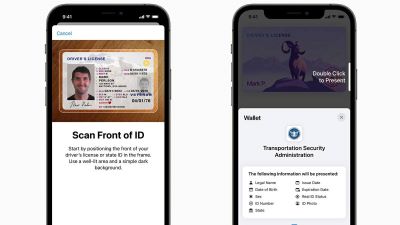
More than 20 states have either considered, tested or already launched digital versions of driver’s licenses that live on smartphones. And tech giant Apple plans to make digital licenses a key feature in its iOS 15 smartphone software in “late 2021”. So far, the state governments of Arizona, Connecticut, Georgia, Iowa, Kentucky, Maryland, Oklahoma and Utah are signaling support for the feature.

This means there’s a good chance you’ll eventually be able to flash your phone to police officers when you get caught doing 30 mph in a school zone, or as proof of your age when you step into a bar. In some cases, you’ll even be able to show your phone to Transportation Security Administration agents in an airport security line. Carrying your physical license or state ID with you is still a good idea, but soon, you may not have to worry about the consequences of leaving it at home. Nonetheless, there are also downsides to these convenient digital licenses – and some of them are serious.

ADVERTISEMENT

For those thinking about digitizing their licenses, let us walk you through the basics and weigh the pros and cons.

– What is a digital driver’s license?

They’re exactly what they sound like: nonphysical versions of a common form of state identification. Considering how many Americans carry smartphones with them – about 85 percent of us, according to Pew Research Center – these digital IDs are mostly designed to live on iPhones and Android devices. You might also hear people refer to them as a “mobile driver’s license” or “MDL.”

Apple’s adoption of digital licenses is a big deal when you consider how many people own iPhones. Research firm Strategy Analytics says the company accounts for 37 percent of all smartphones shipped in the United States. But Apple isn’t far from the only company working on this.

Google has been working to build support for verifiable electronic IDs into Android and teamed up with Apple and others to define a technical standard for how these IDs should work. The code for it technically already exists in Android 11 and 12, but the company hasn’t announced plans to store digital state IDs in any of its apps yet.

So, how do you actually get your driver’s license onto a compatible smartphone? The details can vary, but most systems we’ve seen rely on the same initial steps because they comply with a technical standard Apple, Google, and others have worked on for years . First, you fire up the app, then scan the front and back of your physical driver’s license. Then, you verify your identity by taking a selfie. Once all of that checks out, you should be ready to go.

Of course, not everyone carries around a smartphone. If that’s you, don’t worry: there’s no evidence to suggest the classic, physical cards you get from the DMV are disappearing anytime soon.

In fact, it’s almost certainly worth carrying your actual license with you, even if you do choose to keep a copy on your phone. States like Delaware and Arizona, which have already launched mobile ID apps, insist that their digital driver’s licenses are companions to physical ones, not replacements.

– Are digital licenses coming to my state?

Short answer: probably! Slightly longer answer: It depends on what kind of digital license we’re talking about.

Residents of Arizona and Georgia will be the first in the country who can store their driver’s licenses in Apple’s Wallet app, followed by people in Connecticut, Iowa, Kentucky, Maryland, Oklahoma and Utah. (That said, no one knows exactly when any of those rollouts will actually start.)

But remember: There are more options than just Apple’s version. In fact, some states have been quietly offering digital licenses already. Residents of Arizona, Delaware and Oklahoma use license apps developed in partnership with Idemia, a company best known for providing technology to the TSA for its PreCheck frequent traveler program. (Alabama also worked Idemia for its digital licenses, but uses relies on the company’s eID app instead of an app built specifically for the state.)

Louisiana, meanwhile, tapped Baton Rouge-based Envoc to develop the LA Wallet app for digital licenses as well as proof of vaccination status, and Colorado’s myColorado app works much the same way.

But those states aren’t the only ones thinking of offering digital licenses. Lawmakers in states like Illinois, New Jersey, Texas, California and Missouri have proposed digital driver’s license projects, though legislatures haven’t adopted them yet. And other states, including Florida, Iowa, Maryland, Utah and Virginia, have conducted pilot programs for digital IDs – or plan to soon – but haven’t adopted them fully.

– What are the benefits of using a digital ID?

The main draw for most people is convenience. I can’t tell you how many times I’ve left my apartment with my phone but not my wallet.

In some cases, using a digital copy of your driver’s license gives you more control over your personal information. Apple still hasn’t completely explained how the driver’s license storage function works in iOS 15’s Wallet app, but noted in a news release that – at least where the TSA is concerned – “just the required information is shared” with whomever is checking it.

Other mobile driver’s license apps, like the ones developed for use in Arizona, Delaware and Oklahoma, give you the option of generating what’s called a “Privacy View” – a QR code that shares pertinent data when scanned. Imagine the bouncer outside a bar is giving off sketchy vibes. Rather than handing over your driver’s license, which contains your full address, a scannable Privacy View will only share the information that confirms you’re over the legal drinking age.

Which leads us to another benefit of digital licenses: the way digital licenses are designed means you should never have to hand your phone over to someone, even a police officer, the way you would with a physical ID. Instead, that officer – or bouncer, or liquor store clerk – should have to scan your digital license with a gadget of their own that requests the proper information from your phone, or from the entity that issued that ID in the first place.

– What are the downsides?

Smartphones are already repositories for some of our most personal data, and now we’re getting the option to feed them even more of it. That has some people rightfully concerned.

Imagine you get pulled over for speeding – ugh. If you’re only carrying a digital license stored on an iPhone or Android phone, Apple and Google say you shouldn’t have to hand your device over to the police. But what’s stopping the officer from insisting on taking your phone anyway?

Realistically, not much at the moment, apart from the officer’s willingness to go by the book.

In Colorado – which launched a digital license feature in the official myColorado app in late 2019 – state troopers say they’re trained to avoid handling people’s phones. Meanwhile, Louisiana has a statute on the books that says displaying a digital driver’s license “shall not serve as consent or authorization for a law enforcement officer, or any other person, to search, view, or access any other data or application on the mobile device.” Until other states using digital license systems get similar laws on the books, the most we can hope for is that the officers who pull us over stick to the rules.

As these digital IDs become more readily available, some are concerned that they could be used for tracking. In a report published in May, the American Civil Liberties Union warned that state motor vehicle departments could feasibly collect information about “every bar, club, casino, office lobby, bank, pharmacy, doctor’s office, and airport that you visit.” That starts to sound even worse if your state’s DMV has an agreement in place to share that information with local police – a practice the ACLU says is common.

The list of potential issues isn’t just limited to privacy concerns, either. Digital license owners might face a learning curve as they start to use these new forms of ID, but so will the people around them.

Since 2015, Alabama residents who renew their licenses online can choose to receive a digital version they can store on their smartphones. Nearly four years after they were introduced, though, a report from WNHT News 19 in Huntsville suggested that they were so infrequently used that businesses often didn’t recognize them when someone did try.

Another issue could crop up when you set out on your next long drive. Let’s say you’re an Oklahoman and you’re only carrying a digital license. If you cross the border north into Kansas and get pulled over, you might be out of luck since that state doesn’t have any kind of digital license system in place.

These problems don’t sound great – and they aren’t – but you shouldn’t panic just yet. There’s still time to contact your state’s lawmakers if you want to make sure they address these issues. And if all else fails, remember one thing: Nothing has to change for you. Just keep carrying your physical license as usual, and feel free to sit out this technological advance for a while.

Published : October 12, 2021

By : The Washington Post

The education of Frances Haugen: Facebook whistleblower learned to use data as a weapon from years in tech #SootinClaimon.Com

#SootinClaimon.Com : ขอบคุณแหล่งข้อมูล : หนังสือพิมพ์ The Nation.

https://www.nationthailand.com/tech/40007375


Over the summer, Frances Haugen called a friend to talk through the implications of her decision to reach out to a journalist and provide confidential documents she had gathered from inside Facebook.

Haugen, a veteran of Silicon Valley giants including Pinterest, Google and Yelp, told her friend Leslie Fine, an entrepreneur and startup adviser, that in her two years working as a product manager at Facebook, she’d observed a troubling pattern of behavior that seemed unique to the company. Haugen was scared, she told Fine, and particularly worried that her revelations would destroy her career and invite blowback on her parents, friends and former coworkers.

Fine, an economist who was trained in game theory, assured Haugen she was thorough and analytical in her reasoning; it seemed she’d thought through all of the possible outcomes and was willing to live with them.

ADVERTISEMENT

By September, Haugen had made the decision not just to leak documents, but to go public as a whistleblower. “I just don’t want to agonize over what I didn’t do for the rest of my life. Compared to that, anything else doesn’t seem that bad,” Haugen wrote in a text.

“You just defined bravery,” Fine responded.

Haugen, 37, revealed herself this month as the Facebook whistleblower, who shared documents with the Wall Street Journal, the Securities and Exchange Commission and Congress that she says show the company repeatedly made decisions to incentivize profits and growth over its users’ well-being. Haugen testified publicly Tuesday in front of the Senate, alleging the social media giant bears some responsibility for a wide range of societal ills, prompting renewed calls for regulation and soul searching among the world’s social media users.

Whistleblowing is often a messy business, fraught with murky motives and sullied by aggressive corporate campaigns to discredit those who come forward. Despite her worst fears, Haugen appears so far to be an exception: her calls to change Facebook have broken through, winning bipartisan support on Capitol Hill, calls for more regulation and triggering soul searching among the American public.

Facebook has painted her as a low-level employee speaking about subjects on which she lacks direct knowledge. So far, however, Haugen has withstood that challenge through careful planning and deep research, according to interviews with her and those who know her. A believer in the power of data to tell a story, Haugen saw an opportunity to turn Facebook’s biggest weapon – its ability to collect and measure the human experience – against it.

Facebook has an internal saying that “Data Wins Arguments,” which Haugen appears to have taken to heart when she left the company with tens of thousands of pages of its internal research and communications.

Facebook declined to comment on Haugen’s history at the company, but spokeswoman Lena Pietsch last week noted Haugen “worked for the company for less than two years, had no direct reports, never attended a decision-point meeting with C-level executives – and testified more than six times to not working on the subject matter in question.”

“We don’t agree with her characterization of the many issues she testified about,” Pietsch said.

Haugen also is steeped in the culture of Silicon Valley, familiar with its stagecraft and proficient in its methods, according to more than a half dozen interviews with her friends, former colleagues and professors. And her role on Facebook’s civic integrity team, working on misinformation and counterespionage, uniquely positioned her to have insight into some of the company’s most significant challenges.

Haugen joins a pantheon of tech industry whistleblowers who have gone public with the poor practices they’ve uncovered in Silicon Valley – including many from Facebook. But Haugen stands out for her methodical planning and the rigor with which she has built her case. She’s used Facebook’s own internal research and communications to show how it directed resources away from key safety programs. She drew on the files and her own experiences to paint a picture of a company where a prioritization of growth metrics fueled decision making.

She has assembled a team of experts to back her, including lawyers from nonprofit Whistleblower Aid and public affairs firm Bryson Gillette.

As Haugen revealed her identity in a prime-time interview on “60 Minutes,” her team launched a glossy website with professional headshots, a biography and links to social media accounts. Her testimony garnered so much attention that she was parodied by actress Heidi Gardner in a “Saturday Night Live” skit over the weekend.

In the days since her Senate testimony, Haugen has appeared at a Yale Law School panel to discuss the Facebook files. Lawmakers, including the Senate Homeland Security Committee, are planning more meetings with her. She’s also planning a trip to Europe, where she will testify in front of the British Parliament, her lawyer John Tye said at a recent Post Live event.

Sen. Richard Blumenthal, D-Conn., who chaired the Senate subcommittee hearing where she testified, called her “credible and compelling.”

“Frances Haugen wants to fix Facebook, not burn it to the ground,” Blumenthal told reporters after the hearing. “She had constructive recommendations for how to improve it, make it more transparent, enable parents to protect their children.”

Chris Messina, a product designer who is known for inventing Twitter hashtags, worked with Haugen at Google, where she was on the Google + team, the company’s Facebook competitor. She wanted to make technology better because she loved it, Messina said.

“Things would have to have been really, really bad for her to make the decision to possibly sacrifice her career in Silicon Valley to come out and make these statements,” he said.

Haugen showed a proclivity for speaking out at a young age. At 8, the Iowa City native wrote a letter to her congressman, former Rep. Jim Leach, R, to express her concerns about a plan to turn a local street into a four-lane road, according to Iowa City Press-Citizen archives. She was worried she wouldn’t be able to walk home from school because she had to cross the street.

After graduating from high school, where she won a statewide engineering competition, Haugen studied electrical and computer engineering at Olin College of Engineering, a small private school in Needham, Mass.

For her senior year project, Haugen chose independent research topics of “privacy and productivity” and “dynamic social network analysis.” She worked on the project during the 2005-2006 school year, when Facebook, still exclusively available to college students, was only about a year old and social network MySpace was still dominant.

“It’s interesting to see how much the very topics that she’s talking about today were present in her experience here,” said Mark Somerville, a professor and now provost at Olin College, who supervised Haugen’s project.

After graduation, she was hired at Google and did a brief stint in ads before working on products including Google + and Google Books. Messina, her colleague there, said she wanted Google + to be better than Facebook – not just a copycat. She envisioned better privacy protections and a more thoughtful way of connecting people, Messina said.

“When it came to building social features for the sake of catching up on Facebook or just being competitive with other social platforms, I think she also resisted that,” Messina said.

Haugen was also “solutions-oriented” in her work, said Natalia Villalobos, who worked with her on Google +. Villalobos said Haugen helped her write two patents, both focused on connecting members of a community in a more meaningful way.

“Frances encouraged me to think bigger, to think better for what social could be,” Villalobos said.

Google paid her tuition for an MBA at Harvard Business School, where she graduated in 2011. While there, she worked as an early technical co-founder of Hinge, a buzzy dating app that later raised venture capital funding. Its first incarnation was a Facebook-based app called “Secret Agent Cupid.”

Haugen’s concerns for the role of Facebook abroad were informed by five weeks she spent in Africa in 2010 and 2011, she told The Post. The trip was a mix of pleasure and schoolwork, and she spent part of it at a trek organized by Harvard Business School. She spent time in Egypt in early January, just before the revolution began. She also visited Ethiopia, where she said during her Congressional testimony that she was concerned about the social network’s role in fomenting violence.

After school, she began to experience the worsening effects of a worsening autoimmune disorder, which left her with lasting nerve damage. She was diagnosed with celiac disease, and in 2014, she landed in the intensive care unit due to a large, slow-growing blood clot. At her lowest point, she lost feeling beneath her knees and couldn’t stand on her toes. She had to use a wheelchair or a walker for most of that year.

Her illness led her to an experience that showed her up close how someone could be radicalized by social media. She hired an assistant while she was ill to assist her with walking and carrying heavy things. He became incredibly important to her because he taught her about healthy eating, fitness and ensured she swam and walked even when it was difficult. But in 2016 he became radicalized on the Internet, she said at the Yale panel.

“It pushed him to a place where he believed George Soros was running the world economy, and nothing I could do could pull him back from that ledge,” Haugen said.

She joined local review company Yelp in 2015 as a product manager, according to her LinkedIn, where she worked on the company’s first computer vision project, or a way to train software programs to identify real-world objects. She then went to Pinterest, where she worked on how content was ranked in the Home Feed.

She said at Tuesday’s hearing that her time at Pinterest working on skin tone filters informed her concerns about how algorithms can discriminate against minorities, which she called “a major issue for our democracy.”

Pinterest spokeswoman Charlotte Fuller confirmed that the company has invested in what it dubs inclusive products including skin tone ranges and hair pattern searches.

In 2019, she joined Facebook to work on civic misinformation. She took the job because she viewed it as an opportunity to make sure others wouldn’t experience the pain she did of losing a friend to online conspiracies, she said on the Yale panel. She also wanted to do her part in the run-up to the 2020 election to prevent a repeat of foreign interference during the 2016 election, she said.

She went into the company clear-eyed about the problems with social media, which had been extensively covered by media in the fallout of the Cambridge Analytica scandal. But she soon learned the problems were much worse than she realized.

“I thought I knew how bad misinformation was,” she said in a recent Washington Post interview. “Then I learned what it was doing in countries that don’t speak English.”

She said she discovered its problems are exacerbated in foreign countries, and the version of Facebook in the United States is the “most sanitized.” She said at the Yale panel that she kept learning new information that concerned her, including the scale of people who die from ethnic violence fanned by Facebook’s choices, or security underinvestment in non-English speaking countries.

When the pandemic forced a California lockdown in 2020, Haugen drove across the country, from the Bay Area to Iowa City to be with her family and worked remotely from there.

An inflection point came when she said the company decided to disband the civic integrity team after the 2020 election. Weeks later, rioters attacked the U.S. Capitol, after organizing in part on Facebook. During her “60 Minutes” interview, Haugen said she decided that Facebook wasn’t willing to make the investments it needed to improve its impact on the world.

Guy Rosen, Facebook vice president of integrity, pushed back on Haugen’s claims after the interview aired, saying that the civic integrity team was “integrated” into a larger “Central Integrity team” to apply the work for election issues across the company, including on health-related issues.

Haugen began to realize she would not be able change Facebook from the inside. Shortly after the civic integrity team was disbanded, sitting around a backyard fire in the Cole Valley neighborhood of San Francisco, she confided in her friend the startup adviser Fine, over a glass of wine.

“She wasn’t sure she was having the impact that she came there to have,” said Fine, who met her at a party the day before Thanksgiving in 2014. “I did not know at the time that that was code for ‘I can’t put out the fire from inside the house,’ which in retrospect is what she was saying.”

Before leaving Facebook, Haugen gathered key materials by capturing photos of documents shared with employees on Facebook Workplace, which the company uses for internal communications.

In September, the Journal began to publish a series of articles based on Haugen’s revelations, touching on issues ranging from children’s safety, Facebook’s role in polarizing people and the company’s weak response to human trafficking. Haugen’s identity at first remained a mystery, bringing even greater media attention to her “60 Minutes” interview and subsequent appearance in front of Congress.

Haugen says she’s committed to making social media better. She’s calling lawmakers to force greater transparency of Facebook, and to consider legislation that would make the company more responsible for the decisions it makes about what its algorithms prioritize. She also told The Post she’s advocating for soft interventions for the problematic posts on Facebook, such as requiring people to click through a link to read content before sharing it. She said product changes like this could be more effective in addressing the company’s content moderation problems abroad, especially in vulnerable countries where Facebook hasn’t invested enough in safety.

“What we see in Myanmar, what we see in Ethiopia are only the opening chapters of a novel that has an ending that is far scarier than anything we want to read,” Haugen said at the Yale panel. “I believe that we still have time to have social media that brings out the best in humanity. That’s not going to come about unless we help guide Facebook in that direction and change the incentives.”

Published : October 12, 2021

By : The Washington Post
The Prius-hacking Silicon Valley star shaping Toyota future #SootinClaimon.Com

#SootinClaimon.Com : ขอบคุณแหล่งข้อมูล : หนังสือพิมพ์ The Nation.

https://www.nationthailand.com/tech/40007316


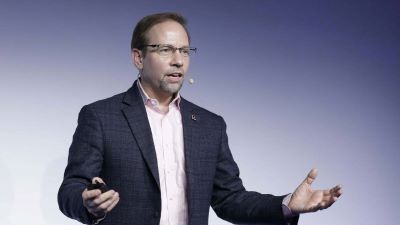
James Kuffner once reprogrammed a Prius to turn it into a driverless vehicle for Google. Now, hes a top executive at Toyota, charged with hacking the very way it approaches the business of carmaking.

Handpicked by President Akio Toyoda, the 50-year-old tech-industry veteran’s mandate as chief digital officer is to keep the world’s No. 1 automaker on top as cars become more like computers.

The shift to electrified, autonomous vehicles is the most disruptive force sweeping the industry, with Apple and other Big Tech challengers muscling in. At stake for Toyota is a global manufacturing empire churning out more than 10 million vehicles a year. After showing the world a path away from gasoline with the Prius, Toyota is doubling down, betting billions of dollars on everything from hydrogen and battery-powered vehicles to entire cities built around self-driving cars.

ADVERTISEMENT

“The potential for technology to change the landscape of mobility is breathtaking,” Kuffner said in a recent interview, calling it “the absolutely most exciting time to be working in this area.”

In terms of experience, it’s clear what drew Toyota to Kuffner. The jeans-loving, patent-wielding executive co-founded Google’s robotics division and helped develop the tech company’s self-driving car project that eventually evolved into autonomous unit Waymo. He earned a Ph.D. from Stanford University and taught at Carnegie Mellon University, two institutions renowned as global leaders in autonomous-vehicle research.

Despite Kuffner’s experience, what remains to be seen is the extent to which Toyota can handle disruption, Silicon Valley-style. He’s the 84-year-old company’s only non-Japanese inside board director.

That’s why, for the time being, Kuffner is leading the charge at arm’s length, leading a wholly owned unit called Woven Planet Holdings. The somewhat strange name harkens back to Toyota’s roots as a textile-loom maker, and ties it with the idea of stitching together cars, robots, cities, data and computing power.

Woven Planet’s mission might not be easy to grasp, but the idea behind it is relatively simple. Kuffner and Toyoda are betting on a future when the biggest leaps in automotive technology come not from mechanical advancements, but as lines of code.

That approach is embodied in Arene, an automotive platform being developed by Kuffner and his team. Like operating systems for iPhones or personal computers, Arene is designed to work as software within cars but also connected to a bigger cloud network.

While Tesla and others are already deploying new features over-the-air to vehicles to improve battery performance or autonomous systems, Arene aims to go beyond that. The ultimate goal is to have cars gather and share massive amounts of data, which in turn can be used to improve performance, an approach Kuffner pioneered in the field of robotics. Arene will also be offered to rival automakers.

“We’re really trying to create the world’s best programming mobility ecosystem,” Kuffner said. “Woven Planet’s ambition is really beyond Toyota.”

To achieve that goal, Kuffner and his team have been developing the Arene platform even before there are any vehicles to run it. This “software-first” approach is what Kuffner sees as the future of automobile design and assembly – designing the mechanics of a car around its underlying software, as opposed to writing code for a largely finished product.

This represents a fundamental departure from the way Toyota has built cars for almost a century. The company practically invented modern car manufacturing through concepts such as “kaizen,” or continuous improvement, and just-in-time assembly.

And there’s no shortage of new entrants betting that the industry’s seismic shift will create new opportunities. Not only are Tesla and Google parent Alphabet Inc. intent on popularizing electric, autonomous vehicles, Apple is also working in secret to claim a slice of the $5 trillion global auto market.

It’s going to be a bumpy ride. Volkswagen’s bug-ridden release of its flagship ID.3 electric car last year underscored the fact that, even for Toyota’s biggest rival, decades of manufacturing experience doesn’t always translate into a competitive advantage.

“You need to strengthen your software push quickly; the value of your product is changing,” Lei Zhou, a partner at Deloitte Tohmatsu Consulting, said of legacy automakers. Recruiting top talent from Silicon Valley is one way they’re seeking to adapt, he said, seen most recently when Ford hired away the head of Apple’s car project.

Woven Planet is also adopting the playbook of its Silicon Valley counterparts: acqui-hires, or buying smaller startups for their technology and talent. This year alone, Woven Planet has invested in or acquired five companies including the $550 million deal it struck in April to buy Lyft Inc.’s self-driving division.

Given that Woven Planet’s vision goes beyond cars, the in-house upstart embarked on one of its largest and most ambitious projects yet, breaking ground in February on a smart city it’s building at the base of Mount Fuji. Following an initial opening around 2025, the city will become a test bed for autonomous vehicles that will transport people, deliver packages and act as mobile storefronts for the city’s thousands of residents.

To pay for all of this, Toyota has also taken a new approach. Earlier this year, the automaker issued $4.7 billion of “Woven Planet Bonds” to fund the project as well as next-generation research and development activities.

Kuffner’s Prius escapade eventually evolved into Waymo, the unit that’s now leading Alphabet’s charge into the autonomous transport sector. If he succeeds at making Woven Planet’s vision a reality, that would be the ultimate hack: transforming Toyota into something new.

With that, the youngest member of Toyota’s board could become a strong candidate to lead the company one day, although Kuffner is careful to downplay the possibility.

“We’re trying to take an already existing, profitable business and completely flip upside down how we’re doing development,” Kuffner said from Woven Planet’s plant-filled offices in central Tokyo. “I’m going to work as hard as I can in whatever capacity I can to try and make a difference.”

Published : October 10, 2021

Apple plan for cars uses iPhone to control A/C, seats, radio #SootinClaimon.Com

#SootinClaimon.Com : ขอบคุณแหล่งข้อมูล : หนังสือพิมพ์ The Nation.

https://www.nationthailand.com/tech/40007196


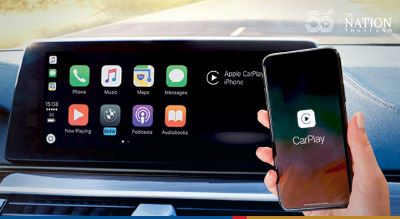
Apple, whose CarPlay interface is used by millions of motorists to control music, get directions and make phone calls, is looking to expand its reach within cars.

The company is working on technology that would access functions like the climate-control system, speedometer, radio and seats, according to people with knowledge of the effort. The initiative, known as “IronHeart” internally, is still in its early stages and would require the cooperation of automakers.

The work underscores the idea that cars could be a major moneymaker for the tech giant — even without selling a vehicle itself. While plans for an Apple car have faced setbacks, including the defection of key executives this year, the company has continued to make inroads with CarPlay. It lets customers link up their iPhones with a vehicle to handle so-called infotainment features. Seven years after its launch, CarPlay is now offered by most major automakers.

ADVERTISEMENT

IronHeart would take CarPlay a step further. The iPhone-based system could access a range of controls, sensors and settings, said the people, who asked not to be identified because the project is secret.

That includes:

– Inside and outside temperature and humidity readings.

– Temperature zones, fans and the defroster systems.

– Settings for adjusting surround-sound speakers, equualizers, tweeters, subwoofers, and the fade and balance.

– Seats and armrests.

– The speedometer, tachometer and fuel instrument clusters.

An Apple spokesman declined to comment on the Cupertino, California-based company’s car plans. Apple shares rose 1.2% in early trading Thursday in New York.

By gaining access to controls and instruments, Apple could turn CarPlay into an interface that could span nearly the entire car. The data also could be used by Apple or third parties to create new kinds of apps or add features to existing functions.

Some Apple users have complained about the need to jump between CarPlay and a car’s built-in system to manage key controls. This initiative would alleviate that friction.

The effort would be similar to Apple’s approach to health and home technology. The company offers an app on the iPhone that can access and aggregate data from external health devices using its HealthKit protocol. The Home app, meanwhile, uses Apple’s HomeKit system to control smart appliances, including thermostats, security cameras and door locks.

IronHeart would represent Apple’s strongest push into cars since CarPlay was released in 2014, but it may not be a hit with automakers. They could be reluctant to hand over control of key features to Apple. While CarPlay is now in more than 600 car models, other Apple initiatives launched in recent years have been slower to catch on with automakers.

In 2015, Apple started allowing carmakers to build third-party apps for CarPlay that could access the car radio, GPS and climate controls. In 2019, it started supporting CarPlay on secondary car screens like digital instrument clusters. A year later, it announced CarKey, a feature for unlocking a car with an iPhone or Apple Watch, and electric-vehicle routing, the ability for the iPhone to sense when it is connected to an EV and provide charger information in the maps view.

But automakers have mostly balked at adding these enhancements. The climate control and radio apps are only supported by a few cars. And the EV routing feature isn’t available on any vehicles that are currently shipping. The CarPlay display expansion is only supported by a few brands, such as BMW and Volkswagen, and CarKey is just on some BMWs.

For some time, Apple also allowed its Siri voice assistant to tap in to certain car features, letting it change audio sources and radio stations, move seats, and operate climate settings. But those features, which relied on app support from carmakers, were removed in iOS 15, the latest version of the iPhone operating system, according to a message sent to developers in July. Apple could ultimately delay or even cancel the IronHeart features if they don’t show enough promise.

Some manufacturers, including Tesla, have disregarded the car efforts of Apple and Google altogether, choosing to build their own next-generation infotainment ecosystems. Ford is looking to get more ambitious as well. It recently hired Doug Field, the former chief engineer of Tesla and the head of Apple’s own car project, to work on its in-car technology.

Still, carmakers risk irking iPhone fans by focusing on their own incompatible systems. And that may ultimately sway more of them to embrace Apple’s technology. They also may choose to implement the features in different ways depending on the car. In some vehicles, Apple could gain control over climate controls, while others may only offer access to speakers.

For Apple, the project could provide insights helpful to its efforts to build a self-driving car. However, the company wouldn’t collect a user’s or car’s data as part of the initiative.

After the departure of Field, the company appointed Apple Watch and Health software chief Kevin Lynch as its car project head. An actual car is probably years away — if it ever happens — but Apple has several ex-Tesla vice presidents and former BMW electric car executive Ulrich Kranz working on the project.

Gaining a stronger foothold in cars could also keep the iPhone entrenched in customers’ daily lives. Each time the device handles more tasks — like using a car, paying for groceries, showing an ID or unlocking a house door — it gives consumers another reason to stay an iPhone user.

Then they’re more likely to upgrade to newer models and steer clear of rival phones. Even with Apple’s push into new areas, the iPhone remains the company’s biggest moneymaker, accounting for about half of sales, or nearly $138 billion last year.

Published : October 08, 2021

Windows 11 is available now, but not everyone will have an easy time upgrading #SootinClaimon.Com

#SootinClaimon.Com : ขอบคุณแหล่งข้อมูล : หนังสือพิมพ์ The Nation.

https://www.nationthailand.com/tech/40007090


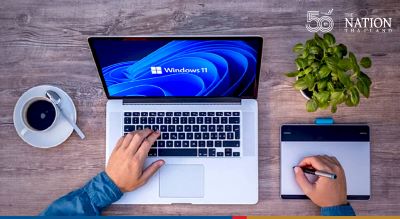
Windows 11 is here, and if you own a PC, you might be wondering whether its time to upgrade your operating system. After all, youll likely get this new software for free.

Microsoft first revealed its new operating system in June, its first major software upgrade in six years. With the new update, the company has given its old-faithful operating system a major facelift, and tried to make it more relevant to a post-pandemic world where we work and communicate differently.

With all that said, it’s no surprise that Microsoft thinks you should start using Windows 11. But should you do it right now?

ADVERTISEMENT

Windows 11 will take some time getting used to – it’s that different from the previous OS versions you may have used. And even though the new version is available right now, not all of the 1.3 billion PCs in the world running Windows 10 will be able to make the upgrade.

Before you decide to take the plunge with Windows 11 on your computer, here are a few things you should know.

– – –

What can Windows 11 do?

Windows 11 is jam-packed with new features and design tweaks, and coming to grips with all of them will take some time and effort. You can check out the full list of changes Microsoft made on the company’s website, but some new features have garnered more attention than others.

The most notable – and possibly the most divisive – change is the way Windows 11′s desktop looks. After years of looking for the Start button in the lower-left corner of your monitor, you’ll now see it centered along the bottom of the screen. (Don’t worry: you can move it back if you really want to.) And what used to be the Start menu looks pretty different too; the full list of options and programs installed on your computer is gone, replaced by a grid of recently used apps and documents.

Windows 11 also includes tools to help you more easily view multiple apps running at the same time – a big deal if you use large monitors – and it makes working with multiple screens easier, too. If you (or your company) relies on Microsoft Teams for chats or conference calls, you won’t need to worry about installing it either, since it’s now built into Windows 11. Meanwhile, you can access a new panel of “widgets” that offer quick views of the weather, your calendar and more, and eventually, you’ll even be able to find popular Android apps from inside the Microsoft store. (The company hasn’t confirmed when that feature will go live, though.)

– – –

How much does it cost?

If your computer is compatible with Windows 11 – more on that a little later – and it’s currently running Windows 10, you’ll be able to upgrade for free. That said, people who build their own computers will presumably have to purchase a stand-alone license for Windows 11 before they can install it on their shiny new machines. (Too bad Microsoft hasn’t said how much those licenses will cost yet.)

– – –

Do I need to upgrade now?

Microsoft confirmed back in June that it would continue to support Windows 10 until October 14, 2025, which should give you plenty of time to make your decision.

Windows 11 is a pretty jam-packed update, and if Microsoft’s new design or new features speak to you, it might be worth taking the plunge. But if you’re perfectly fine with how Windows 10 works for you right now, there’s no big rush to install this new software.

That’s especially true as the first wave of Windows 11 reviews were quick to point out some of the new software’s shortcomings. The new Start menu may not be as immediately helpful to people used to the old way of doing things. And, if you’re currently using the “Home” version of Windows 10 and attempt to upgrade, you’ll wind up installing Windows 11 Home. What’s the problem with that? Well, you can’t proceed with the installation unless you’re connected to the Internet and have a Microsoft account – lots of people already have one, but this might not be a great change if you don’t want yet another account to deal with.

– – –

How can I tell if my computer can run it?

Not every computer out there running on Windows 10 will be able to run Windows 11. The best way to tell whether your computer is ready for Windows 11 is to run Microsoft’s PC Health Check tool. (The company originally pulled it because it often told people they couldn’t upgrade without explaining why more fully, but it’s back now.) You can download it here or here if you’re using a computer that runs Windows 10 S.

If your PC has what it takes to run Windows 11, the Health Check tool will offer the same cheerful message you see above. But if it fails the Health Check, it’s probably because of the same shortcomings many of Microsoft’s beta testers ran into over the last few months.

Right now, Windows 11 is meant to run on Intel’s 8th-generation processors onward and Advanced Micro Devices’ (AMD) Ryzen 2000 processors or newer. If none of those ring a bell, here’s another way to think about it: if you bought your current computer before the middle of 2017 or so, you might not be able to upgrade easily.

Microsoft has said it will test Windows 11 on older processors to see if it runs well enough to support Windows 11, but for now, you can find the full list of supported Intel processors here and AMD processors here.

– – –

Here’s how to see what kind of processor your computer has:

Click in the Windows 10 search bar, type “Control Panel,” and click on the result

Click on “System and Security”

Click on “System”

There’s also a tiny component inside your computer that – among other things – helps secure your files if you use Windows’ encryption feature. It’s called the TPM, or Trusted Protection Module. This is important because if your computer doesn’t have one, upgrading to Windows 11 might not be possible.

And here’s where things get even trickier. Microsoft points out in one of its support pages that “most PCs that have shipped in the last 5 years” have the proper TPM feature – it’s just that sometimes, it’s not turned on by default. If you’re not usually one to poke around in your PC’s settings, your best bet is to see if the manufacturer has specific instructions available. But if you’re feeling brave Microsoft has instructions for enabling the TPM feature here.

– – –

How do I upgrade?

If you’ve managed to make it through that rigmarole and your PC ticks all the required boxes, you can finally get started upgrading to Windows 11. Before you do anything else, though, make sure to back up all your important files – documents, photos, videos, and everything else you’d hate to lose – onto an external drive. (We like SanDisk’s portable SSDs but any spacious external drive will do) and make sure you have copies of everything you need saved onto it, just in case.

Then, just open Windows Update on your computer (Settings -> Update & Security -> Windows Update) and wait until it tells you Windows 11 is available. If your PC passes muster according to the PC Health Check app, you’ll eventually be prompted to download and install the new software. From there, you just have to follow the instructions. If, for whatever reason, that doesn’t work, or if you’d rather not wait, you can also try downloading and running Microsoft’s Installation Assistant. Either way, you should soon be on your way to trying out what Windows 11 has to offer.

Published : October 06, 2021

By : The Washington Post
Facebook apps coming back online after widespread outage #SootinClaimon.Com

#SootinClaimon.Com : ขอบคุณแหล่งข้อมูล : หนังสือพิมพ์ The Nation.

https://www.nationthailand.com/tech/40007038


Facebook apps slowly came back online Monday following a prolonged, global outage, one of the largest disruptions to the social media sites billions of users in years.

Facebook, Instagram, WhatsApp and Messenger were unreachable for many users for hours, who instead saw a spinning wheel on their apps that never loaded. The outages caused widespread chaos for those who use it for communication – particularly for WhatsApp users globally – as well as companies and people who rely on the sites to conduct business.

“Facebook, Instagram, WhatsApp and Messenger are coming back online now,” chief executive Mark Zuckerberg posted late Monday. “Sorry for the disruption today – I know how much you rely on our services to stay connected with the people you care about.”

ADVERTISEMENT

The hours-long outage again shed light on the company’s huge swaths of power, something regulators and lawmakers are scrutinizing in the wake of new revelations from a whistleblower about the company that she alleges proves it has been negligent in eliminating violence and misinformation from its platform.

The problems weren’t limited to external users. Facebook’s internal communication platform, Workplace, went down altogether for most of the work day, said a person familiar with the matter who spoke on the condition of anonymity because they weren’t authorized to speak publicly. And as employees turned to third-party tools such as Slack, many found themselves locked out of even those, because Facebook’s mechanism for signing on to them was not working, said another person familiar with the matter who spoke under the same conditions.

Reports on Downdetector suggest users were affected globally. The problems began at about 11:39 a.m. Eastern time.

Experts said that it appeared to be a network setting issue, although it was unclear exactly what happened.

“Something happened internally at Facebook that messed with their network settings on how Facebook talks to the rest of the world and accesses the Internet,” said Courtney Nash, senior research analyst at security company Verica.

The issue seems to be with Facebook’s border gateway protocol routes, or paths that allow routers to exchange information, said Doug Madory, director of internet analysis for Kentik, a network monitoring company. Madory calls them the “underpinnings of how the Internet operates.”

Facebook’s routes were withdrawn Monday morning, he said, and its apps couldn’t be found online because those routes contained the addresses of Facebook’s domain name system (DNS) servers, which translate familiar web addresses, such as Facebook.com, into a string of numbers that computers can read. When the servers have trouble communicating, it can make websites unreachable.

It’s nearly unheard of to have such a large company go down for so long, Madory said.

“This is massive,” Madory said during the outage. “It’s completely dead.”

It’s also possible the outage was affecting other internet services, Nash said. When the services went down, so many users tried to load the sites that it caused a run on traffic on the internet’s DNS infrastructure.

“The reason these failures are so crazy is because there’s so much interconnectiveness of the internet we rely on,” Nash said.

The company hasn’t confirmed what caused the outage. Similar outages from other tech firms have been due to internal network configuration changes that caused errors, Madory said.

Facebook spokesman Andy Stone tweeted early Monday afternoon that the company was “working to get things back to normal as quickly as possible, and we apologize for any inconvenience.”

It’s unlikely Facebook was affected by an external hack, Nash said. If an internal change caused the issue, it could have been an update that mistakenly caused an error, or even an automated update, Nash said. It’s difficult to say without confirmation from Facebook.

“Was it malicious? I don’t know, I can’t say,” she said.

While the social networks were down, some users flocked to Twitter instead to complain. The hashtags #facebookdown and #instagramdown took off.

After Twitter tweeted “hello literally everyone,” it appeared the surge in usage prompted some problems.

“Sometimes more people than usual use Twitter,” it tweeted later. “We prepare for these moments, but today things didn’t go exactly as planned. Some of you may have had an issue seeing replies and DMs as a result. This has been fixed. Sorry about that!”

Some of Facebook’s leaders also turned to Twitter to share their thoughts.

“*Sincere* apologies to everyone impacted by outages of Facebook powered services right now. We are experiencing networking issues and teams are working as fast as possible to debug and restore as fast as possible,” Facebook’s chief technical officer Mike Schroepfer posted.

Instagram head Adam Mosseri tweeted it “does feel like a snow day.”

The WhatsApp outage was particularly hard for a huge swath of the world that relies on it heavily for messaging, especially in the around two dozen nations where the app is the messaging market leader.

According to the Global Web Index’s 2020 Social Media User Trends Report, in seven countries – including Kenya, Malaysia and Colombia – more than 90% of those ages 16 to 64 are monthly WhatsApp users.

In the Middle East, where the public and governments rely heavily on Facebook and WhatsApp, the outage means a near-complete communications blackout.

Phone calls and text messages are expensive in countries such as Lebanon and Jordan, causing residents to turn to WhatsApp in particular. The app also offers encrypted voice calls, an important feature in a region rife with government surveillance.

In some countries, including Lebanon, political and public announcements are made almost exclusively via Facebook.

Several international newspapers from South Asia to South America were running news of the shutdown as the top story. El Tiempo, a news outlet in Colombia, quickly published a list of alternatives to WhatsApp, including Telegram. In the United Kingdom, digital news outlet the Independent was running a live update file on the social shutdown.

India has about 400 million WhatsApp users, and the service plays a heavy role during elections.

The World Health Organization capitalized on the moment to push forward more pandemic public health messaging.

Published : October 05, 2021

BMW electric SUV is ugly, unexciting, but very capable #SootinClaimon.Com

#SootinClaimon.Com : ขอบคุณแหล่งข้อมูล : หนังสือพิมพ์ The Nation.

https://www.nationthailand.com/tech/40006989


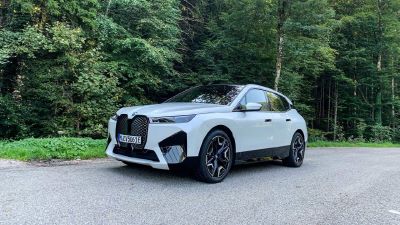
BMW has finally made a new electric auto, the iX SUV. I say “finally” because the last we heard-product-wise-from BMW regarding electric technology was the tiny and lackluster i3 that debuted in 2011.

The $83,200 iX, on the other hand, offers seating for five and 300-plus miles of driving range. It’s not exciting to drive, like a sports car. It lacks the styling cues of even BMW’s X6M, one of my all-time favorite SUVs. But it does offer a well-built, thoughtfully appointed cabin and quick handling for its spacious size. The iX is like a just-plain-decent person you might try dating because, why not? It offers a competent way of navigating daily life for BMW-brand faithful who find themselves, against all odds, curious about getting an electric vehicle.

Let’s just get this out of the way first: The BMW iX does not look as bad at hand as it does in photos.

ADVERTISEMENT

Not that the iX comes off as a supermodel by any stretch of the imagination. Its hunched rear quarter looks as if some Bavarian engineers scrunched it together in a rush. From some angles it even looks (gasp) like the rear of a minivan. It has those engorged black grilles that are now just reminiscent of the suggestion of BMW’s iconic kidney grille; some in the peanut gallery have likened them to a grotesque caricature of beaver teeth. (I’m not bothered that much by them, and there is plenty of historical precedent at BMW for such a monstrous mien; this, as you’ll find in polite company, is a minority opinion.) The hexagonal shape of the steering wheel is atrocious. If it weren’t for those buck teeth and thinly sliced LED headlights, the whole thing would look pretty generic.

Still, I was surprised to see that the iX looked better as I retrieved it early on Sept. 9 at the Kempinski Hotel Berchtesgaden. After a day-long drive through green Bavarian hillsides dotted with milk cows wandering in bovine bliss, followed by a stop at BMW’s Group Plant at Dingolfing and then a drive to the Munich airport, I found that-despite its looks-the iX is a competent, practical crossover-style EV that fully delivers BMW’s excellent craftsmanship and quality.

It has taken some time for BMW to catch up with Porsche, Audi, and Tesla in offering a premium electric family hauler, but for wealthy consumers partial to the Bayerische Motor Works badge, the iX will have been worth the wait.

I mention “partial to the badge” because there is nothing so extraordinary in the iX to compel hordes of, say, Audi lovers to suddenly drop their key fobs and switch brands. Most consumers today shop the badge more than anything else. If a luxury vehicle owner is loyal to a specific brand, it’s more difficult than ever for a rival brand to woo them away, according to the J.D. Power 2020 U.S. Automotive Brand Loyalty Study.

But thanks to new innovations in the iX, BMW has done enough here to retain, even excite, its brand loyalists-so long as they understand that owning an electric vehicle today is an inexact science, that is. Training salespeople how to knowledgeably sell a luxury electric vehicle will be BMW’s prime task in selling this shiny new thing, Pieter Nota, a member of the Board of Management at BMW AG, told me over dinner one night near the Austrian border.

Here’s an example of a little thing that can seem like a big deal to the new buyer, or to the EV-uninitiated: As I first approached the vehicle, it unlocked via an app on a smartphone I had borrowed for the day. This made me extremely nervous, since I know how casually I treat my smartphone.

“What happens when my phone dies? How will I unlock the car?” I asked the nice German man who had handed me the iPhone “key,” a BMW-logo earring in his left ear. “You can charge it off the car,” he told me. Uh. I pressed on. What if the car were locked? Or my phone is lost-or stolen?

“That will be a problem,” he finally admitted. A regular key fob comes standard for this electric SUV, even if potential customers are shown the “cool” app way to unlock their car first. There’s no way I would trust myself to run it via only a phone. The folks selling iXs will really need to know how to hold hands with potential buyers when it comes to explaining even simple things like that.

Once inside on my own, it took only a minute to orient myself to BMW’s high-quality, calming cabin and excellent new interface, which is a big improvement over the confusing, inefficient, overly complex iDrive we had in older cars. The frameless doors, panoramic glass sunroof, open-pore wooden dashboard, crystal-cut buttons, and novel scrolling “shifter” felt well-made, modern, and refreshingly simple in the iX’s lounge-like atmosphere.

I like that BMW has done a mix here between the new, fully digital and curved display grouping (a 12.3-inch information display and 14.9-inch control display touchscreen interface) and tangible buttons and knobs. The function should dictate which command requires a button or a touch; a blanket decision to eliminate one or the other would feel insensitive.

BMW has taken considerable steps to join the likes of Volvo and Rivian in making its interior sustainable. IX contains almost no chrome accents (for aesthetic reasons, if not altruistic ones) and has lots of secondary raw materials including reused plastic, FSC-certified wood, leather that was tanned using olive leaf extract, and floor coverings and mats made from recycled fishing nets.

I had been inside the vehicle briefly a day earlier for a demonstration about its self-parking ability. There was one hiccup: a forced start and restart, as the vehicle had moved off the “correct” line in which to park and had to be manually reoriented. BMW will need to make its auto-park program more durable and adaptable to address the myriad variations of real-world parking.

Still, for the duration of my own day with the iX, it made me feel as relaxed as those contented grass-fed cows. The iX has the length and width of a BMW X5, the height of a BMW X6, and the wheel dimensions of the BMW X7, so it felt plenty familiar from behind the wheel when it came to size and heft. I lazily cruised through tiny towns on Bavaria’s slow back roads, passing startled locals as time and space allowed with plenty of power from the 523hp-equivalent dual electric motors. (I drove the $83,200 iX iDrive50; a presumably less-expensive iX iDrive40 will not be offered in the U.S.)

I floored it on sections of the autobahn where I had the opportunity, easily hitting 120 mph in this all-wheel drive, 5,659-pound rig. (Top speed is electronically limited to 124 mph.) The iX felt stable and oh, so quiet, except for the exciting (manufactured) whirr of the electric motor and general hum of the tires on the road. Zero to 62 mph takes 4.6 seconds. Noise-reducing tires are optional for buyers outside the U.S.

IX offers the choice of adaptive or individually adjustable recuperation on the brakes, which helps increase overall efficiency and enable one-pedal driving and coasting. It’s nice to switch between those modes, depending on your energy needs and how heavy the traffic is.

I spent most of the day in the most gentle of regenerative brake modes; there are several others to choose among, depending on how much you want to drive using a single pedal. BMW says charging from 10% full to 80% full on a DC fast charger will take a (relatively) quick 35 minutes. BMW will be selling a home charger, though a spokesman declined to specify the price-“Similar to competitors,” he said.

If you don’t have a charger at home, I don’t recommend buying an EV; it’s too inconvenient. In my experience public chargers are often broken and out of the way in sketchy areas such as Denny’s parking lots and abandoned garages-or so full of customers I have to wait to charge, before I wait some more.

After a quick tour of a portion of Dingolfing’s 2.45 million-m² campus (the plant manufactures battery cells using 100% green energy from certified sources), I departed for the airport, where I arrived calm and refreshed. Against all odds-since car navigation systems never seem to work well-BMW’s new route-planning guidance performed without a hitch. An interior camera even took snapshots of the verdant Alps along the way. Posterity! My luggage, coats, and associated travel paraphernalia had weathered the journey in spacious ease; the absence of the center tunnel found in internal combustion vehicles created additional legroom and plentiful space for storage.

Premium EV-curious consumers will be happy to learn that BMW has finally waded back into electric territory to address the SUV. Deliveries will start in March 2022. It’s about time.

Published : October 04, 2021

Durian Ripeness Indicator from the Sugar in Its Stem – Chemistry Knowhow from Chula #SootinClaimon.Com

#SootinClaimon.Com : ขอบคุณแหล่งข้อมูล : หนังสือพิมพ์ The Nation.

https://www.nationthailand.com/blogs/tech/40006932


A Chula lecturer from the Faculty of Science has analyzed sugar and amino acid content in durian stems to indicate the age of the fruits before harvesting them to help growers identify the right products for distribution and export, and aims to develop a sensor to detect ripeness in all varieties of durians.

“Durian”, the king of fruits from Thailand, the number-one export that’s dominating the world’s market with its taste, smell, and unique texture is beloved among Thai and foreign connoisseurs. With its massive export value, growers need to carefully harvest the durians just at the right age to ensure their great taste to be sold both domestically and internationally.


But one of the major problems for growers is how to make sure that the durians are just right and ready for harvest because premature harvests will affect the taste, quality, and price. Therefore, Assoc. Prof. Dr. Thanit Praneenararat, Department of Chemistry, Faculty of Science, Chulalongkorn University, has come up with a way to help growers to accurately assess the ripening age of durians before harvesting.

In the past, most of the chemistry research focused on analyzing the chemical composition of durian fruit that had been cut from the tree to determine their ripeness, but this research aims to assess the age of durian from its stem, which still receives little attention,” said Assoc. Prof. Dr. Thanit.

Generally, the most common method used by growers to determine the age of durian is to count the days after the durian blossoms bloom until the day the fruit is ready for harvest.

ADVERTISEMENT

This method has some practical limitations. Although the age of harvest is well known, for example, Monthong durian has an optimal maturity of about 120 days, but the fruits on the same branch may not mature at the same time. So, counting days requires a lot of attention and follow-up,” explained Assoc. Prof. Dr. Thanit.

Another method that has been practiced based on long traditional wisdom is to taste the liquid at the base of the stem of the durian fruit.

If it tastes sweet, that means that the durian is at the right age and ready for harvest. But the accuracy of this method also depends on the experience and expertise of each grower.”

The traditional wisdom of durian growers in tasting the liquid of the durian stem sparked an interest in Assoc. Prof. Dr. Thanit to use the knowledge in chemistry to analyze the age of durian from the stem without cutting the fruit from the tree.

For the research, Assoc. Prof. Dr. Thanit used three groups of Monthong durian from the orchards in Rayong province: 13-weeks old, 15-weeks old, and 17-weeks old, respectively. Each durian fruit is from a different tree to ensure more accurate research results. The research aimed to study the chemical composition of the liquid in the durian stem if it could be an indicator of the optimal durian age for harvest.

“We found that the liquid in durian stem contains sugar compounds that correspond to the sweetness from tasting, but chemical analysis showed that when the durians began to ripen, the amount of sucrose drastically increased while glucose and fructose decreased. Moreover, it was found that certain amino acids significantly increased as the durian aged,” Assoc. Prof. Dr. Thanit revealed the research findings which were published in Scientific Reports, an international journal affiliated with Nature.

“This research is the first step towards developing a method that will help growers assess the age of uncut durian, which can reduce economic losses from premature harvest,” Assoc. Prof. Dr. Thanit emphasized the importance of the research. He also detailed the plans to increase the number of durian samples for analysis, expand the research to include other durian varieties besides Monthong, and produce portable paper-based sensors to detect the substances discovered in this research, which will provide growers with an alternative that’s easier to use, and less prone to human error.

Published : October 02, 2021

Honda sees its future in air taxis, rockets and moon robots #SootinClaimon.Com

#SootinClaimon.Com : ขอบคุณแหล่งข้อมูล : หนังสือพิมพ์ The Nation.

https://www.nationthailand.com/tech/40006870


Car and motorbike maker Honda Motor Co. is positioning itself for a vertical takeoff.

The Tokyo-based company is embarking on efforts to field a new electric-hybrid air taxi, a robot with human-like hands that may one day toil on the moon and a reusable rocket to carry small satellites into space more economically.

Honda’s vision of how people will work, travel and spend leisure time in the future will help expand its business beyond cars, lawn mowers and motorcycles. The efforts are a key component of Honda’s “2030 Vision” to broaden the definition of mobility and to improve peoples’ daily lives.

ADVERTISEMENT

The automaker, which also has a niche business in small planes, is a newcomer to the space industry, dominated today by established defense contractors such as Boeing and well-funded upstarts such as Elon Musk’s SpaceX and Jeff Bezos’s Blue Origin. Its seven- or eight-passenger HondaJet has gained limited traction and accounts for a tiny fraction of the company’s revenue.

Honda also has struggled to keep up with the latest technology in its mainstay automotive business, partnering with General Motors to develop electric vehicles using that larger company’s next-generation battery-pack technology.

The carmaker says all three areas of the expansive research and development road map overlap with Honda’s expertise, including propulsion, electrification, robotics, artificial intelligence and renewable energy, the company said Thursday.

“There is no other company that has all of these core technologies,” spokesman Marcos Frommer said on a video briefing with reporters.

Honda says current flying-shuttle designs that rely 100% on battery power will be too limited in range to meet market demand for travel as far as 250 miles (402 kilometers) and not just across large, congested cities, according to its research.

The company plans to begin flight tests in 2023 on a hybrid design that will couple a lithium battery with a gas-turbine generator to serve as a charger and extend the aircraft’s range. If management decides to proceed with development, Honda plans to have its craft certified by 2030.

In the 2040s, when Electric Vertical Takeoff and Landing (eVTOL) craft progress to a fully autonomous stage — without a pilot on board — Honda forecasts a market worth $269 billion annually. This would include emergency medical transport and logistics.

This market will need to function within a larger ecosystem of eVTOL ports, ground-based autonomous vehicles and computers that can adjust both passengers’ schedules and flight plans seamlessly to transport people, Frommer said.

Honda Robotics will continue refinements of its Asimo humanoid robot to reduce its size and increase capabilities.

The company expects that avatar robots will be used primarily as a remote surrogate to perform tasks, such as a paramedic controlling the robot to attend to an injured person, which Honda calls “4D, transcending time and space.” In another scenario from the company, schoolchildren remotely occupy a fleet of robotic rover avatars on the moon’s surface, touring craters and other geographic features.

These human-controlled avatars will need sophisticated, multifingered hands powered by artificial intelligence to help provide more delicate and forceful grasping, Honda said. The Honda Avatar Robot will begin technology demonstrations by March 2024 and see “practical use” in the 2030s, the company said.

Honda began work in late 2019 on the engineering requirements for a reusable rocket, the industry’s new paradigm given the success of SpaceX’s Falcon 9. Honda plans to develop a rocket to launch small satellites into low-earth orbit, another evolution that has energized the commercial space economy.

This, in turn, could lead to more connected machines — everything from autos to appliances to utilities that are online — and create new service and revenue opportunities.

Further out in space, Honda sees commercial promise in helping lunar explorers unlock the potential of frozen water on the moon. The company is working with the Japan Aerospace Exploration Agency (JAXA) to build a renewable energy system on the moon. This would break down water into its hydrogen and oxygen components, with Honda’s fuel-cell technology generating electricity. The oxygen also could used in living quarters and to provide hydrogen for fueling rockets, Honda said.

Honda isn’t the only Japanese carmaker imagining a presence on the moon. Toyota Motor Corp. and the Japan Aerospace Exploration Agency are working on a six-wheeled driverless lunar rover with the goal of putting it on the surface in 2029.

Honda also sees a role on the moon for robots to “minimize the risks astronauts will be exposed to and enable people to virtually enjoy the experience of being on the moon from Earth.”

Published : October 01, 2021

YouTube is banning prominent anti-vaccine activists and blocking all anti-vaccine content #SootinClaimon.Com

#SootinClaimon.Com : ขอบคุณแหล่งข้อมูล : หนังสือพิมพ์ The Nation.

https://www.nationthailand.com/tech/40006818


SAN FRANCISCO – YouTube is taking down several video channels associated with high-profile anti-vaccine activists including Joseph Mercola and Robert F. Kennedy Jr., who experts say are partially responsible for helping seed the skepticism thats contributed to slowing vaccination rates across the country.

As part of a new set of policies aimed at cutting down on anti-vaccine content on the Google-owned site, YouTube will ban any videos that claim that commonly used vaccines approved by health authorities are ineffective or dangerous. The company previously blocked videos that made those claims about coronavirus vaccines, but not ones for other vaccines like those for measles or chickenpox.

Misinformation researchers have for years said the popularity of anti-vaccine content on YouTube was contributing to growing skepticism of lifesaving vaccines in the United States and around the world. Vaccination rates have slowed and about 56% of the U.S. population has had two shots, compared with 71% in Canada and 67% in the United Kingdom. In July, President Joe Biden said social media companies were partially responsible for spreading misinformation about the vaccines, and need to do more to address the issue.

ADVERTISEMENT

The change marks a shift for the social media giant, which streams more than 1 billion hours’ worth of content every day. Like its peers Facebook and Twitter, the company has long resisted policing content too heavily, arguing maintaining an open platform is critical to free speech. But as the companies increasingly come under fire from regulators, lawmakers and regular users for contributing to social ills – including vaccine skepticism – YouTube is again changing policies that it has held onto for months.

“You create this breeding ground and when you deplatform it doesn’t go away, they just migrate,” said Hany Farid, a computer science professor and misinformation researcher at the University of California at Berkeley. “This is not one that should have been complicated. We had 18 months to think about these issues, we knew the vaccine was coming, why was this not the policy from the very beginning?”

YouTube didn’t act sooner because it was focusing on misinformation specifically about coronavirus vaccines, said Matt Halprin, YouTube’s vice president of global trust and safety. When it noticed that incorrect claims about other vaccines were contributing to fears about the coronavirus vaccines, it expanded the ban.

“Developing robust policies takes time,” Halprin said. “We wanted to launch a policy that is comprehensive, enforceable with consistency and adequately addresses the challenge.”

Mercola, an alternative medicine entrepreneur, and Kennedy, a lawyer and the son of Sen. Robert F. Kennedy who has been a face of the anti-vaccine movement for years, have both said in the past that they are not automatically against all vaccines, but believe information about the risks of vaccines is being suppressed.

Facebook banned misinformation on all vaccines seven months ago, though the pages of both Mercola and Kennedy remain up on the social media site. Their Twitter accounts are active, too.

In an email, Mercola said he was being censored and said, without presenting evidence, that vaccines had killed many people. Kennedy also said he was being censored. “There is no instance in history when censorship and secrecy has advanced either democracy or public health,” he said in an email.

More than a third of the world’s population has been vaccinated and the vaccines have been proven to be overwhelmingly safe.

YouTube, Facebook and Twitter all banned misinformation about the coronavirus early on in the pandemic. But false claims continue to run rampant across all three of the platforms. The social networks are also tightly connected, with YouTube often serving as a library of videos that go viral on Twitter or Facebook.

That dynamic is often overlooked in discussions about coronavirus misinformation, said Lisa Fazio, an associate professor at Vanderbilt college who studies misinformation.

“YouTube is the vector for a lot of this misinformation. If you see misinformation on Facebook or other places, a lot of the time it’s YouTube videos. Our conversation often doesn’t include YouTube when it should,” Fazio said.

The social media companies have hired thousands of moderators and used high-tech image- and text-recognition algorithms to try to police misinformation. YouTube has removed over 133,000 videos for broadcasting coronavirus misinformation, Halprin said.

There are also millions of people with legitimate concerns about the medical system, and social media is a place where they go to ask real questions and express their concerns and fears, something the companies don’t want to squelch.

In the past, the company’s leaders have focused on trying to remove what they call “borderline” videos from its recommendation algorithms, allowing people to find them with specific searches but not necessarily promoting them into new people’s feeds. It’s also worked to push more authoritative health videos, like those made by hospitals and medical schools, to the top of search results for health-care topics.

But those methods haven’t stopped the spread of anti-vaccine and coronavirus misinformation. More than a year after YouTube said it would take down misinformation about the coronavirus vaccines, the accounts of six out of 12 anti-vaccine activists – identified by the nonprofit Center for Countering Digital Hate as being behind much of the anti-vaccine content shared on social media – were easily searchable and still posting videos. Wednesday’s policy change means many of those will now be taken down.

Once communities grow and build bonds on mainstream platforms like Facebook and YouTube, they often survive even if they get kicked off those sites, said Farid. Influential figures that get banned on YouTube can slide to another service like Telegram or Gab which have fewer restrictions on content, and ask their followers to come with them.

“These conspiracy theories don’t just go away when they stop being on YouTube,” Farid said. “You’ve created the community, you’ve created the poison, and then they just move onto some other platform.”

The anti-vaccine movement goes back to well before the pandemic. False scientific claims that childhood vaccines caused autism made in the late 1990s have contributed to rising numbers of people refusing to let their kids get shots that had been commonplace for decades. As social media took over more of the media landscape, anti-vaccine activists spread their messages on Facebook parenting groups and through YouTube videos.

When the pandemic hit, and vaccines became a topic that was suddenly relevant to everyone, not just parents of young children, many went looking for answers online. Influencers like Mercola, Kennedy and alternative health advocate Erin Elizabeth Finn were able to supercharge their followings. Some anti-vaccine influencers, including Mercola, also sell natural health products, giving them a financial incentive to promote skepticism of mainstream medicine.

The anti-vaccine movement now also incorporates groups as diverse as conspiracy theorists who believe former president Donald Trump is still the rightful president, and some wellness influencers who see the vaccines as unnatural substances that will poison human bodies. All of the government-approved coronavirus vaccines have gone through rigorous testing and have been scientifically proved to be highly effective and safe.

The company is also expanding its work to bring more videos from official sources onto the platform, like the National Academy of Medicine and the Cleveland Clinic, said Garth Graham, YouTube’s global head of health care and public health partnerships. The goal is to get videos with scientific information in front of people before they go down the rabbit hole of anti-vaccine content.

“There is information, not from us, but information from other researchers on health misinformation that has shown the earlier you can get information in front of someone before they form opinions, the better,” Graham said.

Getting authoritative information in front of people early can help, but fact-based videos often have trouble competing for people’s attention with ones spouting misinformation, Fazio said. “If you’re going to make up something you can make it as compelling as you want.”

YouTube’s new policy will still allow people to make claims based on their own personal experience, like a mother talking about side effects her child experienced after getting a vaccine, Halprin said. Scientific discussion of vaccines and posting about vaccines’ historical failures or successes will also be allowed, he said.

“We’ll remove claims that vaccines are dangerous or cause a lot of health effects, that vaccines cause autism, cancer, infertility or contain microchips,” Halprin said. “At least hundreds” of moderators at YouTube are working specifically on medical misinformation, he added. The policy will be enforced in all of the dozens of languages that YouTube operates in.

Still, there are dozens of past examples of videos going viral even if they explicitly break the company’s rules. Sometimes YouTube only catches them after they’ve been flagged by reporters or regular viewers, and have already racked up thousands or millions of views.

“Like always, the devil’s in the details. How well will they actually do at pulling down these videos?” Fazio said. “But I do think it’s a step in the right direction.”

Published : September 30, 2021