Stealth robocar startup sees remote drivers as autonomy shortcut
Deploying vast fleets of robocars has been much tougher than Tesla, Alphabets Waymo and others thought. One European startup is now pitching an intermediate step to full autonomy: teledriving.
Germany’s Vay, which has been quietly testing a fleet of remote-controlled electric vehicles all over Berlin, plans to roll out a mobility service in Europe and potentially the U.S. next year.
For a fraction of the price of an Uber, customers will be able to order a remote-controlled car, drive themselves to their desired destination and then get out, leaving it to a human teledriver miles away to either park the vehicle or steer it to a next client. In a later step, Vay plans to introduce a ride-hailing service that’s entirely remote-controlled.
“We’re launching next year — not in five years — with services that have huge benefits over what is out there,” Chief Executive Officer Thomas von der Ohe, who previously worked on Amazon.com’s Alexa and at self-driving startup Zoox, said in an interview.
The concept may be novel, though it isn’t new. Former Nissan Motor boss Carlos Ghosn touted the approach at the 2017 Consumer Electronics show, showcasing a platform for managing fleets of autonomous vehicles developed from National Aeronautics and Space Administration technology.
Stealth robocar startup sees remote drivers as autonomy shortcut
ADVERTISEMENT
While von der Ohe says he still believes in full autonomy, he learned at Zoox how difficult and expensive it can be to develop robot cars.
While Zoox raised a significant sum of venture capital and at one point was valued at $3.2 billion, the startup struggled to commercialize its technology and ran low on cash during the pandemic. It agreed to a $1.3 billion sale to Amazon in August 2020.
Vay’s von der Ohe and his co-founders — engineer and electric-car developer Fabrizio Scelsi and Bogdan Djukic, who built software for Skype — have poached people from Google, Volkswagen’s Audi and Elon Musk’s Boring to develop hardware and software for a teledriving-first approach.
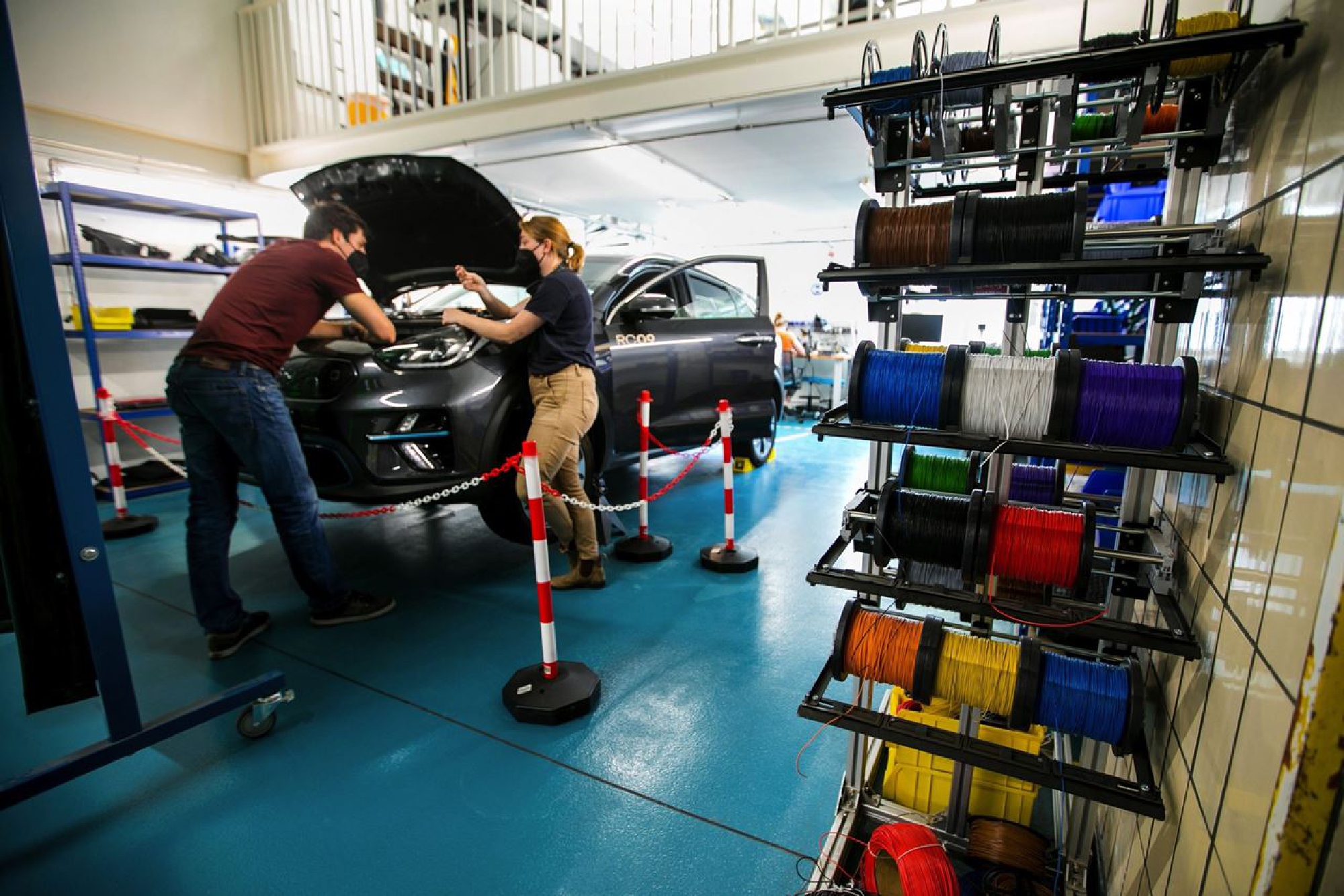
The company’s trained teledrivers operate from stations equipped with a steering wheel, pedals and several large monitors for 360-degree vision without blind spots. The system has built-in redundancies, prevents speeding and overlays safety information onto the screens to make rides safer.
– – –
Vay says it has solved latency issues and successfully remote-controlled cars through extreme situations requiring emergency braking and evasive maneuvers. Its CEO argues that starting with teledriving will enable the company to build its brand and gather valuable operational data so it can gradually introduce autonomous features as they become available.
But the startup that employs about 70 people will have to overcome challenges like winning over local regulators, raising enough money to fund its expansion and managing peaks in supply and demand without frustrating customers.
Vay has so far collected some $30 million from investors including Twitter Chairman Patrick Pichette and venture capital firm Atomico and is open to sell shares to the public in the longer term, von der Ohe said. It’s in talks with major automakers about potential partnerships as the business scales and explores future use cases — think steering a truck from a distance as the in-vehicle driver rests.
And while outfitting cars with self-driving technology can add as much as $100,000 of cost, Vay says its proprietary software and hardware costs just a few thousand euros and could be installed on any car on the market.
“Vay appealed to us because of the economics,” said Atomico partner Niall Wass, a former Uber executive. “You can get a product on the road way quicker and way cheaper than pursuing Level-4 or Level-5 autonomy.”
Big jump in number of poor and very poor schoolgoing children in Covid aftermath
An estimated 1.9 million children of the 9 million in the schoolgoing age could be categorised as poor and very poor, which is a very high proportion, the Equitable Education Fund (EEF) said, revealing data from January 2021.
Dr Kraiyos Patrawart, Deputy Manager, said the impact of the Covid-19 epidemic has caused the income of these families of children and youth to drop to an average of 1,094 baht per month, with most of their income from agriculture or other fields, but has additional income from state welfare and compensation, said Dr Kraiyos.
The impact caused the number of extra-poor children screened in the new semester 1/2021 to increase to a new high record, which is 1,302,968 or increase by 128,524 from the 2nd semester of 2020.
NESDB also surveyed students in extra poverty in 29 provinces experiencing learning difficulties during Covid-19 due to lack of electricity and equipment. It found that 87.94% or 271,888 extra-poor students were facing problems. The top 5 provinces with the most problems were Narathiwat, Pattani, Tak, Nakhon Ratchasima and Yala.
Due to the risk that extra-poor children will fall out of the education system, the EEF has stepped in to help support additional scholarships so that students during the outbreak period can return to school.
As of August, 294,454 exceptionally poor students, 82.82%, or 242,081, had entered the education system. But there are still 43,060 children, or 14.6%, with no information that they have returned to study. Most of them were in Grade 6 of 33,710 and Grade 12 of 8,699.
A study in Southeast Asian countries found that distance education lost about 50% of student’s knowledge or about half a year. If the situation continues until the end of December 2021, the rate of learning lost among children will increase as much as a year. Such forecasts will affect the economy in the future that will be worth more than $9 trillion in losses, said Dilaka Lathapipat, Human Development Economist for the Education Unit of the World Bank based in Bangkok.
In Thailand, if the situation remains unchanged until the end of December 2021, the learning loss rate will be around 1.27 years, costing about $390 billion or equivalent to 30% of GDP.
In the future, this group of children will gradually enter the labour market. The loss of knowledge means a deterioration in the quality of the labour market and these children will have to stay in the labour market until 2081, or 60 years from now. Human capital lost during this period will directly reduce the growth potential of the economy, both capital accumulation and product including a decrease in development in all aspects
How to keep your phone charged and useful in a natural disaster
A smartphone can be a lifeline in a natural disaster, connecting you instantly to assistance and real-time resources. Unfortunately, many disasters like hurricanes and wildfires take out the exact things phones rely on to do that work: electricity and cell service.
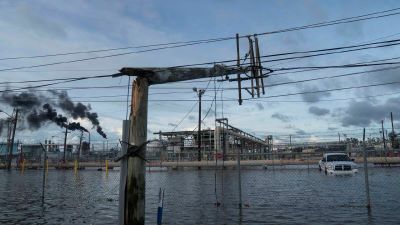
The remnants of Hurricane Ida unloaded a historic deluge in New York City and the surrounding area on Wednesday night, triggering states of emergencies in New York and New Jersey and leading to at least nine deaths. Nearly 1 million households are still without power in Louisiana after Ida made landfall as a Category 4 hurricane on Sunday and the heavy rain knocked down cell towers, leaving many without a phone connection. In California, record-setting wildfires are encroaching on populated areas, including South Lake Tahoe where more than 20,000 people have been ordered to evacuate.
If you’re preparing for, in the midst of, or recovering from a disaster, here are some of the best ways you can get your phone in the best shape to help you. From making a charge last as long as possible, to finding the right information online.
– Make your battery last
Assume your electricity can go out at any time and plan accordingly. Charge your phone and any additional devices ahead of time, leaving them plugged in until the last minute. Also charge any backup batteries and laptops, then make sure all charging cords are collected in one place to take with you.
If the power is out, or if you’re no longer someplace with an outlet, you’ll need to make any charges last as long as possible. To do that, follow these instructions:
Turn on low power mode on your phone if it’s an option. On iPhones, go to Settings, Battery, and toggle on Low Power Mode so it’s green. On many Android phones, you can swipe down from top of the screen to see your notifications, and swipe down one more time to find a shortcut to the phone’s battery saver mode. Meanwhile, some recent Samsung phones offer even more aggressive ways to preserve battery life: Go to Settings, then Battery and Device Care, Battery, and finally Power Saving mode to tweak these options as needed.
Avoid draining activities. Don’t use your phone as a WiFi hotspot for other people, don’t watch streaming videos and close any apps running in the background that might be using location. Turn off notifications you don’t need. If you’re in a safe place, you can turn off GPS to stretch the battery life.
WiFi is less draining than cellular connections, so use it whenever possible. If you don’t need to be in immediate contact with anyone, you can even turn on Airplane mode for maximum power saving. (Unless you’re planning on leaving your phone off for a long period of time, it’s better not to turn it off completely.)
Turn off Background App Refresh on iPhones. Go to Settings, General, Background App Refresh. If you have an Android phone, search in your settings for a feature called Data Saver and turn it on – it will prevent all apps except the ones you’ve selected from sending or receiving data in the background.
Avoid phone calls, and especially video calls, in favor of texts when possible.
Turn down your screen’s brightness.
– Different ways to recharge your phone
Again, external batteries are the best to have. But in a pinch, you do have other options for recharging a device when the power is out.
You can charge off a laptop if you have one. This is a good reason to charge your computers as well, even if you don’t plan on using them.
If there’s an emergency hand-crank radio nearby, check to see if it has a USB port. You can plug your phone charger in here, but be prepared to crank for a long time.
If there’s a car available, you can connect through a USB port, whether it’s built in or through a lighter-port attachment. You can charge in many (but not all) cars by just turning them on to accessory mode – meaning you just turn the key once to fire up the radio but not the engine. Do not attempt to start the car if it’s in deep flooding or a closed space like a garage. If you’re going to need the vehicle to evacuate, be careful not to drain its battery on a phone.
– Contact 911 or other assistance
If you need emergency services and have a cellular or Internet connection, always start by calling 911. However, it can be hard to get through – in New Orleans, the 911 system crashed during Ida – and it’s best to try all options.
Many counties have added the ability to text 911. Only try this after, and in addition to, calling emergency services. When you text, include your name, a description of the emergency and an address. Look out for a bounce-back message to tell you if your local 911 doesn’t accept texts. If it does go through, don’t assume it was seen immediately.
Use your phone’s SOS service. Android and iOS both have built-in emergency options that will contact authorities. They also can be set up to send your current location to predetermined emergency contacts. It can vary depending on your device, so find out how it works ahead of time.
If authorities can’t reach you in time, your best bet might be your community or local help networks. For example, the Cajun Navy is a network of volunteers using boats and other equipment to help rescue people after floods and hurricanes in the South. They have a form on their website people can fill out to request a rescue.
– Share your location with friends
Your friends and family will want to know you are safe and your location in case you aren’t safe.
Send your location with everyone over text, so they’ll know where to look if you lose contact. Make sure to include people outside of the disaster zone. If you are using a GPS location-sharing option, like the one in iPhone Messages, don’t just send your current spot one time. Select the option to share it indefinitely. You can turn this off later.
On an iPhone, you can also open the Find My app, select Friends and add people to share your location with. You can share your live location with others through Google Maps, though there are some limitations.
If you’re on social media and have service, drop a line to let people know you’re okay. Facebook will let you mark yourself as safe if you’re in the area of a disaster. Start on the company’s Crisis Response page, where you can also find other calls for and offers of help.
– Get the latest emergency updates
To make sure you have the very latest information, including evacuation instructions, there are a few steps you can take before and during a disaster.
Sign up for all local emergency alerts. While some text alerts can be sent to all phones, many are only sent to people who have opted in. These services are set up by your local governments and use tools like Nixle. Go to your local emergency preparedness website (for example, New Orleans’s is ready.nola.gov) and follow directions. Usually you will be asked to text something to a specific number.
Download any emergency apps, such as FEMA’s, ahead of time. If you’re already dealing with limited service and battery life, stick to their websites.
Follow relevant emergency and informational accounts on Twitter and Facebook. This can include your local fire and police departments, the mayor and governor’s office, the state and federal emergency services offices, your local FEMA region, your local National Weather Service account, your state department of transportation, and the state and local fire services. Follow the Twitter hashtag for your disaster, but screen any information you find. Look out for any scams – nobody should call and ask you for money to assist you.
– Keep phones dry and at the right temperature
Most modern phones are sturdy but sensitive to their environments. To make sure they continue working efficiently, take these precautions.
Many phones are now rated as “water resistant.” However, you should still avoid exposing them to water as much as possible. If you are dealing with flooding and rain, pop them into a plastic zip-top bag. If you’re dealing with a fire, pack them with something cool.
In a storm or hurricane, it’s unlikely that you’ll be able to keep your phone dry indefinitely. If your phone does get drenched, wipe it down with a dry cloth, gently shake out any excess water and remove the battery if possible. In the event that you have access to a hair dryer with a cooling function, or a working car heater, you can use them to dry the area around your phone’s charging port.
Extreme cold and heat can cause your phone battery to be less efficient and even stop your phone from working. You’ll typically see a warning sign on the screen if this happens. If you can turn it off, don’t turn it back on until it’s back to an acceptable temperature. Whether it’s extreme cold or heat, avoid leaving your phone exposed and don’t leave it in a car.
– Get apps that work when cell service is spotty
If you’re struggling to find reliable Internet and cellular connections, there are apps that could still help you stay in touch or give you helpful information. Download and set them up early as part of your disaster preparation, when you have plenty of bandwidth.
Zello: It’s a free messaging app for Android and iOS that lets people create and join group “channels” where they can send voice messages and images to many others at once. (Think of it as a free, smartphone-based walkie-talkie.) Multiple volunteer groups have used Zello to organize relief and assistance efforts during hurricanes, but there’s one catch: the app cannot be used at all if you don’t have an Internet connection.
Google Maps: Download the Google Maps information for surrounding areas in case you need to move fast and cell service isn’t available. Put in your main location, hit the three dots in the corner, select Download Offline Map. You can crop the exact area you think you’ll need.
Thai importer unveils digital Covid testing device
A digital Covid-19 testing device was unveiled as Thailand’s latest weapon against the virus crisis on Wednesday.
APA Biotechs Care, an importer of skincare and medical equipment, said it had signed an agreement to import PixoTest POCT Covid-19 antigen testing devices on July 31.
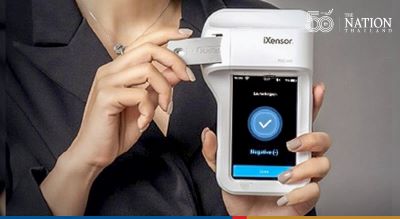
Punyawee Ratanapatarapong, the company’s CEO, said the palm-sized device screens users for Covid-19 infection, records their health information and reports it via a smartphone application.
The PixoTest solution shortens the test-to-report time to 15 minutes, says its Taiwanese maker iXensor Co Ltd.
Punyawee added that the device had been used successfully in countries where new Covid-19 variants were discovered. She said it was a viable solution for screening in communities, businesses, tourism and education.
“To contain the spread of Covid-19, we should focus on testing frequently,” she said, citing guidance from Harvard’s TH Chan School of Public Health.
She added that the company is in the process of registering the device with the Thai Food and Drug Administration.
Responding against a ransomware attack resulting to a data breach
It is common news that the implications and costs of cyberattacks are significant and damaging to the victim, both on an individual or business level.
In fact, our Kaspersky IT Security Economics 2020 report showed that, on global average, a breach costs an enterprise $1.09m and a small to medium-sized business (SMB) $101k in 2020. However, with the world becoming increasingly digital, and cyberthreats more complex and sophisticated, there is a growing need to protect oneself from falling victim to cybercrime.
For instance, ransomware attacks in Southeast Asia detected by Kaspersky researchers revealed that since 2018, the number of ransomware detections (prevented attacks) in the region – Singapore, Indonesia, Malaysia, Philippines, Thailand, Vietnam – actually decreased. 2018 saw the highest number of detections recorded at 4,185,703 prevented attacks, where detected incidents in 2017 fell to 3,865,645, and further decreased to 1,418,085 in 2020. However, while these numbers reflect a decreasing ransomware incident trend, we also see the extent of attacks and severity of each attack to be increasing. These ransomware attacks have also become more high profile, and from what we observe so far, there is no clear indication that specific industries are being targeted. What we have seen are that companies with a huge repository of customer data will continue to be targets. What to do if you experience a security breach Organizations that suffered breaches may affect their customers’ personal information so as a customer of a major company affected by a cyberattack that resulted to a data breach, act quickly to ensure your safety.
Remember that a security breach on one account could mean that other accounts are also at risk, especially if they share passwords or if you regularly make transactions between them. • If a breach involves your financial information, notify your banks immediately.
• Change the passwords on all your accounts. If there are security questions and answers or PIN codes attached to the account, you should change these too.
• You might consider a credit freeze. This stops anyone using your data for identity theft.
• Check your credit report to ensure you know if anyone is applying for debt using your details.
• Try to find out exactly what data might have been stolen. That will give you an idea of the severity of the situation. For instance, if tax details and SSNs have been stolen, you’ll need to act fast to ensure your identity isn’t stolen. This is more serious than simply losing your credit card details.
• Don’t respond directly to requests from a company to give them personal data after a data breach; it could be a social engineering attack. Take the time to read the news, check the company’s website, or even phone their customer service line to check if the requests are legitimate.
• Be on your guard for other types of social engineering attacks. For instance, a criminal who has accessed a hotel’s accounts, even without financial data, could ring customers asking for feedback on their recent stay. At the end of the call, having established a relationship of trust, the criminal could offer a refund of parking charges and ask for the customer’s card number in order to make the payment. Most customers probably wouldn’t think twice about providing those details if the call is convincing.
• Monitor your accounts for signs of any new activity. If you see transactions that you don’t recognize, address them immediately. Organizations of all sizes are urged to follow the advice below in order to help them mitigate cyberattacks and potentially reduce costs if they suffer a data breach: • Plan your breach recovery strategy. The best time to prepare for recovery from a breach is before it happens. Take one step today, maybe start to look at how your organization would detect a breach, or how you can test the detection capabilities you have.
• Ensure the organization is using the latest version of its chosen operating systems, with auto-update features enabled to ensure the software is always up to date.
• Adopt endpoint solutions, like Kaspersky Integrated Endpoint Security. It enables vulnerability assessment and patch management, to reduce the risk of vulnerabilities being exploited by cybercriminals. This can automatically eliminate vulnerabilities in infrastructure software, proactively patch them and download essential software updates. It also provides behavior detection and exploit prevention mechanisms that discover and stop suspicious endpoint activity.
• Educate employees on the importance of regularly updating technology and software. For example, IT training courses from the Kaspersky Automated Security Awareness Platform and Kaspersky Adaptive Online Training cover this topic.
• Invest in building a cyber-aware culture. Strengthen cyber-awareness training for all employees. This can help your employees work together more effectively in the face of a common cybercriminals, and appreciate the difficulties the security team faces keeping the organization safe. Protection against ransomware – what companies should pay attention to As with other forms of malware, careful action and the use of excellent security software are steps in the right direction when it comes to combatting ransomware. Of particular importance with regard to this type of malware is the creation of backups, as this allows you to be well prepared even in a worst-case scenario. In addition, Kaspersky encourages organizations to follow these best practices that help you safeguard your organization: • Always keep software updated on all the devices, to prevent attackers from infiltrating your network by exploiting vulnerabilities.
• Focus your defense strategy on detecting lateral movements and data exfiltration to the internet. Pay special attention to the outgoing traffic to detect cybercriminals’ connections. Set up offline backups that intruders cannot tamper with. Make sure you can quickly access them in an emergency when needed.
• Enable ransomware protection for all endpoints. There is a free Kaspersky Anti-Ransomware Tool for Business that shields computers and servers from ransomware and other types of malware, prevents exploits and is compatible with already installed security solutions.
• Install anti-APT and EDR solutions, enabling capabilities for advanced threat discovery and detection, investigation and timely remediation of incidents. All of the above is available within Kaspersky Expert Security framework.
• On top of end point and awareness, also talk about investing in a security team and SOC, and get access to threat intelligence information and regularly up-skill them with professional training, as well as have threat hunting software to identify breaches by aggressive criminal groups.
Test Drive: The $2 million Bacalar shows off the best of Bentley
If you want a Bentley Bacalar, youre too late.
Each of the 12 individuals worldwide who purchased the $2 million open-top two-seater has already spent many months developing personalized exterior paint schemes, unique tones for the Beluga leather seats, and detailed stitching patterns. The car, which was first announced in 2020, is built on the underpinnings of the Continental GT Speed Convertible but has a totally unique body-and is the first two-seat Bentley in nine decades.
It was built by the 40 artisans who at the brand’s Mulliner program at its Crewe, England headquarters. As the first of its kind in Bentley’s modern Mulliner operation, it is the crowning example of the kind of small-batch, highly specialized cars Mulliner aims to produce. Mulliner collections include classic models built anew, like the Bentley Blower continuation cars; extreme-luxury focused versions of existing cars from the Bentley model range; and 100% Coachbuilt cars like the Bacalar.
Test Drive: The $2 million Bacalar shows off the best of Bentley
Bentley could have easily sold more than twice the amount it produced, Mike Rocco, Bentley’s vice president for sales and operations, told me in Carmel, Calif.
Since the Bacalar and Bentley in general are in such high demand, won’t Bentley increase the supply? Neither Rocco nor Timothy Hannig, the spokesman for the Mulliner department, would commit on the record to a definitive yes, but they didn’t exactly say no, either.
It all made me eager to drive the thing. If more Bacalar-like Bentleys are coming down the pike, we will indeed need to know how they drive. Prospective clients and Anglophiles alike will want a taste.
Here’s a quick answer: Divinely.
I recently drove a “Scarab Green” Bacalar test car in along 17-Mile Drive, just a nine-iron shot away from the Pebble Beach Golf Links. (While 12 Bacalars were sold, 13 were made-I drove lucky number 13.) While it wasn’t enough of a jaunt to do a proper review-the speed limit along that road is 25mph, and I cannot comment on any speeds that may or may not have been higher than that-it was enough to convince me this handsome Brit will more than fulfill its raison d’être as the perfect holiday coach built for two.
Please note: It doesn’t come with a top-at all-and the compromised trunk will fit two small duffels, nothing more, so this is not daily driver material.
Bacalar comes with a 6-liter W12 engine that feels as powerful as a tank (650 bhp) and an active all-wheel-drive system that works with scalpel precision as it varies the torque split between front and rear wheels. The car uses rear-wheel drive as much as possible during normal driving for optimum efficiency and dynamic performance, but I never felt the switch.
Its carbon ceramic brakes and balanced contact with the road installed great confidence as I rolled through the deep fog of the peninsula, past hills of sea grass and oatmeal-colored sand.
Yes, it is based on the Continental GT Speed Convertible, but it has 100% unique body panels, sharing only the door handles with the GT, since those contain the hardware for keyless entry. The rear “Barchetta”-style clamshell and top deck of the Bacalar are crafted from lightweight aluminum; the doors and everything else on the body are made from carbon fiber.
Shared mechanics aside, the Bacalar felt far slinkier and more ethereal to drive than its Continental GT siblings. It felt quicker to jump to high speeds, more focused around corners, and more nuanced between gears-and the Continental GT is among the top three best all-around cars I have ever driven.
It also looks far more striking in person than it does in pictures. Some who saw it in person in Carmel or later on social media expressed surprise and curiosity about it, as if its announcement in March 2020 had completely passed them over, coronavirus notwithstanding. Some referred to the Bacalar-so named after a pristine lake in Mexico-as the “Bentley Balaclava” or “Bentley Baclava.” Others had no idea about its origins at all.
Which is fine. Amid the endless procession of special-edition and limited versions of these hyperprofitable, upper-echelon conveyances, they tend to blend together. I also blame a certain quality about Bentley bodies that, especially in darker tones of paint, tends to present them more like bricks than they actually are.
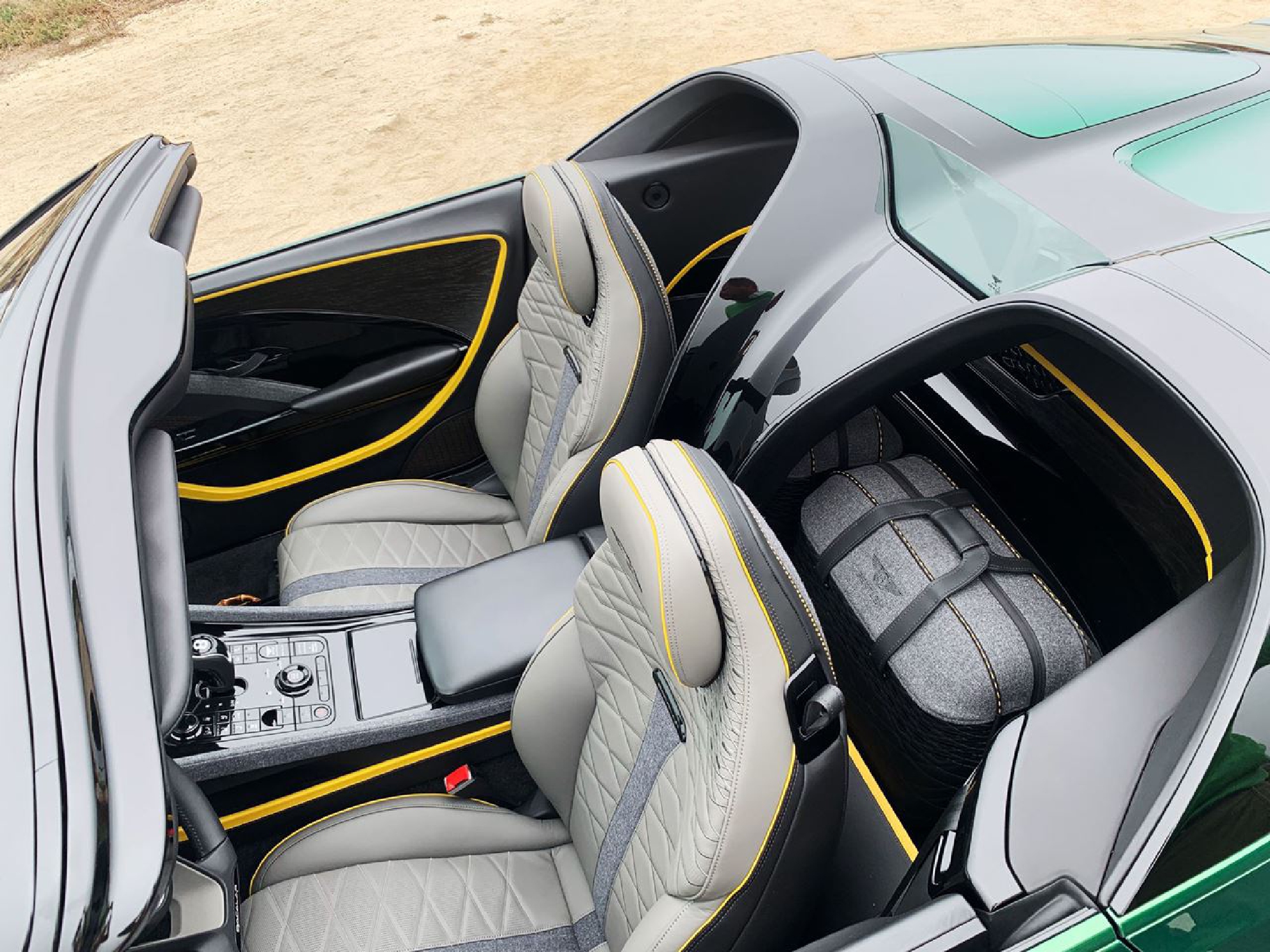
Up close, where the eye can bend around its subtle corners, the Bacalar is a delight. Its double-bubble back and air vents along the hood and sides do just enough to rough up its otherwise stately and smooth Bentley body. The complex geometric stitching on the seats, the intense azure of the dashboard clock dial (colored to match the famous blue water of the white limestone-lined lake), the woolen bags placed so thoughtfully in their compartments behind the seats-they don’t translate well in the highly modified glamour shots and renderings that seem to define automotive press photos these days.
Frankly, they don’t need to. Social media’s self-appointed critics and TikTok stars aren’t the audience here.
No, the Bacalar reveals itself most fully in real life, not on virtual land. That’s how it should be. If I could afford it, I’d buy it without hesitation. If you missed the first dozen, you’re probably not completely out of luck. You may simply be early for the next round.
Sweden Tesla of the Sea Challenges Fossil-Fueled Speedboats
Swedens Candela Speed Boat is challenging the conventional combustion-engine leisure-craft industry with a new battery-powered speedboat, betting that flight can solve the main hurdle to marine electrification.
The C-8 unveiled Thursday succeeds the C-7, a hydrofoil craft that’s been delivered to around 30 customers worldwide. The new 8.5-meter (28-foot) boat with berths for two adults and two children is designed for volume production, and Candela is raising funds for a factory to make about 400 units a year initially. Gustav Hasselskog, the startup’s founder and chief executive officer, says it could sell more than a 1,000 a year and drive consolidation in the fragmented leisure-boat market.
“There are way too many boat companies and people aren’t making any money,” Hasselskog said in an interview at the company’s combined headquarters and factory in Stockholm. “As technology content increases it may raise entry barriers, which could drive consolidation and benefit continued research and development. No one can afford that today.”
The electric leisure-boat market is still in its infancy and struggling to overcome some basic technological challenges inherent to marine transport, the foremost being water friction. Candela has revived an old technology to compete with combustion-engine boats. Its hydrofoil crafts practically fly above the surface, enabling more efficient energy use and a smaller battery.
“To build a planing boat of the same size as the C-8 with electric propulsion, you would typically need a battery three times as big to get half the range,” Hasselskog said. “That’s impractical and will not be an alternative to combustion engines anytime soon. It’s just too expensive.”
ADVERTISEMENTx
Hydrofoil technology, invented in the 19th century and based on the same principles as the wings of an airplane, has garnered increasing attention in recent years as boat builders seek the efficiency gains needed to overcome the drag that comes with propulsion through water. It has also spawned a boom in sales of electric-powered surfboards, such as the one used by Mark Zuckerberg in a viral video the Facebook CEO posted to mark the Fourth of July.
“What Candela is doing has been really good,” said Luke Gear, a senior technology analyst at IDTechEx. “The fact that they’ve designed the prop and the components into the vessel itself is what is going to make this efficient.”
While flight does “completely change the energy demand of a boat,” it’s unlikely to be a “silver bullet” for the electric boating industry, Gear said. “Hydrofoiling has lots of complexities and problems of its own.”
The Candela C-8, priced at 290,000 euros ($341,000) excluding sales tax, seats eight passengers and features a sun bed, front cabin and marine toilet. With a purpose-built underwater electric motor, the C-pod, Candela promises a silent ride when the boat reaches 16 knots and lifts from the surface. Then it’s smooth sailing up to an electronically limited 30 knots.
Taking a page out of Elon Musk’s playbook, the C-8 offers Tesla Inc.-like over-the-air updates, a 15.4-inch high-resolution touch screen for navigation and an app where you can plan trips and access all features of the boat, from switching on lights and the cooler to checking its charging status. Candela has developed all the software in-house.
The C-8’s range will be greater than the C-7, which can travel for 50 nautical miles at a cruising speed of 22 knots.
Tesla’s Model S “outsold all combustion-engine luxury sedans, and we expect the C-8 to have a similar impact on the boating industry,” Hasselskog said.
Leisure boats are just the beginning for Candela. It’s preparing to test a 30-seat hydrofoil ferry on Stockholm’s waterways in 2023, and is in talks with some 45 cities about delivering passenger vessels.
“We believe the passenger-ship business will grow faster, although we have come further on leisure boats” Hasselskog said. “In Europe the environmental issue is driving the development, with Stockholm, for example, saying its marine public transport will be fossil-free by 2030.”
An army of veterans and volunteers organizes online to evacuate Afghans, from thousands of miles away
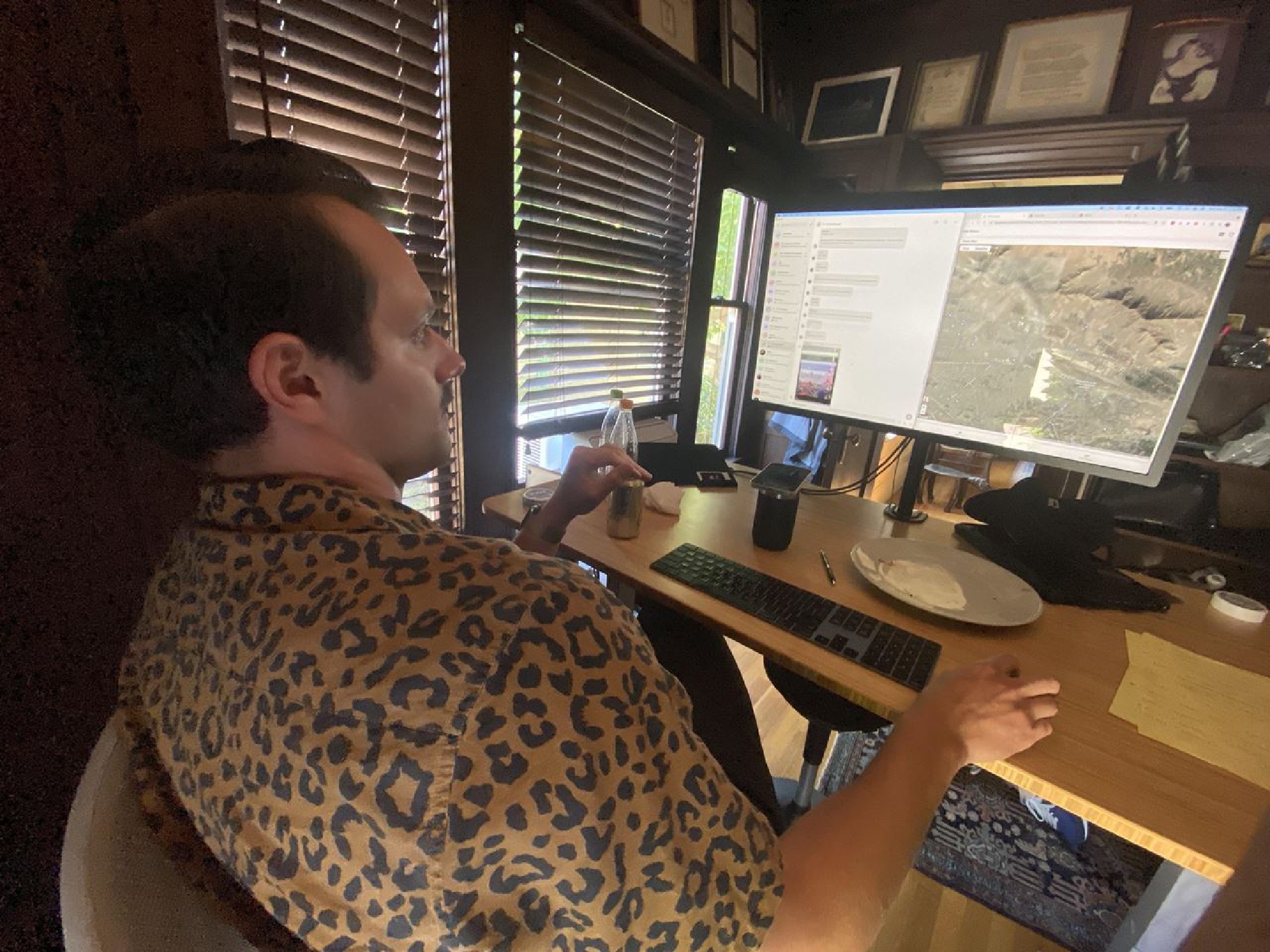
BERKELEY, Calif. – On a quiet, tree-lined street in the Bay Area, Jon Reeds computer screen swims with maps of Kabul, chat threads and text messages from Special Operations, military and civilian contractors inside and around the Hamid Karzai International Airport.
Aformer green beret, Reed is one of thousands of veterans, active duty military, former government officials and civil servants working online to help Afghans flee Taliban retaliation. These efforts have taken on increased urgency this week as the window to shepherd people out of Afghanistan closes by Aug. 31, if not before, and the situation in the country deteriorates, including explosions outside the airport on Thursday. One group, Team America, says it has evacuated more than 200 Afghans and is tracking about 1,500 people.
“I’m pushing another ‘terp’ to the north side,” Reed tells another member of his group on the phone. “His name is Nick. That’s all the information I have right now.”
ADVERTISEMENTx
An army of veterans and volunteers organizes online to evacuate Afghans, from thousands of miles away
These groups of veterans and officials are leaning on their decades of deployments and thousands of hours of in-country experience in Afghanistan by acting as emergency dispatchers, calling in favors with gate guards, sharing intelligence about Taliban actions and directing families to the right runway to get a flight – all from thousands of miles away. They are using Slack and Signal groups to share highly sensitive information, and sending photos of evacuees to gate guards for verification. Others are software engineers and Silicon Valley investors who have connections to the region and the knowledge to code.
Many refer to the overall effort as “Digital Dunkirk,” a reference to the evacuation of stranded Allied soldiers from the beaches of northern France in World War II.
As the time frame for Afghans to leave shrinks, the volunteers are even booking transportation for evacuees. Reed’s group on Signal has pursued everything from busses to chartered flights, paid and funded for by private donations. Mick Mulroy, a former CIA paramilitary officer and Trump administration Pentagon official, said the volunteer group he works with, TF Dunkirk, has been working to secure helicopters out.
Zack Disbrow, a veteran who served in Afghanistan, has been working to get his interpreter who he calls Mike out of Kabul for the past week. The interpreter was waiting outside the airport’s Abbey Gate, the site of one of the explosions Thursday, for over 36 hours and left shortly before the blast. “So we live to try another day,” Disbrow said.
ADVERTISEMENT
The U.S. and other allies had ramped up evacuations this week, with the U.S. saying it has evacuated and helped in the evacuation of about 90,000 people since Aug. 14. But hours after it boasted of record high evacuations on Tuesday, the White House announced it would end evacuations before the Aug. 31 deadline to complete its full withdrawal from Afghanistan. On Wednesday, the Pentagon said its ability to airlift evacuees from the country could decrease as it turns to pulling out weaponry, equipment and troops. It was unclear how the Thursday bombings would impact flights.
Late Wednesday in the U.S. – Thursday morning in Kabul – that prompted frantic coordination among the veterans and officials who felt a sense of duty to help those who had helped American forces over two decades in Afghanistan.
“As an American, I’m tired of feeling powerless,” said Joe Saboe, a former infantry officer who fought in Mosul, Iraq, and spokesman for Team America. “And I’ve seen things that I don’t like happening in the world.”
White House press secretary Jen Psaki on Wednesday told reporters, “There are certainly cases and incidents – and we have heard, you have reported – where individuals are not getting through that should get through. And we are approaching those and addressing those on a case-by-case basis as those are raised.”
Matt Pelak, a National Guard soldier who lives in Brooklyn and has spent days of his own time helping to coordinate evacuations, said he and other volunteers are in triage mode as the pullout date looms. The focus, he said, has become on people who have the right documents and have the best chance of getting through.
ADVERTISEMENT
“Everyone sees the window closing rapidly,” Pelak said. “Now all we can do is help the people we can help.”
Many of these advocates have unique access to people and intelligence, feeding that information to potential evacuees over WhatsApp, text and through family members. Backgrounds in intelligence, communications and other specialties have combined to slice through inertia at the airport gate, where some veterans leverage contacts with colleagues still in uniform, Pelak said. Help can be in the form of a time and place to be, what to wear or hold, or even a signal or password.
“Often we’ll work with people in our group who work in the Pentagon and work in the State Department and have real time access to information,” said Saboe, who lives in Denver.
Shaun So, an Army veteran volunteering in the effort who lives two doors down from Pelak, spent days coordinating the evacuation of his former interpreter, a naturalized U.S. citizen who uses the name Freddie. He shepherded paperwork to contacts on the ground and funneled him to the right location to get through to the airport, So said. He also prepared Freddie, who returned to Afghanistan to be with family, for the cold calculus of the situation: He could only leave if his two nephews stayed behind.
He agreed, and on Wednesday morning, Freddie crossed the threshold and made it onto airport grounds while speaking to a Washington Post reporter. He pointed his camera toward one gate, describing it as a frequent area for warning shots from U.S. troops.
“It’s chaos,” he said on a video call.
Pelak and Reed are a few of the more than 1,000 volunteers on a Slack group called AFG Expatriation, many of whom served on combat deployments and humanitarian relief missions. The channel has pulsated with activity all week, including rapidly evolving information, like which gates may become open for a few minutes to let evacuees through. Once a member learns of the changes, texts crisscross between the United States and evacuees at the airport, directing them on where to go, Pelak said. Some Afghans used live location sharing so volunteers could monitor their progress.
One of the most effective volunteers, according to members of the group, is Paul Alkoby, a 30 year-old former Air Force combat medic in Orlando. Alkoby’s relationships and networking capabilities were a linchpin in getting over 1,000 Afghans into Kabul airport and eventually out of the city. Alkoby said he has made many calls to members of Congress to get attention for the plight of Afghans this week.
“They didn’t know who I was at first or maybe didn’t believe me,” Alkoby said. He said he is worried Americans remaining in Afghanistan could soon be in a similar crisis if a more unified rescue mission is not developed.
In Berkeley, an Afghan American veteran named Junaid Lughmani looking to volunteer discovered via Twitter that he lived only a quarter mile away from Reed. On Tuesday, the two sat side by side in Reed’s library office, liaising with sources in Kabul past midnight in Afghanistan.
In an effort to get the interpreter named Nick inside the Kabul airport, Reed juggled between chats with Afghan handlers, American soldiers and volunteers in the U.S. Then, a gate guard at the airport sent him an image of a skull-like face wearing night vision goggles and a headpiece – a visual passcode.
Reed quickly copied and pasted the image into the thread with the handlers and instructed them on what Nick and his entourage should do with it: “Show this image.”
The group said they were racing off to the planned gate. Then Reed and his teammates waited.
“We need people at every gate, 24 hours a day working with the Marines or whatever,” said Reed. “People are on the wall and saying, ‘I’ve received this information, I have the signal, I see them in the crowd, let’s get them in.’ And then they can get on their paperwork once they’re in. So that’s the mechanism that we’re trying to build in place.”
A few hours later they received rumors of gunfire at the airport. A former interpreter, Lughmani called up a guard he knew was working at the gates and asked in Pashto what was really going on. The guard told Lughmani it was only warning shots, and for a moment everyone was relieved.
“I’ve had a heavy heart now since Kabul went down,” Lughmani told The Washington Post. “You can’t sleep. You’re tossing and turning. You force yourself out of bed because maybe that there’s one extra person you can help.”
Pelak, who served in Iraq, said the emotions pouring out of him feel like a return from combat: a mix of pride, frustration and the feeling that most Americans are oblivious to the human disaster in the making.
On Tuesday he returned from a walk in Brooklyn, closed his door and sobbed for ten minutes, he said, then got back to work. The next focus, he said, will be on how to resettle thousands of Afghans in the U.S.
“I hope we don’t lose this energy,” he said. “The hard part is about to start.”
Older Thais growing friendlier towards tech – while youngsters grow more sceptical
Only 50 per cent of Thais believe technology makes a positive contribution to society, according to a new survey conducted in all five regions of the country.
Conducted by Asean communications agency Vero and global market research and data analytics firm YouGov, the survey found that 50 per cent of respondents believe technology has a positive impact on society, 44 per cent are neutral, and 6 per cent believe that technology has a negative impact.
“This study sheds light on how Thai people feel towards technology and identifies segments with differing perceptions, thereby allowing brands to adjust their communication strategies to match their target audience,” said Francisco Sosa Ajates, associate director at YouGov in Southeast Asia.
The same poll was also conducted in Indonesia and Vietnam, with similar demographic diversity. The response trends were similar as well, with Thais expressing more positivity towards tech than Indonesians but less than Vietnamese.
Respondents were drawn from a wide range of social classes, education levels, and age groups, with most belonging to Gen X, Y and Z.
Its results are also segmented by generation and sex to find areas where they differ or align. For example, being older, male, and higher-income all correlate with more positive feelings about tech’s impact on society.
“At a time when digitalisation is so important to the future of Thailand, and when tech companies are playing such a big role in society, there is room for tech brands to position themselves as positive contributors in making life better for people,” said Vero chief communication officer Pattanee Jeeriphab.
ADVERTISEMENTx
Older Thais growing friendlier towards tech – while youngsters grow more sceptical
This is the second annual study Vero has conducted on the dynamics between people and technology. It asked people about their perceptions and opinions on topics such as the factors that influence them to purchase technology products, their fears and concerns about technology, and the impact of Covid-19 on their behaviours and perceptions. The complete study is available for download on Vero’s website.
Older Thais growing friendlier towards tech – while youngsters grow more sceptical
Covid-19’s impact on tech
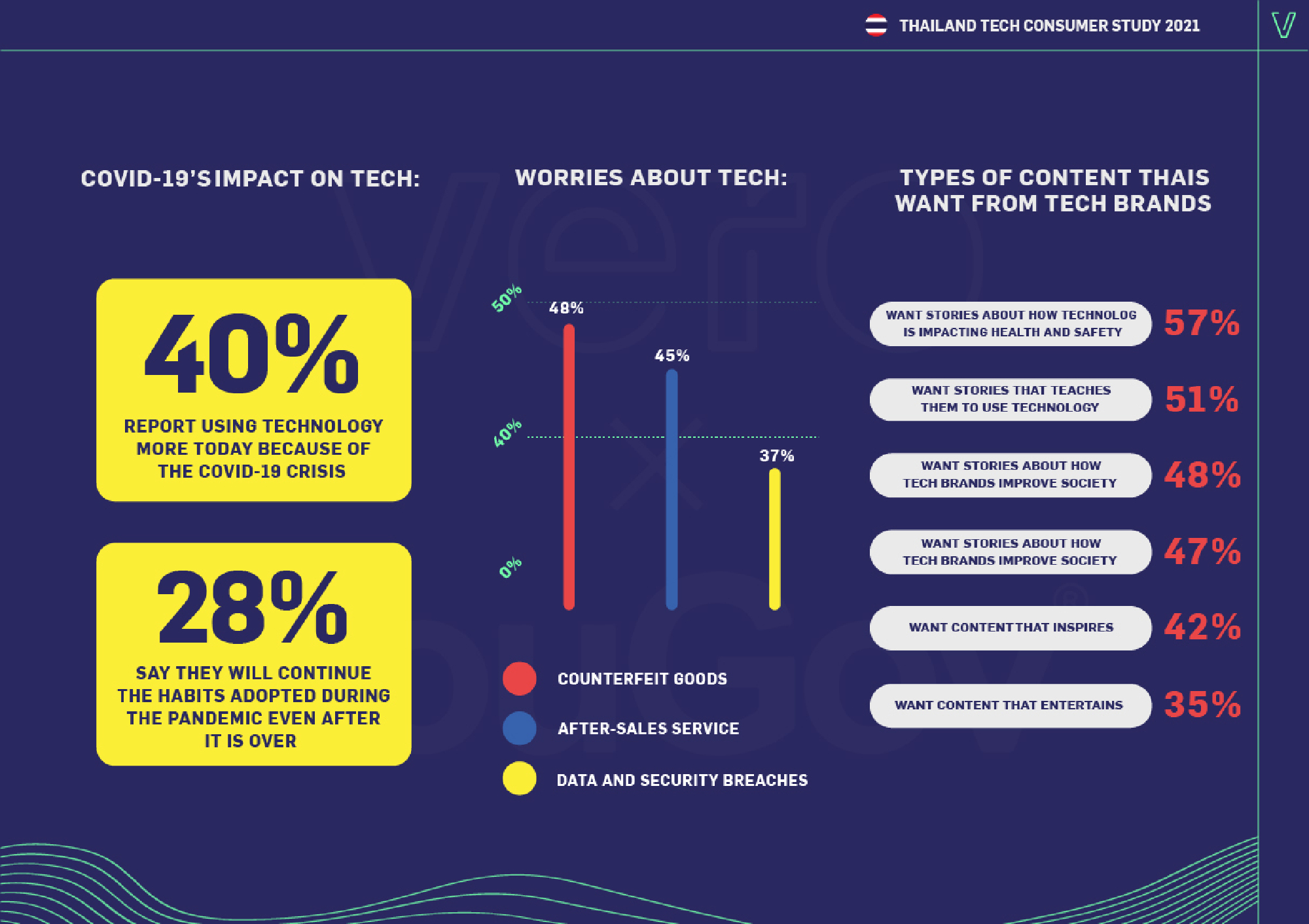
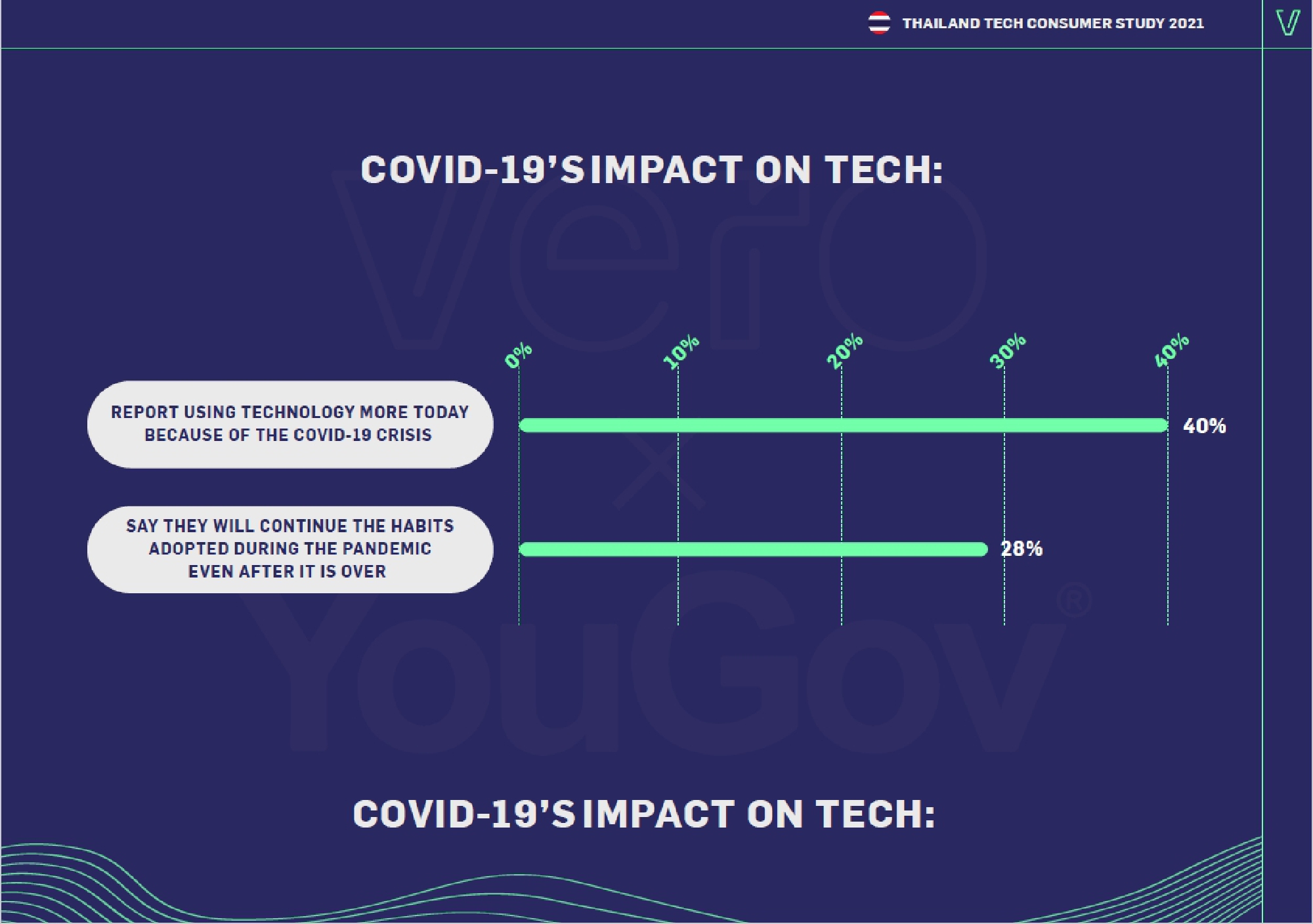
YouGov asked a series of questions to better understand how Covid-19 affected tech use and life habits in Thailand. At the time of the survey, the infection rate in Thailand was relatively low, yet 40 per cent of respondents said that they use technology more today because of the Covid-19 crisis and 28 per cent said they will continue the habits adopted during the pandemic even after it is over.
Notably, 43 per cent of Thai respondents said they now do most of their shopping online as a result of Covid-19 while 24 per cent said contactless payment and delivery are very important to them.
Older Thais growing friendlier towards tech – while youngsters grow more sceptical
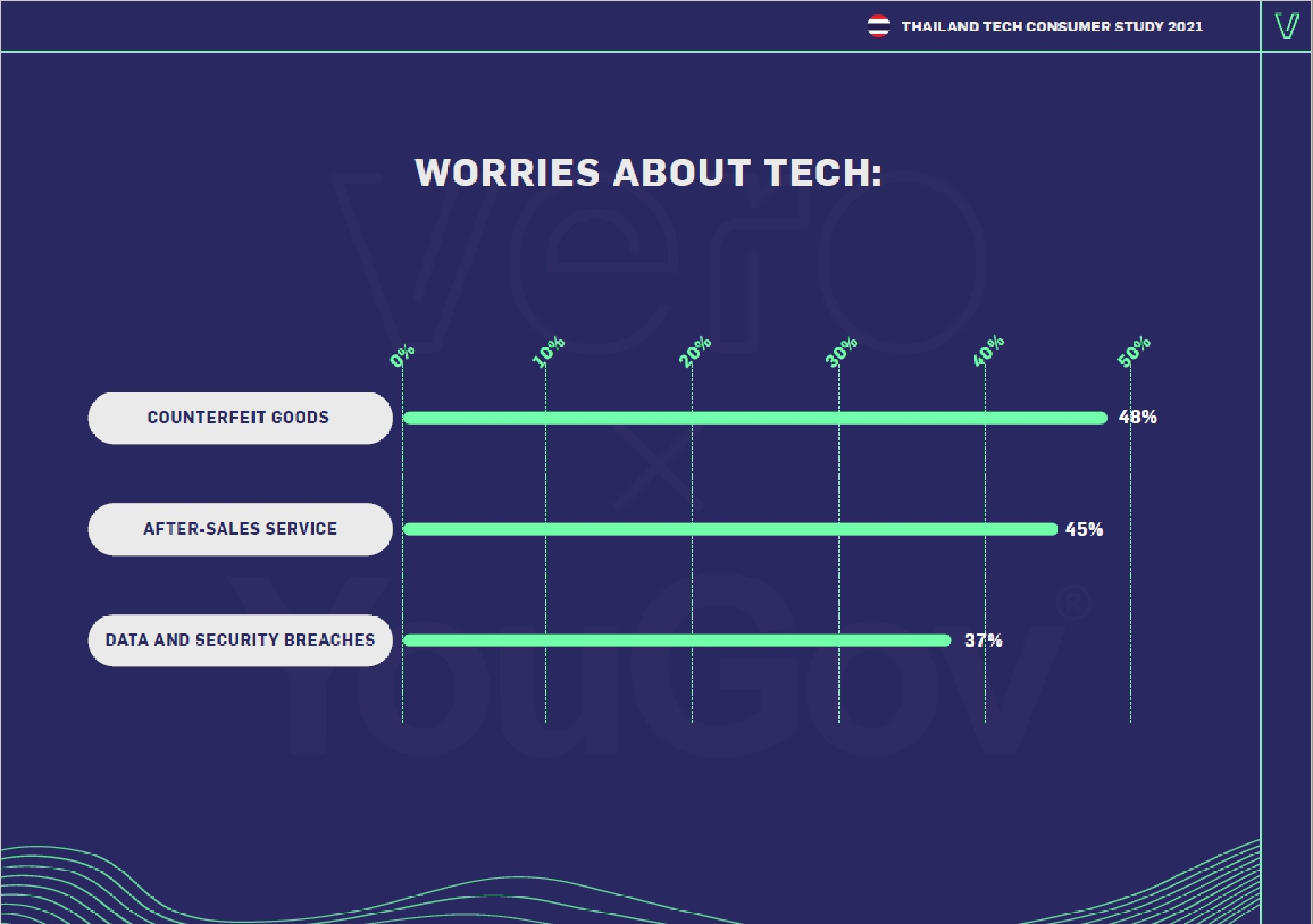
Worries about tech
The study also asked Thai people to reveal their concerns when purchasing tech products and services. Their most common concern is the likelihood of unknowingly buying counterfeit goods, shared by 48 per cent of respondents, while 45 per cent said that after-sales service is among their primary concerns and 37 per cent said the same about the possibility of data and security breaches.
Older Thais growing friendlier towards tech – while youngsters grow more sceptical
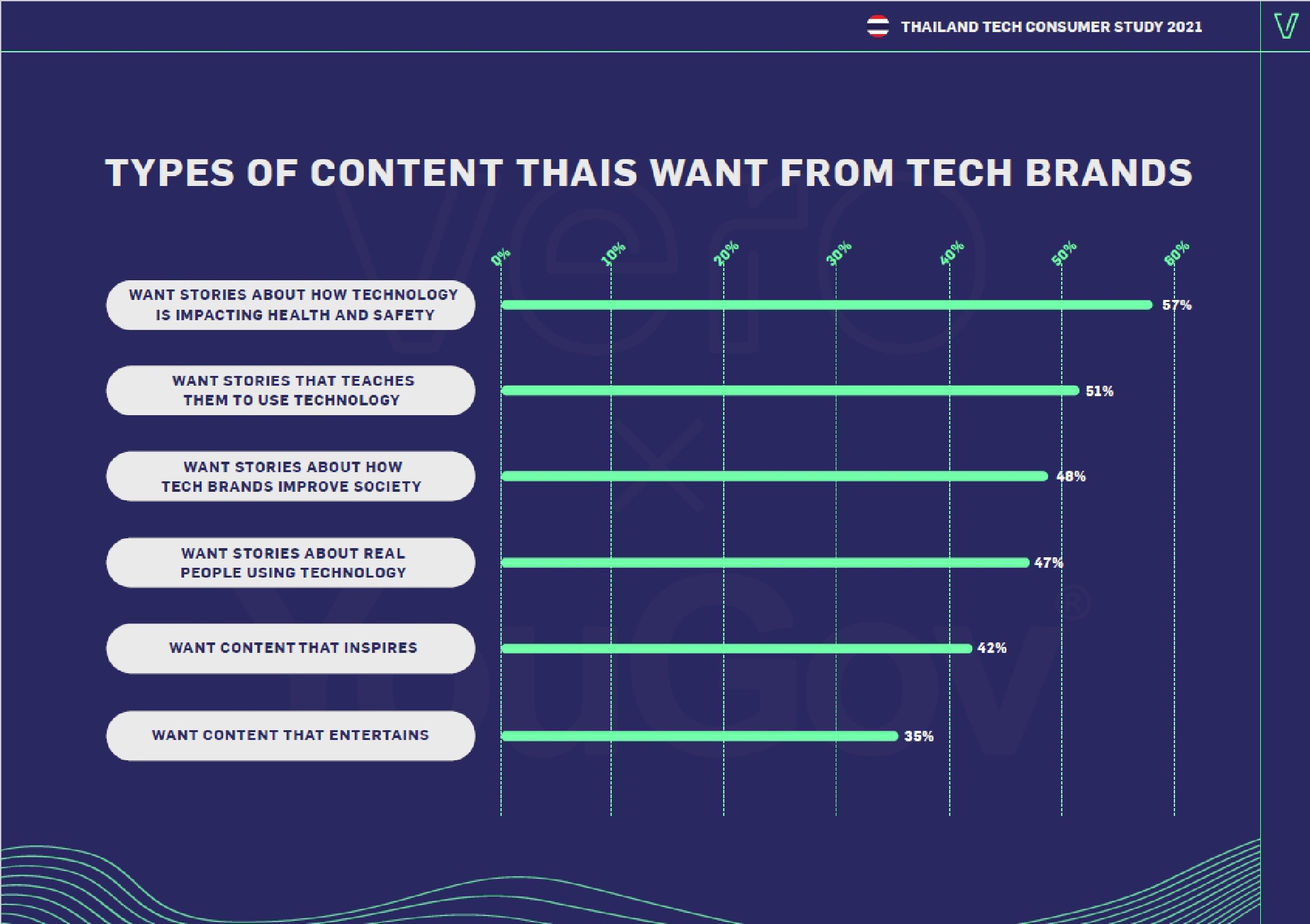
How tech brands communicate
The study also sought to understand what types of information people in Thailand want from technology companies. The majority (57%) of survey respondents said they want stories about how technology is impacting health and safety.
Nearly as many (51%) want content that teaches them to use technology, while 48 per cent said they want tech brands to share content about how they are improving society, 47 per cent want content about real people using technology, 42 per cent want inspiring content, and 35 per cent want content that entertains them.
“The pandemic has created a desire for content about how to stay safe and well,” said Jeeriphab, noting that in 2020 the most-desired content revolved around real people using technology. “It is also interesting to note that being entertained is last on the list of desires for content from tech brands. Instead, the data indicates a desire to learn and gain knowledge about technology, likely because people realise that there are great benefits to being tech savvy today.”
Education Ministry cuts homework to reduce stress of children studying online
The Education Ministry says will reduce homework and screen time for students studying online, in a bid to lower their stress.
Education Minister Treenuch Thienthong announced the move on Monday, the same day as new research showed an increase in anxious behaviours among online learners.
Treenuch said indicators of academic performance have been adjusted to allow students to learn what they need to know and reduce screen time and homework. Teachers have been instructed to focus on evidence-based learning rather than exams.
Basic National Education Test (ONET) scores would not be used for graduation and admissions decisions at both basic and tertiary levels, she confirmed.
The minister acknowledged that some schools had adopted the same schedule for online teaching as classroom teaching, and not reduced study time.
The Office of the Basic Education Commission (OBEC) and Vocational Education Commission (VEC) will instruct education area offices to ensure that each school complies with the policy to reduce the burden on students, she added.


 Stealth robocar startup sees remote drivers as autonomy shortcut


 Test Drive: The $2 million Bacalar shows off the best of Bentley

 An army of veterans and volunteers organizes online to evacuate Afghans, from thousands of miles away
 Older Thais growing friendlier towards tech – while youngsters grow more sceptical
 Older Thais growing friendlier towards tech – while youngsters grow more sceptical
 Older Thais growing friendlier towards tech – while youngsters grow more sceptical
 Older Thais growing friendlier towards tech – while youngsters grow more sceptical
 SootinClaimon.Com