Chula researchers develop dental materials for easier tooth filling
Faculty members at Chulalongkorn University have joined forces to develop easy-to-use “light-activated dental materials” that meet international standards and help shorten tooth filling time.
The Thai team has created Acemannan polymer from aloe vera that can stimulate the formation of dentin and reduce tooth sensitivity in many dental health products, the research group said.
In the past, dentists used filling materials that harden via chemical processes to treat cavities. However, the hot weather in Thailand makes these materials harden too quickly for the dentists to finish their work, making the job cumbersome.
To address this challenge, members from the faculties of dentistry, science, pharmacy, and veterinary science came together to form a 4Ds Project group to develop the latest innovative light-activated dental materials that meet world standards.
Easy and fast filling
Light-activated dental filling materials have been in use for nearly 40 years in the United States, Europe and Japan. Such technology has been patented and guarded to maintain their status as the world leaders in dental materials, the group said.
The patented “light-activated dental materials” by Chula’s 4Ds Project group is, therefore, a success in dental innovation by Thai people, the group said.
“When the filling materials are applied and activated by light, the cure time is shortened. Patients, especially children, don’t have to keep their mouth open for a long time,” the principal researcher of the 4Ds Project group, Prof Pasutha Thunyakitpisal, DDS, Department of Anatomy, Faculty of Dentistry and a post-graduate programme in Dental Biomaterials Science, Chulalongkorn University, said.
Chula researchers develop dental materials for easier tooth filling
“We use blue light that is present in sunlight, so it is safe. The blue light’s wavelength produces energy that releases electrons to activate the materials’ hardening process, thus making filling of cavities easier and faster.”
The innovative light-activated dental materials have caught the attention of the private sector, which has commercially produced and marketed this technology as specialty products under the brands “All – Zeal” cavity sealing and filling kit, and “Embaze” – an RMGI material.
Both dental materials are ISO-certified and safe for oral tissues. They have been selected by the Comptroller-General’s Department, the National Science and Technology Development Agency, and the Food and Drug Administration to be patented as Thai innovations.
Apart from the light-activated dental materials, the 4Ds Project group also hasvdeveloped other dental products for general dental health, such as Bai Kapow Swimming Care Gel to protect sensitive teeth against chlorine in the swimming pool, CPA Desensitizer Gel to reduce sensitivity for those with mild cervical abrasion or unable to get fillings or after teeth whitening, and concentrated 1.23 per cent acidulated phosphate fluoride gel.
The products are available for sale at “Osotsala” Pharmacy, the Faculty of Pharmacy, Chulalongkorn University, or general dentistry clinics.
The role parents play with children attending classes at home
Owing to the Covid-19 pandemic, Thailand’s educational sector has had to transition from classrooms to online learning. As per the Office of the Basic Education Commission (Obec), schools must continue using online learning/teaching methods through the first semester of the 2021 academic year given the surge in infections.
For this new system to be successful, cooperation is required between the Education Ministry, school principals, teachers, students and most importantly, parents, who need to spend more time understanding the change in their children’s needs.
When a child, especially the very young, has to study online, it inevitably becomes the parents’ duty to provide the resources and manage the setup. This in many cases becomes challenging because remote study is still a new concept.
Children also must adapt to the new set up and change in their learning environment. Also, the lack of physical activity may cause additional stress for children. Online learning may not be suitable for young children, but most of us have no chance but to adapt to the “new normal”.
To make online learning effective for young children, parents must develop methods and techniques to get their kids happily involved in learning by doing the following:
ADVERTISEMENTx
The role parents play with children attending classes at home
Start with an open mind
Parents must open their minds to online learning, so they can make adjustments to ensure positive outcomes.
They should encourage their children to practice social skills, albeit virtually, by interacting with their teachers and friends.
Online learning also helps develop children’s IT skills and parents should set up a variety of online activities daily.
ADVERTISEMENT
With the absence of school, children may start losing the discipline of waking up early, getting to school and sitting in their classroom focusing on what the teacher is saying. Parents, however, must be open-minded and accept that learning online can be more difficult, especially when children do not have other classmates sitting with them.
The role parents play with children attending classes at home
Setting up a schedule
Firstly, parents must know and understand their children’s concentration and attention level, as well as ability to learn certain subjects.
Without the need to go to school, a child’s daily life changes completely. They have more free time, and they may become fussy or refuse to pay attention when their class begins. To avoid this, parents should set up a daily “activity schedule” for their children.
ADVERTISEMENT
Getting children involved in setting up a schedule that covers activities like waking up, studying, playing, eating, bathing, resting and going to bed will also give them a sense of purpose.
The second factor is setting up the right environment. Parents need to provide a suitable spot for their children to sit and study. The desk and chair should be of the right size to ensure the child has the correct sitting posture. The study area should also be quiet, not crowded or have any stimuli that may distract the child. School supplies should also be available and ready to use.
Parents must also understand teaching styles and coordinate with teachers to learn about their children’s potential, so appropriate arrangements can be made.
Parents also need to understand technology because online learning can be conducted via different devices, including computers, notebooks and tablets.
These devices and learning methods may be new to both parents and children, and it may take time for them to learn about the applications required for distance learning. Parents must also have to learn how to set up parental controls on the internet, but most importantly, they must set up rules for their children to follow.
The role parents play with children attending classes at home
Pay attention
Parents must also explore their own physical and emotional readiness, including their stress levels. Keep in mind that being irritated, stressed or losing your temper can affect your children’s studies. If parents are able to control their emotions, stay calm and cope with situations, children will also learn to do the same.
Pay special attention to preparing your child for online classes. Normally, children have activities before starting classes such as breakfast with friends, playing and doing morning exercise routines.
Parents should also set up similar activities for children to do before they start their online classes, such as doing some cardio exercise.
Spending at least 20 minutes on physical activity, such as running, cycling or kicking a football will help prepare the body and stimulate the brain to release dopamine and norepinephrine, key neurotransmitters associated with attention, concentration and self-control. However, do not do too much heavy exercise or it may make the child tired and sleepy.
Parents must also understand that children cannot be expected to always focus on the screen. In classrooms, children have a lot of distractions, and it is normal sometimes for them to lose interest in what is being taught.
Hence, parents should focus on what will keep their kids engaged as well as whether their children are understanding the lesson and if they can answer questions.
Parents should also do away with negative words like “no, don’t, not or stop” to prevent children from developing a bad attitude towards learning. For instance, sentences like “why don’t you listen to your teacher” or “don’t be silly, baby” will make them anxious and stop them from wanting to learn.
Instead, parents should show appreciation to their children for focusing on their studies and completing their assignments.
The role parents play with children attending classes at home
Many parents think their children get to interact with their teachers and classmates during classes, so no other activities need to be planned.
However, activities are necessary, not just for helping children relax after school but to also help them develop and strengthen familial bonds.
However, the most important thing is caring and realizing that online classes alone cannot help with children’s cognitive development.
For this, parents can invite their children to read, describe the environment around them or practice daily routines. Children should also be given simple household chores.
But the most important job for parents is to be by their children’s side when they are in trouble because for children, their parents are always their “important teachers, friends and toys”.
The role parents play with children attending classes at home
K-pop belts out another record with highest number of tweets in a year
Thailand ranks third in the world for number of K-pop tweets and seventh for most K-pop fans on Twitter, according to a release from the microblogging and social networking platform.
Fans turn to Twitter to connect with their favourite K-pop artists and the #KpopTwitter community around the world.
In the year from July 1, 2020 to June 30, 2021, there were 7.5 billion tweets about K-pop, setting yet another record for the most number of tweets annually related to K-pop, Twitter said.
Countries tweeting the most about K-pop continue to grow around the world, as K-pop fans connect with each other, Twitter said.
Indonesia, the Philippines, Thailand, South Korea, and the United States are the top countries with the highest number of K-pop-related tweets.
From Asia Pacific to South America, the global K-pop fanbase continues to grow on Twitter. Peru and Colombia have joined the top 20 countries list with the most number of people tweeting about K-pop, Twitter said.
ADVERTISEMENTx
The top 20 most talked about K-pop artists:
1. BTS (@BTS_twt)
2. NCT (@NCTsmtown)
3. BLACKPINK (@BLACKPINK)
4. EXO (@weareoneEXO)
ADVERTISEMENT
5. TREASURE (@treasuremembers)
6. TOMORROW X TOGETHER (@TXT_members)
7. ENHYPEN (@ENHYPEN)
8. GOT7 (@GOT7Official)
9. TWICE (@JYPETWICE)
ADVERTISEMENT
10. SEVENTEEN (@pledis_17)
11. ATEEZ (@ATEEZofficial)
12. Stray Kids (@Stray_Kids)
13. THE BOYZ (@WE_THE_BOYZ)
14. Red Velvet (@RV_smtown)
15. MONSTA X (@OfficialMonstaX)
16. iKON (@YG_iKONIC)
17. IZ*ONE (@official_izone)
18. DAY6 (@day6official)
19. ASTRO (@offclASTRO)
20. SHINee (@SHINee)
Newcomer TREASURE (@treasuremembers), who debuted just in August last year, emerged fifth on the inaugural list in a spectacular entrance, Twitter said.
Since August 2020, TREASURE have already conducted four #TwitterBlueroom Live Q&A sessions across six months while actively engaging with their fans on Twitter.
Similarly, new boy band ENHYPEN (@ENHYPEN) that only debuted in late November last year is ranked seventh, Twitter said.
YeonJeong Kim, head of Global K-pop Partnerships at Twitter, said, “Whether they are global powerhouses or emerging stars, K-pop fans are talking about and engaging with their favourite artists regularly on #KpopTwitter. Culturally, we have seen the phenomenal rise of K-pop across the world, but this trend is not new on Twitter as we have experienced the growth in conversation first-hand. We will continue to work with artists and their labels to bring more content for the K-pop community.”
First came the ransomware attacks, now come the lawsuits
Eddie Darwich and his wife Abeer had been running the EZ Mart fuel station on Castle Hayne Road in Wilmington, N.C., for 11 years the day the gas dried up.
At first he was skeptical of the other gas station owners who were calling him with news of a strange computer hack attack on Colonial Pipeline, the company that ran the network of fuel pipes serving much of the U.S. East Coast. The pipeline had been shut down, and a rush on gas was brewing as panicked drivers bought extra fuel.
“I didn’t believe it,” he said in a recent phone interview. “There’s no way in hell something like this would happen in the United States.”
But it was true. On May 12, five days after an employee in Colonial’s control room discovered the hack, Darwich’s pumps ran dry. He desperately called his supplier, who told him the only thing he could do was wait. Darwich wasn’t the only one who needed gas: Thousands of stations in a dozen states were in the same bind.
“For more than a month I did not see my customers,” he said. “It hurt a lot.”
Now he’s suing Colonial Pipeline, accusing it of lax security, to get some of that money back. He and his lawyers are hoping to also represent the hundreds of other small gas stations that were hurt by the hack. It’s just one of several class-action lawsuits that are popping up in the wake of high-profile ransomware attacks.
Another lawsuit filed against Colonial in Georgia in May seeks to get damages for regular consumers who had to pay higher gas prices. A third is in the works, with law firm Chimicles Schwartz Kriner & Donaldson-Smith LLP seeking to mount a similar effort. Colonial isn’t the only company that’s been targeted. Another suit was launched in June against the San Diego based hospital system Scripps Health after it was hit by a ransomware attack.
Cybersecurity lapses at major companies have led to big class-action lawsuits and settlements in the hundreds of millions of dollars. Retailer Target eventually paid $10 million to consumers and $39 million to banks after hackers broke into its systems and stole personal information in 2013. Home Depot brokered a similar settlement with shoppers who had their credit card info stolen from the home improvement store’s computers.
But ransomware attacks have the potential to affect people in ways that go far beyond simply having their personal information stolen and sold online.
ADVERTISEMENTx
Ransomware hackers deploy software that locks the owner of the targeted computer system out of their machines, and demands a cryptocurrency payment in return for handing back control.
In a world where everything runs on computers, these attacks can cause havoc. Hospitals have had to postpone surgeries. A small Maryland town hit by the sprawling Kaseya IT software hack lost 17 of its 19 computers, forcing them to stop billing residents for their electricity and blocking paychecks from going out to town employees. And in the case of Colonial Pipeline, hundreds of gas stations were shut down, leading to huge lines of cars waiting for what little fuel remained.
The rise in suits may mean companies and organizations that are hacked are no longer just on the hook for reimbursing people who had their data stolen. They could now be liable for all kinds of damages that go well beyond a heightened risk of identity theft or credit card fraud.
“This is an extremely developing and increasing area,” said John Yanchunis, a veteran class action lawyer with Morgan and Morgan who worked on data breach lawsuits against Yahoo, Equifax and Target. His firm is involved in the lawsuit against Colonial which seeks to represent gas station owners affected by the hack.
American companies are great at selling things, said Yanchunis. But the level of cybersecurity protection at most firms, even giant ones that handle millions of peoples’ information, is still not where it needs to be, he said.
“One thing they have not done and one thing they’re not good at is protecting their information system because it costs money, and it’s not money that goes to increase profit,” he said.
In the early years of big data breaches, courts themselves were reluctant to acknowledge that having ones’ information stolen off a companies’ computer system could lead to actual harm, said Daniel Solove, a professor at George Washington University Law School and the founder of cybersecurity and privacy training firm TeachPrivacy. But after years of repeated hacks, more courts have begun to recognize that cybersecurity lapses can hurt real people in real ways, he said.
Either way, most cases end up in settlements, as companies opt to pay off hack victims instead of trying to fight costly, protracted court battles.
“Even if you’re going to win it’s a lot cheaper to settle than it is to fight,” Solove said.
The number of ransomware attacks has ballooned over the last year as more criminals realize the potential for making money and ransomware groups start selling their tech to other, less technically-sophisticated criminals.
Whereas traditional cyber attacks meant hackers had to find a buyer for the information they stole to make money, ransomware attacks allow hackers to get paid more quickly and reliably as desperate companies try to regain access to their systems.
Legislators are debating potential solutions, like dissuading victims from paying hackers by providing them government money to rebuild their networks. Former Cybersecurity and Infrastructure Security Agency director Chris Krebs has suggested the government could require a certain level of security from companies that work in critical fields, like utilities.
But even for companies with relatively good security, hacks can be difficult to completely avoid. It only takes one employee clicking on a fake link or downloading a shady attachment for hackers to break into an otherwise secure system.
“Companies with good security sometimes have lapses,” Solove said. There isn’t a unified legal standard laying out what sort of security a company needs to have to keep it from liability if it loses its customers’ information or suffers a ransomware attack.
“It really isn’t clear what the standard of care is. It’s tricky, all you have to do is fail on one thing,” he said.
That means the potential for lawsuits will keep growing as ransomware attacks do. And if lawyers can reasonably show that a company made some kind of mistake in protecting its system, victims will have an avenue to sue.
In Darwich’s case, it took 10 days before he started getting gas again, all the while watching the big-brand chain gas station down the road from him getting fuel trucked in from elsewhere. The EZ Mart makes most of its money from in-store sales of cigarettes, coffee and snacks, and without gas to draw people, their revenue dropped. By the time Darwich had fuel again, some of his longtime patrons had started going elsewhere.
Govt to cut tuition fees at public, private universities
The prime minister has approved in principle measures to cut university tuition fees to relieve financial burdens on students and parents during the Covid-19 crisis.
Minister of Higher Education Science Research and Innovation Anek Laothamatas said PM Prayut Chan-o-cha gave the green light to three stages of tuition-fee discounts at their meeting on Wednesday.
A 50-per-cent discount will be applied to the first 50,000 baht of tuition payment, with a 30 per cent reduction on 50,001–100,000 baht, and a 10 per cent discount when payments exceed 100,000 baht.
Government budget will subsidise 60 per cent of the discount while the Higher Education Ministry will foot the bill for the remaining 40 per cent.
Also, tuition fees at private higher education institutions will be reduced by 5,000 baht per student, with the cost borne by the institutions and the public purse.
The ministry will also allow each private college or university to consider further cuts to tuition fees. Meanwhile it will support other measures, including extending repayment periods or allowing payment by instalments, setting up funds to support education, lending equipment/computer programmes for students to study, discounts on student accommodation, and welfare for students infected with Covid-19.
Jeff Bezos reaches edge of space, returns safely on Blue Origins New Shepard rocket
VAN HORN, Texas – Jeff Bezos rocketed past the edge of space Tuesday, launching from the improbable spaceport he has built in the West Texas desert here and fulfilling the lifelong dream of a die-hard Trekkie who was transfixed by the Apollo 11 moon landing and has pledged to use his fortune to open space for the masses.
Lifting off at 9:12 a.m. Eastern time, the New Shepard rocket that Bezos’s Blue Origin space venture has been developing for years carried one of the most unusual astronaut crews ever to depart Earth. In addition to Bezos, on board the capsule were Bezos’s brother, Mark; Wally Funk, an 82-year-old aviation pioneer; and Oliver Daemen, an 18-year-old student from the Netherlands who lucked into the flight when the winner of an auction for the fourth seat had to postpone. (Bezos owns The Washington Post.)
The launch set a record for both the oldest and youngest person to fly to space and came nine days after Richard Branson flew on a similar suborbital trajectory. The back-to-back launches amounted to yet another sign of space exploration’s modern renaissance, a movement that is being fueled not by nations but by a surging commercial space industry backed by billionaires.
As space travel goes, Blue Origin’s flight was a modest, up-and-down, suborbital jaunt, just over 66.5 miles high, a mere toe dip in the vastness of the cosmos that lasted just over 10 minutes from launch to landing. But for Blue Origin, which Bezos founded in 2000, it marked a significant milestone – the company’s first human spaceflight – and a statement that it was staking a claim in a modern space race that has been dominated by Elon Musk’s SpaceX.
Last month, Bezos, 57, announced that he would be on the flight, a move that surprised few who know Bezos’s passion for space. Blue Origin, he has said, is “the most important work I’m doing.” And now that Bezos has stepped down as CEO of Amazon, many in the space industry expect him to dedicate more of his time to his space venture, which has large ambitions but has lagged behind its competitors.
It is fighting to win a piece of a major NASA contract to fly astronauts to the moon, for example, a major program in which Bezos has taken a personal interest. He watched the Apollo 11 moon landing in 1969, a “seminal” moment for him, he says, that touched off a lifelong passion for space exploration. He grew up devouring science fiction and watching reruns of “Star Trek.” He loved the show so much that he named his dog Kamala, and the lobby of Blue Origin’s headquarters, just south of Seattle, is outfitted with all sorts of space artifacts, including a rocket ship model, shaped like a bullet, inspired by Jules Verne.
Amazon, he has said, was the winning “lottery ticket” that allowed him to fund Blue Origin to the tune of $1 billion a year.
During an event after the flight that had been billed as a news conference but where only three questions were asked, Bezos said, “I want to thank every Amazon employee and every Amazon customer because you guys paid for all of this.”
He said his expectations for the flight “were high, and they were dramatically exceeded.”
“The zero G piece may have been one of the biggest surprises because it felt so normal,” he said. “It felt almost like as humans we have evolved to be in that environment, which I know is impossible, but it felt so serene and nice and peaceful.”
Bezos said the crew brought a number of items of historical significance on the flight: a piece of canvas from the Wright Flyer, the airplane flown by the Wright Brothers at Kitty Hawk, N.C., in 1903 for the first powered flight; a bronze medallion made from the first hot air balloon ever to fly in 1783; and a pair of goggles that Amelia Earhart wore when she flew across the Atlantic Ocean solo.
ADVERTISEMENT
Funk said she had a wonderful time on board the spacecraft, and during a video from when the crew reached space, she could be seen rising weightless out of her seat. The crew brought ping-pong balls that they floated around the capsule, and at one point, Bezos could be heard yelling, “Who wants a Skittle?” They then took turns trying to throw the candies into each other’s mouths.
“I loved it,” Funk said. “The four of us, we had such a great time. It was wonderful. I want to go again.” She added that she only “wished it had been longer” and said that at times the capsule was a bit tight to have everyone doing somersaults and rolls at once. “There was not quite enough room for all four of us to do all those things,” she said.
New Shepard is named for Alan Shepard, the first American in space, who flew on a suborbital trajectory during the Mercury program in 1961. Shepard’s launch carried him to an altitude of 116 miles and lasted more than 15 minutes. Shepard’s daughters were on hand to witness the flight. Bezos said that he was “honored” to have them there and that it was a privilege to honor him and the early days of the space program.
For Bezos, the journey to this day began in the early 2000s, when he started quietly acquiring hundreds of thousands of acres in West Texas, purchasing the land under corporate entities named for explorers. There was Joliet Holdings and Cabot Enterprises, the James Cook and William Clark Partnerships and Coronado Ventures.
All were linked to a Seattle firm called Zefram LLC, named for Zefram Cochrane, another character in the “Star Trek” franchise. As he was scouting the land in 2003, a helicopter carrying Bezos crashed in a creek, flooding the cabin with water before Bezos and his companions could escape.
ADVERTISEMENT
“It was harrowing,” he later told The Post. “We were very lucky. I can’t believe we all walked away from it.”
His flight Tuesday was far smoother. The rocket fired its engines for nearly 2½ minutes, powering the capsule to about Mach 3, or three times the speed of sound. The capsule then separated, allowing the four-member crew to float around and take in views of the Earth below and the galaxy beyond through what the Blue Origin touts as the largest windows ever to fly in space.
Once it hit apogee, or the high point, the capsule fell back toward the Texas desert, touching down softly under three parachutes. The more aerodynamically shaped booster beat the capsule back to the ground by a couple of minutes, landing on a pad after reigniting its engine to slow down.
Bezos was first to exit the capsule, wearing a cowboy hat and hugging his mother. Friends and family members swarmed the newly minted astronauts as they emerged, popping champagne and having a celebration next to the capsule on the desert floor. “I wasn’t that nervous but my family was somewhat anxious about this,” Bezos said after the flight.
It was not only Bezos’s dream to fly to space, but Funk’s as well. In the early 1960s, she was selected to be part of the Mercury 13, a group of women who went through a privately funded program designed to mimic the NASA training for John Glenn and the rest of the Mercury 7. Ultimately the program was canceled, and none of the women were selected as part of the astronaut corps.
Funk went on to have a pioneering career as an aviator, spending nearly 20,000 hours flying all sorts of aircraft. She was the first female inspector for the Federal Aviation Administration and the first female air safety investigator for the National Transportation Safety Board.
The last seat on the flight was supposed to go to the winner of an auction. The winner, who remains anonymous, paid $28 million for the right to fly alongside Bezos, but Blue Origin announced last week that the person could not make it because of “scheduling conflicts.”
That paved the way for Daemen, who is planning to enroll in college in the Netherlands this fall. Blue Origin has declined to say how much Daemen, whose father runs an investment firm, paid for the flight. But the company said he was scheduled to go on Blue Origin’s second launch after participating in the auction but was bumped up when the auction winner postponed.
Bezos invited his brother, Mark, a philanthropist who has worked as a volunteer firefighter in suburban New York, to join the crew as well.
Blue Origin has not yet announced how much it would charge the public for future flights on New Shepard. It has said it was offering premium prices for the first flights to those who participated in the auction, and it said on its live stream before Tuesday’s launch that it was receiving many orders.
A suborbital space tourism business, though, is only one of the many programs Blue Origin is pursuing as it works toward Bezos’s long-term vision of a future where there are “millions of people living and working in space.”
It is developing a much larger and more powerful rocket, called New Glenn, that would be capable of lifting large masses to orbit. It also has partnered with Lockheed Martin, Northrop Grumman and Draper to develop a spacecraft capable of ferrying astronauts to and from the surface of the moon.
It won the first round of NASA’s contract. But earlier this year, NASA awarded SpaceX a $3 billion contract for the first lunar landing mission under the space agency’s Artemis program. NASA says it will offer a competition for future moon missions, but Blue Origin has protested the contract award to the Government Accountability Office. That decision is due in a couple of weeks and could continue to fuel the competition between Musk and Bezos, who over the years have sparred over their achievements in space.
Blue Origin also recently took a shot at Virgin Galactic after Branson announced he would move up his flight and reach space before Bezos.
But Bezos ended up wishing his rival well. During an event in 2016, he said: “Competition is super healthy. . . . And space is really big. There is room for a lot of winners.”
At Blue Origin, “our biggest opponent is gravity,” he added. “The physics of this problem are challenging enough. . . . Gravity is not watching us and saying, ‘Uh-oh, those Blue Origin guys are getting really good. I’m going to have to increase my gravitational constant.’ Gravity doesn’t care about us at all.”
Published : July 21, 2021
By : The Washington Post · Christian Davenport, Dalvin Brown
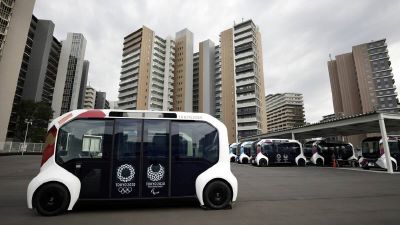
Two Tokyo Olympics show the long arc of Japans tech decline
When Tokyo last hosted the Olympics, in 1964, the unveiling of a bullet train capable of the improbable speed of 210 kilometers an hour (130 mph) heralded the dawn of a high-tech era in Japan.
Within a decade and a half, innovations such as Sony’s videocassette recorder, Toshiba flash memory and Space Invaders, the arcade shoot-em up that revolutionized the gaming industry, made Japan synonymous with global technological superiority, and the talk was of it overtaking the U.S. as the world’s biggest economy.
Today, it seems like another age.
As Tokyo again prepares to host the Games this week, Japan is in a technological funk. Its heyday of setting the pace in televisions, recording devices and computers is far behind it. While Japan can claim credit for the Walkman, Apple came up with the iPhone. More humiliating yet, regional rival South Korea and its tech giant Samsung Electronics have overtaken Japan in smartphones and memory chips.
That’s not simply a blow to Japanese national pride; it’s a corporate dilemma and an economic liability just as a fourth wave of Covid-19 robs the country of Olympic spectators and the revenue they’d bring to help spur a rebound from the pandemic. In an increasingly polarized world where the U.S. and China are setting technology and data standards, Japan runs the risk of being left further behind.
Prime Minister Yoshihide Suga is fighting back, with plans to bolster the computer chip industry elevated to a national project on a par with securing food or energy. But executives and government officials in the industry say the solution will also require something else: A fundamental shift in the way Japan has conducted business for decades.
That means reducing red tape, recruiting foreign chipmaking talent and completely dropping “a stubborn insistence on Japan-centricism,” said Kazumi Nishikawa, a director at the IT division of the all-encompassing Ministry of Economy, Industry and Trade, known as METI.
“This made-in-Japan self-reliance approach didn’t work out,” he said. “We want to avoid that this time around.”
Japan may have taken a big step in that direction by enticing Taiwan Semiconductor Manufacturing Co. to help rebuild its once dominant chip industry. Last week, Chief Executive Officer C.C. Wei surprised observers when he said that TSMC was doing “due diligence” on a wafer fab, appearing to confirm long-running speculation over plans by the world’s leading advanced chipmaker to build a facility in Japan.
Japan, the world’s No. 3 economy after the U.S. and China, is budgeting for hundreds of billions of yen to plow into chips, but it’s a drop in the ocean compared to the kind of money being waved about in the U.S., where at least $52 billion (5.7 trillion yen) is being made available to support domestic semiconductor production. In South Korea, companies like Samsung and SK Hynix are pledging $450 billion over a decade, while TSMC alone is earmarking $100 billion over the next three years.
“Some countries are offering support on a different order of magnitude,” making it hard to compete, said Akira Amari, tax chief of the ruling Liberal Democratic Party and a former minister of state for economic and fiscal policy.
Still, he said, the prime minister is “extremely good” at getting things done and is now focused on digitalization and carbon neutrality, two issues linked by semiconductors.
ADVERTISEMENTx
Japan still boasts pockets of excellence in fields including robotics and supercomputing, while Japanese engineers have just shattered the world record for the fastest internet speed, according to a report last week on interestingengineering.com. In the White House supply chain review published in June, Japan is mentioned 85 times, just ahead of Taiwan and South Korea, and the same number of references as Europe.
Tetsuro Higashi, chairman emeritus at semiconductor equipment maker Tokyo Electron, said the task of addressing Japan’s decline is not as straightforward as rebuilding one industry. He cited Japan’s semiconductor strengths as Kioxia for memory and Sony’s image sensors, along with component and power-chip makers and chip manufacturing equipment, saying “the strategy has to connect those pieces and form a core.”
“There is a more fundamental sense of crisis,” Higashi, who heads an expert panel advising the government on its chip strategy, said in an interview. “The fear is that if this goes bad, the whole Japanese economy will suffer.”
Like all the world’s most advanced nations, Japan’s technological shortcomings were exposed by the pandemic. Its recognition in Washington belies a decline in technological influence for a variety of reasons, political, economic and cultural.
Take semiconductors, the present government focus: In 1990, Japan held some 50% of the global chip market; now it’s 6%, according to IC Insights. An analysis of scientific papers submitted to the main semiconductor conferences conducted by the Berlin-based think tank Stiftung Neue Verantwortung shows a precipitous decline in Japanese contributions over the past 25 years, to the extent that China overtook it last year. “Diminishing market shares seem to go hand-in-hand with decreasing R&D power,” SNV researchers Jan-Peter Kleinhans and Julia Hess write in their report, “Who is developing the chips of the future?”
In a devastating presentation to the lower house Science and Technology Committee last month, independent consultant Takashi Yunogami laid bare Japan’s failings. Japan used to manufacture memory for mainframe computers, where clients demanded high quality and a 25-year guarantee. But come the rise of personal computers, Japanese industry failed to respond, leaving Samsung to offer PC memory with a three-year guarantee at a fraction of the cost. In an increasingly disposable digital age, Japan suffered a “high quality disease.”
The industry’s troubles were compounded by a government response that favored the creation of domestic champions over foreign collaboration. In 1999, Tokyo encouraged the merger of Hitachi and NEC’s memory businesses under the name Elpida, the Greek for “hope.” In 2012 it filed for bankruptcy with liabilities of $5.5 billion, a victim of plunging prices. It was bought by Micron Technologies of the U.S.
“All sorts of things were tried to stop the downward trend – national projects, consortiums, joint ventures – all failed,” Yunogami told lawmakers. “The chip industry is beyond recovery.”
Like the other officials, however, he saw a ray of hope in terms of Japan’s share of the global market for chip equipment and raw materials, which translates into thousands of small companies making things like wafers and specialized liquids. The government’s best chance is to focus on those few successes and “make the strong stronger,” he said.
Government intervention in the chip industry helped build its dominance in the first place. Yet talk of government help today is poison to some in business, illustrating Suga’s difficulties in securing the support for a technological revival.
One Japanese industry executive, who asked not to be named to speak candidly about the challenges, was pessimistic about the chances of success, blaming a culture of government bureaucracy.
The executive cited excessive levels of quality control as a potential deterrent to TSMC establishing a presence in Japan with local partners. While you need that for cars, you don’t necessarily need it for smartphones, said the executive. There is such a thing as doing too good a job, the person said.
Key will be what technology can be absorbed in Japan from TSMC, said Yuko Harayama, executive director at Riken, a research institution. With a strategic approach, the government’s technology drive could be a chance to reform Japan’s manufacturing sector for the digital age. “Without investing for the future, Japan will always be dependent on someone else,” she added.
There’s another reason Japanese officials cite for the country’s relative decline that would sound familiar to Chinese observers: a trade war with the U.S. Some 40 years ago, spooked by Japan’s rise, the U.S. imposed a requirement to use a certain percentage of U.S. chips or face trade tariffs.
“America saw Japan’s emergence as a threat and pushed back,” said Amari, the ruling party’s tax chief. Yet Japan’s industry was also guilty of complacency, content to focus on the domestic market without venturing out into the world, he said, citing the downfall of Docomo, the first company to connect mobile phones to the internet. It lost out to Samsung and Apple.
Today, the national security issues related to technology mean the government faces “the kind of change that happens once in a hundred years.” That means it must embrace the challenge or fall behind, he said.
“Japan is good at taking things from zero to one, and not so much at taking them from one to 10,” he said. “Japan wins in technology and loses in business.”
Published : July 21, 2021
By : Syndication Washington Post, Bloomberg · Isabel Reynolds, Pavel Alpeyev
A short list of the best luxury cars for tall people
Its hard out there if you love cars and youre tall.
Ionce owned a 1988 Mercedes-Benz 560 SL, like the kind Richard Gere would have driven in a moody Seattle fog during his Intersection days. It was a very cool car, but not a good fit for me. Literally. Well over six feet tall in my customary boots and some sort of hat, I would have to tilt my head and slouch any time I needed to see the stoplight turn green. Which, as you might imagine in a city like Los Angeles, is rather often.
I never got comfortable in the little black coupe. Its small cabin, made even smaller by freshly overstuffed leather seats, wreaked havoc on my hamstrings and neck.
I no longer own it. But the Merc got me thinking. My brother is 6 foot 7 inches tall. My dad is 6 foot 4 inches. My aunts hover around 6 feet. Many of my uncles and male cousins are varying ranges of 6’5” and 6’6”. They would have cried trying to wedge themselves inside it, let alone many other cars that are even smaller.
At least in modern luxury cars, the seats and steering wheels can be raised and lowered, and seat belts can be adjusted for height. And there will always be slightly more foot and knee room (though less street cred) in paddle-shifting cars that lack the third pedal and clutch of a manual transmission.
If they really need it, NBA players and supermodels can also pay for customizers to lengthen and rebuild cars to fit their knees, shoulders, and elbows. (Cramming knees under some steering wheels is a particular challenge for many.) Simply removing the seat rails can help gain an inch or two of headroom in some cases. But shouldn’t the more regular of us tall people be able to have our fun, too, in a proper car-without having to always opt for an SUV?
Even convertibles present problems of their own: First, tall people in convertibles often end up finding that their eye-level is even with the top of the windshield, which totally blocks our view of the road and stoplights. It’s very distracting and annoying.
And second, for those of us who are extra tall, or have disproportionately long torsos, it can look a bit “bear at the circus” driving around town in a tiny roadster. Imagine Shaquille O’Neal in a Miata.
Here’s the thing: There are some great modern and vintage luxury cars, and sporty coupes, that offer plenty of room for those of us who were always told to stand in the back row during photo day in grade school. I now own a 1975 Rolls-Royce Silver Shadow. Long-wheelbase version-that’s 17 feet long. The thing lets me stretch out like Gumby. I’m certain Naomi Campbell herself would be comfortable in the back-even with heels and hat.
Here are 10 similar winners both modern and vintage.
– BMW M8 Gran Coupe.
Headroom: 38.9 inches
Legroom: 42.1 inches
Price: $130,000.
In general, anything approaching 40 inches of headroom in a coupe is considered big. The headroom in this 617-horsepower executive hooligan beats that of the Porsche 911 by nearly 2 inches. Both the two- and four-door variants in the M8 line offer ample breathing room; the extra doors and extended wheelbase of the four-door version, which boasts shoulder room of 57.2 inches, give it the edge for more statuesque passengers and drivers.
– Bentley Continental GT
Headroom: 40.1 inches
Legroom: 41.9 inches
Price: $207,825
The ultimate in British sporting luxury, the 626-horsepower W-12 Continental GT looks and feels big and brawny from every angle including from behind the wheel-and its interior will fit the big and brawny, too. I’ve taken a drive in many versions of this sleek coupe, but the most memorable would be a 350-mile road trip to Carmel, Calif., ahead of the Pebble Beach Concours d’Elegance. Six hours straight behind the wheel did nothing to cramp my muscles; the car is deceptively large inside, like a big padded cocoon.
– Rolls-Royce Wraith
Headroom: 39.4 inches
Legroom: 41.5 inches
Price: $343,000
Edged out just a hair by Bentley, the 624-horsepower V-12 Wraith is still among the roomiest and most powerful two-seaters available on the market today. The carriage-style doors help ingress and egress for the big and tall driver.
– Mercedes-AMG GT R
Headroom: 39.5 inches
Legroom: Not released
Price: $167,650
Mercedes says shoulder room in the 720-horsepower GT R is a healthy 58.3 inches, even if it won’t share the official length available for legs. I have driven this car extensively over the course of several different press loans; it has long been a favorite. In 2018, it was even my top car of the year. I called it a winner with an exhilarating personality and a screams-for-attention look that would make even the most calloused Manhattan garage attendant grin like a 12-year-old. (Trust me, it did.) The AMG GT has a pleasantly ergonomic (though low) cabin with healthy visibility and plenty of room for heads and feet once you get inside, I wrote at the time.
ADVERTISEMENTx
– Mercedes-AMG S63
Headroom: 40 inches
Legroom: 41.7 inches
Price: $174,150
Yes, there are two modern Mercedes-Benzes on this list-but the storied Stuttgart, Germany-based brand just makes some of the biggest, baddest (in the best way) cars out there. This 603-horsepower coupe is practical as a daily driver, but the internal space and the most futuristic, well-thought-out dashboard and progressive, convenient technology available on the market today make it as fun to drive as many cars that seem more plush or look far sportier.
ADVERTISEMENT
– Jaguar E-Type 2+2
Headroom: Two inches more than the standard E-Type.
Legroom: Enough to fit a nearly 6 foot tall woman like myself both behind the wheel and, if in the passenger seat, still have room for a German shepherd in the footwell. The seats can feel low and slightly reclined, but this is one of my all-time favorite old cars to drive, and the roomy cabin is one of the reasons.
Price: $40,000 or so, according to Hagerty.
At the time of its construction, the E-Type was the epitome of British style: curved but sleek, fast and powerful, and-in this elongated 2+2 four-seat format-long enough for the lankiest of England’s rock ‘n’ roll royalty. It may look low but this car is more than 15 feet long, with a top that is gently rounded like a bubble to allow for max headroom.
ADVERTISEMENT
– Mercedes-Benz 300 SL
Headroom: With the famous racing-derived tubular frame that necessitated gullwing doors, there’s room enough for your cowboy hat and then some. You’ll actually be reaching high above to close those fabulous doors.
Legroom: Enough so that 12 hours a day in the thing doesn’t drive you mad.
Price: $896,000 on average, according to the Hagerty Price Guide, but well over $1 million for the best examples from the best years. (Between 1954 and 1957, the Mercedes-Benz 300 SL was offered as a gullwing coupé; between 1957 and 1963 it came as a roadster.)
Largely credited as the first modern supercar, the 300 SL feels practically cavernous compared with most other two-seaters of the era. When I drove one in the Silvretta Classic and later in the Mille Miglia rallies, I was shocked to discover that at the end of each of the multiple days of driving, I was not crumpled and compressed into a ball of aching muscles. The foot wells were long enough to straighten my legs fully; the steering wheel helpfully unhooks and hinges upward for simple access to the drivers’ seat. I loved every minute inside this car, and at rally’s end, I didn’t want to leave it behind.
– Rolls-Royce Silver Shadow
Headroom: Fit for a Queen – including her crown.
Legroom: An extensive wedding dress train is no problem here-all aboard.
Price: $20,000 for a drivable example.The Silver Shadow is a perfect example of a car that doesn’t cost a lot-but makes you feel like a million bucks. With the added benefits of deep-pile lambswool carpeting, lighted mirrors set in the c-pillar, and even footrests for rear passengers, the interior trimmings do much to make the car feel opulent.
– Lincoln Continental.
Headroom: 39 inches
Legroom: 41.1 inches
Price: $21,000 American-made cars of the 1950s and 1960s are a great segment to consider for those who are tall. The generously proportioned Lincoln Continental upstaged its rivals from Cadillac with unusually graceful styling and smooth driving.
– Ferrari F355
Headroom: Let’s just call it better than most other vintage Ferraris, which seem to have been made for the typical (and typically short and light) race car drivers of the day.
Legroom: 46.1 inches (rumored)
Price: $66,700
It’s easy to love the 308 Dinos, Mondials, and Testarossas of the Ferrari world in the late 1970s and 1980s, but for tall people those cars can feel restrictive, with lots of blind spots. (My 560 SL would feel like that Silver Shadow in comparison.) Instead, look to the ’90s for something a little more livable. The F355 was one of the first Ferraris created to excel as a daily driver, not just a track car or weekend toy, so it featured a roomier cabin, better sightlines, and comfier seats than its predecessors, while retaining the historic and unmistakable Ferrari design that looks closer to the Miami Vice-era Ferraris than those that came after it. Plus: Shaq himself had one!
Published : July 18, 2021
By : Syndication Washington Post, Bloomberg · Hannah Elliott
WhatsApp adds a highly-requested feature: messaging from multiple devices
For many of the 2 billion people who send WhatsApp messages to friends, family and co-workers, their smartphones are where the experience begins and ends.
Now, that’s about to change with a new feature that WhatsApp has started testing with select users.
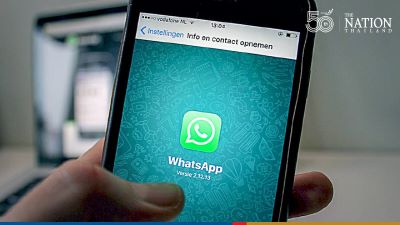
The Facebook-owned messaging service will let users access their contacts, conversations, and message histories across multiple PCs and smart displays, even when their phones are off or disconnected from mobile networks.
WhatsApp has started rolling out its multi-device feature to a small number of users to iron out the kinks for now. If you’ve been clamoring for something like this, you can learn more about how the beta test works on the company’s Help Center page.
Before you do that, though, let’s take a moment to break down how the new feature works, what changes you might experience and whether it poses any potential risks to your privacy.
– – –
How does this multi-device feature work?
Before the change, you could already log into your WhatsApp account from a computer through your web browser of choice. The catch? You can only be logged into the service from one non-phone device at a time. Even worse, that web app requires your smartphone to have an active connection to WhatsApp’s servers at the same time, which means the moment your smartphone runs out of battery is the moment WhatsApp on your computer stops working.
WhatsApp’s new multi-device feature will let you access your contacts and chat history from up to four additional devices – which can include PCs, Macs, and Facebook’s Portal smart displays – in addition to your smartphone. And because WhatsApp’s new approach involves creating a “map” of devices connected to your account, giving each a secure identifier, you can keep chatting on your PC well after your smartphone goes dark.
Unfortunately, there’s still no official way to access your contacts and message history from a separate phone (say, one your workplace gave you), though the company says it’s looking at ways of expanding WhatsApp access to even more of your gadgets.
“We’d love to support tablets and other devices soon,” WhatsApp product manager Alfonso Gómez-Jordana said.
Hopefully the company figures out its tablets plan soon – for now, the only way to access the service on iPads and Android tablets is through a slew of sketchy third-party apps.
– – –
Is it secure?
Technically, yes.
All of WhatsApp’s usual security and privacy measures remain in place. Consider your conversations: the company encrypts them end-to-end by default, which means the contents of those messages are scrambled and unintelligible to anyone apart from you and the intended recipients. Thankfully, that remains true when you’re taking part in those conversations from multiple devices.
Of course, there are some new security features at play here, many of which work entirely behind the scenes. Unlike the old days of using WhatsApp on the web, for instance, the devices you connect to your account will get their own set of unique encryption keys. Even if a hacker manages to compromise one device’s set of keys, they can’t be used to decrypt messages sent to someone else – or to another one of your devices – because WhatsApp encrypts each outgoing message specifically for each gadget. (If you’re in the mood for even more technical rigor, the company has a white paper outlining all the juicy details.)
With all of that said, you’ll still have to remain vigilant if you decide to use WhatsApp on multiple devices. It’s always a good idea to double-check which devices are already connected to your WhatsApp account in the app’s settings, since you have the power to remotely log out of any you don’t recognize. WhatsApp also has a feature you can enable that requires a face or fingerprint scan before you can access the app – if you already have that enabled, you’ll be asked to authenticate yourself again before you get to connect another device to your account.
And finally, since more screens means more visibility, do yourself a favor and make sure the gadgets you’re connecting to the service all have secure PINs or passwords of their own.
– – –
Should I bother?
Well, it depends. WhatsApp says users have been asking for a more elegant way to use one account with multiple devices for years, and the approach the company came up with is a big improvement over what users were already accustomed to. It’s also worth noting this is one of a handful of new features WhatsApp has begun testing to keep its service competitive with rivals like Telegram, Snapchat, and Signal.
So, yes, WhatsApp could become much more convenient in the coming months. But if you gave up on the service out of principle due to privacy concerns – as some users did after the service announced its updated privacy policy – I’m not sure this will be enough to change your mind.
Even though the contents of your messages remain encrypted and inaccessible by anyone at WhatsApp, the company still has access to information like your phone number, IP address, and “information on how you interact with others,” and can share that data with other companies Facebook owns.
After WhatsApp made that sharing relationship clear earlier this year, millions of people reportedly installed competing messaging apps to escape Facebook’s reach. (For what it’s worth, WhatsApp says its pool of users has “continued to grow throughout the year.”)
WhatsApp also routinely complies with governments and law enforcement agencies that request certain kinds of user and conversation data, and we’ve seen how problematic that can be in hotspots of unrest like Hong Kong.
If WhatsApp’s relationship with its parent company or the governments of the world gives you pause, it doesn’t matter how more convenient the service gets – go with your gut and steer clear.
Gartner: 51% of global knowledge workers will be remote by 2021-end
This year, remote work will drive PC and tablet shipments to over 500 million units for the first time in history
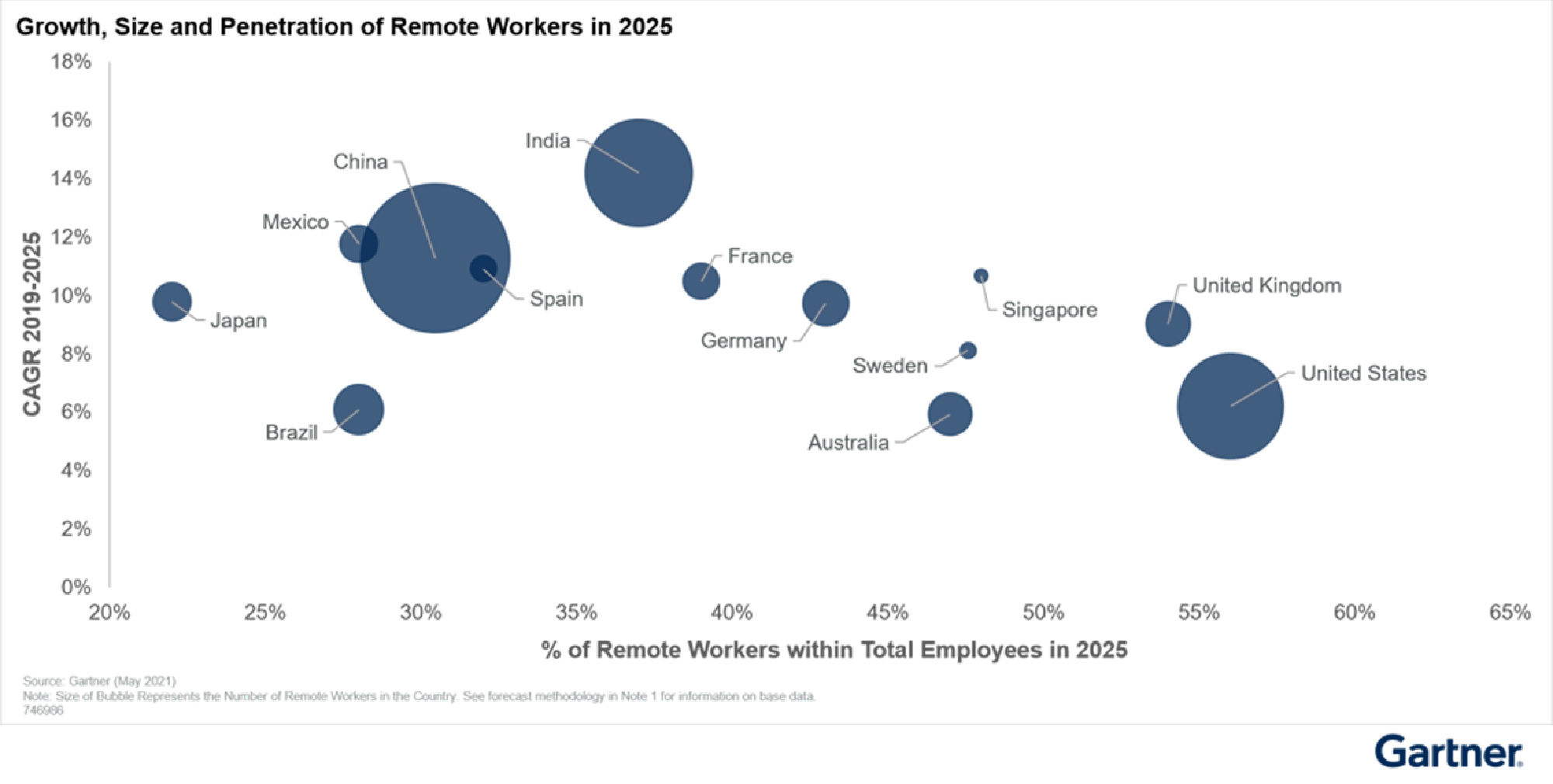
By the end of this year, 51 per cent of all knowledge workers worldwide are expected to be working remotely, up from 27 per cent in 2019, global research and advisory firm Gartner, Inc said in a press release on Tuesday.
Gartner also estimates that remote workers will represent 32 per cent of all employees worldwide by the end of 2021 – up from 17 per cent in 2019.
The company defines knowledge workers as those who are involved in knowledge-intensive occupations, like writers, accountants or engineers. Gartner defines a remote worker as an employee working away from his/her company, government, or customer site at least one full day a week (hybrid workers) or those who work from home (fully remote workers).
“A hybrid workforce is the future of work, with both remote and on-site part of the same solution to optimise employers’ workforce needs,” said Ranjit Atwal, senior research director at Gartner.
Remote working varies considerably around the world depending on IT adoption, culture and a mix of industries.
In 2022, 31 per cent of all workers worldwide will be remote (a mix of hybrid and fully remote). The United States will lead in terms of remote workers in 2022, accounting for 53 per cent of the US workforce. Across Europe and the UK, remote workers will represent 52 per cent of the workforce in 2022, while remote workers in Germany and France will account for 37 and 33 per cent, respectively.
India and China will produce some of the largest numbers of remote workers, but their overall penetration rates will remain relatively low with 30 per cent of workers in India being remote and 28 per cent in China working remote, Gartner said.
Gartner: 51% of global knowledge workers will be remote by 2021-end
Impact on how IT is procured and used through 2024
The lasting impact of remote work is resulting in a reassessment of the IT infrastructure that shifts buyer requirements to demand work-anywhere capabilities.
“Through to 2024 organisations will be forced to bring forward digital business transformation plans by at least five years. Those plans will have to adapt to a post-Covid-19 world that involves permanently higher adoption of remote work and digital touchpoints,” Atwal said.
Digital products and services will play a big role in these digital transformation efforts, according to Gartner. This longer strategic plan requires continued investment in strategic remote-first technology continuity implementation along with new technologies such as hyperautomation, artificial intelligence and collaboration technologies to open up more flexibility-of-location choices in job roles.
A hybrid workforce will continue to increase the demand for PCs and tablets. In 2021, PC and tablet shipments will exceed 500 million units for the first time in history, highlighting the demand across both business and consumer markets, the company said.
ADVERTISEMENT
Gartner: 51% of global knowledge workers will be remote by 2021-end
Organisations also deployed cloud to quickly enable remote workers.
Gartner forecasts worldwide end-user spending on public cloud services will grow 23 per cent in 2021 as CIOs and IT leaders continue to prioritise cloud-delivered applications, such as software as a service (SaaS).
SaaS applications are designed for remote access and aren’t constrained by the location of the workers using the application.
Social and collaboration tools will continue to be a “must have”, which will help the worldwide social software and collaboration revenue market to increase 17 per cent in 2021.
ADVERTISEMENT
In terms of connectivity, many organisations have had to change and adapt a variety of IT approaches to ensure business continuity among their remote workers.
By 2024, at least 40 per cent of all remote access usage will be served predominantly by zero trust network access (ZTNA), up from less than 5 per cent at the end of 2020, Gartnet said.
While most of these organisations will not completely retire all their client-facing VPN services, ZTNA will become the primary replacement technology, the firm added.


 Chula researchers develop dental materials for easier tooth filling
 The role parents play with children attending classes at home
 The role parents play with children attending classes at home
 The role parents play with children attending classes at home
 The role parents play with children attending classes at home
 The role parents play with children attending classes at home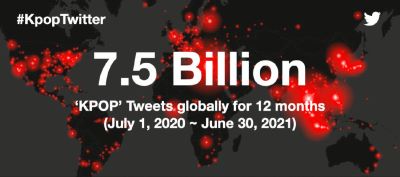




 Gartner: 51% of global knowledge workers will be remote by 2021-end
 Gartner: 51% of global knowledge workers will be remote by 2021-end
 SootinClaimon.Com