A renewed push: Technology on all new vehicles to prevent drunken driving #SootinClaimon.Com

#SootinClaimon.Com : ขอบคุณแหล่งข้อมูล : หนังสือพิมพ์ The Nation.

https://www.nationthailand.com/tech/40001602

A renewed push: Technology on all new vehicles to prevent drunken driving


Technology that could reduce drunken driving has evolved faster than the willingness among political and auto industry leaders to put it to use, safety advocates say. But that could be changing.
A renewed push: Technology on all new vehicles to prevent drunken driving

On Wednesday, the Automotive Coalition for Traffic Safety announced that its breath-analyzing interlock, which can detect impaired drivers, will be available for use in commercial vehicles for the first time later this year. A consumer version could be ready by 2024.

The device is among several anti-DUI technologies that could be used to prevent drunken driving and has so far attracted the most attention. For more than a decade, the federal government and the auto industry have been working to develop the device as part of a Driver Alcohol Detection System for Safety, or DADSS, that can passively detect whether a driver is intoxicated and prevent the vehicle from starting.

But with a new administration in the White House, a new Congress and advances in the technology, momentum appears to be building for new federal auto safety standards that would go beyond DADSS to reduce alcohol-related crashes and save an estimated 9,400 lives.

Mothers Against Drunk Driving (MADD) is pressing the auto industry to take advantage of existing technology, such as driver-monitoring and driver-assist lane controls, to reduce drunken driving now, rather than wait for DADSS or fully autonomous vehicles to hit the market.

While some automakers, such as Volvo, have integrated driver-monitoring cameras and sensors into their safety systems, advocates expressed frustration that the rest of the industry has been slow to do the same.

“We are mad that the automakers are ignoring the potential technologies they have to prevent drunken driving,” said Ken Snyder, whose daughter, Katie Snyder Evans, was killed by a drunk driver in October 2017 in California. He said there are 241 technologies available to combat drunken driving, with some requiring little more than rejiggering the computer code in driver-assist technology. “I can’t sit still until this done because I don’t want other families to go through the hell we’ve been through,” Snyder said.

The number of drunken driving fatalities has fallen by more than half since 1982, when the federal government began collecting alcohol-related crash data. Yet every 50 minutes, another American dies in an alcohol-related crash. The Insurance Information Institute says 10,142 people were killed in alcohol-related crashes in 2019, accounting for 28 percent of all traffic fatalities.

Bipartisan legislation – the Reduce Impaired Driving for Everyone (Ride) Act in the Senate and a similar bill in the House – would require the National Highway Traffic Safety Administration (NHTSA) to formulate rules and standards on implementing anti-DUI technology. Backers include Rep. Debbie Dingell and Sen. Gary Peters, both Democrats from Michigan. Several Republicans, including Sen. Rick Scott of Florida and Rep. David McKinley of West Virginia, have also signed on.

The auto industry opposes such mandates. Industry officials warn that existing driver-assist and driver-monitoring technology is not yet up to the task of intervening against a drunk driver, and that ineffective or unreliable measures could backfire. What would happen, they ask, if technology designed to monitor driver behavior inaccurately determined that a driver was impaired and disabled the vehicle or forced the vehicle off the road?

“While these systems may help identify many of the effects of alcohol and drug impairment, we are unaware of existing research demonstrating the robust effectiveness of these systems in detecting alcohol impairment,” Scott Schmidt, vice president for safety policy at the Alliance for Automotive Innovation, said in comments submitted to NHTSA in January.

At best, Schmidt said, the current driver-assist technology can only infer that a person is impaired, unlike DADSS, which is intended to make reliable and accurate readings of a driver before the car gets on the road. He said it’s also possible that current technology might fail to intervene with a “high functioning” driver who is relatively able to operate the vehicle while under the influence.

“As a result, we believe that DADSS research should be supported and completed as an agency priority,” Schmidt wrote.

NHTSA also supports further research and development of DADSS, an ignition interlock device that would prevent the vehicle from starting if it determines that the driver has a blood alcohol level above a certain threshold. Such breathalyzer-like devices have become widespread over the past three decades as states implemented various programs to stop recidivism among drivers who were charged with or convicted of a DUI.

Unlike existing interlocks, however, DADSS technology is intended to become standard equipment in all automobiles and require no effort from the driver to take a reading. The driver would not be required to blow into a tube, for example. Instead, DADSS would analyze the driver’s ambient breath. The nonprofit is also developing a touch-based sensor similar to thermometers and blood-oxygen gauges applied to a finger tip.

Robert Strassburger, president of Automotive Coalition for Traffic Safety, said the pandemic had set back development of DADSS by at least a year because of limits on research involving human subjects and disruptions to the supply chain for electronic components. He said the coalition is ahead of the usual 20-year timeline for research and development of a major traffic safety component with its breath-analyzing interlock.

“We still need to make the sensor more sensitive to alcohol and further shrink its size so it’s more easily integrated into cars,” Strassburger said. He said the touch-based technology is expected to reach commercial fleets by 2023, followed by a consumer version two years later.

NHTSA has contributed $55 million to developing DADSS, matched by $16 million from the auto industry, an agency spokeswoman said. The federal agency is also exploring other possible technologies to reduce drunken driving, having issued a “request for information” to manufacturers and researchers in November. A report on the findings is expected later this year.

Joan Claybrook, a former president of Public Citizen who headed NHTSA during the Carter administration, likened the push for anti-DUI technology to the resistance to installing air bags in vehicles.

“Fifty thousand lives have been saved by air bags and the auto industry fought it like mad, even though they invented it,” Claybrook said.

At a Senate subcommittee hearing in April, Sen. Ben Ray Luján, D-N.M., a Ride Act co-sponsor and victim of a drunk driver, expressed urgency as he questioned John Bozzella, president of Alliance for Automotive Innovation.

“Mr. Bozzella, have you ever been hit by a drunk driver?” Luján asked.

“No, I have not,” Bozzella answered.

“I have,” Luján said. “I got hit head-on by a drunk driver 29 years ago. And there were many nights that I’d be driving home after that accident, or driving anywhere, and all I would see were headlights coming at me, and it scared me to death.”

Luján, in an interview last week, said he still recalls the feeling of shock and disorientation he felt moments after the crash. He also recalled seeing an empty child carrier in the other car and fearing that perhaps a child had been flung from the wreckage. It turned out that the other car’s only occupant was the drunk driver, and both he and Luján emerged from the crash relatively uninjured.

“The point of this, I’m here to tell the story, [but] there are so many people who died,” Luján said. “There’s no good reason why auto manufacturers are not required to include technology in their vehicles which is readily available to prevent drunken driving crashes from happening.”

Published : June 03, 2021

By : The Washington Post · Fredrick Kunkle
Phayao gets North’s first air-purification tower to combat PM2.5 smog #SootinClaimon.Com
#SootinClaimon.Com : ขอบคุณแหล่งข้อมูล : หนังสือพิมพ์ The Nation.

https://www.nationthailand.com/tech/40001551

Phayao gets North’s first air-purification tower to combat PM2.5 smog


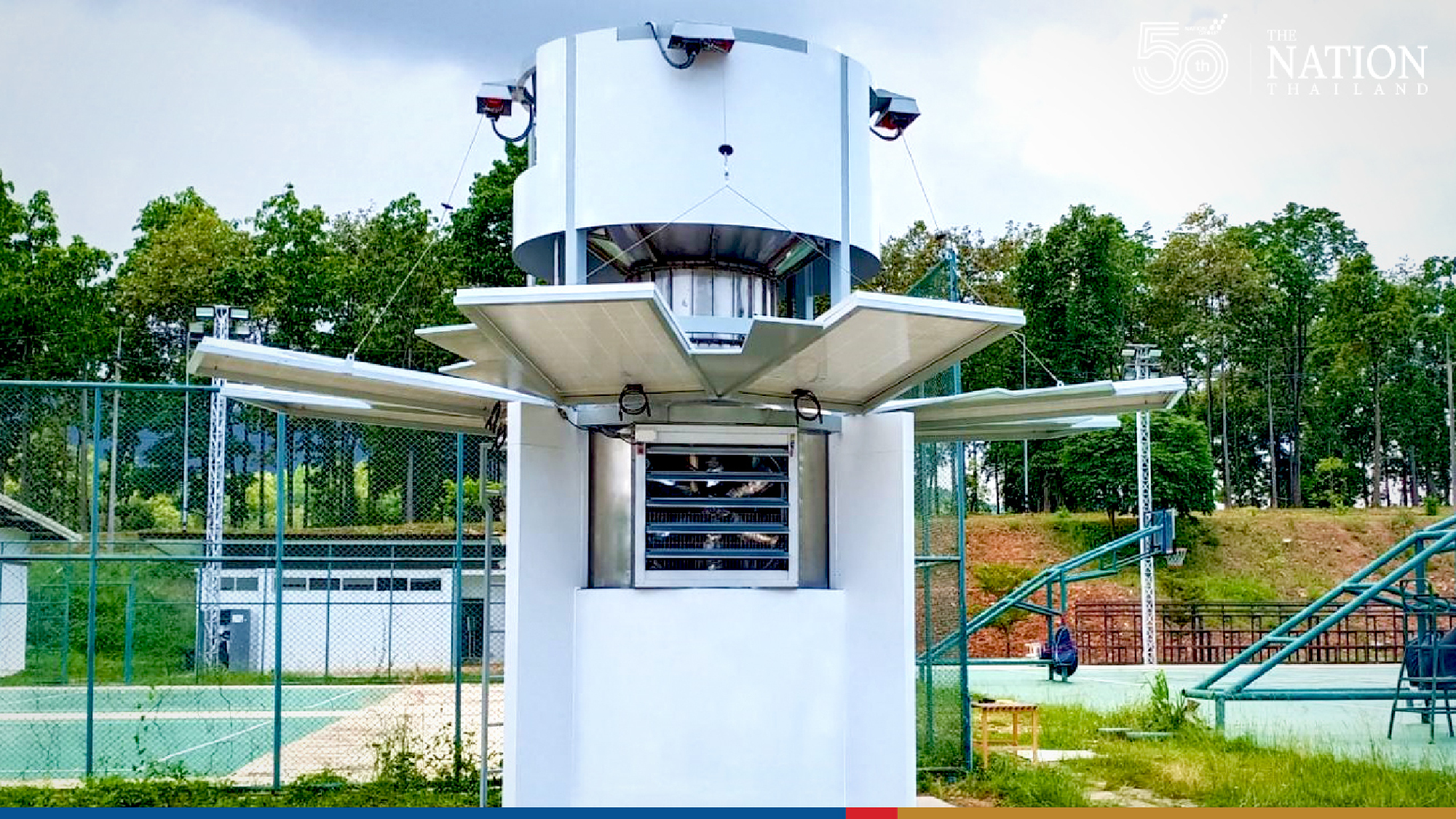
The city of Phayao has erected Thailand’s third “Fahsai” (Clear Sky) air purification tower to combat seasonal smog conditions that are among the worst in the North.

Phayao gets North’s first air-purification tower to combat PM2.5 smog

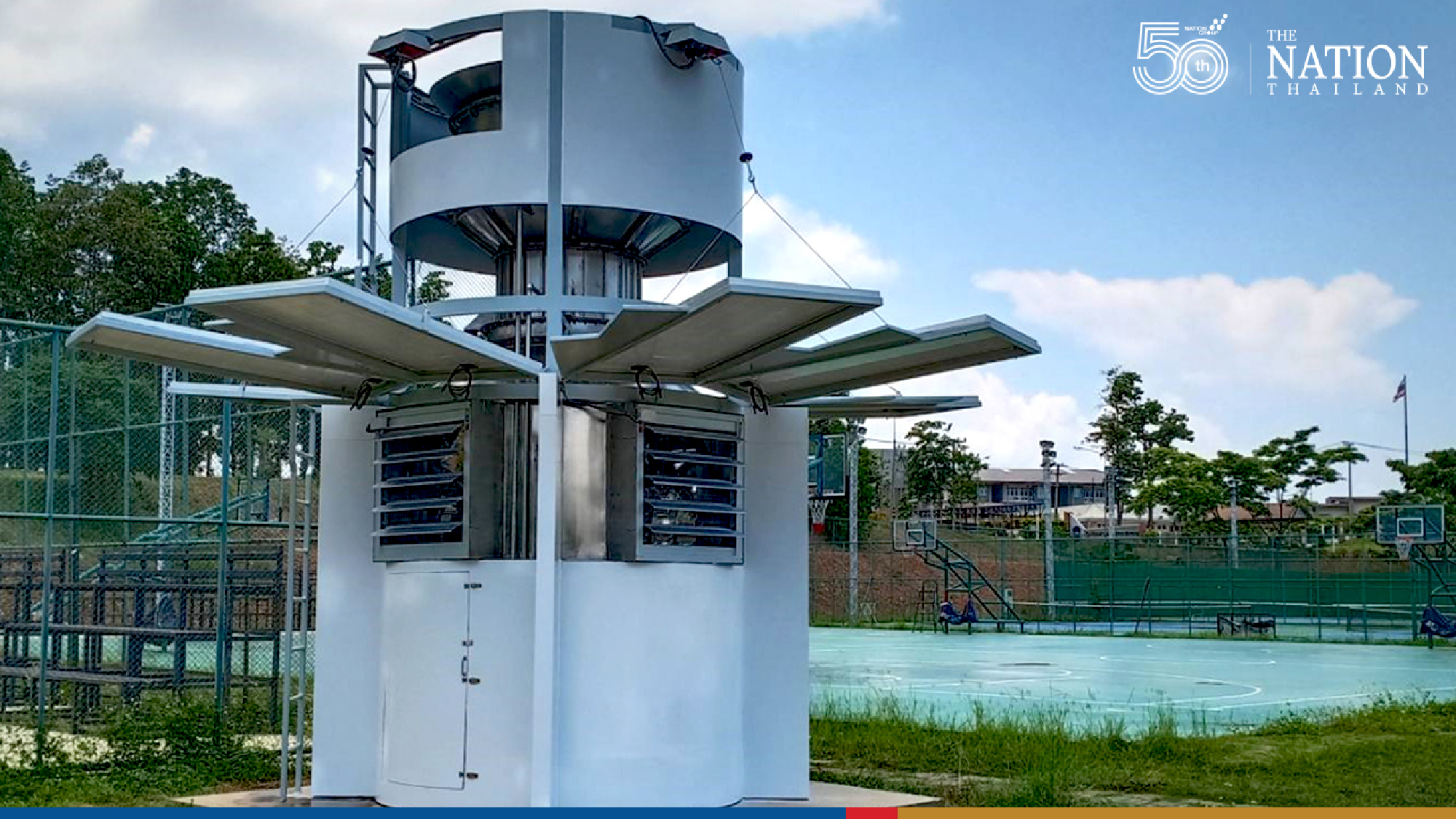
Rising more than 5 metres into the air, the Fahsai 2 at Phayao is designed to help alleviate PM2.5 pollution whipped up by field-burning at the end of the growing season.

“Phayao is in the top three northern provinces for PM2.5 dust, mainly from open-air burning of biomass,” said Assoc Prof Singh Intrachooto.

Singh is chief adviser to the Research & Innovation for Sustainability Centre (RISC) under Magnolia Quality Development Corp (MQDC), which launched the tower with help from the University of Phayao.

“Breathing fine PM2.5 particulates can greatly harm respiratory systems and lungs, causing high blood pressure, heart disease, and strokes,” said Singh, adding that Phayao had been chosen to pilot the Fahsai project on air quality research in the North. Aided by the university’s School of Public Health and the Faculty of Engineering, the RISC is creating a digital dust database for the northern city.

Phayao gets North’s first air-purification tower to combat PM2.5 smogPhayao gets North’s first air-purification tower to combat PM2.5 smog

The hybrid air purifier tower is powered by solar panels along with mains power to reduce its carbon footprint. The device has also been upgraded from first-generation Fahsai to kill bacteria, fungi, and viruses using UVC and ozone.

Capacity has also been enhanced with four larger fan blades each moving 30,000 cubic metres/hour (up from 15,000) for a total of 120,000 cubic metres/hour to serve an area of about one football field.

The first-generation Fahsai city-level air purification tower was installed at 101 True Digital Park in 2020. RISC launched the second generation of Fahsai 2 in early 2021 at Bangkok’s Makkasan Airport Rail Link Station.

Published : June 01, 2021

By : The Nation

Thailand’s EV industry flourishing with three big players #SootinClaimon.Com
#SootinClaimon.Com : ขอบคุณแหล่งข้อมูล : หนังสือพิมพ์ The Nation.

https://www.nationthailand.com/tech/40001550

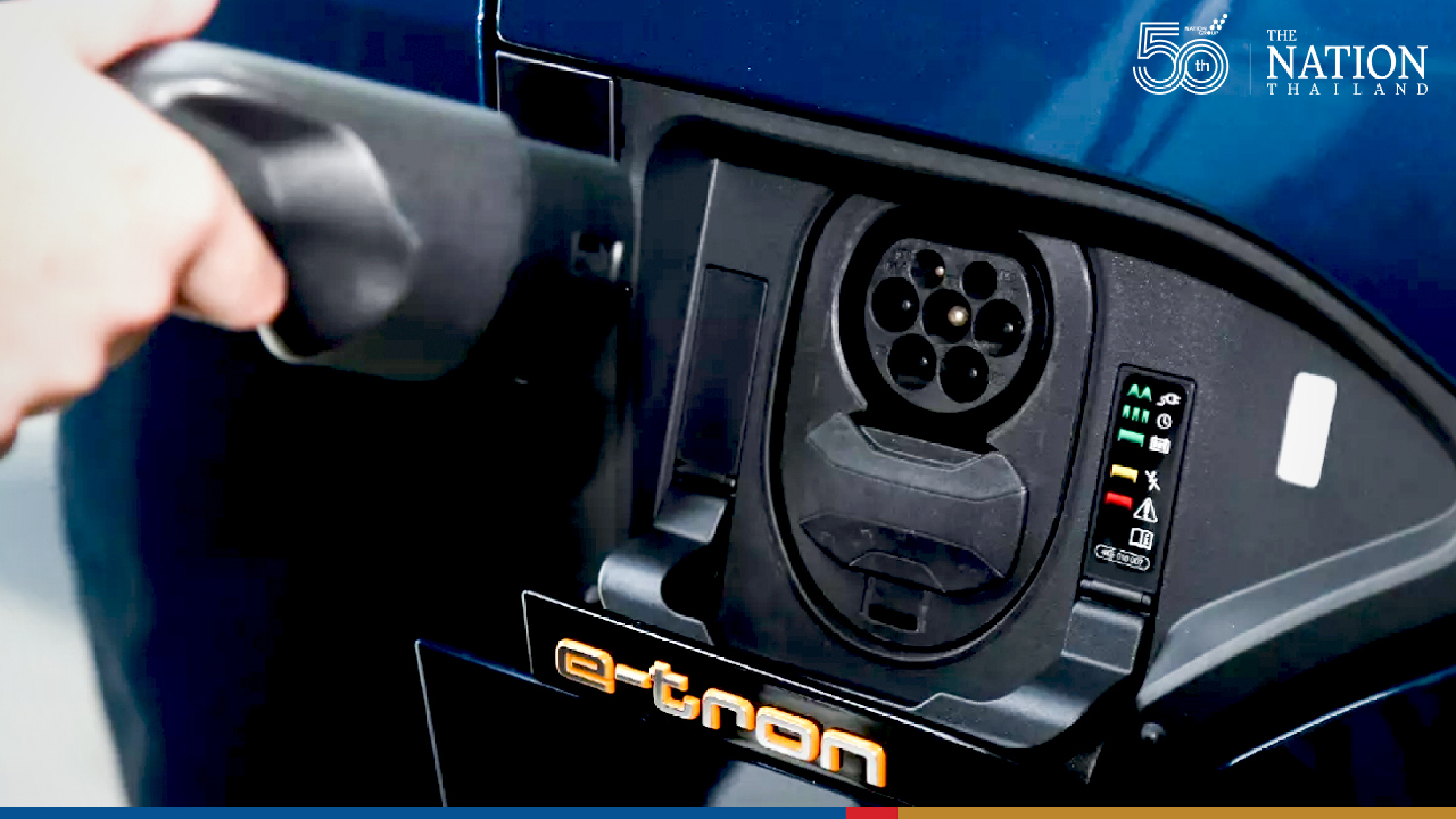
Thailand’s EV industry flourishing with three big players

Electric vehicles (EV) are fast becoming popular in many countries, including Thailand, as governments work towards protecting the environment and stimulating the economy.

Thailand’s EV industry flourishing with three big players
Here are three companies that play an important role in Thailand’s EV industry:

MINE

Energy Absolute (EA) has set up several subsidiaries to support the trend of renewable energy, such as MINE.

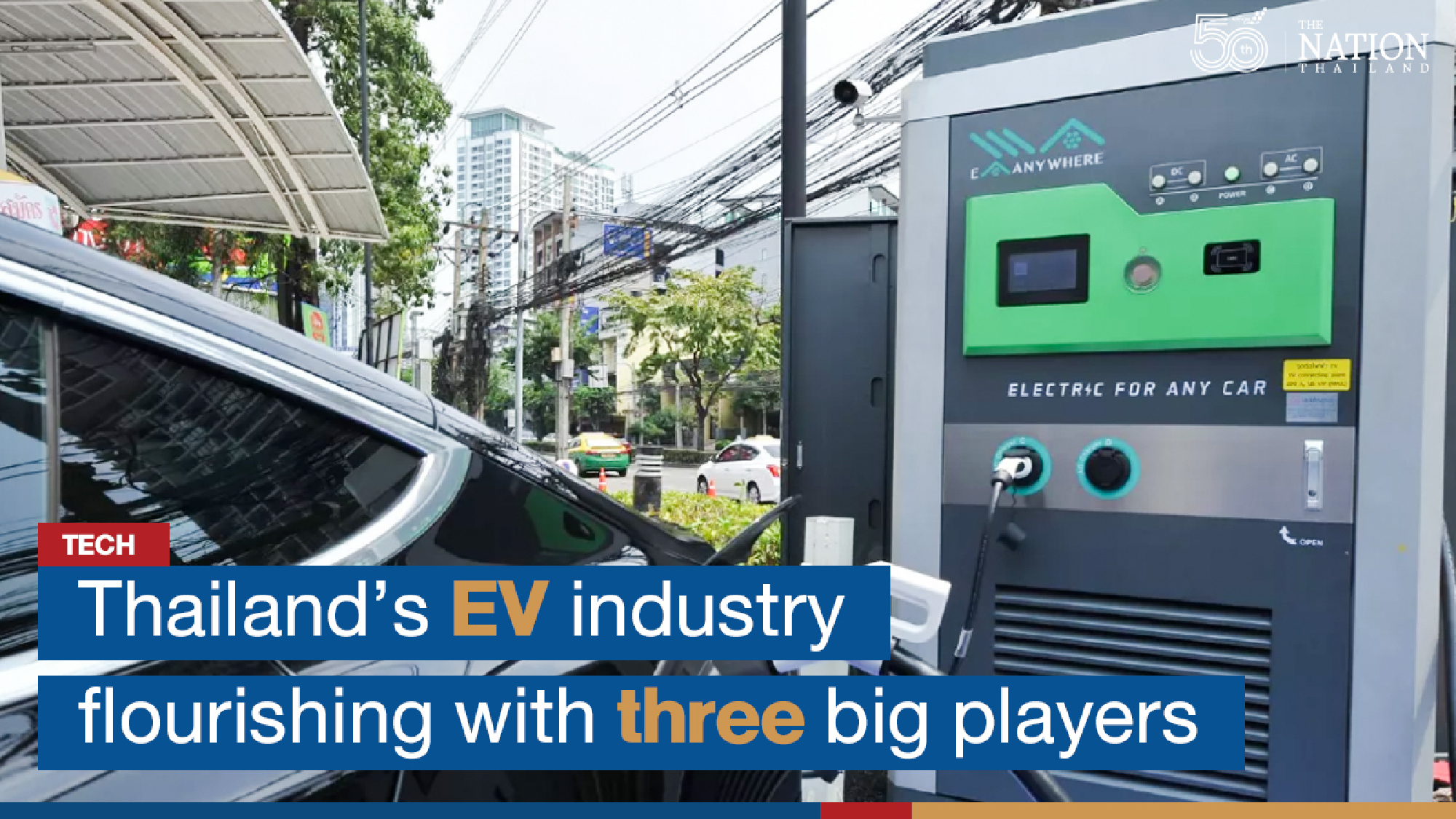
MINE develops EVs, while its other subsidiary, Energy Mahanakhon, provides “EA Anywhere” charging stations.

So far, MINE has developed three EVs:

• MINE SPA1: An electric car that is 100-per-cent made in Thailand. Production to meet orders kicked off in the fourth quarter of 2020.

• MINEbus: Electric buses have been delivered to private firms for testing in smart cities, like Chachoengsao and Saraburi.

• MINE Smart Ferry: Electric ferries are currently plying down the Chao Phraya River between Pak Kret and Sathorn piers.

EA recently set up Amita Technology Thailand, the country’s first one-stop lithium-ion battery factory.

Thailand’s EV industry flourishing with three big playersThailand’s EV industry flourishing with three big players
SHARGE

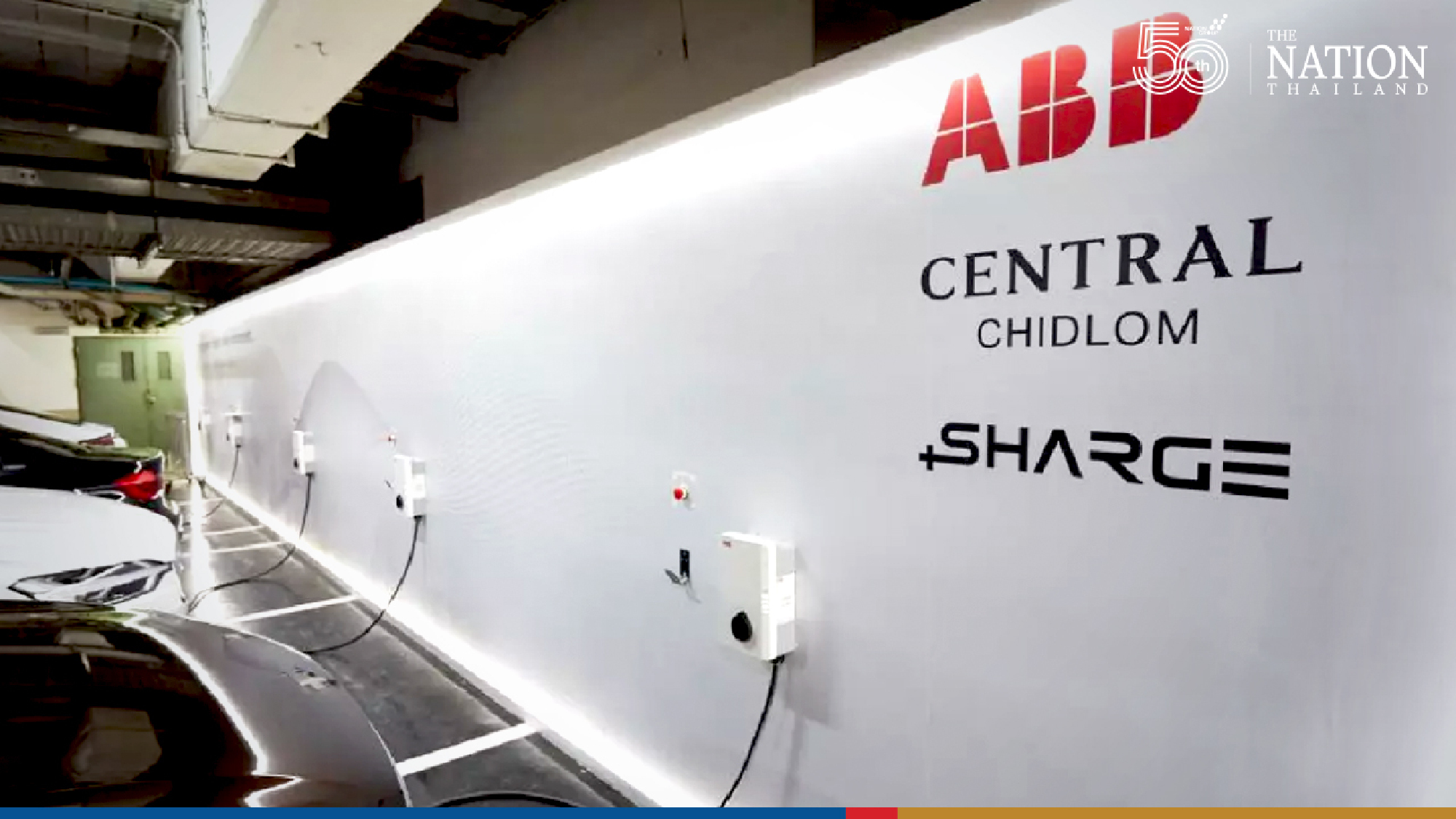
Thai firm SHARGE has 250 EV charging stations across Bangkok, Hua Hin, Pattaya and Khao Yai. It set up its first charging station in Bangkok’s Central Embassy shopping mall and then in Central Chidlom in 2018.

SHARGE aims to generate up to 3 billion baht in revenue and have the company listed in the stock market by 2025.

This year, SHARGE will cooperate with government and private agencies to set up charging stations in other provinces, including Chiang Mai, Chiang Rai, Rayong, Ayutthaya and Phuket.

Thailand’s EV industry flourishing with three big playersThailand’s EV industry flourishing with three big players

Asia Cab

Asia Cab is both an automaker and an integrated taxi operator. It set up business in Bangkok last year and has been operating CABB – blue London cabs.

These blue cabs can be seen standing outside department stores or hospitals and can also be ordered by calling (02) 026 8888 or via a smartphone application. Fares start at 60 baht.

Asia Cab is working with SCG Chemicals, EA, Summit Auto Body Industry and Microsoft (Thailand) to develop an electric version of the blue London taxis. The EVs are expected to roll out in 2022.

Published : June 01, 2021

By : The Nation

AspenTech Expands Application of Industrial AI to Achieve New Profitability #SootinClaimon.Com

#SootinClaimon.Com : ขอบคุณแหล่งข้อมูล : หนังสือพิมพ์ The Nation.

https://www.nationthailand.com/tech/40001500

AspenTech Expands Application of Industrial AI to Achieve New Profitability


AspenTech Expands leadership in Industrial AI with Hybrid Models, Deep Learning APC and Empowers Data Scientists to Collaborate with Domain Experts to Achieve New Profitability and Sustainability Goals.

AspenTech Expands Application of Industrial AI to Achieve New Profitability

Aspen Technology, Inc. (NASDAQ:AZPN), a global leader in asset optimization software, today announced that it has extended Industrial AI across its leading solutions to drive higher levels of profitability and sustainability in customer’ operations. In addition, the AIoT workbench will enable data scientists to collaborate with domain experts to develop AI apps based on enterprise-wide data.

With First Principles Driven Hybrid Models, AI is directly embedded into Aspen HYSYS and Aspen Plus process simulations, enabling engineers to easily build operations-ready models calibrated with relevant plant data. Reduced Order Hybrid models can be shared across engineering, planning and dynamic optimization solutions to improve the accuracy and predictability of these applications. Deep Learning APC can deliver more accurate and sustainable models that cover a broad range of operating conditions. Together, these advanced capabilities deliver the next generation of operational excellence. According to Peter Reynolds, Principal Analyst with ARC Advisory Group, “The use of First Principles Models acting as guardrails for the use of AI in industrial markets is key for success.”

“Using the hybrid model, we were able to create a model that can reproduce real plant data more accurately than the conventional reformer model. We were able to create a highly accurate model in a short period of time,” commented Mr. Takuto Nakai, Production Department, Nissan Chemical Corporation.

Also new to this latest version of aspenONE V12.1 are new models that will enable customers to optimize biomass processing, hydrogen production, carbon capture, and carbon emissions more accurately and systematically, focused on reducing environmental impact. In addition, new analysis and visualization capabilities can help to reduce measurable waste and energy use, throughout the process from lab to production.

AI-driven 3D conceptual layouts with the introduction of Aspen OptiPlant and Aspen OptiRouter are now integrated into the AspenTech portfolio. For industries such as pharmaceuticals with pressure for a faster time to market, Aspen Unscrambler, Aspen Unscrambler HSI and Aspen Process Pulse ensures product and process quality by solving complex problems using multivariate analysis to drive more profitable processes, less deviation and higher yield.

According to Janice Abel, Principal Analyst with ARC Advisory Group, “The deep domain expertise embedded into the AspenTech V12.1 products and its focus on embedding Industrial AI from design through the entire supply chain offers a powerful solution that will help unlock the untapped business value in industrial data.”

“We continue to add Industrial AI across our portfolio of solutions to automate greater efficiency across engineering, operations and maintenance, to progress the vision of the Self Optimizing Plant,” commented David Arbeitel, senior vice president of product management at Aspen Technology. “The AI workbench solution enables operations and data scientists to better collaborate for business-specific needs. The combination of industry specific application knowledge and asset optimization expertise gives AspenTech customers the assurance that their AI initiatives will yield safe, reliable and efficient operations.”

The aspenONE V12.1 release further improves margins, improves asset uptime and reliability, and maximizes utilization of assets with AspenTech’s end-to-end solutions. Companies can accelerate their digitalization journey and leverage Industrial AI to make progress toward the Self-Optimizing Plant while increasing margins, achieving sustainability and reliable, safe operations, and reducing capital cost and time in bringing assets online.

New Features of aspenONE® V12.1 software include:

• Aspen HYSYS® and Aspen Plus®: Embedded machine learning to easily calibrate models ready to be deployed in operations; Models tuned to reality with improved time-to-value.

• Aspen Deep Learning for DMC3™: combines linear and nonlinear (deep learning) control variables that are easy to update and augment with new data to generate more accurate and sustainable models to run closer to optimum level across entire lifecycle.

• Aspen OptiPlant™ and OptiRouter™: Automatically generate 3D layouts for design, with AI-driven optimum pipeline routing, and broader visibility increasing collaboration for reduced costs, errors, variances and faster concept selection.

• Aspen Unscrambler™ and Aspen Process Plus™: Accelerate product development and ensure product quality, while maintaining regulatory compliance with Aspen Unscrambler and Aspen Process Pulse. Each provides pharmaceutical companies with full process understanding and control of data from product development to production for more profitable processes, less deviations, reduced cycle times, and higher yields.

• Reduced Order Hybrid Models for Aspen Unified PIMS™ and GDOT™: Automate workflow for maintaining planning model accuracy and enable optimization of complex process units in closed loop with reduced order models that provide a consistent workflow spanning process engineering, data science, planning and APC.

• Aspen Mtell™: Enables data scientists to collaborate with domain experts with integration with Aspen AIoT Hub. In addition, Aspen Mtell native OPC UA support enables broader coverage and easier connections across enterprise deployments.

• Aspen Industrial AI Workbench™: Enable domain experts with data analytics with a no-code Visual Query Builder and gain fast-time to insights with out-of-the-box Analytics libraries. Empower citizen data scientists with Advanced Analytics libraries such as Anomaly Detection and Scoring and seamlessly share insights through configurable dashboards and application enablement.

To learn more, visit our website.

Published : May 31, 2021

Matt Furie is trying to reclaim his famous cartoon Pepe the Frog – through NFTs #SootinClaimon.Com

#SootinClaimon.Com : ขอบคุณแหล่งข้อมูล : หนังสือพิมพ์ The Nation.

https://www.nationthailand.com/tech/40001480

Matt Furie is trying to reclaim his famous cartoon Pepe the Frog – through NFTs


Matt Furie is a patient man. After many on the internet co-opted his most famous cartoon creation more than a decade ago, he was long willing to live and let live. And when his same Pepe the Frog character popped up on the forefront on the crypto-art scene about five years ago, Furie watched from the sidelines and waited.

Matt Furie is trying to reclaim his famous cartoon Pepe the Frog - through NFTs

Now, he’s moving fully into the world of NFTs and their experimental possibilities.

Last month, an image of Pepe – the first authentic crypto-art of Furie’s iconic character – sold at auction for about $1 million. And the artist is planning to unveil a universe of collectible NFT characters – some of them his latest takes on Pepe.

To Furie, the NFT realm is about more than coin. During the era of Donald Trump, extremist social media users adapted Pepe so often that the Anti-Defamation League deemed it a hate symbol. But the exploding world of crypto-art is allowing the cartoonist to reclaim a character who was never meant to stand for much beyond love, peace, hedonism and altered-state chillaxin’.

“The NFT world is new, and there are a lot of optimistic people creating cool things,” Furie says of his interest in exploring non-fungible tokens – unique digital files whose origins and ownership can be verified. “Pepe does not have the baggage here that he does in the ‘real world,’ and I like working with utopians and optimistic freethinkers. There are so many possibilities.”

Furie became intrigued when his cousin Frank Musarra, a Brooklyn-based multimedia artist, contacted him in February with an invitation to show his work on Chain/Saw, a new online gallery of crypto-art featuring like-minded creators. Musarra envisioned a “middle ground between crypto-utopian zealotry and grouchy anti-tech naysayers.”

They soon were on a Zoom call with dozens of fellow artists, kicking around ideas about just what the site would look like. Furie embraced the opportunity to show the world he was much more than the Pepe Guy. Yet as the site’s April launch neared, Furie and Musarra, the site’s official founder, knew something was missing. “We both felt pressure to show a Pepe NFT,” says Furie, who’s based in Southern California.

The cartoonist found a scan of the original 2006 “Boy’s Club” comic art in which Pepe utters his catchphrase, “Feels good man” – the panels that launched countless memes across online forums and platforms.

In an April auction, Furie put a digital token of the art up for sale as “Pepe the Frog NFT Genesis.” The winner was a prolific but secretive collector who goes only by the handle “punk4156.” The top bid: 420 in Ethereum currency for the stoner frog, as recorded on the OpenSea marketplace – which converted at the time to about $1 million.

So why is ownership of a Furie art token called “1pantsdownpee.jpg” worth a million bucks? “It’s my view that this will eventually be one of the most valuable digital originals in the world,” punk4156 told Whitehot Magazine of Contemporary Art last month, noting that given how widely the Pepe image has been copied, the original “should rightfully be our generation’s Mona Lisa.”

This week, Furie is planning to unveil PEGZ – Pog-like digital portraits of his creature characters in 2-D, 3-D and animated form. “Everything else is a bootleg, and I’m very inspired by bootlegs in my life and in my art,” he says – including Grateful Dead mix tapes – “but nothing beats the real thing.”

Furie enters this world fascinated, too, by its sense of community – intrigued by how NFTs can “provide a tangible connection between a digital artwork and a collector who owns it.”

Many people are minting their unique works as NFTs because blockchain technology – as a ledger of transactions across a network of computer systems – can now create a fixed digital record proving who owns each work. So creators are selling electronic tokens of everything from music to social media content – including the viral “Charlie Bit My Finger” video (which fetched $760,999 at auction) and Twitter chief executive Jack Dorsey’s first tweet ($2.9 million).

“This new space is laying the groundwork for the Internet 3.0,” Furie says. “In the future, you’ll be able to trace memes back to their source.”

And as Giorgio Angelini, writer-producer of the documentary “Feels Good Man,” puts it: “Pepe is the ur-meme.”

As chronicled in that film, Pepe has had many online lives: The anthropomorphic frog jumped from the panels of a relatively obscure comic about benign bro-creatures, transmogrified into a meme on the forums of 4chan and was posted on social media by such pop singers as Katy Perry and Nicki Minaj. But Pepe’s image was also swiped by the alt-right and white supremacist groups and plunged into the political mainstream during the 2016 presidential election cycle, with Donald Trump Jr. sharing an image of Pepe among GOP figures, in a spoof movie poster titled “The Deplorables.” In 2018, Furie sued Infowars host and conspiracy theorist Alex Jones over unauthorized use of Pepe; the case was settled the next year.

Yet in recent years, in the separate space of crypto-art, Pepe has played a prominent role while staying mostly free of such political associations. Collectors began trading fan-made memes, called Rare Pepes, and in 2016, a developer created the online platform Rare Pepe Wallet for buying, selling and exchanging them like trading cards. By early 2018, a first-of-its-kind live Rare Digital Art Festival was held in Manhattan, during which online marketer Peter Kell bought the “Homer Pepe” card – an NFT depicting Homer Simpson with a green Pepe-like face – for nearly $40,000. This year, Kell sold the NFT – once dubbed “the rarest Pepe” – for more than $300,000.

Then, in recent months, crypto-art started making mainstream news, as the works of such creators as Beeple began selling for millions. Furie increasingly received emails asking whether he would ever experiment in the blockchain space. He soon decided it was time: “I see a lot of folks out there juicing the market, so I thought I should squirt some of my own juice into the mix and see what happened.”

“The NFT space allowed him to claim something that was his,” Musarra says. “This is something that has evaded him for years, and this was a powerful thing.”

Prominent NFT artist Matt Kane applauds the full Pepe progression as fitting: “Matt Furie created Pepe, which inspired Rare Pepes, which provided us the proof-of-concept on which the modern NFT scene became based. So for Matt to have had such a successful entrance to NFTs, it created a beautiful circle.”

Early word about Furie’s NFT work, though, faced some blowback; some critics pointed to research about the technology’s eco-impact. Furie and Musarra say they have weighed reports on the energy consumption and carbon output of blockchain. “I hope that it will get cleaner,” Furie says of the tech.

They concluded that “whether or not we participate, the blockchain is established as it is and it does not seem like it’s going to disappear,” says Musarra, who added, “There is much misinformation and confusion” about its true impact.

Chain/Saw is a marketplace for Furie’s work, but it also spotlights a growing trove of inventive artists.

“I’m a fan of deformed, colorful, weirdo art, so his site resonates with me – it’s genuinely experimental,” Furie says. The first piece sold on Chain/Saw, “Colors of the Inside” by French 3-D artist Benjamin Lemoine, is a 14-second video clip of a masklike face being colorfully punctured from within. Musarra says Chain/Saw is planning to sell socially conscious art and work with such creatives as performance artist-musician Kembra Pfahler and prominent psychedelic artist Jen Stark.

Furie says this is just the beginning. Nodding to the psychedelic spirit of his Pepe comics, he embraces broad creative possibilities for digital art.

“We want to throw a rave in the metaverse for disco Pepes, lizards, tongue-waggling-whachamacallits, blobbies, gooies, pricklies and everyone,” Furie says. “Viral media is inside of our heads, our subconscious. It never ends. It’s best to make friends with the worms in our minds and to dance with them.”

Published : May 31, 2021

By : The Washington Post · Michael Cavna

iTrapped: All the things Apple wont let you do with your iPhone #SootinClaimon.Com

#SootinClaimon.Com : ขอบคุณแหล่งข้อมูล : หนังสือพิมพ์ The Nation.

https://www.nationthailand.com/tech/40001384

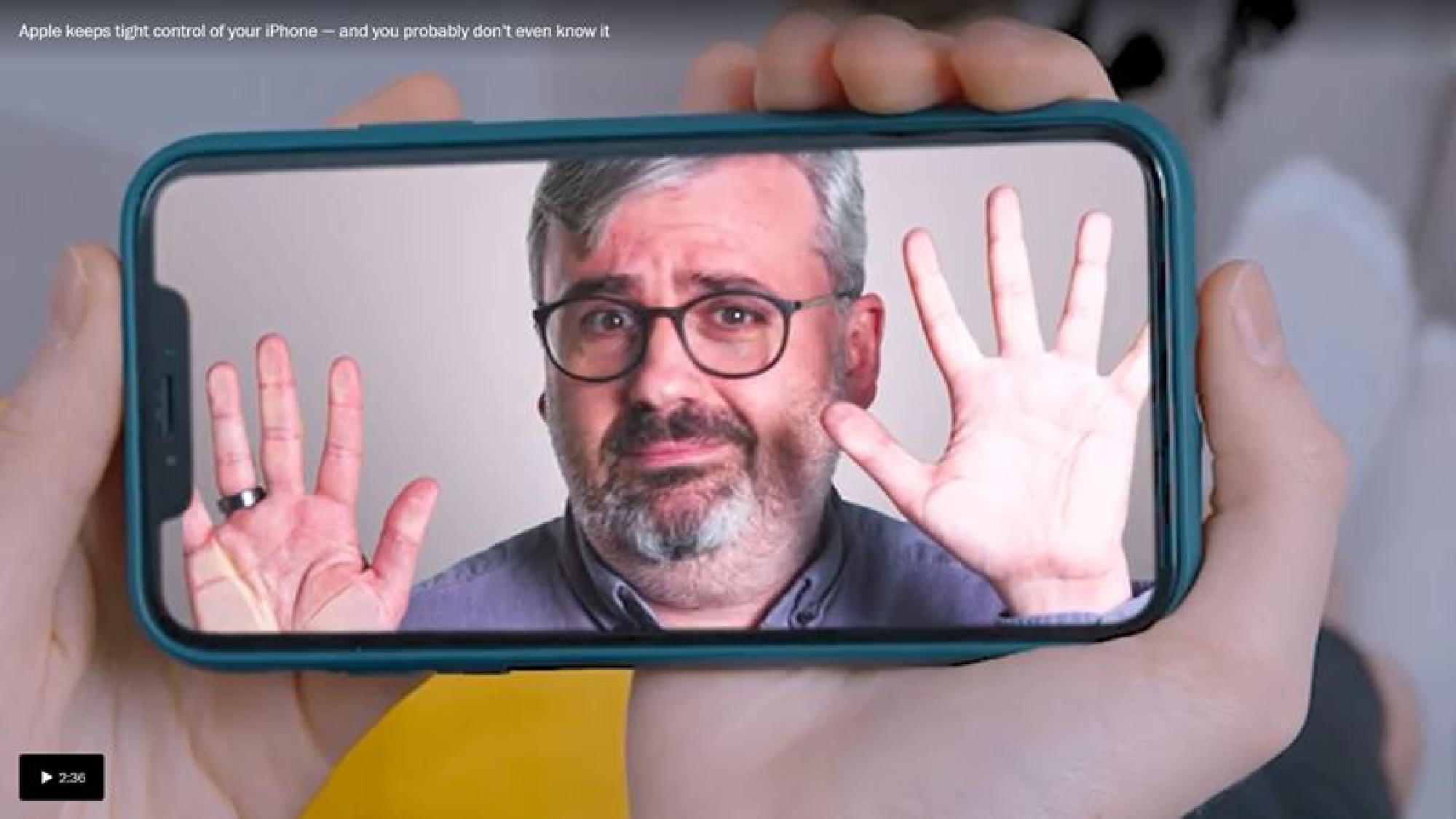
iTrapped: All the things Apple wont let you do with your iPhone


Have you ever tried to swap Siri for a better voice assistant on your iPhone? Dont bother, you cant. Tried to buy e-books from the Kindle app? Cant do that, either.

iTrapped: All the things Apple wont let you do with your iPhone

Send iMessages to someone with an Android phone? Nope. Backup your iPhone to Google Drive? Nope. Get your own iPhone repair parts from Apple? Nope. Transfer your digital life to a different kind of smartphone? Good luck, my friend. When you buy an iPhone, it isn’t really yours.

It’s time to reclaim our iPhones. The debate that’s happening in courts and Congress about Big Tech’s power is also playing out in the palm of our hands.

I’ve used an iPhone for the last 12 years, and like most of you I am not looking to change. But we’ve become so accustomed to restrictions Apple built into the iPhone, we don’t even realize how we’re contorting ourselves to comply – or what we’re missing out on. One sign we’re being manipulated by a monopoly is when it’s hard to even consider an alternative. Apple says it’s protecting our security and privacy, but it has become clear that locking down our iPhones is also about controlling us so Apple can make more money.

This column – an iPhone owner’s Bill of Rights, we-the-people style – is an inventory of the things we ought to be able to do with our iPhones, but Apple won’t let us. Let me know what you agree with, disagree with, and what else you’d add – I’ll accept quill on parchment or email.

This week, a federal judge finished hearing a case that helped expose how damaging Apple’s unregulated power has become for consumers. A lawsuit from Epic Games, the company that makes the video game “Fortnite,” put a literal price tag on Apple’s monopoly: 30%. That’s the markup top developers have to pay on app purchases because Apple is the only store allowed on the iPhone.

Apple thinks it’s handcuffing us for our own good. During the “Fortnite” trial, CEO Tim Cook said Apple needs to tightly integrate software and hardware in the iPhone to make sure it’s easy to use. “We take a lot of the complexity of technology away from the user,” Cook said. That’s part of why the iPhone gets very high customer satisfaction ratings, Apple often says.

What Apple doesn’t mention is that rival Android phone maker Samsung actually now rates slightly higher with owners, with a score of 81 versus 80 for the iPhone in the independent American Customer Satisfaction Index. And unlike Apple, Samsung offers two voice assistant choices, lets us buy digital media from any app and download from different app stores, just to name a few basic digital liberties.

I’m not arguing Samsung phones are better – I have written lists of reasons you should buy a new iPhone and applaud Apple’s recent steps to stop invasive app tracking. My point is that Apple’s rationale for locking down the iPhone doesn’t make as much sense for consumers in 2021 as it might have in 2011, when smartphones were unfamiliar and brought unknown risks.

What about security and privacy? “The parade of horribles out there is pretty long,” Cook said about the risks of bad apps that Apple helps keep off iPhones. I obsess about security and privacy more than most people, and frequently criticize tech companies that betray our trust. But it’s a false choice to say Apple alone can prevent app Armageddon.

It’s partly a philosophical question: Is an iPhone just a phone that does more stuff, or has it now become a full-fledged computer? Could you imagine spending $1,000 on a laptop, but not being allowed to use whatever software, games or e-books you want? That’s how the iPhone works. “It’s a computer. It’s my computer. Whether it fits in my pocket or sits on my desk just doesn’t matter,” software pioneer David Heinemeier Hansson wrote earlier this week.

I want Apple to make the best iPhone for how we live our lives today, which might involve relationships with one company’s virtual assistant, a different company’s smartwatch and yet a third company’s backup service. I can understand why Apple might want a piece of all those businesses, but it’s too many aspects of life for one tech company to control, or to always get 100% right. Competition would make digital products and services better – and customers would choose the Apple ones when they’re truly superior.

Don’t just take my word about Apple’s mixed motives. Late Apple co-founder Steve Jobs held a 2010 planning meeting to talk about how to “tie all of our products together, so we further lock customers into our ecosystem,” according to an internal Apple email. In another email that surfaced during the “Fortnite” trial, Apple senior vice president Craig Federighi laid bare why Apple wouldn’t make a version of iMessage that works on non-Apple devices: “I am concerned [that] iMessage on Android would simply serve to remove an obstacle to iPhone families giving their kids Android phones.”

Lately, Apple has allowed a monopolistic way of thinking to overrun even basic product functions. Ads for Apple services – Arcade, Fitness Plus, TV Plus, iCloud storage – have colonized once-simple menus, and the only way to remove some of them is to subscribe.

More proof that some of Apple’s restrictions are bad for consumers is that Apple actually reversed course on a few under the spotlight of government scrutiny. It loosened up iCloud Photos so we can move our pictures in bulk to Google’s more-functional Photos service (if you know where to click). And with iOS 14.5, we can force Siri to play music from streaming service Spotify by default instead of Apple Music (if we know how to train it).

Our digital lives are on a collision course with Apple’s monopoly mind-set. So let’s make it clear to Apple – not to mention lawmakers – that we demand to be in control of our most-important device. We, the iPhone owners, should be able to:

– – –

iTrapped: All the things Apple wont let you do with your iPhone

Download apps and subscriptions from different stores

What Apple does: Only Apple’s App Store is allowed on iPhones, and we can’t easily download and install apps without the store. That means Apple alone gets to set its markup price, and alone gets to decide what app content is and isn’t allowed.

Apple says it reviews every app, and the control is critical to its ability to protect our privacy and security.

Why we should be independent: Apple’s control literally makes owning an iPhone more expensive. Apple taxes app developers up to 30%, and they pass the cost along to us. Apple is also making unilateral decisions about what should be allowed in the App Store that not everyone agrees with, such as removing apps the Chinese government doesn’t approve of.

Android device owners have a choice of app stores including ones run by Google, Samsung and Amazon. With competition, customers could still choose Apple’s App Store if they prefer its values – but stores could also emerge focused on different values, such as apps vetted to not rot kids’ brains.

App store competition would also help us because Apple has proven it doesn’t always do a great job at vetting apps to protect our privacy and prevent scams. In January, I discovered the privacy “nutrition labels” Apple attaches to app store listings are filled with inaccuracies.

– – –

iMessage and FaceTime anyone (and anywhere) we want

What Apple does: The default iMessage chat app encrypts conversations and adds useful capabilities – but only works with people using Apple-made devices. Messages sent to people on Android phones come through as SMS text in green bubbles, which are less functional, less secure and can be flaky when people change phones.

In 2010, Jobs promised in a keynote presentation that Apple would make FaceTime video an open industry standard, but that has yet to materialize.

Why Apple should open up: Limiting iMessage and FaceTime makes the iPhone less useful. Many of Apple’s customers don’t live in a world where family, friends and work use all-Apple devices. Even iPhone owners can’t read their own message correspondence on a Windows PC.

– – –

Choose a voice assistant (or two)

What Apple does: The iPhone limits the use of a wake word and physical buttons to the Apple-made voice assistant Siri. We can deactivate Siri, but can’t just replace it with a competitor such as Google Assistant.

There is a workaround, but it shows just how much we have to contort around Apple’s control: We can create a Siri Shortcut to ask Siri to ask Google a question. (After setting up the hack, we literally have to say, “Hey Siri, Ok Google.”)

Why Apple should open up: Even though Siri has been improving, many of us have invested in a relationship with a different voice service to look up answers, go shopping or operate our smart homes.

Even better, let us have more than one assistant, like Samsung offers on its Galaxy phones with Google and its homemade Bixby. Maybe we’d choose to call out “Hey, Siri” for certain queries, but “OK, Google” for others.

– – –

Buy movies, e-books and other digital media anywhere

What Apple does: Only Apple’s own apps – or ones approved by Apple – can sell movies, e-books and music on the iPhone. Making payments for digital goods go through Apple ensures there isn’t fraud.

Why Apple should open up: It makes no sense that we can buy an $11,000 canoe on the Amazon app but not a $10 e-book. Apple’s restrictions make it very cumbersome to patronize stores that might have better prices and selection. To purchase books from Amazon’s Kindle store, the most popular e-book retailer, we have to quit the app and pull up the Amazon website, make the purchase there, and then return to the Kindle app. (Amazon CEO Jeff Bezos owns The Washington Post, but I review all tech with the same critical eye.)

For movies, Amazon is now a member of Apple’s Video Partner Program and allowed to sell movies directly, but other retailers including Fandango Now and Vudu still have to send us through a rigmarole.

– – –

Set our own default apps

What Apple does: Last year, iOS finally began letting us choose our own mail and web-browsing app. But the iPhone still won’t let us choose system-default apps for some other really important functions, including messaging, phone calls, camera and maps.

Why Apple should open up: Competition for these core app functions would encourage all of them to get better. For example, camera apps with special features are already among the most-popular downloads on iPhones.

– – –

Clear away ads for Apple services

What Apple does: If you compared today’s iPhone software to how it looked even 5 years ago, you might be shocked by all the ads for Apple services. There are Settings ads for AppleCare Plus and iCloud storage, App Store ads for Arcade, TV app ads for Apple TV Plus, Fitness app ads for Fitness Plus, Apple News app ads to subscribe to Apple News Plus, Music app ads to subscribe to Apple Music and more.

Apple says its services are superior because they collect as little data about us as possible to protect privacy.

Why Apple should open up: Android critics call the preinstalled apps and ads on those phones “crapware.” But these Apple ads aren’t much better.

One reason people choose Apple products is because it has a tradition of keeping menus simple and clean. If Apple insists on pitching new customers on its paid services, we should at least be able to tap “stop asking” and make them go away permanently. If it can make the case that its services are superior, we’ll still choose them – and maybe the competition will spur other companies to compete on privacy, too.

– – –

Make our data truly portable

What Apple does: When we plug in our iPhones at night, Apple makes a backup of them to iCloud. The Photos app also offloads our pictures to iCloud. But after the free 5 gigabytes of iCloud storage fills up, Apple asks us to start paying for an iCloud subscription. And then it asks again. And again.

We can’t choose Dropbox or Microsoft OneDrive for backups. Google’s Photos app can offload extra photos, but Google Drive isn’t a direct storage location in the native Photos app. And we can make a local backup copy of an iPhone on a Mac or Windows PC, but that requires plugging it in and waiting.

In 2019, Apple joined Google and Microsoft in an industry group called the Data Transfer Project, but changes that make moving data easy for consumers have been slow to come. Recently, Apple added the ability to automatically move an iCloud Photos collection to Google Photos.

Why Apple should open up: It’s our data, and we should be able to take it wherever we want. We might already have a subscription to a storage service such as Google Drive or Microsoft OneDrive and don’t want to pay for another.

– – –

Get repairs wherever we’d like

What Apple does: Apple won’t sell customers parts to repair iPhones themselves. Instead, it pushes us to have repairs made by Apple stores or its authorized partners, who get access to its parts and instructions.

Independent repair shops can fix iPhones, but there are some repairs that they can’t do because of Apple’s software controls. For example, they can’t reset a warning message about off-brand battery replacements – the equivalent of Jiffy Lube being unable to turn off the check-oil light.

Apple says repairs can be dangerous if they’re not done correctly. And last year, Apple added new traveling repair people in some cities where an Apple authorized service provider will come to you.

Why Apple should open up: In some places, there are few authorized Apple service providers, and sending a device to Apple to get repaired would take a long time. Individuals, businesses and schools ought to have the right to tinker with their own equipment. It’s good for us, not to mention for the environment, if we can repair our gear rather than buying new.

Published : May 28, 2021

By : The Washington Post · Geoffrey A. Fowler

Russia is still the biggest player in disinformation, Facebook says #SootinClaimon.Com

#SootinClaimon.Com : ขอบคุณแหล่งข้อมูล : หนังสือพิมพ์ The Nation.

https://www.nationthailand.com/tech/40001339

Russia is still the biggest player in disinformation, Facebook says


A Facebook report released Wednesday says that Russia is still the largest producer of disinformation, a notable finding just five years after Russian operatives launched a far-reaching campaign to infiltrate social media during the 2016 presidential election campaign.

Russia is still the biggest player in disinformation, Facebook says

Facebook says it has uncovered disinformation campaigns in more than 50 countries since 2017, when it began the cat-and-mouse game of cracking down on political actors seeking to manipulate public debate on its platform. The report, which summarizes 150 disinformation operations the company says it has disrupted in that period, highlights how such coordinated efforts have become more sophisticated and costly to run in recent years – even as these operators struggle to influence large numbers of people as they once did.

Meanwhile, more players have learned from the Russian example and have started disinformation operations in their own countries, Facebook says. That includes networks of shadowy public relations firms that sometimes do work for both sides within a country, as well as politicians, fringe political groups, and governments themselves, said Nathaniel Gleicher, Facebook’s head of security policy, in a media call.

“It started out as an elite sport, but now we see more and more people getting into the game,” said Gleicher, who added that such efforts increasingly resemble influence operations that were conducted before social media, “narrower, more targeted, expensive, time-consuming, and with a lower success rate.”

In 2017, Facebook discovered a vast influence operation, in which the Russian Internet Research Agency had subjected 126 million of the platform’s users to political disinformation ahead of the previous year’s election. Since then, the social network has invested resources in policing its service – including hiring more than 10,000 third-party content moderators and subject matter experts – and building algorithms to scan for unwanted content.

The big caveat to the report is that Facebook and other social media platforms see only the nefarious operations that they uncover – and do not know about the broader universe of disinformation that goes undetected.

“I think we should be careful about saying that we know what the denominator is,” Gleicher said.

Some insiders have alleged that Facebook executives ignored certain areas of disinformation in some countries despite internal flags, according to reporting by The Washington Post and other media reports. They claim that political hesitancy around dinging certain politicians and parties, as well as prioritizing policing what are deemed more important elections, events, and geographies, have led to problems. Facebook has disputed those allegations.

Russia is still the biggest player in disinformation, Facebook says

In recent years, no other social media influence campaign that the company has detected has appeared to achieve the scale of the 2016 Russian operation. But the initial campaign also was unsophisticated in some respects. Posts often included grammatical errors that suggested non-English speakers were writing them, for example.

Since then, operators have had to devise new methods to co-opt the public.

One strategy has involved recruiting native speakers, and another involves seeking a more targeted audience to manipulate, according to the report. In early 2020, for example, Facebook disrupted a Russian military operation targeting Ukraine that created Facebook profiles of fake people purporting to be journalists. The fake journalists tried to contact and influence policymakers and influential people directly but did not appear to try to build a large Facebook audience, the report said. Russia adopted a similar strategy for a modest disinformation operation in the United States as well, although in that operation actual journalists were recruited under false pretenses to represent fabricated news outlets.

The report reveals significant trends, including how the number of foreign disinformation operations compares to domestic ones (slightly more domestic) and whether most disinformation appeared to be politically or financially motivated (the latter, but it’s not always possible to tell who is paying the shadowy PR firm).

The top countries Facebook identified as originators of most disinformation operations both domestic and foreign were Russia, Iran, Myanmar, the United States and Ukraine.

The countries that were most frequently targeted by foreign disinformation operations were the United States, Ukraine, Britain, Libya and Sudan.

As operations grow more sophisticated, it can become harder to distinguish them from authentic political activity, the report noted. That problem was particularly acute in the 2020 U.S. election, which the report described as a “a watershed moment in the recent history of influence operations.”

Russia, Iran and China all tried to influence public debate ahead of the vote, apparently with limited results, the report said. The most elaborate effort involved the Russian Internet Research Agency hiring people in Ghana to impersonate Black Americans discussing politics and issues of race. Facebook also discovered a shadowy network run by people in Mexico who posted about issues of Hispanic pride and the Black Lives Matter movement. The report noted that the FBI later connected this operation to the Russian IRA.

By contrast, domestic disinformation had a much greater impact that foreign. The five U.S.-based operations the company exposed heading into the 2020 election featured domestic political players who were abusing Facebook’s rules.

Four out of the five were on the political right.

One was Rally Forge, a U.S.-based marketing firm that hired a staff of teenagers to sow disinformation and was affiliated with the pro-Trump political action committee Turning Point USA, The Washington Post first reported. The others were groups affiliated with the violent conspiracy theory QAnon, a website dedicated to promoting white identity and criticizing immigration, an “inauthentic” network tied to Trump adviser Roger Stone and the Proud Boys militia group.

In addition, shortly after the election Facebook took down an “inauthentic” network tied to former Trump adviser Steve Bannon. The company did not put this takedown into the report because it did not rise to the level of a full-scale disinformation operation.

One trend the report highlighted was the rise in “perception hacking,” in which the prospect of an influence operation helps cast doubt on the authenticity of public debate.

As the United States headed into the 2018 midterms, Facebook found that Russia’s IRA had created and broadcast a website, usaira.ru, complete with an “election countdown” timer where the agency claimed to have been creating nearly 100 fake Instagram accounts.

“These fake accounts were hardly the hallmark of a sophisticated operation, rather they were an attempt to create the perception of influence,” the report noted.

Published : May 27, 2021

By : The Washington Post · Elizabeth Dwoskin

Thai scientists tap monitor lizard blood for Covid cure #SootinClaimon.Com

#SootinClaimon.Com : ขอบคุณแหล่งข้อมูล : หนังสือพิมพ์ The Nation.

https://www.nationthailand.com/tech/40001329

Thai scientists tap monitor lizard blood for Covid cure


A Mahidol University research team says the blood of water monitor lizards contains medicinal properties that can combat cancer, bacteria and perhaps even new viruses like Covid-19.

Thai scientists tap monitor lizard blood for Covid cure

Assoc Prof Jitkamol Thanasak, a lecturer at Mahidol’s Faculty of Veterinary Medicine, said the researchers are unlocking the secrets of a powerful immune system that enables the lizards to live in polluted water and consume decaying flesh.

The researchers were granted permission from the government to collect blood samples from water monitors (Varanus salvator), a protected species.

The blood samples were used to study the characteristics of proteins that form part of the lizard’s immune defence.

Researchers found that the proteins inhibited the growth of cancer cells and some bacteria. They speculate that this effect may also extend to suppressing viruses, including Covid-19.

The next step is to confirm that the blood constituents inhibit certain types of cancer cells and bacteria, but do not affect healthy cells in the human body.

The Mahidol researchers plan to patent their discovery after further research.

They expect to complete their initial study on water monitors’ blood by the end of 2021, and then test whether it can also combat influenza, avian flu and Covid-19.

Published : May 26, 2021

By : The Nation

The Armys latest night-vision tech looks like something out of a video game #SootinClaimon.Com

#SootinClaimon.Com : ขอบคุณแหล่งข้อมูล : หนังสือพิมพ์ The Nation.

https://www.nationthailand.com/tech/40001243

The Armys latest night-vision tech looks like something out of a video game


WASHINGTON – The Army is training with futuristic night-vision goggles that transform lurking in the dark into a video-game-like experience.

The Armys latest night-vision tech looks like something out of a video game

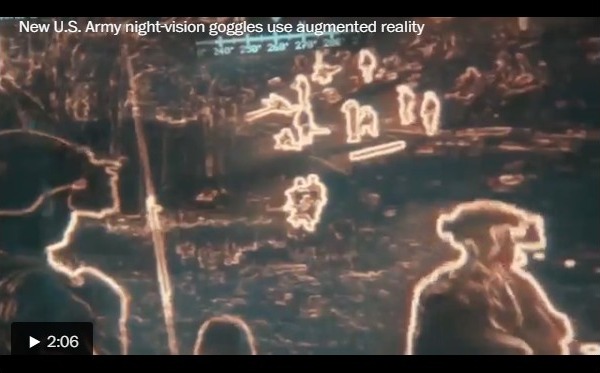
The armed forces have released a stream of videos this year showing soldiers, objects and locations after dark outlined in a glowing white light. The footage looks like scenes from role-playing video games such as “Halo,” but it actually shows what the world looks like through the military’s new Enhanced Night Vision Goggle-Binoculars (ENVG-B).

The product is part of a years-long push to modernize tools used by the military, officials say. The helmet-mounted device, loaded with thermal imaging and augmented reality capabilities, introduces tech found in smartphones and gaming systems to traditional night vision hardware.

“It brings in gaming capabilities that kids are used to from video games. Now, they’re getting to use those when they join our military forces,” said Erik Fox, general manager at Elbit Systems of America, the company behind the devices. The firm is owned by Israel’s Elbit Systems, an international defense electronics company.

The goggles represent a shift away from the green-washed imagery typical of traditional night equipment, which can cause eyestrain and fatigue. The new image is easier on the eyes and provides more clarity, making targets easier to spot through clouds of smoke and in low-visibility weather.

“Night vision goggles with the green tint seems cool and all, until you’ve actually been wearing those all night,” said Blake Gaughan, infantry platoon leader at Joint Base Lewis-McChord in Washington state. “If you’re running continuous night operations, it just gives you a headache.” He has used the new goggles and is helping train others on how they work.

The new night vision capabilities take center stage in several videos and screenshots posted online by the military combat squad, the Lancer Brigade. In one video, soldiers are lit up under the night sky as they load ammunition into a machine gun for weapons training. In one series of photos, the soldiers are clearly outlined against a concrete wall at night.

Elbit began shipping the goggles to the Army last year in a deal worth up to $422 million for enhanced night vision systems. The company based in Roanoke, Virginia, specializes in electronics for homeland security and says its next-generation binoculars infuse the latest in connectivity with old vacuum tube technology found in black-and-white TVs.

The military’s new gadget works by amplifying light that’s already out there, either from the moon, stars or sources on the ground. The device senses tiny amounts of photons reflected off seemingly dark objects. Then, the photons pass over an internal surface engineered to convert light into electrons. The electrons are amplified by striking a quarter-sized glass plate that has millions of tiny holes in it. Then, they pass a screen coated with phosphor, a fluorescent substance, to create an image.

Traditionally, a green phosphor is used, which is why green-hued night vision imagery is well-known. But Elbit’s latest device uses white phosphor instead, producing black and white images, which officers say creates more contrast and greater clarity at night.

“Generally, when you think of night goggles, you think of ambient green light, which is helpful, but this is an improvement on that and allows for better accuracy,” said Daniel Mathews, public affairs officer for the Lancer Brigade.

https://www.washingtonpost.com/video/c/embed/015eff7b-71cc-439c-8768-e2c00cd0c7e1?ptvads=block&playthrough=false

The Army’s latest goggles include an outline mode, which creates glowing white outlines. There’s an augmented reality overlay that can display navigation instructions and maps. The goggles can also connect wirelessly to others in the platoon, so if a soldier spots something, they can mark that object in cyberspace and have it show up on other people’s binoculars.

The upgrade was also built with an adjustable intensity tool to work during daylight hours, where previous generations couldn’t.

“With a lot of the older models, if a flashbang went off, or if there was a bright light, you would be almost blind because the binoculars were taking in all that light,” Mathews said. “These have the ability to adjust so you can use these during the day at dusk.”

And it’s not just the army suiting up with next-level night vision systems. The U.S. Marines also recruited Elbit to replace its existing night vision tech with a pair of binoculars for greater depth perception. The project kicked off in 2019 to replace the military branches’ old monocular system with updated binoculars.

The monocular goggles meant soldiers could only see nighttime imagery through one eye. And in April, the Marines announced that Elbit would upgrade its night vision goggles through 2022. Part of that deal includes a helmet clip-on that detects infrared energy (heat) and enables soldiers to see thermal images.

The Army’s version has the heat imaging system built-in, and it takes objects giving off heat and outlines them in orange, which makes enemies in the field easier to spot, soldiers say.

The army is deploying them on a rolling basis.

“It’s a new piece of tech, and we want to make sure everyone has time to get properly trained” on how each of the modes work, says Gaughan, an infantry soldier who leads a battalion in Washington state. “It’s an ongoing process to get people properly trained rather than just handing them all out.”

If you’re a serious outdoorsman, hunter or survivalist, the goggles can be yours. Elbit supplies them to Pennsylvania-based Night Vision Devices Inc., a reseller offering the latest pair online for about $7,500 plus additional costs for batteries and accessories. The firm’s monoculars start at around $2,400.

Published : May 25, 2021

By : The Washington Post · Dalvin Brown

Microsoft and Apple wage war on gadget right-to-repair laws #SootinClaimon.Com

#SootinClaimon.Com : ขอบคุณแหล่งข้อมูล : หนังสือพิมพ์ The Nation.

https://www.nationthailand.com/tech/40001217

Microsoft and Apple wage war on gadget right-to-repair laws


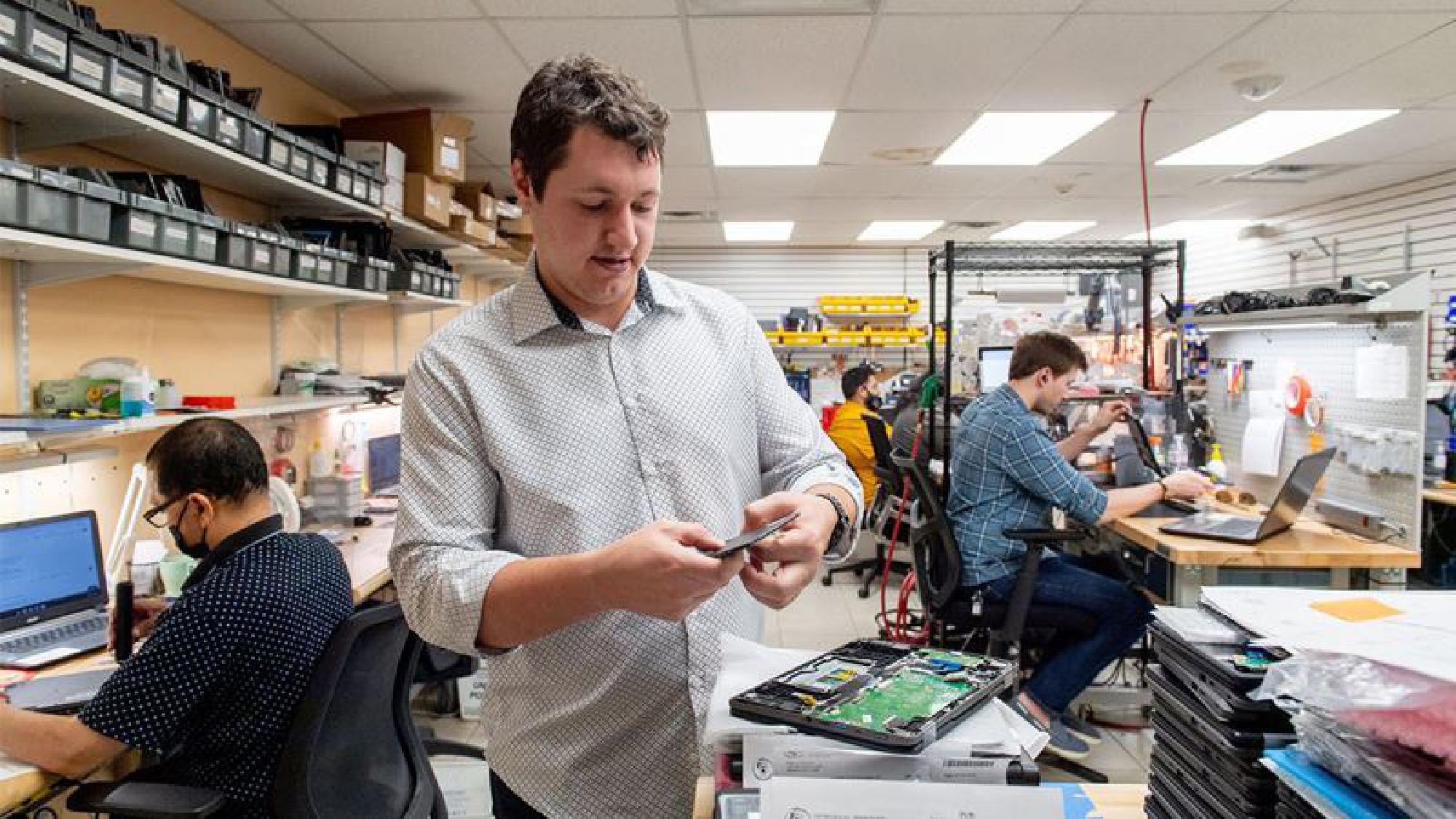
Justin Millman has always fixed things. He tinkered with gadgets before opening a repair shop in Westbury, N.Y., a few blocks south of the Long Island Expressway. Students from a nearby school started trickling in with their busted devices, and business was brisk enough that Millman worked only on those. Each month he now fixes about 2,000 iPads and Chromebooks, computers that, since the pandemic, have become education essentials.

Microsoft and Apple wage war on gadget right-to-repair laws

Sometimes, though, Millman cannot fix them. It’s not that he’s technically incapable. It’s that the parts and schematics are not available, usually because device manufacturers, including the world’s richest companies – such as Microsoft and Google – do not share them. Several students recently came to Millman with defective WiFi cards on their Chromebooks, laptops designed only to work when connected to the Internet. That card widget “is not a particularly hard-to-find or expensive part,” Millman explained – but the laptop maker requires a specific version to be installed, and Millman is not on the list of approved repair providers. He counts 25 schools he works with facing an identical flaw. “And that’s just me,” he said.

For years, technology companies have imposed strict limits on who can fix chipped iPhones, broken game consoles and a wealth of other nonworking (or defective) gadgets. Components are kept in short supply or simply not shared with independent shops to mend things such as USB ports and batteries. After seeing these restrictions firsthand, Millman joined a cadre of small business owners, hobbyists and activists pushing right-to-repair bills across the country. These measures are designed to undo rules businesses set to restrict repairs to authorized providers for a vast number of products including Kindles and wheelchairs.

Twenty-seven states considered such bills in 2021. More than half have been voted down or dismissed, according to consumer groups tracking the proposals. To advocates of these bills, the current repair system is a major reason why we cycle through personal devices so quickly, furthering the environmental impact of these gadgets.

The United States’ smartphone habit eats up about 23.7 million tons of raw material, according to a report from U.S. PIRG. The consumer group estimated that people holding on to their smartphones for an extra year would be the emissions equivalent of taking 636,000 cars off the road.

One reason these legislative efforts have failed is the opposition, which happens to sell boatloads of new devices every year. Microsoft’s top lawyer advocated against a repair bill in its home state, Washington. Lobbyists for Google and Amazon swooped into Colorado this year to help quash a proposal. Trade groups representing Apple buried a version in Nevada. Telecoms, home appliance firms and medical companies also opposed the measures, but few have the lobbying muscle and cash of these technology giants. While tech companies face high-profile scrutiny in Washington, they wield power in statehouses to shape public policy and stamp out unwelcome laws. Tech companies argue that right-to-repair laws would let pirates rip off intellectual property and expose consumers to security risks. In several statehouses, lobbyists told lawmakers that unauthorized repair shops could damage batteries on devices, posing a threat of spontaneous combustion.

Consumer groups do not buy these claims. They say tech firms are holding on to a status quo that forces consumers to pay more for repairs or simply buy new devices. “These companies have monopoly power,” said Brianna Titone, a Colorado legislator who sponsored a repair bill. “They’re not looking for a compromise. They’re looking for, ‘Leave us alone. Stop this. Go away.’ “

TechNet, a trade group representing several large companies including Google and Apple, sent letters to lawmakers in multiple states as part of an industry coalition. “Allowing unvetted third parties with access to sensitive diagnostic information, software, tools, and parts would jeopardize the safety and security of consumers’ devices and put consumers at risk for fraud,” David Edmonson, a TechNet vice president, said in a statement. “States have continually rejected legislation like this, with 25 states alone last year deciding not to take action.”

Pressure is not going away, however. Advocates are pressing forward in New York and other states, using testimony from local business owners such as Millman. In early May, the Federal Trade Commission released a report to Congress, arguing that the current system for consumer electronics harms competition and economic development in low-income areas. “The pandemic has exacerbated the effects of repair restrictions on consumers,” the agency wrote, noting the particular shortages of school laptops. “There is scant evidence to support manufacturers’ justification for repair restrictions,” the agency concluded. Edmonson from TechNet said the group is “actively considering” the agency’s findings.

It started with cars. In 2012, voters in Massachusetts approved a measure to require automakers to share information on vehicle systems with dealers and unaffiliated repair shops. Since then, consumer advocates have called for similar measures to apply to electronic gadgets, ventilators and farm equipment – but none have been successful.

In January 2019, lawmakers in Washington, a state with a big tech footprint, drafted a bill to broaden device repairs to include nonauthorized shops to reduce “unnecessary early disposal of those products.” State senators wrote a similar version. That February, Microsoft held a meeting for state lawmakers to go over the company’s priorities. It was a snow day, so executives convened over a conference call. Brad Smith, Microsoft’s president, ran the meeting, according to a person on the call. He ticked through some items before arriving at the repair bill. Microsoft did not like it, and Smith said the measure would threaten his company’s intellectual property. Later, as the legislative session continued, Microsoft treated the bill as an “existential threat,” said one lawmaker involved who spoke on the condition of anonymity to discuss private conversations.

During Senate hearings on the bill, one lawmaker, Derek Stanford, asked a trade group lobbyist why, after a fan on his Xbox broke, he had to ship the console back to Microsoft and wait weeks for a fix. “There’s no competition,” Stanford concluded. In response, the lobbyist called the bill “ill-considered.” A clip of the exchange went viral. The bill never came up for a vote. In an interview this month, Stanford said he proposed paring back the bill to focus on small components, such as USB ports, but the opposing groups “wouldn’t budge.”

“We believe consumers are entitled to receive repair services that are safe and effective,” a Microsoft spokesperson said in a statement. “We provide consumers with repair services that ensure the high quality of repairs, safeguard consumer’s privacy and security, and protect consumers from injury.” One lawmaker on a committee handling the bill has since gone to work for Amazon. An Amazon spokesperson declined to comment.

Microsoft and Apple wage war on gadget right-to-repair lawsMicrosoft and Apple wage war on gadget right-to-repair laws

This year, Washington Democrat Mia Gregerson sponsored another right-to-repair measure. She stripped out language from the 2019 bill Microsoft disliked that barred companies from making devices with built-in batteries (such as Microsoft’s Surface tablet). Sandy Hayes, a director with the Northshore School District, north of Seattle, testified in support. Like other districts, Hayes’s sent more than 14,000 laptops to students during the past year to make remote schooling work. Several parents initially refused to take the devices, Hayes said – they were too nervous about repair costs. (Hayes informed them that the district would cover these costs.)

But once again, the repair bill did not have enough support. Registered lobbyists from Microsoft, Google and Amazon weighed in on the bill, according to state records. So did TechNet and Entertainment Software Association, a video game lobbying group, which have testified in other states against similar bills.

Reuven Carlyle, a Washington senator who chairs the state committee, said tech companies were “unenthusiastic” about the repair bills but not unwilling to negotiate. “No one asked me to stuff the bill in Jimmy Hoffa’s grave,” he said. He concluded that the policy measure was not properly understood.

According to Gregerson, one company had an outsize influence. “If you really want to know who was naughty – it was Apple,” she said. Lobbyists representing the iPhone company discreetly told colleagues that it would be willing to endorse repair programs at local colleges in exchange for killing the bill, according to Gregerson. Apple declined to comment.

Unlike Microsoft, Apple often lets hired guns or trade groups do its advocacy. In New York, an Apple-backed association, Security Innovation Center, sent around talking points opposing a right-to-repair bill in 2018. Such legislation “would have gifted hackers with digital keys to thousands of Internet-connected products,” read the document viewed by Bloomberg News. Additionally, the document said, these laws would mandate that tech companies to hand over sensitive trade secrets. That New York bill never made it for a vote.

Consumer groups in opposition see Apple as particularly unbending and protective over its devices. “It’s like Tiffany jewelry,” said Nathan Proctor, a U.S. PIRG director. “They want control.” In the recent FTC report, the agency concluded that there was “no empirical evidence” that independent repair shops put consumer data at risk any more than authorized ones.

In Colorado, two lobbyists from Capstone Group registered on behalf of Apple to oppose a repair bill this year, state records show. They were joined by a phalanx of representatives from tech companies, telecoms and trade groups. But it was Google that surprised advocates with the vigor of its opposition. Google hired Mary Kay Hogan, a lobbyist from the Fulcrum Group in Denver, who raised concerns in a March email to Titone, the legislator, about the measure’s potential effect on phone warranties. Advocates say that concern does not hold water under federal warranty laws. Google sells relatively few phones, but Chromebooks, which Google and its hardware partners make, have soared during the pandemic thanks to schools. A representative for Hogan did not respond to requests for comment. Google declined to comment.

Titone did not find Google’s argument unique. “It’s the same refrain all the time,” she recalled. “I tried to alleviate those concerns. The committee adopted those amendments, and then they still voted against it.” During testimony on the bill, lawmakers heard from a nine-year-old environmentalist and a disabled rural resident who had to wait over a month for his wheelchair to be fixed.

A similar bill was nixed a month earlier in Nevada. Selena Torres, a Democrat from Las Vegas, was inspired to introduce it after seeing laptop shortages in the high school where she teaches English. Even though a technician at her school is certified, Torres said, he’s unable to get sufficient parts to fix Chromebooks. Nevada has two official Apple stores, which, Torres said, means many residents must drive long distances to fix cracked screens or busted devices. Within weeks of introducing her bill, Torres saw tech lobbyists she did not know wandering about the state building. They made similar arguments to those in Washington and Colorado. Nevada’s negotiations were colored with a proposal from the governor, called “Innovation Zones,” to lure tech companies to the state by granting them powers of local governments.

Torres’s bill did not make it out of committee. Watching the tech industry operate, she saw a clear, familiar corollary. “I’m sure that casinos back in the day didn’t want to be regulated either,” she said. Like Titone and Gregerson, Torres said she plans to reintroduce a similar bill in the future.

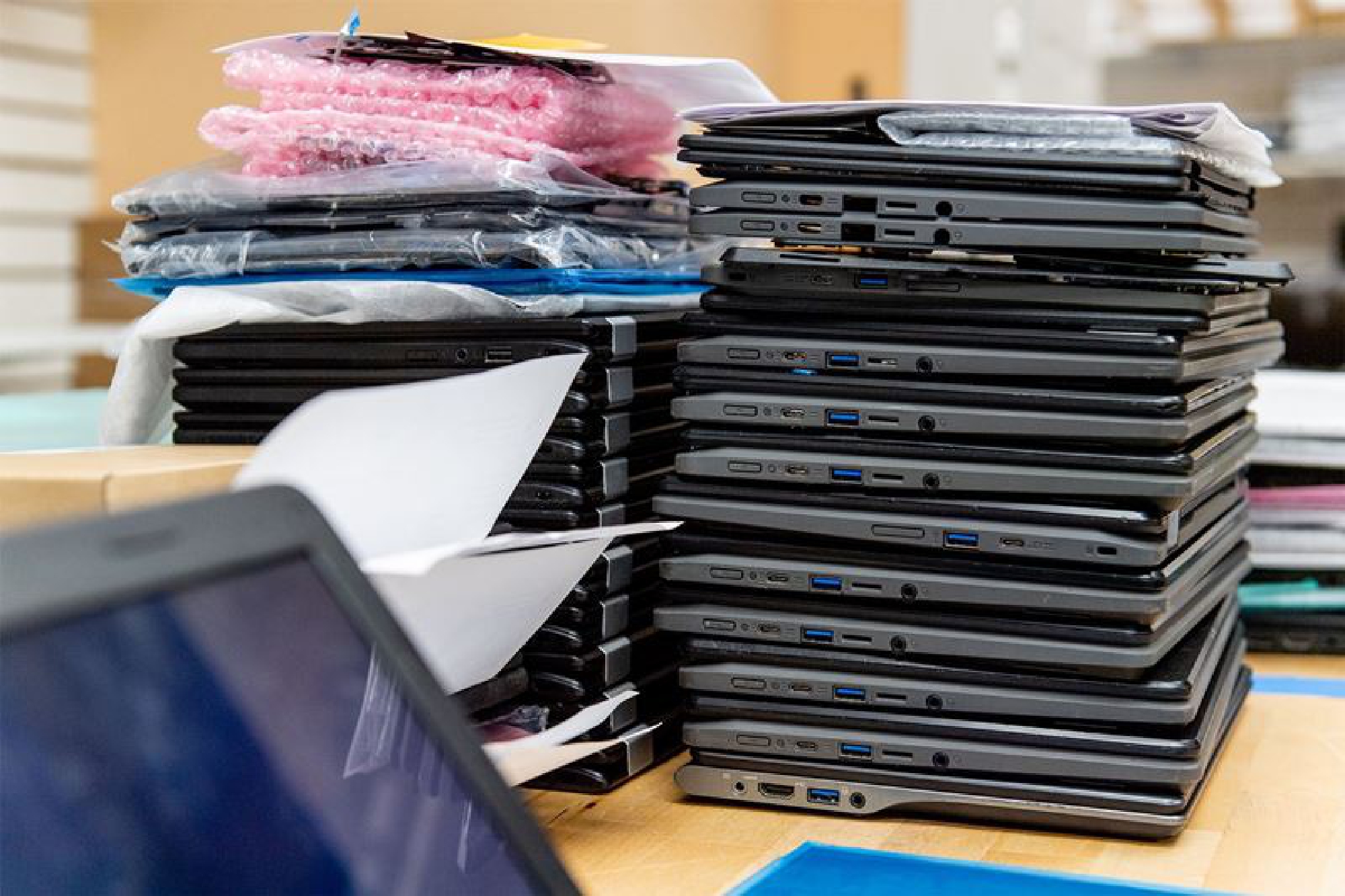
Until repair laws change, Millman must keep up his daily routine. Each morning, he scours 25 websites for available motherboards on a particular Chromebook model. Over a dozen manufacturers make Google’s cheap laptop, but the model from Acer is popular in Long Island. He spends about $40,000 a month on new Chromebooks just so he can pull out their motherboards for students who need fixes. Millman’s attempts to contact the Taiwanese manufacturer about the component have not worked.

He faces a similar problem with Apple. The company’s Independent Repair Provider program allows businesses to fix out-of-warranty devices. Millman is a not a member, but even members are unable to get iPad screens, a frequent repair need from students.

About 10% to 15% of a district’s devices end up needing repairs during a typical school year, according to Millman. One Long Island district he works with has more than 13,000 iPads in circulation. He estimates that they have about $130,000 a year in repair costs. If the district had to replace all the broken iPads, rather than fix them, that cost would jump to a quarter of a million dollars.

“That’s why Apple doesn’t answer my emails,” Millman said. “For them, it’s just dollars and cents. They don’t think about the person on the other side of the iPad.”

Published : May 24, 2021

By : Syndication Washington Post, Bloomberg · Mark Bergen