Super Bowl plans drive record avocado imports from Mexico #ศาสตร์เกษตรดินปุ๋ย

#ศาสตร์เกษตรดินปุ๋ย : ขอบคุณแหล่งข้อมูล : หนังสือพิมพ์ The Nation

https://www.nationthailand.com/sport/30381342?utm_source=category&utm_medium=internal_referral

Super Bowl plans drive record avocado imports from Mexico

Jan 31. 2020
By Syndication Washington Post, Bloomberg · Justin Villamil, Marvin G. Perez 
Americans gearing up for the Super Bowl this Sunday helped push imports of Mexican avocados to the best week of all time.

Almost 75 million pounds crossed the border from the world’s largest exporter of the fruit in the week through Jan. 19, according to the Haas Avocado Board. That’s up 3 percent from the same period in 2019.

The industry is making a concerted push to capitalize on the peak avocado consumption day in the U.S., when consumers across the country buy guacamole in preparation for the game. In 2018, Mexico exported 2.5 billion pounds of avocados to the U.S.

“We expect to see volumes continue to trend upward,” said Alvaro Luque, the president and chief executive officer of industry association Avocados From Mexico. “Even at full production levels, the U.S. cannot fully supply the demand, creating a complementary relationship between U.S. and Mexican avocado farmers.”

Luque added that retailers across the country are promoting avocados heavily during the leadup to the Super Bowl, and that his organization has partnered with hot sauce maker Cholula and beer brand Bud Light for a promotional campaign.

Mexico remains the top supplier to the U.S. with 87% of market share in 2018, according to a December report from the U.S. Agriculture Department. Producers in the Latin American nation are looking to increase yields to meet booming global demand.

The record week is good news for the industry, which has faced issues related to cartel violence as groups seek to muscle in on the increasingly profitable avocado trade. Last year, a potential security incident led the USDA to briefly suspend Mexico’s Haas Avocado Program certification activities in Michoacan state.

Denla British School Offers Scholarship Opportunities at the “DBS Scholarship Day” #ศาสตร์เกษตรดินปุ๋ย

#ศาสตร์เกษตรดินปุ๋ย : ขอบคุณแหล่งข้อมูล : หนังสือพิมพ์ The Nation

https://www.nationthailand.com/recommended/822?utm_source=category&utm_medium=internal_referral

Denla British School Offers Scholarship Opportunities at the “DBS Scholarship Day”

Jan 31. 2020
to Search for Top Students – Aiming to Nurture Year 3 – 10 Students to Access the World’s Top Universities. Please Register Before 21st February 2020.

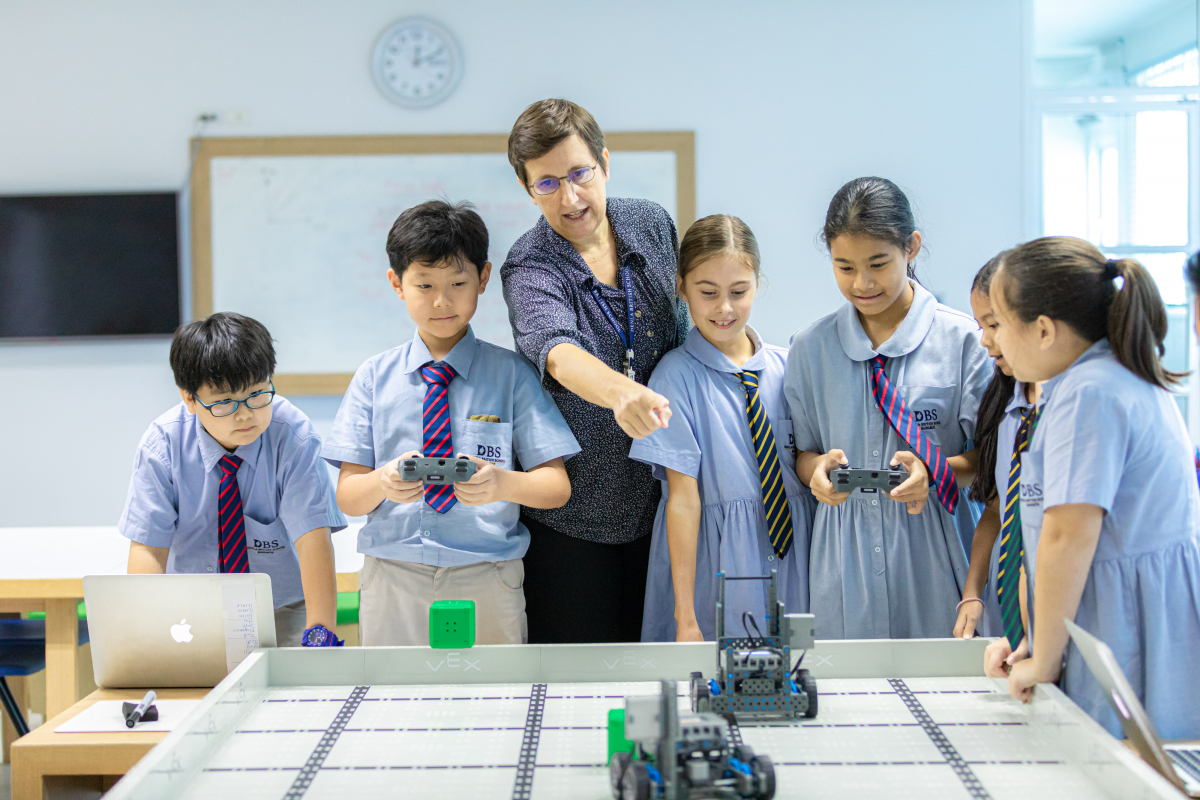
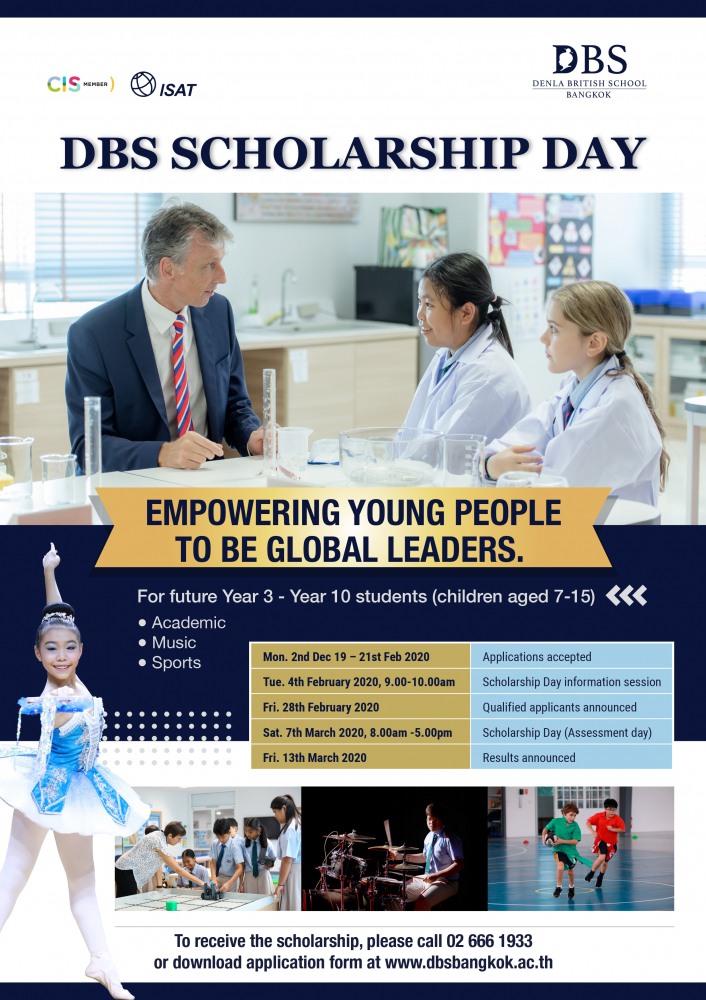
The opportunity to become part of the Denla British School (DBS) family is here for Year 3 to Year 10 students who excel in Mathematics, Science, English, Thai, Music, Sport, and all-round abilities! Denla British School (DBS) is a premium international school that implements the Enhanced British Curriculum modelled on the top independent schools in the UK, and it offers scholarship opportunities at the “DBS Scholarship Day” for students of Year 3 to Year 10. Interested students and parents can learn more about this at the scholarship information session at DBS on Tuesday 4th February 2020 from 9.00-10.00 am. Then, on Saturday 7th March 2020, selected candidates will be invited to take the scholarship assessment at DBS.

Mr Mark McVeigh, Principal of DBS said that the strength of the DBS unique vision in the core areas of an Enhanced British Curriculum, Academic Excellence for All, Entrepreneurship and Creative Thinking, and  Community and Global Perspectives, has encouraged DBS students to develop significantly in all areas – clearly shown from academic and non-academic awards – and that is why DBS is being recognised as the international school that nurtures global leaders and entrepreneurs.

DBS Scholarship Day is one of the programmes that contribute to the vision of Academic Excellence for All, aiming to encourage students who excel in Mathematics, Science, English, Thai, Music, Sports, and all-round abilities, to enrol in DBS. DBS is a unique international school in Bangkok, which implements a UK independent school curriculum and its teachers are not only experienced, but are also 100% native English speakers (apart from Thai and Mandarin subjects). The curriculum of UK  independent schools is outstanding, with its Personalised Learning approach that concentrates on encouragement, and adapting the teaching method to each student, according to their skills and preferences. Approaches vary from specific teaching for each individual, to teaching in small groups, with teachers and their assistants supervising the entire process. The school is not only known for its academic excellence, but also encourages an all-round education so that children can explore and discover their own talents.

At the DBS Scholarship Day, there will be an academic examination using the UK education standard for all candidates. Additionally, scholarships for music and sports, will involve students taking auditions and exercises, and showing proven, recognised records of their abilities. And for those who have all-round abilities, the assessment for them will be a mixture of academic examinations and practical assessment.

When a student is awarded a DBS Scholarship, the school will nurture them so that they can access the world’s top universities using, for example, the Beacon Programme that is designed to cater for high attaining and greatly engaged learners. The programme values enthusiasm, creativity and passion, whilst facilitating additional opportunities to stretch and challenge students beyond the classroom. The Beacon Programme aims to further encourage excellent learning behaviour. It will involve practising problem solving, analysing, leading, communicating and logic, using lateral and critical thinking. The Beacon Programme encourages self-determination, self-direction, self-respect, and self-awareness. This will allow students to become independent learners who thrive in working outside of their comfort zones, and can adapt and participate in a rapidly changing society and economy.

Besides the Beacon Programme, DBS has launched other special programmes:

  • A Comprehensive ESL programme – to ensure that every DBS student is able to access the British curriculum, encouraging a good mastery of the English language for all.
  • The Accelerated Reader programme – to enable students to make excellent progress in their English language reading. Books are selected at an appropriate level for the individual, students answer questions to show that they have understood, and they can then move on to the next level at their own rate.
  • The Y10 and IGCSEs programme – to ensure that the school has the right teaching team in place for the start of the IGCSEs, and that the curriculum reflects the necessary IGCSE course specifications. Plans will be put in place so that individual students receive guidance on which of the optional subjects to choose, apart from the core English, Maths and Science.
  • The GL performance programme – assessments for English, Maths, and Science to measure against the world’s average. The Progress Test Series (PT Series) assesses students’ comprehension of the core subjects to identify which students need extra support and which will rise to more challenging targets. Results from GL Assessments help teachers to accurately plan for each student’s academic excellence.

There is also a Co-Curricular Activities (CCA) programme, where students spend time learning in an additional hour per day. DBS also initiates a Model United Nations programme – an advanced learning model based on the procedures at the United Nations, giving students the opportunity to debate, discuss, analyse ideas, and present to large groups of people. This is all very important in instilling leadership skills in accordance with the school’s vision, “Nurturing Global Leaders.”

“The DBS Scholarship Day is a special opportunity and the first step to being at the leading edge of the DBS community. It is open for application from today until 21st February 2020. Interested students and parents can attend the scholarship information session at DBS on Tuesday 4th February 2020 from 9.00-10.00 am. By Friday 28th February 2020, the school will announce the list of selected candidates who will be invited to take the assessment tests on Saturday 7th March 2020. The scholarship winners will be announced in the next week,” DBS Principal said.


Interested parents can fill in the form below

https://forms.gle/dYN9PM6XHRrWGrw2A

or contact 02 666 1933

Email: admissions@dbsbangkok.ac.th

Germany looks for environmental solutions with jet fuel made from water #ศาสตร์เกษตรดินปุ๋ย

#ศาสตร์เกษตรดินปุ๋ย : ขอบคุณแหล่งข้อมูล : หนังสือพิมพ์ The Nation

https://www.nationthailand.com/edandtech/30381344?utm_source=category&utm_medium=internal_referral

Germany looks for environmental solutions with jet fuel made from water

Jan 31. 2020
By Syndication Washington Post, Bloomberg · William Wilkes 
The solution to flight shaming may hinge on a modernized version of a synthetic jet fuel that was honed by Adolf Hitler’s Luftwaffe.

German scientists and business leaders are working to create what they hope will be the first viable market for a carbon-neutral version of the kerosene that already powers most modern aircraft.

The science is still based on chemical reactions pioneered in Germany in 1925, but instead of converting coal and other fossil fuels like the oil-starved Nazis did during World War II, green kerosene is derived from water and actually pulls carbon dioxide out of the air during creation.

The process, which requires huge amounts of electricity generated from renewable resources to ensure carbon neutrality, fractures water into oxygen and hydrogen, which is then combined with carbon.

The project is being overseen by Bremen University, in a consummately German public-private research strategy that previously created the MP3. The German system, which the U.S is trying to emulate, aims to produce the green fuels required for sectors of the economy like aviation and heating that rely heavily on petroleum imports.

“Synthetic fuel is the only vision I can see right now to really become CO2 neutral in the conceivable future,” Deutsche Lufthansa AG Chief Executive Officer Carsten Spohr told a conference on sustainable aviation in the German capital in November.

While green kerosene releases carbon when burned, the process is neutral because it recycles greenhouse gas from the air and doesn’t require more fossil fuels to be taken from the ground.

The German flag carrier is working with the consortium to supply what it expects will be 5 percent of its fuel within five years. The non-fossil kerosene is being made at closely held Klesch Group’s Heide oil refinery near the North Sea, using renewable energy supplied by local wind farms.

Other countries, including Canada and the U.S., are already deploying Power-to-X technology to capture carbon dioxide and store it underground, but so far only in proof-of-concept ways that are too small to make a noticeable difference in the battle against climate change.

Carbon Engineering, a Canadian company partly funded by Bill Gates, has been producing “Air to Fuel” gasoline, diesel and kerosene since 2017, but not in major volumes due to costs, which are still several times more than petroleum-based products. The venture is one of a handful that Canada’s government is supporting in the race to curb surging aviation emissions by developing the most economical and environmentally friendly fuel possible.

But it’s Germany, where more than half of Europe’s 130 Power-to-X testing plants are located, that’s leading the charge. Public calls for action on climate change intensified following last year’s record-breaking droughts and heatwaves, withering crops and swelling support for the environmentalist Green Party.

While power generation and farming currently dwarf aviation’s around 2 percent of all human-caused greenhouse gases, skyrocketing emissions from air travel means the industry, which was exempted from the Paris 2015 climate agreement, will become the biggest single polluter if predicted cuts in other sectors materialize, UN data and projections show.

“We almost need a wartime footing to unlock the momentum and the significant state investment needed to catalyze the transformation of our socioeconomic systems,” Oliver said by phone from the U.K.

Indeed, Germany’s government is already working on a strategy for scaling-up its “green hydrogen” push to produce synthetic fuels at more competitive prices. If Lufthansa gets its way, that effort will include channeling more of the government’s aviation tax into the project.

Increasingly onerous regulations, demands from carbon-conscious customers and the spread of flight shaming are all adding to the pressure to develop cleaner fuels faster.

“All the technologies you need are currently deployed in other areas, so it’s just a question of making it practical and economical”

The social-engineering tactic, which started in teenage environmental activist Greta Thunberg’s native Sweden, contributed to a 4% decline in that country’s passenger numbers last year as more people opted to travel by electric train. Operators of rail networks across Northern Europe, already the world’s most advanced green economy, have been adding overnight routes to capitalize on the trend.

A study by Brussels-based Transport & Environment found that converting all aviation fuel to non-fossil kerosene with currently available technology would cost between three and six times more than traditional jet fuel. Even without factoring in rising taxes on air travel, that would lead to an increase in ticket prices of as much as 60%, the research group estimated.

But that’s not a deal-breaker, according to Ulf Neuling, a chemical scientist at the Hamburg University of Technology. Governments can help offset the added expense through subsidies, tax changes or other incentives and, unlike, biofuels, which turned out to be less environmentally friendly and affordable than once hoped, synthetic jet fuel is scalable, he said.

“All the technologies you need are currently deployed in other areas, so it’s just a question of making it practical and economical,” Neuling said. “It can be used in airplanes that are on order now.”

The amount of electricity needed for an electrolysis process that essentially recycles what’s already in the air is what makes these fuels relatively expensive-for now. Other hurdles to cranking up production include adding further strain to grids at a time when coal plants are being shuttered and electricity use for battery-powered cars is rising.

German engineers have pointed to a future of vast solar parks in North Africa that could produce green fuels at competitive cost, before they’re shipped to Europe. Building them would cost billions. And then there’s the nuclear option being floated by Rolls Royce Holdings Plc, which is a major maker of both aircraft engines and small, modular reactors based on designs used in military submarines.

Rolls Royce CEO Warren East said just last month that coupling reactors to electrolysis units would “provide a very competitive solution” to the price issue.

To be sure, not everyone is convinced such synthetic fuel is a cure-all for greenhouse-gas pollution, with some analysts suspecting that backers of the technology like Lufthansa and Air France-KLM are just trying to deflect criticism.

But previous proposals, such as biofuels and battery-powered engines, never got the full-throated support of a leader like Angela Merkel. The German chancellor dismisses calls from climate extremists like Thunberg to ban air travel altogether, saying a solution to the emissions problem is just around the corner.

“The potential of hydrogen for aviation is far from tapped,” Merkel told industry leaders last August. “We don’t want any restrictions on our mobility.”


All Tesla directors but Musk settle investors’ SolarCity suits #ศาสตร์เกษตรดินปุ๋ย

#ศาสตร์เกษตรดินปุ๋ย : ขอบคุณแหล่งข้อมูล : หนังสือพิมพ์ The Nation

https://www.nationthailand.com/edandtech/30381337?utm_source=category&utm_medium=internal_referral

All Tesla directors but Musk settle investors’ SolarCity suits

Jan 31. 2020
File Photo of Tesla  Chief Executive Officer Elon Musk

File Photo of Tesla Chief Executive Officer Elon Musk
By Syndication Washington Post, Bloomberg · Jef Feeley, Dana Hull 

All Tesla Inc. directors except Chief Executive Officer Elon Musk agreed to a $60 million settlement to resolve shareholder lawsuits over the company’s purchase of SolarCity, according to people familiar with the deal.

Insurers covering Tesla’s directors and executives will foot the bill as part of a so-called derivative settlement, two people familiar with the accord said Wednesday, declining to be identified because they aren’t authorized to speak publicly about the deal.

Musk and the board were accused of duping investors in 2016 into backing the $2 billion buyout of the solar-panel installer, which was co-founded by Musk and his cousins. Critics of the deal called the acquisition a bailout of SolarCity and questioned the company’s corporate governance.

Pension funds that objected to the deal are likely to press ahead with a March trial against Musk over his alleged failure to disclose that SolarCity was in deep financial trouble when he urged shareholders to back the buyout.

The settling defendents are directors who were on the board in 2016: Brad Buss, Robyn Denholm, Ira Ehrenpreis, Antonio Gracias, Stephen Jurvetson and Kimbal Musk, according to a filing in Delaware Chancery Court. Since then, the composition of Tesla’s board has changed: Buss, the former chief financial officer of SolarCity, is no longer on the board, while Larry Ellison and Kathleen Wilson-Thompson joined the board in December 2018.

Tesla and Chairman Robyn Denholm didn’t respond to requests for comment on the partial settlement.

In earlier court filings, Tesla officials defended the directors’ work in reviewing the SolarCity deal, claiming that “both the process and the price of this acquisition were inherently fair to Tesla’s stockholders.”

The settlement comes as Tesla turns a corner with back-to-back reports of better-than-expected earnings, which have sent shares soaring. The stock climbed as much as 12% in early trading Thursday and was up 11% at 12:47 p.m. in New York.

The accord leaves Musk, Tesla’s largest shareholder, to battle alone against investors who complain the billionaire overpaid for SolarCity, and that directors rolled over instead of properly scrutinizing the deal. Judge Joseph Slights III will hear the case in Wilmington without a jury, which is normal in the Chancery Court. The trial is scheduled from March 16 to March 27, according to a filing.

Musk painted the SolarCity deal as a no-brainer that would combine the leading U.S. electric-car maker with what was then the largest provider of rooftop solar panels.

Tesla now has roughly 400,000 solar customers, one of the biggest U.S. renewable-energy portfolios. It ran into a stumbling block when Walmart sued last year, saying the company’s rooftop panel systems caused fires at stores and warehouses. The companies later reached a settlement.

Efforts to integrate SolarCity coincided with Tesla struggling to ramp up production of its all-electric Model 3 sedan, and that put the company under financial pressure, Musk acknowledged in emails unsealed as part of the investors’ suits.

In one email, Musk said he was forced to shift SolarCity workers to help with Model 3 production issues. If he hadn’t done that, Tesla would have faced bankruptcy, he said.He admitted in a pre-trial deposition that he probably wouldn’t make the same deal again.

“At the time I thought it made strategic sense for Tesla and SolarCity to combine. Hindsight is 20/20,” he said. “And if I could wind back the clock, you know, I would say I probably would have let SolarCity execute by itself; would have let Tesla execute by itself.”

The case is In Re Tesla Motors Inc. Stockholders Litigation, No. 12711, Delaware Chancery Court (Wilmington).

Lindsey Graham proposal could expose Apple, Facebook to lawsuits #ศาสตร์เกษตรดินปุ๋ย

#ศาสตร์เกษตรดินปุ๋ย : ขอบคุณแหล่งข้อมูล : หนังสือพิมพ์ The Nation

https://www.nationthailand.com/edandtech/30381334?utm_source=category&utm_medium=internal_referral

Lindsey Graham proposal could expose Apple, Facebook to lawsuits

Jan 31. 2020
Sen. Lindsey Graham, a Republican from South Carolina, at the U.S. Capitol in Washington, on Jan. 24, 2020. MUST CREDIT: Bloomberg photo by Andrew Harrer.

Sen. Lindsey Graham, a Republican from South Carolina, at the U.S. Capitol in Washington, on Jan. 24, 2020. MUST CREDIT: Bloomberg photo by Andrew Harrer.
By Syndication Washington Post, Bloomberg · Ben Brody, Naomi Nix 

Sen. Lindsey Graham, a top ally of President Donald Trump, is targeting giant internet platforms with a child protection measure that could threaten tech companies’ use of encryption and a liability exemption they prize.

The draft bill from Graham, the South Carolina Republican who chairs the Senate Judiciary Committee, mounts a double attack against encrypted services such as Apple’s iCloud and Facebook’s WhatsApp chat. It removes technology companies’ immunity to lawsuits by victims for violating child exploitation and abuse statutes and it lowers the standard to bring such cases.

The bipartisan measure, which was obtained by Bloomberg and hasn’t yet been formally introduced, would affect a wide range of social media companies, cloud service providers, email and text platforms and other technology services. It could put Facebook in the government’s crosshairs for its plans to encrypt all of its messaging apps and undercut Apple’s refusal to create back doors into its devices and services.

Graham’s bill, which Democratic Sen. Richard Blumenthal of Connecticut is also working on, calls for Congress and the administration to establish a commission to determine best practices for tech companies to prevent online exploitation of children and allows the attorney general to modify the recommendations.

“The absolute worst-case scenario could easily become reality,” said Berin Szoka, president of TechFreedom, a libertarian think tank aligned with technology companies. “DOJ could effectively ban end-to-end encryption.”

Although the measure doesn’t directly mention encryption, it would require that companies work with law enforcement to identify, remove, report and preserve evidence related to child exploitation — which critics said would be impossible to do for services such as WhatsApp that are encrypted from end-to-end.

If technology companies don’t certify that they are following the best practices set by the 15-member commission, they would lose the legal immunity they currently enjoy under Section 230 of the Communications Decency Act relating to child exploitation and abuse laws. That would open the door to lawsuits for “reckless” violations of those laws, a lower standard than contained in current statutes.

The timing of the bill’s introduction remains unclear with senators serving as jurors in the Trump impeachment trial.

Facebook and other companies have extensive systems to find, remove and report child-abuse images, as well as other prohibited content such as terrorist propaganda. Their monitoring ability, however, doesn’t extend to systems that are encrypted end-to-end. Online safety experts have said Facebook’s efforts to root out this content will suffer as the company pivots to closed communications modeled on its WhatsApp chat service.

That move “will make it harder to detect — and stop — child abuse and similar crimes,” Manhattan District Attorney Cy Vance said in prepared testimony before Graham’s committee in December. In addition, Apple’s encryption had stymied a sex trafficking investigation that authorities wanted to pursue after hearing a prison telephone call by a suspect, he said.

Attorney General William Barr is taking aim at both encryption and the liability shield as he increases scrutiny of technology companies. The Justice Department has tentatively scheduled a meeting on the future of Section 230 for Feb. 19, according to a person familiar with the plans.

A spokeswoman for Graham’s committee emphasized that the document is a draft and isn’t final. The Justice Department declined to comment.

Barr has pressured Apple to provide back-door access to encrypted data for law enforcement investigations, urging the company to unlock iPhones used by the gunman behind a Dec. 6 terrorist attack on a Florida Navy base.

Facebook Chief Executive Officer Mark Zuckerberg has conceded the company’s moves may make it harder to find offensive content, but he nonetheless pledged on a Wednesday earnings call to uphold his most controversial positions, including “standing up for encryption, against those who say that privacy mostly helps bad people.”

The Information, a technology news website, earlier reported some details of Graham’s bill, known as the Eliminating Abusive and Rampant Neglect of Interactive Technologies Act, or EARN IT Act.

The draft bill represents the latest effort to weaken liability protections for technology platforms after a 2018 measure that pared the exemption for content related to online sex trafficking.

Passage of that law indicated that the rules are changing for an industry that had been the darling of Washington but is now facing a broad, bipartisan backlash.

On Tuesday, a top House Democrat, Rep. Jan Schakowsky of Illinois, said she’s reviewing whether the provision should be further revised to stem election misinformation.

Lawmakers have also raised concerns about whether the shield fosters online drug sales and other issues. There have also been complaints from conservatives of political bias. Sen. Josh Hawley, a Missouri Republican, has introduced his own bill to withdraw the legal immunity if companies can’t prove to the U.S. that they moderate content in a politically neutral way.

While there are signs there’s bipartisan support to tackle the issues raised by encryption and the liability shield, Congress doesn’t appear to have a unified approach and passage of the measure could be difficult in an election year.

H&M family stung by stagnant stock hands leadership to new CEO #ศาสตร์เกษตรดินปุ๋ย

#ศาสตร์เกษตรดินปุ๋ย : ขอบคุณแหล่งข้อมูล : หนังสือพิมพ์ The Nation

https://www.nationthailand.com/business/30381343?utm_source=category&utm_medium=internal_referral

H&M family stung by stagnant stock hands leadership to new CEO

Jan 31. 2020
A pedestrian carries a Hennes & Mauritz shopping bag as they pass an Arket clothing store in Gothenburg, Sweden, on Aug. 24, 2019. MUST CREDIT: Bloomberg photo by Fredrik Lerneryd.

A pedestrian carries a Hennes & Mauritz shopping bag as they pass an Arket clothing store in Gothenburg, Sweden, on Aug. 24, 2019. MUST CREDIT: Bloomberg photo by Fredrik Lerneryd.
By Syndication Washington Post, Bloomberg · Anton Wilen, Benedikt Kammel 

Hennes & Mauritz appointed Helena Helmersson as the first female chief executive officer of the fast-fashion pioneer, taking over from founding family scion Karl-Johan Persson, who struggled to contain competition from cheaper rivals and online platforms that revolutionized shopping.

Helmersson was previously head of operations, and Persson moves to the supervisory board after more than a decade, where he succeeds his father, Stefan Persson, as chairman. Stockholm-based H&M announced the changes as it reported quarterly earnings that beat analyst estimates, pushing the shares to their biggest gain in more than seven months.

The stock move is a much-needed boost for investors who have watched H&M shares gain just 10% during Persson’s tenure, while rival Inditex, the owner of Zara, has surged almost fourfold in the period. Long the go-to place for Scandi-inspired, well-designed staples like blouses and jeans, H&M has ceded its pacemaker role to the likes of Primark that undercut it in price, or Internet specialists like Asos Plc and Zalando SE that promised shoppers more instant gratification.

Inditex also pioneered the concept of branching out into sub-brands for different tastes and budgets. H&M has emulated the idea with units including COS or Arket, which aim at a wide-ranging shopping experience, selling everything from clothing to make-up to home-decoration trinkets like candles and flower pots.

When Persson, 44, took over in 2009, he was in his early 30s and had spent a few years on the company board, overseeing expansion, business development as well as brands and new business. At the time, H&M enjoyed major successes recruiting seasonal guest designers ranging from Karl Lagerfeld to Roberto Cavalli, collaborations that were huge hits because they offered luxury-fashion names at ultra-competitive prices.

But the going got tougher over the years. Physical shops began looking outdated, the guest-designer concept was running out of force and acquisitions like Cheap Monday, the company’s first-ever, flopped. Moving into home decoration, a lucrative niche where Zara and more upmarket brands like Armani had long established themselves, proved hard, as was the shift to online. As a result, inventory built up, forcing the company into a series of missed targets and profit warnings in recent years.

The Persson family retains outsize control over the company. Founded by Erling Persson in 1947, the family is by far the biggest shareholder and has steadily lifted its stake over the years, particularly after operational troubles depressed the stock. Stefan Persson, who took over from Erling, ran the business for more than a decade. He’s the richest Swede, and ranks 15th in Europe, with a net worth of about $19.7 billion, according to the Bloomberg Billionaires Index.

Helmersson is herself a long-standing H&M employee. She started in 1997 as an economist in the company’s purchasing department, and did a five-year stint as sustainability manager. She’s been COO for just over a year.

“I feel confident in handing over the CEO role to Helena, who is an experienced and great leader who embodies our values,” Persson said. “Helena will continue to work on the plan that we have adopted for 2020 and onwards.”

The timing of the handover suggests H&M may be through the worst. The retailer said fewer markdowns contributed to an improvement in profit for the full year and in the fourth quarter, leading to a pretax profit of to 5.4 billion kronor ($561 million) in the three months through November, more than the 4.8 billion kronor that analysts had expected.

Over the past year, shares in H&M have gained more than 35%, beating the OMX Stockholm index, which is up 19%. Of the 33 analysts surveyed by Bloomberg, seven recommend buying H&M stock, while the rest are advising clients to either hold on to the shares they have or sell.

Unilever reviews future of Lipton tea #ศาสตร์เกษตรดินปุ๋ย

#ศาสตร์เกษตรดินปุ๋ย : ขอบคุณแหล่งข้อมูล : หนังสือพิมพ์ The Nation

https://www.nationthailand.com/business/30381323?utm_source=category&utm_medium=internal_referral

Unilever reviews future of Lipton tea

Jan 31. 2020
Boxes of Lipton tea sit on display in an Associated Supermarket in New York on July 9, 2007. MUST CREDIT: Bloomberg photo by Andrew Burton.

Boxes of Lipton tea sit on display in an Associated Supermarket in New York on July 9, 2007. MUST CREDIT: Bloomberg photo by Andrew Burton.
By Syndication Washinton Post, Bloomberg · Thomas Buckley

As the flat white trounces black tea, Lipton owner Unilever is weighing a sale of one of its best-known brands.

The Anglo-Dutch giant initiated a review of its global tea business, which includes the more than century-old label and generates sales of almost 3 billion euros ($3.3 billion). The move comes after the company’s slowest quarterly growth in a decade.

Unilever is following a consumer shift to coffee as a primary source of caffeine, with takeaway cafes proliferating from London to Beijing and capsule-spewing espresso machines supplanting kettles on kitchen counters around the world.

In the U.K., almost 900 million fewer cups of tea were drunk over the 12 months through May 2018, according to trade publication The Grocer. Even those who eschew coffee are giving a pass to the traditional cup of English Breakfast or Earl Grey, opting for herbal alternatives.

Demand for black tea has been “slowing in developed markets for several years due to changing consumer preferences,” Chief Financial Officer Graeme Pitkethly said on a call. The strategic review “could include a whole range of options — no ownership, partial ownership.”

The review accelerates Chief Executive Officer Alan Jope’s restructuring of the owner of Dove soap and Ben & Jerry’s ice cream, which has been hurt by sluggish demand for big brands. Under predecessor Paul Polman, Unilever sold its margarine and spreads business to KKR & Co. for about $8 billion. The company tried to profit from growth in herbal tea by acquiring the Pukka brand in 2017.

The shares rose as much as 1.6% early Thursday in Amsterdam. The tea review is expected to conclude by midyear.

The company posted 1.5% growth in underlying sales in the fourth quarter, just above a consensus analyst estimate but still the slowest in a decade. For the full year, sales declined 0.5% in the developed world as shoppers switched to supermarkets’ own-label products and higher-priced niche products.

Rival Nestle, which has a portfolio of coffee brands including Nescafe and Nespresso, has also launched a sweeping overhaul of its overall lineup, including recent deals to divest portions of its luncheon-meat and ice cream businesses. In 2017, Starbucks Corp. announced that it would close all of its 379 mall-based Teavana stores due to persistent underperformance.

Unilever’s strategic review of tea suggests there might be “wider action on the portfolio,” Jefferies analyst Martin Deboo said in a note.

Jope has been quicker than his predecessor to rethink Unilever’s business. In 2014, Polman separated the spreads business into a standalone unit, but it wasn’t sold until three years later, after Unilever rejected an unsolicited takeover approach for the whole company from Kraft Heinz Co.

Unilever’s personal-care business, the company’s largest, is struggling too. In the latest period it was hurt by weak pricing of shampoo and other hair products in the U.S.

The souring performance comes a month after Jope warned investors that sales gains would be below earlier guidance in 2019 and in the lower half of its expected range this year.

The results cap a tough first year at the helm for Jope. The company will act faster on backing new products when they’re successful or divesting them when they’re not, he said on a conference call with analysts. Managers can tell after about 100 days whether a new product is worth more investment or should be discontinued.

Tea has been around much longer, but now looks like it could be one of the first targets for Jope’s cull.

“It has been significantly dilutive to growth for the past ten years,” the CEO said on a call.

Apollo shares drop after executives give lackluster guidance #ศาสตร์เกษตรดินปุ๋ย

#ศาสตร์เกษตรดินปุ๋ย : ขอบคุณแหล่งข้อมูล : หนังสือพิมพ์ The Nation

https://www.nationthailand.com/business/30381333?utm_source=category&utm_medium=internal_referral

Apollo shares drop after executives give lackluster guidance

Jan 31. 2020
By Syndication Washington Post, Bloomberg · Sabrina Willmer 
Apollo Global Management fell the most in more than two years after executives said net realized performance fees this year may be in line with 2019 levels in part because the firm closed on asset sales earlier than expected.

The shares tumbled as much as 9.1%, the biggest intraday drop since November 2017. They traded at $47.14 at 12:05 p.m. in New York, down 7.9%. Rivals Blackstone Group Inc. and KKR & Co. were down roughly 2%.

Margins should also be similar to last year, executives said on the company’s fourth-quarter conference call.

The comments came after the firm reported earnings that exceeded estimates. Private equity firms are raking in record sums as yield-starved investors seek to bolster returns. Apollo took in $10.5 billion in capital during the period, bringing fundraising for the year to $64 billion, according to a statement Thursday.

Apollo, led by billionaire Leon Black, managed to benefit from asset sales during a period of high valuations. The New York-based company returned $5.5 billion to investors in the quarter, more than double the year-earlier period. The increase was driven in part by the sale of digital infrastructure company Presidio Inc. for $2.2 billion.

Yet as asset prices rise it has become more difficult for buyout firms to put their money to work. Dry powder, or uncommitted capital, at Apollo stood at $46.4 billion, the company said.

The stock almost doubled last year as the company switched from a partnership to a corporation.

Here are some additional earnings results:

– Total assets under management climbed to $331 billion driven by $10.5 billion of inflows during the quarter, primarily from growth of Athene and across the credit platform.

– Distributable earnings rose to $1.10 cents a share, beating the average analyst estimate of 73 cents.

– Apollo’s private equity portfolio appreciated 4% in the quarter and 16% for the year.

– Credit strategies took in $40 billion of fee-generating capital during the year.

Nissan-Renault maps out fresh start for troubled car alliance #ศาสตร์เกษตรดินปุ๋ย

#ศาสตร์เกษตรดินปุ๋ย : ขอบคุณแหล่งข้อมูล : หนังสือพิมพ์ The Nation

https://www.nationthailand.com/business/30381329?utm_source=category&utm_medium=internal_referral

Nissan-Renault maps out fresh start for troubled car alliance

Jan 31. 2020
Pedestrians walk across a footbridge in front of the Nissan Motor Co. headquarters in Yokohama, Japan, on Jan. 9, 2020. MUST CREDIT: Bloomberg photo by Toru Hanai.

Pedestrians walk across a footbridge in front of the Nissan Motor Co. headquarters in Yokohama, Japan, on Jan. 9, 2020. MUST CREDIT: Bloomberg photo by Toru Hanai.
By Syndication Washington Post, Bloomberg · Chester Dawson, Tsuyoshi Inajima, Tara Patel

The alliance between Nissan, Renault and Mitsubishi Motors agreed to coordinate strategies and name leaders for regions and technologies, moves clearly designed to reverse managerial paralysis and a rapid deterioration in profitability over the past year.

The companies’ mid-term plans will be disclosed around May, they said in a statement Thursday following a meeting in Japan, adding that the alliance is “essential” for growth. Nissan will be the so-called reference for China, Renault for Europe and Mitsubishi for Southeast Asia, while one company will lead development for each key technology, they said.

“We are not performing as expected” in the alliance, Nissan Chief Executive Officer Makoto Uchida told reporters after the meeting.

The Franco-Japanese partnership, which came close to collapse last year following the arrest of former leader Carlos Ghosn, also had to digest some sobering news when confirmation came Thursday that their sharp drop in combined unit sales last year had pushed them behind industry leader Volkswagen and No. 2-ranked Toyota. The meeting of their senior leadership was the first since Ghosn’s dramatic escape last month from Japan, where he faced charges for alleged financial crimes during his tenure, and Renault named a new CEO.

Combined global deliveries for the alliance fell 5.6% to 10.2 million vehicles in 2019, below Toyota’s 10.7 million vehicle sales for the first time since 2016 and the 10.9 million sold last year by Volkswagen. Toyota’s sales climbed 1.4% and VW’s gained 1.3%.

“We all share the sense of urgency,” Jean-Dominique Senard, Renault’s chairman, told reporters, adding that the meeting took a close look at what was going well and what can be improved in the partnership.

Senard has made patching up differences within the alliance a priority, and has said new governance and management at Nissan have improved their working relationship. The ouster of Ghosn, the former chairman of all three automakers, revealed long-simmering tension stoked by Renault and Nissan’s lopsided cross-shareholdings.

Yet Nissan has shown few signs of willingness to move on, vowing to pursue legal action against its former boss who kept the partnership together. But as the largest and most profitable member of the alliance, Nissan risks distracting from efforts to revitalize its troubled operation should its management spend their energy settling scores with its former leader.

“Nissan already has a lot of problems with its core business and the focus on Ghosn is a big distraction for management,” said Christopher Richter, CLSA’s deputy head of Japan research.

Shares of Nissan have declined about 40% since Ghosn’s arrest in November 2018, erasing 1.74 trillion yen ($16 billion) in market value, while Renault has declined about 45% or 8.5 billion euros ($9.4 billion).

Turning around sales in the U.S. and Japan is all the more urgent due to the spread of a deadly virus in China that may further depress already weak demand in the world’s largest car market, which accounted for 28% of Nissan’s global sales last year. The outbreak originated in Hubei province, one of China’s major auto hubs and home to assembly plants operated by Nissan, Honda Motor Co., Peugeot-maker PSA Group and General Motors Co.

“Nissan has large exposure to China,” said Tatsuo Yoshida, a Bloomberg Intelligence analyst. “China is a major source of profits, while Nissan’s businesses in other parts of the world are barely making money.”

In its home country of Japan, Nissan dealers say the Ghosn scandal has tarnished the company’s image and hurt sales. A steady drip of Ghosn-related news, as well as the recent departure of one of the company’s chief operating officers, have dominated headlines over the past month.

On Thursday, prosecutors issued another arrest warrant for Ghosn, saying that he left the country illegally when he snuck aboard a private jet in Kansai International Airport and flew to Lebanon.

American dealers want the company to close the chapter on the Ghosn era and concentrate on rebuilding the once highly profitable but now sagging U.S. business.

“You wonder what the hell is going on, but it doesn’t affect our relationship with customers. I haven’t had one customer come in and mention Ghosn. That’s old history,” said Rhett Ricart, owner of a Columbus, Ohio-based auto dealer group with a Nissan franchise.

Nissan’s Uchida received an earful in a 90-minute meeting in Nashville earlier this month, where U.S. dealers sounded off about the company’s ill-fated attempt to grab market share with aggressive incentive spending and Nissan’s aging product line.

“The dealers said what they had to say and it got rough at times, but it was respectful,” Geri Lynn, owner of a Nissan dealership near New Orleans, said she heard from two people with first-hand knowledge of the meeting.

Azusa Momose, a spokeswoman for Yokohama-based Nissan, declined to comment.

“One of the things dealers have not been happy about is that the product has gotten a bit stale,” Lynn said, adding that is expected to change this year with several model changes.

The long-awaited series of new vehicle launches aims to reinvigorate one of the industry’s oldest product line-ups, including a restyled version of Nissan’s best-selling Rogue compact SUV.

A manager of a dealership in central Tokyo, who asked not to be identified, said his franchise has been forced to rely on steep discounts and sales of add-on options to make ends meet amid a drought of new product. The Ghosn affair has also hurt business by damaging the company’s image, he said.

The power vacuum resulting from a series of management shake-ups in the wake of Ghosn’s arrest in late 2018 has slowed decision-making and unnerved dealers in the U.S. and Japan. Uchida took over Nissan in October and Renault on Tuesday appointed former VW executive Luca de Meo as its next CEO, starting in July.

Grab brings ‘Mini-GC’ to secondary cities, provinces in Thailand #ศาสตร์เกษตรดินปุ๋ย

#ศาสตร์เกษตรดินปุ๋ย : ขอบคุณแหล่งข้อมูล : หนังสือพิมพ์ The Nation

https://www.nationthailand.com/business/30381309?utm_source=category&utm_medium=internal_referral

Grab brings ‘Mini-GC’ to secondary cities, provinces in Thailand

Jan 30. 2020
Grab Thailand, led by head of Bike-Hailing Operations Maythinee Anavachkul, introduced a new business model, Mini-Grab Centre or

Grab Thailand, led by head of Bike-Hailing Operations Maythinee Anavachkul, introduced a new business model, Mini-Grab Centre or “Mini-GC”, offering business opportunities for Thai micro-entrepreneurs, small and medium-sized businesses (MSMEs).
By THE NATION

Grab, the top everyday-everything super app in Southeast Asia, has kicked off 2020 by announcing its expansion plan to more secondary cities and provinces across Thailand through a new, innovative Mini-Grab Centre business model or “Mini-GC”.

This strategic move will not only accelerate the expansion of Grab’s business operations to a total of 30 provinces within this year, but also more importantly, expand the benefits of 4.0 and the digital economy to millions of local micro-entrepreneurs, as well as Micro, Small and Medium-sized Enterprises (MSMEs).

Grab will open up business opportunities for these MSMEs to set up Mini-GCs and serve as Grab official agents to recruit, oversee and support driver, delivery and merchant-partners.

This will allow Grab to meet the hyperlocal needs of its partners more effectively, and at the same time, enhance their service quality so that they can continue to outserve Grab users nationwide.

Tarin Thaniyavarn, Country Head of Grab Thailand, commented: “2019 was a golden year for Grab Thailand. We experienced phenomenal growth across all business verticals, from on-demand ride-hailing to food and package delivery services”.

“We are also playing our part in driving the cashless economy through our GrabPay mobile wallet. We have constantly innovated and introduced many new services in response to today’s consumer needs including GrabCar Premium that offers classy, comfy rides at affordable prices for business users, Grab Drive Your Car – a personal car driver service, and on-demand grocery delivery services through partnership with Tops Supermarket,” he added.

Grab is currently operating across 20 provinces, and we look forward to uplifting the livelihoods of more Thais with our expansion, he said.

For the online food delivery industry valued at Bt35 billion, GrabFood has played a significant role in empowering MSMEs to tap on the growth opportunities of the booming digital economy.

In response to strong consumer demand, Grab Thailand spearheaded its expansion with GrabFood service to secondary cities outside Bangkok last year, reaching 14 provinces across Thailand in less than one year.

At present, one third of the total food orders via GrabFood are from users in secondary cities.

“This year, we will continue to expand our services across 30 provinces through Mini-GC. We believe that this model will allow us to scale our successful hyperlocal approach nationwide and better adapt to the different needs of our partners and users in different provinces”.

“Thailand is the first country for Grab leveraging this innovative business model to create long-term, sustainable growth while offering better opportunities for local MSMEs to own and grow their businesses,” added Tarin.

Maythinee Anavachkul, head of Bike-Hailing Operations and Mini-GC of Grab Thailand, said that owners of mini-GCs will take responsibility of recruiting and onboarding driver, delivery and merchant-partners smoothly, with Grab providing oversight and support.

Training and technological support will also be provided while a dedicated Grab team will work closely with each centre to set the bar for the highest service quality standards.”

The three key criteria for the selection of a Mini-GC owner include:

Financial stability – having a certain capital to operate their own business.

Ability to source proper location and set up the centre.

Entrepreneurial mindset – possessing strong business acumen that aligns with Grab business philosophy.

The mini-GC model has been piloted since the end of 2019. This initiative has proven effective in business expansion and received positive feedback from our driver-partners. Currently, 24 Mini-GCs have been successfully set up in Bangkok and its vicinity, and Grab plans to double the number of the centres within this year.