IPC president: 2022 Paralympics will be benchmark for future Games

#SootinClaimon.Com : ขอบคุณแหล่งข้อมูล : หนังสือพิมพ์ The Nation.

https://www.nationthailand.com/international/40012692


International Paralympic Committee President Andrew Parsons is confident that the 2022 Beijing Winter Paralympics will set the standard for future Games and spread the message of the Paralympic Movement.
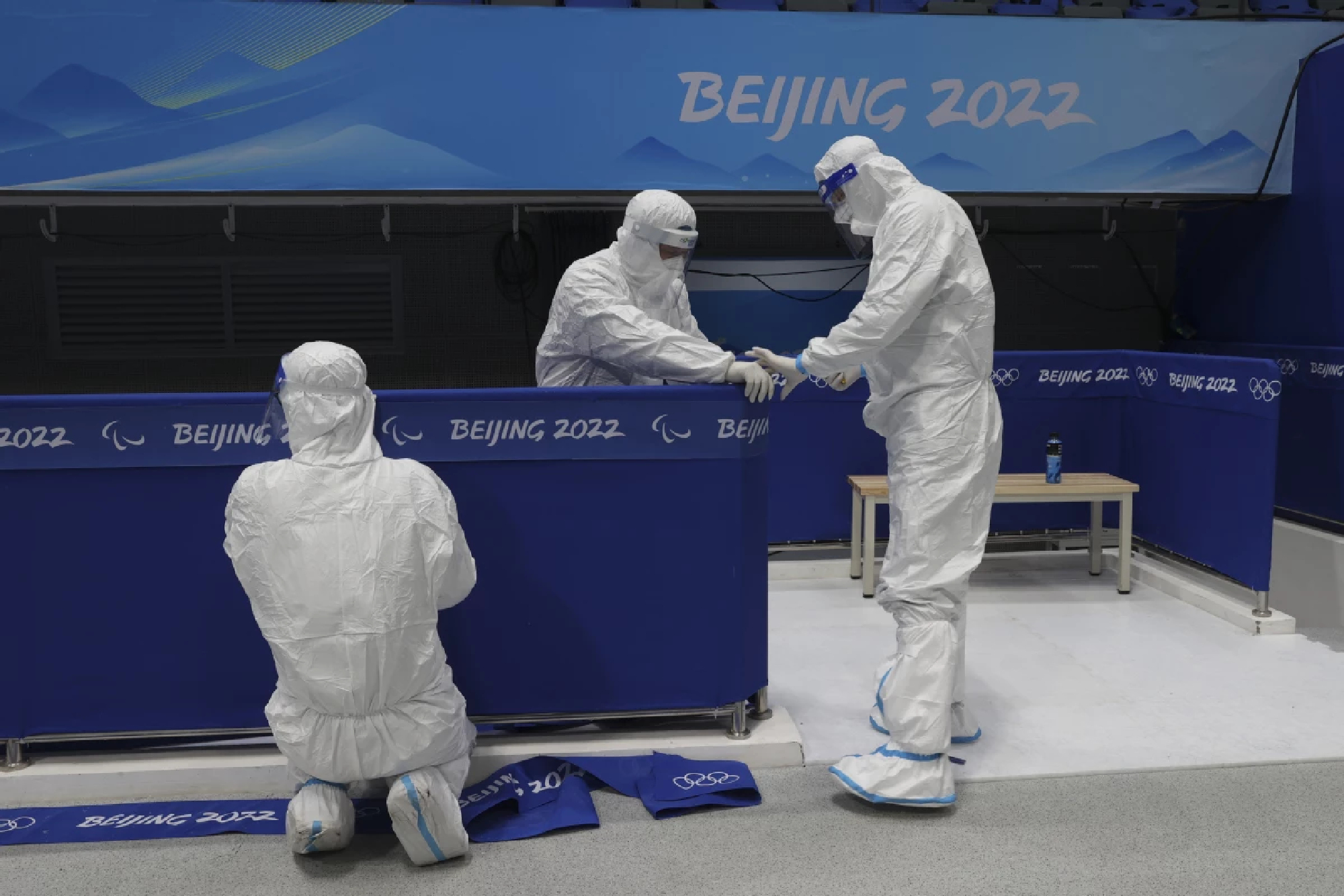
IPC president: 2022 Paralympics will be benchmark for future Games

“It will be a benchmark for future Paralympic Winter Games. … I could not be more excited, and I’m counting the hours to get on the plane to fly to Beijing,” Parsons said in an online interview with Chinese media on Tuesday. 

Starting on March 4, the Paralympic Winter Games, which feature six sports and 78 events, will take place in three competition zones: downtown Beijing; the capital’s northwest Yanqing district; and co-host Zhangjiakou, Hebei province.

A total of 736 athletes will compete, with 39 medal events for men, 35 for women and four mixed events.

Beijing 2022 will be the biggest ever Paralympic Winter Games, according to the International Paralympic Committee website. “I think it shows the strength of the Paralympic movement, that we are getting stronger and stronger and more relevant,” Parsons said, adding the movement also has a higher purpose. “As we get stronger, our message reaches more and more people,” he said.

Parsons said he had calculated that 7 percent of the world’s disabled people live in China. “That’s why having China so committed in maximizing the opportunity of the Paralympic Winter Games is so important to us,” Parsons said.

If the world wasn’t dealing with the COVID-19 pandemic, more nations would likely be participating, he added.

As the host nation, China will send a record number of 96 athletes to compete at the Paralympics.

The Chinese delegation, which was officially formed on Monday, has 217 members, including 121 coaching staff, support crew and medical personnel.

Parsons said the popularity of Paralympic sports has grown rapidly in China. “There’s (been) a phenomenal change in Chinese Paralympic winter sports. Only China can deliver such a growth number. The future of Chinese Paralympic winter sports is going to be very similar to summer sports, (with China) becoming one of the leading nations in the Paralympic Movement,” he added.

Parsons visited Beijing during the 2008 Summer Paralympics, and the experience made him very confident that China will present to the world a fantastic Winter Paralympics.

“The great memories have changed the way the Summer Games were delivered, and this is precisely what we are expecting at the 2022 (Paralympics),” said Parsons, who has traveled regularly to China for the past three years. “The venues are incredible,” he said, adding that some were “iconic” venues from the 2008 Games.

“For some of us who had been there in 2008, it’s amazing for us to see the Water Cube turned into the Ice Cube, for example,” he said, saying another chapter has been written in the history of China from 2008 to 2022. “China has become this superpower and very important country in the world in many areas-such as the economy, politics-but sports as well,” Parsons said.

With the pandemic still a major concern, it will not be an easy job to stage a safe Paralympics. But with the hard work of the Paralympic organizers and the experience gained from the recently completed Beijing Winter Olympics, Parsons said he is confident that the para athletes will enjoy the “safest” environment in Beijing.

“We are more confident after the (Winter) Olympics when it comes to the pandemic and all the countermeasures in the closed loop. It worked and some days we had zero positive cases, which is incredible under such circumstances. You don’t see that in any part of the world,” he said.

Athletes have been training under challenging circumstances over the past two years due to the pandemic, and it is important they are given the recognition they deserve, Parsons said.

By SHI FUTIAN

Published : February 24, 2022

By : China Daily
Moon welcomes WHO’s decision to establish global biomanufacturing training hub in S. Korea

#SootinClaimon.Com : ขอบคุณแหล่งข้อมูล : หนังสือพิมพ์ The Nation.

https://www.nationthailand.com/international/40012691


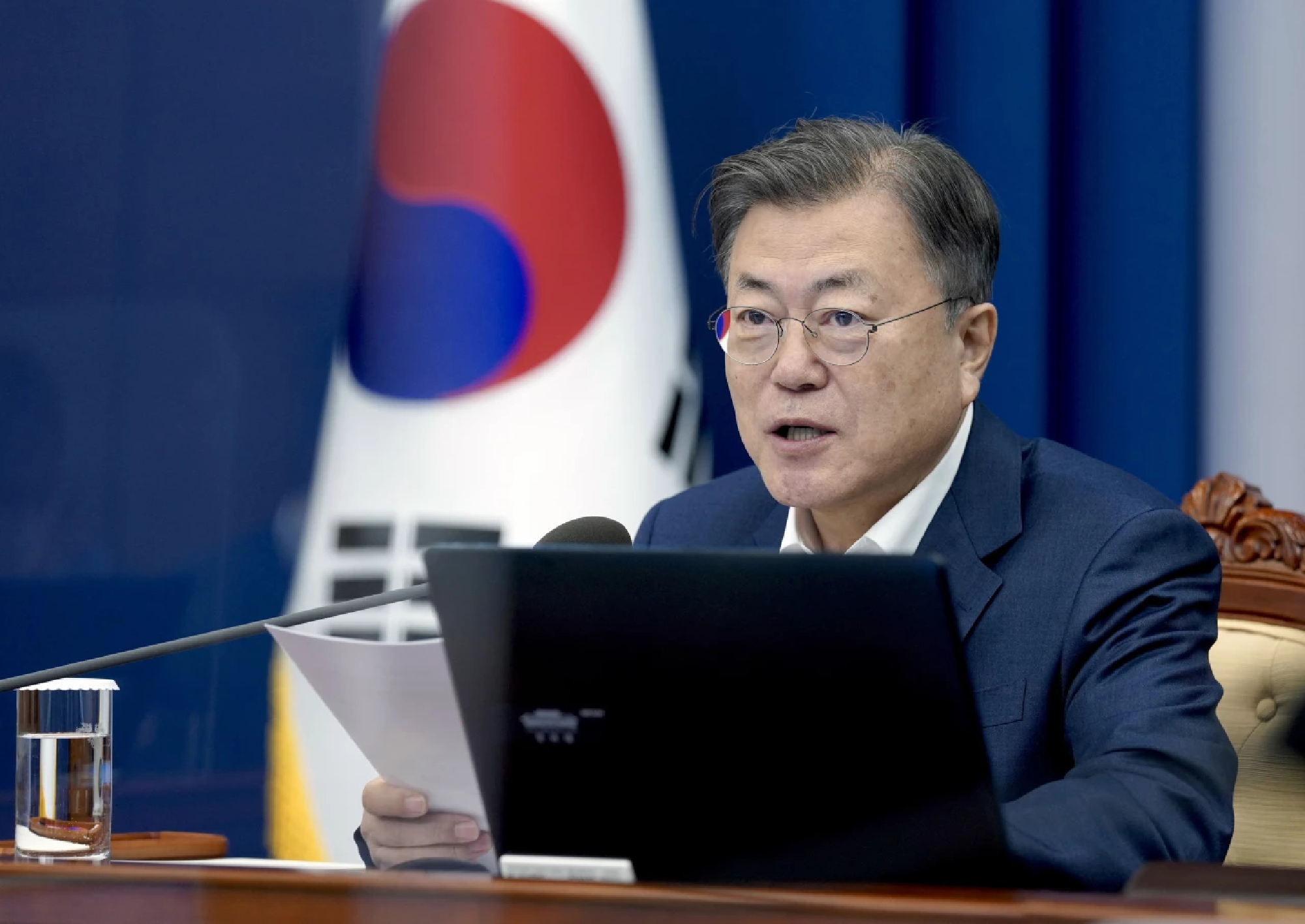
President Moon Jae-in on Thursday welcomed a decision by the World Health Organization (WHO) to set up a global biomanufacturing training hub in South Korea, saying the move would help Seoul achieve its goal of becoming a global vaccine hub.

Moon welcomes WHO's decision to establish global biomanufacturing training hub in S. Korea

Moon made the remarks after WHO announced it will establish the facility in South Korea that will carry out biomanufacturing training for workforces from around the world.

“Korea has become a hub country for education and fostering professionals to increase vaccine capabilities in developing countries,” Moon said in a message posted on social media.

“We will actively share our experiences and knowhow with the international community and contribute to self-sufficiency of vaccines and resolving vaccine inequality,” Moon said.

The facility will provide technical and hands-on training on operational and good manufacturing practice requirements, and will complement specific trainings on an mRNA vaccine technology, WHO said.

The facility is expected to help the low- and middle-income nations strengthen their biomanufacturing capabilities. (Yonhap)

Published : February 24, 2022

By : The Korea Herald

Ukraine war crossfire: PH, Asia Pacific seen getting hit by global price shocks

#SootinClaimon.Com : ขอบคุณแหล่งข้อมูล : หนังสือพิมพ์ The Nation.

https://www.nationthailand.com/international/40012690


MANILA, Philippines—The Asia-Pacific region, including the Philippines, will likely feel the impact of escalating tension and the threat of invasion by Russia of Ukraine by way of global price shocks and trade disruption, according to debt watcher Moody’s Investors Service on Wednesday (Feb. 23).

Ukraine war crossfire: PH, Asia Pacific seen getting hit by global price shocks

In a statement, Moody’s managing director Michael Taylor said the economies they watch in Asia-Pacific had “limited direct exposure to Russian or Ukrainian entities, and as such we do not anticipate there would be any immediate or direct ratings impact from the situation in Ukraine.”

But Moody’s said the region “may not be immune to second-round effects of a conflict.”

“Among the possible transmission channels are commodities prices, trade effects and financial market disruption,” Moody’s said. For instance, jittery domestic creditors during the past two weeks sought higher yields for short-dated treasury bills, making it more expensive for the government to borrow through the local debt securities market. Global oil prices were also on the rise while the world watched developments on the Ukrainian-Russian border.

“The global price of oil and liquified natural gas (LNG) is likely to rise sharply in the event of a conflict, which will be positive for the relatively few exporters in the Asia-Pacific region and negative for the substantially greater number of net energy importers,” Moody’s said. The Philippines is a net oil importer.

“However, a mitigating factor is that several Asian economies have long-term supply contracts in place for LNG which will limit the impact of fluctuations in the spot price,” Moody’s said.

Last week, the Bangko Sentral ng Pilipinas’ (BSP) monetary policy report noted that “Dubai crude oil spot price surged thus far in February 2022, compared to the previous month’s levels” due to “worries over tight supply conditions given geopolitical tensions emerging in Europe between Russia and Ukraine as well as Saudi Arabia, UAE, and Houthi rebels.”

“Still elevated natural gas prices, which could be exacerbated with the ongoing Ukraine crisis, could drive oil prices higher as consumers switch to oil products,” the BSP said.

The BSP said that “given that volatility in oil has again increased, it is important to remain vigilant in implementing measures that could help avoid second-round effects in terms of fare hikes and undue wage adjustments, as needed.”

Also, Moody’s said that “trade effects are likely to arise from import diversion and diversification, although there may be opportunities for commodities producers in Central Asia to increase supply to China.”

“Supply chain bottlenecks would also be aggravated, adding to inflation pressures in the region,” Moody’s added. Global and domestic price pressures, like the prolonged battle against the African swine fever (ASF) locally, were expected to elevate headline inflation to an average of 3.7 percent this year from the BSP’s previous forecast of 3.4 percent.

Moody’s also warned that “financial market effects will have the largest near-term impact: for example, if a conflict gives rise to widespread risk-aversion, funding conditions for high-yield issuers, some of which are already experiencing constrained access to finance due to other factors, will deteriorate further.”

By: Ben O. de Vera

Published : February 24, 2022

By : Philippine Daily Inquirer

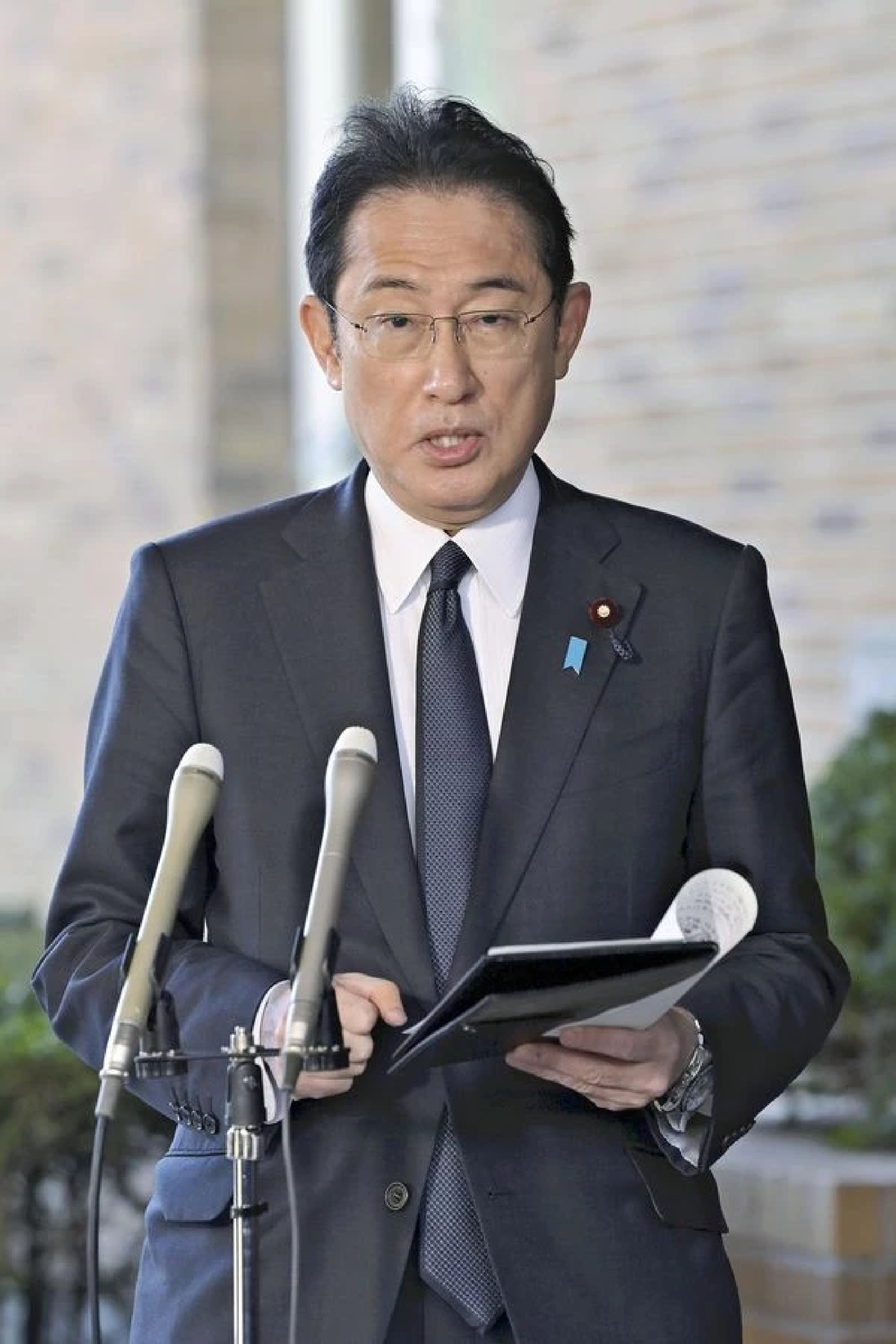
Japanese PM announces sanctions against Russia, bans trade with two separatist regions in Ukraine

#SootinClaimon.Com : ขอบคุณแหล่งข้อมูล : หนังสือพิมพ์ The Nation.

https://www.nationthailand.com/international/40012689


Prime Minister Fumio Kishida on Wednesday announced economic sanctions against Russia, in response to Russian President Vladimir Putin’s unilateral recognition of two separatist regions in eastern Ukraine that are controlled by pro-Russian militias.

Japanese PM announces sanctions against Russia, bans trade with two separatist regions in Ukraine

The economic sanctions include suspending the issuance of visas and freezing assets of parties in the two regions; a ban on imports and exports to and from the two regions; and a ban on the issuance and circulation of new sovereign bonds by the Russian government in Japan. The government will swiftly work out the details of the sanctions and complete the necessary procedures.

“If the situation worsens, we will work with the international community to promptly take further action,” Kishida said Wednesday, stressing that Russia’s moves “violate Ukraine’s sovereignty and territorial integrity, and are in violation of international law.”

Kishida strongly condemned Russia’s actions and urged Moscow to return to diplomatic efforts to resolve the situation.

The prime minister also expressed his intention to expedite efforts regarding measures to deal with the surge in oil prices. “Even if the price of crude oil continues to rise, to minimize the impact on people’s lives and business activities, we will examine all options, without exceptions,” he said.

The government will also focus on protecting the approximately 120 Japanese nationals in Ukraine as of Sunday. On Tuesday, the Japanese Embassy in Ukraine reiterated its call for Japanese residents to evacuate the country immediately.

The government has arranged for chartered planes to evacuate Japanese citizens to neighboring Poland and other countries in case commercial flights to and from Ukraine are suspended.

At a press conference on Tuesday, Defense Minister Nobuo Kishi said, “We want to respond to the situation with chartered planes first,” and indicated he would make a careful decision about whether to dispatch Self-Defense Force planes.

Published : February 24, 2022

By : The Japan News

PM Imran arrives in Moscow on two-day visit to advance gas pipeline project

#SootinClaimon.Com : ขอบคุณแหล่งข้อมูล : หนังสือพิมพ์ The Nation.

https://www.nationthailand.com/international/40012688


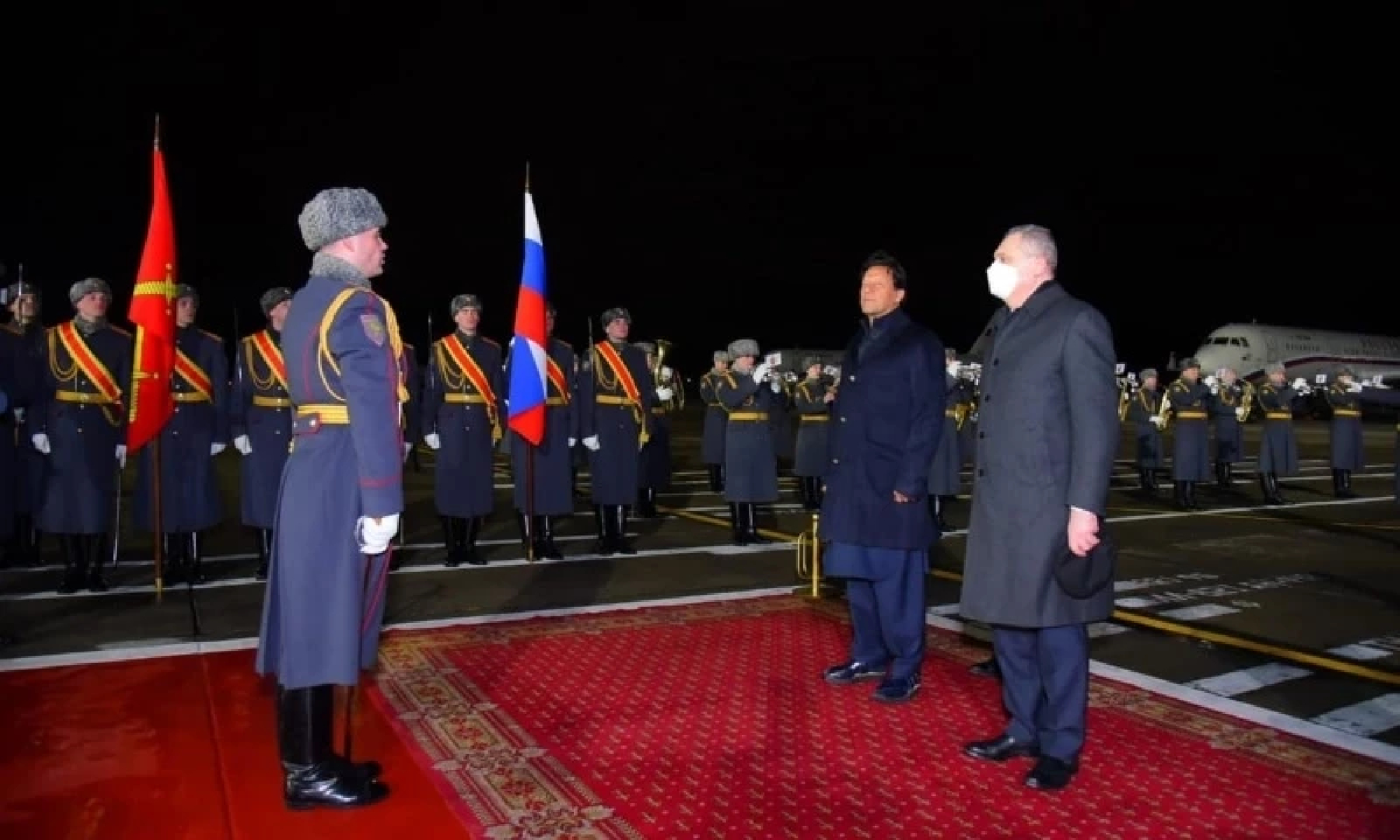
Prime Minister Imran Khan arrived in Moscow late on Wednesday on a two-day visit to push for the construction of a long-delayed, multi-billion-dollar gas pipeline to be built in collaboration with Russian companies.

PM Imran arrives in Moscow on two-day visit to advance gas pipeline project

Russia’s Deputy Foreign Minister Igor Morgulov welcomed the prime minister upon arrival in Moscow. He was also presented with a guard of honour.

The prime minister’s trip to meet President Vladimir Putin and discuss issues including economic cooperation comes hours after a number of Western nations hit Russia with new sanctions for its military deployment into parts of eastern Ukraine.

“Both countries are eager to launch the project at the earliest,” Pakistan’s energy ministry spokesman told Reuters about the Pakistan Stream gas pipeline. He confirmed that Energy Minister Hammad Azhar is accompanying the PM on the visit.

The Prime Minister’s Office also confirmed that Azhar was accompanying the premier alongside Foreign Minister Shah Mahmood Qureshi, Information Minister Fawad Chaudhry, Planning and Development Minister Asad Umar, Commerce Adviser Abdul Razak Dawood, National Security Adviser Dr Moeed Yusuf and MNA Amir Mahmood Kiani.

Special Assistant to the Prime Minister for Political Communication Dr Shahbaz Gill had arrived in Moscow ahead of the premier’s visit.

In an interview ahead of his trip, PM Imran had expressed concern about the situation in Ukraine and the possibility of new sanctions and their effect on Islamabad’s budding cooperation with Moscow.

It is unclear how the latest sanctions will affect the project, which would deliver imported Liquified Natural Gas (LNG) from Karachi to power plants in Punjab.

The project is important for Pakistan — particularly the power sector — as the country’s dependence on imported LNG grows in the face of dwindling indigenous gas supplies.

The pipeline project has already suffered delays because of earlier sanctions.

“This North-South pipeline suffered, one of the reasons … was the companies we were negotiating with, turned out that US had applied sanctions on them,” PM Imran told Russia Today on Tuesday.

“So, the problem was to get a company that wasn’t sanctioned,” he said of the project.

Pakistan-Russia collaboration on pipeline project

In 2015, Russia and Pakistan agreed in principle to build a 1,100 km-long pipeline to deliver imported LNG from Karachi to power plants in Punjab.

The pipeline’s designed annual capacity stands at 12.4 billion cubic metres (bcm), with the possibility to be increased to 16bcm.

The cost will require investments of between $1.5bn, according to Russia, to as much as $3.5bn, estimated by Pakistan, with 26 per cent of it to be financed by Moscow and the remaining 74pc by Islamabad.

The project was to be launched in 2020, but Russia had to replace the initial participant after the company was hit by western sanctions not related to the Pakistan Stream project.

Currently the pipeline, a rare example of Russian participation without state gas company Gazprom, involves the Eurasian Pipeline Consortium, steel pipe maker TMK, which produces steel pipelines for the energy sector, and Operational Services Centre run by the Russian Energy Ministry.

Russian shareholders expect to return their investments from gas shipping fees.

Currently, feasibility studies are taking place on the project but there is no firm date set for the launch. According to Russian media reports, shareholder agreement for the Pakistan Stream should be signed this month.

On May 28, 2021, Russian Energy Minister Nikolai Shulginov and Pakistan’s ambassador in Moscow Shafqat Ali Khan signed an agreement on behalf of their countries to build the Pakistan Stream gas pipeline.

Published : February 24, 2022

By : DAWN

Iran invited to survey oil, gas in Cambodia

#SootinClaimon.Com : ขอบคุณแหล่งข้อมูล : หนังสือพิมพ์ The Nation.

https://www.nationthailand.com/international/40012676


Cambodia has invited Iran to examine the feasibility of developing the Kingdom’s existing oil blocks and requested that the republic conduct further oil and gas exploration studies.

Iran invited to survey oil, gas in Cambodia

The proposal was made during a courtesy meeting between Minister of Mines and Energy Suy Sem and Iranian ambassador to Vietnam and Cambodia Ali Akbar Nazari on February 21 at the ministry.

Cheap Sour, director-general of the ministry’s General Department of Petroleum, hailed Iran as a country with significant experience as an oil and gas producer and saw the meeting as a boost to further economic cooperation between the two countries.

He told The Post that ministry leaders called on investors from the country to study the feasibility of investing in Cambodia’s existing oil blocks, as well as to explore new ones, but said that these talks were at a very early stage.

“This is a start, but it is not yet clear which investors from Iranian companies will be able to invest; it is just a diplomatic [discussion]. Now we are waiting to see,” he said.

Oil exploration at the Apsara oilfield in Cambodia’s offshore Block A has been suspended since Singapore-listed investment company KrisEnergy – which had been conducting pumping operations at the location – went bankrupt, Sour said.

KrisEnergy filed for bankruptcy in mid-2021, claiming it has been unable to pay off more than $500 million in debt. From the start of the pumping operation until its bankruptcy declaration, the company pumped nearly 300,000 barrels of oil, according to Sour. Since then, the mines ministry has been seeking to lure investors as well as research teams to the area.

Hong Vanak, director of International Economics at the Royal Academy of Cambodia, said that if the Iranian side agreed to Cambodia’s request to invest in and develop the Kingdom’s oil blocks, it would be a positive for the local oil sector, and could mean a resumption of pumping operations that were suspended due to the bankruptcy of KrisEnergy.

He added that Iran’s good qualifications and experience in the field of oil mining are something Cambodia’s own industry can benefit greatly from.

Royal Academy of Cambodia economics researcher Ky Sereyvath said that it was important for Cambodia to thoroughly explore possibilities in the oil sector because it is a resource that the Kingdom shares with neighbouring Thailand, and it was a race between the two sides to see who could capitalise on it.

“The mines ministry’s efforts to attract investors to develop the oil sector are very important [in promoting] the successful pumping of Cambodia’s oil, which we hope will lower oil prices, as well as allow the government to [generate] more revenue to help in key areas such as health and education,” he said.

At the end of 2019, Mubadala Petroleum, a major oil and gas company from the UAE, sought investment opportunities in the Cambodian oil sector but took no further action at the onset of the Covid-19 crisis.

According to Sour, in addition to discussing cooperation on investment and development of Cambodia’s oil blocks, the two sides also made plans to study the feasibility of setting up a refinery in Cambodia, as well as explore the possibility of working together in developing technical assistance and human resource training in the petroleum sector and energy trade cooperation, investment mobilisation, and the development of electricity infrastructure.

The Phnom Penh Post

Published : February 23, 2022

WB: Việt Nam to get highest trade, income gains among RCEP members

#SootinClaimon.Com : ขอบคุณแหล่งข้อมูล : หนังสือพิมพ์ The Nation.

https://www.nationthailand.com/international/40012648


HÀ NỘI — Việt Nam is expected to register the highest trade and income gains among Regional Comprehensive Economic (RCEP) members, according to a World Bank (WB)’s working paper.

WB: Việt Nam to get highest trade, income gains among RCEP members

To estimate the economic and distributional impacts of RCEP in Việt Nam, WB constructed a baseline and four alternative scenarios. The baseline reflects the business-as-usual conditions, where the tariff schedules of previous agreements, including the most recent CPTPP, have been implemented, in parallel with the US-China trade war.

In the baseline, between 2020 and 2035, the average trade weighted tariff imposed by Việt Nam declines from 0.8 per cent to 0.2 per cent, while the tariffs faced by Việt Nam are reduced from 0.6 per cent to 0.1 per cent. To measure the effects of RCEP, the policy scenario will be compared against this baseline.

The four policy scenarios will measure the RCEP implementation incrementally. The first scenario, the Tariffs scenario, is exclusively the implementation of tariffs according to the RCEP tariffs’ reduction schedules.

In the second scenario, the RCEP scenario, WB implemented reductions of tariffs and of non-tariff measures, including the tariff reduction of 35 per cent on agricultural goods; 25 per cent on manufacturing goods; and 25 per cent on services.

Only when tariff reductions are combined with lower non-trade barriers (NTBs), are exporters able to take full advantage of the preferential rates under liberal Rule of Origin (ROO).

WB assumed that with the ROO regime, the third scenario, trade costs among its members are reduced by 1 per cent over the implementation period of 2022-2035. However, in WB’s simulations, implementation of ROO policy is costless, resulting in upper bound estimates of potential gains.

For the final shock, the productivity kick scenario, an increase of productivity, as the result of a higher degree of openness and falling trade costs, is implemented.

Việt Nam’s real income and trade expand faster than the baseline in the scenarios with tariffs, non-tariff measure reductions and rules of origin, and in the productivity kick scenario.

“In the productivity kick scenario, where a productivity shock is included, Việt Nam has the highest gains of all RCEP member countries. Real income increases by 4.9 per cent relative to the baseline, higher than the gains for the bloc as a whole, where real income increases by 2.5 per cent,” WB reported.

“Trade also increases the most in this scenario, with exports expanding by 11.4 per cent and imports by 9.2 per cent, relative to the baseline.”

In the baseline, which incorporates long-term trends and accounts for all the current tariff liberalisation commitments within the region (except RCEP), real income in Việt Nam is expected to grow 112.7 per cent between 2020 and 2035, with exports and imports increasing by 155.5 per cent and 134.8 per cent, respectively.

With implementation of RCEP, when rules of origin and productivity are included on top of tariffs and non-tariff measures reductions, real income grows faster, with an increase of 123.1 per cent between 2020 and 2035.

The benefits of the implementation of these measures are also reflected in trade, with exports and imports growing 182.5 per cent and 155.5 per cent, respectively, and between the same period.

In the scenario where only the tariff reduction is implemented, the impact on Việt Nam’s economy is negligible, with real income close to zero. Trade too sees a small reduction relative to the baseline, with both exports and imports declining by 0.3 per cent.

“With the implementation of RCEP, the market for Việt Nam will expand, particularly to China, where Việt Nam does not currently possess any trade agreement. Gains in the productivity kick scenario are concentrated mostly in the manufacturing sectors, in particular wearing apparel, electrical equipment, and textiles,” WB reported.

“Some sectors will suffer losses with the implementation of the agreement, due to a redistribution of resources to more productive sectors.”

The COVID-19 pandemic has taken a high toll in human and economic terms. RCEP could help cushion the negative effects of COVID-19 on economic growth by supporting regional trade and value chains, according to this report.

In the medium/long run, RCEP would increase the resilience of its members, it would make them better prepared in the face of future shocks by enhancing regional collaboration, reducing trade costs, and further diversifying their economies. RCEP offers an opportunity to boost growth and support recovery from the COVID-19 pandemic. VNS

Published : February 23, 2022

By : THE NATION

Tech salaries soar as US, Chinese firms compete for Singapore talent

#SootinClaimon.Com : ขอบคุณแหล่งข้อมูล : หนังสือพิมพ์ The Nation.

https://www.nationthailand.com/international/40012647


SINGAPORE – Competition for tech talent in Singapore will continue to heat up this year, with firms raising salary offers as a bargaining chip.

Tech salaries soar as US, Chinese firms compete for Singapore talent

Software engineers enjoyed the highest raises among various technical specialisations surveyed in a new report by tech talent platform NodeFlair and venture capital firm Quest Ventures, with an average increase of 22 per cent year-on-year in 2021.

More senior software engineers who hold lead roles saw an even sharper raise, with increments of up to 32 per cent, said NodeFlair’s Tech Talent Compensation report.

The report analysed more than 30,000 data points from NodeFlair’s database, including user-submitted salaries backed by documents such as pay slips and offer letters, as well as advertised salaries on job portals.

Salaries can vary widely even at the same level of seniority.

The report said the median monthly income of junior software engineers is about $4,750, while those at the 90th percentile can make about $7,500 a month.

The median for lead software engineers is about $9,000. This goes up to almost $16,000 at the 90th percentile.

Mr Daljit Sall, senior director of technologies at recruitment firm Randstad Singapore, said the recent increase in salaries is among the highest tech professionals have ever seen.

Workers in the sector are also being offered attractive increments and sign-on bonuses to switch jobs.

Local tech talent in Singapore may be offered increments of around 20 per cent when changing employers, and those with specialised skills in high-growth sectors, including e-commerce and financial technology, can expect increments of up to 30 per cent, Mr Sall said. 

“The kinds of offers tech talent are seeing now are definitely at an all-time high due to the global talent shortage across sectors such as technology, manufacturing and logistics,” he added.

“It is likely that salaries will continue to increase over the next few years as companies compete against each other for tech talent with niche and specialised skills in emerging technologies.”

Ms Jolin Nguyen, managing director at HR consultancy AYP Group, agreed that tech salaries are at an all-time high in Singapore and its neighbouring countries.

“With the venture capital funding boom, there are many global tech companies in Singapore but still a limited talent pool in the tech sector,” she said. 

Foreign tech companies with deep pockets and ambitious plans for expansion in Singapore and the region are a major reason for the intense talent hunt here.

Many of the top hirers are offering pay packages well above the industry average, according to NodeFlair.

American tech giants such as Amazon Web Services, Facebook owner Meta Platforms, Apple and Google are dangling some of the highest salaries – 39 per cent to 56.5 per cent more than the market median.

Other popular companies paying more than 25 per cent over the median include TikTok owner ByteDance, investment banks Goldman Sachs and JPMorgan Chase, and food delivery platform foodpanda.

Both Chinese and American heavy-hitters are also actively looking to fill hundreds of jobs in Singapore, according to listings on their career pages and local recruitment portals. 

Checks by The Straits Times found that the roles span not only those requiring deep tech skills such as software engineers, developers and cyber-security specialists but also content marketers, policy managers and legal counsel.

Chinese firm ByteDance has almost 800 open positions based in Singapore for TikTok alone, as at last week. 

There are almost 350 other available roles at ByteDance itself and its subsidiaries such as BytePlus, which sells its AI artificial intelligence technologies to other businesses, and ByteHouse, which offers cloud services.

Alibaba and its subsidiary Lazada are looking to fill over 300 jobs, according to listings on their websites and LinkedIn.

Tencent Holdings, an entertainment titan and the world’s largest gaming publisher, has more than a hundred job listings. 

Meanwhile, established American firms are similarly hungry for talent in Singapore.

Amazon has more than 500 Singapore-based full-time positions listed on its job portal while Google has more than 200. Meta Platforms has over 200 openings, while Microsoft and Apple have more than 100 openings each.

Recruitment firm ManpowerGroup Singapore’s country manager Linda Teo said more Chinese tech firms have set up shop here over the past few years, and this has boosted job opportunities.

She estimated that the number of job openings in tech firms here has increased by 10 per cent to 15 per cent over the last two years, especially for technology and customer-related roles.

“Singapore’s workforce can fill some of these roles, but the demand is growing faster than the rate at which workers can be trained; thus it is very hard to fill all the roles,” she said.

“To address the talent shortage, besides accelerating the rate of training, companies need to get subject matter experts from overseas to come in and do the work while imparting their knowledge concurrently to the local workers to build up their expertise.”

Ms Patricia Teo, executive director of technology practice at Kerry Consulting, said offerings from Chinese tech firms are competitive, and they have also been looking to improve other pull factors recently.

For instance, many try to tackle the perception of “996” work culture, which refers to the trend of employees working from 9am to 9pm, six days a week.

Added Ms Teo: “The perks are not usually as strong as their American counterparts, though the Chinese tech firms are quick to benchmark and make adjustments to their overall packages to not lose out on candidates in a very tight market.”

Local firms looking for tech talent, including the public sector and small and medium-sized enterprises, are not shying away from the competition either.

The Government Technology Agency (GovTech) took the top spot in NodeFlair’s ranking of companies most searched by job seekers, beating Shopee, ByteDance, Grab, Google and Facebook. 

It offers pay packages that are 12.3 per cent higher than the market median.

Mr Alwyn Tan, a hiring manager at GovTech’s open government products division, told NodeFlair he benchmarks compensation packages to big tech firms such as Meta, Amazon, Netflix, Google and Apple, after adjusting for United States tax rates and cost of living.

Mr Julius Uy, chief technology officer at local learning technology company Kydon Group, said it is important to “always pay top dollar for top talent”.

The best engineers can outperform their peers significantly, so firms can actually save money by shelling out to attract and retain them, he said.

Note: This article has been updated for accuracy.

Published : February 23, 2022

By : The Straits Times

Moon says Ukraine’s sovereignty must be respected

#SootinClaimon.Com : ขอบคุณแหล่งข้อมูล : หนังสือพิมพ์ The Nation.

https://www.nationthailand.com/international/40012646


‘Korea to actively participate in peace efforts as responsible member of international community’

Moon says Ukraine’s sovereignty must be respected

Amid mounting fears of a Russian incursion into Ukraine, President Moon Jae-in said Tuesday that Ukraine’s sovereignty must be respected and Korea will actively participate in peace efforts for the nation.

“Ukraine’s sovereignty and territorial preservation must be respected and peaceful solutions should be actively sought through dialogue,” Moon said, presiding over an unscheduled joint meeting of the National Security Council and the Foreign Economic Security Strategy Council after the Kremlin ordered Russian troops into separatist-held parts of eastern Ukraine on Monday.

“It is never desirable for the situation in Ukraine to deteriorate into an armed conflict,” the president said. “It will have a great political and economic impact not only in Europe but also around the world.”

He added that countries worldwide should work together to ensure that the Ukraine issue can be resolved peacefully as soon as possible, saying, “Korea will actively participate in these efforts as a responsible member of the international community.”

Moon urged officials to make every effort to protect and withdraw Korean residents living in Ukraine and cooperate closely with the countries involved.

“As the situation develops rapidly, we must now be prepared for a faster, more active and more specific response,” Moon said at the meeting.

As of Sunday, about 60 Korean residents were known to be staying in Ukraine. Among them, around 30 Korean residents wanted to stay in the country. Local diplomatic offices are trying to persuade them to change their minds and either leave early or move to safe areas such as Lviv.

He also ordered the government to examine the impact of the Ukraine crisis on the Korean economy more closely.

“Economic relations such as trade between Korea and Ukraine are not significant, but prolonged situations and strong sanctions against Russia by Western countries could have a significant impact on our economy,” Moon said.

Moon told officials to “actively seek countermeasures to prevent the economy from suffering unexpected damage” as supply chain disruptions, such as with energy and raw materials, and uncertainties in the global financial market can “affect the overall economy.”

After Russian President Vladimir Putin ordered troops into two separatist pro-Moscow regions in eastern Ukraine on Monday, rising tensions sent jitters through markets in South Korea.

The won-dollar exchange rate started higher and the Kospi and Kosdaq began lower on the day, as a preference for safe assets grew on escalating geopolitical tensions. Gasoline prices in Seoul surpassed 1,800 won ($1.50) per liter.

The Financial Supervisory Service has decided to strengthen foreign currency liquidity management in all financial sectors by establishing a 24-hour emergency response system.

Securities said the crisis may also negatively affect the nation’s chips and chemicals industries.

If tensions escalate, a blow to the semiconductor sector, one of the nation’s major industries, is inevitable due to the Russia-Ukraine crisis. About 50 percent of neon, argon and xenon gases, which are raw materials for semiconductors, come from Russia and Ukraine. The oil refining and chemical sectors are also likely to be affected. Around 5.5 percent of total crude oil imports by domestic oil refiners is Russian.

By Shin Ji-hye

Published : February 23, 2022

By : The Korea Herald

Restraint urged on Ukraine issue

#SootinClaimon.Com : ขอบคุณแหล่งข้อมูล : หนังสือพิมพ์ The Nation.

https://www.nationthailand.com/international/40012645


Legitimate security concerns of any country should be respected, FM says

Restraint urged on Ukraine issue

China called on all parties concerned in the Ukraine issue to exercise restraint, avoid any action that might fuel tensions and seek reasonable solutions to the situation.

Russian President Vladimir Putin signed two decrees on Monday recognizing “the Lugansk People’s Republic” and “the Donetsk People’s Republic” as independent and sovereign states. He later instructed the Russian armed forces to ensure peace in the two “countries”.

State Councilor and Foreign Minister Wang Yi spoke with United States Secretary of State Antony Blinken by phone on Tuesday. Wang said that China is concerned about the evolution of the situation in Ukraine. China’s position on the Ukraine issue complies with its consistently held position that the legitimate security concerns of any country should be respected and the purposes and principles of the UN Charter should be safeguarded.

The evolution of the Ukraine issue so far is closely related to the delay in the effective implementation of the new Minsk Agreements, he said.

China will continue to engage with all parties according to the merits of the matter itself. The situation in Ukraine is deteriorating, and China again calls on all parties to exercise restraint, ease the situation and resolve differences through dialogue.

The United Nations Security Council had an emergency meeting on the deepening Ukraine crisis on Monday. Zhang Jun, China’s permanent representative to the UN, said at the meeting that “all parties concerned must exercise restraint and avoid any action that may fuel tensions”.

“We welcome and encourage every effort for a diplomatic solution, and call on all parties concerned to continue dialogue and consultation, and seek reasonable solutions to address each other’s concerns on the basis of equality and mutual respect,” Zhang said.

The current situation in Ukraine is a result of many complex factors, he said.

“We believe that all countries should solve international disputes by peaceful means in line with the purposes and principles of the UN Charter,” he said.

Putin’s recognition of the two “republics” on Monday drew immediate sanctions from the United States. The US and its European allies are also poised to announce harsh new sanctions against Russia on Tuesday, Reuters reported.

Li Yonghui, a researcher of Russian studies at the Chinese Academy of Social Sciences, said Russia’s recognition of the “republics” is a key step to hinder NATO’s eastward expansion. Russia and NATO will probably have a long-term military confrontation, and a more tense security situation is likely to appear in Europe, she said.

Moreover, after a series of talks with Western countries, Russia has seen that Western countries are not likely to send troops to safeguard Ukraine’s security in addition to imposing economic sanctions on Russia, Li said.

The independence of the two regions means that the Minsk Agreements, signed by Russia and Ukraine in 2014 and 2015, have become mere scraps of paper, Li said.

“All parties may still need to return to the negotiating table to deal with the situation,” she said.

Yuri Rogulev, director of the Franklin Roosevelt Foundation for United States Studies at Moscow State University, said the current international deadlock will last for a long time. Moscow’s Western adversaries and Russia itself can maintain tension, but no one will cross into the point of no return, he added.

Xinhua contributed to this story.

Published : February 23, 2022

By : China Daily