US solar tariff: Boon for South Korea, blow for China

#SootinClaimon.Com : ขอบคุณแหล่งข้อมูล : หนังสือพิมพ์ The Nation.

https://www.nationthailand.com/international/40012211


According to industry sources, the US last week decided to impose a 15 per cent tax on imported solar cells and panels for another four years.

US solar tariff: Boon for South Korea, blow for China

SEOUL – South Korean solar companies may face a bright future this year as the US recently extended a tariff for four more years to keep cheap Chinese products in check.

According to industry sources Friday, the US last week decided to impose a 15 per cent tax on imported solar cells and panels for another four years as part of an apparent effort to block the inflow of Chinese-made products.

The US first introduced the tariff to safeguard its domestic solar industry from China, which manufactures roughly 70 per cent of the world’s solar panels. The tariff, which started at 30 per cent, has gone down to 15 per cent this year.

For Hanwha Q Cells and LG Electronics, which have solar cell and panel factories in the US, the extension of the tariff is expected to help them maintain their dominant status in the North American market and spare them from the cutthroat competition with cheap Chinese products.

“It’s good news that Korean companies don’t have to compete against cheap Chinese solar panels. The tariff will allow them to stay competitive in the US market,” an industry official said.

Hanwha Q Cells and LG Electronics face an even brighter future as the US prepares a massive stimulus package to nurture its domestic solar industry.

Within the first half of this year, the US is expected to pass a bill called SEMA, or Solar Energy Manufacturing for America Act. If passed, the bill will provide tax deductions for all solar cells and modules produced on American soil until 2030. In addition, the bill will provide massive subsidies for new factories.

Analysts project that Hanwha Q Cells, for instance, will benefit by 100 billion won ($83.61 million) from SEMA every year. Expecting the bill to pass, Hanwha Q Cells recently acquired a 16.67 per cent stake in REC Silicon ASA, a Norwegian firm that manufactures polysilicon in the US. Polysilicon is the basic raw material used to manufacture solar cells and panels.

Meanwhile, OCI is another beneficiary of the US crackdown on Chinese solar products. The Korean company manufactures polysilicon in Malaysia and has emerged as an alternative to Chinese polysilicon suppliers after the US banned the imports of polysilicon made in Xinjiang, China, for humanitarian reasons. Thanks to the ban, demand for OCI’s polysilicon made in Malaysia saw explosive growth. The firm logged an operating profit of 626.1 billion won last year, a record figure since 2011.

Kim Byung-wook

The Korea Herald

Published : February 11, 2022

Over 400,000 people displaced by armed conflicts in northwestern and southeastern Myanmar and access to humanitarian aid remains restricted: OCHA Myanmar

#SootinClaimon.Com : ขอบคุณแหล่งข้อมูล : หนังสือพิมพ์ The Nation.

https://www.nationthailand.com/international/40012201


More than 400,000 people have been displaced in northwestern and southeastern Myanmar and access to humanitarian aid remains restricted, announced the United Nations Office for the Coordination of Humanitarian Affairs (OCHA Myanmar) on February 9.

Over 400,000 people displaced by armed conflicts in northwestern and southeastern Myanmar and access to humanitarian aid remains restricted: OCHA Myanmar

According to the statement, intense fighting between Tatmadaw, ethnic armed groups and People’s Defense Forces (PDFs) has forced civilians to flee their homes in northwestern and southeastern Myanmar.

According to OCHA Myanmar, the intensity of the fighting has resulted in the destruction of civilian property and the displacement of civilians.

As of January 31, the United Nations High Commissioner for Refugees (UNHCR) had estimated that about 191,640 people had been displaced by armed conflict in northwestern Myanmar since February 1, 2021.

About 197,970 people: 136,270 in Sagaing Region, 21,360 in Magway Region and 40,340 in Chin State, have been displaced in northwestern Myanmar, according to the statement.

In the past two weeks, a statement from the OCHA Myanmar said that 1,080 buildings, including religious buildings, were destroyed in the blaze.

According to a statement issued by OCHA Myanmar on January 26, About 217,900 people, 91,400 people in Kayah State, 74,600 in Kayin State, 42,600 in southern Shan State, 7,100 in Mon State, 1,600 in Tanintharyi Region and 600 in Bago Region, had fled the fighting in southeastern Myanmar. As a result, more than 400,000 people have been displaced in northwestern and southeastern Myanmar, according to the announcements of OCHA Myanmar made on January 26 and February 9.

As humanitarian needs continue to grow, OCHA Myanmar says access to humanitarian access remains severely restricted due to the bureaucratic blockades, the conflict and the increase in military checkpoints.

The statement added that greater access was needed to respond to the growing need for humanitarian assistance.

Published : February 11, 2022

By : Eleven Media

Unicef urges Duterte gov’t to act on record child abuse cases

#SootinClaimon.Com : ขอบคุณแหล่งข้อมูล : หนังสือพิมพ์ The Nation.

https://www.nationthailand.com/international/40012200


While the internet offers new opportunities in education amid the pandemic, it has also become a platform for threat and sexual abuse among children, an official of the United Nations Children’s Fund (Unicef) said on Wednesday.

Unicef urges Duterte gov’t to act on record child abuse cases

In a statement, Unicef’s Philippine representative Oyunsaikhan Dendevnorov said it was “imperative that we continue our efforts in safeguarding our children on digital platforms.”

She also reiterated the need to support the government “in employing a whole-of-government approach” in the fight against online sexual abuse of children.

In December last year, the Department of Justice (DOJ) reported receiving more than 2.8 million tips about online child sexual exploitation throughout 2021. This is more than double the number of the previous year’s tally at 1.3 million.

The DOJ’s Office of Cybercrime started official investigations for 268 cases, a jump from the 73 cases it handled in 2020.

The Philippines has previously been identified by Unicef as the “global epicenter of the livestream sexual abuse trade.”

SaferKidsPH program

To help ensure the safety of young people in digital platforms, Unicef launched SaferKidsPH program, an Australian government initiative that seeks to mitigate online sexual abuse and exploitation of children.

In line with Safer Internet Day on Feb. 8, monthlong activities such as a forum with internet service providers and a webinar will be conducted to tackle online sexual abuse and the protection of children online.

Based on the National Study on Online Sexual Abuse and Exploitation of Children in the Philippines, poverty is the main reason why children and families resort to these activities.

Perpetrators, usually foreigners, offer older children education or money in exchange for sexual pictures or videos.

Families, parents or relatives then become the facilitators of these abuses and force the children to undress or perform sexual activities in front of the camera.

“This is a hidden crime, unknown to many but experienced more and more by Filipino children in their own homes, in their own families and communities,” SaferKidsPH said on its website.

Unicef urged the government and civil society “to synergize and to put children’s rights and protection at the forefront of digital efforts.”

The organization also called on the House of Representatives and Senate to pass a bill on online sexual abuse and exploitation of children and asked for its “effective implementation if enacted.”

By: Jane Bautista

Published : February 11, 2022

By : Philippine Daily Inquirer

Nation aims for breakthroughs in chip sector

#SootinClaimon.Com : ขอบคุณแหล่งข้อมูล : หนังสือพิมพ์ The Nation.

https://www.nationthailand.com/international/40012199


Development of high-end products to speed up amid fierce global competition

Nation aims for breakthroughs in chip sector

The United States’ and the European Union’s multibillion-dollar plans to support their semiconductor industries will fuel global competition in the strategically important sector, and China needs to double down to achieve breakthroughs in core chipmaking technologies, experts said on Thursday.

The comments came after the European Commission announced a new European Chips Act earlier this week that involves more than 43 billion euros ($49 billion) in public and private funding, with a goal of doubling the EU’s share of global chip production from 9 percent to 20 percent by 2030.

Last week, the US House of Representatives also approved $52 billion of federal funding for the US semiconductor industry.

Bai Ming, deputy director of international market research at the Chinese Academy of International Trade and Economic Cooperation, said the plans from the US and EU highlight the importance of chips to economic recovery amid the COVID-19 pandemic and to future economic growth.

“Competition in the global chip sector has reached a new high,” Bai said, adding that China has rolled out a string of policies, including tax reductions and funding support, to accelerate the development of its semiconductor sector.

“I believe such policies will evolve and be further strengthened,” Bai said, adding that more efforts will be made to encourage Chinese companies to achieve breakthroughs in core chip technologies.

The outline of the 14th Five-Year Plan (2021-25) for National Economic and Social Development and the Long-Range Objectives Through the Year 2035, for instance, said China will speed up the development of high-end chips.

The Ministry of Industry and Information Technology, China’s top industry regulator, said that one of its top priorities during the 14th Five-Year Plan period is to advance the modernization of industrial chains and to encourage companies to overcome crucial technical bottlenecks such as in the field of high-end semiconductor equipment.

Local governments in areas such as Shanghai, Tianjin and Guangdong and Zhejiang provinces are also moving fast, identifying integrated circuits as one of their key industries during the 14th Five-Year Plan period.

Roger Sheng, vice-president of research at US market research company Gartner, said that as the world’s largest chip market, China’s semiconductor industry has made progress in recent years.

In 2021, the sales revenue of China’s integrated circuit industry exceeded 1 trillion yuan ($157.3 billion) for the first time, with year-on-year growth of 18 percent, according to estimates by the China Semiconductor Industry Association.

In comparison, global semiconductor revenue grew at a compound annual growth rate of 25.6 percent to $552.9 billion last year.

But there is still a big technical gap between Chinese chipmakers and their foreign peers, especially in high-end chipmaking equipment and fundamental chip materials, Sheng said. China, for instance, relies heavily on imports for lithography machines that play a crucial role in chip production.

To achieve breakthrough in these areas, money is not enough. “Talent and time are the keys,” Sheng added.

Fang Xingdong, an independent expert who has been following the semiconductor industry for more than two decades, said the sector in China now faces increasingly fierce competition, as well as technological restrictions from the US government.

The New York Times described the legislation that includes the $52 billion chip plan, if enacted, as the most expansive attempt yet by the US to take on China. Washington has also restricted dozens of Chinese companies’ access to US technologies including semiconductor equipment and software.

“Within such a context, we have to beef up support and better leverage public and private resources to support homegrown semiconductor innovation,” Fang said.

By MA SI

Published : February 11, 2022

By : China Daily

[Japan] Quasi-emergency measures extended to March 6 in 13 prefectures

#SootinClaimon.Com : ขอบคุณแหล่งข้อมูล : หนังสือพิมพ์ The Nation.

https://www.nationthailand.com/international/40012198


The government announced Thursday an extension to the period of quasi-emergency priority measures in Tokyo and 12 other prefectures until March 6.

[Japan] Quasi-emergency measures extended to March 6 in 13 prefectures

The measures had been scheduled to end on Sunday in those areas.

The government’s COVID-19 subcommittee agreed to the extension in a meeting on Thursday morning. The subcommittee also agreed to a proposal to implement quasi-emergency measures in Kochi Prefecture from Saturday to March 6.

“The pace of infections is slowing down, but except for a few areas, the coronavirus is still spreading,” economic revitalization minister Daishiro Yamagiwa said at the subcommittee meeting.

In addition to Tokyo, the measures will be extended in Gunma, Saitama, Chiba, Kanagawa, Niigata, Gifu, Aichi, Mie, Kagawa, Nagasaki, Kumamoto and Miyazaki prefectures.

With the addition of Kochi Prefecture, quasi-emergency measures will be in effect in 36 prefectures this weekend.

The measures will be implemented until Feb. 20 in 21 prefectures, including Hokkaido and Osaka Prefecture, and until Feb. 27 in Wakayama Prefecture.

The government also presented a draft to amend its basic pandemic policy, which includes calls for more stringent measures at elderly nursing homes, schools and nurseries, such as a recommendation for toddlers aged 2 and above to wear masks whenever possible.

It also includes calls for people dining in groups to limit the number of participants and eat in silence, and a goal of administering 1 million COVID-19 booster shots per day this month.

Published : February 11, 2022

By : The Japan News

NK issue at pivotal moment: nuclear envoy

#SootinClaimon.Com : ขอบคุณแหล่งข้อมูล : หนังสือพิมพ์ The Nation.

https://www.nationthailand.com/international/40012197


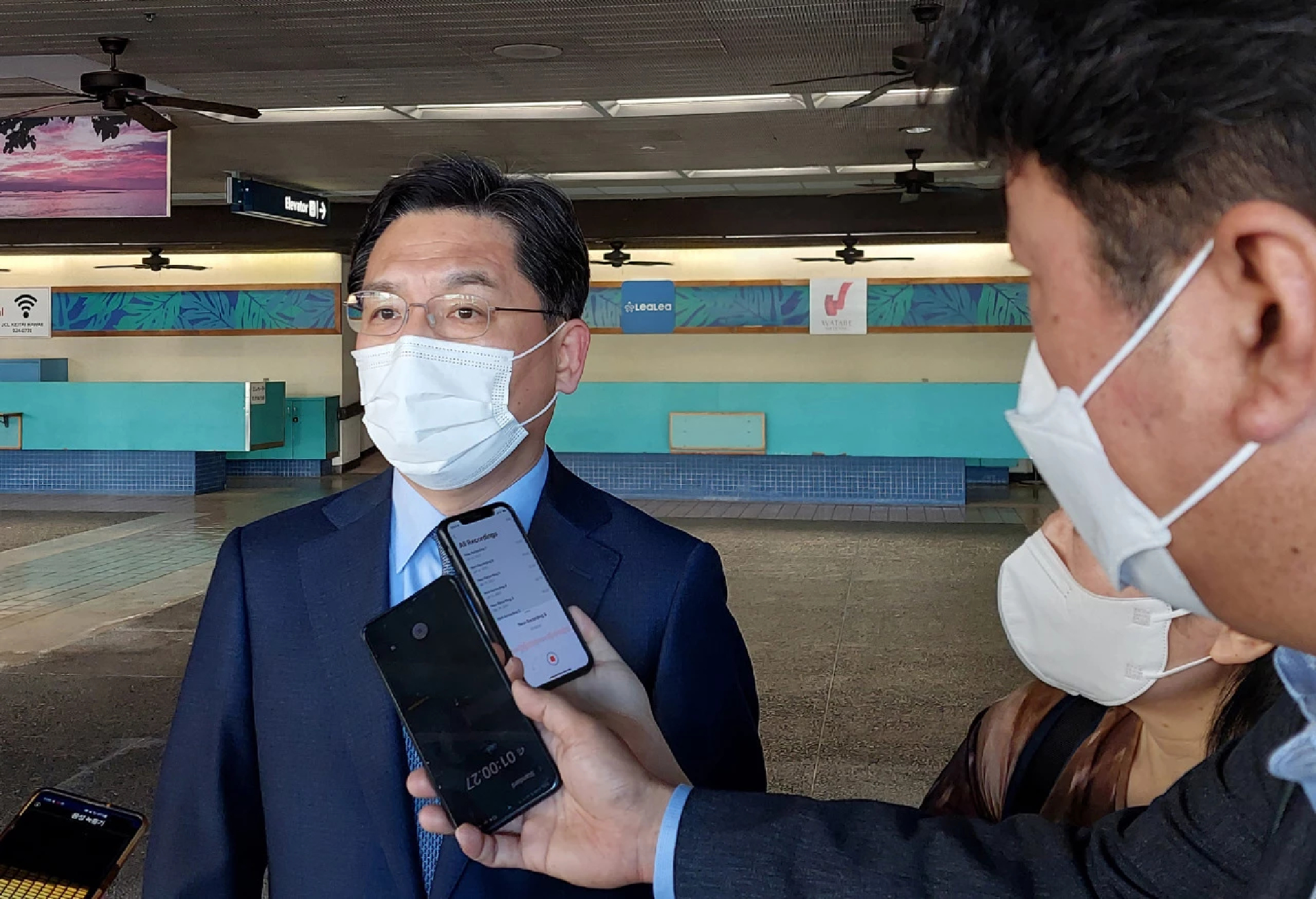
South Korea’s top nuclear envoy stressed that the situation on the Korean Peninsula is at a pivotal moment following North Korea’s recent series of missile tests, calling for the need of engagement with the reclusive regime.

NK issue at pivotal moment: nuclear envoy

“Ibelieve we are at a very pivotal moment that will decide if we will return to the period of cold winter or a season of warm atmosphere as it is here,” South Korea’s chief nuclear envoy Noh Kyu-duk told reporters upon arriving at Honolulu, Hawaii on Wednesday (local time). He is in Hawaii for a trilateral session with his American and Japanese counterparts, Sung Kim and Takehiro Funakoshi, respectively, scheduled for Thursday. Noh is also holding separate bilateral sessions with Kim and Funakoshi on the same day. 

The Korean envoy stressed that the stable management of the situation is more important than anything else, and that the three sides seek to hold in-depth and concrete talks on ways to effectively engage with North Korea. 

“Until now, there have been various consultations between South Korea and the US, along with Japan. I came here with a hope that (this meetings) will serve as an opportunity to come up with the most effective measures to work toward engagement (with the North),” he said. 

The three-way talks scheduled for Thursday comes as Pyongyang has been beefing up its arsenal, defying strict sanctions and the UN Security Council resolution which bans the country’s ballistic missile tests. 

On Jan. 30, the North fired an intermediate-range ballistic missile, marking its seventh weapons launch this year and what appeared to be the most powerful missile it has tested since 2017. The regime also hinted of ending its self-imposed, four-year moratorium on testing nuclear weapons and long-range ballistic missiles in order to bolster defense against the “hostile policy and military threat by the US.”

“The situation on the Korean Peninsula has become severe due to the North’s various messages and action,” said Noh. 

During Thursday’s talk, Seoul’s push to formally end the 1950-53 Korean War is likely be part of the agenda. Noh had called the end-of-war declaration as an “useful tool to start the denuclearization talks” as he left Seoul for Honolulu on Wednesday. 

Following their meetings, the three officials will also accompany their foreign ministers, who are set to hold three-way ministerial meetings on Saturday in Hawaii. 

Dealing with North Korea’s missile launch and expanding trilateral cooperation in tackling various issues are expected to be on the table at the meeting between South Korean Foreign Minister Chung Eui-yong, US Secretary of State Antony Blinken and Japanese Foreign Minister Yoshimasa Hayashi. 

Blinken stressed that the upcoming meeting in Hawaii is another opportunity to drive the trilateral collaboration among the US, South Korea and Japan forward. 

“We’ve been spending a lot of time –- Deputy Secretary Sherman and myself –- on trilateral collaboration among the United States, Japan, and Republic of Korea,” Blinken told the press on Wednesday en route to Melbourne as part of his week-long trip to the Asia-Paciic region. “This is another opportunity to drive that forward. There is a very broad common agenda that we have, of course, starting with challenges posed by the DPRK but going well beyond that. This is an important moment to keep driving that forward.”

DPRK stands for the Democratic People‘s Republic of Korea, the North’s official name.

On Thursday, South Korea’s First Vice Foreign Minister Choi Jong-kun and his American counterpart, Wendy Sherman had phone discussion. The two sides agreed to hold “in-depth” consultations on ways to cooperate in dealing with North Korea through this week’s back-to-back meetings in Hawaii, according to the Foreign Ministry.

By Ahn Sung-mi

Published : February 11, 2022

By : The Korea Herald

Philippines Defense dept gets P1 billion worth of equipment from China

#SootinClaimon.Com : ขอบคุณแหล่งข้อมูล : หนังสือพิมพ์ The Nation.

https://www.nationthailand.com/international/40012190


The donation is made up of various rescue and relief equipment, such as drone systems, detectors, and water purification vehicles.

Philippines Defense dept gets P1 billion worth of equipment from China

MANILA — The Department of National Defense (DND) received on Wednesday P1 billion worth of military equipment from China for the rehabilitation of Marawi City and other humanitarian assistance and disaster response operations.

The equipment was donated by the Ministry of National Defense of the People’s Republic of China, according to Defense Secretary Delfin Lorenzana.

“This military grant from China speaks volumes on how our two nations can be civil, diplomatic, and friends despite some issues on territorial claims,” Lorenzana said at the ceremonial handover of the donated equipment.

The donation is made up of various rescue and relief equipment, drone systems, detectors, water purification vehicles, ambulances, firetrucks, X-ray machines, EOD (explosive ordnance disposal) robots, bomb disposal suits, transport vehicles, backhoes, dump trucks, forklifts, and earthmovers.

The shipment first arrived on Jan. 16, as part of a pledge by Chinese Gen. Wei Fenghe during his visit to Manila in 2020.

Meanwhile, the second batch of equipment worth 54 million renminbi (around P435 million) will be delivered at a later date.

Present during the ceremonial handover were Huang Xilian, the Chinese Ambassador to the Philippines, and Gen. Andres Centino, the chief of staff of the Armed Forces of the Philippines.

There were senior defense officials, including Undersecretary Cardozo Luna and Undersecretary Ricardo Jalad, who heads the Office of Civil Defense.

Dr. Dominador Chiong Jr., the director of the Veterans Memorial Medical Center, also attended.

Zacarian Sarao

Philippine Daily Inquirer

Published : February 10, 2022

Land rights controversy shakes up Indonesia’s capital relocation plan

#SootinClaimon.Com : ขอบคุณแหล่งข้อมูล : หนังสือพิมพ์ The Nation.

https://www.nationthailand.com/international/40012189


There are allegations that a number of prominent figures stand to benefit from the relocation of Indonesia’s capital to East Kalimantan.

Land rights controversy shakes up Indonesia’s capital relocation plan

JAKARTA – Nusantara, the government’s new capital city project, is facing more public scrutiny even after lawmakers passed a law formalizing the staggered move away from congested Jakarta, following allegations that a number of prominent figures stand to benefit from the relocation to East Kalimantan.

Concerns surrounding land rights and ownership over the 256,000-hectare site of the new capital have surfaced ever since President Joko “Jokowi” Widodo announced that the new city would occupy an area straddling the regencies of North Penajam Paser and Kutai Kartanegara.

Dozens closely linked to the government were named in a 2020 report copublished by Trend Asia and the Mining Advocacy Network (Jatam) titled “For whom is the new capital?”.

But now, critics are focusing their attention on certain high-net-worth individuals, including conglomerate Sukanto Tanoto and politically wired businessman Hashim Djojohadikusumo.

Both came under recent scrutiny for their reported ownership of a portion of land on which the new capital will be built: Sukanto through his PT International Timber Corporation Indonesia (ITCI) Hutani Manunggal and Hashim through his ownership of the Arsari group.

During a webinar on Jan. 22, senior economist Faisal Basri speculated that Hashim’s close ties to the government had turned him into one of the so-called oligarchs who stood to benefit from the capital’s relocation through his water supply project.

Faisal also took issue with the lack of transparency over dealings between the state and concession owners like Sutanto, Hashim, or even his brother, Defense Minister Prabowo Subianto, as well as with vendors appointed to provide materials for the construction of the new capital.

“There’s no such thing as a free lunch,” he said.

The Jakarta Post has reached out to Sukanto’s firm. which already stated in 2019 that the palm oil kingpin was prepared to return his portion of the land to the government.

Meanwhile, Hashim rubbished these claims, insisting that he had held onto the land rights since 2007, long before the location of the new capital was unveiled by Jokowi.

“I can say that [these allegations] are a huge lie, and also slander. There have been no political deals,” he told a press conference on Thursday, adding that only a small portion of his land overlapped with the Nusantara project.

According to Hashim, he had already made plans in 2015 to utilize his concession area for a reforestation project – geared for biofuel production and wildlife conservation – with the clean water initiative being only an add-on.

“The plan was ready for execution from 2016. It was meant to supply [clean water] to Balikpapan city, but then the government, through Bappenas [the National Development Planning Agency], asked me to prioritize [water supply] to the new capital,” he said.

“However, no contract has been signed yet.”

As a businessman, Hashim also funded his brother’s unsuccessful presidential campaign. Prabowo eventually turned into Jokowi’s coalition ally and was tasked to manage land in Kalimantan under a food security project.

During one of their nationally televised campaign debates on agrarian reform in 2019, Jokowi deflected Prabowo’s criticism of his land distribution program by revealing that his rival owns 220,000 ha of land in East Kalimantan.

Prabowo acknowledged this as fact, but his party later hit back by noting that proceeds from these land concessions also contributed to Jokowi’s bid for the Jakarta governor’s post in 2021, regarded as a key milestone that heralded his rise to the presidency in 2014.

Dio Suhenda

The Jakarta Post

Published : February 10, 2022

Việt Nam and the RoK eye comprehensive strategic partnership

#SootinClaimon.Com : ขอบคุณแหล่งข้อมูล : หนังสือพิมพ์ The Nation.

https://www.nationthailand.com/international/40012152


HÀ NỘI — Vietnamese Minister of Foreign Affairs Bùi Thanh Sơn met with the Republic of Korea (RoK)’s President Moon Jae-in on Wednesday, during his official visit to the country, agreeing that the two countries should elevate their relationship to a comprehensive strategic partnership.

Việt Nam and the RoK eye comprehensive strategic partnership

At the meeting, President Moon Jae-in conveyed his cordial greetings to General Secretary Nguyễn Phú Trọng, President Nguyễn Xuân Phúc and other senior leaders of Việt Nam.

Welcoming Foreign Minister Sơn to the Republic of Korea, he said the visit is an important event that marks the 30th anniversary of the establishment of diplomatic relation between the RoK and Việt Nam.

President Moon said that the RoK has always considered Việt Nam a key partner in implementing the New Southern Policy.

He said he hoped that the two sides will soon upgrade their relationship to a comprehensive strategic partnership. He proposed the country continue to create favourable conditions for Korean businesses to operate in Việt Nam, especially investment in the fields of infrastructure and finance, as well as large-scale projects in the country.

He said the two countries should strengthen coordination in regional and international issues of mutual concern.

President Moon highly appreciates Việt Nam’s coordinating role in Korea-ASEAN relations in the 2021-24 period, saying that the visit of the Vietnamese foreign minister would contribute to promoting the development of relations between the two countries, and between the RoK and ASEAN.

Minister Sơn congratulated the achievements that the RoK has achieved recently, especially in response to the pandemic and socio-economic development.

He affirmed that Việt Nam attaches great importance to and hopes to further develop relations with the RoK, in which the focus is on implementing activities to celebrate the 30th anniversary of the establishment of diplomatic relation, and upgrading the two countries’ relations to the next level of comprehensive strategic partnership in 2022.

The minister said the two countries should maintain regular high-level exchanges and contacts, and create a favourable political environment, while effectively having mechanisms to expand cooperation, especially in the fields of economy, trade, investment and post-pandemic recovery.

He said Việt Nam will strive to raise the two countries’ trade turnover to US$100 billion by 2023, as well as strengthening cooperation in culture, education, tourism, labour, people-to-people exchanges and closely coordinating in supporting each other’s citizens, while continuing to maintain coordination on multilateral forums.

The minister said that Việt Nam will fulfil its role as a coordinator of ASEAN-Korea relations in the 2021-24 period, bringing more substantial and effective progress to the relationship between ASEAN and the RoK.

He said he hoped the two countries will continue to coordinate and show a positive stance in maintaining peace, stability and legal order at sea, respecting freedom of navigation and overflight, and settling disputes at the East Sea by peaceful means on the basis of international law, including the United Nations Convention on the Law of the Sea 1982 (UNCLOS 1982).

Furthermore, support must continue regarding the building of a substantive and effective Code of Conduct in the East Sea (COC), in accordance with international laws, including UNCLOS 1982. —  VNS

Published : February 10, 2022

By : Vietnam News

Malaysia’s eCommerce income surpasses RM1 trillion

#SootinClaimon.Com : ขอบคุณแหล่งข้อมูล : หนังสือพิมพ์ The Nation.

https://www.nationthailand.com/international/40012151


PETALING JAYA: Malaysia’s eCommerce income crossed the RM1 trillion mark for the first time in 2021, growing by almost 22% from the previous year.

Malaysia's eCommerce income surpasses RM1 trillion

Amid the Covid-19-induced weak economic conditions, eCommerce income surged to RM1.09 trillion in 2021 compared with RM896.39bil in 2020, according to the Statistics Department. The growth was driven mainly by the manufacturing and services sectors.

For the fourth quarter of 2021 (Q4’21), Malaysia’s eCommerce income improved by 18.3% year-on-year (y-o-y) to RM290.3bil.

On a quarter-on-quarter basis, the country’s income from eCommerce rose 4%.

eCommerce is part of Malaysia’s services sector, which also improved in revenue last year after a contraction in 2020.

According to the Statistics Department, the annual revenue of the services sector in 2021 was recorded at RM1.68 trillion, although this continued to be below the 2019 level of RM1.78 trillion.

For Q4’21, Malaysia’s services sector recorded a revenue of RM460bil, growing 5.3% y-o-y. The increase in the services sector was driven by the wholesale and retail trade, food and beverages and accommodation segment, which increased 5.1% to RM370.1bil.

This was followed by the transportation and storage as well as the private health, private education and arts, entertainment and recreation segments, whose revenue went up by 8.2% and 6.5% to RM67bil and RM14.3bil, respectively.

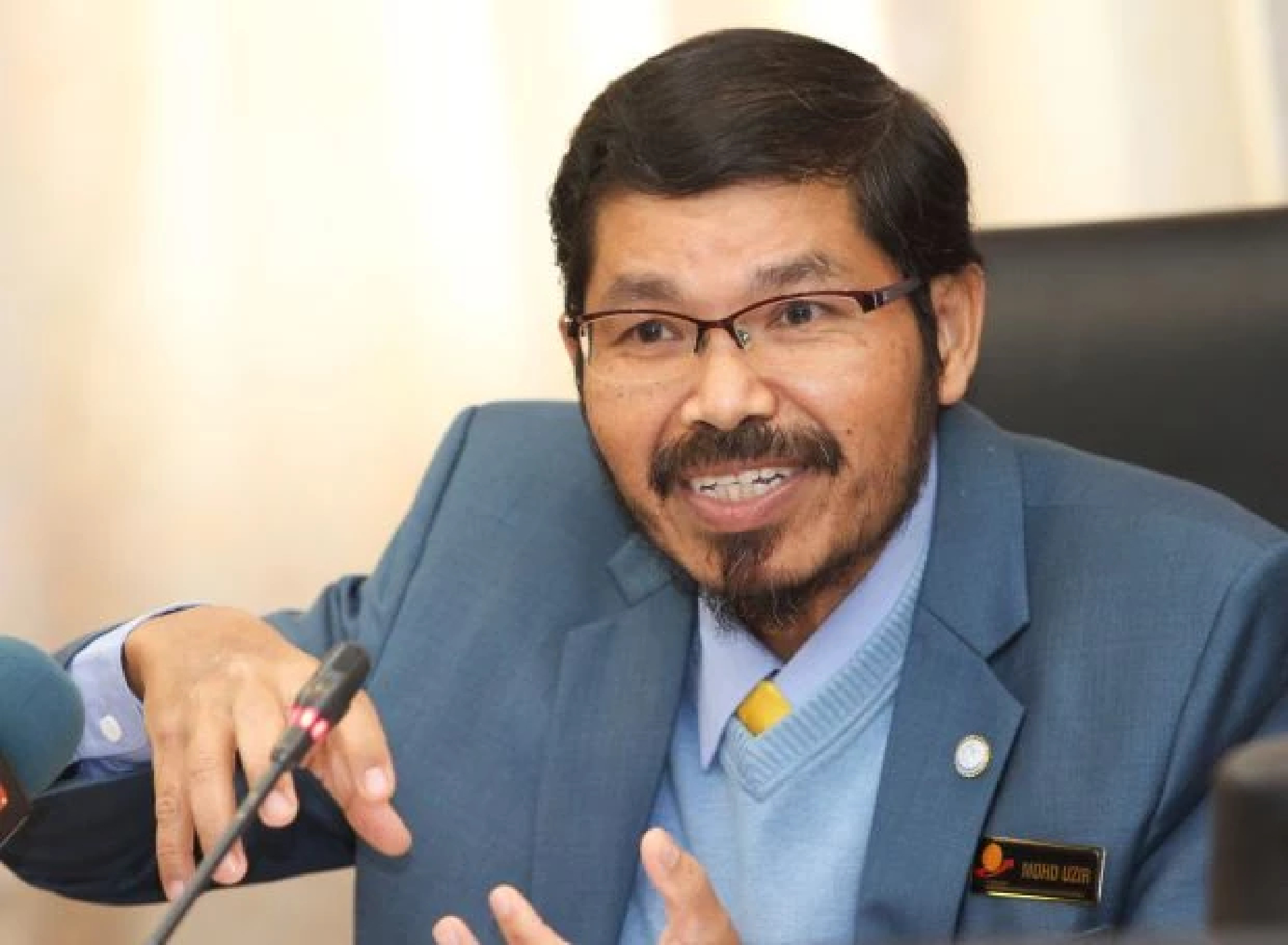
Comparing the performance of the subsectors, chief statistician Datuk Seri Dr Mohd Uzir Mahidin said the wholesale and retail trade sub-sector recorded the highest growth of 5.1% y-o-y with a revenue of RM17.1bil.

“Services sector revenue for Q4 ‘21 which recorded RM460bil exceeded the revenue registered in Q4 ‘19 (pre-pandemic Covid-19) by 0.2% (Q4 ‘19: RM459.2bil).

“The sub-sectors that have surpassed the pre-pandemic performance were wholesale and retail trade with 4.6%, information and communication 9.8%, and private health 10.6%,” he said.

Meanwhile, Mohd Uzir pointed out that the number of persons engaged in the services sector was 3.7 million, which grew by 52,077 persons or 1.4% y-o-y.

The rise was attributed by the wholesale and retail trade sub-sector with an increase of 50,575 persons, or 2.7%, followed by the transportation and storage sub-sectors, which rose by 13,507 persons or 4.2%.

The number of persons engaged also increased 1.9% quarter-on-quarter, which amounted to 71,021 persons as compared to the previous quarter.

“Salaries and wages paid also registered an increase of RM303.7mil, or 1.2% y-o-y.

“The increase was attributed by the wholesale and retail trade sub-sector, which rose 3.6% to record RM13.3bil and was accompanied by the transportation and storage sub-sector, which increased 2.3% to record RM2.6bil.

“Meanwhile, for quarter-on-quarter comparison, salaries and wages grew 3.8% to register RM25bil in Q4 ‘21,” Mohd Uzir added.

Published : February 10, 2022

By : The Star