‘Non-political Myanmar rep only’ for ASEAN meet

#SootinClaimon.Com : ขอบคุณแหล่งข้อมูล : หนังสือพิมพ์ The Nation

https://www.nationthailand.com/international/40011962


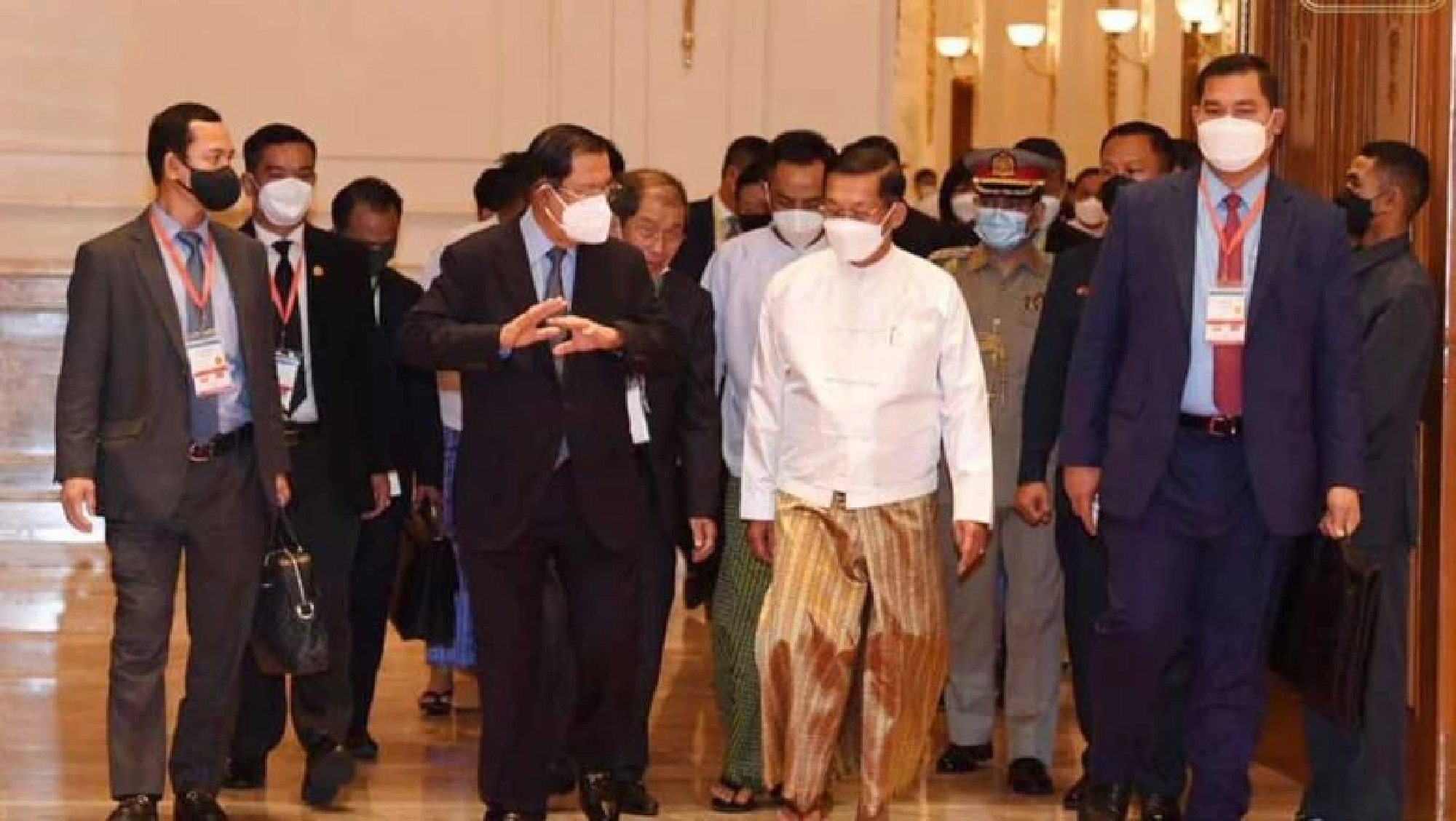
Cambodia has asked Myanmar to send a “non-political representative” to attend the ASEAN Foreign Ministers’ Retreat – set to take place in the next two weeks – due to “a lack of progress” in carrying out the ASEAN five-point consensus (5PC).
‘Non-political Myanmar rep only’ for ASEAN meet

“Since there has been little progress in carrying out the 5PC, the ASEAN member states could not reach a consensus to invite Myanmar’s foreign minister to participate in the upcoming FM Retreat to be hosted by Cambodia. Therefore, we have asked Myanmar to send a non-political representative instead.

“Meanwhile, we encourage Myanmar to be represented at the Retreat by a non-political entity rather than leaving the seat empty. It is up to Myanmar to decide who that ‘non-political entity’ would be,” spokesperson for the Ministry of Foreign Affairs and International Cooperation Chum Sounry told The Post on February 3.

Foreign minister Prak Sokhonn said last week that the ASEAN Foreign Ministers’ Retreat will resume on February 16-17 following a delay in January due to the rapid spread of the Omicron coronavirus variant.

Cambodia, as the ASEAN chair, issued a statement on February 2, saying that one year on, ASEAN member states remained deeply concerned with developments in Myanmar, including reports of continued violence and deterioration of humanitarian situation.

The member countries have called on all parties in Myanmar to exercise the utmost restraint.

The statement added that the member states urged the Myanmar authorities to take specific action to effectively implement the 5PC reached at the ASEAN Leaders’ Meeting in April last year.

Prime Minister Hun Sen visited Myanmar in early January to meet with General Min Aung Hlaing, chairman of the ruling State Administration Council (SAC), who promised to extend a “ceasefire” throughout 2022 and called on all parties concerned to halt all violence and exercise the utmost restraint.

“The member countries wish to underscore the urgency of ending any conflicts as well as ensuring the safe and timely delivery of humanitarian assistance to those people most in need of help on the basis of humanitarian principles, neutrality, impartiality and independence,” the statement said.

Hun Sen added that it was important for all parties to maintain favourable conditions for a constructive dialogue in order to find a peaceful solution to the current crisis for the benefit of the people of Myanmar. The dialogue would also aim to achieve a quick return to normalcy to prevent prolonging the suffering of the population.

The statement said that all member states called on Myanmar authorities to facilitate the mission of ASEAN special envoy Prak Sokhonn, who will make his first visit to the country as soon as possible. He intends to meet with as many groups as necessary to move the implementation of the 5PC forward.

ASEAN member countries reaffirmed their commitment and readiness to assist Myanmar in accordance with the will of its people on the basis of the 5PC and the ASEAN Charter. Lasting peace and national unity can only be achieved if the political solution is inclusively sound – a solution that Myanmar “owns and leads” and which involves all parties, it said.

Heng Kimkong, a PhD candidate at the University of Queensland and a visiting senior research fellow at the Cambodia Development Centre, told The Post on February 3 it is essential that ASEAN member states are united and have the same voice on the Myanmar crisis.

“ASEAN needs to continue to put pressure on Myanmar’s current leadership to stop any violence against its people and meaningfully engage in negotiations to resolve the crisis,” he said.

By Ry Sochan

Published : February 05, 2022

By : The Phnom Penh Post

[South Korea] COVID-19 patients under self-quarantine may be unable to vote

#SootinClaimon.Com : ขอบคุณแหล่งข้อมูล : หนังสือพิมพ์ The Nation

https://www.nationthailand.com/international/40011961


Absentee ballot registration only available from Feb. 9 to 13 as it stands now

[South Korea] COVID-19 patients under self-quarantine may be unable to vote

Concerns are mounting over whether COVID-19 patients will be unable to cast their votes for the 20th presidential election, as those confirmed with the virus after the mail-in ballot registration period may be unable to report to voting booths on March 9.

The National Election Commission said Friday it would receive applications for mail-in ballots from Wednesday to Sunday next week. The registration is available to COVID-19 patients housed in treatment centers or those in isolation or self-quarantine.

Those who register within the period will be able to receive their ballots in the mail and cast their votes by sending back the ballot to the election authority.

The National Election Commission will allow those housed in treatment centers on the election date to cast their ballots inside treatment centers in accordance with a guideline made for the parliamentary elections in 2020. But no measures are prepared yet for COVID-19 patients isolating at home or those in self-quarantine.

South Korea on Friday reported 27,443 new COVID-19 cases, the largest daily number of new cases so far. The number of patients receiving at-home care rose 7,721 from a day earlier to 104,857, nearing the country’s maximum care capacity of 106,000.

Some have warned that the number of new daily new cases could exceed 100,000 cases next month by the time of the election, which causes worries that hundreds of thousands of voters may not be able to cast their votes on the presidential election.

The National Election Commission told media that it was discussing measures to ensure voting rights for COVID-19 patients. The measures used for the April by-elections last year will be unfeasible, it said, as the number of cases is much higher now than April 2020.

Rep. Hong Jung-min of the Democratic Party of Korea proposed a bill last month aimed at providing legal support to ensure the right to vote for COVID-19 patients, but no progress has been made on the legislative proposal yet.

By Ko Jun-tae

Published : February 05, 2022

By : The Korea Herald

[Singapore] More Covid-19 patients requesting MCs as Omicron spreads, despite guidelines showing no need for one

#SootinClaimon.Com : ขอบคุณแหล่งข้อมูล : หนังสือพิมพ์ The Nation

https://www.nationthailand.com/international/40011960


SINGAPORE – General practitioners (GPs) are seeing an uptick in Covid-19 patients requesting medical certificates (MCs) to cover their absence from work, despite official guidelines indicating no need for one.

[Singapore] More Covid-19 patients requesting MCs as Omicron spreads, despite guidelines showing no need for one

This comes amid growing caseloads at their clinics as GPs grapple with a larger role in Singapore’s fight against the highly transmissible Omicron variant, which is spreading through the community though leaving most of the infected with mild to no symptoms.

Experts told The Straits Times that aside from heeding tripartite recommendations, employers should set aside an insistence on MCs and consider giving time off when needed.

The Manpower Ministry (MOM) first issued an advisory in September last year on work and leave arrangements for employees who test positive for Covid-19 but are mildly symptomatic or physically well.

It suggests that such employees should self-isolate at home and not report to the workplace regardless. Those who are physically well should be allowed to work from home; if that is not possible, employers should treat the period of absence as paid sick leave without requiring an MC.

Despite these guidelines, “unfortunately many employers are either unaware or still insistent on MCs… especially for workers who cannot work from home”, said Dr Tan Teck Jack, chief executive of Northeast Medical Group.

Dr Yan Shi Yuan, director of Edgedale Medical Clinic, said he has seen Covid-19 patients who, while able to work from home, feel unwell and go to his clinic to obtain an MC to rest and be excused from work.

“It really depends on whether their bosses take ART (antigen rapid test) positive results as confirmation of Covid-19 infection,” he added, noting that his own company’s policy is for staff to stay home with no need to take MC, even if it is just their family members who are ART-positive.

Dr Leong Hoe Nam, an infectious diseases specialist at Mount Elizabeth Novena Hospital, said a positive ART should suffice as “documentation” if the employee needs time off from work.

This would help reduce the workload at clinics and prevent them from becoming “MC-issuing centres”, he added, calling it an unnecessary distraction and waste of resources.

The Ministry of Health had announced at the start of the year that GPs would take on more responsibility in deciding which Covid-19 patients require closer supervision and which can safely recover at home.

Dr Quah Soon Wee from the Crossroads Family Clinic in Tampines told ST he has since seen a definite rise in Covid-19 cases among his patients.

Dr Yan said that since reopening his clinics after the Chinese New Year holiday, more than half of patients have arrived with acute respiratory infections (ARI), of which up to 40 per cent were ART-positive.

Last week, the proportion of ARI cases at his clinics was some 30 per cent to 40 per cent, an increase from the usual load of around 10 per cent to 20 per cent.

On Wednesday, ST reported that some clinics have seen up to three times more Covid-19 cases since the start of the year.

These spiking caseloads are in tandem with a rising daily community infection rate, with experts anticipating numbers to further hit 10,000 to 15,000 a day in coming weeks.

“GPs are struggling,” said Dr Yan. “There’s also a lot of back-end paperwork, counselling, phone calls coming through with regard to what to do during home recovery… A lot of the burden has been pushed to GPs.”

He is also seeing more Covid-19 cases among children walking in at his clinic.

Dr Carol Tan, medical director at The Good Life Medical Centre, stressed that family leave, for people who need to take care of vulnerable kin, was as important an issue as medical leave.

“I have many family members juggling the needs of their elderly parents and their jobs.”

She also pointed to the need to better support the likes of gig workers who do not have paid medical leave and cannot afford to take time off even after contracting Covid-19.

Mr Sim Gim Guan, executive director of the Singapore National Employers Federation, said: “Employers generally understand that it would be worse if their employees who are Covid-19-positive turn up for work and infect their colleagues.”

Dr Tan from Northeast Medical said progressive human resource policy and empathy from employers was the way forward.

When employees come down with illnesses like Covid-19 – which require prolonged recovery – employers should think about factors such as longer-term company loyalty and retention of talent, he noted.

Said Dr Leong: “If the person needs time off from work, give the person time off. There should be trust in the staff. If you cannot have this trust, perhaps it is time to change staff.”

By Justin Ong

Published : February 05, 2022

By : The Straits Times

Thrilling spectacle as Beijing wows the world again

#SootinClaimon.Com : ขอบคุณแหล่งข้อมูล : หนังสือพิมพ์ The Nation

https://www.nationthailand.com/international/40011958


President Xi announces opening of Winter Games during breathtaking ceremony featuring ‘ice breaking’ moment

Thrilling spectacle as Beijing wows the world again

Featuring Chinese festival culture and a technology-enhanced visual spectacle, a stunning ceremony took the world’s breath away on Friday night as President Xi Jinping declared the opening of the Beijing 2022 Olympic Winter Games.

Fourteen years after impressing the world with a grand show to open the 2008 Summer Games, Beijing delivered again, wowing an international audience with a celebration of not just the highest level of winter sports, but also the traditional Spring Festival, during the opening ceremony of the 24th Winter Olympics. The event was held at the same iconic venue as in 2008-the National Stadium, also known as the Bird’s Nest.

To the excitement of the on-site crowd and people across the country watching on TV, Xi announced the opening of the Games, making the Chinese capital the first city in the world to host both summer and winter editions of the Olympics.

The Friday opening was set on the same day as lichun, or beginning of spring-the first of 24 solar terms on China’s lunar calendar-to represent the organizers’ wish for friends around the world to usher in a new spring together.

An opening performance featured children blowing on a dandelion and sending the white seeds into the air. Fireworks then went off, shifting into the Chinese characters for lichun and the English word “spring” and lighting up the sky above the stadium.

Following a national flag raising ceremony, a giant LED screen on the ground illuminated the floor in aqua blue to make it a huge “ice rink”, thrilling the crowd.

Thrilling spectacle as Beijing wows the world again

A giant ice block then rose above the ground, with 24 laser beams shot from the roof engraving the ice cube to carve out the names of the 23 previous Winter Games’ hosts, before eventually freezing on 2022 Beijing.

Six performers dressed in ice hockey suits then took the stage to strike the ice cube with puck shots emulated by light beams, breaking the ice apart to reveal crystals in the shape of the Olympic Rings at the center of the stage.

Describing it as an “ice breaking” moment, the ceremony’s creative team expected the segment to encourage the world to break barriers, resolve conflicts and understand each other with equality and respect, according to the media guide for the ceremony.

The creative team was led by renowned film director Zhang Yimou, who also was the mastermind behind the 2008 Games’ opening show.

The delegations of participating National Olympic Committees then marched into the stadium under the Olympic Rings, with their respective flags shown on a giant screen high above, and were warmly welcomed by volunteers and spectators on the stand.

To rousing cheers from the home crowd, the Chinese delegation marched in to the accompaniment of the famous song Ode to the Motherland, with men’s Olympic bronze medalist speed skater Gao Tingyu and women’s skeleton racer Zhao Dan bearing the flag for the host squad.

China will send 176 athletes, the most since the country’s Winter Olympics debut at the 1980 Games, and 211 coaches and officials for competition in 104 medal events out of a total of 109 at the Beijing Winter Olympics. The Games will take place in three hosting areas-Beijing’s downtown, its northwest Yanqing district and co-host Zhangjiakou, Hebei province-until Feb 20.

A traditional power in ice sports, such as short-track speed skating and figure skating, China is ambitiously expanding its strength to more snow-based sports and is aiming for the biggest medal haul at the home Games.

The short-track speed skating team, which has earned 10 of the total 13 Winter Olympic gold medals that China has won, is aiming to get the entire delegation off to a flying start on Saturday by competing for gold in the mixed relay event.

Following a promotional video dedicated to athletes who have worked hard to realize their Olympic dreams, Cai Qi, president of the Beijing Organising Committee for the 2022 Olympic and Paralympic Winter Games, and International Olympic Committee President Thomas Bach each gave a speech.

“As we are celebrating the Chinese Year of the Tiger, we are pleased that you, the Olympic athletes, coaches and distinguished guests from across the world, have come together in Beijing for the celebration of the 2022 Olympic Winter Games,” Cai said in his speech.

Bach called on the world to set aside disputes and stay together, using the Beijing 2022 Games as common ground for all cultures to bridge differences.

“In our fragile world, where division, conflict and mistrust are on the rise, we show the world: Yes, it is possible to be fierce rivals, while at the same time living peacefully and respectfully together,” said the German former Olympic fencing champion.

“This is the mission of the Olympic Games: bringing us together in peaceful competition. Always building bridges, never erecting walls. Uniting humankind in all our diversity,” he added.

As the highlight of the ceremony, seven torchbearers-current or retired Chinese athletes born from the 1950s until the 2000s-completed the final relay legs inside the stadium. Then the youngest two-men’s Nordic combined athlete Zhao Jiawen and women’s cross-country skier Dinigeer Yilamujiang from the Xinjiang Uygur autonomous region, jointly set a Beijing 2022 torch at the heart of a snowflake that was raised and hung over the stadium as the Games cauldron.

Published : February 05, 2022

By : China Daily

Philippine’s latest ‘anti-troll’ bill awaits Duterte signature

#SootinClaimon.Com : ขอบคุณแหล่งข้อมูล : หนังสือพิมพ์ The Nation

https://www.nationthailand.com/international/40011924


The bill will require social media networks to get the real name and phone number of users during the creation of an account.

Philippine’s latest ‘anti-troll’ bill awaits Duterte signature

MANILA – A bill aimed at curbing criminal activities done with the help of mobile phones and catching online trolls spreading disinformation now only awaits the signature of President Duterte after the Senate and the House of Representatives ratified on Wednesday the bicameral conference committee report on the proposed SIM Card Registration Act.

It is described as an “anti-troll” bill as it will require all social media networks such as Facebook and Twitter to get the real name and phone number of users during the creation of an account.

Sen. Grace Poe, chair of the public services committee, said in a statement that the most important provision of the bill was “to mandate all public telecommunications entities (PTEs) to require the registration of SIM cards as a prerequisite to their sale and activation.”

Existing SIM card subscribers with active services will be given 180 days from the law’s effectivity date to register their account and failure to do so will lead to deactivation.

10-year storage

Senate Minority Leader Franklin Drilon said he sought the insertion of the provision requiring users’ real names to strengthen the fight against online trolls and cyber libel.

“Our amendment will provide citizens, especially the victims of fake news, online harassment and cyber libel, legal recourse and protection against those who hide behind anonymity and fictitious names,” Drilon said on Thursday.

Poe said another important provision added was to require telecommunication and social media companies “to keep relevant data and information for 10 years from the time the end-user deactivates his or her mobile number or social media account.”

Telecom firms such as Globe and PLDT will keep the data in a centralized database to protect the privacy of consumers.

“Whatever information obtained in the registration process cannot be disclosed to any person except in compliance with any law authorizing disclosure, such as in the case of the Data Privacy Act; or in compliance with a court order or any other legal process; or with the written consent of the subscriber. No waiver of absolute confidentiality is allowed,” Poe said.

A SIM (subscriber identity module) card is an integrated circuit chip on mobile phones used to identify and authenticate subscribers.

Anonymity

According to Drilon, the requirement to use real names was aimed at “fight(ing) the anonymity that provides the environment for trolls and other malicious attacks to thrive in the age of social media.”

“This new provision will prevent anyone from making anonymous accounts online so they could attack anyone endlessly and viciously,” Drilon said, expressing hope that the new law would “signal the end of the troll era” that has infected and caused further division among Filipinos.

The provision will also aid authorities in dealing with a barrage of cyber libel complaints, the senator added, noting how the Philippines has become home to millions of troll accounts.

Penalties

The proposed measure imposes a penalty of imprisonment of no less than six years, or a fine of up to P200,000, or both, on anyone who uses a fictitious identity to purchase and register a SIM card or social media account, according to Drilon.

Poe also clarified that while the sale of SIM cards to foreigners would be allowed, they should comply with prior requirements that include presenting their passport and proof of their address in the Philippines.

“We hope that by legislating this measure, we would be able to eradicate mobile phone, internet or electronic communication-aided criminal activities. This has been a long time coming but I hope that the passage of this bill will result in a safer and more secure mobile use and cyberspace here in our country,” she added.

Published : February 04, 2022

Cheaper chicken likely to be on the menu for Malaysians

#SootinClaimon.Com : ขอบคุณแหล่งข้อมูล : หนังสือพิมพ์ The Nation

https://www.nationthailand.com/international/40011923


The government earlier decided to open the permits for chicken imports to all approved permit holders, opening up the supply.

Cheaper chicken likely to be on the menu for Malaysians

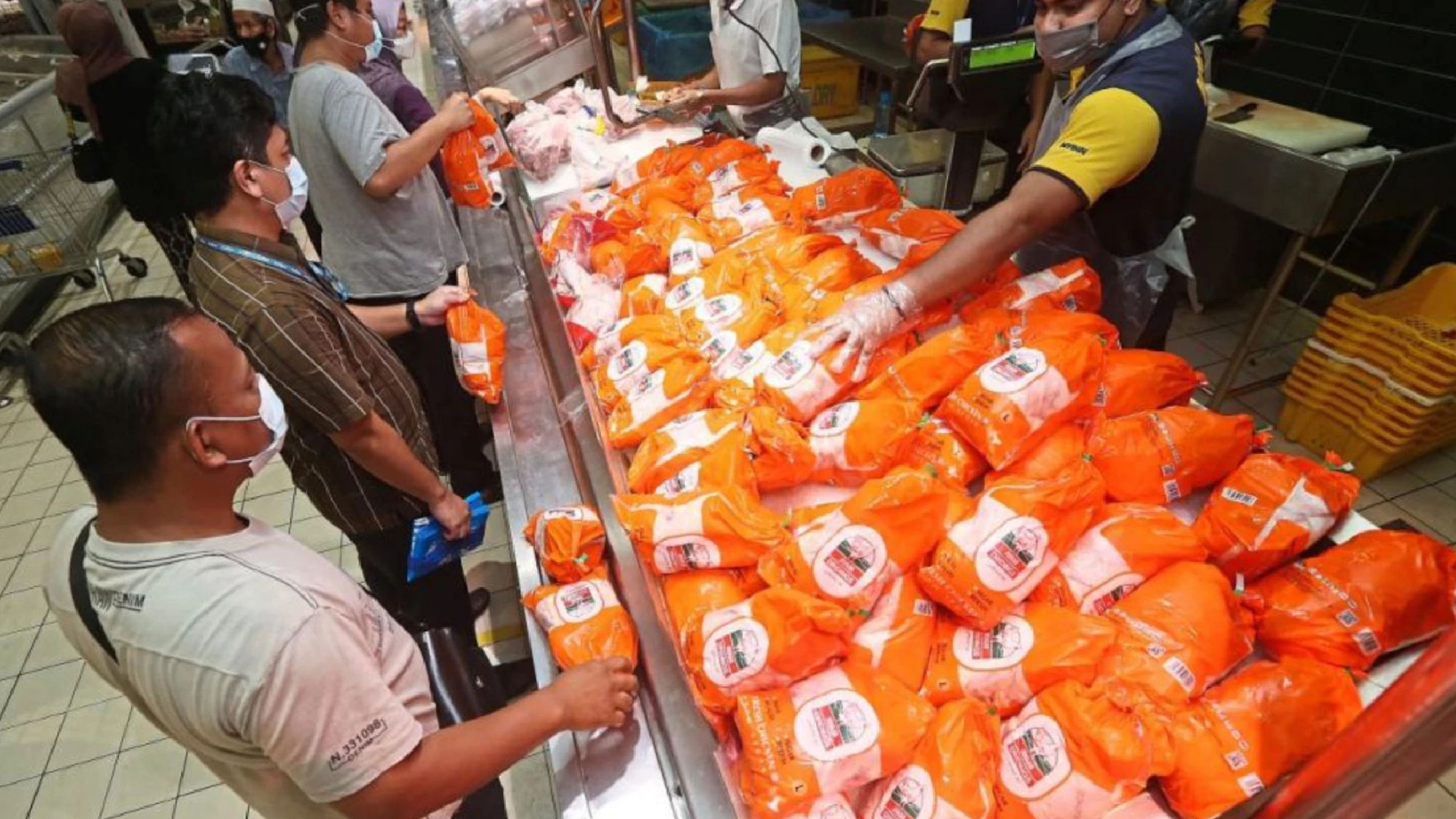
PETALING JAYA – Expect chicken prices to fall further now that the government has opened up the approved permits (AP) for hypermarkets to import the birds.

Retail chains have welcomed the government’s decision and promised to lower prices, although consumer groups say this can only be a temporary measure to address the rising price of chicken.

Mydin Mohamed Holdings Bhd (Mydin) managing director Datuk Ameer Ali Mydin said the decision to open up permits for chicken imports to all AP holders and hypermarket operators would see chicken prices reduced.

“If our AP is approved, we believe we can sell dressed chicken at 50 sen cheaper than the ceiling price of RM8.90,” he said.

“We submitted our AP application yesterday and hope it will be quickly approved so that we can have sufficient supplies for Hari Raya.”Hari Raya Aidilfitri falls on May 3 this year.

Ameer said although the approval of APs was a step in the right direction, measures should be taken to source potential supplies in countries other than China and Thailand.

“The Department of Islamic Development (Jakim) should also go to the ground and check more abattoirs to source for potential supply options.

“A temporary measure would be to approve abattoirs that are already utilised by countries such as Saudi Arabia to tackle the current market demands,” said Ameer.

He added that with more parties holding APs, profiteering activities could be stopped as there would be ample supply.

The government had on Jan 31 decided to open the permits for chicken imports to all AP holders, besides opening up the AP to hypermarkets operators to resolve the food supply issue, especially for chicken and eggs.

Consumers Association of Penang (CAP) president Mohideen Abdul Kader, while welcoming the decision, said it was only a stop-gap measure, adding that strengthening sustainable local production was the best approach.

“We urge the government to seriously look at producing livestock within the country to avoid imports which can prove to be costly.

“The authorities should reduce instances of profiteering,” he said.

He also agreed with efforts by the Domestic Trade and Consumer Affairs Ministry through the Malaysian Competition Commission (MyCC) to continuously study and conduct investigations to ensure that there were no price cartels or manipulation by middlemen.

Meanwhile, Federation of Malaysian Consumers Associations (Fomca) president Datuk N. Marimuthu called for APs to be abolished rather than setting a ceiling price for chicken.

He said certain parties had turned the APs into monopolies, resulting in increasing food prices.

“It is pointless to have limited permits for vegetables, including mangoes, coconuts, papayas, meat and nine types of seafood because it gives room for ‘certain quarters’ to determine the prices of food.

“The right thing to do is to get rid of APs as a whole,” he said.

The Federation of Livestock Farmers’ Associations of Malaysia was tight-lipped on the issue.

However, the Manjung Poultry Farmers Association in Ipoh, representing over 200 poultry farms in the area, felt the decision to open up the APs would only lead to more businesses shutting down soon.

The association said it would send a letter to relevant ministers to discuss the imposed price cap for chicken and eggs.

“As poultry suppliers, we will no longer make a profit and I can assure you that at least half the poultry farms in Manjung will close down.

“The government is focused on helping consumers but they forget about suppliers like us. They should at least subsidise the chicken feed,” said the association’s president Tan Wooi Perng.

On Jan 31, Domestic Trade and Consumer Affairs Minister Datuk Seri Alexander Nanta Linggi said the government had lowered the maximum retail price for standard chicken from RM9.10 to RM8.90 effective this Saturday until June 5.

Published : February 04, 2022

S’pore firms confident despite Omicron wave, plan to make hybrid work permanent

#SootinClaimon.Com : ขอบคุณแหล่งข้อมูล : หนังสือพิมพ์ The Nation.

https://www.nationthailand.com/international/40011905


SINGAPORE – Companies here are taking the surge in Covid-19 cases fuelled by the Omicron variant in their stride as they remain confident of their ability to stay flexible and responsive to the fluid pandemic situation.

S’pore firms confident despite Omicron wave, plan to make hybrid work permanent

This is backed by the hybrid working practices that most workplaces have put in place since the start of the pandemic and which they have continually refined over the past two years, according to industry players and experts interviewed by The Straits Times (ST).

As at Jan 1, half of the workforce who can work from home may return to the workplace, subject to safe distancing measures.

Despite having more of their corporate and administrative staff return to the office, some businesses have not found their workforce to be significantly affected by the virus.

IHH Healthcare Singapore chief executive Prem Kumar Nair said: “We have not seen a significant increase in the number of staff affected by the recent spike in Omicron cases, compared to our previous experience with the Delta variant.”

He attributed this to factors such as strictly adhering to safe distancing measures and rostered routine testing, even as 50 per cent of his company’s back-end workforce continues to return to the office.

Business continuity measures such as having split teams and tailoring hybrid work arrangements to suit business needs have generally helped companies keep going despite the potential road bumps posed by the virus.

Madam Low Peck Kem, president of the Singapore Human Resources Institute (SHRI), noted that many companies have adopted various hybrid work arrangements that best meet their business needs and which are still in compliance with Singapore’s current set of safe management measures and legislative requirements.

She cited having split teams as an example, where different teams work in different locations to ensure they do not cross-contaminate in the event of an infection.

Companies also invested in remote working infrastructure during the pandemic and are promoting employee mental wellness to ensure productivity levels remain high even when working from home.

Ms Linda Teo, country manager of Manpower Group, said: “Companies have upgraded their digital infrastructure to ensure they have the technology required to support their business functions.

“Many companies have also implemented new policies to address their employees’ well-being, one of them being a ‘right to disconnect’ policy.”

This can take the form of encouraging staff not to respond to work-related messages after working hours.

Ms Jaya Dass, managing director for Singapore and Malaysia at recruitment agency Randstad, said: “We have communicated to our staff that they should not be responding to non-urgent e-mails and text messages after working hours as they will result in unnecessary overtime and stress.”

With firms making such changes amid the pandemic, four out of five employers told ST they intended to prioritise making flexible working arrangements permanent.

This comes as firms observe comparable or improved staff productivity as a result of hybrid working arrangements.

DBS Bank, for instance, has given all employees the flexibility to work remotely up to 40 per cent of the time since February last year.

Ms Lee Yan Hong, the bank’s head of group human resources, said: “Our research found that over four in five of our 29,000-strong workforce were able to work seamlessly remotely (which allowed us to afford such flexibility).”

Another firm that has adopted a permanent hybrid arrangement for better work-life balance is Changi Airport Group (CAG), which created a category of annual leave that enables employees to travel overseas more conveniently during the pandemic.

This leave arrangement allows its 1,800 employees to work for up to 10 working days while serving quarantine or isolation overseas or in Singapore, should they travel to countries not on the vaccinated travel lanes list.

Ms Lynnette Lee, a manager from CAG who utilised this leave type for a holiday in Croatia in October last year, said: “I’m glad to have had the opportunity to refresh and recharge, and it was a bonus to be able to use this leave while serving my quarantine upon my return to Singapore.”

Despite this, not all firms have been able to adapt as easily amid Covid-19.

Industry bodies have observed that small and medium-sized enterprises (SMEs), in particular, may not always have it easy when adopting hybrid working arrangements.

Mr Ang Yuit, vice-president of the Association of Small and Medium Enterprises (ASME), said: “While some individual employees may have reported improved productivity from the reduced commute time, many employees have reflected from the ground that a lack of teamwork from fewer face-to-face meetings have harmed company-wide alignment.”

Some companies, such as contracting company Fabristeel, have also had to factor in additional costs to projects as part and parcel of living with the virus.

The firm, which installs kitchen equipment, had to shoulder the cost of more expensive on-demand labour to make up for manpower shortages whenever its workers fell ill while meeting deadlines for projects.

Despite this, the firm has said that disruption has been minimal to its workforce of 90 due to adequate health safety measures.

A firm spokesman said: “With the various sites we have active, we are just thankful that we have emerged relatively unscathed so far due to the safety measures recommended by the Ministry of Health.”

By Gena Soh and Rosalind Ang

Published : February 04, 2022

By : The Straits Times

Why aren’t there Korean-made vaccines yet?

#SootinClaimon.Com : ขอบคุณแหล่งข้อมูล : หนังสือพิมพ์ The Nation.

https://www.nationthailand.com/international/40011904


Despite Korea’s ambition to become global vaccine hub by 2026, the country has no homegrown COVID vaccine yet. Here’s why.

Why aren’t there Korean-made vaccines yet?

Although it has been over two years since the coronavirus began spreading in Korea, the country has not seen a homemade vaccine developed yet.

SK Bioscience is the company closest to delivering the first Korean-developed vaccine as the biopharmaceutical firm’s GBP510 is in the third and final phase of clinical trials. The government and company officials have voiced hope for a successful result and swift authorization as well as commercialization of GBP510 in the first half of this year, but nothing is guaranteed.

According to the Ministry of Food and Drug Safety, there are currently seven other local companies in the process of developing COVID-19 vaccines. But they have a long way to go as they are still in the earlier stages of clinical trials.

Industry workers and experts point to a lack of experience and support in vaccine development as a reason for Korea’s relative slowness. 

An industry source told The Korea Herald that the domestic industry does not have the same level of experience and technology that its global rivals have accumulated over decades, saying “It is not even comparable.”

In August, the government announced the plan to turn Korea into a global vaccine hub and inject a total of 2.2 trillion won ($1.8 billion) into developing COVID-19 vaccines and nurturing vaccine production capabilities until 2026.

As it takes up to 1 trillion won to complete the development of a new drug or vaccine, the source said governmental funding might not be effective for vaccine development once it gets divided up between companies.

Another official at a company trying to develop a COVID-19 vaccine said there was a lack of follow-up support from the government since.

“In order to conduct clinical trials, we had to acquire other vaccines that we can use to then compare with what we were developing. It is very difficult for each company to do that. So we asked the government to help us secure them, but we have not received much support,” the official said.

“I wish the government would have focused more on developing our own vaccines from the beginning instead of going almost all-out on acquiring vaccines from the outside.”

More than 20 vaccines have been approved for general or emergency use in countries such as the US, UK, Russia and China, as of December, according to the Council on Foreign Relations, a US think tank. The number of vaccines approved less than two years from the beginning of development are regarded as “unprecedented,” a CFR report reads, adding that the process usually takes eight to 15 years. Experts attribute such fast development to massive state money poured in along with fast-tracked approval processes.

Kim Ki-soon, a medical professor at Korea University, pointed to the reality that the country did not pay much attention to vaccines before the coronavirus outbreak.

“There are no Korean-made vaccines approved yet because we have neglected the basic science on how to make vaccines,” Kim said at a forum hosted by the Korea Science Journalists Association in September.

“The mRNA vaccines developed by Moderna and (BioNTech and) Pfizer underwent clinical trials only a month or two after the coronavirus appeared on Earth. But the truth is that they had carried out studies on mRNA vaccines for 10 to 15 years.”

Speaking at the same KSJA forum, Hong Kee-jong, a medical professor at Konkuk University, said that Korea only began to pay attention to vaccine development after the H1N1 influenza pandemic in 2009.

“The parts we relatively lack are the infrastructures needed to create essential materials for vaccine development and test them, as well as the ability to manufacture required equipment,” he said. 

Another difference was the size of financial support from the government. Last year, the Korean government allotted 263 billion won for vaccine development. The budget jumped to 546 billion won this year to support the development of COVID-19 vaccines and treatments.

But industry workers say the increased amount is not enough.

“In times of COVID-19, the differences in each country’s government support made or broke the development of vaccines,” said Won Hee-mok, chairman of the Korea Pharmaceutical and Bio-Pharma Manufacturers Association, in an online press conference last month.

“As we all know, the United States provided 20 trillion won for companies including Pfizer and Moderna and the United Kingdom set up a vaccine task force, gave them 10 trillion won and ended up with AstraZeneca’s vaccine.”

Won stressed the importance of having full-scale support from the government in order to secure vaccine and pharmaceutical sovereignty. The plan to turn Korea into a global vaccine hub will mean becoming only a base for consignment production unless domestic companies develop their own vaccines, he said.

Won also called for the need to set up a presidential committee that can oversee each ministry’s policies related to the biopharmaceutical industry and effectively coordinate them.

“We need to lay out mid- to long-term strategies on how to provide financial support for research and development and nurture talent,” he said.

“The government should set up a mega fund of about 5 trillion won to intensively support innovative pipelines and clinical trials.”

By Kan Hyeong-woo

Published : February 04, 2022

By : The Korea Herald

Beijing opposes US suppression of Chinese telecom firm

#SootinClaimon.Com : ขอบคุณแหล่งข้อมูล : หนังสือพิมพ์ The Nation.

https://www.nationthailand.com/international/40011903


BEIJING – China firmly opposes the United States’ generalization of the concept of national security, its abuse of state power and its unreasonable suppression of Chinese enterprises in the absence of facts, the Ministry of Industry and Information Technology said in a statement on Thursday.

Beijing opposes US suppression of Chinese telecom firm

The ministry made the statement in response to the decision by the US Federal Communications Commission (FCC) to revoke China Unicom Americas’ authority to provide telecom services in the US late last month. 

The move seriously damaged the US business environment and harmed the legitimate rights and interests of Chinese enterprises and global consumers, including US users, it said. 

China Unicom Americas has been operating in the United States for 20 years. It has always been abiding by the US laws, regulations and regulatory requirements, and providing high-quality services to many users in the US in accordance with commercial principles, the MIIT said. 

The MIIT urged the FCC to withdraw its decision, stop the wrongful practice of generalizing the concept of national security and politicizing economic issues, as well as to provide a fair, just and nondiscriminatory environment for Chinese companies that invest and operate in the US. 

China will continue to take necessary measures to safeguard the legitimate rights and interests of Chinese enterprises, it said. 

Published : February 04, 2022

By : China Daily

Number of Chinese ships in waters off Senkakus surged since enactment of coast guard law

#SootinClaimon.Com : ขอบคุณแหล่งข้อมูล : หนังสือพิมพ์ The Nation.

https://www.nationthailand.com/international/40011902


In the 12 months since the enactment of Chinese legislation that allows China Coast Guard vessels to use weapons, CCG ships have been spotted regularly in waters off the Senkaku Islands in Okinawa Prefecture.

Number of Chinese ships in waters off Senkakus surged since enactment of coast guard law

With Beijing also thought to be upgrading CCG’s armed capabilities by converting navy vessels into CCG ships, the Japan Coast Guard is stepping up surveillance and increasing its vigilance.

According to the JCG, CCG ships entered Japanese territorial waters around the Senkaku Islands 34 times in 2021, over a total of 40 days, up 40% from the previous year’s 24 times, over a total of 29 days.

CCG vessels also sailed in Japan’s contiguous zone — which extends 22 kilometers from territorial waters — for a total of 332 days in 2021.

About one in four CCG vessels was said to be equipped with what appeared to be an autocannon.

Since China’s coast guard law went into effect on Feb. 1, 2021, Beijing has been strengthening the CCG’s naval capabilities.The law stipulates that the CCG will conduct “defensive operations” based on orders from the Chinese Communist Party’s Central Military Commission, which oversees the country’s armed forces.

According to a Japanese government official, about 10 navy frigates have been undergoing refurbishment in China since last year, and in the future, a total of about 20 navy vessels are expected to be converted into CCG ships.

Anti-ship and anti-aircraft missiles have been removed from most of the ships during such refurbishment, but machine guns and 76mm cannons have been kept on board.

A JCG source said China has been steadily upgrading weapons and other equipment.

Images of what appears to be a CCG vessel being refurbished have been posted on a Chinese social networking site. The JCG has been collecting information, such as where these vessels will be deployed.

The coast guard law grants the CCG the authority to force other countries’ vessels to leave its jurisdictional waters, making it possible for them to use weapons if China unilaterally claims that its sovereignty or jurisdiction has been violated.

A situation could be envisioned in which a CCG vessel approaches and uses a weapon against a Japanese fishing boat or other vessels in waters around the Senkaku Islands.

At a press conference on Tuesday, Defense Minister Nobuo Kishi said, “We will continue our vigilant surveillance with the determination to thoroughly protect our territory, territorial waters and airspace.”

Published : February 04, 2022

By : The Japan News