Cambodia and Saudi Arabia have pledged to strengthen tourism ties and launch direct flights between the two Kingdoms.
The vow comes after Phnom Penh issued an announcement heralding Cambodia as a safe travel destination, the Ministry of Tourism said in a statement on January 28.
The statement was made following a meeting between Minister of Tourism Thong Khon and Saudi ambassador Saud FM al-Suwelim at the ministry on January 27.
The two sides also discussed strategies to draw in more Muslim sightseers to Cambodia, which Khon emphasised that the country is keen to receive, owing in part to targetted initiatives taken by his ministry that are designed to put the nation on the map as an appealing holiday destination for this group of travellers.
The minister said the Cambodian government has put roadmaps in place to restore and spur travel across the Kingdom during and after the Covid-19 crisis that rely heavily on vaccination, and rolled out various strategic policies to underpin a tourism recovery in the region.
The 40th ASEAN Tourism Forum (ATF 2022) a couple weeks back serves as a prime example of why Cambodia is a safe tourism destination, Khon said, noting that all of more than 400 international attendees from 27 countries received a negative result on PCR tests taken prior to departure.
Khon asked the ambassador to help promote Cambodia as a safe tourism destination in Saudi Arabia.
Al-Suwelim voiced appreciation and acknowledged the strides made by Cambodia on effective Covid-19 management, and implementing policy to quickly vaccinate as many people as possible as well as restart tourism and wider economic activity, according to the statement.
He underlined that Riyadh has set a 2030 vision to transform Saudi Arabia, as a member of the Group of 20 leading economies, into a major global tourism hub. Riyadh encourages Cambodians to visit the country as well, he said.
Khon asked Riyadh to expedite the signing of a memorandum of understanding (MoU) on tourism cooperation between the two countries, noting that Phnom Penh sent a draft of the document to Saudi Arabia, but has yet to receive a response.
Al-Suwelim vowed to bring up the issue to Riyadh and push for the necessary work to be completed in the near future.
The minister also touched on the possibility of launching direct flights between the Kingdoms to enhance the bilateral flow of travellers as well as increase the number of visitors from other countries.
He suggested direct Riyadh-Phnom Penh flights or even multi-destination routes to a combination of Phnom Penh, Sihanoukville and Siem Reap town.
The ambassador revealed that Saudi Arabia plans to set up a route in May from Riyadh to Phnom Penh via Bangkok, and that the Saudi tourism minister would be on the inaugural flight to Cambodia.
Global revival in the personal luxury goods market has been powered by the dynamism of consumption in China and the US
Shopping online is serving as key channels for the luxury sector’s recovery worldwide in the pandemic era.
But in China, luxury brands continue to strengthen their control over retail distribution channels by working together with leading shopping malls in first and second-tier cities as consumers prefer to shop nearby.
At the end of last year, Christina Wang, an executive at an online travel platform, decided to reward herself with a luxury bag and a wool and cashmere coat.
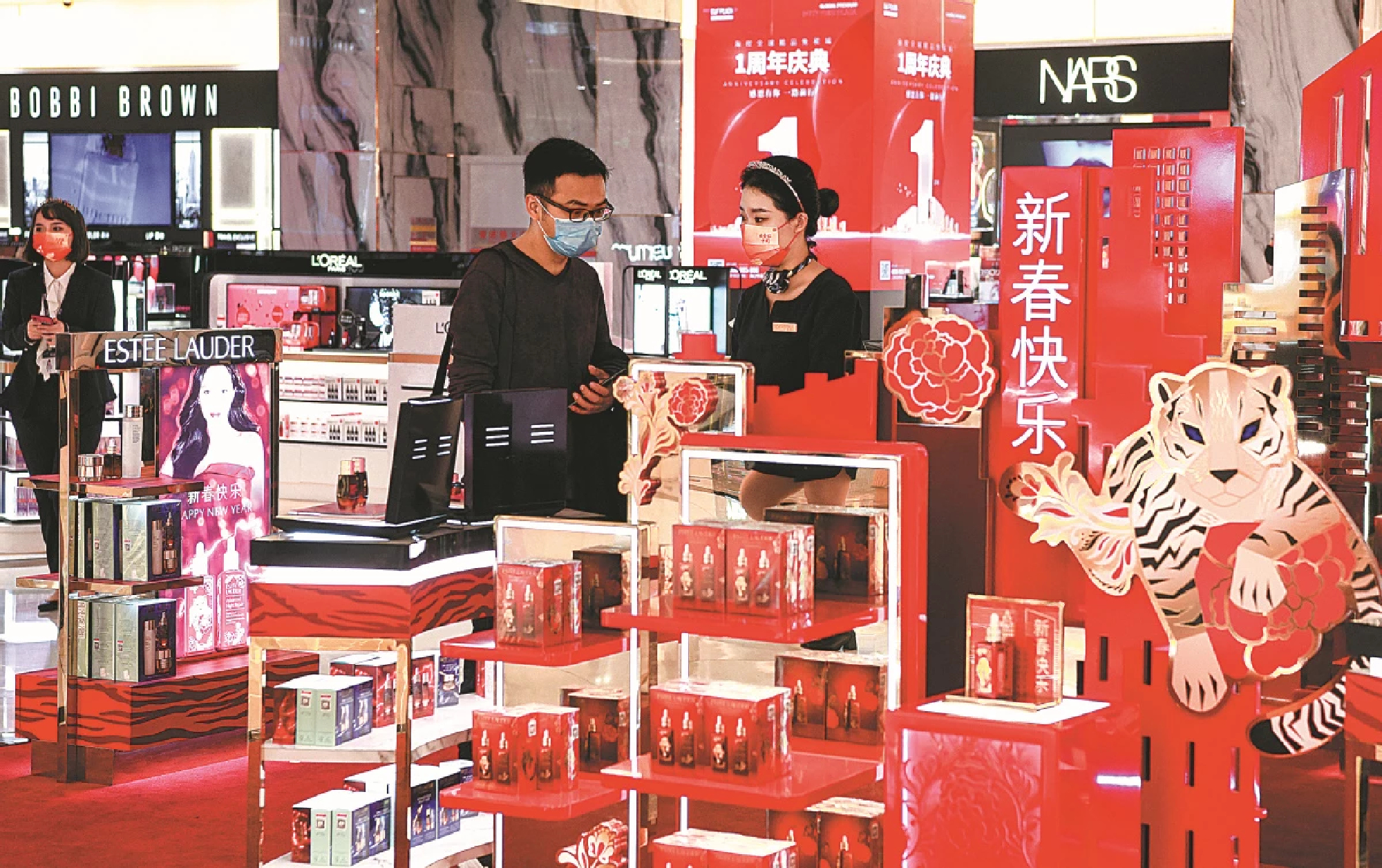
She bought the first one at SKP department store in Beijing, a leading high-end luxury shopping center, and the latter at the Hainan duty-free store.
“I often miss the days of being able to shop luxury items at better prices in France or Italy. But due to the pandemic, now my best option is to look for a good deal at domestic shopping malls,” said Wang, a frequent overseas traveler.
Last year, Wang’s spending at SKP in Beijing for bags, apparel and cosmetics hit more than 60,000 yuan ($9,450).
Most of the items are purchased during SKP’s shopping festival for its members held twice a year, where points collected from previous shopping can be converted to coupons for the next round of buying.
The store is also her favorite hang-out place with friends and colleagues during the work week.
“It is very close to where I work at the World Trade Tower area,” said Wang, 36.”I am attracted by its good service, wide range of brand selections and new restaurants.”
Wang said although the prices are higher for luxury or other higher-end brands in Beijing than those purchased overseas, SKP provides a strict requirement for COVID-19 prevention measures and a thoughtful shopping environment.
According to the commercial property complex retail sales ranking compiled by West South Cloud, Beijing SKP tops the chart at 23.9 billion yuan ($3.73 billion) in 2021. The figure in 2020 stood at 17.7 billion yuan.
The Guanggu World City in Wuhan, Hubei province, ranks second at 20.8 billion yuan and the third place is Beijing China World Mall at 20.2 billion yuan. The 40 complexes listed are mostly located in Beijing and Shanghai, with four in Hangzhou, and three each in Nanjing, Jiangsu province, Shenzhen, Guangdong province, and Wuhan, Hubei province.
Beijing SKP made its reputation in 2020 by surpassing Harrods in London to top world department store in terms of retail sales.
With 15 million person times in visits, the store has achieved an annual growth rate of 15 percent. Its single store retail revenue and sales per square meter both rank No 1 in the world.
Beijing SKP is never just about shoppers from the capital city. It covers the northern luxury retail market as well.
In 2020, its sales in Beijing and Xi’an grew at 15 percent and 36 percent respectively. To have a store debut at SKP is a big deal for international luxury brands. In recent years about 38 percent of global leading luxury brands opened their first store in the country at Beijing SKP.
The shopping mall giant is expanding with more store numbers and a new business format.
SKP-S Beijing, the youth-culture focused, luxury retail brand of SKP, opened its second store in Xi’an, Shaanxi province, in December.
The store offers a unique lifestyle destination that combines technology, art and fashion with a story specifically created for Xi’an. Two years ago, SKP opened its first SKP-S store in Beijing, creating a huge buzz on social media in the youth culture of Beijing.
Within SKP-S, the SKP Select Beauty is a platform that mixes multiple cosmetic brands and introduces nearly 60 new lifestyle brands, with more than 40 brands making their debut in China or the Northwestern region of the country.
SKP Select also introduced about 80 different fashion designer brands. International fashion houses, including Prada, Jil Sander, Rick Owens, offer a range of exclusive store designs as well as products specifically created for SKP-S Xi’an, with more limited editions and personalized products in the pipeline.
Feng Lun, a leading property expert, said luxury brands provided tailored products and often debuted their goods at SKP. By cultivating local brands through well-designed display and supply chain as well as the store layout, SKP and SKP Select have provided local brands with shopping experiences on the same level as international brands. A top team of buyers who have strong capacity in pricing and in selecting merchandise of niche brands from abroad add more incentives for trend following buyers.
In addition to domestic shopping centers, international retailers have stepped up their investment in the sector.
Galeries Lafayette, a leading French department store player, accelerated its expansion in China with plans to open a new store in Shenzhen, Guangdong province.
The move is part of the group’s strategic scaling-up plan which aims to have 10 stores in the country by 2025. The high-end retailer entered the country in 2013 by opening a store in Xidan, Beijing, followed by another in Shanghai. Galeries Lafayette said it plans to open a store in Guiyang, Guizhou province, in the spring.
The new outlet is located in the Futian district of Shenzhen. It is scheduled to have a soft opening by the fourth quarter of 2022.
After Beijing and Shanghai, Galeries Lafayette is striving to make its presence in the southern region and spur competition in the fashion and retail sector in the Guangdong-Hong Kong-Macao Greater Bay Area, said the company, which has a total of 65 stores worldwide.
The department store is expected to open a branch at UpperHills, a new international urban complex developed by State-owned company Shum Yip to offer visitors an upscale shopping, dining and leisure experience. The new store will focus on a unique design and a highly curated multiband selection targeting the city’s young, dynamic shoppers, the retailer said.
The acceleration in attracting domestic luxury consumers is in line with the country’s rising local consumption for high-end merchandise.
China’s share of the global market has almost doubled in two years to 21 percent last year, according to the consultancy firm Bain & Co. In 2021, the majority of offline retailers suffered from a decline of customer traffic due to the impact of COVID-19.
“Consumers who would have gone shopping abroad in the normal course but are now buying luxury goods in China as they can’t travel overseas due to the COVID-19 situation, have supported the high-end shopping centers. Such places now offer terrific shopping experiences to their target consumers,” said Jason Yu, managing director of Kantar Worldpanel China.
Bain & Co’s Luxury Goods Worldwide Market Study which was released in December said the global revival in the personal luxury goods market has been powered by the dynamism of local consumption, particularly in China and the United States, which now form a dual engine stoking the gains of the sector.
The Chinese market has experienced remarkable momentum, with its size nearly doubling since 2019, entirely due to the repatriation of Chinese purchases from abroad, said the report.
Luxury went local most dramatically on the Chinese mainland, whose market is forecast to grow by 36 percent to about 60 billion euros ($67.98 billion).
Duty-free shopping has likewise gained from its opportunities. In the island province of Hainan, it reported 49.5 billion yuan of offshore duty-free shopping in 2021, up 80 percent year-on-year. More than 70 million items were bought by 6.72 million shoppers. The per capita shopping amount registered in the offshore duty-free shops (DFS) of Hainan was recorded at 7,368 yuan, an increase of 20.2 percent compared to the level in 2020.
Cosmetics, watches, and jewelry were among the top three items sold by the shops.
Luxury consumers in China also prefer a good bargain. The business performance of outlets has seen a rosier picture this year thanks to discount prices offered on international luxury brands.
Florentia Village, a company owned by RDM Asia, this year opened an outlet as part of its second phase in Pudong district in Shanghai with an additional 2,000 square meters which included 110 branded shops, marking a total coverage of nearly 70,000 square meters and more than 300 shops.
Last year, the outlet logged sales revenue of 2.7 billion yuan, and was visited by 4.5 million person times thanks to a booming recovery in the local economy.
The outlet operator opened its second phase in Chengdu, Sichuan province, in September to meet the rising demand for luxury products in West China. Its seven outlets in the country posted revenue of more than 10 billion yuan in 2020, up 7 percent year-on-year. The RDM group plans to open two more outlets in China with an investment of $200 million.
HCM CITY — More data breaches by unidentified attackers, increasing advanced scams, and more attacks on cryptocurrency businesses and the non-fungible token industry are among the top trends to look for in 2022 in Southeast Asia, according to global cybersecurity firm Kaspersky.
The region, like the rest of the world, is gearing up for a year of recovery after two years of COVID-19 with companies and individuals ready to return to normalcy, and authorities putting in place policies for returning to office, school and travel.
But as seen last year, cybercriminals can target a variety of industries like airlines, hospitals, banks, telecom, and e-commerce, universities, government websites and even social media giants through sophisticated means.
Experts from Kaspersky’s Global Research and Analysis Team (GReAT) spelled out major trends to look out for this year to give organisations and individuals a compass to navigate the shifting cyberthreat landscape and secure the recovery phase.
They said the pandemic coincided with the rise of targeted ransomware attacks focusing on the most valuable targets as well as interruption-sensitive businesses.
With strong international cooperation and multiple task forces to trace ransomware gangs, Kaspersky experts believe the number of such attacks will decrease in 2022.
But advanced scams and social engineering may be on the rise this year, they said.
The number of scam reports keeps increasing year after year. The attackers resort to non-technology focused attacks, exploiting human vulnerabilities, involving all sorts of scams via SMS, automated phone calls, popular messengers, social networks, and so on.
In Thailand nearly 40,000 people were scammed with their bank accounts and credit cards showing inexplicable transactions.
Scammers also used fake bank websites to steal banking details of Malaysians last year and impersonated top e-commerce platforms in Việt Nam to trick users into sending money.
Vitaly Kamluk, director of GReATfor Asia Pacific, said, “This trend is fuelled by automation of some services, such as automatic dialling and automatic initial message delivery with expected follow-up action that triggers manual human-driven scam operation.
“We believe this trend will develop further in future, including production of victim-tailored documents, images, deep fake videos, and voice synthesis.
“It is possible that there will be a shift back from computer-assisted crime schemes (scams) to pure cybercrime based on complete compromise of digital assets (user accounts, smartphones, personal computers). It is likely we will see the first attempts at such technically advanced scams in 2022.”
The experts also predicted more data breaches by unidentified attackers.
Kamluk said: “In recent years we observed that in many cases of data breaches the victims were neither able to identify the attackers nor find out how they got compromised. Although it has always been a challenge to identify the attacker and the source of the breach, the percentage of such cases has increased significantly in the past two years to over 75 per cent according to our research.”
Kaspersky experts said it is not only a symptom of the serious challenges that cyber defenders face, but also a motivational factor and a signal for other passive cybercriminals to rush into data theft and illegal trading.
“As a result, we shall see more databases, internal communications and personal details stolen from various companies and traded on the black market.”
The company also expects a larger wave of cryptocurrency and NFT (non-fungible token) industry attacks this year.
By observing cutting edge attackers with large human resources such as Lazarus group and its sub-group, BlueNoroff, Kaspersky researchers concluded that “we shall expect an even more significant wave of attacks on cryptocurrency businesses.”
Even the growing industry of NFT will be targeted by cybercriminals due to the fact that countries in Southeast Asia are leading in terms of NFT ownership, they said.
“From direct attacks on employees of cryptocurrency start-ups and exchanges through sophisticated social engineering, software exploits, and even fake suppliers to mass attacks via supply chain software or its components (such as third-party code libraries), we will see an increase in such cases.
“Additionally, we should see more incidents of NFT property theft in the coming years. Being a totally new area, there will be an initial surge in such attacks since there will be a shortage of skilled police investigators.”
These attacks would not only have an effect on the global cryptocurrency markets but also the share prices of individual companies, which would also be monetised by the attackers via stock market illegal insights trading. — VNS
An upgrade in in-flight services, including better food and handling of passengers, smartly-groomed cabin crew, and punctuality are on top of the agenda of privatized national carrier Air India’s new journey under the Tata Group as it plans to focus on attracting millennials who comprise a major chunk of fliers today.
The image makeover of the airlines, the largest among the carriers in India, is being urgently done as nearly 53 percent of air passengers is estimated to be the tech-driven millennials. This figure is expected to go up to more than 60 percent in the next 10 years, according to a senior airlines marketing executive.
The executive said given India’s young demographic profile, Air India in its new avatar needs to target the millennials who need a flying experience markedly different from the old one.
One of the changes Air India plans in its approach is to address the passengers as “guests” who will get to hear a recorded message from iconic Tata Group patriarch Ratan Tata, reports our New Delhi correspondent.
The private Air India has to work really hard to shed the tag of “late Latif” when it comes to maintaining punctuality of take-off and landing.
The first week of Air India’s relaunch will be crucial and it is the front-desk staff at the airport and the cabin crew who will be the airlines’ biggest brand ambassadors as they are the carrier’s interface with the passengers.
While the turnaround time for Air India under the Tatas will take time, its competitiveness needs to be in the league of IndiGo in the domestic market and that of Singapore Airlines, Emirates and Etihad on international routes, especially to key Middle East destinations, the US and the UK.
Foreign airlines had a much larger market share on international routes than Air India till the disruption of regular commercial flights by the Covid-19 pandemic.
In the domestic segment, Air India will need a strong cost-driven business model.
At the heart of airline business at a time of rising aviation turbine fuel price, is controlling the cost, said aviation industry officials. Of course, other benchmarks in this will be on-time departures, load factor, average age of aircraft, airport turnaround time and other human resources to come up with a superior flying experience for passengers.
While private Indian carriers IndiGo and SpiceJet have built their business from scratch, the Tatas are starting off with the advantage of coming from the experience of its existing carriers Vistara and AirAsia.
One of the biggest challenges the Tata Group would face in turning Air India around is bringing the much-needed expertise in civil aviation from outside India.
Image makeover has a price but can the Tatas afford it with the kind of war chest it has and at the same time work on cost-effectiveness?
The Tatas face the challenge of funds after paying Rs 18,000 crore for buying into Air India with Rs 15,300 crore of debt and Rs 2,700 crore to be paid to the government.
The government’s stake sale in Air India to the Tatas marks the first big-ticket privatization programme of Prime Minister Narendra Modi’s disinvestment drive after a two-year process.
President Moon Jae-in has said that North Korea’s launch of an “intermediate-range ballistic missile (IRBM)” on Sunday morning amounts to a “breach of UN Security Council resolutions” and a “challenge” to the international community’s efforts to ensure peace on the Korean peninsula.
In an emergency National Security Council meeting, Moon made the remarks as he called on Pyongyang to stop adding pressure and tension and return to the dialogue table, the presidential office said.
If the missile launched on Sunday is an IRBM, it can be understood that the North is now close to breaking the moratorium despite having shown intentions for dialogue and keeping the promise to halt intercontinental ballistic missile tests in recent years, Moon also added.
“President Moon also drew a parallel to 2017 when tension was heightened on the Korean Peninsula when the launch of an IRBM was followed by the launch of an ICBM,” the Blue House said.
Sunday’s launch marks the seventh round of weapons launched by Pyongyang within this year, just four days after the North fired what it said to be surface-to-surface tactical guided missiles on Thursday.
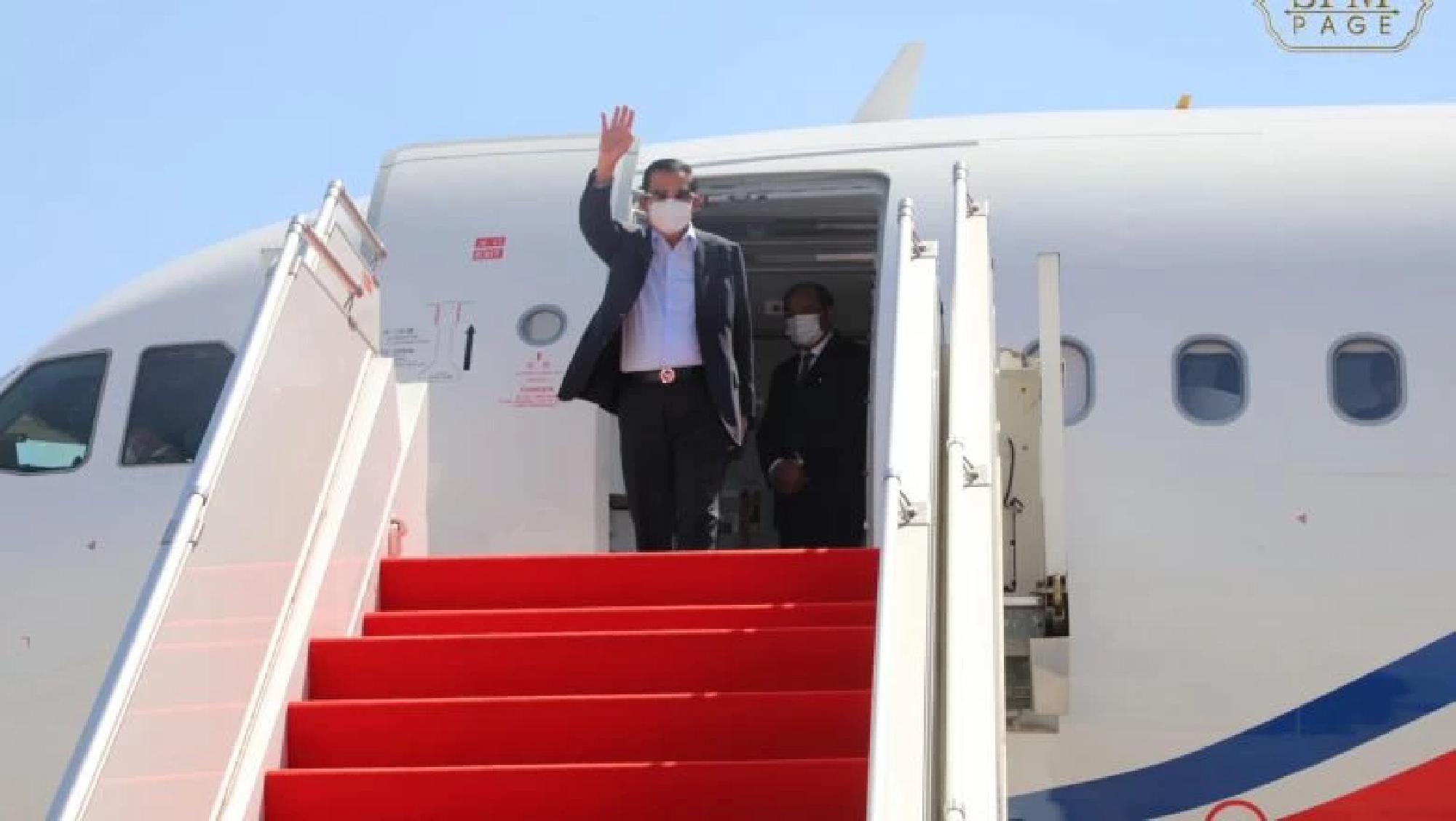
Cambodian Prime Minister Hun Sen has been on “cloud diplomacy” with several Asean leaders these past weeks about the situation in Myanmar
Hun Sen, in his capacity as Asean chairman this year, was on separate phone calls with Singapore’s Lee Hsien Loong, Indonesia’s Joko “Jokowi” Widodo and video conference with Malaysia’s Datuk Seri Ismail Sabri Yaakob. (The chairmanship is rotated among the 10 member countries annually.)
Uppermost on the mind of these leaders is the situation in Myanmar after the military seized control on Feb 1 last year. Mass protests followed and hundreds of people have been killed while elected leader Aung San Suu Kyi was recently sentenced to four more years in prison, in the latest of a series of trials. According to news reports, she was convicted for the illegal possession and import of walkie-talkies, and breaking Covid-19 rules.
Asean leaders met in Jakarta two months after the coup to bring an end to the violence and instability in Myanmar and adopted a five-point consensus which called for:
– immediate cessation of violence in Myanmar and all parties shall exercise utmost restraint,
– constructive dialogue among all parties concerned shall commence to seek a peaceful solution in the interests of the people,
– a special envoy of the Asean Chair shall facilitate mediation of the dialogue process, with the assistance of the secretary general of Asean,
– Asean shall provide humanitarian assistance through the Asean Coordinating Centre for Humanitarian Assistance, and
– the special envoy and delegation shall visit Myanmar to meet with all parties concerned.
Despite this deal, Myanmar’s military government failed to adhere to the consensus and junta ruler Min Aung Hlaing was excluded from the Asean summit chaired by Brunei last October in a rare reprimand against a member by the regional grouping.
Early this month, Hun Sen decided to visit Myanmar and held a meeting with Min Aung Hlaing. Some quarters are concerned that his trip, the first by a foreign leader since the coup, will provide more legitimacy to the junta.
After their talk with Hun Sen, the three Asean founding members – Malaysia, Singapore and Indonesia – made it clear that any discussion to revise the consensus agreed by the leaders last April has to be based on new facts.
Lee, the most senior Asean leader, noted there is no significant progress on the five-point consensus, and any proposal from the Asean chair to coordinate a ceasefire and deliver humanitarian assistance should be further discussed by Asean foreign ministers and senior officials.
Jokowi, in a statement released after the phone call, expressed regret that Myanmar military did not commit to implementing the consensus despite the junta leader meeting Hun Sen.
Malaysia’s Ismail Sabri emphasised Asean’s position on Myanmar, including the bloc’s decision to invite non-political representative from the country to high level Asean meetings.
If the tone of these Asean leaders were careful but firm in driving the message across to Myanmar via Cambodia, Malaysia’s foreign minister Datuk Saifuddin Abdullah has unfortunately incurred the wrath of Hun Sen. It is unclear if the Cambodian leader had complained to Ismail Sabri about Saifuddin but he did just that during his call to the Indonesian President last week.
Various media reported that Hun Sen defended his visit and rebuked Saifuddin.
“Samdech (Hun Sen) said that the Malaysian foreign minister should not be too arrogant with inappropriate remarks to Asean leaders, especially the chair. And he lacks politeness,” according to a readout of the conversation provided to media by state broadcaster TVK, which was picked up by various media outlets.
Phnom Penh Post reported during the call with Jokowi, Hun Sen also requested Indonesian foreign minister Retno Marsudi to relay his message to her Malaysian counterpart – Saifuddin’s remarks “were not right within the Asean framework”.
Saifuddin was earlier asked to comment on Hun Sen’s trip to Myanmar and was quoted as saying “We would expect that he could have at least consult – if not all – a few of his brother leaders as to what he should say. Not that we are trying to teach him, but normally the Asean chairs consult with the others anytime you want to do something that is considered significant.”
He must have touched a raw nerve of the Cambodian leader. True, the sentiment on Hun Sen’s visit is not Saifuddin’s alone and those who have been following the turmoil in Myanmar, would understand why he said what he said the way he did.
“As Chair of Asean, you cannot simply go to Myanmar when you know there is a very serious issue that needs to be sorted out among Asean. Cambodia should take any remarks as constructive, not criticism but some kind of advice,” said a diplomat.
But it is best to remember that in Asean, as in Asian culture, face saving is everything.
“We must give respect and not to “drop the face” of seniors, what more if he is the head of government.
“I think there is nothing wrong with commenting but the language could have been different. Remember that he has been head of government for more than 30 years. Agree or disagree we must show respect,” said an Asean observer.
The chairmanship of Cambodia has already started with a “bang” and it will be an interesting development to watch what the chair will bring this year and not just on Myanmar.
Ten years ago when Cambodia was chair, Asean foreign ministers ended a meeting – for the first time in history – without issuing the customary joint communique, following disagreement over the growing assertiveness of China in the South China Sea.
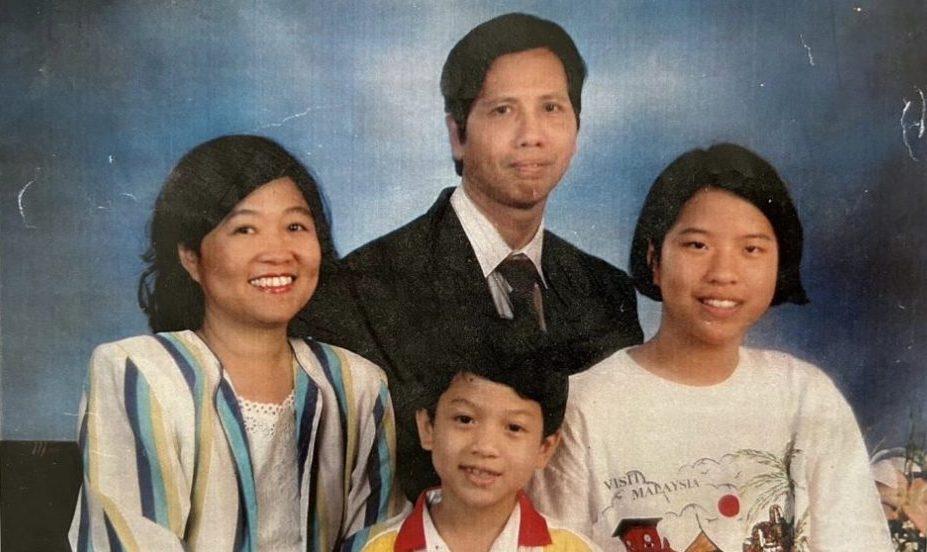
As we visit family, friends, and loved ones this Chinese News Year we get blessed with the opportunity to strengthen bonds, catch up on gossip, and celebrate the new year’s cheer together. That is until we realise that such gatherings can be quite stressful, for various reasons.
For some, the reunion dinner can be a source of great anxiety. Squabbles, strife, and all sorts of mishaps can arise at a single mention of an unwelcome point of discussion or what seems impossible to have today, a personal opinion.
With the new decade well on its way, let us chase out the old bad luck and rid ourselves of these five family flubs this festive season.
1. Busy-Bodying
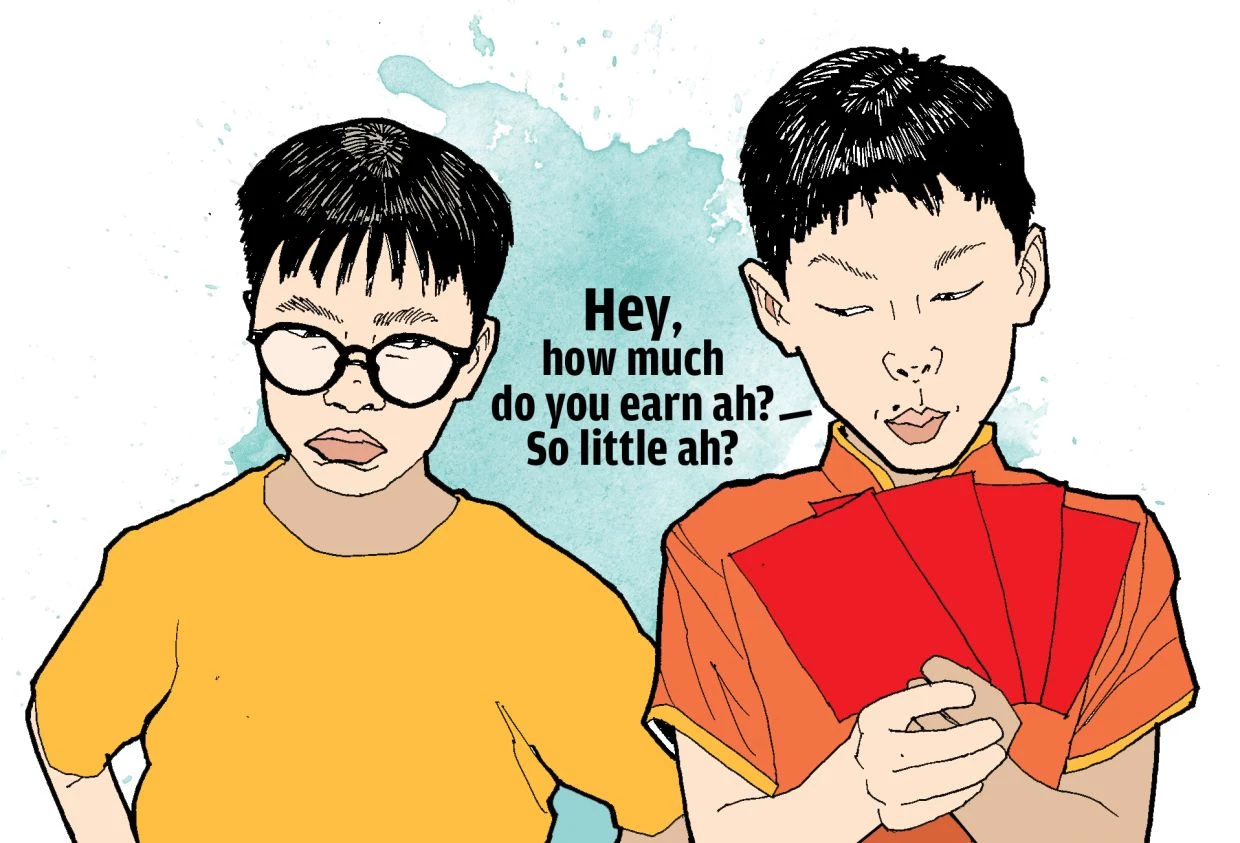
We aren’t referring to the casual “Hey, how have you been?” or “How is work coming along” type questions. Catching up on each other’s successes or even failures is a great conversation starter. Things may be stretched uncomfortably, however, when more intimate or potentially sensitive personal details are requested from the curious grandpa or the talkative aunty.
Examples of such proding include:
“Hey you have gained so much weight lah, how much have you been eating?”
“Why haven’t you replied to the news I send on whatsapp? So busy ah?”
Or who could forget the classic
“Eh, you got a boyfriend or girlfriend ah?”
Private matters such as these are to be handled with care and consideration for the other person’s feelings. Also, understanding how backhanded compliments or harmful suggestions can be offensive is key to being kinder, minding other people’s privacy and valuing our own.
2. Outdated Ethics
As our older relatives may have come from a different generation, some of their views, opinions and mannerisms may not be quite so acceptable in this day and age. We all have an uncle/aunty who brings up local politics on the dinner table more than he should. Or that one relative who still holds outdated stereotypes about race or religion. It is important that we acknowledge the generation gap and maybe steer the conversation in another direction.
3. Attention Magnets
It can be frustrating when the long awaited cousin chat is postponed thanks to Aunty Lee’s touching story about her best friend’s son’s uncle’s in-laws’ adopted roommate. But the reason why our old folks demand our attention and time could be because they long for company and enjoy socialising but don’t get to do so as often anymore. Even more now, with the pandemic.
Think of the few times you do return to your hometown. The joy of company may be constant for us when going back but we don’t think of the buffer times in between. When we are back in school or work constantly moving and running, back at Pa’s house it is still and frankly empty.
So, be patient and think of it as them making full use of this social gathering instead of feeling like Aunty Lee’s story would be more appreciated when told to the forgetful neighbour.
4. Obsessed with fortune
It is no secret that attracting fortune is an integral piece of Chinese New Year tradition, second only to family. It is wrapped around gifts of cash, pasted on the walls, and it’s even part of the wishes uttered when we greet each other. In conversation work is brought up, business success, wages, bonuses. Wishing for good fortune is part of Chinese New Year celebrations.
Have you heard questions like this before:
“You need to find a better job, lah, your younger brother makes more money in accounting.”
“Maybe you should talk to your cousin to get better stocks.”
“You got NFT, ah?”
Money is important, but not more than the personal value you bring to your family. No matter if one is a multimillionaire or a McDonalds trainee, in a family gathering everyone should be treated equally. Because no matter how rich or poor you are, everyone is equally worthy.
5. Impatience and Intolerance
One unfortunate symptom of growing older is the toll it takes on the body physically but more so mentally. Patience sometimes does not grow with age, only the thinness of tempers. Pride and prejudice will be two things we will deal with our entire lives. Whether we allow others’ lack of patience to rub off our own is up to us. For some families conversations can go south with one small step, in such situations remember to be patient. Be the example of what tolerance looks like by being tolerant.
Bonus: Relationship Status
This topic could bear an entire article on its own but relationships are the obsession of our grandmas and aunties. Perhaps it is the longing for a hot young romance or perhaps it’s the joy of the news that they will be future grandparents and the chance to hold a baby in their arms again. Or perhaps they are waiting for the return of their investment of over 20 years (YOU) paid in cash wrapped in ang pow packets. Sometimes the simple reality is enough to quiet down their expectations. The truth that modern dating is impossible. Happy New Year, everyone and have a happy celebration with family!
SEOUL — A centrist candidate who plans to run for South Korea’s presidency said Friday that if elected, he would put suspend the liquidation of Japanese corporate assets and seek to resolve a related lawsuit through negotiations with the Japanese government.
Ahn Cheol-soo, 59, a member of the minor opposition People’s Party, was speaking at press conference held at the Seoul Foreign Correspondents’ Club, and referring to a lawsuit regarding former requisitioned workers mobilized from the Korean Peninsula during Japan’s colonial rule — the biggest pending issue between Japan and South Korea.
Ahn emphasized that South Korea should focus on its relations with Japan. “It’s difficult to overturn the verdict, but it’s possible to suspend its execution,” he said. “Both governments should try to resolve the issue diplomatically.”
In a poll released by Gallup Korea on Friday, Lee Jae-myung, 57, of the ruling Democratic Party and the main conservative opposition People Power Party’s Yoon Seok-yeol, 61, each garnered 35% support, followed by Ahn at 15%.
SEOUL – The Democratic People’s Republic of Korea fired an unidentified projectile toward the East Sea, the Republic of Korea’s Joint Chiefs of Staff said Sunday.
The JCS said in a short message without mention of any further detail of the launch.
The DPRK has said it conducted six missile tests in January, including a hypersonic missile on Jan 5 and Jan 11 each, two railway-borne short-range ballistic missiles on Jan 14, two tactical guided missiles on Jan 17, a long-range cruise missile on Tuesday and a surface-to-surface tactical guided missile on Thursday.
As Omicron pushes Western countries towards reopening, Asia is hunkering down, sharpening an East-West divide on the balance between public health, the economy and basic rights and freedoms.
While the highly transmissible coronavirus variant is accelerating the move toward living with Covid-19 in Europe and North America, life in much of the Asia Pacific is little less restricted – and in some cases even more restricted – than at the start of the pandemic.
The widening divide comes even as many Asia Pacific countries boast vaccination rates higher than those of their Western counterparts.
The region’s ultra-cautious stance two years into the pandemic raises questions about its endgame as border controls and strict social distancing rules, although credited with achieving some of the world’s lowest death tolls, inflict growing social and economic costs.
“There is a certain level of Covid-related mortality that the society is willing to accept,” Cho Sung-il, a professor of epidemiology at Seoul National University in South Korea, told Al Jazeera.
“Individually, there is a certain level of Covid-related risk one is willing to accept, to balance against what one has to pay for it, in terms of social distancing plus vaccination. Asians may be valuing life over freedom, if culture matters at all. Maybe because we don’t have the strong memory of civil revolutions risking life for freedom.”
In mainland China, authorities have doubled down on a zero-tolerance approach that has resulted in the near-total shutdown of international travel and the imposition of harsher and more frequent lockdowns.
Hong Kong, which is grappling with its biggest outbreak of the pandemic, has closed schools, bars and gyms and banned dining-in at restaurants after 6:00pm.
The Chinese-controlled territory, long branded “Asia’s World City,” ranks among the most isolated metropolises due to some of the toughest quarantine and border rules on earth.
In Japan, which is reporting close to 80,000 daily cases, borders remain closed to all non-residents, while “quasi-emergency” measures restricting opening hours for bars and restaurants are in place in 34 out of 47 prefectures.
South Korea, which like Japan has avoided full-scale lockdowns throughout the pandemic, requires arrivals to undergo 10 days of quarantine, limits private gatherings to six people, and banned restaurants, bars and gyms from operating after 9:00pm. Authorities, which yesterday reported more than 16,000 cases, are set to review the measures on February 6.
Unlike in most of Asia, Europe and North America are largely open to quarantine-free travel for those who are vaccinated.
Meanwhile, Merck & Co Inc and partner Ridgeback Biotherapeutics said yesterday six lab studies showed their experimental oral Covid-19 drug molnupiravir was active against the fast-spreading Omicron variant, reports Reuters.
The data evaluated the antiviral activity of molnupiravir and other Covid-19 antiviral agents against Covid-19 variants of concern. Molnupiravir is yet to be studied against Omicron in human studies, the companies said.
The coronavirus has killed at least 5,635,702 people globally since the outbreak emerged in China in December 2019, according to an AFP tally compiled from official sources yesterday.








 SootinClaimon.Com