Private orchid growers and businesses have pledged to work with the Ministry of Environment on the preservation of wild orchid species.
The commitment was made during a discussion among private sector representatives, researchers and ministry officials on January 28.
Held under the theme “The participation of the private sector on the management of wild orchids in Cambodia”, the meeting was led by ministry undersecretary of state Chan Somaly, who is in charge of the ministry’s orchid centre, and attended by a total of 27 people including students, researchers and representatives from orchid plantations and private companies.
The ministry said the meeting was held to exchange views on the protection and preservation of wild orchids and how the private sector can contribute.
“We exchanged important information on wild orchids in Cambodia, in areas such as general care and propagation using tissue culture methods. Participants pledged to support and provide orchids to Sok An Phnom Kulen Centre for Orchid Research and Conservation,” the ministry said.
Staff at the centre will prepare a list of prioritised orchid species for perseveration. The list will provide information and data on each one.
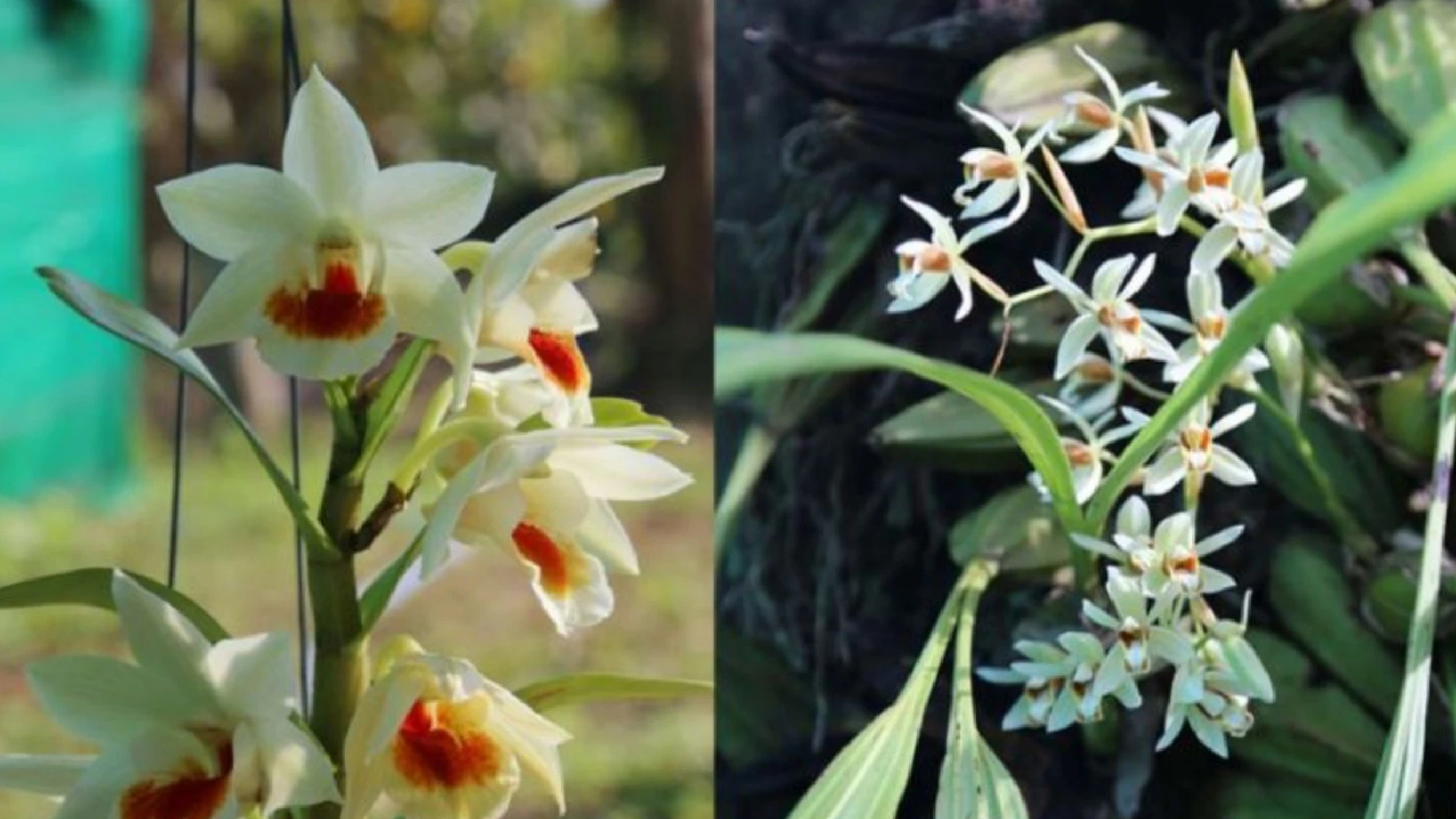
The ministry had banned the trading of wild orchids to prevent the plants disappearing from the forest. The ministry said there are more than 500 types of wild orchid in Cambodia, with more than 360 kinds categorised. Some face elevated levels of extinction risk.
There are more than 200 types of wild orchid that are under preservation at the Sok An Phnom Kulen centre, it said.
The ministry said that most orchids on sale today are hybrids.
The national government has already given clearance to Manila to use the zoo, Faye Orellana, chief of the Manila Public Information Office, told in a text message on Saturday.
MANILA, Philippines — The city is targeting to begin the vaccination of the said age group on Feb. 4, Orellana said, adding that the vaccines dedicated for the activity, were expected to arrive by Feb. 2.
“Hopefully it will meet the said date so we can give protection already to the minors, who we can also consider as part of the vulnerable sector,” she said.
The national government had earlier announced Feb. 4 as the start of the vaccination of children aged 5 to 11.
Orellana said that the registration for the said age group is ongoing. No walk-ins will be allowed at the Manila Zoo.
For that matter, minors, parents, and guardians should register at www.manilazoo.ph in order to enter the vaccination site.
They must also bring their QR code that they will get www.manilacovid19vaccine.ph to enable the city’s frontliners to encode their records in the city’s system.
Orellana said that while the local government had opened the scheduling system from Jan. 19 to 31, all slots for the said dates were already full.
“Now with regards to the start of the vaccination for the lower age group of minors, kindly standby for further announcement if there are changes on the slot allotment,” she said.
Meanwhile, Manila also looking into the possibility of using the Bagong Ospital ng Maynila as a vaccination site for children aged 5 to 11, according to Orellana.
As of Jan. 26, Manila has recorded 11,281 minors aged 5 to 11 already registered at manilacovid19vaccine.ph.
Northwest China’s Xinjiang Uygur autonomous region will soon open its first plateau airport after an airplane landed successfully at the airport on Friday afternoon.
URUMQI – Standing at over 1,700 meters above sea level, the Zhaosu Tianma Airport is located in Zhaosu County, Kazak Autonomous Prefecture of Ili. With an investment of 640 million yuan (about $100.7 million), the construction of the 170-hectare airport began in September 2019.
The passenger throughput of the domestic civil regional airport is designed to reach 200,000, while cargo and mail throughput to 600 tonnes by 2025, according to the airport.
“The opening of Zhaosu Tianma Airport will greatly improve the transportation conditions of more than 400,000 residents in Zhaosu County and the surrounding counties. It is expected to promote the development of the local tourism industry and improve the investment environment,” said Dalelybek Kanjakhan, a prefecture official.
Zhaosu Tianma Airport will become the 23rd civil airport in the region.
Neighboring Kazakhstan, Zhaosu is known as the hometown of one of the country’s best horse breeds. The county has been promoting equine tourism in recent years. An international horse tourism festival is held in Zhaosu each summer, where Chinese and foreign visitors can enjoy breathtaking views of galloping horses and equestrian performances.
Experts say Koreans are obsessed with fake designer goods due to conspicuous consumption tendency, lack of awareness about intellectual property rights.
Dongdaemun Market is the center of the Korean apparel and fashion industry. Near the market is another “secret” spot for shoppers who want luxury fashion items but cannot afford them. This place is called Dongdaemun Saebit Market, the nation’s largest fake designer goods market.
Near Dongdaemun Design Plaza Station Exits 2 and 3, about 80 small yellow tents are clustered together, selling counterfeit luxury fashion goods that look pretty much like high-priced brands such as Moncler, Thom Browne, Cartier and Rolex. The products on offer include almost every type of fashion item, from bags and clothes to running shoes and watches.
Despite deepening concerns over the fast spreading omicron variant and sub-zero temperatures, the fake designer market was crowded with eager shoppers. Although the place only operates at night from 9 p.m. to 2 a.m., more and more people flocked to the venue as time passed later into the night.
“This is Moncler’s newly launched long down jacket. (The genuine product) is priced at some 2.8 million won ($2,330) but I’ll give it to you for 220,000 won. No more discounts! I was selling it at 280,000 won last week,” a seller who looked about 40 said when The Korea Herald reporter glanced at the item.
While there are many “grades” of counterfeit products, ranging from the obviously fake to the nearly identical, another seller attracted shoppers by promoting her products as “Ultra A” grade — super high-quality fake products. The prices were less than 10 percent of the genuine products. Her customers seemed mostly in their 20s to 40s.
“I have brought some good local stuff. High quality products are made in Korea, but the majority of clothes are imported from overseas, like China … Since it takes so long to bring in (clothes) wholesale, especially during the pandemic, I wish I could bring more local products. But factories are out there to avoid crackdowns. I can’t help it,” the seller whispered to the reporter.
In the meantime, some sellers warned customers that “photos and recordings are not allowed.” Since it is illegal to sell and import fake goods, they paid keen attention to visitors’ smartphones. Shoppers and buyers only dealt products in cash and bank account transfers. Sold items were handed over in black plastic bags. Sellers’ trucks were parked right next to their yellow tents, apparently ready to flee in case police come for random inspections, which can happen at any time.
Counterfeit watches that resemble high-priced brands are displayed at Dongdaemun Saebit Market. (Jie Ye-eun/The Korea Herald)
Two female shoppers in their early 30s were on their way home, their hands full of black shopping bags. While it was their third visit to the market, they had spent about 800,000 won that day for a short puffer jacket, two mini crossbody bags and a pair of sports shoes. They seemed very satisfied with their purchases, saying, “Although we spent money, we feel like we’ve saved a lot.”
Those who violate the country’s trademark law can be sent to prison for up to seven years or pay up to 100 million won in fines. Local authorities are clamping down on such cases, but an increasing number of illegal dealings are taking place these days. In some European countries, counterfeit product buyers can also be punished with up to three years in prison or up to 300,000 euros ($336,800) in fines. However, in Korea there is no law to penalize those who buy counterfeit goods.
According to the data compiled by the Korea Customs Service, about 467.9 billion won worth of counterfeit bags, or 1,866 cases, were seized from January 2017 to August last year. Louis Vuitton was the most frequent victim of counterfeiting, followed by Chanel, Gucci and Hermes. The local fashion industry also predicts that the number of knockoffs has increased during the pandemic, since people chose to secretly buy and sell the copies through social media platforms.
Experts note that Koreans are obsessed with fake designer goods. The country’s collectivism and people’s conspicuous consumption tendencies increase their unwholesome desire, according to Kwak Geum-joo, a professor of psychology at Seoul National University.
“Korean society is very sensitive to trends and people care a lot about others. To feel a sense of belonging, people choose to follow others to be involved in a group. Also, to achieve superiority over others, they tend to wear expensive items to show off,” the expert told The Korea Herald.
“But since they cost too much, some choose to buy fake items. They may even feel a sense of joy in deceiving others. Their tendency, however, is unlikely to change since buying counterfeit items is also a consumption habit.”
Consumer studies professor Lee Eun-hee of Inha University attributed the fake product consumers’ buying behavior to a strong sense of rivalry. Lee used the expression “Turning green with envy” as an example. At the same time, the expert highlighted the importance of raising awareness of intellectual property rights.
“Not only selling but buying counterfeit products is stealing. The country’s law should be strengthened to cease such illegal actions, but related authorities have to actively inform the public that it is wrong. Consumer education can take place through various campaigns as well.”
The inflow of foreign investment into Vietnam hit over US$2.1 billion in January, up 4.2 per cent year-on-year, marking good signals for the country’s investment attraction, the latest report from the Foreign Investment Agency (FIA) showed.
Hanoi — Following the recovery from the end of 2021 after the impact of the COVID-19 pandemic, many foreign-invested enterprises have stabilised and expanded their production and business activities. Thus, disbursement of foreign direct investment (FDI) also saw a positive increase of 6.8 per cent to surpass $1.61 billion during the first month of this year, FIA said in its report.
According to the report, up to 103 new foreign-invested projects were licensed with a total registered capital of nearly $388 million, 2.2 times higher than last January in terms of the number of projects but down 71 per cent year-on-year in value.
Although registered investment capital decreased compared to the same period last year due to a lack of large-scale projects, an increase in the number of new investment projects showed the confidence of foreign investors in the country’s investment environment, FIA said.
Meanwhile, 71 operating projects were allowed to raise their capital by $1.27 billion, up 54.3 per cent in project number and nearly triple the level of capital seen in the same month last year.
Capital contributions and share purchases by foreign investors stood at $444 million, up two times over the last year’s corresponding month.
Among 15 sectors receiving FDI in the first month, processing and manufacturing took the lead with over $1.2 billion, accounting for 58.9 per cent of the total FDI. Real estate came next with $472 million or equivalent to 22.5 per cent. Administrative sectors and supporting services; wholesale and retail were the runners-up with over $221 million and $52.5 million, respectively.
As per the data, Singapore led 33 countries and territories investing in Vietnam with total investment capital of nearly $666 million, making up nearly 31.7 per cent of the total FDI registered in the country. However, the total investment of Singaporean investors plunged 2.2 per cent year-on-year.
South Korea ranked second with over $481 million, up five times year-on-year or equivalent to 30 per cent of the total FDI. Mainland China came third with nearly $451 million, down 27 per cent or 21.5 per cent. Other leading sources of Vietnam’s FDI were from Japan, Hong Kong and Taiwan.
The capital city attracted the highest amount of FDI, with over $448 million, 29.9 times higher than last January, making up 21.3 per cent of the total. The central province of Nghệ An came second with $400 million or 19 per cent thanks to two existing projects increasing their levels of capital. It was followed by Bắc Ninh, Long An and Phú Thọ.
According to FIA, foreign-invested businesses posted a trade surplus of above $1.6 billion in January.
As of January 20, the country was home to 34,642 valid foreign-invested projects worth nearly $415.6 billion. Of the sum, $253.2 billion or 61 per cent has been disbursed.
Earlier, the Đầu Tư (Investment) newspaper reported that Vietnam expected good results in FDI attraction in 2022 and following years, following optimism from many experts from the end of 2021.
FIA also commented that 2022 and the following years would be good for Vietnam with many large-scale and high-quality projects from world-leading firms.
Meanwhile, 67 per cent of European businesses said that they are optimistic about the business climate in Vietnam.
At the same time, a survey by the Japan External Trade Organisation (JETRO) showed that 55.3 per cent of Japanese said that they intend to expand business in Vietnam, and only 0.3 per cent plan to withdraw from Vietnam. According to the survey, which was conducted from August to September 2021, 56.2 per cent of the firms expect higher profits in 2022, and only 9.6 per cent predicted lower profit.
Vietnam News Agency cited Hirai Shinji, Chief Representative of JETRO in Vietnam, as saying that the Japanese firms intending to withdraw from Vietnam still hoped to return to the country when things get better.
In reality, many other firms have come back to Vietnam since the Government adopted the strategy of safely and flexibly adapting to the COVID-19 pandemic.
The business expansion of many other foreign firms in the Southeast Asian country, including Samsung from South Korea, JAPEX from Japan and Sri Avantika Contractor from India, was also expected to lead to many other opportunities for Vietnam in FDI attraction.
China’s key role underlined for global recovery amid lower growth expectation
China’s recovery is well advanced but would benefit from more balance and positive momentum, said officials of the International Monetary Fund on Thursday.
During a media call on the publication of the 2021 China Article IV Staff Report, IMF officials offered several recommendations for better economic recovery and high-quality growth in China, one of which is that both China and the United States should try to solve the problems in its economic relations, especially in the technology sector.
Under Article IV of the IMF’s Articles of Agreement, the economic consultation involves bilateral discussions between an IMF team of economists and insiders of a member country to assess economic and financial developments and address relative risks.
The 2021 Article IV consultation was conducted from Oct 28 to Nov 10.
Helge Berger, mission chief for China and assistant director of the IMF’s Asia and Pacific Department, led an IMF team and conducted discussions online with senior Chinese government officials, banking administrators and private business executives.
He introduced three key messages from the report.
First, the Chinese economy is slowing, so macroeconomic policies need adjustments to protect growth. China’s monetary policy has already moved in the right direction with the rate of reductions recently.
The second message is that rebalancing the economy away from investment toward consumption will secure high-quality growth and bring China closer to reaching its ambitious climate goals.
The report also mentioned that financial support to strengthen social protection would help.
In the third message, the IMF suggested re-accelerating key real-sector reforms and ensuring that private firms compete with state-owned enterprises on an equal footing.
The IMF’s World Economic Outlook released on Tuesday anticipates moderate global growth from 5.9 percent in 2021 to 4.4 percent in 2022-0.5 percentage points lower than in October, mainly because of rising cases of the Omicron variant, a disrupted recovery and higher inflation.
China’s GDP growth was 8.1 percent in 2021 and forecast at 4.8 percent for 2022, “with the deceleration in 2022 partly reflecting the fading of base effects, while subdued private consumption and real estate investment are adding headwinds”.
Lower growth was forecast for the world’s two largest economies-the US and China.
In response to a question from China Daily, Berger said the reasons for the downgrades are “quite different”.
He said that for China, it has to do with real estate investment, because delayed recovery consumption is still lagging other GDP components.
Danger of decoupling
In the US, it is more about fiscal policy.
“A decoupling between the two economies in terms of trades-especially in the technology area, in terms of foreign direct investment, or FDI,-again especially in the technology area, is something that potentially bothered both economies,” Berger said.
“So, our recommendations for both economies (is) to solve any issues in terms of trade, FDI, including in the technology sector jointly, to the well-established multilateral rules based trading system.”
According to the IMF Executive Board Assessment for the 2021 Article IV consultation, the directors emphasized a fact that China has a key role in multilateral efforts to address global challenges.
The directors welcomed China’s efforts to reduce financial vulnerabilities, and its continued role in the global fight against the pandemic, including facilitating access to vaccines. They also welcomed China’s rechanneling of part of its SDR, or special drawing rights, reserves to support the recovery of low-income and vulnerable countries.
In a statement on Wednesday, IMF Managing Director Kristalina Georgieva sent her “warmest greetings to all the people in China and in other countries who celebrate the Lunar New Year”.
East Timorese foreign minister Adaljiza Magno has requested Prime Minister Hun Sen to help her country become an ASEAN member and for technical support on its preparation to accede to the World Trade Organisation (WTO).
Magno made the call during a meeting with Hun Sen on January 28 as part of her official four-day visit to the Kingdom, according to Hun Sen’s assistant Eang Sophalleth.
“[Magno] also asked for recommendations from Prime Minister Hun Sen on how to promote trade cooperation between the two countries further,” Sophalleth told reporters after the meeting.
Magno also thanked the Cambodian government for providing Covid-19 vaccines to her country.
Sophalleth said Cambodia has always supported East Timor’s accession process to the regional bloc.
“Samdech [Hun Sen] will continue to promote the economic and socio-cultural pillars of ASEAN and will prepare a fact-finding mission to East Timor to make the base for a roadmap and timeline for East Timor to become an ASEAN member,” he said, adding that Hun Sen welcomed a technical team from East Timor to study on how to become a member of the WTO and ASEAN.
The premier also urged both sides to find ways to revitalise trade activities, especially the memorandum of understanding that the two countries have signed.
“In the meeting, Prime Minister Hun Sen suggested that East Timor explore the possibility of promoting economic cooperation with Cambodia and start placing purchase orders for rice from the King,” Sophalleth said.
According to Sophalleth, Hun Sen encouraged Timorese businesses to invest in milling machinery, warehousing and relevant infrastructure in the Kingdom, to ramp up rice exports to their country.
The premier also urged East Timor to consider entering into a free trade deal or double taxation agreement with Cambodia.
South Korea announced Tuesday it will have 63 athletes compete in six sports during the upcoming Beijing Winter Olympics.
It will be the country’s third-largest athletic delegation to the Winter Games, behind 146 athletes for the 2018 PyeongChang Winter Olympics on home soil and 71 athletes for the 2014 event in Sochi, Russia.
South Korea will also have 61 officials accompanying those athletes during the Feb. 4-20 competition.
The Korean Sport & Olympic Committee has said the goal is to win one or two gold medals and finish around the top 15 in the medal standings.
South Korea has won at least two gold medals at every Winter Games since 1992 in Albertville, France, which is also where it won a medal for the first time. It captured at least five gold medals at three of the past four competitions.
In Beijing, South Korea will be counting on medals from short track speed skating, speed skating, alpine snowboarding and curling. (Yonhap)
BEIJING — The Beijing 2022 Olympic Villages opened Thursday, officially rolling out the welcome mat for about 2,900 athletes from about 90 nations and territories who will compete at the Winter Games that start on Feb. 4.
Like last summer’s Tokyo Olympics, these Games will be held under strict infection prevention measures necessitated by the global spread of the novel coronavirus. The recent emergence of the highly transmissible omicron variant has given Games organizers an even tougher assignment than the task that confronted officials at the Tokyo Olympics.
The tight restrictions were evident to Chiho Osawa, captain of Japan’s women’s ice hockey team, which arrived at the Beijing village ahead of other Japanese athletes.
“I got the impression that coronavirus prevention measures in place when we arrived in China were very strict,” Osawa said in a comment released through the Japanese Olympic Committee.
Athletes and officials involved in the Beijing Games will stay inside a closed-off “bubble” to prevent contact with any outsiders. This approach also was used at the Tokyo Olympics. The huge athletes’ village in Beijing is securely surrounded by a fence, and security guards are stationed around the area. This appears aimed at preventing a repeat of incidents in which some overseas athletes left approved locations in Tokyo without permission.
Infection prevention measures inside the bubble are even tighter than those taken at the Tokyo Games. Foreign athletes and officials must take two PCR tests on two separate days within 96 hours of departing for China, and they also must give a throat and nose swab sample after arriving at the airport in Beijing. All participants and officials will, in principle, be fully vaccinated, and daily coronavirus tests are mandatory while they stay inside the bubble.
Athletes and officials also are required to wear an N95 or other medical face mask to help prevent viruses from spreading, except when eating, training or at certain other times. If an athlete records a temperature of 37.3 C or higher during a check at an athletes’ village or elsewhere, they must have their temperature taken again after a short break. At the Tokyo Games, nonwoven cloth masks were recommended, and 37.5 C was the threshold for requiring a second temperature check.
Despite these efforts, the omicron threat looms large over the Games. About 510,000 coronavirus tests have already been conducted at hotels and the media center inside the bubble, and a total of 50 people — including one team official — returned positive results. Seventy-nine positive cases also have been recorded during arrival tests conducted at Beijing Capital International Airport.
The Games organizers announced on Jan. 17 that the planned sale of tickets to residents of mainland China would not go ahead. Given that exhaustive infection prevention measures have been implemented, it is expected some invited guests, such as those connected to Olympic sponsors, and other groups will still be able to attend the Games. However, it remains unclear whether any spread of infection can be totally contained.
“It’s important that everybody understands the role that they have to play as set out in the Playbook,” an expert on preventing the spread of infection at the Beijing Games said in an online press conference held Sunday. The Playbook spells out the rules that Games participants and officials must follow.
Just one week remains until the Olympics start. The possibility that coronavirus countermeasures could be bolstered even further during this time cannot be ruled out.
By Daisuke Kawase and Toshiaki Obitsu / Yomiuri Shimbun Staff Writers
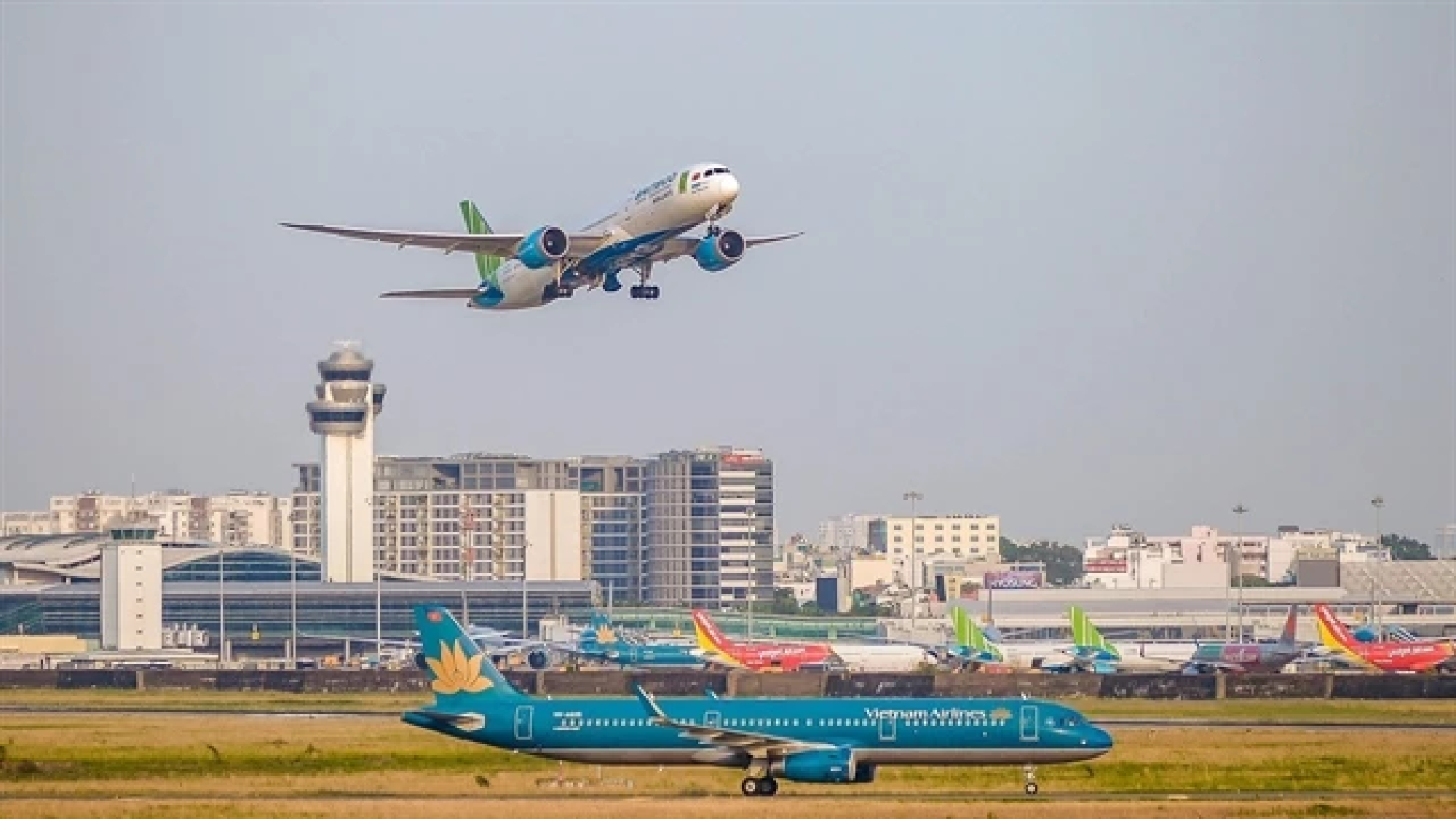
HÀ NỘI — Deputy Prime Minister Phạm Bình Minh has agreed to increase the frequency of commercial international flights, as well as removing the need for passengers to take rapid COVID-19 tests before and after their flight, as per new Government regulations.
Following this latest dispatch by the Government Office on Friday, passengers will not have to undergo rapid tests for SAR-CoV-2 before and after boarding the plane.
The destinations under consideration for more flights include Japan, South Korea and Taiwan (China). It is also expected that more locations in Europe and Oceania will be added to the pilot flight resumption programme starting in 2022 after nearly two years of border closures.
Diplomatic missions will work with the respective local authorities to resume regular international flights, aiming to remove quarantine requirements for Vietnamese people upon arrival to Singapore, Japan, and South Korea.
They are also required to issue guidelines for Vietnamese nationals who are denied entry to their destinations.
The Ministry of Health will review and issue detailed instructions on preventive and control measures against the Omicron variant for arrivals to Việt Nam.
Per the direction of the Ministry of Public Security, the National Immigration Department will proactively provide guidance on entry customs and health declaration for people entering the country.
The People’s Committees of cities and provinces are required to consolidate COVID-19 prevention and control measures following the latest instruction of the health ministry, and avoid having multiple declarations that are not included in the standard process. — VNS


 Counterfeit watches that resemble high-priced brands are displayed at Dongdaemun Saebit Market. (Jie Ye-eun/The Korea Herald)


 SootinClaimon.Com