Korean self-service ramen craze continues

#SootinClaimon.Com : ขอบคุณแหล่งข้อมูล : หนังสือพิมพ์ The Nation.

https://www.nationthailand.com/international/40011600


Boosted by the contactless trend, the small self-servicing ramen shops have caught the eyes of Koreans, especially solo diners.

Korean self-service ramen craze continues

SEOUL – Packaged instant noodle products of different flavours, from spicy beef broth to stir-fried black bean sauce and kimchi soup, are stacked on a shelf covering about two-thirds of the store’s wall on the right. On the left, a row of automatic machines to pour hot water into paper cups and boil it at the touch of a button are ready to cook the noodles.

After buying a packet of ramen through a self-ordering kiosk, all you need to do is open the bag and put the dried noodles in the paper container together with the seasoning powder. Many of the seats face the wall, ideal for solo diners.

With just 2,500 to 3,000 won and a couple minutes’ wait, you get a steaming hot bowl of “ramyeon,” as the common instant noodle dish is known in Korea.

An unstaffed ramen convenience store near Jongno 3-ga Station is open 24 hours. A wall shelf is stacked with packaged instant noodle products of different brands. (Choi Jae-hee / The Korea Herald)An unstaffed ramen convenience store near Jongno 3-ga Station is open 24 hours. A wall shelf is stacked with packaged instant noodle products of different brands. (Choi Jae-hee / The Korea Herald)

Having opened in February last year near Jongno 3-ga Station in Seoul, the store is among an emerging number of unstaffed convenience stores in Korea.

Boosted by the contactless trend amid the protracted COVID-19 pandemic, the small self-servicing shops have caught the eyes of Koreans, especially solo diners and some who still remain unvaccinated, as they find it harder to enter multiuse facilities including restaurants and cafes under the governmental vaccine pass mandate.

One solo diner surnamed Jeong at the Jongno 3-ga location said the place is suitable for solo diners working in a crowded city.

“I enjoy eating alone while reading webtoons. I don’t really want to make lunch plans with someone else amid the virus resurgence. But sometimes I feel embarrassed to eat alone as most of the restaurants near my office are packed with customers during lunch hour,” she said.

There were times when she felt restaurant owners or servers did not welcome her coming to eat alone.

“This self-service diner has a lot of single seats,” said the 32-year-old office worker at a medical devices company in central Seoul.

For some ramen lovers, the store is like a food lab, where they can experiment with new ways of enjoying the noodles, like mixing two or three different brands.

“Instant noodles are usually sold in bundles, so it’s difficult to have a wide variety of ramyeon at home. It’s nice that I can blend popular noodle labels at ramyeon convenience stores. My favourite combination is a mix of Nongshim‘s Chapaghetti and Neoguri, said Kang Ho-min, a 24-year-old student at Kyung Hee University.

Customers like Kang share various noodle combinations on post-it notes on the store’s wall.

While the convenience stores still require the minimum effort of guests to prepare the noodles, vending machines offer a fully prepared dish in about three minutes.

A ramen vending machine is located at a highway rest area in Uiseong, North Gyeongsang Province. (Ko Eun-hee)A ramen vending machine is located at a highway rest area in Uiseong, North Gyeongsang Province. (Ko Eun-hee)

Mostly installed at highway rest areas, school cafeterias or amusement parks, the target customers are people looking for a quick meal, with costs typically 2,000 to 3000 won.

Data shows Koreans’ unwavering affection for ramen. According to data from the World Instant Noodles Association, Koreans consume an average of 80 packets of instant noodles per year, which marked the highest figure among 15 countries surveyed by the organization, including the US, Japan, China.

Meanwhile, riding on the spread of Hallyu, Korea’s own ramen has gradually expanded its global reach.

The country’s outbound shipments of instant noodles reached an all-time high of $607.9 million in the January-November period of 2021, up 10.6 per cent from the same period of 2020, Korea Customs Service data showed Monday.

China was the largest overseas market for Korean ramen in the cited period, with exports posting $133.42 million. The US came next at $70.76 million, followed by Japan with $58.77 million, Taiwan with $29.18 million and the Philippines at $25.96 million.

“Korean-made instant noodles shown in popular Korean media content, including ‘Chapaguri,’ a signature noodle dish from the Oscar-winning film ‘Parasite,’ attributed in part to ramyeon’s global popularity,” a KCS official said.

Choi Jae-hee

The Korea Herald

Published : January 27, 2022
Distance doesn’t stop overseas Vietnamese from finding ways to celebrate Tet

#SootinClaimon.Com : ขอบคุณแหล่งข้อมูล : หนังสือพิมพ์ The Nation.

https://www.nationthailand.com/international/40011598


The Tet holiday is no less special for Vietnamese citizens who cannot travel back to their homeland for the most special time of year.

Distance doesn’t stop overseas Vietnamese from finding ways to celebrate Tet

HANOI — The Tết holiday is no less special for Vietnamese citizens who, due to the COVID-19 pandemic, cannot travel back to their homeland for the most special time of year. Instead, they have found creative and imaginative ways to celebrate in their adopted countries.

Vietnamese businesswoman Nguyễn Thị Minh Liên is one of those who cannot travel back to Việt Nam this year.

She is the director of a private Vietnamese product import company in Brussels and is always busy with her job.

She spends most of her time studying European standards of imported goods and seeking ways to bring more Vietnamese agricultural products to Belgian markets. She has learnt how to operate the accounting and administrative system of Belgium and the spending habits of local consumers.

Liên works almost around the clock. However, no matter how busy she is, Tết is always an integral part of her life.

She and her family take a long holiday for the occasion, reuniting with family to remember their homeland, their country and their origin.

In the summer of 2021, Liên managed to bring Vietnamese lychee fruits to Brussels. Other fruits such as dracontomelon, dragon fruit, guava, and durian have been imported to serve both the Vietnamese community and local people.

Liên says she has been away from Việt Nam for more than 20 years but her family always arrange to take leave for Tết.

On New Year’s Eve, her family go to the Permanent Church of the Vietnamese Community in Brussels to get New Year’s wishes from the parish priest, pick up early spring buds for luck and received lucky money with God’s blessings.

On the morning of the first day, all Liên’s family members get together and make phone calls to wish relatives and friends in Việt Nam a happy New Year.

Liên considers Tết a way to educate her children about Vietnamese culture. Her two sons, 12 and 9 years old, can speak Vietnamese fluently.

On January 29, Liên and her friends, who were graduate students in Belgium, will gather to make chưng cake at Louvain-La-Neuve, about 30 kilometres away from Brussels.

“People haven’t met each other for the past two years due to COVID-19 pandemic. Making chưng cake and breathing the scent of dong leaves, beans, rice, pepper – the typical smell of Tết – reminds us about love and family reunion,” she says.

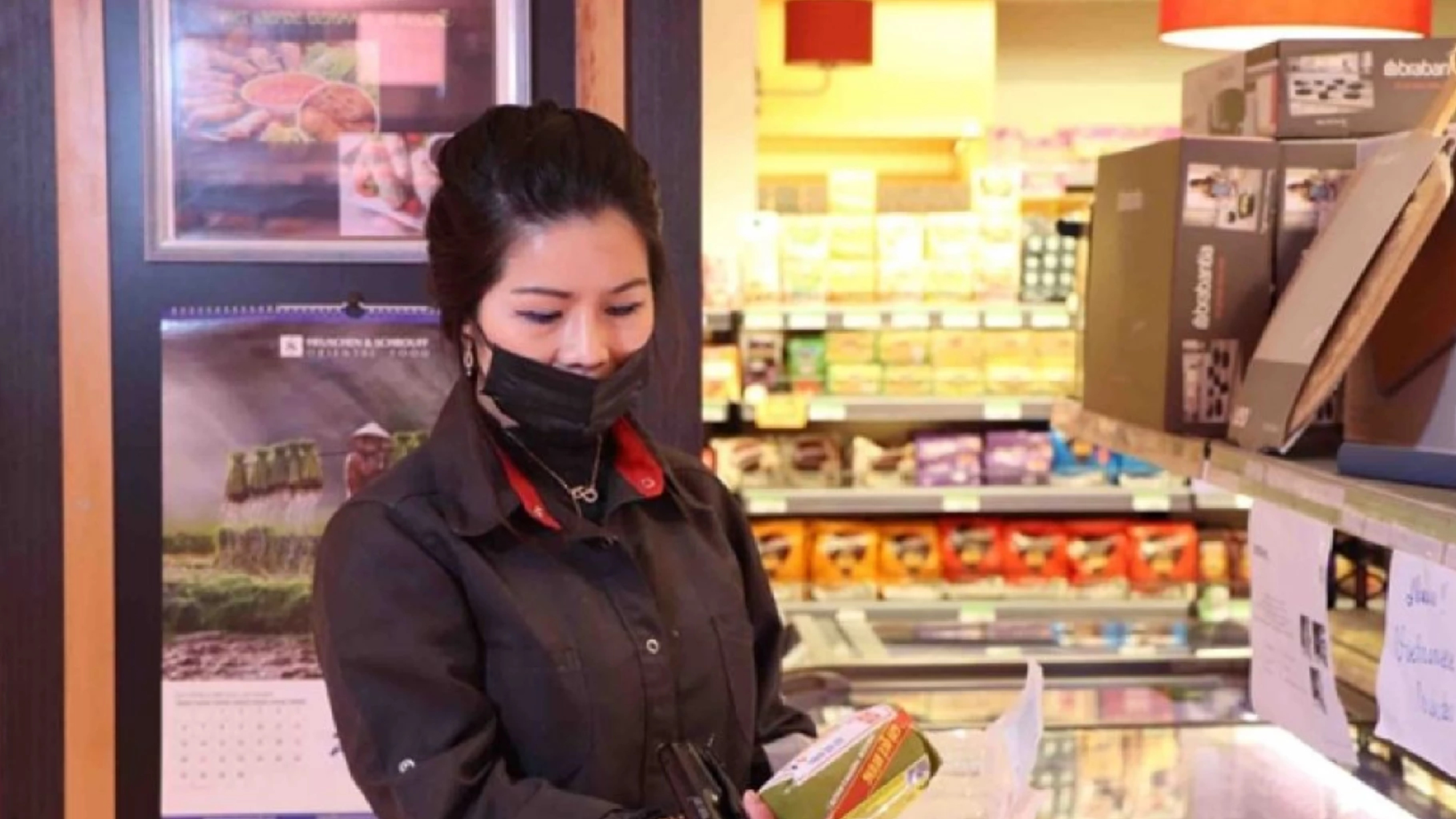
As for Nguyễn Thị Minh Thu, owner of Spars supermarket in the Zonhoven region, a Dutch-speaking area which is nearly 200km from Brussels and very few Asians live, Tết is more sacred than ever.

Thu has a Belgian husband and four Belgian-Vietnamese daughters. Her family usually go back to Việt Nam to celebrate Tết. However, the COVID-19 pandemic has changed that tradition.

Instead of returning to Việt Nam for a family reunion, Thu has ordered chưng cakes, will make traditional food and burn incense sticks in the memory of her ancestors.

To make Tết more meaningful, Thu has put aside a large space in her supermarket to sell Vietnamese food for Tết such as spring rolls, dry vermicelli, fish sauce, and lean pork paste. She has also organised events to promote Vietnamese cuisine.

Thu has also imported Vietnamese handicrafts such as Bát Tràng ceramics and shown customers how to display and decorate these items.

Đào Hồng Hải, the owner of the Hanoi Station restaurant chain in Brussels, has another way of celebrating Tết.

On New Year’s Eve, Hải will throw a party, in which her staff and their families will make chưng cake and traditional food together. A warm year-end meal will bring everyone warmth and reminiscent of the family reunion.

Starting the business in 2016, Hải has opened four Hanoi Station restaurants in Brussels. Hanoi Station has become a street food brand in the Belgian capital.

“We wish the COVID-19 pandemic will be put under control so that we can fly back to Việt Nam to meet my relatives and celebrate Tết together,” she says.

Chưng cakes to fight child poverty

Members of the New Sunlight for Children charity group making chưng cakes to raise funds to help disadvantaged children in Việt Nam. VNA/VNS Photo Nguyễn MinhMembers of the New Sunlight for Children charity group making chưng cakes to raise funds to help disadvantaged children in Việt Nam. VNA/VNS Photo Nguyễn Minh

A group of Vietnamese families in Sydney, Australia have decided to make their Tết more meaningful by making traditional Vietnamese food and raising funds to help child poverty in Việt Nam.

In the early morning of January 22, more than 30 people from New Sunlight for Children charity group gathered at North Turramurra to cook chưng cakes.

Khánh Hoàng, a member of the group, says it was not easy to hold an event for Vietnamese people as the COVID-19 pandemic has got complicated.

The members were in charge of different steps of the whole process. Some cleaned wrapping leaves, some prepared beans and meat while others wrapped cakes. They all worked together to produce delicious and beautiful chưng cake.

Châu Phan, another member, says they tried to make chưng cake as similar to Việt Nam as possible as there were no leaves of dong available and they had to replace them with pre-boiled banana leaves and plastic strings.

Phượng Phan, a founding member of the group, says they made 144 boxes of spring rolls and 240 chưng cakes. They earned about AUD6,000 (US$4,230), which would be sent to Việt Nam to help disadvantaged children.

“Gathering together to make traditional food and helping poor children in the country is a great experience for Vietnamese families living far from our homeland. This is also a great opportunity to help children born and raised in Australia better understand Vietnamese culture,” she says.

Last year, the group had organised many events to raise about AUD14,000 (US$10,018) to help 79 children in disadvantaged areas to go to school.

Viet Nam News

ASEAN+3 economic prospects positive in 2022

#SootinClaimon.Com : ขอบคุณแหล่งข้อมูล : หนังสือพิมพ์ The Nation.

https://www.nationthailand.com/international/40011565


SINGAPORE — Economic prospects for ASEAN+3 (Association of Southeast Asian Nations plus China, Japan and Korea) look promising in 2022, despite challenges from the COVID-19 pandemic and the global economy, according to a report published on Tuesday by the ASEAN+3 Macroeconomic Research Office (AMRO).

ASEAN+3 economic prospects positive in 2022

Việt Nam’s GDP has been forecast to be among the fastest-growing this year at 7.5 per cent from the previous year, well above the bloc’s average at 4.9 per cent.

AMRO points out that the emergence of the Omicron variant towards the end of 2021 brought new uncertainties and set back the progress of economic re-opening. However, high vaccination coverage has mitigated the risk of nationwide lockdowns, as experienced during the early days of the pandemic.

“The ASEAN+3 region has sufficient policy space to navigate through these new challenges, and stay on its recovery path,” says AMRO’s Chief Economist, Dr Hoe Ee Khor.

“A resurgence of infections continues to be the key downside risk, amplified by lingering global supply chain disruptions and rising global price pressures,” adds Dr Khor. “While the rise in global inflation is likely to prompt major advanced economies to roll back extraordinary monetary support earlier or more sharply than anticipated, the spillover effects for the region is likely to be limited because of greater resilience.”

AMRO maintains a positive outlook on ASEAN+3 economies for 2022, with regional GDP growth of 4.9 per cent and inflation remaining relatively low at 2.9 per cent for the year.

AMRO’s baseline 2022 GDP growth forecast for the ASEAN+3 region assumes a continued improvement in the global economy, but at a slower pace due to the Omicron variant. AMRO has kept broadly unchanged its GDP growth projections for the Plus-3 economies of China; Hong Kong, China; Japan and Korea. Forecasts for six of the 10 ASEAN economies have been revised only slightly downwards. Inflation for the ASEAN+3 economies should rise slightly higher than AMRO’s last forecast in October 2021, but consumer price rises will stay relatively low when compared with other regions globally.

The ASEAN+3 Macroeconomic Research Office (AMRO) is an international organisation established to contribute towards securing the macroeconomic and financial stability of the ASEAN+3 region, comprising 10 members of the Association of Southeast Asian Nations (ASEAN) and China; Hong Kong, China; Japan; and Korea. — VNS

Published : January 27, 2022

By : Vietnam News

S. Korea confirms highly pathogenic bird flu case in southwestern region

#SootinClaimon.Com : ขอบคุณแหล่งข้อมูล : หนังสือพิมพ์ The Nation.

https://www.nationthailand.com/international/40011564


South Korea reported another case of highly pathogenic avian influenza at a duck farm on Wednesday, bringing the total number of cases in poultry to 26 this winter season.

S. Korea confirms highly pathogenic bird flu case in southwestern region

The latest case was reported at the farm raising around 25,000 ducks in Buan county, 280 kilometers south of Seoul in North Jeolla Province, according to the agriculture ministry.

The government has alerted local poultry farm owners to increasing outbreaks of avian influenza as of late, urging them to immediately report any suspected symptoms during the upcoming Lunar New Year holiday that runs from Jan. 31 to Feb. 2.

Highly pathogenic avian influenza is very contagious among birds and can cause severe illness and even death, especially among poultry. (Yonhap)

Published : January 27, 2022

By : The Korea Herald

Singapore signs FTA with Chile, Colombia, Mexico, Peru bloc

#SootinClaimon.Com : ขอบคุณแหล่งข้อมูล : หนังสือพิมพ์ The Nation.

https://www.nationthailand.com/international/40011563


SINGAPORE – A free trade agreement struck on Wednesday (Jan 26) between Singapore and a bloc of countries consisting of Chile, Colombia, Mexico and Peru is set to give the Republic greater access to what is collectively the world’s eighth largest economy, scrapping most tariffs on goods and allowing local companies to bid for government projects in the Americas.

Singapore signs FTA with Chile, Colombia, Mexico, Peru bloc

The Pacific Alliance-Singapore Free Trade Agreement, or Pasfta, is Singapore’s first direct FTA with the Pacific Alliance, a bloc with a combined gross domestic product of more than $2.6 trillion.

It caps off negotiations that lasted more than four years, and is the first to be completed while the Pacific Alliance continues similar discussions with Australia, Canada, Japan and New Zealand.

Hailing the successful completion of the talks, Prime Minister Lee Hsien Loong said in pre-recorded remarks for the 16th Pacific Alliance Summit on Wednesday: “This is a landmark moment in Singapore’s partnership with the Pacific Alliance. Our two regions are in fact more connected than people imagine.

“Let us encourage our businesses and our peoples to take advantage of this enhanced relationship to explore opportunities in each other’s regions.”

More than 100 Singapore companies currently operate in the Pacific Alliance, including e-commerce platform Shoppee and high-tech software company Taiger.

Imports from the bloc include avocados from Mexico and blueberries from Peru. In return, Singapore has exported machinery and minerals to Peru, turbo jets and gas turbines to Chile and vehicle parts to Colombia.

The 25-chapter FTA seeks to create more opportunities for greater exchange, with agricultural trade, technology and infrastructure identified as possible areas of growth.

Under its current form, goods will be more smoothly processed at customs and Singapore service providers and investors treated as favourably as those from the bloc in Pacific Alliance countries.

Both Singapore and Pacific Alliance member states will also have to publish their government projects in a timely and non-discriminatory way so that suppliers can submit a bid with enough time for preparation. Investors and business visitors can enter countries in the Pacific Alliance for 30 days.

If ratified by all parties, the agreement is expected to have a more dramatic impact in exchanges between Singapore and Colombia, with which Singapore currently has no FTA.

Some 85.7 per cent of tariff lines the nation of 50.8 million people now has on Singapore goods will either be reduced or eliminated, the Ministry of Trade and Industry (MTI) has estimated.

PM Lee said he hopes the agreement will also encourage more Pacific Alliance businesses to come here.

They can use Singapore as a hub to explore economic opportunities in the region, he said, following precedents set by Colombian petrol company Ecopetrol, Mexican building materials supplier Cemex and Chilean mining company Codelco.

“Like the galleons that sailed across the Pacific and sustained trade between Asia and Latin America (500 years ago), the Pasfta will propel greater cross-Pacific links and grow our partnership further,” PM Lee said.

“It demonstrates our shared commitment to improve the lives of people in both our regions.”

The Pacific Alliance countries currently account for one-third of Singapore’s total trade and investment with Latin America and the Caribbean.

According to S&P Global Ratings, the average growth of the bloc is expected to be 3.3 per cent over the next five years, higher than the regional average of 2.5 per cent.

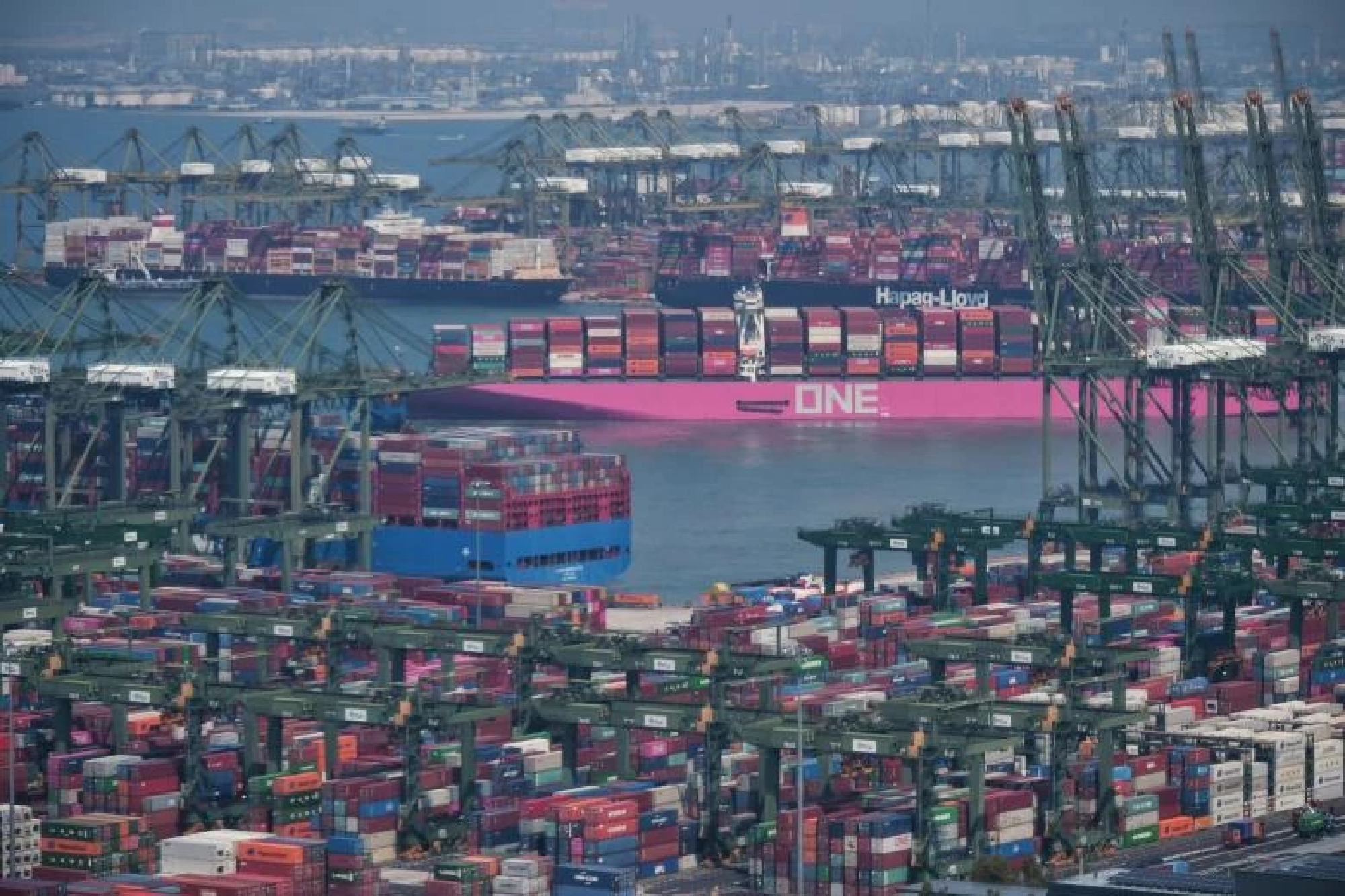
MTI noted that the agreement also includes a chapter on international maritime transport services, a first for Singapore FTAs.

This could help link Singapore and the bloc more closely by sea and increase training and education opportunities for those in the maritime industry.

By Clement Yong

Published : January 27, 2022

By : The Straits Times

Japanese aid to Tonga aimed at countering China’s influence

#SootinClaimon.Com : ขอบคุณแหล่งข้อมูล : หนังสือพิมพ์ The Nation.

https://www.nationthailand.com/international/40011562


Following the eruption of an underwater volcano in Tonga, the Japanese government is working to provide aid to the South Pacific nation, spurred partly by Beijing’s growing influence in the region.

Japanese aid to Tonga aimed at countering China’s influence

China is increasing its influence by providing infrastructure assistance to nations in the South Pacific region. Japan intends to counter Beijing’s efforts with the aim of realizing a “free and open Indo-Pacific.”

“Tonga is a traditionally pro-Japan country. Japan and Tonga are irreplaceable partners,” Foreign Minister Yoshimasa Hayashi said at a press conference Tuesday.

The government moved quickly to provide assistance to the disaster-hit nation.

Japan announced an emergency aid package of more than $1 million (about ¥114 million) on Jan. 19, the day after receiving a request from Tonga. A decision was made to dispatch a Self-Defense Forces plane on the morning of Jan. 20, and it left Japan that evening.

On Saturday, the SDF aircraft delivered its first batch of relief supplies, about 3 tons of drinking water — the third fastest delivery after Australia and New Zealand.

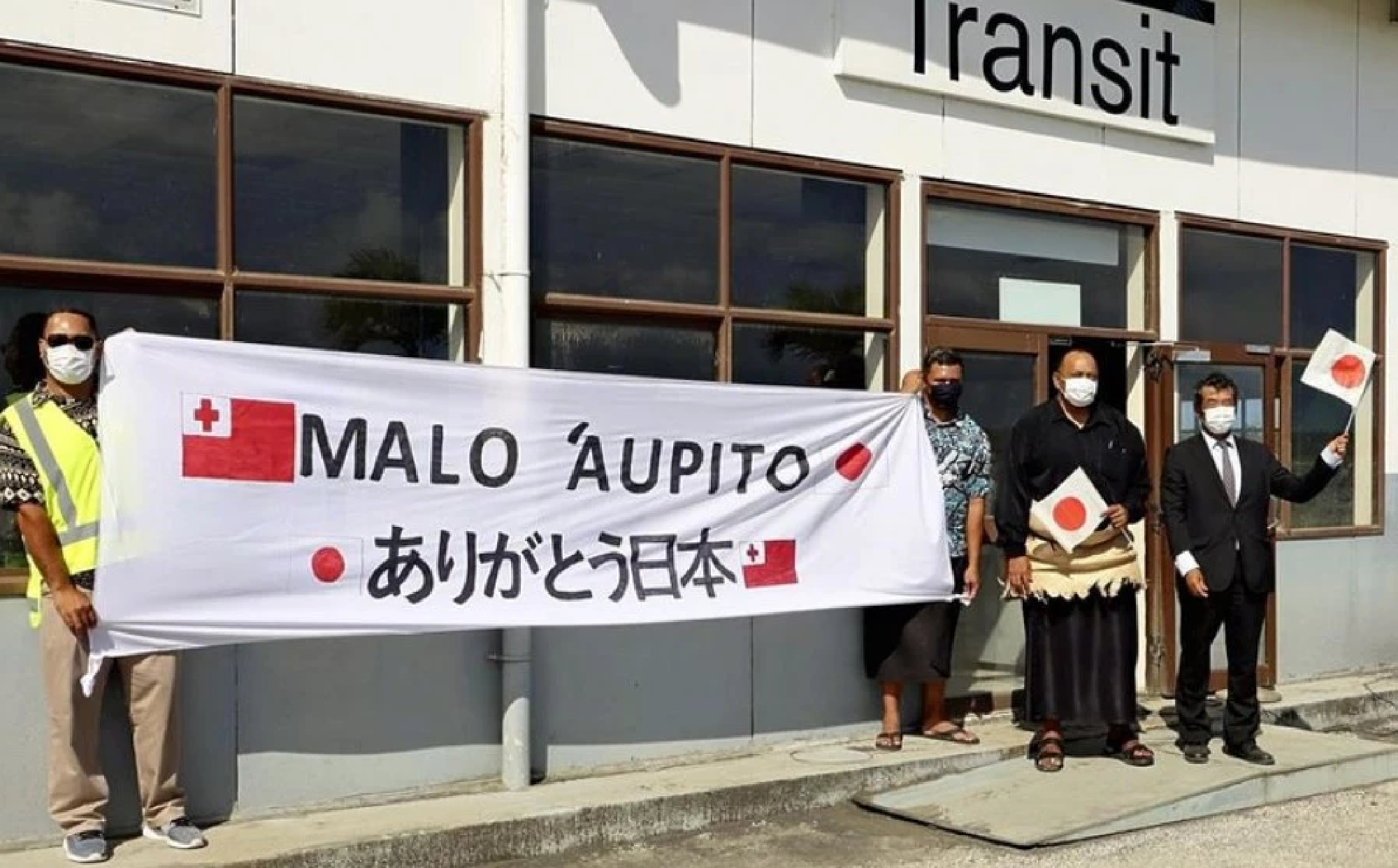
The Tongan prime minister, foreign minister and other government officials were at the airport to welcome the arrival of the plane, with a banner expressing their gratitude to Japan.

On Monday, a transport ship carrying more relief supplies left the Maritime Self-Defense Force’s base in Kure, Hiroshima Prefecture.

Sixty high-pressure washers to remove volcanic ash and 50 wheeled carts are scheduled to arrive around the middle of next month.

The SDF aircraft will be based at an air force facility in Australia. “We will work in close cooperation with Canberra, based on shared universal values,” Defense Minister Nobuo Kishi said.

The Japanese and Australian governments are rushing to provide assistance to Tonga partly because of China’s presence in the region.

Tonga established diplomatic relations with China after severing diplomatic ties with Taiwan in 1998.

When commercial facilities and government offices were vandalized in a large-scale riot in Nuku’alofa in 2006, Tonga received a huge amount of financial assistance from China to rebuild its infrastructure and other facilities.

According to the World Bank and other organizations, Tonga’s external debt in 2020 was $194.3 million (about ¥22 billion), with China accounting for about 60% of the total.

Following the Tonga eruption, China announced an aid package worth $100,000 (about ¥11.4 million), about 10% of what Japan has pledged. A senior Foreign Ministry official said: “Debt-ridden Tonga cannot turn its nose up at China. It’s not easy to eliminate Beijing’s influence.”

China is advancing its maritime expansion through economic cooperation to create a huge economic zone under its Belt and Road Initiative.

Beijing is involved in the construction of port facilities in the South Pacific island nation of Vanuatu, which also has a high percentage of foreign debt owed to China. The Japanese government has increased its vigilance because of fears China may use the port and other facilities for military purposes in the future.

Published : January 27, 2022

By : The Japan News

China launches L-SAR 01A satellite for land observing

#SootinClaimon.Com : ขอบคุณแหล่งข้อมูล : หนังสือพิมพ์ The Nation.

https://www.nationthailand.com/international/40011561


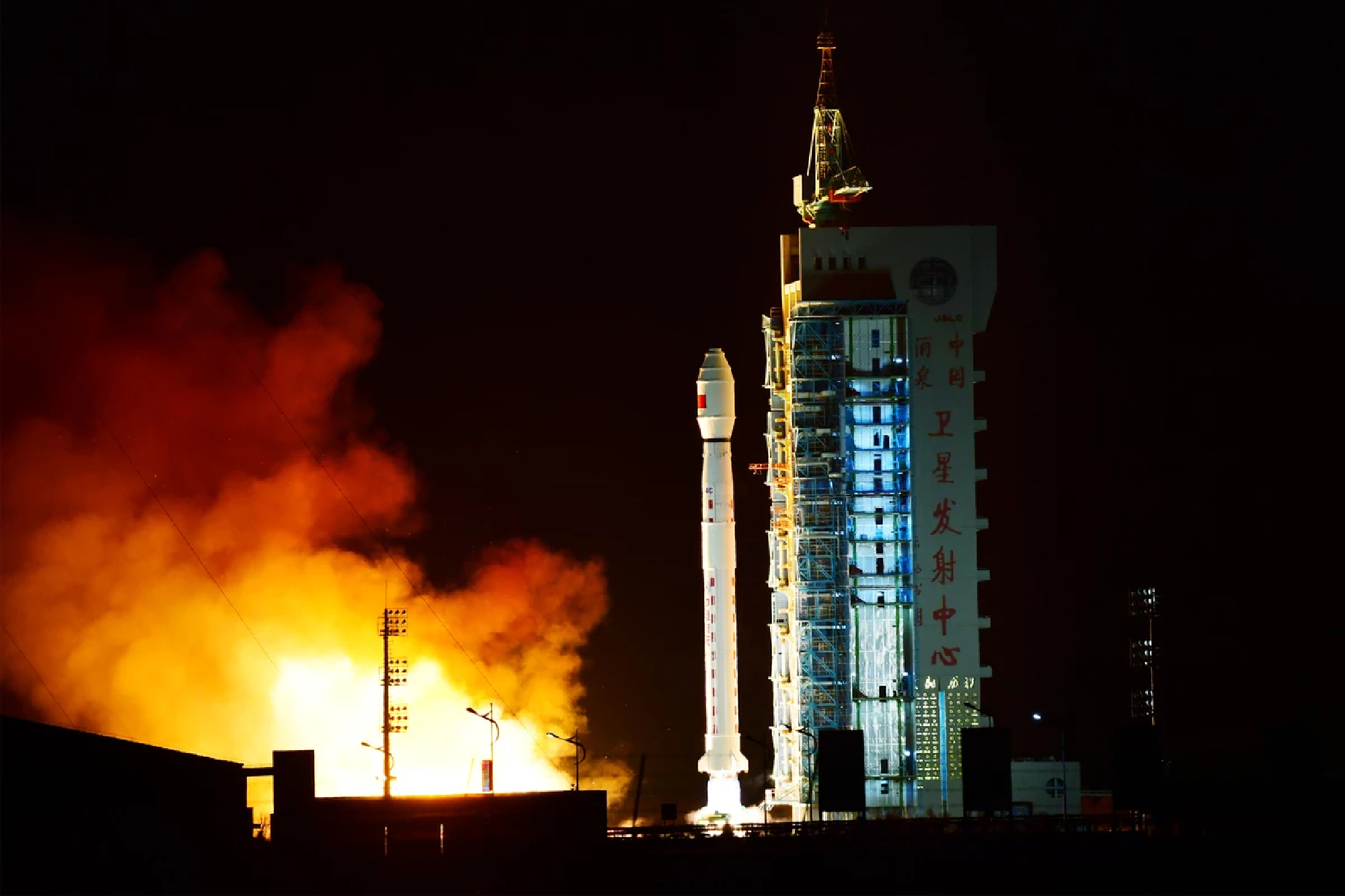
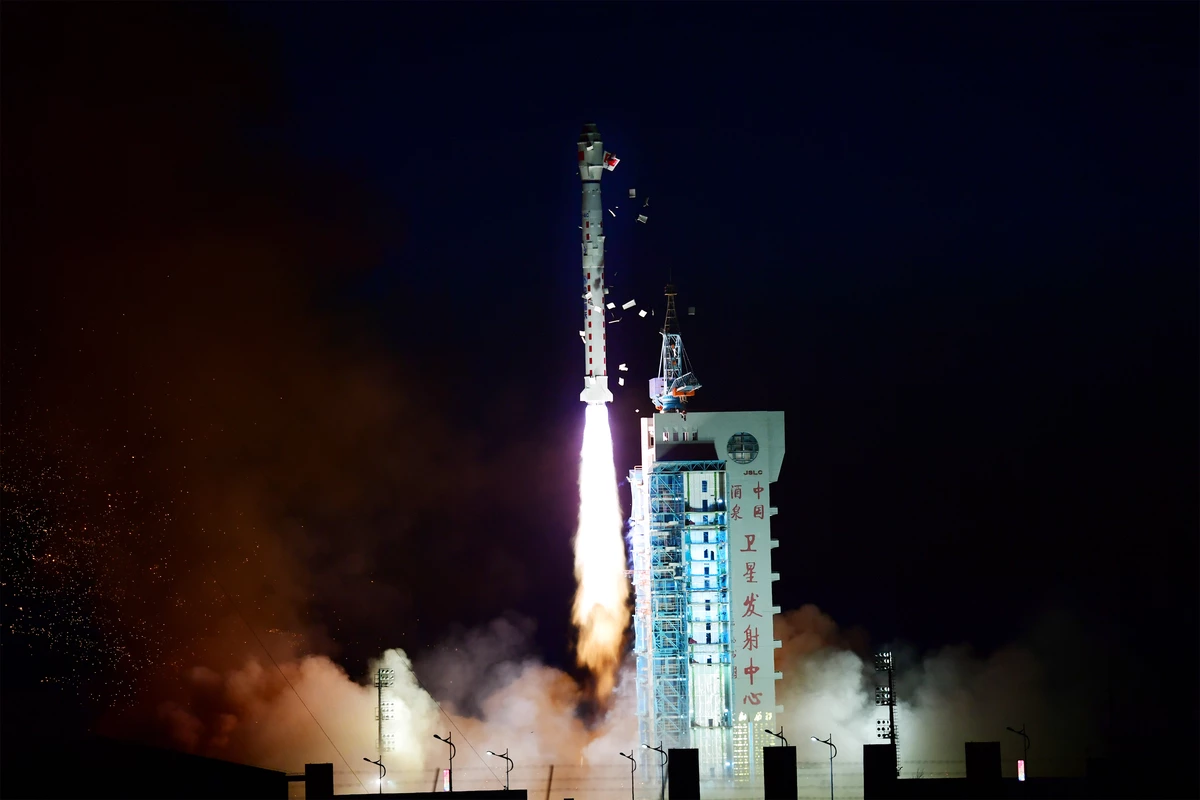
JIUQUAN — China launched a Long March 4C rocket to place a new satellite in space Wednesday.

China launches L-SAR 01A satellite for land observing

The rocket blasted off at 7:44 am (Beijing Time) at the Jiuquan Satellite Launch Center in Northwest China and soon sent the L-SAR 01A satellite into preset orbit.

The satellite, equipped with L-band synthetic aperture radar (SAR), will be used to monitor the geological environment, landslides and earthquakes.

The mission marked the 407th flight of the Long March carrier rockets, said the launch center.

China’s L-SAR 01 is a satellite group composed of two satellites (L-SAR 01A and L-SAR 01B), which are designed to be put in an orbit at an altitude of 600 km, according to the China National Space Administration.

China launches L-SAR 01A satellite for land observing

Boasting wide coverage and high spatial resolution, the L-SAR satellite project will help reduce China’s dependence on foreign data in fields such as geology, earthquake monitoring and emergency support, said the administration.

The L-SAR 01B is scheduled to be launched at the end of February.

Published : January 27, 2022

By : China Daily

Korea’s virtual asset market to reach W1,000tr by 2026: report

#SootinClaimon.Com : ขอบคุณแหล่งข้อมูล : หนังสือพิมพ์ The Nation.

https://www.nationthailand.com/international/40011519


Virtual asset industry will create 40,000 new jobs, predicts Boston Consulting

Korea’s virtual asset market to reach W1,000tr by 2026: report

Korea’s virtual asset market will reach 1,000 trillion won ($835 billion) by 2026, Boston Consulting Group Korea said Tuesday in its report Future of Asset 2022.

According to the report, the country’s virtual asset market already surpassed 300 trillion won by the end of last year to take up 10 percent of the global market. With an average annual growth of 20 percent over the next five years, the virtual asset market will also create 40,000 jobs in the process, BCG Korea said.

The report pointed out that despite the public acceptance of virtual assets as real assets, relevant industries do not seem ready. It said there have been active discussions on virtual assets in the last five years, but it has been difficult to present a clear direction due to differences in the level of understanding and perspectives.

According to BCG’s analysis, the maturity of Korea’s virtual asset industry is three to five years behind the global standard in the five categories of exchange, issuance, investment and derivatives, custody and payment.

Mentioning that countries such as the United States, Japan, Singapore, and Switzerland preemptively responded to virtual assets and swiftly established regulatory frameworks, the report said the Korean government and regulators need to set up a new framework for regulation.

The consulting firm explained that virtual assets are currently regulated by the anti-money laundering article under the Act of Reporting and Use of Certain Financial Transaction Information. In order for the cryptocurrency industry to be included in the law, it said the government and lawmakers should consider drafting relevant articles, including virtual assets in the Financial Investment Services and Capital Markets Act and enacting new laws on virtual asset.

“For the next five years, there will be a fierce battle without borders over who will be the next Google and Amazon in the virtual asset industry. In order for Korea to take the lead, the efforts from both the private and public sectors are important,” said Kim Yun-joo, managing director and partner at BCG Korea.

“The rapid strategic response from the traditional financial institutions and existing fintech (companies) as well as emerging virtual asset operators is important. Policies should also take a step toward considering industrial development together rather than focusing on regulatory supervision.”

By Kan Hyeong-woo

Published : January 26, 2022

By : The Korea Herald

Progress on 5PC may let SAC attend summit: PM

#SootinClaimon.Com : ขอบคุณแหล่งข้อมูล : หนังสือพิมพ์ The Nation.

https://www.nationthailand.com/international/40011518


Cambodian Prime Minister Hun Sen is scheduled to continue discussions with Myanmar leader General Min Aung Hlaing on January 26, with the former stating in advance that Myanmar would only be invited to send political representation to this year’s ASEAN summit if it has made progress on the implementation of the bloc’s five-point consensus (5PC).

Progress on 5PC may let SAC attend summit: PM

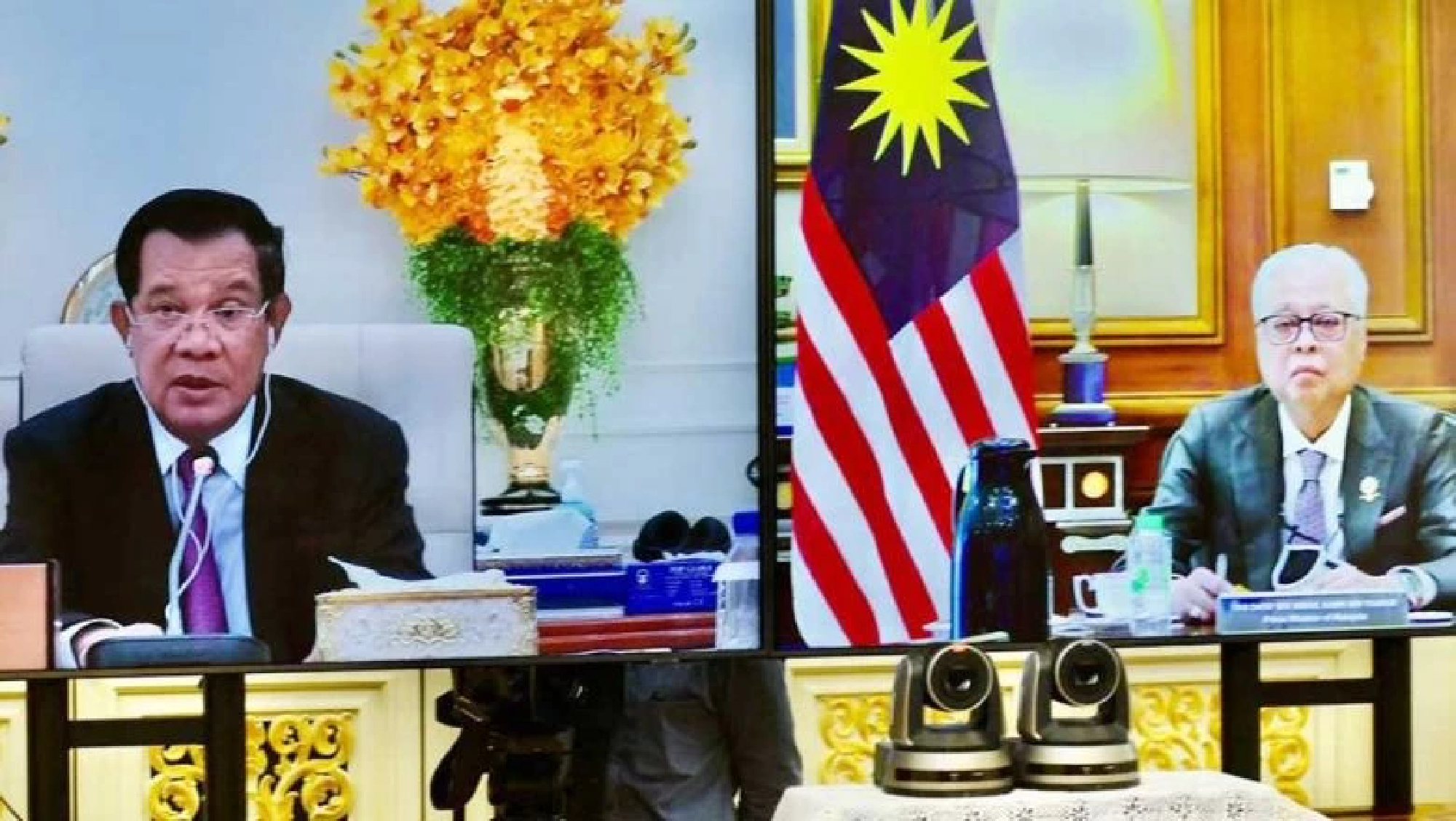
Hun Sen made the remarks on January 25 during a telephone conversation with his Malaysian counterpart Ismail Sabri Yaakob on bilateral ties and ASEAN issues including the prolonged Myanmar crisis.

“[Hun Sen] will have a discussion with [Ming Aung Hlaing on January 26] to get a better understanding of these issues. [Hun Sen] said the situation in Myanmar today is very complicated because there are two governments – the military government and the shadow government,” said a Facebook post on Hun Sen’s official page following the meeting.

The premier noted that after meeting with Ming Aung Hlaing, chairman of the ruling State Administration Council (SAC), in Myanmar on January 7-8, the situation had not significantly improved, with air strikes continuing in some regions.

“[Hun Sen] said he will invite [Myanmar] to the ASEAN summit if there is progress on the implementation of the five-point consensus that was unanimously agreed upon. However, if there is no progress made, then Myanmar can only send non-political representatives to attend the meeting,” said the Facebook post.

Hun Sen’s statement is in line with recommendations given by Indonesian president Joko “Jokowi” Widodo, who spoke with him last week about the crisis.

Jokowi stated during the conversation that if there is no “significant progress” in the implementation of the 5PC, “it is imperative for ASEAN to maintain its decision that Myanmar shall only be represented at the non-political level at any ASEAN meetings”.

During his conversation with Hun Sen, Malaysian Prime Minister Yaakob called for the release of all “political prisoners” in Myanmar, including Aung San Suu Kyi.

Yaakob said he supports and acknowledges the path forward that Hun Sen outlined earlier, such as the ASEAN troika and the provision of assistance to Myanmar as well as the meeting among ASEAN foreign ministers.

Yaakob also urged that Cambodian Minister of Foreign Affairs and International Cooperation Prak Sokhonn – in his role as the ASEAN chair’s special envoy to Myanmar – ensure that the 5PC is implemented.

The two leaders also spoke about bilateral relations on various topics. Hun Sen noted that though there are currently just 296 Malaysian nationals working and living in Cambodia, all of them were fully vaccinated free of charge.

Both sides committed to increasing bilateral trade as the two countries approached their 55th anniversary of the establishment of diplomatic relations this year.

Kin Phea, director of the Royal Academy of Cambodia’s International Relations Institute, said that as the rotating chair of the regional bloc, Cambodia wants to see a unified ASEAN that has the solidarity to maintain the policy of centrality, but at the same time Cambodia’s efforts on Myanmar must be guided by the ASEAN Charter and the 5PC.

“The position to invite only non-political representative to ASEAN meeting should there be no progress on the five-point consensus is the correct one to follow.

“If [Ming Aung Hlaing ] has not made significant progress implementing the consensus that he himself signed, then there can be no invitation – even though Cambodia would like to restore ASEAN to a 10 member bloc – because of the strong positions taken on the matter by some ASEAN member states, including the largest ASEAN member Indonesia, whose opinion cannot just be ignored. So therefore the ball is now in Myanmar’s court,” he said.

ASEAN agreed to the 5PC during a virtual meeting on April 24 last year.

“There shall be immediate cessation of violence in Myanmar and all sides to the conflict must exercise the utmost restraint; constructive dialogue must take place among all parties concerned to seek peaceful solutions; the special envoy of the ASEAN chair will facilitate mediation with assistance from the ASEAN secretary general; humanitarian assistance will be provided by ASEAN and the ASEAN chair’s special envoy and a delegation from ASEAN member states shall visit Myanmar and be allowed to meet with representatives of all parties concerned,” reads the document outlining the 5PC.

By Nov Sivutha

Published : January 26, 2022

By : The Phnom Penh Post

[Japan] Business circles call for easing of border control measures

#SootinClaimon.Com : ขอบคุณแหล่งข้อมูล : หนังสือพิมพ์ The Nation.

https://www.nationthailand.com/international/40011517


[Japan] Business circles call for easing of border control measures

Japan Business Federation Chairman Masakazu Tokura expressed doubts about the government’s measures at a press conference Monday. “Japan is now sealed off to the outside world. I think there is no point in continuing the measures. I would like the government to review them promptly,” Tokura said.

“Japan has single-mindedly focused on the omicron variant. Although border control measures must be implemented appropriately, I think it isn’t realistic to prohibit the entry of [non-resident] foreign nationals,” he said.

In a teleconference with Economy, Trade and Industry Minister Koichi Hagiuda on Friday, Tokura said there was little significance in maintaining border control measures that were strengthened to mitigate the spread of the variant, as infections have already surged.

On Jan. 18, Kengo Sakurada, chairman of the Japan Association of Corporate Executives told reporters, “It is important to ease isolationist immigration controls.”

Earlier this month, the government shortened the quarantine period from 14 days to 10 days for Japanese nationals and foreign residents returning to Japan, but many companies believe it is still long.

Executives of major automobile companies that have production bases and sales networks overseas have canceled overseas business trips because of the disruptions caused by the measures.

At the end of last year, the top management of a major manufacturer canceled a planned trip overseas to visit an event. The company’s public relations department said the procedures for applying for visas were difficult and as a result, overseas business trips had been reduced.

Trading companies that have operations overseas sometimes ask representatives in countries with less strict entry restrictions to go on business trips instead of employees in Japan.

“I hope that the Japanese government will consider issuing the minimum level of entry restrictions necessary based on scientific evidence,” an official of a major trading company said.

Leading financial institutions, including banks and securities firms, have started holding online meetings for foreign institutional investors instead of in-person briefings. But an executive of a major securities firm that sells Japanese stocks to foreign investors said, “It’s difficult to find new customers online.”

A senior executive at a major insurance company has been trying to maintain relationships with overseas investors through web conferences. Due to the time difference between the United States and European nations, the meetings are often held in the middle of the night.

With spring just around the corner, concerns have also been mooted about the impact the border control measures will have on personnel management during a period when many company employees complete transfers to new departments.

A source at a major pharmaceutical company said, “It has become impossible to transfer employees from overseas to Japan and has made recruiting employees in foreign countries difficult.”

A spokesman for a leading bank said it is becoming difficult to determine the start date for Japanese employees returning to Japan from overseas because the quarantine period has to be taken into account.

There has also been strong criticism of measures that prevent foreign students from entering the country.

“Continuing to deny opportunities for young people [from abroad] who want to study in Japan may reduce the number of people who will be well-informed about Japanese affairs in the future,” Tokura said.

Published : January 26, 2022

By : The Japan News