Vietnam govt to slash VAT from 10% to 8% in 2022

#SootinClaimon.Com : ขอบคุณแหล่งข้อมูล : หนังสือพิมพ์ The Nation.

https://www.nationthailand.com/international/40011214


HÀ NỘI — Following the passing of a VNĐ350 trillion (approximately US$15 billion) economic recovery package, the Government is considering the implementation of a cut to VAT. As part of the stimulus programme, VAT for applicable goods and services will be cut down to 8 per cent in 2022 (down two per cent from the current rate), with the reduction set to begin from February.

Vietnam govt to slash VAT from 10% to 8% in 2022

The move has been said to amount to a VND49.4 trillion (US$2.17 billion) tax break for businesses, nearly three times the tax cut they received throughout 2021, according to finance minister Hồ Đức Phớc.

Phớc said the Government favoured VAT reduction over income tax reduction because a VAT cut will help all businesses, not just those who reported profit.

According to the minister, a majority of firms would be eligible for the VAT cut with the exceptions of firms in the fields of telecommunications, banking and finance, property development, mining and metallurgy, refinery and petrochemicals, among others. 

Products and services that were not required to pay VAT tax or at 5 per VAT tax or under special VAT tax are not affected by the cut. 

According to a proposal put forward by the Ministry of Finance, firms may even include expenses incurred in their efforts to prevent the spread of the novel coronavirus in income tax forms. 

Economists and firms have voiced their concern over how a 2 per cent reduction in VAT may not be able to produce the intended effect to boost consumption and business activities in 2022. Others lamented over the date on which the cut will take effect February 1, saying it’s a missed opportunity to give consumption a massive boost right before the Lunar New Year. 

Addressing said concerns, minister Phớc said the Government still has to balance its budget and a tax cut greater than 2 per cent would put this year’s fiscal policy under great pressure. 

While the cut this year covered more products and services, it is smaller than last year tax cut at 3 per cent VAT but only included transportation, travel and food and beverages.

Commenting on a proposal to increase tax on stock market exchanges, the minister said the Government currently has no plan to levy additional taxes. 

“In 2021, the stock market’s capitalisation reached VNĐ7.7 quadrillion, equivalent to 92.5 per cent of total GDP. It has been an effective platform to secure investment for the economy,” he said.

However, the Government has been considering stricter bond regulations for firms, especially those that cannot produce collateral. — VNS

Published : January 18, 2022

By : Vietnam News
Xi calls for joint steps toward recovery, financial stability

#SootinClaimon.Com : ขอบคุณแหล่งข้อมูล : หนังสือพิมพ์ The Nation.

https://www.nationthailand.com/international/40011213


President urges developed countries to adopt responsible economic policies

Xi calls for joint steps toward recovery, financial stability

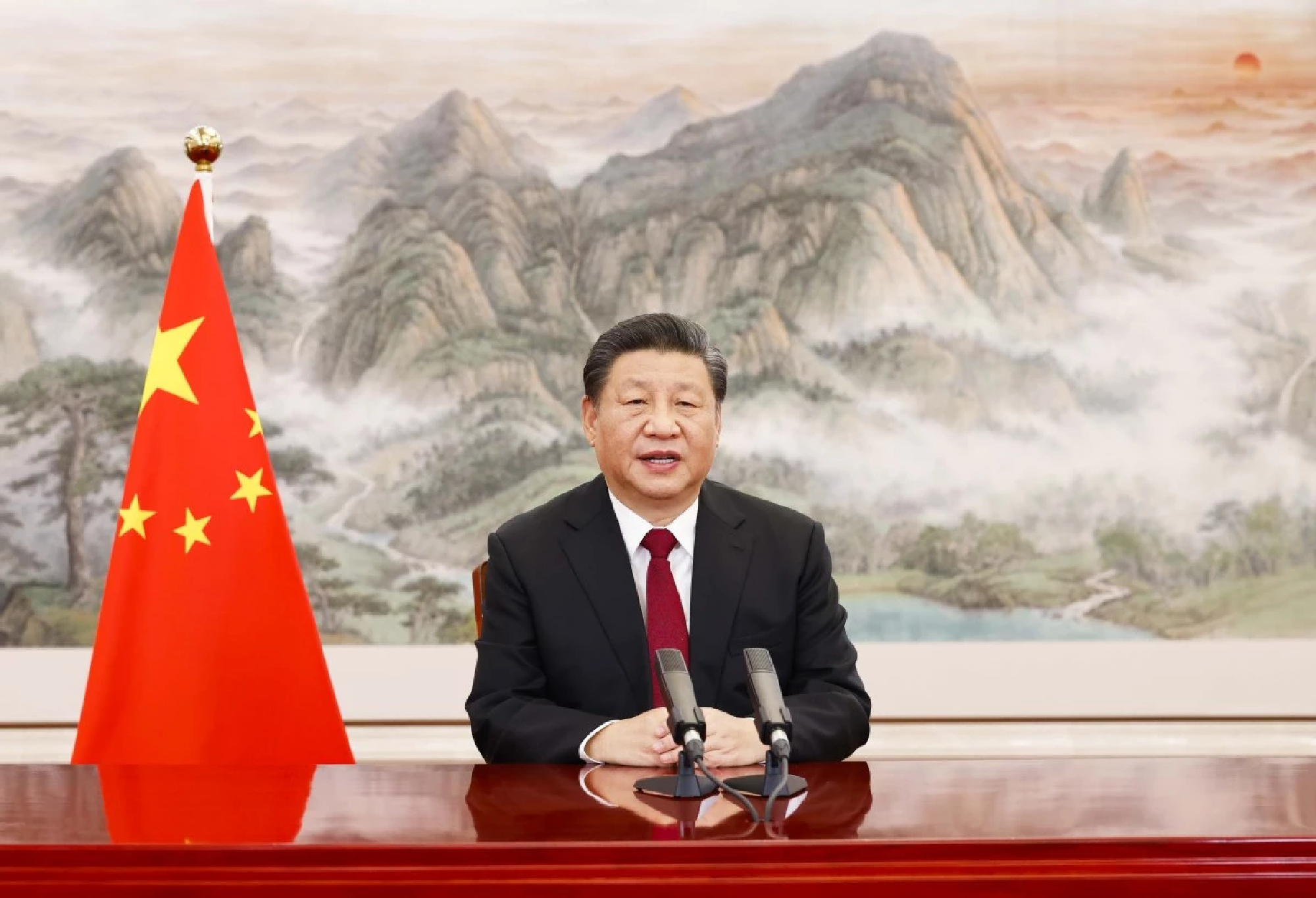
President Xi Jinping has urged the major developed countries to adopt responsible economic policies amid a gloomy global economy, and warned them not to “slam on the brakes or take a U-turn” in their monetary policies, in order to contribute to global economic and financial stability.

Xi made the remarks on Monday in a special address to the 2022 World Economic Forum via video link from Beijing. He was invited by Klaus Schwab, founder and executive chairman of the WEF, to participate in the all-virtual Davos forum.

Xi also called on international economic and financial institutions to play a constructive role in building international consensus, strengthening policy coordination and guarding against systemic risks to help the world economy recover.

“Major developed countries should adopt responsible economic policies, manage policy spillovers, and avoid severe impacts on developing countries,” Xi said.

He underlined the need to cope with risks to promote steady recovery of the world economy, saying that the risks of disrupted global industrial and supply chains, rising commodity prices and tight energy supplies compound to heighten the uncertainty about economic recovery.

Noting that the trend of economic globalization will not be stopped, he urged countries around the world to uphold true multilateralism, insist on removing barriers instead of erecting walls, and choose openness over seclusion and synergy over decoupling, in order to advance the building of an open world economy.

Xi called for reforming the global governance system based on the principle of fairness and justice, and safeguarding the multilateral trading system with the World Trade Organization at the core.

While calling for international solidarity and cooperation to jointly defeat COVID-19, he emphasized the need to ensure equitable distribution of vaccines and close the global immunization gap.

China has already sent over 2 billion doses of vaccines to more than 120 countries and international organizations, Xi said. “Still, China will provide another 1 billion doses to African countries, including 600 million donated doses, and will also donate 150 million doses to ASEAN countries.”

In order to bridge the development divide worldwide, Xi called on countries around the world to participate in China’s Global Development Initiative, a public good open to the whole world with a view to forming synergy with the United Nations 2030 Agenda for Sustainable Development and boosting common development around the world.

He called for discarding a Cold War mentality and seeking peaceful coexistence and win-win cooperation.

“History has proved time and again that confrontation does not solve problems; it only invites catastrophic consequences. Protectionism and unilateralism can protect no one; they ultimately hurt the interests of others as well as one’s own. Even worse are the practices of hegemony and bullying, which run counter to the tide of history,” he said.

“We should choose dialogue over confrontation, inclusiveness over exclusion, and stand against all forms of unilateralism, protectionism, hegemony or power politics.”

In terms of China’s economic development, Xi said the fundamentals of the Chinese economy, characterized by strong resilience, enormous potential and long-term sustainability, remain unchanged.

“We have every confidence in the future of China’s economy,” he added.

Xi reiterated that China remains committed to reform and opening-up, saying it will “deliver national treatment for foreign businesses and promote high-quality Belt and Road cooperation”.

He also emphasized that the country will keep working toward its carbon peak and carbon neutrality goals to honor its commitment to the international community and to meet the demand of its high-quality development.

With the Beijing 2022 Winter Olympic and Paralympic Games set to open next month, Xi said China will present streamlined, safe and splendid Games to the world.

Published : January 18, 2022

By : China Daily

Is Korea a tsunami-free zone?

#SootinClaimon.Com : ขอบคุณแหล่งข้อมูล : หนังสือพิมพ์ The Nation.

https://www.nationthailand.com/international/40011211


Japan blocks most tsunami attacks from the Pacific, but Korea is not a safe zone

Is Korea a tsunami-free zone?

An underwater volcanic eruption in the South Pacific which triggered massive waves reaching as far as Japan and the West Coast of the US has left Koreans wondering one thing: Is the Korean Peninsula safe?

Experts say the possibility of the country’s coastal region being wiped out by a tsunami is relatively low, due to its geographic location.

The Korean Peninsula is shielded by Japan on the east. For any tsunami originating in the Pacific to reach Korea, it would have to go through the island nation first.

Of course, not all quakes happen in the faraway seas. If a strong quake occurs, say, on the west side of Japan, or in the sea between mainland China and Korea, Korea can be vulnerable. 

Data shows this is not a mere theory.

Records of the Joseon Dynasty (1392-1910) show multiple cases of earthquake-induced waves in the 17th century, with one in July 31, 1668 in Pyeongan Province — now part of North Korea — being caused by the earthquake in China’s Shandong region.

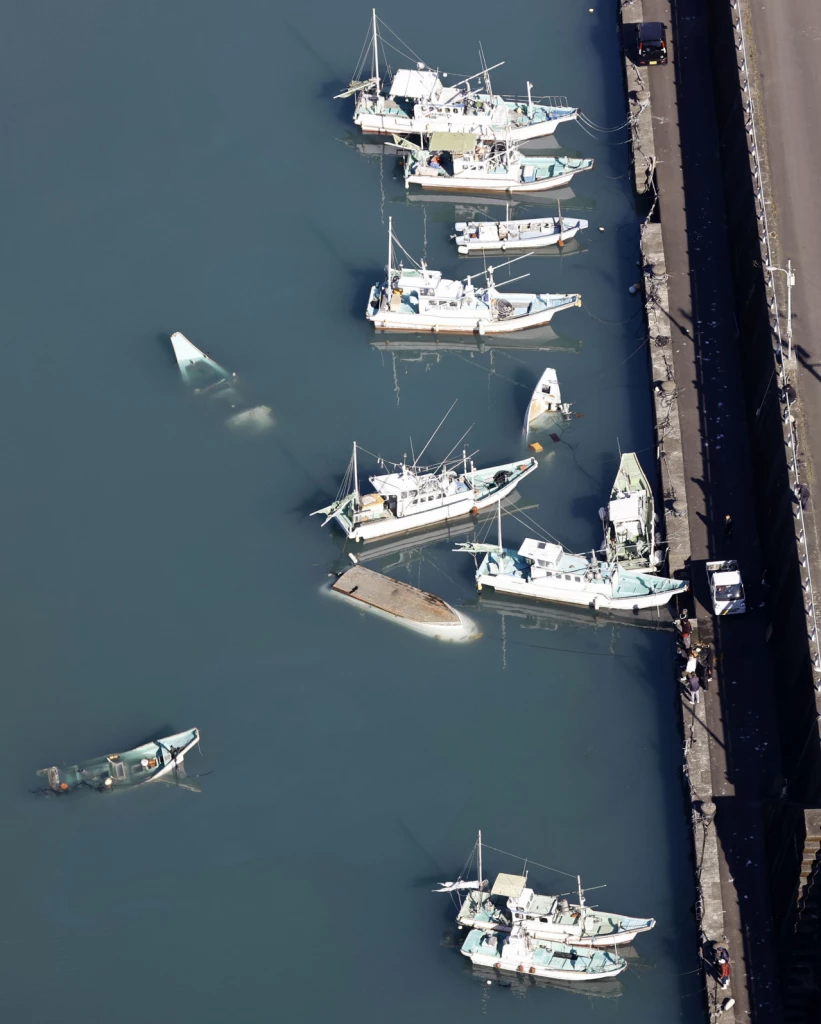
Since 1900, there have been four recorded cases of tsunamis that originated in the East Sea, the body of water separating Korea and Japan, that caused substantial damage in Korea. The most recent one was caused by a magnitude 7.8 earthquake near the Japanese island of Hokkaido, which destroyed 53 fishing boats on the island of Ulleungdo and in coastal cities of Sokcho, Donghae and Pohang. The 1983 tsunami claimed three casualties and 400 million won ($335,000) in property damage, which would amount to 1.45 billion won in today’s money.

After a magnitude 9.1 megathrust earthquake hit Japan’s Tohoku region in 2011, Korean authorities commissioned several studies to assess how vulnerable Korea was to similar threats.

One of the results is a report published by the National Disaster Management Research Institute in 2013. The study, titled “Improvement of tsunami response system with the analysis of tsunami risk elements in Korea,” says while Korea’s location makes it less vulnerable to quakes and tsunamis, there exists a rare case scenario with potentially devastating impacts.

“The Korean Peninsula is located on the edge of the Eurasians Plate (the tectonic plate including most of Eurasia), and has been considered safer than Japan which is located between plates…But this (safety) is merely relative as research shows that the peninsula is not a safe zone from earthquakes,” researchers wrote, adding that Japan is located where the Eurasian Plate meets the Pacific Plate, making it susceptible to earthquakes and ensuing tsunami.

The NDMI report goes on to say that there have been 165 cases of underwater earthquakes from 1978 to 2012 with magnitudes of 3.0 or higher, accounting for 51 percent of all earthquakes near the Korean Peninsula. While most of these quakes are not strong enough to cause a tsunami, the report stressed the need for countermeasures since the epicenter for many of them were close to the coastal area.

Is Korea a tsunami-free zone?

In 2016, South Korea was rattled by a magnitude 5.0 underwater earthquake near Ulsan, in the country’s southeastern region, although it did not cause a tsunami.

An analysis by the Korea Meteorological Administration shows that an earthquake in excess of magnitude 6.5 that occurs in Korea’s east coastal area can trigger a tsunami that could cause substantial damage. A magnitude 6.6 quake can create a tidal wave that is half-a-meter in height.

It would take a much stronger quake — around 7.5 to 7.8 — in the shallower West Sea to cause a tsunami to affect the peninsula. The aforementioned 1993 tsunami was three meters high and was caused by a magnitude 7.8 earthquake.

While a large-scale earthquake is unlikely around the Korean Peninsula, the country is also vulnerable to the aftermath of the quakes that occur in Japan’s west coast, which is much more susceptible to tremors.

The National Fire Agency operates a Tsunami Disaster Response System that analyzes earthquakes that occur in the coastal regions, and predicts the ensuing tsunami’s height, the areas expected to be affected and the estimated time of arrival. It is based on a database from 43 populated areas mostly in the east coast, which had been hit the most with tidal waves and are the most vulnerable.

The KMA issues two-level warnings for tsunamis, one for tidal waves between 0.5 meters and 1 meter in height, and for one exceeding 1 meter.

By Yoon Min-sik

Published : January 18, 2022

By : The Korea Herald

Kishida aims to pursue pandemic measures, ‘new capitalism’ in tandem

#SootinClaimon.Com : ขอบคุณแหล่งข้อมูล : หนังสือพิมพ์ The Nation.

https://www.nationthailand.com/international/40011210


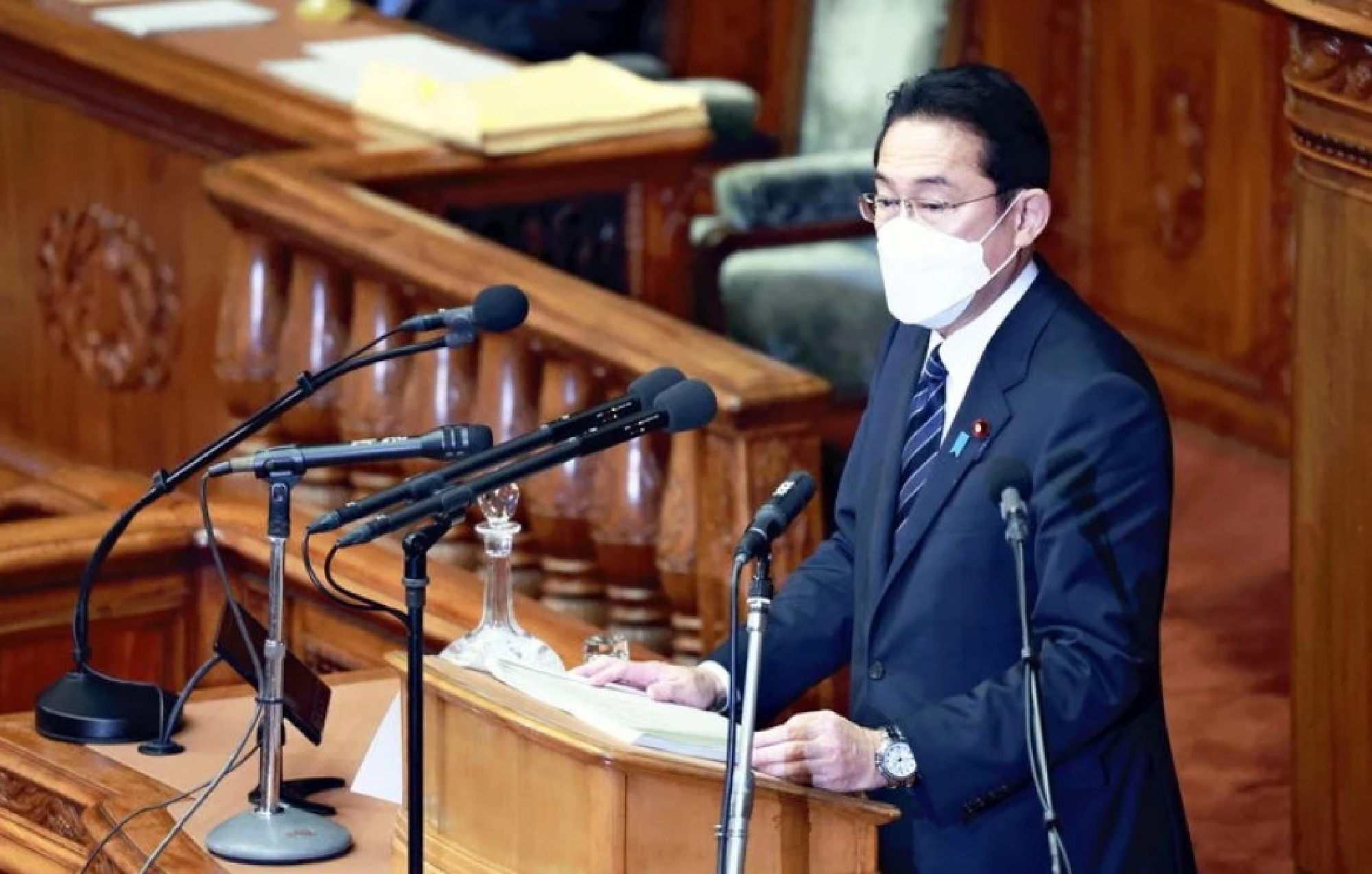
Prime Minister Fumio Kishida pledged in his policy speech upon convening the ordinary Diet session Monday to not only handle the pandemic, but also double “investment in human resources.”

Kishida aims to pursue pandemic measures, ‘new capitalism’ in tandem

Kishida stressed in his speech to both chambers of the Diet to implement “unambiguous measures based on the characteristics of the omicron variant” of the novel coronavirus. The aim is to avert putting the medical system in a tight situation.

Hospitalization and related medical care will be enhanced to mainly focus on serious and moderate COVID-19 cases, Kishida said, while systems to allow mild and asymptomatic patients to recuperate at home or accommodation facilities will be prepared.

“An emergency where the situation regarding hospital beds becomes tight must be avoided by all means,” Kishida said.

The prime minister also expressed his intention to flexibly alter COVID-19 measures based on changes in the infection situation and the opinions of experts.

Regarding booster shots of COVID-19 vaccines, Kishida explicitly expressed his desire to shorten the period from eight months to six or at least seven months from the second shot for residents under 65 who are not medical workers. He hopes the six-month time frame will be possible from March “for local governments with extra capacity.”

On his signature policy of realizing a “new form of capitalism,” the prime minister emphasized the importance of investing in human resources through such methods as vocational training and education. The prime minister said he will seek to increase investment in the public and private sectors to “at least double at an early stage, and then even more above that.”

Kishida also expressed expectations for wage hikes resulting from this spring’s labor-management negotiations. The prime minister said he will work toward realizing at an early date a minimum wage of ¥1,000 or higher in the weighted national average.

■ Council of wise persons

Toward achieving net-zero emissions of greenhouse gases in 2050, the prime minister said he is determined to double investment in changing the socioeconomic system to a carbon neutral one. He hopes to urge the public and private sectors to share the same overall picture of such a society.

On the diplomatic front, Kishida shed light on a plan to create a world free of nuclear weapons by establishing a “global council of wise persons.” He aims to organize the inaugural meeting in Hiroshima of this group of political leaders and eminent individuals sometime this year.

The prime minister reiterated that he will examine all possible options, including the “capability to attack enemy bases,” as measures to drastically enhance the nation’s defense.

As for relations with China, Kishida said he will “aim to build constructive and stable relations” with the neighbor, keeping in mind the 50th anniversary of the normalization of Japan-China diplomatic relations.

With regard to negotiations with Russia on the return of Japan’s northern territories, Kishida said he will continue the exchanges between the leaders of the two nations that started in 2018. That was when Tokyo and Moscow agreed that the negotiations should be based on the 1956 Japan-Soviet Joint Declaration, which explicitly mentions the return of Shikotan island and the Habomai isles, two of the four northern territories, after a peace treaty is concluded.

The ordinary Diet session will run for 150 days, through June 15.

Published : January 18, 2022

By : The Japan News

Cambodia faces ASEAN discord as term begins

#SootinClaimon.Com : ขอบคุณแหล่งข้อมูล : หนังสือพิมพ์ The Nation.

https://www.nationthailand.com/international/40011194


Cambodia has begun its year-long ASEAN chairmanship with the postponement of a high-level meeting amid a polarizing debate over Myanmars representation in ASEAN, nearly a year since a military coup brought protracted instability to the country.

Cambodia faces ASEAN discord as term begins

While Cambodia initially expressed confidence that it would be the first country to host an in-person ASEAN meeting since the start of COVID-19 pandemic, the country announced last week that it had postponed the foreign ministerial retreat, ostensibly because a number of ministers would have been unable to travel to the venue.  

The ASEAN foreign ministerial retreat is usually held at the beginning of the year in an informal setting to allow the ministers to have frank discussions and set the tone for the rest of the year.  

The meeting was slated to be held on Jan. 18 and 19 in the city of Siem Reap in northwestern Cambodia, but several ministers said they would be unable to attend, including Malaysian Foreign Minister Saifuddin Abdullah, who said he would skip the meeting because he had to attend a session of parliament the next day.  

The Foreign Ministry’s director general for Asian, Pacific and African affairs, Abdul Kadir Jailani, said Indonesia could understand the postponement, considering the rising number of COVID-19 cases in the region amid the spread of the Omicron variant.  

“At the same time, we must also admit that within ASEAN, there are different perspectives that need to be consolidated. We need to have a common perspective regarding the issue of invitations to representatives of Myanmar,” he told reporters recently.  

At the previous ASEAN Summit, hosted virtually by Brunei Darussalam in October of last year, member states agreed that in the absence of progress, Myanmar should be represented by officials at the “nonpolitical” level.

 “We have to admit that even though this has been going on for a year, there has not been much progress on the ground,” Kadir said.
 

Published : January 17, 2022

‘Peanut butter-jelly’ tech lets EVs charge in 20 minutes

#SootinClaimon.Com : ขอบคุณแหล่งข้อมูล : หนังสือพิมพ์ The Nation.

https://www.nationthailand.com/international/40011191


LG Energy Solution is seeking to apply the technology in order to address the issues of insufficient charging infrastructure.

‘Peanut butter-jelly’ tech lets EVs charge in 20 minutes

SEOUL – Porsche Taycan 2019 models surprised the world when they were first released by supporting rapid charging from 0 to 100 percent in 20-30 minutes, which was almost twice as fast as other electric vehicles at the time.

Behind this jaw-dropping performance stood LG Energy Solution’s two breakthrough EV battery manufacturing technologies, which are similar to making peanut butter and jelly sandwiches.

Now the South Korean battery giant aims to apply the two technologies not only to premium models but also to low-and-mid-range ones in order to address the insufficient charging infrastructure, one of the main obstacles blocking drivers from switching to EVs.

The first technology is called double layer coating. Inside EV batteries, plus and minus sides are stacked in layers, just like slices of bread are stacked to make PB&J sandwiches.

A slurry of graphite and silicon is spread and coated on the minus side, just like a mixture of peanut butter and jelly is spread on a slice of bread.

Instead, LG Energy Solution pastes two types of slurries separately, just like pasting peanut butter on the bottom slice of bread and jelly on the top slice of bread.

“The double layer coating technology can paste two types of materials selectively, separately and simultaneously. This optimizes battery functions and reduces resistance inside batteries, which results in faster charging time. After applying this technology for the first time in the world in 2018, LG Energy Solution now uses it for most of its EV batteries,” a company official said.

Also, it was LG Energy Solution that introduced the PB&J recipe for EV batteries. In 2019, the firm was the first in the industry to add silicon to minus sides, which had been previously made of graphite only.

Graphite is the black carbon material that goes inside pencils. Inside minus sides, graphite brings stability to batteries. However, graphite has high resistance, which slows down charging.

By adding a small amount of silicon to graphite inside minus sides, LG Energy Solution enhanced conductivity dramatically. Also, mixing silicon with graphite made batteries more powerful, as one silicon particle can absorb four lithium ions whereas six particles of graphite can accommodate just one lithium ion.

“When silicon is added, more lithium ions come in, so batteries can suffer swelling. LG Energy Solution solved this issue by adding conductive agents called carbon nanotubes,” the company official said.

Following LG Energy Solution’s lead, Samsung SDI and SK On are reportedly using the two PB&J technologies for their EV batteries.

Kim Byung-wook

The Korea Herald

Published : January 17, 2022

Undersea volcanic eruption’s shock waves led to tsunami in Japan, expert says

#SootinClaimon.Com : ขอบคุณแหล่งข้อมูล : หนังสือพิมพ์ The Nation.

https://www.nationthailand.com/international/40011166


Shock waves from an undersea volcanic eruption in the South Pacific Ocean likely triggered tsunami that struck Japan from Saturday night through Sunday, said tsunami engineering expert Fumihiko Imamura, a professor at Tohoku University.

Undersea volcanic eruption’s shock waves led to tsunami in Japan, expert says

The eruption occurred Saturday afternoon off the island nation of Tonga, generating a series of waves that culminated in tsunami recorded across areas of Japan’s Pacific coast, according to Imamura’s analysis.

In tsunami triggered when earthquakes create changes to the topography of the seafloor, the period of the surface waves usually ranges from 10 minutes to an hour, according to Imamura. In particular, when tsunami travel long distances, the period tends to be longer.

In contrast, the latest tsunami observed in Japan had periods of just a few minutes and moved up and down quickly.

Imamura said this phenomenon makes it unlikely the latest tsunami could have been triggered by changes to the seafloor following the eruption or by the impact generated when material spewing from the volcano fell into the ocean, the professor said.

According to the Japan Meteorological Agency, changes in atmospheric pressure were observed in the range of about 2 hectopascals in various parts of Japan from 8 p.m. to just past 9 p.m. Saturday.

By analyzing changes in tide levels and atmospheric pressure, Imamura found that tsunami were observed following rises in air pressure.

“The shock waves caused the changes in atmospheric pressure, traveling all the way to Japan, creating waves that move up and down in short periods,” Imamura said. “These waves are believed to have accumulated in waters near Japan to turn into large tsunami.”

Published : January 17, 2022

By : The Japan News

Hanoi remains top of travellers’ lists despite COVID-19

#SootinClaimon.Com : ขอบคุณแหล่งข้อมูล : หนังสือพิมพ์ The Nation.

https://www.nationthailand.com/international/40011165


HÀ NỘI — Although COVID-19 travel restrictions severely hit Việt Nam’s tourism sector last year, the capital city of Hà Nội has remained at the top of global travellers’ wish lists.

Hanoi remains top of travellers’ lists despite COVID-19

Specifically, Hà Nội came second in Trip Advisor’s top 25 popular destinations in Asia and sixth in the global list.

The world’s largest travel site wrote the city has “aged well, preserving the Old Quarter, monuments and colonial architecture, while making room for modern developments alongside”.

Hà Nội ranked first among the 10 cheapest cities to live in the world selected by the United States’ World Packers. It is described as a multicultural and historical city known for “architecture, street food, nightlife, and vast history”.

Together with HCM City and Phú Quốc Island, Hà Nội was listed among the world’s 100 greatest places to explore on earth in 2021 by the US Time magazine.

The city was also on the list of the “Best Cities for a Workation” released by the UK travel website Holidu, ranking 18th among 147 cities globally, and named among the top 50 cities responding the best to the COVID-19 pandemic by the UK’s Deep Knowledge Analytics.

The United States’ Forbes Travel Guide has published a list of five-star luxury hotels, restaurants and spas, including the Sofitel Legend Metropole Hanoi Hotel ranked highest for the second consecutive year. 

In addition, the Travelers’ Choice Awards 2021, a series of awards organised by TripAdvisor, has placed Hanoi La Siesta Diamond Hotel first in the top 25 most beautiful rooftop hotels in the world. Other three hotels in Hà Nội have also been honoured in this category including La Sinfonia del Rey, Peridot Grand Hotel, and JM Marvel Hotel & Spa.

According to Director of the Hà Nội Department of Tourism Đặng Hương Giang, the city has taken numerous measures to revitalise its tourism industry, launch many new tourism products that suited the “new normal” and improve COVID-19 safety so as to attract more visitors in the previous year.

She added that the sector would work closely with departments, localities and businesses to develop special and unique products, upgrade several key tourist areas, and improve the quality of cultural tourism products in 2022. Meanwhile, annual tourism festivals and events would still be held in cities and provinces to promote the capital.

Last year, Hà Nội welcomed 4 million domestic visitors, or 53 per cent of that recorded in 2020 and 36 per cent of the yearly target. The total revenue from domestic visitors was estimated at VNĐ11.28 trillion (US$490 million), equivalent to 40 per cent of the total in 2020, and 23 per cent of the yearly plan.

The city strives to serve 10-12 million visitors, including 1.2-2 million foreigners this year. — VNS

Published : January 17, 2022

By : Vietnam News

China steps up COVID-19 control to ensure safe holiday

#SootinClaimon.Com : ขอบคุณแหล่งข้อมูล : หนังสือพิมพ์ The Nation.

https://www.nationthailand.com/international/40011164


BEIJING – Chinese authorities have stepped up COVID-19 prevention and control measures in the face of the twin challenges of imported outbreaks of the Delta and Omicron strains, to ensure a safe Spring Festival holiday.

China steps up COVID-19 control to ensure safe holiday

With COVID-19 ravaging the world, the risk of imported cases is on the rise. Coupled with the upcoming Spring Festival travel rush, cross-regional travel will increase, resulting in a complex epidemic prevention and control situation, according to the National Health Commission (NHC).

However, the recent COVID-19 resurgence in China has been broadly stabilized, as the country managed to bring the outbreaks in some areas under control in a timely manner, said He Qinghua, an official with the commission, at a press conference.

The Chinese mainland on Saturday reported 65 new locally transmitted COVID-19 cases and 54 new imported cases. The total number of confirmed COVID-19 cases had reached 104,864 by Saturday, said the NHC.

With university students across the country returning home and the Spring Festival travel rush to kick off, transport and education authorities have made corresponding plans in advance.

Transport authorities have prioritized both preventing the spread of the virus through transportation and strengthening their emergency response capabilities, said Zhou Min, an official with the Ministry of Transport.

Measures, such as cutting off inter-provincial and inter-city road passenger transport services in medium- and high-risk areas, ensuring the smooth transportation of emergency supplies and strengthening epidemic prevention management on urban passenger transport, have been taken, Zhou said.

Efforts will be made to maximize transportation capacity and improve emergency response plans to guarantee that all passengers enjoy a safe and smooth journey, said Zhu Wenzhong with the China State Railway Group.

The Civil Aviation Administration of China (CAAC) has encouraged airlines to allocate capacity flexibly, make overall arrangements for adding additional flights, and provide refund or rebooking services in accordance with prevention and control requirements, said Han Guangzu with the CAAC.

Wang Dengfeng, an official with the Ministry of Education, called on universities nationwide to effectively implement various measures for epidemic prevention and control and carry out emergency exercises on a regular basis, to ensure that schools are able to activate emergency plans in case of an outbreak.

To date, about 10 provincial-level regions have reported imported cases of the Omicron variant, and local cases have been reported in regions including Beijing, Tianjin and Henan, according to the NHC.

He Qinghua pledged efforts to closely monitor the prevailing trend of COVID-19 variants worldwide, step up research on the transmissibility and pathogenicity of relevant variants and the impact of vaccine immunity, timely analyze the risk of imported transmission, and guide local governments to dynamically adjust epidemic prevention and control measures accordingly.

Published : January 17, 2022

By : China Daily

N.Korea test-fires unidentified projectile toward East Sea: JCS

#SootinClaimon.Com : ขอบคุณแหล่งข้อมูล : หนังสือพิมพ์ The Nation.

https://www.nationthailand.com/international/40011163


North Korea on Monday launched an unidentified projectile(s) toward its east coast, South Korea’s Joint Chiefs of Staff said, without further details.

N.Korea test-fires unidentified projectile toward East Sea: JCS

Japan‘s coast guard said Pyongyang fired what could be a ballistic missile.

Monday’s launch came three days after North Korea on Friday afternoon fired a pair of KN-23 short-range ballistic missiles from a rail-mobile launcher.

This marks Pyongyang’s fourth weapons test this year.

Pyongyang test-fired four ballistic missiles in three discrete launches, which were conducted between Jan.5 to Jan. 14 in short intervals.

The consecutive show of force is noteworthy, given that North Korea’s Ministry of Foreign Affairs on Friday swiftly repudiated Washington’s sanctions designations and warned that the country would be “compelled to take a stronger and clear reaction if the US adopts such a confrontational stance at all costs” in a press statement.

A spate of test launches also came after Pyongyang on Jan.1 announced the country‘s policy direction for the new year as the outcome of the five-day fourth plenum.

North Korean leader Kim Jong-un notably urged the country to further bolster the national defense capabilities “without delay,” citing the volatile security environment on the Korean peninsula as the main reason.

By Ji Da-gyum

Published : January 17, 2022

By : The Korea Herald