PM stands up for Myanmar trip

#SootinClaimon.Com : ขอบคุณแหล่งข้อมูล : หนังสือพิมพ์ The Nation.

https://www.nationthailand.com/international/40010896


Prime Minister Hun Sen said anyone who “opposes the ceasefire” in Myanmar, which the military has purportedly extended until end-2022, merely wants to see deaths and injuries as a result of war.
PM stands up for Myanmar trip

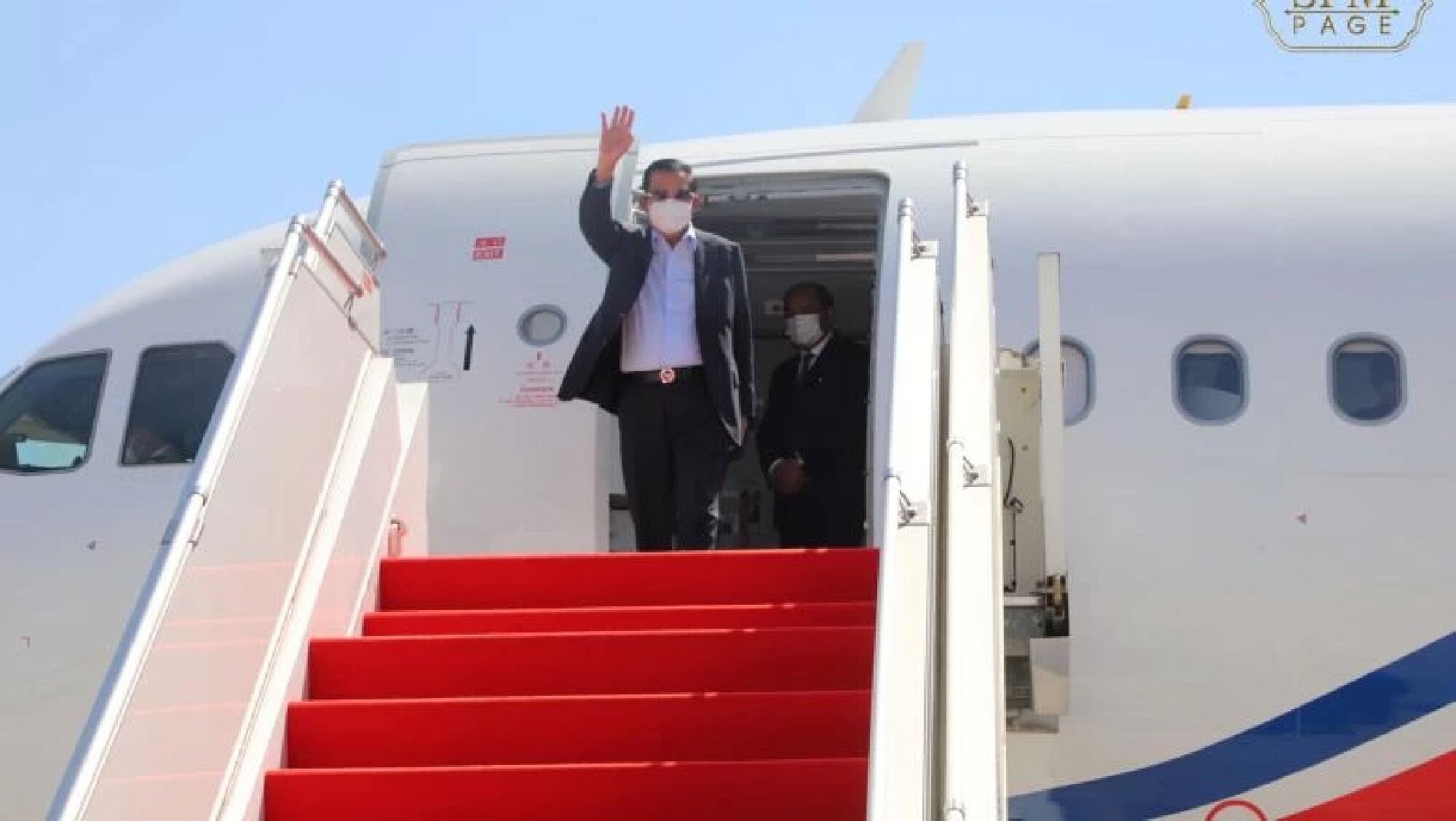
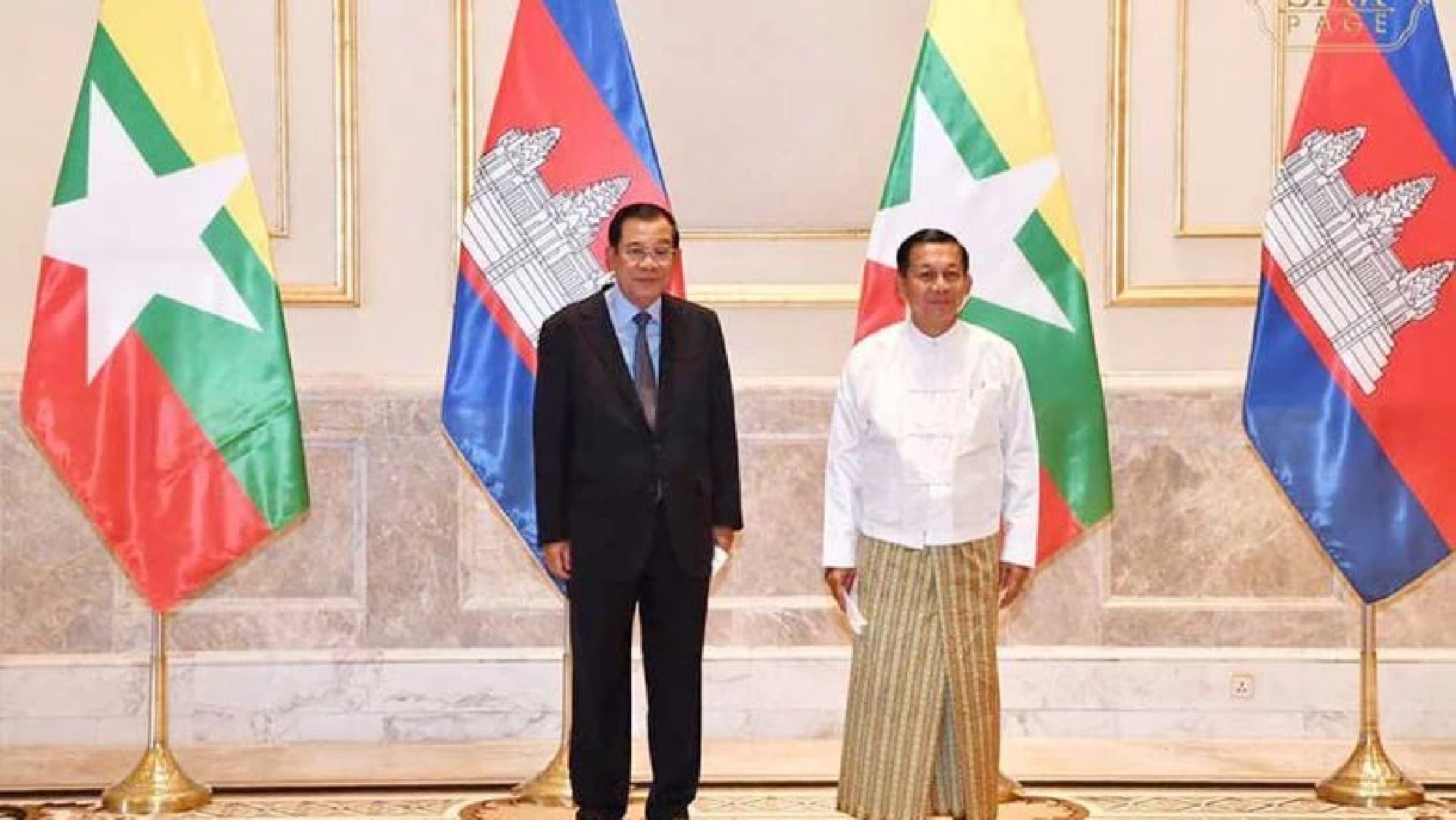
The premier made the remarks after his return from Myanmar where he met military chief General Min Aung Hlaing, chairman of the ruling State Administration Council (SAC), in a bid to resolve the ongoing crisis in the predominantly Buddhist country.

“Being against aid for Myanmar means wanting to see people starve to death or perish due to the absence of medicine or Covid-19 vaccines,” Hun Sen said in a Facebook post on January 8.

Myanmar has been embroiled in unrest since February 1, 2021, when the military declared a state of emergency following its claims of irregularities in the general elections at the end of 2020. The military transferred legislative, judicial and executive powers from the civilian administration led by Aung San Suu Kyi to General Min Aung Hlaing as Defence Services commander-in-chief.

The situation has prompted internal disputes and controversy among the ASEAN member states as to which Myanmar government’s representatives are legitimate and should be seated at ASEAN meetings. Cambodia holds the bloc’s rotating chair this year.

Hun Sen reiterated that he was travelling to Myanmar to share his win-win philosophy with the parties to the conflict, saying it successfully brought about national reconciliation, comprehensive peace, stability, development and prosperity in Cambodia.

“He [Hun Sen] also stressed that based on the experiences and lessons learned from Cambodia’s peace process, complete peace and national reconciliation cannot be achieved without participation and agreement from all parties involved,” the Cambodian government said in a press statement.

Hun Sen added that his January 7-8 visit to Myanmar was aimed at achieving a prolonged ceasefire there and for the equitable distribution of aid to all those in need so as to avert a civil war and prevent a worsening humanitarian crisis.

During their meeting, General Min Aung Hlaing confirmed to Hun Sen that the current “ceasefire” with Myanmar’s ethnic armed organisations (EAO) has been extended from February 28 to December 31, 2022.

The general signalled his support for Hun Sen’s request concerning the provision of aid, saying he would open doors for the ASEAN chair to meet other relevant stakeholders in his nation’s ongoing conflict.

Minister of Foreign Affairs and International Cooperation Prak Sokhonn, who has been appointed as special envoy to Myanmar, held a press conference on January 8 after the premier’s return to the Kingdom.

Sokhonn lauded the meeting between the two leaders as having made “good progress” towards the implementation of the five-point consensus reached by ASEAN leaders in April last year with the intention of providing guidelines for ending the turmoil in Myanmar.

“What was achieved in the negotiations and discussions with Myanmar’s leadership was very positive and it is a step towards advancing the implementation of the five-point consensus that the ASEAN leaders had previously agreed on,” Sokhonn said.

Sokhonn also echoed Hun Sen’s statements, saying that those who “oppose such progress” are “war-lovers” who do not want Myanmar to “return to peace”.

The foreign minister said Hun Sen’s visit to Myanmar did not mean that Cambodia was officially acknowledging the current government as claimed by some critics but merely a continuation of diplomatic relations in the same manner as the more that 40 other countries that have embassies and missions there.

“[Those criticisms] are regrettable, but we cannot ban them from expressing such opinions. They see the fact that [Hun Sen] visited Myanmar as somehow helping to legitimise the [current government].

“But actually – as I already clarified – if we are talking about acknowledgement, that isn’t the correct word to use here because many countries have kept their diplomatic ties and their embassies open in Naypyidaw.

“There are more than 40 embassies and missions from around the world still in Myanmar and they continue their diplomatic ties. So, this is not acknowledging anything – we’ve just continued our regular ties between our two countries. That is what I want to stress,” he said.

Sokhonn said Hun Sen’s working visit to Myanmar was historic for Cambodia and demonstrated its determination to contribute to restoring peace and stability in Myanmar with the goal of making ASEAN whole again.

“At the press conference, after our return to the Kingdom this morning, I reaffirmed that our commitment to ensuring the wellbeing of all the people of Myanmar and looking out for their interests – without discrimination – is at the heart of this endeavour,” he said in a Facebook post on January 8.

Ro Vannak, co-founder of the Cambodian Institute for Democracy, told The Post that it was a good start to the talks with Myanmar’s current leaders because it resulted in an extended unilateral “ceasefire”. He said those who oppose the current Myanmar government do so because they do not trust it or believe that it would keep its promises.

“The democratic legitimacy of the military there is almost zero in the eyes of the international community and the majority of the Myanmar people. The negotiations to resolve Myanmar’s crisis has no engagement thus far from the parties that should be involved. It shows good intentions, but a positive result is ultimately still far from the expected outcome,” Vannak said.

Kin Phea, director of the Royal Academy of Cambodia’s International Relations Institute, said Hun Sen’s visit to Myanmar achieved good results in line with the five-point consensus.

If what was stated in the joint-press release is successfully implemented, then it was a good step forward towards future peace and democracy in Myanmar, he added.

“But what is still concerning is whether the ceasefire will be respected and enforced by the other sides of the conflict – the opposition and the ethnic armed militias who have declared war on the military regime – as the general pointed out,” he said.

Published : January 10, 2022

By : The Phnom Penh Post

China, Maldives vow to push for stronger development of ties

#SootinClaimon.Com : ขอบคุณแหล่งข้อมูล : หนังสือพิมพ์ The Nation.

https://www.nationthailand.com/international/40010895


MALE – China and the Maldives have pledged to work together to push for the stronger development of their relations.

China, Maldives vow to push for stronger development of ties

While meeting with visiting Chinese State Councilor and Foreign Minister Wang Yi on Saturday, Maldivian President Ibrahim Solih said his country and China reached an important consensus last year on consolidating the ties and broaden pragmatic cooperation between the two countries.

The president thanked China for its tremendous contribution to his country’s socio-economic development, the firm support to his country’s vaccination campaign against COVID-19, and its reduction and suspension of the Maldives’ debt within the framework of G20.

The Maldives firmly upholds the one China policy, and their sound bilateral ties and solid mutual trust are rooted in the long and traditional friendship and adherence to the principles of sovereign equality and mutual respect, the president stressed.

Expressing his confidence in the future development of bilateral ties, the Maldivian president said his country is ready to seize the opportunity of the 50th anniversary of the diplomatic relations between the two countries to deepen mutual understanding and mutually beneficial cooperation so as to push for the stronger development of bilateral ties.

For his part, Wang said this year marks the 50th anniversary of establishment of the diplomatic relations between China and the Maldives, which have withstood the test of international vicissitudes and become more mature, thus contributing to the regional peace and stability.

The most precious experiences from the five decades’ exchanges between the two countries are the mutual respect, equal treatment as well as unity and mutual help which have consolidated the political foundation of the bilateral ties, Wang noted.

Appreciating the Maldives’ firm support on China’s core interests, Wang said China has always supported the Maldives in safeguarding its sovereignty and territorial integrity, seeking a development path suited to its own national conditions and pursuing an independent foreign policy, Wang said.

China is willing to expand cooperation with the Maldives in all fields and back its efforts to push for the strategy of diversified development, he said, hoping that a free trade deal between the two countries will be approved at an early date so as to facilitate the economic transformation and upgrading of the Maldives.

Wang also noted that the COVID-19 pandemic is the common enemy of mankind, and China will continue to uphold the vision of a global community of health for all and fight the virus side by side with the Maldives.

China is willing to continue providing the Maldives with anti-virus supplies including vaccines as needed, he said.

The two sides also exchanged views on strengthening coordination on international affairs. 

Wang also  met with Maldivian Foreign Minister Abdulla Shahid with both sides pledging to jointly build the Belt and Road and focus on post-pandemic recovery.

he two sides will continue to build the Belt and Road with high quality, actively pushing for key projects on basic infrastructure, houses, around-the-island power grid, and sea water desalination so as to offer impetus to the Maldives’ post-pandemic economic recovery, Wang said.

Published : January 10, 2022

By : China Daily

Sri Lankas president asks China for help amid its worst financial crisis

#SootinClaimon.Com : ขอบคุณแหล่งข้อมูล : หนังสือพิมพ์ The Nation.

https://www.nationthailand.com/international/40010894


BANGALORE – Chinese Foreign Minister Wang Yi on Sunday (Jan 9) met Sri Lanka’s President Gotabaya Rajapaksa and his brother, Prime Minister Mahinda Rajapaksa, reaffirming bilateral ties before discussing tourism, investments and the fight against Covid-19.

Sri Lankas president asks China for help amid its worst financial crisis

Mr Wang, who is also China’s State Councillor, arrived in Colombo on Saturday for a two-day visit to commemorate 65 years of China-Sri Lanka diplomatic ties and the 70th anniversary of the Lanka-China Rubber Rice Pact, a 1952 trade agreement under which Colombo supplied rubber to Beijing in exchange for rice.

PM Rajapaksa posted on Twitter that he had a “very pleasant meeting” with Mr Wang, “centred around the logistics of facilitating the return of the many (Sri Lankan medical) students to China”, tourism, investments, Covid-19 relief and post-Covid-19 preparedness.

Mr Wang said China “would always support Sri Lanka as a close friend”.

President Rajapaksa thanked him for providing Covid-19 vaccines to the island nation. A majority of Sri Lankans have been inoculated with the Sinopharm vaccine.

Mr Wang’s visit is crucial as it comes during Sri Lanka’s worst financial crisis, with inflation rising to record levels, food prices soaring and foreign exchange reserves running dry. The nation could go bankrupt next year if it does not rebuild currency reserves to import essentials and repay debt obligations of US$29 billion (S$39 billion).

Sri Lanka’s tourism industry, which contributes 10 per cent to the economy, has been in shambles since the 2019 Easter bombing that killed 269 people, including 45 foreigners, followed by pandemic-related travel restrictions. The country has been dipping into its reserves to import fuel, machinery and food.

The Sri Lankan President asked China for help in restructuring debt repayments, and a concessional trade credit scheme for imports.

Sri Lanka owes China more than US$5 billion and last year borrowed an additional US$1 billion.

“Sri Lanka has been in a debt trap, not just borrowing from China and India, but also taking sovereign bonds to get by since 2007. Every five to 10 years, when the bonds mature, the government borrows another one to pay off the previous one,” said senior lecturer Ahilan Kadirgamar at Jaffna University’s department of sociology.

In October last year, the Sri Lankan authorities asked India for a credit of US$500 million for fuel.

Sri Lanka has also done currency swaps with India, China and Bangladesh, and taken loans to purchase petroleum from Oman.

But no country has been more generous than China.

“India is a solid immediate neighbour, the first to respond to any emergency like natural disasters or civil war, but China is the keen business partner Sri Lanka needs, with the capacity and will to invest big,” said Mr George Cooke, founder of Colombo-based think-tank Awarelogue Initiative.

When projects that China has invested in underperform, “Sri Lanka has been driven to agree with Chinese lenders to hand them the management of the same”, said former central bank governor W.A. Wijewardena.

For instance, China was the only country that agreed to finance a port in southern Hambantota, PM Rajapaksa’s home town, even though feasibility studies called it a dud. By 2017, the Rajapaksa government faced allegations of kickbacks from Beijing and the port predictably lost money and had to be sold along with 6,070ha of nearby land to a state-owned Chinese firm on a 99-year lease to repay the loan.

Relations between the two countries hit another roadblock last year when Sri Lanka rejected a Chinese shipment of organic fertiliser that local farmers and some experts claimed was contaminated.

The Sri Lankan commercial high court blocked payment for it and, in turn, China blacklisted the Sri Lankan state bank.

Last Friday, a day before Mr Wang’s visit, Sri Lanka’s People’s Bank released US$6.9 million to the Chinese company.

Sri Lanka has to repay about US$4.5 billion in debt this year starting with a US$500 million International Sovereign Bond (ISB) maturing on Jan 18.

A US$1.5 billion yuan swap from China helped the island boost its reserves to US$3.1 billion at the end of December.

Debt repayment to China in 2022 is likely to be smaller than its ISB commitments of US$1.54 billion, at about US$400 million to US$500 million, a Sri Lankan finance ministry source told Reuters.

Sri Lanka’s central bank has repeatedly assured all debt repayments will be met and said funds for the January ISB has already been allocated.

Key facts of the crisis

•Sri Lanka’s foreign debt rose from 43 per cent of gross domestic product (GDP) in 2019 to 101 per cent last year.

•The country has to repay US$4.5 billion (S$6.1 billion) in debt this year, including maturing sovereign bonds.

•Foreign exchange reserves plummeted last month to a little over US$1 billion, the lowest in a decade.

•Year-on-year inflation crossed 11 per cent in November, a record. Food, fuel and medicine are now unaffordable for many people.

•The Sri Lankan rupee has depreciated by 9 per cent against the US dollar, making imports more expensive.

•Essential items like rice and sugar are now sold by the military at fixed government prices, after President Gotabaya Rajapaksa declared an economic emergency last August.

•Half a million Sri Lankans, or more than 2 per cent of the population, have fallen below the poverty line since the Covid-19 pandemic began.

•More than 200,000 people in the tourism sector, which contributes more than 10 per cent of GDP, have lost their livelihoods.

Published : January 10, 2022

By : The Straits Times

Korea covered by fine dust; special measures enforced

#SootinClaimon.Com : ขอบคุณแหล่งข้อมูล : หนังสือพิมพ์ The Nation.

https://www.nationthailand.com/international/40010882


Korea on Sunday was blanketed by dangerous levels of ultrafine dust expected to persist until at least Monday, which prompted the government to issue emergency reduction measures for the first time this year.

Korea covered by fine dust; special measures enforced

According to the Metropolitan Air Quality Management Office under the Ministry of Environment, the ultrafine dust density levels in Seoul, Gyeonggi Province and South Chuncheong Province were projected to be “very bad“ with over 76 micrograms per cubic meter. 

The MAMO issued the emergency measures at 6 a.m. Sunday to reduce operation of construction sites and vehicles in the aforementioned areas. The emergency measures were to be through 9 p.m., Sunday.

Ultrafine dust levels for other areas including parts of Gangwon, North Chungcheong and North Gyeongsang Provinces was also projected to be in the “bad” range, 36~75 ㎍/㎥.

The national forecasting authorities projects the ultrafine dust density in four-tier system, with the other two being “good (15 and under)” and “average (16~35).”
 

The authorities advised citizens to refrain from going outside, and to wear high-filtration face masks, such as the KF 94 type. Skies are expected to clear around Tuesday.

Published : January 09, 2022

By : The Korea Herald

[The Philippines] Schools suspend in-person and even online classes

#SootinClaimon.Com : ขอบคุณแหล่งข้อมูล : หนังสือพิมพ์ The Nation.

https://www.nationthailand.com/international/40010876


MANILA, Philippines — Dozens of schools and universities in Metro Manila and other places now under Alert Level 3 have suspended their face-to-face and online classes following spikes in COVID-19 cases.

[The Philippines] Schools suspend in-person and even online classes

The schools decided to call a break in their academic calendars, after a number of their students, faculty and other workers had recently gotten sick.

De La Salle University (DLSU) has suspended both work (including work-from-home setup) and classes in all levels (online and in-person) in all of its campuses from Jan. 10 to Jan. 15.

‘Health break’

A health survey conducted among members of the DLSU community revealed that “close to 60% of our community members are currently sick,” DLSU president Bernard Oca said in a statement.

At Ateneo de Manila University, grade school pupils will have a “health break” from Jan. 10 to Jan. 11, There will be no classes, but offices will remain open.

No online classes would be held for Ateneo’s grade school and high school students from Jan. 12 to Jan. 14, but teachers would post online learning materials and activities that students need to accomplish during that period.

Other schools implementing academic breaks are the following:

• Chiang Kai Shek College

• Marist School Marikina

• Miriam College

• Saint Pedro Poveda College• Paref Woodrose School Muntinlupa

• Philippine Women’s University

• Colegio San Agustin Makati

• Polytechnic University of the Philippines (all campuses)

• Concordia College

• San Beda College Alabang

• Xavier School

• Don Bosco Makati

• Lourdes School of Mandaluyong

• Pamantasan ng Lungsod ng Maynila (PLM), Far Eastern University (FEU)

The College of Nursing and the College of Medicine of PLM suspended until further notice their limited face-to-face classes, but their online classes will continue. 

FEU said all of its classes would be online from Jan. 17 to Feb. 12.

Metro Manila, and the neighboring provinces of Bulacan, Cavite, Rizal and Laguna were placed under Alert Level 3 on the five-tier alert level system of community quarantine until Jan. 15.

Also under Alert Level 3 are the provinces of Bataan, Batangas, Cagayan, Pampanga and Zambales; and the cities of Baguio, Dagupan, Santiago, Angeles, Olangapo, Lucena, Naga, Iloilo and Lapu-Lapu.

In areas under Alert Level 3, face-to-face classes are prohibited in kinder, elementary and high school, while limited in-person classes are allowed for colleges and technical-vocational schools.

The Department of Education (DepEd) earlier said the pilot implementation of limited face-to-face classes in areas under Alert Levels 1 and 2 would continue, as long as local governments and stakeholders support the program.

Education Secretary Leonor Briones earlier said the agency would postpone its plans to expand in-person classes — particularly in Metro Manila — with more schools participating.

The Department of Health asked DepEd to wait for its assessment on Jan. 15, when the government would decide the next alert level for different areas in the country.

Published : January 09, 2022

By : Philippine Daily Inquirer

BRIN researchers discover seven new plant species

#SootinClaimon.Com : ขอบคุณแหล่งข้อมูล : หนังสือพิมพ์ The Nation.

https://www.nationthailand.com/international/40010874


The National Research and Innovation Agency (BRIN) has recently announced the discovery of seven new ornamental plant species in Indonesia.

BRIN researchers discover seven new plant species

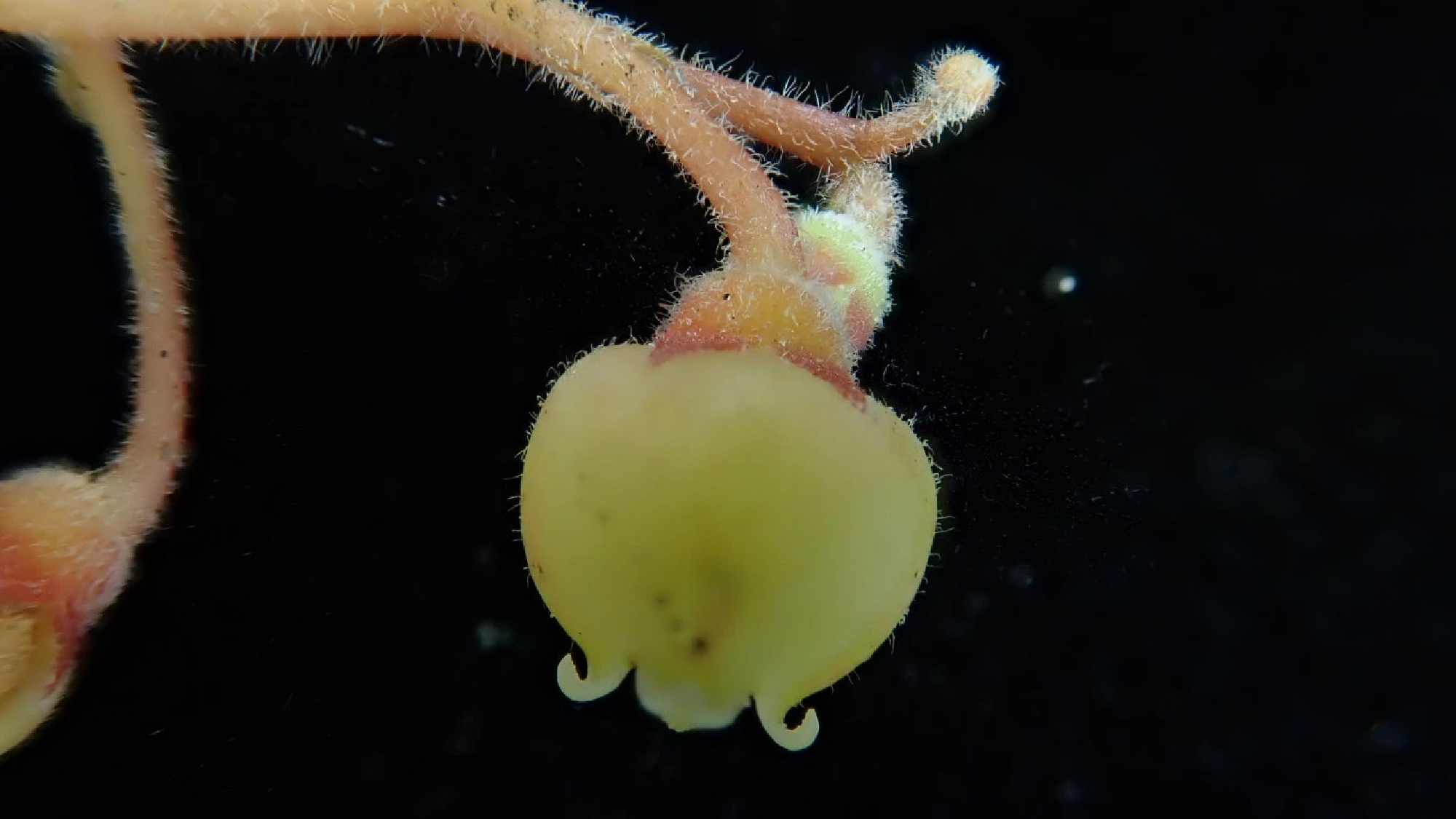
The seven new species are Hoya batutikarensis, Hoya buntokensis, Dendrobium dedeksantosoi, Rigiolepis argentii, Begonia robii, Begonia willemii and Etlingera comosa. Researchers also discovered a subspecies of Zingiber ultralimitale.

The recent discoveries add to Indonesia’s rich biodiversity and could launch further research, particularly to study the use of the plants for medical treatment.

Head of the plant conservation and botanical gardens research center at BRIN, Sukma Surya Kusumah, said the research center would continue to conduct exploration and identification of plant species in their natural habitats, in line with their program to conserve plant species that face the risk of extinction.

Wisnu Handoyo Ardi, a researcher at the center, said Indonesia had diverse begonia species, accounting for more than 10 percent of the species identified globally – making it one of the most biodiverse countries in Southeast Asia for begonia.

As many as 2,052 begonia species have been identified around the world, of which 243 are found in Indonesia. The figure will likely go up, Wisnu said, as researchers continued to discover new begonia species in Indonesia’s forests.

Wisnu added that BRIN was actively involved in the identification and conservation efforts of the begonia species, saying that the agency had conserved more than 100 begonia species from across the archipelago.

“We are currently reviewing the conservation status of nine begonia plants from Sulawesi in order to determine whether they are currently at risk in their natural habitat,” said Wisnu.

The begonias are considered an important species and thought to possess medicinal properties. Begonia medicinalis, one native begonia species in Sulawesi, is often used by local villagers as treatment for disease. Researchers from Tadulako University in Central Sulawesi are currently studying the species to identify whether it has an antioxidant compound that could be used in cancer treatments.

“The begonia species should be protected because we have yet to scratch the surface in terms of its potential [for medicinal and other use], although the plant is commonly known as a decorative plant,” said Wisnu.

Published : January 09, 2022

By : The Jakarta Post

Japan eyes new guidelines to prepare for major quake in greater Tokyo area

#SootinClaimon.Com : ขอบคุณแหล่งข้อมูล : หนังสือพิมพ์ The Nation.

https://www.nationthailand.com/international/40010873


The government plans to review a policy regarding what people should do in the event of a major earthquake in the greater Tokyo area, The Yomiuri Shimbun has learned.

Japan eyes new guidelines to prepare for major quake in greater Tokyo area

According to sources, a three-stage plan is being considered to determine the course of action people should take if they are not at home when disaster strikes, regarding how, when and whether to return home. The current policy calls for people to remain in situ for three days if a disaster occurs when they are at such locations as their workplace or school.

The government plans to devise as early as this summer more flexible measures that will utilize big data and other tools and incorporate them into its guidelines.

According to an estimate by the Cabinet Office, in the event of an earthquake measuring 7 on the Japanese seismic intensity scale — the highest level — about 6.95 million people in Tokyo and its four neighboring prefectures would be unable to return home, about 4.15 million of whom would be stranded in the capital.

After the Great East Japan Earthquake on March 11, 2011, about 5.15 million people in the Tokyo metropolitan area were unable to return home.

Under the current policy, people would be urged not to return home for 72 hours after a major disaster to prioritize rescue efforts during a period regarded as a critical window, after which the survival rate falls sharply.

There would be mass congestion if people tried to return home on foot, by taxi or other means, which would likely interfere with emergency activities and possibly trigger secondary disasters such as stampedes.

Guidelines devised in 2015 called for administrative bodies to “focus their efforts on helping people return home on the fourth day of a disaster or later.”

The Tokyo metropolitan government has also encouraged people to “remain at their workplaces, schools or other safe places for three days without moving around unnecessarily.”

Improvements to earthquake resistance of station buildings and railway lines in recent years have meant that public transportation systems have been able to resume operations within three days following a disaster in some cases.

As disaster damage varies from region to region, the government has concluded that it is not realistic to uniformly request people to remain in situ, according to a Cabinet Office official.

In light of this, the guidelines will be revised to allow people to return home depending on the disaster situation, to the extent that it does not interfere with emergency activities, according to the sources.

The Cabinet Office plans to collect opinions based on the findings of a panel tasked with discussing measures for people who would have difficulty returning home in the event of a major earthquake in the Tokyo metropolitan area.

Under the envisaged three-stage system, depending on the disaster situation, people would be notified via mobile phone or other means, informing them to (1) remain in situ (2) return home on foot, or (3) return home via public transportation.

The notification stage will quickly be determined by utilizing smartphone location data to assess congestion levels and using artificial intelligence to analyze information from social media posts.

The government is also considering providing information on temporary shelters and safe routes to return home.

Published : January 09, 2022

By : The Japan News

Mother Teresa charity in India gets back access to foreign funds

#SootinClaimon.Com : ขอบคุณแหล่งข้อมูล : หนังสือพิมพ์ The Nation.

https://www.nationthailand.com/international/40010872


The Indian government renewed permission for late Catholic nun Mother Teresas charity to receive foreign funds, weeks after rejecting it, the organisation said on Saturday.

Mother Teresa charity in India gets back access to foreign funds

On Christmas Day, the Narendra Modi government moved to cut off foreign funding to the Missionaries of Charity and refused to renew its licence under the Foreign Contribution Regulation Act (FCRA).

Charities and non-profit firms need to register under FCRA to receive money from abroad.

“The FCRA application has now been renewed,” Sunita Kumar, a close aide to Mother Teresa, told AFP.

The Missionaries of Charity, which runs shelter homes across India, was founded in 1950 by the late Mother Teresa, a Catholic nun who devoted most of her life to helping the poor in the eastern city of Kolkata.

She won the Nobel Peace Prize and was later declared a saint.

India’s home ministry issued a statement in December saying it was rejecting the renewal application because the charity did not meet “eligibility conditions” and that “adverse inputs were noticed”.

Last week, Oxfam India said the Indian government had blocked its access to international funds, a move which it said would have severe consequences for its humanitarian work.

The Modi government has been accused of cutting off access to funding of charities and rights groups in the country.

Amnesty International announced in 2020 that it was halting operations in India after the government froze its bank accounts.

Published : January 09, 2022

By : DAWN

PM defends results of Myanmar trip

#SootinClaimon.Com : ขอบคุณแหล่งข้อมูล : หนังสือพิมพ์ The Nation.

https://www.nationthailand.com/international/40010871


Prime Minister Hun Sen on January 8 indicated that anyone who “opposes the ceasefire” in Myanmar, which the military has purportedly extended until end-2022, merely wants to “see deaths and injuries as a result of war”.

PM defends results of Myanmar trip

The premier made the remark after his return to Cambodia from a widely-criticised trip to Myanmar, where he met with military chief General Min Aung Hlaing, chairman of the ruling State Administration Council (SAC).

“Being against aid for Myanmar means wanting to see people starve to death, or perish due to the absence of medicine or Covid-19 vaccines,” Hun Sen posted on Facebook.

Myanmar has been embroiled in unrest since the military on February 1 declared a state of emergency due to perceived irregularities in the 2020 general elections, and transferred legislative, judicial and executive powers from the civilian administration led by Aung San Suu Kyi to General Min Aung Hlaing, as Defence Services commander-in-chief.

The situation has prompted internal disputes and controversies among ASEAN member states, which includes Cambodia and Myanmar, the former of which holds the bloc’s chairmanship this year.

Likely in response to critics of his trip, Hun Sen reiterated that his January 7-8 visit to Myanmar was to press for a prolonged ceasefire in the country and the equitable distribution of aid to those in need, so as to avert civil wars and humanitarian crises.

During their meeting, General Min Aung Hlaing confirmed to Hun Sen that the deadline for the current “ceasefire” with ethnic armed organisations (EAO) had been extended from February 28 to December 31.

The military leader signalled support for Hun Sen’s request concerning the provision of aid, and said he would open doors for the ASEAN chair to meet relevant stakeholders in the ongoing Myanmar conflict.

Minister of Foreign Affairs and International Cooperation and special envoy to Myanmar Prak Sokhonn held a press conference on January 8 following the prime minister’s return to the Kingdom.

Sokhonn lauded the meeting between the two leaders as “good progress” towards the implementation of the five-point roadmap reached by ASEAN leaders in April last year designed to end the turmoil in Myanmar.

“What was achieved in the negotiations and discussions with the Myanmar leader is very positive and it is a step to advance the implementation of the Five-Point Consensus that the ASEAN leaders had agreed,” the minister said.

He echoed a similar view to that of Hun Sen, saying those who “oppose such progress” are “war-lovers” who do not want Myanmar to “return to peace”.

Published : January 09, 2022

By : The Phnom Penh Post

Bhutan hit with massive Covid-19 cases

#SootinClaimon.Com : ขอบคุณแหล่งข้อมูล : หนังสือพิมพ์ The Nation.

https://www.nationthailand.com/international/40010870


The country registered 82 new cases, its highest one-day Covid-19 cases ever in 24 hours, yesterday as authorities placed Phuentsholing town under a three-day lockdown starting yesterday morning.

Bhutan hit with massive Covid-19 cases

The residents woke up to the news after a 37-year-old woman, an expatriate worker at a local restaurant was detected positive from the community at the core town. She was detected positive from the samples collected on January 6 during routine enhanced surveillance.

Ever since the longest lockdown was lifted on August 10, 2021, Phuentsholing did not see any positive case from the community for 144 days.

But with the Omicron variant spreading faster and the number of cases increasing in neighbouring areas across the border in India, residents in the town lived with heightened apprehension and speculation.

What next?

This is the fourth lockdown in Phuentsholing since the virus appeared in the country in March 2020.

How long the lockdown will continue depends on the result of the contract tracing. If new cases are detected from the community during the ongoing contact tracing, it is only natural the lockdown will be extended.

Over 300 people were contract-traced yesterday. They have visited the restaurant in the last seven days. The results will be ready by today morning.

A member of the Southern Covid-19 Task Force (SC19TF), Rixin Jamtsho said if there are no cases or just one to two cases, the restriction will be lifted in phases and not undo everything at once.

“However, our case investigation and review report of the index case shows that she has not travelled or mixed with friends outside and all the primary contacts have tested negative from which we are hopeful that the spread is not large enough to extend the lockdown,” he said.

“But we can’t assure or say anything with full confidence at this point of time.”

Case details 

The woman is an expatriate from Alipur, West Bengal, India and worked as a cook at Lucky Restaurant and Bar. She has been in Bhutan since 2019.

The expatriate woman has also been vaccinated with the booster dose.

According to the officials, she started showing symptoms on January 6. She had a sore throat but recovered. She also claimed that she hardly got time to go out to meet with people in the restaurant as she was most of the time busy in the kitchen. Her employer and co-workers did the shopping for the restaurant.

Meanwhile, most of the customers who visited the restaurant are from the outskirts of Phuentsholing town.

In what could be a relief, four primary contacts, who are co-workers and family members of the owner, have tested negative.

Risk to other dzongkhags

West Bengal, our closest neighbouring state of India alone reported more than 14,000 cases in the last 24 hours.

Also, Bhutan is still importing foreign workers and daily imports and exports continue. There is a risk of breaching protocols due to porous borders.

On January 5, two men had breached protocols at Sorchen checkpoint and tried to go to Thimphu without undergoing the seven-day mandatory quarantine. One of them had even been to Thimphu.

Including the community case from Phuentsholing, according to the health ministry recorded Bhutan recorded 82 new cases yesterday. Of that, 12 are Bhutanese and 70 non-Bhutanese.

Wangdue

Sixty-six individuals who tested positive from Wangdue yesterday are all expatriate workers.

They were construction workers for the Punatsangchhu Hydroelectric Project II (PII). A total of 106 workers were moved to Wangdue from Gelephu starting December 30.

According to the PII management, the workers were brought in three batches.

The latest batch reached the containment area in Rurichhu, Wangdue by January 4.

Samples for tests from workers were collected and sent to Thimphu on January 6. The health ministry yesterday declared that 66 had tested positive.

While, many in Wangdue are worried over a possible lockdown, officials said that the workers didn’t have contact with locals and were directly moved to the quarantine facility in Rurichhu.

The PII official said that the containment area was secluded and had strong security. “There is no settlement nearby and we have strong fences and de-suups and police for security.”

PII management also brought in 160 workers last year following the required Covid-19 protocols.

The individuals who tested positive are asymptomatic and are placed under observation.

Gelephu

Following a positive case from the community in Phuentsholing yesterday, 161 people who travelled from Phuentsholing within the January 3 and  7 were tested for Covid-19 in Sarpang.  

The 26 persons, who tested positive for antigen test, tested negative on confirmatory RT-PCR test. 

More than 30 trucks and light vehicles travel from Phuentsholing and Gelephu on Tuesdays, Thursdays, and Saturdays every week via India facilitated by the officials from Road Safety and Transport Authority in Gelephu and de-suups.

The testing for individuals with travel history to Phuentsholing was conducted to rule out the infection in the dzongkhag as per the Covid-19 medical requirement.

Travels for urgent and emergency cases were also facilitated. At least 100 people travel between Phuentsholing and Gelephu in a week.

Meanwhile, there are four active imported cases in Sarpang to date. The recent one was an imported case reported on January 6.

Published : January 09, 2022

By : Kuensel