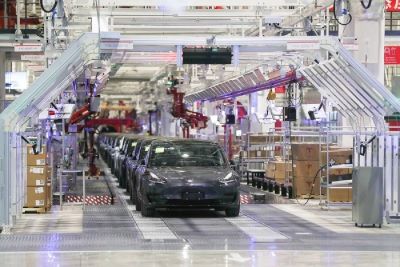
Tesla Inc is investing 1.2 billion yuan ($187.91 million) to optimize the production line at its Shanghai factory as China is rising as a major global export hub for the US electric carmaker.
The project is expected to start in December and finish in April 2022, according to Tesla’s filing to a Shanghai government platform for local companies’ environmental information disclosures.
Tesla did not specify the production capacity changes at the plant that currently makes up to 500,000 vehicles annually, but said it will add another 4,000 workers after the project is finished, which will increase the number of the plant’s employees to 19,000.
The Shanghai plant, which started production in late 2019, is Tesla’s first car manufacturing facility outside of the United States and China’s first and only passenger car manufacturing facility wholly owned by an overseas carmaker.
The plant currently produces Model 3 and Model Y vehicles and sells them in China, other countries in the Asia-Pacific region, and Europe.
The facility became Tesla’s major global exporter in July. In the third quarter, the plant produced 133,200 vehicles, of which 59,579 were exported, according to the carmaker’s financial statement.
In the first 10 months of this year, vehicle exports from the Shanghai plant reached almost 150,000 units, and sales in China stood at around 210,000 units, statistics from China Passenger Car Association showed.
“The investment comes as no surprise, as demand for electric cars is surging both in China, where its cars are loved, and overseas markets, so Tesla needs to quickly scale up its capacity,” said Roy Lu, an independent auto analyst based in Shanghai.
China is the world’s largest market for new energy vehicles, including electric cars and plug-in hybrids.
Over 2.5 million new energy vehicles were sold in the country in the first 10 months of this year, and total deliveries this year could reach 3 million, according to the China Association of Automobile Manufacturers.
Besides production, Tesla is also ramping up its research and development in China.
Its research facility, which was unveiled last month in Shanghai, specializes in aspects from software and electronics to materials and charging.
Tesla said the facility, its first outside the US, will gradually develop over time to be similar in size to the one in its home country.
“The goal of Tesla’s team in China is to design, develop and produce new vehicle models and products with Chinese elements and sell them globally,” Tesla said in an online recruitment post earlier this year.
Tesla has also built a data center in Shanghai for local data storage. In September, Tesla CEO Elon Musk said data security is becoming even more important as vehicles are becoming smart and autonomous.
SINGAPORE – Travellers from Thailand, Cambodia, Fiji, Maldives, Sri Lanka and Turkey will be able to enter Singapore quarantine-free from the middle of next month, with the launch of six new vaccinated travel lanes (VTLs), the Civil Aviation Authority of Singapore (CAAS) said on Friday (Nov 26).
This will take the total number of air VTLs announced so far to 27.
Pre-pandemic, these 27 countries contributed to about 60 per cent of the total daily arrivals at Changi Airport, CAAS said.
The new travel lanes will further broaden Changi’s network and help reclaim and rebuild Singapore’s status as an international aviation hub with global connectivity, CAAS added.
Travellers from Thailand may enter Singapore under the VTL from Dec 14. Applications for vaccinated travel passes under the travel lane will open on Dec 7 at 10am.
Travellers from Cambodia, Fiji, Maldives, Sri Lanka and Turkey may enter Singapore under the VTL from Dec 16, and they can start to apply for travel passes from 10am on Dec 9.
With the launch of the six new VTLs, the daily quota of travellers allowed to enter Singapore under the VTL scheme will also be raised from 10,000 to 15,000.
This quota is about a third of the total pre-Covid-19 flows from the 27 countries that have established VTLs with Singapore, Transport Minister S. Iswaran told reporters at a virtual briefing on Friday.
“This is a further calibrated expansion of the VTL scheme to reconnect Singapore with the world while managing the public health risk,” he said.
Under the VTL scheme, fully vaccinated travellers from VTL countries may enter Singapore without quarantine and just need to undergo Covid-19 testing.
Children aged 12 years and below in the calendar year who are not vaccinated will be allowed to travel under the VTL into Singapore if they are accompanied by a VTL traveller who meets all VTL requirements.
Cambodia, Fiji, Maldives, Sri Lanka and Turkey are all in Category 2 of the Ministry of Health’s Covid-19 risk classification for border measures, and have similar or lower Covid-19 infection rates than Singapore and the other VTL countries, CAAS said.
Thailand will be reclassified as Category 2 from Dec 1.
Cambodia, Maldives, Sri Lanka and Thailand have already opened their borders to quarantine-free general travel for vaccinated travellers.
Fully vaccinated travellers from Singapore have been able to travel to Thailand without quarantine since Nov 1 and to Cambodia since Nov 15.
Turkey has also already opened its borders to quarantine-free vaccinated travel from Singapore. The extension of the VTL scheme to the country will enable Singapore to connect with another major aviation hub, CAAS added.
Meanwhile, Fiji will be reopening its borders to vaccinated travellers from Singapore and 39 other countries from Dec 1.
From next Monday (Nov 29), air VTLs with Kuala Lumpur, Indonesia, India, Sweden and Finland will also begin.
Three more VTLs, with Saudi Arabia, Qatar and the United Arab Emirates, will start on Dec 6, with applications to start on Nov 29.
However, a new Covid-19 variant called B.1.1.529, which is said to be more infectious than the Delta strain and more resistant to current vaccines, has cast a pallor over the reopening of borders here.
From 23.59pm on Nov 27, all long-term pass holders and short-term visitors with recent travel history to Botswana, Eswatini, Lesotho, Mozambique, Namibia, South Africa and Zimbabwe in the last 14 days will not be allowed to enter Singapore or transit here, the Ministry of Health (MOH) said on Friday.
The new travel ban, which will last for an initial four weeks, will also apply to those who have obtained prior approval for entry into Singapore.
Singapore citizens and permanent residents returning from these seven southern African nations will be subjected to a 10-day stay-home notice at a dedicated facility, MOH added.
Mr Iswaran said the travel restrictions in the light of the new variant are an important precaution, but did not comment on the impact the new strain will have on the reopening of borders.
“We now need to give time for the exact characteristics of this new variant to be better understood,” he said.
“This is exactly why we have emphasised from the very beginning… that we must be vigilant, because the situation and circumstances may change very quickly, including and possibly because of a new variant of concern.”
He said the VTL schemes are designed with multiple safeguards – vaccination, proof of vaccination in the form of digitally verifiable vaccination certificates, pre-departure and on-arrival testing, as well as a quota on travellers arriving here under the scheme each day.
This enables the authorities to calibrate the risk in accordance with prevailing assessments, he said.
“Even as we continue to reopen our borders to secure Singapore’s position as a business and aviation hub, we will closely monitor the global public health situation especially for the emergence of any new variants of concern and impose additional safeguards as necessary,” the minister added.
“I would also urge all Singaporeans and residents to closely track the situation in the countries they are visiting, to be well informed and updated on the latest public health and border measures, and to plan well ahead for contingencies.”
Seoul says prior consultation has proceeded amicably under the Biden admin, unlike recent years
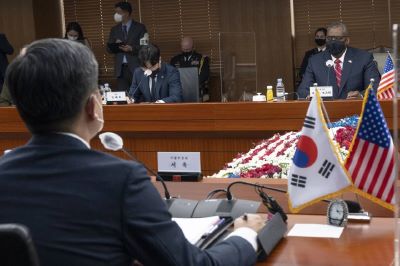
South Korean and US defense ministers will discuss a wide range of security and alliance issues, from the transfer of wartime operational control to challenges posed by China and North Korea.
South Korea’s Defense Minister Suh Wook and US Defense Secretary Lloyd Austin are set to host the 53rd ROK-US Security Consultative Meeting (SCM) in Seoul on Thursday.
The US high-ranking officers, including Joint Chiefs of Staff Chairman Gen. Mark Milley, Commander of the United States Indo-Pacific Command Adm. John Aquilino, and Commander of United States Forces Korea Gen. Paul LaCamera, will attend the meeting.
The ROK-US annual defense ministerial talks will be notably held for the first time since the Biden administration took office.
Seoul and Washington will discuss ways to enhance coordination on policy toward North Korea, as well as strengthen their alliance comprehensively and reciprocally in wide-ranging fields such as space and cyberspace, an official at South Korea’s Defense Ministry, who wished to remain anonymous, said Thursday.
During the talks, the South Korean military will also seek to speed up the conditions-based transfer of wartime operational control, or OPCON, explaining its efforts to secure critical military capabilities to lead allied forces.
Wartime OPCON Transfer, FOC Test Timing
The meeting will be the last chance for the Moon Jae-in government to take further steps toward its public commitment to expeditiously regain wartime OPCON before his term ends in May, although a complete transition will be impossible to achieve by then.
The key issue is whether Seoul and Washington will advance discussions on the timing of the wartime OPCON transfer. The South Korean official expressed expectations for progress and underscored that prior consultations have proceeded in a “very amicable” manner, unlike last year’s SCM held during the Trump administration.
The official said the joint statement of the 53rd SCM would not carry a negative tone on the issue. But when asked whether the statement will specify the timing of the postponed test of Seoul’s full operational capability, the official said the two countries were still in discussions on the ”sensitive issue.“
The South Korean military must demonstrate it has the core military capabilities required to lead the combined defense posture in the Korean theater in order to retake wartime OPCON, in accordance with the Conditions-based OPCON Transition Plan.
Seoul’s military capabilities have to be verified through a three-stage assessment, which consists of the initial operational capability, full operational capability, and full mission capability in that order. The South Korean and US allies completed the first-stage in 2019, but the two countries have only conducted a rehearsal of the second stage, mainly due to the COVID-19 pandemic.
Strengthening Alliance
Overall, South Korea’s Defense Ministry anticipates that the SCM joint statement will contain enhanced US commitment to the defense of South Korea, including the provision of bridging capabilities, compared to last year’s statement.
Seoul expects that Washington is likely to restore the removed clause that reaffirms its commitment to maintain the current level of the US military personnel in South Korea in this year’s joint statement.
South Korea and the US will also seek ways to broaden military cooperation into wider fields including space and cyberspace.
The two countries will specifically discuss when and how to reactivate the now-dormant Cyber Cooperation Working Group and enhance cyber cooperation, the defense official said, adding that Washington has a high interest in the issue.
Seoul also views that China-related issues will be on the agenda at this year’s meeting. In particular, the two countries will come up with ways to promote military cooperation between the US Indo-Pacific Strategy and South Korea’s New Southern Policy and align their regional strategies.
But the official clarified that Seoul and Washington will not discuss the launch of the bilateral defense working group on the matter, denying local media reports.
The Defense Ministry also said that minister Suh will explain Seoul’s position on an end-of-war declaration to the US defense secretary, but the issue is not a formal part of the agenda.
Meanwhile, South Korea’s JCS chairman Won In-choul and his US counterpart Gen. Milley will hold the 46th Military Committee Meeting on Dec. 1 in Seoul, prior to the annual defense ministerial meeting.
PUTRAJAYA: Malaysia has issued a travel ban to seven African countries following the discovery of the new B.1.1.529 Covid-19 variant.
Health Minister Khairy Jamaluddin said starting today, Malaysians are banned from visiting South Africa, Botswana, Eswatini, Lesotho, Mozambique, Namibia and Zimbabwe.
Foreigners with a travel history to the seven countries within the last 14 days are also not allowed to enter Malaysia, he said.
Malaysians and permanent residents returning to Malaysia after visits to these destinations are allowed to enter but must undergo a mandatory 14-day quarantine.
“These travellers cannot undergo home quarantine. It has to be done at a quarantine station, regardless of vaccination status,” said Khairy.
Samples will also be taken from all travellers arriving from the said countries for genomic surveillance.
Khairy said based on genomic surveillance up to Nov 26, there are no reports of the B.1.1.529 Covid-19 variant in Malaysia.
“The Health Ministry views the existence of this new variant seriously. We will increase our genomic surveillance on individuals arriving from affected countries.
“Continuous monitoring for the genomic surveillance is conducted by a consortium consisting of the Health Ministry through the Institute of Medical Research (IMR), the Science, Technology and Innovation Ministry as well as the Higher Education Ministry.
The first case involving the B.1.1.529 variant was detected in Botswana on Nov 11, while the second was found in South Africa on Nov 14.
An individual in Hong Kong who had recently visited South Africa was found to be infected with the same variant on Nov 25.
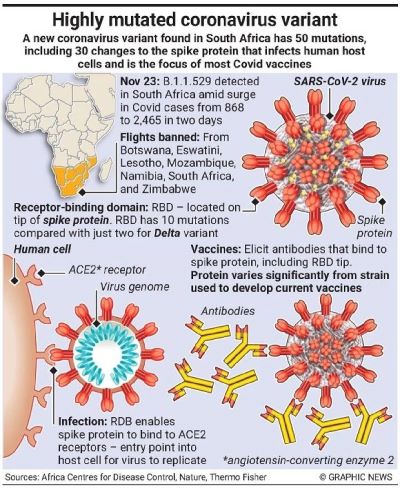
Reports have said the B.1.1.529 variant has 32 protein spike mutations – twice that of the Delta variant.
Scientists around the world are still trying to ascertain if this variant is more transmissible than the Delta variant and whether it could lead to severe illness. Vaccine efficacy is also undetermined.
On another matter, Khairy said the ministry will advise the government against holding the 15th general election soon.
Khairy said the recent increase in Covid-19 hospitalisations, adding to the emergence of the B.1.1.529 variant, means that it would not be a good idea to hold GE15 soon.
“The Health Ministry is of the view that the general election can be avoided. This is unlike the Sarawak election which has to be organised, and the Melaka election which was called following the state assembly’s dissolution.
“It will be irresponsible to hold the general election now,” said Khairy.
On the upcoming Sarawak election, Khairy said the ministry is still in discussion with the state government over the election standard operating procedures (SOP).
Meanwhile, Khairy said the country’s current Covid-19 situation is at a plateau, but certain states, especially the Klang Valley, are seeing a rise in hospitalisations and intensive care unit (ICU) admissions.
“Most of the Categories 3, 4 and 5 patients are those aged 40 and above. This could be because people’s antibodies wane after a certain period from being vaccinated.
“For this reason, the ministry is encouraging people to take booster doses to ensure optimum antibody levels,” said Khairy.
He said to date, 1,823,474 booster doses have been administered in the country.
Singapore joined a string of countries restricting travel to and from a number of African destinations, following the detection of a heavily mutated variant of the coronavirus.
As scientists raced to find out if the B1.1.529 mutant was more deadly, transmissible, or capable of evading existing vaccines, the World Health Organisation (WHO) designated it a variant of concern and assigned it the Greek letter Omicron.
The term “variants of concern” indicate Covid-19 strains that pose additional risks to global public health. There are now five such variants, after the addition of the Omicron.
So far, the new variant appears to have been responsible for a sudden surge of infections in South Africa, accounting for an estimated 90 per cent of all new cases in Gauteng province, the epicentre of the new outbreak, said Dr Tulio de Oliveira, director of South Africa’s Centre for Epidemic Response and Innovation.
As at Friday (Nov 26), at least eight cases involving the mutated virus have been reported elsewhere – four in neighbouring Botswana, two in Hong Kong, and one each in Israel and Belgium.
The cases in Hong Kong, Israel and Belgium were linked to travellers who had recently been in South Africa, Malawi and Egypt, respectively.
The new variant has sparked international concern because of the unusually large number of mutations – 32 to the Sars-CoV-2 spike protein that is the main target of the body’s immune responses, and 10 on the ACE2 receptor that helps create an entry point for the virus to infect human cells.
“The concern is that when you have so many mutations, it can have an impact on how the virus behaves,” Dr Maria Van Kerkhove, the WHO’s technical lead on Covid-19, said. “It will take a few weeks for us to understand what impact this variant has.”
Many similar mutations found in earlier variants, such as the Alpha and Delta ones, were linked to higher transmissibility and greater ability to evade infection-blocking antibodies, scientific journal Nature reported.
A high number of mutations does not necessarily produce a more potent variant, though. Similar concerns were raised about an earlier variant found in South Africa but it was never listed as a variant of interest or concern, the Guardian noted.
“We can’t know if (new variants) will be bad… based on sequence alone… Lots of mutations do not necessarily mean very bad,” said Dr Angela Rasmussen, a virologist at the Georgetown University Centre for Global Health Science and Security.
“Variants of concern emerge in mostly unvaccinated populations… The lesson here is that vaccine equity is about more than just altruism. We have the tools to prevent potential new variants from emerging and we’ve failed to use them effectively,” she added.
Only about 24 per cent of South Africa’s population are fully vaccinated, and just 4 per cent of people in Africa are fully inoculated.
News on the latest mutation led to jitters, with anxious governments imposing new travel restrictions and financial markets taking a hit.
The president of the European Commission Ursula von der Leyen urged Europe, which is facing a resurgence of the pandemic, to act “swiftly and decisively” in the face of the new mutation.
She called on member states to “activate the emergency brake on travel from countries in southern Africa and other counties affected to limit the spread of the new variant”.
Britain’s health secretary Sajid Javid described the new variant as “of huge international concern” and “may pose substantial risk to public health”, after his country banned flights from six African nations and sent returning citizens from those destinations into quarantine.
South Africa’s foreign ministry voiced concerns over Britain’s “rushed” decision and its potential impact on businesses. Its health minister, Mr Joe Phaahla, called the restrictions “unjustified”.
But British Transport Secretary Grant Shapps defended the move, saying that the B1.1.529 was “the most significant variant (scientists) have encountered to date in their research”.
Singapore will from Sunday ban all visitors with recent travel history to Botswana, Eswatini, Lesotho, Mozambique, Namibia, South Africa and Zimbabwe from entering or transiting through the Republic. Returning citizens and permanent residents will serve a 10-day stay-home notice at dedicated facilities.
Malaysia followed suit, with its ban taking place from Saturday, and returning citizens and work permit holders to undergo 14 days’ quarantine. Malaysians are also barred from visiting the seven affected countries.
The Philippines halted flights from South Africa and other affected territories until Dec 15.
Starting from Saturday, Japan is restricting travellers from South Africa and five other nearby countries, requiring them to spend 10 days in a government-designated facility upon arrival.
Taiwan also tightened its quarantine measures for people arriving from those destinations.
India instructed all of its states to rigorously screen all travellers from South Africa and other territories affected by the new variant, though it has yet to tighten border controls.
Both Australia and New Zealand said they were closely monitoring the situation.
Israel also moved to prohibit travel to the territories where the new variant has been found, and is considering halting flights from those areas as well.
The WHO, meanwhile, warned against hastily imposing new travel restrictions over the variant, adding that it “recommends that countries continue to apply a risk-based and a scientific approach when implementing travel measures”.
Global equities tumbled, with travel stocks among the biggest decliners.
The MSCI Asia-Pacific Index slid to the lowest level since early October, with gauges in Japan and Hong Kong leading losses in the region.
Europe’s equity benchmark was on track for its biggest drop in 13 months. In the US, the Dow fell 2.5 per cent in early trading, headed for its worst day since October last year.
Stocks of work-from-home businesses, food-delivery firms, medical gear producers and Covid-19 testing firms jumped amid fears of fresh social restrictions.
US Treasuries, the yen and Swiss franc strengthened on haven demand.
Hyundai Motor Group said Thursday it would test its Level 4 autonomous driving system in downtown Seoul under its new mobility service “RoboRide,” using its fully electric compact Ioniq 5 as early as next year.
The Korean auto giant said running RoboRide will be set the grounds for the company’s advancement of self-driving tech, in a step toward the commercialization of uncrewed mobility services.
“We’ve been developing autonomous driving technology for all to move around based on our philosophy of general safety and selective convenience,” said Jang Woong-jun, head of Hyundai Motor Group’s autonomous driving center, during a press conference at Seoul Mobility Show 2021.
According to the Society of Automotive Engineers International, of five levels of driving automation, Level 4 refers to a vehicle driving itself under limited conditions, while Level 5 is driving on its own in any conditions.
Global carmakers have been racing to commercialize self-driving uncrewed vehicles, but only few of them such as GM have managed to get permission from the authorities and begin test driving.
Hyundai Motor Group is currently working with US autonomous vehicle company Motional and ride-hailing app Lyft to launch a Level 4 self-driving mobility service for the public in 2023.
While details on RoboRide’s operation will be unveiled early next year, the automaker said the new mobility service will drive based on self-control for all road situations except some cases such as a sudden traffic jam.
A simulation video unveiled by Hyundai Motor shows a vehicle reading traffic lights, changing lanes, making a U-turn, turning right or left and controlling the system after recognizing road obstacles such as through reducing the speed.
Uniquely designed by the automaker to fit local road situations for self-driving, Ioniq 5 has “inherited the Pony’s bold design as a perfect partner to expand the realm of personal mobility to a self-driving sector,” according to Simon Loasby, head of Hyundai Style Group.
The government has decided to step up its efforts to foster start-ups and entrepreneurs, especially in the growing field of digital technology.
Starting next year, the government will provide subsidies to large companies that employ future entrepreneurs, and also to start-ups that accept large companies’ workers on loan.
The number of start-ups has rapidly increased in the United States, China and some European countries, and new businesses have driven economic growth in those countries. Japan has lagged behind other nations in the number of its start-ups, leading the government to decide it was necessary to launch new support measures.
The Economy, Trade and Industry Ministry will allocate ¥860 million in its supplementary budget proposal for this fiscal year, ending in March. Prime Minister Fumio Kishida has positioned the fostering of start-ups as one of the pillars of the government’s growth strategy.
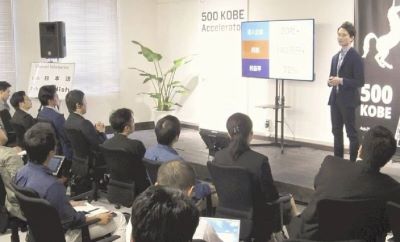
According to government sources, the new measures include the introduction of an Entrepreneur-in-Residence (EIR) program, in which young people planning to start their own businesses work at large companies for experience and future funding, and there will also be measures to help start-ups secure personnel.
The EIR program, widely adopted in the United States, is a scheme that allows entrepreneurs in residence to work at companies in businesses close to their own business plans’ target fields. People in the program can learn how to establish sales channels and systems for mass production, among other knowhow. It is also envisioned that the entrepreneurs in residence will possibly get funding from those companies when they launch their own businesses.
The ministry will begin a trial project next year, supporting about 30 to 50 entrepreneurs in residence. Companies that hire them will receive subsidies for necessary expenses.
As many start-ups find it difficult to secure enough personnel, the government will provide about two-thirds of the wages and other burdens that start-ups would have to shoulder when accepting large companies’ workers on loan. On the major companies’ side, it will be beneficial in that their younger workers who are to be in core positions in the future will be afforded rare work experience at start-ups.
According to a U.S. research firm, the number of unlisted start-ups with a corporate value of over $1 billion, or about ¥115 billion — dubbed unicorns — was six in Japan as of September, while the number was 424 in the United States and 165 in China.
China will strive to promote as soon as possible the establishment of the Working Group on Enhancing Climate Action in the 2020s with the United States, which is included in a joint communique issued earlier this month, an environmental official said on Thursday.
According to China-US Joint Glasgow Declaration on Enhancing Climate Action in the 2020s, which was made public during the COP 26 United Nations Climate Conference in the UK, the two sides intend to establish the group and meet regularly to address the climate crisis and advance the multilateral process, focusing on enhancing concrete actions in this decade.
The relevant Chinese government bodies will promote the establishment of the group and “continue policy and technical exchanges, as well as identification of programs and projects in areas of mutual interest” with the US, said Lu Xinming, deputy director of climate change, Ministry of Ecology and Environment, at a news conference on Thursday.
By unswervingly upholding multilateralism, China will deeply involve itself in global climate governance and work with other parties to achieve the full, balanced, effective and sustained implementation of the United Nations Framework Convention on Climate Change and its Paris Agreement, he stressed.
“With the BRI International Green Development Coalition and other cooperation platforms playing their roles, the Ministry of Ecology and Environment will make all-out efforts to promote South-South climate cooperation to the best of its ability,” he said.
HONG KONG – Hong Kong has detected a newly identified coronavirus variant that is spreading in South Africa and that has prompted Britain to ban flights from some African countries.
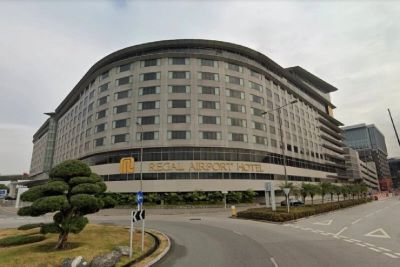
The new variant, called B.1.1.529, was found earlier this month in two men quarantined separately at the Regal Airport Hotel in Chek Lap Kok, Hong Kong public broadcaster RTHK reported on Thursday (Nov 25).
The Centre for Health Protection (CHP) confirmed that the new variant was brought in by a man who had flown in from South Africa on Nov 11. He tested positive for the coronavirus two days later, the Washington Posted reported.
This patient, 36, then allegedly passed on the virus to another man who was staying in a neighbouring room at the hotel, RTHK reported.
The Washington Post reported that the second man, 62, had arrived from Canada.
The CHP said that latest investigations into the two cases showed that they had highly similar genetic sequences, adding that the viruses they carried belong to the B.1.1.529 variant.
“Scientific information on the public health significance about this lineage is lacking at the moment. It is classified by the World Health Organisation as ‘variants under monitoring’,” RTHK reported the CHP as saying.
The first patient was found to have worn a reusable mask with an air valve, and further investigation by University of Hong Kong microbiologist Yuen Kwok Yung found that the mask had contributed to the spread of the virus through airborne transmission to the second man, RTHK reported.
Following the detection of the two cases, 12 people who stayed in the three rooms near the two men during Nov 11 to 14 have been taken to Penny’s Bay Quarantine Centre to undergo compulsory quarantine for 14 days, The Standard newspaper reported. No related infections have been detected so far.
The new variant is driving a spike in new Covid-19 infections in South Africa, scientists said on Thursday.
So far, 22 positive cases have been identified in South Africa, according to South Africa’s National Institute for Communicable Diseases, the New York Times reported.
Botswana’s Health Ministry also confirmed in a statement that four cases of the new variant were detected in people who were all fully vaccinated.
The British authorities said that the new variant has a spike protein that was dramatically different to the one in the original coronavirus.
“This is the most significant variant we have encountered to date and urgent research is under way to learn more about its transmissibility, severity and vaccine-susceptibility,” said British Health Security Agency chief executive Jenny Harries.
Samsung Electronics will invest $17 billion into its foundry sector, a business that makes money by manufacturing chips clients have designed. But some experts say that despite the staggering size of the investment, the South Korean tech giant is unlikely to challenge the global foundry race led by TSMC.
Instead of splurging cash, a structural change must occur to catch up with TSMC, a No. 1 foundry player with a global market share of 58 percent as of second quarter this year, they said.
“Global IT firms such as Apple go to TSMC, because Samsung Electronics is a competitor. Samsung manufactures chips for customers, but also for itself too. Apple can’t risk its chip info get into the hands of its rival,” said, Yoo Hoi-jun, a professor of electrical engineering at the state-run Korea Advanced Institute of Science & Technology.
“Samsung Electronics has to make a choice. It has to either split off its foundry business or system LSI business — which designs chips — to ensure clients that their chip info isn’t shared between the two businesses. But as far as I know, the firm isn’t considering a split-off,” Yoo said.
Of the world’s top 10 customers of advanced 5-nanometer and 7-nanometer chips, only four of them — Qualcomm, Nvidia, IBM and Samsung Electronics itself — are clients of Samsung’s foundry service.
Considering that Qualcomm and Nvidia also place foundry orders with TSMC, should the quality of Samsung Electronics’ foundry decline, they can always migrate to the Taiwanese company.
Other experts further warn that Samsung Electronics’ status as the No. 2 foundry player can be challenged by Intel, which aims to reenter the global foundry market.
“To operate a foundry business, you need extreme ultraviolet or EUV machines, and the Netherlands’ ASML is the only one who can make them. The price of one EUV machine is 200 billion won ($168.2 million), so the barrier to entry is very high,“ Kim Yang-pang, a researcher at the Korea Institute for Industrial Economics and Trade, said.
”Also, the US is blocking Chinese companies from buying EUV machines for national security concerns, and Samsung Electronics is benefiting from the Sino-US rivalry. However, if a US company like Intel launches foundry business, ASML will have no choice but to split its EUV machine quota, and Samsung Electronics might struggle to secure sufficient supplies of EUV machines like it currently does.”
EUV machines are very sensitive and difficult to make. Of the 48 EUV machines ASML is producing this year, 37 of them are allocated for Samsung Electronics and TSMC. Next year, 51 units will be produced, and 40 of them are reserved for the two companies.
Ahn Ki-hyun, a senior executive at the Korea Semiconductor Industry Association, says that despite negative outlooks, Samsung Electronics’ foundry will grow no matter what, due to supply chain risks of clients.
“You can’t place all your orders with TSMC. To maintain supply chain risks, customers will have to diversify, and some of the orders will have to go to Samsung Electronics.”