Singapore tracking Omicron Covid-19 variant closely, may be forced to take steps back: PM Lee #SootinClaimon.Com

#SootinClaimon.Com : ขอบคุณแหล่งข้อมูล : หนังสือพิมพ์ The Nation.

https://www.nationthailand.com/international/40009379


SINGAPORE – Singapore is watching the new coronavirus variant Omicron closely and may be forced to roll back the easing up of safety measures as it moves forward to tackle the disease, said Prime Minister Lee Hsien Loong on Sunday (Nov 28).
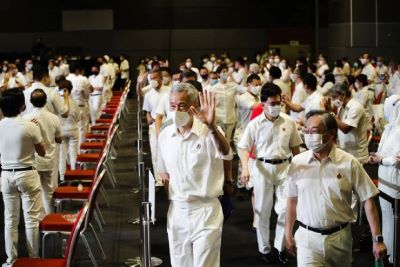
But Mr Lee said he is confident the country will be able to live with the virus, and held up how its people have made a lot of progress in dealing with the disease over the past two years.

In his first public comments about Omicron, Mr Lee, who was speaking at the People’s Action Party (PAP) convention on Sunday, said that Singapore must be mentally prepared for “more bumps along the way” as it deals with an evolving virus.

“We are tracking this very closely. We are not sure yet, but we may well be forced to take a few steps back again, before we can take more steps forward,” he said.

“But despite all this, I am confident that, eventually, we will find our way to living with the virus and safely resume all the things we love to do.

“We are making all this effort because we want to get there safely, with as few casualties along the way,” he added.

Omicron, which was dubbed a “variant of concern” by the World Health Organisation (WHO) on Friday, is a new and potentially more contagious coronavirus strain, and Singapore and other countries have in recent days restricted travel from southern Africa, where the strain was first detected.

Singapore has largely managed to keep its Covid-19 situation under control through a series of safety measures that the Government tightens to respond to the spread of the virus.

Last week, the Government relaxed curbs on dining out, household visits and some social activities, after nearly two months of stabilisation measures. These measures were introduced on Sept 27 following a surge in Covid-19 cases, and were intended to last a month but were extended as the country’s healthcare system remained at risk of being overwhelmed.

Singapore had imposed a circuit breaker from April 7 to June 1 last year to stem the initial spread of the disease, where people were not allowed to have social gatherings or dine out.

Mr Lee acknowledged that the fight against Covid-19 has been tough on Singapore and its people. He said: “It has been a long journey with many twists and turns. The virus has surprised us over and over again. Repeatedly we have had to adapt our response, pick ourselves up and then press on.”

On Saturday, the Ministry of Health reported 1,761 new cases of the disease, as well as a weekly infection growth rate of 0.75.

This was the 15th consecutive day the growth rate is below one. The number refers to the ratio of community cases in the past week over the week before, and a weekly infection growth rate that is consistently below one shows the number of new weekly Covid-19 cases is falling.

Omicron was first identified in Gauteng, a province of South Africa, and the WHO was alerted last Wednesday. It was declared a variant of concern because of the large number of mutations detected in its spike protein, which may cause an increased risk of reinfection, among other negative effects. The spike protein is what the coronavirus uses to begin infecting human cells.

Mr Lee on Sunday thanked healthcare and front-line workers, as well as PAP party activists, for working to keep Singapore safe.

He noted how some activists have reached out to help residents in need by physically taking care of them, distributing support packs to people recovering at home alone, or attending to the mental well-being of others.

“These last two years have tested not just our healthcare response, but also our social bonds and our political will,” he said.

“I am grateful that in a crunch, Singaporeans have stayed united, worked closely with the Government and come together to support one another.”

By Hariz Baharudin

Published : November 29, 2021

By : The Straits Times
Macao project a launchpad for Greater Bay Area artists #SootinClaimon.Com

#SootinClaimon.Com : ขอบคุณแหล่งข้อมูล : หนังสือพิมพ์ The Nation.

https://www.nationthailand.com/international/40009350


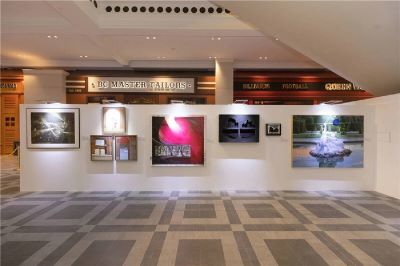
Paintings and photos by 24 winners of a competition and exhibition for artists under 45 in the Guangdong-Hong Kong-Macao Greater Bay Area are on show until Dec 5, at the ground floor of The Londoner Macao.

The project, titled Time Is On My Side, serves to provide financial support and public exposure for artists based in the area, as part of efforts to boost the cultural landscape and gather talents in the Greater Bay Area.

Works by prize-winners of a competition and exhibition for young artists in the Guangdong-Hong Kong-Macao Greater Bay Area are on show at The Londoner Macao. [Photo provided to China Daily]Works by prize-winners of a competition and exhibition for young artists in the Guangdong-Hong Kong-Macao Greater Bay Area are on show at The Londoner Macao. [Photo provided to China Daily]
Works on show present a diversity of methods and living experiences of winning artists, as well as how they have positioned themselves on the forefront of social transformations.

Works by prize-winners of a competition and exhibition for young artists in the Guangdong-Hong Kong-Macao Greater Bay Area are on show at The Londoner Macao. [Photo provided to China Daily]Works by prize-winners of a competition and exhibition for young artists in the Guangdong-Hong Kong-Macao Greater Bay Area are on show at The Londoner Macao. [Photo provided to China Daily]Works by prize-winners of a competition and exhibition for young artists in the Guangdong-Hong Kong-Macao Greater Bay Area are on show at The Londoner Macao. [Photo provided to China Daily]Works by prize-winners of a competition and exhibition for young artists in the Guangdong-Hong Kong-Macao Greater Bay Area are on show at The Londoner Macao. [Photo provided to China Daily]
Published : November 28, 2021

By : China Daily

[Weekender] Exam skills won’t help you survive ‘Squid Game’ #SootinClaimon.Com

#SootinClaimon.Com : ขอบคุณแหล่งข้อมูล : หนังสือพิมพ์ The Nation.

https://www.nationthailand.com/international/40009349


In the Netflix smash hit “Squid Game,” there is a line that resonates with most South Koreans: While boasting that she is street-smart and capable, the self-proclaimed silver-tongued Mi-nyeo says, “I’m totally smart. I just never studied.”

The line stems from the widespread belief — not just here but in many other parts of the world — that being brainy and doing well on school exams are not necessarily the same.

But in a country where 12 years of schooling can be summed up in a score on one crucial, potentially life-determining test, it resonates deeply with many.

The art of picking the right answer

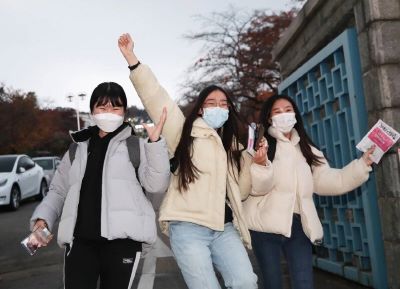
On Nov. 18, slightly over 500,000 Koreans sat arguably the most important exam of their life: the College Scholastic Ability Test, or Suneung.

A day after the annual exam, a parents’ union held a protest in front of the Seoul Metropolitan Office of Education against the government’s ongoing education policies. The protesters were part of a growing movement that questions whether the country’s educational system can foster creative minds or equip young people with the skills they’ll need in the future, rather than just training them to do well on multiple choice tests.

Among the biggest questions — both for the public educational system and the 9.3 trillion won ($8.1 billion) after-school hagwon industry — is how well English is being taught.

Critics say English education is often targeted toward acing standardized written exams, like the Suneung, rather than improving students’ practical communication skills.

Kim Jae-joong, the head of a local English academy, said English studies at high school focus on rote memorization because of the Suneung.

Problems had long existed, but they got worse in 2018 when the Suneung switched to an absolute grading system for its English section instead of grading students on a curve.

The move was intended to tackle the snowballing cost of private English education in the country, but the similarities between the Suneung’s English section and the English programs on the state-run educational TV channel EBS led students to learn what patterns to look for on the test.

“Since (the students) can access similar questions and (Suneung) sample sentences, they focus more on memorizing (the patterns) to ‘pick’ the right answers,” Kim explained, going on to say that he actually advises students against trying to understand what the text is about. “It takes much more than two minutes, so one needs instead to find clues that will help them pinpoint the answer.” Test takers are given 45 questions that need to be answered in 70 minutes.

“We (educators) should consider the matters on the fundamental level, about why we learn English, and how English should be taught and learned well. This, of course, will take more than two minutes to solve.”

As most students work hard to gain the skills to ace multiple-choice tests, exams have come to include “ridiculously difficult” questions to distinguish high performers from well-trained but average students. This has led to the Suneung becoming inconsistent with the secondary education curriculum.

A major complaint over this year’s exam concerned a passage on Hegelian dialectics, followed by six questions about the passage. Other passages are also said to have exceeded the reading comprehension level required of high school graduates — for example, one on the Bretton Woods international monetary system and one on optical lenses for automobiles.

YouTuber Korean Englishman recently posted a video of British students in their final year of high school taking the English portion of the Suneung. They struggled despite English being their native tongue, as the reading comprehension section contains excerpts drawn from philosophy, literature and technical manuals rather than everyday English.

When asked, “What did it feel like you were being tested on?” one student jokingly answered, “Not English.”

“It’s done in a way every answer could be the answer,” said another. 

The roots of the exam obsession

In June, the Korean Society for the Study of Education held its annual meeting of 1,500 scholars from across the country. The theme was the present and future of education in the country. Naturally, its hyper-competitive, exam-focused nature dominated the discussion.

Professor Yoon Pyung-joong of Hanshin University said that was a reflection of Korean society.

Koreans tend to hold the view that “college entrance is the front line in the clash of the classes,” he said, adding that one should be mindful of the political and philosophical aspects of Korean education when discussing how to reform it.

Almost regardless of age, Koreans live under constant pressure to out-excel peers, and exams offer the most cost-effective way to evaluate and rank people.

In a country where well over 70 percent of high school graduates advance to college, getting good Suneung scores and enrolling in an elite university is proof of success — at least early in life.

In “Squid Game,” protagonist Gi-hun’s weird obsession with boasting that his childhood friend Sang-woo is the “pride of Sangmoon-dong” and “graduated from Seoul National University with honors” reflects this same outlook.

Of course, this is why the Suneung is considered among the most important days of one’s life, if not the most important. On the eve of this year’s exam, the Ministry of Gender Equality and Family announced that it would offer round-the-clock counseling for teens dealing with post-Suneung stress — part of an effort to prevent violence and even suicide.

In about four months, Koreans will elect a new president. At Global HR Forum 2021, held earlier this month, the presidential candidates shared their respective visions on education, which ranged from an emphasis on smart teaching and learning technologies to reforms that would emphasize creativity over exam skills.

Although they differ on policies, they share one big question: How should Korea prepare its children for the future?

Perhaps the fate of the fictional “pride of Sangmoon-dong” in “Squid Game,” considering where his SNU diploma landed him, is a reflection of where Korean education is headed unless something changes.

Published : November 28, 2021

By : The Korea Herald

Over 18L Indian students to go for foreign education by 2024: Report #SootinClaimon.Com

#SootinClaimon.Com : ขอบคุณแหล่งข้อมูล : หนังสือพิมพ์ The Nation.

https://www.nationthailand.com/international/40009348


Studying abroad is set to grow in the coming years as international borders reopen with the Covid situation easing,  and according to the new forecast, over 18 lakh Indian students are set to opt for foreign colleges and universities by 2024.

Over 18L Indian students to go for foreign education by 2024: Report

While the demand for studying abroad is increasing besides the outflow, student expenditure is soaring and is likely to touch $75-85 billion by 2024, which will be an increased rate of more than 2 times from 2019.

It is now expected to regain momentum as things become normal while the sector faced a stunted growth in 2020-21 as international borders were closed to combat Covid, as per the report by Bengaluru-based market research firm RedSeer.

“We are bullish about this segment’s growth in the coming years. Our research shows that the total number of Indian students studying abroad will stand at around 18 lakh by 2024,” said Abhishek Gupta, engagement manager at RedSeer.

In 2019, nearly 7,00,000 students applied to study abroad.

“In 2019 alone, around 420k students headed out but the total number of applicants was around 1.7 times. This colossal increase is due to factors like rising in GDP in the past two decades leading to more consumption and awareness about education abroad,” Gupta mentioned.

The massive demand that this segment is witnessing is shown by the growth in the outflow rates that had outpaced domestic student growth by 6 times in 2016-19.

“Our research shows that currently, 770k Indian students are studying abroad from 440,000 in 2016 which is a 20 percent growth. On the other hand, the growth in the domestic region has been merely 3 percent when compared to the demand for education abroad,” the analyst informed.

(With inputs from IANS)

Published : November 28, 2021

By : The Statesman

Two Myanmar-China border crossings reopen for trade #SootinClaimon.Com

#SootinClaimon.Com : ขอบคุณแหล่งข้อมูล : หนังสือพิมพ์ The Nation.

https://www.nationthailand.com/international/40009347


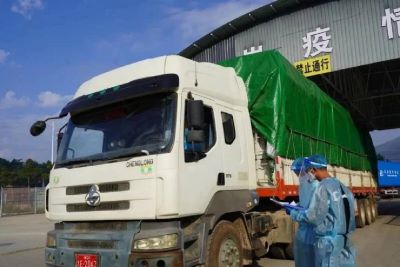
YANGON (AFP) – Two Myanmar-China border crossings have reopened for trade after the movement of goods was suspended for almost seven months due to Covid-19 restrictions, officials said.

Five shipping containers of produce were exchanged on Friday (Nov 26) at the Kyin San Kyawt border gate, around 11km from the northern Myanmar city of Muse.

Mr Min Thein, vice-chair of the Muse Rice Wholesale Centre, said an estimated 800,000 bags of rice had been in limbo since the border was shut in April.

“It will take one month to export all these rice bags,” he told AFP.

China says it will allow more trucks to cross next week.

Elsewhere in Myanmar’s Shan state, the Chinshwehaw border gate also reopened for commerce Friday, the Chinese embassy in Yangon said.

“China-Myanmar border trade is trying to return to normal as soon as possible,” the embassy posted on Facebook alongside pictures of container trucks and officials in full plastic protective gear.

The border shutdowns came as a huge blow to Myanmar’s agricultural export sector with hundreds of millions of dollars in revenue lost.

The country’s economy has tanked since February’s military coup sparked widespread protests, bloodshed and international sanctions.

Myanmar typically exports seafood, fruit and rice to China via land routes while it receives electronics, medicine and construction materials in return.

The trade disruptions increased the cost of living for families living in Myanmar border towns.

“Food and clothes that come from China now have a higher price,” a woman from Muse told AFP.

“We have many difficulties as our income cannot keep up with the price of goods.”

Published : November 28, 2021

By : The Straits Times

Fake Indian Rupees – from Pakistan to India: Bangladesh a stopover #SootinClaimon.Com

#SootinClaimon.Com : ขอบคุณแหล่งข้อมูล : หนังสือพิมพ์ The Nation.

https://www.nationthailand.com/international/40009346


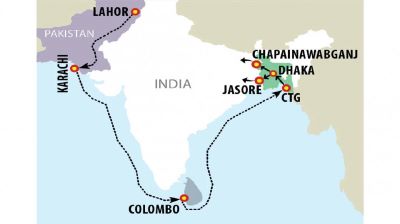
A transnational currency forgery syndicate has been smuggling fake Indian rupees into India from Pakistan for a couple of years using Sri Lanka and Bangladesh as transit.

The syndicate prints fake Indian currency notes in Pakistan’s Lahore and then sends those to Sri Lanka by sea in containers loaded with marble stones.

From Sri Lanka, the containers are shipped to Chattogram port in Bangladesh.

The consignments are then sent to Dhaka by trucks with other goods.

In Bangladesh, the fake notes are stashed in “special chambers” at homes of syndicate members before smuggling those into India in small portions using land routes.

Dhaka Metropolitan Police (DMP) officials involved in the investigation into fake currency smuggling yesterday disclosed this to The Daily Star, a day after the arrest of the syndicate’s two Bangladeshi members — Fatema Akter Opy and Sheik Md Abu Taleb.

Police also recovered fake Indian rupees worth around Rs 7.30 crore from Fatema’s home in the capital’s Dakshinkhan.

A high official of DMP (Gulshan Division) said Fatema married Pakistan national Danesh over a decade ago.

Danesh was arrested in 2010 over his involvement in note forgery, the official told this newspaper yesterday.

Fatema was also arrested before in a note forgery case filed with Motijheel Police Station.

“After coming out of jail, Danesh suffered a heart attack and became bedridden. Fatema then took over the illegal business and started controlling the syndicate’s Bangladesh operations,” said the DMP official, requesting anonymity.

Briefing reporters around noon yesterday, Md Asaduzzaman, deputy commissioner (Gulshan Division) of DMP, said police raided Khilkhet area on Friday night on information that a woman with fake Indian rupees was roaming around the main gate to Bonorupa residential area. Police arrested the woman from there and recovered fake Indian rupees worth Rs 50,000 from her.

Gleaning information from the arrestee, police later recovered fake Indian rupees from her home and picked up the syndicate’s another member Taleb from Demra that same night, the DMP DC said.

Investigators said Fatema built a “special chamber” in her house to store the fake notes. Police recovered 95 sacks of fake rupees stored with 500 more sacks of marbles imported from Pakistan. This was done to dodge law enforcers.

A high official of DMP (Gulshan Division) involved in the investigation said Pakistani national Sultan is the mastermind of the syndicate and he is controlling its operations from Lahore.

His father Md Safi is also involved in the syndicate, the official added.

“Fatema visited Sultan’s home in Pakistan several times. She used to call Safi her father,” the DMP official said, quoting Fatema.

He said the syndicate used a “cutout system” for smuggling fake notes into India. This would allow the syndicate to keep one party in the dark about the other.

“The syndicate would just give a serial number of a fake note or a portion of a fake note to a second party. The consignment would be delivered to one party from another only if the serial number of the fake note matched,” the DMP official said.

The syndicate use different border points of Bangladesh to smuggle the currency, said police.

Asked about payments for syndicate members, the DMP official said they would have an idea about it after interrogating the arrestees.

Meanwhile, a Dhaka Court yesterday placed the two arrestees on two-day remand each in a case filed by police with Khilkhet Police Station over the recovery of the fake Indian rupees.

Iftekhairul Islam, additional deputy commissioner (Gulshan Division) of DMP, said they had some information about the syndicate’s activities, but it would take some time to have details on its members as they use the “cutout system”.

“We are carrying out the investigating with the information available. We hope to trace the whereabouts of the absconding members of the syndicate soon,” he told The Daily Star.

Published : November 28, 2021

By : The Daily Star

Biden’s Summit for Democracy: Bangladesh’s exclusion bewildering #SootinClaimon.Com

#SootinClaimon.Com : ขอบคุณแหล่งข้อมูล : หนังสือพิมพ์ The Nation.

https://www.nationthailand.com/international/40009345


The exclusion of Bangladesh from US President Joe Bidens Summit for Democracy has triggered surprise, questions and caution among foreign relations analysts, especially as there is no clear explanation given though Washington considers Dhaka its strategic ally in the Asia-Pacific.

Biden’s Summit for Democracy: Bangladesh’s exclusion bewildering

They say there could be flaws in the democratic practices in Bangladesh, and the US should have engaged Bangladesh. Excluding Bangladesh from the list of invitees is also intriguing as there are a number of countries, whose democratic process is highly questionable, but were invited.

Analysts say Biden’s initiative to improve democracy, curb corruption and promote human rights, if sustained, will have far-reaching implications in global governance, trade and diplomatic relations.

Therefore, it is crucial for Bangladesh to keep a close watch on the initiative and plan measures to deal with the implications in the coming days, they said.

According to the State Department, India, Pakistan, Nepal and Maldives were invited to the virtual summit on December 9 and 10, which aims at defending against authoritarianism, addressing and fighting corruption and promoting respect for human rights.

A US Embassy spokesperson in Dhaka said they have followed the UN’s approach in determining the countries to be invited, but spoke nothing about why Bangladesh has not been invited.

“Our goal is to be as inclusive as possible, within logistical constraints,” she said, adding, “In the long run, we seek to engage any and all countries that show a genuine willingness in making commitments that support the Summit’s goals.”

Former Ambassador Shamsher Mobin Chowdhury said the US and Bangladesh have a very strong relationship, which is even going to be stronger given the fact Bangladesh is in a strategic location in the Asia-Pacific and that the US is looking at Bangladesh to boost trade, defence and security relations.

Also, Bangladesh is a major Muslim country whose core values are democracy and human rights. It is also making a significant contribution to world peace, including in the UN and other multilateral bodies while sheltering more than a million Rohingyas that drew applauds globally.

“Bangladesh might have flaws in democratic practices…whatever, the US could have engaged Bangladesh before the exclusion,” Chowdhury said, adding, “Not including Bangladesh suggests a contradicting and confusing US stance.”

Also, he said, Washington has created a scope for Dhaka to complain if the US speaks of democracy later.

He suggested that Dhaka seeks to know the factors that led to Washington’s exclusion.

Bangladesh Enterprise Institute President Humayun Kabir said the Summit for Democracy, as pledged by Biden before the elections, will have significant implications in the wake of deteriorating democratic and human rights values globally.

It is not only the US but also Europe that will be strongly supporting the initiative, which is part of the US’s policy of return to global leadership to face down authoritarian forces led by China and Russia, he said.

This initiative will be stronger if Biden is elected in the next elections, he added.

“It seems Biden administration is going strongly and institutionally against the authoritarian regimes,” said Humayun Kabir, a former ambassador.

He said analysis of the list of the invitees reveals it has two types of countries — strong democracies and the US’ strategic allies, whose democracies are, however, questionable. Some of the US’s strategic allies, including Egypt and Turkey have not been invited.

“This could be a comfort for Bangladesh,” he said.

However, one needs to keep in mind that the Summit for Democracy will be a trendsetter in the future. This can also contribute to who’s a US friend and who’s not.

“Though not invited, we need to take note of what’s happening and the implications of the summit. Accordingly, we need to act,” Humayun Kabir told this correspondent.

Published : November 28, 2021

By : The Daily Star

US slammed for undemocratic activities. #SootinClaimon.Com

#SootinClaimon.Com : ขอบคุณแหล่งข้อมูล : หนังสือพิมพ์ The Nation.

https://www.nationthailand.com/international/40009344


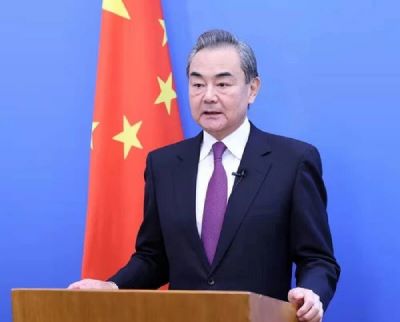
State Councilor and Foreign Minister Wang Yi said democracy should not be privatized, labeled or politicized, expressing strong opposition to Washington engaging in undemocratic activities under the banner of “democracy”.

Wang’s remarks came as the United States will hold a so-called “Summit for Democracy” in December, which will bring together leaders from a group of countries.

Noting that democracy is the right of all peoples, rather than an exclusive privilege of the few, Wang said whether a country is democratic or not should be left to its own people to decide, rather than arbitrarily judged by a certain foreign country.

The standard of democracy should be based on whether it meets people’s needs, and whether it enables people to have enough sense of participation, satisfaction and gain, he said.

If the US labels countries as democratic or undemocratic in line with its preferences, this move itself is undemocratic, Wang said, adding that it creates divisions and seeks supremacy for the US.

“If a country can only measure the quality of its own democracy based on the sole yardstick of the US, it is actually a betrayal of the democratic spirit, let alone being true democracy,” he added.

Wang criticized Washington’s use of democracy as a political tool, adding that some US practices have aroused the suspicion and dissatisfaction of many countries.

“The US claims that it does not support ‘Taiwan independence’, yet it flagrantly offers an international platform for ‘Taiwan independence’ separatist forces, which only proves that it fails to honor its commitments,” Wang said.

Calling the move meddling in internal affairs and pointing out that infringing on the sovereignty of other countries in the name of democracy to serve a political agenda is despicable, Wang said such practices must be rejected.

Wang emphasized that the world needs unity, not division, and it needs cooperation rather than confrontation. He called for countries, and particularly major countries, to play a leading role in this regard, rather than setting an opposite example.

Axel Jesson Ayenoue, deputy general secretary of the Gabonese Democratic Party, echoed China’s viewpoints on democracy, which he said had a global vision.

He said people of all countries were entitled to choose their own development paths and institutional models that suited their own national conditions, which was the key for them to advance democracy.

“People can enjoy tangible benefits brought about by the development and progress of their own country, which is of paramount importance for democracy,” he said.

The so-called “Summit for Democracy” is seen by many countries as an attempt by the US to make democracy a tool serving its own interests, which damages democratic values and creates divisions.

Russian presidential spokesman Dmitry Peskov said on Wednesday that the US preferred to divide countries into those that-in its opinion-were good, and those that were bad, adding that Washington was trying to privatize the term “democracy”.

Published : November 28, 2021

By : China Daily

HK reports 3 new imported virus cases with mutant strains #SootinClaimon.Com

#SootinClaimon.Com : ขอบคุณแหล่งข้อมูล : หนังสือพิมพ์ The Nation.

https://www.nationthailand.com/international/40009343


HONG KONG – Hong Kong reported three new COVID-19 infections on Saturday, bringing the overall tally in the financial hub to 12,424.

The newly reported cases are imported cases that involved the L452R mutant strains, a spokesperson for the Centre for Health Protection said in a statement. 

The patients involved a 58-year-old aircrew member arriving from Russia, a 72-year-old woman flying in from India via the United Arab Emirates, and a 47-year-old man traveling from the United Kingdom, according to the center.

Two patients tested positive during the “test-and-hold” arrangement upon arrival at Hong Kong International Airport and while the remaining tested positive during quarantine. All three have received two doses of the COVID-19 vaccine. 

A total of 43 cases have been reported in the past 14 days and all of them are imported, the center added.

The spokesperson stressed that the global situation of COVID-19 infection remains severe and called on members to avoid all non-essential travel outside Hong Kong, in particular to specified places with high risk under the Prevention and Control of Disease (Regulation of Cross-boundary Conveyances and Travellers) Regulation (Cap. 599H).

In a separate statement, a spokesperson for the Hospital Authority said a total of 43 COVID-19 patients are currently hospitalized in the North Lantau Hospital Hong Kong Infection Control Centre and the Hospital Authority Infectious Disease Centre, and all of them are in stable condition.

Published : November 28, 2021

By : China Daily

China decides to downgrade diplomatic ties with Lithuania #SootinClaimon.Com

#SootinClaimon.Com : ขอบคุณแหล่งข้อมูล : หนังสือพิมพ์ The Nation.

https://www.nationthailand.com/international/40009097


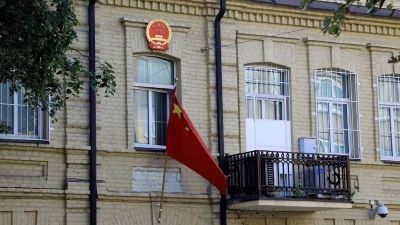
BEIJING – China has decided to downgrade the diplomatic relations with Lithuania to the level of charge daffaires, the Chinese foreign ministry said on Sunday.

According to a statement released on the Foreign Ministry’s website, Lithuania, in disregard of China’s strong protest and repeated representations, allowed on Nov 18 the Taiwan authorities to set up a “Taiwanese Representative Office in Lithuania.” This act openly creates the false impression of “one China, one Taiwan” in the world, renounces the political commitment made by Lithuania in the communique on the establishment of diplomatic relations with the People’s Republic of China (PRC), undermines China’s sovereignty and territorial integrity, and grossly interferes in China’s internal affairs.

“The Chinese side expresses its strong indignation and protest against this move, and decides to downgrade its diplomatic relations with Lithuania to the charge d’affaires level,” it said.

There is only one China in the world and the government of the PRC is the sole legal government representing the whole of China, the statement said, noting the one-China principle is an overwhelming consensus of the international community, a widely recognized norm governing international relations, and the political foundation for China and Lithuania to develop bilateral ties.

It pointed out that the Chinese government has, out of goodwill to preserve China-Lithuania ties, repeatedly warned Lithuania against acting in bad faith. Regrettably, Lithuania has chosen to ignore China’s solemn position and to disregard the broader interests of bilateral ties and the basic norms governing international relations. It has allowed the establishment in Lithuania of the “Representative Office” bearing the name of Taiwan, thus creating an egregious precedent in the world.

Given the fact that the political foundation for an ambassadorial-level diplomatic relationship has been damaged by Lithuania, the Chinese government, out of the need to safeguard national sovereignty and basic norms governing international relations, has no choice but to downgrade its diplomatic relations with Lithuania to the charge d’affaires level. The Lithuanian government must bear all the ensuing consequences, according to the statement.

“We urge the Lithuanian side to immediately put right its mistake and not to underestimate the Chinese people’s strong resolve, will and capability to defend national sovereignty and territorial integrity,” the statement reads.

“We also have this stern warning for the Taiwan authorities: Taiwan is never a country,” it added.

According to the statement, no matter how “Taiwan independence” forces try to misrepresent facts and confound black and white, the historical fact that the mainland and Taiwan belong to one and the same China cannot be changed. Attempts to seek foreign support for political manipulation will prove to be a dead end.  

Published : November 22, 2021

By : China Daily