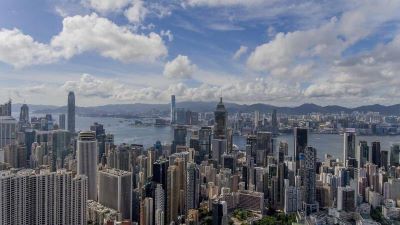
HONG KONG – Hong Kongs economy maintains a steady recovery and is expected to record an economic growth of around 6.5 percent this year, said Paul Chan Mo-po, financial secretary of the Hong Kong Special Administrative Region government.
Hong Kong’s economic recovery benefited from its strong export and fixed investment in the first half of the year, as well as the improvement in private consumption spending, Chan said in a blog post on Sunday.
With vaccination programs processing globally, major economies resume and Chinese mainland’s economy recovers steadily. According to Chan, Hong Kong’s total exports surged by 30 percent in the first half of the year, with the growth rate in the third quarter being 22.7 percent.
Hong Kong’s economy has grown 7.8 percent year-on-year in the first half of the year under its strong export and the increasing domestic demand, while trade and consumption indicators will predict a good growth impetus in the third quarter, he said.
Chan believes that the year-on-year growth in the third quarter should be lower than that of the first half of the year, due to the stronger-than-expected economic rebound in the first half and a higher base of comparison in the second half of last year.
With the epidemic under control and the issue of electronic consumption vouchers, Hong Kong’s retail sales value in the first half of the year rose 8.4 percent and the total revenue of the catering business also rebound by 0.5 percent.
In addition, the seasonally adjusted unemployment rate substantially dropped from a 17-year high of 7.2 percent at the beginning of this year to 4.5 percent in the third quarter, the lowest level since the first quarter of last year, while the number of employees in the industries of retail, accommodation, and catering services saw a total increase of 3.5 percent year-on-year in the third quarter.
Looking ahead to the fourth quarter, Chan noted that Hong Kong’s export growth rate is expected to slow down as the global economic growth has already reached its peak, while employment and income situations will improve coupled with the effect of the consumption voucher scheme.
However, Chan stressed that external risk factors such as the pandemic, high commodity prices as well as rising external inflation must not be ignored.
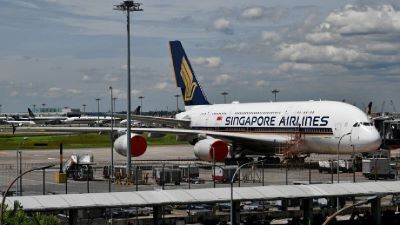
SINGAPORE – More travellers from the United States could soon be passing through Changi Airport to other parts of the region following a landmark agreement between Singapore Airlines (SIA) and US carrier United Airlines.
The move could also lead to an additional option for Vaccinated Travel Lane (VTL) flights to Singapore, and in the long term, pave the way for lower fares and more flights between Singapore and US, said experts.
SIA had announced the partnership with United Airlines in an internal circular earlier this month.
It said the carriers had signed a memorandum of understanding to work on supporting the resumption of connectivity between Singapore and the US.
“This milestone signals the start of a deeper partnership between both airlines, which could offer enhanced options and benefits for customers in line with the applicable laws and regulations,” said SIA.
It said the move is part of its strategy to build partnerships with major airlines around the world, which would help increase connectivity to and through Singapore, and support the recovery of Singapore’s air hub.
SIA said both airlines will aim to progressively code-share on each other’s services from Singapore and the US.
The collaboration could extend to Scoot in subsequent phases.
The code-share arrangement refers to the practice where one airline sells seats on a flight operated by the other airlines.
This allows travellers to enjoy benefit from the airlines’ respective frequent flyer or corporate travel programme.
SIA told The Straits Times that specifics of the agreement will remain confidential, but more details will be announced in due course.
It said partnerships with other airlines enable SIA to gain access to additional destinations and offer more options for customers.
As at September, SIA has 34 code-share partners and access to more than 200 additional destinations through these partnerships.
Its most significant partnerships, such as those with German carrier Lufthansa and Air New Zealand, go beyond code-sharing to include collaborations in areas such as coordination of schedules and revenue sharing.
It also has three partnerships that are pending regulatory approval – with Japanese carrier ANA, Indian carrier Vistara and Malaysia Airlines.
Mr Mayur Patel, head of Asia at flight data and analytics provider OAG Aviation, said the agreement between SIA and United Airlines will allow the US carrier to restart its non-stop Singapore-to-San Francisco services.
This will provide an alternative choice for passengers looking to travel into Singapore under the Vaccinated Travel Lane scheme.
“United Airlines and SIA are fierce competitors across the Pacific but the new code-share could open the door to a broader and potentially game changing partnership,” Mr Patel added.
He said the partnership would provide SIA with better access to US destinations beyond those it is directly flying to and could also lead to a joint venture.
This joint venture, if it goes through, would support expanded capacity between Singapore and the US, said Mr Patel.
It would also allow both airlines to offer joint fare products and strengthen connectivity at both of the airlines’ air hubs.
Mr Joshua Ng, director of the Alton Aviation Consultancy, said the agreement will improve SIA’s position in the US market.
He said it is not expected to affect VTL travellers much initially, given that it will take time to implement the code-sharing agreements.
But he said travellers will be able to see the benefits of the agreement in early 2022, as international travel recovers.
“With this partnership, travellers will be able to see and book an expanded set of itinerary options via the SIA reservation systems,” Mr Ng added.
“These itinerary options will allow for more flexible connections, more direct and shorter routes via SIA’s and United Airlines’ non-stop flights between Singapore and the US, and also likely lower fares in the target markets.”
China is ready to advance its “dual circulation” strategy and boost growth under the new development paradigm by accelerating economic transition, fostering greener growth and nurturing greater opening-up, experts and industrial insiders said.
Chi Fulin, president of the China Institute for Reform and Development, said that while the COVID-19 pandemic is still rampaging globally, China is and will continue to be the market with the hugest potential.
The country’s new development paradigm-in which the domestic market is the mainstay and the domestic and foreign markets reinforce each other-will be fueled by its market and consumption potential, Chi said while addressing the China in Building a New Development Paradigm and the World forum over the weekend in Haikou, Hainan province. The forum was co-hosted by the CIRD, the Bank of China, China Daily and China Public Diplomacy Association.
Noting that China is currently in a critical stage of economic transition and upgrading, and estimates about its market potential are varied, Chi said that the country’s industrial structural adjustment is expected to generate enormous market potential and its consumption momentum will remain strong.
The purchasing managers index for China’s manufacturing sector came in at 49.2 in October, down from 49.6 in September, according to National Bureau of Statistics figures released on Sunday.
However, Chi said that with the country’s socioeconomic transformation and upgrading, the room for household service consumption growth is huge. He estimated that by 2022, China will become the world’s largest retail market, with total retail sales reaching $6.06 trillion.
He also estimated that by 2025, China’s producer services are expected to account for 40 percent of total GDP, up from the current 30 percent. New producer services will be worth about 21 trillion yuan ($3.27 trillion), he said.
Monday marks the 30th anniversary of the China Institute for Reform and Development. Founded on Nov 1, 1991, the public research institution has, as Martin Raiser, World Bank country director for China, South Korea and Mongolia, put it, “played a really important role in China’s reform and opening-up”.
Raiser said at the forum that if China succeeds in shifting domestic demand toward consumption while sustaining the economic growth rate in the 4 to 5 percent range in the next decade, Chinese consumers can become the locomotive of the world economy.
Domestically, greener growth is expected to fuel the country’s consumption in a healthier and more sustainable manner. Liu Lian’ge, the Bank of China chairman, told the forum that China is actively taking multipronged approaches on energy, production, consumption and the financial front to advance the country’s green transition in social and economic development.
In recent years, with competent policy incentives, green consumption has become a new driver for China’s economic transition and upgrading, he said.
“On the one hand, domestic green consumption has been improving from the supply side and the market has been growing. Energy-saving home appliances and new energy vehicles are increasingly favored by consumers in China.
“On the other hand, the concept of green consumption has become increasingly popular in China,” he said, adding that a report issued by the United Nations Environment Programme shows that over 70 percent of Chinese consumers are aware of green consumption and about half of them are willing to pay a 10 percent premium on green products.
Zhou Shuchun, editor-in-chief and publisher of China Daily, said that a greater opening-up can be seen as China’s boldest reform measure under the new global situation, and is “a key measure in coping with the profound changes in the international economic landscape”.
Zhang Yansheng, chief researcher at the China Center for International Economic Exchanges, said that the new development paradigm will bring China’s opening-up to a higher level in terms of institutional opening-up, attracting talent and boosting innovation.
He said that under the new development paradigm, China is in the process of removing trade barriers and tariffs, lowering subsidies and facilitating trade and investment. The country is also widening market access for the service sector.
“Institutional opening-up can be expected as the country will work to align with international standards,” he said.
Leon Wang, executive vice-president of pharmaceutical company AstraZeneca, said the paradigm will better connect China’s domestic market with the global one, and help China make better use of resources at home and abroad to achieve stronger high-quality development.
“Though faced with complexities and global economic challenges, China has been and is continuing to open its door wider,” he said, adding that the Chinese economy has shown strong resilience and played a leading role in the global fight against the economic uncertainty brought by the pandemic.
A desperate search and rescue operation is underway after three French climbers were reported missing on Saturday after an avalanche hit a mountain near Mount Everest.
According to French media, the missing climbers have been identified as Thomas Arfi, Gabriel Miloche and Louis Pachoud. They were part of an eight-member expedition team that was scaling the 6,783-metre Mt Khangtega in the Khumbu region.
The media report said that the three climbers had reportedly gone out of contact on October 26, but the incident was reported only on Saturday.
According to Pralhad Chapagain of the Holiday Himalaya Trek and Expedition, the agency that had facilitated the group to obtain the climbing permits, the Department of Tourism had issued the permits on October 23.
Ang Norbu Sherpa, president of Nepal National Mountain Guides Association, which is leading the search and rescue operation, said the exact location from where the climbers went missing is unknown.
“We don’t know whether it is Mt Amadablam or Mt Khangtega from where the climbers went missing, since both mountains are located in the same range,” Sherpa said.
“Contact has been established with the five other expedition members. They are expected to reach Kathmandu by tomorrow or the day after tomorrow.”
Pratap Jung Pandey, managing director of Kailash Helicopter Services, said the search was stepped up on Sunday at the request of the family members of the missing climbers, but the inclement weather hindered their effort.
“The helicopter had to return due to the bad weather condition. We will continue the search on Monday,” Pandey told the Post. “We have spotted a bag and what appeared to be a tent remains on a steep slope of the mountain.”
Photographs posted by the helicopter company on its Facebook page show some objects covered by heavy snow deposits on a mountain slope.
A team of experienced high-altitude climbers are accompanying the helicopter search party.
Mingma Gyalje Sherpa, one of the rescue members, said a brief aerial search was carried out on Sunday on the mountain slope where they spotted a massive deposit of snow, most likely caused by an avalanche.
“We could not conduct a comprehensive search due to bad weather conditions,” Sherpa told the Post from Lukla. “We plan to fly back to the site early Monday morning to continue our search.”
Meanwhile, an official at the Department of Tourism, the government agency that issues the climbing permits, said that they have heard unconfirmed reports about the missing French climbers.
“We have heard about the missing French climbers but we are yet to get official details about the incident,” Bhishma Raj Bhattarai, a section officer at the department, told the Post.
The government has in general extended Covid-19 control measures for another 15 days but has lifted some restrictions in order to ease the economic impacts, such as the reopening of more schools and factories.
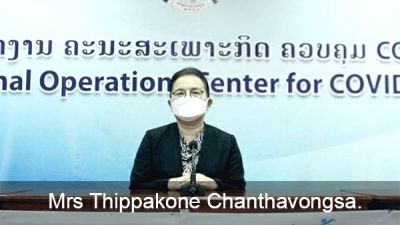
Most of the existing measures will remain in force from October 31 to November 14, Government Spokesperson Mrs Thippakone Chanthavongsa told reporters on Saturday.
“Although Covid control measures have broadly been enforced in the past, the number of locally-transmitted cases continues to rise and the virus has spread to almost every province,” she said.
“On average, almost 500 Covid cases were reported each day in October, an increase of 27.6 percent compared to September. Therefore, the government has decided to further extend several existing restrictions.”
However, it is essential to balance public health measures with efforts to revive the economy and enable people to continue their livelihoods.
Eased Measures
Retail shops, supermarkets, minimarts and fresh markets may remain open but vendors and shoppers must comply with government guidelines on the wearing of face masks, use of hand sanitiser, and physical distancing of at least one metre. All markets and retail shops must close by 9pm.
Beauty salons, barber shops and massage parlours can remain open in non-red zone areas but staff and customers must be fully vaccinated and strictly comply with all Covid control measures. These businesses must close no later than 7pm. Restaurants and cafes in areas that are virus-free may remain open and provide dine-in services but tables must be placed at least 1 metre apart and staff and customers must be fully inoculated. Restaurants located in red zones may only offer takeaway services.
Factories and businesses outside of red zones may reopen but employees must not come from red zone villages. Factories are encouraged to house their staff on site to prevent the spread of the virus.
Conferences may take place in virus-free areas but attendees must comply with all Covid control measures. The organisers of meetings in the provinces must first obtain authorisation from the local Covid taskforce.
Foreigners who travel to Laos and wish to travel to another province must submit their travel documents and a 14-day quarantine certificate to the Covid taskforce to seek authorisation to travel, but will not have to undergo further quarantine in their destination province.
However, foreigners who live in Laos or have been in Laos for some time will be subject to the same conditions as Lao citizens.
The Ministry of Education and Sports has been urged to consider reopening schools across the country, but must first determine the requirements of such a move and examine the readiness of schools to reopen.
Restrictions to remain in place
Local and international border crossings will remain closed and no tourist visas will be issued. Parties, gatherings and social events of all kinds are forbidden at any location.
Road traffic in Vientiane and provinces with community outbreaks of the virus is prohibited between the hours of 11pm and 5am, except in the case of freight transport and vehicles authorised by the Covid taskforce.
PENANG has secured a US$10mil (RM41.4mil) adaptation fund from the World Bank for projects to address climate change which has caused floods and rising temperature.
State local government committee chairman Jagdeep Singh Deo said the application that was coordinated by the World Bank had been approved and the US$10mil fund had been principally approved.
“This money will be given to three parties, namely the Penang Island City Council (MBPP), Irrigation and Drainage Department (JPS) and Think City.
“I would like to congratulate Think City and UN Habitat for representing Penang on this amazing achievement.
“The council will focus on greening the state and JPS will look into bigger flood mitigation projects.
“Think City will generally look at how to bring about a sustainable, resilient and green Penang.
“We are waiting for the funds to arrive so that our projects can start.
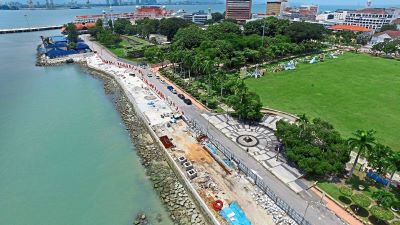
“The allocation from the adaptation fund will jive and synchronise with our Penang Bay project which began some two years ago.
“The project will regenerate, redevelop and upgrade several parts of Penang, not only good fields (new areas) but also brown fields (old areas),” he said during a press conference at City Hall at the Esplanade on Friday.
The Penang Bay project will incorporate Gurney Wharf, light rail connectivity, Jelutong landfill, the George Town north and east seafront projects plus waterfront development in Butterworth.
The project will deliver significant new opportunities for Penangites via publicly accessible waterfront promenades plus retail, education, lifestyle and transport amenities.
Jagdeep added that representatives from the state government attended the World Urban Forum Edition 10 in Abu Dhabi last February to introduce the Penang Bay project to international players.
“Out of the 100 submissions at the forum, nine were selected and among the nine was Penang.
“The World Urban Forum was the beginning of the Penang Bay project.
“We continued the process which included holding an international ideas competition to get input from all over the world.
“We received 123 submissions for the competition from 27 countries.
“In January this year, we selected five winners of the competition,” he said.
Jagdeep added that on Oct 28, the state government approved the application for Sustainable Development Goal (SDG) certification.
“We have to incorporate all SDGs in the Penang Bay project so that we can become a sustainable, resilient state that can fight climate change,” he said.
MBPP secretary Datuk Addnan Mohd Razali said one-third of the funds would go towards greening purposes on the island.
“A lot of roads have been identified to be planted with trees so that we can reduce the temperature by 1.5 degree Celsius.
“That is our ultimate aim in greening George Town and the island,” he said.
Think City programme director Dr Matt Benson congratulated the state government on its initiative to sign up to be one of the world’s first SDG city zones.
“Penang Bay will be one of the world’s first city regions to be nominated as part of the innovative process.
“A lot of consultation, thinking and design plus plenty of stakeholder engagement have been put into the application.
“It is incredibly tough to get this kind of adaptation fund.
“It is a signal to the world that Penang is serious about climate adaptation and doing something about it,” he said.
TOKYO (Jiji Press) — Seventeen people suffered injuries in an attack on a train in Tokyo by a 24-year-old man on Sunday evening, with one of the victims, a man in his 70s, unconscious and in critical condition after being stabbed in the chest.
The 17 people were sent to hospital. The 16 people, excluding the stabbed man, are in the age group of 10 to 69 years, and their injuries are not life-threatening. Tokyo’s Metropolitan Police Department is investigating details of the attack.
The suspect, Kyota Hattori, was arrested by police officers who rushed to the scene on suspicion of attempted murder. His occupation and address are not known. Hattori told the police, “I wanted to be executed by killing people,” according to investigative sources.
Around 8 p.m. (11 a.m. GMT), police received an emergency call reporting that a man is swinging an edged tool on a train on the Keio Line of railway operator Keio Corp. . The phone call was made by a person on the inbound rapid train when it was traveling in the city of Chofu, a suburb of the Japanese capital.
According to the investigation headquarters set up at the MPD’s Chofu Police Station, Hattori stabbed the man in his 70s, who was sitting in car No. 3 of the train, in the right chest with an edged tool with a blade of about 30 centimeters.
Hattori then moved to car No. 5 and released what appeared to be oil from a plastic bottle and set fire to the liquid. The floor and seats of the car were burned. He was captured in car No. 2.
Hattori told the police that he bought the edged tool on an online shopping site. He also said that he would be sentenced to death if he kills two or more people, adding that he committed the assault by learning from an incident on a train on Odakyu Electric Railway Co.’s Odakyu line in Tokyo’s Setagaya Ward in August, in which a man with an edged tool and cooking oil injured 10 passengers.
Hattori did not carry a mobile phone or any identification, such as a driver’s license, with him when he was arrested. He had thousands of yen at the time.
The incident occurred when the train from Keio-hachioji Station to Shinjuku Station was traveling between Chofu and Meidaimae stations. The train stopped at Kokuryo Station on the Keio Line after a passenger pressed an emergency button.
An official of Keio Corp. said that smoke came from an area near a priority seat on the train and that it smelled like gasoline.
A woman, 46, from Tokyo’s Edogawa Ward who was on the train described the horror of the incident.
When she was sitting, about 10 to 20 passengers suddenly rushed into her car from the next car, shouting “emergency” and “run,” the woman said.
She did not know what happened but soon saw a man believed to be the suspect come and start to threaten passengers around him with an edged tool in his left hand and a plastic bottle containing a clear liquid in his right hand.
As the man was about to release the liquid, the woman realized the danger and ran to the next car with other passengers, she said.
After reaching the end car, she ran out of a door that was open and saw the man captured on a train car filled with smoke.
“I was very scared that such an incident happened around me,” she said in a trembling voice.
Another passenger Ryo Yoshida, a 34-year-old musician from Hachioji, Tokyo, saw the suspect sitting with a lit cigarette in his hand.
After moving to the next car and hearing someone say that the suspect has an edged tool, Yoshida escaped the train from a window.
Yoshida said: “I recalled the incident on the Odakyu train. I thought I would be stabbed, too.”
A 21-year-old female passenger noticed the emergency as she saw other passengers upset.
Thinking that she would be killed, the woman texted her mother to convey her gratitude for raising and caring for her.
She later escaped the train safely and reported it to the mother, while telling a passenger crying nearby, “You are all right.”
A video taken by a 32-year-old corporate worker who was also on the Keio train showed many passengers trying to flee in a panic.
The video showed flames rising, people shouting “it’s burning” and “let’s get off the train,” and an alarm going off.
The corporate worker said he saw the captured man before the arrest. The man was “wearing glasses and sitting quietly,” he said.
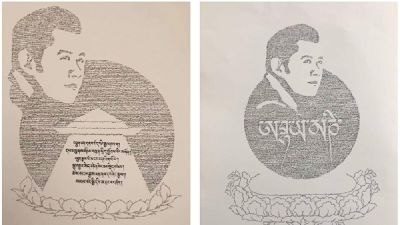
Ever since I brought Tibetan calligraphy art into the limelight by creating a world record for the longest calligraphy scroll in the world (165 metres) in 2010, I have been experimenting with Tibetan calligraphy art, creating new works, posting regularly on social media, exhibiting, talking, sharing and learning.
Idon’t know how much I could inspire and encourage people around me. Still, I can say with certainty that the imagination of promoting Tibetan calligraphy as an art, besides acquiring the skill of beautiful writing, has caught like a wildfire in Tibet. In 2017, they declared April 30 as the Annual National Day of Calligraphy to celebrate four vowels and 30 consonants (4.30).
Calligraphy means beautiful writing. They call it ‘shufan,’ a way of writing. In China, and from a very early period, calligraphy was considered not just a form of decorative art; instead, it was viewed as the top visual art form, more valued than painting and sculpture, and ranked alongside poetry.
This Chinese calligraphy and poetry found international recognition as one of the most beautiful traditional arts, with dedicated connoisseurs, and more people became its collectors. The art became somewhat standardised and developed its own peculiar conventions.
Thönmi Sambhota, one of the most capable ministers of the Tibetan rulers in the 7th century, was sent to India to develop an alphabet suitable for the Tibetan language. Thönmi derived the new script from the Devanagari script used in India.
Throughout the centuries, our ancestors have developed at least 100 different styles of writing, broadly categorised as Uchen, Umed, and Druktsa styles. However, Tibet devoted its entire state machinery and resources of the kingdom in developing the Buddhist philosophy of ‘science of the mind’ to benefit sentient beings.
Some 70,000 pages of Kangyur (‘Translated Words of Buddha) and 161,800 pages of Tengyur (Translated Treatises) were translated from Sanskrit to Tibetan. From a secular perspective, Tibet produced many great scholars who wrote poetry and other literature on philosophy, metaphysics, medicine, and astro-science, with only one objective in mind: benefiting others.
Writings of great scholars like Je Tsongkhapa, songs of Milarepa, compositions by Sakya and Nyingma masters are relevant and are studied in all the monasteries even to this day.
(Je Tsonkhapa (1357 to 1419) is a great Buddhist scholar, whose works laid the foundation of the Gelug school of Tibetan Buddhism. Milarepa (circa 1028 to 1111) is the venerable Tibetan siddha, or “Perfected Master”, and is the most accomplished pupil of Marpa, the “Great Translator”, who worked on original Sanskrit Buddhist texts.)
Unfortunately, anything other than spiritual practice was neglected, such as art and entertainment.
What is Art?
Art is a visual or vocal expression of the innate feeling of an artist from their heart, unstructured, boundless and spontaneous. At the same time, craft refers to an activity, which involves creating tangible objects with the use of hands and the brain.
Tibetan calligraphy is a skill that can be practiced, perfected, and reproduced. Yig tsal, or the art of writing, cannot be reproduced. It is an art. Yig tsal is equivalent to ‘Shodo’ of Japan and ‘Shufan’ of China.
I use ‘kyug style’, a form of a cursive script of the central Tibet region for calligraphy art.
The cursive script has more flexibility, for it only maintains the essence of each character and expresses more personal exertion. Therefore, its value lies in appreciation, of beholding, more than practicality. At the same time, the running hand makes full use of connecting lines between two strokes.
Watching art is also an art. The process of creating beautiful art, from conceiving an idea to the final expression on paper, is a profound meditative process. Art is a visual expression of the sound of the heart of an artist, and if the ‘tsa lung’, perhaps called the ‘Chi’ energy of an artist, is balanced and steady, the resultant visual art becomes a masterpiece.
Some say ‘calligraphy speaks’. I have created more than 200 styles of calligraphy art, and often, friends ask me: “How did you get so many ideas?” I say lightly that Guru Rinpoche has opened his treasure trove to me!
But honestly speaking, I have asked the same question to myself again and again. And only now, am I beginning to learn the answer. My experience is that I do not get two ideas at the same time. Only when I complete executing one work, put my seal on it, that there is a blank or emptiness.
Slowly, the next idea takes shape. I know that the void or the blank is vast, like an ocean. It indeed is the treasure trove of wisdom, limitless, and like a child with a small cup in hand, I stand at the shore of this ocean, not strong enough to go nearer and fetch water but confident that when the wind gushes, a drop will fall into my cup. These droplets are the result of my collected works.
When I shared my personal experience with my Spiritual Master, Tsoknyi Rinpoche, he beautifully explained the following, which awakened my consciousness and put my thoughts into proper perspective.
I would call this a Calligrapher’s Journey into the nature of mind.
Rinpoche says that there are four types of letters:
• A letter that rests on the natural state of mind
• A letter on ‘nadi’ (རྩ) energy or ‘tsa’ that moves with ‘prana’ ( རླུང་), or the wind energy in the physical body
• A letter that produces sound with the result of the movement of that wind energy
• The final expression of the artist is in the form of calligraphy.
We believe that our ‘nature of mind’ is primordially pure, clear, and vast as the sky. It also holds wisdom that can dispel ignorance. A letter is a medium to contact and to impart information, and dispel ignorance.
Sacred Journey
Let us look at how this journey from ‘nature of mind’ to the visual form on the paper takes place.
The artist sits down in a state of calmness and tries to look within the mind’s nature. He picks up a droplet from the ocean of wisdom. He then brings it to his own physical body and evokes the letter energy on his ‘tsa’ (རྩ) or the wind energy or the ‘lung’ ( རླུང་), whose nature is always moving, takes the letter on ‘tsa’ and converts it into a letter of sound.
By using the necessary tools, such as brush, ink stick, paper, and ink slab, which the Chinese calligraphy masters call the ‘four treasures of study,’ and converts the letter of sound into the form of a letter, called calligraphy. This way, he expresses the inner world in an aesthetic sense for others to behold.
It is almost a sacred journey that few people can appreciate. It is an art to look at art, and only those who understand can fully marvel at such works.
Similarly, when you have such art on your wall, you can study it carefully, the strength of strokes, the darker and lighter shades of inks, the writing flow, and most importantly, the message it is trying to convey.
The viewer can retrace the calligraphy art in the form of its root, sound, letter on your ‘tsa lung’ and finally to the vastness, pureness of the nature of mind.
Buddhism
Our masters have, over the centuries, introduced varieties of skillful means to teach Buddhism by introducing many kinds of deities by way of statues and thankas (spiritual scrolls), each for wealth, knowledge, strength, compassion and long life, etc. Ultimately all these deities dissolve into your heart, and just like you put a drop of water into oceans, it becomes one with the ocean, inseparable.
Therefore, practicing calligraphy art is also a skillful means to see your nature of mind, which is the ultimate goal of all Buddhist teachings. It is the best tool to practice mindfulness besides promoting a unique traditional art. It is a gem that we ignored. I hope the next generation will have some sense of what I am trying to say. Yet, I would still say that to watch art is also an art.
Contributed by Jamyang Dorjee
(The author is a senior ideologue-practitioner of Tibetan calligraphy, and has developed explicit varieties of it, exhibited around the world. He is based in Gangtok, Sikkim, India. Email: jamyangitsn@gmail.com
The thousand-year-old culture of Việt Nam is so rich in theatrical tradition – be it plays, comedies, tragedies or musicals – that each region seems to have its own operatic form.
The north has the hugely popular chèo plays performed in village courtyards for the entire public to enjoy. The centre possesses the more sophisticated, in-depth tuồng plays, often taking place in roofed venues and performed for royalty, while the south has the heart-stopping melancholic tunes of cải lương plays and their lengthy lyrics that include up to 99 words in a single breath.
While tuồng (classical drama) and chèo (popular opera) were traditional theatrical plays, cải lương (reformed drama) was a renewed musical style born in the early 20th century by incorporating vọng cổ (nostalgic) melodies into the plot.
Around the same time, a western genre of performing art called kịch nói (straight play), also made its debut in the country. With the premiere of Chén thuốc độc, or ‘The Cup of Poison’, penned by playwright Vũ Đình Long in 1921, the western-style play – without singing – was born. The genre now celebrates its 100th anniversary in the country.
The beginning
Theatre critics are agreed that such plays came to Việt Nam with the French long after they invaded the country, at some point during the latter half of the 19th century.
The first French play performed in Hà Nội in Vietnamese language, translated by Nguyễn Văn Vĩnh, premiered in the city’s Opera House on April 20, 1920. It was Le Malade Imaginaire (The Imaginary Invalid) by Molière. The Tiến Đức Open Mind Society co-sponsored the première to raise funds for the families of Indochinese soldiers who fought for France in World War I and never came back.
During that time, such plays were only popular among the ruling French and some western-trained local intellectuals, while your average audiences preferred singing in their performances.
One and a half year after the Molière premiere, Vũ Đình Long presented his play Chén thuốc độc (The Cup of Poison) at Hà Nội’s Opera House, and more local playwrights began penning their own scripts.
Phong Hóa and Ngày Nay newspapers even ran readers’ scripts sent from around the country.
Vũ Đình Long, now known as the father of Vietnamese theatre, made his name in the early years of the 20th century, owning the Tân Dân Publishers and various publications, namely Tiểu thuyết thứ bảy (Saturday Novel), Phổ thông bán nguyệt san (Popular bi-monthly magazine) and Hữu Ích (Useful).
He orchestrated both literary circles and the wider market, and played a major part in the national literary, newspaper and publishing scene of the time.
At 25 years of age, he penned The Cup of Poison and Tòa án lương tâm (The Court of Conscience), ushering in an entirely new genre of performing arts throughout the country.
In a conference on Vũ Đình Long’s life and works earlier this month, critic Ngô Tự Lập said that The Cup of Poison had an impressive launch not only thanks to its new format, but for the way it cut into urban family crises, reflecting the larger societal conflicts and issues of the country in the early 20th century. He said that the play also showed its author’s in-depth dissection of the tossing and turnings of what were then degrading social norms and values.
Long went on to write other plays reflecting contemporary issues, including Đàn bà mới (New Women) and many more.
Trained in French culture and education, he also translated other world famous plays such as Shakespeare’s Hamlet, Corneille’s Motherland and Chekhov’s Uncle Vanya with the adapted Vietnamese name Uncle Vân.
In 1935, poet Thế Lữ, who also wrote some of Việt Nam’s best crime and detective novels, founded Thế Lữ Theatre Troupe in Hải Phòng with his friend. It was the first country’s theatrical troupe, tilting toward professionalism.
During the brief period of less than two years when President Hồ Chí Minh declared Việt Nam’s independence in 1945 and before they had to retreat to the mountains in the north for a nine-year long war of resistance against the French, theatrical plays flourished in Hà Nội. Small groups between five and 10 people got together to play, and often even bigger groups.
The form was a useful way to communicate to the wider public, with plays written to commemorate heroic ancestors and call on the masses to rise up against the French colonialists.
Clear prose that was sharp and easy to grasp was a popular quality of theatrical plays, and even inspired the common people to go to evening classes to learn to read and write to reduce the illiteracy rate and encourage economic production.
After the Hồ Chí Minh Government had to evacuate to the mountains, back in the cities of Hà Nội and Sài Gòn, western plays came back to the stage with plays of Molière, Shakespeare, and others focusing on the history of the Orient and Việt Nam.
Theatrical plays became a subject taught at the Sài Gòn National Academy for Music and Drama. Kim Cương, a cải lương star, and successor of a Nguyễn King also made her name playing in these dramas without singing.
During the time when the country was divided in two, plays also saw triumphant growth in the North, with schools shows and students taking part across the board.
Language students even staged plays in French and Russian. The best theatre actors and actresses were treated like rock stars.
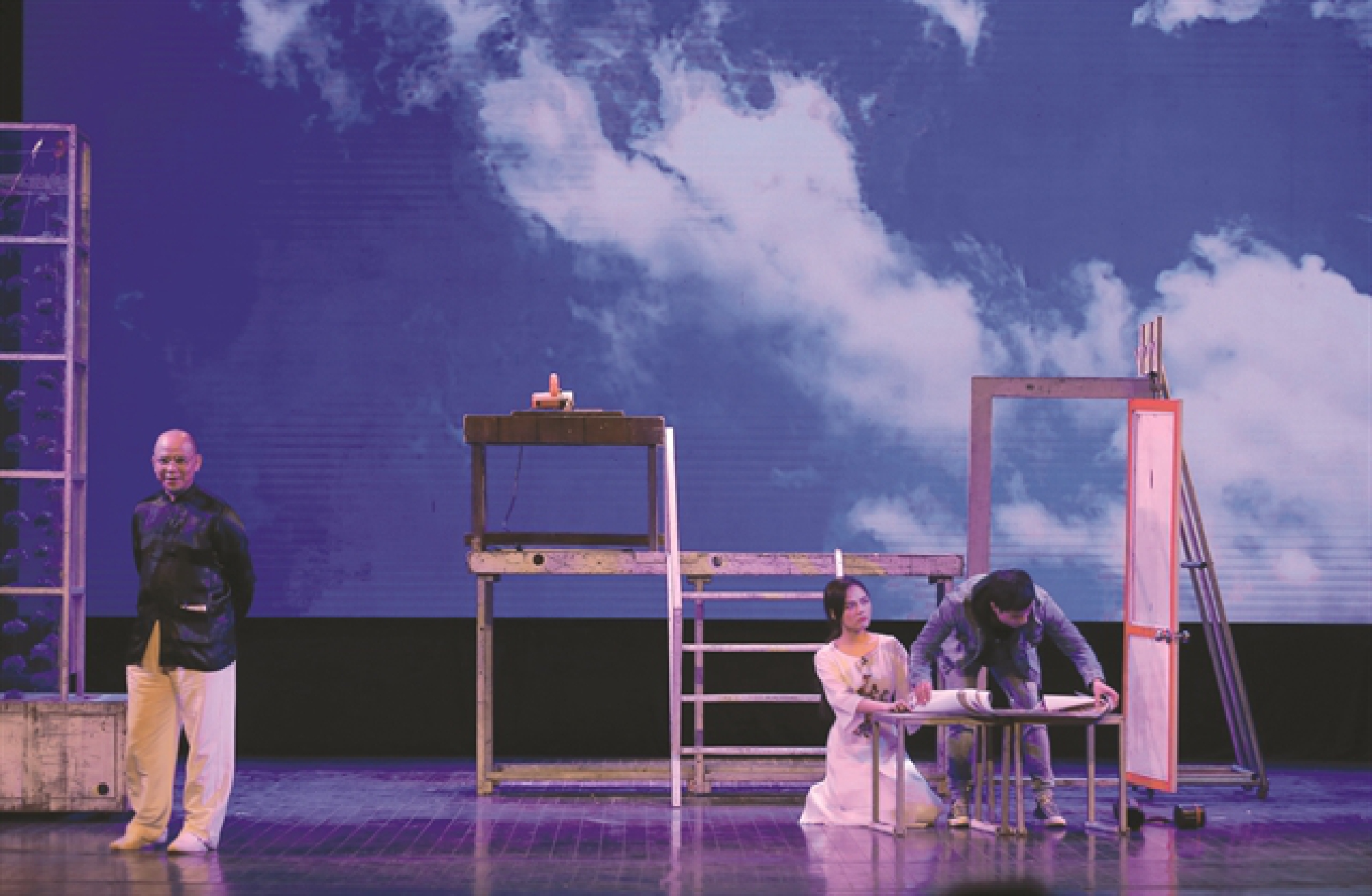
100 years: the rise and fall of modern theatre in Việt Nam
The stars
Prior to the new reforms and radical thinking in 1986, the way the country was run economically was inefficient and theatres could not afford to keep staff fully paid. But the Government soon eased its controls, allowing private troupes to stage public performances.
New scripts were blooming with names such as Thế Ngữ, Doãn Hoàng Giang and Lưu Quang Vũ, who all wrote about the pains and joys of Vietnamese society, gradually replacing theatrical productions of political contents.
Vũ, the most successful playwright of that brief bloom, penned scripts to full houses from north to south. Scouts from theatre troupes came to his home in Hà Nội waiting to fetch the latest play exclusively for their theatres.
Many stars were born from those days becoming pivotal artists with superb skill. People’s artists Hoàng Cúc and Trần Vân, Hoàng Dũng and Lê Khanh were a few of Vũ’s artistic disciples.
But this renaissance did not last long. In 1988, a car crash killed Vũ, his wife and their youngest son. In 2000, he was posthumously awarded the Hồ Chí Minh Prize for his play Lời Thề Thứ Chín (The Ninth Pledge).
The free fall
Though the Vietnamese economy has flourished since 1986, the theatrical scene has not much improved since, with people increasingly turning to forms of mass entertainment such as video tapes, DVDs and, today, online streaming. Most theatrical entertainment is watched on screens in the home.
The number of people frequenting cinemas, or theatres has decreased sharply since 2000. Artists have to work odd jobs to make ends meet and theatre group managers struggle to tickle audiences and lure them to the theatre.
For many years, tragedies would not win spectator’s hearts. Everyone had to turn to comedies, or battled to find themes that appealed to viewers.
The National Theatre of Việt Nam, and the Hà Nội Youth Theatre have tried to stay faithful to their successful repertoire. In the south, French centre IDECAF hall, and Hồng Vân’s Small Theatre often stage comedies.
Today, television series can get the best actors and actresses known nationwide, faster than decades-long theatre roles on the stages of Hà Nội and beyond.
But it is a problem worldwide.
Leon Quang Lê, a Vietnamese artist who performs in Broadway musicals told Việt Nam News that it was a job of constant discrimination and struggle.
He left Broadway to spend a few years making a widescreen movie, Song Lang, on the art of cải lương, which received acclaimed reviews from critics, but was a commercial failure.
100 years: the rise and fall of modern theatre in Việt Nam
The curtain call
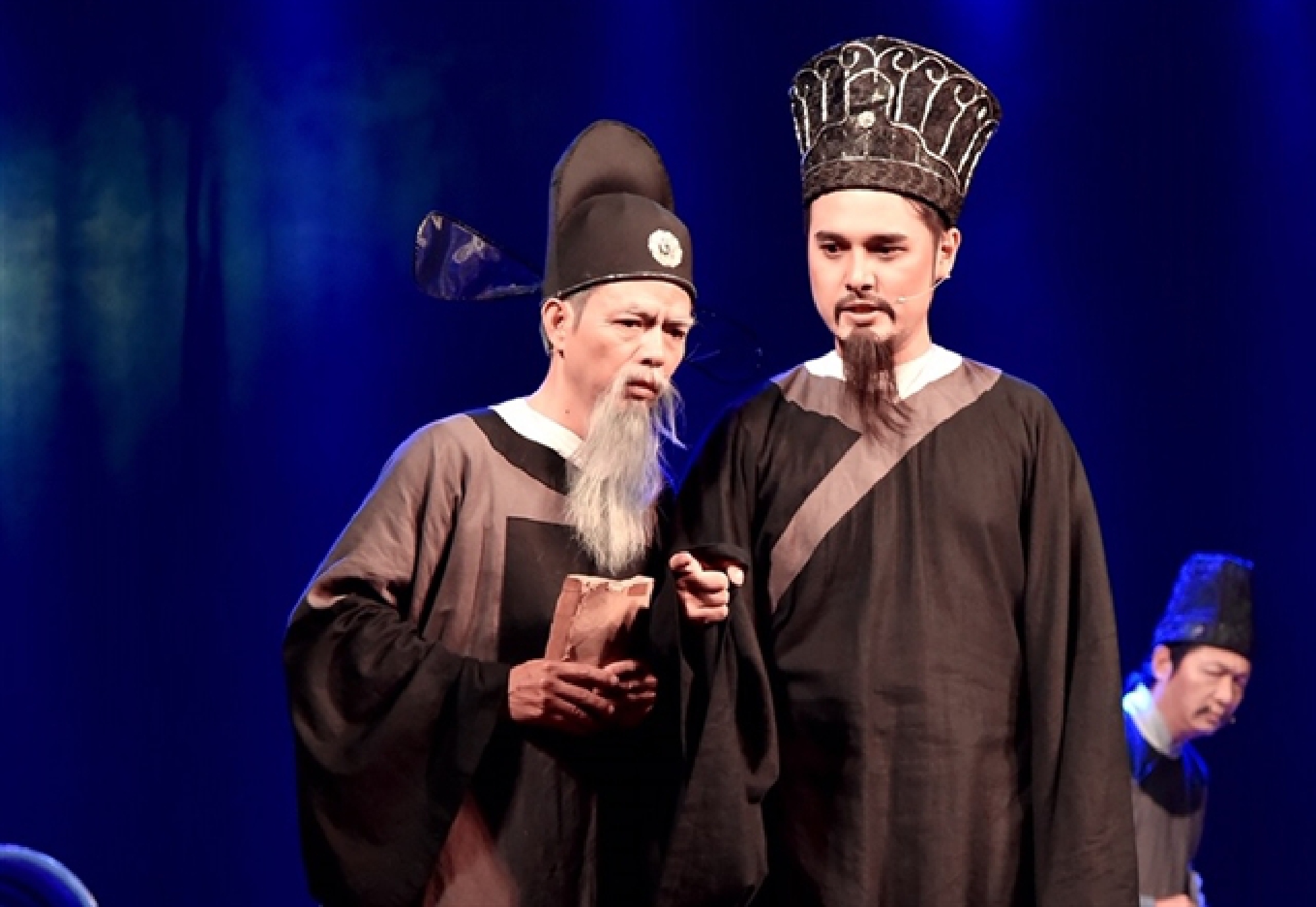
On October 21, the play to start it all, The Cup of Poison opened at a week-long festival in Hà Nội Opera House, abridged slightly to be shorter than the 3-hour original. Director Bùi Như Lai recreated the life of four people in a family 100 years ago, reflecting not only their life crises, but also those of wider society at large.
It shows the free fall of a wealthy family after the father dies leaving them a fortune. A superstitious mother spends money going from temple to temple praying for the family’s well-being with a supporting daughter-in-law. An elderly son has a well-paid job but overspends his high salary and squanders the family fortune on alcohol, music and women (some things never change). A younger sister loses faith upon seeing everyone else in decline, withdrawing to have an affair with a married man. It all reaches a nadir when a court orders their house to be confiscated.
The titular cup of poison is something much of the family fight to drink in quiet desperation to end their troubled lives, before a family friend reminds them that suicide is the easy way out but it’s more difficult to live and win back tattered reputations (such psychological counselling is all well and good, but perhaps it is easier said than done).
Though the play was the country’s first spoken drama, as opposed to the more popular song-and-dialogues performances, director Lai added văn (ritual) singing to his production, making it both visually appealing and adding some hair-raising theatrics from the voices of the singers. The decision to add singing to the play was unorthodox but added considerable colour to the performance.
Văn singing was banned for a long time because it was seen as superstitious, and ceremonies cost so much money they could break the fortunes of wealthy families (perhaps a fitting addition considering the play’s context).
The play was a stunning way to kick-off modern drama in the nation, and it feels as fresh today as it must have back then.
Plays are a wonderful way to combine an artistic vision, while presenting contemporary issues and capturing audience attention, and it is hoped that after a century of performances they will still be able to flourish.
“Over its 100-year co-existence with other traditional theatrical genres, spoken plays can reflect the ongoing reality in the country’s life faster, sharper and more truthfully,” said Deputy Minister of Culture, Sport and Tourism Tạ Quang Đông at the opening ceremony of The Cup of Poison.
Though a century of western theatre is something to celebrate, there is no doubt that COVID-19 has also been a cup of poison the industry has had to drink, and the jury is still out as to whether it can survive.
As the President of Việt Nam Theatre Association Trịnh Thúy Mùi said at the opening ceremony: “Where it will steer the 100-year-old performing art genre is a question we all have to look for an answer to.” VNS
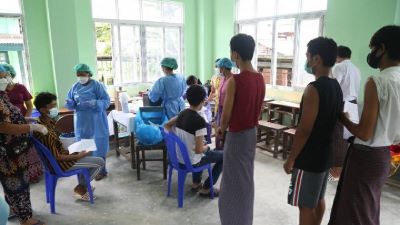
Up to 35 percent of Myanmar’s population completed COVID-19 vaccination and more doses of COVID-19 are needed to buy at the end of this year to reach 50 percent of COVID-19 coverage in Myanmar’s population according to a 13th coordination meeting on COVID-19 prevention, control and treatment committee held at the Bayint Naung hall in Nay Pyi Taw.
In Myanmar, there are 6.42 million people who completed two doses of COVID-19, 6.36 million people completed one dose of COVID-19 till October 26. Altogether 12.79 million people completed COVID-19 doses and over 19 million doses were given.
Plans have been made to cover 50 percent of population at the end of 2021 and 70 percent of population in middle of 2022, sources said.
Among the 24 million doses of Sinopharm COVID-19 vaccine agreed to buy from China, 20 million doses have already y arrived Myanmar.
At present, COVID-19 jabs are given to above 45 years of age beginning from October 17 instead of above 55 years of age.
Since September 14, new destination groups have been extended to give COVID-19 jabs. It includes above 55 years of age civilians, disable, national races, ethnic armed forces members, migrant workers and people from IDP camps, chronic patients and people with non-communicable diseases. Now, above 45 years of age people are included in the list.
Myanmar started COVID-19 vaccination since January 2021.
Ministry of Health urges public to receive COVID-19 jabs, to complete full doses of COVID-19 at the set period or in a nearest time frame of first dose.



 100 years: the rise and fall of modern theatre in Việt Nam
 100 years: the rise and fall of modern theatre in Việt Nam