Beijing, Tianjin, Hebei central to green efforts #SootinClaimon.Com

#SootinClaimon.Com : ขอบคุณแหล่งข้อมูล : หนังสือพิมพ์ The Nation.

https://www.nationthailand.com/international/40008335


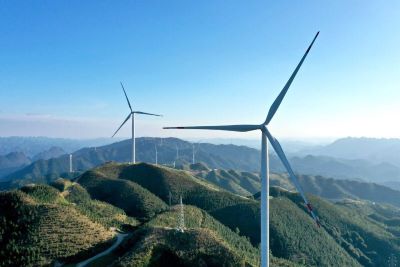
Beijing, Tianjin and Hebei province have advantages in contributing to Chinas target of realizing peak carbon dioxide emissions before 2030 and achieving carbon neutrality before 2060, as the city cluster possesses innovative talent and resources, experts said.
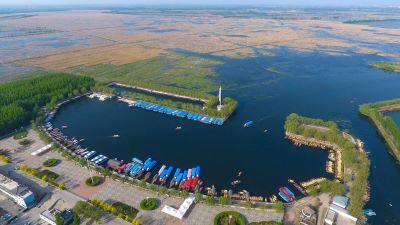
These three areas, especially the capital, have obvious advantages in science and innovation, and technology is key in the country’s efforts to reduce carbon emissions and realize carbon neutrality, according to Yang Kaizhong, a researcher specializing in regional economic development at the Chinese Academy of Social Sciences, who spoke at a forum on Beijing-Tianjin-Hebei integrated development, which was held in Beijing recently.

“Since as early as 2014, the three places have been coordinated to promote environmental protection,” Yang said. “China is accelerating the development of city clusters, which will bring crucial opportunities for cities surrounding the capital.”

There are many sectors in which Beijing has been cooperating with Tianjin and Hebei, including air quality improvement, green construction, transportation and green finance. Beijing’s sub-city center in its eastern Tongzhou district, which is near Hebei, has been playing an important role in the tri-area coordination.

Sui Zhenjiang, vice-mayor of Beijing, said at a recent forum that the sub-city center considers green development as the primary path to high-quality growth, with green energy and green construction being the two major sectors.

Zhao Lei, Party chief of Tongzhou, said a series of major construction projects in the sub-city center has adopted the green concept.

For example, the central green forest park, with an area of 11 square kilometers, was built in the sub-city center and opened to the public in September last year. Also, a smart energy service hub in the center is expected to be one of the first nearly zero-emission construction projects in China.

“We will speed up the development of new energy and renewable energy projects in the construction sector,” Zhao said.

Beijing has been removing high-energy consumption businesses out of the city in recent years and developing high-tech and cultural innovation industries, aiming at reducing energy consumption per unit of GDP.

The capital’s development and reform commission also announced recently that it will support key technology development involving green innovation efforts.

Through these measures, China has demonstrated its commitment to tackling climate change and promoting greener development in Beijing and its surrounding areas.

On Oct 17, Tianjin, which has been working closely with the capital, unveiled Tianjin Port, which claimed it would be the world’s first dock to operate with zero carbon emissions.

Chu Bin, Party chief and president of Tianjin Port Group, said the construction of the dock took only one year and nine months, reflecting “Chinese speed”, and that the port would serve as a pioneer model by driving the port cluster in the Beijing-Tianjin-Hebei province to slash carbon dioxide emissions and protect the environment.

Currently, there are five major ports along the 640-kilometer coastline of Hebei and Tianjin: Cangzhou, Huanghua, Caofeidian, Qinhuangdao and Tianjin.

They have inked strategic partnerships in recent years, with Tianjin as the hub, and aim to form an international port cluster.

Led by Tianjin Port, the ports in the region decided to join hands to reduce carbon emissions and participate in other environmental protection work in recent years as part of their strategic goal to create the world-class port cluster.

Their moves include stepping up efforts to transport cargo more by rail rather than by road, and powering berthed ships from the shore instead of using traditional coal or oil onboard.

“During the 14th Five-Year Plan (2021-25) period, the port cluster in the region aims to boost clean energy production and shore power utilization, and strengthen their efforts to prevent water pollution,” he said.

By DU JUAN in Beijing and YANG CHENG in Tianjin

Published : November 03, 2021

By : China Daily
S. Korean economy to extend its recovery momentum: finance minister #SootinClaimon.Com

#SootinClaimon.Com : ขอบคุณแหล่งข้อมูล : หนังสือพิมพ์ The Nation.

https://www.nationthailand.com/international/40008334


South Koreas finance minister has said the countrys economy is expected to extend its recovery momentum on the back of the accelerating COVID-19 vaccine rollout and efforts to gradually return to normal life.

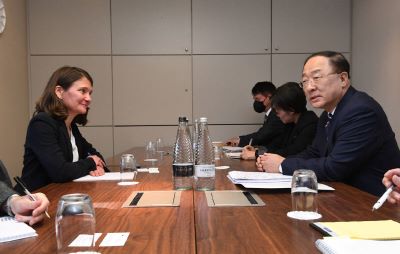
Finance Minister Hong Nam-ki made the remarks during his meeting with Marie Diron, managing director of Sovereign Risk Group at global credit appraiser Moody’s Investors Service, in London on Tuesday (local time), according to the finance ministry.

The meeting was held to discuss South Korea’s economic situations, as Hong was visiting London to hold an investor relations session with global investment banks.

Hong said the government will mobilize all policy means to help achieve its 2021 economic growth target of 4.2 percent in a bid to support the economic recovery momentum, according to the ministry.

On Monday, South Korea began to implement the “living with COVID-19” scheme in a bid to gradually phase out anti-virus restrictions for a return to normal life. Under the scheme, COVID-19 is treated as an infectious respiratory disease, like seasonal influenza, with eased virus curbs.

The country’s economic growth slowed to a 0.3 percent on-quarter gain in the third quarter from 0.8 percent growth in the second quarter due to the resurgence of COVID-19 cases. But the government expects consumer spending will likely rebound with eased social distancing rules.

The minister also said South Korea’s fiscal health remains firm compared with major economies, but it plans to make efforts to enhance fiscal soundness in light of rapid aging and mounting social welfare costs.

The government proposed a record high budget of 604.4 trillion won ($513.7 billion) for next year to maintain its expansionary fiscal policy. Its national debt is forecast to reach 1,068.3 trillion won next year and the debt-to-GDP ratio will hit 50.2 percent, according to the ministry’s estimate.

In May, Moody’s maintained its credit rating on South Korea at “Aa2,” the third-highest level on the company’s table, with a stable outlook.

The government plans to hold its annual consultation with Moody’s in the first half of next year. (Yonhap)

Published : November 03, 2021

By : The Korea Herald

Laos govt eyes 2,000 billion kip from bitcoin mining #SootinClaimon.Com

#SootinClaimon.Com : ขอบคุณแหล่งข้อมูล : หนังสือพิมพ์ The Nation.

https://www.nationthailand.com/international/40008333


The government expects to earn 2,000 billion kip in revenue from bitcoin mining – the first time such revenue would be earned from the mining and trade of the digital currency.

This new revenue source would contribute to the 28,963 billion kip in total domestic revenue projected for 2022, Minister of Finance Bounchom Ubonpaseuth told the second ordinary session of the National Assembly (NA)’s 9th legislature on Monday.

Presenting the 2022 draft budget plan to the session, the minister said the new source of revenue would increase the projected revenue for 2022 by 20 percent compared to the target for 2021.

The expected revenue from the digital currency comes after the government recently gave the green light to six companies to trial a programme to mine and trade cryptocurrency in Laos, including Bitcoin.

The six companies are Wap Data Technology Laos, Phongsubthavy Road & Bridge Construction Co., Ltd., Sisaket Construction Company Limited, Boupha Road-Bridge Design Survey Co., Ltd., the Joint Development Bank, and the Phousy Group.

The Ministry of Technology and Telecommunications has been entrusted to work with the Ministry of Finance, Bank of the Lao PDR, Ministry of Planning and Investment, Ministry of Energy and Mines, Ministry of Public Security, and Electricite du Laos to draft legislation relating to the mining and trading of the cryptocurrency.

The projected increase in revenue of 3,754 billion kip (compared to 2021), including 2,000 billion kip earned from the mining of Bitcoin, would enable the government to spend more on priority programmes.

These include increasing supporting allowances to cover the living expenses of officials and security force personnel, expenditure on efforts to respond to the Covid-19 outbreak, and the payment of debts.

The minister told NA members that domestic revenue accounts for 15 percent of gross domestic product (GDP).

In addition, the government expects to receive 2,460 billion kip in foreign grants, accounting for one percent of GDP.

The government is projected to spend 34,595 billion kip in total over 2022, including 6,750 billion kip on projects financed by loans and grants. Total spending is forecast to increase by 3,011 billion kip compared to 2021 and account for 18.14 percent of GDP.

By Souksakhone Vaenkeo 

Published : November 03, 2021

By : Vientiane Times

World leaders pledge to end deforestation by 2030 #SootinClaimon.Com

#SootinClaimon.Com : ขอบคุณแหล่งข้อมูล : หนังสือพิมพ์ The Nation.

https://www.nationthailand.com/international/40008331


GLASGOW – The leaders of more than 100 nations on Tuesday (Nov 2) pledged to halt and reverse forest loss and land degradation by 2030, in a bid to preserve the planets natural carbon sponges that can slow the rate of global warming.

World leaders pledge to end deforestation by 2030

The Glasgow leaders’ declaration on forests and land use, which was announced during the COP26 climate talks in the Scottish city, was signed by the European Union and countries such as Brazil, Indonesia, the United States and Congo.

Together, the signatories  account for about 85 per cent of the world’s forests.

Said British Prime Minister Boris Johnson during the Forest and Land Use event at COP26: “These great teeming ecosystems – these cathedrals of nature – are the lungs of our planet. Forests support communities, livelihoods and food supply, and absorb the carbon we pump into the atmosphere. They are essential to our very survival.”

Ms Frances Seymour, a distinguished senior fellow at think-tank World Resources Institute (WRI), said the 2030 target is significant as a reiteration from a new generation of leaders of the commitment made by some 40 countries seven years ago in the New York Declaration on Forests.

The New York Declaration, signed in 2014, aims to reduce natural forest loss by half by 2020 and strive to end it by 2030.

“Many more countries have signed up, including those that are significant in terms of forest area, such as Brazil and Russia, and in terms of their footprint on forests through trade and investment, especially China,” added Ms Seymour.

But she cautioned that since the declaration is a collective and shared commitment without an embedded accountability mechanism, its significance will lie in how it is translated into specific actions by specific countries.

“This will depend on citizens holding their leaders accountable for following through on these commitments,” she told The Straits Times.

The Glasgow leaders’ declaration is backed by almost US$20 billion (S$27 billion) in funding.

Some US$12 billion of public finance from 12 countries, including Britain, will go towards supporting activities in developing countries, such as restoring degraded land, tackling wildfires and supporting the rights of indigenous communities between this year and 2025.

Another $7.2 billion of private investment will come from more than 30 financial institutions, including Aviva, Schroders and Axa, to eliminate investment in activities linked to deforestation.

The declaration also outlines six key areas in which the 2030 goal can be achieved.

They include plans to conserve land-based ecosystems – such as forests – while accelerating their restoration, and aligning policies in agriculture and trade with the goal of ensuring that these activities are done sustainably.

Under the declaration, the leaders also pledged to direct financial flows to areas such as forest management and conservation, and to protect forests in a way that is respectful of the rights of indigenous people and local communities.

“We urge all leaders to join forces in a sustainable land use transition,” said the signatories of the declaration. This is essential to meeting the Paris Agreement goals, they added.

The Paris Agreement, adopted in 2015 by almost 200 nations, aims to limit planetary heating to 2 deg C – preferably 1.5 deg C – above pre-industrial levels.

This threshold will help reduce the impact of climate change, including more frequent extreme weather events, sea-level rise and more intense storms, climate scientists say.

The planetary crisis today is caused by an ever-thickening layer of greenhouse gases in the atmosphere, which traps heat and throws the Earth’s systems out of whack.

But ecosystems – such as tropical rainforests and peatlands – have the natural ability to take in planet-warming carbon dioxide through photosynthesis and then convert them to biomass in their trunks, leaves, roots and soils – locking away the carbon from the atmosphere.

Forests are the lungs of the planet, absorbing around one-third of the global carbon dioxide released from burning fossil fuels every year, said the British host of COP26 in a statement. “But we are losing them at an alarming rate. An area of forest the size of 27 football pitches is lost every minute,” it added.

The burning of fossil fuels is the primary contributor to the atmospheric blanket, but land use changes and deforestation are the second-largest contributor.

Professor Koh Lian Pin, who helms the National University of Singapore (NUS) Centre for Nature-based Climate Solutions, said the declaration is an important step towards turning off the tap of carbon emissions from the conversion of natural ecosystems to unsustainable land uses.

He said deforestation and forest degradation contribute to about a tenth of annual global emissions, and stopping these are crucial in the world’s bid to limit planetary warming.

But Prof Koh said more details are needed to determine if these goals can be met.

For instance, the ability to achieve the intended outcomes depends on effective policies at the national and sub-national levels to incentivise the transition of forest-opening industries to other activities that can sustain the local economies.

He added: “US$20 billion might sound like a lot, but the opportunity cost of carrying on business as usual in many parts of the world may be many times, if not magnitudes, greater than that.”

WRI’s Ms Seymour said that while the funding pledges are larger than in the past, they remain small compared to the private financial flows and public subsidies that drive deforestation.

She said: “That’s why they should be seen in conjunction with the complementary efforts being announced at the (Glasgow meeting) to drive system change, such as putting a market price on forest carbon, and commitments to get deforestation out of financial-sector investment portfolios.”

Prof Koh said it is also important that financial benefits trickle down to affected local communities, who are the stewards of the land, through measures that enhance their lives and livelihoods.

Separately, Britain, Norway, Germany, the United States and the Netherlands, in partnership with 17 funders, on Monday (Nov 1) pledged to invest US$1.7 billion to help indigenous and local communities safeguard the biodiverse tropical forests that are vital to protecting the planet from climate change, biodiversity loss and pandemic risk.

Singapore did not sign the Glasgow leaders’ declaration on forests and land use. The Straits Times has reached out to the Ministry of Sustainability and the Environment for comment.

By Audrey Tan and David Fogarty

Published : November 03, 2021

By : The Straits Times

Moon urges solidarity to tackle global supply chain crisis #SootinClaimon.Com

#SootinClaimon.Com : ขอบคุณแหล่งข้อมูล : หนังสือพิมพ์ The Nation.

https://www.nationthailand.com/international/40008286


South Korea under renewed pressure to play a bigger role in creating US-led new supply ecosystem

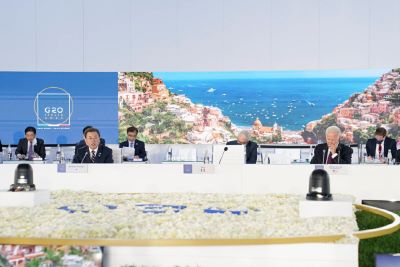
President Moon Jae-in on Sunday attended a global supply chain summit that was convened by US President Joe Biden in an apparent move to rally allies in reshaping the global supply ecosystem less dependent on China.

The meeting was held on the sidelines of the gathering of the G-20 leaders in Rome. A total of 14 countries, mostly the US’ key allies like Italy, Germany, Canada, India and Australia, attended the meeting, with China being absent. 

Biden stressed the urgent need for addressing the current supply chain crisis and other challenges affecting global commerce amid the protracted COVID-19 pandemic.

“Supply chains are something that most of our citizens never think twice about until something goes wrong. And during this pandemic, we’ve seen delays and backlogs of goods from automobiles to electronics, from shoes to furniture,” Biden said in his opening remarks.

“Ending the pandemic is the ultimate key to unlocking the disruptions we’re all contending with. But, we have to take action now, together with our partners in the private sector, to reduce the backlogs that we’re facing.”

Moon, who sat next to Biden, delivered a speech after the US president’s opening remarks, urging solidarity among nations to tackle the challenges together.

“Supply chain disruptions are holding back recovery while raising inflation concerns,” Moon said. “The global economy is intertwined with the global supply chain. Until all individual economies return to normalcy, the current supply chain crisis could continue.”

“The issue cannot be resolved individually. All of the countries should come up with emergency measures to speed up the flow of goods.”

In its renewed push to reshape the global supply chain, the Biden administration has reiterated South Korea’s role as the key supplier of essential components like computer chips. Korea’a government and businesses have also responded positively as they stand to enjoy generous business incentives and an expand presence in the new ecosystem.

During the Moon-Biden summit in May, Korean companies, including Samsung Electronics and Hyundai Motor, announced a new investment plan worth a combined $40 billion to shore up their productions in the US.

The unstated priority of the new initiative seems to be creating a new US-led supply chain system and countering China’s greater influence. Observers say South Korea’s balancing stance between the US, its largest security ally, and China, its biggest trading partner, is likely to be tested again during the process.

For Moon, support from both the US and China is crucial in resuming diplomacy with a defiant North Korea, a last-ditch effort to cement his legacy before he leaves office in May.

Separate from the complicated diplomacy between the two superpowers, South Korean firms, especially chip makers like Samsung Electronics and SK hynix, are already feeling the pinch of renewed pressure from the US.

Last month, the US government requested that Korean chipmakers disclose sensitive information on technology, clients and inventories. The companies, reluctant to do so, are asking for government intervention, with the Nov. 8 deadline nearing.

By Lee Ji-yoon

Published : November 02, 2021

By : The Korea Herald

Singapore working towards opening up while keeping human cost of Covid-19 low: PM Lee #SootinClaimon.Com

#SootinClaimon.Com : ขอบคุณแหล่งข้อมูล : หนังสือพิมพ์ The Nation.

https://www.nationthailand.com/international/40008285


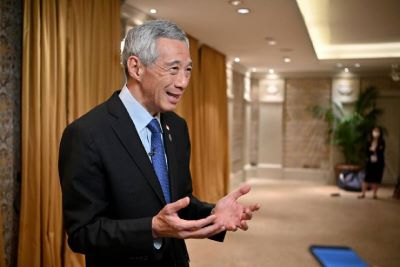
ROME – Singapore is working towards the easing of Covid-19 restrictions, as many European countries have done, while keeping the human cost as low as possible.

And this means reopening will take “a little bit longer, a few months”, said Prime Minister Lee Hsien Loong.

“But I think we can get there,” said PM Lee, who was in Rome for the Group of 20 Leaders’ Summit over the weekend.

In an interview with Singapore reporters on Sunday (Oct 31), the Prime Minister was asked if Singapore can expect to follow the path that Italy has taken in dealing with the pandemic. At present, many European countries no longer require masks to be worn outdoors and safe distancing restrictions have generally been rolled back, allowing life to resume a semblance of normality.

In response, PM Lee observed that Italy has a population of around 60 million and has reported 4.7 million Covid-19 cases so far. It has also seen 132,000 coronavirus deaths.

Translate these numbers to Singapore’s population of 5.45 million, and one would expect to see around 440,000 cases and 11,000 to 12,000 deaths, he noted.

But the country has reported just under 200,000 cases and 407 deaths as at Sunday.

These numbers mean that Singapore is about halfway to where Italy currently is, in terms of the number of people having gotten sick and recovered, PM Lee said.

“But in terms of the human casualties, we have been able to get there with much less human cost.”

He had a caveat – even after Singapore has achieved its aims, the situation may once again change.

“Covid-19 may well have more surprises for us,” PM Lee said, noting that cases are beginning to rise in Europe and governments are watching the situation to see if some tightening up is necessary.

Several countries have reported an uptick in case numbers, and there is growing concern that the winter months may see a resurgence of the coronavirus. This is because people tend to interact more often indoors at this time of the year, with the virus tending to survive better in cold, dry conditions.

“It may happen to us, too, but we take it one step at a time,” PM Lee said of the possibility that Singapore may once again need to tighten measures.

“So far, it has taken us a while. It has been very wearing on our people because each time we think we have arrived, something new turns up and you have to carry on a little bit longer,” he added.

“But we are making progress, and I think we have confidence we will get there.”

By Linette Lai

Published : November 02, 2021

By : The Straits Times

PM declares Cambodia fully reopen from Nov 1 #SootinClaimon.Com

#SootinClaimon.Com : ขอบคุณแหล่งข้อมูล : หนังสือพิมพ์ The Nation.

https://www.nationthailand.com/international/40008284


Prime Minister Hun Sen has announced that Cambodia is reopening the country fully across all sectors from November 1 on the basis of four factors: Full vaccination of much of the population, the availability of effective Covid-19 treatments and medicines, increased experience in dealing with the coronavirus and increased public understanding of Covid-19 and how to prevent infections.

Hun Sen officially declared the country open as the vaccination campaign for people aged six and older has now been completed, while the jab drive for children aged five has just begun.

“There are four factors that go into determining that we can reopen the country. The first factor is that Cambodia successfully achieved its goals for the vaccination drive, for base shots and booster shots. Our booster shots have reached nearly two million people,” he said.

Cambodia’s vaccination drive reached its targets in just eight month after kicking off in February 2021, which was eight months ahead of the original schedule for completion in mid-2022.

The second factor, he said, was that the government is ready to respond to any future outbreaks of Covid-19 with effective medical treatments including medicines that have now been conclusively determined to be of benefit to Covid-19 patients.

The government has already purchased enough of the US-manufactured Covid-19 medication invented by the pharmaceutical company Merck to treat 50,000 people, in addition to the options that Cambodia already has on hand which include China-produced medicines.

“Don’t just depend on good medicines and throw caution to the wind,” he said. “But now we have a solid treatment plan because we have medicines for Covid-19 that we know work.”

The third factor is Cambodia’s experience gained in combating and preventing the spread of the virus. The authorities now understand the disease better and know how to control it and prevent it from spreading on a large scale, Hun Sen said.

“The fourth factor is that our citizens now understand Covid-19 better and know how to protect themselves. They know how to live with Covid-19 in the new normal. They also know how to treat themselves at home for light cases.

“Of these four factors, it is the fourth – the citizen factor – that is the biggest. If we lead the people but they don’t listen to us, what can we do? If we have vaccines but our people don’t get vaccinated, what can we do?

“So we must thank the people for listening to reasons and protecting themselves by wearing masks and washing their hands frequently – and especially for getting vaccinated – and also testing themselves promptly when they suspect they may be infected.

“If there are no future complications due to other dangerous new variants of Covid-19, then I can assure you all that we are walking away from Covid-19 now in full of confidence,” he said.

The vaccination drive for the adult population of 10 million reached its goal on the night of October 31. The 10 millionth vaccinee was a 89-year-old woman residing in Siem Reap province. Cambodia has also vaccinated 97.89 per cent of the 12-17 age group of over 1.8 million and 101.22 per cent of the 6-11 age group of nearly 1.9 million.

Overall, the country has now vaccinated 85.68 per cent of the total population of around 16 million.

Hun Sen said Cambodia still has around nine million doses of vaccines in stock and ready to be administered to people – possibly as fourth-dose booster. But for the time being, he has told his officials to work with Thai authorities to find a way to bring jabs over the border to administer to Cambodia’s migrant workers in Thailand.

“I told our officials to cooperate with their Thai counterparts to send vaccines from Cambodia to Thailand and ask the Thai authorities to administer our vaccines to our people there, as Thailand does not have enough vaccines for their own citizens,” he said, adding that this would only be possible with approval from Thailand.

Separately, the prime minister questioned aloud the Australian pledge to donate 2.3 million Pfizer vaccine doses to Cambodia and whether those would be arriving any time soon.

“The donation by Australia of 2.3 million Pfizer doses along with the necessary cooling system for storing them was promised a long time ago. [My] apology to [Australian Prime Minister Scott Morrison] – who I just met with recently – for even mentioning this,” he said, referring to the recent virtual ASEAN-Australia summit last week.

Reached by The Post for comment on Hun Sen’s speech, the Australian embassy in Phnom Penh said: “Australia is not selling vaccines, but has committed to share 60 million doses with countries in Southeast Asia and the Pacific by the end of 2022.

“While commercial negotiations are underway, we are not in a position to confirm the manufacturer of any vaccines to be provided through procurement arrangements with UNICEF, or the timing of deliveries.”

As of November 1, Cambodia has recorded a total of 118,613 Covid-19 cases with 114,902 recoveries and 2,794 fatalities. Hun Sen said 15,605 of the confirmed cases were the highly-transmissible Delta variant.

The prime minster also instructed officials at the Ministry of Health to strengthen Cambodia’s treatment capacity because the percentage of fatal Covid-19 cases in the country was somewhat high compared to other nations.

He noted that the rate of transmission in Cambodia was at less than one per cent of the total population of around 16 million, but the mortality rate was at 2.35 per cent, which is higher than that of the US, UK, India and some other countries.

“This reflects the need to strengthen our provision of treatment. But we should avoid pointing to statistics and saying this or that country has a higher [mortality] number – we don’t really have to care as long as we have low transmission rates,” he said.

The prime minister said the number of cases in Cambodia is not very high relative to the size of the population, standing at less than one per cent. In the Maldives, transmission is at 15 per cent of the population and the US is at over 14 per cent, while the UK is at over 13 per cent and France is at 10 per cent.

By Mom Kunthear

Published : November 02, 2021

By : The Phnom Penh Post

Election over, Kishida focuses on economic recovery #SootinClaimon.Com

#SootinClaimon.Com : ขอบคุณแหล่งข้อมูล : หนังสือพิมพ์ The Nation.

https://www.nationthailand.com/international/40008283


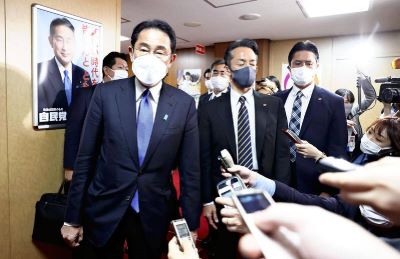
With the ruling coalition of the Liberal Democratic Party and Komeito retaining its majority in the lower house after Sunday’s general election, Prime Minister Fumio Kishida will work to realize his policies with full force. He will first formulate new economic measures as early as possible in order to rebuild the economy battered by the novel coronavirus pandemic, reflecting them in a supplementary budget for fiscal 2021, which he hopes to pass by the end of this year.

“With the results of this election, we will swiftly put together economic measures,” Kishida said Sunday night during an NHK program. “We need to ensure amount [of budget] that can incorporate the various contents [of policies] we emphasized during the election,”

The prime minister has often said, “We will prioritize the delivery of economic measures on a scale of tens of trillions of yen.” He apparently has in mind a plan to finalize the economic measures in mid-November and obtain Cabinet approval for a supplementary budget bill later this month.

In preparation for next summer’s upper house election, it will be essential for Kishida to “steadily produce results and accumulate achievements,” a senior LDP official said. Kishida’s leadership skills are likely to soon be tested during the coordination between the ruling parties to formulate economic measures.

The major pillars of the economic measures will be to provide benefits for businesses and households that have been dealt a blow by the pandemic.

For businesses, the government is considering reintroducing benefits to sustain operations and pay rent. For individuals, Kishida expressed a willingness to promptly provide benefits to non-regular workers and households raising children.

Junior coalition partner Komeito, on the other hand, has been calling for distributing ¥100,000 per person 18 and under. Future discussions between the LDP and Komeito will focus on the amount and scopes of the benefits.

The economic measures are expected to include the idea of establishing a COVID-19 flow of “prevention, testing, treatment” by promoting the development and use of therapeutic drugs and securing the medical care system, in addition to pushing ahead with vaccination against COVID-19.

Kishida has been calling for a “new capitalism” and aims to realize both economic growth and wealth redistribution. He has already established a council for the realization of a new capitalism, consisting of a panel of experts. He hopes to expedite discussions to realize tax-related aid for companies that are proactively supporting households with children and increasing wages, as well as raising the pay of workers in the nursing, elderly care and childcare sections.

■ Infection control measures

The government and ruling coalition are preparing for a possible “sixth wave” of novel coronavirus infection while working on rebuilding the economy.

“We will prepare for the worse and secure enough hospital beds in public hospitals across the country,” Kishida said Sunday night on a radio program.

The government will compile overall measures within this month to prepare for the spread of a virus variant that might be twice as infectious as the variant that spread during the “fifth wave” this summer. Increasing the capacity to admit inpatients by 20% is being considered among other measures.

At the same time, the government plans to promote the use of electronic vaccination certificates and free virus tests in order to ease movement restrictions and resume social and economic activities in earnest.

The easing of entry restrictions to Japan will also be an issue, although it will be difficult to strike a balance with infection resurgence control.

Published : November 02, 2021

By : The Japan News

Xi says green transition must be accelerated #SootinClaimon.Com

#SootinClaimon.Com : ขอบคุณแหล่งข้อมูล : หนังสือพิมพ์ The Nation.

https://www.nationthailand.com/international/40008282


Multilateral consensus and concrete actions urged in statement to COP 26

President Xi Jinping emphasized on Monday the importance of upholding multilateral consensus, focusing on concrete actions and accelerating the green transition in order to tackle climate change and revive the world economy.

He made the remark in a written statement for the World Leaders Summit at the 26th session of the Conference of the Parties to the United Nations Framework Convention on Climate Change, or COP 26. The two-day summit kicked off on Monday in Glasgow, Scotland.

“As we speak, the adverse impacts of climate change have become increasingly evident, presenting a growing urgency for global action. How to respond to climate change and revive the world economy are challenges of our times that we must meet,” Xi said in the statement.

He also said that the UN Framework Convention on Climate Change and its Paris Agreement provide the fundamental legal basis for international climate cooperation.

Parties need to build on existing consensus, increase mutual trust, step up cooperation and work together to deliver a successful COP 26 in Glasgow, he said.

According to Xi, parties need to honor their commitments, set realistic targets and visions, and do their best according to national conditions to deliver climate action measures.

“Developed countries should not only do more themselves, but should also provide support to help developing countries do better,” he said.

Xi also emphasized the importance of harnessing innovations in science and technology to transform and upgrade the energy and resource sectors as well as the industrial structure and consumption patterns.

The president said that China will continue to prioritize ecological conservation and pursue a green and low-carbon path to development.

China will foster a green, low-carbon and circular economic system at a faster pace, press ahead with industrial structure adjustment, and rein in the irrational development of energy-intensive and high-emission projects, he said.

Xi said that China will also speed up the transition to green and low-carbon energy, vigorously develop renewable energy, and plan and build large wind and photovoltaic power stations.

“I hope all parties will take stronger actions to jointly tackle the climate challenge and protect the planet, the shared home for us all,” he said.

COP 26 is the first conference after the five-year review cycle under the Paris Agreement adopted in 2015. Delegates are expected to review overall progress and plan future actions on climate change in the next two weeks.

By MO JINGXI

Published : November 02, 2021

By : China Daily

[Japan] Ruling coalition to maintain majority #SootinClaimon.Com

#SootinClaimon.Com : ขอบคุณแหล่งข้อมูล : หนังสือพิมพ์ The Nation.

https://www.nationthailand.com/international/40008244


The ruling coalition of the Liberal Democratic Party and Komeito has maintained its majority, according to Yomiuri Shimbun projections late Sunday night.

The LDP is also looking to maintain a single-party majority in the House of Representatives and appeared to have a slight edge, based on Yomiuri Shimbun exit polls.

“If the ruling coalition wins a majority of seats, we want to regard it as a public mandate,” Prime Minister Fumio Kishida, the LDP president, said during an interview with NHK earlier on Sunday night. “Since ballot counting is still underway, we want to watch the results with caution.”

By managing to win a majority of seats in the 49th House of Representatives election, the LDP fought off a concerted effort by the opposition bloc led by the Constitutional Democratic Party of Japan.

The CDPJ combined with other opposition parties to field single candidates in a number of battleground constituencies in a bid to prevent the LDP from gaining a majority, but the strategy did not result in enough gains.

Nippon Ishin no Kai (Japan Innovation Party) looked to see its status raised to possibly become the third-largest party in the lower house, as it appeared on the cusp of perhaps tripling its seats from the 11 it previously held.

The LDP, which had 276 seats prior to the dissolution of the lower house, looked to lose dozen of seats, but could still have enough for a sole majority.

LDP Secretary General Akira Amari was among LDP party leaders and Cabinet members who were involved in tough fights in battleground constituencies.

Asked what he would do if he was defeated in his single-seat constituency, Amari said on a TV program on Sunday night, “I have to leave the decision about my future to the prime minister.”

Taro Kono, chairperson of the LDP Public Relations Headquarters, looked certain to win in Kanagawa Constituency No. 15.

“If the ruling coalition of the LDP and Komeito is allowed to continue holding the reins of government as a result of today’s election, we want to work as one to firmly move Japan forward,” Kono said.

Karen Makishima, an LDP member who currently serves as the digital minister, also appeared to have secured a seat in Kanagawa Constituency No. 17.

“I’m very grateful. I’ve heard expressions of great expectation, while also hearing critical voices,” Makishima said. “I feel we must carry out party reforms, and thoroughly implement one by one the measures that voters want.”

Komeito leader Natsuo Yamaguchi said at his party’s headquarters: “I felt that we steadily gained momentum. I hope that will be reflected in the results.”

Earlier, Yuzuru Takeuchi, the chairperson of Komeito’s political research committee, told reporters, “I’m confident that all [of the party’s candidates] will be elected.”

Komeito Secretary General Keiichi Ishii said, “We really want to win in all nine single-seat constituencies and secure 8 million votes under proportional representation.”

■Sole majority holds key

“Do you put your trust in the LDP-Komeito administration to run the country, or do you put your trust in the Constitutional Democratic Party of Japan, the Japanese Communist Party and the rest of the opposition camp?” Kishida asked voters on Saturday in Chofu, Tokyo.

“This is what is at stake in this election,” he said.

It was the last day of campaigning ahead of Sunday’s House of Representatives election.

The prime minister has set a minimum target of winning 233 seats to secure a majority to keep the ruling coalition in power. In many constituencies, close battles between the ruling and opposition candidates were expected, meaning it was highly likely the LDP will have fewer than its 276 seats before the lower house was dissolved.

In the previous general election in 2017, the ruling camp scored an overwhelming victory, winning more than two-thirds of the seats in the lower house. Therefore, one focus of Sunday’s election was how much the ruling camp could minimize its losses.

If the LDP loses 44 or more seats, the party loses its sole majority, so that is another point of focus.

According to The Yomiuri Shimbun’s survey on the final phase of election battles, only 133 out of 277 LDP candidates in single-seat constituencies were in an advantageous situation.

“It’s too soon for me to talk about the single-party majority,” Kishida said during a BS Fuji TV program on Tuesday. “We could lose one seat after another if a slight change occurs in trends.”

Among the single-seat constituencies having significant effects on the election are the 132 in which the ruling and opposition camps are squaring off in one-on-one battles.

In the final analysis before Sunday’s election, 104 LDP candidates were in a precarious situation. They included high-profile LDP members, such as Amari in Kanagawa Constituency No. 13 and former Health, Labor and Welfare Minister Takumi Nemoto in Fukushima Constituency No. 2.

Published : November 01, 2021

By : The Japan News