Japanese firms’ business sentiment in Malaysia to improve in 1H22 #SootinClaimon.Com

#SootinClaimon.Com : ขอบคุณแหล่งข้อมูล : หนังสือพิมพ์ The Nation.

https://www.nationthailand.com/international/40008439


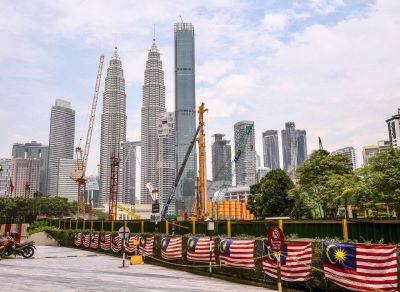
KUALA LUMPUR: Business sentiment among Japanese companies in Malaysia is forecast to improve in the first half of 2022 (1H2022) based on a survey by the Japanese Chamber of Trade and Industry Malaysia (JACTIM).
According to the survey, which is conducted bi-annually, the business sentiment diffusion index is projected to improve to 3.1 points in 1H2022, after being in the negative territory since 2H2018.

JACTIM general advisor cum Japan External Trade Organisation (JETRO) Kuala Lumpur managing director Mai Onozawa said many Japanese companies are positive about Malaysia’s outlook, premised on the global recovery, and plan to continue their business activities in Malaysia.

JACTIM’s survey on business trends in Malaysia in 2H2021 was conducted in September, involving 552 JACTIM member companies, including 120 companies from the manufacturing sector and 71 companies from the non-manufacturing sector.

“In the survey, many respondents pointed out that production activities are gradually resuming following the relaxation of the Malaysian government’s restrictions on social and economic activities, in line with the rising vaccination rates,” Onozawa told Bernama in an interview recently.

The extension of the Sales and Services Tax exemptions for new car purchases to up to June 2022 has also supported the automotive industry, she said.

“As for the services sector, especially the manufacturing-related services, the government’s move to ease restrictions with the transition to Phase Four of the National Recovery Plan has galvanised manufacturing companies to increase their production activities.

“This led to an increase in demand for related services such as import/export, sales and transportation of related products,” she said.

Onozawa noted that business sentiments were low in 2H2021 due to the economic downturn and low operating rate due to the prolonged lockdowns.

She said labour shortage has been a prevailing issue even before the COVID-19 pandemic, as large-scale manufacturing industries have been finding it difficult to secure a sufficient number of workers.

“With the suspension of new hiring of foreign workers from June 2020, in addition to the COVID-19 infection countermeasure, many companies said the number of general workers they were able to secure had decreased significantly.

“Japanese companies are actively recruiting Malaysian workers, but the turnover rate is very high, particularly for companies located in areas with a high concentration of companies such as Selangor and Johor,” she said.

To continue their economic activities in Malaysia, she stressed that Japanese companies also need highly skilled human resources such as engineers and production managers, however, the number of talents is insufficient and the companies have difficulties in hiring them.

“It is also important to secure a stable minimum workforce. We would like to request the Malaysian government to provide more opportunities to train Malaysian workers to promote recruitment and resume hiring new foreign workers where it is needed,” she added.

According to Onozawa, many Japanese companies said that production has not been sufficient to meet the demand due to the labour shortage.

“Additionally, some companies are finding it difficult to procure parts and materials from both domestic and overseas sources due to problems such as disruptions in marine transportation.

“As these issues cannot be resolved immediately, companies are expecting the situation of excess demand to continue for the time being,” she said.

Given the current situation, JACTIM has urged the government to create a business environment that will allow foreign companies to continue their economic activities in Malaysia for a long time in a win-win situation.

“We hope that the government will continue to support the stable operation of existing companies.

“In light of the trade conflict between the United States and China, it is also important to have a conducive investment environment to get companies looking for new investment destinations to invest in Malaysia,” she said.

Onozawa highlighted that many of the Japanese companies which are currently operating in Malaysia have been in business for more than 30 to 40 years, and all of them are keen to continue their business activities in Malaysia.

She also commended the government’s move to extend the Additional Reinvestment Allowance, saying that this would be beneficial for both foreign companies and Malaysia to attract new investments.

Onozawa also emphasised the importance of a clear carbon-neutral policy.

“From the perspective of achieving both zero emissions and ensuring a stable energy supply in the journey towards zero emissions, it is necessary to continue supporting the current conventional power generation system using existing fossil fuels using transition finance.

“At the same time, an immediate and clear policy to support the goal, such as subsidies and preferential measures for carbon-free alternatives, is also necessary,” she added. – Bernama

Published : November 05, 2021

By : The Star

Netflix promises to invest more into Korean content, doubles down on network fee issue #SootinClaimon.Com

#SootinClaimon.Com : ขอบคุณแหล่งข้อมูล : หนังสือพิมพ์ The Nation.

https://www.nationthailand.com/international/40008438


Netflix Vice President of Public Policy Dean Garfield, decked in a green tracksuit costume from the hit Netflix show “Squid Game,” entered the press conference room at JW Marriott Dongdaemun Square Seoul on Thursday, accompanied by the theme song from the drama series.

Garfield began his speech by talking about how Netflix is willing to invest more into creating Korean content. However, when addressing the most heated issue on paying internet service providers bandwidth usage fees, he maintained the company’s previous position, arguing that it does not have a duty to pay for network usage.

“We started here in 2016. Since that time we introduced more than 80 Korean films and stories. We spent around $700 million on Korean content between 2015 to 2020,” Garfield said. “And in this year alone, we will end up spending around $500 million on Korean content and we don’t intend to stop.”

Addressing its conflict with local ISPs on the network usage fee issue, the global streaming platform operator highlighted its content delivery network called “Open Connect” as a win-win solution to the problem.

Open Connect reduces network traffic by at least 95 percent and this has helped ISPs globally save more than $1.2 billion in 2020, according to Netflix.

“We want to support and work with internet service providers to make sure the streaming is easy and efficient,” he said. “That is why we invested over a trillion won to build and provide a content delivery network that we call ‘Open Connect.’ It stores our content closest possible to our members.”

However, local ISPs such as SK Broadband insist that Netflix should share network maintenance costs in Korea, especially after its traffic increased significantly in Korea due to hit contents like “D.P.” and “Squid Game.”

In June, Netflix lost a lawsuit against SK Broadband. A local court ruled against Netflix, saying that the global platform operator should “reasonably” give something in return to SK Broadband for the use of the network. Netflix appealed the decision in July.

Many Korean lawmakers have also spoken out against global content providers like Netflix and YouTube who do not pay for network usage.

Garfield added that Netflix is willing to discuss with Korean internet service providers on the issue.

“Network traffic and congestion is a challenge that we have to address if that is the problem. Then let’s begin the conversation that includes SK,” Garfield said, adding that Netflix is willing to find a way to leverage the latest technology that also ensures the growth of local ISPs.

Meanwhile, Garfield also hinted that the company has plans to share the success of its content “Squid Game” with its creators.

“We are a subscription-based service and not pay-on-demand service, so there isn’t a sample system for evaluating what the financial impact of every show is,” he said. “With that being said, we are learning and figuring out ways in making sure that our success is shared with the partners.”

By Song Seung-hyun

Published : November 05, 2021

By : The Korea Herald

Singapore pledges to phase out unabated coal in electricity mix by 2050 #SootinClaimon.Com

#SootinClaimon.Com : ขอบคุณแหล่งข้อมูล : หนังสือพิมพ์ The Nation.

https://www.nationthailand.com/international/40008437


GLASGOW – Singapore on Thursday (Nov 4) joined the Powering Past Coal Alliance, an international coalition of countries, cities, regions and businesses that promotes the transition from coal to clean energy.

Announcing Singapore’s membership during the COP26 climate talks in Glasgow, Scotland, Minister for Sustainability and the Environment Grace Fu said over a video message: “The burning of coal is putting billions of people at immediate risk. This is why Singapore has decided to join the Powering Past Coal Alliance.”

Singapore is the first country in Asia to join, said the alliance in a statement.

Twenty-eight new members – including Chile, HSBC Bank and Canadian utility TransAlta – joined the alliance on Thursday, bringing its total number of members to 165.

In the first half of this year, some 95 per cent of Singapore’s electricity was generated with natural gas, the cleanest form of fossil fuel.

Coal made up 1.2 per cent, diesel and fuel oil made up 0.6 per cent, while waste-to-electricity, biomass and solar energy accounted for the remaining 3.2 per cent, figures from the Energy Market Authority show.

Coal is the dirtiest form of fossil fuel.

By joining the alliance, Singapore has committed to continue phasing out the use of unabated coal in its electricity mix by 2050, and to restrict direct government finance of unabated coal power internationally, said the National Climate Change Secretariat and ministries of Sustainability and the Environment as well as Trade and Industry in a statement.

Unabated coal power generators refer to coal-burning power plants that do not use technology to capture the emitted carbon for storage or conversion to other substances.

Such technology is known as carbon capture, utilisation or storage, and is an area of research that Singapore is looking into.

Ms Fu added in her video message that Singapore is fully committed to accelerating the transition to a low-carbon future.

“We will transform our industry, economy and society to be more energy- and carbon-efficient, and to adopt more low-carbon energy in support of the goals of the Paris Agreement,” she said.

Singapore faces a number of constraints in decarbonising its local power sector, which contributes 40 per cent to the country’s total emissions. This includes the lack of land for large solar farms and inability to access other forms of renewable energy.

But the country is seeking to overcome these obstacles in other ways, such as by deploying solar panels on water bodies and by importing low-carbon energy from elsewhere.

Last month, for instance, Singapore announced that it plans to import around 30 per cent of its electricity from low-carbon sources, such as renewable energy plants, by 2035.

Other than joining the alliance, Singapore also signed on Thursday the Global Coal to Clean Power transition statement initiated by the British presidency of COP26 to accelerate international momentum for the global energy transition.

The statement commits to international efforts and collaboration in shifting away from unabated coal power generation in the 2040s, or as soon as possible thereafter, and in ceasing issuance of new permits, as well as ending direct government support for new unabated coal-fired power generation projects worldwide.

“Effective international cooperation is needed to tackle climate change, a complex global challenge, and every country must do its part,” said the three agencies in a statement.

“Singapore seeks to work with international and regional partners to enable effective collaborations, strengthen consensus and in turn galvanise collective global climate action.”

By Audrey Tan

Published : November 05, 2021

By : The Straits Times

RCEP expected to effectively boost economic recovery #SootinClaimon.Com

#SootinClaimon.Com : ขอบคุณแหล่งข้อมูล : หนังสือพิมพ์ The Nation.

https://www.nationthailand.com/international/40008436


The imminent implementation of the Regional Comprehensive Economic Partnership agreement, scheduled to take effect from Jan 1, will effectively boost economic recovery and consolidate the supply chain network in the Asia-Pacific region, economists and business leaders said on Thursday.

The Secretariat of the Association of Southeast Asian Nations has confirmed that six member countries of the bloc and four non-ASEAN countries-China, Japan, New Zealand and Australia-had formally submitted their RCEP ratifications, meeting the conditions for the deal to come into force in those 10 countries at the start of next year, China’s Ministry of Commerce said in an online statement on Wednesday.

Apart from showing their willingness to further expand trade flows during the post COVID-19 era, the RCEP-the world’s biggest trade pact by GDP-will help these signatory countries ensure the opening of their markets as well as uninterrupted supply chains in the Asia-Pacific region, said Zhang Jianping, director-general of the China Center for Regional Economic Cooperation in Beijing.

The six ASEAN countries that have approved the RCEP are Myanmar, Cambodia, Laos, Singapore, Thailand and Vietnam. The deal comes into force 60 days after ratification by at least six ASEAN countries and at least three non-ASEAN countries, according to the agreement signed in November last year.

As of Wednesday, four ASEAN members and the Republic of Korea haven’t ratified the dealt.

Once the RCEP takes effect, local and global companies will enjoy a regional business environment with fewer investment barriers and low tariffs. The implementation of the agreement will help the regional supply chain better respond to external impacts, said Jiang Feng, director of the General Administration of Customs’ Department of Duty Collection.

China’s foreign trade soared by 22.7 percent on a yearly basis to 28.33 trillion yuan ($4.4 trillion) in the first three quarters of this year, and the volume of its exports and imports with other RCEP participants surged 19.3 percent year-on-year, data from the administration showed.

China, one of the main drivers of the deal, completed the ratification process for the agreement on April 15 and applied to join the Comprehensive and Progressive Agreement for Trans-Pacific Partnership, another trade agreement among 11 economies, including Australia, Canada and Japan, in September.

“In the next growth stage, innovations in trade policies, products and practices will be the cornerstones of progress for China and its partners to persevere on the path of development,” said Lawrence Loh, director of the Center for Governance and Sustainability at the National University of Singapore’s Business School.

Despite the adverse effects of the COVID-19 pandemic on the region’s economic growth, the RCEP will pave the way for global companies to invest and export more products to various markets within the region, said Donny Yu, president and CEO for China at Nexans SA, a French cable manufacturer for power and data transmission.

By ZHONG NAN

Published : November 05, 2021

By : China Daily

PBOC head urges fintech to secure data #SootinClaimon.Com

#SootinClaimon.Com : ขอบคุณแหล่งข้อมูล : หนังสือพิมพ์ The Nation.

https://www.nationthailand.com/international/40008384


Yi Gang says central bank is all for global moves to create top standards

Yi Gang, governor of the People’s Bank of China, the central bank, on Wednesday urged better international coordination to protect personal data, especially in areas like antitrust, data regulation and consumer protection.

The legislative, judicial and administrative bodies in various countries should join hands to promote the standard setting process for personal data protection, given the rapid cross-sector and cross-regional development of financial technologies or fintech, Yi said in his keynote address via video to a forum of the 2021 Hong Kong Fintech Week.

The PBOC has been focusing on cracking down on excessive collection of consumer data and “unfair clauses” outlined by fintech companies, which require consumers to provide personal information in exchange for accessing financial services, Yi said.

Under the current regulatory framework, financial institutions in China are required to collect, use and store information following the principle of “minimum necessity” and in accordance with laws.

They should protect the privacy of individuals when using personal information for commercial purposes, Yi said.

In order to protect personal credit information, Chinese financial regulators have required fintech companies to isolate their personal credit information business units. Financial institutions are allowed to provide such services only after they receive licenses.

“Some Big Tech companies have either collected data without permission or misused them. There are also cases of customer data leakage. Therefore, it is urgent to strengthen personal data protection,” the PBOC governor said at the forum.

“The ultimate purpose for data protection is to promote its proper usage,” said Yi. “On the premise of protecting personal privacy, we will try to define data ownership in a more accurate manner, facilitate data transactions and promote fairer use of data to unleash the vitality and innovation capacity of market players.”

Zhang Xiaohui, dean of the Tsinghua University PBC School of Finance and former assistant to the central bank governor, said last month at the 2021 Bund Summit in Shanghai that China still faces challenges in data governance at present, like excessive data collection by large technology companies that might violate the data privacy of customers.

Chinese regulators could refer to the practice of their peers in the European Union and strive to balance the relationship between privacy protection and fair use in data governance, said Zhang.

The boundaries of data as private goods, quasi-public goods and public goods should be distinguished, and also clarify the multiplicity of various kinds of data and the possible systemic risks. And social effects of cross-border use of data should also be clarified, she said.

As other major central banks are considering tighter scrutiny of cloud computing services offered by technology companies to banks, the PBOC and the nation’s banking and insurance regulatory body are discussing how to build a special cloud computing and data center for the financial sector in the country.

Meanwhile, the banking regulator requires major State-owned commercial banks to offer free fintech services to city and rural commercial banks, the former PBOC official said at the Shanghai event.

China promulgated the Data Security Law and the Personal Information Protection Law in June and August, respectively, creating a legal framework for personal data protection.

In addition, on Sept 30, the PBOC issued the Administrative Guideline for the Credit Information Business, which defines personal credit information and regulates the credit information business, from data collection to processing and sharing.

Huang Yiping, director of the Institute of Digital Finance at Peking University in Beijing, said the Chinese government has taken many measures to improve the market order of the digital economy, including better supervision of fintech companies.

There should be a balance between financial stability and innovation, and the target should be set to promote the orderly development of financial and technology industries, Huang said.

Published : November 04, 2021

By : China Daily

N. Korea calls for thorough wintertime anti-virus measures #SootinClaimon.Com

#SootinClaimon.Com : ขอบคุณแหล่งข้อมูล : หนังสือพิมพ์ The Nation.

https://www.nationthailand.com/international/40008383


North Korea called Thursday for thorough preventive measures against COVID-19 for the winter season.

The Rodong Sinmun, an organ of the North’s Workers’ Party, highlighted the importance of remaining vigilant against the pandemic, saying the virus can be transmitted even through falling snow.

“In the winter season, it is important to be aware as ever to make thorough anti-virus measures,” it said.

The newspaper described virus control and prevention steps during the winter as an “important political” project to determine whether progress would be made in the first year of the North’s five-year economic plan.

At the country’s eighth party congress in January, North Korean leader Kim Jong-un unveiled a new development scheme focusing on self-reliance amid strict border controls against the virus and global sanctions on its economy.

The reclusive regime has claimed to be coronavirus-free and has so far reported no COVID-19 cases to the World Health Organization. (Yonhap)

Published : November 04, 2021

By : The Korea Herald

Foreign tourists can visit Vietnam this month #SootinClaimon.Com

#SootinClaimon.Com : ขอบคุณแหล่งข้อมูล : หนังสือพิมพ์ The Nation.

https://www.nationthailand.com/international/40008382


HÀ NỘI — International tourists with vaccine passports or those who have made a full recovery from COVID-19 can visit five destinations in Việt Nam starting from this month, without a quarantine mandate.

The Government Office announced Tuesday that Deputy Prime Minister Phạm Bình Minh has approved a pilot plan to welcome international visitors as proposed earlier by the Ministry of Culture, Sports and Tourism.

Five pilot destinations to receive foreign tourists include Phú Quốc City in Kiên Giang Province, Khánh Hòa, Quảng Nam, Quảng Ninh Provinces and the central city of Đà Nẵng.

The plan will be divided into three phases, starting from this November.

In the first phase that starts this month, designated places and tourism facilities in Phú Quốc, Khánh Hòa, Quảng Nam, Đà Nẵng, Quảng Ninh can receive foreign tourists within package tourism programmes arriving via either charter flights or international commercial flights.

In the second phase that takes effect from January 2022, the scale of the pilot plan will be expanded by connecting destinations through regular charter and international commercial flights.

The tourists could participate in travel programmes that combine multiple destinations after completing their tours at the first destination within seven days. Five destinations – Kiên Giang, Nha Trang, Đà Nẵng, Quảng Nam and Quảng Ninh – will be piloted first and some other localities will be added to the programmes later as long as the pandemic conditions permit and the local authorities submit proposals to welcome international tourists.

The Việt Nam’s tourism market will fully open to international tourists in the last phase, the starting time of which will be based on the contemporary pandemic situation on the evaluation of the two previous phases.

The plan will apply to foreign tourists and overseas Vietnamese arriving from Việt Nam’s key and potential tourism markets. They must prove certificates of taking full doses of the COVID-19 vaccination or COVID-19 recovery that are recognised by the authorities in Việt Nam, except children under 12 years old accompanied by parents or guardians. For COVID-19 recovery patients, the time from being discharged from the hospital to the time of departure must not exceed six months.

Other conditions include having negative results for SARS-CoV-2 test by RT-PCR/RT-LAMP method within 72 hours before departure and certified by the authority of the country conducting the test (from time of sampling) and having medical or travel insurance that covers COVID-19 treatment with a minimum liability of US$50,000.

Tourists within the pilot tours must have their temperature regularly checked and use the IGOVN application during their stay. Masking is required, and there will be no quarantine mandate.

On the first day of entry, tourists will be taken to the accommodation facility and have COVID tests. They could continue their stay if the tests prove negative; otherwise, they will be taken to a medical facility and the cost will be covered by insurance or travel agency.

Within the first seven days, tourists must adhere to the schedule, ensuring pandemic prevention regulations and taking self-tests every two to three days. In case of having any symptoms of fever, cough, shortness of breath or sore throat, they must notify medical staff for screening tests.

After seven days, those who continue to stay in Việt Nam must test themselves for COVID-19 and could travel to other localities within the programme if the results are negative. Those who want to see their relatives in Việt Nam need to register with their tour operators.

The People’s Committees in the five pilot destinations must vaccinate locals and tourism workers while issuing detailed instructions for welcoming international guests in the locality.

Việt Nam stopped receiving international visitors since the outbreak of the pandemic in March 2020 and only allowed foreign experts’ entry. —VNS 

Published : November 04, 2021

By : Vietnam News

Massive shortage of tech talent looms as Asia takes to digitalisation #SootinClaimon.Com

#SootinClaimon.Com : ขอบคุณแหล่งข้อมูล : หนังสือพิมพ์ The Nation.

https://www.nationthailand.com/international/40008381


A 2022 Digital talent Insight report estimates a shortage of 47 million tech talent by 2030 in the Asia Pacific region

JAKARTA – Asia is set for a digital transformation. And a crisis.

Emerging technologies such as 5G, Cloud Computing, Big Data, Artificial Intelligence and the Internet of Things will dramatically reshape the digital economy.

But digital talent to allow the region to make the most of the opportunity is lacking.

Experts from the region called for a significant increase in investments to develop digital talent to meet the growing demand, at a Digital Talent Summit webinar organised by the Asean Foundation and Chinese telecom giant Huawei.

A 2022 Digital Talent Insight report released at the meeting quotes international consultant Korn Ferry as estimating a shortage of 47 million tech talent by 2030 in the Asia Pacific region.

It says PwC found in a survey that more than 50 per cent of Asia Pacific CEOs say it is difficult to hire digital talent with the right skills.

The Covid-19 pandemic has disrupted the landscape further, experts at the forum noted.

To develop digital talent, the Foundation announced the launch of a new partnership with Huawei to implement a regional Seeds for the Future programme.

Besides developing information and communication technologies talent, the initiative seeks to enhance knowledge transfer and promote regional participation in the digital community.

“This program not only trains youth on technical skills. It also provides a platform for them to apply what was learned,” said Ms Yang Mee Eng, executive director of the Asean Foundation.

Huawei announced a spending of US$50 million over five years to train nearly 500,000 people in new digital technologies, in the Asia-Pacific region, during the summit.

More than the acquisition of technical know-how, what’s needed to thrive in the digital economy is the proper mindset, according to panelists at a roundtable discussion at the summit.

“It goes beyond skills. Skills can be learned,” said Mr Gokhan Ogut, CEO of Malaysian telco Maxis Berhad.

“It’s also about the mindset and culture,” he remarked, adding digital talent need to think of customers first and can challenge the status quo.

“We dub it as transformational leadership,” he said.

Dr Vu Minh Khuong from Lee Kuan Yew School of Public Policy, Singapore, said apart from the ability to “make a breakthrough,” new digital talents also need to have the skills to foster synergy, and even to transform the world with innovations.

“[Individuals] should be able to rethink and not stick to the established solution,” he said.

Huawei’s 2022 Digital Talent Insight paper calls for wide-scale digital upskilling through cooperation between the government, industry and the academic sector to improve the availability of digital talent.

Calling for more investment in digital infrastructure, the report highlights three Global Connectivity Index Country Clusters existing in Asia. The GCI index is a barometer of digital readiness from a national and a business perspective.

The three clusters are named as Starters, Adopters, and Frontrunners.

Singapore, South Korea and Japan have been classified as frontrunners, while China, Malaysia and Thailand have been classifed as Adopters while Indonesia, India, Vietnam, Philippines, Pakistan and Bangladesh, have been labelled Starters.

The digitalisation landscape in the region is diverse, with national and regional differences in readiness, capitalisation, and regulatory
capacities of digital transformation, it notes.

“Digitalisation should be encouraged in that it can create new growth opportunities,” it adds.

Published : November 04, 2021

By : The Jakarta Post

Toyota to roll out 1st global fully electric vehicle next year #SootinClaimon.Com

#SootinClaimon.Com : ขอบคุณแหล่งข้อมูล : หนังสือพิมพ์ The Nation.

https://www.nationthailand.com/international/40008380


Toyota Motor Corp., known for its strength in hybrid vehicles, is preparing to roll out its first fully electric global model, the bZ4X, as part of moves toward a decarbonized society.

The bZ4X, to be launched in mid-2022, will be the company’s first global strategic vehicle, beginning Toyota’s full-scale development of electric vehicles. The company aims to achieve performance comparable to that of other leading companies.

The bZ4X is a midsize sport utility vehicle and the first in a new electric vehicle series, bZ. It also is the first vehicle to feature a chassis designed specifically for such cars.

The bZ4X has achieved a high standard for a commercial electric vehicle, with a maximum range of about 500 kilometers per charge as a front-wheel drive vehicle in the Worldwide Harmonized Light Vehicles Test Cycle (WLTC) mode. Heating efficiency has been improved to help keep driving range from dropping even in winter, which is not an ideal season for such cars.

Daisuke Ido, the chief engineer in charge of the vehicle’s development, said, “We focused on energy-saving performance to achieve sufficient driving range without unnecessarily increasing battery volume,” indicating the importance of balancing price and practicality.

The durability of the battery will also be improved. Toyota said the company is likely to be able to achieve technology that will see the fully charged capacity of the car’s lithium-ion batteries decline by only 10% after 10 years of repeated use. The technology is expected to increase the value of used electric vehicles to boost their popularity.

Toyota has adopted a “full lineup strategy” to offer a wide range of electrified vehicles, including not only electric vehicles but also hybrid and plug-in hybrid vehicles, to meet the needs of each country and distinguish itself from European automakers and Honda Motor Co., which are rushing to switch entirely to electrification.

The strategy is based on the view that it is difficult for electric vehicles to spread rapidly in regions such as emerging countries where electricity and recharging infrastructure are not yet in place. Toyota believes that replacing purely gasoline-powered cars with hybrids is a more effective way of reducing greenhouse gas emissions there, because hybrids are no different from conventional gasoline vehicles in terms of usability.

In Europe, however, there are moves to regulate sales of hybrid vehicles in the future, so efforts to develop electric vehicles are unavoidable. Toyota plans to launch a total of 15 such models, including seven models of the bZ series, by 2025 to accelerate its sales.

Nissan Motor Co. will release its electric Ariya SUV, which is positioned as the company’s global strategic vehicle, this winter. Honda plans to make all of its new vehicles electric or hydrogen-powered in 2040.

Published : November 04, 2021

By : The Japan News

Deputy PM: Long Thành International Airport must be completed by 2025 #SootinClaimon.Com

#SootinClaimon.Com : ขอบคุณแหล่งข้อมูล : หนังสือพิมพ์ The Nation.

https://www.nationthailand.com/international/40008336


HÀ NỘI – Deputy Prime Minister Lê Văn Thành has asked authorities to complete the construction of Long Thành International Airport by 2025.

Deputy PM Thành set the deadline during an online meeting held on Monday on Long Thành International Airport, a key national project worth US$5 billion.

The meeting focused on the project’s site clearance and construction progress.  

Đồng Nai Province has so far acquired 3,801 out of the 5,000ha, or 77 per cent of the plan. The remaining 1,145ha will be acquired by the end of the year, reported Cao Tiến Dũng, Chairman of the provincial People’s Committee.

All clearance and compensation work is expected to be completed in the first quarter of next year.

According to the Ministry of Transport (MoT), the bidding package for infrastructure system design, including the runways, taxiways, aprons and internal traffic system, has been implemented according to the plan in 2021, however, the COVID-19 outbreak has caused many difficulties to the process.

The bidding package for the technical design of the passenger terminal started in June 2021. Construction work is expected to start in March 2022 and finish before December 2025.

The Airports Corporation of Vietnam (ACV) has organised tenders to create basic technical designs for ancillary structures in September 2021. The designs are expected to be finished by December 2022.

However, potential risks to the project progress have arisen, said Deputy Minister of Transport Lê Anh Tuấn, which include the slowed construction pace of the fence section due to a lack of cleared ground, and ground levelling work postponed to 2022 as the levelling design was behind schedule.

The Commission for the Management of State Capital at Enterprises has issued official documents to the Ministries of Finance, Planning and Investment, and Transport for opinions and assistance in allowing ACV to increase the capital to ensure the financial capacity of the project. Credit institutions have also agreed to offer their support.

The Deputy PM emphasised that this key national project has a crucial role in transport infrastructure development, acting as a driving force for the socio-economic development of the region and the country.

The project has been made a priority by the National Assembly, Government, ministries and departments, which is why every measure has to be taken to minimise the project duration and ensure that every section follows the schedule in order to complete the project by 2025.

While acknowledging the efforts of Đồng Nai Province and the MoT, Deputy PM Thành said the project is making slow progress with ground clearance only reaching 77 per cent of the plan, and the designs for the main structures, including the terminal and runways, have not yet been finalised.

Đồng Nai Province will be responsible for land clearance for phase 1 before December 31, 2021 with an area of 5,200ha to be planned for the project in the first quarter of 2022.

Deputy PM Thành required key investors ACV and the MoT to speed up the design progress and evaluation to launch the bidding package. The goal is to start construction in December 2021.

For the passenger terminal with VNĐ50 trillion (nearly US$2.2 billion) investment capital, the Deputy PM gave the direction to closely follow the implementation process, and start construction work before March 2022. The apron and runway will commit to the planned schedule to start in August 2022.

He also emphasised that progress must be ensured for every section, the bidding package must clearly state completion milestones for the main constructions, including the runway and terminal, before January 2025; with the entire structure going into operation in the first half of 2025.

The Deputy PM will work with the MoT every month on the progress of Long Thành International Airport and several other key transport infrastructure projects. — VNS

Published : November 03, 2021

By : Xinhua