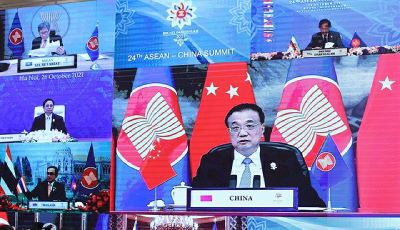
HÀ NỘI — Vietnamese Prime Minister Phạm Minh Chính on Tuesday participated in the 24th ASEAN-China Summit, pledging support for the consolidation of ties.
Addressing the summit, the Vietnamese Government leader affirmed that through 30 years of diplomatic ties, 25 years of dialogue partnership, and 18 years of strategic partnership, ASEAN and China have built a strong, comprehensive, diverse, and practical foundation for cooperation.
This is made possible thanks to the continuous efforts and strong commitment of the two sides to jointly cultivate the relationship on the basis of mutual trust, understanding and respect, and win-win cooperation.
“The entire world, including our region are experiencing hardships due to the COVID-19 pandemic, the complicated developments of the strategic environment and the heavy impacts of natural disasters, climate change and environmental pollution. These are global issues, so a global approach is a must, requiring the cooperation, responsibility and active contributions of all countries, including China,” Chính said.
He stressed the need to uphold multilateralism, equal cooperation, mutual respect and mutual benefits, contributing to the maintenance of peace, stability, cooperation and development in the region and in the world.
PM Chính wants China, with its capacity and position, to continue to engage in regional and global cooperation efforts to contain the pandemic, maintain a peaceful environment that is conducive for recovery and sustainable development.
The Government leader expressed gratitude for China’s donation and supplies of medical items and vaccines for ASEAN and expected continued support from China to all countries, including Việt Nam.
Stressing that economic cooperation, the key pillar in ASEAN-China relations, is being hurt by the pandemic, ASEAN and China should work on restarting production and supply chains, facilitating the safe travel of people and businesspeople, put in place incentives for investment and commerce, and take advantage of trade deals such as the Regional Comprehensive Economic Partnership (RCEP) and ASEAN-China Free Trade Area (ACFTA) to boost recovery efforts.
PM Chính affirmed Việt Nam’s support for the upgrading of ASEAN-China relations, and pledged to coordinate with other ASEAN members and China to successfully organise the summit commemorating the 30th anniversary of ASEAN-China ties.
Leaders of ASEAN and China at the summit reaffirmed their commitment to bilateral cooperation for peace, security, and stability in the region through confidence building, preventive diplomacy, and effective handling of disputes via peaceful measures in line with international laws, maintaining open channels of dialogues and friendly consultation.
In that spirit, ASEAN looks forward to China, who, in its position will support ASEAN’s central role in strengthening strategic trust, creating a friendly, stable and favourable environment for cooperation and development.
ASEAN would work with China to strictly and fully implement the Declaration on the Conduct of Parties in the South China Sea (DOC), jointly develop an effective and substantive Code of Conduct (COC), for a peaceful, stable and cooperative South China Sea, in the interests of both China and ASEAN, PM Chính said. — VNS
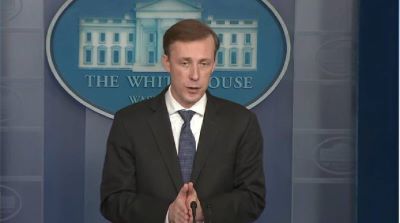
The United States and South Korea are aligned on the need to engage with North Korea diplomatically, but may differ when it comes to when and what steps should be taken to bring the recalcitrant North back to the dialogue table, US National Security Adviser Jake Sullivan said Tuesday.
His remarks come amid a South Korean push for a declaration of the end of the Korean War that it insists can be a catalyst to restart dialogue with North Korea.
“We may have somewhat different perspectives on the precise sequence or timing or conditions for different steps. but we are fundamentally aligned on the core strategic initiative here and on the belief that only through diplomacy are we going to really, truly be able to effectively make progress,” Sullivan said in a press briefing at the White House.
Sullivan’s remarks also come after a Seoul meeting between US special envoy for North Korea, Sung Kim, and his South Korean counterpart, Noh Kyu-duk, in which Kim said the countries will continue to discuss ways to bring North Korea back to the dialogue table, including the Seoul-proposed end of war declaration.
Sullivan said Kim’s recent discussions with his South Korean counterpart have been “very productive and constructive,” but declined to comment publicly when asked if the US supported declaring the war’s end as a catalyst to resume dialogue with the North.
“So on the specific issue you raised, I don’t want to get into it publicly. I will only say we’re going to continue the intensive conversations,” he said.
South and North Korea remain technically at war as the 1950-53 war ended with an armistice and a peace treaty was never signed.
While Seoul insists an end of war declaration may help bring North Korea back to the dialogue table by offering some security assurances, some believe it could undermine the legal basis for the stationing of US forces in South Korea.
The US currently maintains some 28,500 troops in South Korea.
North Korea has ignored US overtures since the Joe Biden administration took office in January, accusing the US of harboring what it claims to be a hostile intent toward Pyongyang. North Korea has also stayed away from any meaningful dialogue with the US since early 2019. (Yonhap)
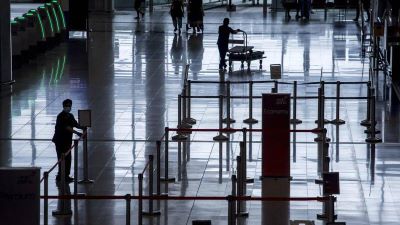
HONG KONG – Hong Kong will soon end most of the quarantine exemptions for overseas and mainland travelers in the hope of reopening the border with the mainland as soon as possible.
The city will soon announce arrangements to remove exemptions that allow some people to skip mandatory hotel quarantine stays of as long as 21 days, Hong Kong Chief Executive Carrie Lam Cheng Yuet-ngor said Tuesday at a regular briefing.
“In relation to exempted groups of quarantine-free personnel, most of these will be removed — we will only leave those relating to emergency services or services relating to the everyday supply and logistics of Hong Kong, say for example cross-boundary truck drivers,” Lam said. “This is to give confidence to the central authorities that it is safe to open the border.”
Hong Kong currently allows some people from a dozen industries to be exempted from the compulsory quarantine measures. That includes executives from the insurance and financial industries, directors of public companies, scientific experts on COVID-19 and crew members on airplanes, passenger ships and cargo vessels.
In August, however, the government prompted a public outcry when officials allowed Hollywood actor Nicole Kidman to skip the quarantine system and shoot a television series. At that time, the city was issuing about 40,000 exemptions monthly to arrivals at bridges, the airport and other ports of entry, according to a government statement.
Lam also said she wasn’t worried that the quarantine measures were harming the city’s reputation as a global financial hub as expressed by some foreign business groups.
“If Hong Kong were to loosen the border controls people arriving from overseas, or adopt what other countries have done — so called ‘live with the COVID-19 virus’ — then the chances of resuming travel with the mainland will be reduced,” Lam said. “So I can only say to those representing the financial sector that we have to look at it in context. And the context is Hong Kong’s primary advantage lies in being the gateway to the mainland.”
The financial hub reported three new COVID-19 infections on Tuesday, including two with the L452R mutant strains.
The new cases involved two women and a man aged between 28 and 65, said the Centre for Health Protection in a statement.
They had traveled to Pakistan, the United Arab Emirates and Singapore before arriving in Hong Kong and all three have been fully vaccinated.
A total of 59 cases have been reported in the past 14 days and all of them are imported cases. Hong Kong’s infection tally stood at 12,331 with 214 deaths.
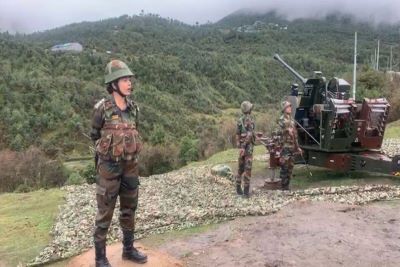
The Chinese People’s Liberation Army (PLA) Xinjiang Military Command has received a new type of all-terrain vehicle, which is expected to ensure logistics support to plateau border defence troops as winter draws close and as China-India border tensions again risk rising after the latest military talks failed to reach an agreement due to “unrealistic Indian demands”, Global Times reported.
The delivery of the vehicle comes at a time when China and India failed to reach an agreement during the 13th round of corps commander-level talks over issues related to the western section of the China-India border, with the PLA Western Theater Command slamming India for its unreasonable and unrealistic demands on October 11, Global Times said.
Several Chinese experts reached by the Global Times warned at the time that China needs to brace for the possibility of further Indian military aggression, as India is risking a new round of conflict.
The unit that commissioned the new vehicle is garrisoned at a high-altitude, snowy border region that is extremely cold, lacks oxygen and has a complex terrain, which causes difficulties in logistics support including the transport of supplies, the PLA Xinjiang Military Command revealed in a release published on its WeChat account.
After several on-the-spot investigations, the vehicle was tailored to suit the needs of the troops, as it uses caterpillar tracks that aren’t made from metal. These tracks are sturdy, do not damage road surfaces, have high mobility and can carry heavy loads, the command said.
The vehicle can traverse freely in complex terrains like shallow river banks, deserts, mountains and snowfields even under bad weather conditions, and provide reliable support to the supply transportation of plateau troops, the release said. It didn’t reveal the designation of the new vehicle.
“There is no need to worry that we will run out of living materials this winter,” the release quoted a soldier as saying, the report added.
According to a report by China Central Television (CCTV), some PLA units started to use this type of vehicle in January.
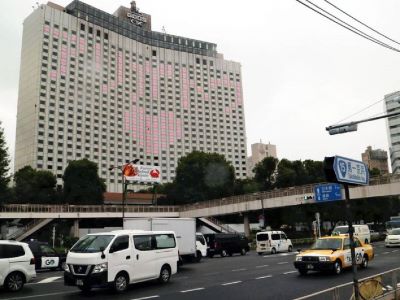
The landmark building in front of the west exit of Shinagawa Station in Tokyo is giving a big thank you to passersby before its demolition, set to begin in November.
Through Oct. 29, the facade of the Shinagawa Goos complex displays the Japanese word for thank you and a giant heart shape made from pink paper on its windows.
The 30-story building opened in 1971 as the Hotel Pacific Tokyo and tourists using Haneda Airport were among the visitors who usually stayed there. One of the characteristics of the building is that the walls are inlaid with 3.6 million white Arita ware porcelain tiles. In April 2011, the building was renovated into the Shinagawa Goos, which houses a business hotel and restaurants.
After half a century since its construction, the building has become decrepit. At the end of March this year, the complex closed and will be demolished to make way for the redevelopment of the area around Shinagawa Station.
The display on the facade was planned by Keikyu Corp., which manages the building, to show gratitude to the people in the area. About 20 people worked together Friday to paste the 1.6-meter by 2-meter pieces of pink paper on the windows.
After the demolition of the building, Keikyu and Toyota Motor Corp. plan to build a facility that will house a large-scale international conference center and hotel on the 25,000-square-meter site by 2027.
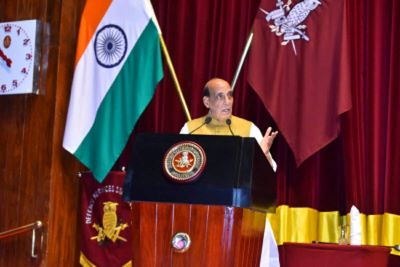
In an outreach to friendly countries and defence manufacturers across the globe, Defence Minister Rajnath Singh today chaired an ”Ambassadors’ Round Table for DefExpo 2022” at which he reaffirmed India’s readiness to meet the defence requirements of other nations.
The round table was aimed to brief the envoys of foreign missions about the planning, arrangements and other details of DefExpo 2022, which will be held in Gandhinagar, Gujarat between 10-13 March, 2022.
More than 200 delegates, including ambassadors, heads of missions and defence attaches attended the round table, reflecting the growing global interest in the Indian Defence space.
Inviting the foreign delegates to attend DefExpo 2022, Asia’s largest defence exhibition, Rajnath Singh said India was open to conduct business on a mutually beneficial collaborative basis, in the spirit of give and take, for all-round welfare of everyone.
He exuded confidence that DefExpo 2022 would bring all the latest technologies under one roof and provide a myriad of opportunities to the stakeholders in the aerospace and defence industry.
“Resurgent India, where defence manufacturing is an identified pillar of growth, will display its ability to take lead at DefExpo 2022. I am confident that pursuing the vision of our Prime Minister Narendra Modi, DefExpo-2022 will sow the seeds of successful new ventures and international partnerships to promote shared prosperity, boost investment, expand manufacturing and bolster aerospace and defence ecosystem in India, which shall be ready to serve the defence requirements of our friendly countries also,” said the minister.
He thanked the foreign delegates for participating in DefExpo 2020 & Aero India 2021 and said DefExpo 2022 was aimed to further the benchmark of its previous editions with greater presence of foreign and Indian exhibitors. “We are committed to supporting the partnerships that have been forged thus far as also form newer bonds for mutual growth,” he said.
Rajnath added that DefExpo 2022 would provide an overview of what India has been able to achieve in terms of defence R&D and production, application of modern technologies, and liberalised collaborative policies introduced by the Government in the last seven years.
Emphasising that the government was committed to furthering the defence business interests through synergistic growth, he expressed confidence that increased international participation will lead to development of mutually advantageous relationships between India and other countries.
At DefExpo-2022, which coincides with ‘Azadi Ka Amrit Mahotsav’ celebrations, the countries will not only get an opportunity to showcase their equipment and platforms, but also be able to explore the strengths and capabilities of the expansion of the Indian Defence industry for forging Business partnerships. The event will help boost investment, expand manufacturing capacities and capabilities, discover avenues for technology absorption and thus, contribute to furthering the target of $5 Billion defence export by 2024.
BANGKOK – When leaders of the Association of Southeast Asian Nations and their dialogue partners meet virtually this week, high on the agenda will be the joint efforts for a post-pandemic recovery as countries recently began to reopen their economies and borders following the receding of the COVID-19 outbreak.
As this year marks the 30th anniversary of China-ASEAN dialogue relations, expectations are also high that the upcoming summits would herald a new chapter for the relationship, which has grown from strength to strength and weathered difficulties and challenges, including the pandemic.
Seek post-pandemic recovery
The series of meetings, scheduled from Tuesday to Thursday, will be held under the chairmanship of Brunei with the theme “We Care, We Prepare, We Prosper.”
Brunei has outlined a number of deliverables for the ASEAN agenda based on the three pillars of ASEAN community building, namely political-security community, economic community and social-cultural community, including on strengthening ASEAN response to emergencies and disasters, upholding multilateralism, post-pandemic recovery, procurement of vaccines, among others.
According to the Thai foreign ministry, discussions at the summits will focus on promoting cooperation to address COVID-19 and its impacts, post-COVID-19 recovery, ASEAN Community building, as well as key regional and global developments.
“The pandemic will be high on the agenda and we will see a great push towards economic cooperation and also to create travel bubbles within ASEAN to kickstart the flow of business cooperation and more importantly tourism,” said Azmi Hassan, a Malaysian political analyst.
“Currently, ASEAN members are working on creating bilateral travel bubbles but I believe they will discuss this as an organization during the summit so that this can be implemented across the bloc,” he said.
“On economic matters, they will be working out ideas and strategies to try and bring economic activity back to pre-pandemic levels.”
Lee Pei May, a political expert at the International Islamic University Malaysia, said ASEAN leaders need to address the highly uneven progress of vaccination in the region, which can affect the region’s economic recovery.
“This highly uneven progress is worrying. As countries begin to open their borders for business and travel, countries with low vaccination coverage might not receive many visitors or might experience surges in the number of confirmed COVID-19 cases. Such a situation could contribute to divergent recoveries, with some countries forging ahead and some being left behind,” she said.
Enhance China-ASEAN ties
Apart from the 38th and 39th ASEAN Summits, leaders of the ASEAN dialogue partners, namely China, Japan, South Korea, India, Australia, the United States, Russia and New Zealand, among others, will also join their ASEAN counterparts in the related summits, which would provide a platform for greater cooperation for recovery in the East Asia region.
Although countries mainly feel the negative impacts of the pandemic, it also provides opportunities for reflection on how to undertake development differently in the future, said Lee.
“Therefore, ASEAN and its dialogue partners should not just focus on making the economy bounce back quicker but on building a more resilient and sustainable economy that can cushion against future crises,” she said, adding that ASEAN and its dialogue partners can help those members left behind in the vaccination drive.
Among the dialogue partners, ASEAN countries will look to China to fuel their economic recovery, said Azmi, pointing out that China could be a great example of how COVID-19 can be contained while bringing economic activity back in full force.
“ASEAN as a whole is looking keenly towards China for its own economic revitalization,” he said.
The relationship between China and ASEAN has emerged even stronger as both sides came to each other’s aid since the pandemic.
To date, China has provided all ASEAN member states with over 300 million doses of COVID-19 vaccines and a great number of emergency medical supplies, making up an indispensable part for the region to build up the immunization barrier.
The economic relationship between China and ASEAN has bucked the trend to a new height despite the pandemic, as ASEAN becomes China’s largest trading partner.
In the first three quarters of this year, China-ASEAN trade totaled 630.54 billion US dollars, up by 31.1 percent year-on-year. The two-way investment has been booming and exceeded 310 billion US dollars as of June this year in cumulative terms.
Meanwhile, both ASEAN members and partners hope the Regional Comprehensive Economic Partnership, a mega trade deal between 10 ASEAN member states plus China, Japan, South Korea, Australia and New Zealand which was signed last November, will take effect soon to promote regional trade and investment, thus helping with the post-pandemic economic recovery in the region.
Deng Xijun, Chinese Ambassador to ASEAN, noted in a written interview with Xinhua that China was the first non-ASEAN member to complete ratification of RCEP, which demonstrates China’s firm support to ASEAN centrality.
“China will continue fully cooperating with ASEAN to have the RCEP take effect as scheduled early next year,” he said.
Safeguard regional peace, security
Analysts also expect some regional issues will be raised during the summits, including the situation in Myanmar as well as the recently announced security partnership between Australia, Britain and the United States to supply the Australian navy with nuclear-powered submarines.
AUKUS has triggered widespread concerns across the region, including those from ASEAN members like Malaysia and Indonesia that it would raise tensions and confrontations, cause nuclear proliferation, impact ASEAN centrality and disrupt cooperation, which is crucial for recovery in the region.
While the United States is increasingly forcing ASEAN members into camps, experts said China could help strengthen ASEAN centrality and continue to play a positive role in maintaining peace and security in the region.
“I think China could create economic momentum and not behave like the United States…They (ASEAN countries) will be looking at the real benefits of Chinese economic power versus the supposed benefits of the US, British and Australian military power,” said Azmi.
As China and ASEAN celebrate the great success of three decades of dialogue relations, the expectations are high that the summit could usher in a new chapter for the bilateral ties in the next 30 years.
At the China-ASEAN Summit last year, Chinese Premier Li Keqiang proposed to take the 30th anniversary of dialogue relations as an opportunity and elevate China-ASEAN relations to the Comprehensive Strategic Partnership, which was echoed actively by ASEAN leaders, said Deng, Chinese ambassador to ASEAN.
“Since then, we have had in-depth discussions with ASEAN on the concept and cooperation areas of this initiative and reached broad consensus. The leaders will further exchange ideas on this initiative in the summit this year,” he said.
“On the 30th anniversary of China-ASEAN dialogue relations, we can see how far the relationship has come and indeed for the most part it has been a beneficial, two-way win-win for economic growth. China’s economic prosperity and rise as a global manufacturing hub and import-export hub have had a positive spillover into the ASEAN region,” said Azmi.
“China is our northern neighbor, economically and geographically close to us and it only makes sense that both sides continue to deepen their ties and integration,” he said.
ASEAN groups Brunei, Cambodia, Indonesia, Laos, Malaysia, Myanmar, the Philippines, Singapore, Thailand and Vietnam. China and ASEAN established dialogue relations in 1991.
BANGKOK – Myanmar’s junta on Monday (Oct 25) slammed Asean’s decision to deny its political appointee participation in this week’s summit, saying that was tantamount to denying the country the same rights enjoyed by other member states.
In a press release circulated on the eve of the 38th and 39th Asean summits which begin on Tuesday, the junta-controlled foreign ministry said: “Myanmar being an Asean member state has the full rights to participate in the upcoming Asean summits and related summits … as the Asean Charter guaranteed equality of all Asean member states and thus equal level of representation at the Asean Meetings on equal footing with fellow Asean Member States.”
Brunei, as this year’s Asean chair, effectively barred Myanmar junta chief Min Aung Hlaing from the summit by extending an invitation to a “non-political representative” from Myanmar after an emergency foreign ministers meeting on Oct 15. This was in response to the junta’s stonewalling of attempts to foster domestic dialogue amid Myanmar’s political crisis.
The junta’s foreign ministry said downgrading Myanmar’s participation by effectively limiting its representative to that of the ministry’s permanent secretary contravened the terms of Asean’s charter.
It added that it would only accept participation of the “head of state or head of government or his ministerial level representatives” and would be “pursuing the due processes under the Asean charter” to resolve the differences.
The apparent standoff threatens to cast a pall over this week’s proceedings, which will be held virtually.
Myanmar is now trapped in escalating violence amid broad resistance to the Feb 1 military coup that overthrew a civil government led by the National League for Democracy. Its leaders, including President Win Myint and State Counsellor Aung San Suu Kyi, are behind bars, standing trial for charges widely seen to be designed to bar them from politics.
Ousted lawmakers have regrouped under a shadow National Unity Government (NUG) that is rivalling the junta for international recognition as the rightful representative of Myanmar. The NUG has also requested to represent Myanmar at the Asean summits.
The junta, which alleges fraud during Myanmar’s elections last November, calls the NUG an “armed terrorist group” and has ruled out negotiations with it. It has blocked Brunei’s Second Foreign Minister Erywan Yusof, who is Asean’s special envoy to Myanmar, from meeting Ms Suu Kyi.
As part of Asean’s “Five-Point Consensus” drawn up in April during an earlier emergency meeting in the presence of General Min Aung Hlaing, Mr Erywan was due to travel to Myanmar to meet key political stakeholders to foster dialogue. The trip has not taken place.
It is unclear what will happen to the special envoy’s office after Cambodia takes over the chairmanship of Asean at the end of the summits on Thursday.
While Asean has not officially recognised the military regime as Myanmar’s government, ministers and civil servants under the junta’s control have so far been allowed to take part in official Asean meetings. The junta has, in turn, used images from such meetings to bolster its legitimacy.
Discussions about Myanmar’s status had sparked disagreement within Asean, which traditionally made decisions by consensus.
The United States last week called Asean’s decision to bar Gen Min Aung Hlaing from the summit “completely justified and warranted given the circumstances”.
Come January, life will come to more closely resemble the way it was before
South Korea on Monday unveiled its road map for a “return to normal,” about a year and nine months since the first case of COVID-19 was confirmed here.
The government COVID-19 response headquarters, comprising several ministries and the Korea Disease Control and Prevention Agency, said social distancing restrictions and other public health precautions will be lifted on a phased basis stretching over a dozen weeks.
The timeline put forth shows Korea will be entering phase one on Nov. 1, and then phase two on Dec. 13 to get to phase three on Jan. 24 next year. In the third and the final phase, all COVID-19 restrictions on businesses and personal interactions will end.
Each phase will last four weeks, with a grace period of up to two weeks. Depending on metrics such as hospital bed availability and intensive care patient counts, moving on to the next phase may be put off.
The headquarters, citing Bank of Korea projections, said maintaining the existing social distancing practices could cost Korea 13 trillion won ($11.12 billion) per month, which is tantamount to a loss of about 8 percent of yearly GDP.
The accrued socioeconomic costs of the pandemic-related restrictions, especially the devastation of small businesses, as well as the progress in vaccination rates and the consequent decline in deaths from COVID-19 provided the rationale for turning the tide, it said.
In the initial phase of Korea’s recovery from the pandemic, which will center on restoring normal operations for businesses, the changes due are as follows.
Regulations impacting businesses will be “minimal,” the headquarters said. Most businesses will no longer be required to close their doors by a certain hour. Restaurants, movie theaters, gyms and other “high-risk” venues that were subject to varying nighttime curfews can stay open 24 hours a day. Nightlife establishments, on the other hand, need to close by midnight.
At these venues considered to pose an “increased risk of contagion,” visitors will be asked to present proof of vaccination or negative PCR test results. Nightlife establishments are the only type of venue where unvaccinated people won’t be allowed even if they are negative and medically exempt from vaccination.
Minors under 18 and people who cannot be vaccinated for medical reasons do not need to provide proof of vaccination or a negative test.
Up to 10 people at a time will be able to meet up without having to show vaccination records or negative test results — except at food outlets, where unvaccinated people won’t be able to gather in groups as large.
Large celebrations and rallies can entertain up to 100 people regardless of whether they are vaccinated. Among people who are fully vaccinated, as many as 500 can be accommodated.
Mask orders and QR code-based identification will stay for some time, however.
Wearing masks will continue to be mandatory indoors at least through the first and second phases. Letting go of masks may be possible in the last phase, the headquarters hinted.
For contact tracing purposes, people will be asked to scan smartphone-generated QR codes containing information such as resident registration numbers and vaccination status at all public places.
The pursuit of a return normal will proceed as planned unless there emerge “signs of a health care system collapse,” which the headquarters has defined as an 80 percent COVID-19 bed occupancy.
To alleviate the load on hospitals, at-home care, which has been the default arrangement for patients younger than 70 since late September, will be gradually expanded to patients of all ages with mild or no symptoms at the time of diagnosis. Admission to hospitals or other health care facilities will be reserved for patients with severe to critical illness.
Korea Disease Control and Prevention Agency Commissioner Jeong Eun-kyeong said in an address to the public that as the recovery phase of the pandemic unfolds, a rise in patient numbers was expected. Although more than 70 percent of the population is now fully vaccinated, there were some 10 million that have not received a first dose.
Despite all Jeong said now was time for Korea “to tread carefully on the road back to normal.” “COVID-19 could not be eradicated, but we need to find ways to safely coexist,” she said.
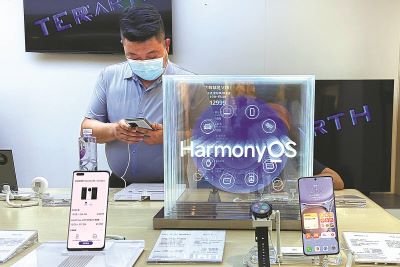
Huawei Technologies Co updated HarmonyOS, its self-developed operating system or OS, to preview version 3.0 for developers on Friday, marking efforts to build its own software ecosystem.
HarmonyOS 3.0 follows installation of previous versions on more than 150 million devices, including smartphones, tablets and smartwatches.
Yu Chengdong, CEO of Huawei’s consumer business group, said at the annual Huawei Developer Conference in Dongguan, Guangdong province, on Friday that Huawei has already devoted more than 50 billion yuan ($7.83 billion) in the past three years to building the ecosystem for HarmonyOS, which is designed for the internet of things, or IoT, era.
HarmonyOS 3.0 for developers builds on the previous 2.0 version, which was launched in June this year.
Huawei said HarmonyOS 3.0 preview version for developers allows third-party software developers to use more powerful tools to innovate across more types of terminal devices, bringing consumers a new experience of intelligent connection of all things.
Tim Gong, president of software at Huawei’s consumer business group, said the HarmonyOS 3.0 beta version for consumers will be launched in the first quarter of 2022.
Huawei said earlier it expects the number of devices equipped with HarmonyOS to reach 300 million by the end of this year, including more than 200 million for Huawei devices.
HarmonyOS was first unveiled in August 2019, after the US government restricted Huawei’s access to Google’s Android operating system. But Huawei has underlined that HarmonyOS is not a replacement to Android. Instead, it is a next-generation OS designed for the IoT era and will seek to deliver a smooth experience across different devices.
Huawei said in August that more than 300 partners, including home appliance maker Midea, artificial intelligence company iFlytek and cookware company Supor, have adopted the HarmonyOS.
Xiang Jiangxu, vice-president and chief technology officer of Midea IoT, said, “HarmonyOS will cover almost all categories of our products, some 200 varieties, within this year.”
The OS will help build an efficient link between Midea’s products and the smart IoT system, Xiang said, adding that more home appliances equipped with HarmonyOS will soon be available in the market.
Xiang Ligang, director-general of the Information Consumption Alliance, a telecom industry association, said the progress showcased Huawei’s appeal to both consumers and its industrial partners.
But the road ahead is still tough, and it will take more time and efforts for Huawei to build a vibrant ecosystem of software and hardware partners. That is the key for the operating system to survive in the highly competitive digital world, Xiang said.