Vietnam to build nine new railways by 2030 #SootinClaimon.Com

#SootinClaimon.Com : ขอบคุณแหล่งข้อมูล : หนังสือพิมพ์ The Nation.

https://www.nationthailand.com/international/40007923


HÀ NỘI — Deputy Prime Minister Lê Văn Thành has signed a decision approving the railway system plan for 2021-2030, with a vision to 2050, which sets a target of building nine new railways by 2030.
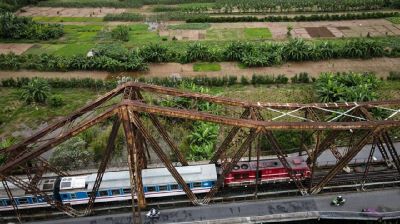
They will have a total length of 2,362km.

Under the plan, the railway industry will renovate and upgrade existing railways, connect with international transport routes; prepare capital and resources to start construction on new routes, with priority given to North-South high-speed ones and those linking gateway seaports, international airports, and main railways in major cities.

Specifically, the sector will upgrade the seven existing routes with a total length of 2,440km.

The nine new railways include a 1,545km north-south high-speed route connecting Hà Nội’s Ngọc Hồi station and HCM City’s Thủ Thiêm station, a 102km-long route connecting Hà Nội and northern Hải Phòng Port City, a 103km-long route connecting Vũng Áng Port and the Mụ Gia Pass along the Việt Nam-Lao border, and a 84km-long route connecting southern Biên Hòa City of southern Đồng Nai Province and southern Bà Rịa-Vũng Tàu Province.

They also include a 174km-long route linking HCM City and Mekong Delta’s Cần Thơ City, a 128km-long route linking HCM City and Lộc Ninh District of southern Bình Phước Province (from Dĩ An railway station to the Hoa Lư border gate between Việt Nam and Cambodia); and a 38km-long route from Thủ Thiêm Railway Station in HCM City to Long Thành International Airport in southern Đồng Nai Province.

The total capital needed for both upgrading and building railways will be around VNĐ240 trillion (US$10.5 billion).

By 2030, the volume of goods transported is expected to reach 11.8 million tonnes, accounting for about 0.27 per cent of the market share, and the number of transported passengers will reach 460 million, accounting for a market share of about 4.40 per cent.

In order to fulfil the targets, the decision also put forward key measures and policies, including building and issuing mechanisms to encourage, support and create favourable conditions for domestic and foreign individuals and organisations to invest in railway transport and transport logistics services; continuing to attract and effectively use ODA capital sources and preferential loans of international donors in railway projects; socialise investment in railway services and logistics; mobilise all economic sectors, including foreign investors, to invest in means of public transports and construction of facilities supporting transport activities such as goods storage.

Other measures include reducing environmental pollution caused by railway transport activities, particularly in treating wastewater and industrial waste; promoting human resources training; and expanding international cooperation to learn from other countries’ experience and science and technology in railway development. — VNS

Published : October 25, 2021

By : Vietnam News
Infection rates continue to trend downward with S. Korea hitting vaccine milestone #SootinClaimon.Com

#SootinClaimon.Com : ขอบคุณแหล่งข้อมูล : หนังสือพิมพ์ The Nation.

https://www.nationthailand.com/international/40007922


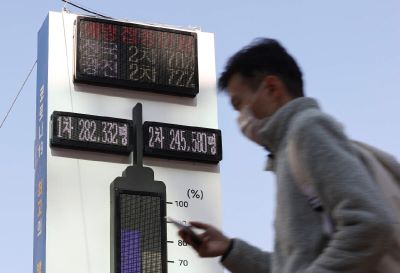
South Korea reported 1,190 new cases Monday, continuing a sustained decline in the number of coronavirus cases as its vaccination rate reached the milestone of 70 percent over the weekend.

Monday’s tally, including 1,167 local infections, raised the total caseload to 353,089, the Korea Disease Control and Prevention Agency (KDCA) said. It is down from the 1,423 counted the previous day. New virus cases stayed below 2,000 for the 17th day in a row.

The death toll came to 2,773, up seven from a day earlier.

Of the locally transmitted cases, 455 were from Seoul, 401 from the surrounding Gyeonggi Province and 96 from the western port city of Incheon.

Imported cases, which include South Korean nationals, came to 23.

The total number of people released from quarantine after making full recoveries was 324,448, up 1,055 from the previous day.

Daily virus caseloads tend to fluctuate depending on the number of coronavirus tests, which generally decrease during weekends and holidays.

South Korea has been reporting more than 1,000 cases a day since early July, but the numbers have been on the decline since hitting the peak of 3,272 cases on Sept. 25.

The KDCA said 40.7 million people, or 79.4 percent of the country’s 52 million population, have received their first shots of COVID-19 vaccines since February when the country began its inoculation campaign. The number of fully vaccinated people reached 35.9 million, or 70.1 percent.

With an accelerating rate of vaccination and based on the judgment that the fourth wave of the pandemic began to wane, the government is set to phase out pandemic restrictions.

It has recently loosened capacity limits on gatherings, and plans to lift most of pandemic restrictions on business hours and capacity and increase incentives for the fully vaccinated, starting next month, under the “living with COVID-19” scheme.

Under the new scheme, COVID-19 will be treated as an infectious respiratory disease, like seasonal influenza, and the government’s coronavirus response will focus more on the prevention of severe hospitalizations and deaths, rather than on infections.

The government is set to announce its first draft of the scheme later in the day. (Yonhap)

Published : October 25, 2021

By : The Korea Herald

Bomb blasts occur at NLD offices in three townships of Mon State #SootinClaimon.Com

#SootinClaimon.Com : ขอบคุณแหล่งข้อมูล : หนังสือพิมพ์ The Nation.

https://www.nationthailand.com/international/40007921


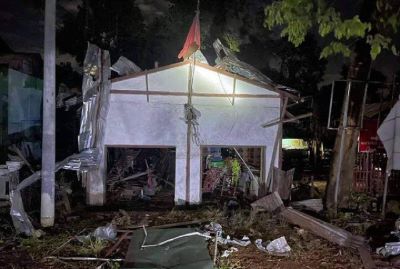
Township offices of the National League for Democracy (NLD) in Thaton, Kyaikhto and Bilin townships of Mon State were attacked with bombs on October 23, according to local sources.

Abomb exploded at the Thaton Township NLD office by Yangon-Mawlamyine Road in Leikin Ward at about 11.20pm on October 23 and 24, destroying the two-story wooden building, fences and party signboard, said local residents.

“I heard a bomb explosion but I could not go outside to have a look because we have a nighttime curfew. The whole office was destroyed. But no one was hurt,” said a local resident in Thaton.

After the bomb blast, security forces arrived and conducted checks.

Likewise, another bomb went off at the Kyaikhto Township NLD office by Yangon-Mawlamyine Road in Kawtsanaing Ward at about 11.45pm, damaging the office building, locals reported.

“I heard an explosion last night. It happened at the township NLD office,” said a resident in Kyaikhto.

A bomb exploded at the Bilin Township NLD office in Sayar San Ward at about 1.40 am on October 24. The almost entire single-story building was destroyed, locals said.

 No one was injured in the blast and security forces arrived at the scene for inspection.

In recent days also, bombs exploded at Myeik District NLD office and Dawei Township NLD office in Taninthayi Township.  

Published : October 25, 2021

By : Eleven Media

Demand for death cleanup services soars in Japan amid pandemic #SootinClaimon.Com

#SootinClaimon.Com : ขอบคุณแหล่งข้อมูล : หนังสือพิมพ์ The Nation.

https://www.nationthailand.com/international/40007920


A surge in demand for the services of companies that manage the belongings of deceased people instead of family members has turned the spotlight on the issue of solitary deaths amid the COVID-19 pandemic.

The situation has partly been attributed to a lack of opportunities for senior citizens and people who live alone to communicate with family members and volunteer welfare officials, among others.

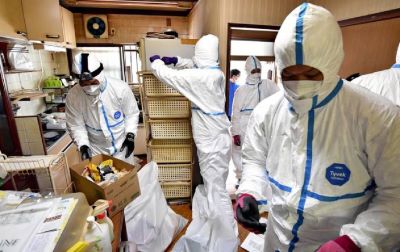
Eight people in personal protective equipment looked for important items such as bank books in an apartment in Nishinari Ward, Osaka City, as they put magazines and clothes into trash bags and loaded them into a truck along with cupboards and chests.

The former resident was a man in his 60s who had lived alone. A city official thought something was amiss during an attempt in June to visit the man, who was receiving public welfare.

The official alerted the police, who found the man’s dead body lying on a futon. The police think he had been dead for about two months.

An urn containing the remains of the man’s older brother was found in a paper bag on the floor.

The owner of the apartment contacted the man’s relatives but they would not accept responsibility for clearing up the man’s belongings, so the landlady called Kansai Clean Service, an Osaka-based operator that clears up the belongings of the deceased.

The service cost her ¥400,000.

“It was the first time this has happened. I didn’t know what to do,” she said. “The company was a big help because they did everything from disposing of the furniture to disinfecting the apartment.”

The company charges about ¥100,000 to ¥800,000, depending on the amount of work involved.

The number of requests they have received jumped from 813 in 2019, to 1,175 in 2020, when the coronavirus started spreading in Japan. As of August, requests numbered 2,038 in 2021.

The percentage of cases that involve special cleaning because a corpse had not been discovered for a long time has almost doubled from 35% in 2019 to nearly 70% in 2020 and 2021.

“All of the cases were thought to be solitary deaths, in which the decomposition of the corpse was at an advanced stage,” a representative of the operator said. “We’re getting more requests for urgent jobs because of complaints from neighbors about such things as bad smells.”

There is no legal definition of “solitary death” and national statistics are not kept. However, Osaka Prefecture’s medical examiner’s office independently keeps data on deaths that were not discovered for at least four days.

According to the office, the number of such deaths in Osaka City grew by 12% from the previous year to 1,314 in 2020, the highest figure since tracking began in 2017.

One reason for this is thought to be a decrease in opportunities for people to interact with others.

According to a survey by a national federation of welfare and childcare officers on about 6,200 welfare officers across the country, 19.4% of respondents did not make home visits or conduct consultations from March to August last year and 66.8% made fewer visits.

“It has become more difficult for family members and welfare officers to check on people regularly, which has increased the risk of solitary death,” Katsuhiko Fujimori, senior researcher at Mizuho Research & Technologies Ltd. said. “Some communities have sought other ways of staying in touch during the coronavirus pandemic, such as by sending letters with return envelopes to elderly people or using online services. Government bodies should support initiatives like these.”

By Yoko Kawasaki / Yomiuri Shimbun Staff Writer

Published : October 25, 2021

By : The Japan News

[Eye Plus] Digital library makes learning interactive #SootinClaimon.Com

#SootinClaimon.Com : ขอบคุณแหล่งข้อมูล : หนังสือพิมพ์ The Nation.

https://www.nationthailand.com/international/40007896


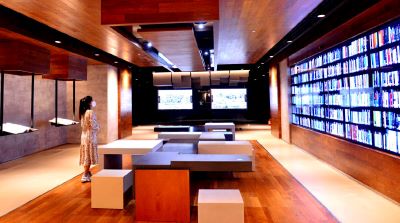
The National Library of Korea is welcoming visitors looking for a new way of reading books through its digital library, called Silgam Seojae. The digital library aims to bring books, especially old texts, closer to readers with the latest technologies.

Visitors can search for books on a touch screen where they receive book suggestions based on the search results, which they can share with other visitors.

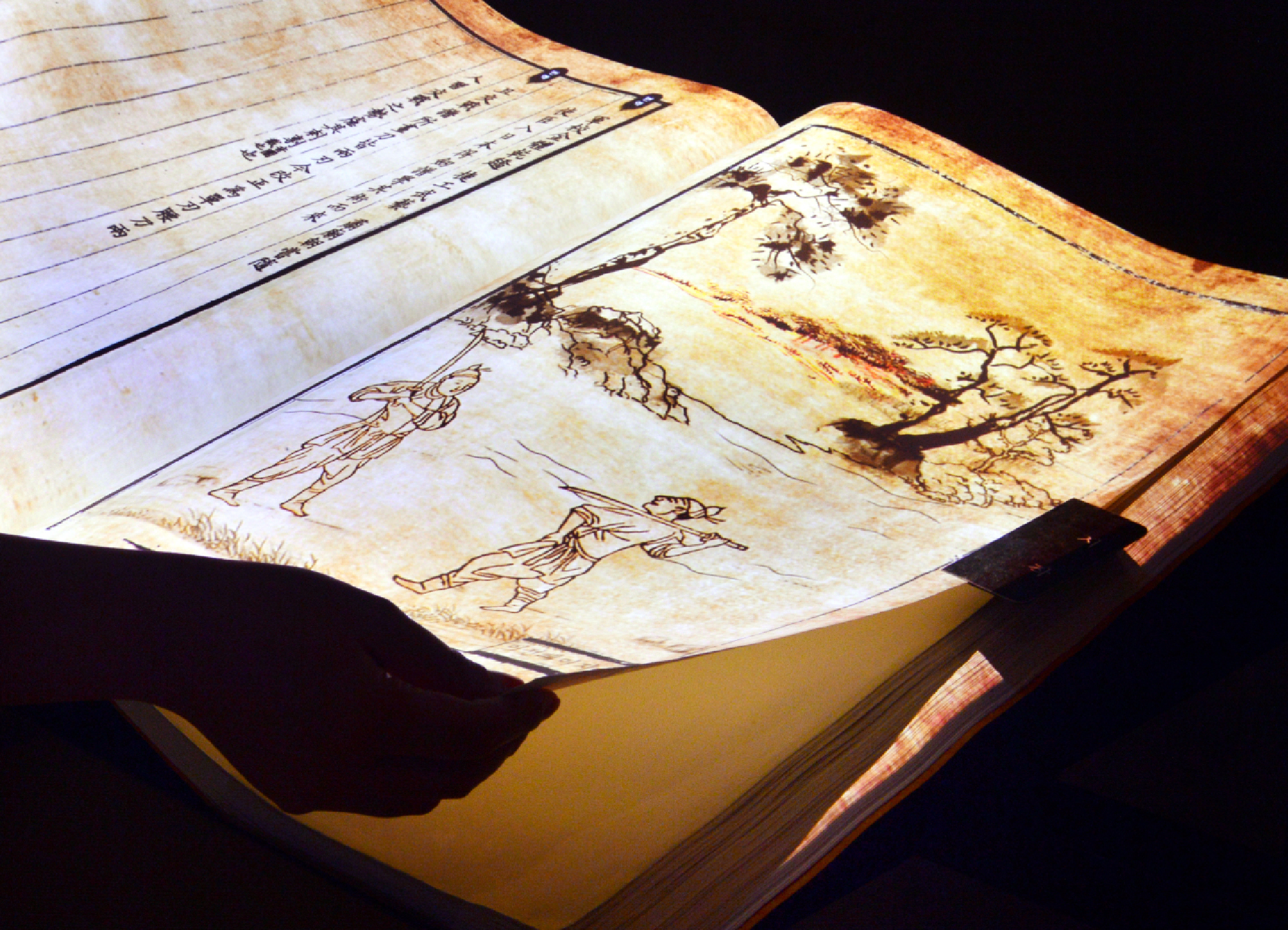
Old texts are offered digitally for reading, with annotations to help readers who are not familiar with old Korean. Books on martial arts, for example, render a demonstration of combat.

Silgam Seojae, a digital library, at the National Library of Korea. (Park Hyun-koo/The Korea Herald)Silgam Seojae, a digital library, at the National Library of Korea. (Park Hyun-koo/The Korea Herald)
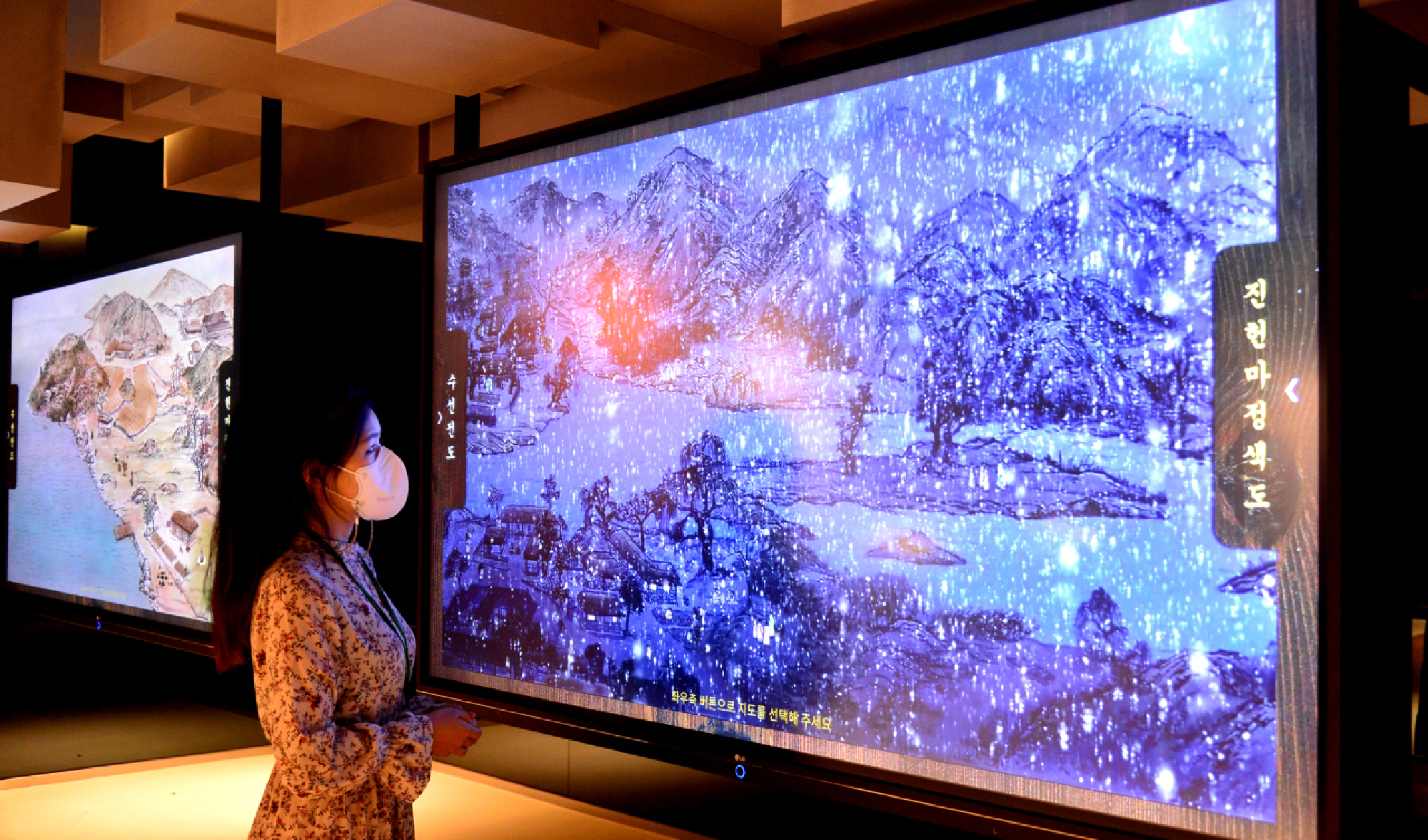
Old maps are re-created digitally to capture the everyday life of Koreans living at the time, with animated figures displayed on the screen.

Silgam Seojae, a digital library, at the National Library of Korea. (Park Hyun-koo/The Korea Herald)Silgam Seojae, a digital library, at the National Library of Korea. (Park Hyun-koo/The Korea Herald)
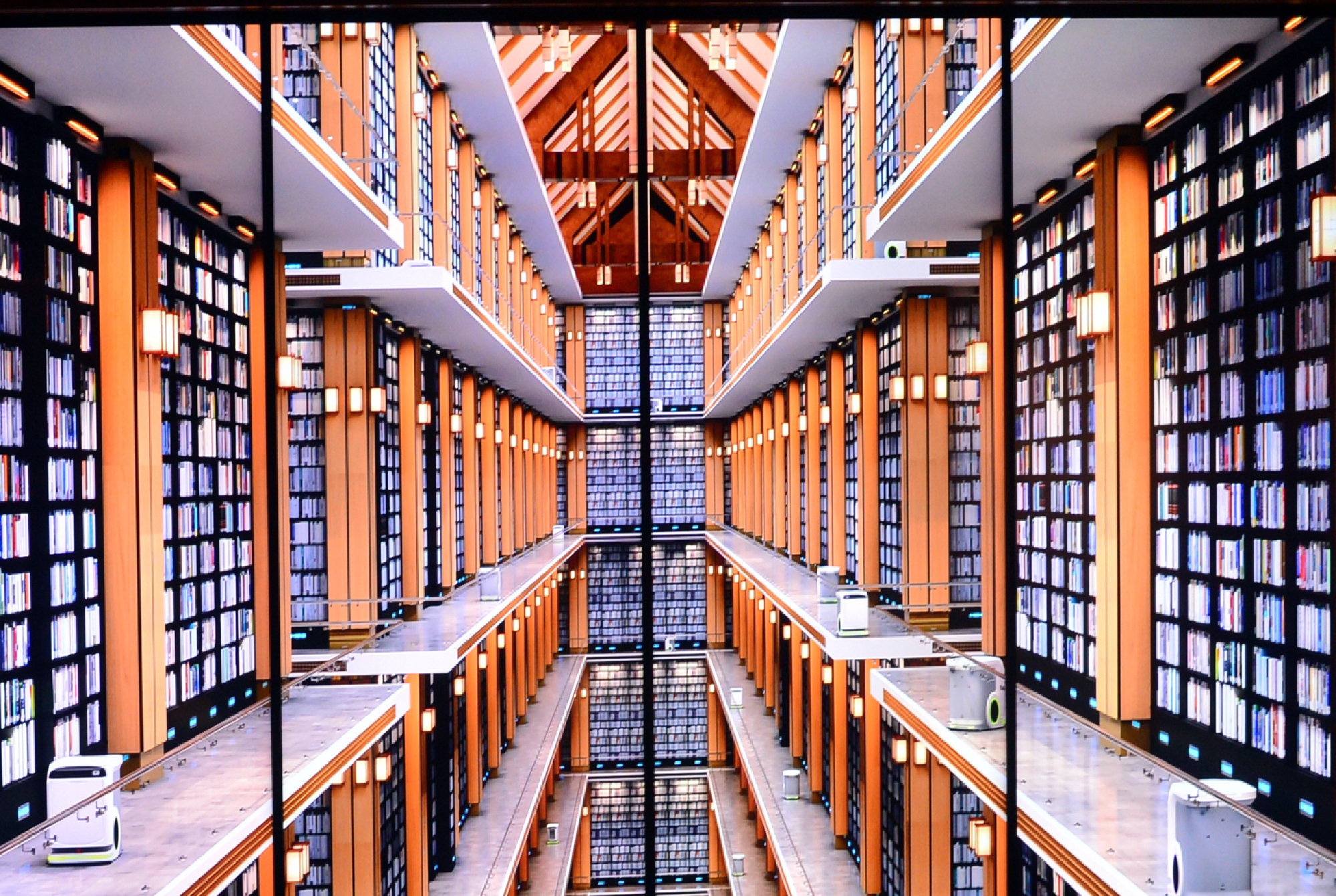


Silgam Seojae, a digital library, at the National Library of Korea. (Park Hyun-koo/The Korea Herald)Silgam Seojae, a digital library, at the National Library of Korea. (Park Hyun-koo/The Korea Herald)
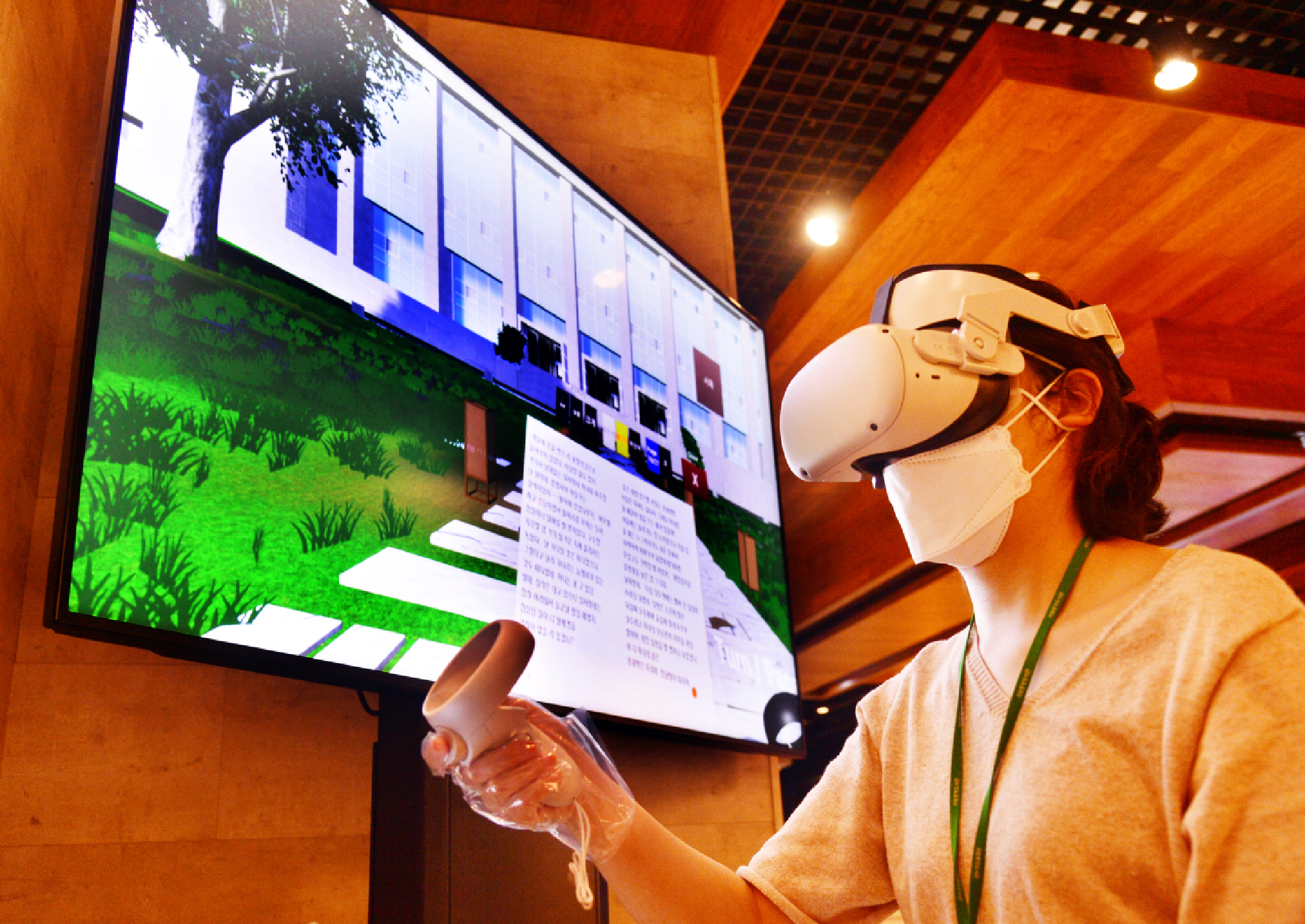
Visitors can also read books using wireless virtual reality headsets, with which they can choose a virtual locale to read books, such as a royal study, or listen to audiobooks 

Silgam Seojae, a digital library, at the National Library of Korea. (Park Hyun-koo/The Korea Herald)Silgam Seojae, a digital library, at the National Library of Korea. (Park Hyun-koo/The Korea Herald)

A 3D wall allows visitors to take a peek at the high-tech storage techniques being used to preserve some 43 million books the National Library plans to archive, with robots helping maintain optimal temperature and humidity.

Visitors should make reservations to tour the digital library, which takes place six times a day from 10 a.m. to 4:50 p.m., with each tour lasting 50 minutes. The library is closed every second and fourth Monday of the month, as well as holidays.

Published : October 24, 2021

By : The Korea Herald

For artist Rashid Rana, the Pakistan Pavilion facade represents the countrys diversity #SootinClaimon.Com

#SootinClaimon.Com : ขอบคุณแหล่งข้อมูล : หนังสือพิมพ์ The Nation.

https://www.nationthailand.com/international/40007894


When it comes to art and representing Pakistan these days, theres little on everyones lips other than the Pakistan Pavilion at the Dubai Expo 2020. And that pavilion is represented quite exclusively on social media by one thing — the spectacular facade created by artist Rashid Rana.

Rana is the recipient of the 2017 Asia Art Award by the Asia Society and the Sitara-e-Imtiaz. His works are housed in prestigious collections including the British Museum in London and the Metropolitan Museum of Art in New York.

“I was given the goal of transforming architecture into an art work,” Rana told Images. The facade he created encapsulates the Pakistan Pavilion and all the other exhibits inside and is the first thing people see. It’s also what most people are posting pictures of online.

“It takes after the seasonal transitions in Pakistan and diversity it has to offer — geographically, climatically, culturally, ethnically and racially. The drama, flow and the transition between colours amplify this diversity and, highlights Pakistan as a prime destination for opportunity and unique experiences.”

The artistic intervention — it’s not a design, we are told — is titled ‘Unity of All That Appears’ and melds together 24,000 seemingly identical but entirely unique panels; each fractionally different from the adjacent ones in terms of size and colour.

“The difference is not visible to the naked eye when you are comparing adjacent panels but it becomes apparent as you view it from distance. Therefore, in a subtle way this artistic intervention conveys the ability of the country to unify yet preserve the freedom of the diverse groups. It embodies the future of Pakistan by creating new trajectories.”

The intervention features a rainbow of colours and, according to the artist, is mainly made of aluminium composite panels, with half the surface in reflective finish while the rest is printed material.

Though Rana has been involved in the project for almost three years, taking into account the pandemic and virtual coordination, the actual fabrication and on ground installation took place in the last four months.

That the work was on a much grander scale than his other installations was an exciting challenge for Rana. “I have to admit that scale does inspire me,” he said. “Working during a global pandemic, maintaining uninterrupted communication and understanding between the studio team and the team on the site could be a challenge, but in the past 15 years my art practice has evolved in such way that it involves conceiving works digitally in Pakistan or wherever I am, fabricated in various parts of the world through remote communications and then exhibited elsewhere. The pandemic has made me even more adaptable.”

His team members and the stakeholder all gave their best to ensure that his vision came to life, said the artist.

If you’re familiar with Rana’s previous work, you know he often plays with photographs and images in his pieces but that’s not the case in his intervention at the Pakistan Pavilion. “Initially, the proposed idea was to draw from my practice as a visual artist, in which photograph/image installations dominate,” he explained.

“However, the constructed structure called for a new and innovative intervention, one which makes the pavilion lighter in weight but maintains the magnitude and stands out.”

And while he has long been the subject of praise for his work, the praise he’s receiving for the pavilion hits differently. “I have exhibited globally and it’s always nice to see people appreciate my work, but this feeling of representing the people and making them feel proud in what I create is entirely different — it is a proud yet overwhelming feeling,” Rana explained.

“The intervention presents a way forward; an optimistic way that allows its people to think a fresh and create new legacies rather than indulging in the past or necessarily following the footsteps of developed countries.”

The Dubai Expo opened to the public on October 1 and will continue till March 31, 2022.

Published : October 24, 2021

By : DAWN

60 years of Hồ Chí Minh Trail at sea celebrated #SootinClaimon.Com

#SootinClaimon.Com : ขอบคุณแหล่งข้อมูล : หนังสือพิมพ์ The Nation.

https://www.nationthailand.com/international/40007893


Sixty years have passed since the Hồ Chí Minh Trail at sea was established. Across this legendary route, many ships overcame typhoons and strict enemy blockades to successfully transport hundreds of thousands of tonnes of weapons, food and medicines to supply the southern front, contributing to the national great victory in Spring, 1975. Việt Nam News reviews these stunning successes involved.

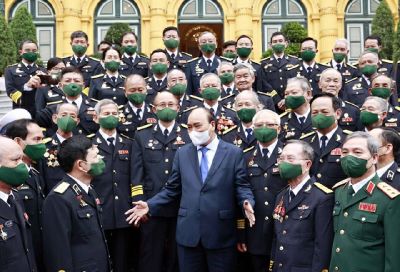
The feats and brave sacrifices of officers and soldiers serving ‘Hồ Chí Minh Trail at Sea’ have become immortal, a legend for the next generation to admire, respect and be proud, according to President Nguyễn Xuân Phúc.

The President said while receiving war veterans, who took part in missions along the historical trail, and representatives of the Việt Nam People’s Navy in Hà Nội on October 19. The gathering was to mark the 60th anniversary of the glorious secret sea lane.

The State leader said that the opening of the lane demonstrated the strategic vision, creativity, wisdom and ingenuity of the Party and President Hồ Chi Minh, making an important contribution to improving the nation’s combat capacity and creating a new development step for the Southern revolution.

Phúc said that the sea was not only a living space but also a sacred territory of the nation.

He also emphasized the need to continue to fully protect Việt Nam’s sovereignty over its sea and islands in all situations; maintain an environment of peace and stability at sea for national development; and settle disagreements and disputes by peaceful means in line with the Party and State’s policy and stance, and Vietnamese law and international law, especially the 1982 United Nations Convention on the Law of the Sea.

The President said he wished each veteran would continue the tradition of revolutionary heroism, courage, iron will, and relentless efforts to build the country toward prosperity.

The Hồ Chí Minh Trail at Sea was set up on October 23, 1961 to  transport military supplies from the North to aid the southern liberation army.

During the Vietnamese people’s resistance war against the US for national salvation, the Hồ Chí Minh Trail was considered a “strategic road through jungles” while the Hồ Chí Minh Trail at Sea was associated with secret ‘transport ships without numbers’.

To further enhance its capability of timely supporting the south and to aid in liberating the South and reunifying the country, the Political Bureau decided to open a second transport route at sea.

The existence of this mysterious sea route caused extreme difficulties for the US and Sài Gòn forces who tried to prevent the northern army from assisting in southern liberation forces.

On October 23, 1961, the Ministry of Defence decided to establish Mission 759 (now Naval Brigade 125), marking the birth of the ‘Hồ Chí Minh Trail at Sea’, a strategic transport route.

On the night of October 11, 1962, the first wooden motorboat of Mission 759, disguised as a fishing boat carrying 30 tonnes of weapons, secretly left the Nghiêng Wharf, Hải Phòng port city with a spirit of “speed and daring, all for the sake of the South liberation”.

After 10 days at sea, the ship safely arrived at Vàm Lũng Wharf in the southern cape province of Cà Mau.

After that successful trip, President Hồ Chí Minh sent a telegram to the soldiers of Mission 759 to encourage them. He advised them to draw from their experience to continue transporting weapons to the south so that the people could fight against the enemy, for North-South reunification.

To avoid attention, most of the ships carrying weapons for the southern battlefields were disguised as fishing ships with no registered numbers and they constantly changed their routes.

By February 1965, the strategic sea lane was no longer a secret. Enemy troops already know the exact methods and means of transport. They intensively increased sea patrols, stepped up bombing to ravage the North and deployed many forces and means to block the reinforcements at sea.

Because of this, Mission 759 had to change its operations, forcing the fleet to use different routes.

Since 1967, implementing the Resolution of the Party Central Committee, together with the Hồ Chí Minh Trail along the Trường Sơn mountain range, officers and soldiers of the Hồ Chí Minh Trail at Sea focused all their efforts on transporting to serve the 1968 Spring General Offensive and Uprising.

Many supplies shipments arrived at liberated areas in the South and South Central, but there were also many officers and soldiers who had ships destroyed and many comrades who sacrificed heroically. Ship 235, piloted by Captain Nguyễn Phan Vinh, fought heroically and destroyed a ship at Hòn Hèo, Khánh Hòa in March 1968.

During the anti-US war, the Hồ Chí Minh Trail at Sea contributed to the great victory in the spring of 1975, completely liberating the South and reunifying the country.

Veteran Nguyễn Đắc Thớ, former chief engineer of Ship 641, was touched when recalling memories on the unnumbered ship.

“I was determined to sacrifice my life every time I set out on a trip. Unlike on land, each officer and soldier when participating in a ship without registered number must face more dangers at the same time. It was the pursuit of the enemy, the great waves, the irregularities of the weather. We carried out the assigned tasks with creativity, ingenuity and courage for the purpose of protecting goods, weapons and ensuring the secrecy of the mission,” he said.

The Hồ Chí Minh Trail is a miracle of the nation, a unique and creative feature of the Việt Nam people’s war, of the Vietnamese military, and a noble symbol of the will to win independence and reunification for the country. VNS

Published : October 24, 2021

By : Vietnam News

[India] Historic Milestone! #SootinClaimon.Com

#SootinClaimon.Com : ขอบคุณแหล่งข้อมูล : หนังสือพิมพ์ The Nation.

https://www.nationthailand.com/international/40007892


Yesterday, India touched the figure of 1 billion Covid-19 vaccinations! 

Let’s put this number into perspective.

India started its vaccination campaign against Covid-19 only 275 days ago. Since, India has administered an average of 2.7 million vaccine doses a day- akin to vaccinating a country the size of Namibia between sunrise and sunset for the last 40 weeks straight! September 17, 2021 was particularly historic- when India vaccinated  more than 25 million people-a population the size of Australia- in the span of a single day!  The significance of vaccinating a huge population spread across an immense geography in record time cannot be overstated. 

As things stand at present, 75% of the adult population or 3 out of every 4 adults in India has received at least one dose of the vaccine. 30% of the total population is fully vaccinated.  

Vaccinations have indeed played a key role in limiting the spread of Covid-19 in India.  On October 18, 2021, we recorded 13,596 cases- our lowest in 230 days.  All credit for this scale and pace of vaccination must go to the determination of the Indian leadership as well as to the people of India to unite in the fight against Covid-19. The civic responsibility displayed by the citizens of India in shunning “vaccine hesitancy” and getting vaccinated in huge numbers must be commended.  It was indeed “Sabka Prayaas”, as Prime Minister Modi has put it.  Particular mention must be made of the efforts of our healthcare workers, doctors and frontliners who have worked tirelessly to achieve this milestone! 

Together, we did!

India’s accomplishment of administering 1 billion doses- nearly all of which were Made in India- is a confirmation of our homegrown capacities and domestic strengths.  The approach was, above all, science-born and science-driven. Technology too played an integral part in India’s vaccination campaign to counter Covid-19.  The cold chain system across the country was managed through the Electronic Vaccine Intelligence Network (eVIN) and a unique digital platform, CoWIN, was rolled out to ensure that the vaccination project was seamless, organized and end-user friendly. After all, technology which is practical, scalable, affordable and benefits humanity has always been India’s forte! 

At the heart of this national endeavour is also the constitutional ethos of socio-economic justice for all- in complete consonance with Prime Minister Modi’s vision of Sabka Saath, Sabka Vikaas. The vaccination coverage in India’s countryside accounts for 65% of India’s vaccination coverage till date, 75% of the total 300,000  Covid Vaccination Centres across India are in rural areas. Public health professionals and India-watchers have been unanimous in stating there was no rural-urban divide in India’s vaccination campaign to counter Covid-19. 

We are deeply grateful to the Government and people of Bhutan who have stood steadfast by India through this journey, as only true friends do.  Your messages of support, sympathy and goodwill during the course of the second wave fortified us, as did the chanting, prayers and healing wishes.  Your warm messages of congratulations yesterday on recording one billion vaccinations touched India’s hearts.  This is indeed an opportune moment for me to extend a sincere and unfeigned thank you!

Going forward, we are looking at an increased monthly production of Covid-19 vaccines, a bigger basket of homegrown vaccine options, and greater numbers of those vaccinated within the country.  We have since October resumed vaccine support to our friends and partners, and our capacity to share would only burgeon, as a direct consequence of an increased production capacity. 

The India way is to innovate despite constraints, to unite and act in the face of daunting challenges and to turn crisis situations into veritable opportunities that take the nation forward. India’s achievement of a billion vaccine doses is a milestone for the world and strengthens the global fight against the pandemic- in harmony with India’s vision of “One Earth, One Health”.  As a nation that takes its responsibility to be a force for the global good seriously, India will continue to move forward- in Swami Vivekananda’s immortal words- with infinite energy, infinite enthusiasm, infinite daring, and infinite patience! 

Published : October 24, 2021

By : Kuensel

G7 trade ministers agree to work toward eliminating forced labor with China in mind #SootinClaimon.Com

#SootinClaimon.Com : ขอบคุณแหล่งข้อมูล : หนังสือพิมพ์ The Nation.

https://www.nationthailand.com/international/40007891


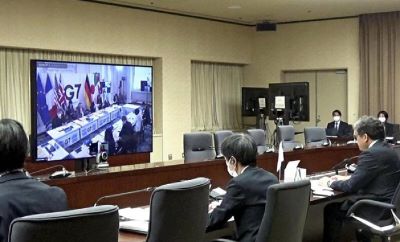
Trade ministers from the Group of Seven industrialized nations agreed to cooperate in eliminating forced labor from international supply chains at a meeting held in London on Friday, marking the first time the G7 has presented a concrete policy to eliminate such practices.

Although the statement adopted by the ministers did not specifically name any country, China’s oppression of the Uighur ethnic minority was clearly in the crosshairs.

According to the statement, the G7 trade ministers share concerns regarding the “use of all forms of forced labor in global supply chains, including state-sponsored forced labor of vulnerable groups and minorities.”

About 25 million people are said to be victims of forced labor worldwide. The statement called on “all countries, multilateral institutions and businesses to work together, including with survivors of forced labor, to eradicate forced labor from global supply chains.”

The ministers also said the implementation of trade policies such as import and export restrictions would be an important tool in eliminating forced labor.

To make it easier for companies to prove that they are not involved in human rights violations, the G7 will promote the development of common guidelines for sharing data on forced labor by the United Nations and other international organizations.

“We shared serious concerns about forced labor and other issues against minority groups. We need to take coordinated action in the G7,” Economy, Trade and Industry Minister Koichi Hagiuda said after participating in the meeting online from Tokyo.

The ministers also discussed cross-border data flows, sharing the view that companies should not be required to store data on local servers or disclose source code, eying China, which manages and hoards data under government control.

Published : October 24, 2021

By : The Japan News

Future Covid-19 cases may look like the common cold #SootinClaimon.Com

#SootinClaimon.Com : ขอบคุณแหล่งข้อมูล : หนังสือพิมพ์ The Nation.

https://www.nationthailand.com/international/40007890


GEORGE TOWN: A child with a runny nose or fever a few years from now may give the impression that he only has a case of the common cold although he may actually be infected with Covid-19, says an expert.

This is the possible scenario painted by Universiti Sains Malaysia virologist Dr Kumitaa Theva Das, who said when the SARS-CoV-2 virus is always present, or endemic, then it will be very rare for Covid-19 carriers to exhibit severe symptoms, as can already be seen with the small percentage of patients now.

“The hope is that Covid-19 will be added to the list of the four endemic coronaviruses that are constantly in circulation,” said Kumitaa, who added that because influenza (flu) viruses have a higher mutation rate than SARS-CoV-2, flu vaccines need to be reformulated practically yearly.

“This may not be needed for Covid-19,” she said, adding that at present, the country’s vaccination programme seems sufficient as it does not seem like any of the newer variants of SARS-CoV-2 are outpacing Delta.

Kumitaa added this “breathing space” presents the opportunity to build the pandemic-preparedness, enabling the country to be self-reliant to ensure that our measures are sustainable.

“Aspects like ensuring our genomic sequencing capacity is good, developing cheap and rapid test kits, training personnel, and supporting vaccine development in our country will go a long way in battling any future infections we may face,” she said.

When asked if the country can achieve zero Covid-19 cases, Dr Kumitaa said the more likely scenario would be that the virus might be eradicated in some countries, while continuing to spread and cause outbreaks from time to time.

She said it is unlikely that any nation would go through major lockdowns again for extended periods, though that would depend on factors like the immunity of the population and whether the virus continues to evolve. Another important aspect to consider is determining what the animal or natural reservoirs for SARS-CoV-2 are.

“Diseases can persist if there are various animal hosts, as this means that the virus can spill back into people. At the moment, it is known that the virus is infectious in minks, but not so much in other animals. Diseases become slightly challenging to eradicate if they are zoonotic (capable of infecting both humans and animals),” she added.

“However, despite animal hosts, public health measures and vaccination have played a huge role in the success of the steady decline of cases and deaths from SARS-CoV-2.”

Kumitaa said Malaysia seems to be recovering from Covid-19, as reflected by the downward trend in cases, and this is expected to continue based on the vaccination rate and preventive measures implemented by the health authorities.

She said when Covid-19 is endemic, it is still important to observe public health measures and to continue with active surveillance to prevent sudden spikes in cases.

While there is a declining prevalence of variants of concern globally, vaccine inequity may lead to the emergence of new variants, she said, adding that there should be regular monitoring, especially for international travel, and constant risk assessments.

Kumitaa said closer to home, the public should continue adhering to practices adopted at the start of the pandemic to protect those who have yet to be vaccinated, such as children and adolescents.

“Minimising large gatherings and being cautious of how we interact with one another, doing frequent testing, donning masks, sanitising regularly, and making sure places are well-ventilated will enable us to protect ourselves and our loved ones,” she said.

Published : October 24, 2021

By : The Star