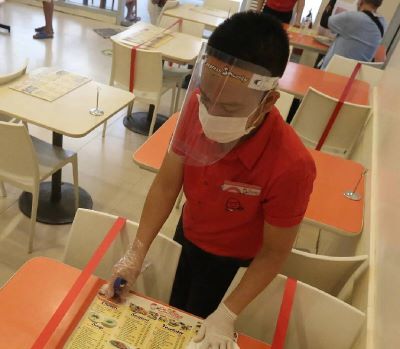
Singapore to resume travel from South Asia, eases measures for those from Malaysia, Indonesia #SootinClaimon.Com

#SootinClaimon.Com : ขอบคุณแหล่งข้อมูล : หนังสือพิมพ์ The Nation.

https://www.nationthailand.com/international/40007889


SINGAPORE – Travellers from six countries that Singapore was previously closed off to will be allowed to enter here from Wednesday, as the nation continues to adjust border measures in response to the global Covid-19 situation.
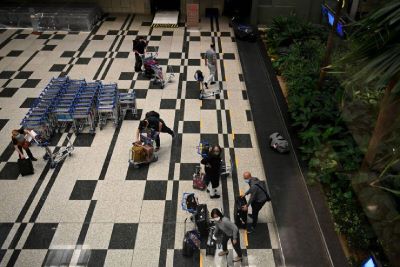
All travellers, excluding short-term visitors, with a 14-day travel history to Bangladesh, India, Myanmar, Nepal, Pakistan and Sri Lanka will be allowed to enter or transit through Singapore, said the Ministry of Health on Saturday (Oct 23).

MOH also said that it will be easing measures for travellers from several other countries, including Malaysia and Indonesia.

The ministry said in a release that it has reviewed the Covid-19 situation in Myanmar and the five South Asian countries it was previously closed off to.

It added that travellers from these countries will be subject to the tightest of border measures, which involve a 10-day stay-home notice (SHN) period at a dedicated facility.

During a virtual press conference by the multi-ministry task force (MTF) on Covid-19 on Saturday, Health Minister Ong Ye Kung said that the situation in these countries has stabilised for some time. There is no longer a need for strict rules that prevent travellers from these countries from landing here, he said.

MOH said changes that come into effect on Wednesday include the loosening of measures for travellers from Singapore’s closest neighbours, Malaysia and Indonesia, who will automatically serve their 10-day SHN at a declared place of residence or accommodation instead of a dedicated SHN facility.

Singapore classifies countries and regions into four categories based on their Covid-19 situation and risk profile, with differentiated border measures for each category.

Under the latest measures, travellers from Category I places – Hong Kong, Macau, Mainland China and Taiwan – as well as those arriving from Category II countries on Vaccinated Travel Lane (VTL) flights, only need to take a polymerase chain reaction (PCR) test on arrival.

All travellers from Category II countries on non-VTL flights will no longer need to undergo an on-arrival PCR test, but have to undergo an exit PCR test at the end of their seven-day SHN.

Travellers from Category III and IV countries also no longer need to undergo an on-arrival PCR test, but have to take an exit PCR test at the end of their 10-day SHN.

MOH said travellers from Malaysia and Indonesia, along with those from Cambodia, Egypt, Hungary, Israel, Mongolia, Qatar, Rwanda, Samoa, Seychelles, South Africa, Tonga, the United Arab Emirates (UAE) and Vietnam, will be placed under Category III measures.

Travellers from Category III regions will from Wednesday serve their 10-day SHN at their declared place of residence or accommodation, regardless of the travellers’ and their household members’ vaccination status and travel history. They currently have to apply to do so.

However, they must always remain in their declared accommodation and don an electronic monitoring device throughout their SHN period.

Singapore will also be facilitating the entry of more fully vaccinated domestic workers to meet the urgent domestic and caregiving needs of local households. It will do so while regulating the numbers carefully as the global situation evolves.

Mr Ong said this figure is now 200 a week, and will be increased to 1,000 a week. “This will start to clear the backlog of applications from families for helpers. MOM (Ministry of Manpower) will review the entry numbers regularly with MTF, with a view to try to fulfil the needs of as many families as quickly and promptly as possible,” he added.

He also explained why Singapore has been relaxing its border control measures even as some point out that safe management measures here remain tight.

He said the country needed tight border controls when the country had very few cases because it needed to prevent infections from “gushing in” through its borders.

The situation has now changed. Mr Ong said after going through big transmission waves for many months, the pandemic situation in many countries has stabilised.

“So we can open up travel lanes with these countries, safely,” he said.

He also noted that to make things safe for Singapore, the Government has strict measures, like requiring travellers to be tested when they come in to the country. This is why Singapore’s imported infection numbers have remained low, he added.

Published : October 24, 2021

By : The Straits Times
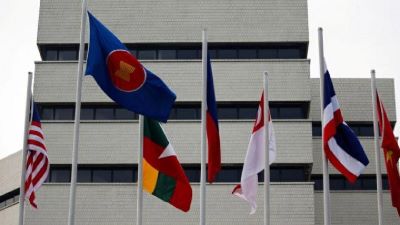
Myanmar Ministry of Foreign Affairs: ‘Head of State is entitled to participate in the ASEAN Summit, according to ASEAN Charter’ #SootinClaimon.Com

#SootinClaimon.Com : ขอบคุณแหล่งข้อมูล : หนังสือพิมพ์ The Nation.

https://www.nationthailand.com/international/40007888


Myanmar’s Ministry of Foreign Affairs issued a press release on October 22 that in accordance with Article 5 of the ASEAN Charter having equal rights and obligations and as per Article 7 (1), “the Head of State or Government of Myanmar is entitled to participate in the ASEAN Summits.”

On the question of the status of representation, “Head of State or Government of Myanmar enjoys equal and full rights to participate in ASEAN Summits,” the press release says.

“Myanmar will endeavor to find a peaceful solution based on ASEAN Spirit and ASEAN Way through consultation and negotiation. ASEAN member states should respect the unity and centrality of ASEAN aiming for long-term interest in accordance with provisions of ASEAN Charter.

Taking into all accounts, Myanmar will not be in a position to accept any outcome of the discussions and decisions which are ultra vires and contrary to the provisions, objectives and cherished principles of the ASEAN Charter,” the press release adds.

The Emergency ASEAN Foreign Ministers’ Meeting was held on 15 October in which a decision was made to invite only a “non-political representative” from Myanmar to the ASEAN Summit.

The next summit is set to take place October 26 to 28, but it is still not clear who, if anybody, will represent Myanmar at the summit.

Published : October 24, 2021

By : Eleven Media

UN fears mass atrocity crimes In Myanmar as troops gather in north #SootinClaimon.Com

#SootinClaimon.Com : ขอบคุณแหล่งข้อมูล : หนังสือพิมพ์ The Nation.

https://www.nationthailand.com/international/40007887


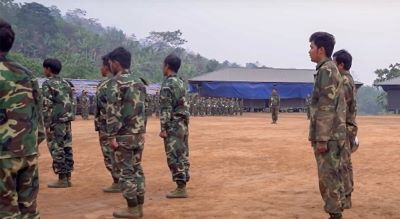
The UN said Friday it feared an even greater human rights catastrophe in Myanmar amid reports of thousands of troops massing in the north of the Southeast Asian country, which has been in chaos since a February coup.

“We should all be prepared, as the people in this part of Myanmar are prepared, for even more mass atrocity crimes. I desperately hope that I am wrong,” said UN Special Rapporteur on Myanmar Tom Andrews.

More than 1,100 civilians have been killed in the country’s bloody crackdown on dissent and more than 8,000 arrested since the coup, according to a local monitoring group.

Andrews, who was presenting the findings of an annual human rights report on Myanmar to the General Assembly, said that he had received information that tens of thousands of troops and heavy weapons were being moved into restive regions in the north and northwest.

The findings, he said, also indicated that the junta had engaged in probable crimes against humanity and war crimes.

“These tactics are ominously reminiscent of those employed by the military before its genocidal attacks against the Rohingya in Rakhine State in 2016 and 2017,” Andrews said.

About 740,000 Rohingya fled Myanmar’s Rakhine state in 2017 after security forces launched a clampdown that the UN has said may amount to genocide.

Andrews urged countries to deny Myanmar’s military junta the money, weapons and legitimacy it desired, citing a prisoner release earlier in the week as evidence that pressure was working.

On Monday, Myanmar’s junta chief Min Aung Hlaing announced the release of more than 5,000 people jailed for protesting against the coup.

The move came just days after the Association of Southeast Asian Nations delivered a major snub to the military regime, exclude the junta head from an upcoming summit of the 10-country bloc.

“ASEAN’s announcement that the junta will not be welcome at its upcoming summit strikes at the heart,” Andrews said.

Andrews said that junta-controlled forces had displaced a quarter million people. Many of those who had been detained were tortured, he said, including dozens who had died as a result.

Andrews added that he had received credible reports that children had also been tortured.

Published : October 24, 2021

By : The Daily Star

Vietnam to plans return of tourism and hospitality after COVID-19 #SootinClaimon.Com

#SootinClaimon.Com : ขอบคุณแหล่งข้อมูล : หนังสือพิมพ์ The Nation.

https://www.nationthailand.com/international/40007863


After a bad year for business in 2020 as the COVID-19 pandemic shut down travel around the world, Viet Nams tourism revenue fell even further this year. Plans were discussed by experts at a forum to access the current state of the hospitality market and map out a way towards a post-COVID-19 recovery.

Speaking at the “Viet Nam Tourism and Hospitality – Managing in Uncertain Times and the Way Forward”, Vice-Chairman of the Viet Nam National Administration of Tourism, Ha Van Sieu, said the tourism industry experienced a decline of 16 per cent in domestic visitors and 41 per cent in tourism revenue in the first nine months of 2021, compared to the same period last year.

“Accommodations, tour operators and travel services have been shut down or closed temporarily while most international and domestic flights have been cancelled or interrupted significantly due to travel restrictions,” Sieu said.

“The percentage of occupied rooms in Viet Nam’s accommodation services was about 20 per cent in 2020 and less than 10 per cent in 2021.”

RMIT Head of Management Department from the School of Business & Management Associate, Professor Nguyen Quang Trung, observed that “the past two years have been challenging for the hospitality and tourism landscape, leading to a really tough time for hotels, restaurants and tourism establishments.”

In response to these uncertain times, InterContinental Hanoi Landmark72 General Manager, Patrick Verove, shared proactive plans which have helped the hotel overcome the difficulties.

“At a time of great uncertainty, we have ensured guests can trust us for flexibility, cleanliness, safety and wellbeing priority,” Verove said.

“Faced with temporary closures and low demand, we have identified ways for operational changes to improve profitability, protect cash flow, apply sophisticated digital solutions and train our staff with a growth mindset.”

Capella Hotel General Manager, Christoph Strahm, emphasised the hotel had taken various measures including speeding up the adaptation of “state-of-the-art” technology and the implementation of touchless services to deliver a modern guest experience.

“We have prioritised safety for both guests and staff by adopting touchless services such as contactless check-in and check-out, in-room tablets, mobile key and press reader, among others,” Strahm said.

When talking about the local tourism recovery plan, experts thought about how the easing of restrictions can be managed, in line with the economy getting back on track. The tourism sector is expected to benefit from recovery measures and stimulus packages, allowing the sector to return gradually.

Sieu urged tourism and hospitality companies to revise their development strategies to adapt to new trends in tourism demands.

“Domestic tourism will surge, with a large proportion of travellers favouring green destinations ranging from beaches, mountains, forests, and national parks, followed by cuisine, culture, history and entertainment,” he said.

“Tourism and hospitality companies should innovate and diversify into new products which focus on wellness, safety, nature and authentic experiences.”

Two other panellists at the forum included Frasers Suites Hanoi General Manager, Sandy Ng, and Silk Path Hotels General Manager and Chief Business Officer, Nguyen Thi Thanh Thuy.

Following the success of a previous event in January, the online forum attracted close to 100 participants. They included local authorities and business leaders in the tourism and hospitality industry, as well as academics and students. — VNS

Published : October 23, 2021

By : Vietnam News

Siem Reap tourism master plan in motion #SootinClaimon.Com

#SootinClaimon.Com : ขอบคุณแหล่งข้อมูล : หนังสือพิมพ์ The Nation.

https://www.nationthailand.com/international/40007861


The government on October 20 launched the Siem Reap Tourism Development Master Plan 2021-2035 at a virtual ceremony presided over by Ministry of Economy and Finance Aun Pornmoniroth.

The minister told the event that the plan would be a key tool driving the tourism industry in Siem Reap province, and the Kingdom, towards continual improvements in terms of quality, safety and sustainability, and undergirding a recovery in economic growth, during and after Covid-19.

The plan was greenlit by the government on March 30, and its launch comes after quarantine requirements for most fully-vaccinated travellers was reduced from 14 to seven days, as the Kingdom presses ahead with its phased reopening plans.

The master plan prescribes seven primary strategic areas for quality tourism development in the province and surrounding regions through 2035 – prioritisation of tourist sites; new tourism products; promotion; quality and sustainability; environmental management; infrastructure and connectivity; and administration.

Pornmoniroth said: “With the introduction and furtherance of these strategies and key plans, I surmise that we’ll be able to restore and prop up the tourism sector in Cambodia, in the context of the national framework, and directly in Siem Reap province above all.

“We can seize the opportunities made possible by this crisis to roll out in-depth reforms – designed to turn Cambodia into a quality, safe and sustainable tourist destination – that will bear fruit and offer support for a recovery in economic growth in light of the Covid-19 crisis.”

Minister of Tourism Thong Khon lauded the master plan as a critical strategic instrument that could transform Siem Reap into a major, beguiling tourist destination that is popular in the region and the rest of the world, through development based on natural and cultural heritage, history and religion, embellished by the consciousness of being Khmer.

The plan could, inter alia, bolster development of rich tourism resources in the provinces, generate high-quality tourist experiences, win global recognition for efforts to conserve and protect cultural heritage and the natural environment, he said.

Foreign tourists will come to the Kingdom, stimulating local economic development and contributing to poverty alleviation and the climate change cause, he added.

“To outline the ingredients needed to capture the vision of sustainable tourism development, against a backdrop of fiercer tourism competition during and after the Covid-19 crisis, the master plan sets out the overall scope, integrating cultural and eco-tourism offerings for Siem Reap, bearing in mind that visiting Angkor temple has traditionally been the primary reason for tourists to come to the province.” Khon said.

Cambodia Association of Travel Agents president Chhay Sivlin said the master plan will play a fundamental role in the Kingdom’s tourism revival, especially for Siem Reap, following a steep Covid-induced slump.

The launch of the plan comes as Cambodia readies to reopen its economy and welcome back fully-vaccinated foreign tourists, she said.

“The decision to implement the master plan will greatly contribute to the enhancement of tourism sector. The master plan also incorporates key elements that will ensure that Cambodia’s tourism sector is sustainable with a long-term vision,” Sivlin said.

On April 1, the Ministry of Tourism said that through the strategies put forth by this and supplementary instruments, Siem Reap could attract 10.9 million domestic tourists by 2023 and 7.5 million international tourists by 2025, creating 940,000 jobs and generating an additional $6 billion in revenue for the province’s economy.

From January-July, Cambodia received 112,544 international visitors, marking a steep decline of 90.6 per cent year-on-year, according to the tourism ministry.

By Hin Pisei

Published : October 23, 2021

By : The Phnom Penh Post

[Japan] Advisory body makes case for GPS tags to prevent defendants from fleeing abroad #SootinClaimon.Com

#SootinClaimon.Com : ขอบคุณแหล่งข้อมูล : หนังสือพิมพ์ The Nation.

https://www.nationthailand.com/international/40007860


An advisory body to the justice minister has submitted a report proposing legal revisions aimed at preventing defendants released on bail from absconding through the use of global positioning system (GPS) devices, among other measures.

The Legislative Council submitted the report to Justice Minister Yoshihisa Furukawa after deciding on the revisions at a meeting Thursday.

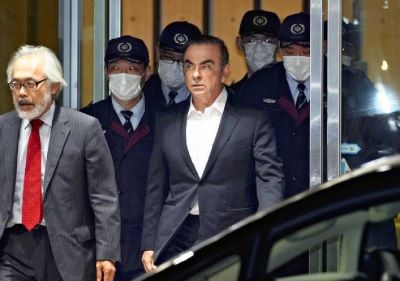
The proposals, which would involve revisions to the Criminal Procedure Code and other laws, were prompted by incidents such as the escape of former Nissan Motor Co. Chairman Carlos Ghosn, who fled to Lebanon while awaiting trial in Japan.

The revisions would enable courts to order defendants to wear a GPS device while out on bail if it was deemed necessary to prevent them from fleeing overseas. Defendants would also be required to follow strict compliance rules, such as not entering airports, seaports and other locations, and would be prohibited from removing or damaging the device.

GPS devices can notify courts if any violation of these rules is detected. In the event of a violation, the court would then contact prosecutors and police officers, who would trace and detain the defendant.

Failure to comply with the rules would be punishable by up to one year in prison.

Judges and prosecutors will only be able to confirm a defendant’s location data when a violation has been detected. This step was taken to protect the privacy of defendants.

The system will likely apply to a limited number of defendants, with potential cases expected to include foreign nationals based overseas; wealthy people with the financial means to flee abroad; and senior members of gangs and criminal organizations.

Many other countries already widely use GPS devices for purposes including preventing defendants from absconding and sex offenders from reoffending.

The Justice Ministry considered introducing the devices in 2009 for people on parole, but the idea was shelved due to concerns about potential privacy infringements and other issues.

However, opinions have changed since Ghosn snuck out of Japan and escaped to Lebanon.

The incident exposed the fact that the nation’s judicial system grinds to a halt if a defendant flees abroad, sounding alarm bells in legal circles.

Members of the Legislative Council determined that there would be few problems with introducing GPS tags. Discussions focused mainly on the kinds of defendants that would be required to wear the devices.

The Japan Federation of Bar Associations and other entities have lambasted Japan’s bail system as “hostage justice” because suspects and defendants tend to have their detention extended if they deny the accusations laid against them.

“Introducing GPS devices that allow a defendant to be released is preferable to detaining them and taking away their freedom,” said a lawyer on the advisory body. “The system should also be available to defendants who are unable to pay a bond.”

Another lawyer said, “I think this would also be an effective way to deter people out on bail from committing other crimes.”

There are concerns that the system could become bogged down if it is initially made available to an excessively broad range of defendants.

The advisory body, which has held 14 meetings to discuss the issue since June 2020, decided GPS tags should be restricted to defendants who might flee overseas, as the need was most pressing for such individuals.

The council has decided on a legal framework for the system. How this system will actually be put into practice will now be left to relevant authorities to figure out.

Developing a GPS device that is durable and can accurately detect violations will be essential. It is also important to ensure that maintaining the device, such as recharging it, does not place an excessive burden on defendants.

Unless a system is in place in which authorities will be able to immediately act on information and rush to a scene when a violation is detected, defendants might still be able to abscond.

Courts and prosecutors will need to be able to respond around the clock. How to determine, in a short time, whether a defendant needs to be apprehended also will require consideration.

In some countries, monitoring of GPS devices is entrusted to private companies. Some observers believe setting up this system in Japan could take several years. It is also possible that the kinds of defendants subject to the system will come up for discussion again.

The council made several other proposals, including the establishment of a “supervisor system.”

Under the system, the court would appoint a defendant’s relative or employer as a supervisor and require them to pay a bond. If the defendant absconds, the bond would be forfeited.

Under the existing system, a guarantor pledges to monitor a defendant released on bail.

However, the system lacks a legal foundation and there are no obligations or punishments imposed. Consequently, this system has been criticized for being incapable of preventing bail violations, such as defendants going on the run.

Under the new proposals, attendance at appeal hearings would also be mandatory for defendants. As a result, when a prison sentence is handed down, defendants would be detained on the spot and begin their sentence immediately.

Defendants on bail who fail to show up for trial without a valid reason or who do not return to their designated residence without permission from the court would face up to two years imprisonment.

While the GPS system is designed to prevent people from fleeing the country, these other measures are mainly aimed at preventing people from going on the run in Japan.

“Fleeing would result in a heavier punishment, so these steps should reduce a defendant’s motivation to abscond,” a senior Justice Ministry official said. 

Published : October 23, 2021

By : The Japan News

Oil and gas giants gear up for winter power use #SootinClaimon.Com

#SootinClaimon.Com : ขอบคุณแหล่งข้อมูล : หนังสือพิมพ์ The Nation.

https://www.nationthailand.com/international/40007859


The major oil and gas companies in China, the worlds largest natural gas consumer, are increasing their overseas gas supply to ensure a steady supply of power this winter.

China Petroleum and Chemical Corp, also known as Sinopec and the world’s largest refiner by volume, said it planned to purchase 13.3 billion cubic meters of liquefied natural gas from overseas during the upcoming heating season, which will be potentially colder than normal due to La Nina.

All of the company’s LNG receiving terminals are working at full capacity, it said. The company is also pushing forward the second phase of its Tianjin LNG terminal construction, which will have a capacity of 486,000 cubic meters and be put into operation by November, it said.

China National Offshore Oil Corp, China’s top offshore oil and gas driller, has also inked a long-term LNG purchase agreement with Qatar Petroleum. The company will purchase 3.5 million metric tons of LNG annually from Qatar Petroleum for 15 years, the longest LNG purchase agreement for a domestic company in eight years.

CNOOC made its first long-term LNG purchase agreement with Qatar Petroleum in 2008, agreeing to purchase 2 million tons of LNG per year for 25 years. It has imported more than 200 million tons of LNG since 2006, according to the company.

As the country’s largest oil and gas company, China National Petroleum Corp is also negotiating with gas suppliers from abroad. It has recently received almost 100 million cubic meters of LNG through its Jiangsu LNG terminal, which will be transported to the Yangtze River Delta region.

Platts Analytics expects Chinese LNG imports to grow by 37 million cubic meters per day over the 2021-22 winter-spring period, compared to the last heating season.

The National Development and Reform Commission has asked the three State-owned oil and gas companies to ensure sufficient natural gas supply in the coming heating season.

China’s heating season normally lasts from Nov 15 to March 15 in the northern regions.

According to the National Energy Administration, China saw robust market demand of natural gas this year and the country’s total gas demand is expected to rise 11 percent to 13 percent year-on-year to 365-370 bcm, supported by the easing of COVID-19 restrictions and the strengthening of the economy.

In addition to the import of LNG, the companies are also stepping up construction of underground gas storage clusters.

Sinopec said this week that its biggest underground gas storage cluster, the Zhongyuan underground gas storage cluster located in northern China, was put into operation on Monday. With a total storage capacity of 10.03 billion cubic meters, it will be able to effectively meet upcoming winter fuel demand.

Underground gas storage construction in China has entered a new development stage after years of exploration. The commissioning of the underground gas storage cluster will further ensure gas supply security in the coming winter, said Li Ziyue, an analyst with BloombergNEF.

China’s pipeline natural gas imports set a new record of 3.79 million tons in August, up 3.4 percent from the previous high of 3.67 million tons in July, according to the General Administration of Customs.

Platts Analytics expects China’s total pipeline gas imports including volumes from Central Asia and Myanmar to average 162 million cubic meters per day between October 2021 and March 2022, up by 19 million cubic meters per day over the 2020-21 winter-spring level.

Published : October 23, 2021

By : China Daily

S. Korea to impose temporary fuel tax cut amid gas price hike #SootinClaimon.Com

#SootinClaimon.Com : ขอบคุณแหล่งข้อมูล : หนังสือพิมพ์ The Nation.

https://www.nationthailand.com/international/40007857


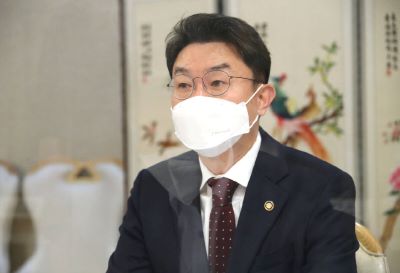
South Korea will temporarily cut fuel taxes to soften the blow of skyrocketing gasoline prices, which put upward pressure on inflation, First Vice Finance Minister Lee Eog-weon said Friday.

“The government will temporarily lower fuel taxes. We’ll finalize further details, including the extent of fuel tax cuts and when the envisioned measure will take effect, as soon as possible,” Lee said, adding that the formal announcement will be made during a government meeting next week.

Along with the temporary fuel tax cut, the government will also introduce a plan to lower tariff rates on imported liquefied natural gas — currently at 2 percent — to ease consumer burden stemming from a surge in energy prices, he said. 

Tax on gasoline currently stands at 820 won ($0.7) per liter. The government is considering a temporary fuel tax reduction of 10 or 15 percent. Earlier in November 2018, when gas prices rose to as high as 1,690.3 won, the authorities had temporarily slashed fuel taxes by 15 percent.

The latest move came as the nation’s gasoline prices have soared in tandem with international crude prices. 

The average gasoline price nationwide stood at 1,724.7 won per liter Monday, marking the highest since December 2014, according to data compiled by the state-run Korea National Oil Corp.

In the meantime, prices of Dubai crude, which take up the largest portion of Korea’s oil imports, spiked to $84 per barrel on the same day, up from an average of $72.63 in September.

Lee attributed the spike in international crude prices to market expectations over a recovery in global crude demand amid the rollout of COVID-19 vaccines and a gradual increase in oil output by the Organization of the Petroleum Exporting Countries-Plus, a coalition of OPEC member countries and 10 non-OPEC oil producers led by Russia, as well as stagnant oil production in the US due to severe hurricanes.

Rising inflationary pressure is another driver of the tax reduction plan, considering petroleum prices commonly lead the consumer price growth.

Consumer prices climbed 2.5 percent on-year in September and the figure is forecast to surpass 3 percent in October due to last year’s low base, according to the Finance Ministry. 

Despite surging gasoline prices, the government was confident it would be able to maintain domestic energy supply. 

“Eighty million barrels of crude oil have been imported per month without a hitch, while nearly 80 percent of LNG imports are based on long-term contracts with foreign partners,” Lee said. 

By Choi Jae-hee

Published : October 23, 2021

By : The Korea Herald

Bitcoin inches closer to record high amid ETF launches #SootinClaimon.Com

#SootinClaimon.Com : ขอบคุณแหล่งข้อมูล : หนังสือพิมพ์ The Nation.

https://www.nationthailand.com/international/40007826


Along with rally, exchanges expected to make robust profits: lawmaker

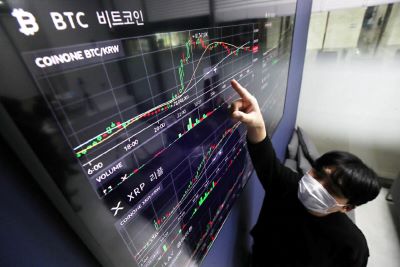
The world’s largest and best-known cryptocurrency, Bitcoin hit 80 million won ($67,900) on Thursday in Korea, inching closer to a historical high, following the much-anticipated listing of a Bitcoin exchange-traded fund in the US. 

Bitcoin briefly touched 81.2 million won at around midnight, according to the largest crypto exchange Upbit on Thursday. On April 14, Bitcoin’s price reached its record high of 81.48 million won. As of 1:50 p.m, Bitcoin was trading at 79 million won at Upbit and 78.7 million won at Bithumb, the second-largest exchange. 

The local price compared to global prices that exceeded the previous record hight and stood at $66,930 per bitcoin at around the same time, data from CoinMarketCap showed. Its market cap stood at $1.24 trillion. Ethereum, the second-largest virtual currency, saw its price jump above $4,000 for the first time since May. 

The upbeat market sentiment followed the listing of the first Bitcoin-related ETF in the US on Wednesday, which marks the cryptocurrency’s entry into the major financial market. Upon its debut, the ProShares Bitcoin Strategy ETF jumped 4.8 percent to close at $41.94. 

Also on Thursday, it was revealed that the second Bitcoin Futures ETF, VanEck’s Bitcoin Strategy ETF, had received approval from the US Stock Exchange Commission and is set to go live on the New York Stock Exchange as early as next week. 

Meanwhile, on the same day a lawmaker urged thorough supervision of cryptocurrency exchanges’ income and tax burden in proportion to their income. 

According to Rep. Park Hong-keun of the ruling Democratic Party of Korea, database and online information businesses that include cryptocurrency exchanges reported that they made 13.9 trillion won last year. The top 1 percent in this business category, or 37 business entities out of 3,737, made 9.6 trillion won, accounting for 69.5 percent of the total income. They also paid 463 billion won in taxes, he said, adding that it is difficult to exclude crypto exchanges from the top 1 percent category.

“With Bitcoin prices once exceeding 80 million won, incomes of virtual asset exchanges are also expected to increase accordingly,” Rep. Park said. “It is necessary to manage accurate income reports and appropriate taxes by separately classifying income from virtual asset exchanges by business types.” 

By Park Ga-young

Published : October 22, 2021

By : The Korea Herald

[Philippines] Restaurants, spas can fire unvaxxed staff, defer pay #SootinClaimon.Com

#SootinClaimon.Com : ขอบคุณแหล่งข้อมูล : หนังสือพิมพ์ The Nation.

https://www.nationthailand.com/international/40007825


MANILA, Philippines — Establishments that are allowed to offer dine-in or in-person services under the relaxed alert levels so long as their workers are vaccinated can withhold the salary of—or even fire—employees who are not vaccinated, Labor Secretary Silvestre Bello III said on Thursday.

He said the recent guidelines of the Inter-Agency Task Force for the Management of Emerging Infectious Diseases (IATF) exempted certain establishments from the “no vaccine, no work” and “no vaccine, no pay” policies.

Bello was referring to the IATF rules on the implementation of the five-tier alert level system for COVID-19 response in pilot areas dated October 13. They listed the establishments and activities that are allowed to open at a certain capacity to fully vaccinated customers “provided that all workers/employees of these establishments are fully vaccinated against COVID-19” and that health protocols are followed.

Bello stressed that while vaccination was not mandatory for all workers, the IATF resolution required all workers in those establishments to be fully vaccinated.

“There is no legal basis for mandatory vaccination for all workers. The IATF resolution is only for some establishments like restaurants and spas. They were allowed to offer dine-in services or in-person services provided that employees are vaccinated. The legal basis of restaurants and spas and other similar establishments is the resolution of the IATF,” the labor chief said in a text message on Thursday.

Lawful action

In a television interview Thursday morning, Bello categorically said that the IATF guidelines provided employers with the legal basis to withhold the salary of employees who are not vaccinated.

“I’ve already said you can’t dismiss an employee without legal basis. Nonvaccination is not a legal basis [for dismissal]. However, there is an IATF resolution saying that under alert level 3, restaurants can operate but the employees and customers should be vaccinated,” the labor chief said.

“You have that legal basis now, the IATF resolution. There is basis now to hold the pay because of violation of the IATF ruling,” he added.

Bello also said that establishments covered by the IATF guidelines could fire employees who refuse to get vaccinated.

“There is now an obligation on the part of employers to make sure their employees are vaccinated. [The employer] can now require employees to get vaccinated because there is now a legal basis,” he said.

Under the IATF guidelines, among the establishments and activities that are allowed to operate at a limited capacity in areas under alert level 3, such as Metro Manila, include dine-in services in restaurants; personal care establishments, such as barbershops and spas; fitness studios; film and television production; venues for parties and conferences; tourist attractions, and cinemas and movie houses.

Misrepresentation

Bello’s latest position alarmed labor groups. The Trade Union Congress of the Philippines (TUCP) said Bello was wrong to invoke the IATF guidelines as a basis for employers in certain establishments to let go of their unvaccinated employees.

“Nothing in the guidelines on the alert level [system] says unvaccinated workers can be fired. It is really wrong for Bello to say so,” said TUCP president and party-list Rep. Raymond Mendoza.

He said it was better for management to educate and convince their workers to be vaccinated, “rather than invoke the IATF resolution to compel and force them to be vaccinated and quoting Secretary Bello as saying [the employees] can be fired.”

Sonny Matula, president of the Federation of Free Workers and chair of the Nagkaisa coalition, questioned the exemption provided by the IATF guidelines, which he said “misrepresented existing law and ultimately defies the will of Congress.”

“This recognition that some employers can exercise ‘no vaccine, no work’ is not only running contrary to the existing law of voluntary vaccination but is also unreasonable,” said Matula, who is also a veteran labor lawyer.

Section 12 of Republic Act No. 11525, or the Act Establishing the COVID-19 Vaccination Program, enacted last February, states that vaccine cards “shall not be considered as an additional mandatory requirement for education, employment and other similar government transaction purposes.”

Free will

“The IATF can’t bend the law of general application on voluntary vaccination by merely issuing a resolution commanding compulsory vaccination in certain sectors,” Matula added.

In Congress, 1-Pacman Rep. Enrico Pineda said in a statement on Thursday that requiring a worker to be vaccinated to make a living was not right.

“Restricting access to a livelihood on the basis of one’s choice not to be vaccinated is violative of their basic right to choose, their right to free will. My body, my decision,” Pineda said.

House Deputy Speaker and Cibac Rep. Eduardo Villanueva also said in a statement Wednesday night that the “no vaccine, no work” policy was “devoid of compassion.”

“Depriving laborers of salary they rightfully earned with sweat and blood is a spit on the face of human dignity and the dignity of work,” he said.

Asked to comment on Bello’s latest statement, presidential adviser for entrepreneurship Joey Concepcion said he was supposed to send a letter to the labor chief today about requiring only vaccinated employees in certain sectors, such as restaurants and spas.

Ahead of the letter, he said he already texted Bello about it, which he said might help explain Bello’s recent position.

“We have no choice. The restaurants and the spas and the salons are going to accept only the vaccinated because we cannot allow the unvaccinated now. If the people serving them are unvaccinated, it’s a double standard. We have to be consistent,” Concepcion said in a phone interview on Thursday. —With reports from Nestor Corrales and Roy Stephen C. Canivel

By: Dona Z. Pazzibugan

Published : October 22, 2021

By : Philippine Daily Inquirer