Vietnam temporarily approves COVID-19 vaccine certificates by 72 countries, territories: Foreign ministry #SootinClaimon.Com

#SootinClaimon.Com : ขอบคุณแหล่งข้อมูล : หนังสือพิมพ์ The Nation.

https://www.nationthailand.com/international/40007824


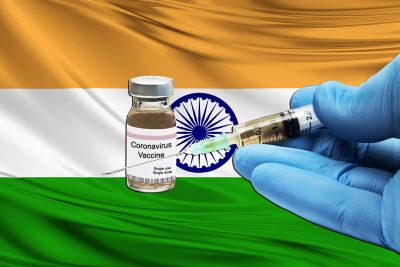
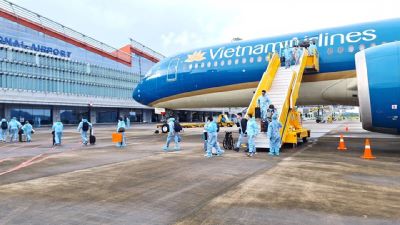
HÀ NỘI — Vaccine passports from 72 countries have been accepted by Vietnamese authorities to allow people to enter from abroad, and Việt Nam is currently in discussions with 80 countries and territories for mutual recognition for each others COVID-19 vaccine certification.
Lê Thị Thu Hằng, spokesperson for the Vietnamese foreign ministry, disclosed the information on Thursday during the regular press briefing held virtually from Hà Nội.

The 72 countries and territories in question are those whose representatives in Việt Nam have officially presented the COVID-19 vaccination and/or recovery documentation to the Ministry of Foreign Affairs, and temporary recognition has been granted, under the new guidelines of safe, flexible, effective adaptation to COVID-19 pandemic released by the Government earlier this month, she noted.

People travelling from overseas with these documents showing that they have either been fully inoculated or recently recovered from COVID-19 can use the documents to enter Việt Nam and would be eligible for the seven-day quarantine at centralised facilities as per the health ministry’s policies.

The spokesperson also said that the foreign ministry is “engaging in close discussions with around 80 partners for the mutual recognition of vaccine passports.”

In practice, the vaccine certificates granted by Việt Nam have been accepted in a number of countries, allowing Vietnamese nationals or foreigners who have been vaccinated here to enter these countries, according to the spokesperson.

In addition, in line with the Prime Minister’s directive on facilitating travel and work of foreign experts and investors along with other specific groups, the foreign ministry is also working with ministries, agencies, and local authorities to address any outstanding issues and propose further easing of the approval process for entries of foreigners into Việt Nam, especially the process of granting visas to take into account vaccine certificates or recent recovery, Hằng said.

This would mean more streamlined administrative procedures and further decentralisation of the authority within our apparatus, she noted.

Earlier, the foreign ministry has announced that they would recognise vaccines approved for use by the World Health Organization (WHO), US Centre for Disease Control and Prevention (CDC), European Medicine Agency (EMA), and the Vietnamese health ministry – meaning that any of these following ten shots would suffice: Moderna, Pfizer/BioNTech, Johnson&Johnson’s Janssen, Oxford/AstraZeneca, Sinopharm’s Vero Cell along with the UAE version Hayat-Vax, Sinovac, Covishield (Oxford/AstraZeneca formulation, made in India), Sputnik V, and Abdala. — VNS

The list of 72 countries and territories whose COVID-19 vaccine certificates and recovery documentation Việt Nam currently accepts, according to the Consular Department: Poland, UAE, South Korea, Kazakhstan, Mongolian, Oman, Thailand, Romani, Japan, New Zealand, Sri Lanka, Czech, Morocco, Arab Saudi, Armenia, Germany, Russia, United Kingdom, Austria, Norway, Sweden, Israel, France, Turkey, Azerbaijan, India, Switzerland, mainland China and Taiwan, Pakistan, Ireland, Greece, Kuwait, Colombia, Netherlands, Australia, Finland, Hungary, Belarus, Cambodia, Algeria, Indonesia, Nepal, Mexico, Bolivia, Croatia, Iceland, Portugal, Turkmenistan, Palestine, Qatar, Libya, Egypt, Timor Lest, Ukraine, the Philippines, Malaysia, Luxembourg, Argentina, Jordan, and Brunei.  

Published : October 22, 2021

By : Vietnam News
Restrictions to be lifted for restaurants and bars in Tokyo area #SootinClaimon.Com

#SootinClaimon.Com : ขอบคุณแหล่งข้อมูล : หนังสือพิมพ์ The Nation.

https://www.nationthailand.com/international/40007823


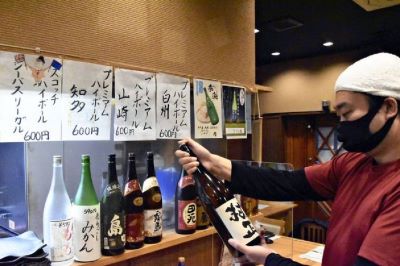
Restrictions on the business hours of bars and restaurants in Tokyo and nearby prefectures are expected to be fully lifted Monday as improvement in the infection situation has been seen in Tokyo and the three neighboring prefectures of Chiba, Kanagawa and Saitama.

The Tokyo metropolitan government is preparing to lift most pandemic-related restrictions on designated bars and restaurants. According to the metropolitan government, there are about 120,000 restaurants and bars in Tokyo. Of those, 102,248, or 85%, had received government certification by Oct. 15. The Tokyo government will request that noncertified establishments finish serving alcohol before 9 p.m.

Tokyo will keep in place a voluntary restriction of no more than four customers per table, but is also considering the option of exempting customers with vaccination certificates from that limit. The final decision was to be made at a meeting of the metropolitan task force on Thursday, based on the opinions of experts.

Following the lifting of the fourth state of emergency at the end of last month by the central government, Tokyo designated Oct. 1 to 24 as a period for measures to prevent a resurgence of infection cases. During this period, the metropolitan government has requested that certified restaurants and bars close by 9 p.m. and noncertified ones close by 8 p.m. Only certified establishments are approved to serve alcohol, up to 8 p.m.

According to sources, the metropolitan government discussed the idea of continuing business hour restrictions for noncertified establishments and approving them to serve alcohol only before 8 p.m. However, since Tokyo also decided to stop payments to establishments that comply with the requests, it concluded that further easing of restrictions will be needed.

The governments of the three nearby prefectures also decided Wednesday that restrictions on business hours, time of serving alcohol and the number of customers to be accepted would be lifted Monday for all eating establishments including noncertified ones. Regarding the Go To Eat campaign to support eating and drinking establishments, the prefectures will allow customers to use discount vouchers for meals.

The Chiba and Kanagawa prefectural governments have designated the period until the end of November as a transitional observation period of continued vigilance against the spread of infection. Kanagawa asks restaurants and bars to cooperate by aiming to have “four or fewer customers per table for two hours.” Chiba has called on people to use certified establishments and said that it will make another decision on what to do after Dec. 1 based on the infection situation. Saitama plans to restart selling discount vouchers for the Go To Eat campaign on Nov. 4.

Published : October 22, 2021

By : The Japan News

India crosses historic vaccination landmark; 100 crore Covid jabs administered #SootinClaimon.Com

#SootinClaimon.Com : ขอบคุณแหล่งข้อมูล : หนังสือพิมพ์ The Nation.

https://www.nationthailand.com/international/40007822


In a landmark achievement, India’s cumulative Covid-19 vaccination coverage crossed 100 crore doses on Thursday.

Atotal of 100 crore vaccine doses have been administered so far to eligible beneficiaries, as per the CoWIN portal at 9:47 am today. India’s Covid-19 vaccination drive was launched on January 16, 2021. Initially, the vaccination was opened for Health Care Workers (HCWs) only.

In a tweet, Union Health Minister Mansukh Mandaviya congratulated the country on achieving the feat and said it was the result of the able leadership of Prime Minister Narendra Modi.

Congratulations to the people&healthcare workers of India. It’s remarkable to reach the 1 billion dose mark for any nation, an achievement in just over 9 months since the vaccination program started in India, Dr. VK Paul, Member-Health, NITI Aayog stated on India crossing 100 crore vaccination.

As per the health ministry data, an average of about 38.43 lakh jabs have been delivered daily over the past week or so.

From February 2, front-line workers were made eligible for vaccination. These included State and Central Police personnel, Armed Force Personnel, Home Guards, Civil Defence & Disaster Management Volunteers, Municipal workers, Prison Staff, PRI Staff and Revenue workers involved in containment and surveillance, Railway Protection Force and election Staff.

The vaccination drive was expanded from March 1 to include persons above 60 years of age and those above 45 years with associated specified 20 comorbidities. It was further expanded to all people above 45 years of age from April 1. From May 1 all persons above 18 years of age were made eligible for Covid-19 vaccination.

India took 85 days to touch the 10-crore vaccination mark, 45 more days to cross the 20-crore mark and 29 more days to reach the 30-crore mark, according to the Union Health Ministry data.

The country took 24 days to reach the 40-crore mark from 30-crore doses and then 20 more days to surpass the 50-crore vaccination mark on August 6. It then took 76 days to go past the 100-crore mark.

The top five states which have administered the highest number of doses are Uttar Pradesh followed by Maharashtra, West Bengal, Gujarat, and Madhya Pradesh.

India has become the second country after China to reach the 100-crore milestone. But the basic difference between the two nations is accessibility to related data. China claims to have vaccinated over 2.23 billion individuals. It even claimed last month of fully vaccinating over 100 crore people but there is no open-source data accessible to validate it.

On January 3 this year, India gave emergency-use approval to Covishield and Covaxin. Covishield is a two-shot Covid vaccine developed by AstraZeneca-Oxford University.

Pune-based Serum Institute of India is its major producer. On the other hand, Covaxin, also a two-shot vaccine, is completely an indigenous achievement. It is developed by Hyderabad-based Bharat Biotech.

On April 12, amid concerns of rapidly scaling up Covid cases and fatalities, India approved the third vaccine made by Russia: Sputnik V.

(With ANI inputs)

Published : October 22, 2021

By : The Statesman

Malaysia facing labour shortage #SootinClaimon.Com

#SootinClaimon.Com : ขอบคุณแหล่งข้อมูล : หนังสือพิมพ์ The Nation.

https://www.nationthailand.com/international/40007794


PETALING JAYA: There are many jobs available for Malaysians as employers urgently require workers in certain critical sectors, such as manufacturing and construction, as the economy recovers from the pandemic.

Employers are urging the government to resolve labour woes quickly in these sectors as the economy recovers after almost two years of on-off operations.

National Chamber of Commerce and Industry of Malaysia (NCCIM) president Datuk Low Kian Chuan said the worker shortage was caused by expiring foreign workers’ permits, poaching of workers by other sectors as well as the “open and shut” standard operating procedures during the various movement control orders.

The NCCIM’s Quick Take Survey, covering 835 companies, reported a shortage of 77,721 workers, with the manufacturing sector requiring up 77.1% of the total manpower needed, followed by the construction sector (11.2%) and other services (8.9%)

Data compiled from industry associations show that plantations require 70,000 foreign workers, rubber glove industry (25,000), furniture (30,000), construction (200,000), manufacturing (25,000), services (45,000) and plastics (6,293), he said.

“The number of foreign workers now stands at 1.1 million, down 800,000 from 1.9 million in 2018.

“In August 2021, the number of unemployed persons reduced to 748,800 persons compared to 778,200 in July.

“This means that if a new addition of about 250,000 unemployed persons were to fill up the vacuum left by foreign workers, there remains a shortfall of at least 500,000 workers assuming some businesses have right-sized due to the pandemic.

“We must also take into account underutilisation of labour caused by time and skills mismatch with the labour market,” said Low, who is also Associated Chinese Chambers of Commerce and Industry of Malaysia (ACCCIM) president.

In June last year, Human Resources Minister Datuk Seri M. Saravanan had announced a freeze on new intake of foreign workers until the end of 2020, which intended to reduce their numbers as well as give locals priority in securing employment.

In September, he said the freeze was extended until Dec 31.

Low said if the problem is not addressed, it would stifle business recovery, hamper production to meet backlogged orders and create uncertainty for new orders.

Many hard-hit industries such as tourism, retail, non-essential sectors operated by micro and small and medium enterprises (SME) are still working hard to recoup their revenue loss and repair their balance sheet, added Low.

“Businesses still face many cost-related challenges; which include cash flow, the rising cost of raw materials, sky-rocketing freight costs for exporters and importers as well as shortage of manpower.

“We hope the government under Budget 2022 will continue to provide some operating costs relief measures for badly-hit sectors such as wage subsidies, hiring incentives, rental relief and targeted loan repayment assistance as well as tax treatment.

“Measures to ease the cost of raw materials include the reduction of import duties and excise duties on intermediate inputs, machinery equipment and building materials as well as the provision of Market Development Grants to cover the logistic costs of exporters and importers,” he said.

Low added that while the government is in the process of allowing the intake of 32,000 foreign workers for the plantation sector, a stop-gap solution can also be worked out to plug the shortages in other major economic sectors to facilitate their recovery.

By FATIMAH ZAINAL

Published : October 21, 2021

By : The Star

Mekong River overfished, under pressure, MRC says #SootinClaimon.Com

#SootinClaimon.Com : ขอบคุณแหล่งข้อมูล : หนังสือพิมพ์ The Nation.

https://www.nationthailand.com/international/40007793


The Mekong River Commission (MRC) has released two reports that show fishing continues to be an important livelihood in Cambodia, Laos, Thailand and Vietnam. However, the reports also indicate that overfishing and habitat degradation caused by rapid population growth, infrastructure development, and climate change are placing pressure on the Lower Mekong Basin’s fisheries.

The two reports – “Status and Trends of Fish Abundance and Diversity in the Lower Mekong Basin during 2007–2018” (FADM) and “Social Impact Monitoring and Vulnerability Assessment 2018” (SIMVA) – were released on October 19.

The reports found that changes in the Lower Mekong Basin’s aquatic ecosystems are affecting social conditions while households continue to rely on water resources that are increasingly under stress.

“These studies further highlight the importance of responsible development, balanced regional and national interest, and stronger regional cooperation in order to safeguard Mekong River water and related resources,” said MRC Secretariat CEO An Pich Hatda.

To produce the SIMVA report, MRC surveyed 2,800 households with 35 per cent saying their income had been lower and 32 per cent saying it had remained the same. Another 26 per cent claimed their income had increased marginally while six per cent said their income had significantly increased, compared to 2013.

The report said detrimental changes in water resources – such as agriculture, aquaculture, fish, other aquatic animals and plants – are affecting incomes with around 22 per cent of households revealing they had been impacted by the problem.

It said other non-water resources-related livelihoods, such as employment or business or trading, play increasingly important roles and may reduce vulnerabilities to changes in the Mekong water resources.

The FADM report, on the other hand, said fishing communities in almost all areas of the Lower Mekong Basin had been disturbed. In Laos, two of four river stations surveyed revealed a decline in catch rates while in Vietnam it was three of five stations.

The report urged the governments of MRC member states to enforce national fisheries laws and jointly implement the approved Mekong Basin-wide Fisheries Management and Development Strategy to restore fishing communities under pressure.

It also further proposes integrating river management plans to address risks from increasing hydropower development.

The two reports caution that there is still significant scope for improvement that has policy implications for governments if communities are to be protected from water and climate-related vulnerabilities.

By Ry Sochan

Published : October 21, 2021

By : The Phnom Penh Post

China tests world’s most powerful solid-fuel rocket engine #SootinClaimon.Com

#SootinClaimon.Com : ขอบคุณแหล่งข้อมูล : หนังสือพิมพ์ The Nation.

https://www.nationthailand.com/international/40007792


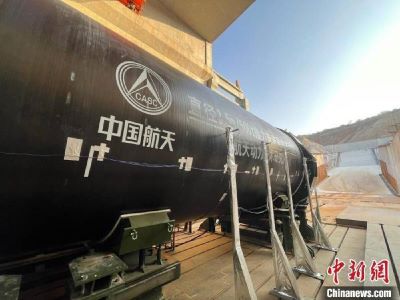
Chinese space engineers have conducted the first ignition test of the most powerful solid-propellant rocket engine in the world, which will be used on new-generation rockets, according to the Academy of Aerospace Solid Propulsion Technology in Xian, Shaanxi province.

The academy, a subsidiary of State-owned space giant China Aerospace Science and Technology Corp, announced on Tuesday afternoon that a test that morning had been successful.

The engine has a diameter of 3.5 meters, 150 metric tons of solid propellants and a thrust power of 500 tons, making it the world’s most powerful and fuel-efficient integrated solid-propellant rocket engine, the academy said in a statement, noting that the test took place at an engine testing facility in Xi’an.

Wang Jianru, chief designer of the engine, said that it integrates a number of advanced technologies and high-performance composite materials and has world-class capability.

“The test’s success means that we have achieved substantial progress in improving the capability of our solid-propellant carrier rockets. It also laid a key foundation for our research and development for a 1,000-ton-thrust engine,” he said, noting that the new engines are necessary for China to build super-heavy rockets.

“Currently, our large solid-propellant rocket engines still lag behind some foreign models and can’t serve the country’s goal of building next-generation rockets,” Wang said. “Therefore, we have been working hard on technologies required for large-diameter, powerful solid-propellant engines.”

Researchers at the Xi’an academy have begun to design a variant based on the 500-ton-thrust type, Wang said, explaining that the variant will be used on the super-heavy rocket under development by Chinese engineers.

Researchers at the China Academy of Launch Vehicle Technology in Beijing, another CASC subsidiary, are designing a super-heavy rocket-the Long March 9-that will likely become one of the world’s largest and mightiest launch vehicles.

The rocket is expected to enter service around 2030. It will be 93 meters tall and will have a liftoff weight of 4,140 tons and a thrust of 5,760 tons. The diameter of its core stage will be about 10 meters, according to designers.

The craft will be so powerful that it will be able to transport spacecraft with a combined weight of 140 tons to a low-Earth orbit hundreds of kilometers above the ground, and will also be capable of deploying spaceships weighing up to 50 tons to an Earth-moon transfer trajectory for lunar expeditions.

Published : October 21, 2021

By : China Daily

NK confirms test of submarine-launched ballistic missile #SootinClaimon.Com

#SootinClaimon.Com : ขอบคุณแหล่งข้อมูล : หนังสือพิมพ์ The Nation.

https://www.nationthailand.com/international/40007791


Pyongyang continues to beef up weapons capabilities despite repeated calls for dialogue from Seoul and Washington

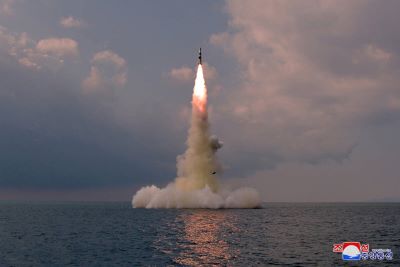
North Korea on Wednesday confirmed it had test-fired a new submarine-launched ballistic missile the previous day, the first such weapons test in two years and evidence of the regime’s ever-expanding weapons program.

On Tuesday, South Korea’s military said the North had fired what appeared to have been a short-range SLBM from the port of Sinpo in the east of the country, home to the regime’s main shipyard that builds submarines.

The North’s state-run Korea Central News Agency said the missile it launched had “lots of advanced control guidance technologies including flank mobility and gliding skip mobility,” quoting its Academy of Defense Science. The test will “greatly contribute to putting the defense technology of the country on a high level and to enhancing the underwater operational capability of our navy,” it added.

The North said the SLBM was launched from “the same 8.24 Yongung ship” — that is, from the submarine used for its first SLBM test in 2016.

The last time Pyongyang tested an SLBM was in October 2019. The regime’s SLBM development raises alarm as it could potentially give the country fatal “second-strike” capabilities — the ability to retaliate against a nuclear attack with nuclear weapons — from a location beyond the Korean Peninsula.

It marks the country’s eighth weapons test this year and its fifth launch since September — others have included a long-range cruise missile, a train-launched ballistic missile and what it said was a hypersonic missile.

The launch on Tuesday was the most provocative by the North since US President Joe Biden took office this year and a reminder that Pyongyang continues to enhance its weapons capabilities amid the long-stalled denuclearization talks with the US. It also came as Seoul and Washington have been stepping up diplomacy to nudge Pyongyang back to talks.

The White House condemned the latest launch as violating UN Security Council resolutions and as a threat to the region, urging the North to refrain from further provocations. Its press secretary, Jen Psaki, added that the launches “underscore the urgent need for dialogue and diplomacy,” reiterating the US stance of being willing to meet North Korean officials “anywhere, anytime, without preconditions.”

Pyongyang is banned from testing ballistic missiles and nuclear weapons under UNSC resolutions.

Meanwhile, South Korea expressed “deep regrets” over the launch, but didn’t go so far as to call it “provocation,” apparently in mind of Pyongyang’s earlier call for an end to what it called “double standards” — meaning the South condemns the North’s weapons development tests while building up its own military capabilities.

The missile launch coincided with a three-way meeting among the top nuclear envoys of South Korea, the US and Japan in Washington on Tuesday. 

South Korea’s nuclear envoy, Noh Kyu-duk, said the three sides had evaluated the recent situation on the Korean Peninsula, including the latest missile launch, and agreed on the importance of maintaining stability on the peninsula and working together closely to restart the peace process at an early date, during his meeting with US and Japanese counterparts Sung Kim and Takehiro Funakoshi.

The three countries raised concerns that the North’s continued missile launches could affect their efforts to bring the North back to the dialogue table, according to a senior South Korean official speaking on condition of anonymity. But there were views that the missile launch attested to the need to quickly resume dialogue with Pyongyang, the official added.

Foreign Minister Chung Eui-yong on Wednesday echoed similar stance, stressing the need for engaging the regime in light of the missile launches.

“We should take some actions so that the North will no longer be able to develop nuclear and missile capabilities,” Chung said during a parliamentary audit session. “Easing sanctions can be considered as part of the measures, on conditions that the North accepts the dialogue proposal.”

Experts say the North is expected to continue more weapons tests in coming months to sharpen its military technology, pressing both Seoul and Washington despite their repeated calls for dialogue. 

“The North is pulling all-out efforts to secure the SLBM technology, as it views this as the ultimate weapon to complete the country’s strategic nuclear technology, capable of hitting the US mainland,” said Park Won-gon, professor of North Korean studies at Ewha Womans University. “The North could respond to calls for talks, but it will continue to conduct weapons tests and press both the US and South Korea.”

By Ahn Sung-mi

Published : October 21, 2021

By : The Korea Herald

Nuri rocket’s launch to go ahead as scheduled Thursday #SootinClaimon.Com

#SootinClaimon.Com : ขอบคุณแหล่งข้อมูล : หนังสือพิมพ์ The Nation.

https://www.nationthailand.com/international/40007790


South Korea’s first domestically developed satellite launch vehicle moved to launch pad

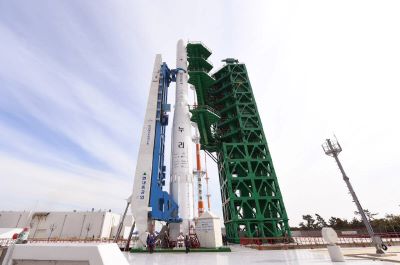
South Korea’s first domestically developed satellite launch vehicle has been moved to the launch pad for liftoff as scheduled on Thursday, the Ministry of Science and ICT said Wednesday.

As favorable weather is forecast for Thursday, the launch will go on as scheduled at the Naro Space Center in Goheung, South Jeolla Province, the ministry added.

The three-stage liquid fuel rocket, also known as Korean Satellite Launch Vehicle II or Nuri, will blast off at 4 p.m., with the moment to be livestreamed on various platforms including the ministry’s YouTube channel.

At 7 a.m. Wednesday, the fully assembled Nuri was carried out from the hangar and rolled over to the launch pad. The rocket was moved at 1.5 kilometers per hour and arrived at the launch pad in an hour and a half.

It was then erected and fastened to the launch pad to make sure it can withstand winds that might push the rocket.

The bottom part of the rocket was anchored with a set of four holding devices to keep the launch vehicle in place on the launch pad.

Nuri was then connected with umbilicals, which allow the flow of liquids, gases and electric power to the rocket, which is to travel into low orbit.

The Korea Aerospace Research Institute completed its tests Wednesday by checking telemetry and tracking equipment.

The launch-ready rocket will be fueled Thursday, KARI added.

The launch of Nuri, carrying a 1.5-ton dummy payload, is currently scheduled at around 4 p.m. The actual time will be announced an hour and a half prior to the launch.

If weather conditions are unfavorable, the launch could be delayed. Nuri has a launch window of about a week.

Thursday’s launch is the first in a series of tests planned for Nuri.

KARI has scheduled additional launches in 2022, 2024, 2026 and 2027, regardless of the success of the current launch. The next launch has already been scheduled for May 19.

Korea started the Nuri rocket project in March 2010. In 2018, the country succeeded in launching a single-stage launch vehicle with a 75-ton liquid-fueled engine from the Naro Space Center. In March this year, KARI successfully completed a comprehensive combustion test of a qualification model of the Nuri rocket.

The current model is boosted by three-stage rockets. The first stage consists of four 75-ton thrust liquid-fueled rockets. This is attached to a single 75-ton rocket forming the second stage. The third stage consists of a 7-ton thrust rocket that will place the payload into orbit 600-800 kilometers high.

If launched successfully, Korea will become the world’s seventh country with independent capabilities to launch a satellite weighing over 1 ton into orbit from its own soil.

By Shim Woo-hyun

Published : October 21, 2021

By : The Korea Herald

Singapore is No. 2 in the world for attracting and developing talent: Insead #SootinClaimon.Com

#SootinClaimon.Com : ขอบคุณแหล่งข้อมูล : หนังสือพิมพ์ The Nation.

https://www.nationthailand.com/international/40007740


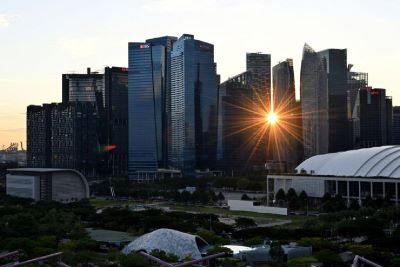
SINGAPORE – Singapore has moved up one notch to second place in a global ranking of how well countries attract, develop, support and retain talent – behind Switzerland but ahead of the United States.

The yearly global talent competitiveness index, which covers 134 countries, is published by French business school Insead and non-profit research body Portulans Institute.

In the same index for cities, Singapore ranked seventh, down from third last year but still the only Asian city in the top ten.

San Francisco topped the city index, followed by Geneva, Boston and Zurich.

For the country ranking, Singapore made it to top three in four of the six criteria, which encompass enabling, attracting, growing and retaining talent, vocational and technical skills, and global knowledge skills.

The Republic was praised for enabling talent with its strong regulatory landscape, attracting talent around specific areas such as bio-nanotechnologies, and growing talent with its strong education quality.

It also excelled in global knowledge skills, and has one of the world’s best pools of vocational and technical skills which help Singapore’s ability to match labour market demand and workforce supply.

“However, the city state’s ability to retain talent remains its main weakness, and more needs to be done to improve issues related to both sustainability and lifestyle,” the study said.

Indeed, Singapore continues to face challenges in dealing with its manpower crunch, especially in top technology jobs that require highly skilled individuals.

Dr Bruno Lanvin, Insead distinguished fellow and co-editor of the index, told The Straits Times that while Singapore attracts international talent, it does not keep them for very long.

But there is also much that the city state has improved in, he said.

“Singapore’s position in formal education has improved, mainly because of greater vocational enrolment and higher tertiary education spending,” he added.

“It also reflects Singapore’s continuous efforts to enhance the quality of its educational system, from coding classes at an early age to problem-solving in primary and secondary education.”

He added that the quality of Singapore’s information technology infrastructure has been an asset during the Covid-19 pandemic, as other less-connected economies have been struggling to maintain economic activities in the face of lockdown measures.

The report also noted that Covid-19 “sent shockwaves across the global talent landscape”, and the post-pandemic recovery is likely to make the competition for talent even more unequal.

“Disparities in vaccination rates and pace are clearly playing against Africa and some other lower-income regions of the planet. In many parts of the world, the time lost in education and learning will remain a handicap for an entire generation, creating an unmendable dent in local talent pyramids,” it said.

Globally, the gap has already widened between talent-competitive countries and those not so, the report added.

Insead senior affiliate professor of strategy Felipe Monteiro said that top-ranked countries such as Switzerland and Singapore are speeding up their transition to a sustainable and future-proof economy.

“Switzerland is strengthening its position as a leader in sustainable finance and Singapore is forging ahead with its ambitious Green Plan 2030 and making headway in digital trade and green economy cooperation with China. These forward-looking nations are taking steps to build robust economies and societies.”

The report also highlighted the ways Covid-19 has changed talent competition for all economies due to travel limitations, the growing importance of virtual meetings and the reordering of national priorities to deal with the resulting social and economic emergencies.

But as online tools open new doors to better work-life balance and to working from anywhere, new inequalities have surfaced between those who can contribute online and those who have to be physically present at the workplace.

Inequalities may also grow among workers, depending on their sector of activity and their level of qualification.

“The growing inequalities anticipated among workers have often been described as a distinctive trait of a K-shaped recovery – one in which workers employable in recovery-supportive sectors such as technology, retail, or software services would find more employment opportunities than those locked in other, often distressed, activities such as travel or entertainment,” the study said.

By Sue-Ann Tan

Published : October 20, 2021

By : The Straits Times

US urged to stop hyping up China threat theory #SootinClaimon.Com

#SootinClaimon.Com : ขอบคุณแหล่งข้อมูล : หนังสือพิมพ์ The Nation.

https://www.nationthailand.com/international/40007739


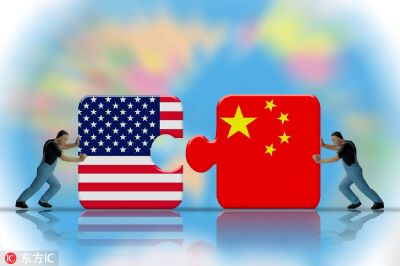
China urged the US on Tuesday to stop hyping up the “China threat “theory, which Foreign Ministry spokesman Wang Wenbin said was exploited by the US to expand its military strength and pursue the advantage of absolute security.

Wang made the remark at a daily news briefing after US officials, including Defense Secretary Lloyd Austin, expressed concerns about China’s development of advanced military capabilities and systems, claiming that these would increase tensions in the region and intensify the arms race.

“The US makes false charges to deflect attention,” Wang said, adding that Washington “should stop hyping up the ‘China threat’ and making issues of China”.

“China always works to safeguard world peace, contribute to global development, uphold international order and provide public good,” he said.

China pursues a self-defensive nuclear strategy, with its nuclear forces always kept at the minimum level required to safeguard national security, he said, adding that China would never engage in a nuclear arms race with any country.

He further said that the sole aim of China’s development of necessary military capabilities was to safeguard its legitimate security interests.

“No country will be threatened by China’s national defense capability as long as it does not intend to threaten or undermine China’s sovereignty, security and territorial integrity,” he said.

Being the sole superpower, the US has clung to the Cold War mindset in recent years, comprehensively strengthened its military capabilities and continuously deepened its military alliances, the spokesman said.

“The US’ ganging up to shape small military blocs has severely undermined regional peace and security as well as global strategic stability,” he added.

Washington not only boasts the largest and advanced nuclear arsenal in the world but also invests trillions of dollars to upgrade its “nuclear triad”, Wang said, referring to its nuclear forces on land, in the sea and in the skies.

The US has withdrawn from the Treaty on the Limitation of Anti-Ballistic Missile Systems and the Intermediate-Range Nuclear Forces Treaty while it is continuously pushing for the deployment of a global anti-ballistic system, the spokesman said.

Wang noted that the US was the only country to obstruct the negotiations on the verification protocol of the Biological Weapons Convention for a long time and it also stonewalls the process of negotiations on arms control in outer space.

In addition, the US transferred a nuclear-powered submarine to a non-nuclear weapon state, which aggravated the risks of nuclear proliferation, he added.

Published : October 20, 2021

By : China Daily